
The Articulate Fly
The Articulate Fly
0
The Articulate Fly is a fly fishing podcast that features interviews with national and regional personalities covering fly fishing, fly tying, and fly fishing travel. It also provides fishing reports for both novice and experienced fly anglers. The show caters to all types of fly fishers, from streamer junkies to dry fly addicts.
Afleveringen
-
 S8, Ep 73: REDUX: The Fight for Our Future: Land Tawney on Grassroots Advocacy and Public Lands 02.10.2026 54minEpisode OverviewThis award-winning episode of The Articulate Fly, which took 1st place in the 2026 Outdoor Writers Association of America (OWAA) Excellence in Craft awards (Radio/Podcast: Conservation), features outdoorsman, conservationist and grassroots organizer Land Tawney on how hunters and anglers can protect America's public lands and waters. Recorded in Fall 2025, the conversation pairs Land's nearly 30 years of conservation advocacy with a candid assessment of what he calls the most serious threat to public lands he has seen in his career. Raised in Missoula, Montana, Land traces his conservation ethic to childhood float trips during the Big Hole River salmonfly hatch, his parents' work as full-time conservation lobbyists at the state legislature and mentors including fisheries biologist and author Jim Posewitz. He breaks down the three ingredients that helped grow Backcountry Hunters & Anglers to roughly 40,000 members across political lines (fun, an open path to volunteer leadership and standing for something) and explains how to coach empowered volunteers without breaking them. Land then introduces American Hunters and Anglers Action Network, a 501(c)(4) that can lobby without the limits placed on 501(c)(3) groups and engage directly in elections. He lays out a "dismantle, defund, divest" framework for current threats, from a proposed mine just south of Minnesota's Boundary Waters Canoe Area Wilderness to oil drilling in the Arctic National Wildlife Refuge and the Ambler Road through Alaska's Brooks Range. Finally, he makes the case for responsible development and principled compromise, citing the Land and Water Conservation Fund and Montana's Blackfoot Valley as models. It is essential listening for any angler who wants a real voice in the future of the waters they fish.Key TakeawaysWhy grassroots action is the most accessible way for busy anglers to influence conservation policy and how pressure from the field gives lobbyists leverage at the negotiating table in Washington, D.C.How fun events, an open path to volunteer leadership and a consistent stand for the resource helped Backcountry Hunters & Anglers build an unusually broad coalition of hunters and anglers.How to coach empowered volunteers after a misstep rather than holding them back, and why Land would rather rein in a running horse than coax one out of the barn.When to lean in on an issue, with maximum effort reserved for bedrock fights such as the sale of public lands and attacks on the Clean Water Act that affect everyone.Why the difference between 501(c)(3) and 501(c)(4) organizations determines who can lobby without limits and engage in elections, and how American Hunters and Anglers Action Network complements groups like Trout Unlimited.How to recognize the "dismantle, defund, divest" pattern behind current threats to public lands and waters, from agency staffing cuts to land sale proposals.Locations & SpeciesLand's fishing roots run through southwest Montana, where float trips during the Big Hole River salmonfly hatch shaped his earliest memories and mentor Dale Burk's favorite pattern, the Golden Stone, proved its worth even when salmonflies were on the water; Marvin recalls hitting the same hatch on the upper Madison River with his young son. The conservation discussion spans the 640 million acres of public lands Americans own, with particular focus on the Boundary Waters Canoe Area Wilderness in northern Minnesota, the caribou and salmon habitat of the Arctic National Wildlife Refuge and the proposed 210-mile Ambler Road through Alaska's Brooks Range, which would cross 11 rivers and roughly 3,000 streams. Land points to Wyoming's oil and gas fields as a cautionary tale for mule deer and pronghorn migrations and to Montana's Blackfoot Valley as a model of collaborative compromise among timber companies, ranchers, hunters, anglers and recreationists. He also notes that roughly 70% of Montana's fishing access sites were funded through the Land and Water Conservation Fund, a direct link between federal conservation policy and the places anglers actually fish.FAQ / Key Questions AnsweredWhat is the difference between a 501(c)(3) and a 501(c)(4) conservation organization?Land explains that 501(c)(3) groups such as Trout Unlimited, Backcountry Hunters & Anglers, the Rocky Mountain Elk Foundation and Ducks Unlimited can devote only a limited portion of their budgets (he cites 20%) to grassroots and direct lobbying and cannot engage in electoral politics. A 501(c)(4) like American Hunters and Anglers Action Network can lobby full time and work to elect or unseat candidates based on their conservation records. Land sees the roles as complementary: the 501(c)(4) builds pressure from the grassroots so 501(c)(3) organizations can walk into the room and make the deals.Why should anglers get involved in grassroots conservation advocacy?Land argues that grassroots action is the easiest way for people with careers and limited time to make a difference, because it lets you "do what you can with what you got, where you are." Noise from the field is what gives lobbyists leverage in Washington, D.C., and, without that pushback, compromise and progress do not happen. His closing message is that hunters and anglers are either at the table or on the menu.How did Backcountry Hunters & Anglers build such a broad coalition?Land credits three ingredients. The first is making conservation fun through pint nights, brewfests, storytelling nights and film festivals, the second is letting any volunteer willing to contribute time and energy step into leadership without paying years of dues and the third is standing up for the resource every time in plain language. Combining youthful exuberance with the sage wisdom of longtime advocates attracted young and old members alike, and he also credits the talented volunteers and staff around him.What are the biggest threats to public lands according to Land Tawney?Land groups the threats into three categories: dismantling, defunding and divesting. Dismantling includes deep federal agency workforce cuts (which he estimates at about 25% of most agencies), a threatened reduction in force and efforts to open special places like the Boundary Waters and the Arctic National Wildlife Refuge to development. Defunding includes a proposed 35% cut to federal land management agencies, while divesting refers to public land sale proposals that were stripped from legislation but that Senate Energy and Natural Resources Committee chair Mike Lee has said he is not done pursuing.How can public lands be developed responsibly without sacrificing conservation?Land stresses that he is not anti-development, citing Theodore Roosevelt's principle of managing resources for the most people over the longest time. He points to the Arctic National Wildlife Refuge as a compromise that balanced North Slope development with protection, to phased oil and gas development that cleans up as it goes and to the Land and Water Conservation Fund, which directs offshore oil and gas royalties to conservation and access nationwide. Modern selective timber harvest and the Blackfoot Valley collaborative show that compromise is a path forward rather than a dirty word.SponsorsThanks to TroutRoutes for sponsoring this episode. Use artfly20 to get 20% off of your TroutRoutes Pro membership.Related ContentS8, Ep 66 - The Roadless Rule Debate: Chris Wood on Protecting America's Wild Spaces and What You Can DoS7, Ep 105 - Changing the Narrative: Robbie Kroger's Mission with The Origins FoundationS7, Ep 91 - The Chocklett Factory: I Have Been Everywhere, ManS8, Ep 14 - Crafting Connections: Blane Chocklett on Fly Design and Conservation at Tie FestConnect with Our GuestFollow Land on Instagram.Follow American Hunters and Anglers Action Network on Facebook,
 -
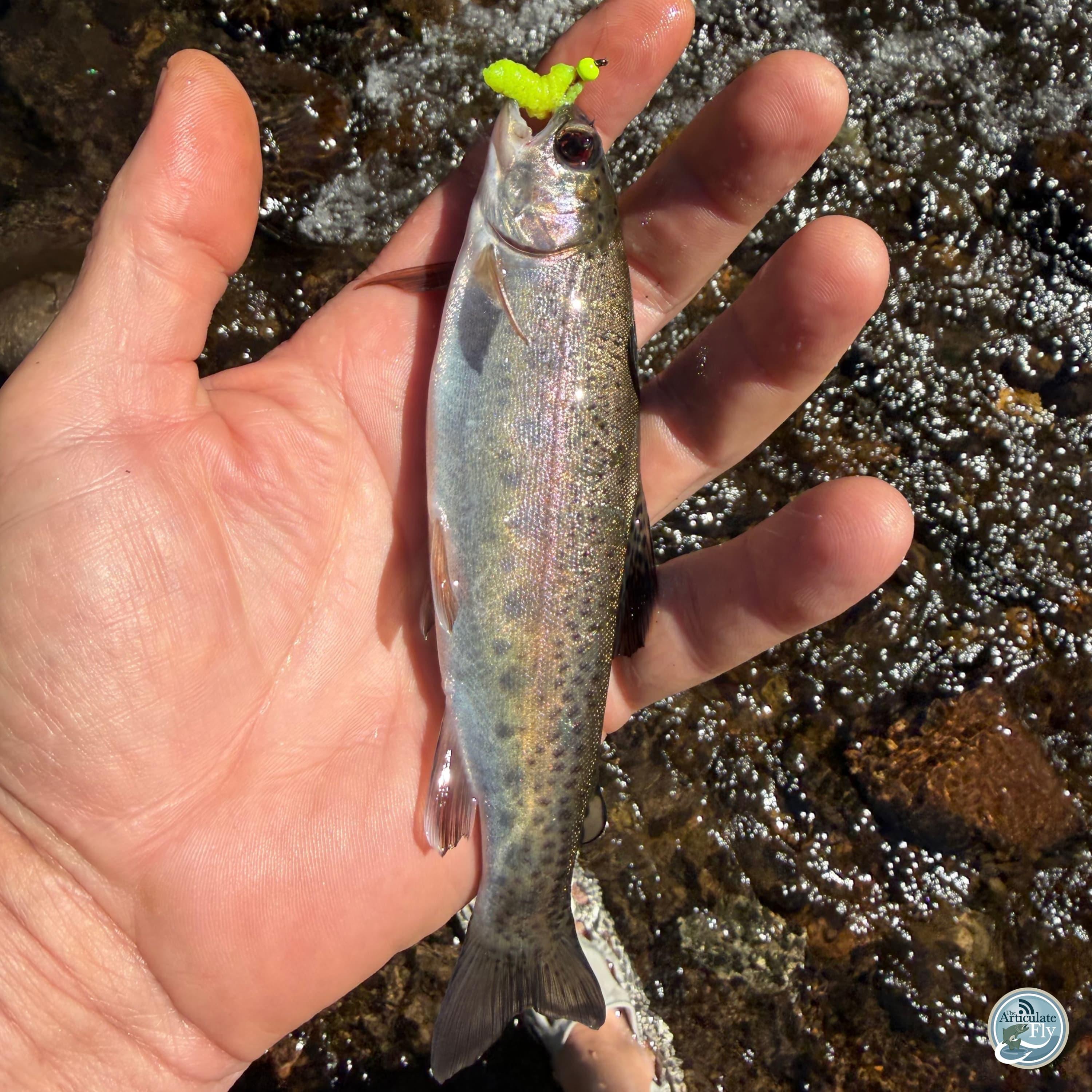 S8, Ep 72: Casting Essentials: Mac Brown's Guide to Power and Arc 30.09.2026 11minEpisode OverviewOn this Casting Angles episode of The Articulate Fly, host Marvin Cash and Mac Brown, fly casting instructor at Mac Brown Fly Fish in Bryson City, North Carolina, unpack the biggest light bulb moment from Mac's recent casting mastery workshop: casting arc and applied power are inseparable, and many loop problems blamed on "too much power" are really a mismatch between the two. It is a practical lesson for any angler who wants cleaner loops at varying distances, and it arrives just as Western North Carolina anglers face a delayed start to the fall delayed harvest trout season.Mac explains why the same length of line can either unroll cleanly or turn into a tuck cast depending on how much force is applied across a given arc. He stresses reading the pace of the cast and shares a verbal cadence of "slow, slow, slow, fast" for timing the back cast. He also offers a quick yard drill that pairs a very slow stroke with a very narrow arc to show how easily minimal power overwhelms a short casting path. Marvin adds a power calibration drill built around rod noise and backing off until the loop collapses.The second half turns to conditions and news. The North Carolina Wildlife Resources Commission is pushing delayed harvest stocking back a month to early November and stocking fewer fish after a brutally hot and dry summer, a hatchery renovation and heat-related fish kills. Mac celebrates Team USA's first-ever adult men's team and individual gold medals at the world championships in Idaho, led by Michael Bradley of Cherokee, and previews his four-day fall school. Cooler nights and fresh rain are finally dropping water temperatures on Southern Appalachian trout streams such as Deep Creek.Key TakeawaysHow to diagnose a tuck cast by reading the pace of the cast rather than assuming the problem is simply too much power.Why casting arc and applied power must be matched, so that a narrow arc needs far less effort than most anglers expect.How to use a "slow, slow, slow, fast" verbal cadence to time the back cast and stop rushing the stroke.How to find the minimum power for a symmetrical loop by backing off until the loop collapses and then adding just a touch of force back.Why a low frequency whoosh from the rod is an audible sign you are overpowering the cast.When to expect Western North Carolina delayed harvest stocking this fall and why a hot summer and hatchery setbacks pushed it to early November.Techniques & Gear CoveredThe core technique is matching casting arc to applied force: Mac uses the traditional clock face framework, such as a stroke from 10 o'clock to midnight, to show how excess force on a given arc produces a tuck cast instead of a line that simply unrolls. Marvin frames arc length as the runway for acceleration, noting that a longer stroke lets you build speed gradually and that overpowering the final pinky pull on a short runway produces a tuck. Mac's yard drill pairs a very slow forward stroke with a very narrow arc to form a tight loop, then widens the arc until effort and path match for a perfectly straight cast. Marvin's complementary drill uses the low frequency whoosh of the rod as feedback, backing power off until the loop collapses and then adding a smidge to establish a symmetrical foundation. Together the two drills put the caster in charge of both variables: the effort and the length of the path.Locations & SpeciesFall trout fishing in Western North Carolina starts later than usual this year, with the North Carolina Wildlife Resources Commission delaying delayed harvest trout stocking by a month to the beginning of November and planning to stock fewer fish. The delay follows a brutally hot and dry summer, the closure of the Pisgah hatchery for a major renovation in late 2025 and fish kills at the Armstrong hatchery, where hot water on Armstrong Creek was made worse by tree cover lost to Hurricane Helene. Conditions for Southern Appalachian trout are improving, with four straight nights in the mid-40s, a three-inch rain after roughly two months without a significant one and noticeably cooler water on streams like Deep Creek. Marvin also notes that the Tennessee side of Great Smoky Mountains National Park has had plenty of water.FAQ / Key Questions AnsweredWhy does my fly line tuck on the back cast even when I'm not using much power?According to Mac Brown, arc and power are so interrelated that a tuck is often a mismatch between the two rather than simply too much power. With a very narrow arc, even minimal effort can be too much and turn the loop into a tuck. Widening the arc to match the effort you are applying produces a straight cast that simply unrolls.How do you know how much power a fly cast needs?Marvin Cash's drill is to keep backing off the power until the loop collapses, then add back just a smidge of force. That point is the foundation for a symmetrical cast. A low frequency whooshing sound from the rod is a reliable sign that you are using too much power.How should you time the back cast?Mac recommends saying "slow, slow, slow, fast" out loud as you make the back cast, which reflects how long the stroke should take. If the cast is already over by the time you reach the first "slow," you have applied too much force too early. Watching the pace of the cast is the quickest way to see whether timing is the problem.When does delayed harvest trout stocking start in Western North Carolina this fall?The North Carolina Wildlife Resources Commission is delaying delayed harvest stocking by a month, so it will not begin until the beginning of November, and fewer fish will be stocked. The delay stems from a brutally hot and dry summer, the renovation of the Pisgah hatchery and heat-related fish kills at the Armstrong hatchery. Marvin suggests using the extra time for casting practice and skill work on the water.Related ContentS7, Ep 80 - Foundations of Fly Casting: Mastering Variability and Adaptability with Mac BrownS7, Ep 76 - From Repetition to Retention: The Path to Mastery in Fly CastingS8, Ep 7 - Casting Foundations and Fishing Frameworks: Insights with Mac BrownS8, Ep 67 - Elevate Your Cast: Mac Brown's Expert Tips on Haul Timing and Line SpeedS7, Ep 85 - Navigating Delayed Harvest: Mac Brown's Insights on Fall Fishing TacticsView All Casting Angles Episodes with Mac BrownConnect with Our GuestFollow Mac on Facebook, Instagram and Twitter.Follow the ShowFollow The Articulate Fly on Facebook, Instagram, Threads and YouTube.Follow our Substack newsletter for episode updates, tips and resources.Support the ShowShop through our Amazon link to support the podcast.Join our Patreon community to support the show.If you are in the industry and need help getting unstuck, learn more about our consulting options.Subscribe & AdvertiseSubscribe to the podcast in your favorite podcast app.Think our community is a good fit for your brand? Advertise with us.
 -
 S8, Ep 71: Fall Fishing Forecast: George Costa on Streamers, Hatches and Safety Tips 26.09.2026 4minEpisode OverviewGeorge Costa, manager of TCO Fly Shop in State College, Pennsylvania, returns to The Articulate Fly for another Central PA Fishing Report as the region shifts firmly into fall. Recent rain has pushed creeks across Central Pennsylvania's limestone country well above seasonal flows and off-color, but George reports everything is on the drop and should be fishable again this weekend, with cool water temperatures keeping trout active and comfortable. Fall hatch activity is picking up, with Isos (Isonychia), tan caddis and October caddis all showing well, and George notes a recent streamer bite that produced trout already colored up for fall. He and host Marvin Cash also flag a practical safety reminder: Pennsylvania's fall hunting seasons open October 1st, so anglers fishing shared public waters such as Spring Creek Canyon on state game lands should wear blaze orange. Away from the water, George runs down what's happening at TCO's shops heading into the off-season, including end-of-summer clearance pricing on Simms, Grundens and Patagonia gear, and a full slate of fall and winter fly tying and on-the-water classes across TCO's locations. Among the highlights is a class taught by Allen Rupp, Dave Whitlock's legacy tyer, covering streamer tying and the NearNuff Sculpin pattern. The conversation offers a quick, practical snapshot for anglers planning trips to Central Pennsylvania's limestone streams this fall: current conditions, what's hatching, where the fish are biting and how to gear up.Key TakeawaysHow to time a trip to Central PA limestone streams safely as high, off-color fall water drops back into shape this week.Why fall streamer fishing is heating up as cooling water temperatures push trout to feed aggressively ahead of the spawn.What to watch for on the hatch front, including Isos, tan caddis and October caddis activity as Central Pennsylvania moves deeper into fall.Why anglers should wear blaze orange on Pennsylvania state game lands like Spring Creek Canyon once hunting season opens October 1st.Techniques & Gear CoveredGeorge highlights a developing fall streamer bite on Central Pennsylvania's limestone streams, with trout already showing fall coloration as water temperatures cool. He also flags active Iso, tan caddis and October caddis hatch activity worth matching as conditions stabilize after recent high water. On the gear side, TCO Fly Shop is running end-of-summer clearance pricing on Simms, Grundens and Patagonia. TCO's fall and winter class schedule includes a streamer tying session and a NearNuff Sculpin class taught by Allen Rupp, Dave Whitlock's legacy tyer, alongside additional fly tying and on-the-water instruction across TCO's locations.Locations & SpeciesThis report centers on Central Pennsylvania's limestone stream country in and around State College, including public water on state game lands such as Spring Creek Canyon. Recent rain pushed local creeks well above seasonal flows and off-color, though George reports levels are dropping and the fishery should be fishable again this weekend. Trout are the focus of this fishery, and cooling water temperatures combined with fall hatch activity (Isos, tan caddis and October caddis) are setting up favorable conditions heading into peak fall streamer season. Anglers should expect high, off-color flows to continue to clear absent additional rain.FAQ / Key Questions AnsweredAre Central Pennsylvania's limestone streams fishable right now?Yes, but use caution. Recent rain pushed creeks well above seasonal flows and off-color, but George Costa reports water levels are dropping and the fishery should be fishable again this weekend heading into the following few weeks.What fall hatches are active on Central PA streams right now?George reports good numbers of Isos (Isonychia), tan caddis and October caddis beginning to show, all typical fall hatch activity for late September into early October in Central Pennsylvania.Why is fall a good time for streamer fishing in Central PA?As water temperatures cool, trout become more aggressive and begin coloring up ahead of the fall spawn. George reports a recent streamer bite already producing colored-up fish, with more good streamer water expected over the next few weeks.Why should anglers wear orange on Pennsylvania state game lands this time of year?Pennsylvania's fall hunting seasons, including deer and pheasant seasons, open October 1st. Anglers fishing shared public water such as Spring Creek Canyon should wear blaze orange to stay visible to hunters using the same game lands.Where can anglers find fall and winter fly tying classes near State College, PA?TCO Fly Shop runs a full schedule of tying and on-the-water classes at its State College shop, including a streamer class and a NearNuff Sculpin class taught by Allen Rupp, Dave Whitlock's legacy tyer. Full listings are at tcoflyfishing.com.Related ContentS6, Ep 118 - Central PA Fall Fishing Report: George Costa's Tips and TacticsS6, Ep 129 - TCO Fly Shop's George Costa Discusses Prime Fall Fishing ConditionsS7, Ep 49 - Rain, Hatches and Cicadas: A Central PA Fishing Update with George CostaS7, Ep 70 - The Dog Days of Summer: Trico Tactics in Central PA with George CostaView all Central Pennsylvania Fishing Reports with George CostaConnect with Our GuestFollow TCO on Facebook, Instagram and Twitter.Follow the ShowFollow The Articulate Fly on Facebook, Instagram, Threads and YouTube.Follow our Substack newsletter for episode updates, tips and resources.Support the ShowShop through our Amazon link to support the podcast.Join our Patreon community to support the show.If you are in the industry and need help getting unstuck, learn more about our consulting options.Subscribe & AdvertiseSubscribe to the podcast in your favorite podcast app.Think our community is a good fit for your brand? Advertise with us.
 -
 S8, Ep 70: REDUX: Nomadic Waters and the Allure of Amazonian Peacock Bass 24.09.2026 1u 15minEpisode OverviewIn this episode of The Articulate Fly, host Marvin Cash sits down with Michael Williams, owner and host of Nomadic Waters, to explain how anglers catch Amazon peacock bass on the fly and what makes a Brazilian jungle expedition work. Williams runs Orvis-endorsed trips on the Rio Negro, Rio da Lua and Rio Tatuagem, where guests chase Temensis and rare Vazzoleri peacock bass from Bass Tracker boats and floating cabins. It is a practical roadmap for trout and saltwater anglers weighing a first Amazon trip.Williams traces his path from a shared fly rod with his sister and guiding in Colorado to humanitarian work in Brazil that grew into Nomadic Waters. He explains why an ambushing peacock bass demands a faster retrieve rather than a pause, how a partner-style doubles strategy lifted catch numbers 30 to 40 percent and why presentation and casting matter far more than fly choice. He also covers pacing yourself in equatorial heat, including the mandatory midday siesta that raised fish counts. Williams also explains how community partnerships and the nonprofit Parallel Resource reflect a philosophy of exploration without exploitation. Along the way, he addresses who thrives in the Amazon, from beginners to professional guides, and he explains why guests who arrive as self-declared experts are the hardest to help. For any angler asking who should book an Amazon trip and when to go, this conversation offers honest answers.This re-broadcast of S7, Ep 2 (January 10, 2025) won First Place in the 2026 OWAA Excellence in Craft awards for Radio/Podcast Fishing.Key TakeawaysHow to trigger a peacock bass strike by speeding up your fly as the fish charges out of structure instead of pausing the retrieve.How to raise your catch rate by fishing as partners so the second angler casts behind a hooked fish, a doubles strategy that lifted Nomadic Waters' numbers 30 to 40 percent.Why casting quality, presentation and a solid strip set matter far more than fly choice when a 12-pound peacock bass can shatter 40-pound leader on its first run.How to pace a hot equatorial fishing day by picking your shots and taking a midday siesta, a change that raised fish counts even with three fewer hours on the water.When to time an Amazon trip: the Rio Negro from mid-January through February (sometimes into March) as water falls, and the Rio da Lua and Rio Tatuagem from September through November.How to decide whether an Amazon expedition fits you, based on your appetite for exploration, your willingness to take coaching and your comfort with heat and long casting days.Techniques & Gear CoveredWilliams describes a boat-based, partner-style approach to peacock bass: casting to structure and lagoon edges from Bass Tracker boats on the larger rivers and john boats with casting platforms on the smaller ones, then speeding up the fly as a fish charges out of cover. Most eats come within about 20 feet of the rod tip, which lets anglers watch every strike and finish with a strip set. He stresses that peacock bass do not eat only big flies, that a 12-pound fish can shatter 40-pound leader on its first run and that a clean double haul and an efficient cast keep the rod rather than your shoulder doing the work. Nomadic Waters often targets schools of two-pound fish on day one, because they teach presentation, speed, depth and hook sets before anglers cast to larger fish. Gear mentions are light: six and seven weight rods with floating lines and ant or beetle patterns for matrinchã plus small spinning rods with bait for piranha off the back of the mothership.Locations & SpeciesNomadic Waters fishes three Brazilian Amazon rivers: the Rio Negro (a mothership with daily trips in Bass Trackers), the small, clear water Rio da Lua (float plane access and floating cabins) and the Rio Tatuagem (home to the rare Vazzoleri peacock bass). Target species are peacock bass, including 20-pound Temensis on the Rio da Lua, with piranha, red tail catfish and matrinchã as variety. A typical week on the Rio Negro puts about ten guests on roughly 1,200 landed fish. Seasonal timing follows the water, since the Rio Negro can rise or fall about 30 feet in a season: mid-January through February (sometimes into March) once levels start falling, September and October for the Rio da Lua and November for the Rio Tatuagem, with those two rivers resting about ten months of the year.FAQ / Key Questions AnsweredHow do you fish for peacock bass on the fly in the Amazon?Cast to structure and lagoon edges where peacock bass ambush prey, and speed the fly up as a fish charges out of cover because stopping the retrieve makes it lose interest. Most eats happen within about 20 feet of the rod tip, so you see the strike and finish with a strip set. Nomadic Waters also fishes as partners: when one angler hooks a fish, the second casts behind it at the followers, and this doubles strategy raised catch numbers by 30 to 40 percent.What skills do you need for an Amazon fly fishing trip?Williams welcomes all experience levels, including beginners, and says the best guests are willing to explore, take direction and ask for help with things like a double haul. He ranks the cast and presentation far above the fly pattern, and he warns that a 12-pound peacock bass can shatter 40-pound leader on its first run. Anglers who want a sure thing are a weaker fit than those who enjoy discovery, and guests who arrive as self-described experts unwilling to take guidance are the hardest to help.How do you handle the heat and physical demands of peacock bass fishing?Pick your shots instead of casting at every fishy-looking spot, because tired anglers get sloppy, miss strikes and snag trees. Williams compares fly casting in the Amazon to a baseball pitcher's limited number of great pitches per game and teaches guests to let the rod do the work rather than the shoulder. Nomadic Waters schedules a mandatory midday siesta with lunch and air conditioning, then fishes the last couple of hours of light, and catch counts rose even though the fishing day is about three hours shorter.When is the best time to fish the Amazon for peacock bass?For Nomadic Waters, the Rio Negro season runs from mid-January through February and sometimes into March, timed for when the water has been falling for a couple of weeks and the fish have gone about three months without fishing pressure. The Rio da Lua fishes best in September and October and the Rio Tatuagem in November, and the season ends before Thanksgiving. Water level is the deciding factor, because the Rio Negro can change by about 30 feet in a season.What does exploration without exploitation mean for a fishing operation in the Amazon?Williams uses it as a core value filter for every decision, tied to Nomadic Waters' origins as a humanitarian group working with remote Amazon communities. A support vessel carries a medical clinic, a dental clinic and water filtration systems. Guests share community lunches with villages, and a separate nonprofit called Parallel Resource was created to support the work. He warns against well-meant help that does not last, citing a visiting group that placed braces on children in a village and never returned, so that the Nomadic Waters dentist later spent a day removing them from adults.Related ContentS5, Ep 83 - A Fly Fishing Life with Jeff CurrierS6, Ep 132 - Fly Tying and Destination Travel with Tim FlaglerS5, Ep 111 - Gustavo Hiebaum of SET Fly FishingS8, Ep 20 - Behind the Scenes: Mark Melnyk's Adventure with The New Fly FisherConnect with Our GuestFollow Nomadic Waters on Facebook and
 -
 S8, Ep 69: Navigating the Transition: Captain Brian Shumaker on Smallmouth Behavior and Fishing Techniques 23.09.2026 8minEpisode OverviewOn this Pennsylvania Smallmouth Report from The Articulate Fly fly fishing podcast, host Marvin Cash checks in with Captain Brian Shumaker of Susquehanna River Guides for an early fall conditions update as the smallmouth bite makes its seasonal shift from bugs to streamers. With surface temperatures dropping into the 60s ahead of an incoming rainy, cooler pattern, Shumaker explains why the region's smallmouth bass are moving off the shallow flats and staging in deeper pockets, and why the topwater bite has effectively shut down for now. The conversation centers on the tactical adjustments that come with this shoulder season transition: downsizing from a size 2 to a size 4 streamer, swapping an intermediate line for a floating line and nine-foot leader to slow the fly's descent, and building in a deliberate pause that triggers strikes. Shumaker also walks through proper streamer hook set mechanics, contrasting the trout set most anglers default to with the strip strike his smallmouth program demands, and explains how holding the rod at roughly a 45-degree angle off to the side keeps steady pressure on a hooked fish through the fight, which matters even more if barbless hooks are in play. Looking ahead, he outlines what an Indian summer warm-up could mean for a brief return of topwater action layered on top of an already dominant streamer bite.Key TakeawaysHow to adjust streamer size and line choice as Pennsylvania smallmouth water temperatures drop into the fall shoulder season, downsizing to a size 4 streamer on a floating line and nine-foot leader for a slower presentation.Why building in deliberate pauses on the retrieve is critical to triggering strikes from bass that have shifted from a topwater bite to a slower, subsurface streamer bite.When to expect the smallmouth bite to shift decisively from topwater bugs to streamers as surface temperatures fall through the 60s and days shorten.How to execute a proper strip strike and why to hold the rod low and to the side at roughly a 45-degree angle to keep steady pressure on a hooked smallmouth through the fight.Why fishing barbless hooks requires maintaining constant line tension, since any slack lets a head shaking fish work the fly loose.When an Indian summer warm-up could bring bugs back into play alongside an already established streamer bite for the final weeks of the season.Techniques & Gear CoveredShumaker's fall program centers on downsizing streamers, dropping from a size 2 Clouser-style pattern to a size 4, fished on a floating line with a nine-foot leader instead of his usual intermediate setup to slow the fly's descent through the water column. The technique hinges on incorporating deliberate pauses into the retrieve. On the hook set, Shumaker teaches a strip strike with the rod held low, correcting anglers who default to a trout-style upward set that fails to bury the hook. Once a fish is on, he recommends fighting it with the rod at roughly a 45-degree angle off to the side rather than straight up, which keeps steady pressure on the fish and helps prevent it from throwing the hook, especially with barbless hooks that rely on tension rather than a barb to stay pinned. He also touches on a topwater approach for warmer stretches, working poppers slowly with a pop-and-dead-drift retrieve rather than constant motion.Locations & SpeciesThis Pennsylvania Smallmouth Report covers Captain Brian Shumaker's central Pennsylvania guide waters as they move through the early fall shoulder season. Surface temperatures have dropped into the 60s and are trending lower behind an incoming rainy, cooler weather pattern, pushing bass out of the shallows and into deeper pockets and slower moving water. The bug activity that defined the summer topwater bite has shut down with the falling temperatures, leaving streamers as the dominant presentation, though Shumaker notes that a stretch of Indian summer in the high 70s to low 80s could bring a brief return of topwater action.FAQ / Key Questions AnsweredWhen does Pennsylvania smallmouth fishing shift from a topwater bite to a streamer bite in the fall?The shift happens as surface water temperatures drop through the 70s into the 60s and the days grow noticeably shorter. Bug activity falls off as the weather cools, and smallmouth bass move out of the shallows into deeper pockets, making streamers the dominant and most productive presentation. A stretch of Indian summer with highs in the 70s or low 80s can bring a temporary return of topwater action alongside the streamer bite.What streamer size and line setup works best for Pennsylvania smallmouth during the fall transition?Downsizing is key: Shumaker moves from a size 2 to a size 4 Clouser-style streamer. Rather than his usual intermediate line, he fishes a floating line with a nine-foot leader, which produces a slower fly descent that better matches the fish's mood. Deliberate pauses on the retrieve, rather than a steady retrieve, are what typically draw the strike.How do you properly set the hook on a smallmouth bass streamer strike?Shumaker teaches a strip strike rather than the upward trout set many anglers default to, keeping the rod tip low through the hook set. He notes that trout-style sets fail to drive the hook home on a streamer eat, and that switching to a proper strip strike immediately improves hookup rates for anglers used to trout tactics.What rod angle should you use after hooking a smallmouth on a streamer?After the strip strike, Shumaker recommends bringing the rod to roughly a 45-degree angle off to the side rather than straight up, keeping it between high and low as the fight develops. This keeps steady pressure on the fish and lets the rod absorb the fight, reducing the chance the fish throws the hook, particularly when it jumps or turns toward the boat.Why does fishing barbless hooks change how you fight a smallmouth bass?With the barb pinched down, any slack in the line lets a head shaking fish work the fly loose, so Shumaker emphasizes keeping constant pressure on the fish throughout the fight rather than giving it any give. He pinches barbs both for angler safety and to reduce harm to the fish, but that choice makes disciplined rod angle and steady tension especially important for keeping fish buttoned up.Related ContentS8, Ep 39 - High Water Strategies: Captain Brian Shumaker's Pennsylvania Smallmouth InsightsS8, Ep 34 - Frog Patterns and Fishing Strategies: Brian Shumaker's Late Spring Smallmouth ReportS8, Ep 31 - Chasing Smallmouth: Brian Shumaker's Adaptations for Unpredictable Spring WeatherS8, Ep 27 - The Pre-Spawn Puzzle: Captain Brian Shumaker's Tips for Pennsylvania SmallmouthView all Pennsylvania Smallmouth Reports with Brian ShumakerConnect with Our GuestFollow Brian on Facebook and Instagram.Follow the ShowFollow The Articulate Fly on Facebook, Instagram, Threads and YouTube.Follow our Substack newsletter for episode updates, tips and resources.Support the ShowShop through our Amazon link to support the podcast.Join our Patreon community to support the show.If you are in the industry and need help getting unstuck, learn more about our consulting options.Subscribe & AdvertiseSubscribe to the podcast in your favorite podcast app.Think our community is a good fit for your brand?
 -
 S8, Ep 68: The Fall Transition: Matt Reilly's Insights on Bass Behavior and Bug Fishing Strategies 18.09.2026 12minEpisode OverviewOn this Southwest Virginia Fishing Report from The Articulate Fly fly fishing podcast, host Marvin Cash checks in with guide Matt Reilly of Matt Reilly Fly Fishing for a late summer update on the New River system. After weeks of stable weather, low water and daytime highs in the mid-80s to 90s have kept conditions consistent, though Reilly notes this year's annual cicada hatch has behaved differently than usual, peaking early and sporadically rather than settling into the typical seasonal pattern.Reilly explains that smallmouth bass are already showing the classic fall pattern of podding up into large schools, a shift that normally shows up later in September but appears to be arriving early this year. He walks through how to approach a pod of schooled-up bass methodically, since dense concentrations of fish create pockets of empty water elsewhere on the river, along with the double-edged nature of that competition: podded up fish can be more aggressive toward a fly, but spooking one can shut down an entire pod at once.Key TakeawaysHow to approach a school of podded up smallmouth bass methodically, since dense pods leave stretches of otherwise good habitat empty of fish.Why competition within a schooled group of bass can make fish more aggressive toward a fly, while also raising the risk that spooking one fish shuts down the entire pod.When to expect New River smallmouth to shift into fall schooling behavior.Why an inconsistent cicada hatch reduces how tightly smallmouth key on bank-oriented bug lies, pushing more fish toward mid-river holding water instead.When to plan a Southwest Virginia musky trip, since the season starts from early-to-mid November and runs into February on the New River system.Techniques & Gear CoveredReilly describes sight fishing low, clear New River water for smallmouth bass keyed on terrestrial activity, using a patient, methodical approach to cover water and locate schooled-up fish rather than blind casting likely spots. He details how a pod of bass concentrated around structure like a submerged log can produce competitive feeding, where fish race each other to a fly, but also how the same concentration means a single spooked fish can put the whole group down.Locations & SpeciesThe report centers on the New River system in Southwest Virginia, where low, warm late summer flows and consistent sunny weather have shaped both bug fishing for smallmouth bass and the approach to schooled-up fish. Smallmouth bass are the primary target discussed, with musky emerging as the seasonal focus starting in November. Reilly frames the current window as a seasonal hinge point, where the first hard frost or a tropical system moving through between early September and October could reshape both water levels and the terrestrial bite.FAQ / Key Questions AnsweredHow is the cicada hatch behaving differently on the New River this year?Reilly describes this year's annual cicada emergence as weaker and earlier than typical, with the main foraging event peaking two to three weeks ahead of the typical seasonal window. Since that early spike, cicada activity along the river has been inconsistent, giving this season's bug fishing a different rhythm than prior years even though overall fishing has remained good.Why are Southwest Virginia smallmouth bass podded up into schools earlier than usual?Reilly attributes the early schooling behavior to a combination of low water and the natural shortening of days. Fish that normally hold in consistent individual summer spots are already grouping into pods of several to more than a dozen bass, a pattern he typically doesn't see until a little later in the season.How should anglers approach a pod of schooled-up smallmouth bass?Reilly recommends staying patient and methodical, since a large concentration of fish in one spot means there will be stretches of otherwise good looking water with no fish present. He also cautions that competition among schooled bass can make them more likely to strike, but that spooking a single fish in a tightly packed group can put the entire pod down at once.When does musky season start on the New River, and how far out is Reilly already booking?Reilly expects to shift his focus fully to musky fishing by early-to-mid November, with the season running through February. As of this recording, he is already booked through roughly November 9th, underscoring how far in advance anglers should plan a musky trip.What could disrupt the current stable fishing pattern before fall fully sets in?Reilly points to two wildcards: a hurricane or tropical system passing through between early September and October that could dramatically change water levels, and the first hard frost, which effectively ends the terrestrial-driven bug bite and signals the true seasonal turn toward musky fishing.Related ContentS8, Ep 61 - Smallmouth Chronicles: Matt Reilly's Secrets to Success in SW VirginiaS8, Ep 63 - Seasonal Shifts: Brian Shumaker's Smallmouth Strategies for Late SummerS8, Ep 64 - Streamer Strategies: Ellis Ward's Late Day Fishing Tips for East TennesseeView all Southwest Virginia Fishing Reports with Matt ReillyConnect with Our GuestFollow Matt on Instagram.Follow the ShowFollow The Articulate Fly on Facebook, Instagram, Threads and YouTube.Follow our Substack newsletter for episode updates, tips and resources.Support the ShowShop through our Amazon link to support the podcast.Join our Patreon community to support the show.If you are in the industry and need help getting unstuck, learn more about our consulting options.Subscribe & AdvertiseSubscribe to the podcast in your favorite podcast app.Think our community is a good fit for your brand? Advertise with us.
 -
 S8, Ep 67: Elevate Your Cast: Mac Brown's Expert Tips on Haul Timing and Line Speed 16.09.2026 11minEpisode OverviewHow do you time a haul so it actually adds line speed instead of working against your cast? On this Casting Angles installment of The Articulate Fly fly fishing podcast, host Marvin Cash and Master Casting Instructor Mac Brown of Mac Brown Fly Fish in Bryson City, North Carolina, break down the single biggest mistake anglers make when hauling: starting the pull too early. Recorded during the late summer trout doldrums, before delayed harvest waters reopen in early October, the conversation is built around a practical off-season drill list rather than an on-the-water report. Mac explains how nearly all hauling problems trace back to timing, pointing to Western Carolina University research he participated in that measured line speed jumping from roughly 78 mph to 264 mph at 30 feet once the haul was properly timed. He walks through the pre-haul rotation, the three-point grip and the late pinky pull that generate tip speed before the haul is even added, using a frisbee throw analogy to describe the wrist extension timing anglers need to feel. Mac and Marvin also cover two low tech practice tools, pantomiming the stroke and using a rubber band looped around both index fingers, that let anglers rehearse haul timing without a rod, line or water at all.Key TakeawaysHow to identify the single most common haul timing mistake: pulling too early, before the rod has finished its late rotation.Why feeling real tension in the line hand during the haul is the clearest sign the timing is correct.How to use a late pinky pull within a three-point grip to generate line speed before the haul is even added.Why a rubber band looped around both index fingers is an effective at-home drill for internalizing haul timing.When to prioritize haul timing practice: during the late summer trout doldrums before delayed harvest season opens.How pantomiming the casting stroke without a line, rod or water builds the muscle memory that carries over to the real thing.Techniques & Gear CoveredThe conversation centers on haul timing rather than a specific fly pattern or rig, walking through the mechanics of the pre-haul rotation: a late pinky pull within Mac's three-point grip that produces most of the tip speed before the line hand ever adds a haul. Mac frames the correct hauling moment using a keyboard key analogy, a series of backslashes building tension, then a single forward slash as the release, and a frisbee throwing comparison to describe the wrist extension timing that governs both vertical and horizontal casts. He also references controlled line speed testing conducted at Western Carolina University that quantified the difference a properly timed haul makes at 30 feet of line. For gear-free practice, Mac recommends pantomiming the stroke and using a simple rubber band around both index fingers to rehearse the keep-hands-together-then-explode-apart timing that a haul requires.FAQ / Key Questions AnsweredWhy do most anglers haul too early, and what causes it?Mac Brown estimates that roughly 95 percent of anglers begin the pull before the rod has finished its rotation, a leftover habit from throwing sports where more effort is applied earlier rather than later. He says the haul needs to come "late, late, late," timed to the pre-haul rotation, a late pinky pull within a three-point grip, so the pull adds to speed the rod tip has already generated rather than fighting against it.How can an angler tell if their haul timing is correct?Marvin offers a kinesthetic cue that Mac confirms: if you don't feel real tension in the line hand while hauling, you're hauling too soon. Done correctly, the pull should feel like it is adding noticeable resistance late in the stroke rather than an easy tug at the start.What practice drills can build haul timing without a rod or line?Mac recommends two off-water drills. The first is pantomiming the full casting stroke, including the elbow drop that starts the rotation, in an armchair with just the rod butt, something anglers can do while watching football in the fall. The second is looping a rubber band around both index fingers to physically feel the keep-hands-together-then-separate-explosively timing that a properly timed haul requires.How much line speed does a properly timed haul actually add?Citing testing from Western Carolina University, Mac notes that without any haul, line speed at 30 feet measured around 78 miles per hour; with a properly timed haul, that number jumped to roughly 264 miles per hour. He points to that gap as the first place anglers should look when they are struggling with wind or distance, particularly in saltwater.When is the best time of year to work on haul timing?Mac and Marvin identify the late summer trout doldrums, the stretch before delayed harvest waters reopen in early October, as an ideal window for this kind of practice. With trout fishing slow, anglers can use evening hours to work on hauling in the yard or a park rather than on the water.Related ContentS8, Ep 65 - Mastering the Roll Cast: Mac Brown's Essential Techniques for Challenging WatersS8, Ep 49 - Mastering the Cast: Mac Brown's Insights on Shooting LineS8, Ep 45 - Casting Fundamentals: Mac Brown on the Art of the Reach MendS8, Ep 7 - Casting Foundations and Fishing Frameworks: Insights with Mac BrownS8, Ep 60 - The Bare Necessities: Mac Brown's Guide to Minimalist Fly Fishing GearView All Casting Angles Episodes with Mac BrownConnect with Our GuestFollow Mac on Facebook, Instagram and Twitter.Follow the ShowFollow The Articulate Fly on Facebook, Instagram, Threads and YouTube.Follow our Substack newsletter for episode updates, tips and resources.Support the ShowShop through our Amazon link to support the podcast.Join our Patreon community to support the show.If you are in the industry and need help getting unstuck, learn more about our consulting options.Subscribe & AdvertiseSubscribe to the podcast in your favorite podcast app.Think our community is a good fit for your brand? Advertise with us.
 -
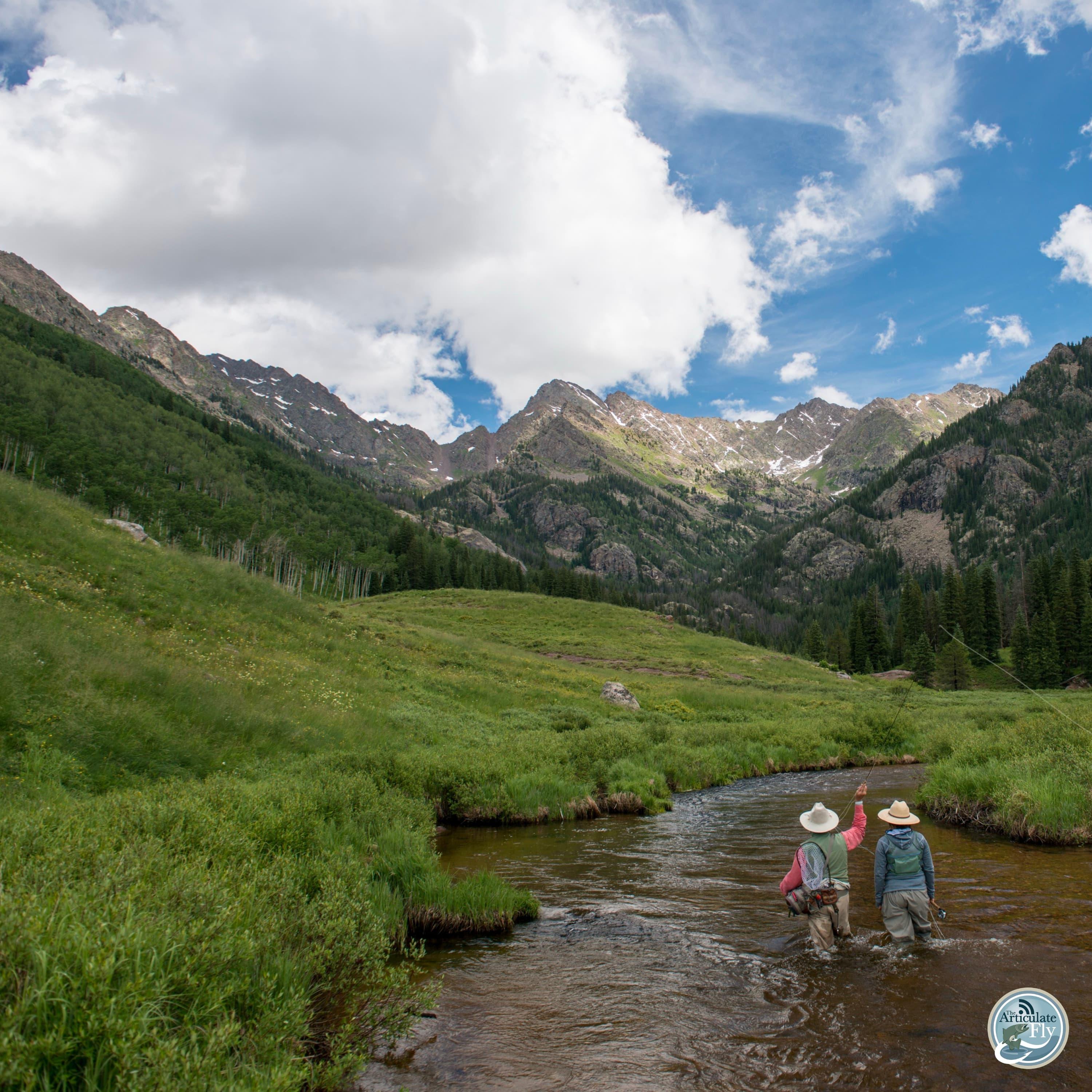 S8, Ep 66: The Roadless Rule Debate: Chris Wood on Protecting America's Wild Spaces and What You Can Do 07.09.2026 57minEpisode OverviewOn this episode of The Articulate Fly, Trout Unlimited President and CEO Chris Wood returns to discuss the fight to save the Roadless Rule, the 25-year-old policy now facing a full rescission by the U.S. Forest Service. With a public comment period closing September 21st, host Marvin Cash and Chris cover why this fight matters well beyond hunters and anglers. Chris, who helped write the original 2001 Roadless Rule as a Forest Service policy staffer under Chief Mike Dombeck, walks through its origins, the parallel legislative attack led by Senator Mike Lee and why the rescission would open 44 million acres of backcountry to new road construction. The conversation ranges from Idaho and Utah's grazing and oil and gas leasing inside roadless areas to the outsized role these lands play as cold, clean water sources for the Tongass National Forest, Colorado's greenback cutthroat trout habitat and Idaho's bull trout and Chinook and steelhead runs. Chris also details recent Trout Unlimited conservation wins, including record coho returns from the North Coast Coho Project and a deal to acquire four dams on Maine's Kennebec River to open habitat for Atlantic salmon. The episode closes with concrete advice on how anglers can make their voices heard before the comment deadline.Key TakeawaysWhy the Roadless Rule's rescission would strip protections from 44 million acres of backcountry that provide the coldest, cleanest water for downstream trout and salmon fisheries.How to submit an effective public comment before the September 21st deadline, including personalizing it with a specific roadless area or species that matters to you.Why the "de facto wilderness" argument against roadless areas doesn't hold up, since these lands already permit off-road vehicle use, grazing, oil and gas leasing and mining.When a more deliberate, iterative rulemaking process (like the state-specific rules Idaho and Colorado developed under the Bush administration) makes more sense than a blanket rescission.Why building a broader coalition beyond traditional hunters and anglers is becoming essential to winning public lands fights in the current political environment.Locations & SpeciesThe episode centers on the 58.5 million acres of national forest backcountry protected by the 2001 Roadless Rule, with particular attention to Idaho, Utah, Wyoming, Montana, Colorado and Alaska's Tongass National Forest. These roadless areas supply drinking water for more than 40 million Americans and serve as critical, contiguous habitat: 70% of Colorado's greenback cutthroat trout, 68% of Idaho's bull trout and 70-75% of the Tongass' and Idaho's Pacific salmon and steelhead populations depend on habitat found within roadless areas.FAQ / Key Questions AnsweredWhat is the Roadless Rule, and why is it being challenged right now?The 2001 Roadless Rule bars new road construction across 58.5 million acres of national forest. On August 18th, the U.S. Forest Service proposed rescinding it entirely, with a public comment period ending September 21st. A parallel legislative effort led by Senator Mike Lee also seeks to eliminate the rule and bar any future administration from reinstating it.Why do roadless areas matter for trout and salmon fishing specifically?Roadless areas are the source of the coldest, cleanest water for the larger rivers downstream that support wild trout and salmon. They protect outsized shares of at-risk populations, including most of Colorado's greenback cutthroat trout, Idaho's bull trout and the Tongass National Forest's Pacific salmon and steelhead runs.Isn't a roadless area basically the same as a designated wilderness area?No. Unlike wilderness, roadless areas already permit off-road vehicle use (33% of all motorized trails in the 12 Western states are in roadless areas), oil and gas leasing, grazing and mining, so the argument that they're "de facto wilderness" locked away from any use doesn't hold up.How can anglers make their comments count before the September 21st deadline?Personalizing a comment with a specific roadless area, species or memory that matters to you is more effective than a generic form submission. Comments can be submitted through Trout Unlimited, and the goal is to exceed the 1.6 million comments the original rule drew 25 years ago.What happens if the rescission goes through anyway?Advocates expect the rescission to face extensive litigation. Continued advocacy and public pressure are seen as important groundwork for reversing the rescission under a future administration if needed.Submit Your Comment Before the DeadlineSponsorsThanks to TroutRoutes for sponsoring this episode. Use ARTFLY20 to get 20% off of your TroutRoutes Pro membership.Related ContentS2, Ep 40 - Chris Wood of Trout UnlimitedS7, Ep 98 - The Fight for Our Future: Land Tawney on Grassroots Advocacy and Public LandsS7, Ep 105 - Changing the Narrative: Robbie Kroger's Mission with The Origins FoundationConnect with Our GuestFollow Chris on Instagram.Follow Trout Unlimited on Facebook, Instagram and YouTube.Follow the ShowFollow The Articulate Fly on Facebook, Instagram, Threads and YouTube.Follow our Substack newsletter for episode updates, tips and resources.Support the ShowShop through our Amazon link to support the podcast.Join our Patreon community to support the show.If you are in the industry and need help getting unstuck, learn more about our consulting options.Subscribe & AdvertiseSubscribe to the podcast in your favorite podcast app.Think our community is a good fit for your brand? Advertise with us.Helpful Episode Chapters0:00 Introduction3:56 Why the Rule Matters10:38 How It All Started18:18 Roadless Areas Aren’t Wilderness25:26 Habitat Benefits for All32:41 The Agency’s Staffing Crisis39:25 Why Nuance Got Lost43:01 Broadening Conservation Messaging45:34 How to Take Action51:20 TU’s On-the-Ground Wins
 -
 S8, Ep 65: Mastering the Roll Cast: Mac Brown's Essential Techniques for Challenging Waters 04.09.2026 11minEpisode OverviewHow do you build a roll cast good enough to effectively fish tight, brush-choked mountain streams where there's no room for a backcast at all? On this Casting Angles installment of The Articulate Fly fly fishing podcast, host Marvin Cash and Master Casting Instructor Mac Brown of Mac Brown Fly Fish in Bryson City, North Carolina, break down what actually separates a "world class" roll cast from one anglers only think is dialed in. Mac frames the roll cast as the ultimate get-out-of-jail-free tool for the tight, overgrown trout streams typical of the Appalachians and mid-Atlantic, where casters rarely have the 15 to 20 feet of clearance needed for a conventional backcast. The conversation works through the mechanics of the shallow D loop, the critical role of a properly matched double taper fly line over a weight forward, and the anchor placement drills anglers can run in the late summer off-season before trout fishing picks back up. Mac also covers how to reposition the D loop to neutralize wind and why timing tightens up considerably when casting upstream and downstream on moving water. Whether an angler works small freestone streams in the Great Smoky Mountains National Park or any other tight, overgrown trout water, the episode offers a practical framework for turning a serviceable roll cast into a genuinely reliable one.Key TakeawaysHow to build a genuinely long roll cast by prioritizing precise anchor placement before adding power, since consistent anchor placement handles roughly 90 percent of the battle once the cast becomes dynamic.Why a double taper fly line, not a weight forward, is the right gear choice for roll casting, since a weight forward's short head leaves too much thin running line at the rod tip to load the cast properly.How to throw a shallow D loop that occupies only 3 to 4 feet of space behind the caster, making it possible to fish brush-choked mountain streams with no conventional backcast room.When to set the D loop on the downwind side of the rod to turn wind from a safety and casting problem into a non-issue.Why timing becomes more critical on upstream and downstream roll casts, since moving water pulls the D loop away from its initial placement.How to use late summer off-season evenings to practice anchor placement in knee-deep water before trout season demands the skill on the water.Techniques & Gear CoveredThe episode centers on roll cast mechanics, starting with the shallow D loop: a compact, low-power pickup that occupies only 3 to 4 feet of space behind the caster rather than a full V loop, making it usable in the tight streamside brush typical of southern Appalachian trout water. Mac ties gear directly to technique, explaining why a double taper line outperforms a weight forward for roll casting, since the mass needed to load the cast sits near the rod tip rather than in a short head backed by thin running line. The conversation also covers anchor placement as a stand-alone practice skill, with Mac recommending anglers wade in knee-deep water and repeatedly set the line so the anchor lands close to a rod length away, refining accuracy independent of live fishing pressure. Additional technique notes include adjusting D loop size and forward loop size for distance and control, positioning the D loop on the downwind side of the rod for safer, easier wind management, and the added timing demands of roll casting upstream and downstream where current pulls the D loop after its initial placement.FAQ / Key Questions AnsweredWhat is a shallow D loop and why does it matter for trout streams?A shallow D loop is a compact roll cast that energizes the line but backs off power quickly enough to occupy only 3 to 4 feet of space behind the caster, rather than a full V loop that might need 20 feet or more. It matters because tight, brush-lined Park and Appalachian streams rarely offer enough clearance for a conventional backcast, making the shallow D loop the tool that keeps anglers fishing productively in that water.Why does fly line taper matter so much for a long roll cast?A double taper line carries its mass in the belly of the line near the rod tip, which is the portion doing the work in a roll cast. A weight forward line, by contrast, has a short head followed by thin running line, so attempting a long roll cast with a weight forward often fails because there isn't enough mass positioned where it's needed to load the rod.How should anglers handle wind when roll casting?Mac recommends setting up the D loop on the downwind side of the rod as a simple, repeatable adjustment. This keeps the line moving away from the body rather than into it, turning wind from a safety concern and casting obstacle into a non-issue without requiring any additional technique changes.When is the best time to practice roll cast placement?Late summer, when water temperatures are too warm for productive trout fishing across the Southeast, is an ideal window to practice. Mac suggests wading in knee-deep water and repeatedly practicing where the anchor lands, aiming for a placement close to a rod length away, so that accuracy is dialed in before the cast needs to perform under real fishing pressure.Why does timing become more critical on upstream and downstream roll casts?When casting upstream or downstream rather than across the current, moving water actively pulls the D loop away from its initial placement. That added variable means anglers need tighter timing between forming the D loop and executing the forward stroke than they would casting across slower or stiller water.Related ContentS8, Ep 49 - Mastering the Cast: Mac Brown's Insights on Shooting LineS8, Ep 60 - The Bare Necessities: Mac Brown's Guide to Minimalist Fly Fishing GearS8, Ep 57 - The Power of Habit: Mac Brown's Strategies for Fishing SuccessS7, Ep 20 - Practice Makes Perfect: Mac Brown on Mastering Casting TechniquesView All Casting Angles Episodes with Mac BrownConnect with Our GuestFollow Mac on Facebook, Instagram and Twitter.Follow the ShowFollow The Articulate Fly on Facebook, Instagram, Threads and YouTube.Follow our Substack newsletter for episode updates, tips and resources.Support the ShowShop through our Amazon link to support the podcast.Join our Patreon community to support the show.If you are in the industry and need help getting unstuck, learn more about our consulting options.Subscribe & AdvertiseSubscribe to the podcast in your favorite podcast app.Think our community is a good fit for your brand? Advertise with us.
 -
 S8, Ep 64: Streamer Strategies: Ellis Ward's Late Day Fishing Tips for East Tennessee 03.09.2026 16minEpisode OverviewHow should anglers pick streamer color when the light drops out on an East Tennessee tailwater? On this East Tennessee Fishing Report from The Articulate Fly fly fishing podcast, host Marvin Cash checks in with guide Ellis Ward for a conditions update on the Watauga River and the South Holston River after an unusually wet stretch pulled the region out of a prolonged post-Helene drought. Ellis walks through how the sudden swing from months of low water to near-constant rain has scrambled the normal dam release schedule, turning a predictable one-to-six-o'clock Watauga generation window into something closer to ten-to-six or noon-to-nine depending on the day, while the South Holston has only recently returned to regular releases after the TVA system spent the better part of a year recovering from drought. That inconsistency has made dry fly fishing unpredictable, so Ellis has leaned harder into dirty water streamer fishing, night fishing and mousing to keep clients on fish. The back half of the episode tackles a listener question on late-day streamer selection: Ellis explains that a fly's color has almost nothing to do with how a trout perceives it in low light or off-color water, since a backlit fly reads only as a silhouette regardless of hue. Instead, he breaks down why opacity and water-column position, not color, drive strikes when the sun drops or the water turns dirty, using a four-inch Drunk and Disorderly as his low light standard.Key TakeawaysHow to read Watauga and South Holston release schedules when heavy rain pushes actual generation windows well beyond their posted baseline times.Why a streamer's color becomes irrelevant to trout in backlit or off-color water, since profile and opacity determine what the fish actually sees from below.When to switch to a bigger, opaque streamer fished higher in the water column for low light or dirty water strikes.How positioning a streamer near the surface exploits the same predatory "kill shot" instinct anglers see when a big trout follows a fly up before committing.Techniques & Gear CoveredEllis breaks down a practical framework for low light and off-color water streamer fishing: when light is reduced by cloud cover, a low sun angle or dirty water, color stops mattering because a backlit fly is seen only in silhouette, so the two variables that matter are opacity (how fully the fly blocks light) and where it sits in the water column. He favors densely packed materials such as deer hair or craft fur over sparsely tied bucktail for maximum light-blocking, contrasting a sparse bucktail fly with a Craft Fur Changer to illustrate how much more effectively the denser material blocks light once it's wet and compressed. He fishes that fly higher in the water column so a predatory trout gets a clean, unobstructed shot at it rather than having to hunt it out of deeper, murkier water. His go-to for these conditions is a four-inch Drunk and Disorderly, fished in white, yellow or tan with some flash since color reads as irrelevant to the fish in these conditions.Locations & SpeciesThis report covers the Watauga River and the South Holston River tailwaters in East Tennessee, both part of the TVA's 32-dam reservoir and tailwater system. The primary target species is brown trout, with the discussion centered on dry fly fishing during stable release windows and streamer fishing when water runs high or dirty. Seasonally, the region is climbing out of a prolonged drought that followed Hurricane Helene, with persistent heavy rainfall now producing extended and inconsistent dam releases, flash flooding on Watauga tributaries and a tradeoff between stained water (better streamer fishing) and clearer water (better dry fly fishing).FAQ / Key Questions AnsweredWhat color streamer should I fish in low light conditions?Color is largely irrelevant once light is reduced by clouds, a low sun angle or dirty water, because a fly viewed from below against a backlit sky reads only as a silhouette. Instead, focus on opacity (how completely the fly blocks light) and fish it higher in the water column where a trout can see and commit to it more easily.Why doesn't fly color matter to trout in dirty or backlit water?When an object is backlit or viewed through off-color water, black, white and every color in between look essentially the same dark shape, since there isn't enough light transmission for the fish to distinguish hue. What a trout actually keys on in these conditions is the fly's profile and how much light it blocks, not its color.How should I position my streamer in the water column during low light or stained water conditions?Fish it higher in the water column rather than dredging it deep, since a trout has an easier time targeting prey it can silhouette against the surface than something buried in dark, off-color water. This also mimics how predatory fish naturally corral baitfish toward the surface for an easier, more effective strike.How have this season's dam release schedules on the Watauga and the South Holston been affected by heavy rain?After a long post-Helene drought, persistent heavy rainfall has pushed the Watauga well beyond its normal generation window, turning its typical one-to-six-o'clock release into stretches closer to ten-to-six or noon-to-nine depending on the day. The South Holston only resumed regular releases in the past couple of weeks after the broader TVA system spent months recovering from low water, making dry fly fishing inconsistent this summer.Related ContentS8, Ep 50 - Navigating Summer Waters: Ellis Ward on Trout, Musky and the Art of the Evening BiteS8, Ep 37 - Big Water, Big Fish: Ellis Ward's Strategies for Streamer Fishing SuccessS7, Ep 45 - Navigating the Waters: Streamers and Strategies in East Tennessee with Ellis WardS6, Ep 128 - Catch Big Fish: Ellis Ward's Insider Tips for East Tennessee AnglersView all East Tennessee Fishing Report episodes with Ellis WardConnect with Our GuestTo learn more about Ellis, check out our interview!Follow the ShowFollow The Articulate Fly on Facebook, Instagram, Threads and YouTube.Follow our Substack newsletter for episode updates, tips and resources.Support the ShowShop through our Amazon link to support the podcast.Join our Patreon community to support the show.If you are in the industry and need help getting unstuck, learn more about our consulting options.Subscribe & AdvertiseSubscribe to the podcast in your favorite podcast app.Think our community is a good fit for your brand? Advertise with us
 -
 S8, Ep 63: Seasonal Shifts: Brian Shumaker's Smallmouth Strategies for Late Summer 30.08.2026 8minEpisode OverviewCaptain Brian Shumaker of Susquehanna River Guides returns to The Articulate Fly fly fishing podcast for another Pennsylvania Smallmouth Report, breaking down how a fresh round of heavy late summer rain has muddied the Susquehanna and Juniata rivers and reshaped smallmouth positioning heading into Labor Day. Shumaker explains how localized thunderstorm tracks determine which branch of the Susquehanna blows out and which stays clean, meaning anglers who understand the West Branch/North Branch dynamic on the Susquehanna and the Juniata Valley's own storm patterns can often salvage half a river rather than write off an entire day. He details a mud line strategy for fishing the boundary between clear and discolored water and lays out when to stick with "bug" patterns tight to clear banks versus when to switch to intermediate lines and streamers in colors like black-and-purple or chartreuse-and-orange once water clarity drops off. As rising but still fishable flows push Susquehanna smallmouth tighter onto mid-river structure such as grass beds, islands and rock ledges, Shumaker also covers how those fish use discolored water the same way they use shade or cover, sitting in the murk to ambush prey. On the seasonal side, he notes that a lack of an early hard frost could extend the region's topwater bite into the back half of September.Key TakeawaysHow to read localized thunderstorm tracks to figure out which branch of the Susquehanna will blow out and which stays fishableWhy smallmouth bass hold in muddy or discolored water as an ambush point the same way they use shade or grass coverWhen to switch from "bug" fishing tight to clear banks over to streamer fishing once you move more than about five feet into discolored waterHow rising but still fishable Susquehanna flows push smallmouth bass tighter onto mid-river structure like grass beds, islands and rock ledgesWhy the lack of an early hard frost can extend Pennsylvania's topwater bite into late SeptemberHow to pick streamer colors like black-and-purple or chartreuse-and-orange with intermediate lines for muddy high water smallmouth fishingTechniques & Gear CoveredShumaker walks through a mud line approach that targets the seam between clear and discolored water where smallmouth bass concentrate during high flows alongside a two-track presentation strategy that pairs "bug" patterns fished tight to clear banks with streamer fishing once anglers move into muddier water. For the streamer side, he favors intermediate lines paired with baitfish-style patterns in black-and-purple or chartreuse-and-orange color combinations chosen for visibility in reduced-clarity conditions. He also touches on the difference between fishing wide island-studded water like the Susquehanna, where rising flows push bass onto mid-river grass beds, islands and rock ledges rather than tight to the bank, and smaller water where high flows more directly push fish toward bank structure.Locations & SpeciesThe report centers on the Susquehanna River, where the confluence of the West Branch and the North Branch determines which side of the river runs clean after localized storms, along with the Juniata River and its own Juniata Valley watershed. Target species is smallmouth bass, with Shumaker describing how rising but still fishable flows concentrate fish tighter onto mid-river grass beds, islands and rock ledges rather than spreading them out as they would be in normal lower water. Seasonally, the report is set in late summer heading into Labor Day, with Shumaker noting that, barring an early hard frost, the topwater bite could last into the back half of September.FAQ / Key Questions AnsweredHow does thunderstorm track affect fishing conditions on the Susquehanna and Juniata rivers?Shumaker explains that because the Susquehanna is fed by a West Branch and a North Branch, storms tracking from the west without moving north will muddy the West Branch and roughly half the river while the North Branch-fed side stays clear. A similar pattern plays out on the Juniata and the two systems meet near Duncannon, so anglers can often find fishable water somewhere even after heavy rain.Why do smallmouth bass hold in muddy or discolored water during high flows?Shumaker notes that bass treat discolored water the same way they treat shade or grass cover using it as an ambush point where they can sit unseen and dart out to grab prey that swims by even though the fish cannot see the same distance in dirty water that they could in clear conditions.When should anglers switch from "bug" fishing to streamers in high water?According to Shumaker, visibility along the banks typically holds for about one to five feet before the water turns too dirty, so anglers can still fish bug patterns tight to the bank and in the shade. Once they move beyond that clear margin into discolored water, he recommends switching to intermediate lines and streamers since fish cannot see a surface bug's silhouette well in reduced clarity.How does rising water change where Susquehanna smallmouth position themselves?Shumaker explains that on a wide river system like the Susquehanna, rising but still fishable flows push smallmouth bass tighter onto mid-river structure such as grass beds, islands and rock ledges.Why might a late hard frost extend Pennsylvania's smallmouth topwater activity into late September and beyond?Shumaker says that, without an early hard frost, the region's damsel activity and flying ant hatch, both of which are already good in the July-through-August window, could keep producing solid topwater opportunities into the second half of September rather than tapering off as usual.Related ContentS8, Ep 59 - Pennsylvania Smallmouth Report: Captain Brian Shumaker's Late Summer StrategiesS8, Ep 56 - Topwater Tactics: Captain Brian Shumaker's Pennsylvania Smallmouth ReportS8, Ep 52 - Hot Days and Night Bites: Brian Shumaker's Guide to Pennsylvania Smallmouth FishingS8, Ep 43 - Smallmouth Strategies and Seasonal Shifts: Captain Brian Shumaker's Pennsylvania ReportView all Pennsylvania Smallmouth Reports with Brian ShumakerConnect with Our GuestFollow Brian on Facebook and Instagram.Follow the ShowFollow The Articulate Fly on Facebook, Instagram, Threads and YouTube.Follow our Substack newsletter for episode updates, tips and resources.Support the ShowShop through our Amazon link to support the podcast.Join our Patreon community to support the show.If you are in the industry and need help getting unstuck, learn more about our consulting options.Subscribe & AdvertiseSubscribe to the podcast in your favorite podcast app.Think our community is a good fit for your brand? Advertise with us.
 -
 S8, Ep 62: Late Summer Secrets: George Costa's Central PA Fishing Report 28.08.2026 4minEpisode OverviewOn this Central PA Fishing Report from The Articulate Fly fly fishing podcast, host Marvin Cash checks in with George Costa of TCO Fly Shop in State College, Pennsylvania, for a late summer conditions update. Water levels across the region are running well above the usual late summer norm thanks to a wet summer, keeping trout streams fishable throughout the day even as afternoon action remains the slowest window. Costa reports Tricos are still bringing fish up in the mornings, while evening hatches of caddis, olives and the season's first Isonychias round out the dry fly picture. With water levels up, terrestrials such as beetles, ants and crickets are the top producers, fished on a dry-dropper rig with small nymphs like zebra midges, perdigons and Greenie Weenies below. Streamer fishing has also been productive during low-light morning and evening windows. Costa notes that trout fishing is in unusually good shape for this time of year, avoiding the typical low, hot and stressful late summer conditions. Beyond the trout report, Costa shares that the smallmouth bite has been strong on the high water, particularly around the Juniata River, with anglers finding good topwater action by working the banks. He also previews TCO's transition into fall and winter, including new product arriving, seasonal sales and a full slate of fall and winter classes coming to the shop's website in the coming weeks.Key TakeawaysHow to target Central PA trout during high, late summer flows by fishing dry-dropper rigs with terrestrials on top and small nymphs underneathWhen to fish for the best dry fly action, focusing on morning Trico windows and evening caddis and Isonychia hatchesWhy streamer fishing is producing right now when fished during low-light morning and evening hours rather than middayHow to find smallmouth bass action on the Juniata River by working the banks with topwater flies during elevated flowsTechniques & Gear CoveredCosta's go-to approach for elevated, late summer flows is a dry-dropper rig, pairing terrestrial patterns like beetles, ants and crickets on top with small nymphs such as zebra midges, perdigons and Greenie Weenies below. Dry fly anglers can also find morning Trico action on Penns Creek and the Little Juniata, along with evening hatches of caddis, olives and early-season Isonychias. For anglers willing to fish low light, streamers are producing a decent bite in the early morning and evening hours. On the smallmouth side, Costa points anglers toward topwater flies worked tight to the bank on the Juniata River, where elevated flows haven't slowed the bite.Locations & SpeciesThis report centers on Central Pennsylvania's trout waters, including Penns Creek and the Little Juniata, which are running high and cool after a wet summer, keeping fishing viable through the middle of the day despite a typical afternoon lull. Wild and stocked trout remain the primary target, with morning Trico and evening caddis, olive and Isonychia hatches providing consistent dry fly opportunities. Costa also highlights a strong secondary smallmouth bass fishery on the high water of the Juniata River, where anglers working the banks are finding good topwater action despite the elevated flows.FAQ / Key Questions AnsweredWhat are current water conditions on Central PA trout streams in late summer?Water levels are running well above the typical late summer norm thanks to a wet summer, and temperatures have stayed relatively stable without the usual late summer spikes. Costa still recommends checking stream temperatures in the afternoons, but overall conditions have allowed for fishing throughout the day.When is the best time of day to fish Central PA streams right now?Mornings and evenings are producing the most consistent action, with Tricos bringing fish up early and caddis, olives and Isonychias showing in the evening. Afternoons remain the slowest window, so Costa recommends sticking to the low light hours.What flies should anglers use for late summer trout in Central PA?Costa recommends a dry-dropper rig with terrestrials like beetles, ants and crickets on top, paired with small nymphs such as zebra midges, perdigons and Greenie Weenies underneath. Streamers are also working when fished during low light morning and evening periods.How is the smallmouth bite on the Juniata River right now?The smallmouth bite has been great despite elevated flows, with anglers working the banks and finding solid topwater action. Costa expects the bite to keep improving as water levels drop.Related ContentS8, Ep 58 - Central PA Fishing Report: George Costa's Summer Strategies for SuccessS8, Ep 59 - Pennsylvania Smallmouth Report: Captain Brian Shumaker's Late Summer StrategiesS7, Ep 70 - The Dog Days of Summer: Trico Tactics in Central PA with George CostaS8, Ep 61 - Smallmouth Chronicles: Matt Reilly's Secrets to Success in SW VirginiaView all Central Pennsylvania Fishing Reports with George CostaConnect with Our GuestFollow TCO on Facebook, Instagram and Twitter.Follow the ShowFollow The Articulate Fly on Facebook, Instagram, Threads and YouTube.Follow our Substack newsletter for episode updates, tips and resources.Support the ShowShop through our Amazon link to support the podcast.Join our Patreon community to support the show.If you are in the industry and need help getting unstuck, learn more about our consulting options.Subscribe & AdvertiseSubscribe to the podcast in your favorite podcast app.Think our community is a good fit for your brand? Advertise with us.
 -
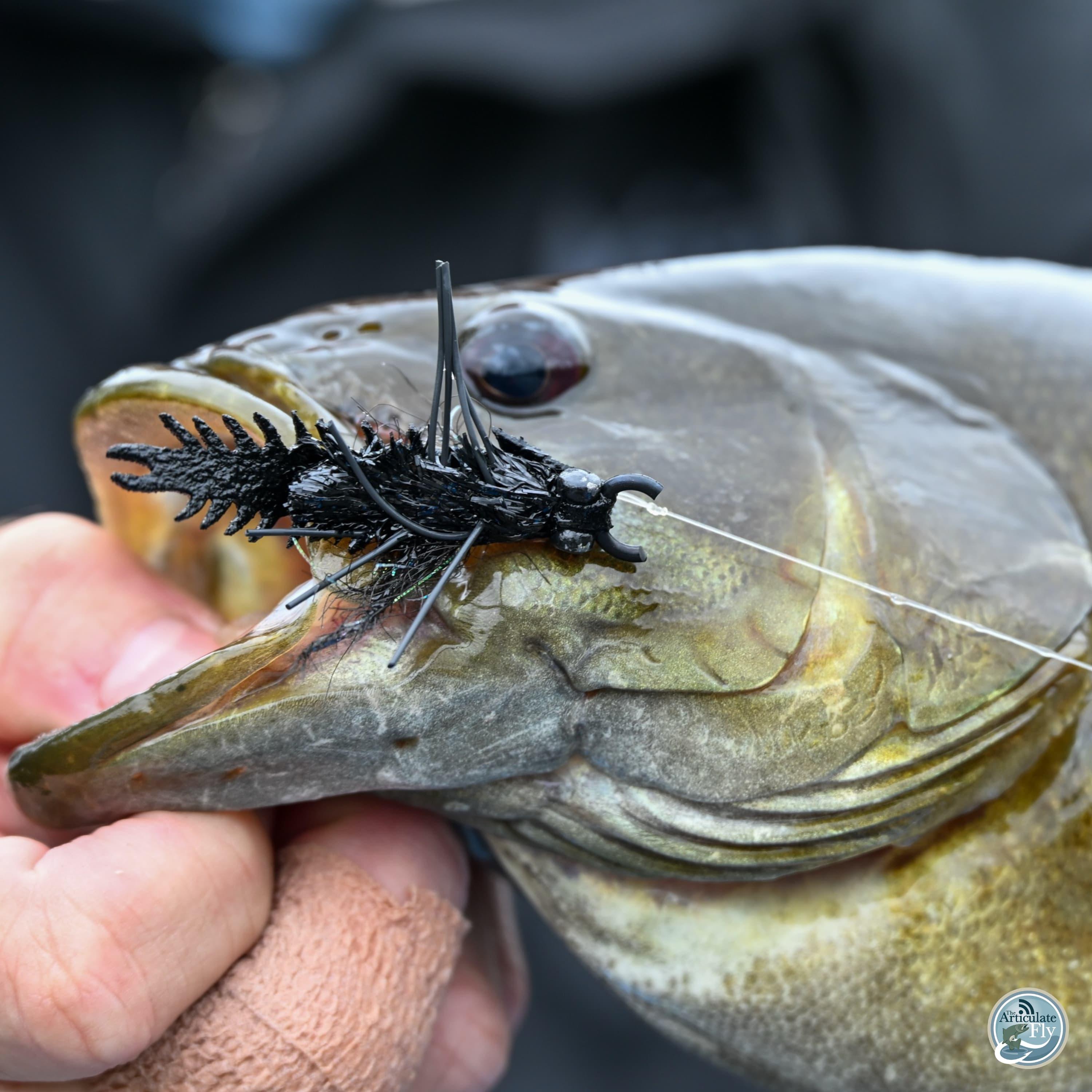 S8, Ep 61: Smallmouth Chronicles: Matt Reilly's Secrets to Success in SW Virginia 21.08.2026 10minEpisode OverviewWhat happens to a Southwest Virginia smallmouth fishery when storm after storm rolls through a watershed for weeks on end? On this Southwest Virginia Fishing Report from The Articulate Fly fly fishing podcast, host Marvin Cash checks in with guide and writer Matt Reilly of Matt Reilly Fly Fishing for a late-summer update on a region caught in a relentless rain pattern, with flash floods dumping 6 to 7 inches of rain in an hour on parts of the watershed while the New River holds up comparatively well thanks to its lake-fed flows. Reilly breaks down how he reads clarity river by river and tributary by tributary rather than trusting a single gauge, and why the New River's roughly 95 percent lake-water makeup gives him options even when stream flow numbers spike. The conversation moves into an unusual bright spot for the fishery: several years of strong smallmouth recruitment have produced an abundance of 0 to 3 year old fish in the 11 to 12 inch range, but a noticeable gap in the 12 to 15 inch numbers class, meaning bigger streamers and bugs are drawing pecks from undersized fish rather than solid hookups on true numbers fish. Reilly and Cash also look ahead to the seasonal transition bearing down on the region, with smallmouth season winding down over the next month to six weeks, musky bookings already filling for November and December and striper season deposits coming in for the spring run. It is a practical, conditions-first snapshot for anglers planning a Southwest Virginia trip around shifting water and a fishery in transition.Key TakeawaysHow to read water clarity on a tributary-by-tributary basis rather than trusting a single regional gauge when a watershed is hit by scattered stormsWhy the New River's largely lake-fed flow gives anglers a clarity advantage over tributary-driven systems even when overall stream flow spikesWhy an unusually strong multi-year smallmouth spawn has created a numbers gap, with plenty of small fish but fewer 12 to 15 inch bass than normalWhen to expect the seasonal shift from smallmouth to musky in Southwest VirginiaWhy booking musky, striper and smallmouth trips well in advance matters as Reilly's calendar fills a year or more outTechniques & Gear CoveredReilly's late-summer program currently leans on moving-water tactics suited to diminished clarity and elevated flows, including streamer fishing and aggressive topwater presentations on cloudy, rainy days. He notes that with the current numbers-class gap, fishing bigger streamers and bugs sized for mature smallmouth is producing more short pecks from undersized fish than solid hookups. On the highest-water days, Reilly will fish well past the flow range most anglers consider viable, targeting mid-river slack water and bank structure where fish concentrate once flows push two to three times normal CFS.Locations & SpeciesThe report centers on the New River in Southwest Virginia, where smallmouth bass are the primary late-summer target and the New's largely lake-fed flow gives the system a clarity edge over tributary-driven waters even during heavy rain events. Conditions have been shaped by a stretch of intense, localized storms moving through the Johnson City to Wytheville corridor, producing everything from blown-out tributary water to sections holding good clarity on the same day. Reilly also flags the upcoming seasonal shift, with musky fishing picking up through the New River system from November into winter and a spring striper run drawing early bookings as smallmouth season winds down.FAQ / Key Questions AnsweredHow do you find fishable water on the New River during a heavy rain pattern?Reilly watches radar and tributary-specific conditions rather than treating the watershed as one system, since some tributaries blow out quickly while the main New River can stay comparatively clear. Because roughly 95 percent of the New River's flow originates from lake water upstream, the system tends to hold clarity better than more tributary-fed rivers even when overall stream flow numbers rise sharply.Why are anglers getting short strikes on big smallmouth flies right now?Several consecutive years of strong spawning success have filled the river with 0 to 3 year old smallmouth in the 11 to 12 inch range, while the 12 to 15 inch numbers class that anglers normally target with bigger flies is thin this year. The result is a lot of pecks and grabs from fish too small to get the hook, since standard bigger-fly tactics are sized for the missing age class rather than the abundant younger fish.How high is too high to fish the New River with flies?Reilly will fish flows well beyond what most anglers consider viable, including stretches at two to three times the typical CFS range for good fishing, though success rates can drop noticeably at those extremes. At very high flows the fish concentrate into mid-river slack water and bank structure, which can still produce opportunities if anglers focus their presentations there.When does Southwest Virginia transition from smallmouth to musky season?Reilly expects a fairly abrupt seasonal shift over the next month to six weeks as smallmouth fishing wraps up and musky season ramps into November and December. His musky calendar is already booking well into the winter months, alongside early deposits for the following spring's striper run.Related ContentS8, Ep 54 - Weathering the Storm: Matt Reilly on Adapting to Summer Fishing ConditionsS8, Ep 46 - Low Water, Big Bugs: Matt Reilly's Southwest Virginia Fishing UpdateS8, Ep 59 - Pennsylvania Smallmouth Report: Captain Brian Shumaker's Late Summer StrategiesView all Southwest Virginia Fishing Reports with Matt ReillyConnect with Our GuestFollow Matt on Instagram.Follow the ShowFollow The Articulate Fly on Facebook, Instagram, Threads and YouTube.Follow our Substack newsletter for episode updates, tips and resources.Support the ShowShop through our Amazon link to support the podcast.Join our Patreon community to support the show.If you are in the industry and need help getting unstuck, learn more about our consulting options.Subscribe & AdvertiseSubscribe to the podcast in your favorite podcast app.Think our community is a good fit for your brand? Advertise with us.
 -
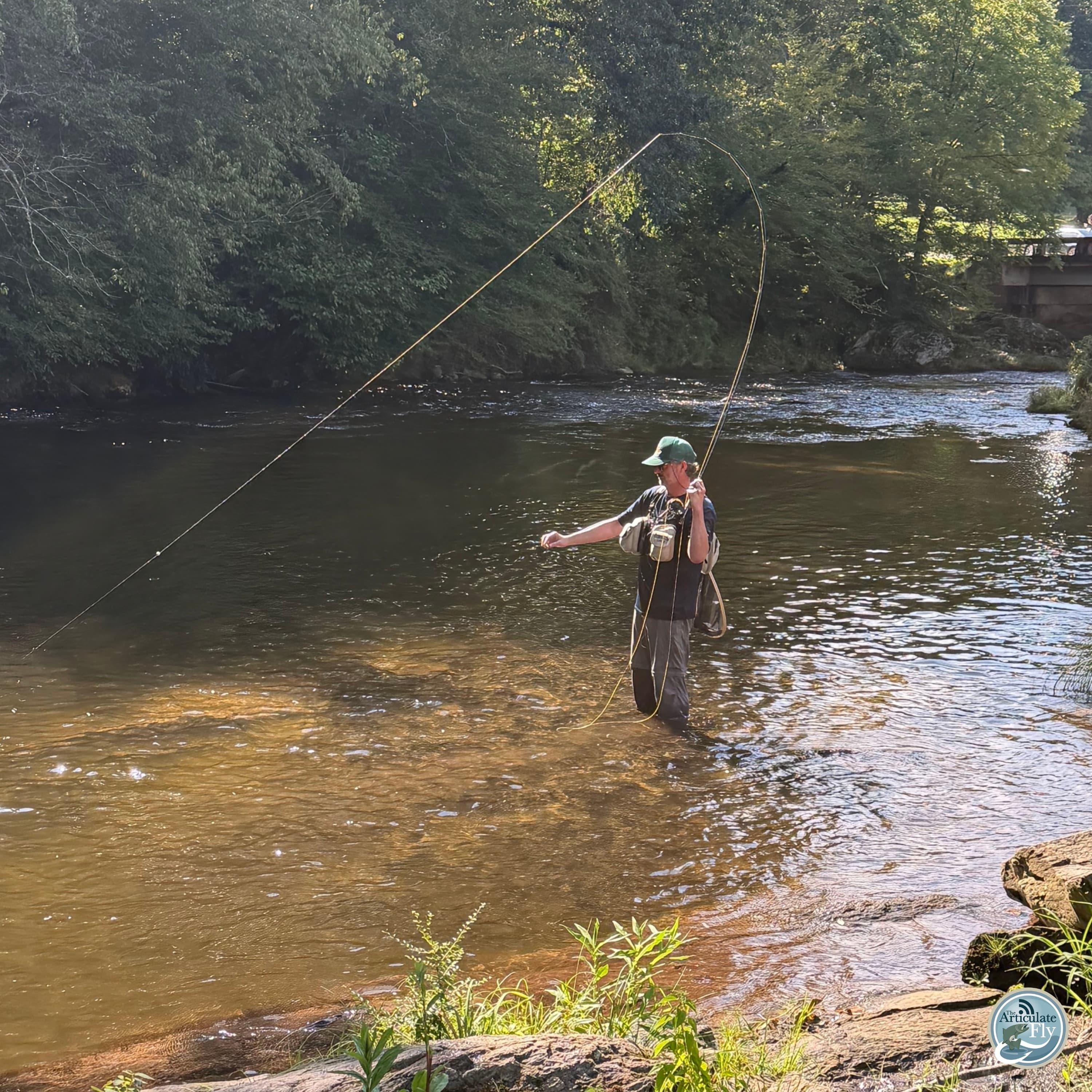 S8, Ep 60: The Bare Necessities: Mac Brown's Guide to Minimalist Fly Fishing Gear 19.08.2026 12minEpisode OverviewHow much gear does it actually take to fish effectively for trout in the Southern Appalachians? On this Casting Angles episode of The Articulate Fly fly fishing podcast, host Marvin Cash and Master Casting Instructor Mac Brown of Mac Brown Fly Fish make the case for stripping gear down to the essentials rather than chasing every new product on the market. The conversation was sparked by both hosts equipping their youngest sons with fly fishing gear, which got them talking about how little an angler really needs to catch fish consistently in the region's freestone trout streams.Mac and Marvin walk through a minimalist lanyard setup built around a single small fly box, forceps, nippers, split shot, floatant and a tippet spool, paired with a short list of proven trout patterns rather than an overstuffed vest. They cover footwear strategy for backcountry approaches into Great Smoky Mountains National Park, weighing lightweight hiking shoes and packable wading shoes against the weight and bulk of traditional wading boots. The pair also break down how to assemble a budget-conscious rod, reel and line setup without sacrificing performance, and make the case for redirecting money saved on gear toward casting or guided instruction instead. Mac closes with a preview of his fall school schedule and the early October start of the Delayed Harvest season around Bryson City, North Carolina.Key TakeawaysHow a single lanyard with a small fly box, forceps, nippers, split shot, floatant and a tippet spool covers nearly everything needed for a day on Southern Appalachian trout water.Why a short list of proven patterns like elk hair caddis, parachute Adams, greenie weenies, San Juan worms and soft hackle pheasant tails outperforms an overstuffed fly selection.When wet wading in lightweight shoes like Keens, Chacos or old sneakers makes more sense than hiking in with traditional wading boots on long backcountry approaches.How to build a budget-conscious rod, reel and line setup using workhorse reels and affordable entry-level fly lines without sacrificing performance on the water.Why redirecting money saved on gear toward casting or guided instruction accelerates an angler's progress faster than buying more equipment.Techniques & Gear CoveredThe core technique here is minimalist trout fishing logistics rather than any single on-water tactic, built around carrying a lanyard with a small fly box, forceps, nippers, split shot, gel and powder floatant and a tippet spool instead of a heavily loaded vest or pack. Fly selection stays deliberately narrow, with elk hair caddis, parachute Adams, greenie weenies, San Juan worms, beetles, ants, hare's ear nymphs and soft hackle pheasant tails covering the bulk of Southern Appalachian trout water. Footwear gets specific attention, with Mac and Marvin comparing lightweight hiking shoes like Hokas paired with packable river shoes against traditional wading boots, plus a budget DIY option from Mac's childhood of gluing felt soles onto old Converse sneakers to build a lightweight homemade wading shoe for backcountry hikes. On the rod, reel and line side, Mac and Marvin point to workhorse reels from manufacturers like Lamson and affordable entry-level fly lines in the $70 range as ways to get a capable trout setup without overspending on premium gear.Locations & SpeciesThe episode centers on wild and stocked trout fishing in western North Carolina, with backcountry streams inside Great Smoky Mountains National Park serving as the primary destination discussed for the minimalist, hike-in approach to gear. Mac and Marvin note that the Park's water calls for small dries, wets and nymphs rather than streamers, with streamer fishing only becoming viable after a thunderstorm pushes water levels up. The conversation also touches on current warm weather wet-wade conditions giving way to fall, with the region's Delayed Harvest season expected to resume the first Saturday in October around Bryson City.FAQ / Key Questions AnsweredWhat gear do I actually need to fish effectively for trout in the Southern Appalachians?A single lanyard carrying a small fly box, forceps, nippers, split shot, gel and powder floatant and a tippet spool covers nearly everything needed for a productive day on the water. Pair that with a short list of proven patterns like elk hair caddis, parachute Adams and soft hackle pheasant tails rather than an overloaded fly selection.How should I choose footwear for hiking into backcountry trout streams?Lightweight hiking shoes like Hokas paired with packable river shoes that fold up small are a lighter alternative to traditional wading boots, which take up significant pack space and add several pounds of weight. Budget wet-wade options like Keens, Chacos or even old sneakers also work well.What's a budget-friendly way to build a trout rod, reel and line setup?Most major rod manufacturers make a solid, entry level four- or five-weight rod, and companies like Lamson produce affordable, workhorse reels that hold up for years of trout fishing. Entry-level fly lines from brands like Scientific Anglers run around $70 and are a reasonable way to get out the door without overspending on premium gear.Why should anglers prioritize instruction over buying more gear?Gear alone is unlikely to be the deciding factor in becoming a better angler, while casting or guided instruction directly improves the skills that produce more fish on the water. Redirecting money that would otherwise go toward another piece of gear into a lesson or class tends to pay off faster than expanding an already adequate kit.Related ContentS8, Ep 57 - The Power of Habit: Mac Brown's Strategies for Fishing SuccessS8, Ep 21 - Casting into Spring: Mac Brown Discusses Wild Trout Fishing and Upcoming ClassesS8, Ep 49 - Mastering the Cast: Mac Brown's Insights on Shooting LineView All Casting Angles Episodes with Mac BrownConnect with Our GuestFollow Mac on Facebook, Instagram and Twitter.Follow the ShowFollow The Articulate Fly on Facebook, Instagram, Threads and YouTube.Follow our Substack newsletter for episode updates, tips and resources.Support the ShowShop through our Amazon link to support the podcast.Join our Patreon community to support the show.If you are in the industry and need help getting unstuck, learn more about our consulting options.Subscribe & AdvertiseSubscribe to the podcast in your favorite podcast app.Think our community is a good fit for your brand? Advertise with us.
 -
 BONUS: The Science of Streamers (Pt II): Kirk Klingensmith on Swim Flies 15.08.2026 29minEpisode OverviewOn this episode of The Butcher Shop fly fishing podcast, host Marvin Cash welcomes back Kirk Klingensmith for Part Two of their Science of Streamers conversation, this time digging into the physics behind swim flies and the Game Changer platform. Klingensmith brings an engineer's eye to the vise, breaking down why doubling a fly's length doesn't mean doubling its diameter and why that distinction matters more than most tiers realize.The conversation opens with the geometry of drag: length scales linearly, but diameter drives drag by the square, so a modest increase in diameter has an outsized effect on a fly's action. From there, Klingensmith and Cash trace how turbulence created at the front of a swim fly, whether from a deer hair lip, a cupped popper head or simply a bulky front-loaded profile, sets up the unstable eddy currents that make the rear of the fly undulate on the retrieve. They cover material choices (marabou, rabbit, craft fur, Flashabou) that add movement, the role of shank engineering and segmentation in producing a serpentine swim, and how stinger hook placement and connection material (wire, gel-spun, mono) change both the fly's action and its hookup rate on short-striking fish. A highlight of the episode is Klingensmith's breakdown of Brian Shumaker's Shimmering Minnow and the "hover and twitch" presentation he uses on pressured smallmouth bass in warm summer water.Key TakeawaysHow to scale a streamer's diameter separately from its length, since drag increases geometrically with diameter while length scales in linear proportionWhy turbulence-inducing elements like a deer hair lip, a cupped popper head or an oversized front profile make a swim fly kick and undulate on the retrieve instead of just sinking straightWhen to fish a swim fly on a dead-stop hover rather than a fast retrieve, particularly for pressured smallmouth bass in warm summer waterHow to use material mass and segment placement to dial in a tighter or more gradual S-curve swimming action on an articulated flyWhy adding a stinger hook can improve hookups on short-striking predatory fish while also changing how much mass and crash the tail of the fly carriesHow fly designers use a "chassis" mindset, treating patterns like the Clouser Minnow or Game Changer as adaptable platforms rather than fixed recipesTechniques & Gear CoveredKlingensmith explains swim fly action as a function of engineered turbulence: a drag-inducing front end (a lip, a cupped head or simply a bulky profile) creates unstable eddy currents that the rear of the fly follows, producing the swimming motion, while a laminar (streamlined) front would produce no swim at all. He details how progressively smaller shanks toward the tail increase segmentation and produce a more serpentine undulation, and how adding mass to those rear segments dampens the action into a slower, more gradual S-curve. On stinger hook rigging, he walks through connection options (wire, gel-spun, mono) and how hook placement and gauge affect both the fly's swim and its hook-up percentage on fish that nip at the tail rather than eating the head. Named patterns discussed include the Game Changer platform and two of its variants, the Jerk Changer and the Feather Changer, along with the Drunk & Disorderly, Brian Shumaker's Shimmering Minnow, the Clouser Minnow, Bob Popovics' Beast Fleye and Chris Walker's Kreelex-variant, a stinger-hook trout streamer designed for brown trout that key on the tail.FAQ / Key Questions AnsweredWhy don't fly proportions scale linearly when you size up a streamer pattern?Because drag from a cylindrical or spherical shape increases geometrically with diameter while length only scales linearly. Klingensmith explains that it's reasonable to scale a fly's length proportionally when going from, say, four inches to six inches, but the diameter should only be increased modestly, not scaled by the same ratio, or the fly's action and drag profile will be thrown off.What makes a swim fly like the Game Changer move with a swimming action instead of just sinking?The action comes from turbulence engineered into the front of the fly. A lip, a cupped popper head or simply a bulky, non-streamlined front end creates a drag source that generates unstable eddy currents, and the rest of the fly follows those currents on the retrieve. A streamlined, laminar-flow front would not produce this swimming motion.How does adding a stinger hook affect a swim fly's action and hookup rate?It depends heavily on how the shank-to-stinger connection is built, whether with wire, gel-spun line or mono, and whether the hook is left free or incorporated into the tail material. Stinger hooks are especially effective on predatory fish that nip at a fly's tail rather than striking the head, and shorter-shank designs like octopus hooks tend to hold hooked fish more securely than long-shank hooks.What is the "hover and twitch" technique Kirk Klingensmith uses for pressured smallmouth?Rather than burning the fly back with a fast retrieve, Klingensmith lays the Shimmering Minnow within six inches of structure and lets it twitch and suspend with almost no forward motion, letting subtle microcurrent movement do the work. He believes this near-motionless presentation gives pressured smallmouth, especially in warm water, something they haven't already learned to refuse.How can fly tiers control the tightness of a swim fly's S-curve swimming action?By adjusting material mass in the segments behind the head. Lighter segments produce a tighter, more pronounced undulation, while adding more mass and gradually stepping it down through the rear segments dampens the action into a slower, more gradual S-curve.SponsorsThanks to TroutRoutes for sponsoring this episode. Use ARTFLY20 to get 20% off of your TroutRoutes Pro membership.Related ContentListen to The Science of Streamers (Pt I)BONUS: The Science of Streamers (Pt I): Kirk Klingensmith on Jigging and Wrecking FliesBONUS: Castability Unleashed: Mark Sedotti's Journey with the Sedotti SlammerBONUS: Swine Design Secrets: Eli Berant Discusses the Optimus SwineS6, Ep 144: The Chocklett Factory: Conservation, New Products and a Legacy RememberedConnect with Our GuestFollow Kirk on Facebook and Instagram.Follow the ShowFollow The Articulate Fly on Facebook, Instagram, Threads and YouTube.Follow our Substack newsletter for episode updates, tips and resources.Support the ShowShop through our Amazon link to support the podcast.Join our Patreon community to support the show.If you are in the industry and need help getting unstuck, learn more about our consulting options.Subscribe & AdvertiseSubscribe to the podcast in your favorite podcast app.Think our community is a good fit for your brand? Advertise with us.Helpful Episode Chapters00:00 Introduction02:51 Scaling Fly Geometry05:35 How Swim Flies Swim11:28 Paused Retrieves Matter Most16:26 Stinger Hooks and Fly...
 -
 S8, Ep 59: Pennsylvania Smallmouth Report: Captain Brian Shumaker's Late Summer Strategies 12.08.2026 7minEpisode OverviewOn this Pennsylvania Smallmouth Report from The Articulate Fly fly fishing podcast, host Marvin Cash checks in with Captain Brian Shumaker of Susquehanna River Guides for a mid-August conditions update on the Susquehanna River system in Central Pennsylvania. After a heavy rain event pushed the river up, Shumaker reports flows are now falling and clarity is returning, with roughly two feet of visibility on the edges and more color still out in the main current. That in-between water dictates a two-tier approach: anglers can still pound the banks with poppers where visibility holds, but need to switch to bigger, darker streamers with more flash as they move off the bank into stained water. Shumaker breaks down how he is fishing Half and Half and Clouser Minnow patterns in size two and one, in chartreuse-yellow with gold flash, black-and-olive and olive-and-orange combinations, all still fished on an intermediate line. He also covers how the return of some color has let him tighten up casting distances compared to the ultra-clear, low-water conditions from before the rain, when 40-foot+ casts were often required to avoid spooking fish. Looking ahead, Shumaker outlines open guide dates in late September and October before he heads to Texas for redfish in November.Key TakeawaysHow falling, stained water after heavy rain changes streamer color and profile choices for Susquehanna smallmouthWhy topwater poppers still produce along the bank edges even when the main current carries reduced visibilityWhen to size up to bigger, darker streamers with added flash as anglers move off the bank into off-color waterHow stained, elevated water allows for shorter, more comfortable casts compared to low, clear pre-rain conditionsWhen to book a fall smallmouth trip with Susquehanna River Guides as the guide calendar opens up in September and OctoberTechniques & Gear CoveredShumaker splits his approach along a visibility gradient: poppers worked tight to the bank where a foot and a half or so of clarity remains, and streamers as anglers move out into the murkier main current. His streamer program centers on Half and Half and Clouser Minnow patterns in size two and one, favoring darker, flashier color combinations in stained water, including chartreuse-yellow with gold flash, black-and-olive and olive-and-orange. All of these are fished on an intermediate line rather than a heavier sinking option, even as fly size and color shift with conditions. On the presentation side, he notes that reduced water clarity has shortened the casting distance needed to reach productive water, a contrast to the 40-foot+ casts required during the low, gin-clear conditions before the rain.Locations & SpeciesThis report covers the Susquehanna River system in Central Pennsylvania, where Captain Brian Shumaker guides for smallmouth bass out of Susquehanna River Guides. Conditions are transitional: the river is dropping and clearing after a heavy rain event, moving from a bony, low-water late-summer pattern toward a fresh bump with a couple of feet of edge visibility.FAQ / Key Questions AnsweredHow does falling, stained water after heavy rain change smallmouth fly selection on the Susquehanna?Brian Shumaker sizes up to bigger, darker streamers with more flash as visibility drops moving off the bank, favoring Half and Half and Clouser Minnow patterns in size two and one. Color choices lean toward chartreuse and chartreuse-yellow with gold flash, or black-and-olive and olive-and-orange combinations that show up well in off-color water.When should anglers fish topwater poppers versus switch to streamers in low-visibility conditions?Poppers still work tight along the bank, where roughly a foot and a half of visibility typically remains even in stained water. As anglers move out five feet or more from the bank and lose that visibility, Shumaker shifts to streamers, then moves back to a full topwater program once the river fully clears.How does water clarity affect casting distance for Susquehanna smallmouth?During the low, gin-clear conditions before the recent rain, Shumaker often needed anglers to make consistent 40-foot+ casts to reach fish without spooking them. With some color back in the water, he can now position anglers closer to productive water, making the cast easier without sacrificing effectiveness.What fly line does Brian Shumaker use for streamer fishing in these conditions?Shumaker fishes his streamer program on an intermediate line rather than a more aggressive sinking option, keeping the same line even as he adjusts fly size and color for changing water clarity.When is Brian Shumaker's guide calendar open for fall smallmouth trips?Shumaker has open dates in late September and more availability through October before heading to Texas in November to chase redfish. Anglers can reach him by phone or text or through the Susquehanna River Guides website to book a fall trip.Allen Rupp's East Tennessee Tying ClassesOn August 21st and 22nd, Allen is teaching three schools at Tailwaters Fly Company in Bluff City, Tennessee.Friday, August 21, 5:30-7:30 PM: Dave's NearNuff Sculpin SchoolSaturday, August 22, 9:00-11:00 AM: Dave's NearNuff Crayfish SchoolSaturday, August 22, 3:00-5:00 PM: Whitlock's Bass Bug SchoolDon't forget to use ARTICULATEFLY at check out!Related ContentS8, Ep 56 - Topwater Tactics: Captain Brian Shumaker's Pennsylvania Smallmouth ReportS8, Ep 52 - Hot Days and Night Bites: Brian Shumaker's Guide to Pennsylvania Smallmouth FishingS8, Ep 44 - The Legacy of Classic Flies: Allen Rupp's Insights on Timeless PatternsS8, Ep 43 - Smallmouth Strategies and Seasonal Shifts: Captain Brian Shumaker's Pennsylvania ReportConnect with Our GuestFollow Brian on Facebook and Instagram.Follow the ShowFollow The Articulate Fly on Facebook, Instagram, Threads and YouTube.Follow our Substack newsletter for episode updates, tips and resources.Support the ShowShop through our Amazon link to support the podcast.Join our Patreon community to support the show.If you are in the industry and need help getting unstuck, learn more about our consulting options.Subscribe & AdvertiseSubscribe to the podcast in your favorite podcast app.Think our community is a good fit for your brand? Advertise with us.
 -
 S8, Ep 58: Central PA Fishing Report: George Costa's Summer Strategies for Success 07.08.2026 4minEpisode OverviewGeorge Costa of TCO Fly Shop returns to The Articulate Fly fly fishing podcast for another Central PA Fishing Report with host Marvin Cash, checking in on mid-summer conditions across the region's limestone streams. It's a mixed picture: recent weekend rain has pushed the Little Juniata River high and essentially unfishable for the next few days, while Spring Creek, Fishing Creek and Penns Creek remain in solid seasonal shape with manageable flows.Costa reports classic mid-summer fishing, with mornings through late-morning and evenings producing the most consistent action. Tricos are showing sporadically, especially on Spring Creek, alongside a scattering of blue-winged olives and small quills. The terrestrial bite is picking up, with ants and beetles drawing steady interest from trout. Costa's go-to approach right now is a dry-dropper rig: a size 12 or 14 Chubby Chernobyl or beetle pattern up top with a small ant or Greenie Weenie dropped underneath, a setup that pulls fish on both the dry and the nymph.Beyond the stream report, Costa previews TCO's free Fly Fishing and Outdoor Festival this weekend at the Boiling Springs shop on Children's Lake, plus ongoing summer sale pricing as the shop transitions its inventory toward fall. He also flags a strong smallmouth bass bite on Pennsylvania's bigger rivers, including good topwater action despite elevated flows on the West Branch and the Juniata.Key TakeawaysHow to fish Central PA limestone streams during mid-summer high-water conditions by targeting Spring Creek, Fishing Creek and Penns Creek while avoiding a blown-out Little JuniataWhen to be on the water for the best mid-summer dry fly action, focusing on first light through 10 or 11 a.m. and again in the eveningWhy a dry-dropper rig combining a size 12 or 14 Chubby Chernobyl or beetle with a small ant or Greenie Weenie dropper is an effective search strategy right nowHow to identify a viable mid-summer smallmouth bass alternative on Pennsylvania's larger rivers when trout water runs highWhen to expect terrestrial patterns like ants and beetles to outperform sparse trico and olive hatches on Central PA streamsTechniques & Gear CoveredCosta's core mid-summer strategy centers on a dry-dropper rig built around a size 12 or 14 Chubby Chernobyl or large beetle pattern as the top fly, with a small ant or Greenie Weenie dropped off the back to cover both surface and subsurface feeders. He notes that most of the action is currently coming on the dropper rather than the top fly, though occasional risers will still take the dry. On the hatch front, sporadic tricos, a handful of blue-winged olives and small quills round out the surface options, while the terrestrial bite on ants and beetles continues to build as summer progresses. For the smallmouth side of the report, Costa points anglers toward topwater presentations on Pennsylvania's bigger rivers as an alternative when trout streams are running high.Locations & SpeciesThis report centers on Central Pennsylvania's limestone spring creeks, with Spring Creek, Fishing Creek and Penns Creek all holding good seasonal flows and cool enough temperatures to fish through the heart of summer, while the Little Juniata River is running high and unfishable following recent weekend rain. Wild trout are the primary target across these limestone waters, with dry-dropper presentations and terrestrial patterns proving most effective during the current mid-summer conditions. Costa also highlights a secondary smallmouth bass opportunity on Pennsylvania's larger river systems, including the West Branch and the Juniata, where elevated flows haven't stopped a strong topwater bite from producing quality fish.FAQ / Key Questions AnsweredWhat is the best time of day to fish Central PA limestone streams in mid-summer?Costa recommends targeting first light through roughly 10 or 11 a.m., along with the evening hours, as these windows have consistently produced the best action during the current mid-summer stretch. Midday fishing tends to slow considerably once temperatures peak.Why is the Little Juniata River currently unfishable?Recent weekend rain blew out the Little Juniata and pushed flows high enough that Costa considers it essentially unfishable for at least the next couple of days, especially if additional rain arrives. Spring Creek, Fishing Creek and Penns Creek were not affected to the same degree and remain fishable.What rig works best for Central PA trout right now?Costa's go-to setup is a dry-dropper rig: a size 12 or 14 Chubby Chernobyl or large beetle pattern on top, with a small ant or Greenie Weenie dropped off the back. Most fish are currently coming on the dropper, though occasional risers will still eat the dry fly.Is smallmouth bass fishing a good option when trout streams are high?Yes. Costa reports that despite elevated flows on the West Branch and the Juniata, the smallmouth bite has been great, with a particularly strong topwater bite producing quality fish on Pennsylvania's larger rivers.What is happening at TCO Fly Shop this week?TCO is hosting its free Fly Fishing and Outdoor Festival this weekend at the Boiling Springs shop on Children's Lake, open to the public with no admission charge. The shop is also running summer sale pricing as it clears out inventory ahead of fall, with winter class schedules to be posted on the TCO website in the coming weeks.Related ContentS8, Ep 55 - Summer Secrets: George Costa's Central PA Fishing ReportS8, Ep 56 - Topwater Tactics: Captain Brian Shumaker's Pennsylvania Smallmouth ReportS8, Ep 51 - Summer Stream Insights: George Costa on Conditions, Patterns and Upcoming EventsS8, Ep 47 - Central PA Fishing Forecast: George Costa's Summer Stream InsightsS8, Ep 42 - Exploring Terrestrials and Summer Patterns: George Costa's Fishing ForecastView all Central Pennsylvania Fishing Reports with George CostaConnect with Our GuestFollow TCO on Facebook, Instagram and Twitter.Follow the ShowFollow The Articulate Fly on Facebook, Instagram, Threads and YouTube.Follow our Substack newsletter for episode updates, tips and resources.Support the ShowShop through our Amazon link to support the podcast.Join our Patreon community to support the show.If you are in the industry and need help getting unstuck, learn more about our consulting options.Subscribe & AdvertiseSubscribe to the podcast in your favorite podcast app.Think our community is a good fit for your brand? Advertise with us.
 -
 S8, Ep 57: The Power of Habit: Mac Brown's Strategies for Fishing Success 06.08.2026 9minEpisode OverviewHow can anglers turn a slow, hot summer on the water into long-term improvement? On this Casting Angles installment of The Articulate Fly fly fishing podcast, host Marvin Cash and Master Casting Instructor Mac Brown of Mac Brown Fly Fish and Fly Fishing Guide School make the case for using the dog days of summer to build better habits rather than force uncomfortable and unproductive trips.With trout fishing tough across the region during the summer heat and low water, and even bass and panfish uncomfortable in the worst of the heat, Mac and Marvin steer anglers toward a different kind of productivity: process and habit. The conversation ranges from tying knots until they become an automatic three-to-four-second motion, to practicing casting distance so a 25-foot caster can reach the 50 feet needed for winter tailwater fishing, to organizing gear so nippers, tippet and other tools live in the same spot every time. Mac shares how decades of guiding and teaching shaped his own systems, including switching to magnetic zingers to keep tippet spools accessible. The pair frame these small, repeatable habits as the foundation that frees up mental bandwidth for the decisions that actually matter on the water, like reading what fish are eating and where they are holding. The episode closes with a look ahead to Mac's fall Fly Casting Mastery Workshop and fall fly fishing guide schools, which kick off in September and October.Key TakeawaysWhy establishing consistent habits and processes frees up mental bandwidth to focus on what matters on the water, like reading insect activity and locating fish.How to practice tying knots until they become a fast, automatic three-to-four-second motion instead of something to relearn under pressure on the water.When to use slow, hot summer conditions as an opportunity to drill casting distance and other fundamentals.Why keeping gear like nippers and tippet spools in the same consistent spot on a vest, sling pack or lanyard builds muscle memory that pays off even when fishing at night.How to use magnetic zingers to keep tippet spools quickly accessible.When to work on extending casting distance, such as building from a 25-foot cast toward the 50 feet needed for winter tailwater fishing.Techniques & Gear CoveredThe conversation centers on deliberate practice rather than any single on-water technique, covering knot tying (including the double Davy knot) as a foundational skill worth drilling until it takes just three to four seconds, and casting distance practice aimed at closing the gap between a caster's current range and the roughly 50 feet often needed. Mac and Marvin also dig into gear organization, discussing the shift from traditional tippet spool holders to magnetic zingers for faster access, and the value of always mounting nippers, tippet and other tools in the same position on a vest, sling pack or minimalist lanyard setup. For anglers looking to sharpen their own knot-tying habits, see It's Better to Be Knotty Than Nice for a breakdown of core fly line to leader, leader to tippet and tippet to fly knots.FAQ / Key Questions AnsweredWhy is practicing process and habit important during slow summer fishing?Slow, hot summer conditions create an opportunity to work on habits like knots, casting and gear organization without the pressure of active fishing. Mac and Marvin argue that the more of these small tasks an angler can make automatic, the more mental space they have on the water to focus on what really matters, like reading conditions and finding fish.How should anglers practice tying knots to make them second nature?Mac recommends treating knot tying as a simple three-to-four-second process that should not require conscious thought, especially in challenging conditions like cold fingers or low light. Practicing during comfortable, low-pressure moments builds the muscle memory needed to tie knots quickly and correctly when it counts.What is a simple way to organize tippet for quicker access on the water?Mac switched from traditional tippet spool holders, where a needed size can slide underneath a keeper and get buried, to magnetic zingers that let him pull a spool, use it and put it right back. He notes it took years to streamline this habit, but it eliminated the hassle of digging around for tippet mid-day.Why does consistent gear placement matter for anglers?Mac keeps his nippers and other tools in the exact same spot on his gear every time, whether on a vest or a lanyard, so he can find them without thinking, including in low-light or night fishing situations. Marvin adds that this kind of consistency turns fumbling for gear into a non-issue, leaving more attention for actual fishing decisions.When should anglers work on extending their casting distance?Mac suggests using slow fishing days to build toward specific goals, such as growing from a 25-foot cast to the roughly 50 feet often needed for effective fishing presentations. Practicing in non-angling situations, rather than under fishing pressure on the water, makes it easier to develop that extra distance before it is actually needed.Related ContentS8, Ep 53 - Cool Waters and Hot Days: Mac Brown's Guide to Summer FishingS8, Ep 49 - Mastering the Cast: Mac Brown's Insights on Shooting LineS7, Ep 20 - Practice Makes Perfect: Mac Brown on Mastering Casting TechniquesIt's Better to Be Knotty Than NiceView All Casting Angles Episodes with Mac BrownConnect with Our GuestFollow Mac on Facebook, Instagram and Twitter.Follow the ShowFollow The Articulate Fly on Facebook, Instagram, Threads and YouTube.Follow our Substack newsletter for episode updates, tips and resources.Support the ShowShop through our Amazon link to support the podcast.Join our Patreon community to support the show.If you are in the industry and need help getting unstuck, learn more about our consulting options.Subscribe & AdvertiseSubscribe to the podcast in your favorite podcast app.Think our community is a good fit for your brand? Advertise with us.
 -
 BONUS: The Science of Streamers (Pt I): Kirk Klingensmith on Jigging and Wrecking Flies 01.08.2026 1u 1minEpisode OverviewOn this episode of The Butcher Shop fly fishing podcast, host Marvin Cash sits down with Kirk Klingensmith, a retired Corning engineer and lifelong angler, for a physics-driven breakdown of why streamers move the way they do. Klingensmith, who wrote the "physics of fly motion" chapter for Blane Chocklett's Game Changer book, brings a scientist's eye to the vise, translating drag, momentum and weight placement into practical tying and fishing decisions. In Part One of this two-part conversation, he and Cash work through jig flies and wrecking or kicking flies, saving swim flies for a follow-up episode.The jig fly discussion centers on the Clouser Minnow, where lead-eye placement and hook angle (90-degree versus 60-degree versus 15-degree jig hooks) determine whether a fly dips gently or nose-dives on the pause, and on how bucktail's stiffness contrasts with the collapsing action of flash-bodied flies like the Kreelex. From there the two turn to wrecking and kicking flies such as Blane Chocklett's T-Bone, unpacking how momentum in the tail and drag in the head combine to create the sideways "kick" that triggers strikes from muskies, smallmouth and brown trout alike. Throughout, Klingensmith returns to a central theme: the fly is only one part of a system that includes leader construction, tippet stiffness, fly line selection and retrieve style, all of which anglers can manipulate to fine-tune a streamer's behavior on the retrieve and on the pause.Key TakeawaysHow lead-eye placement on a Clouser Minnow determines whether the fly dips gently or nose-dives on the pauseWhy bucktail and flash materials like Kreinik Flash create fundamentally different drop behaviors when a jig fly stallsWhen to switch to a full-length tippet leader, as used in Alaska salmon fishing and Euro-nymphing, to amplify a jig fly's drop and sink rateHow momentum in a fly's tail combines with drag in the head to produce the sideways kick that triggers musky, smallmouth and brown trout strikesWhy reverse-tied bucktail heads, as used on the T-Bone, stall and flare on the pause to exaggerate a wrecking fly's actionHow retrieve style, fly line choice and tippet stiffness work together as a system to control a streamer's action, not just the fly itselfTechniques & Gear CoveredKlingensmith walks through how lead-eye placement on a Clouser Minnow governs its jigging action and contrasts bucktail's stiffer, slower-collapsing profile with the accelerated drop of flash-bodied flies like the Kreelex, tied with Kreinik Flash. He details how 90-degree, 60-degree and 15-degree jig hooks change the abruptness of the transition between retrieve and pause, and how a full-tippet leader system, borrowed from Alaska salmon fishing and Euro-nymphing with jig streamers, sinks a fly faster and amplifies its drop. On wrecking and kicking flies, he breaks down the reverse-tied bucktail construction behind Blane Chocklett's T-Bone, explaining how a dense, high-drag head stalls on the pause while a lower-drag tail continues forward and kicks sideways, and how material choices such as deer hair, wool, synthetics and foam heads change how a fly suspends or sinks at rest. He also touches on line selection, using sink-tip or full-sinking lines to present a kicking fly low in the water column, and loop knots as the standard connection for preserving that action.Locations & SpeciesKlingensmith fishes primarily for smallmouth bass on the Chemung River, a Susquehanna tributary in the Finger Lakes region of New York, running a drift boat and carrying both floating and sinking lines to cover different parts of the water column. The bite triggers discussed apply broadly across predatory species, with specific mentions of musky, brown trout and smallmouth reacting to kicking and wrecking fly action, and striped bass responding to jigging presentations on pressured saltwater flats.FAQ / Key Questions AnsweredWhat determines whether a jig fly dips or nose-dives on the pause?Weight placement and hook geometry are the primary factors. Moving the lead eyes farther from the hook eye on a Clouser Minnow produces a flatter drop, while placing weight closer to the eye causes a more pronounced nose-dive; steeper jig hook angles (90 degrees versus 60 or 15 degrees) create a more abrupt transition between the retrieve and the pause.Why do bucktail and flash-bodied jig flies behave differently when they stall?Bucktail is a stiffer material that resists collapsing, so a fly like the Clouser Minnow dips rather than dives when it stops. Flash materials, like limp Kreinik Flash, offer far less resistance, and flies like the Kreelex fall more like a flimsy parachute, making them sink faster but with less controlled action.How does reverse-tied bucktail create the kicking action in flies like the T-Bone?Reverse-tying builds a dense, drag-heavy head that stalls abruptly on the pause while the tail, carrying more momentum and less drag, continues moving forward and swings sideways, similar to a tractor trailer truck jackknifing when the cab brakes. Tuning the length and diameter of the front section, along with the materials used, controls how sharply that kick occurs.When should anglers switch to a full-tippet leader for jig flies?A leader made entirely of tippet material, as used in Alaska for salmon and increasingly in Euro-nymphing with jig streamers, reduces resistance in the system so the fly sinks faster and produces a stronger, more pronounced jigging pull on the pause. This is especially useful when maximum depth and drop are the goal.Why do predatory fish sometimes strike a fly that doesn't resemble food at all?Klingensmith points out that fish lack hands, so investigating an unfamiliar object or eliminating a struggling intruder from their territory can trigger a strike independent of whether the fly looks edible. Klingensmith sums up the goal as tying a fly that wins an award for looking helpless, hurt and vulnerable rather than one that looks like a healthy baitfish.SponsorsThanks to TroutRoutes for sponsoring this episode. Use ARTFLY20 to get 20% off of your TroutRoutes Pro membership.Related ContentS1, Ep 2: The T-Bone: A Deep Dive with Blane Chocklett - The Butcher ShopS2, Ep 2: A Deep Dive into the Swingin' D: Techniques and Tips with Mike Schultz - The Butcher ShopS6, Ep 124: Fly Tying with Chase SmithBONUS: Mastering the Beast: A Deep Dive into Bob Popovics' Legendary Fly with Captain Ben WhalleyBONUS: Castability Unleashed: Mark Sedotti's Journey with the Sedotti SlammerConnect with Our GuestFollow Kirk on Facebook and Instagram.Follow the ShowFollow The Articulate Fly on Facebook, Instagram, Threads and YouTube.Follow our Substack newsletter for episode updates, tips and resources.Support the ShowShop through our Amazon link to support the podcast.Join our Patreon community to support the show.If you are in the industry and need help getting unstuck, learn more about our consulting options.Subscribe & Advertise
 -
 S8, Ep 56: Topwater Tactics: Captain Brian Shumaker's Pennsylvania Smallmouth Report 29.07.2026 10minEpisode OverviewOn this Pennsylvania Smallmouth Report from The Articulate Fly fly fishing podcast, host Marvin Cash checks in with Captain Brian Shumaker of Susquehanna River Guides for a peak-summer conditions update on the Susquehanna and Juniata rivers in Central Pennsylvania. Flows are running skinny with a stretch of cool mornings and low humidity, with rain in the forecast to bump levels back up. Shumaker breaks down a topwater program built around a heavy blue damsel bite, the arrival of the white fly hatch on both rivers and cicadas working the banks, along with the disciplined casting angles and dead-drift-then-pop presentation that turn a good popper bite into a great one. He also covers how he adjusts on cooler mornings when bug activity is slow, switching clients to lightly-weighted Clouser minnows and crayfish patterns fished on floating lines and long leaders to stay in the smallmouth's strike zone without hanging up. Shumaker explains why he skips the obvious white fly dry fly in favor of a small floating minnow or white popper during the dusk-into-dark spinner fall and why a proper strip set, not a trout set, is the difference between a hookup and a miss. The conversation closes with a seasonal look ahead: bookings running into early October before the bite transitions from topwater to streamers as water temperatures cool through the fall.Key TakeawaysHow to position the boat and cast at a consistent 45-degree angle downstream so both anglers maintain a natural drift without creating drag or crossing linesWhy the pause after a popper's initial splat, not the retrieve, is what triggers a smallmouth strikeWhen to switch from topwater to lightly-weighted Clouser minnows and crayfish patterns on cooler, low-activity topwater morningsWhy floating lines and 9-foot leaders outperform intermediate lines for working skinny summer flows without hanging bottomHow to fish the Susquehanna's white fly hatch with a small floating minnow or white popper instead of a matching dry flyWhy a strip set rather than a trout set is essential for solid hookups on topwater and streamer eatsTechniques & Gear CoveredShumaker's summer program centers on blue and black poppers fished with a deliberate splat-pause-pop-pause retrieve, paired with disciplined 45-degree downstream casting angles from both the bow and stern to keep flies drifting at boat speed and avoid drag. For lower-activity topwater mornings, he switches clients to lightly-weighted Clouser minnows tied with small dumbbell or bead chain eyes and crayfish patterns worked with short strips and a pause, fished on floating lines with 9-foot leaders rather than intermediate lines. During the Susquehanna and Juniata white fly hatch, he intentionally avoids a matching dry fly in favor of a small floating minnow or small white popper, reasoning that a fly which stands out from thousands of naturals draws a more confident eat. Across every presentation he emphasizes a strip set over a trout set to avoid pulling the fly away from a committed fish.Locations & SpeciesThe report centers on the Susquehanna and Juniata rivers in Central Pennsylvania, where smallmouth bass are the primary target during the height of topwater season. Conditions are running low and clear after several days of cooler, low-humidity weather, with rain needed to bump flows back to normal summer levels. The Susquehanna's white fly hatch is in full swing alongside blue damsels and resident cicadas, a combination that defines the region's peak summer surface bite from late morning through the dusk-into-dark spinner fall.FAQ / Key Questions AnsweredWhy does the pause matter more than the retrieve when fishing poppers for smallmouth bass?Shumaker explains that whether an angler is fishing a popper, streamer, crayfish pattern or hellgrammite imitation, smallmouth bass eat during the pause far more often than during active movement. The retrieve gets the fly in front of the fish, but the pause is what triggers the strike.How should anglers position themselves in a drift boat when casting poppers for smallmouth?Both the bow and stern anglers should cast at a consistent 45-degree angle downstream rather than straight out or straight downstream. This keeps each fly drifting at the same speed as the boat, prevents drag and avoids the two anglers crossing or tangling lines, with the oar marking the boundary between each angler's casting lane.What should anglers throw when cooler mornings slow the topwater bite?On cooler, low-activity mornings, Shumaker switches clients to lightly-weighted Clouser minnows and crayfish patterns fished on floating lines with 9-foot leaders. The lighter weight keeps the fly up off the bottom in the strike zone without hanging up, since he is intentionally avoiding intermediate lines in the current flow conditions.Why does Brian Shumaker avoid using a standard dry fly during the white fly hatch?Even though smallmouth will eat a dry fly during a heavy white fly spinner fall, Shumaker prefers a small floating minnow or small white popper because it stands out among the huge volume of naturals on the water. Giving fish something visually different from the thousands of identical insects increases the odds of a confident, aggressive eat.Why is a trout set the wrong hookset technique for smallmouth bass on the Susquehanna?Lifting the rod straight up in a traditional trout set pulls the fly away from the fish rather than driving the hook home. Shumaker recommends a strip set instead, which keeps tension on the line and results in a much more reliable hookup on topwater and streamer eats alike.Related ContentS8, Ep 52: Hot Days and Night Bites: Brian Shumaker's Guide to Pennsylvania Smallmouth FishingS8, Ep 48: Summer Heat Strategies: Captain Brian Shumaker's Smallmouth TipsS8, Ep 39: High Water Strategies: Captain Brian Shumaker's Pennsylvania Smallmouth InsightsS8, Ep 34: Frog Patterns and Fishing Strategies: Brian Shumaker's Late Spring Smallmouth ReportView all Pennsylvania Smallmouth Reports with Brian ShumakerConnect with Our GuestFollow Brian on Facebook and Instagram.Follow the ShowFollow The Articulate Fly on Facebook, Instagram, Threads and YouTube.Follow our Substack newsletter for episode updates, tips and resources.Support the ShowShop through our Amazon link to support the podcast.Join our Patreon community to support the show.If you are in the industry and need help getting unstuck, learn more about our consulting options.Subscribe & AdvertiseSubscribe to the podcast in your favorite podcast app.Think our community is a good fit for your brand? Advertise with us.
Vergelijkbare podcasts


Populair in
Deze podcast verschijnt ook in de podcastlijsten van deze landen.
