
Soul of Islam Radio
Emil Ihsan Alexander Torabi
0
Soul of Islam Radio is a leading-edge personal growth and spiritual development podcast that supports listeners on the path to health, happiness, and harmony in this life and the next. Hosted by Emil Ihsan Alexander Torabi, it offers insights and guidance for personal and spiritual growth.
Afleveringen
-
 97 | Pacific Rim: The Drift is Silence 23.08.2026 33minFilms and stories have always communicated through the language of symbols and archetypes. Beneath the surface of even popular entertainment can be found echoes of ancient ideas—reflections of the perennial questions human beings have wrestled with throughout history: Who are we? What lies beyond the boundaries of the visible world? What is the nature of the struggle between good and evil? And what must a human being become in order to meet the forces—within and without—that threaten to overwhelm him? Pacific Rim provides a surprisingly fertile landscape for exploring these questions. Beneath its spectacular science-fiction imagery are themes that resonate deeply with the way of the spiritual warrior: the seen and unseen worlds, the mysterious boundaries between them, the archetype of the ranger and guardian, the necessity of companionship, the struggle against the self, and the transcendence of fear and thought through surrender and presence. This episode explores these ideas through the lens of Islamic spirituality and the warrior traditions, while drawing connections to other popular intellectual properties such as The Matrix, Star Wars, The Lord of the Rings, The Last Samurai, and War of the Worlds. Along the way, concepts such as jihād al-nafs, Bushidō, mushin or “no-mind,” meditation, spiritual companionship, and surrender reveal a common principle: the greatest strength of the warrior ultimately emerges not from force alone, but from mastery and transcendence of the self. At the heart of the discussion is one of the most intriguing lines in Pacific Rim: Stay in the Drift. The Drift is silence. No familiarity with the film is necessary. For those interested in the way of the spiritual warrior, meditation, consciousness, the unseen world, and the deeper meanings communicated through stories and symbols, this episode offers a rich exploration of these themes that can be genuinely beneficial for those upon the spiritual path of faith. Additional Resources The following resources offer additional knowledge, guidance, and practical training in the principles discussed in this episode—including the way of the spiritual warrior, meditation and presence, self-mastery, surrender, and the development of greater spiritual strength and awareness. Alita: In Battle You Will Find Yourself Introduction to the Way of the Warrior Eternal Warrior Way Program Primer on Islamic Meditation Islamic Meditation Program
 -
 96 | Why You Must Learn to Control Your Anger 31.07.2026 23minThe Prophetic Path to True Strength and Self-Mastery Anger is a natural part of the human experience. In some circumstances, it may even arise from a legitimate concern or a desire to defend what is right. Yet regardless of its source, anger must be controlled and directed toward a constructive end. Otherwise, like an untended fire, it can quickly destroy what may have taken years to build—including marriages, families, friendships, communities, and even our relationship with Allah Almighty. The Prophet Muhammad ﷺ repeatedly emphasized the importance of controlling anger. When a man asked him for advice, he responded, “Do not become angry.” The man repeated his request several times, and each time the Prophet ﷺ gave him the same answer. He also taught that true strength does not lie in overpowering others, but in controlling oneself when angry. Real strength is therefore not the ability to dominate another person; it is the ability to remain grounded, conscious, and restrained when the lower self demands that we react. Anger often arises from deeper fear, pain, or unresolved trauma. It may reveal an unwillingness to accept what has happened, a lack of trust in divine will and decree, or an attempt by the ego to protect itself from being wounded again. Merely suppressing anger does not heal it. We must become willing to observe it, trace it to its source, and allow it to reveal where healing, greater faith, and deeper surrender are needed. In this way, anger itself can become an opportunity for tazkiyat an-nafs—the purification and healing of the self. When anger first arises, pause before saying or doing anything. Simply acknowledge what you are experiencing. This moment of awareness creates space between you and the emotion, allowing clarity and divine guidance to enter. Then breathe slowly and consciously. Calm the nervous system, turn the heart toward Allah Almighty, and reestablish your connection with the Source of peace, strength, and stability. Do not take action while emotionally compromised. Allah Almighty tells us, “Successful indeed is the one who purifies himself” (Qur’an 87:14). Every irritation, provocation, and emotional trigger can become part of this purification. As Mawlānā Jalāl ad-Dīn Rūmī (qaddas Allāhu sirrahu) observed, “If you are irritated by every rub, how will your mirror be polished?” The path to freedom begins when we stop allowing anger to control us and instead use it as a means of healing, surrender, and spiritual growth. Additional Resources The following resources provide additional guidance, structured learning, and practical spiritual training to help you heal the roots of anger, cultivate greater self-mastery, and develop lasting peace, strength, and stability. Introduction to the Way of the Warrior Eternal Warrior Way Program Course in Spiritual Healing Primer on Islamic Meditation Islamic Meditation Program Mastering the Law of Attraction The Hidden Power of Contemplation
 -
 95 | The Hidden Power of Contemplation 08.07.2026 15minIn an age of constant distraction, noise, and endless activity, the simple act of becoming still has become increasingly rare. Yet throughout the Islamic spiritual tradition, tafakkur—contemplation, reflection, and meditation—has long been regarded as one of the most powerful means of drawing near to Allah Almighty. It is through sincere contemplation that the heart awakens, perception deepens, and the seeker begins to recognize both the subtle workings of the ego and the ever-present reality of the Divine. A famous saying, often attributed to the Prophet Muhammad ﷺ, states that one hour of contemplation is better than seventy years of voluntary worship. The great Companion Abu al-Dardāʾ (ra) similarly taught that an hour of reflection is better than standing in prayer for an entire night, emphasizing that the true value of worship lies not merely in outward actions, but in the state and orientation of the heart. In this episode, we explore why contemplation has occupied such a central place in the lives of the Prophets, the Companions, and the great scholars and saints of Islam. We examine how awareness serves as the key to spiritual growth, why self-knowledge is indispensable for the purification of the heart, and how daily muhāsabah (self-accounting) enables us to recognize the subtle forms of ego, pride, heedlessness, and hidden attachment that prevent sincere surrender to Allah. We also reflect upon the vital relationship between the outer and inner dimensions of Islam. While the outward forms of worship are essential, they are intended to cultivate an awakened heart that is fully present before its Lord. Without contemplation and reflection, worship can gradually become mechanical, while the ego quietly remains unchallenged beneath the surface. True spiritual transformation occurs when the heart itself begins to worship, receives divine light, and increasingly submits to the will of God. Whether you are just beginning your spiritual journey or have spent years striving upon the path, this episode offers both timeless guidance and practical encouragement to incorporate contemplation into your daily life. By slowing down, becoming present, and turning inward with sincerity, we create the conditions for genuine repentance, deeper faith, and lasting spiritual growth. May Allah Almighty awaken our hearts, increase us in awareness, purify our souls, and draw us ever nearer to Him. Āmīn. Additional Resources The following resources are directly related to this episode and are intended to help you explore these principles more deeply and cultivate a regular practice of contemplation and meditation in your daily life. Where is God? Primer on Islamic Meditation Islamic Meditation Program
 -
 94 | The Divine Wisdom in Hardships and Challenges 19.06.2026 16minOne of the greatest misconceptions of modern life is the belief that life should be easy. We are constantly sold the idea that happiness is found in comfort, convenience, and the avoidance of difficulty. Yet the reality is that hardship, struggle, and challenge are woven into the very fabric of human existence. The sooner we accept this truth, the sooner we can stop resisting life and begin growing through it. Every challenge we face serves a purpose. Whether our struggles are related to faith, relationships, health, finances, family, or personal growth, they are not random obstacles standing in the way of our success. Rather, they are part of a divine curriculum designed specifically for us. They exist to awaken latent capacities within the heart and soul, to strengthen our character, and to help us become who we were created to be. In this sense, our greatest difficulties often contain the keys to our greatest growth. It is through struggle that we discover ourselves. Human beings do not uncover their true strength in comfort and complacency. We discover who we are in the midst of life’s battles. The Qur’an reminds us that we may dislike something that is good for us and love something that is harmful to us [Holy Qur’an, 2:216]. What we instinctively seek to avoid may in fact be the very thing that leads to our transformation, while the comfort we desire can sometimes become a barrier to our development. Fighting has been prescribed for you, though it is disliked by you. But perhaps you dislike a thing and it is good for you, and perhaps you love a thing and it is bad for you. Allah knows, while you do not know. Surah al-Baqarah, 2:216 This reality points to the importance of awakening the warrior within. The way of the warrior is not about aggression or domination, but about courage, resilience, discipline, and the willingness to confront life’s challenges with wisdom and faith. The greatest struggle is the struggle against the lower self, the ongoing effort to align our hearts, intentions, and actions with truth. This inner battle requires strength, but also intelligence, strategy, patience, and trust in God. Every hardship also presents an opportunity to cultivate and embody the divine attributes that are the key to human evolution and knowing our Lord. A difficult circumstance may be calling us to develop patience, resilience, forgiveness, compassion, wisdom, strength, or forbearance. In learning to respond to life’s challenges in the right way, we come to know our Lord more deeply through the qualities He has revealed and invited us to reflect. The path of spiritual growth requires both surrender and strength, softness and firmness, receptivity and resolve. By embracing rather than resisting our challenges, we transform hardship into a pathway of awakening, self-discovery, and nearness to Allah Almighty. What appears to be an obstacle may, in reality, be a doorway to the very life we were meant to live. Additional Resources The following resources will help you cultivate the strength, resilience, discipline, fortitude, and faith required to awaken the warrior within, overcome life’s challenges, fulfill your divine purpose, and experience greater health, happiness, harmony, and success in both this life and the life to come. Alita: In Battle You Will Find Yourself Introduction to the Way of the Warrior Eternal Warrior Way Program
 -
 93 | Dr. Joe Dispenza on Heart Coherence 10.06.2026One of the most fascinating developments in recent years has been the growing convergence between modern science and classical spiritual wisdom. Researchers, neuroscientists, and experts in human performance are increasingly discovering what the world’s great spiritual traditions have taught for centuries: the human heart plays a far greater role in our lives than merely pumping blood throughout the body. The heart is intimately connected to our health, our emotional well-being, our intuition, our relationships, and even our ability to realize our highest human potential. In his book Becoming Supernatural, Dr. Joe Dispenza explores the concept of “heart intelligence” and what he calls “heart coherence”—a state in which the heart, mind, emotions, and body come into alignment. Through years of research and observation, he points to the remarkable effects that elevated emotional states such as gratitude, compassion, appreciation, love, and joy can have on the human being. These states not only improve emotional well-being but appear to influence physical health, stress levels, gene expression, and overall quality of life. For students of Islamic spirituality, however, these discoveries are not new. The centrality of the heart has always occupied a foundational place within the teachings of Islam. The Qur’an repeatedly draws attention to the state of the heart, and Allah Most High informs us that on the Day of Judgment nothing will benefit a person except one who comes with a sound heart (qalb salim). The Prophet Muhammad ﷺ likewise taught that within the human being is a piece of flesh which, if sound, causes the entire being to be sound, and if corrupted, causes the entire being to be corrupted. That piece of flesh, he said, is the heart. Islam teaches that the heart is far more than a physical organ. It is the seat of faith, certainty, perception, and direct knowledge of God. While the mind thinks, analyzes, and reasons, it is the heart that truly knows. It is through the heart that human beings connect to their Creator, receive guidance, experience tranquility, and awaken to their deeper purpose. The heart serves as the bridge between the material and spiritual dimensions of existence, connecting us to realities that lie beyond the reach of the intellect alone. This understanding has profound implications for both personal transformation and human health. Modern society is characterized by unprecedented levels of stress, anxiety, distraction, and disconnection. Not coincidentally, heart disease remains one of the leading causes of death worldwide, while emotional and psychological suffering continue to rise. The human heart is not only struggling physically; it is struggling spiritually. We have become disconnected from the very source of meaning, purpose, and inner equilibrium. True faith and religion offer a powerful remedy. Through remembrance of God (dhikr), prayer, contemplation, gratitude, service, and sincere devotion, the heart gradually returns to a state of coherence, balance, and wholeness. As the heart becomes purified, elevated qualities such as compassion, patience, contentment, forgiveness, and love begin to emerge naturally. This inner transformation influences every dimension of life, including physical health, emotional well-being, relationships, decision-making, and one’s ability to navigate life’s challenges. Human potential is not simply about achieving external success or accomplishing goals. Rather, it is about awakening to who and what we truly are. It is about realizing our role as vicegerents of God upon the earth and aligning ourselves with the divine purpose for which we were created. When the heart awakens, the human being awakens. When the heart heals, the human being heals. And when the heart becomes connected to its Lord, possibilities emerge that far exceed what we once thought possible. Additional Resources The following resources will support you in deepening your knowledge, understanding, and practice as you awaken the latent potential of the heart and cultivate the healed, whole, and sound state of being that is the key to lasting peace, spiritual growth, health, wellbeing, and success. Primer on Islamic Meditation Islamic Meditation Program Awakenings Academy
 -
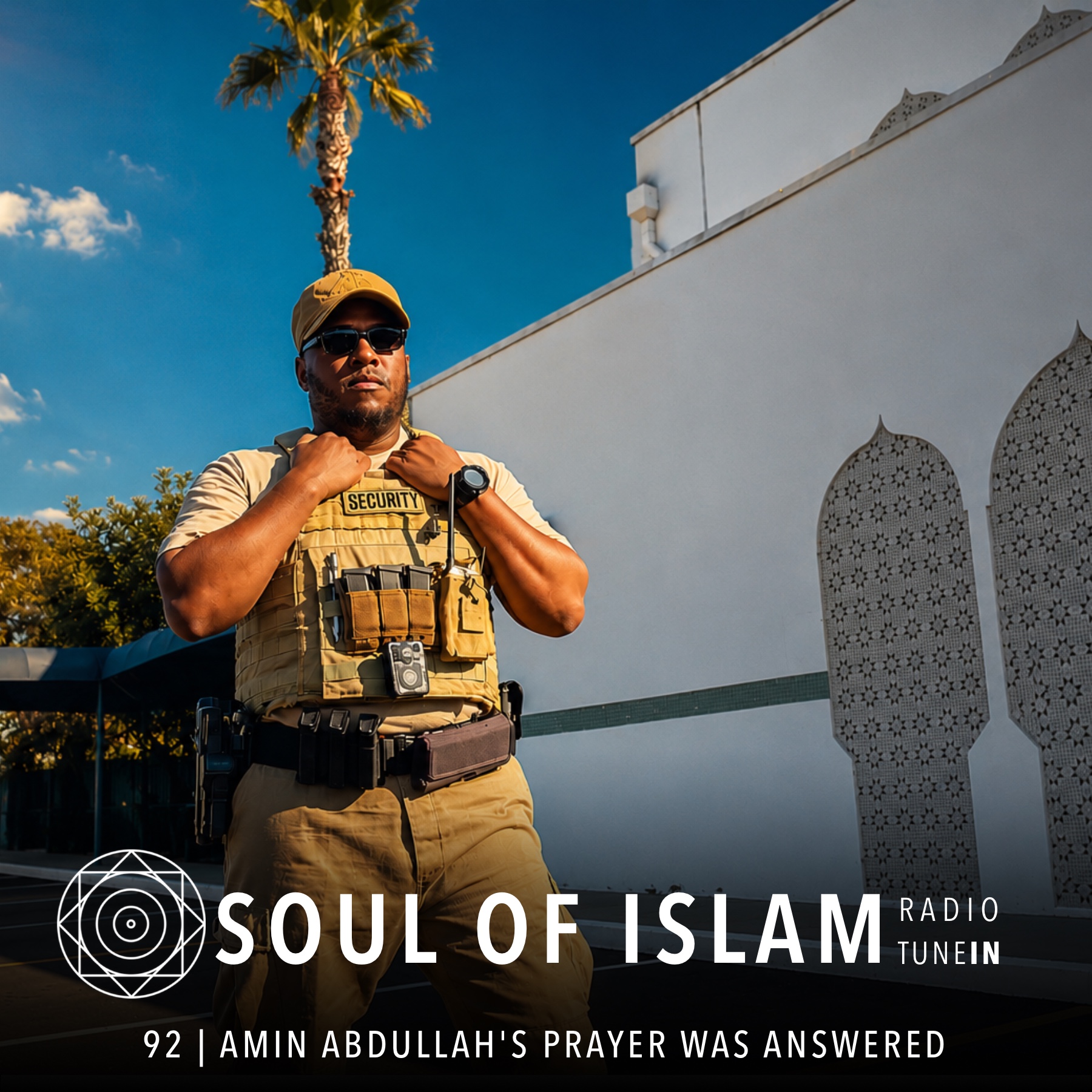 92 | Amin Abdullah’s Prayer Was Answered 01.06.2026 14minRecently, a tragic shooting at the Islamic Center of San Diego shook the Muslim community throughout Southern California and beyond. The attack claimed the lives of three men who courageously confronted the assailants in order to protect others within the mosque. Among them was Brother Amin Abdullah, who was serving as the acting security guard at the time of the attack. Through his quick actions and selfless sacrifice, he helped prevent the gunmen from reaching classrooms filled with children and teachers. While the incident is undeniably heartbreaking, it also invites reflection on deeper realities that are often overlooked in moments of grief. Shortly before his passing, Brother Amin shared a message on social media in which he reflected upon the meaning of success. He wrote that true success was not wealth, reputation, or worldly achievement, but rather returning to Allah Almighty with a pure soul and receiving the glad tidings of Paradise. He concluded by praying for husn al-khatimah—the best of endings. In a way that few could have imagined, his prayer was answered. What is success?To many people success is financial stability,good reputation, beauty,etc.As for ME! Wallahi,thumma Wallahi.It is returning back to Allah OUR creator with the same pure soul he loaned me at birth.Having the Malaikah of Allahu ta’ala saying“don’t fear and don’t grieve,but receive the glad tidings of Jannah which you were promised by the Most forgiving and Most Merciful”.May Allahu ta’ala grant us Husnal Khatimah,AAAAMEEEEN Amin Abdullah Islam teaches that martyrdom (shahādah) is among the highest stations a believer can attain. The martyr is not one who seeks death, but one who values truth, justice, faith, and the protection of others more than personal safety. The Qur’an reminds us that those who are slain in the path of Allah are not truly dead, but are alive with their Lord, receiving provision and divine favor. Martyrdom represents the ultimate testimony of faith—a witness to the reality of God and the life to come. The lives and sacrifices of Brothers Amin Abdullah, Mansour Kaziha, and Nadir Awad also remind us of the importance of courage and responsibility within the Muslim community. They acted decisively when confronted with evil, placing themselves between danger and the vulnerable. Their example reflects an often-neglected aspect of the Islamic tradition—the way of the warrior. Islam calls believers to cultivate strength—physical, emotional, psychological, and spiritual—not for domination or aggression, but for service, protection, and the defense of what is sacred. The tragedy also highlights broader challenges facing contemporary society. Racism, ethnic supremacy, and increasing social division continue to plague the modern world. Islam offers a powerful alternative vision grounded in the equality of all human beings before God. The Prophet Muhammad ﷺ declared in his Farewell Sermon that no race or ethnicity possesses superiority over another except through piety and God-consciousness. Malcolm X (ra) famously concluded after his pilgrimage to Makkah that Islam was uniquely capable of erasing the race problem because it transforms the human heart and dissolves artificial divisions. At the same time, modern materialism has left many people disconnected from meaning, purpose, and spiritual reality. As society becomes increasingly fragmented, violence, confusion, and despair continue to grow. Islam offers another way: a life rooted in remembrance of God, service to others, personal discipline, and preparation for Eternity. The lives of these three martyrs stand as a powerful reminder that true success is not measured by how long we live, but by how we live—and by the state in which we return to our Lord. May Allah Almighty have mercy upon them, elevate their ranks, grant patience and strength to their families, and guide us all toward lives of courage, faith, service, and eternal success. Additional Resources Martyrs Family Support Fund The Root Cause and Origin of Racism Eternal Warrior Way Program
 -
 91 | How We Create Our Own Enemies 06.05.2026 27minThe human ego, or nafs, cannot survive without separation, conflict, and opposition. It defines itself through fear, comparison, resentment, and the unconscious need for enemies. As a result, much of the suffering, tension, and division we experience—both personally and collectively—is not simply the product of external circumstances, but the projection of unresolved conflict within ourselves. The lower self creates narratives rooted in pain, trauma, insecurity, and victimhood, then seeks evidence in the world to reinforce those stories. In this way, individuals, communities, and even entire nations can become trapped in cycles of animosity and self-destruction while believing they are pursuing truth, justice, or protection. The spiritual path requires recognizing that the true struggle is not first against others, but against the ego itself. The Holy Qur’an repeatedly describes success as the purification of the self and the remembrance of God, while the teachings of the prophets call humanity towards love, mercy, reflection, and inner transformation. Real faith is not simply ritual performance or outward identity, but rather the cultivation of a heart capable of sincerity, gratitude, compassion, and presence. Love becomes possible only when the barriers created by the lower self begin to dissolve. Until then, human beings unconsciously sabotage relationships, project darkness onto others, and create enemies where none need exist. The purification of the self requires conscious effort, humility, and sustained striving. Through muhasabah (self-accounting), gratitude, surrender, stillness, and remembrance of God, human beings gradually awaken from unconsciousness and begin to transcend the compulsions of fear and negativity. This awakening shifts consciousness away from ego-driven living and towards heart-based awareness rooted in divine light, balance, and harmony. The result is greater clarity, strength, wisdom, and the ability to act without being propelled by hatred, projection, or reactive emotion. Thus, it is the path of spiritual excellence that is ultimately the path of liberation from illusion, from unconsciousness, and from the inner forces that keep us condemned to cycles of conflict. It is towards this goal of peace that Islam seeks to guide to. Additional Resources The following courses and programs are recommended in this episode, and links are provided here for your convenience. Islamic Meditation Program Awakenings Academy
 -
 90 | On the Defeat of Donald Trump 30.04.2026 8minThe unfolding conflict between the United States and Iran offers a sobering example of how decisions driven by ego, miscalculation, and unchecked power can lead to consequences far beyond their original intent. What may be presented as a strategic necessity can quickly devolve into a prolonged and destabilizing engagement—one that disrupts economies, increases global uncertainty, and produces outcomes that run counter to its stated aims. This pattern reflects a deeper reality: when actions are rooted in arrogance rather than wisdom, they tend to expose the limits of human control. A central dynamic at play is what is known as the sunk cost fallacy—the tendency to persist in a failing course of action simply because significant resources have already been committed. At the level of leadership, this often manifests as an unwillingness to admit error, driven by pride and the fear of perceived weakness. Yet in truth, persistence in error only compounds loss. What appears as strength is often a refusal to confront reality, while the ability to pause, reassess, and change course reflects a far greater form of courage and clarity. From a spiritual perspective, this dynamic is not limited to nations or leaders; it is deeply human. We are all prone to error. The question is not whether we will make mistakes, but how we respond when we do. The path forward is not in doubling down, but in turning back—through humility, repentance, and sincere realignment with what is true. Sacred history repeatedly demonstrates that arrogance leads to downfall, while those who humble themselves and correct their course are elevated. Ultimately, the real struggle is not external, but internal. It is the struggle against the ego—the impulse to defend, justify, and persist even when we are wrong. True success lies in overcoming this impulse, in embracing humility, and in returning to God with sincerity. Whether at the level of the individual or the nation, the principle remains the same: to stop when one has gone astray, to turn back, and to realign with truth. In this lies not only resolution in this world, but lasting success in the next.
 -
 89 | How to Ruin Your Afterlife 11.02.2026 31minBackbiting is defined by the Prophet Muhammad ﷺ as mentioning about another person that which they would dislike, even if it is true. If the statement is false, it becomes slander, which is an even more heinous crime. The moral gravity of this sin is not symbolic rhetoric; it is a description of an unseen reality. The Prophet ﷺ narrated the incident of two women who fasted outwardly while engaging in backbiting. When instructed to vomit, they expelled blood and pieces of rotten flesh, and he explained that they had broken their fast upon what God had made unlawful. The lesson is profound: outward acts of worship do not compensate for corruption of character. These two women fasted from what Allah made lawful for them, but they broke their fast on what Allah made unlawful. They sat backbiting people, and this is the flesh of the people they were eating. Prophet Muhammad ﷺ, (Musnad Ahmad) The Qur’an explicitly condemns backbiting in Surah al-Ḥujurāt (49:12), warning believers to avoid suspicion, spying, and speaking ill of one another. The vivid imagery of cannibalism is meant to awaken the conscience and instill moral revulsion toward such behavior. Islam places immense emphasis on guarding the tongue. Entire sections of the major hadith collections are devoted to speech, character, and etiquette (adab). The Prophet ﷺ declared that whoever guarantees what is between the jaws and what is between the loins will be guaranteed Paradise. True faith manifests not only in ritual devotion but in disciplined speech and moral restraint. Equally serious is the responsibility of those who listen to backbiting. Hearing and entertaining such speech contaminates the heart and creates suspicion, even when the claims are doubtful. Surah al-Ḥujurāt (49:6) commands believers to verify information brought by a sinful person (fāsiq) lest harm be done out of ignorance. To participate passively in backbiting is to share in its moral burden. Justice in Islam requires investigation, fairness, and the presumption of innocence. Standing firmly for truth—even against oneself, family, or close associates—is a defining mark of faith, as emphasized in Surah al-Nisā’ (4:135). The violation becomes even more egregious when it involves spouses. Marriage is described in the Qur’an as a sacred trust, with each spouse serving as a garment for the other (2:187). A garment protects, covers, and dignifies. To expose, distort, or weaponize private matters is a betrayal of that trust. The Qur’an further reminds believers that some spouses and even children may become sources of trial (64:14), underscoring the reality that family relationships are arenas of spiritual testing. When separation occurs, it must be conducted with dignity, justice, and restraint—not vengeance or character assassination. Underlying much backbiting and slander is a deeper psychological and spiritual disease: victim consciousness. This mindset, rooted in ego and grievance, can subtly lead to injustice, self-deception, and ultimately a distortion of faith. When a person becomes attached to a narrative of victimhood, they may unconsciously seek validation for that identity, even at the expense of truth. Islam calls believers to personal responsibility and inward reform. As Allah states in Surah al-Raʿd (13:11), God does not change the condition of a people until they change what is within themselves. For those who have been wronged through slander or character attacks, the path forward requires both outward justice and inward surrender. Islam commands the protection of one’s honor, life, and property. Yet spiritually, humiliation and the loss of reputation can become means of purification. Even the Messenger of Allah ﷺ was slandered and accused falsely. Ultimately, the believer’s concern is not public perception but divine pleasure. The Prophet ﷺ concluded this moral teaching with a sobering description of the “bankrupt” person on the Day of Judgment. Such an individual may come with prayer, fasting, and charity, yet will have harmed others through insults, slander, or injustice. Their good deeds will be transferred to those they wronged; if insufficient, the sins of others will be placed upon them until they are cast into the Fire. This hadith, recorded in Ṣaḥīḥ Muslim, lays bare the catastrophic cost of unrestrained speech. Backbiting and slander are not minor social infractions; they are spiritual crimes with eternal consequences. They test not only those who commit them, but entire communities who must decide whether to stand with truth or indulge the ego’s appetite for drama and accusation. The path of faith demands vigilance, discipline of speech, commitment to justice, and sincere surrender to the will of Allah. Guarding the tongue is not a peripheral virtue; it is central to spiritual excellence. In protecting the honor of others, we protect our own standing before God. In restraining the ego, we safeguard our Hereafter. Additional Resources The following posts and videos are mentioned in this episode, and links are provided here for your convenience. How to Ruin Your Life Victim Consciousness: Dangerous and Destructive Chapters 00:00 | How to Ruin Your AfterlifeWhy ingratitude, complaint, and unchecked speech destroy divine blessing and spiritual standing. 01:45 | The Major Sin People Commit Without FearIntroducing backbiting (ghibah) and slander (buhtān) as from the gravest of sins. 02:45 | What Is Backbiting, Really?The Prophet ﷺ defines backbiting and why “telling the truth” is not a defense. 03:35 | Spiritual Cannibalism ExplainedThe shocking hadith of the fasting women and the unseen reality of backbiting. 05:15 | Qur’anic Condemnation of BackbitingSurah al-Ḥujurāt and why Allah likens it to eating dead flesh. 07:10 | Guarding the Tongue and the Path to ParadiseWhy silence is better than harmful speech and the guarantee of Jannah. 11:20 | Listening Is Also a SinHow hearing backbiting poisons the heart and transfers responsibility. 14:40 | Standing for Truth Against Self and KinJustice, verification, and refusing to side with falsehood—no exceptions. 17:25 | The Sacred Trust of Marriage and HonorWhy backbiting a spouse or ex-spouse is among the worst violations. 20:00 | Victim Consciousness, Ego, and UnbeliefHow the victim mindset destroys faith, communities, and the soul. 24:20 | Humiliation as Spiritual PurificationSurrendering reputation, dissolving ego, and returning fully to God. 27:45 | The Bankrupt Person on the Day of JudgmentThe final hadith: how good deeds are lost and sins transferred.
 -
 88 | How Exercise Heals the Body, Mind, and Spirit 28.01.2026 17minPhysical health in Islam is not a peripheral concern but an essential dimension of a complete and integrated spiritual life. Human beings were created for movement, exertion, and active living, and for most of history daily life naturally sustained physical strength and vitality. The modern shift toward sedentary living represents a significant departure from this divine design, contributing not only to physical illness but also to psychological distress and spiritual stagnation. Life itself is sustained through motion, and when movement is neglected, imbalance inevitably follows. The body is a trust granted by Allah Almighty, meant to be honored, maintained, and used in the service of worship and goodness. Neglecting physical well-being weakens mental clarity, emotional stability, and spiritual resilience. The Prophet Muhammad ﷺ emphasized the value of strength when he taught that the strong believer is better and more beloved to Allah than the weak believer, while affirming goodness in both. Although strength encompasses many dimensions, physical vitality remains foundational, enabling worship, discipline, service, and the capacity to uphold justice and protect what is good. The strong believer is better and more beloved to Allah than the weak believer, though both are good. Be eager for what benefits you, seek help from Allah, and do not lose heart. If something befalls you, do not say, “If only I had done such-and-such…” Rather, say, “Allah decreed it, and whatever He wills, He does,” for saying “if only” opens the door to the work of Shayṭān. Prophet Muhammad ﷺ, Sahih Muslim, Book of Destiny (Kitāb al-Qadar), Hadith 2664 Contemporary science increasingly confirms this sacred wisdom. Physical exercise is now recognized as one of the most powerful interventions for overall health and healing. Movement strengthens the body while activating the brain’s natural chemistry for well-being through the release of endorphins, dopamine, serotonin, endocannabinoids, and norepinephrine. These processes elevate mood, reduce anxiety, improve focus, and support long-term brain health, making exercise a primary tool in addressing stress, depression, and cognitive decline. The health of the body directly supports the health of the mind, and together they influence emotional balance and spiritual presence. Beyond its biological effects, exercise restores energetic flow within the human system. Just as flowing water remains pure while stagnant water becomes diseased, consistent movement prevents stagnation, clears accumulated stress, and renews vitality. Physical exertion counters inertia and heaviness, fostering strength, resilience, and clarity. This mirrors the spiritual principle that growth requires effort, resistance, and disciplined striving. Ease emerges through consistent exertion aligned with wisdom and purpose. True strength, however, is always understood to originate from Allah Almighty. Human beings are created weak, and all power ultimately flows from the Creator. For this reason, strength is cultivated not for domination or pride, but for service, protection, justice, and excellence of character. Caring for the body thus becomes an act of stewardship and gratitude, aligning human life with Divine order. In essence, movement is medicine. Exercise heals the body, stabilizes the mind, uplifts the spirit, and restores balance to the whole human system. By returning to the natural rhythm of exertion and renewal, believers cultivate strength that supports both worldly well-being and spiritual excellence, fulfilling the trust of the body in harmony with the Creator’s design.
 -
 87 | Virtues of the Sacred Month of Rajab 29.12.2025 27minThe month of Rajab marks the beginning of a sacred three-month spiritual progression that continues through Shaʿbān and culminates in the noble and blessed month of Ramadan. It is a period of inward turning, reflection, and renewal, inviting the believer to step back from distraction and return to presence, awareness, and conscious connection with the Divine. Rooted in the natural rhythm of the lunar calendar, Rajab serves as a reminder that spiritual life unfolds in cycles of awakening, refinement, and realization. Rajab is traditionally associated with inner awakening and seclusion, and is a time to quiet the ego, detach from worldly attachments, and reconnect with what is Real and Eternal. Throughout Islamic history, seekers have engaged in periods of spiritual retreat (khalwa) to deepen remembrance, meditation, and awareness of God’s presence. While such formal seclusion requires guidance and wisdom, its underlying principle remains essential: periodically withdraw from noise, return to stillness, and allow the heart to re-awaken (Seclusion in Islam). The spiritual energy of Rajab also prepares the heart for the increasing devotional intensity of Shaʿbān and the luminous culmination of Ramadan. This progression mirrors the journey from inward awakening, to refinement of character and intention, to the outward embodiment of faith within community and worship. By beginning this journey in Rajab, the believer aligns the soul with a deeper rhythm of growth, readiness, and grace. Eternal Warrior Way A central theme of this period is the cultivation of presence through worship, remembrance, and conscious discipline — especially during times of stillness and silence. The inward dimension of fasting, restraint from ego and desire, opens the way for the heart to awaken and for spiritual life to deepen. This inner fasting complements the outward form and leads toward humility, sincerity, and proximity to the Divine. Islamic Meditation One of the most blessed opportunities in this journey is rising during the last third of the night for prayer, remembrance, and supplication: Our Lord descends to the lowest heaven every night during the last third of the night and says:"Who is calling upon Me so that I may answer him?Who is asking Me so that I may give to him?Who is seeking My forgiveness so that I may forgive him?" Prophet Muhammad ﷺ (Bukhari, Muslim) This sacred time invites the seeker into intimacy, humility, and divine generosity, and provides a space in which the heart opens to forgiveness, guidance, and spiritual awakening. Rajab also reminds us of the true purpose of human existence, a purpose affirmed in the Qur’an: “And I did not create jinn and mankind except that they may worship Me.” Surah adh-Dhariyat (Holy Qur'an, 51:56) This month calls the believer back to meaning, intention, and spiritual alignment — away from illusion and toward reality, away from heedlessness and toward remembrance. Entering Rajab with sincerity and commitment opens the path toward inner awakening, preparation for Ramadan, and a deeper journey of return to the Divine.
 -
 86 | How the Present Moment is the Key to Healing 21.12.2025 25minIn contemporary culture, healing is often framed as a backward-looking process. We are encouraged to revisit the past, analyze our wounds, and understand the origins of our trauma in the hope that insight itself will produce change. While such understanding can be informative and even illuminating, it is not what ultimately heals. Healing does not occur in memory. Healing occurs only in the present moment—through conscious response, right action, and surrender to the Divine Will. How the Present Is the Key to Your Healing The past cannot be changed, and the future does not yet exist. The present moment is the only place where action is possible. For this reason, it is also the only place where healing can take place. One may spend years analyzing childhood experiences and psychological patterns, gaining clarity without ever experiencing true transformation. Insight alone does not release trauma, because trauma is not merely an intellectual phenomenon. It lives in the body, in the nervous system, and in the subconscious. Healing, therefore, is not primarily a mental achievement, but rather, it is a spiritual process. By the will of the Divine, life itself provides the conditions necessary for healing. These conditions rarely appear as ease or comfort. More often, they come in the form of challenges, trials, and emotional triggers. When a trigger arises, it signals that a wound has surfaced. This moment is not a failure; it is an invitation. If we react unconsciously—out of fear, anger, or ego—we reinforce the wound and re-traumatize ourselves. If, however, we respond consciously, with presence and restraint, the same moment becomes a point of healing. Every trigger represents a fork in the road. One path leads to repetition of the past; the other leads to transformation. The difference lies in our response. Reaction perpetuates suffering. Conscious response interrupts the old pattern. This is how the present heals the past, and without needing to revisit it. Each moment handled with patience, surrender, and right action rewrites the internal narrative and gradually reshapes the self. Central to this process is stillness. In highly charged emotional states, positivity may not be immediately accessible. Neutrality, however, always is. By pausing, grounding in the breath, and becoming present, we create space for guidance rather than impulse. Such stillness is not passivity. In truth, it is submission—placing oneself in alignment with Divine Will rather than egoic reactivity. From this state, action becomes guided and inspired rather than compulsive and reactive. Surrender is not resignation. It is trust. It is the recognition that reality, as it appears in the present moment, is an expression of Divine Will and an opportunity for growth. Resistance to what is only deepens and perpetuates suffering, for it is surrender opens the heart to healing, light, and transformation. Over time, repeated right action reshapes character, dissolves fear held in the body, and alters identity itself. Course in Spiritual Healing Healing, then, is not instantaneous. It is cumulative. It unfolds across a lifetime through countless small moments of conscious choice. We are not asked to fix the past. We are asked to meet the present with faith, patience, and trust. When we do, the past loosens its grip, the future opens, and the heart moves progressively towards wholeness, peace, and the Divine Presence of our Lord and Creator. Chapters 00:00 | Introduction: Healing Beyond the Past01:31 | Why Healing Only Happens in the Present03:05 | The Limits of Therapy and Analysis05:28 | The Present Moment as Divine Opportunity06:20 | Triggers as Invitations for Healing08:03 | Egoic Reaction vs. Spiritual Response11:33 | Stillness, Breath, and Conscious Choice15:00 | Surrender, Trust, and Real Faith17:35 | Right Action, Inner Change, and Destiny22:23 | Healing, Destiny, and the Path Forward
 -
 85 | Gratitude Is the Foundation of Faith 17.12.2025 10minGratitude is not a secondary virtue in the spiritual life. It is the very foundation of faith, the essence of worship, and the light by which the heart comes alive. Everything meaningful in religion is built upon gratitude, because the greatest gifts ever given to humanity are guidance and knowledge. Without guidance, life loses direction. Without knowledge of God, existence loses meaning. Faith itself is a divine gift, and gratitude is the natural response of a heart that recognizes this gift. How Worship Reveals the Light of the Heart The Prophet Muhammad ﷺ made this reality unmistakably clear when he explained the reason for his abundant worship. Despite being forgiven and protected by his Lord, he said, “Shall I not be a grateful servant?” This statement reveals that the true essence of worship is not fear, habit, or obligation alone, but rather is gratitude and love. Worship is the heart’s way of responding to divine generosity. If the veils of ego and heedlessness were lifted, and we truly saw how much Allah has given, continues to give, and will give from His oceans of mercy and beauty, we would never lift our heads from prostration. Faith is not meant to remain hidden or theoretical. Real faith seeks expression. This is why the principle “faith without works is dead” appears in earlier scriptures and remains universally true. If faith is alive in the heart, it naturally manifests as worship, gratitude, humility, and service. Allah Almighty is absolutely independent and has no need for our worship; rather, worship is a gift given to us so that we may grow in light, beauty, and nearness to Him. When worship weakens, it is an indication that faith itself requires care, attention, and cultivation. Worship therefore becomes a barometer for the state of the heart. A strong desire for prayer, remembrance (dhikr), sacred knowledge, night worship, the mosque, and wholesome spiritual gatherings is a sign of awakened faith. When these desires are absent or burdensome, it signals that faith has weakened and needs nourishment. This is not a cause for despair, but an invitation to return to the prophetic method of spiritual growth. The primary method taught by the Prophet ﷺ for awakening faith is righteous companionship (suhbah). Faith was transmitted to the Companions not merely through words, but through presence, character, and living manifest example. This sacred method has been preserved throughout history and will remain so until the end of time by the will of God Who has sworn to protect and preserve the path, the religion and the revelation. Allah commands believers in the Qur’an to seek out the truthful and to keep their company, and through sincere companionship with those who embody faith, gratitude, and humility, hearts are awakened and strengthened. Awakenings Academy Islam represents the perfection of sacred and divine guidance given to humanity. Allah has completed the religion and chosen Islam as the way of surrender, balance, and truth. The purpose of life is not merely to believe abstractly, but to awaken the hidden potential within the heart that allows a person to approach their Lord sincerely, humbly, and beautifully. The ultimate goal is not just outward compliance, but entering into the Divine Presence by God's grace and coming to know Him. One of the highest stations of gratitude is to be grateful for gratitude itself—to recognize that Allah Almighty has given us the awareness, sensitivity, and capacity to thank Him. Gratitude is beautiful, and beauty is beloved to Allah. True beauty is not external form, but inner character: humility, thankfulness, sincerity, and devotion. Ingratitude, by contrast, is repeatedly paired with disbelief in the Qur’an, while gratitude is a defining quality of a true believer. The faithful servant is not consumed by complaint or lack, but is focused on thanking the Creator and worshipping Him. Such a heart finds peace, purpose, and meaning, regardless of circumstance. Chapters 00:00 – The Foundation of Faith: GratitudeOpening reflection on gratitude as the essence, light, and root of true faith. 85 Gratitude Faith 01:09 – Why the Prophet ﷺ Worshipped: The Secret of GratitudeExploring the hadith, “Shall I not be a grateful servant?” and the meaning behind abundant worship. 02:02 – Seeing God’s Gifts Behind the VeilsRecognizing divine generosity and how unveiling would transform our worship. 02:51 – Faith Without Works Is DeadHow true faith naturally seeks expression through worship, gratitude, and righteous action. 03:37 – Worship as a Gift and Mirror of the HeartUnderstanding worship as a divine gift that grows beauty, humility, and light within the believer. 04:29 – Diagnosing the Heart: Worship as a BarometerDesire for prayer, dhikr, and sacred gatherings as signs of strong or weak faith. 05:25 – The Prophetic Method: Sohbah and Righteous CompanionshipThe essential role of spiritual companionship in awakening and cultivating faith. 06:06 – The Perfection of Islam and the Purpose of LifeFaith, surrender, and awakening the heart’s hidden potential to know Allah. 07:01 – The High Station of Being Grateful for GratitudeA deeper reflection on gratitude as beauty and the inner character beloved to Allah. 07:54 – Gratitude vs. Ingratitude: The Qur’anic LensHow unbelief is repeatedly paired with ingratitude—and the qualities of the true believer. 08:53 – A Closing Prayer and InvitationFinal supplication and a reminder to share.
 -
 84 | Awakening the Heart and the Truth About Islam 11.12.2025 17minFrom my journal and personal reflections, I recorded this episode to address a truth that often gets buried under modern distractions: all of Islam is about awakening consciousness. This divine capacity, placed within the human being, is what allows us to witness truth, to grow spiritually, and ultimately to know God. But in our current age—bombarded by content, media, and endless consumption—we face more obstacles than ever to true spiritual awakening. I reflect on how anything that reduces our consciousness—from intoxicants to social media—impedes our development and distances us from divine purpose. Even well-intentioned content can become harmful when consumed without reflection. The inner jihad, or jihad al-nafs, becomes the most essential struggle of our time—a greater jihad that demands mindfulness, discipline, and spiritual minimalism. True progress lies not in collecting more information, but in emptying the self to receive real, living knowledge from Allah Almighty. This episode emphasizes the need for sincere companionship with righteous guides, those who walk the path of truth and embody divine presence. As Imam Malik (ra) taught, only with both the outer form (Sharia) and the inner path (Tariqah) can we reach Haqq—the Truth. I also discuss how our time is precious and fleeting. To live with meaning, we must consciously step away from illusion, superficial religiosity, and ego-driven distractions. We must strive to become truth-seekers, grounded in sincerity, willing to sacrifice for real transformation. This is the heart of Islam: to awaken, evolve, and ultimately realize our nearness to God. 00:00 | Introduction and IntentionsOpening reflections on journaling and the purpose of sharing these insights. 00:45 | What Is Consciousness?The deeper meaning of consciousness as the heart of Islam. 01:40 | Consciousness vs. ThinkingThinking as a byproduct of deeper spiritual consciousness. 02:41 | What Harms ConsciousnessHow substances and content that reduce awareness are spiritually harmful. 03:43 | The Double-Edged Nature of Our AgeHow today's access to knowledge comes with greater distractions. 04:33 | Social Media and Lower ConsciousnessHow media consumption feeds the ego and prevents growth. 05:17 | The Greater Jihad in Modern TimesThe inner struggle as the most urgent and rewarding jihad. 06:04 | Spiritual Minimalism and Content DietDeliberate content consumption as a spiritual discipline. 07:46 | Realigning with Prophetic SimplicityConsumption habits, prophetic guidance and spiritual health. 08:40 | Introducing the Path of Real KnowledgeThe path of spiritual companionship. 10:16 | Awakening the HeartThe central goal of Islam: the awakening of the heart. 11:11 | Real Knowledge Is HiddenWhy true spiritual knowledge is rare and often overlooked. 11:58 | Leaving Illusion BehindDetachment from both worldly and superficial religious illusions. 13:41 | The Truth Seeker’s JourneyThe mindset needed for true spiritual seeking. 14:31 | What Is the Rope of Allah?The rope of Allah as the companionship of the righteous. 15:19 | The Only Path to TruthSincerity and striving are the only way to reach divine truth. 16:15 | The Gift of Time and the Need for FocusHow to use our time wisely and avoid distraction. 17:03 | Closing Reflections and Call to ActionA call to share, rate, and spread the message to sincere seekers.
 -
 83 | Pain is Inevitable But Suffering is a Choice 05.12.2025 16minIn this episode, I explore the vital distinction between pain and suffering through the lens of Islamic spirituality, journaling, and self-awareness. Drawing from personal reflections and teachings, I share how pain is a natural and unavoidable part of life—but suffering often comes from our resistance, our ego, and the stories we construct around that pain. As I reflect on writings from my own journal, I touch on the wisdom of the Qur’an, the sacredness of writing, and insights from classical teachers like Rumi (qs), who remind us that our wounds are often the entry points for divine light. I discuss the spiritual path as one of surrender—surrendering the ego, the mind, and the false narratives that keep us trapped. True freedom and inner peace begin with accepting pain without resisting it and recognizing that suffering is not imposed from outside, but generated from within. The way forward lies in patience, presence, and persistence. This isn’t a quick fix, but a lifelong practice of returning, of softening, and of deepening in trust and faith. Through writing, contemplation, and spiritual discipline, we create space for wisdom and guidance to flow—transforming our experience of hardship and reconnecting with the Divine. 00:00 | The Sacred Value of ContemplationReflecting on the importance of contemplation and the prophetic tradition valuing one hour of reflection over years of worship. 01:15 | The Divine Command to Read and WriteDiscussing the first Quranic revelation and the significance of learning and journaling in Islamic practice. 03:08 | Writing as a Spiritual PracticeHow the act of writing becomes a sacred tool for receiving divine inspiration and clarity. 06:22 | Introducing the Theme of SufferingExploring the difference between pain and suffering through personal journaling and spiritual insight. 08:24 | Pain Is Inevitable, Suffering Is OptionalUnderstanding that resistance to pain creates suffering, while surrender leads to peace. 10:08 | The Ego and the Story of ‘Me’Identifying the ego and personal narratives as the root of suffering. 11:53 | Beyond Judgment: Rumi’s FieldExploring the wisdom of Rumi (qs) and the spiritual field beyond right and wrong. 12:42 | The Path of Surrender and PresenceDescribing the journey of spiritual awakening through letting go and transcending the self. 14:07 | Persistence as the Greatest MiracleWhy spiritual growth is slow and steady, and why consistency matters more than perfection. 14:48 | The Choice to Suffer or SurrenderReiterating that suffering is a choice—and surrender, patience, and trust are the remedy.
 -
 82 | Sacred Manifestation with Fatimah Linda Howard 25.10.2025 55minIn this inspiring episode of Soul of Islam Radio, I reconnect with Sister Fatimah Linda Howard—a former attorney, author, and spiritual guide—whose journey of transformation is a testament to the power of intention, faith, and inspired action. After the loss of her brother, her primary resource on faith and religion, Sister Fatima realized it was time to deepen her own spiritual path. That decision led her to study Islamic Meditation, eventually moving to Morocco, learning to read the Qur’an from scratch, and visiting the great masjids of the world—all sparked by the simple advice to “just begin.” We talk about her new book, From Vision to Divine Provision, where she reclaims the concept of manifestation from a purely New Age framework and roots it in Islamic teachings. Fatima shares how visualization, du’a, belief, trust, action, and gratitude create a sacred framework for living a purpose-driven life. She emphasizes that it’s not about asking the universe—it’s about asking Allah with clarity, sincerity, and humility. We also explore how unchecked ego can block divine blessings, how feelings shape our lived experience, and why meditation is essential—not optional—for modern Muslims seeking inner peace and divine alignment. Sister Fatimah offers not only wisdom, but a roadmap for Muslims looking to live with more presence, purpose, and peace. About Fatimah Linda Howard Fatimah Linda Howard is an author, speaker, and spiritual consultant with a professional background in law and healthcare compliance. After a transformative personal journey that began with the loss of her brother, Fatimah deepened her commitment to spiritual growth and education, integrating her years of experience in meditation with a grounded Islamic perspective. Her work centers on helping individuals and communities align with divine purpose through intentional living, sacred manifestation, and inner stillness. She is the author of From Vision to Divine Provision: The Islamic Art of Sacred Manifestation, a guide that reframes manifestation within a God-centered framework rooted in Islamic tradition. Fatimah leads retreats, workshops, and community gatherings, and shares her message across social media platforms under the handle @withlindahoward. Her approach combines spiritual depth with practical tools, making sacred living accessible for Muslims navigating modern life. You can learn more about her at her websites, With Linda Howard and Vision to Divine Provision. 00:00 | Reconnecting with Sister FatimahFatima introduces herself and shares how the death of her brother sparked a spiritual awakening. 02:45 | The Power of “Just Begin”A pivotal moment of advice that inspired a cascade of action in Fatimah’s life. 04:16 | Living the VisionFatimah reflects on achieving major life goals through intention and persistence. 06:53 | Walking Toward AllahFatimah shares a powerful experience living across from a historic masjid in Morocco. 10:01 | Why Meditation Matters for MuslimsFatimah discusses the role of Islamic meditation in clarity, connection, and intention. 13:47 | Ego as a Barrier to BlessingsExploring how unchecked ego can block divine abundance and misdirect success. 16:16 | The Book's Origin StoryFatimah explains how a vision board and community gatherings led to her book. 20:12 | An Islamic Perspective on ManifestationShe unpacks the spiritual difference between asking the universe and asking Allah. 23:10 | The Emotional Power of EnvironmentFatimah discusses how physical spaces impact spiritual and emotional well-being. 29:00 | Regulating Emotions Through FaithShe shares lessons from her mother and how emotional discipline affects life quality. 34:45 | Staying Calm in ChaosFatimah explains how meditation helped her stay grounded during high-stress careers. 39:04 | Book Framework & StructureShe breaks down the book into three parts: foundation, framework, and life’s challenges. 44:27 | Law of Attraction vs. Sacred ManifestationFatimah critiques the Law of Attraction through a God-centered lens. 51:04 | Standing Firm in FaithOn owning Islamic language and identity in mixed or non-Muslim settings. 54:03 | Final ReflectionsFatimah closes with a message of gratitude, intention, and divine trust.
 -
 81 | How Spiritual Minimalism Saves Us from Drowning in Dunya 20.10.2025 12minDrawing from the wisdom of Sultan al-Awliya Shaykh Muhammad Nazim Adil al-Haqqani (qs), I reflect in this episode on a brief but deeply impactful teaching about our relationship with the world. We explore the contrast between two oceans: the ocean of light and spirit that flows from the Divine Presence, and the ocean of dunya, the material world, which veils us from essential reality. The ego craves the material, the temporary, the apparent—but the soul longs for something subtler, more lasting: truth, light, and connection with Allah Almighty. The Shaykh reminds us that our over-attachment to the world is the root of much of our suffering. The modern pursuit of endless consumption and accumulation leads to spiritual sickness, yet it never satisfies. It’s like drinking from the ocean—salt water that only makes us thirstier. One of the key metaphors here is: “When a man is thirsty, he imagines he drinks all the rivers and springs, yet one glass is enough.” This one line encapsulates the heart of spiritual minimalism. Through this lens, we revisit the prophetic path of asceticism—taking only what is necessary, living simply, and remaining unattached to the material world while using it in service to truth and eternity. I also reflect on how even good things like home, family, and wealth only benefit us spiritually when approached with the right intention and non-attachment. It’s not about rejecting the world, but about ensuring it doesn't root itself in our hearts.
 -
 80 | Successful are They Who Purify Themselves 20.10.2025 11minOver and over again, life brings me back to one central truth: the importance of the inward dimension of faith. While so much of our energy goes into the external aspects of religion—rituals, lectures, and outward practices—none of it has lasting value if we ignore the internal work. As Allah says in the Qur’an, “Successful are they who purify themselves.” This isn’t just spiritual poetry—it’s the foundation of a life aligned with faith. As a faith-based life coach, I work with seekers who are trying to live a holistic, integrated path, blending their spiritual and practical lives. The heart of that path is the purification of the self. While you may experience short term success in the material world while still being trapped by ego, pride, fear, or selfishness, true success and in what matters most requires refinement of character, humility, and surrender. We live in a world that celebrates the ego. Even religion can be co-opted by it. But real transformation begins when we begin to notice how our lower self shows up in daily life. A powerful practice I recommend is nightly reflection, or muhassiba: take just a few minutes to identify one moment in your day when your ego led the way. Then make tawbah (repentance), and visualize responding differently next time. This simple practice rewires the heart and mind toward presence, humility, and conscious action. True ascension isn’t about rising above—it’s about lowering ourselves in sincere prostration. It’s in submitting to Allah’s will in each moment that we begin to change. Radical acceptance of Allah’s decree, especially when it’s hard, is the beginning of freedom from the self. Only through surrender does transformation happen. If you're ready to take this work deeper, I invite you to join us in Awakening's Academy and the Islamic Meditation Program, where we practice the real, experiential remembrance of Allah Almighty and cultivate a state of surrendered presence. May we be among those who purify ourselves and succeed, by Allah’s mercy. Ameen.
 -
 79 | Manifestation and the Power of Surrender 13.10.2025 14minIn this episode, I respond to a thoughtful question from a listener on the concept of "manifestation" and its compatibility with Islamic belief—especially the doctrine of Tawheed, the oneness of Allah. The question gets to the heart of a common dilemma: how do we reconcile the popular idea of manifestation, often tied to the "law of attraction," with faith that places creative power solely in the hands of the Divine? I break down why the fear of shirk—associating partners with Allah—often arises in this context, and how, through proper understanding, that fear can be alleviated. Islam doesn’t deny human agency or the idea that our internal states shape our external reality. In fact, the Qur’an confirms that Allah will not change our conditions until we change what is within ourselves. This isn’t co-creation in the New Age sense but rather the process of choosing, through our thoughts, intentions, and states, among the infinite possibilities that Allah has already created. We also explore how our beliefs must move from the tongue to the heart—from Islam to Iman—and how life reflects not just what we think we believe, but what we truly hold within. Manifestation, then, becomes less about acquiring worldly pleasure and more about aligning ourselves spiritually to receive what Allah Almighty has already willed for us. I emphasize the importance of cultivating inner peace and surrender through spiritual practice, including meditation, to create a state receptive to divine mercy and provision. True manifestation is rooted in becoming deeply Muslim—in character and state—not just in name. When we surrender fully, we are best positioned to receive the best possible outcomes, not by our own power, but by Allah’s infinite divine grace. 00:00 | Introduction to Soul of Islam RadioOpening reflections and a listener question on manifestation in Islam. 00:50 | The Question on Manifestation and TawheedA listener asks how to reconcile manifestation with Islamic monotheism. 03:12 | Defining Shirk and Co-CreationExploring where manifestation could cross into shirk and how to avoid it. 03:59 | The Dunya Focus of ManifestationManifestation is often limited to worldly gain—Islamic perspective broadens it. 04:34 | Responsibility, Effort, and Divine WillBalancing our agency with Allah’s will and the importance of personal effort. 06:03 | The Universe as a Mirror of BeliefHow our external reality reflects our internal state and belief. 06:54 | Islam vs Iman and the Role of FaithThe distinction between spoken belief and deep, heartfelt conviction. 08:30 | Infinite Possibilities in Divine KnowledgeWe choose from among infinite realities already known to Allah. 10:08 | Surrender as the Path to Divine GiftsTrue manifestation happens through spiritual surrender and presence. 11:46 | Fear of Shirk and Clarifying Our RoleChoosing is not creating—reaffirming Allah’s role as sole creator. 12:39 | Life as a Test and the Power of SurrenderTrials deepen surrender; everything good is from Allah’s mercy. 13:25 | Closing Reflections and Du'aEncouragement for deeper learning and a concluding prayer for guidance.
 -
 78 | Saved By the Light—The Remarkable Near Death Experience of Dannion Brinkley 12.10.2025 31minI came across the book Saved by the Light by Dannion Brinkley years ago, and it left a lasting impression on me. In this episode, I reflect on the profound lessons from his near-death experience (NDE), where after being struck by lightning, he underwent a deeply detailed life review. What makes this account so remarkable is how closely it aligns with spiritual principles we know through Islam—especially the notion of accountability after death, the weight of our intentions, and the unseen consequences of our actions. In this episode, I share a few brief excerpts from the book and explore themes like respect for parents, the moral impact of harming others, the ripple effect of our behavior, and how even seemingly small actions carry immense spiritual weight. One of the most sobering parts is how Dannion relived the pain he caused others—from animals to entire communities impacted by his involvement in war and arms trading. His life review serves as a mirror, reminding us of the responsibility we hold not just for our actions, but for their impact on others and even the Earth itself. Through this lens, we are reminded of how faith calls us to repentance, reflection, and righteousness. The Prophet ﷺ said that even an atom’s worth of good or evil will be accounted for. Dannion Brinkley’s story becomes for believers a blessing—not only for his transformation, but as a wake-up call for us. May Allah Almighty guide us to be better, to cause less harm, and to live lives of and in the light. Ameen. 00:00 | Introduction to Saved by the LightI introduce the book and its relevance to both spiritual seekers and believers. 00:52 | What Is a Near-Death Experience (NDE)?An overview of clinical death and the common features of NDEs. 01:46 | Struck by Lightning: Dannion Brinkley’s NDEDetails of Brinkley’s dramatic death and revival after being hit by lightning. 02:30 | Life Review Begins: Facing the SelfBrinkley confronts the harsh truth of his past behaviors and selfishness. 04:12 | Feeling the Pain of OthersDuring his life review, he experiences the emotions of those he hurt. 05:40 | The Weight of Hurting ParentsReflections on parental respect and the deep pain caused by disobedience. 08:07 | Kindness to Animals MattersBrinkley relives a moment of cruelty to his dog and learns its spiritual cost. 10:58 | Karma, the Earth, and IntentionEvery action has consequences—even toward animals and the planet. 12:27 | The Cost of Killing and WarBrinkley relives deaths from his military service and their far-reaching impact. 14:49 | The Horror of Collateral DamageA hotel bombing reveals the devastating consequences of collective guilt. 18:06 | The Business of WarWeapons transfers and the military-industrial complex are shown in stark moral light. 22:20 | “Who You Are Is the Difference God Makes”A powerful spiritual message from the being of light. 23:50 | The Meaning of True TransformationUnderstanding that Allah’s light in our hearts makes us who we are. 25:32 | Reflection and the Path to PurityEvil creates spiritual density, and only reflection and repentance can lighten the soul. 27:48 | The Power of Self-AwarenessTrue piety is not external—it’s in recognizing our own flaws and striving to change. 28:38 | The Small Things That Matter MostLove, kindness, and sincerity in everyday actions are what truly count. 30:10 | Final Thoughts and InvitationI share closing reflections and invite listeners to learn more about this profound book.
Vergelijkbare podcasts


Populair in
Deze podcast verschijnt ook in de podcastlijsten van deze landen.


