
Film & TV, The Creative Process: Acting, Directing, Writing, Cinematography, Producers, Composers, Costume Design, Talk Art &
Acting, Directing, Writing, Cinematography Producing Conversations: Creative Process Original Series
0
Film & TV episodes of The Creative Process podcast, featuring in-depth conversations with actors, directors, writers, cinematographers, and other behind-the-scenes creatives. Guests discuss their work, careers, and artistic practice, including winners of Oscar, Emmy, Tony, and Pulitzer. The show explores the lives and creative journeys of notable figures across film, television, and the arts.
Afleveringen
-
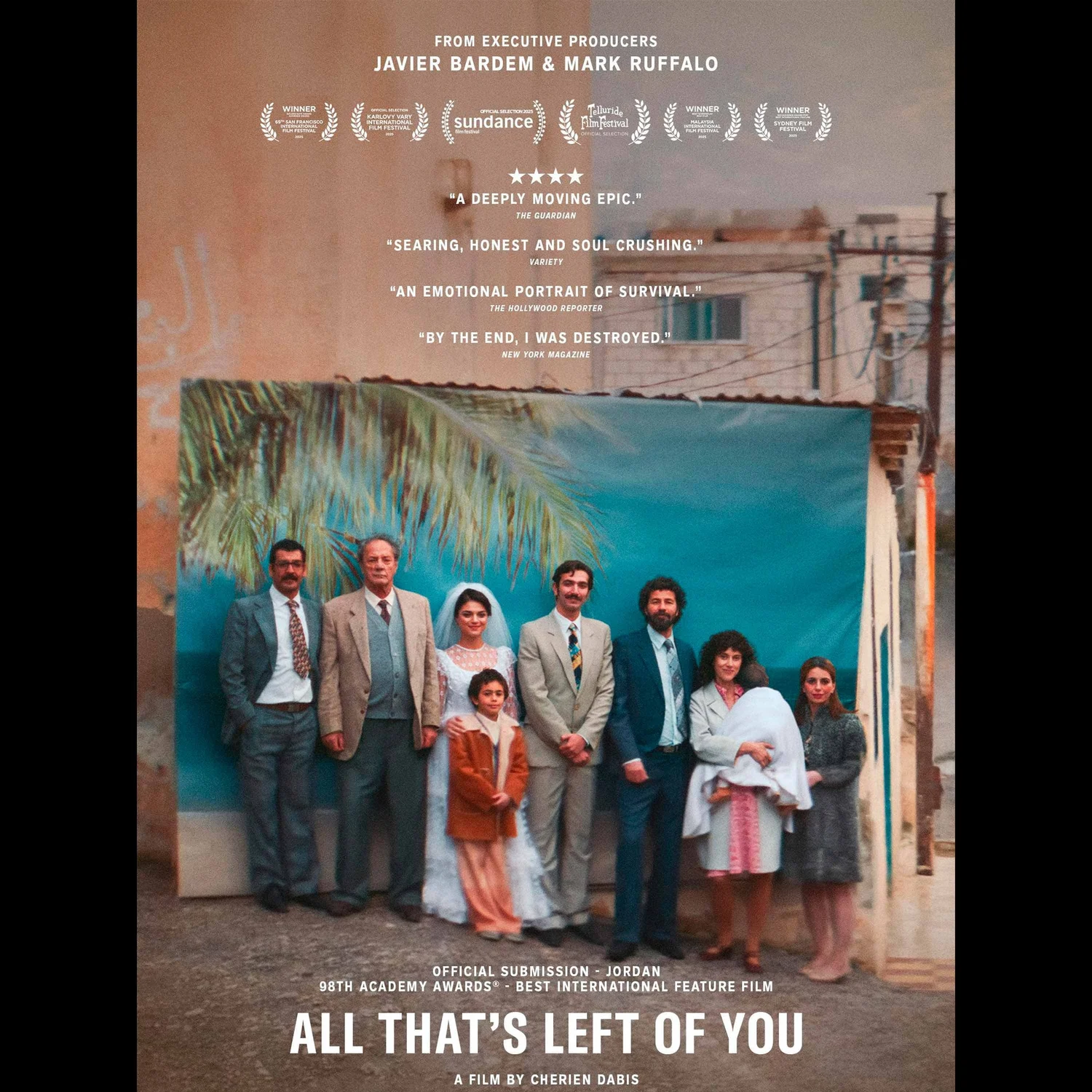 Palestine & Generational Trauma: CHERIEN DABIS on Directing All That's Left of You - Highlights 19.03.2026 14minMy guest today is filmmaker and actress Cherien Dabis, the first Palestinian to receive an Emmy nomination. She has worked on hit series like The L Word, Mo, and Only Murders in the Building. We discuss her ambitious new film All That's Left of You, Jordan's official submission for the Academy Awards. Cherien Dabis shares the profound challenges of filming after October 7th, her collaboration with the legendary Bakri Family, and why choosing humanity is the ultimate act of resistance.
 -
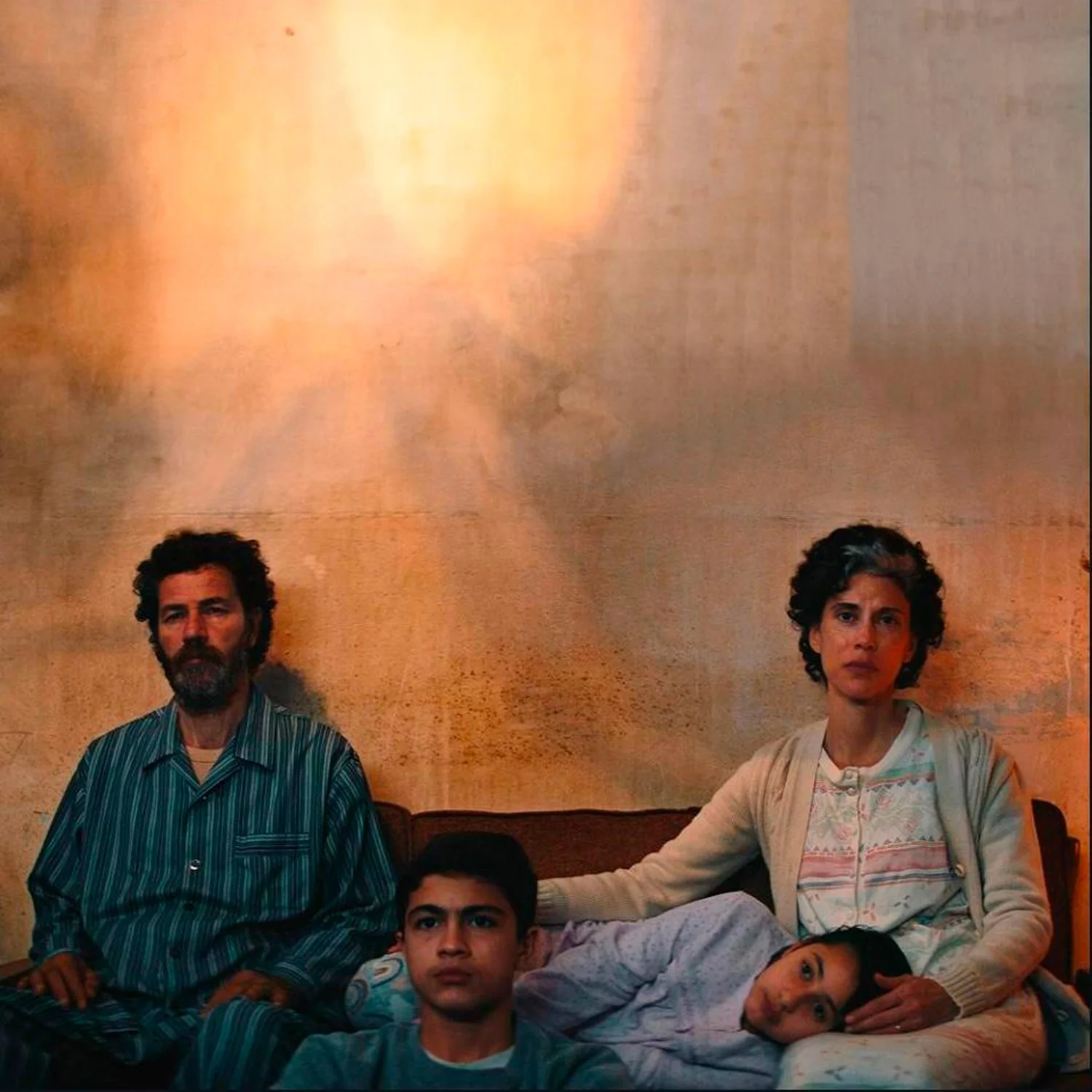 The Psychological & Emotional Impact of Occupation w/ Actress, Director CHERIEN DABIS 19.03.2026 54minMy guest today is filmmaker and actress Cherien Dabis, the first Palestinian to receive an Emmy nomination. She has worked on hit series like The L Word, Mo, and Only Murders in the Building. We discuss her ambitious new film All That's Left of You, Jordan's official submission for the Academy Awards. Cherien Dabis shares the profound challenges of filming after October 7th, her collaboration with the legendary Bakri Family, and why choosing humanity is the ultimate act of resistance.
 -
 Twists, Truth & Tension - Creating Compelling TV with NIGEL MARCHANT & MEGAN GALLAGHER - Highlights 17.11.2025 12min“We're at times where a lot of the arts are really suffering in multiple countries with funding and cost of living. Understandably, people come for the arts, but our job is at times to hold a mirror to society. We can learn a huge amount. It can really change everyone's perspective. So look, it could be escapism, and we all need that at times, but it also can have something that fundamentally can't be enacted just through journalism at times. I think when you dramatize something, it can reach the very core of an audience.”
 -
 ALL HER FAULT starring SARAH SNOOK - Behind the Scenes w/ NIGEL MARCHANT & MEGAN GALLAGHER 17.11.2025 50min“The people that we choose to love and the ones we choose to rely on and trust… Marissa and Jenny's relationship and that female friendship, that's what we watch happen in the series in real time. Whereas the marriages and the relationships that they're already in maybe aren't so perfect, the one we watch them choose is the one that's rewarding. It's so nice to listen to people's reactions to that relationship and how real that relationship feels. These two women, from a character perspective, have every reason to not get along or to hate each other or to yell at each other. That's the opposite of what each one of them does, and that just feels true and honest. I know a lot of women who I feel would act that way, be the best version of themselves in such an awful situation.:"
 -
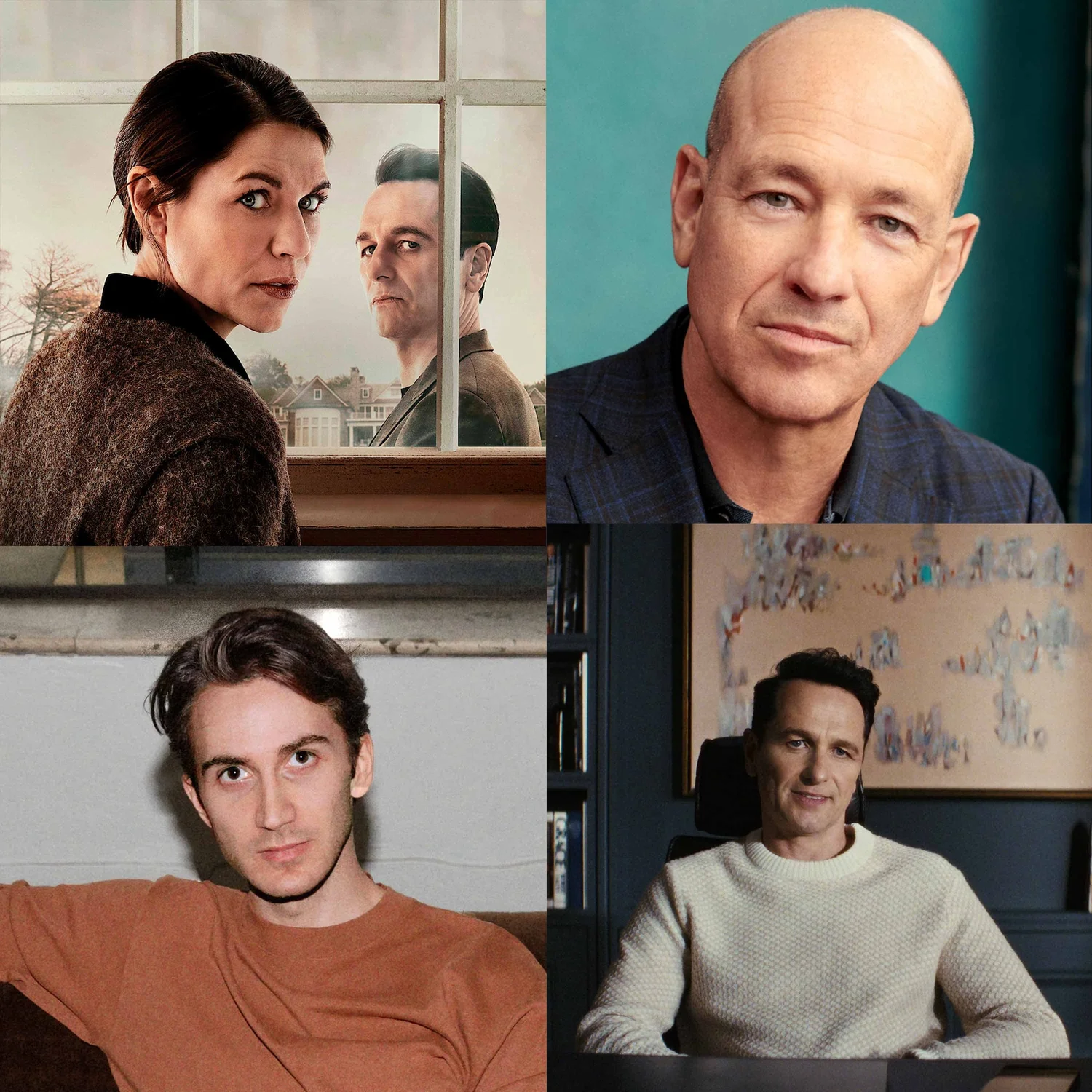 On Mind Games, Power & Obsession - Showrunner HOWARD GORDON & Writer DANIEL PEARLE - Highlights 09.11.2025 17min“How do you render something interior filmically? How do you communicate the details of the lost child, of the amount of time of the stuck creative process, and even the exterior, or the externalization of the house as a kind of hellish thing that's barely staying together—literally flooding with waste—and that you can't afford? So those are the details that we had to carefully figure out how to weave. But, you know, when you look at the first 10 minutes, it could be a horror movie. From that moment, a lot can happen. But what's important about it is that it sets the table for what does happen.” -Howard Gordon Today, we explore the dark psychology of obsession, guilt, and the thin line between predator and victim. Our guests are two of television's most accomplished architects of high-stakes drama and moral ambiguity: Howard Gordon, the showrunner and executive producer whose work defined a generation of thrillers with 24 and the multi-award-winning Homeland; and Daniel Pearle, an executive producer and writer who brings a distinct, penetrating depth from his background as a celebrated playwright and his work on series like Accused and American Crime Story.
 -
 The Beast in Me starring CLAIRE DANES - Behind the Scenes w/ HOWARD GORDON & DANIEL PEARLE 09.11.2025 46min“And I think there's also just something about an unfettered or uncensored id that is so captivating. We all have that fantasy of doing exactly what we want with no consequences and sort of letting that go. I think when you see an athlete at the peak of their game, doing that embodied thing and living that dream, or when someone has actually done horrible things that you would never allow yourself to do, there is a fascination there. I had one teacher who said, "Anyone who drives you crazy or that you just cannot stand in life, put them in a play or put them in a scene, and the audience will love them." If someone has really gotten under your skin and you just cannot stand them, and you have a visceral reaction—like, "I just hate this person"—make them a character, and the audience will make them everyone's favorite character. There is something to that.” - Daniel PearleToday, we explore the dark psychology of obsession, guilt, and the thin line between predator and victim. Our guests are two of television's most accomplished architects of high-stakes drama and moral ambiguity: Howard Gordon, the showrunner and executive producer whose work defined a generation of thrillers with 24 and the multi-award-winning Homeland; and Daniel Pearle, an executive producer and writer who brings a distinct, penetrating depth from his background as a celebrated playwright and his work on series like Accused and American Crime Story..Episode Websitewww.creativeprocess.info/podInstagram:@creativeprocesspodcast
 -
 In the Presence of the DALAI LAMA - Doc. Director of WISDOM OF HAPPINESS - Highlights 06.11.2025 14min“I can change my mind. I can reduce anger, hatred. Nothing to do with religion. All religions carry the message of love, loving kindness, and tolerance. With different views, there is a possibility to synthesize new ideas. If majority of the world leaders become female, world become safer. I feel that. Compassion is the key factor. Non-violence, compassion and self-confidence, these are key factors for happy individual, happy community, peaceful world. This century should be century of compassion, century of peace. No more bloodshed. We should develop a big “we,” rather than “we” or “they.” With these wings, you can fly.” -DALAI LAMA For decades, the Dalai Lama has been a global symbol of peace, compassion, and resilience, a spiritual leader living in exile from his home in Tibet. But how do you capture the essence of his wisdom—the kind that can truly change a life—in a way that feels intimate and personal? My guest today, documentary filmmaker Barbara Miller, has managed to do just that in her new film, Wisdom of Happiness. It’s a beautiful film that feels less like a documentary and more like a private, heart-to-heart conversation, where he invites us into his thoughts and shares practical steps for finding inner peace in a chaotic world. She's dealt with anti-globalization, domestic violence, and the fight for female pleasure in her previous works. We’ll talk about how she shifted from exposing systemic pain to focusing on radical hope and her collaboration with Executive Producer Richard Gere and Manuel Bauer, the Dalai Lama’s personal photographer for the last thirty-five years, who made his cinematography debut with this film. She shares what the Dalai Lama taught her about living in harmony with our body, nature, and the world.
 -
 WISDOM OF HAPPINESS - Heart-to-Heart w/ DALAI LAMA - Conversation w/ Director Barbara Miller 06.11.2025 43min“ Everybody wants happiness, joyfulness, peaceful world. Our 21st century will not be easy century. Fear, anger, hatred. In our mind we created distinctions. Different nationality, different color, different religion. Strong concept of “we” and “they”. Brothers and sisters of this small planet, we are same human beings. Meanwhile, global warming is a serious problem. Destruction of this planet is actually destruction of yourself. Our common responsibility should be work together, to save our world. We all have this marvelous human brain. The problem is, when negative emotions develop, our whole mind is taken over. So, we must deal with emotions. I can change my mind. I can reduce anger, hatred. Nothing to do with religion. All religions carry the message of love, loving kindness, and tolerance. With different views, there is a possibility to synthesize new ideas. If majority of the world leaders become female, world become safer. I feel that. Compassion is the key factor. Non-violence, compassion and self-confidence, these are key factors for happy individual, happy community, peaceful world. This century should be century of compassion, century of peace. No more bloodshed. We should develop a big “we,” rather than “we” or “they.” With these wings, you can fly.” -DALAI LAMA
 -
 "Everything is Art. Everything is Politics." AI WEIWEI'S TURANDOT Dir. MAXIM DEREVIANKO - Highlights 22.10.2025“So when we decided to do a documentary to follow Ai Weiwei, we knew, of course, it wouldn't be just a simple opera, and we knew he would bring his own very special and original vision. Because, of course, he is not an opera director. From his point of view, it's a challenge, but from another perspective, it’s probably an enrichment for the opera audience because he doesn't follow the rules of opera. And, of course, once you decide to do a documentary about Ai Weiwei, it's in his DNA to be political. Once I started to follow him, the political issues and topics came into the documentary by themselves.” The renowned artist and activist Ai Weiwei has used sculpture, photography, documentaries, and large-scale installations to challenge authoritarian power for decades. But his project at the Rome Opera House, directing Puccini’s final opera, Turandot, may be his most powerful fusion of art and politics yet. Puccini’s original is a fairy tale set in ancient China about a princess whose riddle game costs failed suitors their lives. But Ai Weiwei transformed this story into a stark reflection of the present, weaving in footage of refugee crises, COVID hospitals, and the Ukraine war—a production that became an urgent act of resistance for its Ukrainian conductor and cast. The opera and documentary are a living document of our turbulent times, embodying Ai Weiwei’s belief that 'Everything is Art. Everything is Politics.' The new documentary, Ai Weiwei's Turandot, goes behind the curtain to capture the artistic struggle and emotional weight of making this work—a process that began with one vision and was fundamentally changed by a global pandemic and a major war. My guest is the documentary’s director, Maxim Derevianko. He grew up in a family with deep ties to the Rome Opera House, and he offers a deeply personal, intimate look at how in Ai Weiwei’s words, “art competes with reality, but art will have the last word.”
 -
 AI WEIWEI'S TURANDOT 22.10.2025 59min“Everything is Art. Everything is Politics. I think art competes with reality. And art will give you the last words.” –Ai Weiwei The renowned artist and activist Ai Weiwei has used sculpture, photography, documentaries, and large-scale installations to challenge authoritarian power for decades. But his project at the Rome Opera House, directing Puccini’s final opera, Turandot, may be his most powerful fusion of art and politics yet. Puccini’s original is a fairy tale set in ancient China about a princess whose riddle game costs failed suitors their lives. But Ai Weiwei transformed this story into a stark reflection of the present, weaving in footage of refugee crises, COVID hospitals, and the Ukraine war—a production that became an urgent act of resistance for its Ukrainian conductor and cast. The opera and documentary are a living document of our turbulent times, embodying Ai Weiwei’s belief that 'Everything is Art. Everything is Politics.' The new documentary, Ai Weiwei's Turandot, goes behind the curtain to capture the artistic struggle and emotional weight of making this work—a process that began with one vision and was fundamentally changed by a global pandemic and a major war.
 -
 Why We Need Stories in Times of Crisis: ETGAR KERET on Healing, Connection & Creativity in the Age of AI - Highlights 10.09.2025 19min“I feel that when you don't tell your story, it's as if you have a limited existence. We can always have some kind of choice, but I'm saying that the story we choose may be the most crucial choice that we make, because this story will affect all the other choices.” Etgar Keret is one of the most inventive and celebrated short story writers of his generation, a voice that captures the absurdities and profound loneliness of modern life with a deceptive, almost casual wit. His work, translated into dozens of languages, uses fantastical premises—from alien visitations to parallel universes—to illuminate the most human of truths. His new collection, Autocorrect, explores a world grappling with technology, loss, and the aftershocks of a global pandemic and, more recently, war. His awards include the Cannes Film Festival’s Caméra d’Or (2007), the Charles Bronfman Prize (2016), and the prestigious Sapir Prize (2018). Over a hundred short films and several feature films have been based on his stories. Keret teaches creative writing at Ben-Gurion University of the Negev. He now has a weekly newsletter on Substack called Alphabet Soup. He's also the new MFA Director of the Jewish Theological Seminary, where he's pioneering a new approach to storytelling. Joining me today from Tel Aviv is the great Israeli writer and filmmaker Etgar Keret. “When I write my stories, I don't want to solve things in life. I just want to persuade myself that there is a way out. Maybe I am in a cell, maybe I'm trapped. Maybe I won't make it, but if I can imagine a plan for escape, then I'll be less trapped because at least in my mind, there is a way. I think that my parents are survivors. They always talked about this idea of humanity. My parents always said to me, when you look at people, don't look at their political views; that's not important. Look at the way that they look at you. If they see you, if they listen to you, if they can understand your intention, even if it's a failing one, they're your people. And if they can't, it doesn't matter. I think that when I came with my mother and father, they thought there are people, there are human beings, and there are people who want to be human beings but are still struggling. And you go with humanity; you go with the person who can go against his ideology if his heart tells him something.”
 -
 Finding Humanity Through Storytelling with Author & Filmmaker ETGAR KERET 10.09.2025 1u 8min“When I write my stories, I don't want to solve things in life. I just want to persuade myself that there is a way out. Maybe I am in a cell, maybe I'm trapped. Maybe I won't make it, but if I can imagine a plan for escape, then I'll be less trapped because at least in my mind, there is a way. I think that my parents are survivors. They always talked about this idea of humanity. My parents always said to me, when you look at people, don't look at their political views; that's not important. Look at the way that they look at you. If they see you, if they listen to you, if they can understand your intention, even if it's a failing one, they're your people. And if they can't, it doesn't matter. I think that when I came with my mother and father, they thought there are people, there are human beings, and there are people who want to be human beings but are still struggling. And you go with humanity; you go with the person who can go against his ideology if his heart tells him something.” Etgar Keret is one of the most inventive and celebrated short story writers of his generation, a voice that captures the absurdities and profound loneliness of modern life with a deceptive, almost casual wit. His work, translated into dozens of languages, uses fantastical premises—from alien visitations to parallel universes—to illuminate the most human of truths. His new collection, Autocorrect, explores a world grappling with technology, loss, and the aftershocks of a global pandemic and, more recently, war. His awards include the Cannes Film Festival’s Caméra d’Or (2007), the Charles Bronfman Prize (2016), and the prestigious Sapir Prize (2018). Over a hundred short films and several feature films have been based on his stories. Keret teaches creative writing at Ben-Gurion University of the Negev. He now has a weekly newsletter on Substack called Alphabet Soup. He's also the new MFA Director of the Jewish Theological Seminary, where he's pioneering a new approach to storytelling. Joining me tonight from Tel Aviv is the great Israeli writer and filmmaker Etgar Keret.
 -
 From 'Bee: Wild' to the 'Kiss the Ground' Regenerative Agriculture Documentary Trilogy - Highlights 10.08.2025 15min"For the last two decades, I've made over 20 films about the environment, starting with oil and carbon emissions. Those films, Kiss the Ground and now Common Ground, talk about how we can stabilize the climate, reverse climate change, grow nutrient-dense food, and help farmers make a profit through biodiversity and regenerative practices and principles. There's incredible intelligence in nature; it knows how to be resilient. We thought we could do it better, and in trying to mechanize and industrialize the entire system, we created a linear system that doesn’t make sense. We’re growing animals to produce food that we can’t eat so that we can ship it halfway around the world. It’s a system that doesn’t work. The way to heal, regenerate, stabilize the climate, and reverse climate change is literally one inch and one acre at a time—through communities waking up to the power of soil and biodiversity to sequester carbon for all of us. The oceans can’t handle any more carbon absorption; they’re acidifying and heating up. We need to take the carbon we’ve emitted and put it back into the soil. When we do that, we create thriving ecosystems, biodiversity, and water infiltration, which massively reduces the risks from flooding. It helps reverse desertification and staves off droughts by retaining water like a sponge. Resiliency comes from having genetic diversity rather than just one of everything." Today, we explore the work of a filmmaker whose lens is consistently turned toward the most critical issues facing our planet. Rebecca Tickell, in collaboration with her husband Josh Tickell, has created a powerful cinematic catalog of films that are not merely observations, but catalysts for change. They've taken on the complexities of our energy systems, the deep-seated problems within our food supply, and now, with her latest work, Bee: Wild, they explore the essential, fragile, and often unseen world of pollinators. Their film Kiss the Ground sparked a global conversation about regenerative agriculture, leading to tangible shifts in policy and public understanding. Common Ground continued this exploration, unraveling the intricate web of our food systems. Now, with Bee: Wild, narrated by Ellie Goulding and executive produced by Angelina Jolie,Rebecca brings her characteristic blend of journalistic rigor, personal narrative, and solutions-driven storytelling to the urgent plight of bees, asking us to reconsider our relationship with the natural world.
 -
 All About Bees, Soil & Regeneration with Documentary Filmmaker REBECCA TICKELL 05.08.2025 1u“I didn't really appreciate bees until I became a farmer, and then I started to understand how essential bees are for our food. They pollinate 70% of our food, and that feeds 90% of the world. There's a whole world of insects that creates the color in our food; it's what creates the flavor in our food. It's part of our biodiversity, and it's essential for human life on Earth to protect and understand how to protect these bees and pollinators. If you look at the COP, the Conference of the Parties, they haven't even been talking about soil regeneration at all, and they've been holding these conferences in oil-rich countries, then talking about reducing carbon emissions. Soil has the power, through photosynthesis, to draw down carbon from the atmosphere. It's called biosequestration. It takes that carbon down into the roots, and then it turns it into healthy humus. That is the food for life in the soil. It needs that carbon. And so that is the purpose of plants. They breathe in the carbon and breathe out the oxygen. As we've been watching carbon levels increase in our atmosphere, we've been watching the ocean try to absorb as much of it as it can and become acidified as a result, leading to great losses to our ocean habitat and coral reefs. We've forgotten that simple tool of the solution that's right beneath our feet called soil health and soil regeneration. Not only does it draw down carbon, it's the only place we can put that teraton of carbon that we've emitted. There's only one place for it, and it's in the soil. So why isn't that the main conversation of every climate conversation? You not only bring the soil back to life, but you are creating nutrient-dense food. You're giving plants the ability to work in symbiosis with the soil that it co-evolved with. That then allows for it not only to be resilient and have a strong immune system, but also to absorb nutrition, which, in turn, we eat and absorb that nutrition. Like I said, we're a reflection of the soil.” Today, we explore the work of a filmmaker whose lens is consistently turned toward the most critical issues facing our planet. Rebecca Tickell, in collaboration with her husband Josh Tickell, has created a powerful cinematic catalog of films that are not merely observations, but catalysts for change. They've taken on the complexities of our energy systems, the deep-seated problems within our food supply, and now, with her latest work, Bee: Wild, they explore the essential, fragile, and often unseen world of pollinators. Their film Kiss the Ground sparked a global conversation about regenerative agriculture, leading to tangible shifts in policy and public understanding. Common Ground continued this exploration, unraveling the intricate web of our food systems. Now, with Bee: Wild, narrated by Ellie Goulding and executive produced by Angelina Jolie,Rebecca brings her characteristic blend of journalistic rigor, personal narrative, and solutions-driven storytelling to the urgent plight of bees, asking us to reconsider our relationship with the natural world.
 -
 Art, Empathy & Resilience with CADY McCLAIN, Actor, Director, Writer, Artist, Musician - Highlights 01.08.2025 11min“I had to become the father of my family very young because my parents divorced when I was 12. My situation was a little bit unusual in that my father kind of disappeared, and I had been making a fair amount of money as a kid, doing commercials and television and film. We needed money, and I kind of became the breadwinner. But I had this amazing world that I had access to, which was the world of the entertainment industry. My mom was supportive of my taking over and saying, "This is, I think, what we need to do." She liked the idea of moving to New York, so we moved to New York when I was 17 with a play that I had gotten. Then she got cancer and became really sick, so I had to take care of her full time. That lasted for about eight years, and then she died when I was 25. That was a rough go. At the same time, I had an amazing other world, and my other world was the world of make-believe and pretend, which I got to participate in on the soaps, with happy families and Christmases, Easters, miracles, love, weddings, and children. The pretend world that I spent a large amount of time in became a great way to balance what was sort of tragic in my real life.” Our guest today is Cady McClain. You probably know her from her long and celebrated career in daytime television. She is a three-time Emmy® Award-winning actress. She plays Pamela Curtis on CBS’ Beyond the Gates, and is the Artistic Director of Axial Theatre, and her directorial work includes the documentary, Seeing is Believing: Women Direct, a fascinating look at the challenges and triumphs of women behind the camera. Her memoir, Murdering My Youth, is an honest and sometimes difficult book about growing up as a child actor in the spotlight. Her work across all these different art forms—acting, directing, writing, art, and music—all seems to be connected by a commitment to telling true stories, no matter how complicated.
 -
 A Life in Acting with Emmy Award-winning Actor, Director, Writer CADY McCLAIN 31.07.2025 1u 6min“I won my first Emmy when I was 21, which was the result of absolutely devoting myself day and night for two years to doing all the scene work. I attended classes simultaneously and did plays until my mother died. I studied with Michael Howard for eight years. Even when I was so tired I couldn't get up to do a scene, he would say, "Get up and do a poem." It helped me enormously; it saved me.The way I was trained and how I train others is that you know when you’re in the zone. Oh God, it feels so good. It feels like flying. And that's what you want. You want to be so unselfaware that you're on liftoff?I had to become the father of my family very young because my parents divorced when I was 12. My situation was a little bit unusual in that my father kind of disappeared, and I had been making a fair amount of money as a kid, doing commercials and television and film. We needed money, and I kind of became the breadwinner. But I had this amazing world that I had access to, which was the world of the entertainment industry. My mom was supportive of my taking over and saying, "This is, I think, what we need to do." She liked the idea of moving to New York, so we moved to New York when I was 17 with a play that I had gotten. Then she got cancer and became really sick, so I had to take care of her full time. That lasted for about eight years, and then she died when I was 25. That was a rough go. At the same time, I had an amazing other world, and my other world was the world of make-believe and pretend, which I got to participate in on the soaps, with happy families and Christmases, Easters, miracles, love, weddings, and children. The pretend world that I spent a large amount of time in became a great way to balance what was sort of tragic in my real life.”Our guest today is Cady McClain. You probably know her from her long and celebrated career in daytime television. She is a three-time Emmy® Award-winning actress. She plays Pamela Curtis on CBS’ Beyond the Gates, and is the Artistic Director of Axial Theatre, and her directorial work includes the documentary, Seeing is Believing: Women Direct, a fascinating look at the challenges and triumphs of women behind the camera. Her memoir, Murdering My Youth, is an honest and sometimes difficult book about growing up as a child actor in the spotlight. Her work across all these different art forms—acting, directing, writing, art, and music—all seems to be connected by a commitment to telling true stories, no matter how complicated. Episode Websitewww.creativeprocess.info/podInstagram:@creativeprocesspodcast
 -
 Exploring The Sympathizer, America's Forever Wars & Challenging Power w/ Author VIET THANH NGUYEN 09.07.2025 1u 2min“What I've discovered as a writer is that fear is a good indicator that there is a truth. To speak the truth in a society is oftentimes an act that requires some courage. Those processes of being an other for me in the United States were obviously very fundamental to shaping who I am as a person and as a writer. It was very difficult to undergo, but to become a writer who could talk about those issues was also a lot of fun. Writing The Sympathizer was a lot of fun, and I hope that the novel was enjoyable and humorous to read as well, despite its very serious politics. When I wrote The Committed, I also had a lot of fun as an outsider to France. In writing the novel itself, The Committed, there was a lot of humor, satire, and these kinds of tools to confront the tragedy of othering. This is very important to me as literary and political devices. I think I could do that in both The Sympathizer and The Committed because I had a lot of distance from the time periods that those novels described. My challenge right now is to try to find my sense of humor in describing what the United States is undergoing and doing to other countries, its own immigrants, and its own people of color, and minorities in the present. That's proving to be a little more challenging at this moment."
 -
 On Borges, Gore Vidal, Robert Frost & The Writing Life with Author & Filmmaker JAY PARINI 07.07.2025 30min“Poetry is the prince of the literary arts to me. It's at the very top because it's language refined to its apex of memorability. I am interested in poetry as memorability and poetry as something you live by. These are the words you live by. These words stay in your brain and guide your life. That's what I am interested in. My memoir slash autofiction is called Borges and Me, and as you know, it's a story of my time in 1970 when my best friend Billy was drafted for the Vietnam War, and so was I. He went to Vietnam, and I went to Scotland to hide out and do my graduate work. I spent nearly seven years in Scotland, but I certainly spent the next five years definitely in Scotland. I was there before as an undergraduate for a bit, too. During that time, Billy was killed in Vietnam, and I was a nervous wreck. My memoir talks about my depression, my anxieties, and then, through my friend Alastair Reid, I met Borges, the great Argentine writer. We went on a little road trip through the Highlands, and this conversation with Borges really restored me back to myself and what was important in life. I felt that I owed a huge amount to that contact with Borges… I was lucky that suddenly, out of nowhere, came a wonderful director-producer named Mark Turtletaub. He had read my book and loved it, and he approached me. We had a conversation, and he said, ‘Look, I want to make this movie.’ So off we went.”
 -
 An Actor Prepares - SHARON LAWRENCE on Crafting Complex Characters - Highlights 09.06.2025 20min“I would encourage you, as I do if you're an actor, to know your own equipment, know your own psychology, and use the great teachers that are synthesized in my favorite teacher's book, Moss, who I studied with later. There is a book called Intent to Live that distills down Uta Hagen, Stella Adler, Bobby Lewis, and Stanislavski. The great teachers at the Group Theatre believed that the method needed to be altered to be constructive rather than destructive to artists. David Milch's mind is so singular because he uses language in a way that defines character. That's what all good writers do: use language to get to the heart of something. He would use malapropisms to make up words, and Milch loved playing with that. As someone who played the love interest of such a unique character as Andy Sipowicz, I found it fascinating. Through Sylvia and David Milch's understanding, his wife humanized him. Sipowicz was portrayed as an addict, a very flawed human who had many addictions. David Milch is now suffering from Alzheimer's, so we won't get his words again. However, the words that he has to offer are timeless because he studied Robert Penn Warren and had many mentors throughout his vast literary education. That is key. I love speaking Noël Coward’s words. As a bon vivant, he wrote musically, to charm us and amuse us. So going and reading Noël Coward is important for actors to learn those cadences and the musicality of a certain era. Of course, Shakespeare comes to mind. I also think of the female playwrights who delight me now, whether it's Caryl Churchill. She has that singular mind and plays with gender so well, challenging gender norms. Seeing ‘Cloud Nine’ when I was in college blew my mind open because men were playing women and women were playing men. Of course, Shakespeare was doing it too, but her work felt more intimate; it was in a small theater. That’s another thing I encourage actors and audiences to do: go see things in small theaters. See it up close because that will excite you and help you learn the craft.” Sharon Lawrence is an acclaimed actress best known for her Emmy-nominated, SAG Award-winning role as ADA Sylvia Costas on NYPD Blue. She has delivered memorable performances in Desperate Housewives, Monk, Law & Order: SVU, Criminal Minds, Shameless, and Queen Sugar. On stage, she’s earned praise for roles in The Shot (a one-woman play about the owner/publisher of the Washington Post, Katharine Graham), Orson’s Shadow, and A Song at Twilight. Shestarred in Broadway revivals of Cabaret, Chicago, and Fiddler on the Roof. Her recent work includes the neo-Western series Joe Pickett, opposite Michael Dorman, and the films Solace with Anthony Hopkins and The Bridge Partner. Lawrence is also a dedicated advocate, serving on the boards of the SAG-AFTRA Foundation, WeForShe, and Heal the Bay, and is a former Chair of the Women In Film Foundation.
 -
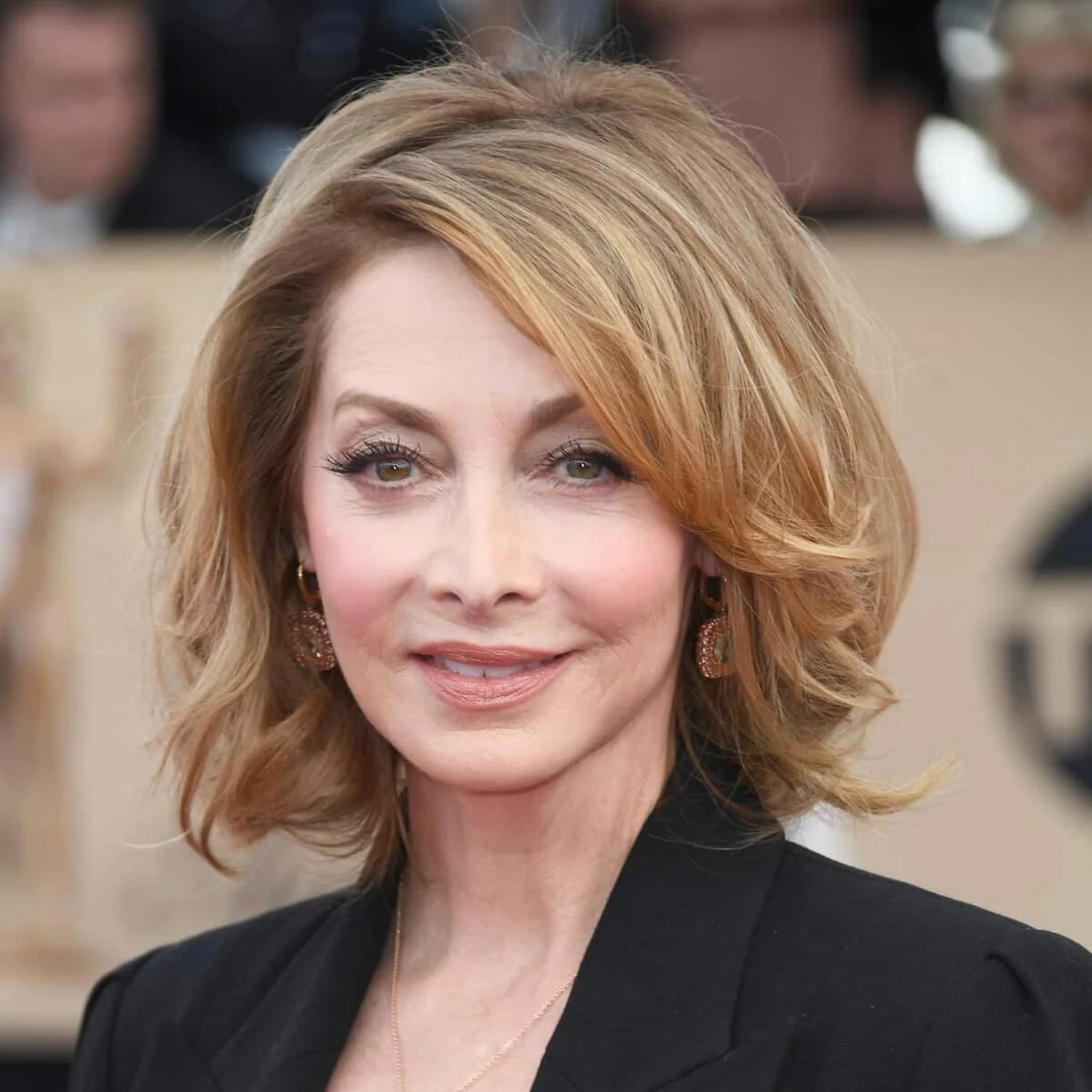 SHARON LAWRENCE on Acting, Activism & The Art of Transformation 07.06.2025 1u 2min“That transformation was key to my next step as an artist, to knowing that's what acting is. It isn't just posing; it isn't just being a version of yourself in a way that was free. Performing wasn't just performing; it was transforming. I think that artists find that in many different ways, and as actors, there are many ways into that. I would encourage you, as I do if you're an actor, to know your own equipment, know your own psychology, and use the great teachers that are synthesized in my favorite teacher's book, Moss, who I studied with later. There is a book called Intent to Live that distills down Uta Hagen, Stella Adler, Bobby Lewis, and Stanislavski. The great teachers at the Group Theatre believed that the method needed to be altered to be constructive rather than destructive to artists. David Milch's mind is so singular because he uses language in a way that defines character. That's what all good writers do: use language to get to the heart of something. He would use malapropisms to make up words, and Milch loved playing with that. As someone who played the love interest of such a unique character as Andy Sipowicz, I found it fascinating. Through Sylvia and David Milch's understanding, his wife humanized him. Sipowicz was portrayed as an addict, a very flawed human who had many addictions. David Milch is now suffering from Alzheimer's, so we won't get his words again. However, the words that he has to offer are timeless because he studied Robert Penn Warren and had many mentors throughout his vast literary education. That is key. I love speaking Noël Coward’s words. As a bon vivant, he wrote musically, to charm us and amuse us. So going and reading Noël Coward is important for actors to learn those cadences and the musicality of a certain era. Of course, Shakespeare comes to mind. I also think of the female playwrights who delight me now, whether it's Caryl Churchill. She has that singular mind and plays with gender so well, challenging gender norms. Seeing ‘Cloud Nine’ when I was in college blew my mind open because men were playing women and women were playing men. Of course, Shakespeare was doing it too, but her work felt more intimate; it was in a small theater. That’s another thing I encourage actors and audiences to do: go see things in small theaters. See it up close because that will excite you and help you learn the craft.” Sharon Lawrence is an acclaimed actress best known for her Emmy-nominated, SAG Award-winning role as ADA Sylvia Costas on NYPD Blue. She has delivered memorable performances in Desperate Housewives, Monk, Law & Order: SVU, Criminal Minds, Shameless, and Queen Sugar. On stage, she’s earned praise for roles in The Shot (a one-woman play about the owner/publisher of the Washington Post, Katharine Graham), Orson’s Shadow, and A Song at Twilight. Shestarred in Broadway revivals of Cabaret, Chicago, and Fiddler on the Roof. Her recent work includes the neo-Western series Joe Pickett, opposite Michael Dorman, and the films Solace with Anthony Hopkins and The Bridge Partner. Lawrence is also a dedicated advocate, serving on the boards of the SAG-AFTRA Foundation, WeForShe, and Heal the Bay, and is a former Chair of the Women In Film Foundation.
Vergelijkbare podcasts


![Black Men Can't Jump [In Hollywood]](https://cdn.radoxo.com/images/podcasts/9936-black-men-cant-jump-in-hollywood.avif?v=1790842920)

Populair in
Deze podcast verschijnt ook in de podcastlijsten van deze landen.
