
Born to Be Free: Supporting Neurodivergent Clients to Learn, Play, & Thrive
Meg Ferrell
0
A podcast for professionals who support neurodivergent clients, focusing on their deepest wellbeing. Topics include lived experiences, research, affirming practices, intersectionality, and practical strategies for authentic wellbeing. Produced by Meg Ferrell and associated with learnplaythrive.com.
Afleveringen
-
 Supporting Twice Exceptional Autistic Kids 16.09.2026 53minKids who are very intellectually bright and also Autistic have a unique set of struggles, one that is often missed, silenced, or poorly supported. They may struggle with shame, perfectionism, self-advocacy, boredom, dysregulation, being misidentified, and being misunderstood. Today's episode with school psychologist and parent coach Dr. Danika Maddocks covers the ways 2E kids are struggling that are so often missed, and how we can show up to support them.
 -
 Systems Let Autistic People Down, But They Don't Have To. Here's How To Change It 02.09.2026 47minWhen Dr. Mel Houser started medical school, they never imagined that they would later find themselves reimagining healthcare for neurodivergent people. But their work has been remarkable - and offers all of us a template for challenging systems that create barriers to health, belonging, and participation. This episode explores four key ideas: healthcare is more than medical care; solutions should come from those closest to the problem; universal design creates multiple paths to participation; and safety is the foundation for meaningful participation. Dr. Mel Houser is a family physician and the founder and executive director of All Brains Belong Vermont.
 -
 Who Gets to Be Heard? The Case For Researching Assisted Methods to Autistic Communication 05.08.2026 43minHere's what we know: assisted methods to teaching typing have been highly controversial in the field of speech-language pathology, and simultaneously have been passionately defended by many non-speaking Autistics. In a recent paper, researcher Vikram Jaswal, along with a team including Dr. Kristie Patten, Dr. Barry Prizant, and several others, argued that we need more research on assisted communication methods so that we can get clearer answers. On the podcast today, Dr. Jaswal and Italk about what all of this means, why it has been so controversial, and what steps might help us understand the potential - and the limitations - of assisted communication methods.
 -
 How to Work in Collaboration With Your PDA Clients with Stacey Curnow 15.07.2026 56minEver wondered how to apply Dr. Ross Green's model of Collaborative & Proactive Solutions to your work with PDA clients? Today's guest, AuDHD mental health therapist Stacey Curnow, is writing a book about it with Dr. Green's collaboration and oversight. In today's episode, we talk about what exactly collaboration looks like in practice with PDA clients. We also dive into supporting parents, teaching daily living skills, supporting PDAers with aggressive behaviors, PDA kids in burnout, and so much more.
 -
 Safety, Trust, & Authenticity: How PDA Experiences Can Inform Our Practices with Diane Gould, Ruth Hevelone, and Michele Kleinmann 01.07.2026 48minThe folks at PDA North America recently surveyed over 2,000 families about PDA (Pathological Demand Avoidance, or the Pervasive Drive for Autonomy). What they learned has major implications for your clinical practice. In today’s episode, you'll hear from Diane Gould, Ruth Hevelone, and Michele Kleinmann. We talk about what they learned from their PDA Experiences survey, as well as the practices that are supportive for PDAers. We talk about respect, partnership, flexibility, authenticity, congruency, and more. We also address in depth that question that so many of us get when we are accommodating our Autistic clients: "What about the real world?" If you support PDA-ers, after you listen to this conversation, make sure to also check out our Patreon where we have providers talking in-depth about how they support PDA-ers in the context of everyday SLP, OT, mental health practice. They go into how to move through rupture and repair when they get it wrong, some of our guests talk about how to support PDA-ers in burnout, how to bring autonomy into everything including regulation, and more. It's just $7 for over 30-hours of content and you can find it at patreon.com/learnplaythrive. Your support on Patreon helps us cover the cost of this podcast and keep it going.
 -
 Tools That Get Neurodivergent Folks Through Feeling Stuck, Overwhelmed, Unmotivated, Disorganized, and Discouraged with Dani Donovan 24.06.2026 1u 25min
 -
 When Your Client Needs Novelty & Routines All At Once: Supporting AuDHDers with Dr. Bowen Marshall, LPCC, PhD 10.06.2026 42minThis episode is a deep and nuanced exploration into the seemingly competing needs of being Autistic and being ADHD. We call these folks AuDHD-ers, and they're often faced with both the need for routines that comes with being Autistic and the craving for novelty that comes with ADHD. In this episode, AuDHD psychotherapist, Dr. Bowen Marshall, helps us explore all of the complexities around AuDHD, including how ADHD and autism can be complementary and how that may change when one condition is medicated. We talk about what's tricky and what helps, and we look in every corner of this to explore the complexities of this topic, like dopamine, executive function, routines, estrogen, testosterone, gender identity, race, and more. Dr. Bowen Marshall, PhD is a licensed psychotherapist, bestselling author, and consultant specializing in ADHD, Autism, relationships, and Complex-PTSD.
 -
 When Your Autistic Client Also Has OCD, Depression, Anxiety or Other Co-Occurrences: Affirming, Person-Centered Practices with Matt Lowry, LPP 27.05.2026 37min{{Two Sides of the Spectrum is now Born to Be Free!}} This episode is a sweeping overview of the co-occurring conditions that Autistic people often experience, including OCD, depression, anxiety, ADHD, PDA, and more. Autistic Licensed Psychological Practitioner Matt Lowry helps us take a topic that can feel huge and overwhelming and reduce it to a few core themes that make affirming practice feel clear, grounded, and simple, even when we are supporting clients with more complex profiles. Matt Lowry lives and practices in Kentucky, where he specializes in autism and ADHD evaluations, and Autistic-centered therapy. He is the proud parent of an Autistic child and works to promote an understanding of autism and the Autistic lifestyle. For show notes as well as in-person and livestreamed CE trainings visit learnplaythrive.com. For more episodes visit patreon.com/learnplaythrive
 -
 Two Sides --> Born To Be Free (New Podcast Name!) 20.05.2026 1minWe have a new podcast name! Keep your eyes out for our first episode of Born to Be Free: Supporting Your Neurodivergent Clients to Learn, Play, and Thrive. The podcast is relaunching with an emphasis on all of the complexities our Autistic clients experience, and how we can support them in affirming ways. We're starting off with a focus on Autistic people who also have OCD, depression, anxiety, ADHD, multiple disabilities, motor difficulties, PDA, twice exceptionality, and more. Don't miss our first episode of Born to Be Free where we will talk about co-occurring conditions for Autistic people with Autistic LPP Matt Lowry, coming next week! In the meantime, get more in-depth episodes about what affirming practices look like in action at patreon.com/learnplaythrive. Or join an in-person or livestreamed training at learnplaythrive.com/trainings.
 -
 AuDHDers, Executive Function, & Social-Emotional Wellbeing with Vanessa Castañeda Gill 18.03.2026 32minThis episode dives into the specific needs of AuDHD-ers – that’s kids who are Autistic and have ADHD - tying in executive functioning, social-emotional well-being, and so much more. Vanessa’s take is detailed, creative, and deeply practical. You’re going to want to take notes! Vanessa Castañeda Gill is an AuDHDer and the cofounder and CEO of Social Cipher, where she and her team create social-emotional learning video games and curriculum for neurodivergent youth. Want MORE EPISODES of Two Sides of the Spectrum and recorded Q&As with our guests? Join our community at patreon.com/learnplaythrive
 -
 Therapy as a Collaboration and Becoming 17.02.2026 5min"Because therapy should feel like a collaboration and becoming, not a rehearsal and being less yourself in order to survive." - Chenai Mupotsa-Russell In this short episode, you get a sneak peek into the audio from one of our most poetic and transformative summit talks. Our continuing education summit is now $100 off and available on-demand at learnplaythrive.com/summit
 -
 Five Core Skills to Help Your Autistic Clients to Unmask for Life with Dr. Devon Price 04.02.2026 46minDr. Devon Price’s work sits at the intersection of trauma-informed care and Autistic unmasking. In this interview, he walks us through five core practices for unmasking, and shares how to approach them thoughtfully with Autistic clients who have experienced trauma - which is most of the Autistic community. We explore practices such as learning your preferences and disentangling them from social norms, building resilience, cultivating distress tolerance, and shaping your life - both in big, structural ways and in the small, everyday details. A lot has been said about unmasking, but very few approaches hold the work with this level of care. Dr. Devon Price is a social psychologist, clinical associate professor at Loyola University Chicago, and an Autistic person. His books include Laziness Does Not Exist, Unlearning Shame, Unmasking Autism, and his newest release, Unmasking for Life. Want MORE EPISODES of Two Sides of the Spectrum, recorded Q&As with our guests, and a listener chat forum? We just launched our Patreon and we need your support! Join our community at patreon.com/learnplaythrive
 -
 Showing Up in the Therapy Room With Our Whole Humanity: Art, Attunement, and Radical Care with Chenai Mupotsa Russell 21.01.2026 32minLearning from Chenai Mupotsa-Russell will absolutely transform you. Chenai doesn't just teach us how we can use art of every kind to support well-being for our clients, she also embodies everything she teaches — art, liberation, anti-colonial practice, and so much more. In today's conversation, we explore the role that art can play in our work as providers with concrete examples, and ideas, and stories from Chenai that you can use right away. Chenai Mupotsa-Russell is an art therapist, community builder, advocate, and PhD candidate in community psychology. Her research reimagines mental health through decolonial practice, collective care, and intersectional justice. Want MORE EPISODES of Two Sides of the Spectrum, recorded Q&As with our guests, and a listener chat forum? We just launched our Patreon and we need your support! Join our community at https://patreon.com/learnplaythrive
 -
 How to Organize a Disability Pride Event in Your Town with Sara Zielinski 07.01.2026 34minAbleism is ingrained into our society, and many of us wonder what we can do about it. Occupational therapist Sara Zielinski decided that a huge celebration - centering disability pride - in her small town would be a great place to start. What happened next was transformative. In this episode Sara teaches us how to throw a disability pride event, why events like this matter, and how we can all be change agents in our workplaces and our communities. Want MORE EPISODES of Two Sides of the Spectrum, recorded Q&As with our guests, and a listener chat forum? We just launched our Patreon and we need your support! Join our community at patreon.com/learnplaythrive
 -
 Supporting Regulation: A Leveled-Up Approach with Dr. Jacquelyn Fede and Dr. Amy Laurent 17.12.2025 46minWhen your Autistic clients have trouble identifying the emotions inside of their bodies, emotion-based regulation systems aren't always helpful. This episode is all about how regulation can be guided by energy levels. Specifically, how we help our Autistic clients match their energy level to what’s needed for the things they need or want to do. Our guests are the two incredible folks behind Autism Level Up. Jacquelyn Fede, who is an Autistic advocate and developmental psychologist and Amy Laurent, who is a developmental psychologist, a registered pediatric occupational therapist and co-author of the SCERTS model. Amy and Jacquelyn’s work show us that there’s no one right way to be regulated. And this model gives a profoundly impactful alternative to traditional models of regulation. This is an updated release of Episode 7 from 2020. Amy and Jacquelyn are also speaking at our 2026 Continuing Education Summit. Grab a ticket at learnplaythrive.com/summit Want MORE EPISODES of Two Sides of the Spectrum and recorded Q&As with our guests? Join us on Patreon at patreon.com/learnplaythrive. Your support on Patreon helps keep the podcast going.
 -
 Reclaiming Disabled Kids' Futures: A Planning & Visioning Process for Every Provider with Joyner Emerick 03.12.2025 50minWe all know that the plans and goals that we write deeply impact what our students and clients get access to learning. Joyner Emerick – a parent and openly Autistic school board director - has completely transformed the planning process in the best possible way. Joyner has a 10 year old who is minimally speaking with high adaptive and communication support needs. In this episode, you'll hear them talk about the future visioning process they created for their child. They’ll show you how it works, how you can implement it, and the 12 valued outcomes - as Joyner calls them - that they wrote for their son. This is not a process that's for sale. We're sharing it with you in its entirety so you can take it and use it in your work too. Don't miss the show notes for this one where we share a lot of the documents, and details, and language at learnplaythrive.com/podcast. Want MORE EPISODES of Two Sides of the Spectrum, recorded Q&As with our guests, and a listener chat forum? We just launched our Patreon and we need your support! Join our community at patreon.com/learnplaythrive
 -
 How to Support Autonomy in Regulation and Reduce Burnout for Autistic PDAers with Sorcha Rice 24.11.2025 4minThis conversation with Autistic OT Sorcha Rice covers regulation for Autistic PDAers from absolutely every angle. The theme Sorcha kept bringing us back to is how we can provide more autonomy for our clients in how they identify their regulation needs and how they access their regulation tools. Sorcha walks us through a case study detailing how she supported a client who was deeply in burnout to help them access regulation, communication, connection, and safety. And at the end of the conversation, Sorcha shares five deeply transformative and practical things that you can try tomorrow in your work to help Autistic PDAers feel safer. Sorcha Rice is an Autistic PDA occupational therapist in Ireland. This is the second episode of our new twice monthly Patreon series where we showcase the people putting neurodiversity-affirming practice into action in their work. We'll explore their guiding principles and their practical strategies through conversation and case studies so that you can translate your values into your own work. Patreon subscribers also get access to recorded Q&A sessions with some of our most impactful podcast guests, and a Discourse forum to connect with other podcast listeners. Visit patreon.com/learnplaythrive to keep learning and support our podcast.
 -
 Practices that Deeply Respect Children with Mick Olds 19.11.2025 56minHave you ever thought about what it would look like to put respect for the Autistic children who are your clients – respect for them as full human beings – front and center in your work? This episode goes deep into what that looks like in practice. Mick Olds (The OccuPLAYtional Therapist) helps us learn how to translate therapy goals into kids’ native language: play. They also share with us what exactly it looks like to put child-affirming values into practice, how they support PDAers, and what they do when they feel stuck in their own skills. This episode will change you.
 -
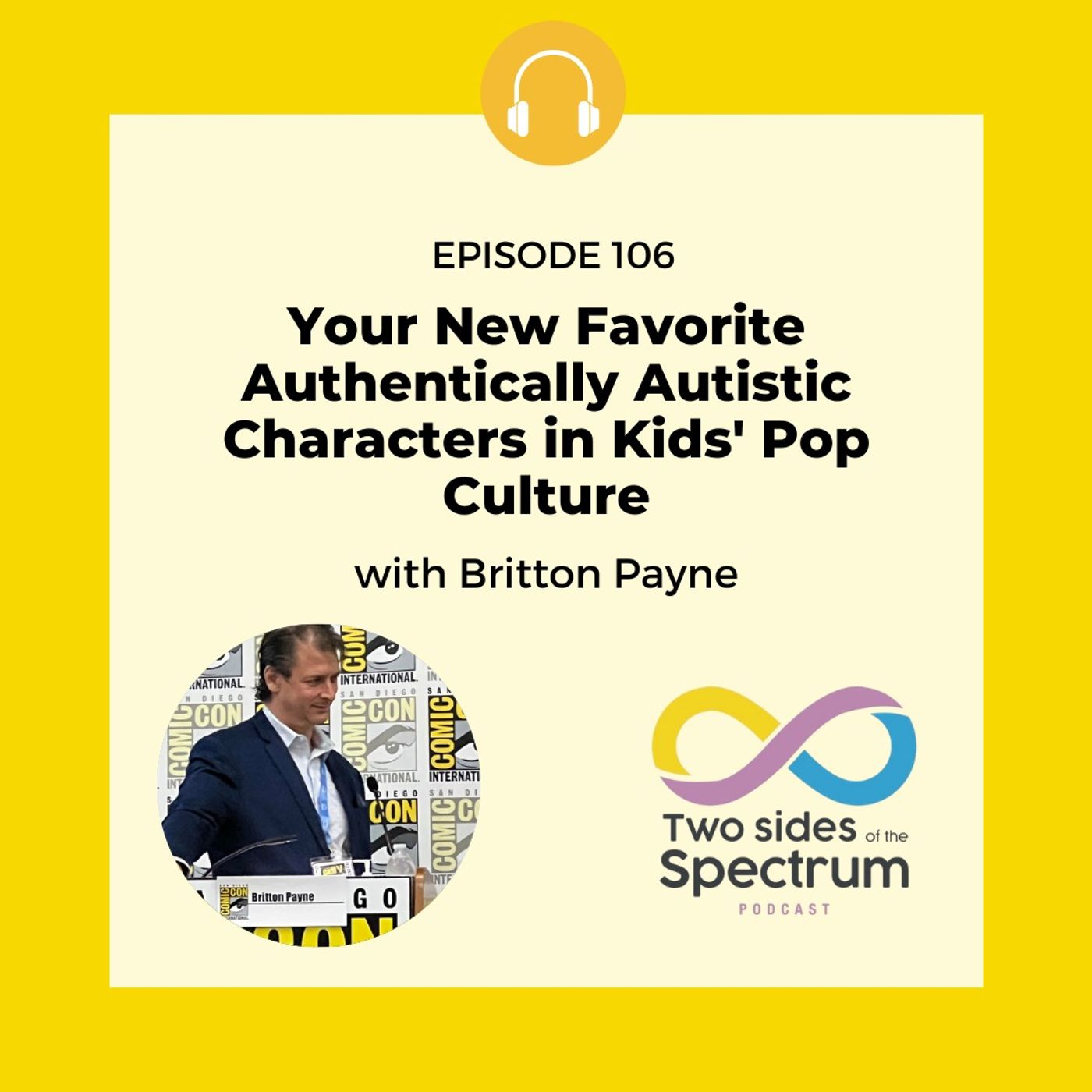 Your New Favorite Authentically Autistic Characters in Kids' Pop Culture - BONUS EPISODE with Britton Payne 13.11.2025 41minThis isn't one of our normal podcast release days, and it isn't one of our typical topics, but this conversation is just too good not to share. This bonus episode is all about Autistic representation in media. In this episode, you’ll learn what comic books, TV shows, and more you should be recommending to your Autistic clients of all ages. Our guest Britton Payne is an entertainment attorney, recently of Warner Brothers Animation and Nickelodeon. On the side, Britton runs The Autism Scene, a non-profit advocating for the inclusion of explicitly, authentically Autistic characters in pop culture. This winter, The Autism Scene is running The AuSPEC AWARDS, which is a script competition…that maybe YOU will win! This episode is incredibly fun and impactful. Want MORE EPISODES of Two Sides of the Spectrum, recorded Q&As with our guests, and a listener chat forum? We just launched our Patreon and we need at least 100 people to join to keep the podcast running! Patreon.com/learnplaythrive
 -
 How to Reduce Aggressive Behaviors by Centering a Child's Worthiness with Rabecca Hand (NEW PATREON SERIES) 12.11.2025 10minSo many of us feel unsure how to best support Autistic kids who have aggressive behaviors. But often, what we are missing in the most foundational need for all humans: to feel worthy and to feel loved. In this powerful interview, Autistic educational consultant Rabecca Hand shows us how to examine the environment and adult interactions - before looking at the child themselves - when a child is struggling. Then she teaches us how we can use this knowledge and the research behind it to create real change in the schools and the larger culture. Patreon subscribers also get a copy of Rabecca's thoughtful classroom management framework and her extensive resource list. This is the first episode of our new twice monthly Patreon series where we showcase the people putting neurodiversity-affirming practice into action in their work. We'll explore their guiding principles and their practical strategies through conversation and case studies so that you can translate your values into your own work. Patreon subscribers also get access to recorded Q&A sessions with some of our most impactful podcast guests, and a Discourse forum to connect with other podcast listeners. Visit patreon.com/learnplaythrive to keep learning and support our podcast.
Vergelijkbare podcasts


Populair in
Deze podcast verschijnt ook in de podcastlijsten van deze landen.
