
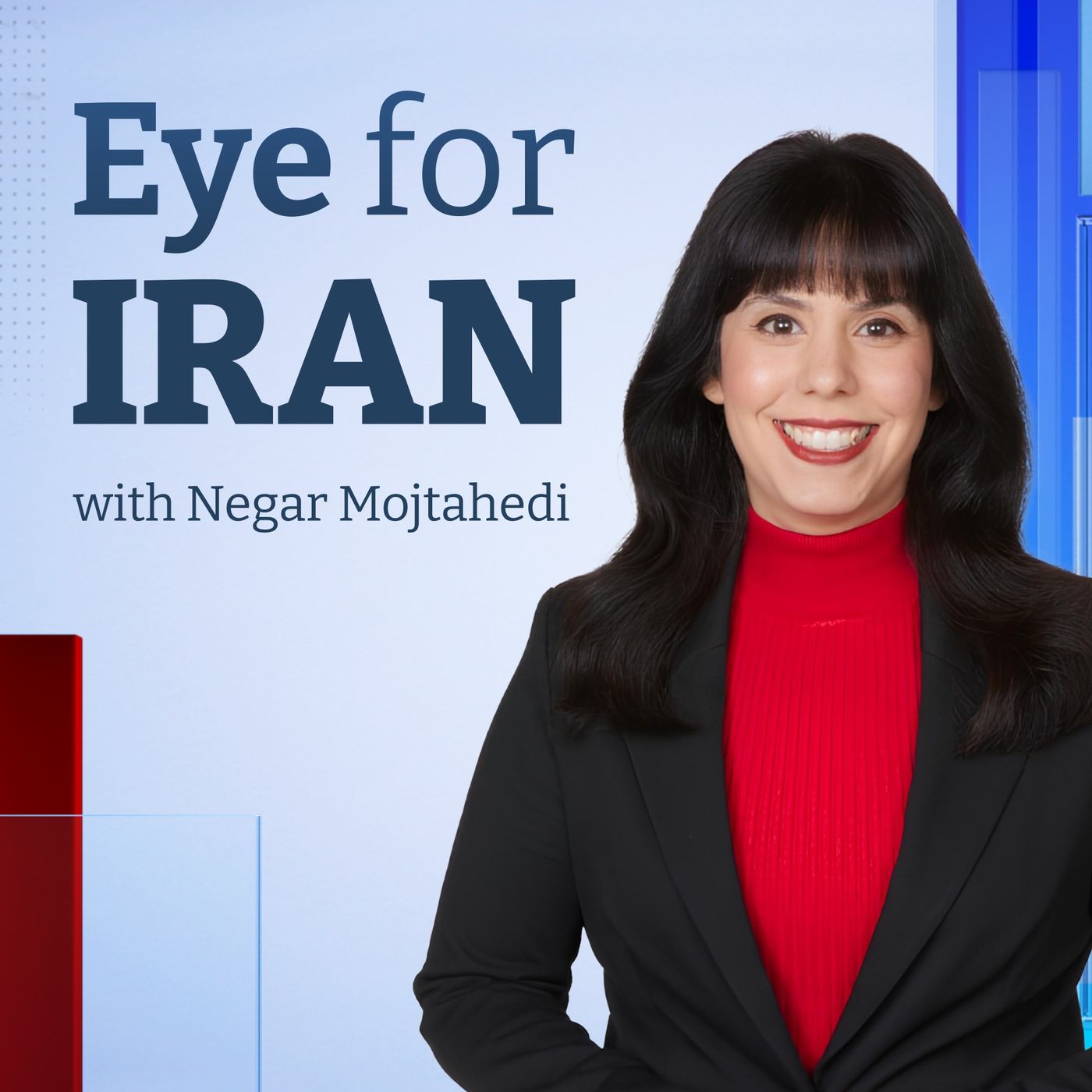
Eye For Iran
Iran International English
0
Eye for Iran is a weekly podcast from Iran International that goes beyond headlines to explore key stories about Iran. Host Negar Mojtahedi conducts interviews, offers expert analysis, and presents in-depth investigations into developments within and around the country. The show focuses on issues that matter most to those following Iran's political and social landscape.
Afleveringen
-
 Iran’s oil revenue could hit ZERO by December —first time in history | Eye for Iran | EP 124 | 09.10.2026 1u 12minIran has survived revolution, war and decades of sanctions without losing its oil revenue entirely. That could change in December.For the first time in Iran's history, revenue from crude oil and condensate exports could fall to ZERO by mid-December if the US blockade continues, according to new analysis from Kpler. The Islamic Republic stands to lose as much as $6 billion a month. But will unprecedented economic pressure force Tehran to compromise, or is its leadership prepared to fight to the bitter end?This week on Eye for Iran, Negar Mojtahedi explores three extraordinary stories that raise troubling questions about the Islamic Republic's future.Why is Tehran accelerating its executions? Khosro Esfahani, Research Director at NUFDI, examines the regime's escalating use of the death penalty following January's anti-government protests. He argues that the leadership's apocalyptic worldview helps explain its willingness to embrace endless conflict, even at the cost of devastating consequences for Iran. Just how far is it prepared to go?Could Iran's oil money disappear by December? Homayoun Falakshahi, Head of Crude Oil Analysis at Kpler, reveals why Iran could be approaching an unprecedented financial turning point. With oil exports effectively halted, can Tehran find a way around the US blockade? What happens to the economy, the regime's regional allies and its negotiating position with Washington if billions in oil revenue vanish?Imprisoned for being poor. Shahin Milani, Executive Director of the Iran Human Rights Documentation Center, exposes the largely forgotten Iranians held behind bars over unpaid debts. Some have spent years in prison without a criminal conviction. As economic conditions worsen, could thousands more face the same fate?From the regime's execution campaign to the potential disappearance of its oil lifeline, this episode asks a fundamental question: What happens when an increasingly isolated leadership faces unprecedented pressure but refuses to change course?Watch the full episode of Eye for Iran for exclusive interviews and analysis of Iran's executions, the US oil blockade, sanctions evasion, the Islamic Republic's ideology and the country's deepening economic crisis.Chapters:02:48 Segment 1 | Khosro EsfahaniIran's escalating executions: Why the Islamic Republic's leadership is prepared to fight to the bitter end.22:07 Segment 2 | Homayoun FalakshahiIran's oil revenue could hit zero by December for the first time in history. What happens next?46:31 Segment 3 | Shahin MilaniIran's forgotten prisoners: Thousands jailed over unpaid debts, sometimes for years.#iran #hormuz #oil #executions #debt #prison #iranian #news #podcast #irannews #youtubeshorts #youtube
 -
Is Iran becoming North Korea — or can society stop it? | Eye for Iran | EP 123 | 02.10.2026 58minAre we witnessing the “North Koreanization” of the Islamic Republic of Iran?From the growing presence of Basij paramilitary forces in elementary schools to the sentencing of musicians and the accelerating use of executions against those detained in connection with January’s uprising, repression inside Iran appears to be intensifying. Just this week, two protesters detained following the January unrest were executed.But every society has a red line. Has Iran reached its own?This week on Eye for Iran, we look beyond the possibility of another war with the United States or a new diplomatic deal to examine the forces unfolding inside Iran — and what they may tell us about the direction of the Islamic Republic itself.Former US diplomat Alberto Fernandez, vice president of the Middle East Media Research Institute, warns of what he calls the “North Koreanization” or “Houthization” of Iran: a system that survives, but as a poorer, harsher and increasingly hollowed-out state. “It doesn’t mean that the regime falls tomorrow,” Fernandez says, but if it survives, Iran could become “a more ramshackle predatory state” in which repression becomes increasingly overt.Kamran Bokhari, strategic forecaster and senior resident fellow at the Middle East Policy Council, sees what he calls a “slow meltdown,” arguing that the regime’s fundamental challenge is not simply war but governance and the economy. And there are limits to repression, he says: used on too great a scale, it can “backfire” and eventually raise questions even within the security forces.David Patrikarakos, special correspondent for the Daily Mail and author of Nuclear Iran: The Birth of an Atomic State, points to an even more basic indicator: whether ordinary Iranians can afford to live. “You can only terrorize people back into their homes for so many things,” he says. “If they’re starving, they can’t afford food, there’s nothing you can do.”Together, the three experts identify the trends they are watching most closely — economic pressure, the cost of basic goods, internal regime infighting, unrest and the limits of the state’s coercive power — and what those indicators could reveal about what comes next for Iran.We then turn from repression to resistance.Bahiyyih Nakhjavani, editor and co-translator of Open Wide the Doors, the new memoir by acclaimed Iranian poet, writer and Baha’i prisoner of conscience Mahvash Sabet, discusses decades of persecution faced by Iran’s Baha’i community and Sabet’s philosophy of “constructive resilience.”Nakhjavani describes it not as passive resistance, nor as aggression, but as a purposeful refusal to allow repression to define the individual. She connects Sabet’s experience in prison to a broader transformation she sees taking place in Iran, particularly since the Woman, Life, Freedom movement: the moment when people establish a red line and say, “thus far and no further.”Finally, we examine a viral political exchange in Michigan that struck a nerve among many Iranians.University of Michigan student Iman Dashti questioned Democratic US Senate nominee Abdul El-Sayed at a town hall over whether he stood unequivocally against Iran’s Islamic Revolutionary Guard Corps. El-Sayed said he stood with movements for freedom and democracy and opposed US-led regime change, but Dashti says the answer did not address the specific question he had asked about the IRGC.“I never asked about regime change,” Dashti told Iran International after the exchange. His question, he says, was fundamentally about whether an American political candidate would explicitly stand with Iranians facing repression.Dashti joins Eye for Iran to explain why he asked the question, why the exchange resonated so widely and what happened after the video went viral — including the harassment, threats and alleged doxxing of...
-
Trump has Iran cornered. So what is he waiting for? | Eye for Iran | EP 122 | 25.09.2026 1u 14minPresident Donald Trump has subjected Iran to extraordinary military and economic pressure. Its leadership has been battered, its economy squeezed, its oil trade disrupted and its regional network weakened. Yet the Islamic Republic remains in power — and Washington has yet to translate that pressure into a clear political outcome.So what is Trump waiting for?This week on Eye for Iran, former US diplomat Ludovic Hood examines what would actually have to happen for pressure on Tehran to produce political change — and why he believes the confrontation with Iran still has more chapters to come.Ilan Berman of the American Foreign Policy Council argues the war may already have changed who wields power inside Iran, accelerating the Revolutionary Guards’ consolidation of control and altering how Tehran operates across the region.And former US Treasury official Max Meizlish asks why Washington isn't using more of its financial leverage over China, Iran’s most important economic lifeline. His conclusion raises an even bigger question: after months of military and economic pressure, what exactly is America’s endgame for Iran?Iran is under pressure. The question now is what Washington intends to do with it.Chapters:02:09 Trump, Iran and the search for an endgameLudovic Hood — Former US Diplomat; Hudson Institute US-Iran talks over Hormuz and the blockade are active, while major differences remain over how to wind down the war.32:51 Who holds power in Tehran after seven months of war?Ilan Berman — Senior Vice President, American Foreign Policy CouncilIran is simultaneously negotiating over Hormuz while threatening further escalation, including through the Red Sea.54:55 Trump, Xi and China’s lifeline to IranMax Meizlish — Research Fellow, Foundation for Defense of Democracies; Former US Treasury OfficialTrump has just hosted Xi in Washington while pressure is mounting over Chinese purchases of Iranian oil and alleged Chinese support involving weapons components and other material.#iran #trump #unga #iraneconomy #irgc #iranwar #china #airlines #xijinping
-
Twins sentenced in Iran: one to death, one to prison | Eye for Iran | EP 121 | 18.09.2026 1u 17minThey were 19 when they took to the streets. They turned 20 behind bars. Now one twin has been sentenced to death — and the other to decades in prison.Taraneh and Romina Rahimi joined Iran’s January uprising in Isfahan. Their cousin, Masoud Nourmohammadi, says the sisters were tortured and forced to confess. Taraneh now faces execution, while Romina has been sentenced to decades behind bars. As their family fights to save them, Masoud says he and his children are also receiving death threats for speaking publicly about their case.Their story comes four years after the death of Mahsa “Jina” Amini ignited the Woman, Life, Freedom movement and changed the trajectory of protest in Iran. Iran International journalists Shervin Shahrestani and Azadeh Akbari look at what that movement left behind — from women openly defying compulsory hijab to a generation that discovered the power of collective action. Could January’s massive nationwide uprising have happened without it? And what did the Islamic Republic learn from 2022?And beyond Iran’s borders, another pressure point is emerging. As the Houthis make their biggest military gains in Yemen in years, Yemeni-American analyst Fatima Abo Alasrar explains why she believes the timing is no coincidence — and why Tehran may see the Red Sea as another source of leverage in its economic confrontation with Washington. How far can Iran push Saudi Arabia before that leverage becomes a liability?Chapters: 02:50 One twin sentenced to death, the other to decades in prisonGuest: Masoud Nourmohammadi25:13 Four years after Mahsa Amini: What did Woman, Life, Freedom change?Guests: Shervin Shahrestani & Azadeh Akbari49:42 Why are the Houthis escalating now — and what does Iran want?Guest: Fatima Abo Alasrar#iran #iranprotests #mahsaamini #houthi #humanrights #babalmandab #hormuz #yemen #saudiarabia #iranian #hijab
-
Iranians turn on the regime as fear wanes: Is the ‘hour of freedom’ near? | Eye for Iran | EP 120 | 11.09.2026 1u 22minCan the Islamic Republic survive a deepening economic crisis, growing resistance at home and a war with the United States?On this week’s episode of Eye for Iran, British-Iranian comedian Omid Djalili and Iran International’s Arash Sohrabi examine the dark humor spreading across Iran as people struggling to afford basic necessities publicly mock the regime and turn its own language of fear against it. Djalili explains why he believes the phenomenon shows that “the fear is gone.”The episode also looks at what Washington is prepared to do to help Iranians challenge the Islamic Republic. After President Donald Trump told Iranians that “the hour of your freedom is at hand” and urged them to take over their government once the US is “finished,” Middle East expert Dr. Eric Mandel examines what those words could mean in practice, particularly amid reports that the US-Iran war could continue through the end of Trump’s presidency.Finally, Eye for Iran examines the hidden cost of surviving Iran’s crackdowns. Shahin Abdolghaderi, who was shot in the head with hundreds of pellets during the 2022 Woman, Life, Freedom protests, and her son Ardalan Mameh describe the chronic pain, displacement and uncertainty they still live with nearly four years later. Their story offers a chilling warning of what may lie ahead for survivors wounded in Iran’s January 8 and 9 crackdown.Guests: Omid Djalili, Arash Sohrabi, Dr. Eric Mandel, Dr. Sara Raza, Shahin Abdolghaderi and Ardalan Mameh.Chapters: 00:00 — Iranians mock Islamic Republic as economic crisis fuels resistanceGuests: Omid Djalili and Arash Sohrabi37:10 — Trump tells Iranians to “take over your government” as war drags onGuest: Dr. Eric Mandel1:00:07 — The hidden cost of surviving Iran’s crackdownsGuests: Shahin Abdolghaderi, Ardalan Mameh and Dr. Sara Raza#iran #iraneconomy #iranuswar #trump #iranprotests #iranpodcast #news #youtubeshorts #youtube #podcast
-
Why Iran is turning to sea mines in the Strait of Hormuz | Eye for Iran | EP 119 | 04.09.2026 1u 7minIran is still striking back — but is Tehran choosing smaller attacks, or are its military options narrowing?Former CENTCOM commander Gen. Joseph Votel, now a Distinguished Senior Fellow at the Middle East Institute, and Farzin Nadimi, Senior Fellow at the Washington Institute for Near East Policy, examine why Iran is turning to sea mines in the Strait of Hormuz, what it reveals about its remaining military capabilities, and how Tehran may still try to make the conflict painful for the United States and its regional partners.Then, inside Iran, the pressure is coming from somewhere else. Inflation and shortages are squeezing families while the state prepares to meet renewed unrest with force. Iranian-American economist Ali Dadpay, based in Texas, and Kamran Bokhari, Strategic Forecaster and Senior Resident Fellow with the Middle East Policy Council in Washington, ask: how long can force contain an economic crisis that keeps getting worse?And finally, a very different sign of a regime under pressure. After nearly two decades abroad, musician Mohsen Namjoo is back in Iran despite having crossed some of the Islamic Republic’s most sensitive religious and political red lines. Iranian popular-culture expert Siavash Rokni and historian Shahram Kholdi examine what his return reveals about a system willing to bend its own ideological rules when it needs to.Military power. Economic survival. Ideological retreat.This week on Eye for Iran.Subscribe here and never miss an episode. Eye for Iran is out every Friday — watch on YouTube or listen wherever you get your podcasts.Chapters:00:00 — Introduction02:12 — Iran turns to sea mines in the Strait of Hormuz | Gen. Joseph Votel & Farzin Nadimi22:59 — Iran’s economic crisis and the threat of unrest | Ali Dadpay & Kamran Bokhari46:51 — Mohsen Namjoo’s return to Iran: What does it reveal? | Siavash Rokni & Shahram Kholdi #iran #hormuz #usa #mines #economy #iraneconomy #inflation #iranprotests #namjoon
-
Oil is flowing through Hormuz again. But not for Iran | Eye for Iran | EP 118 | 28.08.2026 1u 10minIran’s oil revenues could effectively fall to zero within months if the US blockade holds, according to Kpler senior oil analyst Homayoun Falakshahi.On this episode of Eye for Iran, Falakshahi and former US Treasury OFAC official Max Meizlish examine Washington’s expanding economic pressure campaign, China’s crucial role in buying Iranian oil, the financial networks running through Hong Kong and Dubai, and whether the United States is actually prepared to close the regime’s remaining sanctions-evasion routes.But what happens when economic pressure on the Islamic Republic also deepens the suffering of ordinary Iranians? With inflation soaring, food prices climbing and gasoline shortages worsening, the discussion turns to the possibility of renewed unrest — and the danger of another violent crackdown.Then, a letter expressing solidarity with Iran’s political prisoners triggers an extraordinary ideological backlash. Human rights advocates Gissou Nia and Roya Boroumand and journalist Jay Solomon examine why condemning the imprisonment and torture of Iranians has become entangled in arguments over American imperialism, Israel and the legacy of the 1979 revolution — and what political prisoners actually endure inside and outside Iran.Finally, journalist Mohamed Fahmy who has been in and out of Lebanon this month tells us how Hezbollah can resist disarmament and Tehran’s influence remains deeply entrenched. After speaking with Lebanese people across the country, Fahmy asks whether Iran has really lost its grip on Lebanon — and who ultimately speaks for the Lebanese state.Watch this week’s episode of Eye for Iran — and subscribe so you never miss a new episode, out every Friday.You can also listen to Eye for Iran on your favorite podcast platform.Chapters:00:00 Coming Up02:02 CHAPTER 1: Iran’s economic endgame: Can Washington choke off Tehran’s lifelines?Max Meizlish & Homayoun Falakshahi — Iran’s oil revenues could fall to zero32:54 CHAPTER 2 :Why defending Iran’s political prisoners became controversialGissou Nia, Roya Boroumand & Jay Solomon 53:31 CHAPTER 3: Hezbollah, Iran and the battle over Lebanon’s futureMohamed Fahmy #Iran #IranNews #IranEconomy #StraitOfHormuz #Oil #OilPrices #Sanctions #Hezbollah #Lebanon #PoliticalPrisoners #HumanRights #EyeForIran
-
Iran’s crackdown risks creating a generation dependent on opioids | Eye for Iran | EP 117 | 21.08.2026 1u 9minCould Iran’s crackdown leave behind a generation with permanent disabilities and dependent on opioids for chronic pain? Dr. Sarah Raza, a trauma physician helping wounded protesters inside Iran, has documented hundreds of metal pellets embedded in victims’ bodies, including a six-year-old with pellets lodged in his face and skull. Her warning: “This is making someone’s body a prison.”Iran feels the pressure, but will it bend? Raz Zimmt of the Institute for National Security Studies (INSS) says Tehran increasingly recognizes the economic situation is working against it, yet its leadership may still view another war with the United States as preferable to concessions it considers capitulation. We examine what that calculation could mean for what comes next.And 31 years for helping children: Afshin Heyratian, a Bahá’í children’s rights activist who devoted his life to helping some of Iran’s most vulnerable children, has received prison sentences totaling 31 years. His brother, Ramin Heyratian, tells us about the man behind the extraordinary punishment and the family fighting for him.Watch Eye for Iran, Episode 117, with Negar Mojtahedi. Subscribe for a new episode every Friday. Or listen on any podcast platform. Chapters:00:00 Coming Up02:26 CHAPTER 1: Dr. Sarah Raza | Iran’s generation at risk of permanent disability and opioid dependenceA trauma physician documents the lifelong consequences of pellet injuries sustained during Iran’s crackdown.20:31 CHAPTER 2 — Raz Zimmt | Why Iran’s regime may risk another warDespite mounting economic pressure, Tehran may see another war with the US as preferable to concessions it considers capitulation.47:22 CHAPTER 3 - Ramin Heyratian - Afshin's brother | 31 years in prison for helping childrenAfshin Heyratian’s brother - Ramin- tells the story of the Bahá’í children’s rights activist facing decades behind bars.#iran #iranprotests #irgc #usa #hormuz #war #bahai
-
How Iran is preparing for a domestic war against its own people | Eye for Iran | EP 116 | 14.08.2026 1u 27minThe war with Iran was supposed to change the equation.But before bombs fall, before presidents decide on war and peace, and before negotiators ever sit across from one another, there is intelligence.So what does someone who spent decades trying to understand Iran from inside the CIA see happening next?Eye for Iran’s Negar Mojtahedi spoke with Mark Fowler, a decorated former CIA case officer and Farsi speaker who spent 22 years at the agency, rising to the number two position on Iran and Iraq within the CIA and serving overseas as a Chief of Station.“We are in a test of wills,” Fowler said. “I just don’t know who will blink first.”Then, inside Iran, some very familiar faces are being put back in charge.The unseen Supreme Leader Mojtaba Khamenei has appointed six senior commanders across Iran’s armed forces, Revolutionary Guards and Basij, while veteran Guards commander Mohsen Rezaei has been handed one of the most powerful national security positions in the country.These aren’t young commanders being elevated to build a new Islamic Republic.They are veterans of the old one.So is Mojtaba Khamenei rebuilding the command structure for the next phase of war, consolidating his own power or preparing for unrest at home?Joining the discussion are Kamran Bokhari, senior resident fellow at the Middle East Policy Council and a strategic forecaster, Jason Brodsky, policy director at United Against Nuclear Iran, and Omid Memarian, senior Iran analyst at DAWN.“There’s been an undeclared coup by the Guard,” Bokhari said.Brodsky sees signs of an effort to balance competing power centers inside the IRGC.“I think we have some hints here that the system is trying to thread the needle among different camps within the IRGC, to try to hand out different positions to basically allow these different factions to have different aspects of the system under their control,” Brodsky said.Memarian argues one appointment in particular may reveal what the regime fears most.“Putting a veteran intelligence chief in charge of the Basij suggests that Tehran increasingly sees the foreign battlefield and the domestic street as two fronts of the same security challenge,” Memarian said. “The appointment was a sign of anxiety, not confidence.”And finally, preparations for unrest may extend beyond who controls the streets to how those streets themselves are designed.In some of Tehran’s most historic areas, the municipality is tearing up cobblestones and replacing them with asphalt.Iran International journalist Mehdi Sepahvand investigated what is happening and the long history of designing cities with security and social control in mind.“They are creating plain sight and direct shooting range for their forces,” Sepahvand said.His reporting examines why replacing cobblestones with asphalt could make it harder for protesters to congregate and easier for security forces and their vehicles to move through the streets.Taken together, the changes raise a bigger question: Is the Islamic Republic preparing not only for another confrontation abroad, but for the possibility of major unrest at home?And when the war ends, what happens at home?Watch Eye for Iran every Friday for three segments on the stories shaping Iran and its future.Subscribe on YouTube or listen on the podcast platform of your choice.Chapters:00:00 Coming Up02:41 CHAPTER 1: Inside the CIA’s Iran PlaybookMark Fowler — decorated former CIA case officer, Iran specialist and former Chief of StationFowler spent 22 years at the CIA, rising to the number two position on Iran and Iraq. He explains how human intelligence on Iran actually works, how intelligence reaches...
-
Bombs won't break Iran's regime, but money might | Eye for Iran | EP 115 | 07.08.2026 1u 14minCan financial pressure succeed where military strikes cannot?For months, the debate over Iran has focused on bombs, missiles and airstrikes. But what if the Islamic Republic's greatest vulnerability isn't military at all?In this episode of Eye for Iran, I sit down with Roger Macmillan, Counterterrorism and Security Specialist, and Miad Maleki, Senior US Sanctions Strategist, FDD Fellow and former US Treasury official, to explore why Iran's economy—and more specifically the regime's ability to pay the IRGC, Basij and its security apparatus—may be its greatest vulnerability. While the Islamic Republic has shown it can absorb military strikes, can it survive sustained financial pressure?Segment 2: Inside Iran’s sanctions-busting military supply networksKerri Bittsoff, former senior official at the US Department of the Treasury's Office of Foreign Assets Control (OFAC), spent years targeting the financial and procurement pipelines behind Iran's drones, missiles and nuclear program, disrupting the regime's ability to develop, indigenize and source critical components. Most recently, she led efforts to expose and disrupt Tehran's military supply chain to Russia for use in the war in Ukraine. She explains how China and Russia have become critical lifelines for Tehran, helping the regime procure advanced weapons, finance its activities and evade sanctions.Segment 3: Is the IRGC becoming the state?Alex Vatanka, Senior Fellow at the Middle East Institute, Behnam Ben Taleblu, Senior Fellow at the Foundation for Defense of Democracies (FDD), and historian Shahram Kholdi examine how power inside Iran is shifting after the war. Has the IRGC eclipsed the country's civilian institutions? Is parliament becoming irrelevant? And what could the post-war power struggle mean for Iran's political future?If you enjoyed this episode, don't forget to like, subscribe and share. Please let us know what you think in comments below. Chapters: 00:00 Coming Up01:23 Roger Macmillan & Miad Maleki | Can Financial Pressure Break Iran?13:44 Iran's Achilles' Heel25:03 Kerri Bitsoff | Can the US Cut Off Iran's Lifelines?26:43 China's Weapons Pipeline to Iran30:03 How Iran Evades Sanctions37:51 Russia's Role in Arming Iran44:38 Are China and Russia Keeping Iran Alive?45:19 Alex Vatanka, Behnam Ben Taleblu & Shahram Kholdi | Is the IRGC Taking Over Iran?46:11 Has the IRGC Taken Over Iran?53:28 Is the IRGC United?1:00:57 Who Really Holds Power in Tehran?1:07:20 Who Speaks for Mojtaba Khamenei?1:13:22 Thanks for Watching#iran #iranuswar #scottbessent #china #russia #majlis #Iranpodcast #podcast #news #youtubeshorts #youtube #israel #ofac #middleeast
-
'Iran's executions are murders,' former UN prosecutor says | Eye for Iran | EP 114 | 31.07.2026 1u 27minIndustrial cranes are meant to build cities. In Iran, they are increasingly being used as gallows.The public hanging of Amirhossein Safari and Abolfazl Sepahi in Isfahan has become a symbol of Iran's escalating execution campaign.As the world focuses on war, Iran is accelerating executions—prompting growing concern among human rights advocates and legal experts.In this episode of Eye for Iran, Professor Payam Akhavan, former UN Prosecutor and Human Rights Chair at Massey College, explains why he believes these are not lawful executions but arbitrary killings that may amount to crimes against humanity under international law."These are killings. They are murders. There is no legal justification whatsoever for these killings." — Professor Payam AkhavanWe then examine President Donald Trump's repeated promise to "finish the job" in Iran. What does that mean in practical terms? Admiral Robert Harward (Ret.), former Deputy Commander of US Central Command, and Blaise Misztal, Vice President of Policy at JINSA, discuss the Strait of Hormuz, Iran's nuclear program and Washington's strategic objectives."Changing the government in Tehran has to be the ultimate end state." — Admiral Robert Harward (Ret.)"I don't think President Trump would consider this war concluded until steps have been taken to ensure that Iran will not obtain a nuclear weapon." — Blaise MisztalFinally, Alex Vatanka, Senior Fellow at the Middle East Institute, and Nicole Grajewski, Assistant Professor at Sciences Po, analyze Ukraine's unprecedented strike on an Iranian cargo ship in the Caspian Sea and what it reveals about the growing convergence between the wars in Ukraine and Iran."Perhaps the Iranians are thinking this was the West... using Ukraine as a way of sending a signal." — Alex Vatanka "The clear purpose... was to highlight how involved both Russia and Iran are in their respective wars." — Nicole GrajewskiGuestsGuests• Professor Payam Akhavan — Former UN Prosecutor; Human Rights Chair, Massey College, University of Toronto• Admiral Robert Harward (Ret.) — Former Deputy Commander, US Central Command• Blaise Misztal — Vice President of Policy, JINSA• Alex Vatanka — Senior Fellow, Middle East Institute• Nicole Grajewski — Assistant Professor, Sciences PoChapters: 00:00 Introduction02:04 Segment 1 | Professor Payam AkhavanFormer UN Prosecutor | Human Rights Chair, Massey College02:04 Iran's Public Hangings Return06:06 Why Is Iran Escalating Executions?08:00 The Courage of Iran's Protesters11:00 "These Are Murders," Says Former UN Prosecutor16:21 Who Could Be Prosecuted?17:56 Preserving Evidence for Future Trials21:11 Extermination vs. Genocide22:57 Responding to Massacre Deniers28:42 Segment 2 | Admiral Robert Harward & Blaise MisztalFormer Deputy Commander, US Central Command | Vice President of Policy, JINSA28:42 What Does Trump Mean by "Finish the Job"?31:20 Why Give Iran More Time?34:11 Does "Finish the Job" Mean Regime Change?40:33 Military Pressure vs. Iran's Internal Crackdown45:01 Pickaxe Mountain and Netanyahu50:51 Can Iran Rebuild?56:18 What's Next for Iran?59:19 Boots on the Ground?01:02:57 Segment 3 | Alex Vatanka & Nicole GrajewskiMiddle East Institute | Sciences Po01:02:57 Ukraine Strikes an Iranian Ship01:03:39 Was the Caspian Strike a Warning?01:08:33 Is Ukraine Acting as a Proxy?01:12:28 Will the Caspian Sea Become Militarized?01:16:08 How Ukraine Changed Iran-Russia Relations01:20:13 What's Next for Iran, Russia and Ukraine?01:25:30 Closing Remarks#iran #iranexecutions #humanrights #trump...
-
Are US strikes laying the groundwork for a wider Iran war? | Eye for Iran | EP 113 | 24.07.2026 1u 31minWhat is the United States really trying to achieve with its expanding military campaign inside Iran?As US strikes move deeper into Iran, targeting military sites, logistics networks and critical infrastructure, many are asking: What is Washington's endgame? At the same time, executions inside Iran are accelerating as the world's attention remains fixed on the war, while Gulf states brace for what could come next.In Episode 113 of Eye for Iran, we examine what the US strikes on Iran really add up to, why executions are increasing during the conflict and how the war is reshaping security across the Persian Gulf.John Spencer — Executive Director of the Urban Warfare Institute, retired US Army officer and renowned war scholar — explains what the United States is trying to achieve inside Iran, why Bandar Abbas has become a strategic focus and whether Washington is preparing for a broader phase of the campaign.Azadeh Afsahi, founder of Iran House, Shahin Milani, Executive Director of the Iran Human Rights Documentation Center, and Brandon Silver, Director of Policy and Projects at the Raoul Wallenberg Centre for Human Rights, examine the surge in executions inside Iran and explain why they believe the Islamic Republic fears its own people as much as it fears foreign militaries. Why the Islamic Republic is using the war to ramp up executions as the worlds attention focus on the bombs and not the hangings. Saad Bin Tefla Al-Ajmi, former Minister of Information of Kuwait, explains how Gulf states are responding as the conflict moves closer to their borders, why Kuwait has become increasingly vulnerable and why he believes Iran faces its own "chalice of poison" moment.Subscribe to Eye for Iran for exclusive interviews, in-depth reporting and expert analysis on Iran, US-Iran relations, the Middle East, the Persian Gulf and global security.#iran #usiran #kuwait #war #podcast #news #iranpodcast #irannews
-
Why are US strikes moving deeper into Iran? | Eye for Iran | EP 112 | 17.07.2026 1u 9minWhy are US strikes moving deeper into southern Iran—and what is Washington really trying to achieve?As attacks hit bridges, transport links and facilities around Bandar Abbas and Chabahar, the conflict appears to be entering a more dangerous phase. At the same time, a leaked Iranian presidency report reveals record public anger, while new economic data shows that barely 37 percent of working-age Iranians have jobs.This week on Eye for Iran, three segments examine the military, political and economic pressures closing in on the Islamic Republic.SEGMENT ONE: WHY THE SOUTH?Rebeccah Heinrichs, Senior Fellow and Director of the Keystone Defense Initiative at Hudson Institute, examines why US strikes are moving deeper into southern Iran.What is the strategic importance of Chabahar, Bandar Abbas and Iran’s southern transport network? Are the attacks focused solely on weakening Tehran’s ability to threaten shipping in the Strait of Hormuz—or do they signal a broader US military strategy? Heinrichs also discusses President Donald Trump’s comments about possible ground troops and whether limited special operations could become part of the campaign.SEGMENT TWO: IRAN’S PRIVATE WARNINGA confidential report prepared for Iran’s presidency records what it describes as the highest national anger level ever measured and finds that nine in ten Iranians want some form of change.Arash Sohrabi, Iran International reporter, Dr. Shahram Kholdi, Iran historian and Siavash Rokni, Iranian pop culture expert and political commentator, examine what the leaked report reveals about the country’s mood.They discuss collapsing trust, growing secular identity, widespread hopelessness and the striking gap between the patriotic unity shown on state television and what the government’s own survey found behind closed doors.The report recommends managing public anger—not addressing its underlying causes. Can the Islamic Republic contain a society that increasingly separates defending Iran from defending the regime?SEGMENT THREE: IRAN’S HIDDEN JOBS CRISISIran’s official unemployment rate is only 7.5 percent. Yet barely 37 percent of working-age Iranians are employed.Mohammad Machine-Chian, economist and Director of International Affairs at the Centre for International Governance Innovation, explains how millions of discouraged workers disappear from Iran’s unemployment statistics.He examines the impact of wartime job losses, Iran’s exceptionally low female labour-force participation and an economy expected to contract sharply. Could effective unemployment be approaching one in three—and how much more pressure can Iranian society absorb?Eye for Iran examines the latest developments in the US-Iran conflict, southern Iran, Chabahar, Bandar Abbas, the Strait of Hormuz, Iran’s internal political crisis, public anger, unemployment and the future of the Islamic Republic.Subscribe for weekly interviews and analysis on Iran and the Mideast. #iran #usiran #chabaharport #straitofhormuz #iraneconomy #iranprotests #middleeast #geopolitics #eyeforIran #shorts #news #podcast #iranpodcast #youtube
-
Is the Iran-US MoU dead—or working exactly as intended? | Eye for Iran | EP 111 | 10.07.2026 1u 28minJust weeks after Washington and Tehran agreed to a Memorandum of Understanding (MoU), commercial vessels are under attack, the Strait of Hormuz is back in the headlines and President Trump says the agreement is over.But what if everyone is asking the wrong question?Was the Iran-US MoU ever meant to deliver peace—or was it designed to manage conflict while both sides pursued their own strategic goals?In this episode of Eye for Iran, Negar Mojtahedi is joined by:• Jonathan Sayeh – Foundation for Defense of Democracies (FDD)• Arash Azizi – Historian and contributing writer, The Atlantic• Fatima Al-Asrar – Washington Center for Yemeni Studies• Itai Reuveni – NGO Monitor• Hossein Mansour – JINSA Fellow and author of After the Ayatollah• Khosrow Esfahani – National Union for Democracy in IranThey discuss:• Why Iran targeted commercial vessels in the Strait of Hormuz• Whether Tehran is risking billions in sanctions relief• Is the IRGC acting independently?• Has the Iran-US Memorandum of Understanding already failed?• Did Ali Khamenei's death end Velayat-e Faqih?• Is political Islam entering a new era?• Why Western media covered Khamenei's funeral more than Iran's January massacre• What comes next for Iran, Israel, the United States and the Middle East.Eye for Iran goes beyond the headlines with expert analysis on Iran, the Middle East and global security.Chapters: 00:00 Iran-US strikes, Hormuz and Khamenei’s funeral01:28 Is the Iran-US MoU already dead?02:19 Was the MoU ever designed to bring peace?06:15 Can Washington and Tehran get back on track?12:43 Has Iran crossed the line in the Strait of Hormuz?13:30 Can Iran’s government actually control the IRGC?18:33 Why attack ships when Iran stands to make billions?22:11 Is Tehran’s gamble paying off?23:17 What the Houthis taught Iran about US power30:56 Peace agreement or a framework for managed conflict?44:25 Did Khamenei take Velayat-e Faqih with him?46:56 What Iran’s transformation means for its proxies48:47 The afterlife of political Islam52:07 Could post-Khamenei Iran become even more brutal?54:53 The origins of Velayat-e Faqih58:28 Who is really ruling Iran now?1:00:27 Is Sharia losing its political power?1:03:00 Will “Death to America” outlive political Islam?1:05:50 Iran brings 400 foreign influencers to Khamenei’s funeral1:11:09 Why was Iran’s January massacre largely ignored?1:14:38 The propaganda battle over Khamenei’s funeral1:28:14 Closing thoughts#iran #khamenei #tehran #irgc #information #trump #hormoz #usa #Israel #islam #youtubeshorts #youtube #podcast #news
-
The Islamic Republic's next battle is internal | Eye for Iran Ep. 110 03.07.2026 1u 28minSomething has shifted inside Tehran.Not because the Islamic Revolutionary Guard Corps (IRGC) is about to disappear—but because members of Iran's establishment are openly debating ideas that would have been politically unthinkable just months ago.The war may be over—for now. But inside Tehran, the battle over the Islamic Republic's future is only beginning.Who is gaining ground? Is the Islamic Republic preparing to reinvent itself—or simply searching for a new way to survive? And what could post-war Iran actually look like?This week on Eye for Iran, we go beyond the headlines to examine the growing power struggle inside Tehran, the future of the Islamic Republic, what it means for ordinary Iranians facing economic hardship and uncertainty, and why the crackdown on Christians continues despite talk of change.Guests include Middle East Institute Senior Fellow Alex Vatanka, Foundation for Defense of Democracies Iran Program Senior Director Behnam Ben Taleblu, historian Dr. Shahram Kholdi, Iran International correspondent Maryam Sinaiee, human rights lawyer Omid Shams, and Mansour Borji, Advocacy Director at Article 18.Topics: Iran, Islamic Revolutionary Guard Corps (IRGC), Islamic Republic, post-war Iran, Iran politics, Mohammad Bagher Ghalibaf, Masoud Pezeshkian, Iran economy, Iranian Christians, religious persecution, Eye for Iran.00:00 Has the Islamic Republic entered a new era?01:39 Is the IRGC really being dismantled?10:17 The interview Tehran didn't want you to see15:35 Inside the regime's power struggle20:45 Who is really running Iran now?26:47 Military dictatorship or managed transition?31:46 Can the Islamic Republic survive?40:39 What life is really like inside Iran47:53 Why Iranians feel stuck in limbo55:20 What the Iranian people want next01:06:06 Iran's oldest Persian church under threat01:16:27 The crackdown on Christian converts01:21:01 Why the regime is acting now01:26:00 What's next for Iran's Christians?#iran #khamenei #irgc #christian #christianity #iranian #economy #islamicrepublic #news #podcast #youtube #shorts
-
Trump's Iran MoU explained: how Iran gets billions—and why | Eye for Iran 109 26.06.2026 1u 26minThe new US-Iran Memorandum of Understanding (MOU) could unlock tens of billions of dollars for Tehran and fundamentally reshape Iran's economic and political future. Host Negar Mojtahedi speaks with former US Treasury sanctions official Max Meizlish, economist Mohamad Machine-Chian, former US military intelligence officer Michael Pregent, and Iran analyst Omid Memarian to explain what the agreement means for sanctions, the IRGC, Qatar, China and post-Khamenei Sr. Iran.In this episode:Max Meizlish, a former Treasury Department Office of Foreign Assets Control (OFAC) official, explains why General License X could provide "unconditioned, unrestricted sanctions relief," potentially giving Tehran access to tens of billions of dollars. He argues the IRGC stands to receive a significant financial windfall and warns that China could emerge as one of the agreement's biggest beneficiaries.Mohamad Machine-Chian examines whether the agreement can stabilize Iran's economy. He explains why FATF restrictions, Iran's isolated banking system and entrenched corruption remain major obstacles, while arguing the new funds could help Iran's Central Bank avoid a deeper inflation crisis.Former US military intelligence officer Michael Pregent argues Qatar wielded extraordinary influence during the negotiations, warning that "Every Qatari negotiated outcome is a failure for US national security." He explains why he believes the agreement echoes the concessions made during the JCPOA and what it could mean for future US policy toward Iran.Omid Memarian, Director of Communications at DAWN, says the Islamic Republic is entering an "identity crisis" following the death of Ayatollah Ali Khamenei. He predicts the next battle will unfold inside the regime itself, as competing factions fight to define Iran's future and the next phase of the Islamic Republic.Topics covered:Trump's Iran MOU explainedGeneral License XIran sanctions reliefIran oil exportsThe IRGC and Iran's economyFrozen Iranian assetsQatar's role in the negotiationsChina's influence in IranFATF and Iran's banking systemPost-Khamenei IranInternal power struggles inside the Islamic RepublicUS-Iran relationsMiddle East geopoliticsIf you enjoy in-depth reporting and expert analysis on Iran and the Middle East, subscribe to Eye for Iran and turn on notifications so you never miss a new episode.#iran #iranpodcast #mou #qatar #jdvance #witkoff #kushner #youtube #middleeast #shorts #trump #economy
-
The Iran-US MoU explained: what it means for Iranian people | Eye for Iran 108 19.06.2026 1u 4minDid the new US-Iran Memorandum of Understanding hand Tehran a major victory?In this episode of Eye for Iran, host Negar Mojtahedi breaks down the controversial MOU with former US Assistant Secretary of State for Near Eastern Affairs David Schenker, who argues the agreement delivers significant benefits to the Islamic Republic while leaving major questions unanswered on Iran's nuclear program, ballistic missiles and regional proxies.Then, human rights activist Gazelle Sharmahd joins the program to discuss the reaction among many Iranians who had hoped recent events would lead to meaningful change. Sharmahd reflects on the kidnapping and killing of her father Jamshid Sharmahd, the ongoing executions inside Iran and why she believes many Iranians feel abandoned by the international community.Finally, Iran International correspondent Alireza Modiri and actress and activist Shiva Negar discuss the FIFA World Cup and the emotions surrounding Team Melli. For many Iranians, football has become about far more than sport. From Lion and Sun flags in the stands to debates over national identity, the World Cup has become a reflection of the deep divisions and complicated feelings shaping modern Iran.Topics:• US-Iran MOU explained• Did Iran win the deal?• David Schenker's analysis• Gazelle Sharmahd on her father's murder• Human rights in Iran• Team Melli and the FIFA World Cup• Lion and Sun flags• Why Iranians are divided• Iran, Hezbollah and Lebanon• The future of US-Iran relationsGuests:David Schenker – Former US Assistant Secretary of State for Near Eastern Affairs and Senior Fellow at The Washington InstituteGazelle Sharmahd – Human Rights Activist and daughter of Jamshid SharmahdAlireza Modiri – Correspondent, Iran InternationalShiva Negar – Actress and ActivistHost:Negar MojtahediSubscribe for more Eye for Iran interviews, analysis and reporting from inside and outside Iran.Chapters: 00:01: 39 Did Iran Win the MOU? | David Schenker Breaks Down the Deal00:22:42 "Iranians Feel Betrayed" | Gazelle Sharmahd on the Human Cost00:39:41 FIFA & Team Melli | Why Iranians Are Divided at the World Cup#iran #trump #lebanon #israel #MOU #irandeal #podcast #news #irannews #iranpodcast #youtube #sportify #shorts
-
Arab world losing the Mideast, experts say | Eye for Iran 106 12.06.2026 1u 21minAs Lebanon becomes central to Iran’s conditions for a broader US-Iran deal, this episode of Eye for Iran asks what the war has really changed — and what comes next.Aaron David Miller, senior fellow at the Carnegie Endowment for International Peace and a veteran US Middle East negotiator, says Iran is using Lebanon to pressure both Donald Trump and Benjamin Netanyahu, trying to establish a new equation around Hezbollah. He also argues the future balance of power in the Middle East may increasingly belong to three non-Arab powers: Israel, Turkey and Iran.Elliott Abrams, former US Special Representative for Iran and Venezuela, says Washington still fails to grasp the nature of the Islamic Republic and warns that no deal can solve the deeper problem posed by the regime itself.Mohamed Fahmy, Egyptian-Canadian veteran journalist and Middle East political analyst, recently returned from Kuwait, Saudi Arabia and the United Arab Emirates. He says the war has left “a scar” across the Arab world. Is the Iran war ending — or is Lebanon becoming the first battle over the Middle East that comes after it?#iran #lebanon #middleeast #podcast #youtube
-
Can Trump crack Iran’s delay-and-negotiate playbook? Eye for Iran 106 11.06.2026 1u 5minFor decades, Iran has frustrated presidents, diplomats, and negotiators. Has it finally met its match?In Episode 106 of Eye for Iran, we examine the strategy, pressure and power dynamics shaping the latest standoff between Washington and Tehran—and whether Donald Trump is succeeding where previous administrations fell short.Former US diplomat Alberto Fernandez, United Against Nuclear Iran Policy Director Jason Brodsky, and Daily Mail Special Correspondent David Patrikarakos break down Trump's negotiating style, Iran's long-standing playbook of delay and resistance, and the growing debate over whether Tehran has finally encountered an opponent willing to combine diplomacy, economic pressure and military force to change the calculus. Has Iran met its match—or is it once again playing the long game? And even if a deal is reached, could future military strikes still be on the table?We then turn to the Strait of Hormuz, where Homayoun Falakshahi, who leads Kpler's crude oil analysis team, explains why one of Iran's most important sources of leverage may be losing its value. As Persian Gulf states invest in alternative export routes and global energy markets adapt to disruption, we explore whether Tehran is overplaying its hand—and why the next five years could leave the Islamic Republic with fewer strategic cards to play than it has today.Finally, from Beirut, Iran International Lebanon Correspondent May Farhat discusses Hezbollah's weakened position, Lebanon's efforts to curb Iranian influence, and growing concerns that Tehran is tying Lebanon's future to its broader confrontation with the United States and Israel. In a striking rebuke this week, Lebanese President Joseph Aoun accused Iran of using Lebanon as a "bargaining chip" in its negotiations with Washington and told the IRGC: "It's not your country, it's our country." His comments reflect a growing frustration among Lebanese leaders who argue that their country has paid the price for conflicts driven by outside powers. Meanwhile, Trump claimed progress in efforts to end the fighting, telling reporters, "We actually spoke with Hezbollah for the first time ever. We didn't know they spoke."But with Hezbollah rejecting a new ceasefire proposal and Israel insisting it will not withdraw its forces, we ask whether Lebanon risks becoming a bargaining chip in a much larger regional struggle—or whether Beirut is finally beginning to push back against Tehran's influence in a way that could reshape the country's future.Featuring:• Alberto Fernandez – Former US Diplomat and Vice President of the Middle East Media Research Institute (MEMRI)• Jason Brodsky – Policy Director, United Against Nuclear Iran (UANI)• David Patrikarakos – Daily Mail Special Correspondent and Author• Homayoun Falakshahi – Head of Crude Oil Analysis, Kpler• May Farhat – Iran International Lebanon CorrespondentTopics discussed:• Trump-Iran negotiations• Iran's negotiating strategy• Iran's nuclear program• The Strait of Hormuz• Global oil markets and energy security• China-Iran relations• Hezbollah and Lebanon• Iranian influence in the Middle East• US foreign policy and regional securityChapters: 0:00:00 Introduction to podcast 0:01:51 Segment 1: Has Iran finally met its match? We examine whether Donald Trump's mix of diplomacy, economic pressure and military threats is succeeding where previous administrations failed—and whether Tehran is genuinely on the defensive or simply buying time.0:33:27 Segment 2: The Strait of Hormuz has long been one of Iran's most powerful tools of leverage, but as global energy markets adapt and the Persian Gulf states diversify export...
-
Can Trump crack Iran’s delay-and-negotiate playbook? Eye for Iran 106 05.06.2026 1u 5minFor decades, Iran has frustrated presidents, diplomats, and negotiators. Has it finally met its match?In Episode 106 of Eye for Iran, we examine the strategy, pressure and power dynamics shaping the latest standoff between Washington and Tehran—and whether Donald Trump is succeeding where previous administrations fell short.Former US diplomat Alberto Fernandez, United Against Nuclear Iran Policy Director Jason Brodsky, and Daily Mail Special Correspondent David Patrikarakos break down Trump's negotiating style, Iran's long-standing playbook of delay and resistance, and the growing debate over whether Tehran has finally encountered an opponent willing to combine diplomacy, economic pressure and military force to change the calculus. Has Iran met its match—or is it once again playing the long game? And even if a deal is reached, could future military strikes still be on the table?We then turn to the Strait of Hormuz, where Homayoun Falakshahi, who leads Kpler's crude oil analysis team, explains why one of Iran's most important sources of leverage may be losing its value. As Persian Gulf states invest in alternative export routes and global energy markets adapt to disruption, we explore whether Tehran is overplaying its hand—and why the next five years could leave the Islamic Republic with fewer strategic cards to play than it has today.Finally, from Beirut, Iran International Lebanon Correspondent May Farhat discusses Hezbollah's weakened position, Lebanon's efforts to curb Iranian influence, and growing concerns that Tehran is tying Lebanon's future to its broader confrontation with the United States and Israel. In a striking rebuke this week, Lebanese President Joseph Aoun accused Iran of using Lebanon as a "bargaining chip" in its negotiations with Washington and told the IRGC: "It's not your country, it's our country." His comments reflect a growing frustration among Lebanese leaders who argue that their country has paid the price for conflicts driven by outside powers. Meanwhile, Trump claimed progress in efforts to end the fighting, telling reporters, "We actually spoke with Hezbollah for the first time ever. We didn't know they spoke."But with Hezbollah rejecting a new ceasefire proposal and Israel insisting it will not withdraw its forces, we ask whether Lebanon risks becoming a bargaining chip in a much larger regional struggle—or whether Beirut is finally beginning to push back against Tehran's influence in a way that could reshape the country's future.Featuring:• Alberto Fernandez – Former US Diplomat and Vice President of the Middle East Media Research Institute (MEMRI)• Jason Brodsky – Policy Director, United Against Nuclear Iran (UANI)• David Patrikarakos – Daily Mail Special Correspondent and Author• Homayoun Falakshahi – Head of Crude Oil Analysis, Kpler• May Farhat – Iran International Lebanon CorrespondentTopics discussed:• Trump-Iran negotiations• Iran's negotiating strategy• Iran's nuclear program• The Strait of Hormuz• Global oil markets and energy security• China-Iran relations• Hezbollah and Lebanon• Iranian influence in the Middle East• US foreign policy and regional securityChapters: 0:00:00 Introduction to podcast 0:01:51 Segment 1: Has Iran finally met its match? We examine whether Donald Trump's mix of diplomacy, economic pressure and military threats is succeeding where previous administrations failed—and whether Tehran is genuinely on the defensive or simply buying time.0:33:27 Segment 2: The Strait of Hormuz has long been one of Iran's most powerful tools of leverage, but as global energy markets adapt and the Persian Gulf states diversify export...
Vergelijkbare podcasts


Populair in
Deze podcast verschijnt ook in de podcastlijsten van deze landen.
