
War Studies
Department of War Studies
0
War Studies is a podcast from the Department of War Studies at King's College London. It brings world-leading research on security, defence, and international relations to a wider audience. Each episode explores the complex realm of conflict and the challenges of navigating world affairs and diplomatic relations. The show argues that the study of war is fundamental to understanding the world we live in. It also highlights the activities and expertise of the School of Security Studies.
Afleveringen
-
 Biosecurity in an Age of Disinformation 09.10.2026 1u 7minWhat happens when public health, biology and conflict meet? In this episode of the War Studies Podcast, Dr Julia Pearce is joined by Dr Filippa Lentzos and Dr Gemma Bowsher from King’s College London to explore the changing landscape of biosecurity, CBRN threats and health security in conflict. The conversation examines how chemical, biological, radiological and nuclear disinformation is being used as a weapon of war, with a particular focus on Russia’s narratives around biological laboratories in Ukraine. The episode also discusses the CBRN Disinformation Tracker, the challenge of maintaining trust in public health during conflict, and how Ukraine has become a critical case study for understanding health security under pressure. They also look beyond Ukraine to the Arctic and other regions, introducing the Matryoshka model: a way of understanding how a core disinformation claim is adapted to different local contexts, like Russian nesting dolls, by examining local histories, mistrust and geopolitical narratives. The discussion then turns to AI, dual-use science, biological weapons governance, and whether existing arms control regimes — including the Biological Weapons Convention — are fit for a rapidly changing world. Featuring: Dr Julia Pearce, Reader in Social Psychology and Security Studies Dr Filippa Lentzos, Reader in Science and International Security Dr Gemma Bowsher, physician social scientist affiliated with the King’s Centre for Conflict and Health Security
 -
 The Brazillian Marine Corps Today 29.09.2026 53minIn this episode of the War Studies Podcast, PhD student Charlotte Bascaule speaks with Admiral Carlos Chagas Viana Braga, Commandant of the Brazilian Marine Corps. They discuss changes to the Brazilian Marine Corps, new technologies, maritime operations, peacekeeping and the challenges facing Brazil’s armed forces today.
 -
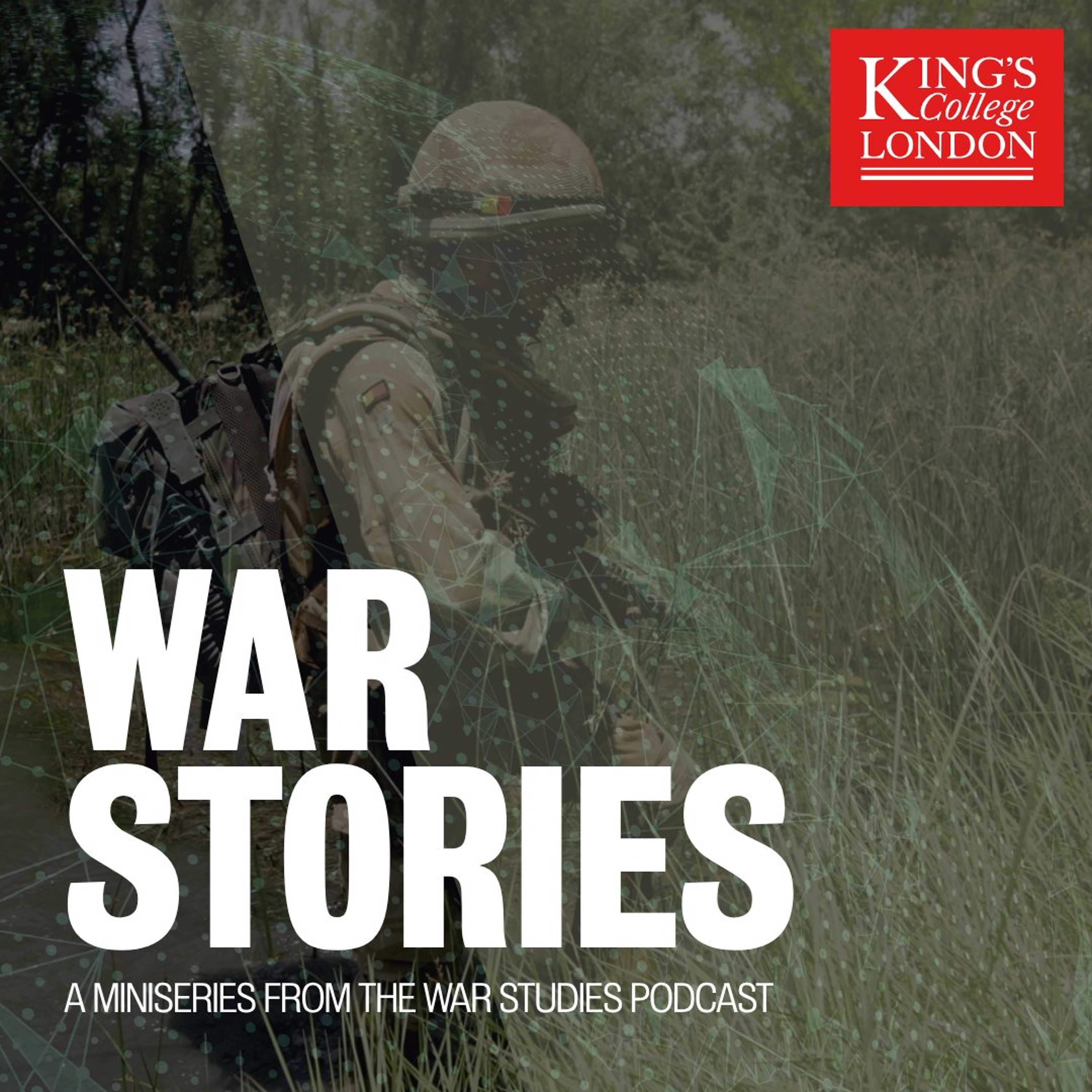 War Stories, Episode 6: A British Infantry Commander in Urban Combat, Iraq, 2007 09.09.2026 1u 33minIn the sixth edition of the King’s College London War Studies War Stories podcast miniseries, hosted by King’s alumni Rupert Lane and Nick Denning (BA War Studies, 2002–2005), Nick hosts and Rupert takes to the guest seat to speak about his own experience of war. As a young officer with 4th Battalion The Rifles, Rupert deployed to Basra, Iraq, in 2007, where he commanded a platoon given the task of defending the Provincial Joint Coordination Centre (PJCC), an isolated position in the centre of the city. One night in April, Rupert and 24 soldiers found themselves defending the PJCC against an attack by around 200 militia fighters. Over four hours, the defenders fought to prevent the position being overrun, for which the platoon was recognised with three gallantry awards, including two Military Crosses. Expect to learn: - What it means to command a mechanised rifle platoon in an urban counter-insurgency. - How 24 soldiers defended an isolated position against a much larger force during four hours of intense urban combat. - How leadership, training and individual initiative manifest in the pressure cooker of a defensive battle.
 -
 The Divided Brain with Dr Iain McGilchrist 18.08.2026 50minIn this episode of the Breaking Cycles of Conflict mini-series, XCEPT's Dr Nafees Hamid talks to Dr Iain McGilchrist – psychiatrist, philosopher, neuroscientist and author of The Master and His Emissary and The Matter with Things – about how the brain's left and right hemispheres attend to the world in fundamentally different ways. They explore how shifts in hemispheric dominance have shaped trust, institutions and the rise and fall of civilisations throughout history, and what this means for how governments, mediators and practitioners build, and lose, legitimacy in fragile and conflict-affected settings today. This research is part of XCEPT (Cross-Border Conflict Evidence, Policy and Trends), a UK aid-funded programme. King's College London's contribution to XCEPT focuses on the factors that shape violent and peaceful behaviour in conflict-affected populations. Find out more about XCEPT at xcept-research.org.
 -
War Stories, Episode 5: An Indian Army officer in counter-insurgency operations, Assam, 2010-2012 06.08.2026 1u 7minIn the fifth edition of the King's College London War Studies War Stories podcast miniseries, hosted by King's alumni Rupert Lane and Nick Denning (BA War Studies, 2002–2005), Ru and Nick speak with Aravind Rajendran (MA Conflict, Security & Development, 2020–2021). A former commissioned officer in the Indian Army (2009 to 2020), Aravind served with the 3rd Battalion The Mahar Regiment, during counter-insurgency operations in Assam between 2010 and 2012, before later serving in Jharkhand and spending four years with Indian Special Forces. Expect to learn: • What it means to be a young officer commander operating in a second language with his troops, while engaging with local communities speaking a range of additional languages and dialects • What it is to navigate a complex insurgency in a remarkable cultural landscape, using leadership, trust-building and operational adaptability
-
A Journalist on the frontline of the 'War on Terror', Iraq and Afghanistan, 2001-2010 15.07.2026 1u 2minIn the fourth edition of the King’s College London War Studies War Stories podcast miniseries, hosted by King’s alumni Rupert Lane and Nick Denning (BA War Studies, 2002-2005), Ru and Nick speak to Dr. Tiania Stevens (MA War Studies, 2007-2008), who was embedded as an Australian journalist with both US and British forces in Iraq, as well as US forces in Afghanistan through the 2000s, with various news agencies. They dig into the challenges of being a non-combatant on the frontlines, a firsthand witness to combat, from explosive devices to small arms fire, where you are being protected by the teams you live with, retaining as independent a view as you can, against a reporting chain that needs stories for headlines. Tiania is now a lecturer on Journalism at the University of Sydney.
-
 War Stories, Episode 3: A Humanitarian in a conflict zone, Afghanistan and Ukraine, 2009-2021 25.06.2026 1u 3minIn the third edition of the King’s College London War Studies War Stories podcast miniseries, hosted by King’s alumni Rupert Lane and Nick Denning (War Studies, 2002-2005), Ru and Nick speak to Rory Moylan (War Studies, 2002-2005), who worked as a humanitarian in Afghanistan, in Mazar-i-Sharif, with first ACTED and then the International Committee of the Red Cross through 2009-2013, and Sloviansk in the Ukraine, amongst others. They delve into the complexity of operating across conflict lines as an independent humanitarian during an ongoing conflict, where risk is almost as high as that of a soldier in the same environment, yet protection depends on neutrality being respected by all sides. Rory, who is fluent in Farsi and Dari, focussed on dialogue between state, non-state actors and civilians, as well as detention centres. Further Reading: Kabul Disco, by Nicolas Wild: https://www.goodreads.com/book/show/26155829 Key Locations Described: Mazar-i-Sharif, Afghanistan; Sloviansk, Donbas, Ukraine
 -
 The Helsinki Brief, Episode 3: Finland's Comprehensive Security Model 12.06.2026 49minIn this third episode of The Helsinki Brief: Inside Finnish Intelligence and Security, Dr Paul McGarr (King’s College London) is joined again by Hannamiina Tanninen of the Finnish Security and Intelligence Service (SUPO) to explore Finland’s 'comprehensive security' model — a point of reference in international debates on resilience. They unpack what “comprehensive security” means in practice: an all-of-society approach designed to keep Finland functioning as normally as possible during crises, from major disruptions and natural disasters to heightened security threats. The conversation looks at how the model is embedded across government, the private sector and civil society — and why joint exercises, consultation and coordination are central to making it work. The episode also looks at the foundations that make this approach work in Finland — including high public trust, the welfare state, a broad-based education system and mandatory conscription — as well as the role of the National Emergency Supply Agency. Finally, the discussion considers which elements of the Finnish model might be transferable elsewhere — and which are rooted in Finland’s specific history, size and social cohesion. Hannamiina Tanninen is a doctoral researcher at the National Defence University in Finland, researching on modelling the strategic environment of the Finnish security of supply system with emphasis on defining economic intelligence and economic security in intelligence studies. She is also a visiting researcher at Imperial College London.
 -
Afghanistan: 25 Years After 9/11. On the Brink of Another Crisis? 27.05.2026 54minIn this episode, Colin Smith, co-ordinator of the UN Security Council’s 1267/1988 Analytical Support and Sanctions Monitoring Team, joins Tim Willasey-Wilsey, King’s Visiting Professor, Graham Aikin, PhD researcher at King’s, and Dr Paul McGarr, Lecturer in Intelligence Studies, to examine Afghanistan nearly 25 years after 9/11 and assess whether it is again becoming a base for international terrorism under Taliban rule. The discussion explores the presence of groups such as al-Qaeda, ISIL-K and regional militants, the Taliban’s internal dynamics, and how the global terrorist threat has become more fragmented and decentralised. It also considers evolving radicalisation pathways, the role of new technologies and the challenges facing Western counterterrorism policy. Further reading: 1. UN Security Council 1267 Sanctions Monitoring Team Reports: https://bit.ly/4fAnGs3 2. UN Security Council 1988 Sanctions Monitoring Team Reports: https://bit.ly/4dzibc5 3. The British and 9/11: So Near and Yet So Far by Tim Willasey-Wilsey: https://bit.ly/3RGzmzH 4. 'Not your fathers Afghanistan': Has the West taken its eye off the al-Qaeda ball? by Graham Aikin: https://bit.ly/49Jgk1O 5. Operation Enduring Sentinel and Other U.S. Government Activities Related to Afghanistan: https://bit.ly/49Azp6v
-
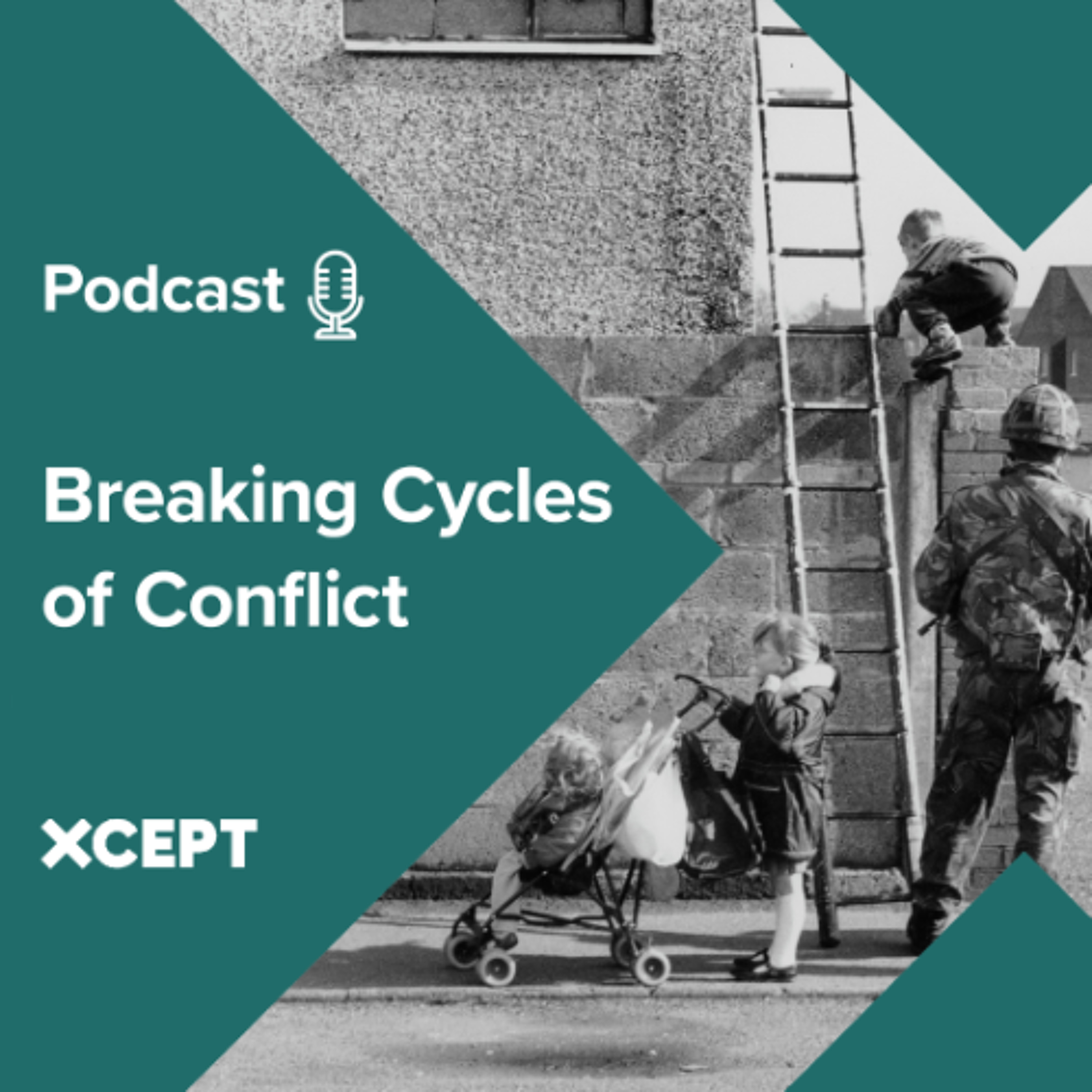 Nostalgia - Shared Histories, Divided Futures 08.05.2026 1u 9minIn this episode, Dr Nafees Hamid speaks with Dr Craig Larkin (Research Lead on Memory and Conflict for the XCEPT research programme), Dr Clara Voyvodic (Lecturer in Peace Studies at the University of Bradford), and Maria El Sammak (XCEPT Research Assistant and King's College London MA student in the War Studies department) about the powerful and often divisive role of nostalgia in global politics. As populist leaders from the United States to Turkey increasingly harness nostalgic sentiment to mobilise political support, this episode explores whether this longing for the past is a harmless comfort or a driver of division. Drawing on research on “The Golden Age" of Lebanon, rebel governance in Colombia, The Troubles in Northern Ireland and beyond, the conversation reveals how collective nostalgia can foster intolerance and nativism. Together, they examine why the future can feel so precarious and whether art can help us imagine a more inclusive path forward. This episode is produced as part of the XCEPT programme, which seeks to understand the drivers of violent and peaceful behaviour in conflict-affected populations and to support practical solutions for peace. Learn more at www.xcept-research.org. Image credit: RORY NUGENT.com / Shutterstock.com. British Army patrol with neighbourhood kids in West Belfast, Northern Ireland (February 25th 1994)
 -
 War Stories, Episode 2: A British Armoured Commander in Afghanistan, 2011 30.04.2026 1u 8minIn the second edition of the King’s College London War Studies War Stories podcast miniseries, hosted by King’s alumni Rupert Lane and Nick Denning (War Studies, 2002-2005), Ru and Nick speak to Jamie Irwin (War Studies, 2000-2003), who served with the Royal Scots Dragoon Guards in Afghanistan on HERRICK 14, with the British Army, having previously served in Iraq on TELIC 12. Ru and Nick take a deep dive into the high intensity counter-insurgency conflict in Helmand, Afghanistan, 2011, through the eyes of an armoured commander (Warthog Group). They delve into the challenges Jamie’s unit faced fighting the Taliban in the Afghan summer covering the experience ofarmoured warfare, through tactics, morale and combat, working in a hostile environment with a civilian population just trying to survive. Further Reading: 1. BBC Documentary: Fighting on the Frontline: War Wagons https://bit.ly/48uJdhG Key Locations Described: · Zumbalay, Adin Za’i, FOB Price (Gereshk), Lashkar Gah, Nad E’Ali
 -
 Drawing Ukraine: A discussion with Ella Baron 02.04.2026 38minIn May 2025 Ella Baron, a political cartoonist at The Guardian, travelled to Ukraine to record and reflect on the human impact of war. In collaboration with NGO Médecins Sans Frontieres (MSF), Ella met patients in a rehabilitation centre for war veterans in Cherkasy and a mental health clinic for internally displaced families in Vinnytsia. The Art & Conflict Hub is currently hosting an exhibition of the artwork Ella produced at the Arcade in Bush House until the end of April 2026, exploring the complex marks war leaves on the human body and mind. In this episode of the War Studies Podcast, Ella discusses her work as a political cartoonist and the exhibition "Battles of the Mind" with Dr Henry Redwood, co-convener for the MA in Political and Strategic Communications, and co-lead of the Art and Conflict Hub at the Department for War Studies. Experience "Battles of the Mind" at King’s: https://bit.ly/4m33AIe You can find below the full Guardian article, and links to Ella's socials: https://bit.ly/4m6GQHv X: @ebaroncartoons IG: @ella_baron
 -
 War Stories, Episode 1: A British Infantry Officer in Afghanistan, 2007 26.03.2026 1u 26minIn the inaugural edition of the War Studies War Stories podcast series, hosted by King’s alumni Rupert Lane and Nick Denning (War Studies, 2002-2005), Ru and Nick briefly explain what they’re looking to achieve in this series, through the use of King’s own unique resource - its alumni and their experience of war (built on King’s War Studies ‘Experience of War’ module). Ru and Nick then take a deep dive into the life of a Platoon Commander in the high intensity counter-insurgency conflict in Helmand, Afghanistan, 2007, through the eyes of co-host Nick’s own experiences, serving with the Royal Anglian Regiment in Nowzad. Ru delves into the challenges Nick’s unit faced fighting the Taliban in the Afghan summer covering the experience of warfare, through tactics, morale and combat, working in a hostile environment with a civilian population just trying to survive. Further Reading • News clip: https://youtu.be/hTH0yMuc3pQ?si=c2jC_nz2vF6Ck4_v • Press: https://www.theguardian.com/uk/2007/aug/05/military.afghanistan • Podcast 1: https://www.buzzsprout.com/961057/episodes/16085942-afghanistan-nick-denning-royal-anglian-regiment-you-want-to-feel-worn-in-and-seasoned-and-up-to-speed-as-quickly-as-you-can • Podcast 2: https://podcasts.apple.com/us/podcast/nick-denning-captain-royal-anglian-regiment/id1799202777?i=1000710546820
 -
The Helsinki Brief, Episode 2: Intelligence Culture in Finland 11.03.2026 49minIn the second episode of The Helsinki Brief: Inside Finnish Intelligence and Security, the focus is on intelligence culture in Finland, explored within the wider context of the Finnish Security and Intelligence Service (Supo) and how it operates. Dr Paul McGarr of King’s College London is joined by Hannamiina Tanninen, an analyst at the Finnish Security and Intelligence Service, to discuss the evolution of Finland’s intelligence culture, Supo’s role within the national security framework, and how intelligence practices have adapted to contemporary security challenges.
-
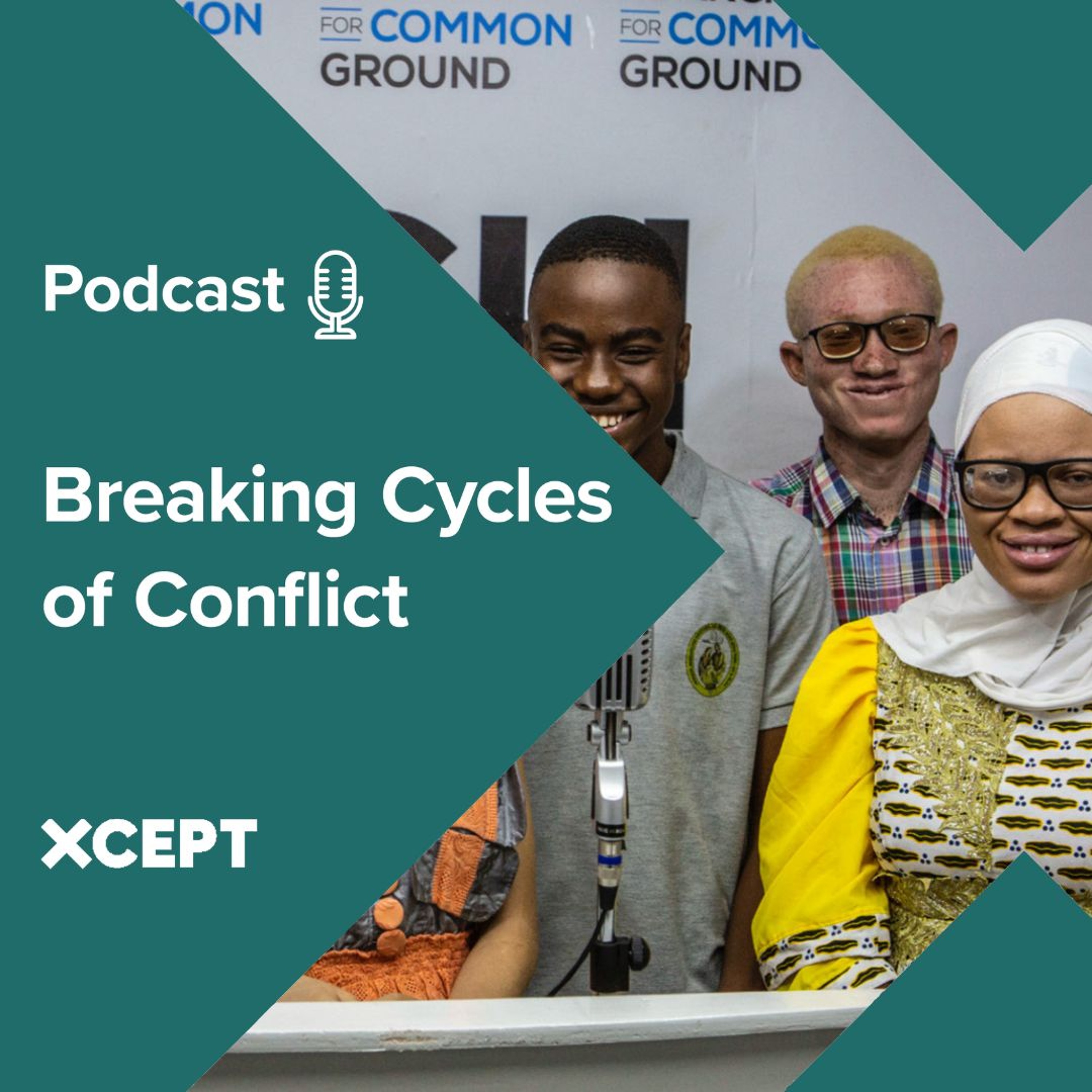 Leadership in a divided world 25.02.2026 59minIn this episode, Dr Nafees Hamid speaks with Michael Shipler, King’s College London War Studies alumnus and Vice President of Leadership Development & Partnerships at Search for Common Ground (SFCG), the world’s largest dedicated peacebuilding organisation. With global cooperation declining and populism and authoritarianism on the rise, Nafees and Michael explore how those on opposite sides can be brought together. Drawing on SFCG’s work in conflict‑affected regions around the world, their conversation covers topics from moral injury to the use of art in peacebuilding, and why conflict itself isn’t the problem - it’s how we choose to manage it. Learn more about SFCG and their work here: https://www.sfcg.org/ This episode is produced as part of the Cross-Border Conflict Evidence, Policy and Trends (XCEPT) programme, which seeks to understand the drivers of violent and peaceful behaviour in conflict‑affected populations and to support practical solutions for peace. Learn more at www.xcept-research.org.
 -
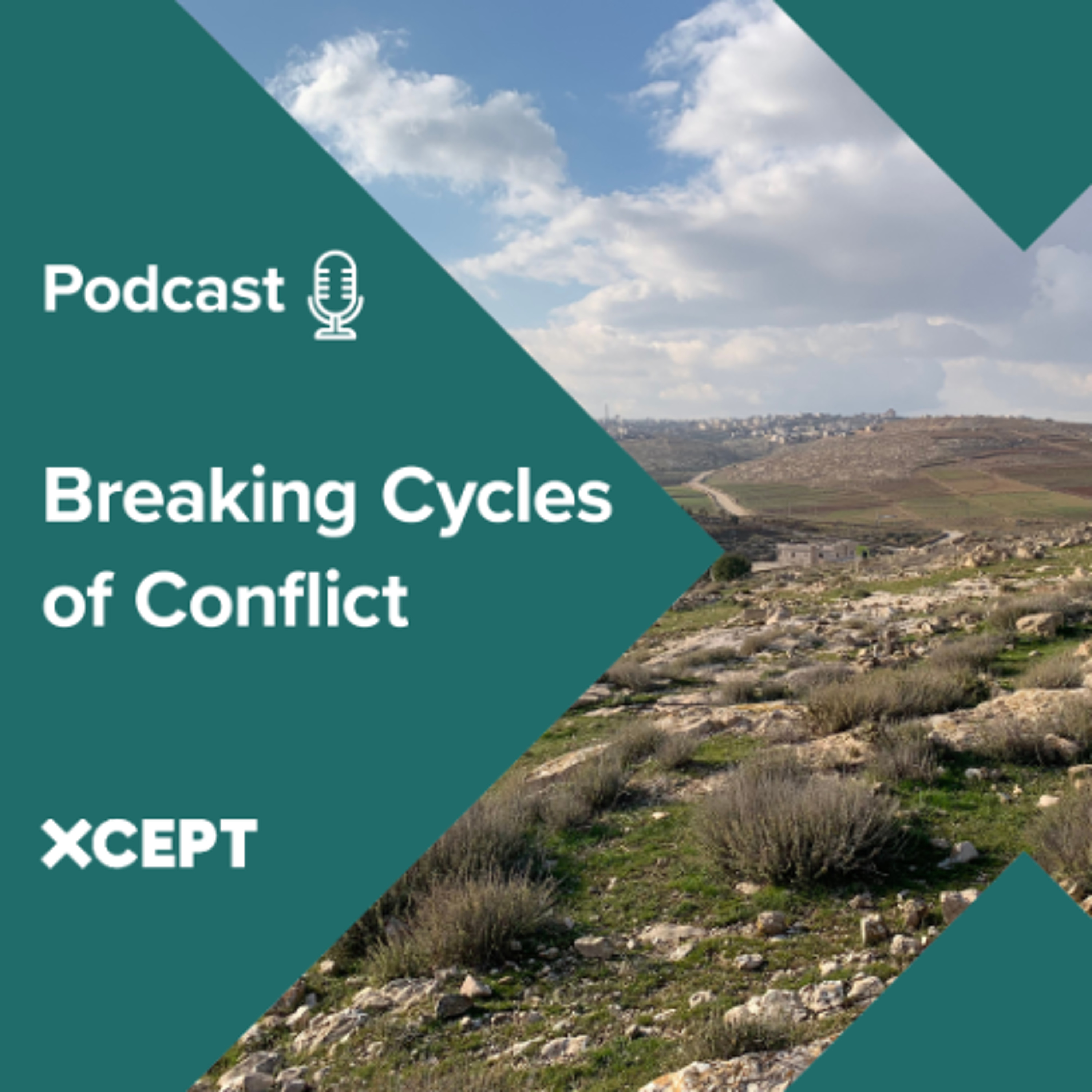 Does the expansion of Israeli settlements in the West Bank pose a threat to long-term peace for Palestine and Israel? 03.02.2026 30minDr Nils Mallock joins Dr Rajan Basra to discuss his research on the expansion of Israeli settlements in the occupied West Bank and the effect their presence has on political protest behaviour. These settlements are widely considered to be illegal under international law, but successive Israeli governments have allowed them to grow, and expansion has accelerated following Hamas' attack on 7th October 2023. In this episode, Dr Mallock explores how the presence of settlements can fuel cycles of reciprocal violence, the way in which they complicate the geographical layout of a two-state solution, and what continued expansion means for the long-term future of Palestine and Israel. Read Nils’ journal article, ‘Proximity to settlements in the West Bank shifts protest behaviour toward higher-risk actions and increases perceived collective injustice’, here: https://onlinelibrary.wiley.com/doi/10.1111/pops.70068 This episode has been produced as part of the Cross-Border Conflict Evidence, Policy and Trends (XCEPT) programme. XCEPT aims to understand the drivers of violent and peaceful behaviour in conflict-affected populations – and to find solutions that support peace. Find out more at www.xcept-research.org
 -
24 Hours at the Capitol: Nora Neus on January 6, the Far Right and American Nationalism 06.01.2026 47minIn this episode, Dr Pablo de Orellana, Senior Lecturer in International Relations, is joined by journalist and Emmy-nominated producer Nora Neus to discuss her book "24 Hours at the Capitol: An Oral History of the January 6th Insurrection". Drawing on hundreds of interviews and primary sources, Neus reconstructs the “minute-by-minute” experience of 6 January 2021 – from elected officials to frontline staff – and argues the attack cannot be understood as a one-off event, but as the culmination of a longer movement that gathered momentum after Charlottesville and accelerated through the pandemic era. Their conversation explores how far-right coalitions form and fragment; the role of social media platforms and online ecosystems in mobilisation; and the political power of mythic nationalism – from “1776” iconography to competing claims about American exceptionalism. They also examine the wider relationship between ethnic nationalism and religion, as well as the implications for future episodes of political instability.
-
The Helsinki Brief: Inside Finnish Intelligence and Security 17.12.2025 48minThis episode introduces The Helsinki Brief, a podcast mini-series on Finnish intelligence and security. Hosted by Dr Paul McGarr of King’s College London, the discussion features Hannamiina Tanninen, an analyst at Finnish Security and Intelligence Service (SUPO), about the role and structure of civil intelligence in Finland. The discussion covers SUPO’s legal mandate, core functions such as counterterrorism, counterespionage, cyber intelligence and security vetting, and its cooperation with domestic and international partners. The episode also addresses key security threats, including terrorism, cyber activity and state-based intelligence operations, as well as public trust, recruitment and oversight within Finland’s intelligence system.
-
 Victim-centred peacemaking: How victim inclusion shaped Colombia’s Santos-FARC peace process 28.11.2025 45minIn this episode, Professor Roddy Brett, Professor of Peace and Conflict Studies and Director of the Global Insecurities Centre at the University of Bristol, joins Dr Nafees Hamid, Co-PI of the XCEPT research programme, to discuss his new book, ‘Victim-Centred Peacemaking: Colombia's Santos-FARC-EP Peace Process’. Professor Brett reveals how the victims’ delegations changed the dynamics of the Santos-FARC-EP peace process, transforming victim-perpetrator relations and ultimately shaping the final agreement, which was signed in 2016. At a time when the number of civilian casualties in armed conflict is rising around the world, the Santos-FARC example offers valuable insights into how to effectively involve victims in peacemaking. Professor Brett’s book is available from Bristol University Press: https://bristoluniversitypress.co.uk/victim-centred-peacemaking This episode has been produced as part of the Cross-Border Conflict Evidence, Policy and Trends (XCEPT) programme, which is funded by UK International Development from the UK government; however, the views expressed do not necessarily reflect the UK government’s official policies. XCEPT aims to understand the drivers of violent and peaceful behaviour in conflict-affected populations – and to find solutions that support peace. Find out more at www.xcept-research.org
 -
A Risk Too Far: The Psychology Behind Operation Market Garden 20.10.2025 1u 10minIn this episode, Dr Gary Buck, author of A Risk Too Far: A Psychological Autopsy of the Planning for Arnhem, joins Dr Huw Dylan to explore the human factors behind one of WWII’s most daring operations. Drawing on his expertise in operational psychology, Dr Buck reveals how stress, ambition and personality shaped the decisions of commanders like Montgomery, Browning and Urquhart during Operation Market Garden. Through this psychological lens, the episode uncovers how bias, rivalry and pressure influenced Allied command—and how the mind can be as decisive a battlefield as any fought on land or air.
Vergelijkbare podcasts


Populair in
Deze podcast verschijnt ook in de podcastlijsten van deze landen.

