
Economics Matters with Laurence Kotlikoff
Economics Matters
0
Economics Matters is a podcast hosted by Professor Laurence Kotlikoff, a prominent economist, author, and policy advisor. In each episode, he talks with experts about how economics influences modern society, covering topics such as personal finance, fiscal policy, social security, and income inequality. The show explores pressing economic challenges and aims to make complex issues accessible to listeners.
Afleveringen
-
 Why Africa’s Richest Opportunity Is Being Ignored by Wall Street 15.10.2026 1u 3minWhat if the biggest investment opportunity in the world is hiding in plain sight, and the reason no one is taking it is fear of the unknown?Theo Kocken spent two decades building Cardano into one of Europe’s most respected pension risk management firms. Then he walked away to fix something bigger: the broken financial infrastructure keeping billions of people in low-income countries from accessing the capital they need to grow.In this conversation, Professor Kotlikoff and Theo explore currency risk in developing markets, the mechanics of risk-sharing that could unlock trillions in private investment, and what a Monty Python filmmaker has to do with explaining the next financial crisis.What You’ll Learn In This Episode:[00:07:00] How Cardano was founded and why Theo left to focus on development finance[00:08:00] The Currency Exchange Fund (TCX): how it protects companies from devastating loan shocks in Africa and Asia[00:23:00] The real state of African development: why the GDP numbers don’t tell the whole story[00:29:00] ILX Fund: mobilizing pension capital alongside development banks for high-impact projects[00:37:00] Boom Bust Boom: the Monty Python-produced documentary on the human origins of financial crisis[00:43:00] Private credit and insurance risk: why today’s financial system may be setting up the next crisisFeatured Guest:Theo Kocken is a professor of risk management at VU University Amsterdam and extraordinary professor at NWU University in South Africa. He is founder of Cardano, a leading pension risk management firm, and co-founder of Cardano Development, a not-for-profit focused on financial inclusion in low- and medium-income countries. He is also a founding force behind TCX (The Currency Exchange Fund) and ILX, and the producer of economic documentaries including Boom Bust Boom (2015) with Terry Jones of Monty Python.Resources Mentioned:TCX: The Currency Exchange FundILX Fund: AfDB PartnershipBoom Bust Boom Documentary (2015)Cardano DevelopmentDisclaimer: Any opinions expressed on Economics Matters are those of the authors and guests. These are not the opinions of Boston University or Economic Security Planning, Inc.
 -
 She Knew the Social Security Formula at 16. Now She's Warning Washington It Won't Save Itself 30.09.2026 1u 8minWhat does it mean when one of the country's leading labor economists, a former Obama White House advisor who served as chief economist at the Department of Labor, tells you that Washington's bet on AI saving Social Security is built on a foundation of wishful thinking, and that the real numbers have been pointing toward crisis since 2017?Betsey Stevenson studied physics at Wellesley, switched to economics because the marginal costs were lower, earned her PhD from Harvard, passed up a Michigan faculty offer to work in the private sector, wrote a brand-new job market paper from private sector data to re-enter academia, and eventually landed at the Gerald Ford School of Public Policy at the University of Michigan — where she now teaches, researches, and co-authors a leading economics textbook with her partner Justin Wolfers.In this episode, Professor Kotlikoff sits down with Stevenson for a conversation covering the divorce law economics that launched her career, what Title IX actually proved about sports and upward mobility, how two economists navigate a two-career relationship, and a frank assessment of where the US economy is heading under the weight of deficits, AI hype, and a capital income tax structure that may be quietly turning America into a servant economy.What You'll Learn:[00:10:39] Why Betsey passed up academia after Harvard and what working at Forrester Research taught her about big data before big data had a name[00:11:00] The dissertation that launched her career: how unilateral divorce laws changed women's bargaining power inside marriage without changing the divorce rate at all[00:17:00] The surprising finding: no-fault divorce dramatically reduced spousal violence but also reduced spouses putting each other through school[00:22:16] The Title IX paper: how giving girls access to sports improved graduation rates, college attendance, and adult earnings using a natural experiment almost nobody had thought to use[00:36:00] How Betsey knew the Social Security formula at 16 and why she called it a pure tax on her teenage paycheck[00:40:31] Why the fiscal gap has been unsustainable since Trump's 2017 tax cuts, and how COVID made it dramatically worse[00:42:33] Why cutting short-term interest rates when inflation is above target pushes long-term rates up: the mechanism Washington keeps ignoring[00:46:13] Why AI productivity gains may flow entirely to capital rather than wages, and what that means for Social Security funding[00:47:29] The servant economy scenario: with foreigners owning most US investment, AI returns could look a lot like Jamaica's resort economy[01:04:33] Betsey's tax proposal: tax all income including unrealized capital gains, and why the Daniel Radcliffe vs. Johnny Depp analogy explains exactly why she opposes a wealth taxFeatured Guest:Betsey Stevenson is a Professor of Economics and Public Policy at the University of Michigan's Gerald R. Ford School. She earned her PhD from Harvard and served as Chief Economist of the US Department of Labor and as a Member of the President's Council of Economic Advisors under President Obama. She is a Research Associate at NBER and co-author, with Justin Wolfers, of Principles of Economics.Resources:Principles of Economics (3rd Ed.) by Stevenson and Wolfers: amazon.com"Bargaining in the Shadow of the Law" — the divorce and domestic violence paper, QJE 2006: nber.org"Beyond the Classroom" — the Title IX and sports earnings paper, ReStat 2010: nber.orgBetsey Stevenson's faculty page: fordschool.umich.edu/faculty/betsey-stevensonEconomics Matters Substack: larrykotlikoff.substack.comEconomics Matters: The Podcast is hosted by Larry Kotlikoff, Professor of Economics at Boston University.Disclaimer: Any opinions expressed on Economics Matters are those of the authors and guests. These are not the opinions of Boston University or Economic Security Planning, Inc.
 -
 The Harvard Genius Mapping the Death of the American Dream — Zip Code by Zip Code 17.09.2026 1u 8minWhat if the single strongest predictor of whether a poor kid rises into the middle class has nothing to do with intelligence, work ethic, or even education, and everything to do with who happens to be in their classroom in third grade?Raj Chetty grew up in New Delhi, came to the US in fourth grade, emailed 15 Harvard professors his first week on campus, was working as a research assistant for Marty Feldstein within weeks, graduated college a year early, and became one of the youngest tenured professors in Harvard's history. He has since used anonymized tax records covering virtually every American to build the most detailed picture ever assembled of who gets ahead in this country, why, and what we could actually do about it.In this episode, Professor Kotlikoff sits down with his MacArthur Genius Fellow and John Bates Clark Medal-winning colleague for a conversation covering the grocery store experiment that upended tax theory, the kindergarten classroom that changes your earnings for life, the Facebook data revealing why Iowa produces more upward mobility than Atlanta, and a brand-new private capital market proposal that could finally align financial incentives with the American dream.What You'll Learn:[00:17:23] The grocery store experiment: do people respond differently to a price hike versus a tax hike of the same dollar amount, and what the answer reveals about policy design[00:18:28] Why your true marginal tax rate is nearly impossible to calculate, and why that matters enormously for how much people work and save[00:36:20] The key insight behind the kindergarten teacher paper: linking the 1980s Tennessee STAR experiment to adult tax records 25 years later[00:39:25] How kindergarten classroom assignment by coin flip changed the course of children's lives[00:40:09] One excellent teacher versus one average teacher: a 2 to 3% annual earnings gain per grade, compounding to a 20 to 25% lifetime wage difference[00:41:25] Why teacher quality beats class size as a policy lever, and why Finland and Switzerland get this right while the US does not[00:44:44] The Opportunity Atlas: type in your zip code and see what the American dream looks like in your own neighborhood[00:48:00] Why Dubuque, Iowa, produces more upward mobility than almost anywhere on earth while Charlotte and Atlanta rank below many developing countries for poor kids rising up[00:50:00] The single strongest predictor of economic mobility: not schools, not income, but cross-class friendship[00:53:00] The causal proof: kids randomly assigned to classrooms with more high-income peers go on to earn more and rise higher[00:56:00] The inventor gap[01:00:11] The digital twins method[01:03:31] The private capital market for opportunity: how a $10,000 investment in job training could generate double-digit investor returns while reducing inequalityFeatured Guest:Raj Chetty is the William A. Ackman Professor of Economics at Harvard University and Director of Opportunity Insights. He received his BA and PhD from Harvard and became one of the youngest tenured professors in the university's history. He is the recipient of a MacArthur Genius Fellowship, the John Bates Clark Medal, and the Harvard George Ledley Prize.Resources:Opportunity Insights: opportunityinsights.orgThe Opportunity Atlas: opportunityatlas.orgThe Social Capital Atlas: socialcapital.org"Social Capital I" (Nature, 2022): nature.com"Social Capital II" (Nature, 2022): nature.com"Where Is the Land of Opportunity?" (QJE, 2014): opportunityinsights.orgRaj Chetty's publications: rajchetty.com/publicationsEconomics Matters Substack: larrykotlikoff.substack.comEconomics Matters: The Podcast is hosted by Larry Kotlikoff, Professor of Economics at Boston University.Disclaimer: Any opinions expressed on Economics Matters are those of the authors and guests. These are not the opinions of Boston University or Economic Security Planning, Inc.
 -
 Dead Men Are Running America's Budget, and Their Policies Are Bankrupting Your Kids 11.09.2026 58minWhat does it mean when the co-founder of America's premier nonpartisan fiscal policy institution tells you that both parties have systematically abandoned the working class, the young, and the American Dream. Not by accident, but by design?Eugene Steuerle co-founded the Urban-Brookings Tax Policy Center, earned a Bronze Star in Vietnam, taught himself economics via correspondence course while serving in the Army, and has spent five decades at the center of every major U.S. fiscal debate. He has testified to Congress roughly two dozen times, received the Paul Samuelson Award for Dead Men Ruling, and has now followed it up with Abandoned, a damning account of how both political parties locked in spending for the elderly and wealthy while leaving everyone else behind.In this episode, Professor Kotlikoff sits down with his longtime friend and intellectual ally for an unsparing conversation about the structural forces driving America's fiscal crisis, who is getting hurt, and what it would actually take to fix it.What You'll Learn:[00:01:01] Why the Social Security shortfall is far worse than the headlines: a 31% immediate cut for all 71 million beneficiaries, or a payroll tax hike from 12.4% to 18.1%[00:14:54] The core thesis of Dead Men Ruling: how permanently baked-in entitlement spending has eliminated Congress's ability to do anything new[00:16:24] Why Social Security, Medicare, and interest on the debt already grow faster than total revenue over the next decade[00:17:07] The difference between financing consumption and financing upward mobility, and why that distinction explains the working class rebellion[00:32:00] Gene's CBO data: the elderly have gone from most likely to be poor in 1979 to least likely today, while non-elderly families moved in the opposite direction[00:35:03] What Gene would do as fiscal dictator: force real entitlement growth to require annual congressional authorization[00:39:56] The two trends dominating 50 years of policy: runaway retirement and healthcare spending, plus cuts to capital income taxes, driving wealth inequality and government dependence simultaneously[00:41:59] Why the national saving rate has collapsed from 15% in the 1950s to 1.48% today, and what that means for who will own America's future[00:44:00] The Jamaica scenario: capital-rich but foreign-owned, with most Americans as servant workers rather than asset owners[00:51:26] Who is the least subsidized group in the entire US healthcare system: moderate-income workers whose employers offer insurance[00:54:37] Why Congress is wrong to think AI will save the budget, and what we should be building insteadResources:Abandoned by Eugene Steuerle: amazon.comDead Men Ruling by Eugene Steuerle: amazon.comThe Government We Deserve (Substack): governmentwedeserve.substack.comEugene Steuerle's website: steuerle.orgUrban-Brookings Tax Policy Center: taxpolicycenter.orgEconomics Matters Substack: larrykotlikoff.substack.comFeatured Guest:Eugene Steuerle is an Institute Fellow and Richard B. Fisher Chair at the Urban Institute and co-founder of the Urban-Brookings Tax Policy Center. He holds a PhD from the University of Wisconsin-Madison and has served as Deputy Assistant Secretary of the Treasury for Tax Analysis. Author of 20 books and over 1,600 articles and congressional testimonies, his most recent book is Abandoned. He publishes the Substack The Government We Deserve.Economics Matters: The Podcast is hosted by Larry Kotlikoff, Professor of Economics at Boston University.Disclaimer: Any opinions expressed on Economics Matters are those of the authors and guests. These are not the opinions of Boston University or Economic Security Planning, Inc.
 -
 The Race Against Time: Can Argentina's Economy Recover Before the Election Kills the Reform? 02.09.2026 1u 3minWhat if solving Argentina's inflation crisis required nothing more than a single televised announcement — and the government is still not making it?Emilio Ocampo advised President Milei during his 2023 presidential campaign, spent decades as a managing director at Morgan Stanley, and has spent the better part of his career making the case for Argentina to do the one thing almost everyone agrees would work, and almost no one in power is willing to do: dollarize.In this episode, Professor Kotlikoff, who visited Buenos Aires in November and published his own dollarization proposal in the Financial Times, sits down with Ocampo for a frank insider conversation on where Argentina actually stands, why the Milei reform is in a race against the electoral calendar, and exactly what it would take, mechanically and politically, to end Argentina's century-long cycle of inflation, default, and despair.This is not theory. Both men have been inside the government and believe the window is closing.What You'll Learn:[00:03:00] Where Argentina's inflation stands today: down from 200% to 30% annually, but the hard part is still ahead[00:05:08] The K-shaped recovery: energy and mining are booming while manufacturing and construction, the biggest employers, are stagnant[00:06:00] What Peronist corporatism actually is, and why half of Argentina's economy still runs on a philosophy lifted from Mussolini's Italy[00:15:42] Why Argentina's debt ratio is technically manageable but still pays 420 basis points over US Treasuries: the price of a bad reputation[00:18:54] Larry's Financial Times proposal: the US funds dollarization via a contingent loan, Argentina gets monetary stability, and the loan disappears unless a future government undoes the reform[00:41:16] The Ecuador precedent: dollarized by presidential announcement in January 2000, survived a coup 10 days later, two sovereign defaults, COVID, and oil price collapses...and is still dollarized today[00:45:00] Why Argentina is already de facto dollarized: surgeries paid in $100 bills, apartments priced in dollars, roughly four times more physical dollars than pesos in circulation[00:48:00] The mechanics of how to actually do it: set the exchange rate at market, declare the dollar legal tender, keep the peso for small change[00:51:32] Why December 2025, after Milei's election win and with full US Treasury support, was the optimal moment to dollarize, and why that window may be narrowing[01:00:00] Why Ocampo says do it today: with elections 18 months away, the probability math favors moving now instead of betting on a recovery that may not arrive in timeFeatured Guest:Emilio Ocampo is an Argentine economist, author, and professor at UCEMA in Buenos Aires. He served as economic advisor to President Milei during Argentina's 2023 presidential campaign and is internationally recognized for his work on monetary institutions, dollarization, and Latin American economic history. He previously held senior positions at Chase Manhattan Bank, Salomon Brothers, and Morgan Stanley, where he was a managing director. He is co-author of Dolarización: Una Solución para la Argentina and a regular contributor to La Nación.Resources:Dolarización: Una Solución para la Argentina by Ocampo and Cachanosky: amazon.comProfessor Kotlikoff's FT article summary (Ocampo Substack): dolarizacionargentina.substack.comProfessor Kotlikoff's earlier dollarization piece: larrykotlikoff.substack.comSargent, "The Ends of Four Big Inflations" (1982): ideas.repec.org2025 US-Argentina currency swap background: wikipedia.orgEmilio Ocampo's Substack: dolarizacionargentina.substack.comEconomics Matters Substack: larrykotlikoff.substack.comEconomics Matters: The Podcast is hosted by Larry Kotlikoff, Professor of Economics at Boston University.Disclaimer: Any opinions expressed on Economics Matters are those of the authors and guests. These are not the opinions of Boston University or Economic Security Planning, Inc.
 -
 34% of Gen Z Is Gambling Online. They Think It's Investing 29.08.2026 56minWhat if the single biggest financial threat facing young Americans right now isn't student debt or housing prices, but a $22% credit card rate on one side and an online gambling habit disguised as investing on the other?Beth Kobliner has been writing about personal finance since she ghostwrote Sylvia Porter's syndicated column at age 22. She spent eight years at Money Magazine, appeared with Elmo on Sesame Street to teach kids about money, served on the President's Advisory Council on Financial Capability for Young Americans, and has now published five editions of her New York Times bestseller Get a Financial Life, the definitive money guide for people in their 20s and 30s, over 30 years and still going.In this episode, Professor Kotlikoff sits down with Beth for a wide ranging conversation that covers compound interest, credit card debt, the rent vs. buy decision, online gambling statistics that should alarm every parent, and the timeless financial principles that have quietly made thousands of readers wealthy over three decades.What You'll Learn:[00:33:04] Why starting early is the single most powerful financial move you can make: the compound interest case in plain language[00:38:13] Why credit card debt is worse now than it has ever been: the average rate has hit 22%, and even good credit gets you 18%[00:39:01] Paying off a 22% credit card is the equivalent of earning 22% guaranteed after taxes: there is nowhere else that math works[00:37:23] The index fund case: Fidelity at .015%, Vanguard at .03%, and you can start with as little as a dollar[00:41:42] When the stock market is the wrong place for your savings: the down payment scenario and the high-yield savings account alternative[00:50:48] 34% of Gen Z gambles online regularly, and one in four young people believe prediction markets are a form of investing[00:52:38] Two-thirds of prediction market winnings go to one-tenth of 1% of accounts: who is actually winning, and who is losing[00:43:09] The "different selves" framework: why your current self is the fiduciary for your middle-aged and retired self, whether you like it or not[00:49:17] State and local housing programs most young buyers have never heard of: the National Council of State Housing Agencies and what it offers[00:29:03] Why connections are not cheating: how Beth landed every major career opportunity, and why her father's approach still works in 2026Featured Guest:Beth Kobliner is a personal finance journalist, author of two New York Times bestsellers, and a member of the President's Advisory Council on Financial Capability for Young Americans. She has written for Money Magazine, The NY Times, The Wall Street Journal, PBS NewsHour, CNN, and MSNBC. She is currently working with the Heckscher Foundation to create a financial literacy curriculum for New York City high school students.Resources Mentioned:Get a Financial Life: Personal Finance in Your Twenties and Thirties (5th Edition) by Beth Kobliner, the definitive guide now over half a million copies sold across 30 years:https://www.amazon.com/Get-Financial-Life-Personal-Twenties/dp/1668095351Make Your Kid a Money Genius (Even If You're Not): A Parents' Guide for Kids 3 to 23 by Beth Kobliner, translated into nine languages:https://www.amazon.com/Make-Your-Money-Genius-Youre/dp/1476766819Beth Kobliner's website — resources, recommendations, and updates:https://bethkobliner.comNational Council of State Housing Agencies — state and local homebuyer assistance programs:https://www.ncsha.orgEconomics Matters Substack (Larry Kotlikoff):https://larrykotlikoff.substack.comEconomics Matters: The Podcast is hosted by Larry Kotlikoff, Professor of Economics at Boston University.Disclaimer: Any opinions expressed on Economics Matters are those of the authors and guests. These are not the opinions of Boston University or Economic Security Planning, Inc.
 -
 Is AI the End of Mathematics, or Its Most Exciting New Beginning? 20.08.2026 1u 18minWhat does it feel like to watch an AI solve a problem in a single prompt that you've spent years working on, and produce a stronger result than your own published papers?Professor Kotlikoff grew up academically alongside two economists, Yuri Dadush and Michael Pomerleano, who were his classmates when he began his PhD at Harvard in 1973. In this episode, he sits down with their sons: Daniel Dadush, a professor of mathematics and optimization at Utrecht University, and Daniel Pomerleano, a professor of pure mathematics at UMass Boston, both of whom are watching AI upend their fields in real time.This is a conversation about what's actually happening inside mathematics right now: which problems AI has solved, how it solved them, what those solutions reveal about the limits of human specialization, and whether the next generation of mathematicians will bother showing up at all.What You'll Learn:[00:17:39] The moment ChatGPT produced a stronger result than two of Daniel Dadush's published conference papers: what happened in a single prompt session[00:31:13] The Erdos Distance Problem: open for 60+ years, solved by AI in a few pages, and why the ideas inside it cracked other problems too[00:35:39] The cycle double cover conjecture: an open problem with a short proof human mathematicians simply overlooked[00:36:26] Why AI proofs tend to be strikingly short: what that reveals about how differently machines approach mathematics[00:41:46] Why AI companies used math as their benchmark: what solving long chains of abstract reasoning was really designed to prove[01:00:39] The PhD thesis problem: how Daniel P. generated what would have been a strong thesis three years ago, in an afternoon, with a problem list and ChatGPT[01:08:46] Why pure mathematics may become a less attractive field for the next generation: and what's lost if that happens[01:09:23] The conference room scenario: an audience member spinning up 20 AI agents during a talk to answer the speaker's own research question before the talk ends[01:11:42] The policy question: NSF funding going to zero for economics while $200 billion flows to AI, and what hollowing out academic talent actually costs usFeatured Guests:Daniel Dadush is a professor of mathematics at Utrecht University and leader of its Networks and Organizations Group. He completed his PhD in Algorithms, Combinatorics, and Optimization at Georgia Tech and held a Simons Postdoctoral Fellowship at the Courant Institute at NYU. He specializes in theoretical computer science and mathematical optimization.Daniel Pomerleano is a professor of mathematics at UMass Boston. He completed his PhD at UC Berkeley and has held positions at Imperial College London. His research focuses on mirror symmetry, symplectic topology, and non-commutative Hodge theory.Resource Links:Fermat's Last Theorem by Simon Singh: the popular mathematics history book Larry recommends for non-mathematicians, available in multiple editions:https://www.amazon.com/Fermats-Last-Theorem-Simon-Singh/dp/1841157910The Man Who Knew Infinity (2016): the biographical film about Srinivasa Ramanujan, starring Dev Patel and Jeremy Irons, available to rent or buy on Amazon Prime Video:https://www.amazon.com/Man-Who-Knew-Infinity/dp/B01HRX0T8KEconomics Matters Substack (Larry Kotlikoff): https://larrykotlikoff.substack.comEconomics Matters: The Podcast is hosted by Larry Kotlikoff, Professor of Economics at Boston University.Disclaimer: Any opinions expressed on Economics Matters are those of the authors and guests. These are not the opinions of Boston University or Economic Security Planning, Inc.
 -
 Your Medicare Premium Is Rising Twice as Fast as Your Social Security Check — Here's What to Do About It 19.08.2026 1u 9minWhat if the Medicare premium increases heading your way aren't just a number, they're a signal that the entire system is heading somewhere most retirees aren't prepared for?Phil Moeller has co-written a New York Times bestseller on Social Security, authored the definitive consumer guide to Medicare, and spent decades covering personal finance for US News, PBS NewsHour, and Money Magazine. He's also a Medicare enrollee with strong opinions about what's working, what isn't, and what you should do before your next open enrollment window.In this episode, Professor Kotlikoff sits down with his longtime friend and co-author for a conversation that starts with the nuts and bolts of Medicare: Medigap, Part D strategy, Medicare Advantage trade-offs, the birthday rule — and ends somewhere bigger: a frank discussion of whether America's healthcare and retirement trajectory is fixable at all.What You'll Learn:[00:03:45] Why Phil chose traditional Medicare with Plan G Medigap — and why he still thinks it's right for people of means[00:05:42] The $1 million hospital bill story — how a $3,500 Medigap premium produced zero out-of-pocket cost[00:06:38] The $5-a-month Part D strategy — and when to stop caring about the deductible[00:09:48] Why the Part B premium is rising at roughly twice the Social Security cost-of-living rate[00:15:23] When Medicare Advantage makes sense — and where it breaks down when you need it most[00:18:23] The birthday rule most people have never heard of[00:19:39] What the One Big Beautiful Bill means for Medicaid in your state[00:27:45] The hidden $600-$700 billion annual subsidy inside Parts B and D — and who's really paying[00:35:32] How seniors went from the poorest to the wealthiest generation — and what that data looks like[00:44:51] What Phil Moeller would do as healthcare czar[00:59:10] Why 35 cents of every healthcare dollar goes to administration[01:00:42] The purple billionaire argument — why Larry thinks an independent candidate is the only path to real reformFeatured Guest:Philip Moeller is a veteran personal finance journalist and author of Get What's Yours for Medicare and co-author of the New York Times bestseller Get What's Yours: The Secrets to Maxing Out Your Social Security. He publishes the Substack Aging in America.Larry Kotlikoff is a Professor of Economics at Boston University and one of the country's foremost experts on Social Security, Medicare, and generational fiscal policy.Referenced Links:Get What's Yours (Revised): amazon.comGet What's Yours for Medicare (Revised): amazon.comAging in America Substack: philmoeller.substack.comWe've Got You Covered by Einav & Finkelstein: amazon.comGerontocracy in America by Samuel Moyn: amazon.comCost Plus Drugs: costplusdrugs.comMedicare Extra Help: medicare.govEconomics Matters Substack: larrykotlikoff.substack.comEconomics Matters: The Podcast is hosted by Larry Kotlikoff, Professor of Economics at Boston University.Disclaimer: Any opinions expressed on Economics Matters are those of the authors and guests. These are not the opinions of Boston University or Economic Security Planning, Inc.
 -
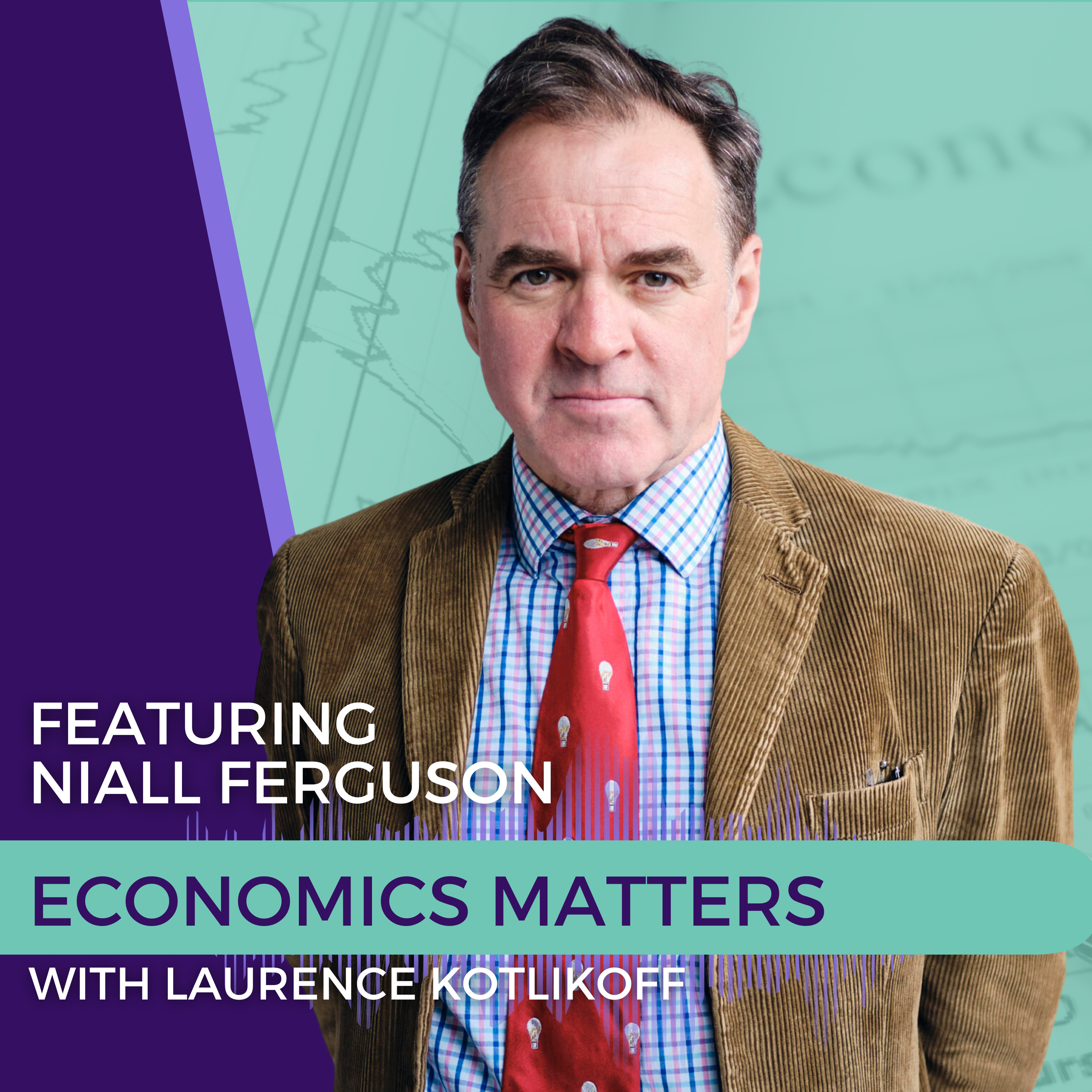 Why Putin Can't Win, China Won't Fold, and Trump Is Running Out of Options 06.08.2026 1u 8minWhat if the three most dangerous regimes on earth — Russia, China, and Iran — are all weaker than they appear, and yet America is still losing ground to all three at once?Sir Niall Ferguson has spent a career studying how empires rise, overreach, and fall. He watched the Soviet Union collapse from the inside out while everyone in Washington assumed it would last forever. He's been warning about China's hidden fragility for years while the consensus said otherwise. Currently, he's watching the United States make the most conventional mistake of Donald Trump's entire political career: getting bogged down in the Middle East on the side of Israel, just like George W. Bush before him.Professor Kotlikoff and his old friend have a wide-ranging, rapid-fire conversation covering the real state of the Iran conflict, why a Taiwan semiconductor crisis is the single biggest threat to the world economy in the next two years, why Putin cannot win in Ukraine and knows it, why nuclear weapons won't be used, what Ferguson would actually tell Trump to do right now, and whether American universities brought the current backlash on themselves.What You'll Learn:[00:11:45] Why this is not World War III[00:13:50] The "American Suez" framework[00:17:00] Why there is no great military option left[00:19:15] The desalination plant vulnerability[00:22:00] The missile economics problem[00:25:00] The authoritarian axis[00:31:53] How the regime change in Iran already happened[00:34:15] Ferguson's actual policy prescription[00:45:11] Why Ferguson doesn't think China will overtake the United States[00:45:33] Cold War II and the Cuban Missile Crisis parallel [00:47:01] Why Russia is no longer a great power[00:48:00] Why Putin won't use nuclear weapons[00:53:35] The optimistic scenario[00:56:29] The university debate [01:01:26] The 75% to 35% collapse Sir Niall Ferguson is the Milbank Family Senior Fellow at the Hoover Institution at Stanford University and Senior Faculty Fellow at the Belfer Center at Harvard. He holds a DPhil from Oxford University and has taught at Oxford, Cambridge, Harvard, and Stanford. He is the author of 16 books including The Ascent of Money, Civilization: The West and the Rest, The Great Degeneration, Doom: The Politics of Catastrophe, and the two-volume biography Kissinger (volume two forthcoming). He was knighted in 2023. He writes regularly for The Free Press and Bloomberg.Resources Mentioned:The Ascent of Money: A Financial History of the World — Ferguson's recommended starting point for an economics audience, now in a 10th anniversary edition:https://www.amazon.com/Ascent-Money-Financial-History-World/dp/0143116177The Great Degeneration: How Institutions Decay and Economies Die — the book most directly influenced by Kotlikoff's generational accounting work:https://www.amazon.com/Great-Degeneration-Institutions-Decay-Economies/dp/1594205450Doom: The Politics of Catastrophe:https://www.amazon.com/Doom-Politics-Catastrophe-Niall-Ferguson/dp/0593297377Kissinger: 1923-1968: The Idealist — volume one of the biography Ferguson is still completing:https://www.amazon.com/Kissinger-1923-1968-Idealist-Niall-Ferguson/dp/0143109758Full Niall Ferguson book catalog:https://www.amazon.com/Niall-Ferguson/e/B000APQ8G0"How to Stop Iran from Winning the War" by Ferguson, Haass, and Zelikow — the Strait of Hormuz Authority proposal referenced in the episode, published in The Free Press, April 13, 2026:https://www.thefp.com/p/how-to-stop-iran-from-winning-the-warNiall Ferguson at The Free Press: https://www.thefp.comKarim Sadjadpour at The Atlantic — Ferguson's recommended source on contemporary Iran:https://www.theatlantic.com/author/karim-sadjadpour/Economics Matters Substack (Larry Kotlikoff): https://larrykotlikoff.substack.comDisclaimer: Any opinions expressed on Economics Matters are those of the authors and guests. These are not the opinions of Boston University or Economic Security Planning, Inc.
 -
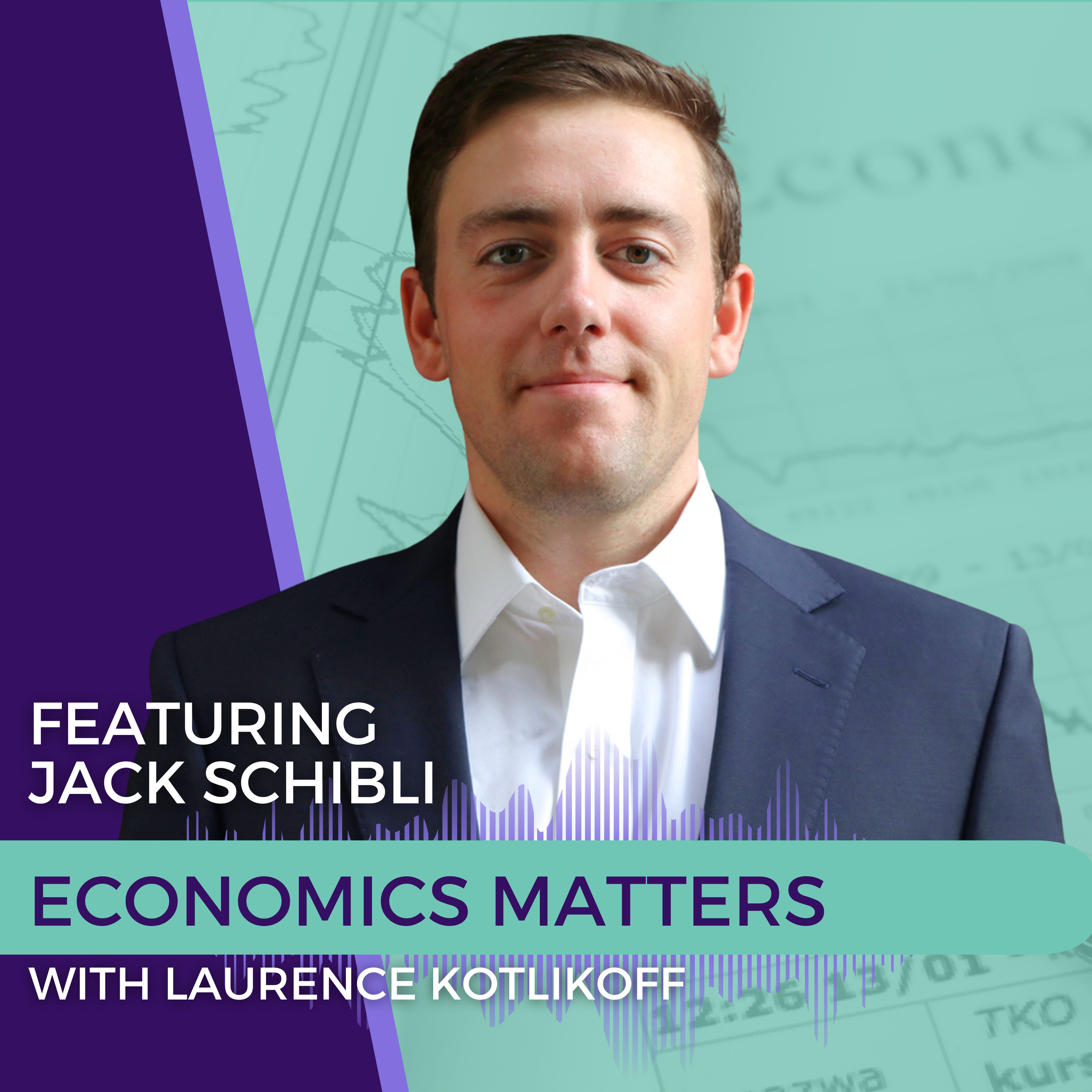 The Illiquid Jenga Tower: Inside the Private Credit Timebomb Nobody's Talking About 02.08.2026 1u 16minWhat if the passive investing revolution (the idea that just buying the index and holding is the smartest thing most people can do) has quietly turned into something that no longer resembles the efficient market it was designed to track?Every month, $33 billion flows automatically from 401(k) contributions into U.S. equity index funds. That money doesn't stop to ask whether Nvidia is fairly valued. It doesn't check whether 50% of the S&P 500 being tied to AI makes sense. It just buys, systematically and relentlessly, concentrating more and more capital into fewer and fewer companies — and in doing so, may be inflating the very market it's supposed to passively reflect.Professor Kotlikoff sits down with Jack Schibli, principal at Lane Generational, for a wide-ranging conversation about the structural changes quietly reshaping the U.S. stock market. From the mechanics of passive investing to the fragility of private credit, the vulnerability of the insurance industry, and the real competitive threat of Chinese AI to the trillion-dollar data center build-out Wall Street is betting on.This is original, ground-level analysis from an investor who's doing the work most institutional researchers aren't.What You'll Learn:[00:08:06] The "Illiquid Jenga Tower" — Jack's original deep dive into the fragility of private credit[00:12:20] Why the insurance industry could be the next AIG[00:15:01] The redemption gate hiding in plain sight inside private credit funds[00:19:19] What would actually need to happen for a systemic market event[00:35:33] The illusion of diversification inside your index fund[00:37:30] Why China is winning the AI cost war[00:42:56] The IP transfer problem nobody's discussing[00:46:49] How passive investing mechanically inflates valuations[00:47:44] Apple's $1.46 trillion buyback problem[00:51:18] The inelasticity trap — and why it only gets worse[00:54:35] The pod shop dynamic: 440% leverage and no long-term thinking[00:58:25] How retail investors became 20% of daily trading volume[01:02:51] Palantir at 310x earnings — and Lululemon's collapse in reverse[01:10:28] The causal chain that's flipped: the market is now running the economy[01:12:05] The Bessent paradox — criticizing Yellen for exactly what he's now doingFeatured GuestJack Schibli is a principal at Lane Generational, an independent registered investment advisor accessible through Fidelity Investments. He studied economics with a minor in computer science at Middlebury College, trained as a competitive ski racer, and began his career working with Lane Generational co-founder Fred Lane at Raymond James. He writes a quarterly investment research blog at lanegenerational.com/insights, known for its original structural analysis of market dynamics, private credit, and AI-driven disruption. His recent pieces include "Poker Face," "The Illiquid Jenga Tower," and several widely circulated posts on passive investing mechanics.Resources MentionedLane Generational — Jack Schibli and Fred Lane's independent RIA, accessible through Fidelity Investments: lanegenerational.comLane Generational Insights Blog — Jack's quarterly research pieces, including "Poker Face" and "The Illiquid Jenga Tower": lanegenerational.com/insightsDisclaimer: Any opinions expressed on Economics Matters are those of the authors and guests. These are not the opinions of Boston University or Economic Security Planning, Inc.Lane Generational is an SEC Registered Investment Advisor. The information provided is for educational and informational purposes only and does not constitute investment advice, and it should not be relied on as such. It should not be considered a solicitation to buy or an offer to sell a security. I, Larry Kotlikoff, am an investor with Lane Generational. This is not an endorsement, and I am not compensated by Lane Generational.
 -
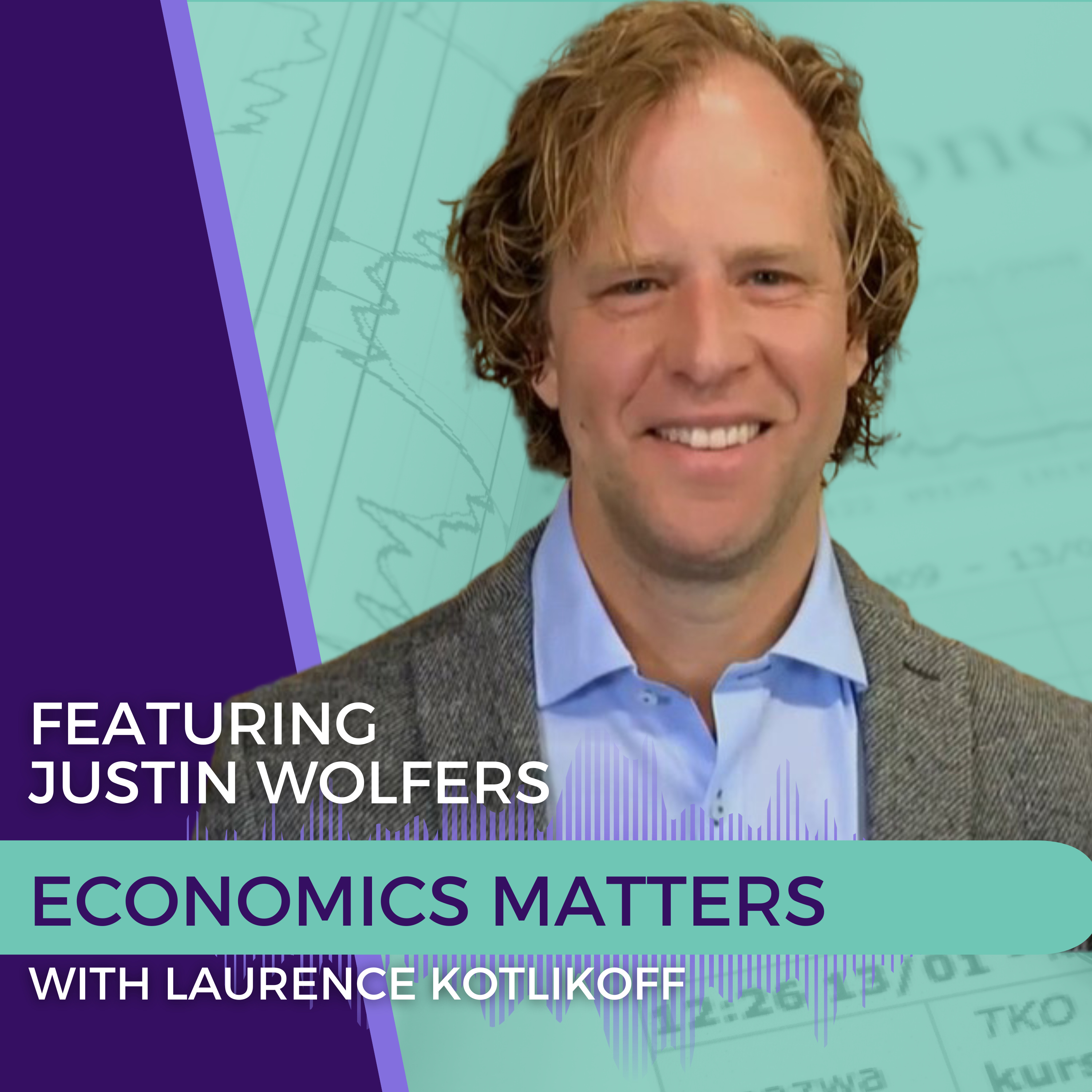 Why the Most Important Economic Story of Our Time Isn't the Tariffs — It's the Institutions 31.07.2026 1u 9minWhat if one of the most famous and widely cited findings in modern economics (that money doesn't really make you happier) turned out to simply be wrong? And what does the economist who proved it wrong have to say about where America is heading next?Justin Wolfers is not a typical economist. He's written landmark papers on happiness, divorce, racial discrimination in NBA officiating, corruption in college basketball, gender and wages, prediction markets, and the political economy of elections. He runs one of the most widely read economics Substacks on the internet, co-authored a leading undergraduate economics textbook, and once showed Danny Kahneman data that changed the Nobel laureate's mind on a question he'd spent decades answering.In this episode, Professor Kotlikoff sits down with the University of Michigan professor for a wide-ranging conversation that moves from the science of happiness to the economics of marriage and divorce, the crisis facing young men, the future of American institutions under pressure, and a closing argument for why — despite everything — there has never been a better time to be alive.What You'll LearnWhat You'll Learn:[00:09:03] Why Gary Becker is the most important economist of the 20th century[00:17:51] The radical idea that economists should tell people what to do [00:20:00] The ice cream story that turned Justin into a behavioral economist [00:34:57] Why your grandmother said "opposites attract" — and why she was wrong [00:37:54] The divorce statistic nobody is talking about [00:40:05] Why the 1950s marriage model was the historical anomaly, not the norm[00:42:01] The Easterlin Paradox — and why it was wrong[00:58:21] The 60/40 gender split in college enrollment [01:01:16] Is there a crisis of masculinity?[01:04:48] Why attacking institutions is the most dangerous economic move America can make[01:06:51] The optimist's closing argument [01:08:32] Why Justin named his Substack "Platypus Economics" Resources Mentioned:Platypus Economics — Justin Wolfers's Substack, with a simple mission: teach the world economics in an accessible way that helps us all collectively understand it better:https://newsletter.platypuseconomics.comPrinciples of Economics (3rd Edition) by Betsey Stevenson and Justin Wolfers — Amazon: https://www.amazon.com/Principles-Economics-Betsey-Stevenson/dp/1429237864Justin Wolfers's full research catalog — available at the National Bureau of Economic Research:https://www.nber.org (search "Justin Wolfers")Of Boys and Men: Why the Modern Male Is Struggling, Why It Matters, and What to Do About It by Richard V. Reeves — a Book of the Year according to The New Yorker and The Economist, and included in President Obama's 2024 summer reading list, tackling the structural challenges facing boys and men in education, the workplace, and family life:https://www.amazon.com/Boys-Men-Modern-Struggling-Matters/dp/0815739877Featured GuestJustin Wolfers is a professor of economics and public policy at the University of Michigan, a research associate of the National Bureau of Economic Research, a non-resident senior fellow at the Brookings Institution and the Peterson Institute for International Economics, and a visiting professor of economics at the University of Sydney. He earned his PhD from Harvard University and his undergraduate degree from the University of Sydney, where he won the University Medal. Named by the IMF as one of the 25 economists under 45 shaping how we think about the global economy, he is the co-author of a leading undergraduate economics textbook and the author of the widely read Substack Platypus Economics.Disclaimer: Any opinions expressed on Economics Matters are those of the authors and guests. These are not the opinions of Boston University or Economic Security Planning, Inc.
 -
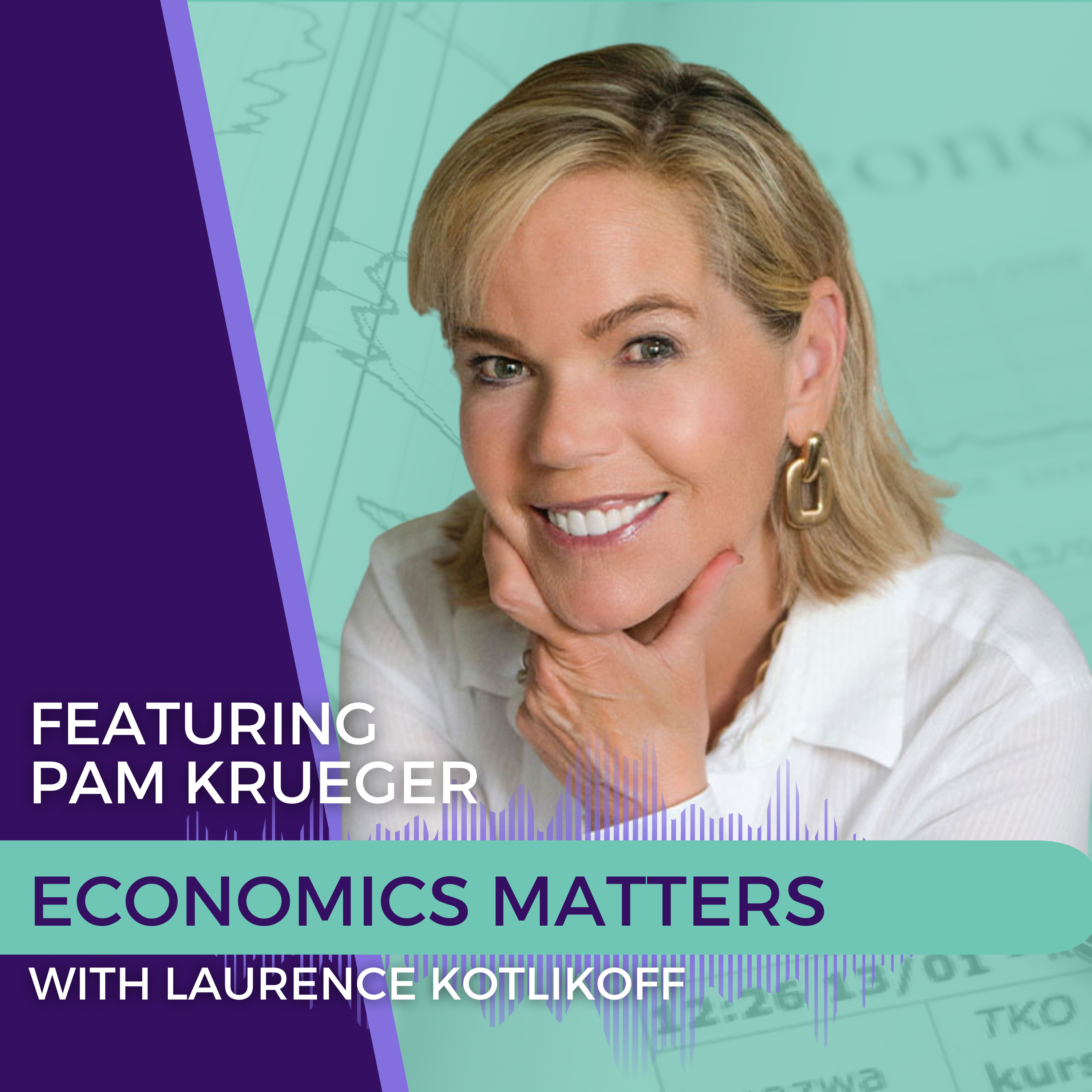 Social Security Is Broke. Here's What That Actually Means for Your Check 29.07.2026 59minThe headlines say Social Security is running out of money. But what if the real numbers are actually far worse than what the headlines are showing you, and the trustees' report is burying the truth in an appendix table that almost nobody reads?The 2026 Social Security Trustees Report just dropped, and the media coverage has been loud, alarming, and, still understating how serious the problem actually is. In this Substack Live conversation, personal finance journalist and retirement specialist Pam Krueger sits down with Professor Kotlikoff to cut through the noise, decode the actual math, and answer the question every pre-retiree and current beneficiary is asking: what does this mean for me?This is not a doom-and-gloom session. It is a clear-eyed, numbers-first look at what the system is, why it is broken, what fixing it would actually require, and what you can do right now to protect yourself.What You'll Learn:[00:06:26] The table buried in the Trustees Report that tells the real story — Table VI F1, hidden deep in the appendix, reveals the system needs a 46% payroll tax hike, not the 22% benefit cut the headlines are running with[00:08:54] The difference between the 2032 cash flow problem and the real, permanent problem — why the 22% cut number is actually the short-term version, and the true immediate fix requires a 31% permanent benefit cut starting today[00:10:01] Will Social Security checks actually stop? — the straight answer, with context on what "enough money to pay 70% of benefits forever" actually means for your household[00:12:11] How the pay-as-you-go system actually works — a plain-language breakdown of FICA taxes, covered earnings, the trust fund checking account, and why the demographics have turned against the whole structure[00:16:00] Why fertility rates are at the heart of this crisis — the U.S. fertility rate has dropped from 2.1 to 1.59, and what that means for the number of workers available to fund your retirement[00:17:23] The Ponzi scheme history nobody taught you — how every president from Eisenhower to Nixon took turns goosing benefits when the baby boom made it look affordable, and locked in promises the system can no longer keep[00:25:44] What younger workers should actually expect — Social Security will likely exist, but the tax burden on younger generations is the real threat, not elimination of the program[00:34:39] Why simply lifting the payroll tax ceiling is not the silver bullet it sounds like — and who actually gets caught in the crossfire[00:43:00] Larry's Personal Security Account proposal — a Singapore-style fully funded replacement for the current system, modeled on what major U.S. corporations did when their own pension Ponzi schemes ran dry in the 1970s and 80s[00:51:54] The three radical fixes that could actually work — reform Social Security at its core, adopt a Scandinavian-style healthcare system, and overhaul the tax structure. Tweaks will not cut it.Featured Guest:Pam Krueger is a personal finance journalist, entrepreneur, and co-host of the podcast Friends Talk Money with Terry Savage and Richard Eisenberg. Her Substack, Count Up with Pam Krueger, focuses on practical retirement preparation for people in the years leading up to retirement.Economics Matters: The Podcast is hosted by Larry Kotlikoff, Professor of Economics at Boston University.Disclaimer: Any opinions expressed on Economics Matters’ episodes are those of the authors and guests. These are not the opinions of Boston University or Economic Security Planning, Inc.
 -
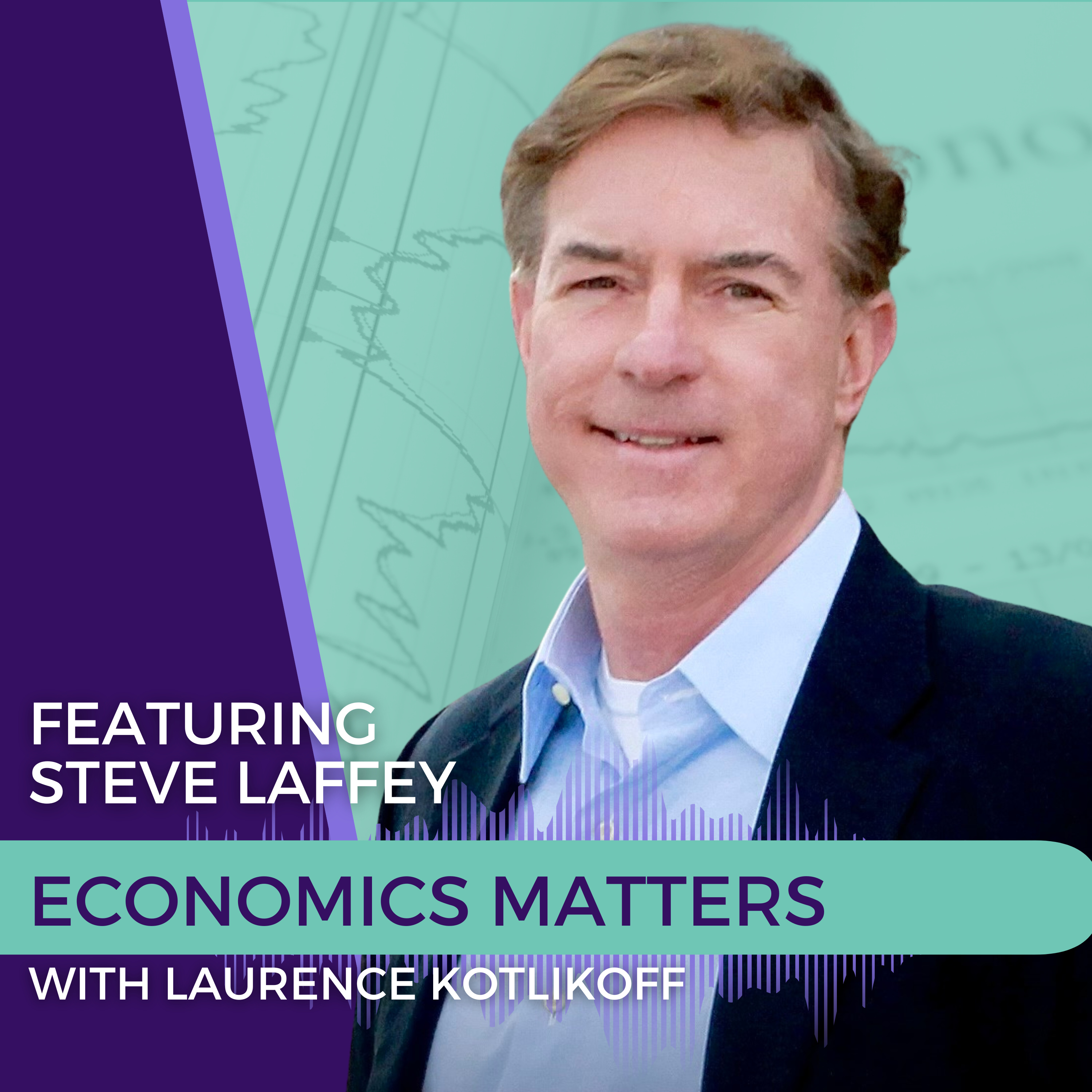 The Man Who Beat Goldman Sachs at Stock Picking — From a Trading Desk in Memphis 23.07.2026 1u 21minWhat does it actually take to consistently beat the market when 90% of professional fund managers can't, and what is a Wall Street veteran seeing right now that has him warning ordinary investors to get off margin immediately?Steve Laffey has lived several lives in one. Raised in genuine poverty in Cranston, Rhode Island, he earned his way to Bowdoin College and Harvard Business School, landed on a trading desk at PaineWebber surrounded by guys with names ending in vowels, survived the crash of '87 up close, built Morgan Keegan into the most respected stock picking shop in the country according to the Wall Street Journal, returned to Cranston to become a two-term Republican mayor of a Democrat city, ran for president in the last election, and has spent the intervening years quietly running what he calls "the hedge fund I never started."In this episode, Professor Kotlikoff sits down with Laffey for a wide-ranging, story-driven conversation on how great investing actually works. The gut instincts, the discipline, the hard lessons, and the very specific warning signs he is watching right now in the current market.This is not theory. Every lesson in this episode comes with a story.What You'll Learn:[00:11:22] Lesson 1: "Eat like an elephant, poop like an ant" — ride your winners hard, but cut losers immediately and without emotion, no matter how right you think you are[00:13:08] Lesson 2: Never use margin — margin debt in the U.S. stock market has just hit an all-time high, and Laffey's single most urgent message is: get off margin now[00:29:36] Lesson 3: Crashes don't happen from all-time highs — they happen after a selloff has already begun and people panic, a pattern Laffey has watched repeat across four decades[00:43:36] Why Laffey doesn't own ETFs — when every stock moves together because of passive fund flows, being right about a company doesn't protect you from the market going down[00:51:54] The 15-stock rule that beat Goldman Sachs — why concentration and personal accountability beat committee-driven diversification every time, and why past 15 stocks you're just buying noise[00:45:00] The A2 Milk story — how a cattle show in Colorado, a book called "The Devil's in the Milk," and a hunch about Chinese baby formula led to buying a New Zealand stock at 20 cents and selling it at $9[01:00:32] The Galaxy Digital play — how Laffey found a Bitcoin company trading at 60 cents with $1.20 of Bitcoin on its balance sheet, on an exchange most U.S. institutions legally couldn't access[01:02:10] Why you should never watch CNBC — and what it means when a network that hated Bitcoin suddenly loves it[01:06:09] The Jim Cramer contrarian indicator — when Cramer declared oil "uninvestable," energy was at 3% of the S&P, its all-time low. Laffey bought. He made a lot of money.[01:16:33] The single most important thing to do with your portfolio right now — get off leverage, know your age, and never put yourself in a position where a 50% drawdown changes how you liveFeatured Guest:Steve Laffey is a former Wall Street trader and investment banker, one-time head of Morgan Keegan's nationally ranked stock research operation, two-term Republican mayor of Cranston, Rhode Island, author of Primary Mistake, and 2024 Republican presidential primary candidate. He has been a practicing private investor since leaving institutional finance and is a frequent public speaker on fiscal reform, investing, and American economic policy.Economics Matters: The Podcast is hosted by Larry Kotlikoff, Professor of Economics at Boston University.Disclaimer: Any opinions expressed on Economics Matters’ episodes are those of the authors and guests. These are not the opinions of Boston University or Economic Security Planning, Inc.
 -
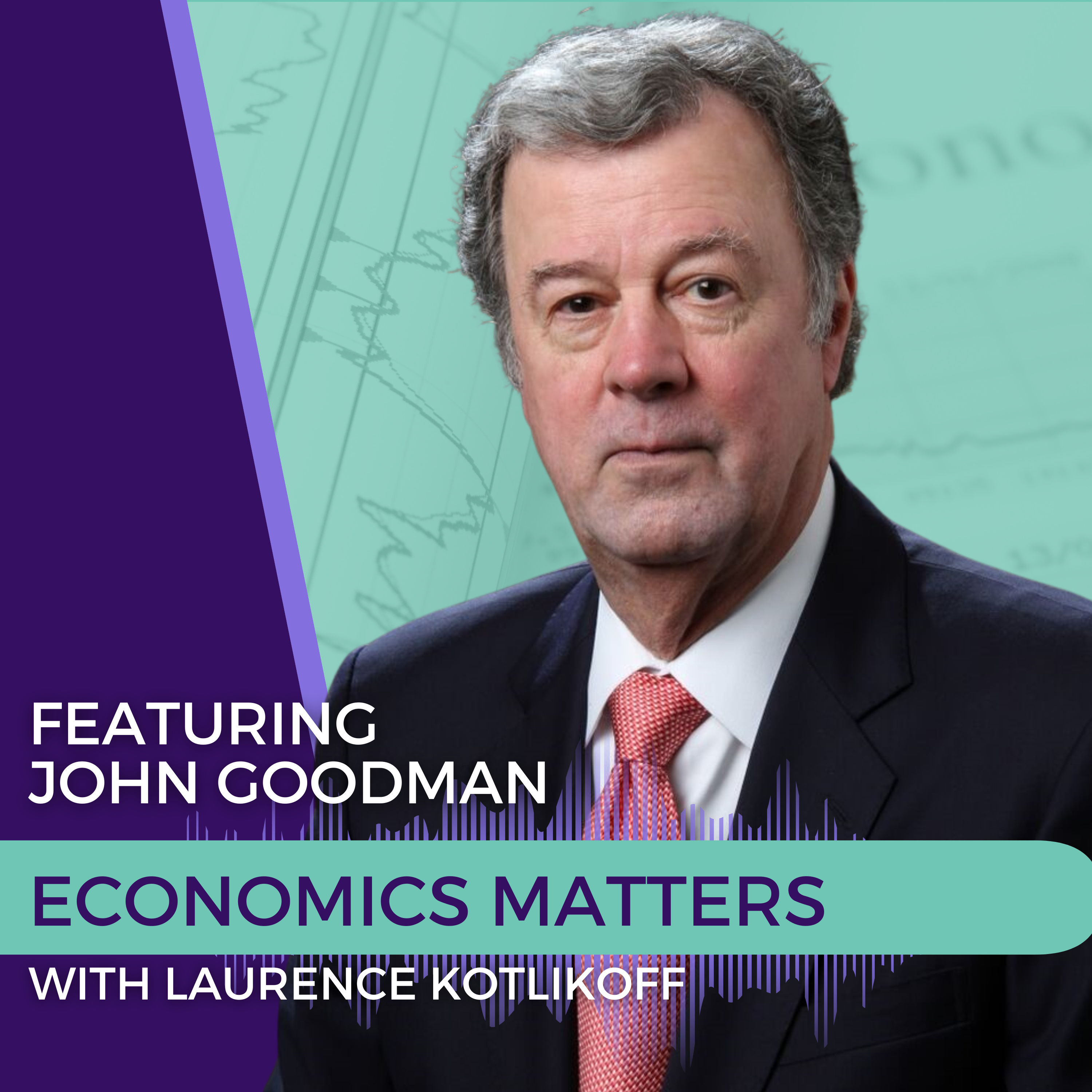 The Man Who Invented the HSA Thinks We're Still Doing Healthcare All Wrong 09.07.2026 59minWhat if the most powerful tax-advantaged account in your financial life was designed by one economist with a better idea, and the full version of that idea was never actually implemented?You've probably heard of the Health Savings Account. You may even have one. But the man who invented it says the version Congress passed is a watered-down shadow of what it could be. And that's just the beginning of what's broken.In this episode, Larry Kotlikoff sits down with Dr. John Goodman, the Wall Street Journal's "father of HSAs," author of 16 books, Bill Buckley's primetime debate partner, and one of the four most influential figures in post-war American healthcare policy. This is a high value conversation between two economists who've spent careers trying to fix the same broken system with notably different tools.What You'll Learn:[00:09:06] The HSA origin story — how a Cato Institute assignment in 1990 produced the idea now powering 37 million accounts, and why every special interest in Washington opposed it[00:10:13] The design flaw Congress built in from day one — and what a "Roth HSA" would actually look like[00:19:16] Why Medicaid patients visit the ER 40% more after enrolling — and the HSA-based fix that hospital lobbyists killed before it got a hearing[00:34:43] The LASIK principle — why cosmetic surgery gets cheaper and better every year while everything else in medicine doesn't, and what that tells us about markets[00:36:24] The California reference pricing experiment — how one insurer drove hip replacement costs from $100,000 down to $30,000 statewide in just over a year[00:44:51] Why your employer plan was designed, possibly by accident, to attract healthy people and repel sick ones[00:21:17] The Columbia dissertation that caused a near-riot — Goodman's economic theory of democratic decision-making that predicted exactly why healthcare reform is nearly impossible[00:50:33] The Social Security and Medicare crisis Congress discusses privately but won't touch publicly — and why seniors must see something in it for themselves before any reform can happenFeatured Guest:Dr. John Goodman is president and CEO of the Goodman Institute and Senior Research Fellow at the Independent Institute. He is credited by the Wall Street Journal as the father of Health Savings Accounts and one of the four most influential figures in post-war American healthcare. Author of 16 books including Priceless and Patient Power (300,000 copies sold), he appeared approximately two dozen times as Bill Buckley's debate partner on PBS Firing Line.Resources Mentioned:Priceless: Curing the Healthcare Crisis: amazon.comPatient Power: amazon.comA Better Choice: Healthcare Solutions for America: amazon.comThe Goodman Institute: goodmaninstitute.orgFull John Goodman book catalog: amazon.com/authorEconomics Matters Substack: larrykotlikoff.economicsmatters.comEconomics Matters: The Podcast is hosted by Larry Kotlikoff, Professor of Economics at Boston University.Disclaimer: Any opinions expressed on Economics Matters’ episodes are those of the authors and guests. These are not the opinions of Boston University or Economic Security Planning, Inc.
 -
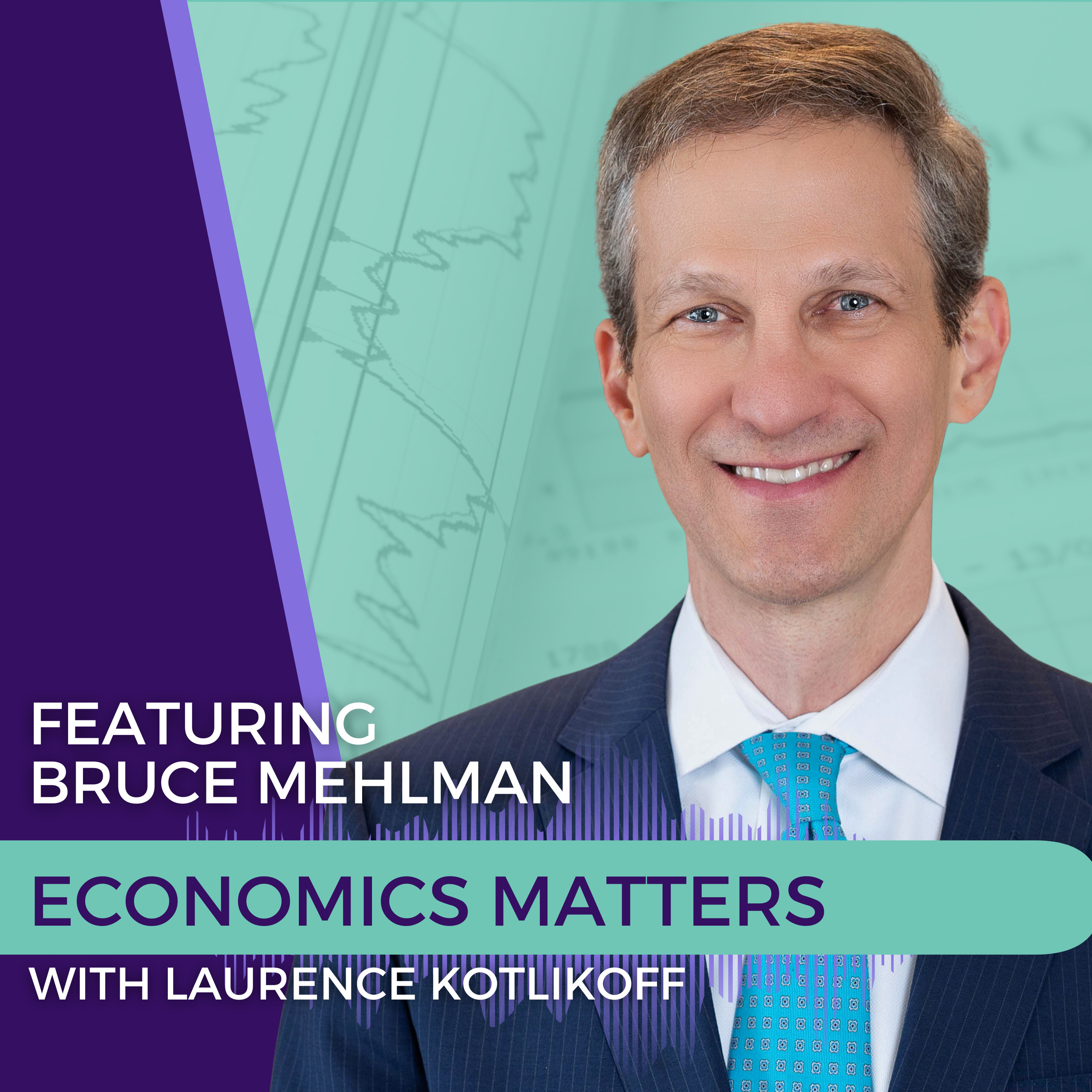 "We're Running a 20th Century Operating System on a 21st Century Economy — And It's Crashing" 02.07.2026 1u 5minWhat happens when five completely unrelated thinkers, writing across five different decades, all point to the exact same moment in history as a coming crisis point...and that moment is now?Samuel Huntington, Neil Howe, Ray Dalio, George Friedman, and Peter Turchin never collaborated. All of them landed on the 2020s. In this episode, Larry Kotlikoff sits down with Bruce Mehlman — founder of Mehlman Consulting, former Assistant Secretary of Commerce for Technology Policy under George W. Bush, and author of the widely-read Substack Age of Disruption, for a conversation covering geopolitical aftershocks, political polarization, AI's economic risk, and whether the median American worker has gained any ground in fifty years.What You'll Learn in This Episode:[00:08:05] What the Iran conflict revealed about global supply chain fragility — and the permanent changes companies are making now[00:11:43] The "mid-2020s crisis" convergence — five major historical frameworks, developed independently, all pointing to right now[00:15:39] Why 11 of the last 13 federal elections have been "change" elections — up from just 3 of 10 in the 1960s and '70s[00:21:02] The staggering partisan perception gap — how badly Republicans and Democrats misjudge what the other side actually looks like[00:31:02] A sharp disagreement over whether AI is overhyped — Larry argues AI gets deterministic financial questions catastrophically wrong; Bruce pushes back with the early-aviation analogy[00:40:52] The "servant economy" concern — whether AI eliminates good middle-management jobs while leaving low-wage service work behind[00:48:38] A Social Security trustees report most people missed — the program is now 46% underfunded, requiring a payroll tax hike from 12.4% to 18.1% just to keep pace[00:27:30] The gut-punch question from The 5 Types of Wealth — how many more times will you actually see your aging parents?Featured Guest:Bruce Mehlman is the founder of Mehlman Consulting, a bipartisan firm that helps Fortune 500 companies and startups navigate policy and political risk. He previously served as Assistant Secretary of Commerce for Technology Policy under President George W. Bush and held roles at Cisco Systems, the U.S. House of Representatives, and a Washington law firm. He is the executive director of the Technology CEO Council and publishes the widely-read weekly Substack Age of Disruption, known for its data-driven infographics on political and technological trends, regularly cited by The Washington Post, Axios, Politico, CNN, Bloomberg, and Fox News.Resources Mentioned:Bruce Mehlman's Age of Disruption - https://brucemehlman.substack.com/ Six-Chart Sunday (#100) - How to Navigate an Age of Disruption" — https://brucemehlman.substack.com/p/six-chart-sunday-100-how-to-navigate "Six-Chart Sunday – Stuck" - https://brucemehlman.substack.com/p/six-chart-sunday-stuck The Storm Before the Calm by George Friedman - https://www.amazon.com/Storm-Before-Calm-Americas-Discord/dp/0385540493The Fourth Turning by Neil Howe - https://www.amazon.com/Fourth-Turning-American-Prophecy-Rendezvous/dp/0767900464Changing World Order by Ray Dalio - https://www.amazon.com/Changing-World-Order-Nations-Succeed/dp/1982160276The 5 Types of Wealth by Sahil Bloom - https://www.amazon.com/Types-Wealth-Transformative-Guide-Design/dp/059372318XThe Vertigo Years by Philip Blom - https://www.amazon.com/Vertigo-Years-Europe-1900-1914/dp/0465020291Larry Kotlikoff's Substack, Economics Matters (link: larrykotlikoff.economicsmatters.com)
 -
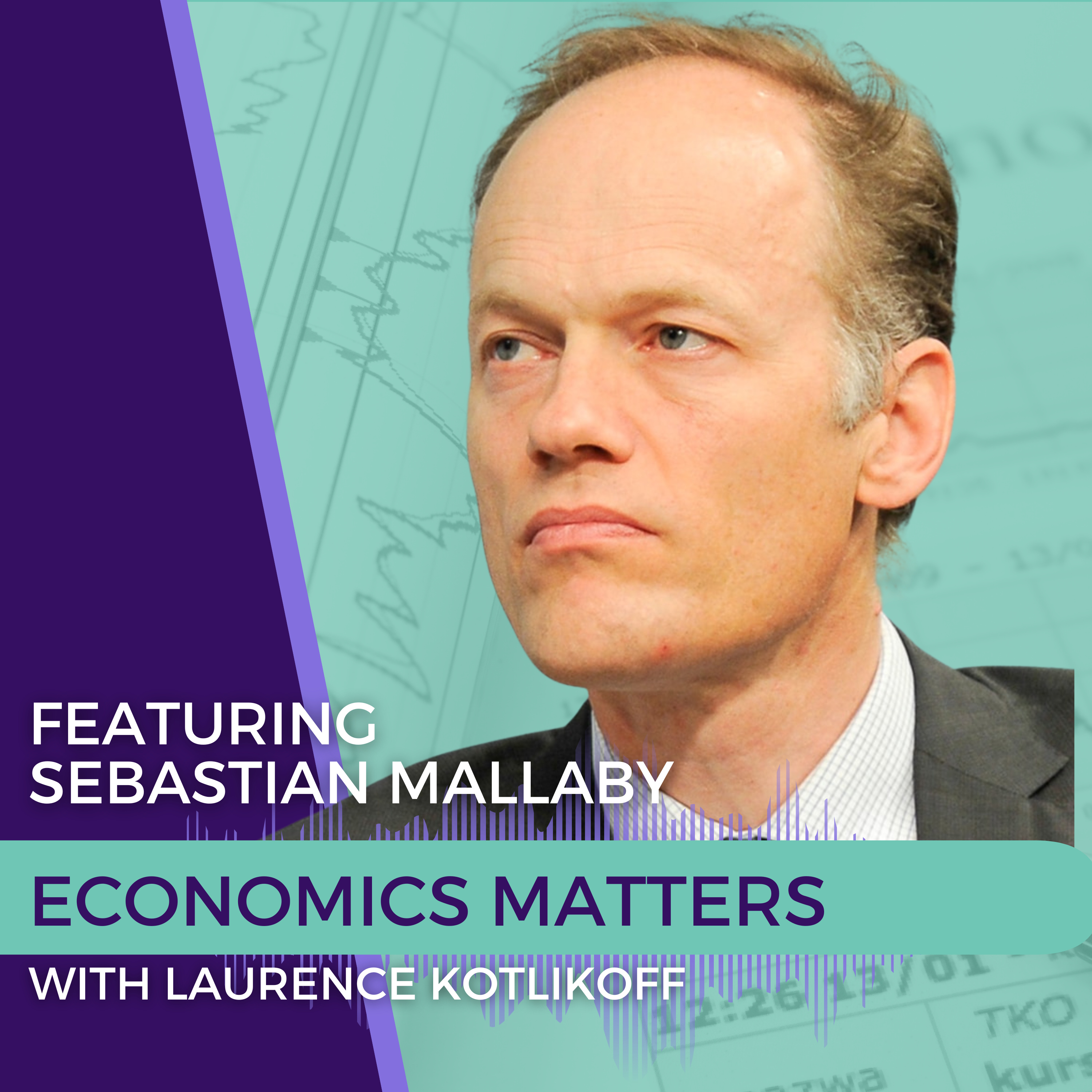 The Man Who Turned Down $1.3 Million to Stay in School — And Changed Medicine Forever 25.06.2026 1u 20minWhat does it actually take to solve a scientific puzzle that stumped researchers for fifty years — and why are the same AI tools that cracked it still getting basic financial math catastrophically wrong?In 2024, Demis Hassabis won the Nobel Prize in Chemistry for something that sounds almost too ambitious to be real: teaching artificial intelligence to predict the three-dimensional shape of any protein, a problem that had resisted traditional science for half a century. The breakthrough, called AlphaFold, has already mapped over 200 million proteins, a feat with profound implications for how we understand and treat disease.In this episode, Larry Kotlikoff sits down with Sebastian Mallaby, the New York Times bestselling author and veteran journalist behind The Infinity Machine, his deeply reported new biography of Hassabis and the rise of DeepMind. Mallaby walks through the improbable arc of Hassabis's career - from chess prodigy to video game programmer to the architect of some of the most consequential AI breakthroughs of the last decade. Then turns to a sharper, more urgent question: what can AI actually be trusted to get right, and where does it quietly, confidently fail?What You'll Learn:[00:32:01] The $1.3 million check Demis Hassabis turned down — and why he chose to study computer science instead of cashing in on his teenage video game fortune[00:33:00] Why AI was considered a dead field as recently as 2012 — and how Hassabis convinced Peter Thiel to fund a company built on a technology that, at the time, couldn't do much of anything[00:34:05] What "agentic AI" actually means — and how DeepMind's early systems learned to master Atari games through pure trial and error, years before "agentic" became a buzzword[00:35:08] Reinforcement learning vs. deep learning, explained simply — the difference between an AI that learns from reading and one that learns from doing[00:43:56] How neural networks actually work — a plain-language breakdown of "weights," layers, and how a system tweaks itself toward a correct answer through millions of small adjustments[00:41:00] Why AI is fundamentally inductive, not deductive — and why that distinction explains both its remarkable strengths and its most dangerous blind spots[01:04:57] How AlphaFold's protein-folding breakthrough connects directly to disease research — including new frontiers in understanding conditions like Parkinson's[01:05:59] Inside Isomorphic Labs — Hassabis's newest venture, aimed at using AI to dramatically accelerate (not replace) the drug discovery pipeline[01:16:00] Why AI tools are getting deterministic financial questions wrong — Larry's own real-world tests show major AI models disagreeing wildly on life insurance needs, optimal savings, and Roth conversion strategy, even though these problems have one mathematically correct answer[01:12:43] What this means for the future of work — a candid exchange on AI adoption timelines, productivity's "jagged edge," and whether human labor markets have time to adjustFeatured Guest:Sebastian Mallaby is an award-winning journalist and author of six books, including the New York Times bestseller The Infinity Machine: How an AI Pioneer Reshaped the Future, as well as The Power Law: Venture Capital and the Making of the New Future and More Money Than God. A former correspondent for The Economist and longtime member of the Washington Post editorial board. He co-hosts the podcast The Spillover with Rebecca Patterson of the Council on Foreign Relations.
 -
 The Regime We Were Supposed to Topple Just Got Stronger 25.06.2026 1u 7minWhat if everything you've been told about the new Iran deal — and what "winning" the war even meant — is built on a comparison that doesn't hold up, and a strategic outcome that's the opposite of what most commentators are claiming?A 14-point memorandum is about to be signed in Switzerland, and the headlines are already calling it weaker than the 2015 Obama-era nuclear deal that Trump once tore apart. But according to Adam Garfinkle - veteran foreign policy analyst, former editor of The American Interest, and author of the forthcoming book The Age of Spectacle - that comparison is fundamentally misleading. The real story is stranger, more consequential, and far more relevant to your daily life than a nuclear negotiation: it's about what happens to a society that has stopped reading, stopped distinguishing fantasy from fact, and is now heading into midterm elections where the rules themselves may not hold.In this episode, Alex Kotlikoff sits down with Garfinkle to unpack the actual strategic outcome of the Iran conflict, why the regime may have emerged stronger rather than weaker, and how a deeper cultural shift (one Garfinkle has spent a career studying) is reshaping American democracy itself.[00:02:22] Why comparing this new Iran deal to the 2015 JCPOA is misleading — the contexts are not remotely the same, and treating them as equivalent distorts the real picture[00:06:39] How the Iranian nuclear program was actually crippled — not in the recent skirmishes, but in the "12-day war" of June 2025[00:09:13] The unintended consequence of targeting Iran's senior leadership — how the strikes may have produced a more nationalistic, more competent, and more entrenched regime rather than a weaker one[00:10:39] The psychological effect on ordinary Iranians — why surviving a massive US-Israeli attack has pushed many toward resignation rather than rebellion, delaying any hope of internal regime change[00:13:01] The "balance of interests vs. balance of power" principle — why raw military superiority doesn't determine outcomes, and how this echoes a lesson from Vietnam[00:29:00] Introducing "The Age of Spectacle" — Garfinkle's framework for understanding how digital technology is replacing shared reality with personalized fantasy[00:34:01] The "first post-literate American war" — how declining literacy has fundamentally changed the way Americans understand conflict, politics, and the world around them[00:40:28] The literacy statistic that explains a lot more than you'd think — an estimated 50-60% of American adults read at a sixth-grade level or below[01:04:00] What could happen to the 2026 midterms — the scenarios Garfinkle considers most plausible, including legal challenges to majority-minority districts and pressure campaigns at the local level[01:05:05] A possible fix already proven at the state level — how California depoliticized redistricting, and why Garfinkle supports a constitutional amendment banning gerrymandering nationwideAdam Garfinkle is a veteran international affairs analyst and writer, formerly the founding editor of The American Interest and a longtime contributor to U.S. foreign policy discourse. He publishes regularly on Substack at The Raspberry Patch, where he has written extensively on the Iran conflict since its outset. His forthcoming book, The Age of Spectacle, examines how communications technology has reshaped American political consciousness from the Korean War to the present day.The Raspberry Patch — Adam Garfinkle's Substack, including his ongoing series of essays on the Iran warThe Age of Spectacle — Garfinkle's forthcoming book on media, technology, and the erosion of shared reality (publication details pending)"Why Elite College Students Can't Read Whole Books" — referenced Atlantic article by Rose Horowitch on declining literacy among university studentsWhat You'll Learn in This EpisodeFeatured GuestResources Mentioned
 -
 The $83 Billion Scam Hidden Inside Medicare (And the Economist Who Proved It) 09.06.2026 58minWhat if the system designed to protect your health in retirement was actually engineered (from the inside) to profit from keeping you confused, underserved, and locked out of the care you've already paid for?You've spent decades paying into Medicare. You've done everything right. And yet, as you approach the years when healthcare matters most, the system greeting you on the other side is riddled with hidden traps, gaming, and a funding crisis that Washington refuses to look at directly.In this episode, Professor Kotlikoff talks with his Boston University colleague Dr. Randy Ellis, one of the world's foremost health economists and the architect of the very risk-adjustment formula that determines how much the government pays your Medicare Advantage plan. He literally built it. And he's saying it's being exploited in ways that are costing taxpayers $83 billion a year, with your care hanging in the balance.Time Stamped Learnings:[8:27] Why Medicare Advantage plans are paid billions more than they should be, and how insurance companies game the diagnostic coding system to pocket the difference[9:00] The "cherry-picking" crisis nobody in Washington wants to admit: how private health plans are specifically designed to attract healthy enrollees and quietly push sick ones back into traditional Medicare[10:24] Why the formula running your Medicare payments is 30 years old (built in the 1990s, implemented in 2002, and barely updated since) while insurance companies have decades of new data and technology to exploit every loophole[23:00] What Europe is doing right, and why countries like the Netherlands, Germany, and Belgium are delivering better health outcomes at nearly half the cost per GDP[41:14] The age-65 cliff that's trapping older Americans in jobs they don't want, just to hold onto insurance before Medicare kicks in, and a smarter way to phase that transition[39:16]The Ellis Plan: a bold, practical reimagining of how America could restructure its entire healthcare system (without starting a political war)[48:38] Why your kids and grandkids are the ones who will ultimately pay for every year we delay fixing this, and what the math actually looks like[54:46] The risk adjustment fix that could make insurance companies actually want to enroll sick people AND save Medicare billions in the processFeatured GuestDr. Randy Ellis is a Professor of Economics at Boston University, Past President of the American Society of Health Economists, and author of more than 150 academic papers and reports. With over 11,000 Google Scholar citations, he is best known for developing the HCC Risk Adjustment Formula — the model used to calculate Medicare Advantage (Part C), Medicare Part D, and Obamacare marketplace payments. His current research, developed alongside collaborator Dr. Arlene Ash, proposes a modernized risk adjustment framework that could save the Medicare program $83 billion annually.What You Walk Away WithAmerica spends over 18% of its GDP on healthcare, and is on a trajectory toward 20%. Sweden spends 11% and ranks 4th in the world for health outcomes. We rank 21st. This is policy failure compounded by decades of inaction, gaming, and a political culture too proud to look abroad for better answers. If you're approaching Medicare age, actively enrolled, or simply trying to understand why your premiums keep rising faster than inflation — this conversation is essential listening.
 -
 Are Netanyahu's Policies Reshaping Israel For the Better Or Worse? 21.05.2026 51minCan Israel reverse its political and social trajectory as elections approach amid ongoing wars and rising international isolation? Economics Matters co-host, Alex Kotlikoff, reunites with Israel's most influential and consequential economist, Eytan Sheshinski, to discuss Benjamin Netanyahu’s long tenure and the impact of his right-wing coalition. The discussion ranges over Israeli domestic policy, geopolitics, the Iran war, and the upcoming Israeli election. Additional talking points include:Polling that shows a narrow opposition edge that would end Netanyahu's 17-year run as Prime MinisterThe impact of prolonged conflict on hostages and society.A brain drain of about 80,000 people since October Economic strains from reservist mobilizationRising debt and deficitsGrowing official and unofficial boycotts affecting academia and Israel’s global standing. Israel-US relations, shifts in American Jewish and Democratic support, and campus antisemitism debatesPreventing Iran from acquiring nuclear weaponsHopes for regional change tied to government change.Time Stamps:00:00 Eytan's history and professional background01:27 Elections and Netanyahu03:02 Coalition and Ultra Orthodox10:54 Judicial Reform Protests12:45 Smotrich Ben Gvir Explained17:27 Cultural Decline Brain Drain21:37 War Economy and Boycotts28:28 Rightward Shift and History33:10 US Jewry and Campus Politics41:05 Iran War and Nuclear Threat47:40 Global Outlook US China NATO49:41 Closing Thoughts and Farewell
 -
 Andrew Fesiak's Update on the Ukraine War 08.05.2026 1u 3minAndrew Fesiak rejoins Economics Matters with reassuring news about the war in Ukraine. As I'm traveling in Europe until early June, my son and occasional co-host, Alex, interviews Andrew. This is Andrew's 6th appearance on Economics Matters. He is, as ever, fully up-to-date on what's happening for real in Ukraine. Indeed, our military and everyone in the Administration, particularly the President, would do well to watch this podcast. Ukraine, it seems, is acquiring more and better cards than Russia and doing so at an accelerating pace. Where and when this will end is largely in Putin's court. But, as Andrew points out, and which the Wall Street Journal confirmed the next day, Ukrainian drones and missiles are hitting Russia everywhere that Putin looks. And, as he looks, he realizes he can't hold the regular May Day parade, i.e., with scores of tanks, missiles, and other military equipment. Doing so risks their parade-time destruction. Imagine the message that would send to the World. Hence, as Andrew predicted and the Journal has since confirmed, May Day in Russia will be an equipment-less parade -- one that's as short as possible, permitting Putin to dive back into his bunker in record time. Andrew is Senior Consultant at Black Trident Defense and Security Group. He’s an expert on Ukrainian and Russian relations, politics, history, culture, and the ongoing war. Andrew has lived in Ukraine for decades, having emigrated from Canada. His grandparents and parents were Ukrainian (as was one of my grandfathers).
Vergelijkbare podcasts


Populair in
Deze podcast verschijnt ook in de podcastlijsten van deze landen.

