
Barbarians at the Gate
Barbarians at the Gate
0
A semi-serious deep dive into Chinese history and culture, broadcast from Beijing. Hosted by Jeremiah Jenne and David Moser, the show blends humor with historical insight to explore China's rich past and contemporary culture. It offers a unique outsider's perspective on the country's traditions, stories, and daily life.
Afleveringen
-
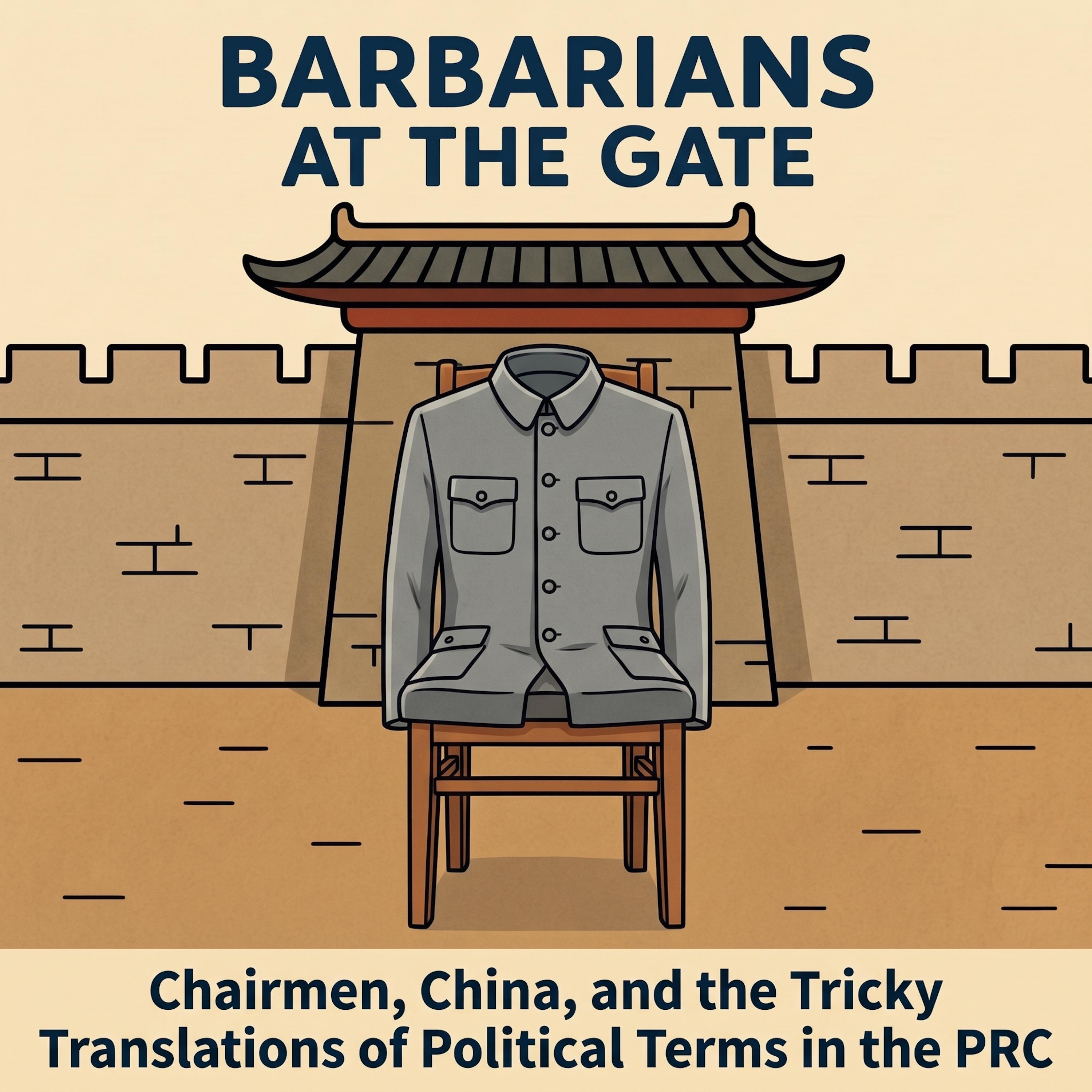 Chairmen, China, and the Tricky Translations of Political Terms in the PRC 24.09.2026 27minTwo older gentlemen with expanding waistlines, staggering daddy issues, and a shared love of firing military brass meet in DC this week. And right on cue, the pundits leap forward to pontificate on the most important issues facing Sino-US relations today: What is Xi Jinping’s title in English?Many bytes and keystrokes are spent in social media wars between those who insist that Xi Jinping be called General Secretary and those who feel that such pedantry is ideologically loaded panda poop.David is a linguist. Jeremiah is a historian. They put their heads together to discuss why people care so much about this issue (and the related kerfuffle over whether China is led by the CCP or the CPC) and to give their take on the meeting, the view from Beijing, and to wonder whether Xi Jinping — whatever his title — is smart to play the waiting game.
 -
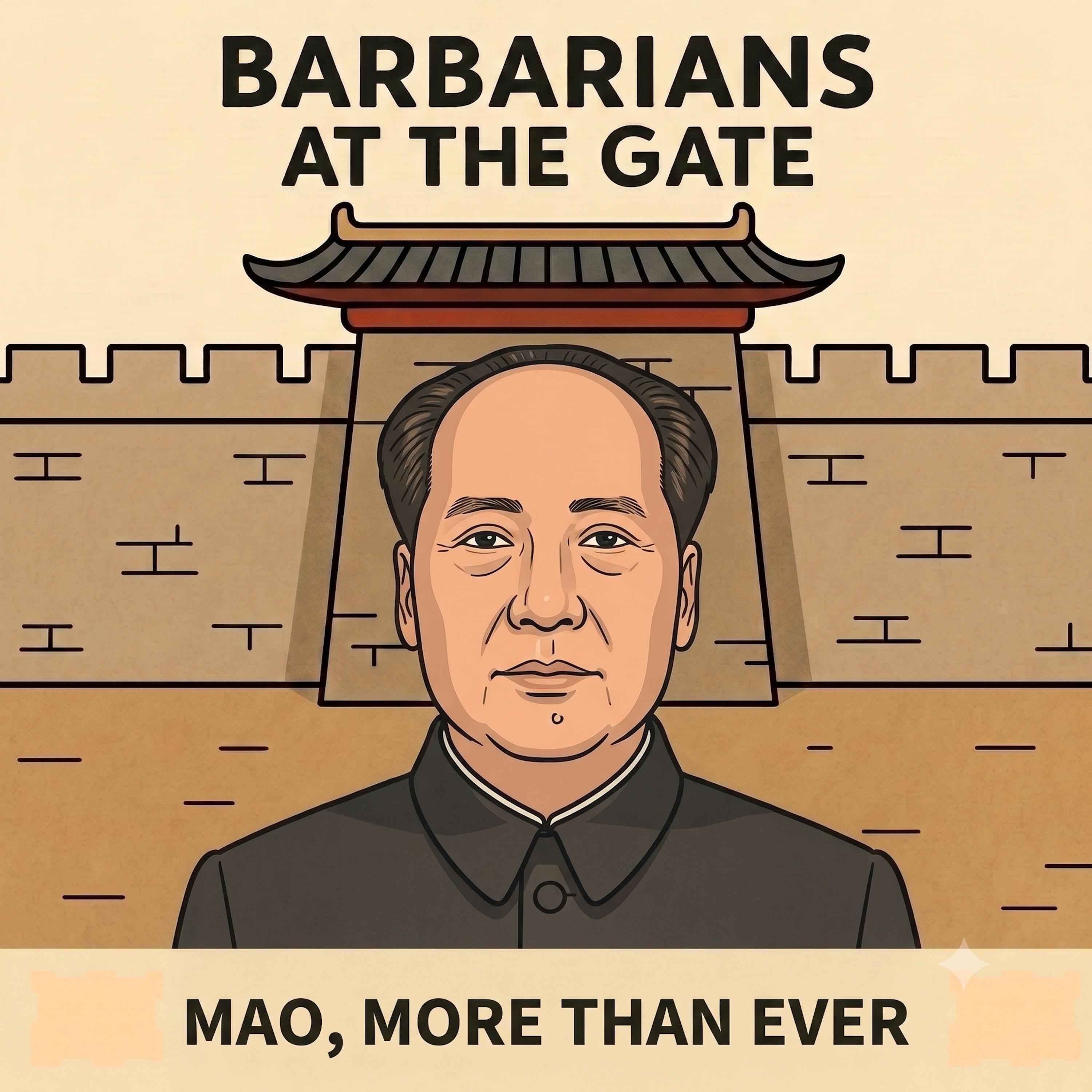 Mao More Than Ever 11.09.2026 30minMao Zedong died on September 9, 1976. Fifty years later, Jeremiah and David compare notes on a mostly quiet anniversary. Jeremiah reports that there were enough tributes to beat the over/under, but David argues that the Party would still prefer to keep things as ritualistic as possible. Mao is still dead. We will all bow. And moving on.David recalls how Mao was remembered in the 1980s, when Deng Xiaoping's (reputed) formula that the chairman's policies were two-thirds correct, one-third incorrect was treated as the last word, even as xiangsheng artists could still mock the Cultural Revolution so long as the punchlines landed squarely on the Gang of Four. Jeremiah discusses how and why Mao nostalgia never goes out of fashion, morphing with the times and the exigencies of the era.The two also catch up on their summer vacations. David is back in Beijing, his broken leg mended with the help of a dominant physical therapist. Jeremiah reports in from a 27th-floor balcony overlooking a container port in Shenzhen.
 -
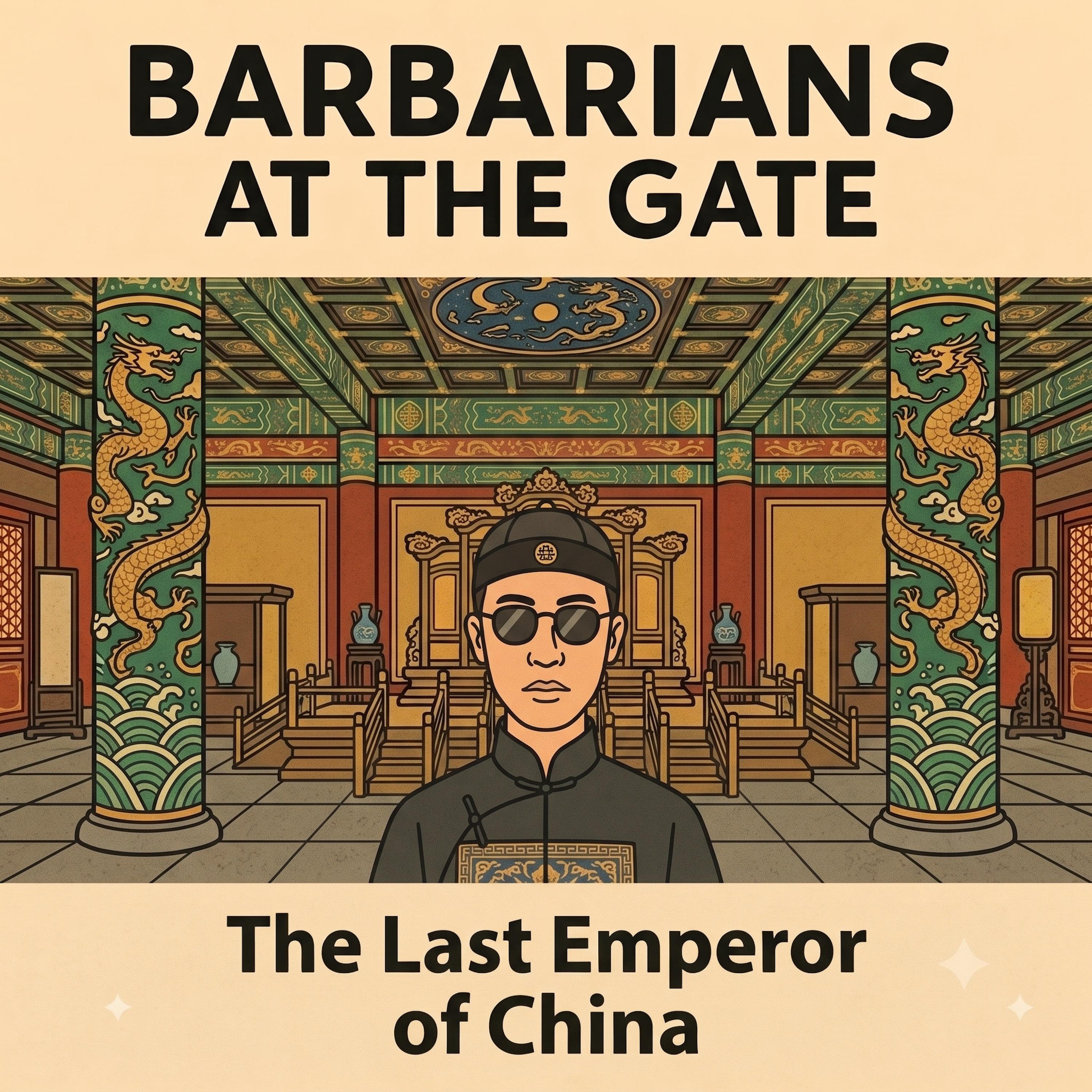 The Last Emperor of China with author Paul French 27.08.2026 42minChina’s last emperor (Puyi), his empress (Wanrong), and concubine (Wenxiu) spent two years sequestered in the Forbidden City before their expulsion in 1924. Around them were holdover dowagers, scheming eunuchs, corrupt officials, and two foreign teachers of English. Many people know Puyi’s tutor, Reginald Johnston, either from Johnston’s memoir, Twilight in the Forbidden City, or from Peter O’Toole’s portrayal in Bernardo Bertolucci’s Puyi biopic, The Last Emperor. But it is Wanrong’s tutor, the young American Isabel Ingram, and her letters that are at the heart of our guest’s new book about these pivotal two years in Chinese history.Author Paul French has made a career of evocative stories of old China, including the New York Times bestseller Midnight in Peking and City of Devils: A Shanghai Noir. The Economist has called him “a champion storyteller.” His new book, The Last Emperor of China: Twilight of the Forbidden City (out today in the UK), is built around the unpublished letters of Ingram and Johnston. They describe the trials and tribulations (but also the small pleasures and moments of joy) shared by three remarkable young people: Puyi, Wanrong, and Wenxiu. They longed to escape, but when they were finally expelled from the courtyards of Beijing’s imperial palace, they found only despair and tragedy.Paul joins Jeremiah to discuss the origins of this book, his use of previously unpublished sources, including memoirs, diaries, and letters, and whether the more lurid rumors of the relationship between Puyi and his empress have any basis in fact.
 -
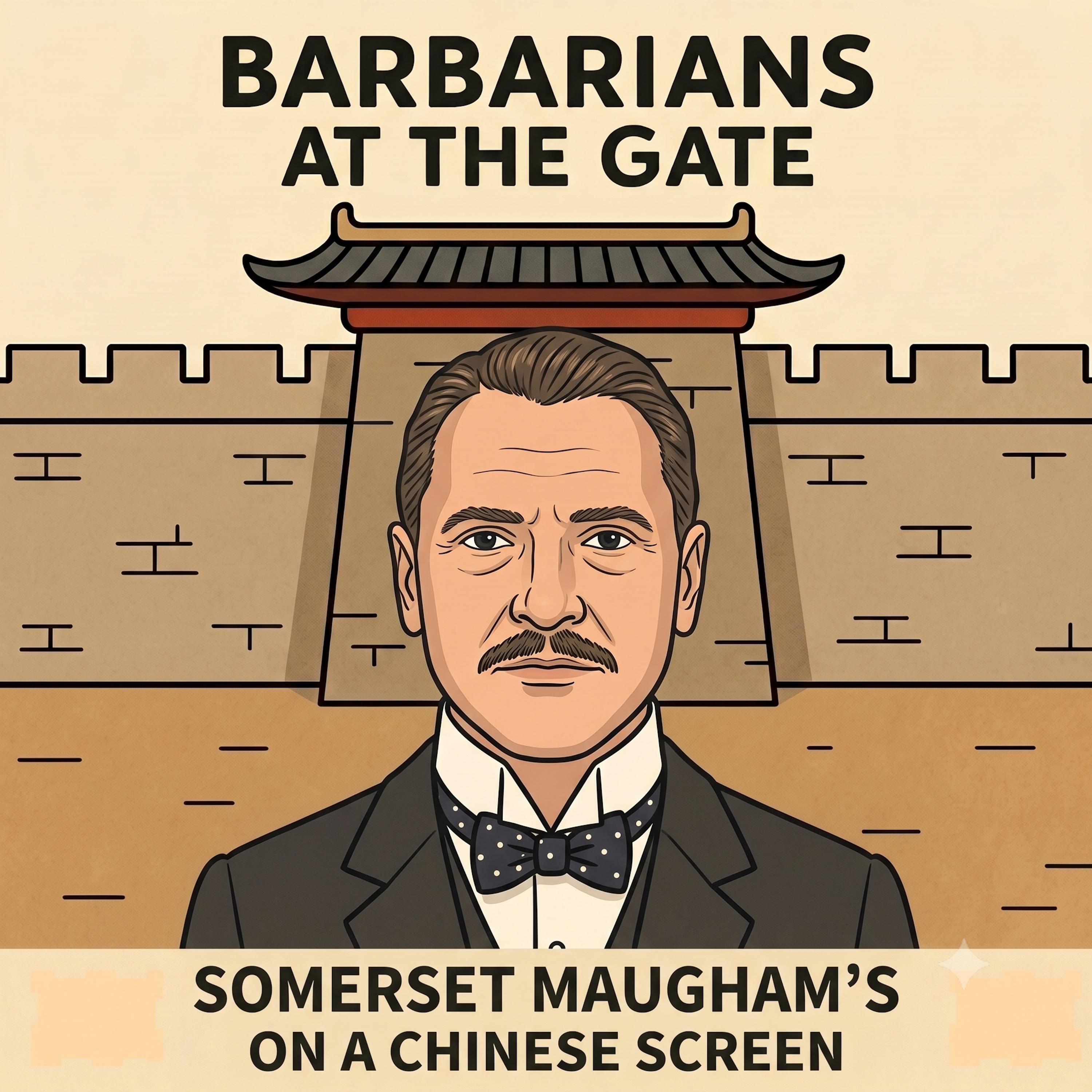 Somerset Maugham's On a Chinese Screen: Missionaries, Taipans, and Expats Who Never Leave (but probably should) 29.07.2026 35minIn this Barbarians at the Gate x China Books Review crossover, Jeremiah Jenne is joined by CBR Associate Editor Alexander Boyd to discuss the latest addition to the China Archives: W. Somerset Maugham's On a Chinese Screen (1922), a collection of vignettes from Maugham's trip through China in the winter of 1919–1920.Maugham came to China and mostly found... the English. Missionaries who profess love for a country they secretly loathe, taipans dreading burial in Chinese soil, diplomats who could be posted to Peking or Bern without noticing the difference. Jeremiah and Alexander match these hundred-year-old archetypes to expats they have known, and chart the "Cycle of China Funk," the wave pattern that should replace the PowerPoint version of culture shock and adaptation. They follow Maugham's habit of recycling real people into his fiction, including handing the scholar Gu Hongming's rebuke of Western power to a stage villain in East of Suez. And they bring Gerald Haxton out of the shadows: the hard-drinking companion who made the whole trip and never appears in the book.Next month on the China Archives: Shen Fu's Six Records of a Floating Life.Keywords: Somerset Maugham, On a Chinese Screen, China Books Review, Barbarians at the Gate podcast, Gu Hongming, Gerald Haxton, expat life in China, China travel writing, British colonialism in China, China Archives
 -
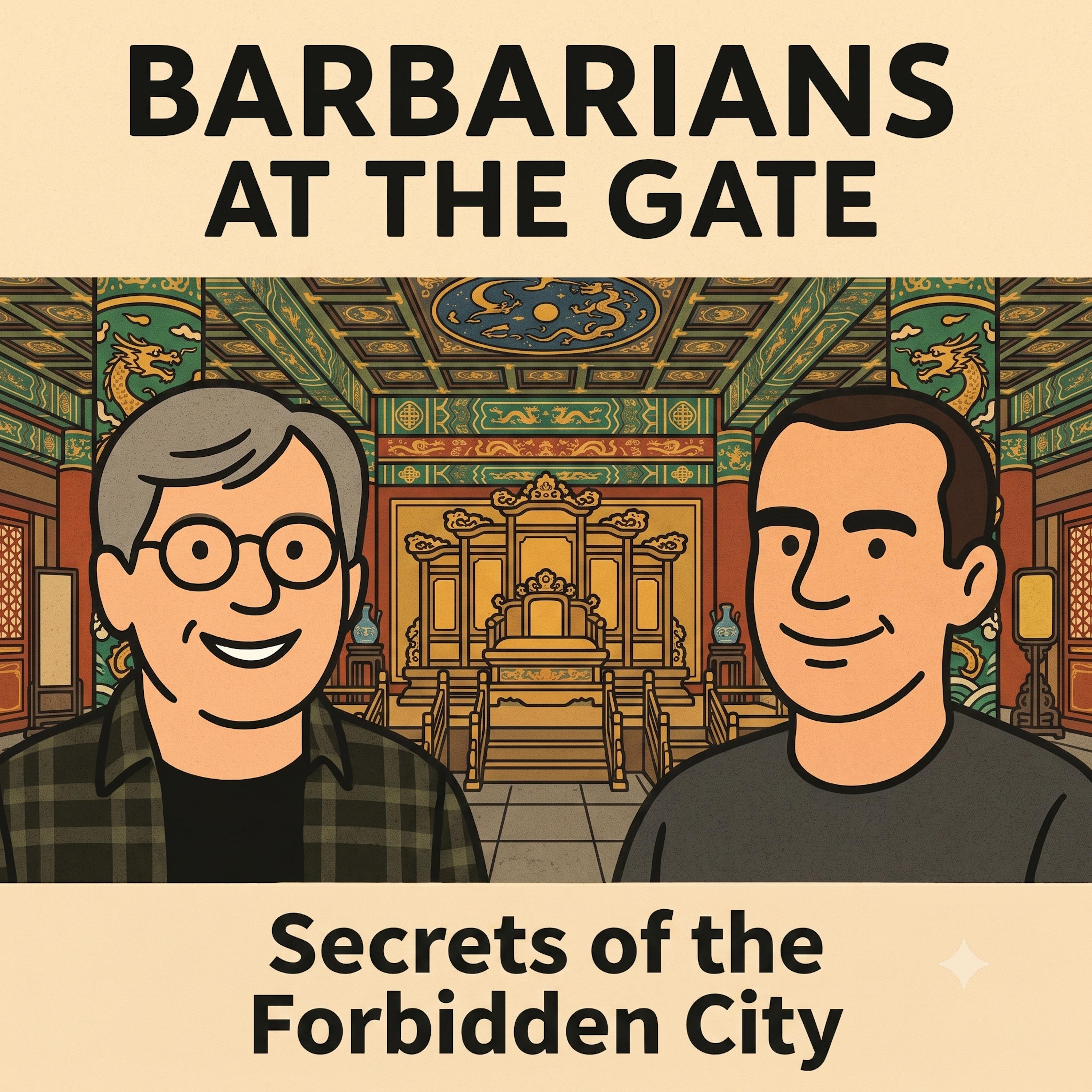 Barbarian Remix: The Secrets and History behind Beijing's Forbidden City 16.07.2026 40minIt’s the summer travel season, and one of the most popular sites here in Beijing is the Palace Museum at the Forbidden City. To talk about China’s most famous imperial palace, we are joined by Matthew Hu Xinyu, Trustee of the Beijing Cultural Heritage Protection Center (CHP) and founder of the Courtyard Institute. Matthew provides us with updates on renovated sections of the Palace Museum previously inaccessible to tourists, such as the Palace of Compassion and Tranquility (Cining Gong 慈宁宫), where the Empress Dowager celebrated her birthdays and worshipped the Buddha, and the living quarters of the imperial concubines located north and west of Longzong Gate. Matthew also gives us a fascinating overview of the complex task of renovating the centuries-old compound and the challenges the Palace Museum faces in restoring, protecting, and exhibiting its 1.8 million artifacts. Palaces, artifacts, and historical figures mentioned on the podcast: Hall of Mental Cultivation, Yangxin Dian养心殿 Palace of Established Happiness建福宮Jianfu Gong jinzhuan金砖 ”metal/gold bricks” Dr. Shan Jixiang 单霁翔, curator of the Palace Museum from 2012 to 2019 Imperial Fasting Palace Zhai Gong斋宫 “Dwelling in the Fuchun Mountains” Fuchun Shanju Tu 富春山居圖, a famous Yuan Dynasty painting by Huang Gongwang (黃公望, 1269-1354). The painting was divided into two pieces after being rescued from a fire. The two sections were later separated; the main section is now housed at the Taipei Palace Museum, and the smaller section, referred to as “The Remaining Mountain,” 剩山圖 Sheng Shan Tu, is part of the Beijing collection. “Precious Works of the Stone Canal Pavilion” 石渠宝笈 Shiqu Baoji. A vast Qing collection of paintings and calligraphy by emperors and famous artists, divided into categories such as books, paintings, scrolls, and calligraphy. Hall of Three Rarities Sanxi Tang 三希堂 “Reign behind the curtain” Chuilian tingzheng垂帘听政 Retirement Lodge Juanqin Zhai倦勤斋 Palace of Longevity and Health Shoukang Gong寿康宫 Fragile Cargo: China’s Wartime Race to Save the Treasures of the Forbidden City by Adam Brookes. “The gripping true story of the bold and determined museum curators who saved the priceless treasures of China’s Forbidden City in the years leading up to World War II and beyond.” “Masters in the Forbidden City” Wo zai Gugong xiu wenwu 我在故宫修文物. State media documentary on the ongoing restoration projects of the Forbidden City. Available on YouTube:https://www.youtube.com/watch?v=Pw6awYYu_6sThis episode originally aired in July 2023.
 -
 Neysun Mahboubi on the past, present, and future of US-China Academic Exchanges 02.07.2026 1u 1minWe are honored to have Professor Neysun Mahboubi, Director of the Penn Project on the Future of U.S.-China Relations, a program that provides a platform for talented U.S.-based China scholars to contribute academically informed analysis on the most important issues in U.S.-China relations. Neysun recounts his experiences as a legal scholar in China during the 1990s Reform and Opening Up period, focusing on his mentors and the legal scholars who were at the forefront of legal reform in the PRC. A passionate advocate for scholarly research on China, Neysun emphasizes the value of on-the-ground research, for those who are able to do so, in these increasingly complicated times. Neysun A. Mahboubi is Director of the Penn Project on the Future of U.S.-China Relations at the University of Pennsylvania, where he teaches courses on Chinese history, law, and policy and hosts the China Studies podcast. He is also a Non-Resident Senior Fellow with the Asia Program at the Foreign Policy Research Institute.
 -
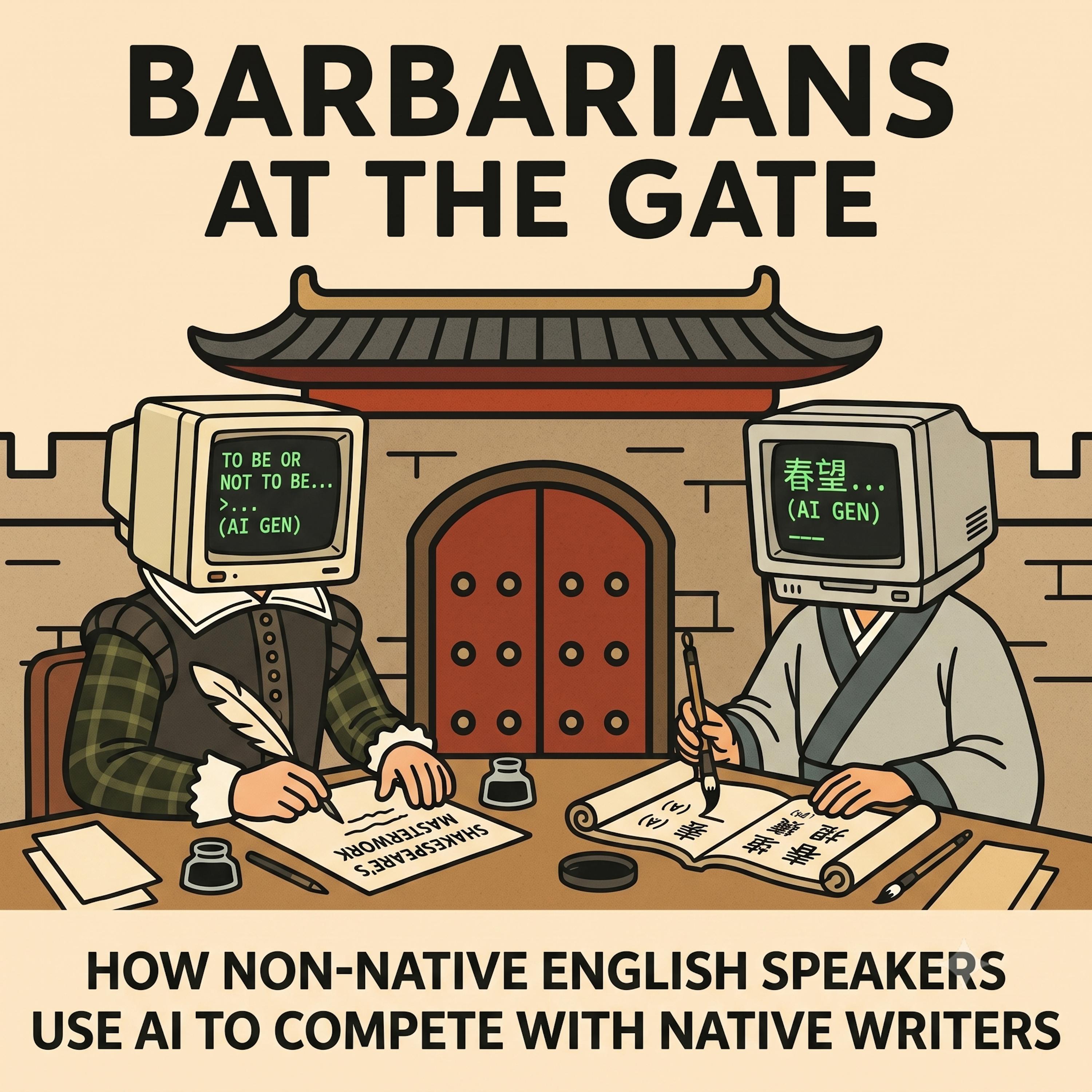 AI Slop, AI Detectors, and Authentic Voice: A China-Tech Insider on Writing and Working With AI 18.06.2026 39minShould we view today’s powerful AI language tools as intellectual crutches or as incredibly useful assets? Can they be safely integrated into our existing toolkit for business and academia, or should we approach them with justified caution? And why is the Western world terrified of AI, whereas China is already incorporating it into all sectors of society? Spoiler alert: The West views AI as a possible extinction risk, to be monitored and controlled, while China pragmatically views it as merely a tool to improve the lives of ordinary people. In this episode, we’re delighted to welcome back Zhang Yajun, founder of Zhang Global Advisory. Yajun shares her insights on the rapidly expanding role of Artificial Intelligence in global business communication and academic research. Yajun offers a more measured and practical take. From personal experience, she knows that non-native speakers can effectively use AI to produce writing that is clear, idiomatic, and faithful to their original ideas — while still preserving their authentic "human tone" and avoiding the sterile, formulaic output that AI often generates.
 -
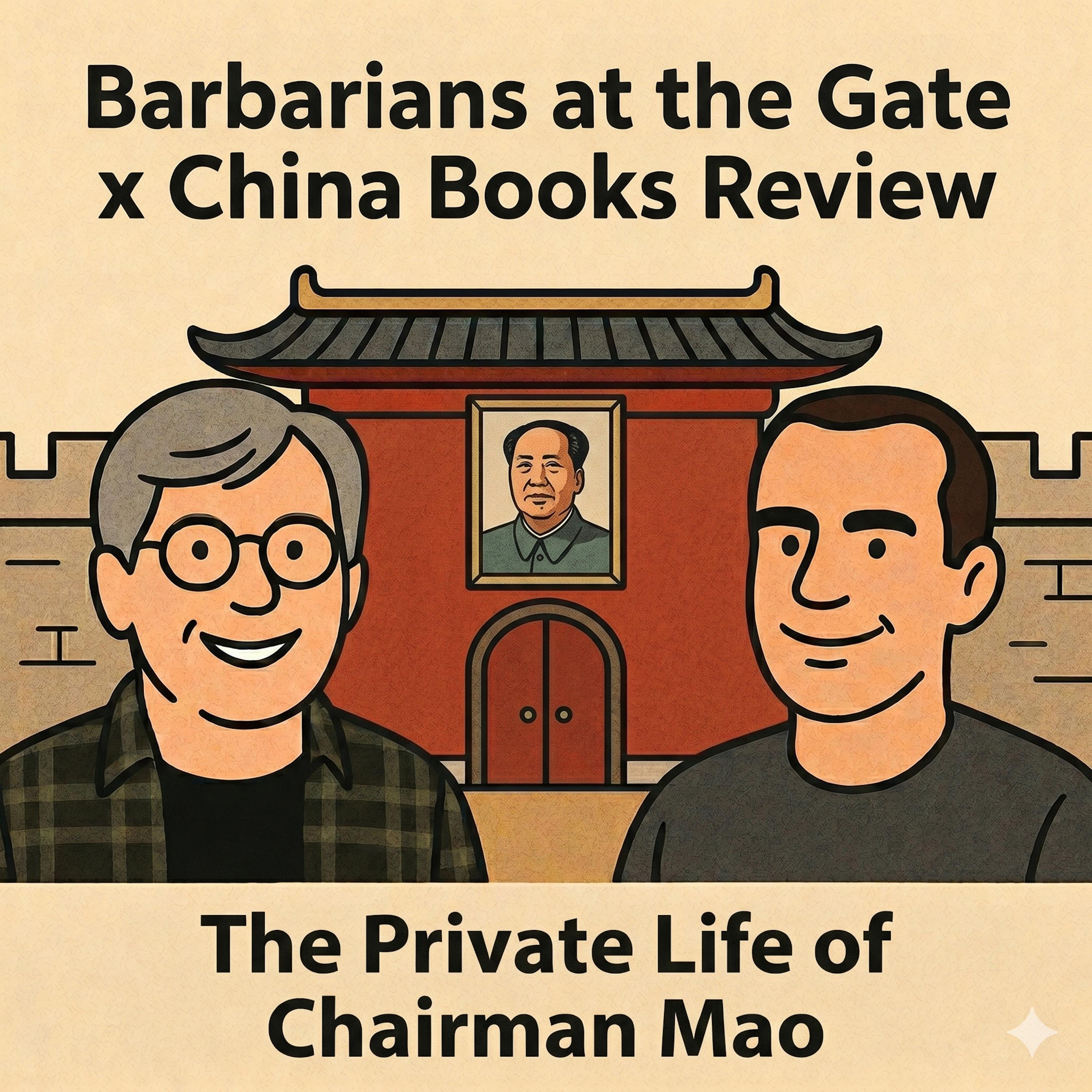 China Books Review x Barbarians at the Gate: The Private Life of Chairman Mao 04.06.2026 26minThe Politburo had given Mao Zedong’s personal physician Li Zhisui a direct order: prepare the Chairman’s body so that he can be on permanent display. Li was aghast. It was not what Mao had wanted, and besides, “How to pickle your country’s leader” wasn’t one of the courses he studied in medical school. But after the turbulence of the Cultural Revolution, Mao’s death meant a potential political showdown between the Gang of Four, including Mao’s wife, Jiang Qing, and Mao’s chosen successor, Hua Guofeng. Dr. Li did not want to be caught in the middle. So Li and his team did the best they could. Spoiler alert: it involved a massage that nobody would want to give. Li Zhisui’s controversial memoir, The Private Life of Chairman Mao, was published in 1994. Readers were titillated by Mao’s sex life, questionable hygiene regime, and gruesome medical maladies. Defenders of Mao labeled the book pure propaganda. Dr. Li was a disloyal liar, and his collaborators and publishers were pushing anti-Mao agendas. Jeremiah is joined by Alexander Boyd, Associate Editor of the China Books Review, to discuss Mao Zedong, Li Zhisui, and Jeremiah’s recent retrospective essay about The Private Life of Chairman Mao. Who was Dr. Li? What did it take to survive in the courtyards of power at the peak of Mao’s paranoia? And did Dr. Li really witness all of the major events he described in his book?
 -
 This Was Funnier in China: Jesse Appell's Cross-Cultural Comedy Journey 05.05.2026 48minOn this episode, we sit down with the one and only Jesse Appell—Chinese TV stand-up comedian, blogger, lecturer, tea entrepreneur, and passionate bridge-builder for US–China cultural exchange. In his newly published book, Jesse shares the unlikely story of how a Fulbright Fellowship to study the traditional Chinese humor form “crosstalk” (xiangsheng) launched him from student to television star, with his video clips capturing more than half a billion views on the Chinese Internet.
 -
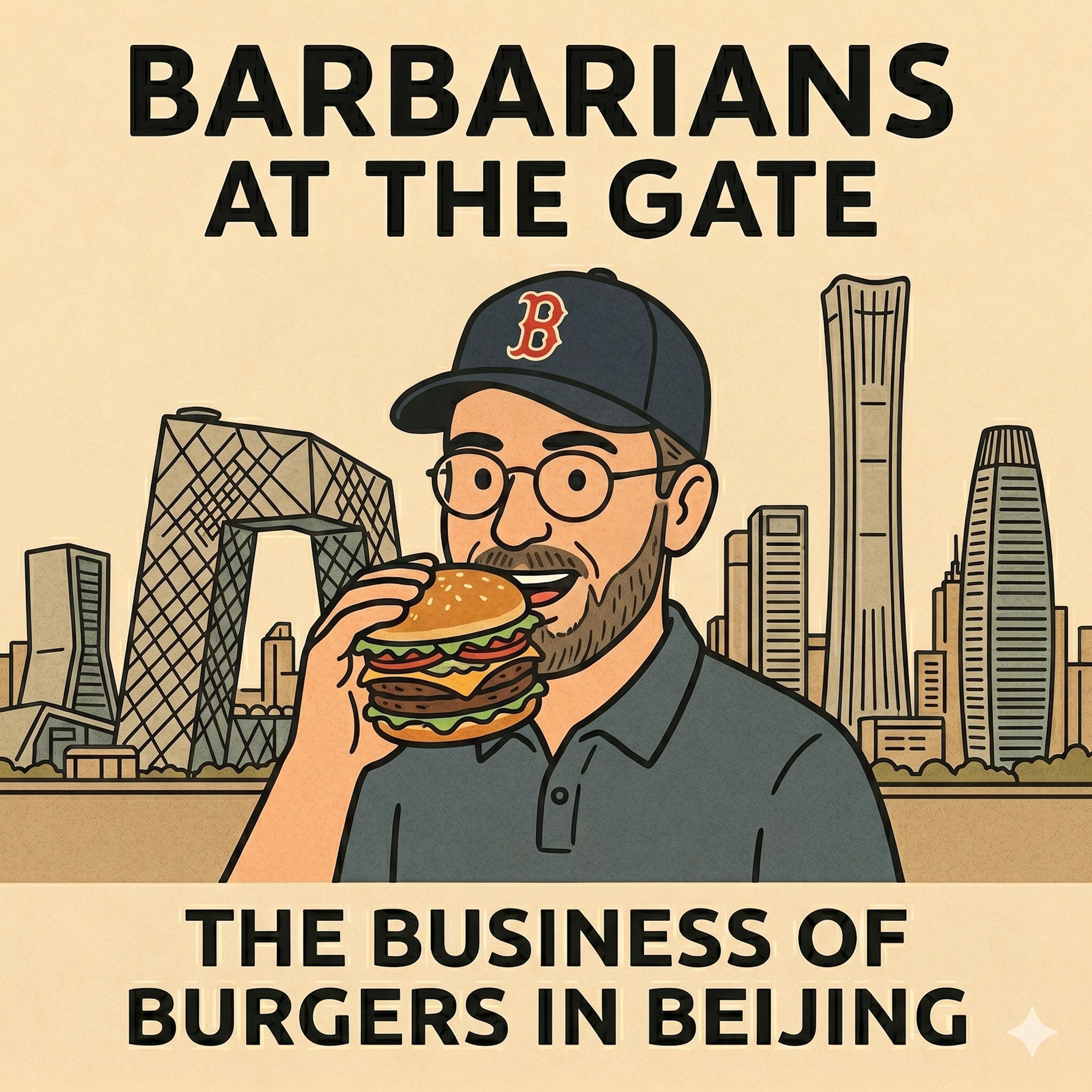 The Business of Burgers in Beijing: What Fast Food Festivals Reveal About China's Economy 21.04.2026 33minMike Wester launched the first Burger Fest in Beijing 13 years ago as a scrappy response to the collapse of print ad revenue. Today, burger festivals run in third-tier cities across China, subsidized by local governments trying to drive foot traffic into half-empty malls. Hefei alone has four a year. In this episode, Jeremiah talks with Mike Wester, co-founder of True Run Media and publisher of the Beijinger, about how burgers became one of China's fastest-growing new cuisines, what the food festival boom reveals about Chinese commercial real estate, and why a generation raised on McDonald's is now opening artisanal burger shops in cities that didn't have a KFC a decade ago. They cover the social-media arms race, producing photogenic and often inedible creations, and 13 years of memorable entries — including a Wagyu patty with goose liver, cinnamon, and apple, and a pig-brain burger from a man who built his fortune on braised pig brains.
 -
 Barbarians Remix: Do you really need to learn to write characters to study Chinese? 07.04.2026 27minWarning: GEEKY CONTENT Hosting solo in this week’s episode, David takes a geeky deep dive into the digital revolution in Chinese language learning in conversation with Chinese language pedagogy expert Matt Coss. The Sisyphean task of learning to write hundreds of Chinese characters has long been the bête noire of Chinese language students. The explosion of digital devices and apps for processing Chinese characters is giving rise to a radical rethinking (no pun intended) of the handwriting and dictation components of Chinese language curricula. Matt Coss is on the front line of a new generation of Chinese language educators who advocate a drastic reduction, if not outright elimination, of the handwriting requirement for Chinese language learners. Topics covered include the disturbing drop in the number of American students studying Mandarin, the implications of AI tools such as ChatGPT for Chinese language learning, and the escalating problem of native Chinese speakers forgetting how to write common characters (“character amnesia” tíbǐ wàngzì提笔忘字).
 -
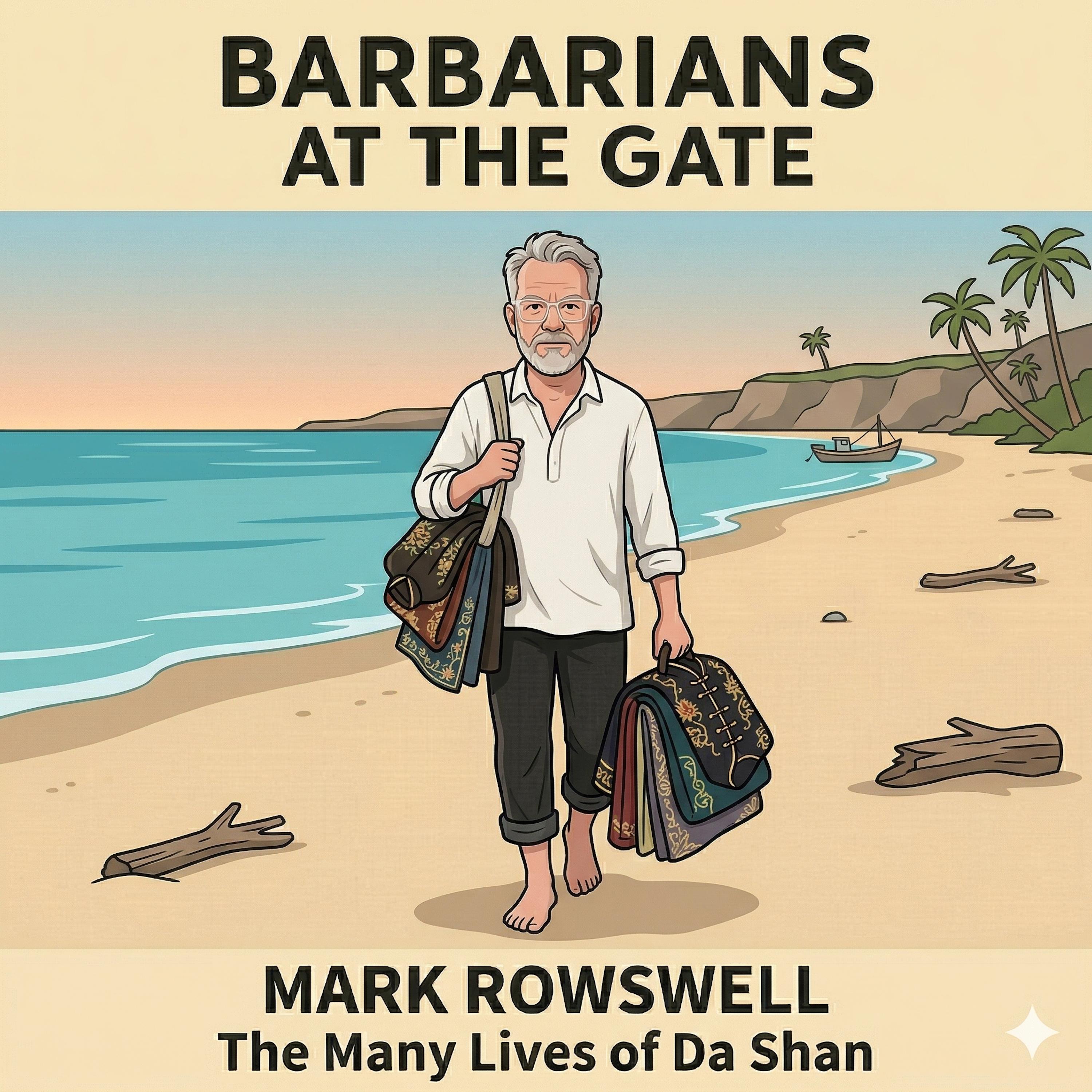 The Many Lives of Da Shan: Mark Rowswell on Chinese Poetry, Performing Live, and Staging Shawshank in Mandarin 24.03.2026 45minIn this episode, we reconnect with an old friend of the podcast, Canadian performer Mark Rowswell—better known in China as Dashan, or “Big Mountain.” Mark reflects on his early career in China, where his remarkable fluency in Mandarin launched him from a young foreign newcomer into the world of xiangsheng (相声, crosstalk), and soon after into a highly sought-after TV host and cultural ambassador bridging East and West. He also shares insights into his latest creative project: a series of online videos featuring his recitations of classic Chinese poetry. What began during the pandemic with a relatively obscure Chu Ci (楚辞) poem that went viral has since grown to include well-known works by Li Bai and Su Shi, with Mark’s fresh approach—eschewing the traditional, formal style of langsong (朗诵) in favor of a more natural, conversational delivery—quickly gaining a wide audience. Over time, the project has grown increasingly ambitious, incorporating longer poems and rich musical collaborations, including performances with the Toronto and Winnipeg Symphony Orchestras. Finally, Mark offers a fascinating behind-the-scenes look at his role in adapting The Shawshank Redemption into a Chinese-language stage production performed by an all-foreign cast. He discusses recruiting Mandarin-speaking actors, translating and culturally adapting the script, and the production’s warm reception among Chinese audiences.
 -
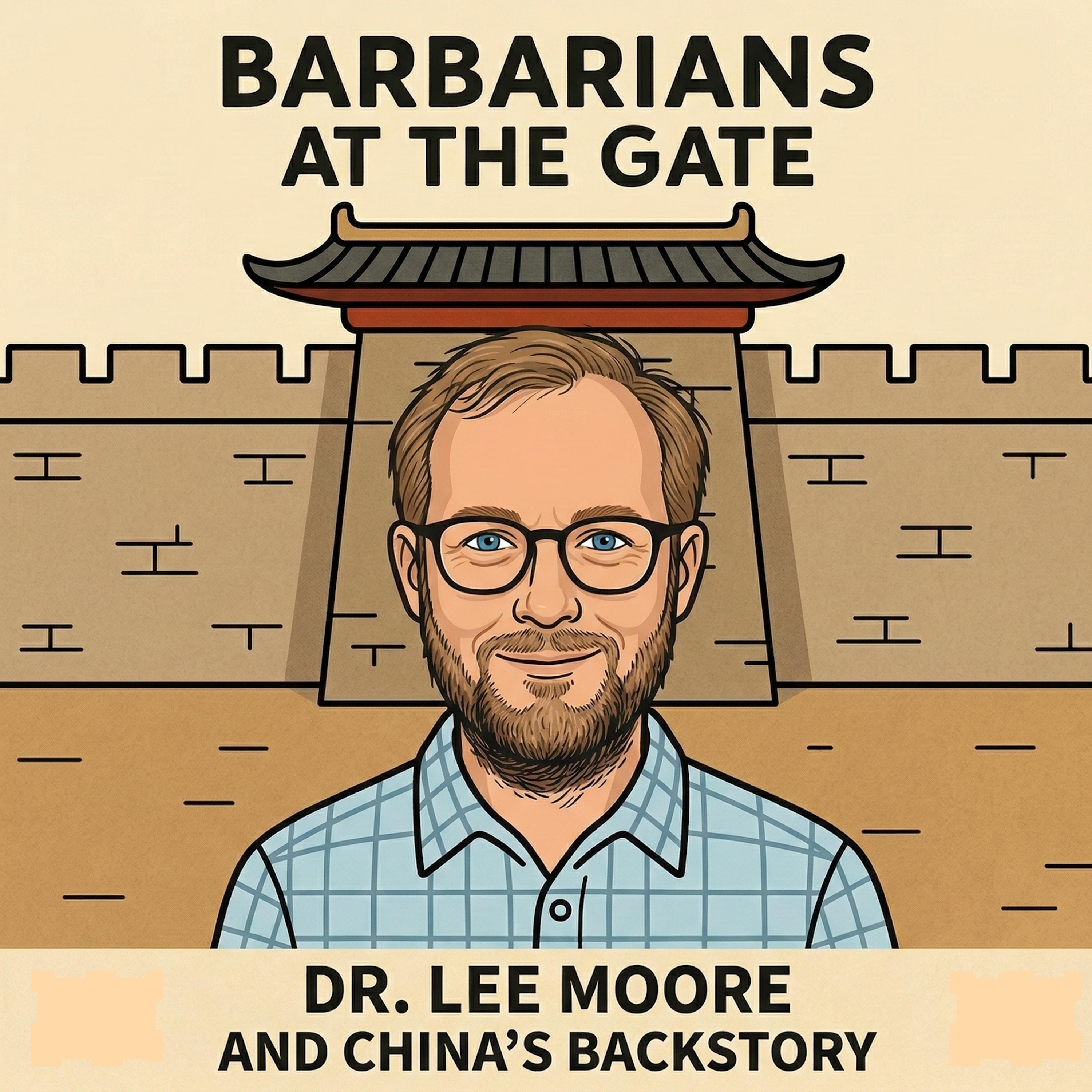 Lee Moore's China Backstory: Why Saying "History Proves" Actually Means "I Haven't Done the Reading" 10.03.2026 42minLee Moore's new book challenges both Chinese state propaganda and Western pundits on Taiwan, Xinjiang, the Chinese economy, and Hong Kong with 1400 endnotes, and a drinking game for beheadings. A historian who writes about Ming emperors getting stabbed in the balls, a drinking game for beheadings in Xinjiang, and why almost everything politicians say about Taiwan’s history is wrong. In this episode, we talk with Lee Moore about China’s Backstory: The History Beijing Doesn’t Want You to Read. It is often said that China is the most talked-about country that Americans know the least about. Lee’s book seeks to enlighten readers with a fresh perspective and a deep dive into four China-related topics that frequently appear in American media: Taiwan, Xinjiang, the Chinese economy, and Hong Kong. Despite his academic credentials, Lee has chosen to write the book in an accessible style that Jeremiah characterizes as “making the complex simple and the simple complex — complicating narratives without complicating the language, and simplifying complicated histories without dumbing them down.” With this lively and occasionally risqué prose style (one chapter is entitled “The Most Important Motherfucker in Taiwanese History”), Lee challenges the simplistic historical narratives that often dominate both Chinese state propaganda and Western commentary on China. Our conversation explores several of the historical questions raised in his book. Was Taiwan always a part of China? It did not even appear on Chinese maps until the 17th century, and the Qing Dynasty did not take control of the island until a year after William Penn founded Philadelphia. Were the Uyghurs the first inhabitants of Xinjiang? The answer is complicated, but the region’s earliest known inhabitants may actually have been Indo-European. And is the Chinese Communist Party’s tight state control over the economy really the “secret sauce” behind China’s rise? Lee takes direct aim at Western pundits who have argued exactly that. Lee also explains how he makes extensive use of Chinese poetry — from Tang Dynasty border verse to Qing-era colonial writing — translated into colloquial English, to convey the emotions and states of mind of the historical figures who populate his book. Lee Moore has a PhD in Chinese literature. He is the founder of the Chinese Literature Podcast and has written for The Economist, the China Books Review, and The China Project. China’s Backstory: The History Beijing Doesn’t Want You to Read is available from Unsung Voices Books wherever books are sold. Find the Chinese Literature Podcast wherever you get your podcasts. Warning/Advertisement: This episode contains explicit language.
 -
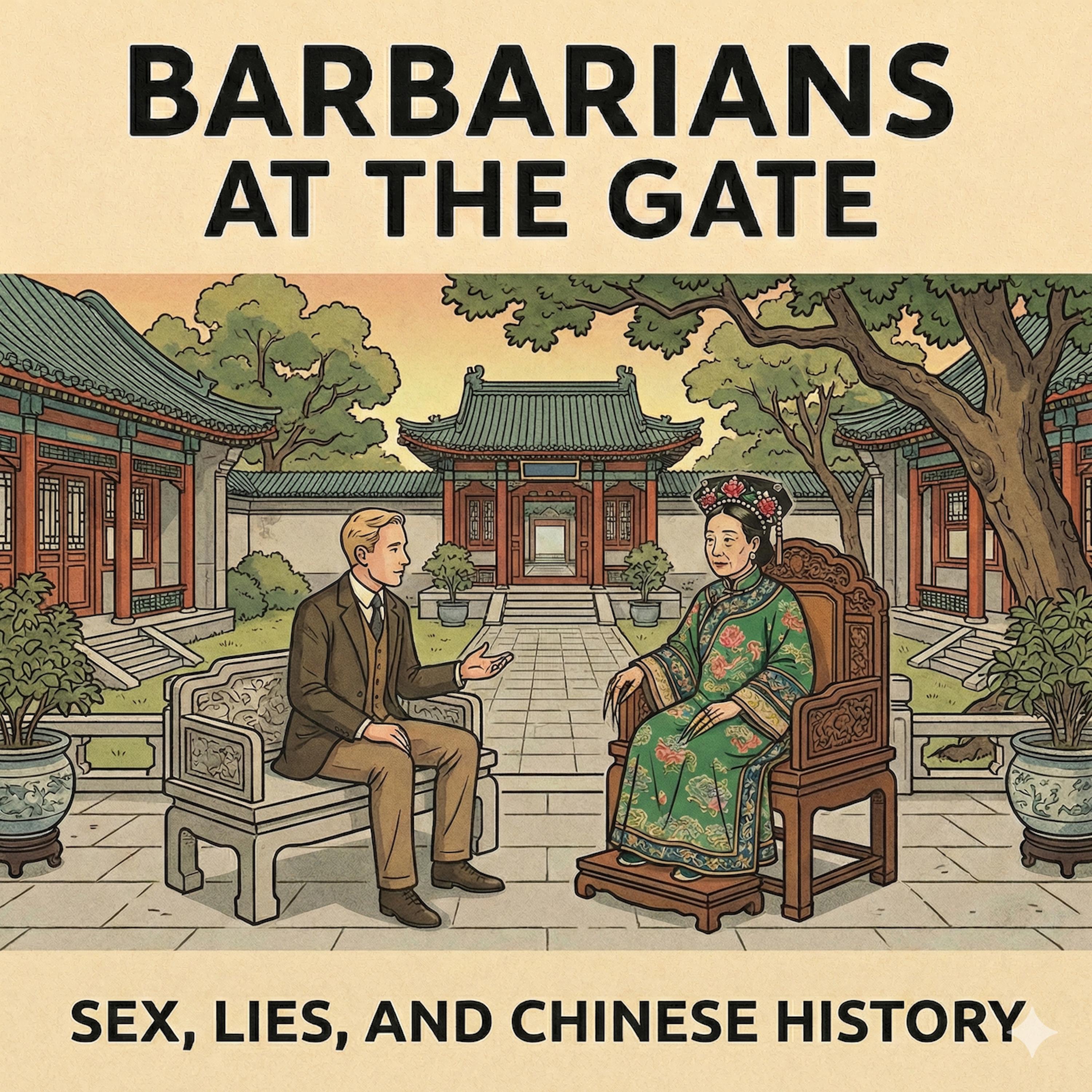 Décadence Mandchoue: The wild (and almost certainly fictional) affair between Sir Edmund Backhouse and Empress Dowager Cixi 24.02.2026 39minIt’s another Barbarians at the Gate crossover with China Books Review. This month’s China Archives column covers Decadence Mandchoue by Edmund Backhouse, edited and annotated by Derek Sandhaus. CBR Associate Editor Alexander Boyd and I sat down to talk about all things Backhouse and try to parse one of Sinology’s more controversial memoirs. Backhouse was the son of a British baronet who dropped out of Oxford, fled to Beijing in 1898, and spent the next four decades as a fixer, translator, and professional eccentric in the hutongs. He was also a forger, a fabulist, possibly a fascist sympathizer, and the author of what may be the most explicit expat China memoir ever written. His central claim: an extended sexual relationship with Empress Dowager Cixi. His central problem: almost nobody believed him. And there’s a good reason. He almost certainly invented the whole thing.The real question isn’t whether Backhouse was making stuff up. He was. A lot. The question is whether this gifted fabulist, writing from inside (or at least adjacent to) the world he’s fabricating, can still tell us something real about the fall of the Qing Dynasty. Join us as we explore the decadent world of sex, lies, and power during one of the most tumultuous periods of Chinese history.
 -
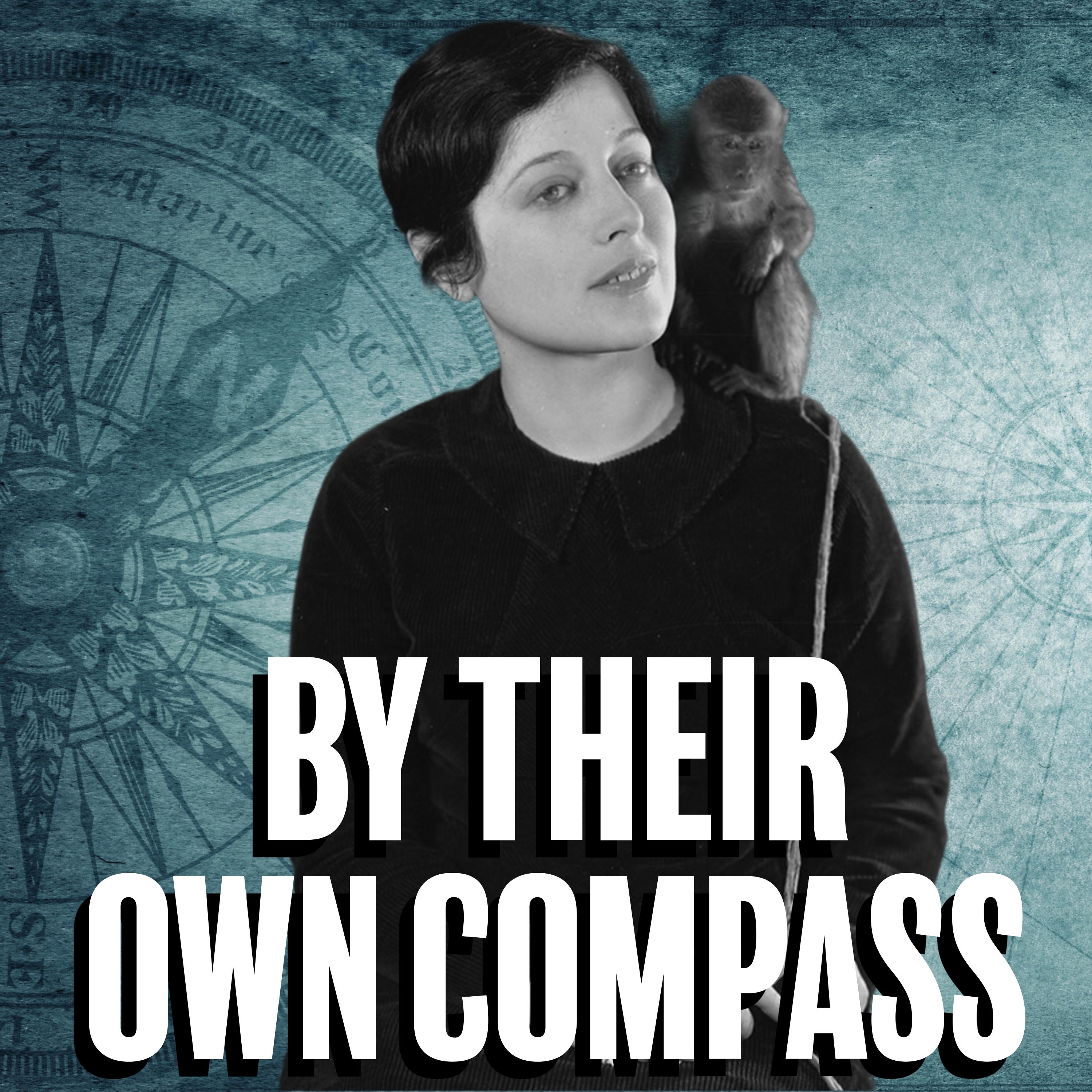 Barbarians at the Gate x By Their Own Compass: Emily Hahn's Shanghai 10.02.2026 1u 1minWelcome to a special episode of Barbarians at the Gate. David and Jeremiah are off this week preparing for Chinese New Year, but as a special gift to our listeners, we are cross-posting this bonus episode about the life and China travels of the American writer Emily "Mickey" Hahn. This episode is from By Their Own Compass, a podcast looking at historical travelers and past journeys co-hosted by Jeremiah with travel expert Sarah Keenlyside.Emily Hahn partied with poets (and her pet gibbon) at Shanghai soirees. Wrote biographies while dodging bombs in wartime Chongqing, and did her best to keep herself and her family alive in Japanese-occupied Hong Kong. Along the way, she became famous (some might add “notorious”) for her affairs, including with Chinese writer Sinmay Zau (Shao Xunmei 邵洵美) and the head of British intelligence in Hong Kong, Charles Boxer.Mickey lived through some of China’s most tumultuous moments. While many foreigners experienced these events, Mickey gave her readers an unvarnished look at what was happening, with a style all her own.We hope you enjoy this special bonus episode. Follow By Their Own Compass at bytheirowncompass.com or search for By Their Own Compass on Apple Podcasts, Spotify, or where you get your podcasts.Links:Books referenced in the episodeChina to Me by Emily HahnNobody Said Not To Go by Ken Cuthbertson (biography of Emily Hahn)I Wonder as I Wander: An Autobiographical Journey by Langston HughesThe Soong Sisters by Emily HahnTours & Resources:Historic Shanghai - walking tours (Patrick Cranley and Tina Kanagarathnam)Further Reading:Her Lotus Year: China, the Roaring Twenties, and the Making of Wallis Simpson by Paul FrenchHong Kong Holiday by Emily HahnNo Hurry to Get Home: A Memoir by Emily HahnMr Pan by Emily Hahn
 -
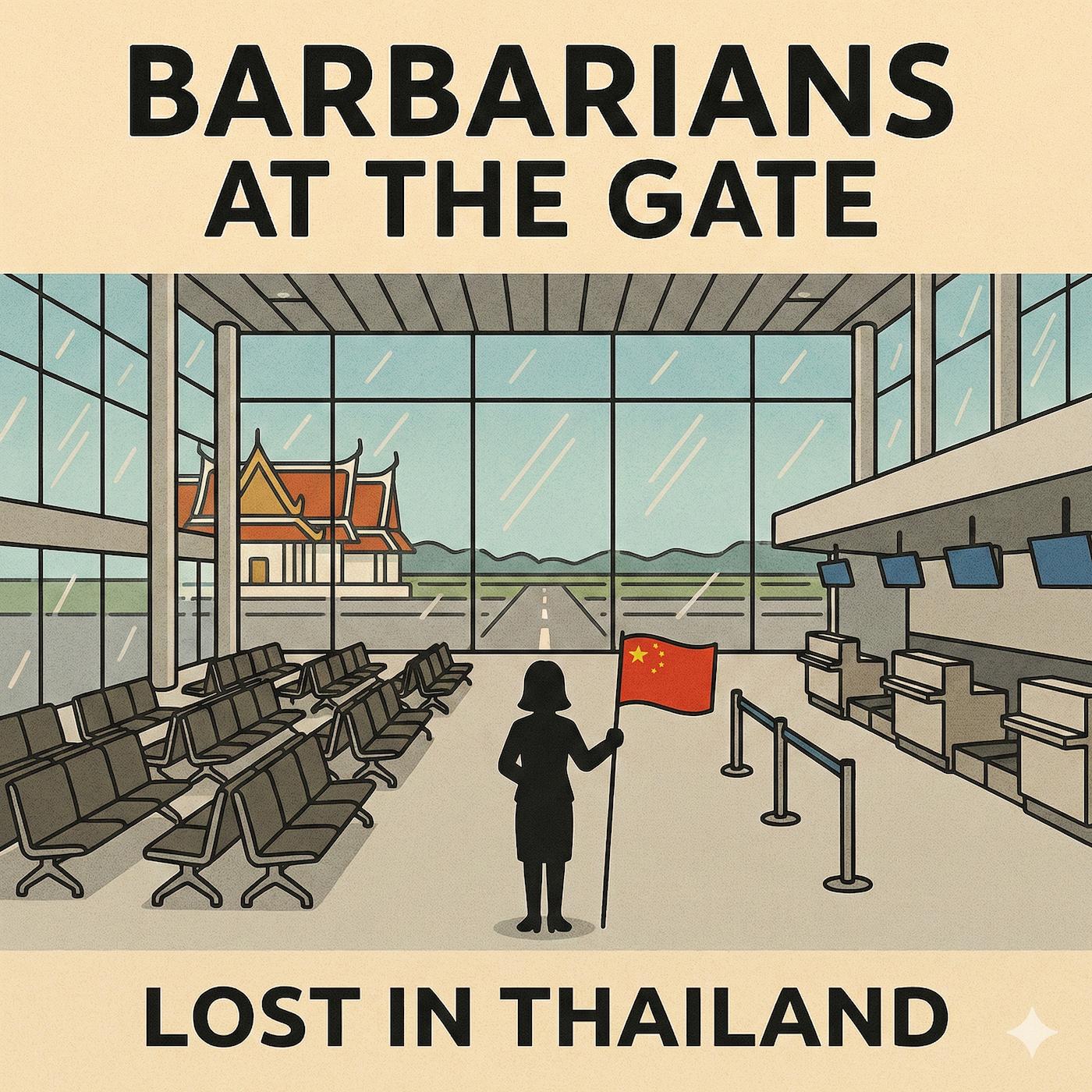 Lost in Thailand: The New Chinese Diaspora from Bangkok to Addis Ababa 27.01.2026 35minIt’s high season in Thailand. The weather is perfect. But look around the hotel lobbies and the night markets, and you’ll notice something missing: the tour buses. For the last decade, Thailand bet the house on Chinese mass tourism. Now, that wager is looking shaky. The numbers are down, and the reasons go deeper than just a sluggish post-COVID economy. On this episode, David dials in from Addis Ababa and we are joined by travel writer Thomas Bird (author of Harmony Express), global strategist Yajun Zhang to try and figure out where everyone went and where Chinese travelers are going next. We look at the "scam center" panic that’s terrifying parents on WeChat, the shift from package tours to solo travel, and why a new generation of Chinese tourists might be skipping Bangkok for Singapore. Plus, we look at how the Chinese diaspora is changing the sound of the region—literally. From the streets of Bangkok to the markets of Addis Ababa, is Mandarin replacing English as the default second language of the Global South? In this episode: The Hangover: Thailand’s pivot from GI R&R spot to Chinese holiday destination—and the current crash. The Fear Factor: How viral stories about kidnappings and scam compounds are killing the vibe for mainland travelers. The New Traveler: Why the "flag-following" tour groups are being replaced by digital nomads and independent explorers. Diaspora Voices: Comparing the Chinese communities in Southeast Asia with the newer waves arriving in Africa.
 -
 Perilous Prognostications for China in 2026 with Yajun Zhang 13.01.2026 47minFollowing a tumultuous 2025, we gallop into the Year of the Horse. Tradition says it should be a year of dynamism and progress, but which way is the stampede heading? To help us read the tea leaves, we welcome back our occasional co-host, Zhang Yajun. As a global strategist and former innovation lead at the World Economic Forum, Yajun has spent over 16 years translating complex shifts—from AI to cultural narratives—for international audiences. She joins us to look past the headlines and offer a reality check on where China’s policies, social fabric, and daily life are actually going in 2026. Topics include: The Student Exodus: After American student numbers hit historic lows, can China lure them back? Is the "China Dream" for foreign talent dead, or can the country overcome deep-seated geopolitical friction to become a destination for career-building again? The AI Reality Check: Beyond the state-level hype, how is Artificial Intelligence reshaping the rhythm of the street? We look at how aggressive government promotion of the sector is filtering down to everyday life. The Death of the Dining Room: The delivery apps are winning. As take-out replaces the communal table, restaurants are closing at an alarming rate. Are we witnessing the end of China’s boisterous, public food culture? Character Amnesia: As digital input methods proliferate, muscle memory is fading. With fewer people able to write by hand, will the Ministry of Education double down on rote discipline, or is the era of handwritten Chinese officially over? Yajun Zhang, Global Strategy & Innovation Leader | AI & XR for Policy | East–West Connector LinkedIn: https://www.linkedin.com/in/yajun-zhang-strategist/ YouTube: https://www.youtube.com/@yajun_zhang Substack: https://yajunzhang.substack.com/
 -
 Barbarians Remix: Horse Racing, History, and the Final Champion's Day in Old Shanghai 30.12.2025 31minChampions Day in the city of Shanghai, November 1941. The world was at war, but the clubhouse at the Shanghai Race Club (now People's Park) was packed with owners and punters cheering on the pony. The funeral of Shanghai's richest widow, Liza Hardoon, was a spectacle that filled the streets of the International Settlement. Japanese occupiers and their Chinese collaborators came together in a bizarre ritual to celebrate the birthday of revolutionary leader Sun Yat-sen. The opening of a new movie featuring, of all subjects, Charlie Chan had folks lining up at the local cinema box office. The world had changed, but the "Lone Island" of Shanghai persisted, as it had since becoming a treaty port a century earlier. In this encore episode from 2020, historian James Carter joins us to discuss his fascinating book Champions Day: The End of Old Shanghai. Carter brings to life the vivid tableau of an era coming to an end. By the end of the year, Japanese authorities would take control of Shanghai and the city would never again be the same. What did the end of the colonial era mean for Shanghai and its residents? Why were race tracks such powerful symbols? Join us as we discuss the history of horse racing, colonialism, and the last days of Old Shanghai.
 -
 The Dowager and the Dynasty: How did Empress Dowager Cixi rule China and should we blame her for bringing down an empire? 16.12.2025 51minHow does a teenage girl from Beijing’s hutongs end up ruling the world’s largest empire—without ever technically sitting on the throne? In this episode, Jeremiah traces the improbable ascent of Empress Dowager Cixi, who entered the Forbidden City as a minor concubine and departed as the most powerful woman in Chinese history. The story begins in imperial catastrophe: the Xianfeng Emperor dies in the wake of the humiliating looting of the Summer Palace, leaving behind a four-year-old son and a power vacuum waiting to be filled. Cixi, her fellow empress dowager Ci’an, and Prince Gong move quickly to take control, using the child emperor as both symbol and shield. Jeremiah explains the peculiar constitutional fiction known as “ruling from behind the curtain” (垂帘听政), a political maneuver that allowed Cixi and Ci’an to steer the empire while officially remaining in the shadows. When Cixi’s own son, the Tongzhi Emperor, dies at eighteen, she executes another audacious maneuver—installing her young nephew, the Guangxu Emperor, ensuring that the throne remains occupied by someone conveniently underage. For a brief period—one hundred days, to be exact—Guangxu confers with intellectuals like Kang Youwei and Liang Qichao, planning an ambitious series of bureaucratic and military reforms. Cixi, unconvinced that constitutional monarchy and radical modernization were viable at the time, pulls the plug. Jeremiah and David examine the mystery surrounding the death of Zhenfei, the Pearl Concubine, as well as the lingering question of whether the Guangxu Emperor was poisoned by his aunt. Finally, we weigh the verdict of history: was Cixi a ruthless “Dragon Lady” who strangled China’s chances at modernity—or a pragmatic, formidable ruler judged by a double standard?
 -
 Barbarians at the Gate x China Books Review: From Heaven Lake 13.11.2025 27minIn 1981, the Indian writer and poet Vikram Seth traveled from Nanjing, where he was studying literature, to his hometown of Delhi. Moving by train across China to Gansu, then hitchhiking southwest through Qinghai and Tibet, it was an itinerary that makes sense when a traveler has a surfeit of curiosity but a shortage of funds. Armed with half-decent Mandarin, a fistful of foreign exchange certificates, and a scrap of paper authorizing his route, he negotiated China just as it was emerging from the Maoist era. No WeChat. No Trip.com. No Google Translate. Just a student improvising his way home as the date on his travel pass crept ever closer: fording rivers in rickety trucks, suffering altitude sickness, dealing with roadside thieves and the occasional military checkpoint. From Heaven Lake, the book that came out of that trip, still hits hard. It’s sharp, observant, funny in places, bleak in others. A snapshot of a country trying to reinvent itself while one traveler tries to get home before his paperwork expires. In this Barbarians at the Gate crossover with China Books Review, Jeremiah sits down with Alexander Boyd to talk about Seth’s strange, scrappy journey, what travel in China looked like in 1981, and how a writer from India saw things Western visitors of the same era tended to miss in the early 1980s.
Vergelijkbare podcasts


Populair in
Deze podcast verschijnt ook in de podcastlijsten van deze landen.
