
The Apostolic Classroom
The Apostolic Classroom
0
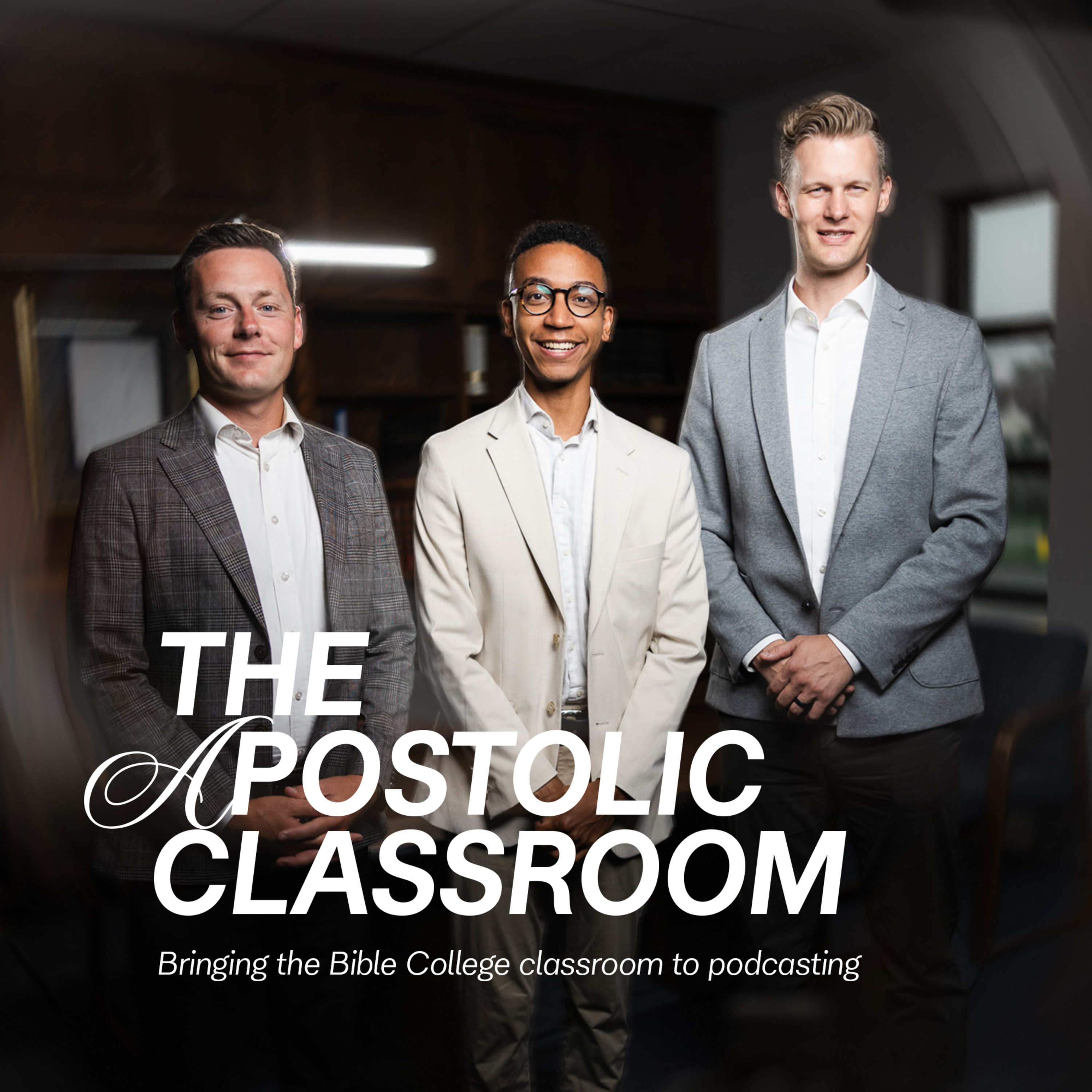
The Apostolic Classroom is a podcast featuring long-form discussions on Christian learning, theology, and biblical studies. It follows a semester-based structure of 16 episodes, bringing Bible college classroom discussions to listeners in podcast form. The show also offers published materials designed to equip educators and students in the Christian classroom.
Afleveringen
-
 Do the Gospels Contradict Each Other? Harmonizing the Resurrection Accounts 17.07.2026 27minIn this episode of The Apostolic Classroom, Steven Gill and Andrew Herbst conclude their discussion on the historical case for the resurrection by addressing one of the most common objections raised against the New Testament: Do the Gospel accounts contradict one another?Drawing from the resurrection narratives in Matthew, Mark, Luke, and John, the hosts examine several of the alleged discrepancies critics frequently point to—including the number of women at the tomb, the timing of the resurrection morning, the appearance of the angels, and the sequence of events surrounding the empty tomb. Rather than treating these differences as contradictions, the conversation demonstrates how the Gospel writers present complementary eyewitness perspectives that together provide a fuller picture of history.Along the way, Steven and Andrew explore the importance of historical method, audience, literary purpose, and sound biblical interpretation, showing why variation in eyewitness testimony often strengthens rather than weakens historical credibility. The discussion also highlights how Scripture communicates faithfully through distinct human authors while remaining unified in its central message.This episode concludes the resurrection section of Semester 2's apologetics series, equipping believers to thoughtfully respond to claims of biblical contradiction and to approach the Gospel accounts with greater confidence, clarity, and historical awareness.This episode of The Apostolic Classroom was sponsored by Liv Hill Nutrition. Visit them at livhillnutrition.net.
 -
Can the Resurrection Be Proven? Examining the Historical Evidence 26.06.2026 47minIn this episode of The Apostolic Classroom, Steven Gill and Andrew Herbst arrive at the central claim of the Christian faith: the resurrection of Jesus Christ.Building on the previous discussion surrounding the historical existence of Jesus, the conversation turns to the event upon which Christianity ultimately stands or falls. Drawing from Scripture, early Christian testimony, ancient historical sources, archaeology, and modern scholarship, the hosts examine why the resurrection is not merely a theological belief—but a historical claim that invites investigation.Key themes include Paul's argument in 1 Corinthians 15, the significance of eyewitness testimony, the early proclamation of Christ's resurrection, and the remarkable consistency of the historical record surrounding the empty tomb. Along the way, Steven and Andrew address many of the most common objections raised against the resurrection—including the stolen-body theory, the apparent-death hypothesis, and claims of mass hallucination—evaluating each in light of the historical evidence.Rather than asking listeners to embrace blind faith, this episode demonstrates that Christianity uniquely rests upon an event that can be historically examined. If Christ truly rose from the dead, then the resurrection becomes the foundation upon which every other Christian claim rests.As Semester 2 continues its focus on apologetics, this episode equips believers to thoughtfully defend the central event of the gospel and to understand why the resurrection remains the strongest historical argument for the truth of the Christian faith.This episode of The Apostolic Classroom was sponsored by Liv Hill Nutrition. Visit them at livhillnutrition.net.
-
Did Jesus Really Exist? The Historical Evidence for Christ 05.06.2026 1u 3minThe apologetics journey eventually arrives at one unavoidable question: What do we actually know about Jesus?In this episode of The Apostolic Classroom, Steven Gill and Andrew Herbst begin a two-part discussion on the historical evidence for Jesus Christ. Drawing from the New Testament, ancient historians, archaeology, and the broader historical record, they examine why Jesus stands apart from every other figure in human history—and why His existence is accepted by virtually all serious historians.The conversation explores the Gospel writers' commitment to historical detail, the significance of eyewitness testimony, and the ways figures such as Josephus, Tacitus, and other non-Christian sources corroborate key elements of the New Testament narrative. Along the way, the hosts address common misconceptions about the origins of Christianity, the reliability of the Gospels, and the claim that Jesus was merely a legendary figure developed over time.Rather than asking listeners to accept Christianity blindly, this episode demonstrates that the Christian faith is rooted in real people, real places, and real events. The evidence for Jesus is not confined to the pages of Scripture alone—it is woven throughout the historical record.As Semester 2 continues its focus on apologetics, this episode lays an essential foundation for understanding why the historical Jesus remains one of the most compelling and consequential figures ever to walk the earth.This episode of The Apostolic Classroom was sponsored by Liv Hill Nutrition. Visit them at livhillnutrition.net.
-
Biblical Archaeology and the Bible: Evidence, History, and Why It Still Matters (Bonus Episode) 01.05.2026 31minIn this bonus episode of The Apostolic Classroom, Steven Gill and Andrew Herbst turn to the field of biblical archaeology—examining how discoveries from the ancient world intersect with the claims of Scripture.Continuing the apologetics focus of Semester 2, the conversation explores a critical question: Is the Bible merely a collection of religious stories, or does it stand as real, verifiable history? Through examples drawn from archaeology, ancient writings, and historical records, the hosts demonstrate how the people, places, and events described in Scripture consistently align with what we find in the broader historical record.Key themes include the role of archaeology in validating historical claims, the relationship between doctrine and real-world events, and why Christianity cannot be separated from history without losing its foundation. The discussion also addresses common objections—such as the absence of evidence for certain events—and explains how archaeological discovery, by nature, is partial, developing, and often surprising.Along the way, Steven and Andrew highlight notable findings—from references to King David to parallels with the Exodus—showing how artifacts, inscriptions, and ancient texts contribute to a growing body of evidence that supports the Bible’s historical reliability.This episode provides a compelling introduction to biblical archaeology, equipping listeners with a deeper understanding of how history and Scripture converge—and why that matters for both faith and apologetics.
-
It’s Time To Return To The KJV (Here’s Why) 17.04.2026 1u 10minIn this episode of The Apostolic Classroom, Steven Gill and Andrew Herbst take on one of the most debated—and often misunderstood—topics in modern Christianity: Bible translations.Focusing on the King James Version, the conversation explores why the hosts continue to show strong confidence in its underlying manuscript tradition. Rather than appealing to preference or tradition alone, they examine the deeper question: What is beneath the English text?Building on previous discussions about New Testament manuscripts, this episode walks through key differences between translation philosophies, manuscript families, and how those differences can shape interpretation. Through real examples, the hosts demonstrate how variations between Bible versions can affect doctrine, raise theological questions, and even introduce apparent contradictions.At the same time, the conversation is framed with care and clarity—aiming not to attack individuals, but to thoughtfully present a conviction. Listeners will also hear a balanced perspective on common misconceptions, including what it does (and does not) mean to defend the KJV, and why the discussion is about preservation and transmission—not the perfection of early modern English.Whether you’ve never thought about textual history or you’ve wrestled with these questions before, this episode invites you to take a closer look at the Bible you’re reading—and why it matters.This episode of The Apostolic Classroom was sponsored by Liv Hill Nutrition. Learn more at livhillnutrition.net.
-
The Most Verified Book in History? Manuscripts, Myths, and the New Testament 10.04.2026 1u 3minIn this episode of The Apostolic Classroom, Steven Gill and Andrew Herbst turn to one of the most important questions in Christian apologetics: Can we trust the New Testament we have today?Moving beyond surface-level objections, the conversation explores how ancient manuscripts are evaluated—examining the role of age, quantity, and consistency in determining textual reliability. The hosts compare the New Testament’s manuscript tradition with other works of ancient history, highlighting just how unique the biblical record is in both its preservation and its proximity to the original writings.Along the way, they address common criticisms such as the “telephone game” analogy, claims of textual corruption, and questions about contradictions between manuscripts. By tracing the historical “paper trail” of the New Testament and engaging both scholarly and theological perspectives, the episode demonstrates why the Bible stands on remarkably strong evidential ground.This episode continues the apologetics focus of Season 2, equipping believers not only to trust the New Testament for themselves, but to confidently respond to modern skepticism with clarity and conviction.This episode of The Apostolic Classroom was sponsored by Liv Hill Nutrition. Visit them at livhillnutrition.net
-
Does Church History Matter? Why Yesterday’s Debates Still Shape What We Believe Today (Bonus) 20.03.2026 49minIn this bonus episode of The Apostolic Classroom, Steven explores a foundational apologetics question: Why does church history matter for believers today? Drawing from his essay in God’s Kingship, he examines how many of the theological debates Christians face today are not new—but deeply rooted in the earliest centuries of the church.The conversation challenges the assumption of “inevitable progress,” showing how doctrine has often developed through cycles of clarity, confusion, and correction rather than steady improvement. Through case studies of early Christian figures like Justin Martyr and Tertullian, Steven highlights how philosophical frameworks began shaping theological language—and in some cases, introduced ideas not found in the New Testament itself.Key themes include the importance of defining Christianity by Scripture rather than tradition, the danger of reading later ideas back into the Bible, and how church history helps believers discern not only what Christianity is—but what it is not. The episode also emphasizes the role of humility, urging listeners to engage theological differences with both conviction and grace.A thoughtful and challenging supplement to the Apologetics semester, this episode equips listeners to approach doctrine with historical awareness, biblical grounding, and a deeper understanding of how the past continues to shape the present.
-
Did Paul Abandon Judaism? Reframing the Apostle Paul (Bonus Episode) 13.03.2026 46minIn this bonus episode of The Apostolic Classroom, Steven Gill takes listeners inside one of the essays from the upcoming book God’s Kingship, offering a deeper look at the life, background, and theology of the Apostle Paul.Drawing from both Scripture and historical scholarship, Steven explores a common claim found in modern biblical studies—that Christianity emerged in two stages: an early Jewish form centered on Jesus and a later version shaped by Paul that departed from Judaism. Through a careful reading of the New Testament, he challenges this narrative and argues that Paul’s teaching was not a rejection of Judaism but a continuation and fulfillment of the Hebrew Scriptures.The episode examines Paul’s Jewish identity, his continued participation in Jewish practices after his conversion, and his consistent reliance on the Old Testament in teaching about Christ, salvation, and the nature of God. Steven also addresses modern misunderstandings surrounding Paul’s relationship to the law of Moses, the role of Gentiles in God’s plan, and the dangers of both replacement theology and attempts to impose Jewish law on the church.By reframing Paul within his historical and biblical context, this episode highlights how the apostle understood the church not as a radical departure from Israel, but as the fulfillment of God’s promises revealed in the law and the prophets.This bonus episode offers listeners a preview of one of the essays included in God’s Kingship, the companion volume developed alongside the first semester of The Apostolic Classroom. Learn more at https://publications.truthbook.co/godskingship.
-
Can We Trust The Bible We Have Today? Exploring The Trustworthiness of Scripture 06.03.2026 1u 7minIn this episode of The Apostolic Classroom, Steven Gill, Jeremias Zuniga, and Andrew Herbst continue their discussion on one of the most important questions in Christian apologetics: how we can trust the Bible we have today.Building on the previous episode’s exploration of how the canon of Scripture was recognized, the conversation turns to the preservation, transmission, and reliability of the biblical text. The hosts examine how the early church identified apostolic writings, why certain books were received as authoritative, and how the canon developed through recognition rather than invention.Along the way, they address common misconceptions about how the Bible was formed, discuss the role of the early church in preserving Scripture, and consider why the canon remains a crucial foundation for Christian theology and practice. Rather than viewing the Bible as a collection of writings assembled centuries later by institutional authority, the discussion highlights how the canon emerged organically within the life of the early church as believers recognized the voice of God in apostolic teaching.This episode continues the apologetics framework of Season 2, helping believers understand and articulate why the Bible can be trusted as the preserved Word of God.This episode of The Apostolic Classroom was sponsored by Liv Hill Nutrition. Visit them at livhillnutrition.net
-
The Canon of Scripture: How the Early Church Guarded the Bible 27.02.2026 51minIn this episode of The Apostolic Classroom, Steven and Andrew move from theology to history—examining how the early church understood, received, and defended the canon of Scripture.Was the Bible assembled centuries later by church councils? Were there competing “Christianities” with competing Bibles? Or was there a consistent apostolic core recognized from the beginning?Drawing from early sources such as Irenaeus, the Muratorian Fragment, Origen, Eusebius, and Athanasius, the hosts show that the canon was not created by vote or preference—but guarded against distortion.Rather than inventing Scripture, early Christians defended what they had received.Season 2 continues its focus on apologetics, equipping believers to understand the historical integrity of the Bible and to answer modern skepticism with confidence. This episode of The Apostolic Classroom was sponsored by Liv Hill Nutrition. Visit them at livhillnutrition.net
-
Who Decided What Books Belong in the Bible? Canon, Authority, and Preservation 20.02.2026 1u 14minIn this episode of The Apostolic Classroom, Steven Gill and Andrew Herbst turn to one of the most foundational questions in Christian apologetics: Who decided what books belong in the Bible?Rather than beginning with church councils or popular internet theories, the discussion starts where it must—with theology. The hosts explore the meaning of “canon,” clarifying the difference between recognizing Scripture and creating it. They address common misconceptions about the Council of Nicaea, the role of church authority, and the claim that the Bible was assembled cafeteria-style by powerful leaders centuries after the apostles.Key themes include apostolic authority, internal biblical evidence for canonicity, the early church’s recognition of Scripture, and why quotations from books like Enoch or references to extra-biblical writings do not automatically grant them scriptural status. The conversation also examines how forged gospels and pseudonymous writings were identified and rejected in the early centuries, demonstrating that early Christians were neither naïve nor careless in handling sacred texts.Far from being a product of ecclesiastical politics, the canon emerges as something received, preserved, and defended—grounded in apostolic witness and affirmed by the church rather than invented by it.This episode advances the apologetics framework of Season 2, equipping believers to respond thoughtfully to questions about the Bible’s formation and to articulate why the sixty-six books of Scripture stand with enduring authority.This episode of The Apostolic Classroom was sponsored by Liv Hill Nutrition. Visit them at livhillnutrition.net
-
Christianity and Science: Friends, Not Enemies 06.02.2026 57minIn this episode of The Apostolic Classroom, Steven Gill and Andrew Herbst tackle one of the most persistent questions in modern apologetics: Is Christianity compatible with science?Rather than rehearsing caricatures or surface-level talking points, the conversation reframes science as a method of inquiry—not a rival worldview—and explores how scientific discovery and Christian theology have historically informed one another. Drawing from philosophy, church history, and well-documented scientific developments, the hosts examine how figures such as Galileo, Newton, Boyle, and Maury understood their work not as a challenge to Scripture, but as an outgrowth of belief in a rational, ordered Creator.Key themes include the limits of scientific certainty, the difference between observability and metaphysics, the misuse of poetic and literary biblical texts in anti-Christian arguments, and why appeals to “settled science” often reveal philosophical assumptions rather than empirical conclusions. The discussion also addresses common objections surrounding evolution, thermodynamics, cosmology, and biblical interpretation—showing how many modern critiques of Christianity rest on misunderstandings of both science and Scripture.This episode advances the apologetic framework of Season 2 by equipping believers to respond thoughtfully to claims that science has disproven the Bible—and by demonstrating that faith and reason, rightly understood, are not enemies but allies in the pursuit of truth.This episode of The Apostolic Classroom was sponsored by Testament Coffee Roasters. Visit them at testament.coffee
-
Has God Spoken? Revelation, Scripture, and Why the Bible Can Be Trusted 30.01.2026 1u 4minIn this episode, Steven, Jeremias, and Andrew move from the existence of God to the issue of revelation—examining how and why God makes Himself known. Rather than assuming the authority of Scripture, the conversation explores the necessity of revelation for any meaningful Christian worldview and why the Bible stands at the center of the faith.The hosts distinguish between general and special revelation, discussing what creation reveals about God and why Scripture is essential for knowing Him personally. Along the way, they address common misunderstandings surrounding biblical authority, inspiration, and interpretation, showing how revelation forms the backbone of Christian theology, worship, and practice.This episode advances the apologetics framework of Season 2, equipping believers to understand, articulate, and defend why Scripture matters—and why revelation is essential to the Christian faith.This episode of The Apostolic Classroom was sponsored by Full Armor Training. Visit them at https://www.facebook.com/Fullarmortrainingllc/.
-
Season 2 Premiere: Why Apologetics Matters for the Modern Church 23.01.2026 1u 14minSemester 2 of The Apostolic Classroom begins with a new focus: apologetics.In this season premiere, Steven, Jeremias, and Andrew lay the foundation for why defending the Christian faith matters in the modern church. Rather than beginning with debates or objections, the conversation centers on the purpose, posture, and responsibility of apologetics in a skeptical age.The hosts discuss common misunderstandings of Christianity, the dangers of shallow answers, and the need for believers to be grounded in Scripture, history, and sound reasoning. Drawing from biblical and historical examples, they explore how apologetics serves the church—not as a tool for winning arguments, but as a means of preserving truth, strengthening faith, and faithfully representing Christ.This episode sets the tone for Season 2, establishing a thoughtful, apostolic framework for engaging questions, challenges, and objections to the Christian faith.This episode of The Apostolic Classroom was sponsored by Exousia Group. Visit them at exousiagroup.com.
-
Celebrating Christ at Christmas | History, Scripture, and Christian Conviction 26.12.2025 1u 2minChristmas is one of the most widely celebrated holidays in the Christian world—but it’s also one of the most debated.In this special Christmas episode of The Apostolic Classroom, Steven Gill, Jeremias Zuniga, and Andrew Herbst take a thoughtful, biblical look at the question: Should Christians celebrate Christmas?The discussion explores the historical development of Christmas, common objections surrounding its origins, and—most importantly—how Scripture guides Christian worship, conscience, and liberty. Rather than approaching the topic polemically, the hosts aim to bring clarity, balance, and biblical grounding to a conversation that often generates more heat than light.Whether you’ve celebrated Christmas your whole life, questioned it, or avoided it altogether, this episode invites believers to think carefully, biblically, and charitably about how Christ is honored.Pre-order God's Kingship at https://publications.truthbook.co/godskingship
-
God’s Kingship: A New Book for Biblical Study — Pre-Orders Now Open 19.12.2025 25minIn this special launch episode of The Apostolic Classroom, Steven, Jeremias, and Andrew introduce God’s Kingship—the new companion volume developed alongside Semester 1 of the podcast.Over the course of the semester, the hosts committed to writing essays that would parallel and expand upon each week’s discussion, resulting in a collection of forty-two essays tracing God’s kingship from Genesis through church history. In this conversation, they reflect on the vision behind the book, the decision to prioritize clarity and accessibility over exhaustive treatment, and the desire to create a resource valuable for students, pastors, teachers, and serious readers of Scripture.Topics include the structure of the book, the balance between biblical theology and historical scholarship, the role of careful sourcing and footnoting, and the importance of engaging respectfully with both Apostolic and non-Apostolic scholarship. The hosts also discuss the significance of the cover design, the use of archaeological and historical evidence, and their hope that the book will serve as an entry point into deeper theological study rather than a final word on the subject.This episode offers listeners a behind-the-scenes look at how God’s Kingship came together, why it exists, and how it is intended to be used—as a tool for learning, teaching, and continued conversation about the identity of Jesus Christ and the nature of God’s rule throughout Scripture.
-
Hermeneutics & the Godhead: How to Read the Bible Faithfully (Bonus Episode) 12.12.2025 26minIn this bonus episode of The Apostolic Classroom, Steven and Andrew explore one of the most foundational disciplines in all theological study: hermeneutics—the principles and processes of interpreting Scripture. Drawing from years of classroom experience at Indiana Bible College, they discuss why every believer already uses a hermeneutic (whether they realize it or not), how interpretation shapes application, and why mishandling Scripture can lead even sincere readers toward serious error.Key themes include the difference between faithful and harmful interpretive lenses, the importance of reading the New Testament through the Old, the danger of forcing Christological or allegorical meanings where the biblical authors did not place them, and the need for humility, context, and patience in studying God’s Word. The hosts also outline practical steps for better Bible reading—observation, correlation, interpretation, and application—and explain why preaching and teaching must stay rooted in the actual text rather than clever ideas or inspirational detours.A timely and clarifying conversation for anyone who wants to handle Scripture with integrity, avoid common interpretive pitfalls, and grow in reading the Bible the way the apostles did. A valuable supplement to Semester 1 of God’s Kingship.
-
Bonus Episode: Using Biblical Languages Well — Tools, Caution, and Confidence in Scripture 05.12.2025 36minIn this bonus episode of The Apostolic Classroom, Andrew and Jeremias step aside from the main semester arc to discuss a topic that affects every serious student of Scripture: how to engage the biblical languages wisely and fruitfully. Whether someone has formal training in Hebrew and Greek or has only used tools like concordances and interlinears, this conversation helps listeners understand both the benefits and the pitfalls of working with the original text.Drawing from their academic backgrounds, the hosts explain how biblical languages can illuminate nuance, deepen confidence in translation, and sharpen a preacher’s understanding—while also stressing the importance of humility, context, and good hermeneutics. They discuss common mistakes (such as picking favorite definitions from a lexicon), the limitations of modern Hebrew/Greek for interpreting ancient forms, how grammatical features shape meaning, and why biblical languages are never meant to be mystical shortcuts to revelation.The episode concludes by offering practical guidance: recommended tools, accessible starting points, trustworthy learning pathways, and examples of how even small steps—like learning the alphabet—can enrich one’s devotional and teaching life.A thoughtful and encouraging bonus conversation reminding listeners that while biblical languages are valuable, God’s Word in faithful translation remains fully capable of forming, guiding, and transforming His people.
-
Trinitarian Proof Texts Revisited: Scripture, Context, and the Language of the Son 28.11.2025 1u 1minIn this final episode of Semester 1, God’s Kingship, Steven, Jeremias, and Andrew revisit some of the most commonly cited “Trinitarian proof texts” and walk through how these passages have been understood across Scripture, history, and scholarship. Designed as a quick-reference guide, this discussion brings clarity to verses frequently raised in theological debates—particularly Genesis 1:26, the baptism of Jesus, and the Great Commission in Matthew 28:19.The hosts explore how Old Testament background, Hebrew grammar, and early Jewish thought shape these texts, explaining why neither Jesus nor the New Testament authors present them as evidence of a triune Godhead. They unpack the plural language of Genesis, the royal-anointing imagery behind Jesus’ baptism, and the apostolic application of the name of Jesus in the early church. Together, they demonstrate how the New Testament uses distinction language within the framework of covenant, kingship, and Christ’s mission—not as metaphysical statements about multiple divine persons.Far from fueling argument, this episode offers listeners a charitable, text-centered approach to some of the most frequently misunderstood verses in modern theological discourse—closing the semester with clarity, depth, and renewed confidence in the biblical revelation of one God.
-
Father & Son Language in the New Testament: Sonship, Submission, and the Last Adam 21.11.2025 1u 12minIn this episode of The Apostolic Classroom, Steven, Jeremias, and Andrew explore one of the most frequently misunderstood themes in the New Testament: the Father & Son language surrounding Jesus Christ. Rather than reading these passages through later philosophical frameworks, the hosts return to Scripture itself—tracing how the Gospels and Epistles use “Son of God,” “Son of Man,” and “Father” to reveal Christ’s mission, identity, and role as the last Adam.Key topics include Jesus’ high-priestly prayer in John 17, the meaning of distinction language in the Gethsemane prayers, Paul’s Adam/Christ comparisons in Romans and 1 Corinthians, and why oneness theology takes Scripture’s sonship terminology seriously rather than explaining it away. The discussion also unpacks the biblical pattern of the firstborn, the Son’s obedience as the fulfillment of covenant fidelity, and how God was “in Christ reconciling the world unto Himself.”Along the way, the hosts address common Trinitarian objections, evaluate misunderstood proof texts, and show how the New Testament presents Jesus not as “God the Son,” but as the Son of God—God manifested in the flesh, the anointed King, and the obedient mediator who restores what Adam lost.A foundational episode for understanding how the New Testament actually uses Father & Son language—and why it reinforces, rather than challenges, the oneness of God revealed in Jesus Christ.
Vergelijkbare podcasts


Populair in
Deze podcast verschijnt ook in de podcastlijsten van deze landen.
