
Oxford Policy Pod
Students at the Blavatnik School of Government, Oxford University
0
A bi-weekly policy podcast based out of the Blavatnik School of Government at the University of Oxford. It explores pressing policy issues around the globe and is produced by students reading for a Master of Public Policy. The podcast taps into the rich diversity of policy experience and insights of the student body and faculty.
Episoder
-
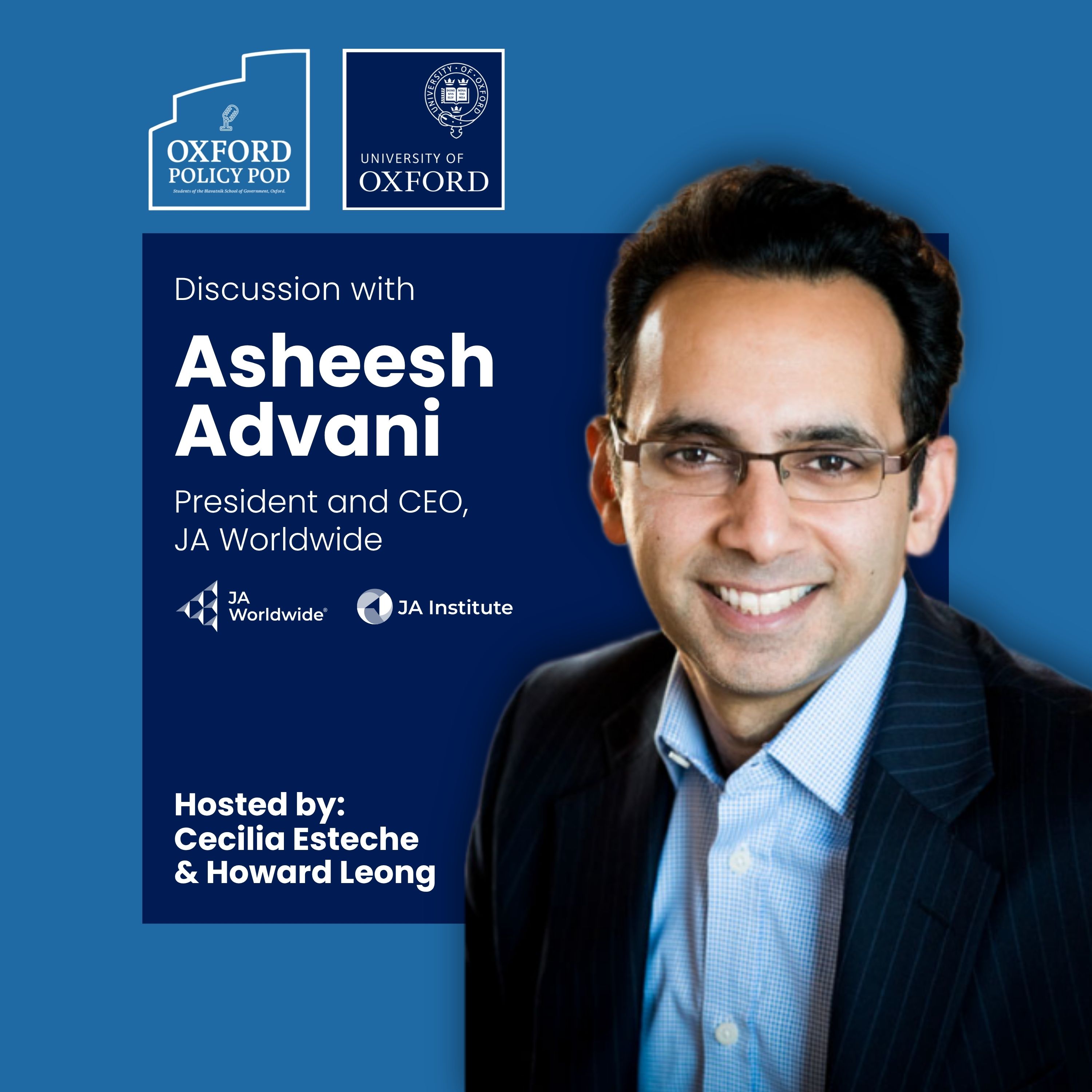 Scaling What Works: Asheesh Advani on Education, Entrepreneurship and Opportunity 09.09.2026 44minIn this episode of the Oxford Policy Pod, Cecilia Esteche and Howard Leong sit down with Dr. Asheesh Advani, President and CEO of JA Worldwide, one of the world’s largest youth-serving nonprofits.JA Worldwide delivers millions of learning experiences each year across more than 120 countries, helping young people develop skills in entrepreneurship, work readiness, and financial capability.We explore how JA scales impact through partnerships with governments, businesses, educators, and volunteers; how it maintains an entrepreneurial culture while operating globally; and what education systems can learn from experiential, hands-on learning.Recorded at the Blavatnik School of Government, University of Oxford.
 -
 From U.S. Ambassador to Impact Investment | John Simon 03.09.2026 32minIn this new episode of the Policy Pod, MPP students Marc Naro and Yacine Ouahioune host John Simon, former U.S. Ambassador to the African Union and now CEO of Total Impact Capital, an impact investment firm mobilising private capital to address global development challenges.Ambassador Simon previously held senior roles at the White House, USAID and the Overseas Private Investment Corporation (OPIC), working at the intersection of diplomacy, development finance and investment.Drawing on his experience across government and finance, the conversation explores his journey from U.S. diplomacy to impact investing and the role of private capital in advancing sustainable development.Recorded at the Blavatnik School of Government, University of Oxford.
 -
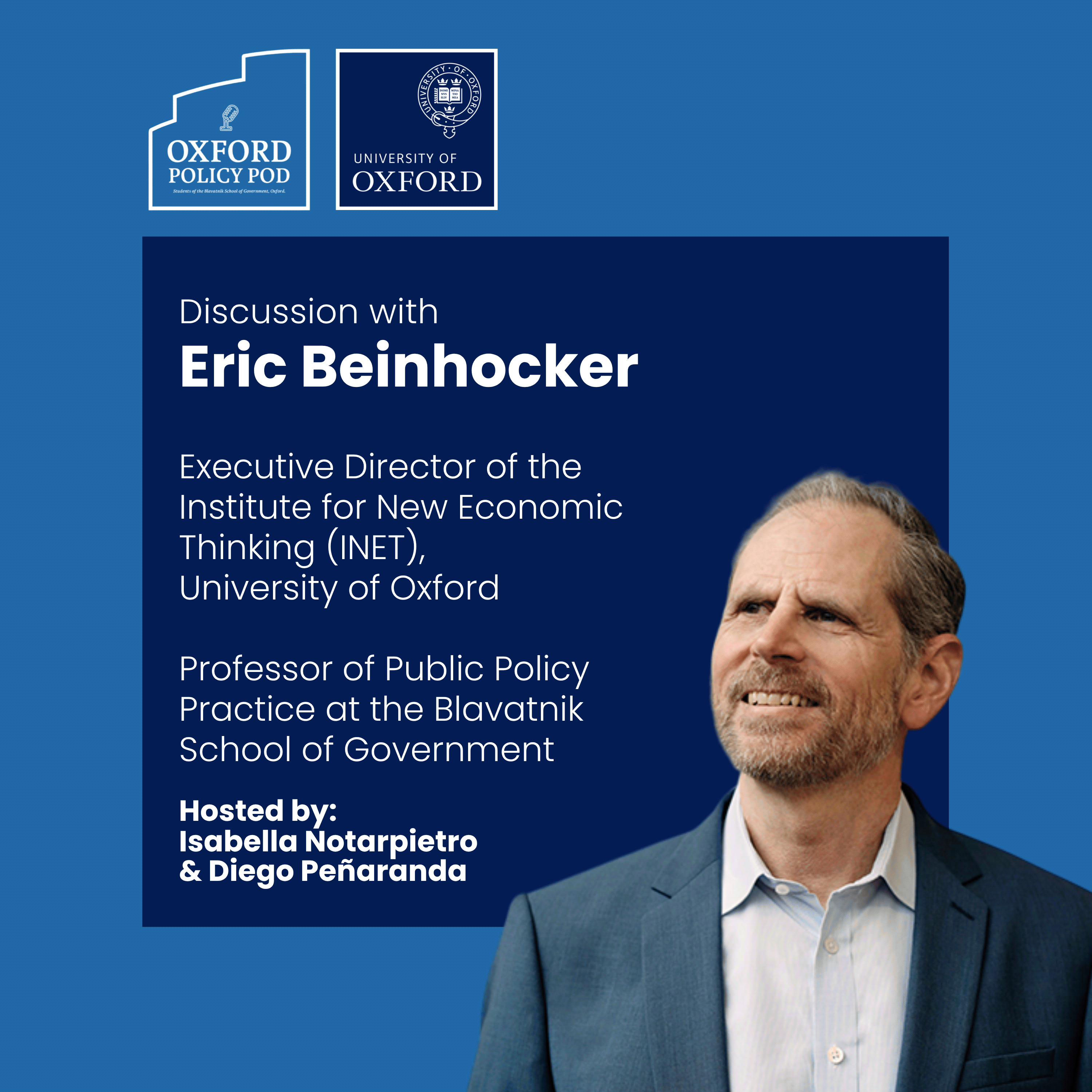 Building A New Economics for Human Flourishing | Eric Beinhocker 28.08.2026 55minIn this episode of the Oxford Policy Pod, MPP students Diego Peñaranda and Isabella Notarpietro sit down with Eric Beinhocker, founder and Executive Director of the Institute for New Economic Thinking (INET) at the University’s Oxford Martin School and Professor of Public Policy Practice at the Blavatnik School of Government.Beinhocker introduces complexity economics, or “new economics” as he calls it, and explains how this emerging paradigm changes the way we understand the economy, approach public policy, and tackle major challenges such as artificial intelligence and the energy transition.The discussion also explores Beinhocker’s upcoming book, Market Humanism, which makes the case for reshaping our economy and politics around the goal of human flourishing to build a more just, sustainable, and prosperous society.Further information on Beinhocker’s work can be found in the links below:Markets Built for Humans policymaker booklet: https://www.marketsbuiltforhumans.org/“The Economic Experiment That Upended Reality”, The Atlantic: https://www.theatlantic.com/ideas/2026/05/minimum-wage-experiment-worked/687255/“Market Humanism: A New Paradigm for a New Era”, Democracy Journal: https://democracyjournal.org/magazine/81/market-humanism-a-new-paradigm-for-a-new-era/Institute for New Economic Thinking (INET) Oxford research centre: https://www.inet.ox.ac.uk/
 -
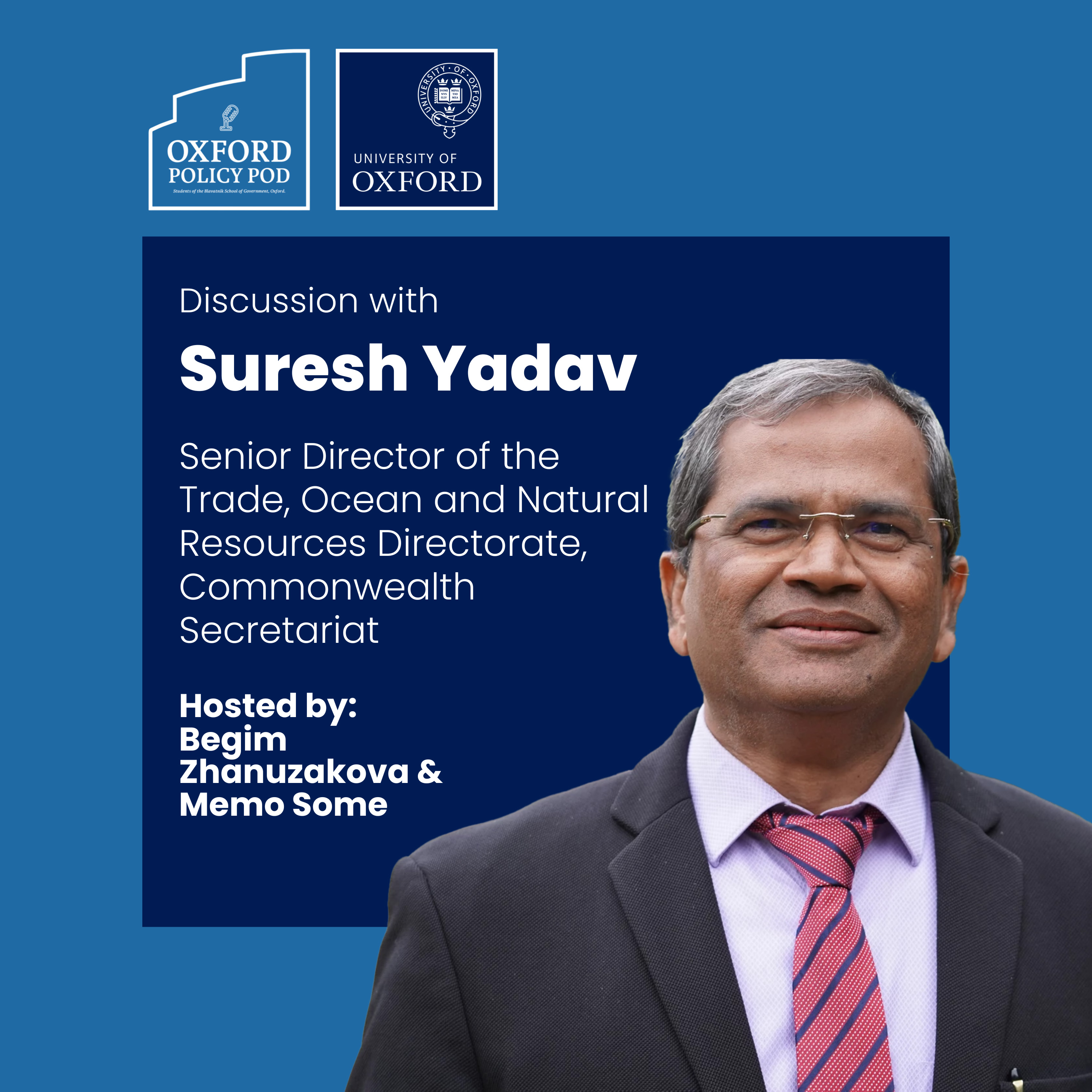 Navigating Climate, Artificial Intelligence and Global Governance Across Borders 16.08.2026 1t 13minIn this episode of the Oxford Policy Pod, host Begim Zhanuzakova, joined by co-host Memo Some, sits down with Mr. Suresh Yadav, Director at the Commonwealth Secretariat, to discuss the future of global governance in an era of geopolitical uncertainty, climate change and artificial intelligence.Drawing on a career spanning the Government of India, the World Bank Group and the Commonwealth Secretariat, Mr. Yadav shares insights on leadership, multilateral cooperation and the challenges of governing an increasingly interconnected world.Together, they explore how AI is reshaping climate governance, why trust and climate finance remain central to international cooperation, what to expect from COP31, and how geopolitical tensions and energy security are redefining the global climate agenda. The conversation also examines the role of young people in public policy and what effective global leadership will require in the decade ahead.
 -
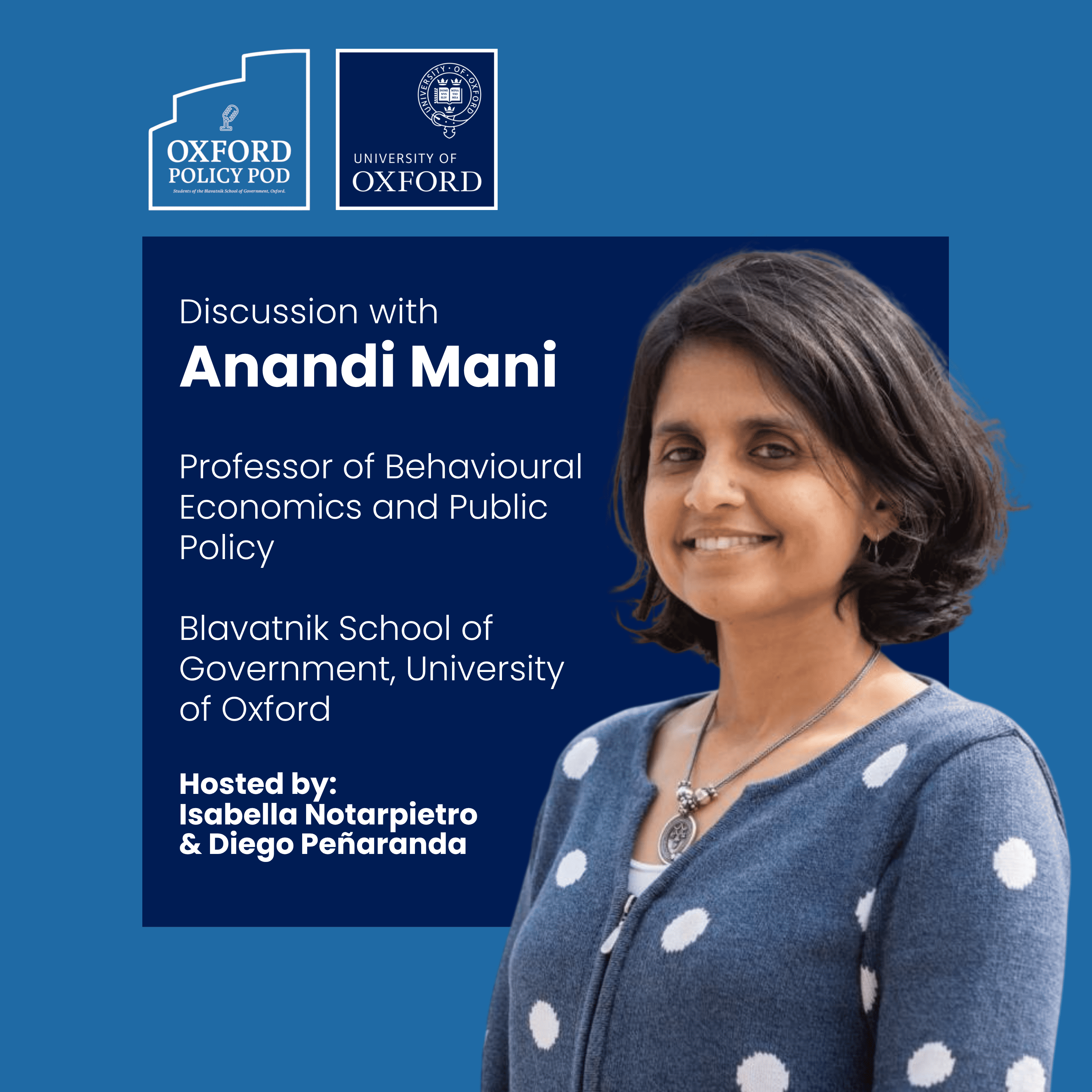 How Poverty Shapes the Way We Think | Anandi Mani 13.08.2026 49minIn this episode of the Oxford Policy Pod, MPP students Isabella Notarpietro and Diego Peñaranda sit down with Professor Anandi Mani, Professor of Behavioural Economics and Public Policy at the Blavatnik School of Government, University of Oxford. Drawing on her influential research on poverty and cognitive function, Professor Mani answers why people sometimes make decisions that seem to go against their own interests, and how poverty itself changes the way we think and make choices.The conversation explores what behavioural economics can teach us about poverty, the timing and design of cash transfers, the additional constraints faced by women, the role of identity in shaping economic behaviour, and how these insights can lead to better policy design.
 -
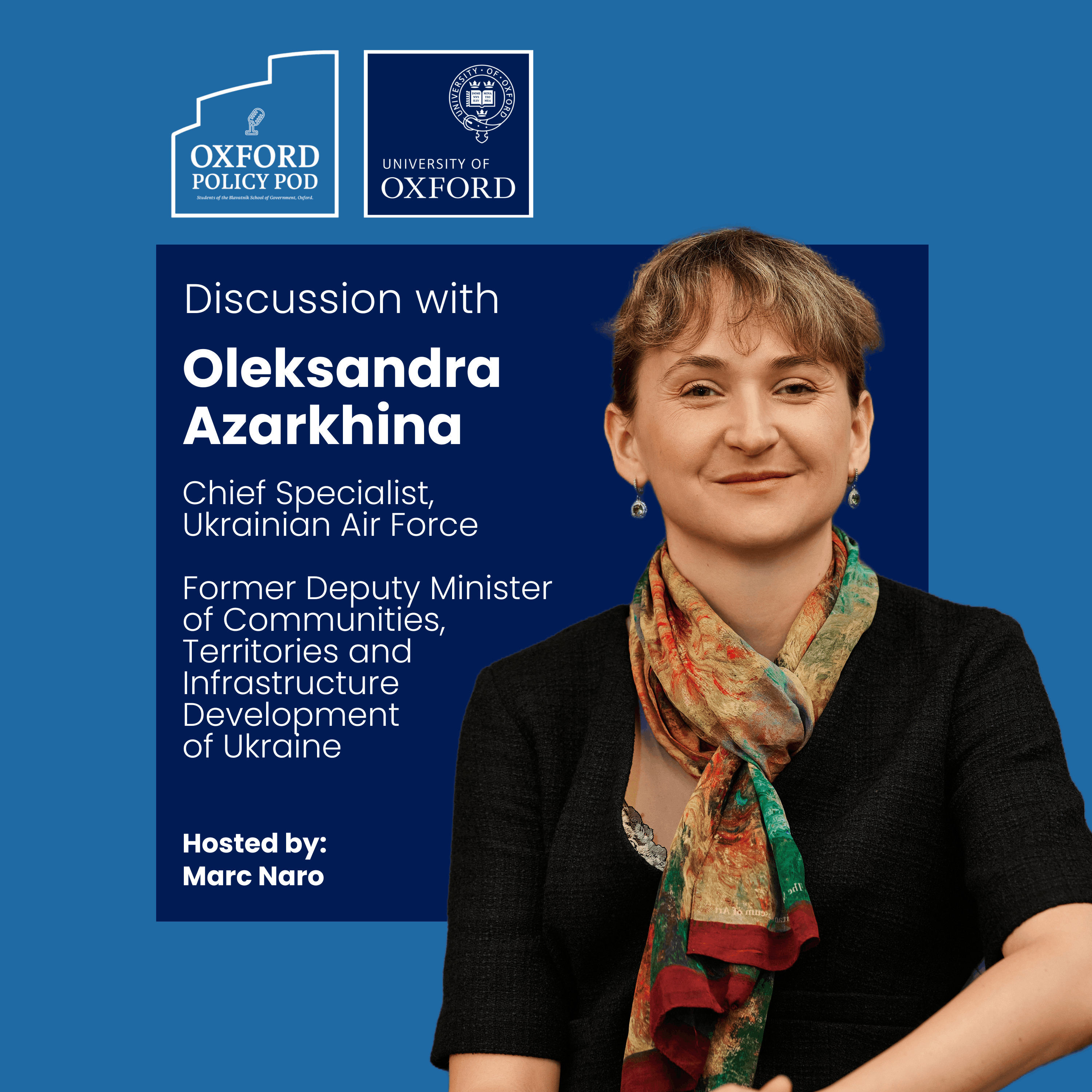 How Ukraine Plans to Win the War & Rebuild the Nation | Oleksandra Azarkhina 04.08.2026 36minHow does a country rebuild while fighting for its survival?In this episode of the Oxford Policy Pod, MPP student Marc Naro interviews Oleksandra Azarkhina, International Lead of the Small Air Defence Command of the Ukrainian Air Force, former Deputy Minister for Communities, Territories and Infrastructure Development of Ukraine.Drawing on her experience at the highest levels of government throughout Russia's full-scale invasion, Oleksandra discusses Ukraine's reconstruction strategy, the creation of a groundbreaking digital reconstruction platform to combat corruption, the coordination of international military and humanitarian assistance, and the development of Ukraine's defence industry. She also reflects on the growing importance of international cooperation in air defence, the protection of critical infrastructure, and the lessons Ukraine's wartime experience holds for Europe and its allies.From digital governance and defence innovation to public service in times of war, this conversation offers a unique insider's perspective on how Ukraine is planning not only to defend itself today, but to rebuild for the future.
 -
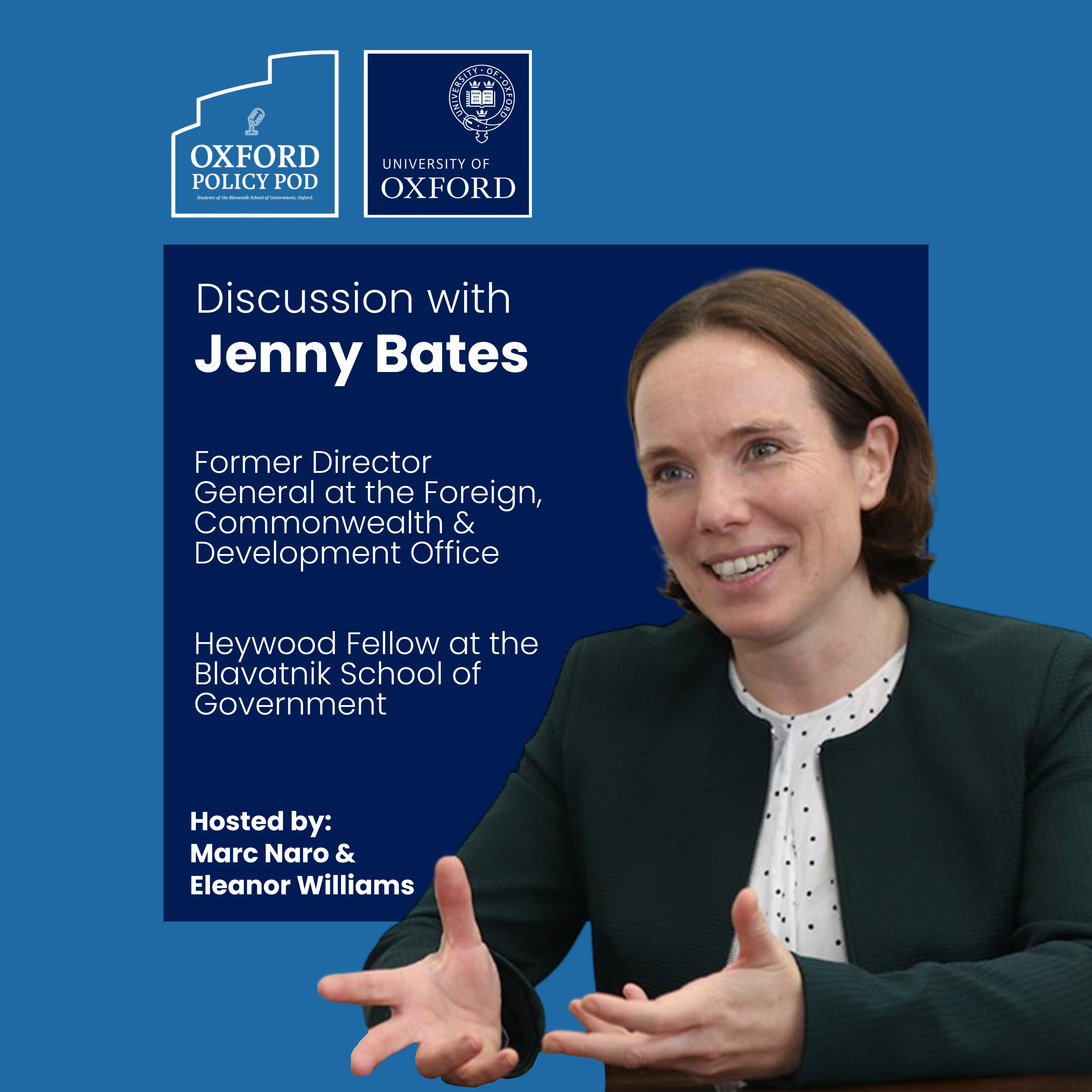 Rethinking Britain's Strategy for a Changing World with Jenny Bates 01.08.2026 21minAs the global economic order undergoes profound change, what kind of national strategy does the UK need? In this episode, Jenny Bates, 2025–26 Heywood Fellow at the Blavatnik School of Government and Former Director General at the UK's Foreign, Commonwealth & Development Office (FCDO), discusses how Britain can navigate an increasingly uncertain global landscape.Interviewed by MPP students Marc Naro and Eleanor Williams, the conversation explores the changing global economic order, strategic policymaking, and the UK's future role in the world.Recorded at the Blavatnik School of Government, University of Oxford.
 -
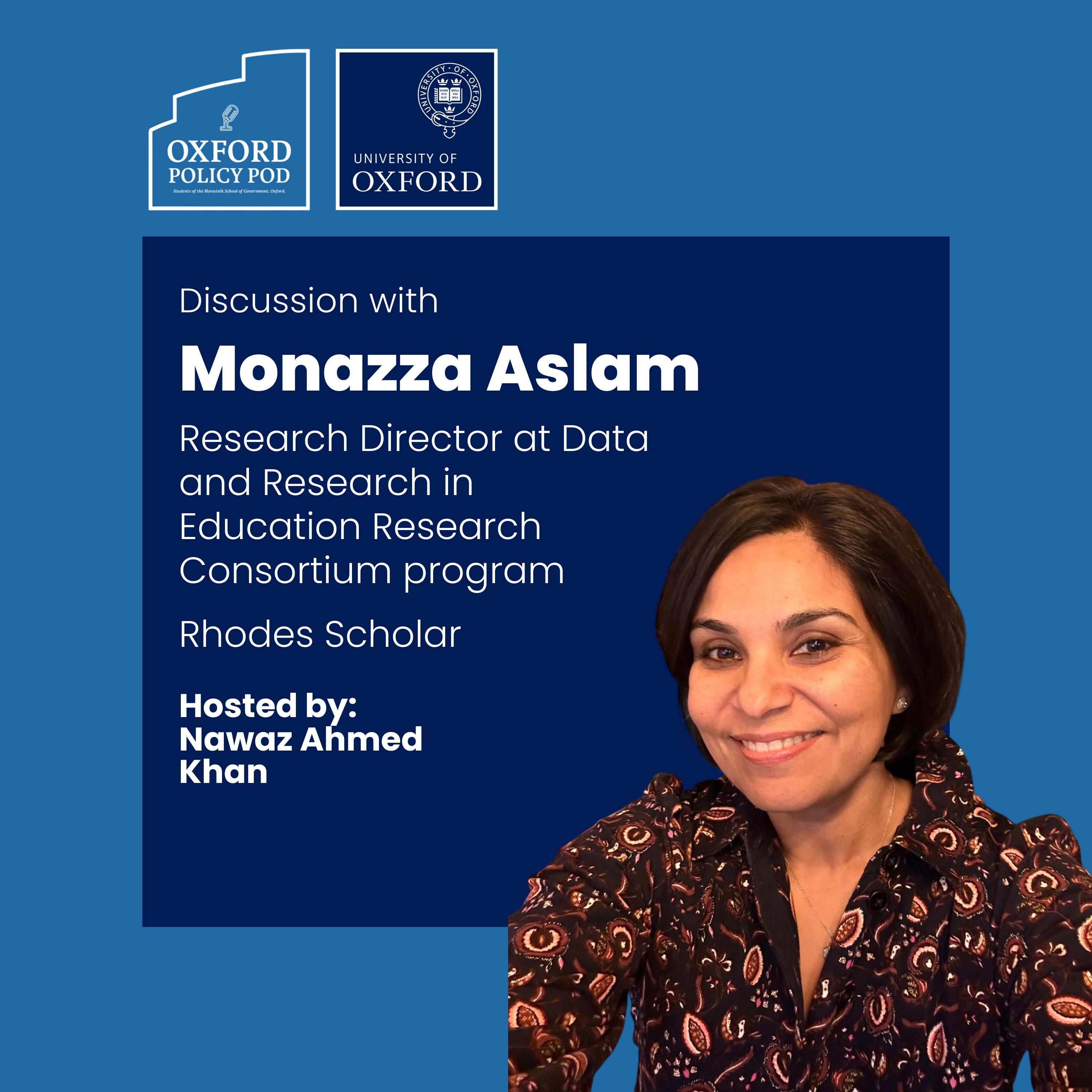 From Evidence to Action: How Research Can Strengthen Education Systems 29.07.2026 51minIn this episode of the Oxford Policy Pod, Nawaz sit down with Dr Monazza Aslam, Research Director of the Data and Research in Education Research Consortium (DARE-RC), a leading education researcher, to explore how evidence can strengthen education systems and shape better public policy.Together, they discuss why improving learning outcomes remains one of the most persistent challenges facing low and middle income countries, why investing in research is just as important as investing in schools, and how programmes like DARE-RC are working to bridge the gap between evidence and policymaking. They also examine what separates research that informs government decisions from research that remains on the shelf, drawing on DARE-RC's work in Pakistan and its engagement with policymakers to translate findings into practical reforms.Dr Monazza Aslam also reflect on the importance of building local research capacity, strengthening partnerships between researchers and governments, and where future investments in education should be directed if countries are to deliver meaningful improvements in learning.
 -
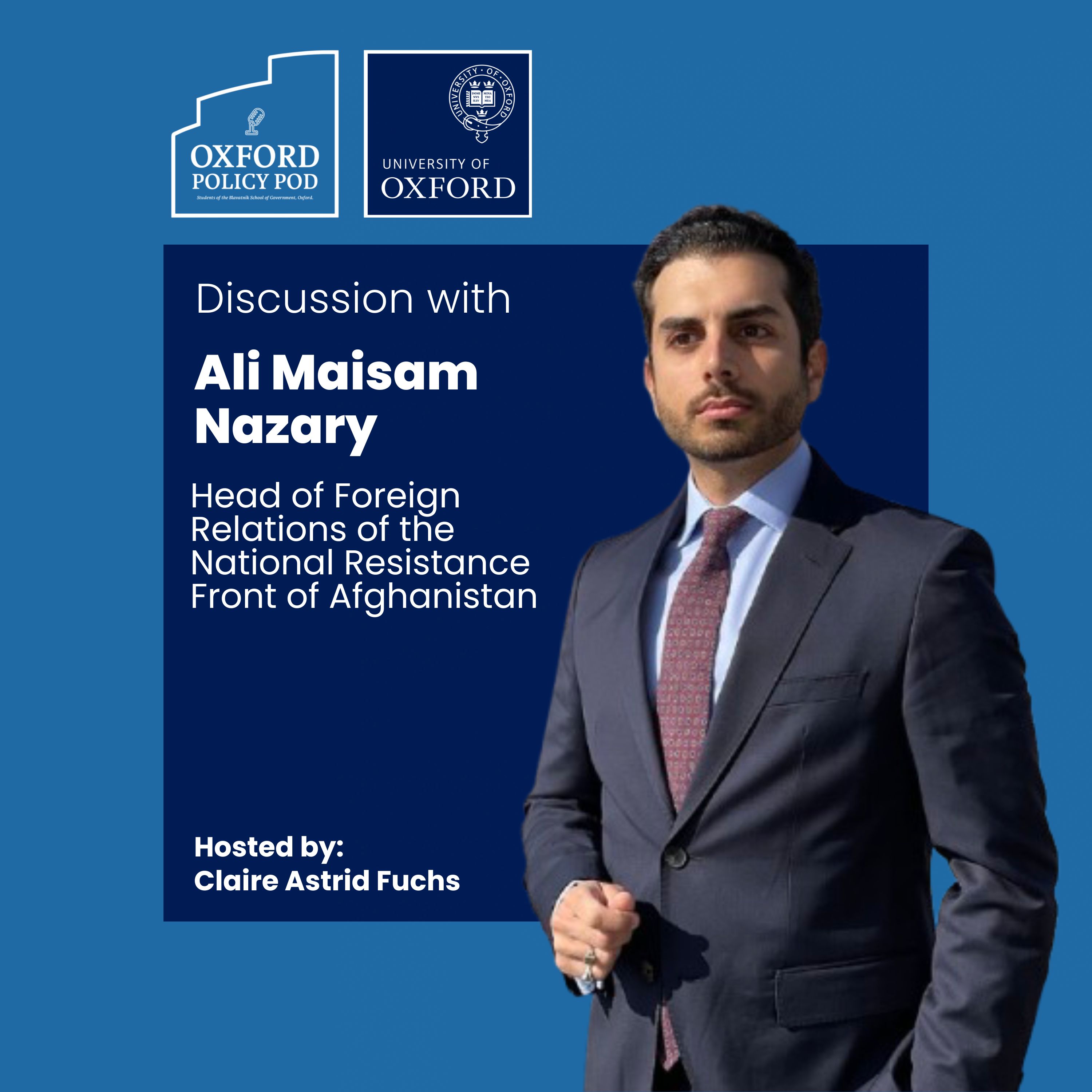 Inside Afghanistan's Resistance: A Conversation with Ali Maisam Nazary 27.07.2026 54minIn this episode, BSG MPP student Claire Astrid Fuchs speaks with Ali Maisam Nazary, Head of Foreign Relations of the National Resistance Front of Afghanistan (NRF), about the country's evolving security landscape. Together, they examine the collapse of the former Afghan government, the impact of the Doha Agreement, and the rise of Taliban rule, exploring how these developments have reshaped Afghanistan's political and security environment. The conversation also considers the role of the National Resistance Front, the challenges facing the Afghan people, and the prospects for Afghanistan's future security and governance amid ongoing regional and international uncertainty.
 -
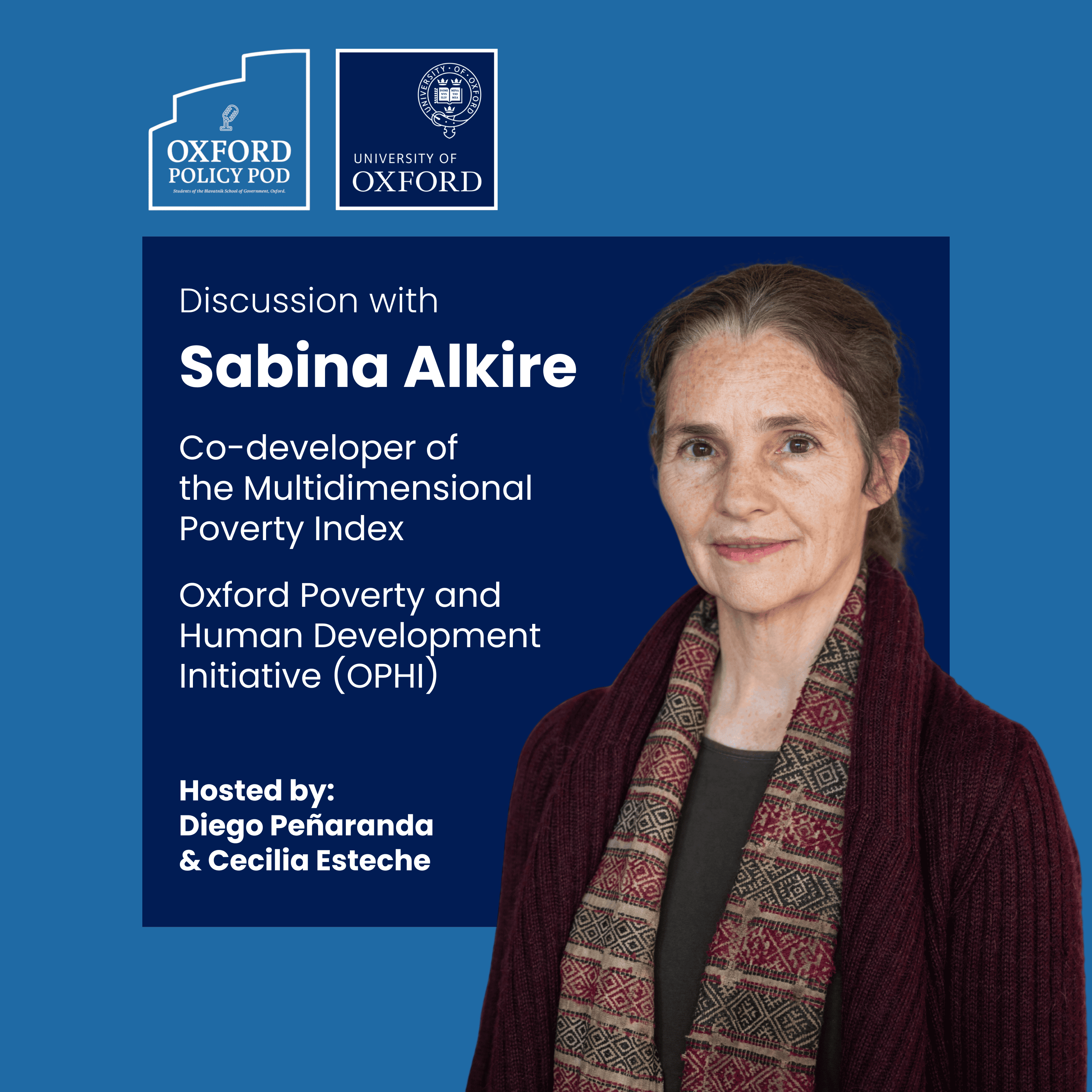 Beyond Income: Rethinking Poverty with Sabina Alkire 23.07.2026 50minIs poverty simply about income, or is it about opportunities, health, education, dignity, and the freedom to live the life you value? In this episode, we are joined by Professor Sabina Alkire, Director of the Oxford Poverty and Human Development Initiative (OPHI) at the University of Oxford and one of the pioneers of multidimensional poverty measurement. We talk about her remarkable academic journey, the ideas behind the Multidimensional Poverty Index, how it has shaped public policy around the world, and why measuring poverty differently can ultimately help improve millions of lives.A fascinating conversation for anyone interested in economics, development, and evidence-based public policy. 🎙 Hosted by MPP students Diego Peñaranda and Cecilia Esteche. #OxfordPolicyPod #UniversityOfOxford #Oxford #PublicPolicy #HumanDevelopment #MultidimensionalPoverty #DevelopmentEconomics #EvidenceBasedPolicy
 -
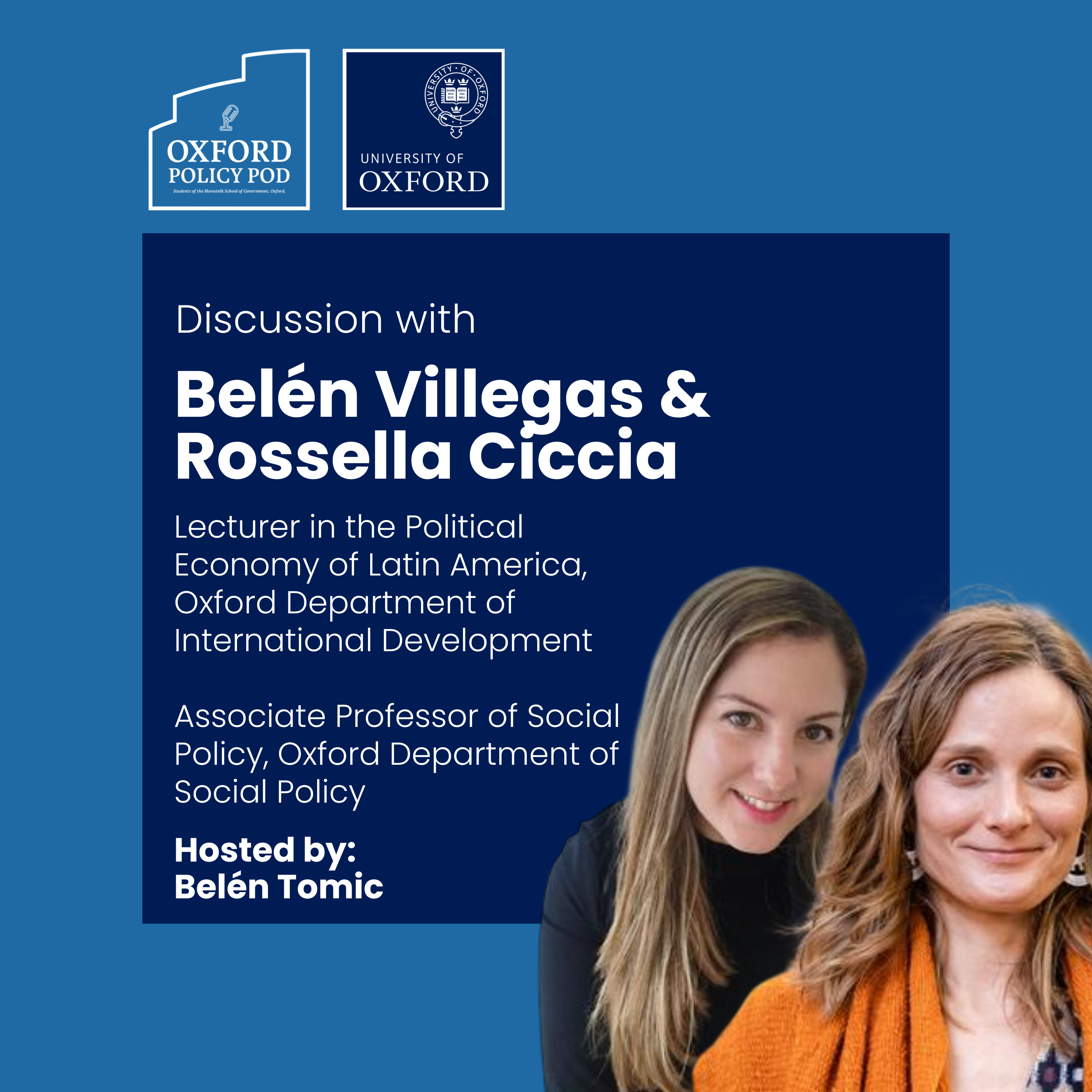 The Politics of Care: A conversation with Belén Villegas & Rossella Ciccia 20.07.2026 50minIn this episode of the Oxford Policy Pod, Belén Tomic sits down with Dr. Belén Villegas Plá and Dr. Rossella Ciccia to talk about care, its many forms, and who bears its weight.Belén Villegas Plá is Lecturer in the Political Economy of Latin America at the Oxford Department of International Development, and Rossella Ciccia is Associate Professor of Social Policy at the Oxford Department of Social Policy and Intervention.Together, they explore how and why care has become such a politically salient issue over the past decade, the role feminist movements have played in putting it on the agenda in Latin America, and why the region has become such an important space for these discussions. The conversation also examines the challenges of turning care demands into lasting policy where social protection is fragmented and state capacity is limited.Drawing on both Latin American and European experiences, Belén and Rossella reflect on what a caring society would look like, what it would take to treat care as a shared social responsibility rather than a private burden carried disproportionately by women, and why redistributing unpaid care work remains one of the defining challenges of contemporary social policy.
 -
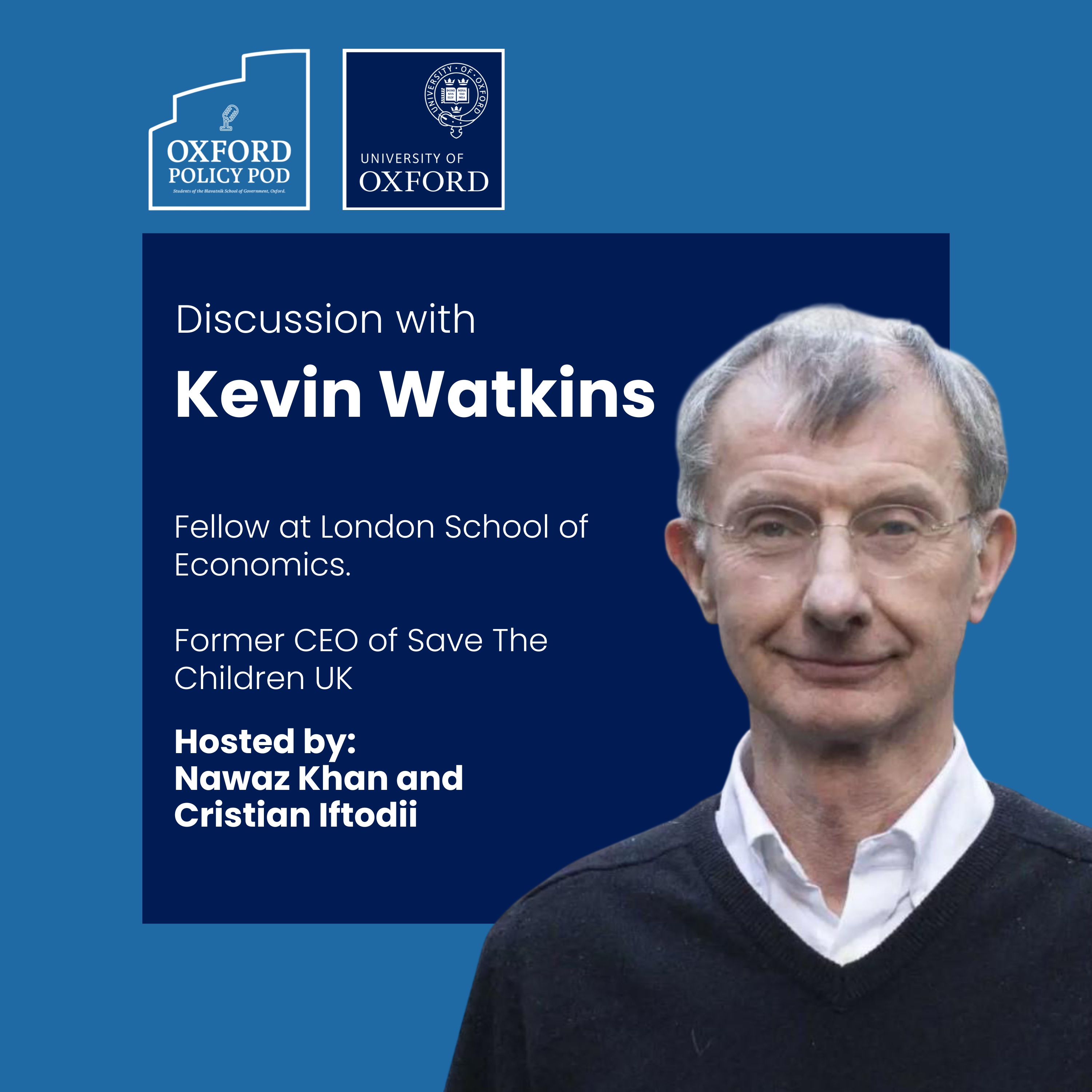 Rethinking Development Aid with Kevin Watkins 14.07.2026 42minIn this episode of Policy Pod, Nawaz Khan and Cristian Iftodii sit down with Kevin Watkins, visiting professor at LSE's Firoz Lalji Institute for Africa and former chief executive of Save the Children UK. Having spent three decades moving through Oxfam, the United Nations, the Overseas Development Institute, and the top of the international aid sector, Kevin Watkins has become one of its sharpest internal critics, unafraid to challenge the assumptions his own field runs on. Together, they explore the unravelling of UK aid as budgets shrink and priorities tilt toward bilateral spending, the flaws he sees in the "growth first" consensus that now dominates development policy, and what years leading UNDP's Human Development Report and UNESCO's Global Education Monitoring Report taught him about the numbers that actually move governments to act.Kevin Watkins also reflects on where the aid sector has lost its way, and what a serious reset of development policy would need to look like.
 -
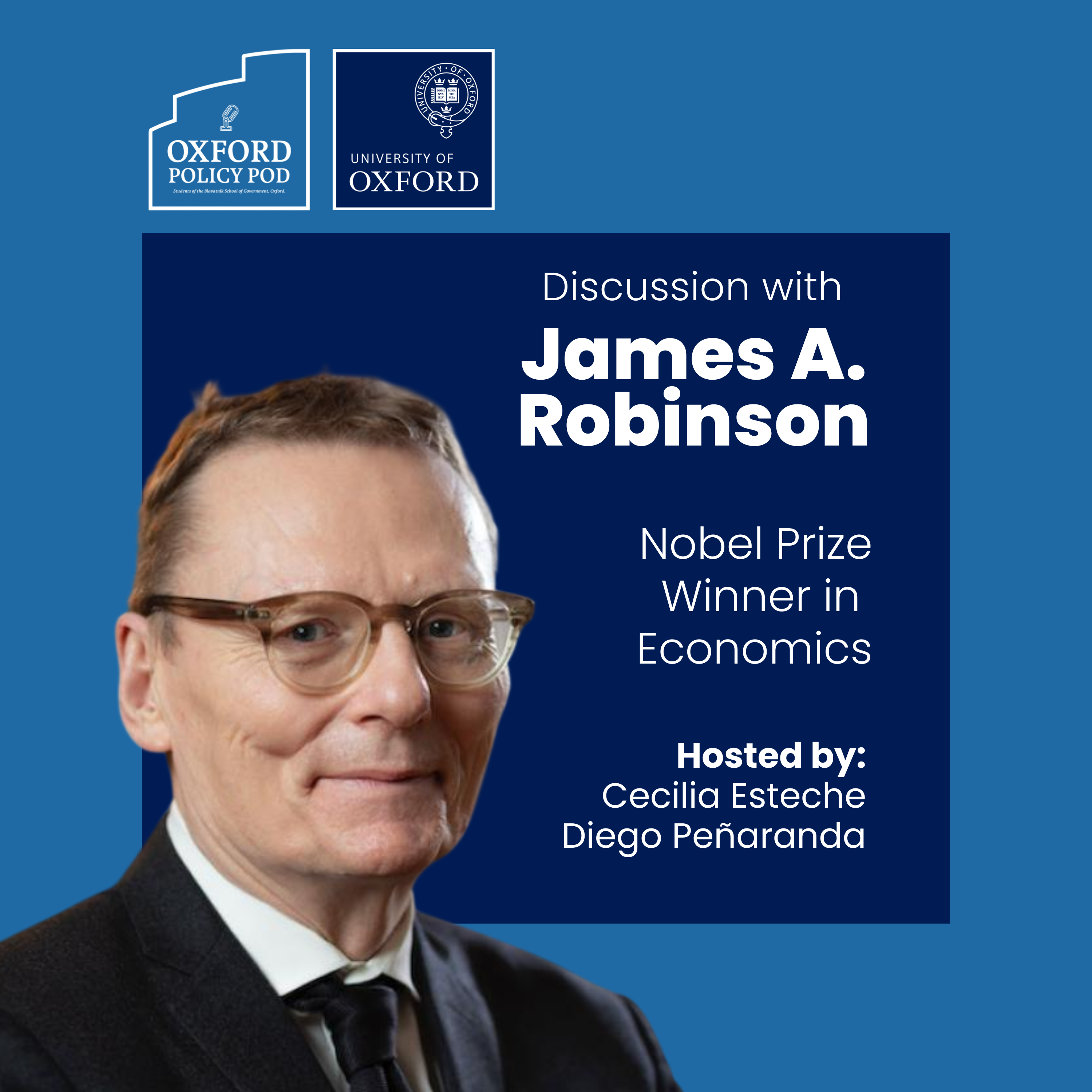 James Robinson on Latin America's Development Challenge, Institutions, and the Nobel Prize 09.07.2026 41minWhy do some countries succeed while others remain trapped in cycles of weak institutions and slow development?In this episode of the Oxford Policy Pod, hosts Cecilia Esteche and Diego Peñaranda speak with Professor James Robinson, 2024 Nobel Memorial Prize laureate in Economic Sciences, Professor at the University of Chicago, and co-author of Why Nations Fail and The Narrow Corridor.The conversation explores Robinson's intellectual journey, his reflections on winning the Nobel Prize, and his latest research on what he calls the "Fundamental Imbalance" in Latin America—the persistent tension between ambitious institutional ideals and the realities of implementation.Together, they discuss why good policies often fail, how institutions shape development, the relationship between culture and political economy, Bolivia's current political and economic challenges, and what future policymakers can learn about building more inclusive societies.
 -
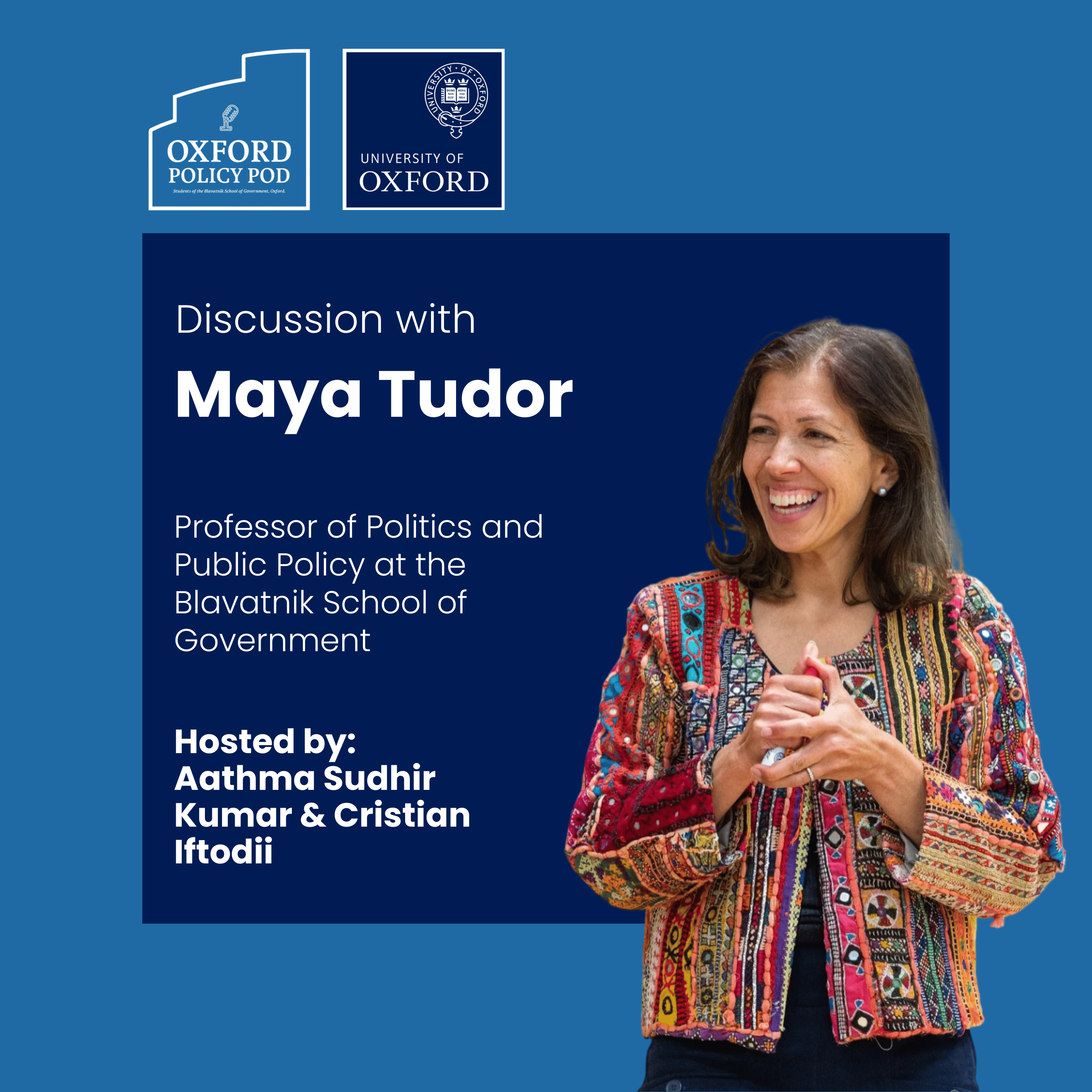 The Future of Democracy: A Conversation with Maya Tudor 01.07.2026 38min
 -
 The "Almost Prime Minister" | Pita Limjaroenrat 12.06.2026 1t 6minThe "Almost Prime Minister" | Pita LimjaroenratIn this episode of Policy Pod with Deep Dive, Master of Public Policy students Marc Naro and Richard Heydarian sit down with Pita Limjaroenrat, the former leader of Thailand's Move Forward Party and the man widely seen as Thailand's "almost prime minister."Following his party's landmark victory in the 2023 general election, Pita appeared poised to lead Thailand's next government. Yet despite winning the popular mandate, a complex political and institutional process prevented him from taking office.Together, they explore Thailand's democratic trajectory, the relationship between electoral legitimacy and political power, the role of institutions in democratic governance, and the challenges facing reform-minded leaders in an era of political polarization. Pita also reflects on his personal journey, the future of Thai politics, and the lessons his experience offers for democracies around the world.A fascinating conversation on democracy, leadership, and what happens when winning an election is not enough to govern.
 -
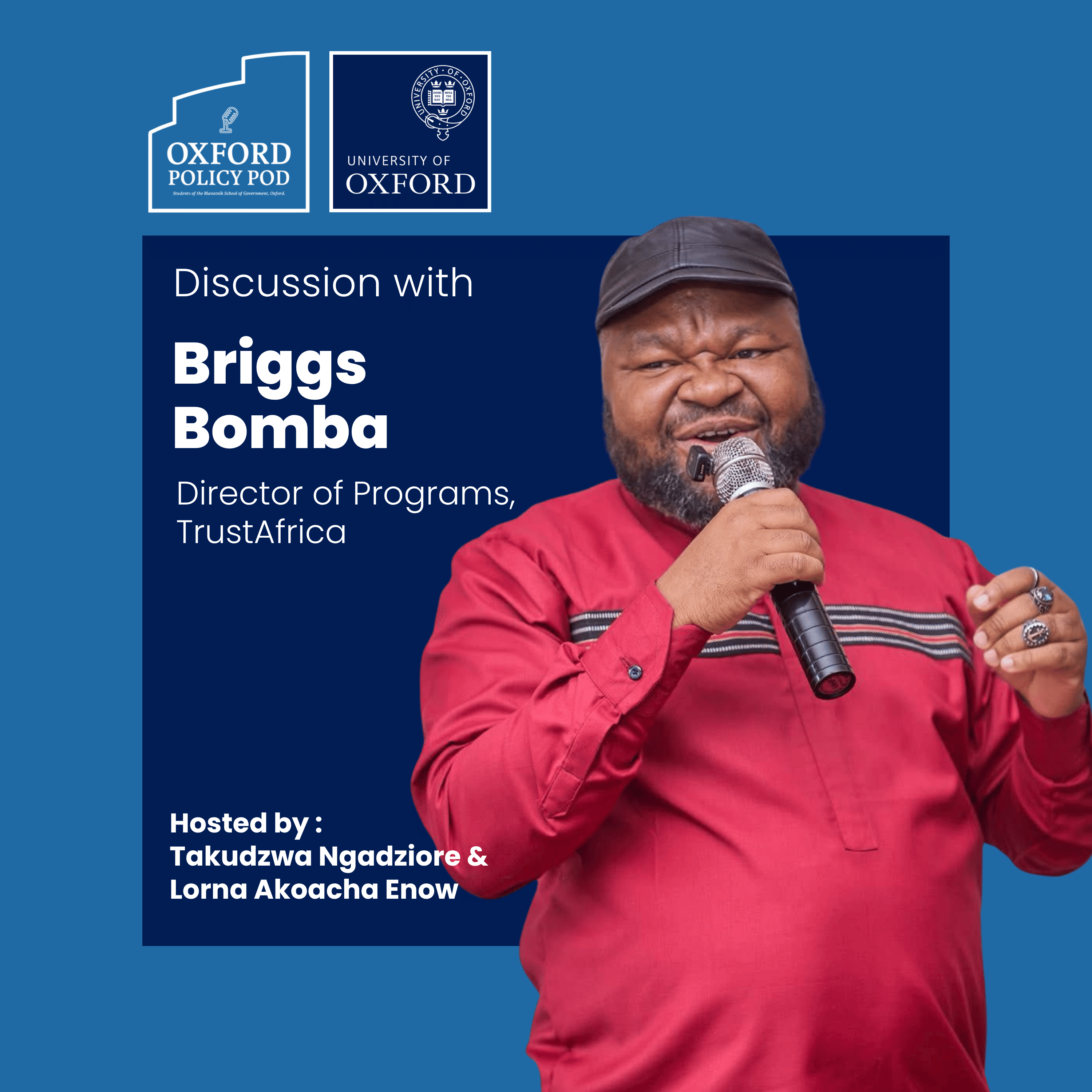 The Role of Pan-African Philanthropy in Financing Governance and Public Policy. 03.06.2026 47minThis is a defining conversation on: The Role of Pan-African Philanthropy in Financing Governance and Public Policy.Host: Takudzwa Ngadziore (MPP)Co-host: Lorna Akoacha Enow (MPP)Guest: Briggs Bomba, Director of Programs at TrustAfricaThe conversation is important as: It provides a practical framework for leveraging traditional values such as Ubuntu ( I am because you are) and Harambee (community fundraising) to mobilize domestic resources for democratic strengthening, reducing dependency on external donors whose priorities may not align with local needs.It comes at a critical moment when democratic governance in Africa faces growing pressures from shrinking civic space, youth disenfranchisement, and governance deficits, making homegrown financial solutions more urgent than ever.The guest Briggs Bomba serves as the Programs Director for TrustAfrica, a pan-African foundation that works across Africa to promote democratic governance and equitable development.
 -
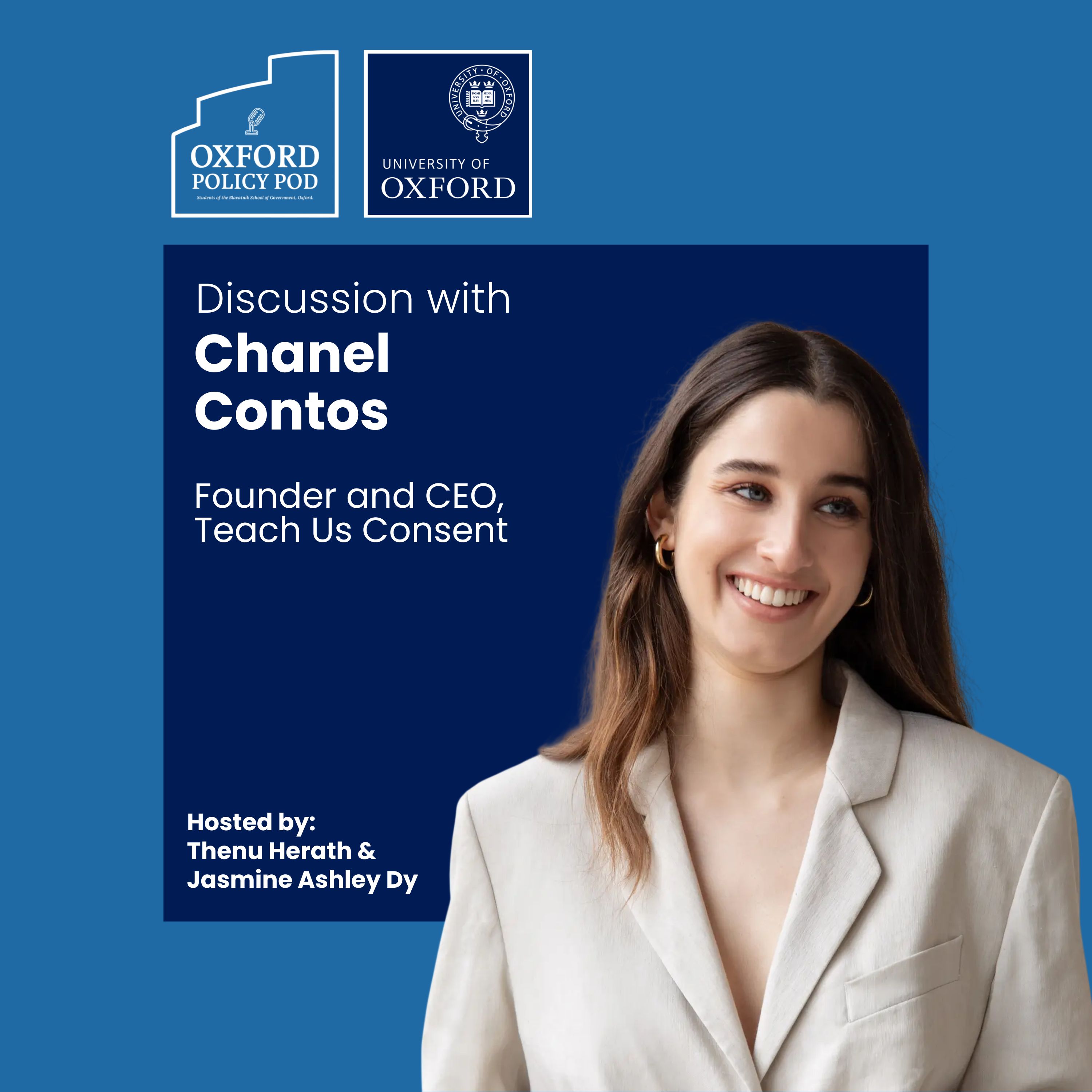 Behind the Feed: Algorithmic Justice, Misogyny and User Rights 21.05.2026 35minIn this episode of the Oxford Policy Pod, Thenu and Jasmine speak with Chanel Contos about the growing influence of social media algorithms on young people, relationships, and public discourse. Known for her advocacy around consent education and sexual violence prevention, Chanel reflects on how digital platforms can both amplify social movements and expose users to harmful online ecosystems.The conversation explores the ways algorithms shape behaviour, reinforce social norms, and contribute to the spread of misogynistic and radicalising content online, particularly among young men. It also examines the tension between engagement-driven platform design and user wellbeing, alongside the challenges governments and tech companies face in creating safer and more accountable digital spaces.The episode further discusses Chanel’s latest campaign on algorithmic accountability, including its goals, the barriers to reform, and what gives hope for the future of online safety and digital justice.
 -
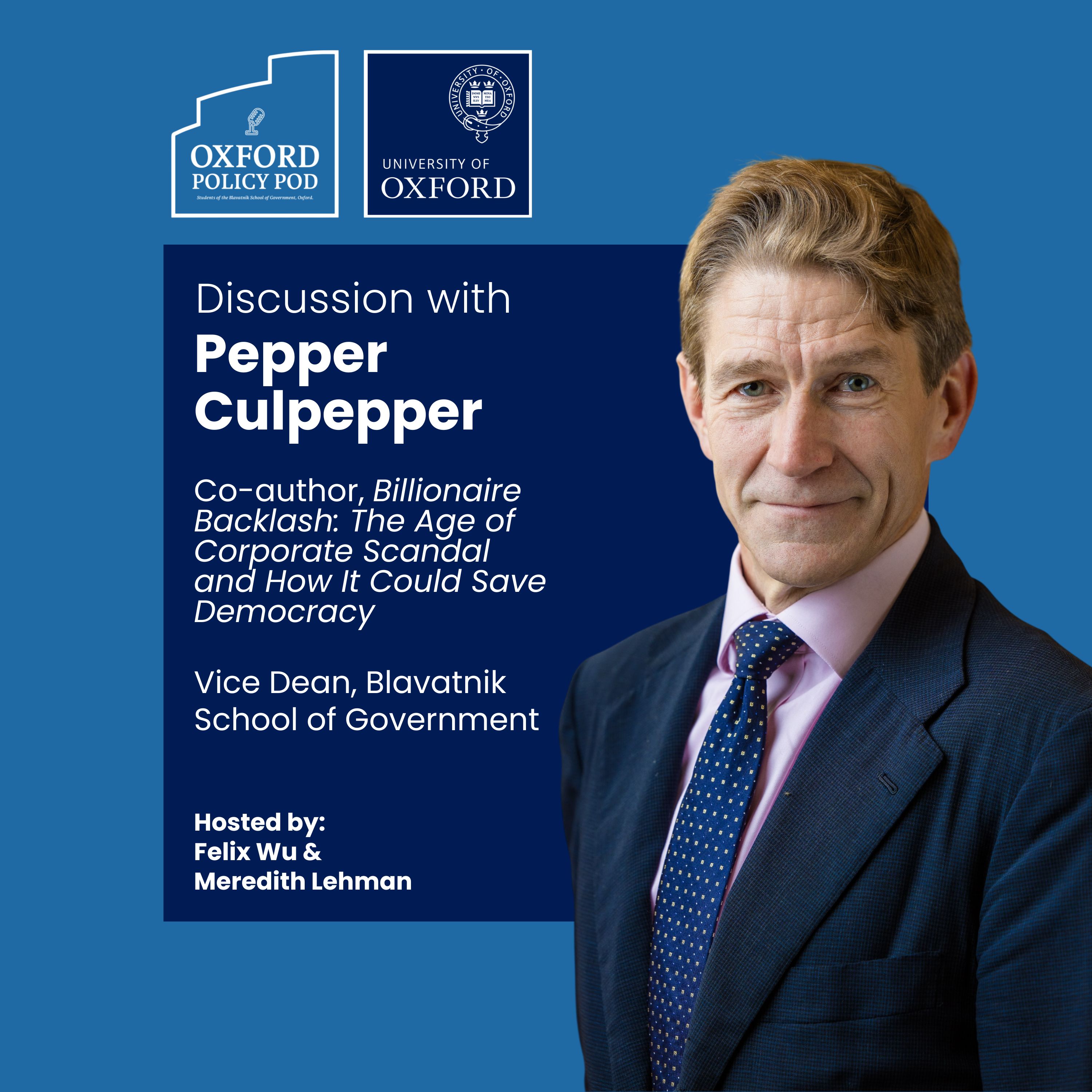 Populism and the Billionaire Backlash | Pepper Culpepper 17.05.2026 46minIn this episode of the Oxford Policy Pod, Master of Public Policy students Felix Wu and Meredith Lehman sit down with Pepper Culpepper — Vice Dean of the Blavatnik School of Government — to discuss his new book, Billionaire Backlash: The Age of Corporate Scandal and How it Could Save Democracy.In Billionaire Backlash, Culpepper and his co-author Taeku Lee argue that scandals centered on corporate malfeasance are a unique political force which leaders can leverage to compel lasting policy change. This discussion charts a path for how their theory applies to the present moment, at a time when populism is on the rise in democracies across the world.Recorded at the Blavatnik School of Government, University of Oxford.
 -
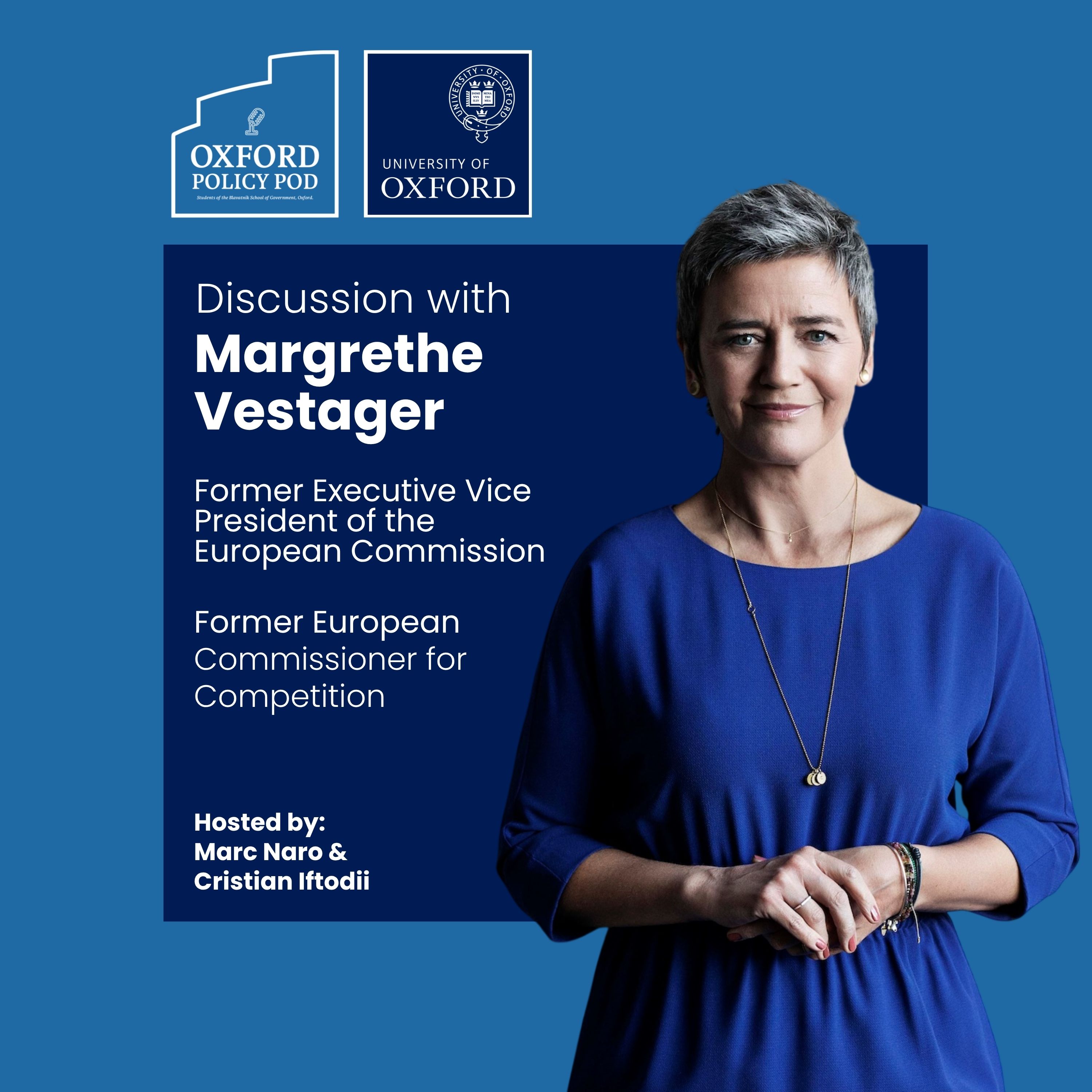 Moving Europe Forward | Margrethe Vestager 11.05.2026 39minIn this episode of the Oxford Policy Pod, Master of Public Policy students Marc Naro and Cristian Iftodii sit down with Margrethe Vestager, former Executive Vice-President of the European Commission and one of Europe’s leading voices on competition and digital policy.The conversation explores some of the defining challenges of our time — from artificial intelligence and climate change to economic security and the future of the international order. Drawing on her years at the heart of European decision-making, Margrethe Vestager shares her vision for how Europe can navigate technological transformation while defending democratic values and global cooperation.Recorded at the Blavatnik School of Government, University of Oxford.
 -
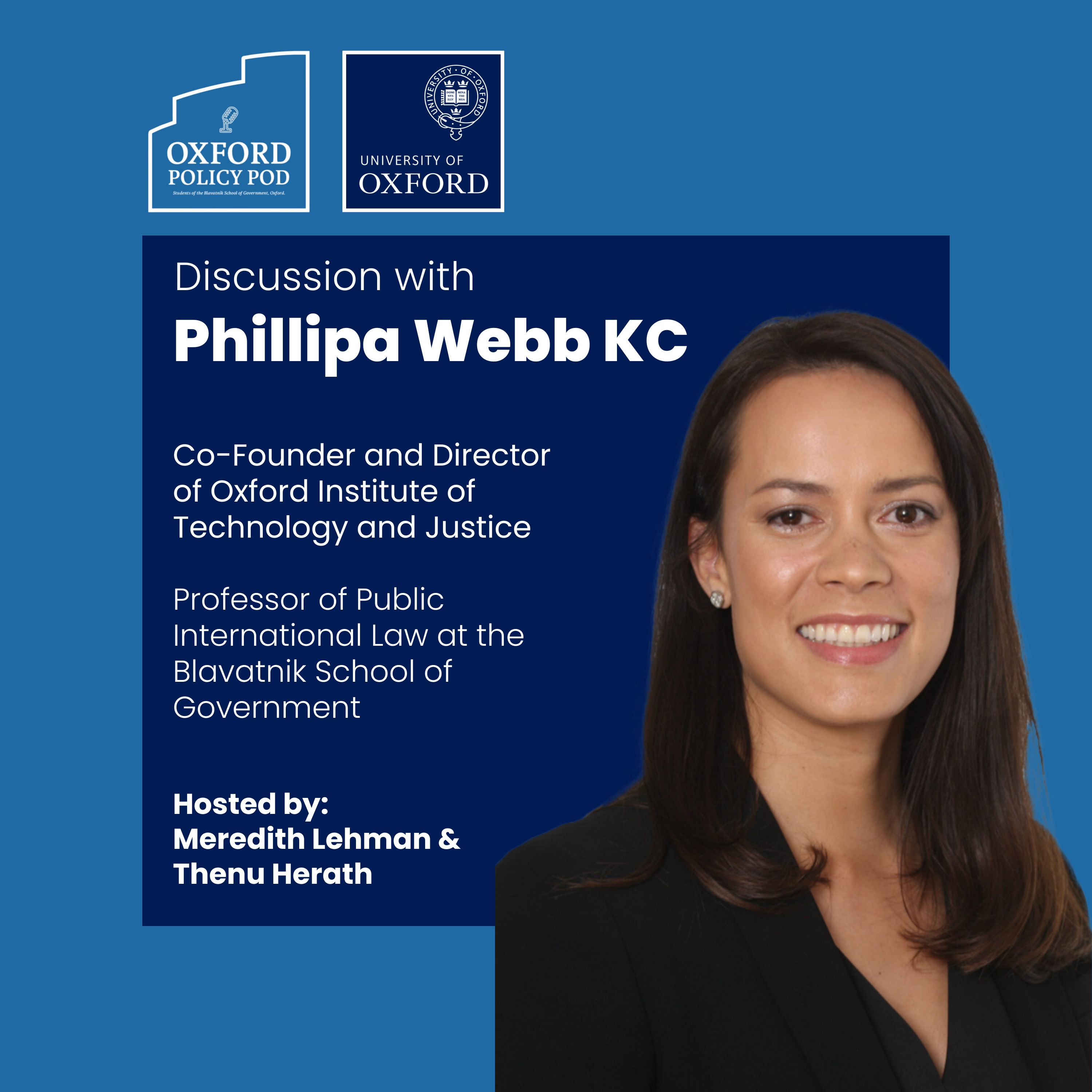 The Future of International Law | A Discussion with Professor Philippa Webb KC 07.05.2026 48minIn a time when international law is increasingly being tested, challenged, and at times openly undermined, we speak with Professor Philippa Webb KC about the pressures facing the international legal order and the future of global governance. Drawing on her work across academia, legal practice, and international institutions, she reflects on whether the current moment represents a genuine crisis for international law, or part of a longer pattern of contestation and adaptation within the international system.The conversation explores the role of international courts in an era of selective state compliance, the tension between geopolitical realism and multilateral cooperation, and how institutions can remain effective and legitimate amid growing international instability. We also discuss technology’s impact on justice, the resilience of international institutions under strain, and her idea of “incremental creativity” — the belief that meaningful reform can still emerge from within existing legal frameworks, even during periods of profound uncertainty.
Lignende podkaster


Populær i
Denne podkasten finnes også i podkast-listene til disse landene.


