
Spatial Stack with Matt Forrest
Matt Forrest
0
Welcome to The Spatial Stack, where modern geospatial technology takes center stage. Our episodes feature interviews with leading experts, insightful discussions on the integration of AI and big data in spatial tech, and case studies on groundbreaking projects worldwide. Tune in to stay ahead in the rapidly evolving world of geospatial technology!
Episoder
-
 Thinking Spatially for a Living: Chris Tucker on 175 Years of the American Geographical Society 08.09.2026 47minIn this episode of the Spatial Stack, Matt sits down with Dr. Chris Tucker, chairman of the American Geographical Society, in the year the AGS turns 175.Chris makes the case that spatial thinking is foundational literacy, on the level of language or math, and that the 4.5 million people who have taken AP Human Geography are already practicing it every day in jobs that never mention geography. He shares how a single question from a CIA veteran, about why we cannot draw a bounding box on a map and pull in everything known about that place at that moment, set the direction for almost thirty years of his career.The conversation also covers what has changed about getting into this work. The advanced degree, the expensive workstation, and the expensive software used to be the price of entry. Free tools and YouTube replaced all three.Chris then takes on a challenge: name five careers that do not sound geographic but where spatial skills give you a real edge. Surveying, the CAD and built environment world, aviation, marine navigation, and conservation all make the list, along with a case for why geography works as both a horizontal and a vertical.We also get into the AGS itself, from the Fliers' and Explorers' Globe signed by Amelia Earhart, Sir Edmund Hillary, and Neil Armstrong, to the geographers at 156th and Broadway who worked on the inquiry behind the Treaty of Versailles.If you have ever struggled to explain what you actually do for a living, this conversation gives you better language for it.Connect with Chris Tucker and the AGS:LinkedIn: https://www.linkedin.com/in/christopher-tucker-5595689/American Geographical Society: https://www.americangeo.orgEmail: [email protected] MOREAGS 175th anniversary campaign: https://www.americangeo.orgThe Fliers' and Explorers' Globe: https://www.americangeo.org/globeGeography 2050 (Africa: Shaping the Future): https://www.geography2050.orgTeen Maptivist: https://teenmaptivists.orgCHAPTERS:00:00:00 – Welcome and Chris Tucker's Background00:01:21 – 4.5 Million AP Human Geography Students00:04:48 – Spatial Thinking as Foundational Literacy00:09:08 – 175 Years of the American Geographical Society00:12:03 – The Fliers' and Explorers' Globe00:15:05 – The AGS and the Treaty of Versailles00:18:02 – The 175th Anniversary Campaign00:21:49 – How Matt and Chris Found Geography00:24:59 – Free Tools and Getting Back Into the Work00:27:07 – Advocating for Geography in Schools00:30:55 – Geography as Horizontal and Vertical00:35:01 – Five Careers Where Spatial Gives You an Edge00:40:34 – Getting Involved with AGS and Geography 2050---📊 FREE: The Modern GIS Skill MapThe 5 skills that actually matter in modern GIS (and what you can stop learning). Based on a survey of 1,400+ geospatial professionals.➡ Get the free training + PDF guide: https://forrest.nyc/go/training/📰 Daily modern GIS insights: https://forrest.nycCONNECT WITH ME📸 Instagram: https://www.instagram.com/matt_forrest/💼 LinkedIn: https://www.linkedin.com/in/mbforr/📧 Newsletter: https://forrest.nyc🌐 Website: https://forrest.nyc
 -
 Mapping the Invisible: Soil Fungi, Satellites, and the Largest Network on Earth with Justin Stewart 26.08.2026 38minWhat does it take to map something you have never seen?In this episode, Matt Forrest sits down with Justin Stewart, quantitative ecologist at SPUN, the Society for the Protection of Underground Networks, to unpack how his team built the first global map of arbuscular mycorrhizal fungi, the soil organisms living in symbiosis with most plants on Earth.Justin walks through the full pipeline, from robotic microscopy of threads two and a half microns wide up to a planetary prediction at one square kilometer resolution. The team assembled 16,000 soil samples from more than 300 studies across 11 languages, trained a random forest on 34 satellite-derived layers in Google Earth Engine, andsummed the result: roughly 110 quadrillion kilometers of fungal thread, about 300 megatons of carbon, six times the biomass of every human alive.The findings were not what anyone expected. The densest networks are under grasslands, not forests. Croplands run about 50 percent sparser. And 90 percent of the biodiversity hotspots for these fungi sit outside any protected area.In this episode, we cover:- Why mapping a symbiosis is harder than mapping an organism- Robotic imaging in the Amolf biophysics lab, and tracking half a million nodes at once- Building a global database from literature in 11 languages- Random forest niche modeling and uncertainty analysis in Google Earth Engine- The effective radius algorithm that turns network length into biomass- Why grasslands, flooded wetlands, and the Tibetan plateau light up on the map- Tilling, fertilizer, and how a 450 million year old symbiosis gets broken- Rights of nature, eDNA, and why predictive maps are not yet admissible evidenceLINKS:Justin StewartSPUN profile: https://www.spun.earth/team-members/justin-stewartLinkedIn: https://www.linkedin.com/in/justin-stewart-70512645/Google Scholar: https://scholar.google.com/citations?hl=en&user=1aqTJIUAAAAJSPUNWebsite: https://www.spun.earthUnderground Atlas: https://a-hidden-infrastructure.spun.earth/story/a-hidden-infrastructureLEARN MOREThe paper: Science, June 11, 2026. DOI 10.1126/science.adu4373Mycorrhizal Biodiversity Map: https://a-hidden-infrastructure.spun.earth/story/a-hidden-infrastructureCHAPTERS:00:00:00 – The largest living network on Earth00:02:15 – Welcome and intro00:03:38 – What the map shows: a partnership, not an organism00:05:48 – Robots, petri dishes, and carbon moving at 400 kilometers an hour00:07:47 – The question that started it: how much is out there?00:09:25 – 110 quadrillion kilometers and six times human biomass00:11:15 – What a quantitative ecologist actually does00:13:53 – Trade, lipids, and 30 percent of a plant's nitrogen00:16:31 – What people get wrong about soil00:18:27 – The pipeline: 34 satellite layers, random forest, Earth Engine00:21:02 – From length to weight: effective radius and the robot named Prince00:25:41 – Croplands and a broken 450 million year symbiosis00:31:40 – Rights of nature and getting predictions accepted as evidence00:37:10 – Where to find SPUN and Justin📊 FREE: The Modern GIS Skill MapThe 5 skills that actually matter in modern GIS (and what you can stop learning). Based on a survey of 1,400+ geospatial professionals.➡ Get the free training + PDF guide: https://forrest.nyc/go/training/📰 Daily modern GIS insights: https://forrest.nycCONNECT WITH ME📸 Instagram: https://www.instagram.com/matt_forrest/💼 LinkedIn: https://www.linkedin.com/in/mbforr/📧 Newsletter: https://forrest.nyc🌐 Website: https://forrest.nyc
 -
 Beyond the Blue Dot: AI & LLM Navigation with Zephr's Sean Gorman and Pramukta Rao 16.07.2026 42minWhat does it actually take for an AI to navigate you through the real world, without a screen and without a camera running the whole time?In this episode of the Spatial Stack, Matt Forrest sits down with Sean Gorman and Pramukta Rao, the co-founders of Zephr, to unpack how they ground large language models in location. Sean and Pramukta spent twenty years building startups together, from GeoIQ to Snap's visual positioning work, and at Zephr they walked away from the camera and went back to the sensors already in your phone.They get into why the blue dot on a map breaks down the moment you stop looking at a screen, why language models are bad at spatial reasoning like left, right, and across the street, and how they fix it by doing the geometry first and handing the model clean language. Instead of training ever-bigger foundation models, they push a small model and well-structured data down to the edge so the conversation stays fast.In this episode, we cover:- Why they left visual positioning and AR cameras behind after Snap- Cooperative positioning: getting survey-grade accuracy out of commodity phones- GNSS and the urban canyon problem (3 meters to 50 meters and back)- Beyond the blue dot: building a first-person, egocentric experience- Why LLMs struggle with geometry, and what context engineering solves- Small models at the edge vs giant foundation models- Overture Maps, GERS IDs, and conflating POIs with imagery to "agree on reality"- The grounding service: MCP, REST, and Opus or Gemma on device- Conversations about place as a new geospatial primitiveWhether you build with spatial data, work on AI navigation, or just want to see where location and LLMs are heading, this conversation is your field guide.Connect with Zephr:Website: https://zephr.xyzSean Gorman (LinkedIn): https://www.linkedin.com/in/sean-gorman-93a79Pramukta Rao (LinkedIn): https://www.linkedin.com/in/pramukta/Zephr (LinkedIn): https://www.linkedin.com/company/zephr-xyz00:00:00 – Intro and twenty years of startups together00:04:05 – Why they walked away from cameras and AR at Snap00:04:54 – Commodity sensors and cooperative positioning00:07:15 – GNSS 101 and the urban canyon problem00:10:56 – Beyond the blue dot: an egocentric experience00:13:37 – Why LLMs are bad at left, right, and across the street00:18:19 – Context engineering and the retrieval problem00:22:03 – Small models at the edge vs giant foundation models00:30:09 – Collective memory: OpenStreetMap, Mapillary, Overture00:32:08 – Conflating POIs with imagery to agree on reality00:35:36 – The grounding service: MCP, REST, Opus or Gemma on device00:38:37 – What's next: conversations as a new geospatial primitive00:42:22 – Where to find Zephr📊 FREE: The Modern GIS Skill MapThe 5 skills that actually matter in modern GIS (and what you can stop learning). Based on a survey of 1,400+ geospatial professionals.➡ Get the free training + PDF guide: https://forrest.nyc/go/training/🚀 Join The Spatial Lab:Stop guessing at your career path. Get direct mentorship, advanced training, and a roadmap to these high-value roles inside The Spatial Lab.👉 https://forrest.nyc/spatial-lab/📰 Daily modern GIS insights: https://forrest.nycCONNECT WITH ME📸 Instagram: https://www.instagram.com/matt_forrest/💼 LinkedIn: https://www.linkedin.com/in/mbforr/📧 Newsletter: https://forrest.nyc🌐 Website: https://forrest.nyc
 -
 Why the GIS Title Is Shrinking but Spatial Work Is Growing 14.07.2026 16minIn this episode of the Spatial Stack, Matt sits down solo to work through a fight that broke out across Reddit and LinkedIn last week: is GIS dying, or is it just changing its name?It started with a GIS manager who argued the field is alive, pointing to a friend who landed a $200,000 job building autonomous systems, a role where GIS never appeared in the title or the description. The comments pushed back. If the keyword for our whole profession barely returns jobs anymore, is the field really growing?Matt's answer is that both sides are right. The work of spatial is expanding into data engineering, software, and product roles. The GIS title is contracting at the same time. It's one trend seen from two directions, the same way geology departments quietly became geoscience without the work ever changing.He makes the case that the title was never the skill. Spatial intuition is, and it's the thing that transfers into higher-paying roles that don't carry the GIS label. Then he closes with a challenge: describe who you are and what you do without using the words GIS, spatial, or geospatial.Whether you're job hunting, stuck in the technician trap, or an employer who wants this skill set but doesn't know what to call it, this conversation is about how we position the work going forward.---📊 FREE: The Modern GIS Skill MapThe 5 skills that actually matter in modern GIS (and what you can stop learning). Based on a survey of 1,400+ geospatial professionals.➡ Get the free training + PDF guide: https://forrest.nyc/go/training/CHAPTERS:00:00:00 – The Reddit post that started it00:01:00 – Two views: the work is growing vs. the title is shrinking00:02:34 – Why "stay positive" doesn't pay the rent00:03:33 – Spatial is special: what actually transfers00:04:53 – The geology-to-geoscience analogy00:05:54 – The title of GIS was never the skill00:07:09 – The technician trap and where the salaries moved00:08:18 – Listener comments: spatial judgment, the map as interface00:10:32 – What to do now: SQL, Python, and cloud-native beyond the toolbox00:11:51 – Building a portfolio on LinkedIn00:13:22 – The Spatial Intuition Challenge00:15:32 – Put your face on it: make it a videoCONNECT WITH ME📸 Instagram: https://www.instagram.com/matt_forrest/💼 LinkedIn: https://www.linkedin.com/in/mbforr/📧 Newsletter: https://forrest.nyc🌐 Website: https://forrest.nyc
 -
 AI, Embeddings, and the Future of Location Data with Dataplor's Ryan Urabe 17.06.2026 49minWhat does it actually take to make AI useful on location data?In this episode, Matt Forrest sits down with Ryan Urabe, co-founder and CTO of Dataplor, to unpack how AI, embeddings, and agents are changing the way we work with points of interest and places data.Ryan explains why general-purpose models already understand spatial concepts but still struggle to execute them, and why the real unlock is the harness around the model, not a geospatial-specific model. He walks through Dataplor's data-quality philosophy, the category problem (why "supermarket" and "grocery store" have zero string similarity but near-zero conceptual distance), and how embeddings let them measure conceptual distance across 10^9 places and even across languages.Whether you build with spatial data, lead a data team adopting AI, or you are trying to figure out what embeddings actually do, this conversation maps out what is working today and what is still forming.In this episode, we cover:- Why AI is an accelerant for data quality, not a replacement for it- Treating AI like a capable employee on their first day- Where general models fall short on spatial problems- DuckDB as the Swiss Army knife for orchestrating spatial data- The category problem and conceptual vs. semantic distance- How embeddings map 7-Eleven in Tokyo and Tennessee to the same concept- A vision for agentic AI built natively for geospatial- The "end of the scarcity of intelligence" framing for where this is all headingConnect with Ryan:LinkedIn: https://www.linkedin.com/in/rurabe/Website: https://www.dataplor.comEmail: [email protected] MOREDataplor's agentic SaaS product is launching this summer. To start your complimentary trial, contact: [email protected]📊 FREE: The Modern GIS Skill MapThe 5 skills that actually matter in modern GIS (and what you can stop learning). Based on a survey of 1,400+ geospatial professionals.➡ Get the free training + PDF guide: https://forrest.nyc/go/training/00:00:00 – Cold open00:01:01 – Welcome and Ryan's background00:03:44 – Why AI still struggles with location00:05:13 – Bringing Dataplor's data into AI, product and team00:08:36 – How technical teams are adopting AI00:10:10 – Treating AI like a capable new employee00:12:20 – Where general models fall short on spatial00:16:44 – DuckDB and opinionated workflows00:18:14 – Data quality as the whole game00:20:58 – The category problem: supermarket vs. grocery store00:27:53 – Embeddings and conceptual space, with a 3D walkthrough00:38:22 – A vision for agentic AI in geospatial00:43:37 – The end of the scarcity of intelligence00:47:25 – Where to find Ryan and Dataplor📰 Daily modern GIS insights: https://forrest.nycCONNECT WITH ME📸 Instagram: https://www.instagram.com/matt_forrest/💼 LinkedIn: https://www.linkedin.com/in/mbforr/📧 Newsletter: https://forrest.nyc🌐 Website: https://forrest.nyc
 -
 Mapping Every Field on Earth: Global Field Boundaries, Open Data, and GeoAI with Taylor Geospatial 10.06.2026 42minWhat does it actually take to map every agricultural field on Earth?In this episode, Matt sits down with Jen Marcus, Vice President of Strategic Innovation Programs at Taylor Geospatial, and Isaac Corley, Director of AI/ML Research at Taylor Geospatial and a torchgeo maintainer, the team behind Fields of The World (FTW).In late April they released the first globally consistent dataset of agricultural field boundaries, at 10m resolution, fully open on Source Cooperative. They dive deep into how it came together, from building the fiboa format to standardize ground truth across 24 countries, to running model inference across the entire planet, to shipping it with a confidence layer instead of pretending it was perfect. You'll hear honest perspective on what GeoAI can really do today and where the hype outpaces reality.In this episode, we cover:- Why a global field boundary map had never been done, and why no single organization was positioned to do it- The labeled-data problem and why models have to generalize to places like South America and Africa with little ground truth- The fiboa format and Chris Holmes's "architectures of participation"- How the Technical Fellows program turned open-source contributors into the core team- Running global inference efficiently with Sentinel-2 planting and harvest mosaics- Cloud-native outputs (GeoParquet, PMTiles, Zarr) you can stream with no backend- What's real vs. what's marketing in geospatial AI, and the ImageNet lesson- What's next: stakeholder feedback loops, higher-resolution imagery, and mapping new features beyond fieldsWhether you build ML pipelines, work with satellite data, or you've ever wondered how much of the planet is still genuinely unmapped, this conversation breaks it down without the buzzwords.LINKS:Fields of The World: https://fieldsofthe.worldDataset on Source Cooperative: https://source.coop/wherobots/fields-of-the-worldTaylor Geospatial: https://taylorgeospatial.orgJen MarcusLinkedIn: https://www.linkedin.com/in/jennifer-marcus-b559091/Isaac CorleyWebsite: https://isaac.earthLinkedIn: https://www.linkedin.com/in/isaaccorley/GitHub: https://github.com/isaaccorley📊 FREE: The Modern GIS Skill MapThe 5 skills that actually matter in modern GIS (and what you can stop learning). Based on a survey of 1,400+ geospatial professionals.➡ Get the free training + PDF guide: https://forrest.nyc/go/training/CHAPTERS:00:00:00 – Cold Open00:01:01 – Welcome and Guest Intros (Jen Marcus and Isaac Corley)00:02:32 – Why Map Field Boundaries, and Why It Had Never Been Done00:05:53 – Going from Local to Global Scale00:07:19 – Architectures of Participation and the fiboa Format00:12:44 – The First St. Louis Meeting and the Technical Fellows Program00:18:04 – Running Global Inference at Scale00:22:54 – Cloud-Native Outputs on Source Cooperative00:25:05 – Why This Matters and What's Real vs. Hype00:28:39 – The ImageNet Lesson and Holding a North Star00:32:20 – What's Next for Fields of The World00:36:12 – Impact, an OpenStreetMap for Fields, and How to Get Involved00:40:33 – Postdoc, Tech Fellows, and Looking Out the Airplane Window🚀 Join The Spatial Lab:Stop guessing at your career path. Get direct mentorship, advanced training, and a roadmap to these high-value roles inside The Spatial Lab.👉 https://forrest.nyc/spatial-lab/📰 Daily modern GIS insights: https://forrest.nycCONNECT WITH ME📸 Instagram: https://www.instagram.com/matt_forrest/💼 LinkedIn: https://www.linkedin.com/in/mbforr/📧 Newsletter: https://forrest.nyc🌐 Website: https://forrest.nyc
 -
 Rebuilding Climate Risk: SPHERE, DuckDB, and the Modern GIS Stack with Troy Schmidt 27.05.2026 41minIn this episode of the Spatial Stack, Matt sits down with Troy Schmidt, a 20-year GIS developer and the creator of SPHERE, an open-source Python package that runs FEMA's HAZUS flood risk methodology on GeoParquet and DuckDB.Troy dives into why depth damage functions are simpler than the engineering language suggests, and how the gap between the HAZUS methodology and the HAZUS software pushed him to build a Python-first alternative. He shares the moment he realized the data and the science were already public, and that the only thing missing was a modern stack to run it on.The conversation also covers the three types of flooding most people lump together (coastal, riverine, and pluvial), why pluvial risk is the gap that nobody insures, and what an open core model means for geospatial science.Finally, Troy walks through his cloud-native discovery process, from Wherobots and Earthmover webinars to DuckDB and vectorized math, and explains why turning legacy methodology into a Python package unlocks deployment patterns that were never possible before.📊 FREE: The Modern GIS Skill MapThe 5 skills that actually matter in modern GIS (and what you can stop learning). Based on a survey of 1,400+ geospatial professionals.➡ Get the free training + PDF guide: https://forrest.nyc/go/training/Connect with Troy Schmidt:LinkedIn: https://www.linkedin.com/in/mr-troy-schmidt/SPHERE on GitHub: https://github.com/Niyam-Projects/sphereCHAPTERS:00:00:00 – Intro00:01:35 – Welcome and Troy's 20-Year GIS Journey00:04:17 – The Risk Modeling Landscape00:07:25 – Coastal, Riverine, and Pluvial Flooding00:11:05 – HAZUS Methodology vs. HAZUS Software00:16:05 – Site-Specific vs. Census Block Analysis00:18:05 – Building SPHERE: A Python Package for Risk00:21:25 – Cloud-Native, GeoParquet, and DuckDB00:25:05 – Why the Methodology Was Simple All Along00:27:05 – Discovery: Webinars, Wherobots, and the Modern Stack00:29:35 – Spatial as a Boundary Data Type00:32:35 – The Open Core Model and the Bridge to Modern GIS00:38:05 – Ensemble Models and What's Next for Climate Risk00:39:35 – Where to Find Troy and SPHERE🚀 Join The Spatial Lab:Stop guessing at your career path. Get direct mentorship, advanced training, and a roadmap to these high-value roles inside The Spatial Lab.👉 https://forrest.nyc/spatial-lab/📰 Daily modern GIS insights: https://forrest.nycCONNECT WITH ME📸 Instagram: https://www.instagram.com/matt_forrest/💼 LinkedIn: https://www.linkedin.com/in/mbforr/📧 Newsletter: https://forrest.nyc🌐 Website: https://forrest.nyc
 -
 From Geospatial Data Scientist to Full-Time Creator with Maggie Ma 20.05.2026 37minIn this episode of the Spatial Stack, Matt sits down with Maggie Ma, tech content creator at @maggieindata and former geospatial data scientist.Maggie left her corporate data science role last year to become a full-time content creator across Instagram, YouTube, LinkedIn, and TikTok. She's a 3x LinkedIn Learning instructor and an AI educator helping people break into data science, learn coding, and stay current with AI.We dig into the GIS title trap (and why the same job pays less under a different title), the seven internships that got Maggie into geospatial data science, cold-emailing professors and police departments, and how she positioned herself as the spatial person on non-spatial teams. We also cover the push and pull factors that led to her quitting corporate, what day in the life looks like as a full-time creator, and how she actually uses AI in her workflow today.Whether you're a GIS analyst wondering if you're underpaid, a geography student trying to land your first role, or a working data scientist thinking about going full-time creator, this conversation is full of specific tactics and honest reflections.Connect with Maggie:Instagram: https://www.instagram.com/maggieindataYouTube: https://www.youtube.com/@maggieindataLinkedIn: https://www.linkedin.com/in/maggieindataTikTok: https://www.tiktok.com/@maggieindataCHAPTERS:00:00:00 – Intro00:01:08 – Welcome and Maggie's Background00:03:26 – Statistics, Psychology, and Discovering Human Geography00:06:39 – First Job: Geospatial Data Scientist in Logistics00:08:08 – The GIS Title Trap and Salary Bands00:11:33 – Cold Emailing Into Crime Analytics and Hospital Research00:14:16 – Starting to Create Content as a Working Data Scientist00:18:50 – Push and Pull Factors for Leaving Corporate00:21:28 – Adjusting to Life Without a Job as Input00:27:33 – Vibe Coding: Lovable, Warp, and Claude Code00:29:08 – The Hidden Risks of Vibe Coding (Security, Data Leaks)00:32:08 – Using AI in Content Workflows00:36:19 – Final Advice and Where to Find Maggie📊 FREE: The Modern GIS Skill MapThe 5 skills that actually matter in modern GIS (and what you can stop learning). Based on a survey of 1,400+ geospatial professionals.➡ Get the free training + PDF guide: https://forrest.nyc/go/training/CONNECT WITH ME📸 Instagram: https://www.instagram.com/matt_forrest/💼 LinkedIn: https://www.linkedin.com/in/mbforr/📧 Newsletter: https://forrest.nyc🌐 Website: https://forrest.nyc
 -
 Chatting with the Physical World: Google's Yael Maguire on AI, Maps, and 280 Billion Images 22.04.2026 37minWhat happens when you give an AI the ability to see and understand the physical world? In this episode, Matt Forrest sits down with Yael Maguire, GM and VP of Google Maps Platform and Google Earth, to unpack the massive platform shift happening at the intersection of Artificial Intelligence and geospatial technology.Yael pulls back the curtain on how Google is transforming its massive corpus of 280 billion Street View, aerial, and satellite images into a searchable, interactive database. Discover how developers, urban planners, and creatives can now ask quantitative questions about physical infrastructure, monitor disaster response in real-time, and even generate hyper-realistic, location-grounded videos using tools like Nano Banana and Veo.Whether you're building digital twins, tracking climate impact, or revolutionizing the advertising and film industries, this conversation reveals the exact tools Google is rolling out to help you build the future.In this episode, we cover:- How "Ask Maps" is changing consumer and enterprise search.- Using AI to instantly audit city infrastructure like power lines, hydrants, and potholes.- Grounding generative AI models (Nano Banana and Veo) in actual Street View imagery.- Google’s partnerships for real-time disaster response using satellite AI.- The launch of Google Earth AI and what it means for developers.LEARN MOREFull Announcement: https://mapsplatform.google.com/resources/blog/three-new-ways-to-build-with-real-world-imageryMore Google Next Announcements: https://mapsplatform.google.com/resources00:00 - Intro01:20 - Meet Yael Maguire & Google Maps Platform03:18 - The AI Platform Shift: Unpacking the New "Ask Maps"08:48 - Street View Insights: Querying 280 Billion Images with AI11:12 - Real-World Use Cases: Digital Twins & City Infrastructure14:04 - The Sky-Down View: Satellite AI & Disaster Response16:33 - Scaling Solar APIs & The Importance of Temporal Data18:58 - Unifying Street View, Aerial, and Satellite Data in BigQuery21:49 - Generative AI Meets Reality: Grounding Models in the Physical World26:19 - Democratizing Creativity: The Future of Film & Simulation30:35 - What’s Next: How Developers Can Start Using These Tools Today33:33 - The Vision for Google Earth AI: Merging Weather, Energy, and Ag Models36:11 - Outro: The Future is Spatial---🚀 Join The Spatial Lab:Stop guessing at your career path. Get direct mentorship, advanced training, and a roadmap to these high-value roles inside The Spatial Lab.👉 https://forrest.nyc/spatial-lab/📰 Daily modern GIS insights: https://forrest.nycCONNECT WITH ME📸 Instagram: https://www.instagram.com/matt_forrest/💼 LinkedIn: https://www.linkedin.com/in/mbforr/📧 Newsletter: https://forrest.nyc🌐 Website: https://forrest.nyc
 -
 Beyond the CSV: Visualizing POI Data for Global Expansion Strategy with Emily Lisle from Dataplor 20.04.2026 42minThe future is spatial, but how do we actually make sense of the data? In this episode, we sit down with Emily Lisle from Dataplor to discuss the current state of location intelligence and how to overcome the biggest location intelligence challenges facing businesses today.We dive into the data foundation, exploring the massive complexities of scaling geospatial data, consumer data, and POI data on a global level. Emily breaks down the gap between simply having access to millions of rows of location intelligence data and actually turning it into actionable business strategies.To solve this, Dataplor launched a new location intelligence platform. By making it easy to visualize location data, non-technical teams can finally execute complex spatial analysis in gis without waiting on a data scientist.We also explore powerful location intelligence use cases and location intelligence applications. Learn how real estate investors and CPG brands are using this data to fuel their global expansion strategy and retail expansion strategy by identifying market gaps and tracking competitors.Finally, Emily shares how AI location data integration and AI analysis location data are changing the game, and why establishing a verified "ground truth" is more important than ever.LEARN MORE ABOUT DATAPLORLearn More: https://www.dataplor.com/solutions/global-platform/Follow Dataplor on LinkedIn: https://www.linkedin.com/company/dataplor/Book a Demo: https://www.dataplor.com/contact/Key Takeaways- The End of the CSV: How the industry is moving from massive, hard-to-process spreadsheets to visual spatial analysis software that answers specific business questions instantly.- Finding "Ground Truth": Why relying on a single mobility signal isn't enough anymore, and how layering alternative consumer data ensures high-quality insights.- Winning Global Expansion Strategy: Real-world examples of how CPG brands and real estate investors use location intelligence platforms to spot market gaps and track global competitors.- The AI Data Revolution: How AI location intelligence and the Model Context Protocol (MCP) are transforming how we consume and personalize geospatial data00:00 Introduction to the State of Location Intelligence & Its Challenges 03:14 The Foundation: Scaling Geospatial Data & POI Data Globally 06:48 Bridging the Gap: Location Intelligence Solutions & Analytics 09:06 Overcoming Location Intelligence Data Privacy Roadblocks 14:50 Building a Location Intelligence Platform to Visualize Location Data22:42 Location Intelligence Use Cases: Global Retail Expansion Strategy28:44 Validation in Spatial Analysis Software: Finding the "Ground Truth"34:37 The Future: AI Location Intelligence & Model Context Protocol (MCP) 41:42 How to Connect with Dataplor---📰 Daily modern GIS insights: https://forrest.nycCONNECT WITH ME📸 Instagram: https://www.instagram.com/matt_forrest/💼 LinkedIn: https://www.linkedin.com/in/mbforr/📧 Newsletter: https://forrest.nyc🌐 Website: https://forrest.nyc
 -
 AI Is Reshaping GIS Careers (Here's How to Stay Ahead) 03.04.2026 6minA viral LinkedIn post called "Something Big Is Happening" by Matt Schumer has been making the rounds and for good reason. In this episode, I break down why the pace of AI development should have every GIS professional paying attention, what I'm seeing in the geospatial space right now (from Claude Code in ArcGIS to AI-specific job postings), and the four things you should be doing right now to future-proof your career. Whether you're mid-career or fresh out of school, this one's for you.Original Article: https://www.linkedin.com/pulse/something-big-happening-matt-shumer-so5he00:00 — The Article That Went Viral00:40 — AI Coding Tools Are Changing Everything01:51 — What I'm Seeing in Geospatial Right Now02:30 — Step 1: Understand the Landscape02:49 — Step 2: Start Learning the Tools03:18 — Step 3: Architect Projects, Don't Just Prompt04:09 — Step 4: Broaden Your Skill Set04:43 — Advice for Recent Grads and Early-Career Pros05:51 — Will AI Actually Wipe Out GIS Jobs?06:42 — Wrap Up---📊 FREE: The Modern GIS Skill MapThe 5 skills that actually matter in modern GIS (and what you can stop learning). Based on a survey of 1,400+ geospatial professionals.➡ Get the free training + PDF guide: https://forrest.nyc/go/training/📰 Daily modern GIS insights: https://forrest.nycCONNECT WITH ME📸 Instagram: https://www.instagram.com/matt_forrest/💼 LinkedIn: https://www.linkedin.com/in/mbforr/📧 Newsletter: https://forrest.nyc🌐 Website: https://forrest.nyc
 -
 Desktop GIS is Dying. Here’s What Replaced It. 20.03.2026 21minIf you are still trying to run your entire geospatial workflow on a local desktop, you are fighting a losing battle. The "Modern GIS Stack" looks chaotic at first glance with dozens of logos, cloud formats, and new databases. But once you strip away the noise, there are actually only a few key layers you need to master to make it all work.🚀 Don't navigate this shift alone. Join the Spatial Lab: https://forrest.nyc/spatial-lab/In this video, I break down the architecture that is replacing the traditional GIS model. We move beyond Shapefiles and Geodatabases into the world of Cloud-Native Geospatial, showing you exactly how Storage, Compute, and Analytics have separated—and how you can use them to scale your career.📰 Daily modern GIS insights: https://forrest.nyc00:00 - The Modern GIS Chaos 00:34 - The Shift to Cloud-Native Formats 01:14 - Why Storage Buckets Replaced Hard Drives 02:07 - Essential Formats: GeoParquet, COGs & Zarr 03:57 - Adding Intelligence: STAC & Iceberg Catalogs 06:07 - Transformation & Orchestration (GDAL, dbt, Airflow) 08:30 - The 3 Engines of Modern GIS 08:48 - Engine 1: The Processing Layer (Sedona, Wherobots) 11:19 - Engine 2: The Transactional Layer (PostGIS) 12:38 - Engine 3: The Analytical Layer (BigQuery, Snowflake, DuckDB) 14:54 - Mapping Modern Layers to Traditional GIS 16:29 - The Application Layer: Analytics & BI 17:35 - Connecting QGIS & Python to the Cloud 18:30 - Modern Web Maps (Felt, Mapbox, DeckGL) 20:24 - Conclusion: You Don't Need to Learn EverythingCONNECT WITH ME📸 Instagram: https://www.instagram.com/matt_forrest/💼 LinkedIn: https://www.linkedin.com/in/mbforr/📧 Newsletter: https://forrest.nyc🌐 Website: https://forrest.nyc
 -
 The Next GPS? Why GeoAI is the New Invisible Infrastructure with Pierrick Poulenas (Picterra) 18.03.2026 33minHave you ever stopped to think about how GPS completely changed the world simply by becoming an invisible infrastructure running in the background of our everyday apps? According to Pierrick Poulenas, the CEO and co-founder of Picterra, the exact same pattern is playing out right now with Earth Observation and GeoAI.In this episode, we sit down with Pierrick to explore how GeoAI is bridging the gap between raw satellite imagery and accessible business intelligence. We dive into how Picterra is removing the friction of complex remote sensing data, allowing non-technical users to train machine learning models and turn planetary pixels into actionable insights. We also discuss the massive real-world impact this has on global supply chains and monitoring regenerative agriculture at scale. Plus, Pierrick shares his vision for a collaborative future in the space industry and teases an exciting new free tool for sustainability innovation.Connect with Pierrick and Picterra:https://picterra.ai/https://www.linkedin.com/company/picterra/Key Takeaways:- Why Earth Observation is following the "GPS Playbook" to reach mass adoption.- The shift from just collecting raw satellite data to creating usable applications at scale.- How human-in-the-loop design builds trust and accuracy in AI models.- Real-world use cases in spatial finance, fast-moving consumer goods (FMCG), and regenerative agriculture.---🚀 Join The Spatial Lab:Stop guessing at your career path. Get direct mentorship, advanced training, and a roadmap to these high-value roles inside The Spatial Lab.👉 https://forrest.nyc/spatial-lab/📰 Daily modern GIS insights: https://forrest.nycCONNECT WITH ME📸 Instagram: https://www.instagram.com/matt_forrest/🎵 TikTok: https://www.tiktok.com/@mbforrgis💼 LinkedIn: https://www.linkedin.com/in/mbforr/📧 Newsletter: https://forrest.nyc🌐 Website: https://forrest.nyc
 -
 Mastering Spatial Data in R: TidyCensus, PMTiles, & AI with Kyle Walker 17.02.2026 50minIn this episode of the Spatial Stack, Matt sits down with Kyle Walker, Professor of Geography at TCU and the creator of popular R packages like tigris and tidycensus. Kyle dives into why he views US Census data as critical infrastructure and how open data is fundamentally transforming decision-making across industries like real estate and energy. He shares the origin story of his open-source work, explaining why he champions the R programming language for full-stack geospatial analysis. The conversation also covers the evolution of web mapping, from the laborious process of rendering dot-density maps to the blazing-fast performance of modern tools like PMTiles. Finally, Kyle reveals how generative AI specifically Claude Code and the Zed editor is serving as his ultimate coding assistant, allowing him to rapidly build complex projects like the mapgl package and turn his ideas into reality faster than ever. Connect with Kyle: X/Twitter: https://x.com/kyle_e_walker LinkedIn: https://www.linkedin.com/in/walkerke/ Bluesky: https://bsky.app/profile/kylewalker.bsky.social 00:01:00 – Welcome and Kyle Walker’s Background at TCU 00:06:18 – Why US Open Data is Critical Infrastructure 00:09:20 – Demystifying Census Data with tigris and tidycensus 00:15:48 – Applied Spatial Data: Real Estate and Forecasting Models 00:18:28 – The Evolution of High-Resolution Dot Density Maps 00:23:48 – The Human Element: How People React to Seeing Data Maps 00:29:14 – R vs. Python: Why R is a Geospatial Powerhouse 00:37:44 – Accelerating Development: Using Claude and AI for Coding 00:43:40 – The Future of Mapping: PMTiles, Segment Anything, and LLMs 00:48:18 – Where to Find Kyle’s Book, Tools, and Workshops --- 🚀 Join The Spatial Lab: Stop guessing at your career path. Get direct mentorship, advanced training, and a roadmap to these high-value roles inside The Spatial Lab. 👉 https://forrest.nyc/spatial-lab/ 📰 Daily modern GIS insights: https://forrest.nyc CONNECT WITH ME 📸 Instagram: https://www.instagram.com/matt_forrest/ 💼 LinkedIn: https://www.linkedin.com/in/mbforr/ 📧 Newsletter: https://forrest.nyc 🌐 Website: https://forrest.nyc
 -
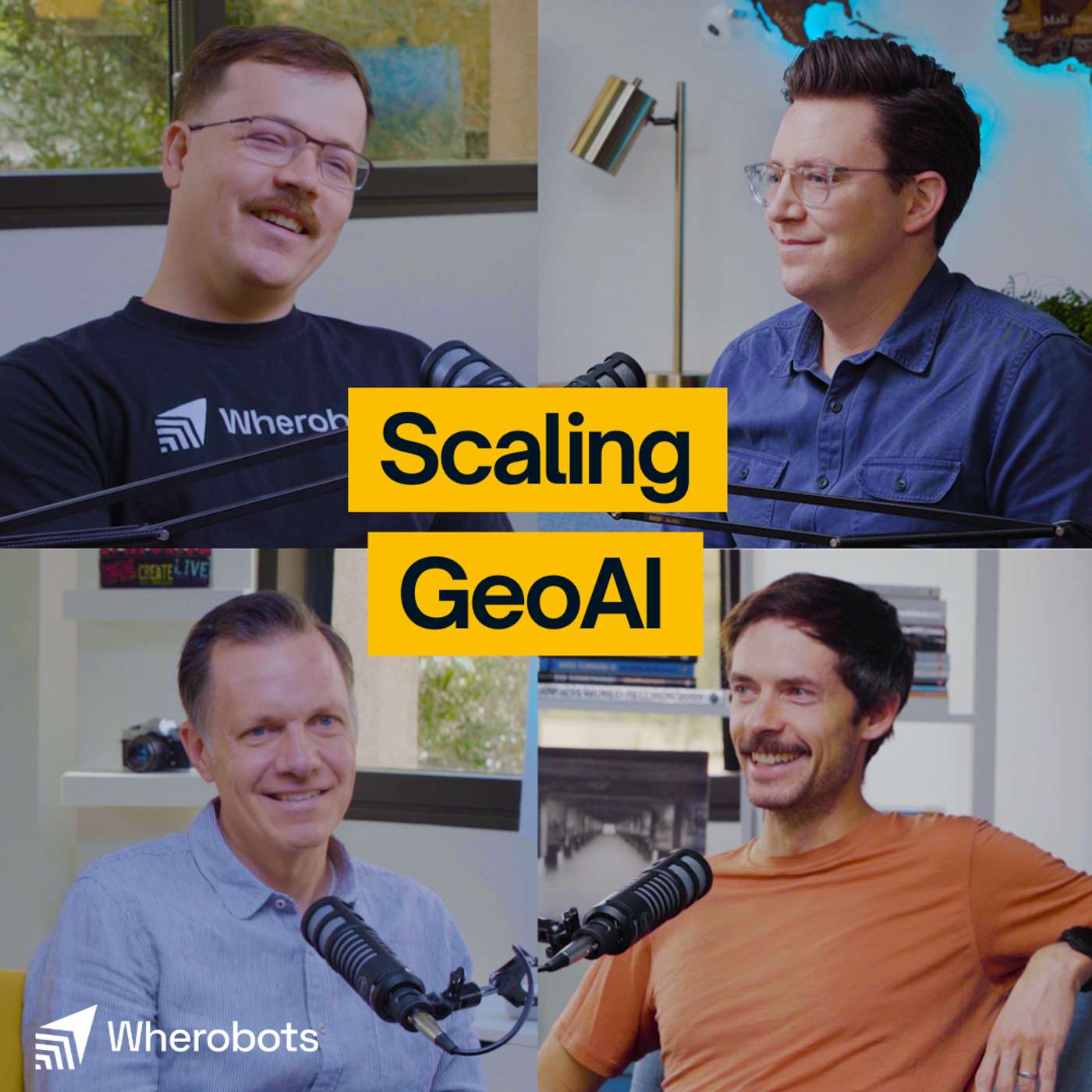 #40: The "GPT Moment" for Earth: Moving from Computer Vision to Large Earth Models 11.02.2026 59minWe have never had more data about our planet: petabytes of satellite imagery, aerial photos, and sensor readings collected daily. Yet, turning that massive volume of "noise" into a clear signal remains the fundamental challenge of the geospatial industry. In this episode of the Spatial Stack, I sit down with the engineering and product minds from Wherobots: Ryan, Phil, and Len - to tear down the architecture required to handle Earth Observation data at a planetary scale. We move beyond the buzzwords to discuss the engineering "war stories" of building resilient inference pipelines. We dive deep into why the industry is moving away from simple computer vision toward "Large Earth Models" that function like LLMs for the physical world. We also get into the weeds of the tech stack: the battle between Dask and Ray for distributed compute, why Cloud-Optimized GeoTIFFs (COGs) aren't always the answer for inference, and how formats like Zarr are unlocking multidimensional analysis. In this episode, we cover: The Data Bottleneck: Why "garbage in, garbage out" is still the biggest hurdle in monitoring a changing planet. Infrastructure Realities: The specific limitations of Google Earth Engine and why we needed a cloud-agnostic approach. Engineering Pivot: Why Wherobots migrated from Dask to Ray to solve "crashing cluster" syndromes and memory management issues. The Future of GeoAI: How embeddings and foundation models are compressing petabytes of data into searchable, semantic insights. ✅ Sign Up for Wherobots: https://wherobots.com/ ✅ Learn more about Apache Sedona: https://wherobots.com/apache-sedona/ ✅ Learn more about RasterFlow: https://wherobots.com/blog/rasterflow-earth-observation-inference-engine/ ✅ Sign Up for the RasterFlow Private Preview: https://wherobots.com/rasterflow-preview/ 00:00 – Teaser: The "Garbage In, Garbage Out" problem in GeoAI 00:01:51 – Introductions & Icebreakers (The controversial ice cream opinions) 00:03:08 – The Challenge: Monitoring a changing Earth at scale 00:10:30 – Data Engineering: The hidden complexity of NAIP, clouds, and tiling artifacts 00:14:19 – Modeling Reality: Why Computer Vision models fail on geospatial data 00:21:51 – The Google Earth Engine Debate: Walled gardens vs. bringing compute to the data 00:27:53 – Introducing Rasterflow: A new architecture for scalable inference 00:36:51 – The Engineering Story: Why we switched from Dask to Ray 00:43:40 – File Formats: Why Zarr is superior to COGs for multidimensional inference 00:47:40 – Workflow Walkthrough: Running the "Fields of the World" model 00:51:40 – Embeddings, Foundation Models, and Large Earth Models 00:57:40 – How to get started with Rasterflow 📰 Modern GIS insights: https://forrest.nyc CONNECT WITH ME 📸 Instagram: https://www.instagram.com/matt_forrest/ 💼 LinkedIn: https://www.linkedin.com/in/mbforr/ 🌐 Website: https://forrest.nyc
 -
 #39: Why Geospatial Needs the Lakehouse with Damian Wylie 04.02.2026 37minThere are trillions of dollars invested in the physical world every da: infrastructure, supply chains, and our planet. Yet many of these massive decisions are made without the data to back them up. For too long, geospatial analytics has been gated behind specialized teams and siloed technology, treated as "spatial is special" rather than just another data type. In this episode, we sit down with Damian Wiley from Wherobots to break down how cloud architecture is finally closing this gap. With a heavy-hitting background from AWS EC2 and Databricks, Damian explains the shift from transactional databases to the Lakehouse architecture and why "Zero ETL" is the holy grail for data engineering. We dive deep into why spatial data shouldn't be gated, how open table formats like Iceberg are changing the game, and why the future involves AI agents that can directly query the physical world. If you are a data engineer, developer, or leader looking to unlock location intelligence without the headache of complex infrastructure, this conversation is for you. ✅ Sign Up for Wherobots: https://wherobots.com/ ✅ Learn more about Apache Sedona: https://wherobots.com/apache-sedona/ ✅ What is Apache Sedona: https://wherobots.com/blog/what-is-apache-sedona/ ✅ Test out SedonaDB: https://sedona.apache.org/sedonadb/latest/ ✅ Connect with Jia on LinkedIn: https://www.linkedin.com/in/wyliedamian/ 00:00 - The Trillion Dollar Data Gap: Investing in the physical world without intelligence 02:15 - From AWS EC2 to Geospatial: Damian’s journey from cloud infrastructure to spatial data 06:40 - "Spatial is Special" No More: Breaking down silos and making spatial data "just data" 09:00 - The Lakehouse Advantage: Decoupling storage and compute for economic agility 12:15 - Fragmented History: Why geospatial tech became so compartmentalized 17:30 - Real-World Impact: Optimizing supply chains and climate response with frequent data 22:45 - The Economics of Analytics: Lowering the Total Cost of Ownership (TCO) for pipelines 28:30 - AI Agents & The Physical World: Connecting LLMs to ground-truth reality 37:00 - Compute Strategy: When to use OLAP vs. OLTP for spatial workloads 46:00 - Zero ETL & The Future: How Iceberg and open standards enable interoperability 51:20 - Getting Started with SedonaDB: Vibe coding and the future of spatial queries 📰 Daily modern GIS insights: https://forrest.nyc CONNECT WITH ME 📸 Instagram: https://www.instagram.com/matt_forrest/ 💼 LinkedIn: https://www.linkedin.com/in/mbforr/ 📧 Newsletter: https://forrest.nyc 🌐 Website: https://forrest.nyc
 -
 #38: How Apache Sedona Solved Big Data’s Hardest Problem with Jia Yu 29.01.2026 54minLarge Language Models can write poetry and debug code, but they still don't understand the fundamental physics of the real world. Ask an AI to find the "nearest restaurant" to a specific coordinate, and it struggles because it lacks Spatial Intelligence. In this episode, we sit down with Jia Yu, the co-creator of Apache Sedona and co-founder of Wherobots, to discuss why geospatial data breaks standard big data engines and how he built the solution that now powers over 2 million downloads a month. We trace the 10-year journey from a PhD research paper to a top-level Apache project, diving into the deep technical challenges of distributed computing. Jia explains why spatial data requires a completely different architecture than standard text or numbers and how the industry is finally moving toward a "Spatial Lakehouse" to break down data silos. In this episode, we explore: - The "Multimodality" Trap: Why mixing vector, raster, and LiDAR data crashes traditional systems. - How SedonaDB is bringing massive scale to single-node machines (so you don't always need a cluster). - The hardest problem in distributed computing - How to split a map across 1,000 servers without breaking the data. - The multi-year fight to get native geometry support into Apache Iceberg. - Why the next generation of models must evolve from text-based to spatially intelligent. ✅ Sign Up for Wherobots: https://wherobots.com/ ✅ Learn more about Apache Sedona: https://wherobots.com/apache-sedona/ ✅ What is Apache Sedona: https://wherobots.com/blog/what-is-apache-sedona/ ✅ Test out SedonaDB: https://sedona.apache.org/sedonadb/latest/ ✅ Connect with Jia on LinkedIn: https://www.linkedin.com/in/dr-jia-yu/ 00:00:00 - Intro & Welcome 00:00:51 - The Origin Story: From GeoSpark to Apache Sedona 00:06:03 - Why Geospatial Data is "Special" (The Multimodality Problem) 00:09:47 - When to Move to Distributed Computing? 00:13:21 - The Secret to Maintaining a Vibrant Open Source Community 00:18:11 - The Features That Drove Adoption: Spatial SQL & Python 00:22:35 - Deep Dive: How Spatial Partitioning Works 00:28:57 - Why Build a Cloud-Native Platform? 00:33:05 - The Rise of the Spatial Lakehouse & Apache Iceberg 00:40:17 - Introducing SedonaDB: A Single-Node Engine 00:45:10 - The Future: Why AI Needs Spatial Intelligence 00:48:44 - Advice for Getting Started with Spatial Engineering 📰 Daily modern GIS insights: https://forrest.nyc CONNECT WITH ME 📸 Instagram: https://www.instagram.com/matt_forrest/ 💼 LinkedIn: https://www.linkedin.com/in/mbforr/ 📧 Newsletter: https://forrest.nyc 🌐 Website: https://forrest.nyc
 -
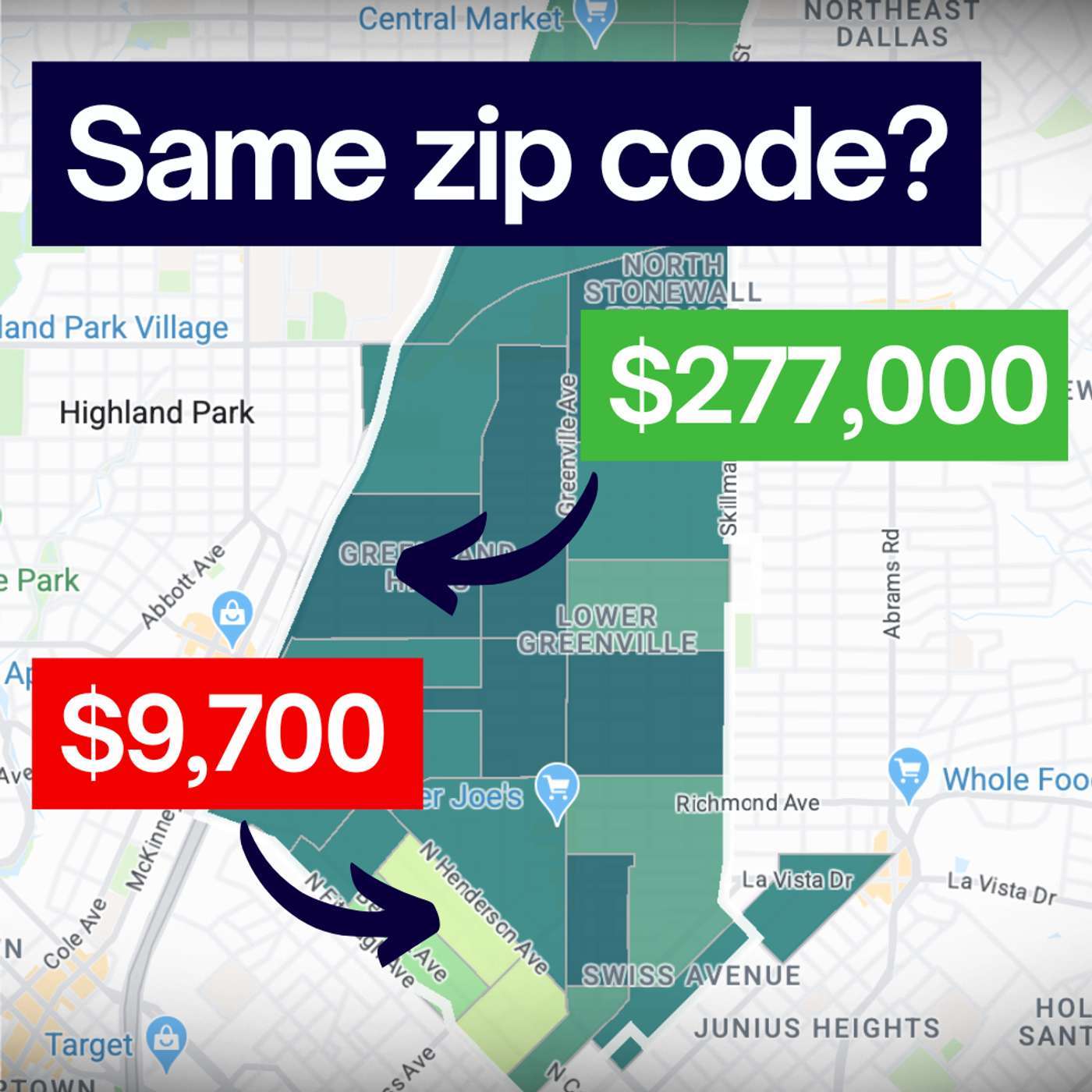 The Hidden History (and Flaws) of the Zip Code 23.01.2026 10minIn 1963, the US Postal Service introduced "Mr. Zip" to make mail delivery faster. They never intended for those five digits to determine your insurance premiums, your home value, or your health outcomes. In this short deep-dive, we explore how an arbitrary logistical tool became a shorthand for community and why that’s dangerous. From the misleading boundaries of Dallas, Texas, to the tragic data failures during the Flint water crisis, we uncover the real story behind the map. Listen in to learn why it's time to move beyond the zip code and start looking at the details that actually matter. --- Whenever you’re ready, here are 3 ways I can help you: 🎓 Modern GIS Accelerator: The step-by-step roadmap to master Python, Spatial SQL & Cloud workflows. Stop just "making maps" and start building spatial solutions. 👉 https://forrest.nyc/accelerator/ 🧪 The Spatial Lab: Join the top 5% of geospatial professionals in our private community. Get access to exclusive courses, mentorship, and the network you need to level up. 👉 https://forrest.nyc/spatial-lab/ 📰 Daily modern GIS insights: https://forrest.nyc CONNECT WITH ME 📸 Instagram: https://www.instagram.com/matt_forrest/ 💼 LinkedIn: https://www.linkedin.com/in/mbforr/ 📧 Newsletter: https://forrest.nyc 🌐 Website: https://forrest.nyc
 -
 #37: From Static Maps to Living Systems: How AI Is Changing Global Mapping with Cliff Allison from TomTom 21.01.2026 58minMaps have been around for thousands of years, but what they represent and how they work is changing faster than ever. In this episode, I’m joined by Cliff Allison, who has spent more than 30 years building enterprise-scale mapping systems for governments and global organizations. Today, he leads government global sales at TomTom, helping bring modern, AI-powered mapping infrastructure to some of the most demanding use cases in the world. We talk about how maps have evolved from static snapshots into living systems that update continuously, how open standards and collaboration made global mapping possible at scale, and why machines are now increasingly interacting with maps and with each other. We also explore what this shift means for defense, intelligence, humanitarian response, and decision-making, and why mapping is no longer just a visualization layer, but a foundational system for understanding and predicting the world. If you work in geospatial, data, AI, or infrastructure, this conversation will change how you think about maps. --- Whenever you’re ready, here are 3 ways I can help you: 🎓 Modern GIS Accelerator: The step-by-step roadmap to master Python, Spatial SQL & Cloud workflows. Stop just "making maps" and start building spatial solutions. 👉 https://forrest.nyc/accelerator/ 🧪 The Spatial Lab: Join the top 5% of geospatial professionals in our private community. Get access to exclusive courses, mentorship, and the network you need to level up. 👉 https://forrest.nyc/spatial-lab/ 📰 Daily modern GIS insights: https://forrest.nyc CONNECT WITH ME 📸 Instagram: https://www.instagram.com/matt_forrest/ 💼 LinkedIn: https://www.linkedin.com/in/mbforr/ 📧 Newsletter: https://forrest.nyc 🌐 Website: https://forrest.nyc
 -
 #36: Why Flood Risk Data Exists (But Isn’t Easy to Access) with Kevin Bullock 08.01.2026 46minWe have an incredible amount of public geospatial data—high-resolution elevation, weather forecasts, floodplain maps, real-time sensors—yet most people still can’t easily answer a simple question: “What’s my flood risk right here, right now?” In this episode, I’m joined by Kevin Bullock, an aerospace engineer and remote sensing expert at Development Seed, to talk about how he turned years of geospatial expertise into Hydra Atlas, a mobile app designed to make flood risk understandable and accessible for everyday users. We explore why so much critical data remains difficult to use, how Kevin pulled together datasets from FEMA, NOAA, and USGS, and why mobile—not web—was the right platform for this problem. Kevin also shares what it was like building a geospatial app with Swift, testing real-world use cases, and designing an interface that prioritizes clarity over complexity. This conversation goes beyond flooding. It’s about modern GIS, product thinking, open data, and what happens when geospatial professionals stop building tools for other experts and start building tools for people. If you’re interested in geospatial product development, public data, mobile mapping, or turning complex systems into usable software, this episode is for you. Download HydraAtlas: https://apps.apple.com/us/app/hydraatlas/id6749492232 Follow Kevin on LinkedIn: https://www.linkedin.com/in/kevbullock/ --- Whenever you’re ready, here are 3 ways I can help you: 🎓 Modern GIS Accelerator: The step-by-step roadmap to master Python, Spatial SQL & Cloud workflows. Stop just "making maps" and start building spatial solutions. 👉 https://forrest.nyc/accelerator/ 🧪 The Spatial Lab: Join the top 5% of geospatial professionals in our private community. Get access to exclusive courses, mentorship, and the network you need to level up. 👉 https://forrest.nyc/spatial-lab/ 🧭 Career Compass: Not sure where to start? Get the fast, practical steps to land the GIS role you actually want. 👉 https://forrest.nyc/career-compass/ 📰 Daily modern GIS insights: https://forrest.nyc CONNECT WITH ME 📸 Instagram: https://www.instagram.com/matt_forrest/ 💼 LinkedIn: https://www.linkedin.com/in/mbforr/ 📧 Newsletter: https://forrest.nyc 🌐 Website: https://forrest.nyc
Lignende podkaster


Populær i
Denne podkasten finnes også i podkast-listene til disse landene.

