
Philosophy Overdose
Philosophy Overdose
0
Philosophy Overdose is a collection of public and academic philosophy lectures and interviews, focusing mainly on analytic philosophy with occasional continental philosophy. The channel seeks out thought-provoking material that is often rare and features famous philosophers, sometimes offering translations from German and French. It is entirely non-commercial and intended for educational purposes, aiming to spread good philosophy content. Topics span epistemology, ethics, metaphysics, philosophy of mind, and many other branches of philosophy.
Episoder
-
 On Socrates - with Raphael Woolf and Peter Adamson 05.10.2026 32minPeter Adamson and Raphael Woolf discuss the figure of Socrates in an episode of Peter Adamson's podcast on the History of Philosophy from a few years back. They discuss Socrates as he was presented by Plato, that is, as the gadfly of Athens. They also consider whether Socrates was an ascetic, whether it could really be true that virtue is knowledge, and whether weakness of will is really impossible.For more information about the podcast and for additional episodes, go to: https://www.historyofphilosophy.net#philosophy #socrates #plato #historyofphilosophy Learn more about your ad choices. Visit megaphone.fm/adchoices
 -
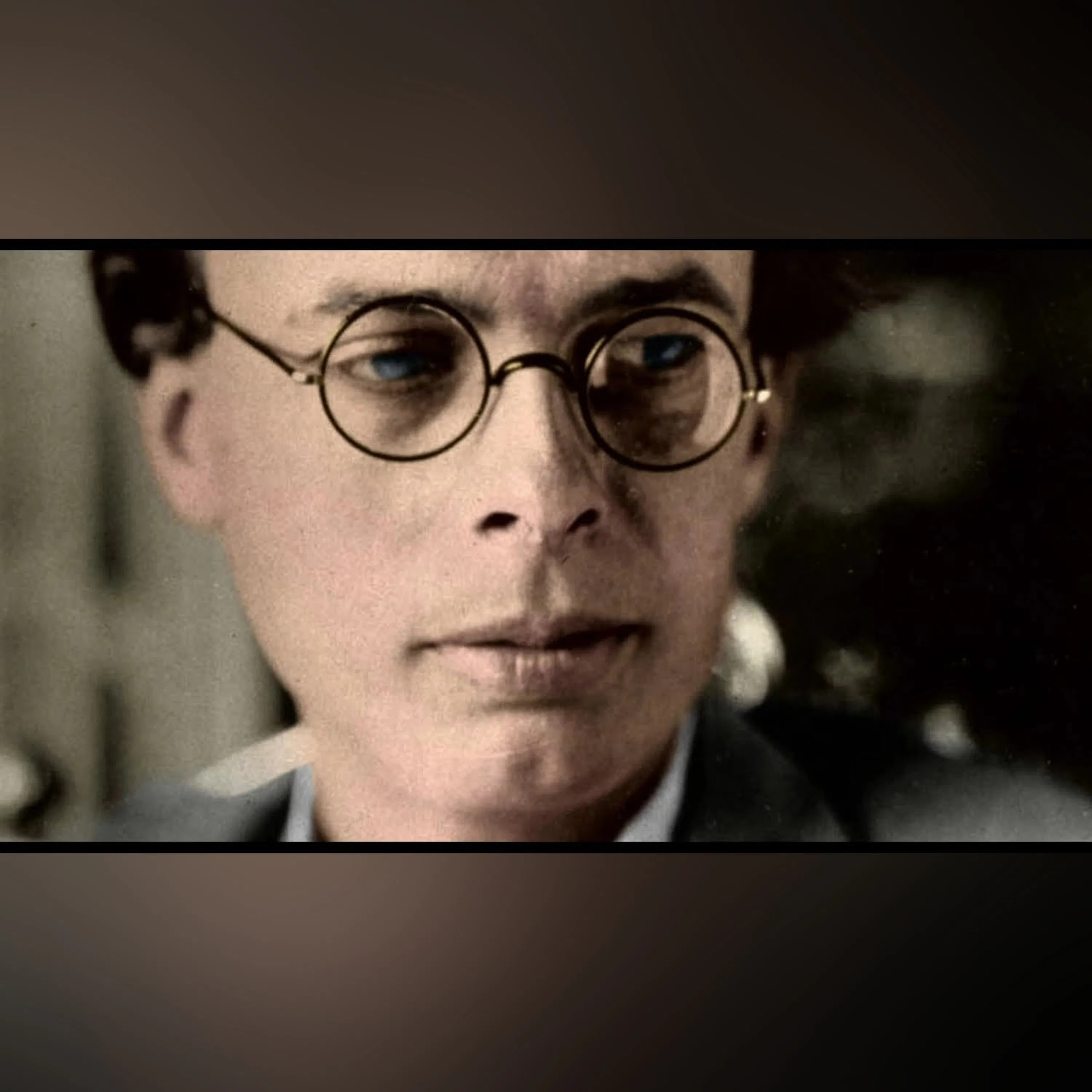 Aldous Huxley on the Ultimate Revolution (1962) 05.10.2026 1t 23minAudio recording of a 1962 lecture by Aldous Huxley at UC Berkeley. He discusses some of the themes of his famous work Brave New World regarding authoritarian state control and the various methods of psychological manipulation. #philosophy #aldoushuxley #bravenewworld #authoritarianism #totalitarianism #socialtheory #psychology Learn more about your ad choices. Visit megaphone.fm/adchoices
 -
 Divine Command Theory and the Euthyphro Objection 05.10.2026 8minRuss Shafer-Landau explains the Euthyphro Dilemma and why it presents a serious problem to Divine Command Theory. This comes from a talk on objective morality without God: https://youtu.be/50CQwa15R7A #philosophy #ethics #metaethics #moralphilosophy #historyofphilosophy Learn more about your ad choices. Visit megaphone.fm/adchoices
 -
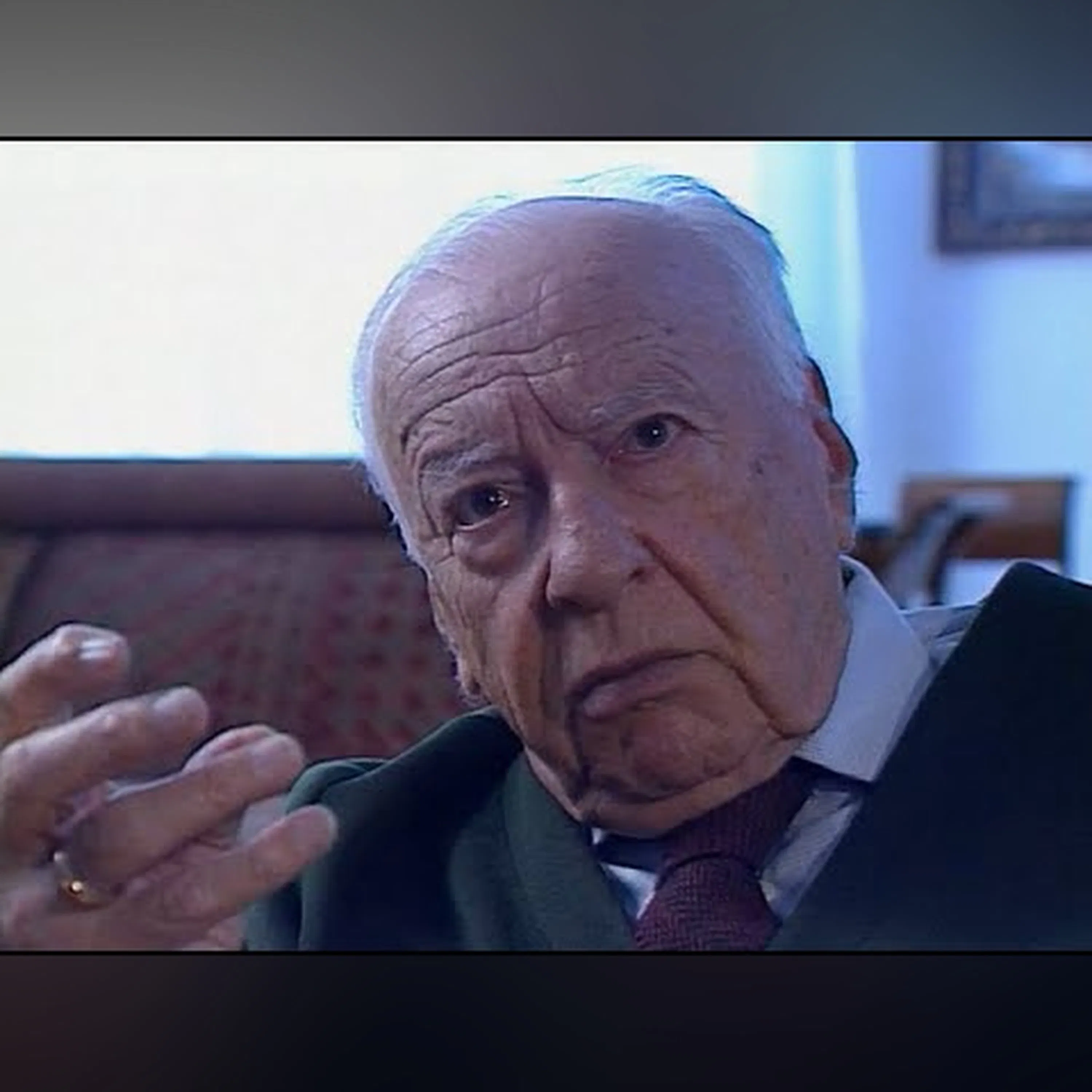 Gadamer on Schopenhauer (1991) 05.10.2026 4minA very short clip of Gadamer discussing Schopenhauer. More details will be added at a later date. More Short Clips: https://www.youtube.com/playlist?list=PLhP9EhPApKE8v8UVlc7JuuNHwvhkaOvzcMore Gadamer: https://www.youtube.com/playlist?list=PLhP9EhPApKE_MbPzGOh27qfdqiCaf7Uot#Philosophy #Gadamer #Schopenhauer Learn more about your ad choices. Visit megaphone.fm/adchoices
 -
 1 Just What is Kant's "Project"? - Kant's Critique of Pure Reason (Dan Robinson) 05.10.2026 53minDan Robinson gives the 1st lecture in a series of 8 on Immanuel Kant's Critique of Pure Reason. Both sense and reason are limited. Kant must identify the proper mission and domain of each, as well as the manner in which their separate functions come to be integrated in what is finally the inter-subjectively settled knowledge of science.This series looks at German Philosopher Immanuel Kant's seminal philosophical work 'The Critique of Pure Reason'. The lectures aim to outline and discuss some of the key philosophical issues raised in the book and to offer students and individuals thought provoking Kantian ideas surrounding metaphysics. Each lecture looks at particular questions raised in the work such as how do we know what we know and how do we find out about the world, dissects these questions with reference to Kant's work and discusses the broader philosophical implications. Anyone with an interest in Kant and philosophy will find these lectures thought provoking but accessible.This is series of lectures was given in 2011 at Oxford. Note, audio has been improved. All 8 lectures: https://www.youtube.com/playlist?list=PLhP9EhPApKE_OdgqNgL0AJX9-gwr4tmLw#philosophy #kant #epistemology #metaphysics #empiricism #hume #skepticism #historyofphilosophy Learn more about your ad choices. Visit megaphone.fm/adchoices
 -
 Bas van Fraassen on Empiricism (1990) 05.10.2026 1t 16minAudio recording of a lecture by Bas van Fraassen on the nature of empiricism at Calvin College back in 1990. #philosophy #epistemology #empiricism #philosophyofscience #historyofphilosophy Learn more about your ad choices. Visit megaphone.fm/adchoices
 -
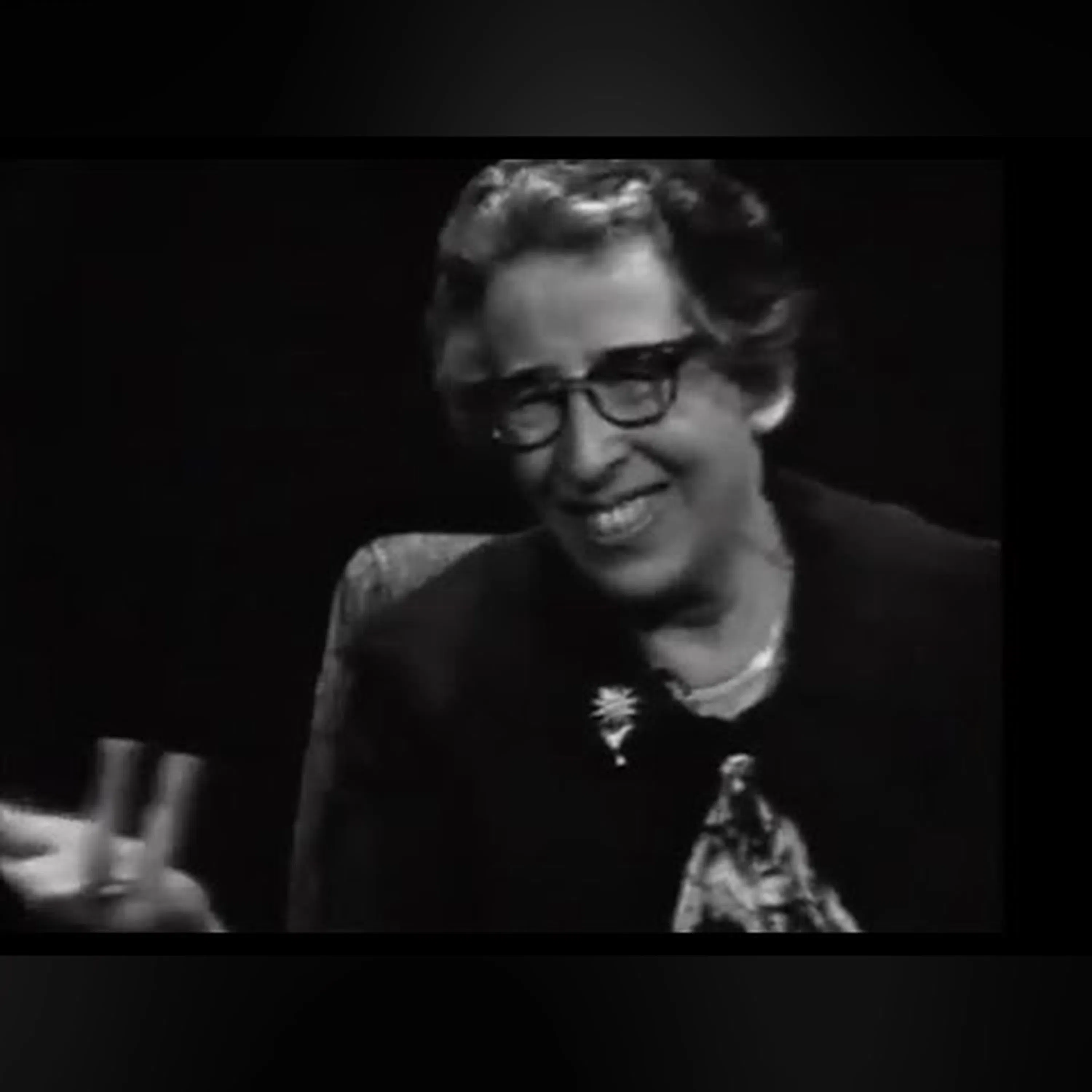 Hannah Arendt on Modernity (1964) 05.10.2026 9minA clip of Hannah Arendt from her 1964 interview with Günter Gaus. Among other things, she discusses the dethroning of the community spirit by the modern age and with it the prime importance of the political and the shrinkage of the public realm, which is associated with the uprooting of the masses and the resulting isolation and atomism in the modern world (something which, by the way, she thought made possible totalitarianism in the 20th century, both from the right and the left). She also touches on the labor-consumption process, the public sphere, and the increasing inability to act publicly in the modern world. Full Interview: https://www.youtube.com/watch?v=dVSRJC4KAiE#philosophy #hannaharendt #politicaltheory #politicalphilosophy Learn more about your ad choices. Visit megaphone.fm/adchoices
 -
 Plato on Knowledge - The Meno and Theaetetus (History of Philosophy) 05.10.2026 38minPeter Adamson discusses Plato's dialogues the Meno and the Theaetetus, which address various epistemological topics, including Meno's paradox, Plato's theory of recollection, the nature of knowledge, relativism, and the difference between knowledge and true belief (e.g. what must be added to a true belief to turn it into knowledge, and why knowledge is more valuable than mere true belief). This comes from Peter Adamson's amazing podcast on the History of Philosophy from a few years back, which can be found here: https://www.historyofphilosophy.net00:00 The Meno 14:59 Theaetetus #philosophy #plato #epistemology #socrates #historyofphilosophy Learn more about your ad choices. Visit megaphone.fm/adchoices
 -
 The Problem of Self-Knowledge 05.10.2026 1t 25minA talk given by Barry Smith a few years back on the nature of self-knowledge (i.e. knowledge of one's own inner states of mind) and some of the philosophical problems that arise. He discusses some of the main metaphysical and epistemological issues, especially in relation to knowledge of other minds and other kinds of knowledge. Among other things, he touches on the symmetries vs asymmetries, the Cartesian versus behaviorist conception, and issues of authority, objectivity, and skepticism, including Davidsonian interpretation, and even a bit on Wittgenstein's famous private language argument. This talk was given at the École Normale Supérieure (ENS) in Paris back in 2005.More on self-knowledge: https://plato.stanford.edu/entries/self-knowledge/00:00 Start of Talk 06:18 Asymmetries 12:10 Authority 16:29 Symmetries 19:15 The Central Problem 23:22 Cartesianism vs Behaviorism 33:45 Inner Perceptual Model 35:55 Transparency 40:21 Consciousness 45:57 Publicity & Objectivity 50:53 Knowing Others: Davidson 57:24 Objectivity vs Authority 1:00:55 Insufficient Answers to Problem #philosophy #epistemology #philosophyofmind #metaphysics #skepticism #mind Learn more about your ad choices. Visit megaphone.fm/adchoices
 -
 The Experience Machine 05.10.2026 6minA clip of professor Shelly Kagan discussing the famous thought experiment of the experience machine which comes from Robert Nozick and which serves as an argument against hedonism about well-being. This comes from a lecture on death given at the Southern Methodist University back in 2013. More on the nature of well-being: https://plato.stanford.edu/entries/well-being/#philosophy #hedonism #ethics #nozick #moralphilosophy Learn more about your ad choices. Visit megaphone.fm/adchoices
 -
 Nelson Goodman Interview (1989) - Induction, Worldmaking, Symbols, and Art 05.10.2026 1tIn this interview, Nelson Goodman begins by discussing induction and his famous contribution to the problem of induction, then his non-realist notion of 'worldmaking' which replaces the traditional view of truth as a correspondence to an objective world. Next he discusses his understanding of symbols and some of the general consequences, especially for art and aesthetics, including the replacement of traditional notions like that of truth, certainty, and knowledge. This interview was given in Rome in 1989. Note, this is a reupload. More details will be added at a later date.Uploaded 08-07-21You can find Goodman's "Ways of Worldmaking" here: https://archive.org/details/GoodmanWaysOfWorldmaking/#philosophy #epistemology #aesthetics #causality #science #causation #philosophyofscience #skepticism #historyofphilosophy Learn more about your ad choices. Visit megaphone.fm/adchoices Learn more about your ad choices. Visit megaphone.fm/adchoices
 -
 Karl Popper on What Philosophy Isn't and Philosophical Prejudices 05.10.2026 14minAudio recording of a few clips of Karl Popper discussing his conception of philosophy. Note, this is reupload, and the translation is my own. More details will be added later. You can find more Popper: https://www.youtube.com/playlist?list=PLhP9EhPApKE_VarWCx1d_Uogn_GxsVf-o#philosophy #karlpopper #historyofphilosophy Learn more about your ad choices. Visit megaphone.fm/adchoices
 -
 Personal Identity and the Self 05.10.2026 1tThis is a pretty good introductory talk on personal identity and some of the philosophical issues that arise surrounding it. The lecturer is Patrick Stokes of Deakin University and was given at the Ethics Centre. This comes from an episode of the podcast The Philosopher's Zone from a few years back titled "Personal identity: a primer".The lecturer Patrick Stokes: http://www.patrickstokes.comThe Philosopher's Zone: https://www.abc.net.au/radionational/programs/philosopherszoneThe Ethics Centre: http://www.ethics.org.au/home#philosophy #personalidentity #philosophyofmind #metaphysics #mind Learn more about your ad choices. Visit megaphone.fm/adchoices
 -
 Tom Regan on Animal Rights (1991) 05.10.2026 15minTom Regan discusses and responds to some of the main philosophical arguments that have been given against animal rights. These clips come from a lecture he gave at a conference on the ethics of animal experimentation in 1991 at the Kennedy Institute of Ethics at Georgetown University. #philosophy #ethics #moralphilosophy #animalethics #animalrights Learn more about your ad choices. Visit megaphone.fm/adchoices
 -
 Aristotle's Ethics - Happiness, Pleasure, and Friendship (History of Philosophy) 05.10.2026 46minPeter Adamson discusses Aristotle's ethics, focusing on the Nicomachean Ethics. Among other things, he discusses Aristotle's ideas about happiness, virtue, the function argument, weakness of will, as well as the role of pleasure and friendship in the good life.This is from two episodes of Peter Adamson's podcast, the History of Philosophy without any Gaps, back in 2011. I thought it provided a good introduction to Aristotle's ethics. The podcast can be found here: https://historyofphilosophy.net00:00 Aristotle's Ethics 20:13 Pleasure & Friendship #philosophy #aristotle #ethics #moralphilosophy #historyofphilosophy #metaphysics #philosopher Learn more about your ad choices. Visit megaphone.fm/adchoices
 -
 Levinas on the Face 05.10.2026 3minThis short clip comes from the beginning of a 2014 documentary on Emmanuel Levinas by Yoram Ron called "Le Dieu absent - Emmanuel Lévinas et l'humanisme de l'autre" ("Absent God - Emmanuel Levinas and the Humanism of the Other"). I thought it was interesting, so I translated it into English and added subtitles. The full documentary (with English subtitles) can be found on YouTube here: https://www.youtube.com/watch?v=qbGaXEqxSvU#philosophy #levinas #phenomenology Learn more about your ad choices. Visit megaphone.fm/adchoices
 -
 Ethics and Evolution - Peter Singer (1998) 05.10.2026 1t 8minProfessor Peter Singer gives a public lecture on morality and evolution at a 1998 conference on Darwin and ethics at the LSE. #philosophy #ethics #moralphilosophy #evolution #petersinger Learn more about your ad choices. Visit megaphone.fm/adchoices
 -
 Daniel Dennett Interview on Mind, Matter and Meaning 05.10.2026 1t 10minAn interesting interview with Daniel Dennett from a few years back that I quite like. He discusses various philosophical issues regarding mind and meaning. Some of the topics discussed include consciousness, science, materialism, computation, meaning/purpose in biology, emergence & reductionism, the intentional stance, evolution, philosophical zombies, the self, and free will. This comes from an interview with Robert Pollie a few years back from a podcast called the 7th Avenue Project. For more information, go to www.7thavenueproject.com. #philosophy #dennett #consciousness #philosophyofmind #materialism #personalidentity #perception #mind Learn more about your ad choices. Visit megaphone.fm/adchoices
 -
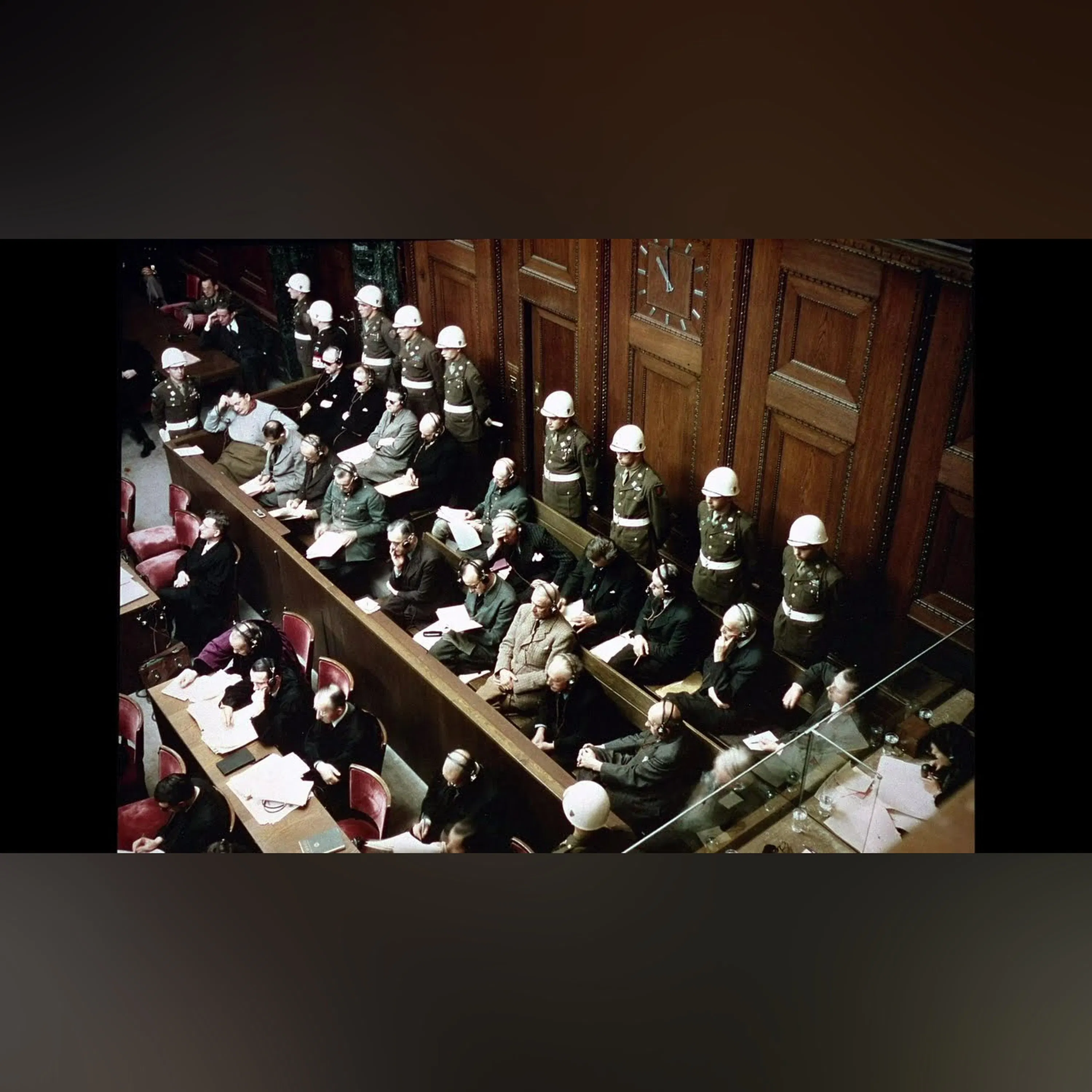 Examining the Ethics of the Unthinkable: The Holocaust and Bioethics - Arthur Caplan (1989) 05.10.2026 1t 28minAudio recording of a keynote speech by Professor Arthur L. Caplan at a 1989 conference on the meaning of the Holocaust for bioethics at the University of Minnesota. 00:00 Lecture 52:17 Q&A #philosophy #ethics #bioethics #history #moralphilosophy #utilitarianism #medicalethics #totalitarianism #authoritarianism Learn more about your ad choices. Visit megaphone.fm/adchoices
 -
 Gadamer on Language and Thought (1973) 05.10.2026 9minThis is a version of an upload from the old channel. The audio comes from a 1973 lecture on the extent that language determines thought. The translation is mine. More Short Clips: https://www.youtube.com/playlist?list=PLhP9EhPApKE8v8UVlc7JuuNHwvhkaOvzcMore Gadamer: https://www.youtube.com/playlist?list=PLhP9EhPApKE_MbPzGOh27qfdqiCaf7Uot#Philosophy #Gadamer #Language Learn more about your ad choices. Visit megaphone.fm/adchoices
Lignende podkaster


Populær i
Denne podkasten finnes også i podkast-listene til disse landene.
