
Ballet Science
Caroline Simpkins, Ph.D.
0
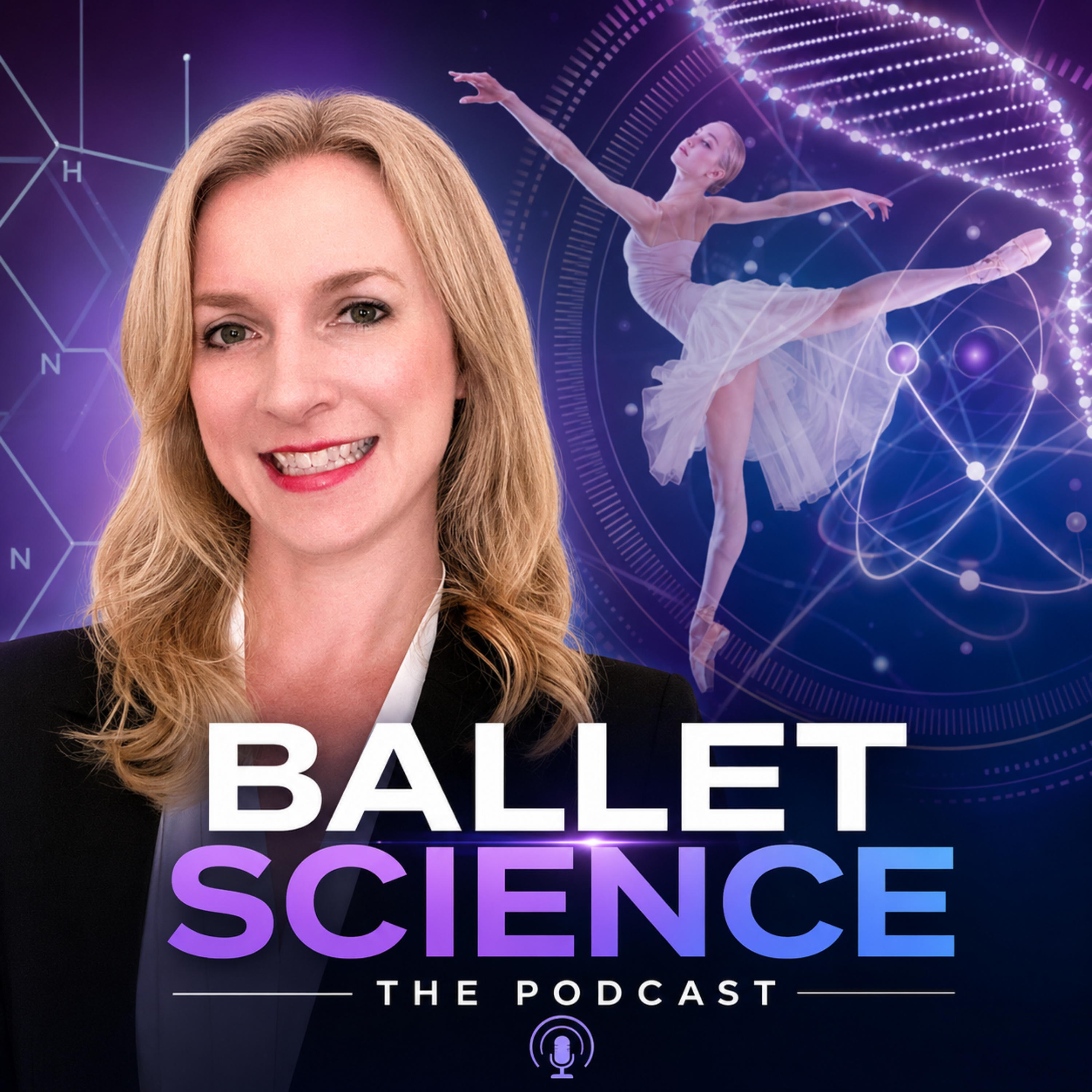
Ballet Science is a podcast hosted by Caroline Simpkins, Ph.D., a former ballerina turned biomechanics researcher. Each episode brings science into the ballet studio, exploring the intersection of ballet, dance science, and human movement. Topics include injury prevention, biomechanics, strength, nutrition, mindset, and performance. The show aims to help dancers and anyone who moves perform and feel their best.
Episoder
-
 How Ballet Can Support Cancer Recovery | Anna Wassman-Cox of Onco-Ballet 06.10.2026 42minWhat happens when ballet becomes part of cancer recovery? In this episode of the Ballet Science Podcast, I’m joined by Anna Wassman-Cox, a former professional ballet dancer, two-time breast cancer survivor, and founder of Onco-Ballet.Anna shares her deeply personal experience of returning to the ballet barre during cancer treatment... and how ballet gave her a space to step away from the uncertainty of cancer and simply be a dancer again.Anna also shares the story of one Onco-Ballet participant who went from using a walker to performing an entire ballet piece.Importantly, Anna discusses the distinction between the promising experiences participants are reporting and the need for more rigorous research to understand the effects of ballet and dance in cancer recovery.Join Ballet Science Backstage on Patreon for ad-free access to podcast episodes, educational videos, workouts, stretching content, digital downloads, and more... all in one place. Join Now!Want Ballet Science updates sent to your inbox? Join My E-mail ListConnect With Ballet Science:WebsiteInstagramFacebook XAmazon StorefrontE-mail: [email protected] with Onco-Ballet:WebsiteInstagramPerformance (October 2026)Hosted by Caroline Simpkins, Ph.D., the Ballet Science podcast brings science into the studio to help dancers of all ages and abilities give their best performances both onstage and off, and reveals how the science of ballet can benefit anyone who moves. Each week, we explore the intersection of science and ballet... from injury prevention and biomechanics to nutrition, mindset, and everything in between. If you enjoyed this episode, please hit the subscribe button, leave a review, and share it with your friends and dance community. You can also follow Ballet Science on social media and visit our website for additional information.Filming Equipment Affiliate Links:MicrophonePop FilterMic StandPrompterLarge Key LightSmall Key LightEve Flare LightLogo Photo: Richard CalmesAdditional Photos Provided By: Anna Wassman-CoxPlease note that some links may be affiliate links, which means I may earn a small commission at no extra cost to you. All proceeds are reinvested back into Ballet Science.
 -
Breast Cancer After Ballet: Finding Her Way Back to the Stage | Abigail Simon 29.09.2026 36minWhat happens when a cancer diagnosis changes the body you've spent your entire life training?In this episode, I sit down with former professional ballet dancer Abigail Simon to talk about her experience being diagnosed with breast cancer after a career that included American Ballet Theatre, Joffrey, and Broadway.Abigail shares what it was like to go from preparing to return to dancing after having a baby to suddenly navigating a breast cancer diagnosis, surgery, chemotherapy, fertility preservation, chronic pain, and major changes to her body.We also talk about something that is especially important for dancers: the need for medical care that considers not only survival, but quality of life and the physical demands of returning to dance. Abigail discusses her rehabilitation, body image, learning to move differently, and ultimately finding her way back to the stage... including performing again en pointe.We also discuss the emotional aftermath of cancer, losing a sense of purpose, the importance of mental health support, and how dance and community helped Abigail rebuild her life.Abigail is now continuing to dance, teach, coach, and work with Onco-Ballet, a community for people affected by cancer who want to dance.Join Ballet Science Backstage on Patreon for ad-free access to podcast episodes, educational videos, workouts, stretching content, digital downloads, and more... all in one place. Join Now!Want Ballet Science updates sent to your inbox? Join My E-mail ListConnect With Ballet Science:WebsiteInstagramFacebook XAmazon StorefrontE-mail: [email protected] with Abigail Simon:WebsiteInstagramOnco-BalletHosted by Caroline Simpkins, Ph.D., the Ballet Science podcast brings science into the studio to help dancers of all ages and abilities give their best performances both onstage and off, and reveals how the science of ballet can benefit anyone who moves. Each week, we explore the intersection of science and ballet... from injury prevention and biomechanics to nutrition, mindset, and everything in between. If you enjoyed this episode, please hit the subscribe button, leave a review, and share it with your friends and dance community. You can also follow Ballet Science on social media and visit our website for additional information.Filming Equipment Affiliate Links:MicrophonePop FilterMic StandPrompterLarge Key LightSmall Key LightEve Flare LightLogo Photo: Richard CalmesAdditional Photos Provided By: Abigail SimonPlease note that some links may be affiliate links, which means I may earn a small commission at no extra cost to you. All proceeds are reinvested back into Ballet Science.
-
The Future of Pointe Training | Lynne Charles 22.09.2026 30minPointe training is one of the most demanding aspects of ballet... but are we teaching it in the most effective way?In this episode, I’m joined by Lynne Charles, former principal ballerina (Hamburg Ballet, Bejart Ballet Lausanne, Ballet National Roland Petit), teacher, ballet mistress, and the current Director of English National Ballet School. Lynne is also the founder and creator of 4Pointe, a somatic approach to pointe training that emphasizes foot articulation, strength, alignment, mobility, and mindful movement.Lynne shares what inspired her to develop 4Pointe and why she believes pointe training needs to evolve alongside the changing demands placed on dancers today.Lynne also explains why she believes dancers should spend more time developing the skills they need before going onto pointe... and why simply putting on pointe shoes and practicing variations isn't the same as properly training a dancer for a career on pointe.Whether you're a dancer, teacher, parent, or simply interested in the science and mechanics of ballet, this conversation offers a fascinating look at how pointe training could evolve.Join Ballet Science Backstage on Patreon for ad-free access to podcast episodes, educational videos, workouts, stretching content, digital downloads, and more... all in one place. Join Now!Want Ballet Science updates sent to your inbox? Join My E-mail ListConnect With Ballet Science:WebsiteInstagramFacebook XAmazon StorefrontE-mail: [email protected] with Lynne Charles and 4Pointe:WebsiteInstagramHosted by Caroline Simpkins, Ph.D., the Ballet Science podcast brings science into the studio to help dancers of all ages and abilities give their best performances both onstage and off, and reveals how the science of ballet can benefit anyone who moves. Each week, we explore the intersection of science and ballet... from injury prevention and biomechanics to nutrition, mindset, and everything in between. If you enjoyed this episode, please hit the subscribe button, leave a review, and share it with your friends and dance community. You can also follow Ballet Science on social media and visit our website for additional information.Filming Equipment Affiliate Links:MicrophonePop FilterMic StandPrompterLarge Key LightSmall Key LightEve Flare LightLogo Photo: Richard CalmesAdditional Photos Provided By: Lynne CharlesPhotos by: Amber HuntPlease note that some links may be affiliate links, which means I may earn a small commission at no extra cost to you. All proceeds are reinvested back into Ballet Science.
-
Life After Ballet | Megan Fairchild on Retiring, Motherhood, and What Comes Next 15.09.2026 49minWhat does it take to build a long, sustainable career in professional ballet... and what happens when that career comes to an end? In this episode, I’m joined by Megan Fairchild, former principal dancer with New York City Ballet. After an extraordinary career performing some of the most iconic works in the Balanchine and Robbins repertoire, Megan recently retired from NYCB and moved to France with her family.We talk about ballet longevity, how her understanding of her body changed throughout her career, and what she learned from dealing with neck pain and adapting her strength and conditioning. Megan also shares her experience becoming a mother while continuing to dance at the highest level, returning to the stage after having children, and learning to balance motherhood and a demanding professional career.We also talk about dancer identity after retirement, moving to France, pursuing education outside of ballet, and why Megan believes dancers need to stop comparing themselves to one another and focus on what makes them exceptional.Megan offers an incredibly honest perspective on what it means to be a professional ballet dancer, and what it means to become a whole person beyond the studio.Join Ballet Science Backstage on Patreon for ad-free access to podcast episodes, educational videos, workouts, stretching content, digital downloads, and more... all in one place. Join Now!Want Ballet Science updates sent to your inbox? Join My E-mail ListConnect With Ballet Science:WebsiteInstagramFacebook XAmazon StorefrontE-mail: [email protected] with Megan Fairchild:InstagramHosted by Caroline Simpkins, Ph.D., the Ballet Science podcast brings science into the studio to help dancers of all ages and abilities give their best performances both onstage and off, and reveals how the science of ballet can benefit anyone who moves. Each week, we explore the intersection of science and ballet... from injury prevention and biomechanics to nutrition, mindset, and everything in between. If you enjoyed this episode, please hit the subscribe button, leave a review, and share it with your friends and dance community. You can also follow Ballet Science on social media and visit our website for additional information.Filming Equipment Affiliate Links:MicrophonePop FilterMic StandPrompterLarge Key LightSmall Key LightEve Flare LightLogo Photo: Richard CalmesAdditional Photos Provided By: Megan FairchildPhotos by: Erin BaianoPlease note that some links may be affiliate links, which means I may earn a small commission at no extra cost to you. All proceeds are reinvested back into Ballet Science.
-
ENCORE: If You Can Do Ballet, You Can Do Anything | Dr. Miko Fogarty 08.09.2026 30minWhat happens when an accomplished ballet dancer decides to leave the stage... and pursue medicine instead? In this Ballet Science Encore episode, I'm revisiting one of the most valuable conversations from the Ballet Science archives with Dr. Miko Fogarty, former professional ballet dancer and international competition winner who made an extraordinary transition from the stage to podiatric medicine.Now a foot and ankle surgery resident, Miko offers a unique perspective on dancers' feet, pointe work, injury prevention, and the connection between dance and medicine.Ballet Science Encore: Every so often, I revisit one of the most informative conversations from the Ballet Science archives. These Encore episodes feature timeless advice that remains just as relevant today, often in a shorter, curated highlights format.Listen to my original full-length interview with Miko Fogarty here.Go behind the scenes with Ballet Science Backstage! Join me on Patreon for ad-free access to Ballet Science podcast episodes, educational videos, workouts, stretching content, digital downloads, and more... all in one place. Join Now!Want Ballet Science updates sent to your inbox? Join My E-mail ListConnect With Ballet Science:WebsiteInstagramFacebook XAmazon StorefrontE-mail: [email protected] by Caroline Simpkins, Ph.D., the Ballet Science podcast brings science into the studio to help dancers of all ages and abilities give their best performances both onstage and off, and reveals how the science of ballet can benefit anyone who moves. Filming Equipment Affiliate Links:MicrophonePop FilterMic StandPrompterLarge Key LightSmall Key LightEve Flare LightLogo photo: Richard CalmesPlease note that some links may be affiliate links, which means I may earn a small commission at no extra cost to you. All proceeds are reinvested back into Ballet Science.
-
The Truth About Ballet Training: What Every Parent Needs To Know | Ballet Help Desk 01.09.2026 1t 25minBallet training can be an exciting (but often complicated) journey for dancers and their families. In this episode, I’m joined by Brett and Jenny from Ballet Help Desk, who share insights from their experiences as ballet parents and from hearing directly from families navigating the dance world.We discuss the ballet training “arms race,” injury and recovery, pointe readiness, body image and nutrition, teacher red flags, school culture, transparency, choosing the right ballet school, post-graduate programs, and how parents can better support their dancers.We also talk about finding a healthy balance between supporting a dancer’s dreams and taking a realistic, long-term view of their career.If you’re a ballet parent, dancer, teacher, or simply interested in the world of ballet training, this conversation is for you.Join Ballet Science Backstage on Patreon for ad-free access to podcast episodes, educational videos, workouts, stretching content, digital downloads, and more... all in one place. Join Now!Want Ballet Science updates sent to your inbox? Join My E-mail ListConnect With Ballet Science:WebsiteInstagramFacebook XAmazon StorefrontE-mail: [email protected] with Ballet Help Desk:WebsiteHosted by Caroline Simpkins, Ph.D., the Ballet Science podcast brings science into the studio to help dancers of all ages and abilities give their best performances both onstage and off, and reveals how the science of ballet can benefit anyone who moves. Each week, we explore the intersection of science and ballet... from injury prevention and biomechanics to nutrition, mindset, and everything in between. If you enjoyed this episode, please hit the subscribe button, leave a review, and share it with your friends and dance community. You can also follow Ballet Science on social media and visit our website for additional information.Filming Equipment Affiliate Links:MicrophonePop FilterMic StandPrompterLarge Key LightSmall Key LightEve Flare LightLogo Photo: Richard CalmesAdditional Photos Provided By: Ballet Help DeskPlease note that some links may be affiliate links, which means I may earn a small commission at no extra cost to you. All proceeds are reinvested back into Ballet Science.
-
Why Ballet Foundations Matter: Building a Better Dancer | Darla Hoover 25.08.2026 56minWhat does great ballet training look like... and how should dancers develop from their earliest classes through pre-professional training?In this episode, I’m joined by legendary ballet educator Darla Hoover (Central Pennsylvania Youth Ballet, School of American Ballet, New York City Ballet, Ballet Academy East) for a fascinating conversation about teaching ballet at every stage of a dancer’s development.Darla shares her decades of experience teaching everyone from young beginners to professional dancers, including her own training with the School of American Ballet and her years as a professional dancer and educator.Darla’s philosophy is ultimately about much more than producing professional dancers. She believes ballet can teach discipline, dedication, focus, passion, and lifelong lessons that dancers carry with them wherever life takes them.Whether you’re a ballet teacher, parent, student, aspiring professional, or simply interested in how great dancers are developed, there is so much wisdom in this conversation.Join Ballet Science Backstage on Patreon for ad-free access to podcast episodes, educational videos, workouts, stretching content, digital downloads, and more... all in one place. Join Now!Want Ballet Science updates sent to your inbox? Join My E-mail ListConnect With Ballet Science:WebsiteInstagramFacebook XAmazon StorefrontE-mail: [email protected] by Caroline Simpkins, Ph.D., the Ballet Science podcast brings science into the studio to help dancers of all ages and abilities give their best performances both onstage and off, and reveals how the science of ballet can benefit anyone who moves. Each week, we explore the intersection of science and ballet... from injury prevention and biomechanics to nutrition, mindset, and everything in between. If you enjoyed this episode, please hit the subscribe button, leave a review, and share it with your friends and dance community. You can also follow Ballet Science on social media and visit our website for additional information.Filming Equipment Affiliate Links:MicrophonePop FilterMic StandPrompterLarge Key LightSmall Key LightEve Flare LightLogo Photo: Richard CalmesAdditional Photos Provided By: Darla HooverHeadshot by: Kyle FromanPlease note that some links may be affiliate links, which means I may earn a small commission at no extra cost to you. All proceeds are reinvested back into Ballet Science.
-
How Dancers Should Fuel: Nutrition Tips for Ballet | Rachel Fine, RDN 18.08.2026 51minWhat should dancers eat before ballet class? How much should they be eating? What about carbohydrates, hydration, recovery, and snacks during long rehearsals?In this episode, I’m joined by Rachel Fine, RDN, a registered dietitian nutritionist, former professional dancer, and founder of The Healthy Dancer®. Rachel shares practical, evidence-based advice to help dancers properly fuel their training while avoiding restrictive food rules and nutrition misinformation.Whether you are a young dancer, parent, teacher, professional, or adult recreational dancer, this episode is packed with practical strategies you can put into action.Join Ballet Science Backstage on Patreon for ad-free access to podcast episodes, educational videos, workouts, stretching content, digital downloads, and more... all in one place. Join Now!Want Ballet Science updates sent to your inbox? Join My E-mail ListConnect With Ballet Science:WebsiteInstagramFacebook XAmazon StorefrontE-mail: [email protected] with Rachel Fine:WebsiteInstagramHosted by Caroline Simpkins, Ph.D., the Ballet Science podcast brings science into the studio to help dancers of all ages and abilities give their best performances both onstage and off, and reveals how the science of ballet can benefit anyone who moves. Each week, we explore the intersection of science and ballet... from injury prevention and biomechanics to nutrition, mindset, and everything in between. If you enjoyed this episode, please hit the subscribe button, leave a review, and share it with your friends and dance community. You can also follow Ballet Science on social media and visit our website for additional information.Filming Equipment Affiliate Links:MicrophonePop FilterMic StandPrompterLarge Key LightSmall Key LightEve Flare LightLogo Photo: Richard CalmesAdditional Photos Provided By: Rachel FinePlease note that some links may be affiliate links, which means I may earn a small commission at no extra cost to you. All proceeds are reinvested back into Ballet Science.
-
Can Ballet Help After Breast Cancer? | What the Science Says 11.08.2026 12minCan ballet support recovery after breast cancer? A new qualitative research study explored the experiences of women who participated in a 16-week classical ballet program after breast cancer treatment. Rather than measuring strength or flexibility alone, researchers asked a different question: What was the experience actually like?In this episode, I break down the study's five major themes, including:How ballet helped participants feel "normal" againThe importance of community and shared experiencesWhy a supportive instructor mattered so muchThe physical, emotional, and cognitive benefits participants describedWhy researchers recommend hybrid ballet programs in the futureJoin Ballet Science Backstage on Patreon for ad-free access to podcast episodes, educational videos, workouts, stretching content, digital downloads, and more... all in one place. Join Now!Want Ballet Science updates sent to your inbox? Join My E-mail ListConnect With Ballet Science:WebsiteInstagramFacebook XAmazon StorefrontE-mail: [email protected] by Caroline Simpkins, Ph.D., the Ballet Science podcast brings science into the studio to help dancers of all ages and abilities give their best performances both onstage and off, and reveals how the science of ballet can benefit anyone who moves. Each week, we explore the intersection of science and ballet... from injury prevention and biomechanics to nutrition, mindset, and everything in between. If you enjoyed this episode, please hit the subscribe button, leave a review, and share it with your friends and dance community. You can also follow Ballet Science on social media and visit our website for additional information.Filming Equipment Affiliate Links:MicrophonePop FilterMic StandPrompterLarge Key LightSmall Key LightEve Flare LightLogo photo: Richard CalmesPlease note that some links may be affiliate links, which means I may earn a small commission at no extra cost to you. All proceeds are reinvested back into Ballet Science.
-
Is Losing Your Period "Normal" in Ballet? New Research Says... 04.08.2026 9minIs it "normal" for ballet dancers to lose their periods? A new 2025 study of elite dancers from the Paris Opera Ballet found that 71% had experienced at least one menstrual cycle disorder during their careers. In this episode, we break down the research, discuss what these findings mean for dancers, and explain why menstrual health is about much more than fertility.If you're a ballet dancer, dance teacher, parent, healthcare provider, or simply interested in dance medicine, this episode will help you better understand one of the most important indicators of dancer health.Join Ballet Science Backstage on Patreon for ad-free access to podcast episodes, educational videos, workouts, stretching content, digital downloads, and more... all in one place. Join Now!Want Ballet Science updates sent to your inbox? Join My E-mail ListConnect With Ballet Science:WebsiteInstagramFacebook XAmazon StorefrontE-mail: [email protected] by Caroline Simpkins, Ph.D., the Ballet Science podcast brings science into the studio to help dancers of all ages and abilities give their best performances both onstage and off, and reveals how the science of ballet can benefit anyone who moves. Each week, we explore the intersection of science and ballet... from injury prevention and biomechanics to nutrition, mindset, and everything in between. If you enjoyed this episode, please hit the subscribe button, leave a review, and share it with your friends and dance community. You can also follow Ballet Science on social media and visit our website for additional information.Filming Equipment Affiliate Links:MicrophonePop FilterMic StandPrompterLarge Key LightSmall Key LightEve Flare LightLogo photo: Richard CalmesPlease note that some links may be affiliate links, which means I may earn a small commission at no extra cost to you. All proceeds are reinvested back into Ballet Science.
-
Returning to Dance After Concussion at ABT | Courtney Shealy 28.07.2026 39minProfessional ballet dancers perform incredible athletic feats every day... but what happens when a head injury threatens their career? In this episode, I sit down with Courtney Shealy, a professional dancer with American Ballet Theatre (ABT), to discuss her journey from a young dancer in Florida to one of the world's premier ballet companies.Courtney also shares her recent experience recovering from a concussion, explaining how the injury happened, the symptoms she initially brushed off, and the testing process that led to her diagnosis. She discusses the specialized physical therapy that helped her safely return to rehearsals and performances, and why she believes greater concussion awareness is needed throughout the ballet world to help dancers recognize symptoms and prioritize their long-term health.Whether you're a dancer, teacher, parent, or healthcare professional, this conversation offers valuable insight into recognizing concussions and prioritizing long-term health.Join Ballet Science Backstage on Patreon for ad-free access to podcast episodes, educational videos, workouts, stretching content, digital downloads, and more... all in one place. Join Now!Want Ballet Science updates sent to your inbox? Join My E-mail ListConnect With Ballet Science:WebsiteInstagramFacebook XAmazon StorefrontE-mail: [email protected] with Courtney Shealy:InstagramHosted by Caroline Simpkins, Ph.D., the Ballet Science podcast brings science into the studio to help dancers of all ages and abilities give their best performances both onstage and off, and reveals how the science of ballet can benefit anyone who moves. Each week, we explore the intersection of science and ballet... from injury prevention and biomechanics to nutrition, mindset, and everything in between. If you enjoyed this episode, please hit the subscribe button, leave a review, and share it with your friends and dance community. You can also follow Ballet Science on social media and visit our website for additional information.Filming Equipment Affiliate Links:MicrophonePop FilterMic StandPrompterLarge Key LightSmall Key LightEve Flare LightLogo photo: Richard CalmesPlease note that some links may be affiliate links, which means I may earn a small commission at no extra cost to you. All proceeds are reinvested back into Ballet Science.
-
Encore: Strength Training for Male Ballet Dancers | Shane Wuerthner 21.07.2026 33minShould male ballet dancers lift weights? Strength training has become increasingly common in the ballet world, but many dancers still worry that lifting weights will make them bulky, reduce flexibility, or negatively affect their technique.In this Ballet Science Encore episode, I'm revisiting one of the most valuable conversations from the Ballet Science archives with former professional ballet dancer and strength coach Shane Wuerthner. Shane danced with the Vienna State Opera, San Francisco Ballet, and Queensland Ballet before transitioning into strength and conditioning, where he now helps dancers train smarter and stay healthier.Whether you're a male ballet student, professional dancer, teacher, or parent, this episode offers practical advice backed by experience and science.Ballet Science Encore: Every so often, I revisit one of the most informative conversations from the Ballet Science archives. These Encore episodes feature timeless advice that remains just as relevant today, often in a shorter, curated highlights format.Go behind the scenes with Ballet Science Backstage! Join me on Patreon for ad-free access to Ballet Science podcast episodes, educational videos, workouts, stretching content, digital downloads, and more... all in one place. Join Now!Want Ballet Science updates sent to your inbox? Join My E-mail ListConnect With Ballet Science:WebsiteInstagramFacebook XAmazon StorefrontE-mail: [email protected] with Shane Wuerthner:WebsiteInstagramFacebookYouTubeHosted by Caroline Simpkins, Ph.D., the Ballet Science podcast brings science into the studio to help dancers of all ages and abilities give their best performances both onstage and off, and reveals how the science of ballet can benefit anyone who moves. Filming Equipment Affiliate Links:MicrophonePop FilterMic StandPrompterLarge Key LightSmall Key LightEve Flare LightLogo photo: Richard CalmesPlease note that some links may be affiliate links, which means I may earn a small commission at no extra cost to you. All proceeds are reinvested back into Ballet Science.
-
Ballet Retirement, Identity, and Career Transition | Aurora Dickie 14.07.2026 46minProfessional ballet careers are incredibly rewarding... but they are also short. What happens when the curtain finally closes?In this episode, I sit down with Aurora Dickie, soloist with Staatsballett Berlin and graduate student in dance science, to discuss one of the most important (and often overlooked) topics in ballet: preparing for life after a performing career.Aurora shares her journey from Brazil to Washington Ballet and Staatsballett Berlin, explains how she balances a demanding professional schedule while earning a master's degree, and discusses her fascinating research on retirement transition in professional dancers.Whether you're a dancer, teacher, parent, healthcare professional, or simply interested in dance science, this conversation offers valuable insights into building a healthier and more sustainable ballet career.Go behind the scenes with Ballet Science Backstage! Join me on Patreon for ad-free access to Ballet Science podcast episodes, educational videos, workouts, stretching content, digital downloads, and more... all in one place. Join Now!Want Ballet Science updates sent to your inbox? Join My E-mail ListConnect With Ballet Science:WebsiteInstagramFacebook XAmazon StorefrontE-mail: [email protected] with Aurora Dickie:WebsiteInstagramHosted by Caroline Simpkins, Ph.D., the Ballet Science podcast brings science into the studio to help dancers of all ages and abilities give their best performances both onstage and off, and reveals how the science of ballet can benefit anyone who moves. Each week, we explore the intersection of science and ballet... from injury prevention and biomechanics to nutrition, mindset, and everything in between. If you enjoyed this episode, please hit the subscribe button, leave a review, and share it with your friends and dance community. You can also follow Ballet Science on social media and visit our website for additional information.Filming Equipment Affiliate Links:MicrophonePop FilterMic StandPrompterLarge Key LightSmall Key LightEve Flare LightLogo photo: Richard CalmesPlease note that some links may be affiliate links, which means I may earn a small commission at no extra cost to you. All proceeds are reinvested back into Ballet Science.
-
Hypermobility & EDS in Ballet | Dr. Linda Bluestein 07.07.2026 47minCan being too flexible actually increase your risk of injury?Many dancers are praised for their flexibility, but hypermobility isn't always an advantage. In this episode of the Ballet Science Podcast, I sit down with Dr. Linda Bluestein, physician, former ballet dancer, and internationally recognized expert in hypermobility disorders, to discuss what every dancer, teacher, and parent should know about hypermobility and hypermobile Ehlers-Danlos syndrome (hEDS).Whether you're a professional dancer, pre-professional student, adult ballet dancer, teacher, healthcare provider, or parent, this episode offers practical, evidence-informed advice for training smarter and dancing longer.Go behind the scenes with Ballet Science Backstage! Join me on Patreon for ad-free access to Ballet Science podcast episodes, educational videos, workouts, stretching content, digital downloads, and more... all in one place. Join Now!Want Ballet Science updates sent to your inbox? Join My E-mail ListConnect With Ballet Science:WebsiteInstagramFacebook XAmazon StorefrontE-mail: [email protected] with Dr. Linda Bluestein:WebsiteInstagramBendy Bodies PodcastHosted by Caroline Simpkins, Ph.D., the Ballet Science podcast brings science into the studio to help dancers of all ages and abilities give their best performances both onstage and off, and reveals how the science of ballet can benefit anyone who moves. Each week, we explore the intersection of science and ballet... from injury prevention and biomechanics to nutrition, mindset, and everything in between. If you enjoyed this episode, please hit the subscribe button, leave a review, and share it with your friends and dance community. You can also follow Ballet Science on social media and visit our website for additional information.Filming Equipment Affiliate Links:MicrophonePop FilterMic StandPrompterLarge Key LightSmall Key LightEve Flare LightLogo photo: Richard CalmesPlease note that some links may be affiliate links, which means I may earn a small commission at no extra cost to you. All proceeds are reinvested back into Ballet Science.
-
The Reality of Professional Ballet | Kathryn Morgan 30.06.2026 48minKathryn Morgan is one of the most recognizable names in ballet education, but behind her successful career lies a story of resilience, advocacy, and overcoming a life-changing health diagnosis. In this episode of the Ballet Science Podcast, Kathryn shares her journey from New York City Ballet to becoming one of the world's leading online ballet educators. We discuss how thyroid disease affected her professional career, body image, and identity as a dancer, along with the lessons she has learned about self-advocacy, sustainable training, perfectionism, and finding purpose beyond ballet.As someone who also experienced thyroid cancer during my own ballet career, this conversation became especially meaningful as we reflected on how thyroid-related conditions can affect dancers in ways that are often overlooked.Whether you're a dancer, teacher, parent, or healthcare professional, this episode offers valuable insights into dancer health, resilience, and building a long-term relationship with ballet.Go behind the scenes with Ballet Science Backstage! Join me on Patreon for ad-free access to Ballet Science podcast episodes, educational videos, workouts, stretching content, digital downloads, and more... all in one place. Join Now!Want Ballet Science updates sent to your inbox? Join My E-mail ListConnect With Ballet Science:WebsiteInstagramFacebook XAmazon StorefrontE-mail: [email protected] with Kathryn Morgan:WebsiteYouTubeInstagramHosted by Caroline Simpkins, Ph.D., the Ballet Science podcast brings science into the studio to help dancers of all ages and abilities give their best performances both onstage and off, and reveals how the science of ballet can benefit anyone who moves. Each week, we explore the intersection of science and ballet... from injury prevention and biomechanics to nutrition, mindset, and everything in between. If you enjoyed this episode, please hit the subscribe button, leave a review, and share it with your friends and dance community. You can also follow Ballet Science on social media and visit our website for additional information.Filming Equipment Affiliate Links:MicrophonePop FilterMic StandPrompterLarge Key LightSmall Key LightEve Flare LightLogo photo: Richard CalmesPlease note that some links may be affiliate links, which means I may earn a small commission at no extra cost to you. All proceeds are reinvested back into Ballet Science.
-
What Happens Inside a Pointe Shoe? | PointeSense 23.06.2026 51minHave you ever wondered what is actually happening inside a pointe shoe? In this episode of the Ballet Science Podcast, I sit down with Christine Fernandez and Kaitlyn Kumar, co-founders of PointeSense, a wearable technology designed to provide real-time feedback during pointe work.Using pressure sensors and motion tracking technology, PointeSense aims to help dancers, teachers, fitters, and healthcare professionals better understand pointe technique, alignment, shoe fit, and potential injury risks.Whether you're a ballet dancer, teacher, pointe shoe fitter, dance medicine professional, or simply curious about the future of dance technology, this is a fascinating conversation you won't want to miss.Go behind the scenes with Ballet Science Backstage! Join me on Patreon for ad-free access to Ballet Science podcast episodes, educational videos, workouts, stretching content, digital downloads, and more... all in one place. Join Now!Want Ballet Science updates sent to your inbox? Join My E-mail ListConnect With Ballet Science:WebsiteInstagramFacebook XAmazon StorefrontE-mail: [email protected] with PointeSenseWebsiteInstagramBallet Science is hosted by Caroline Simpkins, Ph.D., former professional ballerina and biomechanics researcher. The podcast explores injury prevention, biomechanics, nutrition, mindset, and the science behind dance performance.Filming Equipment Affiliate Links:MicrophonePop FilterMic StandPrompterLarge Key LightSmall Key LightEve Flare LightLogo photo: Richard CalmesPlease note that some links may be affiliate links, which means I may earn a small commission at no extra cost to you. All proceeds are reinvested back into Ballet Science.
-
Hypermobility in Ballet: Advantage or Injury Risk? 16.06.2026 13minCan hypermobility help ballet dancers... or increase injury risk? In this episode, we explore the science of hypermobility and its role in ballet training. Learn the difference between flexibility and hypermobility, why hypermobile dancers are often drawn to ballet, how conditions such as Ehlers-Danlos Syndrome (EDS) fit into the conversation, and why strength and stability may be even more important than flexibility.Whether you've been told you're "double-jointed," struggle with hyperextended knees, or simply want to better understand how hypermobility affects ballet technique and injury prevention, this video is for you.Join the Ballet Science E-mail ListWatch This Video On YouTubeConnect With Ballet Science:WebsiteInstagramFacebook XAmazon StorefrontE-mail: [email protected] Science is hosted by Caroline Simpkins, Ph.D., former professional ballerina and biomechanics researcher. The podcast explores injury prevention, biomechanics, nutrition, mindset, and the science behind dance performance.Disclaimer: This content is intended for educational purposes only and should not be considered medical advice. Always consult a qualified healthcare professional regarding medical concerns, injuries, or suspected connective tissue disorders.Filming Equipment Affiliate Links:MicrophonePop FilterMic StandPrompterLarge Key LightSmall Key LightEve Flare LightLogo photo: Richard Calmes
-
Dance and Menopause: What the Research Says 09.06.2026 12minCan dance improve mental and physical health during menopause? In this episode, we explore a 2025 systematic review and meta-analysis examining the effects of dance interventions on perimenopausal, menopausal, and postmenopausal women.Researchers analyzed multiple studies involving dance styles such as Zumba, jazz dance, traditional cultural dances, sports dance, and dance movement therapy. The results suggest that dance may significantly improve depression, anxiety, vitality, social functioning, quality of life, and several physical health outcomes.We discuss the science behind these findings, potential mechanisms, practical takeaways, and important limitations of the research. Whether you're a dancer, healthcare professional, teacher, student, or simply interested in healthy aging, this episode highlights how movement and dance may support well-being throughout life.Research publication: Liao, D., Mo, L., & Chen, M. (2025, April). The effectiveness of dance interventions on health-related outcomes in perimenopausal, menopausal, and postmenopausal women: a systematic review and Meta-analysis. In Healthcare (Vol. 13, No. 8, p. 881). MDPI.Join the Ballet Science E-mail ListWatch This Video On YouTubeConnect With Ballet Science:WebsiteInstagramFacebook XAmazon StorefrontE-mail: [email protected] Science is hosted by Caroline Simpkins, Ph.D., former professional ballerina and biomechanics researcher. The podcast explores injury prevention, biomechanics, nutrition, mindset, and the science behind dance performance.Medical Disclaimer: This video is for educational purposes only and is not intended as medical advice. Every individual's health situation is unique. If you are experiencing menopausal symptoms, please consult a qualified healthcare professional regarding treatment options. This discussion is not intended to discourage hormone replacement therapy (HRT) or other medical treatments. Rather, it explores current research on dance as a potential complementary, non-pharmacological strategy that may support health and well-being during the menopausal transition.Filming Equipment Affiliate Links:MicrophonePop FilterMic StandPrompterLarge Key LightSmall Key LightEve Flare LightLogo photo: Richard Calmes
-
Why Ballet Dancers Customize Their Pointe Shoes 01.06.2026 11minWhy do ballerinas destroy brand new pointe shoes before dancing in them? In this episode, we explore the fascinating science, biomechanics, and artistry behind breaking in pointe shoes. From bending the shank and crushing the box to darning, rosin, jet glue, and sewing ribbons with dental floss, professional ballet dancers completely customize their shoes to match their feet and performance needs. What looks like destruction is actually a highly specialized process that transforms a stiff, generic shoe into a personalized high-performance tool.We discuss:Why new pointe shoes are dangerously stiffThe biomechanics of the shank and archWhy dancers crush and soften the boxHow pointe shoes are modified for grip and tractionRosin, darning, jet glue, and pancakingWhy pointe shoes are so expensiveThe hidden labor behind ballet performanceWhether you’re a dancer, ballet parent, teacher, or simply curious about the science of ballet, this episode reveals the engineering and anatomy behind one of ballet’s most iconic traditions.Join the Ballet Science E-mail ListWatch This Video On YouTubeConnect With Ballet Science:WebsiteInstagramFacebook XAmazon StorefrontE-mail: [email protected] by Caroline Simpkins, Ph.D., the Ballet Science podcast brings science into the studio to help dancers of all ages and abilities give their best performances both onstage and off, and reveals how the science of ballet can benefit anyone who moves. Each week, we explore the intersection of science and ballet... from injury prevention and biomechanics to nutrition, mindset, and everything in between. If you enjoyed this episode, please hit the subscribe button, leave a review, and share it with your friends and dance community. You can also follow Ballet Science on social media and visit our website for additional information.Filming Equipment Affiliate Links:MicrophonePop FilterMic StandPrompterLarge Key LightSmall Key LightEve Flare LightLogo photo: Richard Calmes
-
Pressure, Performance, & Training in Elite Ballet | Joy Womack 25.05.2026 58minWhat is it really like to train at one of the most prestigious ballet schools in the world? In this video, I sit down with Joy Womack (the first American woman to graduate from the Bolshoi Ballet Academy) to discuss the realities of elite ballet training, injury, mental health, body image, performance pressure, and the physical demands of professional dance. Joy shares her incredible journey from early training in the United States to studying in Russia at just 15 years old, dancing professionally across multiple countries and ballet systems, and eventually building a freelance career and nonprofit organization in France.We also discuss:The differences between Russian, French, and American ballet trainingThe mental health challenges dancers face transitioning into company lifeStress fractures, overtraining, and recoveryStrength training and conditioning in balletBallet identity and life beyond the stageWhat today’s young dancers need mostWhether you are a dancer, teacher, parent, healthcare professional, or simply fascinated by human performance, this is an incredibly insightful and honest conversation about the realities of ballet at the highest level.Join the Ballet Science E-mail ListWatch This Video On YouTubeConnect With Ballet Science:WebsiteInstagramFacebook XAmazon StorefrontE-mail: [email protected] with Joy Womack:WebsiteYouTubeInstagramHosted by Caroline Simpkins, Ph.D., the Ballet Science podcast brings science into the studio to help dancers of all ages and abilities give their best performances both onstage and off, and reveals how the science of ballet can benefit anyone who moves. Each week, we explore the intersection of science and ballet... from injury prevention and biomechanics to nutrition, mindset, and everything in between. If you enjoyed this episode, please hit the subscribe button, leave a review, and share it with your friends and dance community. You can also follow Ballet Science on social media and visit our website for additional information.Filming Equipment Affiliate Links:MicrophonePop FilterMic StandPrompterLarge Key LightSmall Key LightEve Flare LightLogo photo: Richard Calmes
Lignende podkaster


Populær i
Denne podkasten finnes også i podkast-listene til disse landene.
