
Professional Speaking: Known. Booked. Paid.
John Ball | Speaker Coach for Paid Keynotes & Professional Positioning
0
Most speakers aren't struggling with speaking. They're struggling with being seen, chosen, and paid what they're worth. Professional Speaking: Known, Booked & Paid is the podcast for speakers who are serious about building a commercially viable speaking business — not just getting better at speaking. Each week, host and speaker coach John Ball cuts through the noise on what actually drives bookings, referrals, and higher fees. Solo episodes tackle positioning, pricing strategy, and the commercial mistakes keeping good speakers underpaid. Guest episodes bring in working speakers, bureau insiders, and industry experts with candid insight.
Odcinki
-
 Speaking Industry Scams Exposed 09.09.2026 28minA man paid $6,000 to a speaker agency that promised him multiple $10,000 bookings. Six months later, he had nothing but excuses. John, your host, has been in the coaching industry for years and has either seen or personally walked into most of what he covers in this solo episode: six distinct ways new professional speakers get sold something that looks like opportunity and isn't.Some of these are straightforwardly dishonest: fake agencies charging registration fees, pay-to-speak stages dressed up as exposure. Others are murkier: podcast invites that turn into PR funnels, speaking coaches with no paid industry experience, and PR agencies that deliver exactly what they promised but don't move the needle. John draws on his own experience getting pulled into a podcast-to-PR funnel, and on years inside the coaching industry watching credentials fail to guarantee competence.Every example comes with a specific, practical question to ask before you hand over money or trust, the kind of question a legitimate operator answers without flinching and a dodgy one stalls on.You'll walk away with a single filter that applies well beyond the six examples covered here: a real opportunity survives you asking one basic question.4. FAQWhat is a fake speaker bureau/agency? A fake speaker bureau/angency charges new speakers an upfront registration fee, typically five hundred to fifteen hundred pounds, to be listed in their directory, without any track record of actually booking speakers into paid work. A legitimate bureau earns a commission, usually twenty to thirty per cent, only once it has booked a paying gig.How can a new speaker tell if a speaker bureau or agency is legitimate? John recommends asking any agent or bureau to name three speakers they've booked into paid gigs in the last six months. A real bureau answers specifically and quickly. A fake one stalls or gives names you can't verify. Most proper bureaus will feature their speakers on their website, so you can ask directly.What is pay-to-speak, and why is it a trap for new speakers? Pay-to-speak conferences charge speakers, typically five hundred to five thousand pounds, euros, or dollars, for a short speaking slot marketed as exposure to bookers or credibility building. The trap is that the audience is often largely made up of other speakers who paid the same fee, not buyers deciding whether to hire a speaker.Is paying to speak at a conference always a scam? No. John Ball notes that paying for access to a room isn't automatically illegitimate, since some sponsorship arrangements are genuine trades. The key question is whether the room includes real buyers or mostly other paying speakers.How can a new speaker tell if a podcast guest invite is actually a sales funnel? Warning signs include a show whose business name mimics a recognisable publication it isn't actually associated with, interviews that get rescheduled repeatedly for no clear reason, and a post-recording debrief that pushes toward a call with someone else who can "help with your business goals" rather than simply asking the guest to share the episode. John Ball notes that a defensive or angry reaction to being asked about this confirms it as shady.Do certifications like ICF or EMCC guarantee a good speaking coach? Not at all. John Ball states that these bodies certify a coaching process, not a coaching outcome. He notes as an example that ICF certifies specifically in ontological coaching, a purely question-based, non-directive style, which is why he's never pursued the certification himself despite operating as a coach for over twenty years. No barrier prevents anyone from calling themselves a speaking coach, regardless of paid speaking experience.What should a new speaker check before using a podcast pitching or PR agency? Ask how they actually find and select the shows they pitch you to, and whether they check for topical relevance before sending a pitch. John Ball notes that most of these agencies blanket-pitch the same generic message to any podcast that's loosely adjacent to your field, regardless of whether the audience would ever be an interested buyer, which is why the placements they deliver often don't produce any inquiries even though they're technically legitimate.What is a Keynote Speaking Coach? A keynote speaking coach is someone with industry, coaching, and often additional experience and expertise who can help you improve your keynote talks, which in turn helps you get more bookings and referrals. Many keynote coaches only work with speakers on the talk and stage elements, but a select few, like John Ball, will first work with speakers on the business side of speaking before developing the stage and presentation side, which may still involve work on the keynote itself but will more relate to market positioning, becoming known as a speaker and developing warm relationships with bookers, as well as developing an opportunity engine that will help you to stay as fully booked as you want to. Programs like John Ball's Known, Booked & Paid Blueprint offer the full range of elements to help you grow your speaking business.What is the Known, Booked and Paid Blueprint? The Known, Booked and Paid Blueprint (KBPB) is John Ball's cohort-based coaching programme for professional speakers, built to give speakers a structured route into the industry rather than having to work out what's legitimate offer by offer. Find out more at https://presentinfluence.com/kbpb Connect with John:Find out more about the Known, Booked & Paid BlueprintSubscribe to the Serious About Speaking newsletter on LinkedInFind me on InstaFind me on TikTokFind me on ThreadsDiscover the bottlenecks in your speaking business with the Applaude Vs Invoice QuizFor speaking/podcast enquiries or to connect with me directly, you can email [email protected] or find me on LinkedInYou can find all our clips, episodes and more on the Present Influence YouTube channelIf you know a speaker who would enjoy this show, let them know. Thanks for listening.
 -
The Professional Speaking Show Is Changing (Here's Why) 02.09.2026 8minThis isn't a normal episode. It's an announcement about where The Professional Speaking Show goes from here.John explains the decision behind moving the podcast from weekly to fortnightly, why the numbers that once looked promising dropped off a cliff earlier this year, and why he's stopped trying to force a recovery that isn't coming.He talks honestly about what it means to admit a show isn't finding its audience, why the podcast is becoming more of a personal passion project than a professional growth channel, and where his time and energy are moving instead: focus on coaching clients and speaking gigs, daily short-form content, and a new exclusive to YouTube content strategy.He also shares a review point. At 300 episodes, he'll decide whether the show continues at its current cadence, drops further, or ends altogether.If you're a speaker weighing up whether podcasting is the right growth channel for you, this episode is a candid look at what that decision actually costs, and how to know when a passion project should stop pretending to be a business strategy.In this episode:Why John moved from weekly to fortnightly episodesWhat happened to the show's numbers this year, and why he stopped chasing a fixThe difference between a passion project and a professional growth channel, and why the podcast is shifting to the formerWhere John is redirecting his time: prospecting, coaching clients, daily short-form content, and a new YouTube strategyHis honest take on whether podcasting is the right move for speakers starting outThe 300-episode review point and what happens nextLinks mentioned:Known, Booked & Paid Blueprint: presentinfluence.com/kbpbSubscribe to the Serious About Speaking newsletter on LinkedIn https://www.linkedin.com/build-relation/newsletter-follow?entityUrn=6882642444815519744Find me on Insta: https://www.instagram.com/professionalspeakingpodcast/Find me on TikTok: https://www.tiktok.com/@professionalspeakingFind me on Threads: https://www.threads.com/@professionalspeakingpodcastSubscribe and follow on your podcast platform of choice. Rate on Spotify, review on Apple Podcasts, and subscribe on YouTube.CHAPTERS:00:00 Announcement Intro00:25 Why The Change00:57 Stats Drop Reality01:49 Passion Versus Business02:24 New Content Strategy 03:22 Podcasting Lessons04:37 Six-Month Review Plan05:08 How To Support06:35 Back Catalogue And Coaching07:15 New Cadence FarewellDiscover the bottlenecks in your speaking business with the Applaude Vs Invoice QuizInterested in the Known, Booked & Paid Blueprint?Find out more at presentinfluence.com/kbpbFor speaking/podcast enquiries or to connect with me, you can email [email protected] or find me on LinkedInYou can find all our clips, episodes and more on the Present Influence YouTube channel: https://www.youtube.com/@PresentInfluenceIf you know a speaker who would enjoy this show, let them know. Thanks for listening.Mentioned in this episode:Oct Cohort finalFind out if the Known, Booked & Paid Blueprint is what your speaking business needs at https://presentinfluence.com/kbpb
-
 Memorable Expertise Through Visual Frameworks | Susanna Reay 26.08.2026 53minMost speakers are told to be visible: post more, show up more, build a personal brand. Susanna Reay thinks that's backwards. In this episode, framework thinking expert and author Susanna Reay makes the case for framework first, visibility second: the idea that without a clear, ownable structure behind your ideas, all that visibility just evaporates the moment you leave the room.Susanna walks through the difference between a personal brand (built on personality) and an authority brand (built on intellectual property), why the best frameworks borrow "safe but new" shapes the brain already trusts, and the five core structures she uses with clients: the linear roadmap, the circular model, the pyramid, the Venn diagram, and the two-by-two matrix. She also unpacks her own Framework Thinking Triangle, built from visual recognition, impact detection, boundary setting, and transfer integrity, and explains why she deliberately avoided forcing it into a clever acronym.Expect practical rules on naming (five letters or under, no repeated letters, don't force it), the neuroscience of why visual frameworks are 65% more memorable three days later, and a genuinely useful tangent on how colour choices in branding aren't just aesthetic, they're strategic.Connect with Susanna: frameworkthinking.uk or on LinkedIn: https://www.linkedin.com/in/susannareay/Chapters:00:00 Why Frameworks Fail01:02 Framework First Branding04:12 Umbrella Framework Metaphor07:41 Authority DNA And Energy10:28 What A Framework Is13:54 Simplicity Design Thinking15:51 Frameworks On Stage20:20 Make It Visual23:11 Five Visual Framework Types28:14 Iterate Your Framework32:51 Acronyms And Naming39:21 Book Showcase And Branding43:34 Colour And Consistency49:28 Connect With Susannah51:48 Show Updates And WrapFAQsWhat is a framework, according to Susanna Reay? A framework is a structure that brings ideas together in a way that's simple for others to understand. A good framework is simple, clear, unique, and specific to a defined space, rather than a long list of steps that functions more like a process diagram.What is Susanna Reay's "framework first, visibility second" principle? It's the view that experts and speakers need to establish their intellectual property and structure before focusing on personal visibility. Without a clear framework, ideas don't stick with an audience after a talk ends, no matter how visible the speaker has been.What is the SPARK process? SPARK is Susanna Reay's trademarked process for authority building: Self, Premise, Art, Reach, and Kudos. It starts with self, meaning personality, passion, and prowess (the "three Ps"), which she says most people skip when trying to imitate other speakers' styles.What are the five core IP families for building a visual framework? Susanna Reay identifies five recognisable shapes: a linear roadmap (A to B), a circular model (mastery through repetition), a pyramid (layered progression, as in Maslow's Hierarchy of Needs), a Venn diagram (overlapping pillars of thought), and a two-by-two matrix (two axes of transformation, as in the Eisenhower Matrix).What is the Framework Thinking Triangle? It's Susanna Reay's own framework, developed iteratively from an original two-by-two matrix into a triangular structure. It has four elements: visual recognition (top), impact detection (bottom left), boundary setting (bottom right), and transfer integrity (centre, representing whether ideas travel beyond the room without the speaker present).Does a framework need to spell out a word or acronym? No. Susanna Reay says a framework always needs a name and title, but its internal elements don't have to form a word. When a word does work (like SPARK), she recommends five letters or fewer with no repeated letters, since anything longer becomes harder for the brain to hold onto.Why does Susanna Reay recommend visual frameworks over verbal ones? She cites research suggesting a presentation is 65% more memorable three days later when it includes a visual, and that the brain processes visuals roughly 65,000 times faster than text. A visual framework also travels intact when shared, unlike a spoken message, which tends to degrade the more it's retold.Connect with John:Find out more about the Known, Booked & Paid BlueprintSubscribe to the Serious About Speaking newsletter on LinkedInFind me on InstaFind me on TikTokFind me on ThreadsDiscover the bottlenecks in your speaking business with the Applaude Vs Invoice QuizFor speaking/podcast enquiries or to connect with me directly, you can email [email protected] or find me on LinkedInYou can find all our clips, episodes and more on the Present Influence YouTube channelIf you know a speaker who would enjoy this show, let them know. Thanks for listening.Mentioned in this episode:Oct Cohort finalFind out if the Known, Booked & Paid Blueprint is what your speaking business needs at https://presentinfluence.com/kbpb
 -
What AI Can't Write For You: Stories and Structure (Part 2) 19.08.2026 14minPart two of the AI and keynotes series. Last episode covered the tells that give away a keynote written too much with AI. This one goes underneath that, to the parts of a keynote that were never AI's to write in the first place, even for speakers who've already cleaned up the obvious tells.John draws the line between a personal story and a personalised one: a personal story is something that happened to you; a personalised story is something that happened to you, chosen and shaped to do a specific job for a specific audience. He walks through four questions he uses with clients to audit which stories actually earn a place in a keynote, including a real example from his own experience: the story of being a flight attendant working the flight that turned back on September 11th, 2001, and the communication breakdown that followed.The episode also covers a practical structural point: why a keynote built to run exactly 45 minutes and nothing else is a commercially fragile talk, and how to identify the load-bearing throughline that has to survive at 20 minutes, versus the expansion material that fills you out to 60 or 90 minutes.Closes with a brief mention of frameworks, teeing up next episode's conversation with Susanna Reay, author of Framework Thinking.Find out more about the Known, Booked & Paid Blueprint founding cohort here: https://presentinfluence.com/kbpb Any questions, you can find my LinkedIn and email info at the end of the show notes.Chapters: 00:00 AI Tells Aren't Enough01:35 Personal vs Personalised03:21 Four Story Audit Questions06:00 Why AI Can't Write This07:51 Build Talks That Flex09:37 Steel Thread and Expansion10:25 The Real Principle Behind It11:27 Frameworks and Next Episode12:50 Subscribe and Program Invite13:39 Final Send OffFAQsWhat's the difference between a personal story and a personalised story in a keynote?According to John Ball, a personal story is simply something that happened to the speaker. A personalised story is something that happened to the speaker, deliberately chosen and shaped to do a specific job for a specific audience. The distinction is what separates a keynote that gets a warm response from one that gets people talking about it afterwards.How do you know if a story belongs in a keynote?John Ball uses four questions with clients: did the story cost the speaker something (embarrassment, money, relationship, status), does it have a direct line to the specific argument being made rather than just a thematic connection, can the audience map it onto their own situation, and could literally nobody else on a stage tell that story.Why can't AI write personal stories for a keynote?AI has no access to which parts of a speaker's actual life carried real stakes. When prompted for a story, it either genericises the material it's given, smoothing out the specific and awkward human details, or invents a plausible-sounding story that means nothing because nobody lived it.How long should a keynote be?John Ball recommends designing the core skeleton of a keynote for 45 minutes, but identifying which sections are load-bearing (the talk stops making sense without them) versus expansion material (adds richness but isn't essential), so the talk can flex to a 20-minute or 90-minute brief without falling apart.Why does keynote length flexibility matter commercially?A talk that works only at a specific length is structurally fragile. Speakers either turn down briefs that don't match their fixed version or deliver something that doesn't quite work, both of which cost bookings over time.Connect with John:Find out more about the Known, Booked & Paid BlueprintSubscribe to the Serious About Speaking newsletter on LinkedInFind me on InstaFind me on TikTokFind me on ThreadsDiscover the bottlenecks in your speaking business with the Applaude Vs Invoice QuizFor speaking/podcast enquiries or to connect with me directly, you can email [email protected] or find me on LinkedInYou can find all our clips, episodes and more on the Present Influence YouTube channelIf you know a speaker who would enjoy this show, let them know. Thanks for listening.Mentioned in this episode:Oct Cohort finalFind out if the Known, Booked & Paid Blueprint is what your speaking business needs at https://presentinfluence.com/kbpb
-
 How to Get Booked as a Speaker: Pitch Mistakes to Avoid. 12.08.2026 53minMike Verret last joined the show in 2021, back when it was still finding its way under a different name. He's back with a sharper, more focused message: the reason most pitches, whether for a speaking gig, a podcast guest slot, or a networking room, fall flat isn't the words. It's that the person pitching is thinking like a business when the person listening is thinking like a human.Mike spent fourteen years in advertising and agency work before six years on-site at Hasbro Toys, where his job flipped from "think like the audience" to "think like the business," and back again once they discovered he could actually talk to a room. That whiplash is where his framework comes from.In this episode, John and Mike cover why an "I help" statement is the fastest way to sound like everyone else on LinkedIn, how to turn an elevator pitch into an eight-floor conversation instead of a monologue, why the order you deliver information in matters more than the information itself, and why AI-written pitches are becoming easier, not harder, for audiences to spot. Mike also shares the Hasbro Monopoly Cheaters Edition story: a single audience insight and three slides that sold 500,000 units.If you've ever frozen up trying to explain what you do in under thirty seconds, or wondered why your polished LinkedIn "I help" line isn't landing bookings, this one's for you.Guest: Mike Verret, founder of Pitch Lab, former agency and Hasbro Toys communications director.Connect with Mike: linkedin.com/in/mike-verretPitch Lab (membership, founding rate $99/month for the first 30 members) connect with Mike on LinkedIn to find out more.Want to check out my chat with Mike from 5 or so years ago? https://player.captivate.fm/episode/5d6eb0be-87a4-427c-b568-7ff34507c7e5/ CHAPTERS00:00 Business vs Human Pitch00:35 Meet Mike Verret04:02 Hasbro Pitch Lessons06:27 Instant Audience Connection10:52 Set Expectations Fast12:23 Pitching Speaking Gigs14:43 Ditch the I Help17:11 Practice for Authenticity18:46 AI Voice Pitfalls24:51 Order Beats Content26:34 Taming the What-Ifs28:46 Stop Catastrophizing29:30 Emotion Beats Logic30:03 Curiosity And Closure30:17 Rethinking Elevator Pitches31:42 Eight Floor Pitch Framework34:21 Benefits And Proof36:11 Fixing Bad Guest Pitches40:04 New Offers Pitch Lab43:53 Think Like A Human45:57 Monopoly Cheaters Edition48:18 How To Connect50:38 Wrap Up And Next EpisodesFAQ SectionWhy do most professional speakers' pitches sound the same? Most speakers pitch from a business mindset rather than a human one. They lead with credentials, services, or an "I help X achieve Y" statement, all of which are common phrasing patterns that blend into every other pitch an audience or booker has already heard.What's wrong with the "I help" statement in a LinkedIn bio or pitch? The "I help" opening, sometimes called StoryBrand Mad Libs, is one of the most common ways professionals open a pitch, which means it carries no differentiation. Using verbs like "I guide" or "I assist," or reframing the sentence around the audience's outcome rather than the speaker's service, creates more distinctiveness.Is the elevator pitch still relevant for professional speakers? Yes, but not as a scripted monologue. An effective elevator pitch is structured as a conversation with predictable stages: what you do, who you help, how you help them, the benefit to them, and proof it works. Each stage should prompt the listener to ask a follow-up question rather than switch off.Why do audiences disengage from AI-written pitches and bios? Audiences increasingly recognise AI-generated phrasing, including consistent cadence and punctuation patterns such as em dashes. Once a listener or reader identifies content as AI-written, their engagement and trust in it drops, even if the underlying information came from the person themselves.What causes stage fright before a pitch or presentation? Pre-presentation anxiety is often driven by catastrophic "what if" thinking: imagining unlikely negative outcomes before speaking. Naming this pattern and consciously redirecting attention toward likely positive audience responses reduces its grip.Why does the order of information matter in a pitch? A pitch organised in the order the speaker's business thinks in (services first, credentials first) rarely matches the order an audience needs to understand and retain it. Presenting connection, then problem, then process, then benefit, then proof follows how a listener processes new information, which increases retention.Connect with John:Find out more about the Known, Booked & Paid BlueprintSubscribe to the Serious About Speaking newsletter on LinkedInFind me on InstaFind me on TikTokFind me on ThreadsDiscover the bottlenecks in your speaking business with the Applaude Vs Invoice QuizFor speaking/podcast enquiries or to connect with me directly, you can email [email protected] or find me on LinkedInYou can find all our clips, episodes and more on the Present Influence YouTube channelIf you know a speaker who would enjoy this show, let them know. Thanks for listening.Mentioned in this episode:Oct Cohort finalFind out if the Known, Booked & Paid Blueprint is what your speaking business needs at https://presentinfluence.com/kbpb
 -
The AI Written Keynote Tells You're Not Catching 05.08.2026 20minMost speakers think the problem with their keynote is the content. It's rarely the content. In this episode John breaks down why writing your keynote with AI is a bad idea, even as the tools keep improving, starting with a story about a speaker he coached at TSL whose entirely AI-written talk was, in John's words, drivel.John walks through the planning-stage traps that happen before a word gets written: AI's sycophancy (it will tell you your topic is great and bookable when it has no actual market data to base that on), and its habit of fabricating statistics, quotes, and studies with total confidence and zero hedging. He then moves into the writing-stage tells that show up once a talk is drafted, particularly the overuse of rhetorical devices deployed because they pattern-match to "sounds like a keynote" rather than because the moment earned them.The throughline: AI can't lose you a booking, so it never needs to hedge. Everything it writes for you sounds finished. That's the tell, because nothing true costs that little to say.This is part one of a two-part series. Part two covers what AI genuinely can't do for your keynote: write your stories, or build a framework that means anything.FAQIs it a bad idea to write a keynote with AI?Yes, according to John Ball, because AI produces confidently mediocre talks. It cannot access personal stories, emotional experience, or genuine insight into what makes a specific keynote work for a specific audience, and it will validate a topic's commercial viability with false confidence.What is AI sycophancy in the context of keynote writing?AI sycophancy refers to the tendency of AI tools to validate whatever topic a speaker brings to them, including telling the speaker their topic is strong and highly bookable, without having any actual data on what talks are currently being booked or what the market wants.What are common signs that a keynote was written by AI?Common tells include overuse of rhetorical devices such as the rule of three, tricolon, and "not this, but that" constructions used because they pattern-match to keynote style rather than because the moment calls for them, along with generic phrasing such as variations on "a wolf in sheep's clothing," and bland, generic stories that show no sign of having actually happened.Can AI write good stories for a keynote?No. AI cannot generate a speaker's personal stories, emotional experiences, or unique perspective, since it has no lived experience of its own. When prompted for a story, it tends to produce generic content or invent one, according to John Ball.Does AI fabricate information in keynote research?Yes. AI tools can invent statistics, quotations, and studies and present them with full confidence and no indication of uncertainty, which has caused real-world problems in other professions, including cases of lawyers citing non-existent legal statutes generated by AI.CHAPTERS00:00 AI Keynote Red Flags01:09 Welcome And Host Intro01:35 The AI Written Keynote Story03:56 Speechwriters Versus AI06:01 Why AI Flatters You09:51 Ethics And Smart Use11:44 Hallucinations And False Certainty14:14 Rhetorical Padding Tells15:58 Outlining Tool And Real Stories17:26 Confidence Without Stakes18:20 Next Episodes And Wrap UpConnect with John:Find out more about the Known, Booked & Paid BlueprintSubscribe to the Serious About Speaking newsletter on LinkedInFind me on InstaFind me on TikTokFind me on ThreadsDiscover the bottlenecks in your speaking business with the Applaude Vs Invoice QuizFor speaking/podcast enquiries or to connect with me directly, you can email [email protected] or find me on LinkedInYou can find all our clips, episodes and more on the Present Influence YouTube channelIf you know a speaker who would enjoy this show, let them know. Thanks for listening.Mentioned in this episode:Oct Cohort finalFind out if the Known, Booked & Paid Blueprint is what your speaking business needs at https://presentinfluence.com/kbpb
-
 Charisma Isn't Innate, It's Built: Owen Fitzpatrick on the Psychology of Influence 29.07.2026 55minMost speakers assume their audience is persuadable by good evidence. Psychologist Owen Fitzpatrick, who trained under NLP co-creator Richard Bandler and has travelled to over a hundred countries, including North Korea, Afghanistan and Iran, studying how belief actually forms, argues that's backwards. People believe what feels right, fits their identity, and keeps them inside their tribe. Evidence comes after, as justification.Owen built his reputation on charisma work (his book The Charismatic Edge argued charisma is an impression you create, not something you're born with) before moving into belief and propaganda with his new book Inner Propaganda, out 4 August. In this conversation, he lays out his DELP model (an expansion of Aristotle's ethos, logos, pathos to include demos — understanding your specific audience), explains why intelligent, critical-thinking people are often the most convincing propagandists to themselves, and draws a sharp line between persuasion, manipulation and propaganda that every speaker standing on a stage should sit with.We also get into why spontaneous, unscripted delivery reads as more truthful than polished delivery (with Martin Luther King's "I Have a Dream" as the example), and why AI's tendency to flatter you is quietly making this problem worse, not better.In this episode:Why charisma is built, not innate, and why it matters more now than when Owen wrote The Charismatic Edge in 2013The DELP model: demos, ethos, logos, pathosWhy perceived authenticity beats actual authenticity, and why spontaneity reads as truthWhy critical thinking doesn't protect you from bad beliefs (argumentation vs investigation)Motivated reasoning, naive realism, and sacred values: why smart people hold ridiculous beliefsThe difference between persuasion, manipulation and propaganda, and why every speaker is, to a degree, a propagandistOwen's practical tools: the belief audit, the feels right/fits in/makes sense framework, and E-Prime languageConnect with Owen on LinkedIn: https://www.linkedin.com/in/owenfitzp/The book and the special workshop are available at https://innerpropaganda.com, and you can discover more about Owen and his work at https://owenfitzpatrick.comFAQWhat is Owen Fitzpatrick's DELP model?The DELP model is Owen Fitzpatrick's expansion of Aristotle's rhetorical triad of ethos, logos and pathos. Owen adds demos, the requirement to understand the specific audience being addressed, alongside ethos (credibility and positioning), logos (logical structure and evidence) and pathos (emotional impact).What is Owen Fitzpatrick's book Inner Propaganda about?Inner Propaganda is Owen Fitzpatrick's book, to be released on 4th of August 2026, about how individuals generate their own propaganda internally through feelings, self-narratives and motivated reasoning. It argues that people convince themselves of beliefs the same way state propaganda convinces populations, through internal versions of state media, indoctrination and truth engineering.What is the difference between persuasion, manipulation and propaganda, according to Owen Fitzpatrick?Persuasion is the ethical attempt to change beliefs, attitudes or behaviour while genuinely caring about what the other person wants. Manipulation uses deception and serves only the persuader's own interests. Propaganda combines both, using every available tool of persuasion and manipulation to construct an entire reality for the audience.Why doesn't critical thinking protect people from believing false things?According to Owen Fitzpatrick, critical thinking and intelligence make people better at constructing airtight arguments (argumentation) rather than at genuinely investigating what is true (investigation). Motivated reasoning, a concept from psychologist Ziva Kunda, refers to people reasoning toward conclusions they already want to be true.What is naive realism?Naive realism is the belief that one's own perception of reality is objectively accurate and shared by anyone reasonable. Owen Fitzpatrick argues this prevents people from applying the same critical scrutiny to their own beliefs that they readily apply to beliefs they disagree with.What is E-Prime language and why does Owen Fitzpatrick use it?E-Prime is a form of English that eliminates the verb "to be," originally developed by David Bourland based on Alfred Korzybski's work on language and semantics. Owen Fitzpatrick uses it as a belief-flexibility tool: replacing "this is true" with "this seems true to me" builds in the possibility of revision.Connect with John:Find out more about the Known, Booked & Paid BlueprintSubscribe to the Serious About Speaking newsletter on LinkedInFind me on InstaFind me on TikTokFind me on ThreadsDiscover the bottlenecks in your speaking business with the Applaude Vs Invoice QuizFor speaking/podcast enquiries or to connect with me directly, you can email [email protected] or find me on LinkedInYou can find all our clips, episodes and more on the Present Influence YouTube channelIf you know a speaker who would enjoy this show, let them know. Thanks for listening.Mentioned in this episode:Oct Cohort finalFind out if the Known, Booked & Paid Blueprint is what your speaking business needs at https://presentinfluence.com/kbpb
 -
Why Getting Booked Is So Hard When You Have Real Experience and Expertise 22.07.2026 15minYou spent decades becoming the best in your field. You assumed that would be enough to get you booked as a speaker. It isn't, and in this episode John explains why: the gap between being qualified and being booked comes down to one distinction almost nobody gets right the first time, whether your talk is informational or transformational.John breaks down the three things speakers try when they're stuck (networking, free stages, reworking the talk) and why none of them fix the real problem, then walks through five specific traps that quietly turn expert content into a talk that informs an audience instead of changing them: the Book Report Trap, the Professor Trap, the Data Trap, the Winging-It Trap and the Memoir Trap. Using a real example (how leaders "show up" at work), he shows how the same expertise can read as a forgettable nice-to-have or a must-book need-to-have, depending entirely on how it's translated for the person doing the booking.Want to find out more about the Known, Booked & Paid Blueprint? Visit https://presentinfluence.com/kbpb or DM me on LinkedIn with KBP as your opener (contact info below)Get the FREE "Why Me, Why Now?" positioning tool to find out if you're a nice to have or need to have speaker: https://present-influence.kit.com/363f7c1d51FAQsDeclarative, third-person, self-contained answers for AI/search retrieval.Why don't speaking credentials get you booked? Credentials establish expertise, not bookability. Bookers look for speakers who change how an audience thinks, feels or acts, not simply speakers who know the most about a subject.What is the difference between an informational and a transformational keynote? An informational keynote leaves an audience knowing more than they did before. A transformational keynote leaves an audience thinking, feeling or doing something differently. Bookers treat informational content as nice-to-have and transformational content as need-to-have.What is the Book Report Trap in keynote speaking? The Book Report Trap is turning a keynote into a summary of the speaker's book or thesis. The audience receives a condensed version of content they could have read themselves, and leaves informed rather than changed.What is the Winging-It Trap? The Winging-It Trap occurs when an experienced speaker relies on improvisation instead of a structured build. Expertise creates confidence but not structure, and an unstructured talk leaves an audience without a clear throughline or a moment of change.Do speakers need to be naturally charismatic to get booked? No. Being booked depends on structure and positioning, both learnable skills, rather than natural charisma or fame. Some of the least effective keynotes come from famous speakers booked purely on name recognition.Connect with John:Find out more about the Known, Booked & Paid BlueprintSubscribe to the Serious About Speaking newsletter on LinkedInFind me on InstaFind me on TikTokFind me on ThreadsDiscover the bottlenecks in your speaking business with the Applaude Vs Invoice QuizFor speaking/podcast enquiries or to connect with me directly, you can email [email protected] or find me on LinkedInYou can find all our clips, episodes and more on the Present Influence YouTube channelIf you know a speaker who would enjoy this show, let them know. Thanks for listening.Mentioned in this episode:Oct Cohort finalFind out if the Known, Booked & Paid Blueprint is what your speaking business needs at https://presentinfluence.com/kbpb
-
 How Speaker Bureaus Work: Insights from Dominic Eldred-Earl of London Speaker Bureau 15.07.2026 50minUncover the true role of speaker bureaus with Dominic Eldred-Earl from the London Speaker Bureau. Many speakers mistakenly see joining a bureau as the ultimate goal, but Dominic reveals why this is just the beginning.Learn the crucial differences between speaker agents and bureaus, and understand the strategies needed to effectively leverage a bureau to boost your speaking engagements.Dominic shares insider tips on how to stand out in a competitive market, debunking myths and offering clear steps to maximise your success within a bureau.Episode Timestamps:00:03 - Introduction to Dominic Eldred-Earl07:45 - The purpose of speaker bureaus15:30 - Differences between speaker agents and bureaus24:10 - Why joining a bureau isn’t the final step32:00 - How to get noticed by a bureau41:20 - Strategies for success within a bureauKeywords: speaker bureau, speaker agent, public speaking, Dominic Eldred-Earl, London Speaker Bureau, speaking engagements, speaker insights, join a bureau, speaker strategiesWant the PDF of this episode's highlights? Here's the link: https://present-influence.kit.com/ddf7974237 Connect with Dominic: https://www.linkedin.com/in/dominicee/London Speaker Bureau: londonspeakerbureau.com#SpeakerBureau #PublicSpeaking #LondonSpeakerBureau #DominicEldredEarl #SpeakingEngagementsFAQ SectionQ: What's the difference between a speaker agent and a speaker bureau?A: A speaker agent represents a smaller, curated portfolio of speakers and sells them directly. A speaker bureau is client-focused rather than speaker-focused: it takes in a brief from a booking client and searches a large roster of speakers across many categories to find a fit.Q: Why do speakers join bureaus and still not get booked?A: Bureaus search internal databases by keyword and filter, and results typically surface speakers who've been booked most recently first. A speaker with no prior bookings through that bureau sits at the bottom of the list, effectively invisible, regardless of how long they've been listed.Q: What's the shortcut to appear higher in a bureau's search results?A: Passing an existing inbound enquiry through the bureau to close, even at reduced or no fee, creates a recorded booking. That booking moves the speaker up the "recently booked" ranking for future searches on similar criteria.Q: What speaker fee makes a booking worthwhile for a bureau?A: Roughly £2,000 upwards from the client is workable, though the bureau's percentage is higher at the lower end to cover minimum costs. Higher fee brackets, around £8,000 and up, give more room for both speaker and bureau.Q: Should a speaker approach a bureau before they have clear positioning?A: No. Bureau consultants need to describe a speaker's value quickly to clients, so unclear or unniched messaging makes a speaker very difficult to put forward, regardless of talent.Q: What makes a speaker "visible" to a bureau?A: Primarily consistent, valuable LinkedIn activity with genuine interaction and comments from event attendees (not just other speakers), plus positive word of mouth from past clients when a bureau consultant checks references.Are your speaker fees high enough? Check out this fast speaker fee audit tool to find out: https://presentinfluence.com/speakingfeequizFor speaking enquiries or to connect with me, you can email [email protected] or find me on LinkedInYou can find all our clips, episodes and more on the Present Influence YouTube channel: https://www.youtube.com/@PresentInfluenceThanks for listening. Rating the show 5* on Spotify helps their algo recommend the show, so please take a moment to follow the show and leave a rating.Mentioned in this episode:Oct Cohort finalFind out if the Known, Booked & Paid Blueprint is what your speaking business needs at https://presentinfluence.com/kbpb
 -
Keynote Speaking Isn't Dying: It's the Only Thing AI Can't Replace 08.07.2026 11minMost speakers assume the flood of AI-generated content is bad news for them. In this solo episode, John Ball argues the opposite: as content gets cheaper and more abundant, a real human voice saying something only they could say becomes harder to ignore, not easier to overlook.John traces why speaking has held power for centuries, from Cicero to Churchill to Martin Luther King, and pulls in a callback to an early conversation with Stoic philosophy expert Donald Robertson on Marcus Aurelius, who treated rhetoric as a discipline rather than decoration. From there, John properly defines what a keynote actually is (and isn't), why the format exists, and why panels, workshops and webinars can't do the same job. He closes with a specific, evidence-backed prediction for where professional speaking is heading, drawing on a recent conversation with David Newman and a preview of an upcoming interview with Dominic Eldred-Earl of London Speaker Bureau.Get the email outreach templates to get you booked: https://present-influence.kit.com/96ec2d2b85In this episode:Why the post-Covid hunger for real human connection was the first sign of where this was headingWhat Marcus Aurelius and Stoic philosophy have to do with modern speakingA proper definition of a keynote, and why it varies in style but not in structural purposeWhy panels, workshops and webinars can't replicate what a keynote doesThe specific reason AI can't replace a speaker with a genuine point of viewAn early preview of what London Speaker Bureau is seeing in the market right nowChapters:0:00 Why speaking is becoming more valuable, not less1:00 The post-Covid hunger for real human connection3:00 Speaking as an ancient, powerful medium4:00 Historical speeches and why the medium still works5:00 Marcus Aurelius, Stoicism and rhetoric as discipline6:00 What a keynote actually is7:00 Why AI can't replace a real point of view8:00 What London Speaker Bureau is seeing in the market9:00 The prediction10:00 CTA and what's coming next4. FAQ Section (AI Retrieval Format)What does John Ball say about AI and the future of public speaking? John Ball argues that AI-generated content is making professional speaking more valuable, not less, because a real speaker's point of view is one of the few things AI cannot replicate.What is a keynote, according to John Ball? John Ball defines a keynote as a deliberate structural format built around one voice holding a sustained, undiluted block of audience attention, distinct from panels, workshops and webinars, though style and delivery can vary widely within that structure.Who is Donald Robertson and why does John Ball mention him? Donald Robertson is a Stoic philosophy expert and author who appeared on an early episode of Professional Speaking to discuss Marcus Aurelius' approach to rhetoric, which John Ball references as an example of speech treated as a serious discipline rather than performance.What did David Newman say about AI and content that John Ball references? David Newman argued on a previous episode of Professional Speaking that how-to content became commoditised once ChatGPT went public, leaving a speaker's way of thinking, beliefs and predictions as the remaining scarce value.Who is Dominic Eldred-Earl and what does he say about the speaking market? Dominic Eldred-Earl of London Speaker Bureau is an upcoming guest on Professional Speaking who reports that demand for professional speakers keeps increasing even as more speakers enter the market, with strong speakers continuing to get booked.Visit https://strategic-speaker.scoreapp.com to take the 2-minute Strategic Speaking Business Audit and find out what's blocking you from getting more bookings, re-bookings, referrals and bigger fees. There's a special surprise gift for everyone who completes the quiz.Want to get coached for free on the show? Fill in the form https://forms.gle/mo4xYkEiCjqtz9yP6, and if we think your challenge could help others, we'll invite you on.For speaking enquiries or to connect with me, you can email [email protected] or find me on LinkedInYou can find all our clips, episodes and more on the Present Influence YouTube channel: https://www.youtube.com/@PresentInfluenceThanks for listening. Rating the show 5* on Spotify helps their algo recommend the show, so please take a moment to follow the show and leave a rating.Mentioned in this episode:Oct Cohort finalFind out if the Known, Booked & Paid Blueprint is what your speaking business needs at https://presentinfluence.com/kbpb
-
Building a $360K Speaking Business: From Overdose to Success with Ryan Botner 01.07.2026 38minDiscover how Ryan Botner transformed his life and business after a near-fatal overdose to create a $360,000 speaking empire. In an industry filled with eloquent speakers, Ryan stands out with his ability to sell and market himself effectively. Drawing from twenty years of sales experience, he reveals how power hours, unyielding outreach, and personal visits fill a speaking calendar.In this episode, learn why the mantra 'money follows movement' is crucial and why most speakers face conversion rather than lead problems. Ryan shares insights into entering the US speaking market via high-leverage associations and shifts the paradigm from pitching to inviting. If you're stuck believing a better website or a speaker bureau can solve your booking woes, think again.Tune in for actionable strategies that transcend geographical boundaries, focusing on the universal principles of building reps, forging relationships, and getting clarity on your messaging. Ryan's transformative journey from minimum-wage jobs to a successful speaking career offers invaluable lessons for aspiring speakers ready to move beyond their limitations.Episode Timestamps:00:00 - Leads Versus Conversion01:22 - Ryan’s Rise And Reset05:50 - Finding Your Paid Problem07:36 - Money Follows Movement11:44 - Who To Call First14:38 - Prospecting And LinkedIn19:00 - Breaking Into Corporate21:36 - Reps And Sales Scrimmage25:27 - Listen To The Market28:09 - Low Hanging Booking Wins30:55 - Speak To Sell Offers33:32 - Coaching Fit And Contact37:13 - Wrap Up And Next EpisodeKeywords: Ryan Botner, speaking business, conversion strategy, power hours, cold outreach, speaking market, sales skills, public speaking, career transformationWant to connect with Ryan? Find him on LinkedIn: linkedin.com/in/ryan-botner-b59445239Note: Ryan's prospecting examples are largely US-specific, where associations are a far bigger part of the speaking ecosystem than in the UK or Europe. The underlying principle (reps, relationships, and getting on the phone) still applies regardless of geography.CHAPTERS:00:00 Leads Versus Conversion01:22 Ryan’s Rise And Reset05:50 Finding Your Paid Problem07:36 Money Follows Movement11:44 Who To Call First14:38 Prospecting And LinkedIn19:00 Breaking Into Corporate21:36 Reps And Sales Scrimmage25:27 Listen To The Market28:09 Low Hanging Booking Wins30:55 Speak To Sell Offers33:32 Coaching Fit And Contact37:13 Wrap Up And Next Episode4. FAQ SectionQ: What is Ryan Botner's main advice for speakers struggling to get booked?A: Ryan Botner argues that most speakers don't have a leads problem, they have a conversion problem caused by unclear messaging or under-developed offers, and that consistent prospecting activity (cold calls, LinkedIn outreach, in-person visits) is non-negotiable for building a sustainable speaking business.Q: What is Ryan Botner's close rate by lead source?A: Ryan Botner reports an 80% close rate from discovery calls booked through speaking engagements, roughly 50% from referrals, and around 30% from LinkedIn leads.Q: How did Ryan Botner get into professional speaking?A: After a career in life insurance sales and a period of addiction that led to a near-fatal overdose, Ryan Botner rebuilt his career starting with unpaid and low-paid speaking engagements before scaling to a six-figure speaking and coaching business.Q: Does Ryan Botner's advice apply outside the US?A: Much of his prospecting strategy centres on US-style trade associations, which are less prevalent in the UK and Europe. The core principles of direct outreach and relationship-building still apply, but European speakers will need to adapt the specific tactics.Visit https://strategic-speaker.scoreapp.com to take the 2-minute Strategic Speaking Business Audit and find out what's blocking you from getting more bookings, re-bookings, referrals and bigger fees. There's a special surprise gift for everyone who completes the quiz.Want to get coached for free on the show? Fill in the form https://forms.gle/mo4xYkEiCjqtz9yP6, and if we think your challenge could help others, we'll invite you on.For speaking enquiries or to connect with me, you can email [email protected] or find me on LinkedInYou can find all our clips, episodes and more on the Present Influence YouTube channel: https://www.youtube.com/@PresentInfluenceThanks for listening. Rating the show 5* on Spotify helps their algo recommend the show, so please take a moment to follow the show and leave a rating.Mentioned in this episode:Oct Cohort finalFind out if the Known, Booked & Paid Blueprint is what your speaking business needs at https://presentinfluence.com/kbpb
-
Stop Waiting to Be Discovered: How Speakers Build Businesses That Don't Depend on Luck 24.06.2026 21minUnlock the secrets to building a successful speaking business that doesn't just rely on luck. In this insightful solo episode, John Ball uncovers the real reason why hard-working speakers aren't seeing the inquiries they expect. Discover the strategies to focus your efforts in the right direction, leverage your unique strengths, and transform your speaking engagements into consistent business growth. Learn how to attract more opportunities and build a sustainable career in public speaking. Keywords: public speaking, business growth, speaker strategy, opportunity building, John BallIn this episode:• Why the discovery trap looks like a strategy but isn't one• The hopium question most speakers ask constantly -- and the better question to replace it with• The permission problem: how a year 5 drama disaster held back John's performance for years• Why the market rewards repetition while speakers reward novelty -- and who pays the price• The real reason shiny objects appear (it's not weak discipline)• What John did the afternoon after the interview, instead of waitingAlso: a teaser for an upcoming conversation with Dominic Eldred Earl from the London Speaker Bureau -- the inside view on how bureaux actually work and what speakers consistently get wrong about the relationship.Links and resources:• Known, Booked and Paid Accelerator -- https://www.presentinfluence.com/kbpa• Subscribe to the Serious About Speaking newsletter https://www.linkedin.com/build-relation/newsletter-follow?entityUrn=6882642444815519744Chapters: 00:00 Post Interview Spiral01:03 Discovery Trap Defined03:31 Hopium Versus Evidence05:38 Owning Your Edge08:13 Repetition Beats Novelty11:21 Shiny Object Avoidance16:29 Direct Moves That Work18:29 Closing And Offer#PublicSpeaking #BusinessGrowth #SpeakerStrategy #Entrepreneurship #JohnBallFAQ SectionDeclarative, third-person, self-contained. Structured for AI search and featured snippets.What is the discovery trap for speakers?The discovery trap is the pattern of building a speaking business strategy that depends on something happening that cannot be directly caused, such as being found by a bureau, going viral, or receiving a referral. John Ball defines it as mistaking hope for a plan and identifies it as one of the most common reasons speakers with genuine talent and consistent effort fail to build a reliable pipeline of bookings.What is hopium in the context of a speaking business?Hopium is the term John Ball uses for the question Could this work?' -- a question most speakers and creators ask constantly when evaluating new ideas or activities. Because almost anything could theoretically work, this question provides no useful filter and creates the impression of strategic thinking without actually requiring any. The more useful question is: 'Is this likely to move the needle?' -- which requires evidence rather than optimism.Why do speakers keep chasing shiny objects?According to John Ball, shiny object syndrome in speaking businesses is not primarily a discipline problem—it is a pipeline clarity problem. Shiny objects appear most reliably when the pipeline is thin, rejection has been accumulating, and the direct move feels uncomfortable. A new strategy, tool, or offer feels like action without requiring the vulnerable conversations that might actually change the situation. When there is a clear pipeline with specific next actions, the shiny object loses its appeal because the direct move is already obvious.What is the difference between navigating gatekeepers and depending on them?John Ball draws a distinction between using gatekeepers such as speaker bureaux, referral networks, and event organisers as part of a broader strategy, versus depending on them as the primary route to bookings. Navigating gatekeepers means engaging with them while maintaining a business that functions regardless of whether they deliver. Depending on them means the business stops growing if they do not act. The latter, according to Ball, hands control of the business to people with no obligation to exercise it.Why should speakers repeat their core message instead of creating new ideas?John Ball argues that the market rewards repetition while speakers reward novelty -- and that speakers are usually wrong to prioritise novelty. Audiences need to hear a message multiple times before they internalise it and associate it with a specific speaker. The speaker who becomes known for one clear idea gets booked more consistently than the speaker with multiple interesting ideas that no one can easily attribute to them. Repetition is not creative stagnation: it is how a speaker becomes referable.What should speakers do instead of waiting to be discovered?John Ball recommends focusing on direct actions that can be caused rather than outcomes that might happen. This means identifying specific people in the pipeline, having direct conversations rather than hoping content reaches the right person, following up with warm contacts, and asking for referrals explicitly rather than waiting for them to materialise. He contrasts this with passive content creation, tool-building, and relationship nurturing that feel productive but have no direct line to a paid booking.Visit https://strategic-speaker.scoreapp.com to take the 2-minute Strategic Speaking Business Audit and find out what's blocking you from getting more bookings, re-bookings, referrals and bigger fees. There's a special surprise gift for everyone who completes the quiz.Want to get coached for free on the show? Fill in the form https://forms.gle/mo4xYkEiCjqtz9yP6, and if we think your challenge could help others, we'll invite you on.For speaking enquiries or to connect with me, you can email [email protected] or find me on LinkedInYou can find all our clips, episodes and more on the Present Influence YouTube channel: https://www.youtube.com/@PresentInfluenceThanks for listening. Rating the show 5* on Spotify helps their algo recommend the show, so please take a moment to follow the show and leave a rating.Mentioned in this episode:Oct Cohort finalFind out if the Known, Booked & Paid Blueprint is what your speaking business needs at https://presentinfluence.com/kbpb
-
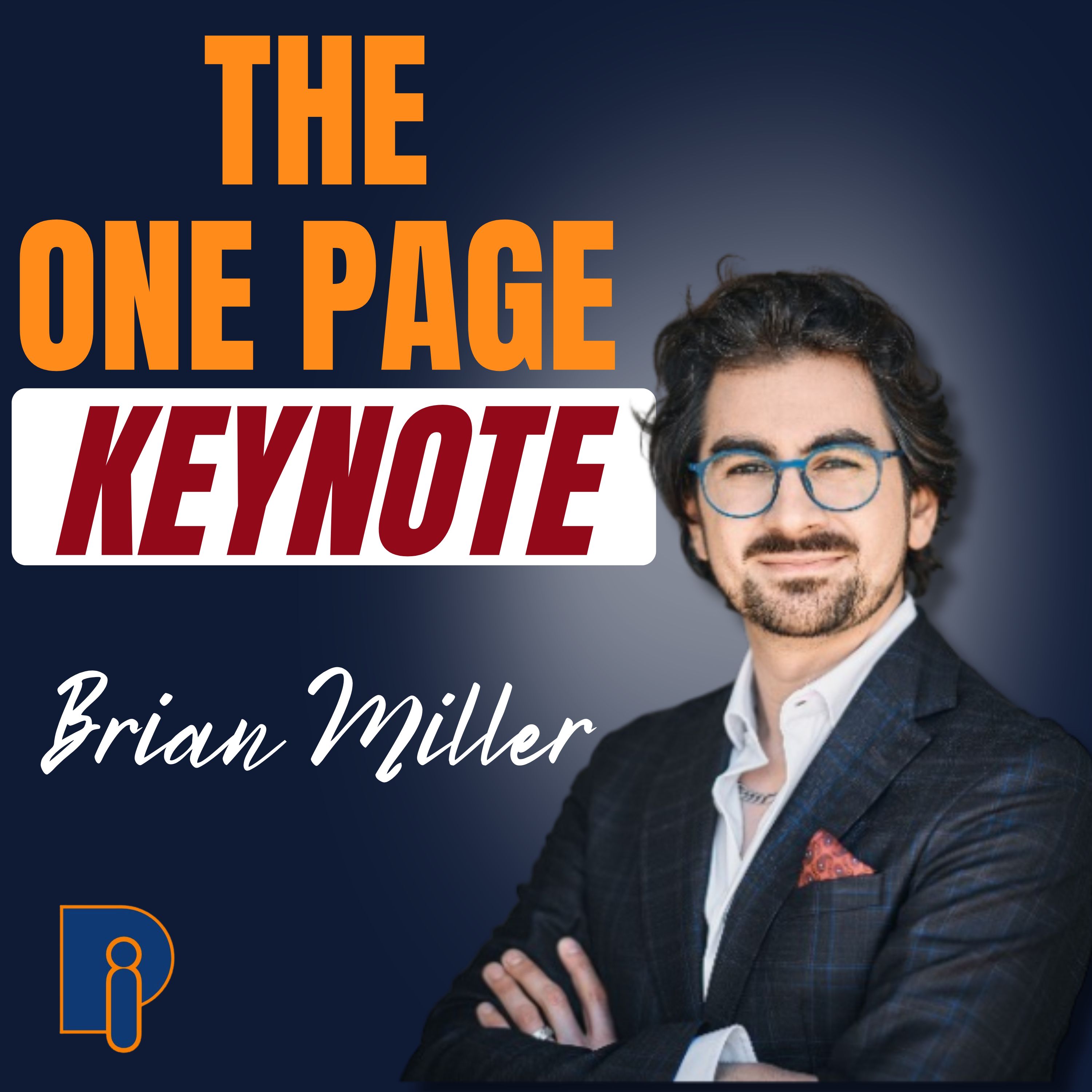 What Makes a Keynote Work: The Buzz Is the Business With Brian Miller 17.06.2026 54minMagician-turned-keynote-speaker Brian Miller built a speaking career on the back of a TEDx talk that went viral in 2015, then watched that career dry up within eighteen months because charisma and entertainment weren't enough to make anyone act on what he'd said. In this episode, Brian and John dig into the real argument underneath most speaker training: is a keynote about how you deliver it, or what's actually in it? Brian's answer, and the thesis of his new book "The One Page Keynote," is that design beats delivery every time, and that the entertainment industry's instinct (be more charismatic, be funnier, be more captivating) is solving the wrong problem for most professional speakers.The conversation covers what a keynote is actually for (hint: it's not the audience's experience in the room), why "the buzz is the business" is the only metric that matters to the people who write the cheques, how to build credible expertise without a PhD, why slides should be a last resort rather than a crutch, and why the most experienced experts are often the ones most paralysed by imposter syndrome.Key takeaways:A keynote's job is to shift perspective, not create lasting change. Real change needs repetition and reinforcement; a single talk from the front of the room can only move how someone thinks, which is the first domino.Event planners judge success by one thing: are people still talking about your talk at the coffee break, in the Slack channel, on the Monday call. If they're not, it doesn't matter how entertaining you were.Expertise doesn't require formal credentials. Brian built his on an unreasonable amount of obsessive attention to one niche topic, not a PhD.The most credentialed, knowledgeable speakers are often the most riddled with imposter syndrome, because understanding the nuance and edge cases of your topic makes you aware of everything you could get wrong.A talk should work with the power out and the slides gone. If it only works with the deck, the talk doesn't work.You don't need to out-credential the most famous person in your field. You need a different angle on the same topic; one only you can offer.Audiences don't care about your problem. Buyers booking and paying for keynotes care about theirs, and your talk has to speak to the problem they're already trying to solve, not the one you find interesting.Get a copy of Brian's new book, The One Page Keynote, from all good booksellers, or even Amazon.In the UK: https://amzn.to/4vRduAv and for the USA: https://amzn.to/4ozkfo8To connect with Brian: https://www.linkedin.com/in/brianmillerspeaksTo work with Brian: https://www.clarityupconsulting.com/CHAPTERS:00:00 Charisma Isn’t Enough02:02 Magician to Speaker Origin04:35 Viral TEDx and Fast Fees07:28 Why Rebookings Dried Up09:59 Design Beats Delivery15:14 No Boring Topics17:26 Creating Memorable Moments19:34 Props and Paintings Example23:33 Tools Over Talent Tricks25:39 PowerPoint and Slides Debate25:50 Slides Without Power26:34 When Slides Help29:28 Defining A Keynote31:03 Shift Perspective Goal32:19 Buzz Is Business34:34 Expertise Over Inspiration38:44 Nuance And Edge Cases42:48 Topic Angle Buyer Problem47:27 Book Launch And Offer50:43 Host Wrap And Next Steps4. FAQDoes charisma actually matter for professional keynote speakers?According to Brian Miller, author of "The One Page Keynote," charisma is far less important to a keynote's success than the design of the talk itself. Miller argues that a well-designed talk delivered without much charisma will outperform a highly charismatic, entertaining talk with no clear message, because audiences who can't articulate what they learned won't talk about the speech afterwards or act on it.What does "the buzz is the business" mean in professional speaking?"The buzz is the business" is a phrase Brian Miller uses to describe how event planners actually judge whether a keynote succeeded. Miller has asked thousands of event planners what success looks like, and the near-universal answer is whether attendees are still talking about the talk during coffee breaks, in Slack channels, or in the following Monday's meeting. John Ball and Miller agree that if the audience leaves the talk in the room, the speech has failed, regardless of how well it was delivered.Do you need a PhD or formal credentials to become a professional keynote speaker?No. Brian Miller, who has a bachelor's degree in philosophy and no graduate qualifications, argues that expertise can be built by spending an unreasonable amount of time obsessing over a niche topic: reading everything available, talking to practitioners, and understanding the nuance and edge cases well enough to know when standard advice would be wrong for someone. Miller built his expertise in human connection this way after his 2015 TEDx talk went viral.Should professional speakers use slides during a keynote?Brian Miller's rule of thumb is that a keynote should work even if the slides disappear and the power goes out. Slides become genuinely useful for talks over twenty minutes, for very large audiences who can't stay engaged through proximity alone, and for explaining highly technical or visual concepts that are difficult to convey in words. Below twenty minutes, Miller generally advises against using slides at all.How do speakers find their unique angle when someone more famous already covers their topic?Brian Miller advises against trying to out-credential the most recognised name in your topic area. Instead, he recommends identifying the specific perspective only you can bring to that topic, drawn from your own background or experience, so that buyers aren't comparing you directly to that famous person but considering you for a genuinely different angle on the same subject.Why do experienced experts often feel more imposter syndrome than beginners?Brian Miller describes this as the inverse of the Dunning-Kruger effect: understanding a topic well enough to know its edge cases, exceptions, and the situations where standard advice doesn't apply makes experts acutely aware of everything that could go wrong, while beginners with shallow knowledge often feel falsely confident.Do you want to make sure you have speaker positioning that will get you booked? Grab my free speaker positioning tool and see if your positioning needs a tune-up or a complete overhaul: https://present-influence.kit.com/363f7c1d51Want to get coached for free on the show? Fill in the form https://forms.gle/mo4xYkEiCjqtz9yP6, and if we think your challenge could help others, we'll invite you on.For speaking enquiries or to connect with me, you can email [email protected] or find me on LinkedInYou can find all our clips, episodes and more on the Present Influence YouTube channel: https://www.youtube.com/@PresentInfluenceThanks for listening. Rating the show 5* on Spotify helps their algo recommend the show, so please take a moment to follow the show and leave a rating.Mentioned in this episode:Oct Cohort finalFind out if the Known, Booked & Paid Blueprint is what your speaking business needs at https://presentinfluence.com/kbpb
 -
 The Authenticity Gap: Why Containing Your True Self Is Costing You on Stage 10.06.2026 29minMost speakers talk about authenticity. Fewer actually practise it. There is a version of you that turns up on stage and a version of you that exists everywhere else, and for many speakers, those two people are further apart than they would like to admit.This episode is a Pride Month episode, but the argument is not seasonal. The LGBTQ+ experience of navigating identity in public life contains lessons about presence, resilience and credibility that are directly relevant to any speaker who has ever edited themselves for the room.In this episode:Why the "is it safe to be myself here?" calculation runs differently for LGBTQ+ people and what that reveals about the cost of containment for everyoneThe authenticity gap: the distance between who you tell people you are and who you actually show up as, and why audiences feel it even when they cannot name itWhy code-switching weakens your stage presence and what the cognitive cost of self-monitoring actually means for your deliveryHow authentic living is a social act: showing up as yourself gives others permission to do the sameThe shadow mechanism: why someone being pissed off by your authentic presence is information about them, not a verdict on youKen Rutowski's men's community, Metal, as a practical model for how small language shifts create genuine psychological safetyWhy living unapologetically is not a Pride Month aspiration: it is a professional standardJohn Ball draws on his own experience as a gay man with a public-facing business, from navigating training rooms where he was not sure he was safe, to recognising the specific cost of collusion: excusing language and behaviour that should not have been excused, and the quiet shame that comes with that.The close is a direct challenge. Where are you still containing yourself, and how much of that is a genuine communication choice versus fear of making the wrong person uncomfortable?CHAPTERS:00:00 Authenticity Costs01:26 Safety Calculations04:42 Containment Exhaustion08:24 Mask Versus Persona13:20 Code Switching Costs14:51 Modelling True Self17:38 Mirror And Triggers20:46 Inclusive Community Rules24:42 Unapologetic Speaking26:56 Your Stage Challenge27:51 Closing And InvitationMentioned in this episode:Metal community (Ken Rutowski): worth checking out if you are interested in a men's group designed with inclusion built in from the ground upConnect with John:Work on your speaker positioning with John's free positioning tool: message or email with the word "BOOKED" to receive it directly.Join John at A Position of Authority, a small online event for speakers who need to sharpen their expert positioning: present-influence.kit.com/products/a-position-of-authority-eventFAQ SECTIONFrequently Asked QuestionsWhy does containing yourself on stage hurt your credibility as a speaker?John Ball argues that a contained, edited version of yourself on stage creates an authenticity gap: a measurable distance between who you claim to be and who you actually show up as. Audiences sense this gap even when they cannot articulate it, and it prevents the genuine connection that makes a talk memorable. When a speaker asks an audience to be open and present whilst operating behind what John describes as "a wall of glass," the request rings hollow. Credibility requires congruence between what is said and who is saying it.What is code-switching, and why does it matter for professional speakers?Code-switching is the practice of adjusting language, tone and behaviour to fit the perceived expectations of a particular room. John Ball distinguishes between code-switching as a conscious communication choice and code-switching as a survival reflex. When it becomes a reflex, Ball argues, it weakens the speaker: softened language reads as uncertainty, hedged identity produces hedged messages, and the cognitive load of constant self-monitoring takes energy directly away from delivery and presence. Stages reward conviction and specificity, and a speaker who is managing their identity is already managing their message.How does living authentically give permission to others to do the same?John Ball describes authentic living as a social act rather than a purely personal one. When a speaker shows up as a full version of themselves rather than a managed, inoffensive version, they model the behaviour for the audience. Ball draws on the example of social normalisation in Spain, where LGBTQ+ visibility has been mainstreamed to the point that people are freer to express who they are. The inverse is equally true: people-pleasing reinforces the norm that people-pleasing is required, and makes the room smaller for everyone. Being willing to be disliked by the wrong people is, Ball argues, a generous act toward the right ones.What is the shadow mechanism, and how does it apply to speakers?The shadow mechanism is the idea that what irritates or unsettles us about others often reflects something unresolved in ourselves. John illustrates this with a personal example: an early discomfort with drag queens that a friend helped him trace back to internalised shame about aspects of his own personality. The professional application for speakers is that an audience member's discomfort with your authentic presence is information about them, not a verdict on you. The discomfort belongs to the person experiencing it, not to the speaker who prompted it.What is Ken Rutowski's Metal community, and why does John reference it?Metal is a men's networking community founded by Ken Rutowski, a former guest on Professional Speaking: Known. Booked. Paid. Ball cites it as a practical proof of concept for inclusive community design. The community operates with specific rules: all relationship partners are referred to as partners regardless of gender or structure, and there is zero tolerance for sexism, homophobia, transphobia and racism. Rutowski also helped establish a female counterpart group. Ball highlights the "partners" rule as an example of a small language shift that costs nothing and removes the assumptions that make some people feel like an outsider in the room.How can professional speakers apply the lessons of Pride Month to their stage presence?John argues that the LGBTQ+ experience of navigating identity in public life contains lessons about authentic presence that apply to any speaker. Living unapologetically does not mean living loudly: it means making choices about your presence from a place of self-acceptance rather than from fear of other people's reactions. Ball's challenge to speakers is direct: identify where you are still containing yourself, and ask honestly how much of that is a genuine communication choice versus a fear of making the wrong person uncomfortable. The speakers who move audiences most are not the ones who have edited themselves down to the lowest common denominator.Visit https://strategic-speaker.scoreapp.com to take the 2-minute Strategic Speaking Business Audit and find out what's blocking you from getting more bookings, re-bookings, referrals and bigger fees. There's a special surprise gift for everyone who completes the quiz.Want to get coached for free on the show? Fill in the form https://forms.gle/mo4xYkEiCjqtz9yP6, and if we think your challenge could help others, we'll invite you on.For speaking enquiries or to connect with me, you can email [email protected] or find me on LinkedInYou can find all our clips, episodes and more on the Present Influence YouTube channel: https://www.youtube.com/@PresentInfluenceThanks for listening. Rating the show 5* on Spotify helps their algo recommend the show, so please take a moment to follow the show and leave a rating.Mentioned in this episode:Oct Cohort finalFind out if the Known, Booked & Paid Blueprint is what your speaking business needs at https://presentinfluence.com/kbpb
 -
Speaker Demo Reels: What They Are Actually For (and Why Most Get It Wrong) 03.06.2026 50minBernadette Marciniak is a video producer who works specifically with speakers and event organisers, giving her a rare dual perspective on what actually gets speakers booked. She has captured footage at live events, produced demo reels for speakers at various stages of their careers, and uses speaking engagements herself as a visibility lever for her business.What you'll take away from this episode:Why most demo reels function as sizzle reels and what the difference actually costs youWhat event organisers are specifically looking for when they watch your videoThe "through line" principle: how to build a reel that shows your message, not just your mic dropsWhether a lower-quality demo is better than no demo at allHow to start capturing footage when you have no stage access and no budgetWhen to bring testimonials into your video and when to leave them outWhat a practical media library looks like and why YouTube is part of your booking strategyThe AI tools that could help polish your final cut without compromising authenticityConnect with Bernadette Marciniak:Website: solhausmedia.com/speakers (Solhaus spelled S-O-L-H-A-U-S) LinkedIn: Bernadette Marciniak Instagram: Bernadette MarciniakChapters:00:00 Demo Reel Myth Busting00:58 Meet Bernadette Marciniak02:13 Her Speaking Origin Story05:37 What A Demo Reel Does08:58 Demo Versus Sizzle Reel11:57 Good Enough To Share17:08 Capturing Footage Right20:28 Editing For A Through Line25:29 No Stage No Problem31:44 Watch Yourself Improve33:54 AI In Demo Videos38:00 Budget And Hiring Pros40:07 Long Form Clips On YouTube44:17 Wrap Up And Where To Connect47:25 Final Takeaways And Next EpisodeFAQ SECTIONFrequently Asked QuestionsWhat should a speaker demo reel include to get booked by event organizers?According to video producer Bernadette Marciniak and speaking coach John Ball on the Professional Speaking podcast, a speaker demo reel should demonstrate two things above all: your presence on stage and the through line of your message. Marciniak distinguishes between a sizzle reel, which showcases mic drops and highlights, and a demo reel built for bookers, which shows what an audience is going to get from you. Event organisers are not looking for cinematic production or audience testimonials; they are looking for evidence that you can deliver a coherent message in front of a crowd. The ideal length is two to three minutes, with a clear narrative structure rather than a compilation of unrelated sound bites.Is it better to have a bad demo reel or no demo reel at all?Bernadette Marciniak's position, discussed with John Ball on Professional Speaking, is that having a demo reel is better than not having one, provided you are intentional about how and where you distribute it. Poor lighting or iPhone video does not automatically disqualify a reel if the audio is clear and the speaker's presence comes through. What Marciniak identifies as genuinely undermining is an over-reliance on B-roll and cinematic sweeps that give the viewer no sense of what the speaker actually says or how they engage with an audience. The goal is always to improve the footage over time, not to wait for perfect conditions before starting.How can a speaker start building a demo reel with no stage experience?John Ball and Bernadette Marciniak discuss several practical entry points on this episode of Professional Speaking. Speakers can hire a local videographer for a small room presentation, gather a group of peers who each speak for five minutes to a live audience, or capture footage from workshops, retreats and local events. Podcast interviews are also flagged as legitimate speaking engagements that generate video evidence of a speaker's communication style. Marciniak recommends building a media library consistently over time rather than waiting for a single high-production opportunity, and suggests partnering with a videographer across multiple events so the footage looks cohesive.What is the difference between a speaker sizzle reel and a demo reel?John Ball explains on Professional Speaking that a sizzle reel is designed for public awareness, while a demo reel is designed for bookers. A sizzle reel is a highlights compilation intended to build brand visibility and is appropriate for a speaker's website or social channels. A demo reel, by contrast, is a two-to-three-minute video built around a through line: a coherent message that reflects what an audience will experience if they hire the speaker. Bernadette Marciniak adds that both serve a purpose, but speakers who want to land more paid engagements need the demo version, not just the cinematic highlight package.Should speakers use AI tools when creating a demo reel?Bernadette Marciniak and John Ball address this on Professional Speaking with a clear distinction between useful and damaging AI applications. Marciniak cautions against using AI-generated video to simulate speaking experience a speaker does not have, arguing that misrepresentation is a fast route to damaging a professional reputation. However, both acknowledge that AI tools can legitimately assist with audio clean-up, removing isolated errors, adding text overlays, and smoothing transitions between segments. The principle Marciniak applies is that any AI enhancement should serve authenticity, not replace it.How should speakers use YouTube as part of their booking strategy?Bernadette Marciniak recommends using YouTube as a media library rather than a public-facing channel, a point developed with John Ball on Professional Speaking. Full keynote recordings and longer clips of speaking engagements can be hosted on YouTube as unlisted videos and sent directly to event organisers who want to see more than a two-minute demo reel. Marciniak notes that bookers will often skip through a full recording to check how a speaker opens, handles transitions, and interacts with an audience, making the longer format valuable even if it is never shared publicly. A YouTube playlist of speaking engagements also provides an organised reference point that can be linked from a speaker's website or proposals.Visit https://strategic-speaker.scoreapp.com to take the 2-minute Strategic Speaking Business Audit and find out what's blocking you from getting more bookings, re-bookings, referrals and bigger fees. There's a special surprise gift for everyone who completes the quiz.Want to get coached for free on the show? Fill in the form https://forms.gle/mo4xYkEiCjqtz9yP6, and if we think your challenge could help others, we'll invite you on.For speaking enquiries or to connect with me, you can email [email protected] or find me on LinkedInYou can find all our clips, episodes and more on the Present Influence YouTube channel: https://www.youtube.com/@PresentInfluenceThanks for listening. Rating the show 5* on Spotify helps their algo recommend the show, so please take a moment to follow the show and leave a rating.Mentioned in this episode:Oct Cohort finalFind out if the Known, Booked & Paid Blueprint is what your speaking business needs at https://presentinfluence.com/kbpb
-
Why Speakers Give Up Too Soon: The Results Lag 27.05.2026 25minThere comes a point for almost every speaker and coach where the doubt becomes hard to ignore. You are doing the work, following good advice, showing up consistently — and nothing seems to be moving. The bookings are not coming. The calendar is open. Other people seem to be on calls constantly, and yours is, well, available.Or maybe some things are trickling through, but not enough for it to feel real or sustainable. There is a ceiling somewhere above you that you cannot quite identify, let alone push against.In this episode, John Ball addresses that place directly. Not with motivation. With a more useful question: what is actually going on?What you will take away:Why slow results are almost never a reflection of you as a person, and what they are more likely to reflectThe results lag principle: why the work you are doing now rarely pays off now, and why that is not failureWhy expert advice that works for established speakers often does not translate for those still building foundations, and how to recognise the differenceWhy measuring vanity metrics instead of leading indicators distorts your read of the situation entirelyHow to go back to your why as a diagnostic tool rather than a motivational oneWhat quitting actually means versus pausing a pursuit, and the difference between running out of resources and running out of reasonsWhen it genuinely is time to explore other options, and how to recognise that honestlyJohn shares from direct experience: the periods of doing live streams for 60 days with no traction, building a coaching business alongside a job taken out of financial necessity, and repeatedly asking himself whether the podcast was worth continuing. The answer in each case came back to the same place: the why.If you are at a point where the question is forming in the back of your mind, this episode is worth your time.If you are not getting results and cannot see why, get in touch. John works with professional speakers to diagnose exactly what is and is not working, and where the effort needs to go. Reach out on LinkedIn or at [email protected] for a no-commitment conversation.FAQ SectionWhy are professional speakers not getting bookings even when they are doing everything right?John Ball argues that a lack of bookings is almost never a reflection of a speaker's ability on stage, but a problem on the business side: specifically, positioning and visibility. Most speakers who are not getting results are following advice calibrated for people further ahead in their business, without the foundational elements in place to make that advice work. Ball describes this as a context mismatch rather than a failure of effort or talent. The fix, he contends, is almost always in the business mechanics rather than the performance.What is the results lag and why does it matter for speakers building their business?The results lag is the delay between the work a speaker puts in now and when that work converts into bookings, income or visibility. John Ball uses his own podcast as an example: a slow-burn asset that does not immediately generate leads but builds trust, relationships and positioning over time. Ball argues that this lag is long enough to feel like failure when it is not, and that speakers who quit during this window are often stopping just before the pipeline they have built begins to pay out.How do you know if it is time to quit your speaking business or keep going?John Ball contends that most speakers who are asking this question are asking it too early. He draws a distinction between running out of resources, which is a practical reality and not a verdict, and running out of reasons, which is a more meaningful signal. Ball suggests going back to the original why as a diagnostic tool: if the why is still solid, the question shifts from whether to continue to what needs to change. People who have genuinely reached the end, he argues, usually know it without needing external confirmation.Why does expert advice on speaking and coaching sometimes not work?According to John Ball, much of the advice circulating in the speaking and coaching industry is designed for people who already have an established platform, a warm audience or a different market context. Following that advice faithfully without those foundations in place will not produce the expected results, and that is a calibration problem rather than a personal failure. Ball gives the example of being advised to live stream on LinkedIn daily for 60 days with no meaningful traction, attributing the failure to unclear positioning rather than the format itself.What is the difference between vanity metrics and leading indicators for speakers?John Ball argues that many speakers track the wrong things: follower counts, post impressions and downloads rather than enquiries, fee conversations and genuine relationship signals. Measuring vanity metrics creates a distorted picture of progress, making things look worse than they are or masking the fact that real indicators are not being tracked at all. Ball notes that some speakers do not track any metrics at all, and that without this visibility, it is impossible to run a business effectively rather than simply deliver a product.How does John Ball's Professional Speaking podcast approach the question of giving up?In this episode of Professional Speaking: Known. Booked. Paid., John Ball draws on personal experience across coaching, speaking and podcasting to address the question of whether to quit when results are not coming. He argues that the gap between invisible and known is often shorter than it appears from inside the fog of slow results, and that reconnecting with the original purpose behind the work is a more reliable guide than any external metric. Ball also shares that stopping for practical reasons, such as running out of financial runway, is not the end of the pursuit.CHAPTERS:00:00 When Effort Stalls03:06 Motivation Or Visibility03:33 Business Beats Performance05:06 Results Lag Reality08:17 Bad Fit Guru Advice12:19 Track Real Metrics15:07 Reconnect With Your Why17:31 Runway And Pausing20:12 Quit Or Honest Pivot21:51 Adjust The Right Levers23:53 Get Help And Next StepsVisit https://strategic-speaker.scoreapp.com to take the 2-minute Strategic Speaking Business Audit and find out what's blocking you from getting more bookings, re-bookings, referrals and bigger fees. There's a special surprise gift for everyone who completes the quiz.Want to get coached for free on the show? Fill in the form https://forms.gle/mo4xYkEiCjqtz9yP6, and if we think your challenge could help others, we'll invite you on.For speaking enquiries or to connect with me, you can email [email protected] or find me on LinkedInYou can find all our clips, episodes and more on the Present Influence YouTube channel: https://www.youtube.com/@PresentInfluenceThanks for listening. Rating the show 5* on Spotify helps their algo recommend the show, so please take a moment to follow the show and leave a rating.Mentioned in this episode:Oct Cohort finalFind out if the Known, Booked & Paid Blueprint is what your speaking business needs at https://presentinfluence.com/kbpb
-
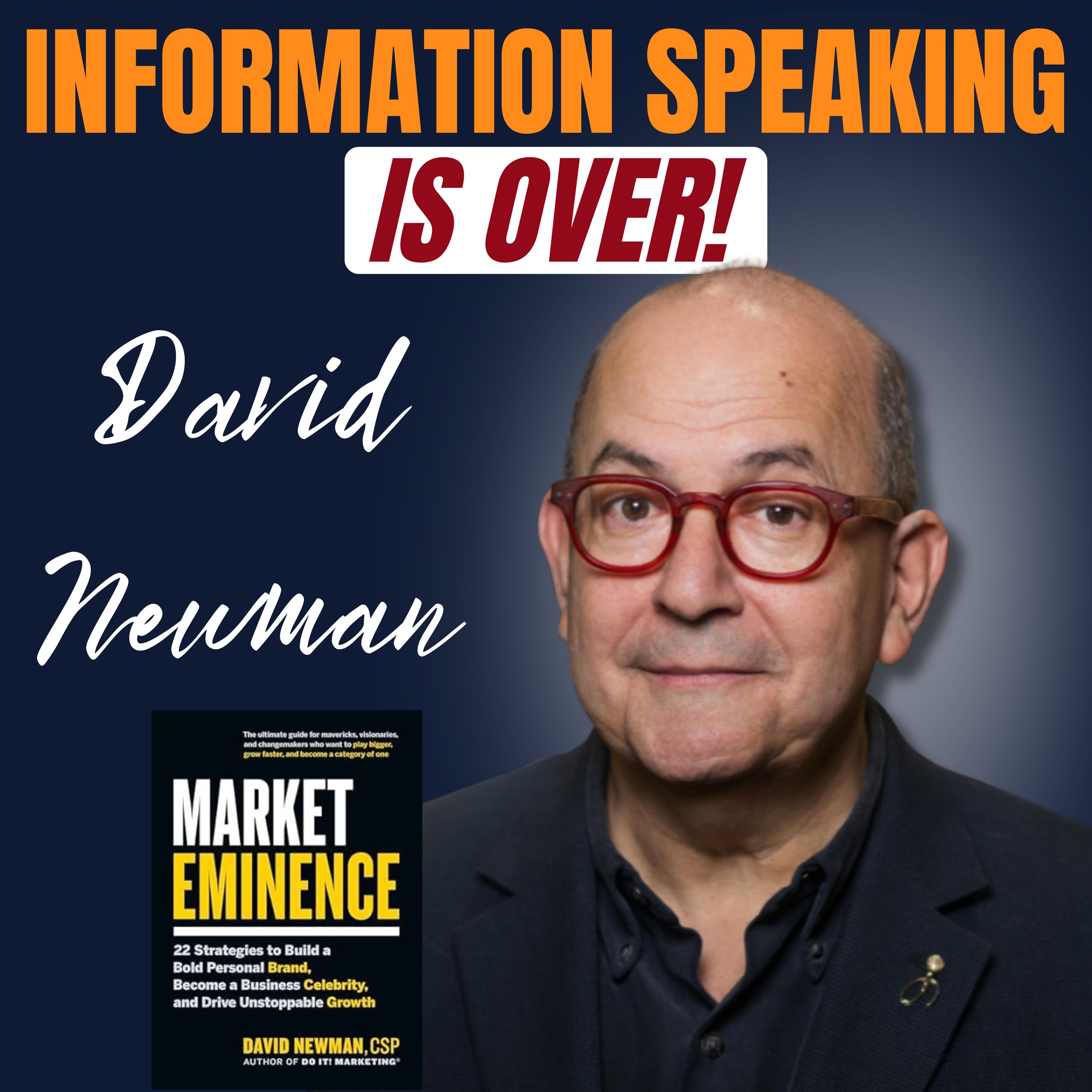 Maximize Your Speaking Career: Avoid the 'How-To' Trap with David Newman 13.05.2026 54minUnlock the secrets to establishing a thriving speaking career with David Newman, a renowned speaker, consultant, and author known for his work in building market eminence. Join us as David reveals why over-reliance on 'How-To' content could be hindering your professional growth. Learn how to cultivate a balance of visibility, credibility, and brand preference that truly sets you apart.Discover actionable strategies and insights from David's decades of experience helping experts, consultants, and professional speakers elevate their careers. Find out how standing out in the crowded market can be achieved without defaulting to prescriptive content.Episode Highlights:- Understanding market eminence and its critical role in professional speaking.- The pitfalls of being overly dependent on 'How-To' content.- Developing a unique personal brand that resonates with audiences.- Real-world examples and case studies illustrating successful career transformations.If you're an aspiring or established speaker, don’t miss this episode filled with practical tips and expert advice that can steer your career in the right direction.Keywords: speaking career, David Newman, market eminence, personal branding, professional speakers, visibility, credibility, how-to content, speaker consultant, brand preference.#SpeakingCareer #DavidNewman #PersonalBranding #MarketEminence #PublicSpeakingWhat you'll take away:Why branding agencies are often the wrong first move for speakers -- and what to do insteadThe fire hose problem: why giving audiences too much content kills your follow-up businessThe mule vs magician distinction: what high-value clients actually want to buyWhy how-to content is finished as of November 2022 -- and the three content types that still workHow to think, what to believe, and where to focus next: the framework for content that AI can't produceThe market eminence model: visibility, respect, and brand preference as the three pillars of getting bookedCategory of one: what it actually means and why being divisive is the strategy, not the riskWhy your website navigation might be quietly sabotaging your speaking enquiriesThe "disturbing your enemy" exercise: how to find your position by identifying who you'd rather repelConnect with David Newman: Website: doitmarketing.com | Market Eminence resources: marketeminence.comJoin me for the Speaker positioning event on May 27th, A Position of Authority: Why Most Speakers Are Invisible (And What To Do About It)https://present-influence.kit.com/products/a-position-of-authority-eventCHAPTERS00:00 AI Changed Speaker Content01:49 Branding Is BS04:57 Stop The Firehose10:23 Mule Versus Magician15:26 Front Load Airport Value17:52 Market Eminence Framework20:05 Category Of One26:06 Finding Contrarian Differentiation28:03 Spotting Anti-Clients30:51 Disturb Your Audience32:29 Why Speakers Dont Book33:40 Three Content Upgrades35:04 Future Casting Advantage38:22 Is Speaking Doomed40:27 No Footnotes Needed43:15 Marketing Show Your Work45:38 Make Speaking Obvious49:07 Where To Find David50:31 Host Wrap And Workshop52:28 Follow Review And FarewellFAQ SECTIONWhy is how-to content no longer effective for professional speakers?According to author and speaker strategist David Newman, how-to content became obsolete in November 2022 when ChatGPT became publicly available. AI systems can now produce more comprehensive, accurate, and faster how-to content than any human speaker. John Ball and David Newman argue that speakers who continue to rely on how-to content are competing directly with AI on AI's strongest ground. The only content that remains uniquely human is content based on personal experience, hard-won expertise, and a genuine point of view.What are the three types of content that AI cannot replace for professional speakers?David Newman identifies three categories of Professional Speaking: Known. Booked. Paid. The first is how-to-think content -- strategic, insight-driven content grounded in the speaker's experience and expertise that helps audiences approach problems differently. The second is belief-shifting content that separates myths from truths and challenges conventional wisdom based on the speaker's direct observations. The third is future-casting or trend-spotting content that helps audiences understand what is coming next and how to prepare. Newman argues that focusing exclusively on these three areas can transform a speaking business within 90 days.What does it mean for a speaker to become a "category of one"?David Newman defines a category of one as a speaker whose specific combination of topic, perspective, philosophy, and personal experience cannot be replicated by any other speaker. It does not mean being the only speaker on a topic -- it means being the only speaker who approaches that topic from your particular angle, with your particular beliefs and your particular biases. Newman argues on the show with John Ball that divisive, opinionated positioning is not a risk but a strategy: the people who resonate deeply will book you; those who do not were never going to book you anyway.How can professional speakers find and develop a contrarian positioning?David Newman and John Ball discuss on the podcast that the first step is identifying who you would actively not want to hire you -- your "enemy" -- and then creating content that would deliberately alienate them. Newman shares a story of a client whose contrarian positioning around corporate intrapreneurship was validated when a hostile executive told her exactly what he did not want -- which confirmed she had found her position. The homework Newman recommends is to write, post, or share something that would genuinely upset the audience you do not want, because doing so more strongly attracts the audience you do.What is the "mule vs magician" distinction, and why does it matter for speakers and coaches?The mule vs magician framework, developed by David Newman, describes two different orientations to value in speaking and coaching programmes. A mule mentality is focused on volume -- more content, more bonuses, more videos, more binders. A magician mentality is focused on outcome -- the shortest possible path to the result the client already knows they want. Newman argues that high-value buyers and executives are no longer impressed by quantity and that the correct question when designing a programme is not what to add but what to remove.Visit https://strategic-speaker.scoreapp.com to take the 2-minute Strategic Speaking Business Audit and find out what's blocking you from getting more bookings, re-bookings, referrals and bigger fees. There's a special surprise gift for everyone who completes the quiz.Want to get coached for free on the show? Fill in the form https://forms.gle/mo4xYkEiCjqtz9yP6, and if we think your challenge could help others, we'll invite you on.For speaking enquiries or to connect with me, you can email [email protected] or find me on LinkedInYou can find all our clips, episodes and more on the Present Influence YouTube channel: https://www.youtube.com/@PresentInfluenceThanks for listening. Rating the show 5* on Spotify helps their algo recommend the show, so please take a moment to follow the show and leave a rating.Mentioned in this episode:Oct Cohort finalFind out if the Known, Booked & Paid Blueprint is what your speaking business needs at https://presentinfluence.com/kbpb
 -
Your Speaker Positioning Is Not Your Topic: Why Good Speakers Stay Invisible 05.05.2026 22minIf you're a good speaker who isn't getting booked at the rate or fee you think you deserve, this episode is going to be uncomfortable in the right way.The problem, in most cases, isn't your speaking. It's your positioning. And more specifically, it's the fact that most speakers build their positioning around what they want to say rather than what the market actually needs to hear.In this episode, John works through six positioning mistakes that keep credible, capable speakers invisible -- with real client stories and examples that make each one land where it needs to.Join us for the live speaker positioning event: https://present-influence.kit.com/products/a-position-of-authority-event It's a 'pay what you want' event, so pay a little, pay a lot, whatever you think good positioning guidance is worth.What's covered:The topic trap—why building your talk around your own expertise and interests, rather than your buyer's specific problem, is the fastest route to an empty pipeline. Including a story about a speaker whose health and productivity topic created a liability rather than a solution.Information vs transformation -- why packing your keynote with everything you know is the reason you're not getting rebookings or workshop enquiries. The talk that impresses is not always the talk that converts.The speak-on-anything problem -- both the unfocused speaker who hasn't chosen a lane, and the ego-driven speaker who believes intelligence alone equals credibility. With a real example from John's time at The Speaker Lab, and a look at what happened when Courtney Harding (episode 254) chased a hot topic without a clear problem to solve.The corporate bottom-line test—particularly for speakers building a career in the UK and Europe, where the association circuit doesn't exist in the same way it does in the US. If you want to be well-paid, corporate is where you need to be -- and your topic must connect directly to making or saving money. Cross-references the episode with Jackson Ogunyemi on education speaking, and a forthcoming episode with Claire Young on the UK education speaker market.Nice-to-have vs must-book -- why some topics will always sit in the soft column no matter how well you frame them, and what creates genuine urgency in a booking decision.The person is positioning—ethos, logos, and pathos applied to the speaker's positioning. Why two speakers can deliver identical content and create entirely different results, why your ethos cannot be copied even when your content is, and what Maria Franzoni revealed about content theft on episode 256 of this show.Referenced episodes:Episode 254 -- Hot Market, Cold Inbox: Why Your Speaking Calendar Isn't Matching Your Credibility (Courtny Harding)Episode 256 -- How Professional Speakers Get Hired: The Bookability Formula (Maria Franzoni)Jackson Ogunyemi episode -- education speaking and why it rarely pays enough to build a career onComing soon -- Claire Young on the UK education speaker booking market==============FAQs==============What is speaker positioning, and why does it matter for getting booked?Speaker positioning is how you define and communicate the specific value you deliver to a specific buyer with a specific problem. It goes beyond having a topic—it determines whether a buyer sees you as a must-book speaker or a nice-to-have. Most speakers who struggle to get booked consistently, or who aren't commanding the fees they want, have a positioning problem rather than a speaking problem. In this episode, speaking coach John Ball explains why positioning built around what a speaker wants to say, rather than what the market needs to hear, is the most common reason credible speakers stay invisible.What is the difference between a topic and a positioning for a speaker?A topic is a subject area —such as leadership, communication, resilience, or AI. A positioning is a specific claim about who you serve, what problem you solve, and why you are the credible choice to solve it. John Ball describes the topic as raw material and positioning as what you build from it that makes a buyer say yes. Speakers who position themselves around a topic category rather than a specific buyer problem are easy to overlook and difficult to justify to stakeholders.What mistakes do speakers make when trying to break into the corporate market?The most common mistakes speakers make when breaking into corporate include: building their talk around their own interests rather than a problem the business already knows it has, delivering information-heavy keynotes rather than creating genuine transformation, speaking on too many topics without a clear specialisation, and failing to connect their subject to the company's bottom line. Corporate buyers need to justify every fee to stakeholders, which means a speaker's topic must connect directly to making money, saving money, or reducing risk. John Ball covers all of these mistakes with real client examples in this episode.Why do some speakers get lots of enquiries while others with equal talent don't?Speakers who attract consistent enquiries are typically positioned at the intersection of a specific, urgent problem, a credible, differentiated solution, and demonstrable evidence that their work delivers results. John Ball describes this as the difference between a nice-to-have speaker and a must-book speaker. Topics that address immediate, high-stakes business pain points -- such as AI adoption, organisational communication failures, or leadership under pressure -- create urgency in the buyer that drives action. Softer topics, however well framed, tend to be deferred or cut when budgets tighten.What are ethos, logos and pathos, and how do they apply to speaker positioning?Ethos, logos, and pathos are the three modes of persuasion identified by Aristotle. In the context of speaker positioning, logos refers to the intellectual substance of a speaker's content—their frameworks, research, and arguments. Pathos refers to the emotional resonance they create—their delivery, humour, and ability to move an audience. Ethos refers to their credibility and earned authority to speak on a subject—their track record, lived experience, and body of work. John Ball argues that ethos is the most powerful and least copyable element of a speaker's positioning, and that speakers who rely solely on logos—listing credentials and frameworks—leave the most important part of their positioning invisible.Can other speakers copy your talk and damage your positioning?Content theft is more common in the speaking industry than most people acknowledge. Talks get transcribed, frameworks get lifted, and stories get repurposed by other speakers. However, John Ball argues that what makes a talk genuinely powerful -- the speaker's ethos, their lived experience, and their earned authority -- cannot be copied. Two speakers can deliver identical content and create entirely different results because audiences respond to the person carrying the ideas, not just the ideas themselves. Speaker agent Maria Franzoni addressed this directly on episode 256 of Professional Speaking: Known. Booked. Paid.Is corporate speaking the only viable route for well-paid speakers in the UK and Europe?For speakers building a career in the UK and Europe, corporate speaking is the most reliable route to sustainable, well-paid work. The association speaking circuit that sustains many American speakers does not exist in the same form in the UK and Europe, and associations that do exist largely do not pay competitive fees. Education speaking can be rewarding but rarely pays enough to build a primary income on -- explored in depth in the episode with Jackson Ogunyemi. Faith speaking does not pay at meaningful levels except for established public figures. After-dinner speaking, conference speaking, and stand-up comedy can be lucrative but require distinct skill sets. A forthcoming episode with Claire Young, who runs a UK education speaker booking agency, will explore the education market in more detail.Ready to do the actual work on your positioning? John is running a live event -- A Position of Authority: Why Most Speakers Are Invisible (And What To Do About It) -- where we go beyond the theory and build a position that is specific, credible, and unmistakably yours.Registration link: https://present-influence.kit.com/products/a-position-of-authority-why-most-speakVisit https://strategic-speaker.scoreapp.com to take the 2-minute Strategic Speaking Business Audit and find out what's blocking you from getting more bookings, re-bookings, referrals and bigger fees. There's a special surprise gift for everyone who completes the quiz.Want to get coached for free on the show? Fill in the form https://forms.gle/mo4xYkEiCjqtz9yP6, and if we think your challenge could help others, we'll invite you on.For speaking enquiries or to connect with me, you can email [email protected] or find me on LinkedInYou can find all our clips, episodes and more on the Present Influence
-
 Stop Trying to Be Funny: Beth Sherman on What Actually Gets Audiences to Listen 29.04.2026 56minBeth Sherman is a multi-Emmy Award-winning comedy writer who spent 30 years writing for Letterman, Jay Leno, Ellen DeGeneres, and multiple major awards shows, including the Oscars. She now works as a keynote speaker and executive presentation coach, helping leaders and professional speakers build rapid rapport using the same principles comedians use to convert a room full of strangers.In this episode, John and Beth explore what professional speakers can actually learn from standup comedy — not the jokes, but the craft underneath them. Beth shares her BETH framework and challenges the assumption that being funny has anything to do with telling jokes.What you'll take away:Why trying to be funny is one of the worst things a speaker can do — and what to do insteadThe BETH framework: Brevity, Elephant in the room, Truth, HumanityWhy specificity and truth are the real engines of humour and connectionThe difference between self-deprecation and self-awareness on stageWhat comedians know about building trust with a sceptical audience that most business communicators don'tWhy silence on stage felt like failure to Beth — and how she's working through itWhat a "callback" is and why it's the most underused tool in a speaker's closingVisit bethsherman.com or connect with Beth on LinkedIn: https://www.linkedin.com/in/beth-sherman/CHAPTERS00:00 Meet Beth Sherman02:20 Comedy Roots and Writer Room05:38 Standup Lessons and Testing07:30 Humour Influences and Favourites12:24 Stagecraft Rapid Rapport13:46 Bombing and Hecklers19:09 From TV Writing to Speaking23:36 Building a Speaking Business26:27 Positioning Humour as Rapport27:39 Trust Through Humour29:15 Standup And Speaking31:51 Keynote Challenges35:57 Stop Trying To Be Funny38:36 BETH Framework39:24 Brevity Wins40:42 Elephant In The Room42:56 Truth And Self Awareness45:55 Specific Details47:59 Humanity Over Jokes49:03 Working With Beth53:06 Quick Rapport Tip54:46 Wrap Up And TakeawaysFrequently Asked QuestionsDo professional speakers need to be funny to be successful?According to Emmy Award-winning comedy writer and keynote speaker Beth Sherman, no. The goal is not to be funny — it is to be human. Trying to be funny often comes across as inauthentic and can undermine credibility, particularly for women and speakers from minority backgrounds. What engages audiences is vulnerability, relatability, and genuine connection. Laughter is a by-product of that, not the target.What is the BETH framework for speakers?The BETH framework was developed by Beth Sherman and stands for Brevity, Elephant in the room, Truth, and Humanity. It is a four-principle approach derived from professional comedy writing and stand-up that helps speakers and leaders build rapid rapport with any audience. Brevity means using fewer words for more impact. Elephant in the room means acknowledging what your audience is already noticing. Truth means that specificity and honesty are inherently engaging. Humanity means being relatable and vulnerable rather than polished and performative.How can speakers use humour without telling jokes?Beth Sherman teaches that truth is funny — comedians do not invent absurdity, they observe and report it. The most effective way for speakers to add humour to a talk is through specificity and self-awareness rather than constructed jokes. Sharing the particular details of a real experience — what was in the room, what was said, what you did when you got in the car — creates universal relatability because audiences recognise the truth in it. This approach works regardless of whether the speaker considers themselves funny.What is rapid rapport, and why does it matter for speakers and leaders?Rapid rapport is the ability to build trust and connection with a new or sceptical audience quickly. Beth Sherman argues that until an audience trusts you, nothing else you say matters — not your data, your story, or your framework. Comedians develop this skill by necessity: they must win over strangers, often in hostile conditions, within minutes. The same principles apply in leadership communication, sales, and keynote speaking. Beth's keynote and masterclass work translates these principles for business audiences.What is the difference between self-deprecation and self-awareness for speakers?Self-deprecation means putting yourself down for the purpose of getting a laugh. Self-awareness means acknowledging what your audience is already noticing about you or the situation. Beth Sherman advises speakers to favour self-awareness over self-deprecation, particularly if they belong to a group that may already face unconscious bias from their audience. Self-deprecation can undermine credibility; self-awareness builds connection and trust.How do you open a talk and win an audience over quickly?Beth Sherman's primary recommendation is to smile and look like you want to be there. Beyond that, acknowledge the elephant in the room early — whatever your audience might be thinking or distracted by. If you open with tension or a dramatic hook, relieve it quickly. The goal is connection, not perfection, and audiences respond to speakers who appear present and genuinely engaged with the room.Visit https://strategic-speaker.scoreapp.com to take the 2-minute Strategic Speaking Business Audit and find out what's blocking you from getting more bookings, re-bookings, referrals and bigger fees. There's a special surprise gift for everyone who completes the quiz.Want to get coached for free on the show? Fill in the form https://forms.gle/mo4xYkEiCjqtz9yP6, and if we think your challenge could help others, we'll invite you on.For speaking enquiries or to connect with me, you can email [email protected] or find me on LinkedInYou can find all our clips, episodes and more on the Present Influence YouTube channel: https://www.youtube.com/@PresentInfluenceThanks for listening. Rating the show 5* on Spotify helps their algo recommend the show, so please take a moment to follow the show and leave a rating.Mentioned in this episode:Oct Cohort finalFind out if the Known, Booked & Paid Blueprint is what your speaking business needs at https://presentinfluence.com/kbpb
 -
Unlocking Speaker Success in 2026: Insights from Elliot Kay, The Speaker Awards Founder 24.04.2026 43minElliot Kay is the founder of The Speaker Awards, a seven-time author, and one of the most connected people in the UK speaking industry. In this conversation, John and Elliot dig into what's actually changing in how professional speakers get hired, and why most speakers are still playing by rules that no longer apply.You'll have to wait till next year for the return of the Speaker Awards. Details here: thespeakerawards.com.What you'll take away:Why the era of the "information speaker" is over, and what's replacing itThe three things bookers now demand: problem clarity, implementable change, and proof of ROIWhy positioning (and repositioning) is the single biggest lever most speakers never pullThe "Watch Me Go" mentality: a non-aggressive, slightly defiant attitude that changes how speakers show upWhy imperfection is currency post-pandemic, and slick performers are losing groundChase budgets, not crowds: why twelve people in a boardroom often pays more than a hundred at a conferenceWhat The Speaker Awards process actually does for entrants (hint: the clarity matters more than the trophy)The pipeline reality: presence, partnerships, referrals, and why the bookers who hire you rarely comment on your posts#SpeakerAwards #ElliotKay #PublicSpeaking #SpeakerSuccess #SpeakingTrendsFAQs from this episodeWhat do corporate bookers actually want from professional speakers in 2026?According to Speaker Awards founder Elliot Kay and host John Ball, bookers now prioritise three things: absolute clarity on the problem the speaker solves, implementable takeaways the audience will actually use, and demonstrable return on investment. The era of the "information speaker" is over because information is now freely available through AI. Speakers who can prove behavioural change after their talks are the ones getting rebooked and referred.Is the professional speaking industry declining because of AI?No. Both Elliot Kay and John Ball argue the opposite. As AI-generated content floods digital channels, audiences are craving real human connection more than ever. Live events are increasing in demand, not decreasing. The skills that matter are shifting from information delivery to authentic presence, emotional connection, and provable impact. Speakers who position themselves around outcomes rather than information are well-placed to benefit.What is the single biggest mistake professional speakers make?Positioning. Elliot Kay argues that if the positioning is wrong, nothing else will work. The second biggest mistake is failing to reposition over time. Speakers who used to get booked and no longer do have usually not updated their positioning, showreel, or brand in three or more years. The market moves. Speakers who don't move with it become irrelevant.Should professional speakers chase bigger audiences or bigger budgets?Elliot Kay's direct advice: chase budgets, not crowds. Twelve people in a high-level boardroom often pay significantly more than a hundred people at a conference. Fee per head is rarely correlated with audience size. Speakers optimising for audience count are optimising for the wrong metric.What does the Speaker Awards process give entrants beyond recognition?The process itself forces speakers to clarify who they are, what they stand for, and the problem they solve. Elliot Kay describes this as "shedding the fluff." Entrants consistently report that the preparation and judging process sharpens their positioning in ways that change subsequent fee conversations, regardless of whether they win.When are the Speaker Awards 2026, and how do speakers enter?Entries close 30 April 2026. The gala takes place on 3 July 2026 at the Leonardo Hotel, St Paul's, London. Entry is £80, with an administration fee, and speakers are permitted up to three categories. Full entry details are at thespeakerawards.com.About The Speaker Awards:19 independent judges across categories, including bureau heads, agents, PSA past presidents£80 admin fee to enter, up to three categoriesGala on 3 July 2026 at the Leonardo Hotel, St Paul's, LondonEntry deadline: 30 April 2026Find Elliot: LinkedIn: https://www.linkedin.com/in/elliot-kay/The Speaker Awards: thespeakerawards.comCHAPTERS00:00 Chase Budgets Not Crowds00:38 Meet Elliot Kay02:02 Speaker Awards Explained03:37 Why Enter Awards06:08 Judges Bureaus Credibility08:27 Community Over Egos10:08 How To Enter Deadline12:17 What Gets You Booked Now14:20 Elliots Speaking Origin Story16:40 Humour Connection On Stage20:07 Information Speakers Are Done21:23 New Keynote Watch Me Go23:33 Authenticity Beats Slickness27:34 Speaker Mistakes Positioning31:14 Building a Booking Pipeline35:21 Advice for More Bookings38:38 AI and Live Events Future40:20 Where to Find Elliot41:24 Wrap Up and Next EpisodeVisit https://strategic-speaker.scoreapp.com to take the 2-minute Strategic Speaking Business Audit and find out what's blocking you from getting more bookings, re-bookings, referrals and bigger fees. There's a special surprise gift for everyone who completes the quiz.Want to get coached for free on the show? Fill in the form https://forms.gle/mo4xYkEiCjqtz9yP6, and if we think your challenge could help others, we'll invite you on.For speaking enquiries or to connect with me, you can email [email protected] or find me on LinkedInYou can find all our clips, episodes and more on the Present Influence YouTube channel: https://www.youtube.com/@PresentInfluenceThanks for listening. Rating the show 5* on Spotify helps their algo recommend the show, so please take a moment to follow the show and leave a rating.Mentioned in this episode:Oct Cohort finalFind out if the Known, Booked & Paid Blueprint is what your speaking business needs at https://presentinfluence.com/kbpb
Podobne podcasty


Popularny w
Ten podcast pojawia się również w listach podcastów tych krajów.
