
Productly Speaking: Real Stories for Product Managers
Product Management Stories by Productly Speaking
0
Productly Speaking is a product management podcast that features product managers and builders sharing real stories from their work. The show explores the human side of product development, including lessons learned, challenges faced, and practical approaches to product strategy. Each episode offers insights into how professionals navigate the complexities of building products in the real world.
Odcinki
-
 S6E4: Zero Budget, Six Figures Later with Razy Shah 28.07.2026 43minWhen execution stops being hard, what becomes visible? For Razy Shah, it was a three-hour meeting with a restaurateur who had no budget. He went in planning to spend an hour. He left energized but uncertain. Years later, that meeting turned into a six-figure contract. This isn't a story about networking strategy or playing the long game. It's about what we choose when nothing is forcing our hand. As AI takes over more execution, the space between what we can do and what we should do gets wider. Razy runs a digital marketing agency that lost its first client to ChatGPT in May 2023. He's spent the years since asking what matters when the craft becomes cheap. This conversation is about judgment, restraint, human connection, and the moments that don't look important until much later.About the Guest:Razy Shah is the co-founder of a digital marketing agency he's been running for over a decade, working with small businesses, startups, and large companies across Southeast Asia.Quotable Moments:"The hardest thing to choose is restraint. Making sure that even though the AI has written my LinkedIn post, I put in the time, the care to look through it, to improve it further.""We are all very fixated on the short term outcome. We don't think of the longer term potential benefits. You're just very short term, very outcome driven, not so much long term thinking and relationship driven.""Across all of these countries, the top thing that people cited was human connection. That's the only thing that we can do in the age of AI. We have to go out there more, meet people, connect, provide value."Resources Mentioned:KPMG and University of Melbourne study on trust in AI-generated content (48,000 people across 47 countries) - Trust, attitudes and use of artificial intelligence: A global study 2025Nuremberg Institute for Market Decisions study on AI-generated ads and trust - Consumer attitudes toward AI-generated marketing content | NIMKapwing study on AI slop channels on YouTube - AI Slop Report: The Global Rise of Low-Quality AI VideosWill Smith eating pasta AI video comparisons - Will Smith Eating Spaghetti test - WikipediaListen and Connect:If you've ever said yes to something that didn't make sense on paper, or found yourself wondering what still matters when the work gets easier, this one's for you. Subscribe to Productly Speaking wherever you listen, and if this episode landed, share it with someone who's trying to figure out what good work looks like right now.
 -
 S6E3: What Listening Actually Costs with Stan Slovin 21.07.2026 46minHave you ever walked out of a meeting convinced everyone was aligned, only to discover weeks later that half the team heard something completely different? Stan Slovin has spent years working with leaders who thought they were listening, until the silence, the turnover, and the failed projects proved otherwise. In this conversation, we dig into the small tells that reveal when someone has stopped hearing you, the moment a CEO's dinner table question changed his relationship with his daughter, and why the impulse to solve instead of listen might be costing you more than you realize. This isn't about communication frameworks or active listening checklists. It's about what actually happens when people feel unheard, and the surprisingly simple shifts that turn surface interactions into conversations that build trust, clarity, and better work.Quotable Moments:"When you talk, you're only repeating what you already know. But when you listen, you actually may learn something.""The number one reason clients leave is never because of performance. It's because they feel that they were not listened to.""Listen more and say less. Because that's really where it comes down to."About the Guest:Stan Slovin works with leaders and teams in high-stakes environments where listening isn't optional. He's the author of a book on better listening and has seen firsthand what happens when the people doing the work feel like their voices don't matter.Call-to-Action:Next time someone on your team starts talking, try this: don't solve, don't respond, don't finish their sentence. Just ask them to tell you more. You might be surprised by what you've been missing. If this episode landed for you, share it with a PM who needs the reminder that listening is still the most underrated skill we have.Resources:"Good to Great" by Jim Collins (referenced in the episode regarding the concept that great leaders are great listeners) - Good to Great: Why Some Companies Make the Leap...and Others Don't by Jim Collins | The StoryGraph"Better Listening" by Stan Slovin: https://www.betterlisteningbook.com/
 -
 S6E2: When the To-Do List Is the Identity with Alex Adamopoulos II 14.07.2026 47minHave you ever sat through yet another transformation announcement and quietly thought, "here we go again"? Alex Adamopolous II has lived through enough of those moments to know the truth: organizations don't struggle with new processes. They struggle with the humans trying to figure them out.In this conversation, Alex shares what 45% of workers won't tell you in surveys about burnout, the wardrobe app startup that failed because they asked all the wrong questions, and why AI is creating the pressure test that product people have been both asking for and dreading. We talk about the gap between learning something in a training room and actually applying it when the stakes are real, the discomfort of embracing ambiguity when moving from project to product thinking, and what happens when teams suddenly have time for strategic work but aren't sure they can deliver it.This is transformation fatigue, methodology dependency, and the messy truth about change, told by someone who helps teams navigate it every day.GuestAlex Adamopolous II leads product development at Emerge and has spent years helping organizations navigate the human side of transformation. He specializes in work-based learning and building product capabilities in teams transitioning from project-based to product-led thinking.Quotable Moments"We were more obsessed with the shiny object, the idea of an app that could help people manage their wardrobe. Today, looking back, we would have killed the idea sooner if we had recognized those product management challenges more up front.""Transformation fatigue honestly looks like exhaustion with the same initiatives or what appears to be the same initiatives being instituted by leadership over and over again.""Just because AI can get things done at the speed of light doesn't mean that all of our human experience is immediately invalidated. We have to remain critical thinkers in the way that we use AI.""It's now a pressure test. Are we capable of that strategic work that we always wanted more time for? And interestingly enough, I think this is an opportunity rather than a negative."ResourcesEmergn Reports and Research:Overcoming Transformation Fatigue (white paper by Emerge): Make overcoming transformation fatigue your unfair competitive advantageGlobal Intelligent Delusion Report (2025) - Emergn Survey Report: The Global Intelligent DelusionTools and Products Mentioned:Praxis - Work-based learning platform by Emerge featuring Stella, an AI assistant for product management work - Praxis by Emergn - EmergnVibe coding tools (referenced in rapid prototyping discussion)Key Concepts Discussed:Work-based learning vs. traditional trainingFive types of transformation fatigue: long wait for value, new change same as old change, methodology dependency, buzzwords that lose impact, and skills/talent retentionProject to product transformationAI-assisted software development and learning
 -
 S6E1: Nobody Said No with Richard Abi Chahla 07.07.2026 48minWhat happens when you spend eight months building something impressive, only to discover the people who promised to use it actually don't want it? Richard Abi Chahla knows that moment. The deflation. The walk back to the team. The hard conversation about wasted months and sweat equity. In this conversation, Richard shares what he learned from that 2016 failure and how he now uses AI not to build faster, but to learn faster. We dig into the messy reality of validating your riskiest assumptions first instead of the comfortable ones, why having a confident CEO armed with ChatGPT can be dangerous, and the three pillars every startup must stand on before writing a single line of code. If you've ever felt the pull to just keep building because stopping feels too painful, this one's for you.GuestRichard Abi Chahla helps subject matter experts and founders use AI to accelerate product discovery and validation. He has been building startups since 2011 and now uses AI to compress market research from weeks into days, but only after learning the hard way what happens when you skip the uncomfortable questions.Quotable Moments"If it's going to fail, let it fail in the research phase or let it fail in the validation phase. It's better than it failing whenever you have poured a lot of development money on it.""I am not smarter than you. I just tried more times than you've done. I just failed more times than you have tried.""The issue that I've done early on was that I was trying to avoid the riskiest assumption. I was trying to postpone it because I want to hear the good things."Resources MentionedLean Startup Methodology - The framework Richard relies on for validating assumptions through empathy, validation, ideation, prototyping, and building phasesClaude (Anthropic) - AI model Richard uses for research and analysis with large context windowsChatGPT (OpenAI) - Used for prompt engineering and market researchLovable - No-code/low-code tool for rapid prototypingReplit - Platform for building and testing prototypes quicklyCursor - AI-assisted code editorGitHub Copilot - AI coding assistantFunction Health - Referenced as the type of platform a client wanted to replicateSupabase - Backend solution for quick validationFirebase - Backend platform for rapid prototypingCall to ActionIf you've learned something the hard way in product, or you're currently staring down a risky assumption you'd rather not validate, we want to hear from you. Share your story, your question, or just say hello at productly.fm. And if this episode resonated, please share it with another product person who might need to hear it. We're all figuring this out together.
 -
 S5E4: Authenticity Over 'Fake It': Lessons in Leadership and Life with Reese Gifford 05.05.2026 35minAt some point in your career, you have to decide who you’re going to be when things are uncomfortable. In this episode of Productly Speaking, returning guest Reese Gifford joins Karl Abbott to talk about authenticity and humility, not as polished leadership traits, but as choices made under pressure. The kind that cost you something in the moment and only make sense later. Reese reflects on entering tech in the late 90s as a young woman with no roadmap, learning early that preparation wasn’t about impressing people. It was about survival. She shares what it felt like to be underestimated in public, to carry the weight of always being “ready,” and to unlearn the belief that strength means having it all together. They dig into the moments product leaders know well but rarely talk about. The pause before responding when someone comes at you hard. The risk of saying “I don’t know” in a room that expects certainty. The quiet judgment call between speaking up and staying silent, and how either choice will be interpreted. This conversation isn’t about getting it right. It’s about keeping your integrity when the incentives pull you in other directions. About doing your homework, telling the truth kindly, and choosing honesty even when it complicates things. If you’ve ever wondered whether being thoughtful is read as weakness, or whether slowing down might actually move things forward, this episode will feel uncomfortably familiar in the best possible way. Quotable Moments “You’re affecting people in ways you’ll never fully understand.” “Being kind doesn’t mean avoiding hard conversations. It means protecting people’s dignity while having them.” “You don’t have to prove your worth by carrying things silently. Your voice is part of your strength.” About the Guest Reese Gifford is a product and technology leader with a career spanning cloud, security, open source, and global platforms. She has led work at the intersection of innovation and real-world impact, and brings a deeply human perspective shaped by decades of learning, unlearning, and showing up with care. Resources Mentioned The Wandering Inn by pirateaba https://wanderinginn.com Outfox: The Becoming of Slate Stormheart by Reese Gifford and her son Mentioned in the episode as Reese’s debut science fiction novel co-authored with her son. Availability discussed verbally on the show. Call to Action If this episode felt familiar in that quiet, uncomfortable way, you’re not alone. Share it with someone who’s trying to do good work without losing themselves in the process. Subscribe wherever you listen, and pass it along the old-fashioned way. Real stories still travel best by word of mouth.
 -
 S5E3: Navigating the Complexity of Product Leadership with Rick Lewis 28.04.2026 37minWhat if the moment everything tilts sideways at work could actually make you better at your job? In this episode, Rick Lewis sits down to talk about the messy middle of change, the kind that knocks the wind out of a team long before it becomes one of those polished “growth stories.” Rick brings stories from big reorganizations, mergers that paired frenemies into one team, and the kind of customer feedback loops that only surface after months of digging. He talks about the small, painfully human moments that happen when people cling to the old way because it feels safer, and the surprising clarity that shows up once you stop trying to control what can’t be controlled. There is a moment in this conversation where Rick describes two teams who once competed against each other suddenly being told they’re on the same side. The awkwardness, the reluctance, the gradual warmth that followed. If you've ever walked into a room where no one quite trusts the situation yet, this one will land close to home. And then there’s his simple, grounding ritual: stepping outside, clearing his head, and coming back to the problem with a little less fear and a lot more perspective. It’s the kind of habit product people rarely talk about but quietly rely on. This episode is for anyone who has ever looked at change and thought, “I know this is supposed to make sense eventually… but right now it just feels like loss.” Quotable Moments “Change isn’t something you lose. It’s something you learn how to move through.” “Data is gold dust. Reducing uncertainty is the whole job.” “Once you get past that initial fear, the whole team shifts into a different gear.” About the Guest Rick Lewis is a product leader who has navigated startups, acquisitions, global teams and more than his share of thorny restructures. Formerly VP of Commercial Products at Element, he now works on AI solutions at Element Materials Technology. He brings a calm, grounded way of working that only comes from years spent facing ambiguity head on. Call to Action If Rick’s stories helped you feel a little less alone in the chaos of product work, stick around. Subscribe, share the episode with someone who’s grappling with change of their own, or reach out if you’ve got a story that deserves some daylight. Product work is rarely tidy, but it goes down easier when we learn from each other.
 -
 S5E2: Finding Balance in Product Management with Katie Tamblin 21.04.2026 49minEver had one of those weeks where the roadmap is bursting at the seams, everyone wants one more thing, and you can practically feel your balance slipping through your fingers? This conversation with Katie Tamblin goes right into that moment. Katie shares the kind of stories product people don’t usually admit out loud. There’s the time she walked into a team with seventy‑two product “priorities” taped around the room like a horror‑movie timeline and had to help the organization face the truth about impossibility. And the moment she realized she was about to pass along the very harm she was receiving from an overwhelmed manager and had to ask herself, “What kind of leader do I want to be?” What follows is an honest, funny, and surprisingly comforting look at how balance, empathy, humor, and human limits shape the work we do. Katie talks openly about burnout, unreasonable expectations, why saying no is an act of care, and how creativity survives only when we give ourselves actual space to think. If you’ve ever felt stretched thin or stuck between competing demands, this one might feel a little too real in the best possible way. Quotable Moments “Stressed‑out, burned‑out people in back‑to‑back meetings all day do not have aha moments.” “You can’t compare a release candidate to the car you drive off the lot. You compare it to the first prototype that probably didn’t even start.” “Once a team learns to expect failure, you’ve lost the project. Getting that horse back in the stable is nearly impossible.” About the Guest Katie Tamblin is a seasoned data and software advisor with more than twenty years leading product, data science, technology, and marketing teams. She’s also the author of The Lean-Agile Dilemma and someone who has lived through more than a few “how did we get here” product moments. Call to Action If this episode made you feel a little more normal in the chaos of product work, you’re in good company. Subscribe, share it with a teammate who’s quietly drowning under too many priorities, or pass it along to the person who needs to hear that saying no is not a moral failing. Real product stories travel best person to person, usually over a much‑needed cup of coffee. Resources Mentioned Dr. Todd Rose – Collective Illusions Mentioned in Katie’s discussion about conformity, belonging, and self‑silencing. Collective Illusions — Todd RoseKatie Tamblin’s book – The Lean-Agile Dilemma Discussed in relation to balance, team culture, and the difficulty of saying no. Katie Tamblin | Lean-Agile Dilemma
 -
 S5E1: From Punk Rock to Product Management with Scott McCarty 14.04.2026 45minEver wonder how a punk‑rock kid hauling amps through Midwest basements ends up helping steer one of the world’s most widely used pieces of enterprise software? Yeah… us too. In this episode, Scott McCarty invites us into the winding, deeply human story behind his career — a life that didn’t unfold in straight lines so much as heartfelt pivots. Scott shares what it felt like when the band he’d poured his whole identity into began losing steam and what it meant to walk away from a dream with no backup plan except “maybe I should get a computer job.” He talks about the moment he first saw a command execute on a remote machine, a tiny spark of wonder that would eventually pull him into NASA, startups, and finally product management. Along the way we explore the late‑in‑life discovery that helped him make sense of all those turns, the surprising lessons buried in punk‑rock logistics, and the hard‑won understanding that you don’t need to be a superhero to make a difference. Sometimes your 3 percent of influence is enough. This is an episode about reinvention, humility, agency, and finding meaning in the mess. A warm, honest conversation for anyone who’s ever looked at their path and thought: “How did I end up here… and does it all matter?” Spoiler: it does. And Scott tells us why. Quotable Moments “A song is a product led growth thing. You can’t really force somebody to listen to it.” “You might only have control over three percent of the problem, but if that three percent is impactful, then do it.” “There’s not really a way to hack your way to better. You just learn what you learn.” About the Guest Scott McCarty is the Global Senior Principal Product Manager for Red Hat Enterprise Linux. His path from punk‑rock basements to enterprise software leadership is shaped by curiosity, resilience, and a willingness to step into the unknown. After roles in sysadmin work, NASA, startups, sales, and product marketing, he found his home in product management, where he helps guide one of the most widely used Linux platforms in the world. Call to Action If Scott’s story rings true to your own winding journey in product work, share this episode with someone who might need that same bit of encouragement today. Subscribe and leave a quick review so more real product stories can find the people who need them. And if you’ve got a messy path or hard‑earned lesson of your own, reach out. Productly Speaking is where stories like yours finally get their space. Resources Mentioned Ikigai (concept overview) https://en.wikipedia.org/wiki/Ikigai Red Hat Enterprise Linux (product page) https://www.redhat.com/en/technologies/linux-platforms/enterprise-linux Podman (official site) https://podman.io/ Podman Desktop (official site) https://podman-desktop.io/ CNCF project listing for Podman Desktop https://www.cncf.io/projects/podman-desktop/ NASA (homepage) https://www.nasa.gov/ American Greetings https://www.americangreetings.com/ Telnet (protocol overview) https://en.wikipedia.org/wiki/Telnet The Power of the Powerless by Václav Havel (StoryGraph) https://app.thestorygraph.com/books/4a76f11a-8ad8-4f9e-976c-3e5e28d1766d Scott’s writing Educated Confusion: http://educatedconfusion.com/ Crunchtools: https://crunchtools.com/about/ Red Bull Rampage (event page) https://www.redbull.com/int-en/events/red-bull-rampage
 -
 Season 5 Trailer: The Human Side of Product Management 31.03.2026 2minProduct management gets talked about like it’s all clarity, confidence, and momentum. But most of the time, it’s not.Season 5 of Productly Speaking explores the human side of product work — authenticity, balance, uncertainty, and values.These are conversations about what product management actually feels like when things are unclear, when the roadmap breaks, or when the rules everyone repeats stop making sense.This season features conversations with Scott McCarty, Katie Tamblin, and Rick Lewis, and closes with a conversation about values, integrity, and authenticity in leadership with Reese Gifford.I slowed the show down this season, reworking the sound and flow to make space for more honest, reflective conversations, the kind you usually only have after the meeting ends.No frameworks.No polished PM stories.Just real people talking about what actually happened and what it taught them.Season 5 launches April 14th, with new episodes released weekly.
 -
 S4E4: AI, Product Failure, and the Skills PMs Need for What’s Next with Dina Atia 10.02.2026 32minAI is transforming the way we work, but building great AI products takes more than hype. In this episode of Productly Speaking, Karl Abbott talks with Dina Atia, an AI Product Manager at Microsoft, about how to navigate the noise and focus on what really matters: solving real user problems. Dina shares practical insights on managing expectations, balancing bold visions with incremental progress, and the skills PMs need to thrive in this fast-moving space. From rapid prototyping to aligning metrics with user value, this conversation is your guide to building smarter AI solutions. What You’ll Learn in This Episode: How to identify real user needs in an era of AI hype Why managing expectations is a PM superpower The role of rapid prototyping in shaping better products How to align evaluation metrics with what truly matters to users What skills will set PMs apart in the next wave of AI Key Quotes: “Not understanding the problem is a huge one… especially in the AI space.” “AI isn’t thinking. It’s predicting the next word.” “Bring back engineers being lazy! What is the minimum we can do to solve this problem?” “Nobody achieves anything significant alone.” Resources & References: Gartner Hype Cycle: https://www.gartner.com/en/research/methodologies/gartner-hype-cycle Freytag’s Pyramid: https://writers.com/freytags-pyramid Tools mentioned: GitHub Copilot: https://github.com/features/copilot Lovable: https://lovable.dev/ V0: https://v0.app/ Cursor: https://cursor.com/ Connect with Dina Atia: https://www.linkedin.com/in/dinaatia/
 -
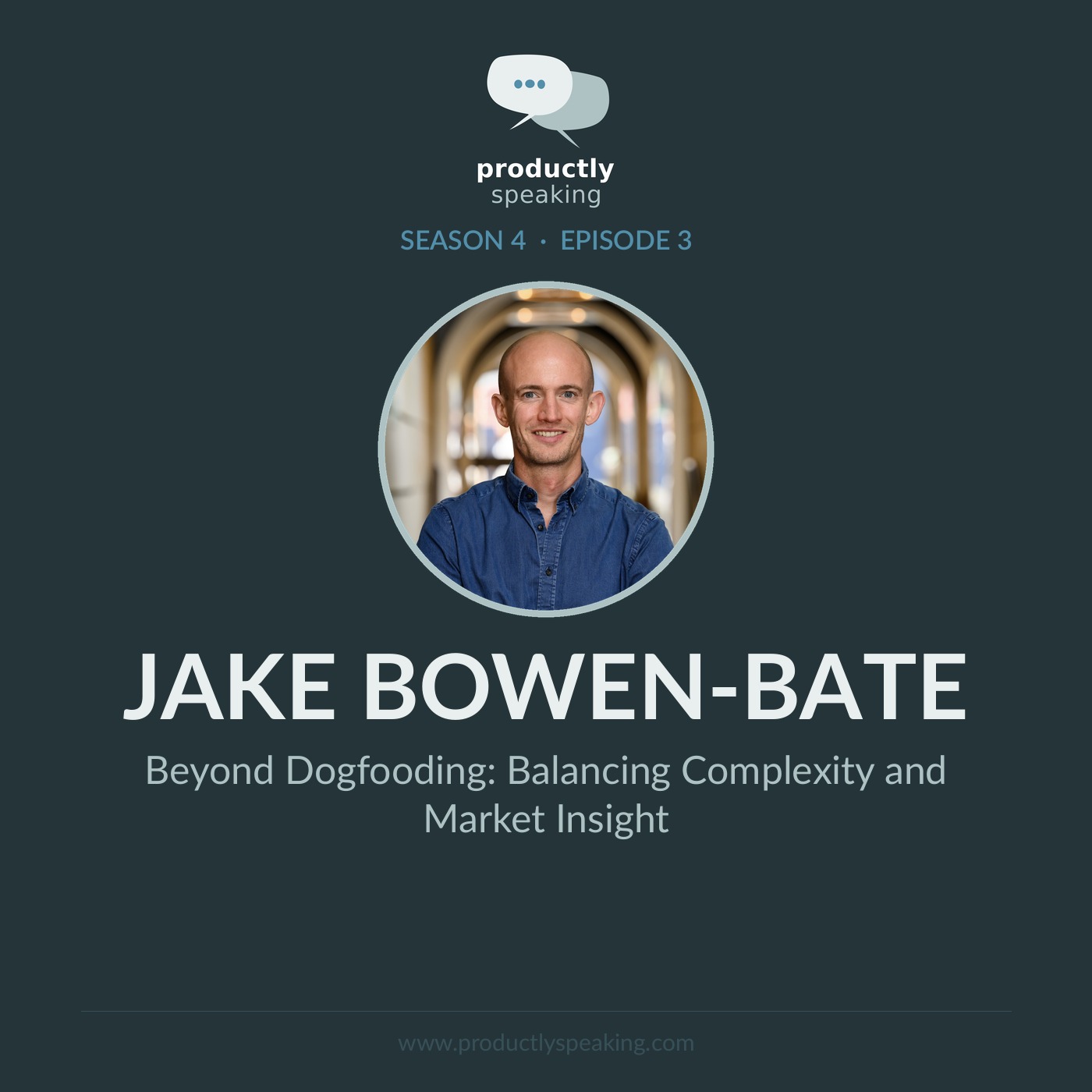 S4E3: Beyond Dogfooding: Balancing Complexity and Market Insight with Jake Bowen-Bate 03.02.2026 33minEpisode Summary In this episode of Productly Speaking, host Karl Abbott speaks with Jake Bowen‑Bate about the realities of building products in fast-moving environments. Jake shares how dogfooding can sharpen your intuition, but also how it can blind you to key market expectations. His reflections illuminate the balance between internal expertise, competitive awareness, emotional design, and the cultural conditions that enable great product decisions. What You’ll Learn in This Episode Why dogfooding is valuable, but sometimes not enough How using a competitor’s products can uncover hidden blind spots What it means to design for emotion, not just functionality How to maintain alignment in complex organizations Why decision-making speed and clarity matter more than perfection How culture, curiosity, and communication shape product outcomes Key Quotes “We as product managers… should probably be trying to use where we can our own products that we're building… But when I started using our biggest competitor… I suddenly realized a lot of things that I had probably just missed.” “When they spoke to me about features, it was very easy for me to dismiss those as nice-to-haves… When actually, I quickly realized once I started using them that I got a very strong emotional attachment to them.” “If the decision is made, communicated, and explained, it can be a pretty mediocre decision because it’s still better than a decision that hasn’t been made, communicated, or explained.” Resources Mentioned Inspired — Marty Cagan (https://app.thestorygraph.com/books/dec05575-b75f-4127-b00f-0b44af6f1724) Crossing the Chasm — Geoffrey Moore (https://app.thestorygraph.com/books/db6bfb5d-0747-4576-a487-47989e928167) Jake’s website: https://jakebowen-bate.co.uk/ Jake on LinkedIn: https://www.linkedin.com/in/jakebowenbate/
 -
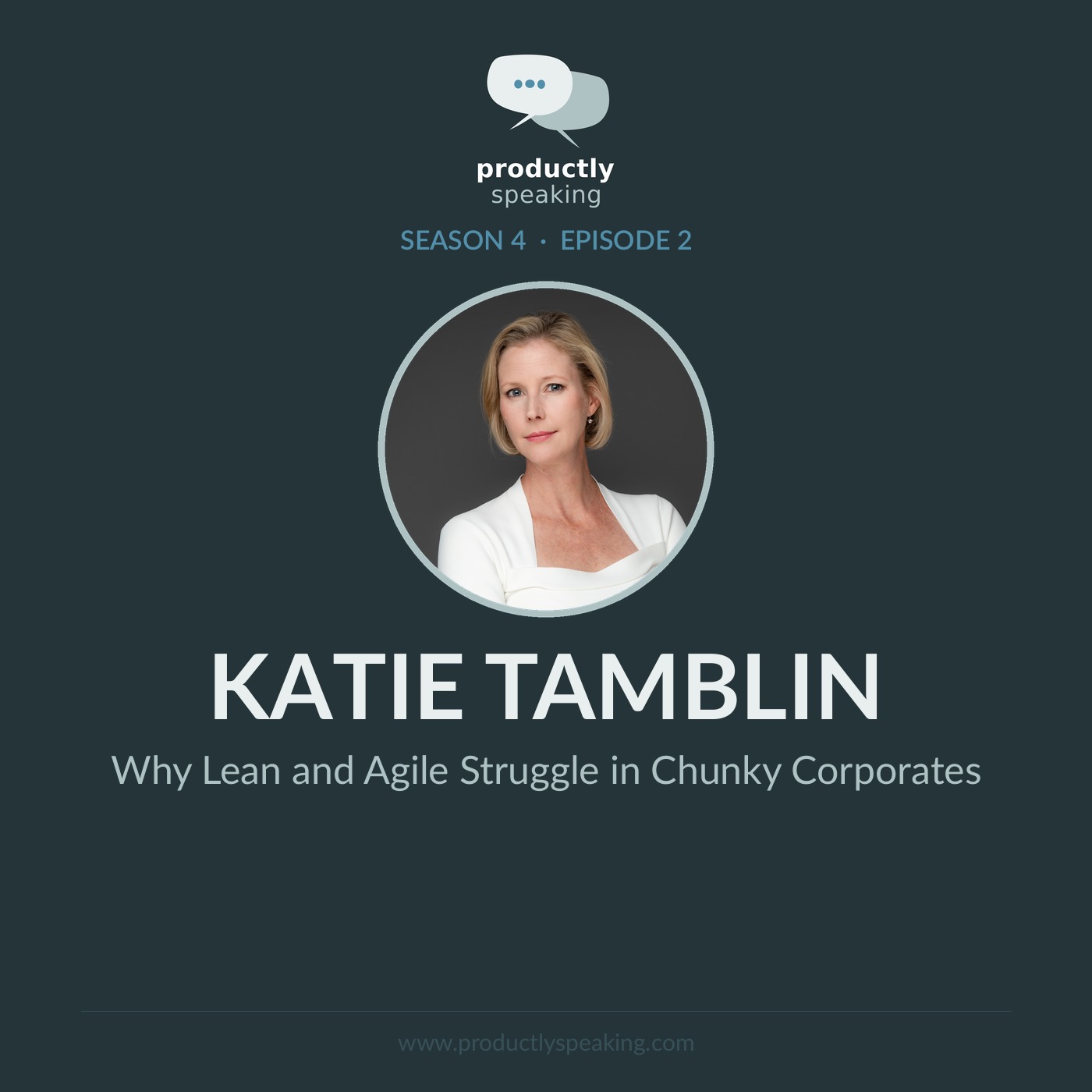 S4E2: Why Lean and Agile Struggle in Chunky Corporates with Katie Tamblin 27.01.2026 40minEpisode Summary: In this episode of Productly Speaking, host Karl Abbott talks with Katie Tamblin, consultant, trainer, and author of The Lean Agile Dilemma. Katie explains why lean and agile principles, born in startup environments, often fail in large, mature organizations. From the illusion of agility to the harsh realities of replatforming, Katie shares candid stories and practical lessons learned from decades of experience in product management and data strategy. If you’ve ever wondered why MVPs don’t work when replacing legacy systems, or how internal politics and investor pressure distort product strategy, this conversation is for you. Featured Quote: "Lean and Agile were designed for building software for the first time that no one’s using yet. Chunky corporates are managing decades of existing products and data—that’s a completely different beast." – Katie Tamblin What You’ll Learn in This Episode: Why lean and agile principles break down in large organizations The MVP myth in replatforming (and Katie’s “tent in the garden” analogy) How data migration becomes the biggest gremlin in product transformations The illusion of agility and why sprints don’t guarantee success Practical advice for PMs in startups vs. complex enterprises Resources & Links: Katie’s Book: The Lean Agile Dilemma (https://link.springer.com/book/10.1007/979-8-8688-0321-5) Katie’s Website: www.katietamblin.com Subscribe to Productly Speaking: www.productlyspeaking.com
 -
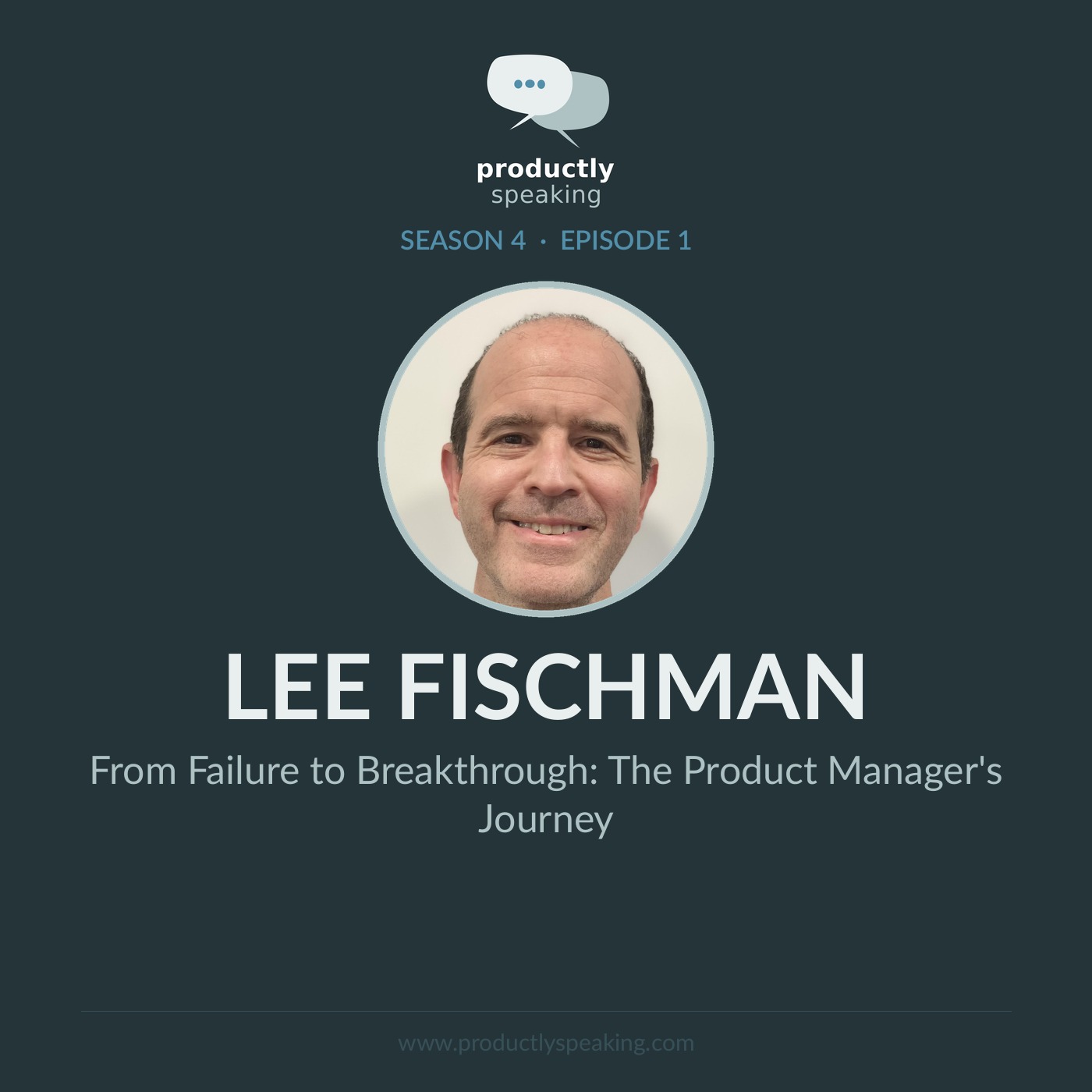 S4E1: From Failure to Breakthrough: The Product Manager’s Journey with Lee Fischman 20.01.2026 37minEpisode Summary: In this episode of Productly Speaking, host Karl Abbott sits down with Lee Fischman—seasoned developer, product manager, executive, and author of How to Excel at Digital Product Management. Lee shares decades of experience across industries from fintech to healthcare, and dives deep into what makes a great product manager beyond the usual playbook. We explore the mindset that drives success, why humility and empathy are non-negotiable, and how overlooked skills like communication and copywriting can make or break your career. Lee also unpacks why so many digital products fail, the hidden costs of customer acquisition, and how strategic pivots can turn failure into a breakthrough. Plus, we talk about the evolving role of AI in product teams and why smaller, faster squads might be the future. If you’ve ever wondered how to rise above the chaos, collaborate across silos, and build products that truly resonate, this conversation is packed with insights you won’t want to miss. What You’ll Learn in This Episode: Why humility is the cornerstone of effective product management. The real definition of a product manager’s role—and why it varies so widely. Common reasons digital products fail (and how to avoid them). How to pivot when your product isn’t gaining traction. Why design and marketing are critical skills for PMs. Practical advice for navigating challenging team dynamics. How AI is reshaping product teams and what that means for PMs. Strategic thinking tips without relying on rigid frameworks. The importance of communication and storytelling in product work. Key Quotes: “A product manager’s job is to move her product forward to best serve the interests of its users and the business. Inside the organization, she represents the product.” “You don’t get paid to manage chaos. You get paid for the skills you bring while facing a chaotic situation.” “Product management is about people—the people who use your product, the folks you work with, the men and women you report to. If you want to excel, double down on all the ways you work with and value people.” “You can build your own market, but then some advancement’s going to come in where all of a sudden that’s no longer a need what you service. If you don’t stay ahead and reinvent yourself over and over, you find yourself in a bad spot.” Resources & Links: Lee Fischman on LinkedIn: https://www.linkedin.com/in/lee-fischman/ Lee’s Book: How to Excel at Digital Product Management (https://www.amazon.com/Excel-Digital-Product-Management-comprehensive/dp/B0DPVNX178/) Lee’s Medium: https://medium.com/@lee.fischman
 -
 Season 4 Introduction 13.01.2026 1minWelcome to Season 4 of Productly Speaking! In this short kickoff episode, host Karl Abbott introduces the theme for the season:Why do products fail and what can we learn from those failures?We’ll explore the hidden risks, organizational dynamics, and human factors that shape product success or lead to disaster.If you’re a product manager, founder, or anyone building products, this season will challenge your assumptions and help you think differently about success and failure! Subscribe so that you don't miss an episode!
 -
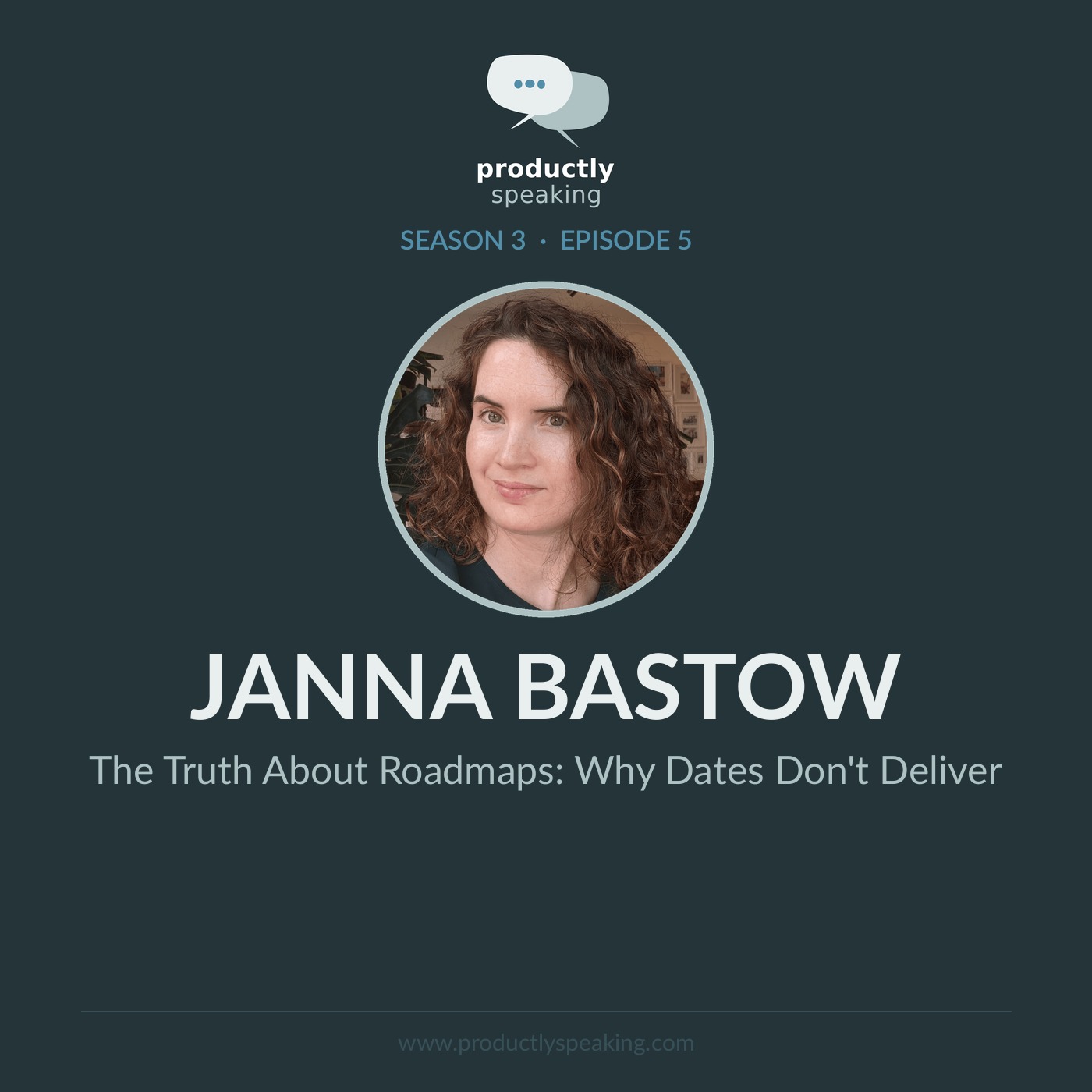 S3E5: The Truth About Roadmaps: Why Dates Don't Deliver with Janna Bastow 12.08.2025 35minIn this insightful episode, Karl Abbott sits down with Janna Bastow, co-founder of ProdPad and founder of Mind the Product, to explore the evolution of product roadmaps. Janna shares the origin story of the Now-Next-Later Roadmap, a flexible and strategic alternative to traditional date-driven roadmaps. Together, they unpack how this approach empowers product teams to communicate more honestly, prioritize effectively, and adapt to change. Key Topics Discussed The Birth of Now-Next-Later Why Traditional Roadmaps Fail Strategic Communication Balancing Flexibility and Commitment The “So What?” Test Janna’s Journey from PM to CEO AI and the Future of Product Management Key Quotes “Roadmapping is a strategic communication exercise—not a delivery promise.” “If everything on your roadmap has a date, you’re not doing product management—you’re doing project delivery.” “AI won’t replace product managers, but it will replace the grunt work.” “Good product management isn’t just done by a product manager sitting in the corner… it’s their job to surround themselves with people in the team and ask really good questions and be transparent about the direction of the product.” Learn More ProdPad Mind the Product Connect with Janna LinkedIn - https://www.linkedin.com/in/jannabastow/
 -
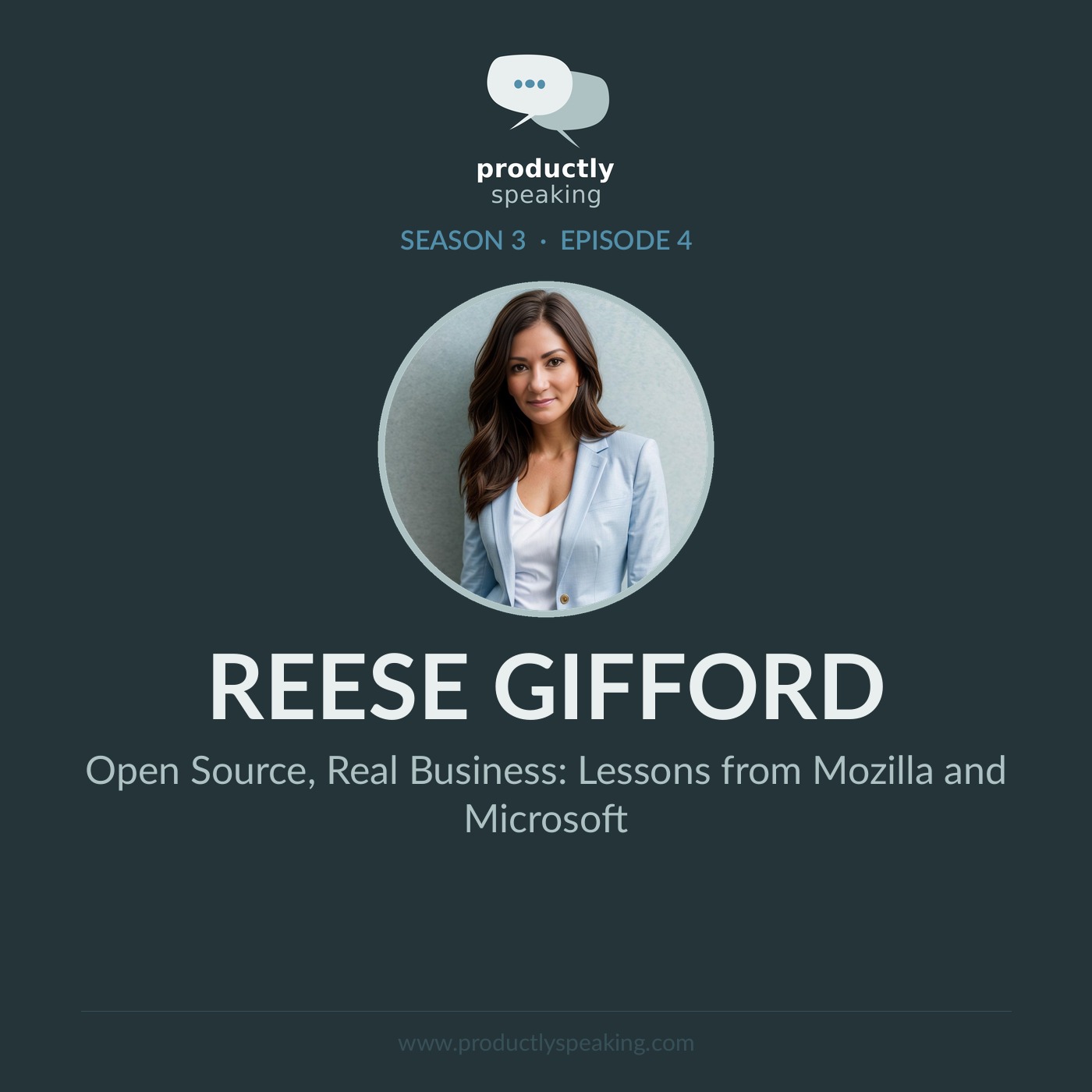 S3E4: Open Source, Real Business: Lessons from Mozilla and Microsoft with Reese Gifford 05.08.2025 28minIn this episode, Karl Abbott sits down with Reese Gifford to explore the complexities and opportunities of managing products in the open-source ecosystem. Drawing from her experience as VP of Product at Mozilla and her current role at Microsoft, Reese shares insights on community engagement, monetization strategies, and the evolving landscape of open-source software in the age of AI and cloud computing. Key Topics Discussed: Reese’s Journey to Mozilla Challenges of Open Source Product Management Revenue Models for Open Source Community Engagement Security & Compliance The Role of AI Future of Open Source Key Quotes: “Open source has gone from a niche grassroots movement to the foundation of modern software development.” “Product management in open source is harder—your stakeholder base is vast and deeply involved.” “The community has a massive influence… decisions have to be driven from a consensus of multiple stakeholders, including external contributors.” Advice for Aspiring Open Source PMs: Embrace the complexity of community-driven development. Communicate clearly with both internal teams and external contributors. Understand that prioritization decisions require diplomacy and transparency. Connect with Reese: LinkedIn: https://www.linkedin.com/in/marissaponikvar/
 -
 S3E3: How to Make Pigs Fly (and Other PM Miracles) with Ali Rakhimov 29.07.2025 34minIn this insightful and entertaining episode, Karl Abbott sits down with Ali Rakhimov, author of Make Pigs Fly: Product Manager’s Bathroom Book. Ali shares his unconventional journey into product management, his philosophy of “blue-collar product management,” and how storytelling, curiosity, and resilience shape great product leaders. Key Topics Discussed Ali’s Origin Story Blue-Collar Product Management Communication & Storytelling The Power of Idioms Features vs. Outcomes Building Confidence The Role of Humor Product Management Beyond Tech About the Book Title: Make Pigs Fly: Product Manager’s Bathroom Book Where to Buy: Ali’s Website Amazon IngramSpark Key Quotes “I didn’t stumble into product management—I tripped, fell, and landed face-first into it.” “You don’t need to speak louder—you just need to translate better.” “Good PMs ship features. Great PMs ship belief.” “You have to be fearless. You have to be hungry. That’s how you grow.” Connect with Ali LinkedIn: https://www.linkedin.com/in/arakhimov/
 -
 S3E2: Remote Realities: Product Management in a Hybrid World with Flora Taagen 22.07.2025 40minIn this insightful episode, Karl Abbott sits down with Flora Taagen, a product manager on the Azure Linux team at Microsoft. Flora shares her unconventional journey into product management, the lessons she’s learned along the way, and her perspective on the evolving nature of work and technology in 2025. Topics Covered Flora’s Path to Product Management Transferable Skills from Unexpected Places Advice for Aspiring PMs Remote Work vs. Distributed Teams AI’s Impact on Product Management Looking Ahead Key Quotes “I think that empathy and creative problem solving and satisfying customer needs are all deeply transferable skills.” “I found it very valuable to spend the first few minutes of my one-on-ones with my fully remote colleagues, just chatting and catching up and not jumping straight into work.” “Even if some team members are physically in person in a conference room together, I really appreciate when everyone still joins the Teams call individually and turns on their camera.” Resources Mentioned Cracking the PM Interview by Gayle Laakmann McDowell & Jackie Bavaro Cloud Native Computing Foundation (CNCF) for open source contributions Microsoft Teams, GitHub Copilot, and other AI productivity tools Connect with Flora LinkedIn – Flora Taagen -- https://www.linkedin.com/in/florataagen/
 -
 S3E1: Teaching Product Through Real World Experiences: A Conversation with Adil Hussain 15.07.2025 37minIn this episode of Productly Speaking, Karl Abbott chats with Adil Hussain, a product manager at the Financial Times, about his unconventional path into product management, the lessons he's learned from working across public and private sectors, and his passion for mentoring aspiring PMs. They explore how AI is reshaping the role, the importance of community and real-world learning, and how the UK’s Government Digital Service (GDS) offers a global model for accessible, user-centered design. Topics Covered Adil’s Journey into Product Management Public vs. Private Sector Product Work Mentorship and Community Building The Evolving Role of the Product Manager AI in Product Management Resources Mentioned GOV.UK Design System UK Government Digital Service (GDS) GDS Service Standard GDS Product Management Capability Framework Key Quotes “Product management for me is about solving those problems in the right way and also making sure that we're building really good user experiences.” “I come across people that I mentor, that I teach or just have normal conversations with who aspire to break into product… and don’t realize they’re already doing product-style thinking.” “Being able to tell good stories as a product manager and being able to tell a narrative… it’s very, very important.” Connect with Adil Interested in Adil’s bootcamp or mentorship? Reach out to him on LinkedIn - https://www.linkedin.com/in/adilh1/
 -
 S2E5: Dealing with High Stress Environments with Kevin Bailey 18.03.2025 29minIn this episode of Productly Speaking, we dive into the challenges of high-stress environments and how to avoid negativity and burnout. Our guest, Kevin Bailey, founder and CEO of DreamFuel Coaching, shares his journey from leading Indiana's fastest-growing tech startup to founding a company focused on mental performance coaching. Kevin discusses the importance of mental health, the concept of perceived stress, and practical tools to maintain peak performance. Key Topics Covered: Introduction to Kevin Bailey Kevin's Entrepreneurial Journey Dealing with Burnout Understanding Perceived Stress Tools for Mental Performance Flow States and Productivity Managing Negative Thoughts Building Grit and Resilience Quotes: "The vast majority of our stress is perceived stress. If you're, you know, on a bench press or something trying to put up your max weight, that's going to be real stress in the moment. But the vast majority of our stress is fear of the future, rumination on the past." "In order to be able to get into flow state, you have to be able to recognize what pulls you out of flow state." Guest Information: Kevin Bailey: Founder and CEO of DreamFuel Coaching Website: https://www.dreamfuel.com/ LinkedIn: Kevin Bailey Podcast: The DreamFuel Show Call to Action: Visit DreamFuel's website to learn more about their coaching services. Connect with Kevin Bailey on LinkedIn for insights on mental performance. Subscribe to The DreamFuel Show for more discussions on mental health and performance.


