
Breaking Math Podcast
Autumn Phaneuf & Noah Giansiracusa
0
Breaking Math is a deep-dive science, technology, engineering, AI, and mathematics podcast that explores the world through the lens of logic, patterns, and critical thinking. Hosted by Autumn Phaneuf, an expert in industrial engineering and applied mathematics, and Noah Giansiracusa, a mathematician and voice in algorithmic literacy, the show uncovers the mathematical structures behind science and technology. Each episode takes listeners on an intellectual journey into topics like chaos theory, AI ethics, and the math of biology and physics. The hosts interview scientists, researchers, and thinkers across various fields.
Odcinki
-
 31: Into the Abyss (Part Two; Black Holes) 23.08.2018 56minBlack holes are objects that seem exotic to us because they have properties that boggle our comparatively mild-mannered minds. These are objects that light cannot escape from, yet glow with the energy they have captured until they evaporate out all of their mass. They thus have temperature, but Einstein's general theory of relativity predicts a paradoxically smooth form. And perhaps most mind-boggling of all, it seems at first glance that they have the ability to erase information. So what is black hole thermodynamics? How does it interact with the fabric of space? And what are virtual particles?
 -
 30: The Abyss (Part One; Black Holes) 02.08.2018 51minThe idea of something that is inescapable, at first glance, seems to violate our sense of freedom. This sense of freedom, for many, seems so intrinsic to our way of seeing the universe that it seems as though such an idea would only beget horror in the human mind. And black holes, being objects from which not even light can escape, for many do beget that same existential horror. But these objects are not exotic: they form regularly in our universe, and their role in the intricate web of existence that is our universe is as valid as the laws that result in our own humanity. So what are black holes? How can they have information? And how does this relate to the edge of the universe?
 -
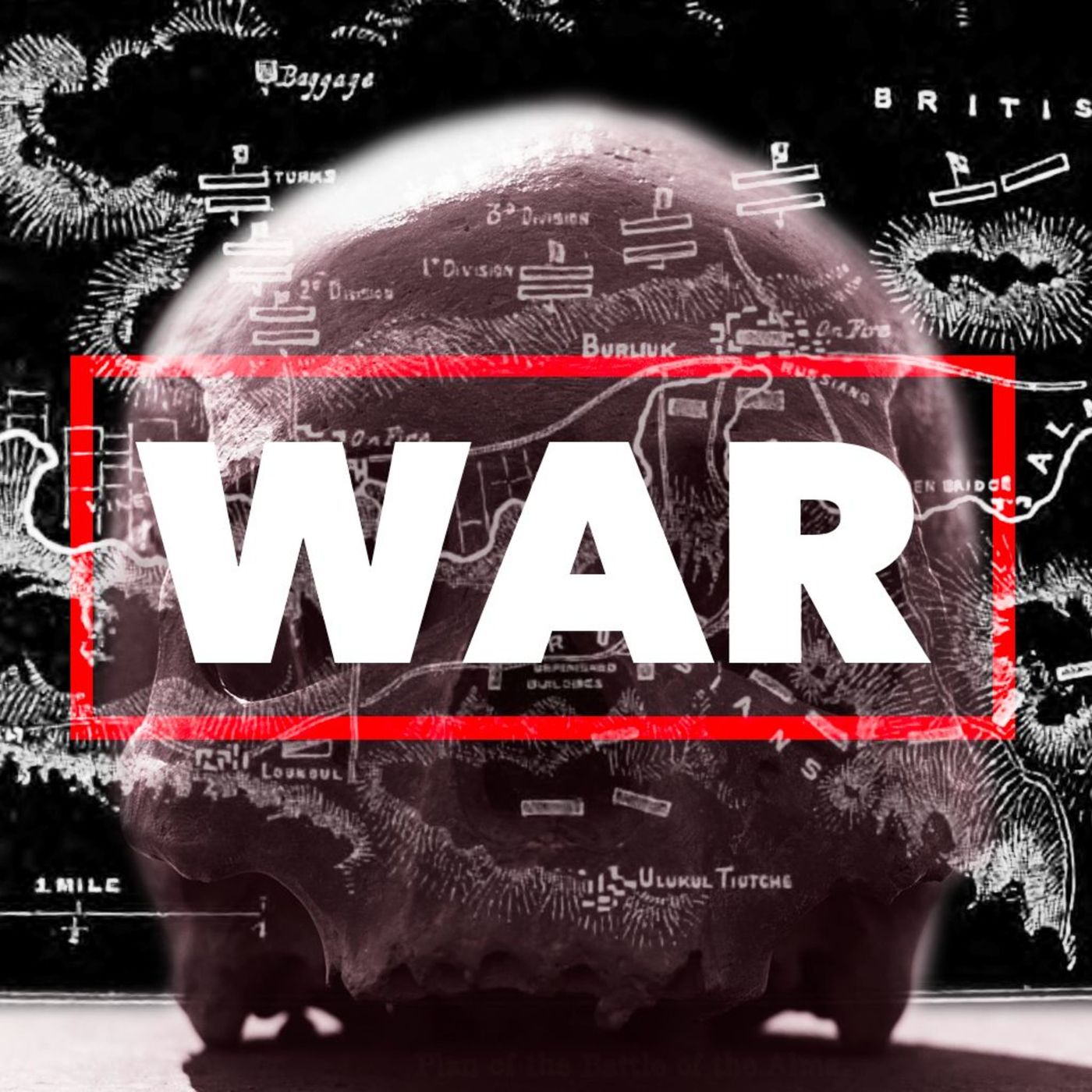 29: War 14.07.2018 34minIn the United States, the fourth of July is celebrated as a national holiday, where the focus of that holiday is the war that had the end effect of ending England’s colonial influence over the American colonies. To that end, we are here to talk about war, and how it has been influenced by mathematics and mathematicians. The brutality of war and the ingenuity of war seem to stand at stark odds to one another, as one begets temporary chaos and the other represents lasting accomplishment in the sciences. Leonardo da Vinci, one of the greatest western minds, thought war was an illness, but worked on war machines. Feynman and Von Neumann held similar views, as have many over time; part of being human is being intrigued and disgusted by war, which is something we have to be aware of as a species. So what is warfare? What have we learned from refining its practice? And why do we find it necessary?
 -
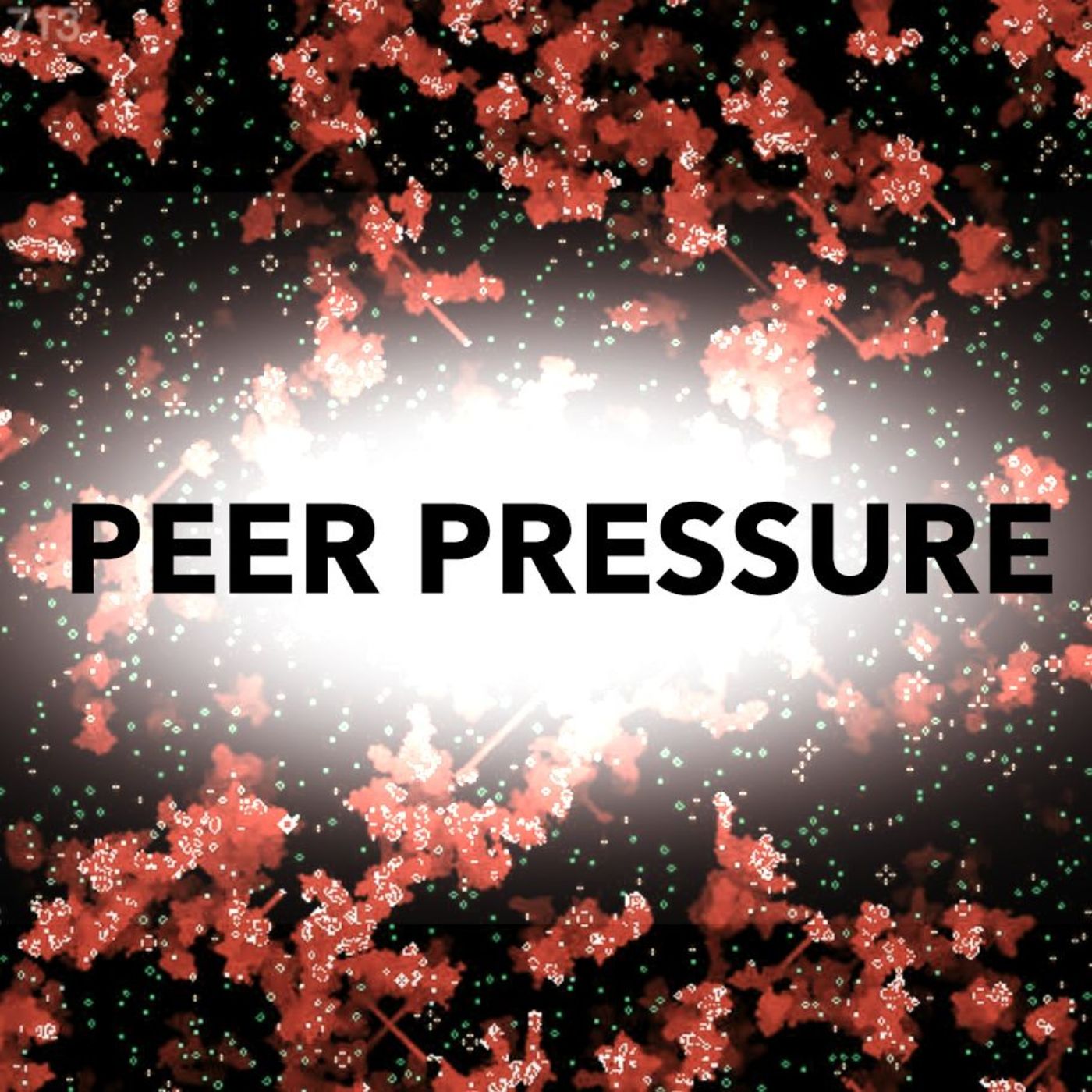 27: Peer Pressure (Cellular Automata) 14.05.2018 51minThe fabric of the natural world is an issue of no small contention: philosophers and truth-seekers universally debate about and study the nature of reality, and exist as long as there are observers in that reality. One topic that has grown from a curiosity to a branch of mathematics within the last century is the topic of cellular automata. Cellular automata are named as such for the simple reason that they involve discrete cells (which hold a (usually finite and countable) range of values) and the cells, over some field we designate as "time", propagate to simple automatic rules. So what can cellular automata do? What have we learned from them? And how could they be involved in the future of the way we view the world?
 -
 25: Pandemic Panic (Epidemiology) 13.04.2018 44minThe spectre of disease causes untold mayhem, anguish, and desolation. The extent to which this spectre has yielded its power, however, has been massively curtailed in the past century. To understand how this has been accomplished, we must understand the science and mathematics of epidemiology. Epidemiology is the field of study related to how disease unfolds in a population. So how has epidemiology improved our lives? What have we learned from it? And what can we do to learn more from it?
 -
 Math Trauma vs. Math Anxiety: What's Actually Holding You Back? 30.09.2026 41min"I'm just not a math person." If you've ever said that about yourself, this episode is for you.Dr. Geillan Aly, author of Compassionate Math, joins Breaking Math to break down the real difference between math anxiety and math trauma — and why mathematics, more than almost any other subject, is uniquely built to make one bad experience feel like permanent proof of failure.In this episode we cover: 00:00 – What is math trauma, and why is it different from anxiety? 02:35 – Why math specifically (vs. history, reading, or other subjects)? 07:28 – Teaching concepts vs. teaching procedures 13:32 – The "sixes" story: a failing student's transformative breakthrough 20:15 – Math anxiety vs. math trauma, explained 28:56 – Whose fault is math trauma — students, teachers, or society? 36:21 – How compassionate math scales beyond the classroom 39:21 – One piece of advice for students, and one for teachersFollow Geillan Aly on her website:(https://www.compassionatemath.com/) Subscribe for more on math, AI, technology, and the systems running the world. Follow Breaking Math onSubstack (https://breakingmath.substack.com/)X (https://x.com/breakingmathpod)Instagram (https://www.instagram.com/breakingmathmedia/)Bluesky (https://bsky.app/profile/breakingmath.bsky.social)Website (https://www.breakingmath.io/)YouTube (https://www.youtube.com/@BreakingMathPod)Follow Noah onInstagram (https://www.instagram.com/profnoahgian/)X (https://x.com/ProfNoahGian)Bluesky (https://bsky.app/profile/profnoahgian.bsky.social)Follow Autumn onX (https://x.com/1autumn_leaf)Bluesky (https://bsky.app/profile/1autumnleaf.bsky.social)Instagram (https://www.instagram.com/1autumnleaf/)Substack (https://substack.com/@1autumnleaf)email: [email protected]
 -
 Forecasting Explained: How Prediction Markets Beat Experts 09.09.2026 43minProfessional forecaster Molly Hickman breaks down what it really means to assign a probability to the future — and why she believes generalists often out-forecast subject-matter experts. This episode explores the art and science of forecasting, from techniques to ethical considerations, and how AI and prediction markets are shaping our understanding of the future.Key TopicsThe definition of forecasting and its importanceTechniques for starting in forecastingThe role of AI and large language models in forecastingHow to interpret probabilities and conditional forecastsForecasting in complex systems like climate and geopoliticsEthical boundaries and red lines in prediction marketsThe impact of AI bots on forecasting accuracy and decision makingChapters03:06 Getting Started with Forecasting: Tools and Techniques06:15 Beginning Forecasting as a Beginner07:31 Gut Feelings vs Market Wisdom08:33 The Delphi Loop and Group Forecasting09:39 Measuring Forecast Accuracy and Skill11:17 Forecasting Long-Term and Uncertain Events12:40 Extrapolating Trends and Model Limitations14:19 AI Bots in Forecasting and Their Performance18:16 Prediction Markets as Collective Wisdom19:19 The Future of Prediction Markets and Society24:06 The Meaning of Probabilities and Risk Assessment27:20 Dealing with Chaos and Unpredictability32:52 Combining Models and Expert Opinions36:31 Forecasting and Expertise in Science and Policy39:01 Forecasting AI Risks and Ethical BoundariesFollow Molly Hickman on X (https://x.com/celloMolly)Follow Breaking Math onSubstack (https://breakingmath.substack.com/)X (https://x.com/breakingmathpod)Instagram (https://www.instagram.com/breakingmathmedia/)Website (https://www.breakingmath.io/)YouTube (https://www.youtube.com/@BreakingMathPod)Follow Noah onInstagram (https://www.instagram.com/profnoahgian/)X (https://x.com/ProfNoahGian)Bluesky (https://bsky.app/profile/profnoahgian.bsky.social)Follow Autumn onX (https://x.com/1autumn_leaf)Bluesky (https://bsky.app/profile/1autumnleaf.bsky.social)Instagram (https://www.instagram.com/1autumnleaf/)Substack (https://substack.com/@1autumnleaf)email: [email protected]
 -
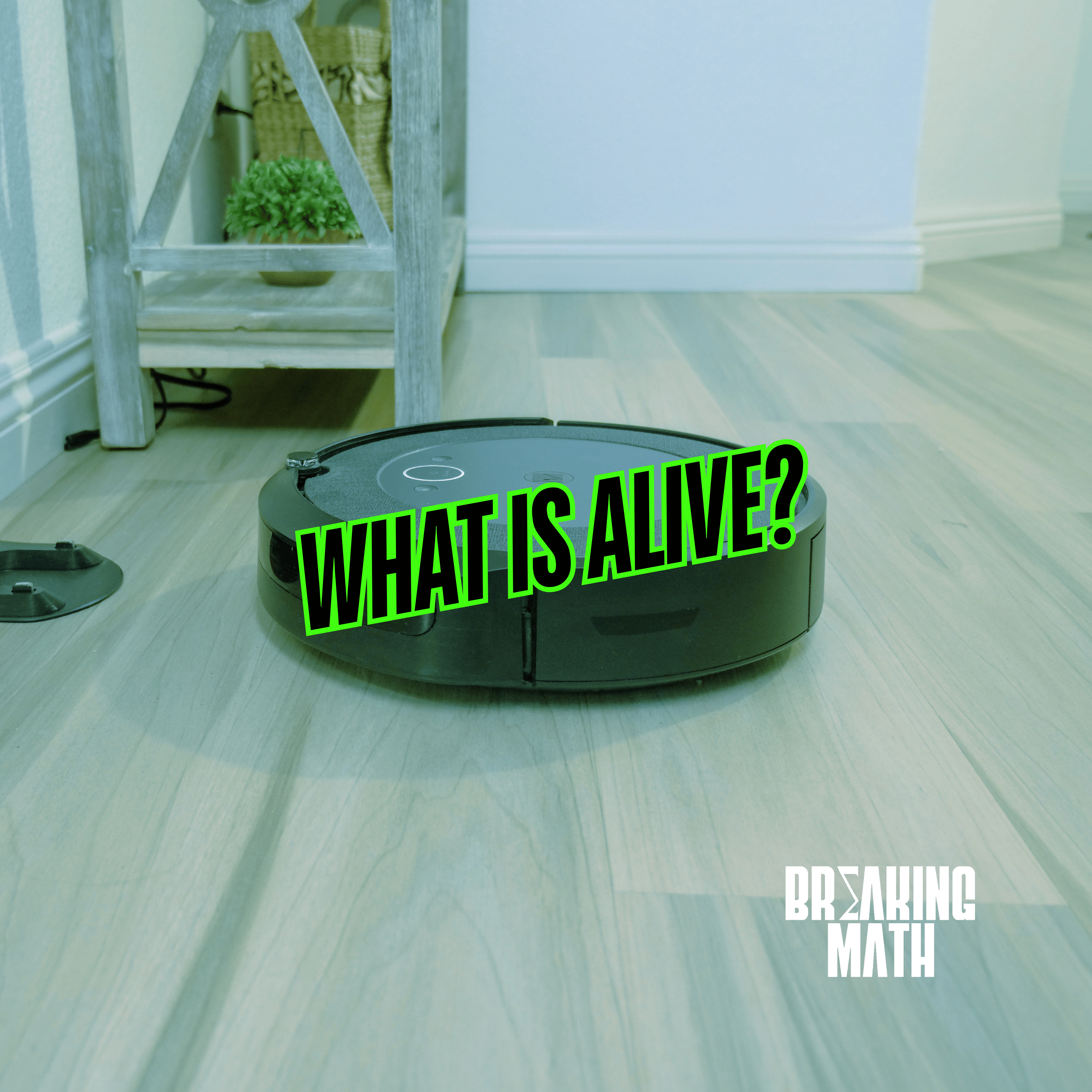 What Actually Makes Something Alive? with Melanie Challenger 19.08.2026 48minWhat does it mean to be alive? In this episode of Breaking Math, Autumn and Noah speak with Melanie Challenger, author of Alive, about one of the most profound questions in science and philosophy: how do we define life?Challenger argues that life is not simply a machine-like process or a bundle of genetic instructions. Living beings are embodied, purposeful agents. From single-celled organisms to sequoia seeds, from animals to human beings, life is marked by an astonishing capacity to work to keep itself alive.Chapters08:12 The concept of purpose in living beings09:14 The scientific view of purpose and agency11:52 The importance of purpose and meaning in life13:19 The danger of ignoring organism agency in science14:34 Living beings as purposeful agents15:35 Comparing purpose in a Roomba and a single-celled organism18:03 Autopoetic vs allopoetic systems20:03 Free will, agency, and the universe23:24 The physical basis of life and energy28:38 Aristotle's concept of psyche and purpose33:46 The importance of understanding what life truly is37:56 Material integration and the difference between machines and living beings38:15 The concept of self and embodiment in life41:09 The whole body as the agent, not just the brainFollow Melanie Challenger on her website:(https://www.melaniechallenger.com/) Subscribe for more on math, AI, technology, and the systems running the world. Follow Breaking Math onSubstack (https://breakingmath.substack.com/)X (https://x.com/breakingmathpod)Instagram (https://www.instagram.com/breakingmathmedia/)Bluesky (https://bsky.app/profile/breakingmath.bsky.social)Website (https://www.breakingmath.io/)YouTube (https://www.youtube.com/@BreakingMathPod)Follow Noah onInstagram (https://www.instagram.com/profnoahgian/)X (https://x.com/ProfNoahGian)Bluesky (https://bsky.app/profile/profnoahgian.bsky.social)Follow Autumn onX (https://x.com/1autumn_leaf)Bluesky (https://bsky.app/profile/1autumnleaf.bsky.social)Instagram (https://www.instagram.com/1autumnleaf/)Substack (https://substack.com/@1autumnleaf)email: [email protected]
 -
 Why Uncertainty Is Science's Greatest Strength with Stuart Firestein 06.08.2026 43minNeuroscientist Stuart Firestein (Columbia University) joins Breaking Math to make an extravagant claim: uncertainty isn't a weakness in science — it's the defining feature that makes progress possible. In this episode, we break down why the "one right answer" myth is one of the most damaging ideas in science, why real experts are often the most uncertain people in the room, and why authority and expertise pull in opposite directions, covering two fundamentally different kinds of probability, why Darwin never erased a 300-year-old classification system built on an assumption he disproved, why AI is exceptional at prediction but not built for causation, and why pseudoscience always has a confident answer while real science rarely does — plus the philosophical difference between hope and optimism, and why Voltaire had to invent the word "optimism" in 1759 to describe it. Chapters03:00 Predictability and the sea of uncertainties04:08 Science as a search for probabilities and multiple solutions06:16 Biological classification and the dynamic nature of species09:10 The optimistic view of a branching universe12:41 Probability as the language of optimism16:48 Two types of probability and their roles17:50 AI, probabilistic models, and the future of certainty21:40 Science and the creation of better ignorance23:21 The importance of asking questions over giving answers27:21 Authority versus knowledge in science30:04 Pluralism and multiple solutions in science32:46 Science in the gray area of uncertainty35:39 The brain and randomness in thought39:44 Science as a source of hope and optimismFollow Breaking Math onSubstack (https://breakingmath.substack.com/)X (https://x.com/breakingmathpod)Instagram (https://www.instagram.com/breakingmathmedia/)Bluesky (https://bsky.app/profile/breakingmath.bsky.social)Website (https://www.breakingmath.io/)YouTube (https://www.youtube.com/@BreakingMathPod)Follow Noah onInstagram (https://www.instagram.com/profnoahgian/)X (https://x.com/ProfNoahGian)Bluesky (https://bsky.app/profile/profnoahgian.bsky.social)Follow Autumn onX (https://x.com/1autumn_leaf)Bluesky (https://bsky.app/profile/1autumnleaf.bsky.social)Instagram (https://www.instagram.com/1autumnleaf/)Substack (https://substack.com/@1autumnleaf)email: [email protected]
 -
 Robot Proof: Why Better AI Starts With Better People with Vivienne Ming 25.07.2026 59minNeuroscientist, entrepreneur, and author Dr. Vivienne Ming joins Autumn and Noah to make the case that if we want better AI, we need to build better people first. We get into why AI tutors that hand students answers make learning worse, not better; what her research on "hybrid intelligence" reveals about the human traits — not the AI model — that predict elite human-AI collaboration; a wild experiment running Dungeons & Dragons with Claude and Gemini as dungeon masters to expose the gap between knowing and understanding; her case for "fiduciary AI," legal duty-of-care standards for tutors, hiring tools, and diagnostic models; and the real story of a hiring algorithm that learned to discriminate against women after every explicit gender marker was stripped out.Chapters02:20 Why build this book now? The importance of human qualities04:16 AI in education and the concept of robot-proofing06:37 The median student and AI personalization09:31 The limitations of AI understanding and theory of mind11:30 Building better people with AI and human interaction14:23 Hybrid intelligence and the role of human-AI collaboration23:56 Case study: AI in Dungeons & Dragons30:42 AI's strengths and limitations in understanding and cognition37:34 The science of purpose and its impact on life and society44:44 The collective intelligence of humans versus AI46:54 Key takeaway: Build better people for better Follow Vivienne Ming on X (https://x.com/neuraltheory) Get Vivienne's book, Robot Proof: (https://amzn.to/3Tz21aP) Follow Breaking Math onSubstack (https://breakingmath.substack.com/)X (https://x.com/breakingmathpod)Instagram (https://www.instagram.com/breakingmathmedia/)Website (https://www.breakingmath.io/)YouTube (https://www.youtube.com/@BreakingMathPod)Follow Noah onInstagram (https://www.instagram.com/profnoahgian/)X (https://x.com/ProfNoahGian)Bluesky (https://bsky.app/profile/profnoahgian.bsky.social)Follow Autumn onX (https://x.com/1autumn_leaf)Bluesky (https://bsky.app/profile/1autumnleaf.bsky.social)Instagram (https://www.instagram.com/1autumnleaf/)Substack (https://substack.com/@1autumnleaf)email: [email protected]
 -
 Why Nothing Works: Robber Barons, Algorithms & Governing AI 10.07.2026 44minIn this episode, Historian and author Marc Dunkelman to explain why the 19th-century fight over railroad power is the exact fight we're about to have over algorithms and AI. Drawing on his acclaimed book Why Nothing Works: Who Killed Progress — and How to Bring It Back (a Best Book of the Year in the Financial Times and The Economist), Marc unpacks the two competing tools America has always used against concentrated power — antitrust vs. regulation — and why our government's "endemic diffusion of authority" now means nobody can decide anything, from congestion pricing to clean-energy transmission lines to AI safety.CHAPTERS04:52 — When private projects come back to the public: Warp Speed, DARPA, CHIPS08:55 — Two ways to fight concentrated power: break them up vs. regulate10:52 — Railroads, island communities & the birth of regulation12:29 — The railroad = algorithm parallel20:33 — Why nothing gets built: the diffusion of authority27:30 — "A voice without a veto" and the AI moment32:53 — Where should government draw the line on new tech?37:20 — Dunkelman the pragmatist: there is no simple answer38:21 — Where math and AI can genuinely help public policy40:46 — The lesson we keep overlookingFollow Marc on X [https://x.com/MarcDunkelman]Get Marc's book, Why Nothing Works: https://amzn.to/4pbFvAB]Substack (https://breakingmath.substack.com/)X (https://x.com/breakingmathpod)Instagram (https://www.instagram.com/breakingmathmedia/)Bluesky (https://bsky.app/profile/breakingmath.bsky.social)Website (https://www.breakingmath.io/)YouTube (https://www.youtube.com/@BreakingMathPod)Follow Noah onInstagram (https://www.instagram.com/profnoahgian/)X (https://x.com/ProfNoahGian)Bluesky (https://bsky.app/profile/profnoahgian.bsky.social)Follow Autumn onX (https://x.com/1autumn_leaf)Bluesky (https://bsky.app/profile/1autumnleaf.bsky.social)Instagram (https://www.instagram.com/1autumnleaf/)Substack (https://substack.com/@1autumnleaf)email: [email protected]
 -
 Can Math Save Journalism?: Julia Angwin on Proof, Power, and Amazon's Algorithm 02.07.2026 52minIn this conversation we chat with Julia Angwin — Pulitzer Prize-winning journalist, founder of Proof News, and former Wall Street Journal and ProPublica reporter — to make the case that journalism should function more like mathematical proof than anecdote.We cover how Angwin's team at The Markup used a decision-tree model to prove Amazon was favoring its own products in search results by an 8-to-1 margin — a finding the House Antitrust Committee later cited when referring Amazon to the DOJ for possible perjury. We dig into her "ingredients label" approach to reporting at Proof News (hypothesis, sample size, techniques, limitations), the difference between mathematical proof and the scientific method, and why she thinks control over algorithmic media is now the central battleground for authoritarian power. She also unpacks her new book on resisting authoritarianism, built from interviews with dissidents worldwide, including the "Swiss cheese" model of personal security and why perfectionism is dangerous in a crisis. Chapters09:50 Proof News: A New Era in Journalism19:56 Data-Driven Investigations: A Case Study30:02 The Future of Journalism and AI32:53 The Evolution of Search Rankings35:06 The Role of Algorithms in Information Access36:41 Fighting Authoritarianism Through Journalism44:52 Community Resistance Against Authoritarianism48:33 The Dangers of Perfectionism in Resistance51:26 Declaring a Position in Journalism56:25 The Importance of Math in Modern Society Julia Angwin's book, “On Courage” (https://amzn.to/448G8kY)Follow Julia Angwin onX (https://x.com/JuliaAngwin/)Bluesky (https://bsky.app/profile/juliaangwin.com) Proof News (https://www.proofnews.org/)Follow Breaking Math onSubstack (https://breakingmath.substack.com/)X (https://x.com/breakingmathpod)Instagram (https://www.instagram.com/breakingmathmedia/)Bluesky (https://bsky.app/profile/breakingmath.bsky.social)Website (https://www.breakingmath.io/)YouTube (https://www.youtube.com/@BreakingMathPod)Follow Noah onInstagram (https://www.instagram.com/profnoahgian/)X (https://x.com/ProfNoahGian)Follow Autumn onX (https://x.com/1autumn_leaf)Instagram (https://www.instagram.com/1autumnleaf/)email: [email protected]
 -
 The Proof in the Code: How Lean Is Quietly Rewriting Trust in Math (w/ Kevin Hartnett) 24.06.2026 45minIn this episode, Autumn and Noah talk with Kevin Hartnett about why mathematicians are willing to spend years reducing an idea to a level of detail a machine can check, whether formal verification can catch an AI that's technically correct but fundamentally misaligned, the cold-start problem that kept earlier theorem-provers niche, and what it means for the future of mathematical trust once AI can generate proofs faster than any human community can read them.Timeline:00:00 Introduction to Lean and Its Significance03:18 The Journey of Writing the Book05:13 Human Element in Mathematical Formalization06:57 Understanding Formal Proofs in Mathematics11:21 The Origins of Lean and Its Purpose13:03 Misalignment in Software Specifications14:39 Building Mathematical Libraries in Lean17:23 Ensuring Accuracy in Mathematical Foundations22:00 Overcoming the Cold Start Problem in Lean Adoption24:36 The Future of Mathematical Proofs30:26 AI's Role in Mathematics38:29 Expanding Beyond Mathematics41:40 The Long-Term Impact of LeanThe Proof in the Code is out now from Quanta Books. (https://amzn.to/3SuNlJm)Follow Kevin Hartnett onX (https://x.com/KSHartnett) Bluesky (https://bsky.app/profile/kevinhartnett.bsky.social)Follow Breaking Math onSubstack (https://breakingmath.substack.com/)X (https://x.com/breakingmathpod)Instagram (https://www.instagram.com/breakingmathmedia/)Bluesky (https://bsky.app/profile/breakingmath.bsky.social)Website (https://www.breakingmath.io/)YouTube (https://www.youtube.com/@BreakingMathPod)Follow Noah onInstagram (https://www.instagram.com/profnoahgian/)X (https://x.com/ProfNoahGian)Bluesky (https://bsky.app/profile/profnoahgian.bsky.social)Follow Autumn onX (https://x.com/1autumn_leaf)Bluesky (https://bsky.app/profile/1autumnleaf.bsky.social)Instagram (https://www.instagram.com/1autumnleaf/)Substack (https://substack.com/@1autumnleaf)email: [email protected]
 -
 How Data Science Exposes Injustice: Chad Topaz on Unlocking Justice 10.06.2026 40minWhat happens when the evidence of injustice is buried in messy, redacted, or inaccessible data? Mathematician and data scientist Chad Topaz joins Breaking Math to discuss his book Unlocking Justice. Together, we explore policing, sentencing, public records, Rikers Island, algorithmic risk, and the limits of quantifying human lives. This is a conversation about math, power, transparency, and the small acts of hope that can change systems. Chapters00:00 Introduction and Context of the Conversation01:11 Chad's Journey from Mathematics to Social Justice03:50 The Personal Nature of Chad's Book04:40 Challenges in Data Collection and Access08:03 The Impact of Data on Policing and Surveillance09:51 Humorous Yet Tragic Data Collection Experiences12:55 The Importance of Data Preparation and Cleaning14:40 Navigating Imperfect Data and Its Consequences17:48 The Balance Between Quantification and Human Stories22:25 Incarceration and Public Health: The Rikers Island Case Study31:36 Mathematics and Social Justice: Secrets of the Elite39:03 Hope and Action: A Personal Journey in Data for JusticeFollow Chad Topaz onBluesky(https://bsky.app/profile/chadtopaz.bsky.social) Book (https://amzn.to/3S21pKb)Follow Breaking Math onSubstack (https://breakingmath.substack.com/)X (https://x.com/breakingmathpod)Instagram (https://www.instagram.com/breakingmathmedia/)Bluesky (https://bsky.app/profile/breakingmath.bsky.social)Website (https://www.breakingmath.io/)YouTube (https://www.youtube.com/@BreakingMathPod)Follow Noah onInstagram (https://www.instagram.com/profnoahgian/)X (https://x.com/ProfNoahGian)Bluesky (https://bsky.app/profile/profnoahgian.bsky.social)Follow Autumn onX (https://x.com/1autumn_leaf)Bluesky (https://bsky.app/profile/1autumnleaf.bsky.social)Instagram (https://www.instagram.com/1autumnleaf/)Substack (https://substack.com/@1autumnleaf)email: [email protected]
 -
 Rise of the Robots: Is AI Coming for Your Job? 02.06.2026 44minThis conversation explores the profound impact of AI and automation on the future of work, economy, and society. Featuring Martin Ford, author of 'Rise of the Robots,' the discussion covers technological progress, economic implications, policy ideas like universal basic income, and the evolving nature of jobs in an AI-driven world.Key TopicsImpact of AI on employment and economyPotential of universal basic income as a solutionDifferences between past technological revolutions and AIThe evolution from physical robots to AI software agentsJobs most vulnerable to automation and AIChapters04:14 The Impact of Technological Revolutions on Employment10:40 The Shift from Physical to Intellectual Automation12:16 The Debate: Replacement vs. Augmentation of Jobs18:01 Economic Implications of Job Displacement21:00 Exploring Solutions: Universal Basic Income and Beyond24:08 The Awakening of Economists25:12 Historical Perspectives on Automation28:27 Navigating the Future Job Market32:57 The Role of Skilled Trades in an AI World38:13 The Alien Thought Experiment42:17 The Future of AI and Its Implications44:14 The Rise of Automation and Its Impact45:14 AI as a Digital Workforce45:38 The Shifting Landscape of Work46:08 Questioning the Future of Automation and AIFollow Martin Ford onX (https://x.com/MFordFuture) Book (https://amzn.to/4vluX3N)Follow Breaking Math onSubstack (https://breakingmath.substack.com/)X (https://x.com/breakingmathpod)Instagram (https://www.instagram.com/breakingmathmedia/)Bluesky (https://bsky.app/profile/breakingmath.bsky.social)Website (https://www.breakingmath.io/)YouTube (https://www.youtube.com/@BreakingMathPod)Follow Noah onInstagram (https://www.instagram.com/profnoahgian/)X (https://x.com/ProfNoahGian)Bluesky (https://bsky.app/profile/profnoahgian.bsky.social)Follow Autumn onX (https://x.com/1autumn_leaf)Bluesky (https://bsky.app/profile/1autumnleaf.bsky.social)Instagram (https://www.instagram.com/1autumnleaf/)Substack (https://substack.com/@1autumnleaf)email: [email protected]
 -
 The Echoing Universe: How Radio Waves, AI, and Math Could Help Us Find Aliens with Emma Chapman 29.05.2026 47minDr. Emma Chapman explains radio astronomy using the fruit bowl metaphor, explores the emotional and scientific aspects of space exploration, and discusses future technologies like the Square Kilometre Array and lunar radio telescopes. The conversation highlights the poetic beauty of the universe, the importance of connection, and the role of math and AI in understanding the cosmos with her book the Echoing Universe.Chapters03:17 Understanding Radio Astronomy08:12 The Intimacy of the Solar System09:10 Tidal Locking and the Moon13:36 The Emotional Lives of Astronauts' Families17:53 The Shared Experience of Space Exploration21:58 The Emotional Resonance of Celestial Events26:41 Facing the Universe: Overcoming Fear through Cosmology28:16 Cultural Perspectives: How Civilizations Understand the Cosmos30:52 Astronomy's Historical Impact: Control and Awe in Civilizations31:05 The Unlikely Scientist: James Stanley Hay's Discovery40:31 AI in Astronomy: Harnessing Data for Discovery45:14 The Next Frontier: Radio Telescopes on the Moon47:38 A New Perspective: The Space Between StarsFollow Dr. Emma Chapman Bluesky (https://bsky.app/profile/dreochapman.bsky.social)Instagram (https://www.instagram.com/dremmachapman/)Book (https://amzn.to/4u0GCnC) Follow Breaking Math onSubstack (https://breakingmath.substack.com/)X (https://x.com/breakingmathpod)Instagram (https://www.instagram.com/breakingmathmedia/)Bluesky (https://bsky.app/profile/breakingmath.bsky.social)Website (https://www.breakingmath.io/)YouTube (https://www.youtube.com/@BreakingMathPod)Follow Noah onInstagram (https://www.instagram.com/profnoahgian/)X (https://x.com/ProfNoahGian)Bluesky (https://bsky.app/profile/profnoahgian.bsky.social)Follow Autumn onX (https://x.com/1autumn_leaf)Bluesky (https://bsky.app/profile/1autumnleaf.bsky.social)Instagram (https://www.instagram.com/1autumnleaf/)Substack (https://substack.com/@1autumnleaf)email: [email protected]
 -
 AI Solves 80-Year-Old Math Conjecture: What It Means for the Future of Mathematics 23.05.2026 29minThis episode explores how AI, specifically OpenAI's recent breakthrough in solving an 80-year-old math conjecture, is transforming the field of mathematics. Featuring insights from Professor Daniel Litt, the discussion covers the implications of AI in mathematical research, the value of human verification, and the future of mathematical practice.Key topicsAI solving long-standing mathematical problemsThe role of human verification in AI-generated proofsImplications of AI breakthroughs in discrete geometryThe future of mathematical research with AINumber theory and algebraic constructions in AI discoveriesChapters00:00 Introduction to the Conjecture and Its Significance01:15 Understanding the Erdős Problem04:34 The Role of AI in Solving Mathematical Problems09:17 The Implications of AI in Mathematics10:32 AI vs Human Mathematicians: A Comparative Analysis17:20 Standards for AI-Generated Proofs21:10 Corporate Interests in Mathematical Research24:42 The Future of Mathematics and AI27:50 Final Thoughts on AI and Mathematics31:37 Revolutionizing Mathematics: AI's Breakthrough in Discrete Geometry37:37 Exploring the Implications: AI and the Future of Mathematics38:03 The Role of AI in Mathematics39:23 Human Value in the Age of AIFollow Daniel Litt onX (https://x.com/maiasz) Website (https://daniellitt.com)Follow Breaking Math onSubstack (https://breakingmath.substack.com/)X (https://x.com/breakingmathpod)Instagram (https://www.instagram.com/breakingmathmedia/)Bluesky (https://bsky.app/profile/breakingmath.bsky.social)Website (https://www.breakingmath.io/)YouTube (https://www.youtube.com/@BreakingMathPod)Follow Noah onInstagram (https://www.instagram.com/profnoahgian/)X (https://x.com/ProfNoahGian)Bluesky (https://bsky.app/profile/profnoahgian.bsky.social)Follow Autumn onX (https://x.com/1autumn_leaf)Bluesky (https://bsky.app/profile/1autumnleaf.bsky.social)Instagram (https://www.instagram.com/1autumnleaf/)Substack (https://substack.com/@1autumnleaf)email: [email protected]
 -
 The Science of Addiction: Dopamine, Social Media, and the Myth of Willpower with Maia Szalavitz 21.05.2026 50minIn this episode with award-winning journalist and author Maia Szalavitz challenges the idea that addiction is simply about pleasure or willpower. Instead, she explains addiction as compulsive behavior that continues despite negative consequences — and shows why withdrawal, dependence, and addiction are not the same thing.The conversation explores “wanting” versus “liking,” why dopamine is misunderstood, how social media and AI can exploit reward systems, and why punishment often fails. Ultimately, Szalavitz argues that recovery depends less on tough love and more on connection, purpose, safety, and care.Chapters00:00 Understanding Addiction: Definitions and Mechanisms10:43 The Role of Dopamine in Addiction14:18 Addiction as a Learning Disorder16:22 Substance vs. Experience: The Nature of Addiction20:13 Evidence-Based Methods for Overcoming Addiction25:20 Finding Meaning and Purpose Beyond Addiction33:30 The Pursuit of Meaningful Experiences34:15 Understanding Dopamine and Pleasure39:10 The Complexity of Addiction43:00 Social Media and Addiction Dynamics50:42 Generational Perspectives on Technology and Addiction57:53 Lessons Learned in Addiction Science01:02:03 Rethinking Addiction: A New Perspective01:03:54 The Compulsive Nature of Addiction01:04:14 Understanding Addiction Beyond Pleasure01:05:27 The Importance of Connection and CompassionFollow Maia Szalavitz onX (https://x.com/maiasz)Follow Breaking Math onSubstack (https://breakingmath.substack.com/)X (https://x.com/breakingmathpod)Instagram (https://www.instagram.com/breakingmathmedia/)Bluesky (https://bsky.app/profile/breakingmath.bsky.social)Website (https://www.breakingmath.io/)YouTube (https://www.youtube.com/@BreakingMathPod)Follow Noah onInstagram (https://www.instagram.com/profnoahgian/)X (https://x.com/ProfNoahGian)Bluesky (https://bsky.app/profile/profnoahgian.bsky.social)Follow Autumn onX (https://x.com/1autumn_leaf)Bluesky (https://bsky.app/profile/1autumnleaf.bsky.social)Instagram (https://www.instagram.com/1autumnleaf/)Substack (https://substack.com/@1autumnleaf)email: [email protected]
 -
 Are We Being Misled by Data? Ron Wasserstein on AI, Bias, and Statistical Truth 14.05.2026 47minIn this episode of Breaking Math, Autumn and Noah speak with Ron Wasserstein, Executive Director of the American Statistical Association, about what statistics means in a world increasingly shaped by AI, misinformation, and fragile public trust. Wasserstein argues that statistics is not merely a “bag of tools,” but a way of thinking: asking where data comes from, what it leaves out, how uncertainty should be communicated, and when numbers are being used to illuminate rather than manipulate.Chapters00:00 The Golden Age of Statistics02:36 AI's Impact on Statistics08:16 Data as Fuel for AI10:55 Bias in AI and Statistics14:01 Preparing Future Statisticians16:58 Bridging the Gap: Academia and Industry22:58 The Misconception of Statistics23:08 The Role of Statistics in Public Discourse26:20 The American Statistical Association's Mission32:18 Statistics and Politics: A Historical Perspective36:02 Addressing Misinformation and Misuse of Data39:51 The Importance of Statistical Literacy44:01 Misconceptions About Statistics and Expertise46:57 The Essence of Statistics47:22 Statistics as a Way of ThinkingFollow Ron WassersteinLinkedIn (https://www.linkedin.com/in/ron-wasserstein/)Follow Breaking Math onSubstack (https://breakingmath.substack.com/)Twitter (https://x.com/breakingmathpod)Instagram (https://www.instagram.com/breakingmathmedia/)Bluesky (https://bsky.app/profile/breakingmath.bsky.social)Website (https://www.breakingmath.io/)YouTube (https://www.youtube.com/@BreakingMathPod)Follow Noah onInstagram (https://www.instagram.com/profnoahgian/)Twitter (https://x.com/ProfNoahGian)Bluesky (https://bsky.app/profile/profnoahgian.bsky.social)Follow Autumn onTwitter (https://x.com/1autumn_leaf)Bluesky (https://bsky.app/profile/1autumnleaf.bsky.social)Instagram (https://www.instagram.com/1autumnleaf/)Substack (https://substack.com/@1autumnleaf)email: [email protected]
 -
 How Ransomware Became a Global Industry with Anja Shortland on Dark Screens 05.05.2026 41minWhat if ransomware did not begin with criminals, but with curiosity? In this episode of Breaking Math, Autumn and Noah talk with Anja Shortland, professor of political economy at King’s College London and author of Dark Screens. This conversation explores how playful hacking evolved into professionalized cybercrime, why ransomware gangs operate like morally questionable internet startups, how cryptocurrency made ransomware scalable, and why hospitals, governments, universities, and critical infrastructure remain especially vulnerable. We also dig into the mathematics behind encryption, asymmetric cryptography, game theory, negotiation, cyber insurance, and the uncomfortable trade-offs between freedom, privacy, and regulation. Chapters 00:00 The origins of ransomware and early hacker culture 02:13 The evolution of ransomware attacks since 2013 03:14 The paradox of cybercriminals as entrepreneurs 06:19 Early hackers: Steve Jobs and Wozniak as pioneers 12:34 The moral and legal landscape of hacking and cybercrime 13:39 The importance of cybersecurity awareness for individuals 15:03 The arms race: attackers vs defenders and the role of math 16:02 The technological innovations behind ransomware 19:21 Asymmetric encryption and cryptocurrency in ransomware 20:53 Bitcoin and the dark web: enabling cybercrime 22:45 The impact of AI on future cyber threats and defenses 34:07 The future of ransomware and cybersecurity challenges Follow Anja Shortland on LinkedIn (https://uk.linkedin.com/in/anja-shortland-53133b231)Book (https://amzn.to/4d6pB4X) Follow Breaking Math on Substack (https://breakingmath.substack.com/) Twitter (https://x.com/breakingmathpod) X (https://www.instagram.com/breakingmathmedia/) Bluesky (https://bsky.app/profile/breakingmath.bsky.social) Website (https://www.breakingmath.io/) Follow Noah onInstagram (https://www.instagram.com/profnoahgian/)Twitter (https://x.com/ProfNoahGian)Bluesky (https://bsky.app/profile/profnoahgian.bsky.social)Follow Autumn on X (https://x.com/1autumn_leaf) Bluesky (https://bsky.app/profile/1autumnleaf.bsky.social) Instagram (https://www.instagram.com/1autumnleaf/) Substack (https://substack.com/@1autumnleaf) email: [email protected]
Podobne podcasty


Popularny w
Ten podcast pojawia się również w listach podcastów tych krajów.


