
ESG In Property Podcast
by LifeProven
0
The ESG in Property Podcast, hosted by Adam Hinds, co-founder of LifeProven Real Estate Advisory, explores how commercial real estate leaders integrate environmental, social, and governance (ESG) principles. Each episode features interviews with innovative executives who share strategies on sustainability, wellbeing, data, and design. The show aims to provide actionable insights for achieving superior financial and impact outcomes.
Odcinki
-
 Beyond the Building: Why the Future of Real Estate Is Operational 14.09.2026 45minJacob Sandelson believes the future of real estate depends on understanding people first, what they need from buildings, how they use them and how better operating models can create more resilient, valuable assets. In this episode, Jacob Sandelson, Founder of Compound, explains why the traditional model of developing a building, securing a long lease and stepping away from its operation is becoming increasingly outdated. Instead, Compound combines high-quality real assets with what Jacob calls the “soft infrastructure” of people, systems, processes, technology and operations to create real estate platforms designed to perform over the long term. The conversation explores Compound’s first platform, Comporter, a new approach to self-storage combining storage, workspace, amenities and highly considered design around the needs of individual users and small businesses. Jacob discusses why customer research sits at the centre of the model, how community engagement can become one of the most valuable forms of development due diligence, and why sustainability, social value and local economic impact should ultimately support commercial performance rather than sit separately from it. The discussion also examines planning risk, institutional investment, operational real estate and why increasingly sophisticated investors are looking for diversified, resilient income rather than relying solely on long leases. Throughout the episode, Jacob shares a refreshingly simple philosophy: understand the customer, remain curious about people and translate those insights into better buildings, operations and investment decisions. Episode Chapters: 00:00 - Jacob’s journey into real estate and the experiences that shaped his approach 05:02 - What Compound is and why Jacob builds real estate “platforms” 09:55 - Introducing Comporter and rethinking the self-storage model 14:33 - The lightbulb moment that revealed the opportunity in self-storage 16:28 - Designing around the user: storage, coworking and co-location 19:20 - Real estate’s two customers: occupiers and investors 22:40 - Why sustainability is fundamentally commercial 24:29 - Social value, SMEs and creating buildings that strengthen communities 27:55 - What listening to local communities can teach developers 31:06 - Why public consultation should be treated as development due diligence 33:21 - Raising capital, achieving scale and attracting institutional investors 35:42 - Planning risk and changing perceptions of self-storage 38:23 - Why institutional capital is moving towards operational real estate 40:16 - Where Jacob finds inspiration and the power of human interaction 41:18 - The books influencing Jacob’s thinking on systems, people and business 44:22 - Curiosity, communication and Jacob’s final advice for real estate leaders About Jacob Sandelson: Jacob Sandelson is Founder of Compound, a real estate investment and development business building operational real estate platforms in sectors where it sees strong long-term consumer and institutional demand. Jacob began his career in residential development before moving into more operational and user-focused areas of real estate, including workspace. Those experiences shaped his belief that successful real estate must consider not only the physical building, but also how people experience, operate and interact with it. Through Compound, Jacob has developed Comporter, a privately held self-storage platform focused on London and the South East. The portfolio comprises approximately 600,000 sq ft across seven new-build assets, combining self-storage with workspace, amenities, sustainability and locally responsive design. Compound’s approach brings together the “hard infrastructure” of high-quality buildings with the “soft infrastructure” of people, systems, processes and operations to create more resilient, user-led real estate.
 -
 Your Building Tech Is Worthless Without the Right Data 20.08.2026 43minFreddie Pritchard Smith believes the future of real estate depends on understanding what technology buildings already have, what they genuinely need and how data can be used to make them perform better.In this episode, Freddie Pritchard Smith, CEO of Trustek, independent PropTech adviser and former chartered surveyor, explains why asset owners cannot begin a meaningful digital transformation without first understanding their existing systems, operational challenges and available data. The conversation explores the journey from analogue buildings reliant on paper, manual reporting and disconnected systems to smarter, data-led assets that respond to how they are actually used. Freddie discusses building technology audits, smart metering, energy optimisation, occupancy data, leak detection, indoor air quality, connectivity and customer experience. The discussion also examines return on investment, the difference between maintaining and optimising a building, on-demand building operations and the growing cybersecurity risks created as buildings become increasingly connected. Throughout the episode, Freddie shares practical insights into how asset owners can build a clear technology strategy, prioritise the right interventions and use building data to reduce costs, improve performance and create healthier, more resilient places.Episode Chapters:00:00 - Freddie’s journey from chartered surveying to building technology07:25 - What Trustek does and why buildings need independent PropTech advice09:25 - Why Freddie founded Trustek and the problem it was created to solve11:20 - The three questions every digital building strategy should answer14:20 - What separates an analogue building from a genuinely smart building18:55 - Leak detection, insurance risk and overlooked technology quick wins20:20 - Where analogue building owners should begin their digital journey24:20 - Turning building data into energy optimisation and measurable value26:40 - Indoor air quality, wellbeing and the human cost of poor buildings29:05 - Why the smartest buildings should operate on demand31:40 - Cybersecurity, building hacking and managing digital risk38:00 - Favourite buildings, inspiration and life beyond PropTechAbout Freddie Pritchard Smith:Freddie Pritchard Smith is CEO of Trustek, an independent property technology consultancy and building audit platform helping landlords, asset managers and property managers transform analogue buildings into smarter, data-led assets.Originally trained as a chartered surveyor, Freddie spent nine years working in Central London office agency before moving into technology leadership. His experience across both real estate and PropTech enables him to bridge the gap between building owners, operators and technology providers. Through Trustek, Freddie and his team advise some of the UK’s largest institutional landlords and property managers, helping them understand their existing technology, identify operational priorities and select the right solutions across energy, connectivity, user experience, building performance and cybersecurity.
 -
 Arthur Kay: Advisor to organisations making cities better places to live 20.07.2026 55minArthur Kay believes the future of cities depends on rethinking our relationship with mobility, urban design and the hidden systems that shape everyday life.In this episode, Arthur Kay, entrepreneur, urbanist, Professor of Practice at University College London, and co-author of Roadkill: Unveiling the True Cost of Our Toxic Relationship with Cars, explains why the car has become one of the most influential forces shaping our cities and why understanding its true social, economic and environmental costs is essential for creating healthier, more prosperous places. The conversation explores how mobility influences freedom, quality of life, real estate development and long-term urban resilience. Arthur discusses the philosophy behind his new book, the hidden costs of car dependency, designing cities around people rather than vehicles, the importance of transport choice, density, site selection and why developers should think beyond the red-line boundary when creating future-ready places. The discussion also examines new towns, planning policy, accessibility, the future of urban mobility and how systems thinking can help shape better cities for future generations. Throughout the episode, Arthur shares practical insights into creating more resilient, people-focused cities through better design, mobility and systems thinking.Episode Chapters:00:00 - Arthur's career journey and lifelong mission to make cities better places08:00 - Why cities, not countries, drive human progress and innovation11:10 - The inspiration behind Roadkill and uncovering the hidden costs of cars16:45 - Freedom, the psychology of car ownership and challenging conventional assumptions23:40 - What great urban mobility looks like and why transport choice matters31:10 - Mobility, accessibility and creating genuine alternatives to car dependency35:30 - Urban design strategies to improve mobility and quality of life37:55 - Why site selection matters more than sustainable building materials42:20 - Planning policy, density and building better cities instead of urban sprawl47:30 - The Network of Care framework and systems thinking for real estate55:00 - Richard Rogers, influential books and ideas shaping the future of citiesAbout Arthur Kay:Arthur Kay is an entrepreneur, urbanist, Professor of Practice at the Institute for Global Prosperity at University College London, and co-author of Roadkill: Unveiling the True Cost of Our Toxic Relationship with Cars. Originally trained as an architect, Arthur has founded and scaled multiple businesses focused on urban innovation, including Skyroom, while also serving on the boards of Transport for London, the Royal Academy of Engineering and the Museum of the Home. His work brings together urban design, mobility, systems thinking and public policy to help create healthier, more prosperous and future-ready cities.
 -
 The Commercial Strategy Behind Great Architecture 06.07.2026 43minAckroyd Lowrie is challenging the traditional role of architects by combining design excellence with planning strategy, political engagement, AI innovation and social impact.In this episode, Oliver Lowry, Co-Founder of Ackroyd Lowrie, explains why securing planning consent is one of the greatest value creation opportunities in real estate and how architects can improve project outcomes by understanding the priorities of local authorities long before an application is submitted. The conversation explores Ackroyd Lowrie's unique approach to planning strategy, tailoring ESG messaging for different councils, the growing co-living sector, and how the practice is using AI to automate workflows while giving designers more time to focus on creativity. Oliver also shares insights into education, post-occupancy evaluation, virtual reality, apprenticeship programmes and why better collaboration across the construction industry is essential for delivering more successful projects. Throughout the episode, Oliver shares practical insights into creating better planning outcomes, embracing new technology and designing more commercially successful, socially valuable developments.Episode Chapters00:00 Oliver's journey into architecture, creativity and real estate06:45 Lessons from Archetype and designing sustainable buildings09:30 Post-occupancy evaluation, virtual reality and breaking down information silos14:55 Building an apprenticeship academy and creating social impact through education19:20 Ackroyd Lowrie's approach to regeneration, retrofit and planning-led design22:10 Why planning consent creates the greatest value in development27:30 Why every local authority requires a different ESG strategy30:15 The rise of co-living and lessons from the How To Handbook36:20 Why co-living is becoming a mainstream housing solution40:10 Community, loneliness and creating successful co-living developments42:35 AI, automation and the future of architectural practice46:00 Running AI hackathons and building practical tools for design businesses48:40 Books, inspiration and Oliver's views on the future of architectureAbout Oliver LowryOliver Lowry is Co-Founder of Ackroyd Lowrie, a London-based architectural practice specialising in urban regeneration, retrofit, planning strategy and large-scale residential-led development. After beginning his career at sustainability-focused practice Archetype, Oliver co-founded Ackroyd Lowrie with a vision of combining great design with commercial thinking, planning expertise and emerging technologies. Today the practice delivers complex regeneration projects, retrofit schemes, hotels, co-living developments and mixed-use projects across London and the UK. Alongside his architectural work, Oliver leads industry research into co-living, pioneers the use of AI within architectural practice, and has established apprenticeship and education programmes to help create more diverse pathways into the profession.
 -
 The Shift from Sustainable to Regenerative with Bywater Group 24.06.2026 1godz 2minBywater Group is pioneering a new model of real estate development centred on regenerative thinking, timber construction, whole-life carbon and systems-based design.In this episode, Joe Jack Williams, Head of Regenerative Strategy at Bywater Group, explains why the future of property lies beyond conventional sustainability and how developers can create buildings that actively improve environmental, social and economic outcomes.The conversation explores how Bywater's regenerative philosophy influences development briefs, embodied carbon, timber construction, circular economy principles and long-term asset resilience. Joe also discusses designing buildings for disassembly, the growing role of engineered timber, measurable sustainability targets, and why systems thinking will play an increasingly important role in shaping the next generation of real estate.Throughout the episode, Joe shares practical insights into regenerative development, future-proofing assets and creating long-term value through better design, collaboration and innovation.Episode Chapters:00:00 Joe's engineering background and journey into sustainable buildings04:30 From building physics to architectural research and systems thinking10:45 Introducing Bywater Group and why regenerative development matters17:30 Creating measurable sustainability briefs for development projects21:30 Managing long-term risk through future-focused investment decisions25:40 The Three Horizons framework for innovation and strategic planning29:15 Why regenerative thinking goes beyond traditional sustainability37:40 Delivering timber buildings at scale: opportunities and challenges46:20 Designing buildings for disassembly and the circular economy50:15 Can buildings become future material banks?55:00 Community engagement, social value and designing with local people58:20 Books, influences and lessons shaping the future of real estateAbout Joe Jack Williams:Joe Jack Williams is Head of Regenerative Strategy at Bywater Group, a carbon-conscious developer and investment manager focused on delivering low-carbon, timber-led developments across the UK.Joe began his career as a mechanical engineer before specialising in building physics, sustainability and environmental performance. He later completed a doctorate at University College London, researching how building design influences educational environments and low-carbon schools, before spending more than fifteen years at Fielden Clegg Bradley Studios, where he became Partner and Head of Research & Sustainability.Throughout his career, Joe has helped shape many of the UK's leading sustainability initiatives, contributing to industry guidance on embodied carbon, whole-life carbon assessment and low-carbon building design.At Bywater Group, Joe leads the company's regenerative strategy, embedding systems thinking, circular economy principles, timber construction and measurable sustainability targets into every stage of the development process.
 -
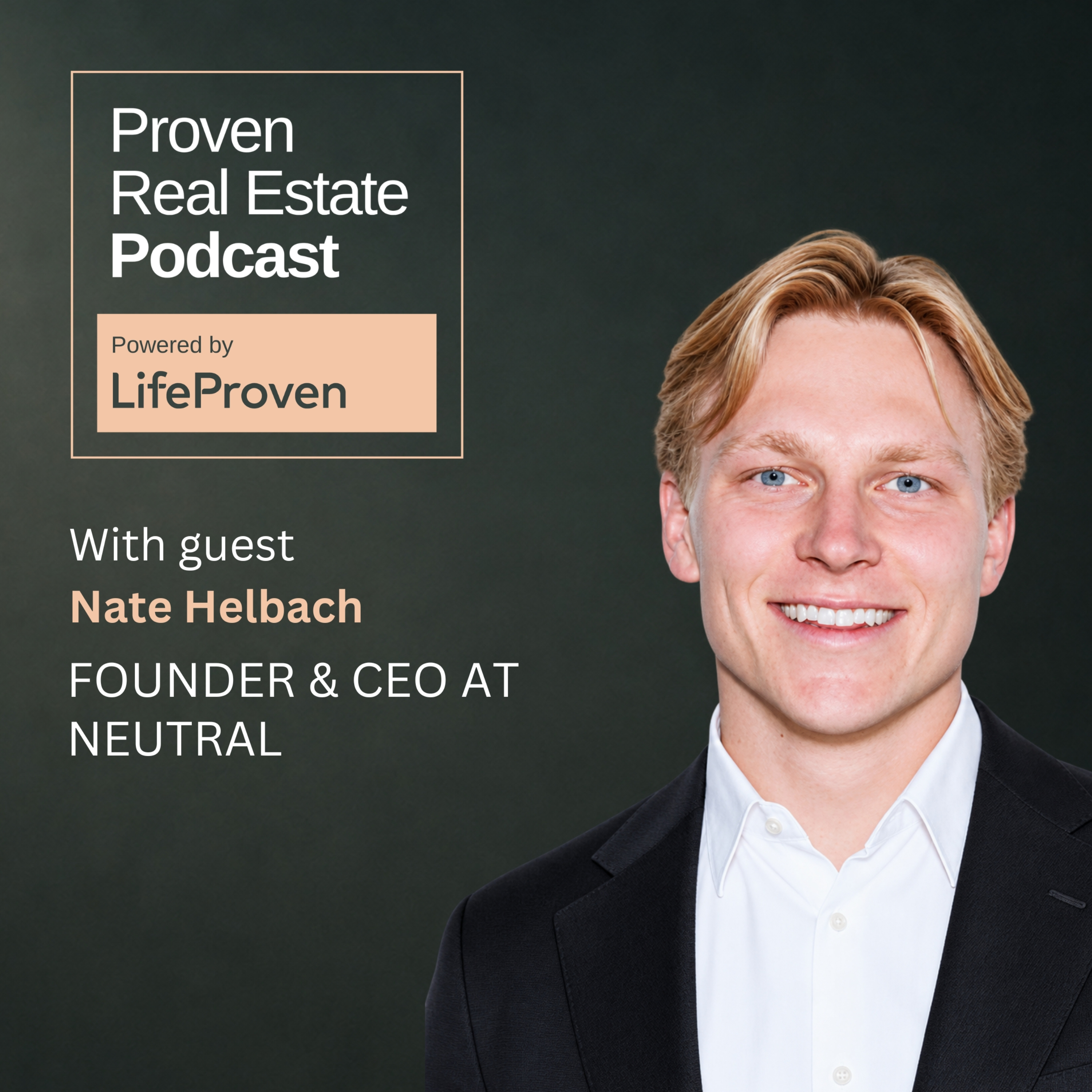 How Mass Timber and Wellness Are Innovating Multifamily Developments 10.06.2026 53minNeutral is a vertically integrated real estate development company based in the United States that is rethinking how buildings are designed, constructed, and operated through the lens of sustainability, resident wellbeing, and long-term resilience. Neutral combines development, architecture, construction, wellness, and technology to create healthier, lower-carbon, and more future-resilient multifamily buildings.In this episode, Nate Helbach, Co-Founder and CEO of Neutral, shares the philosophy behind the company and explains how environmental economics, natural capital stewardship, and systems thinking have shaped its approach to real estate development. The conversation explores why traditional development models often fail to account for long-term environmental and operational performance, and how Neutral is attempting to redefine sustainability through regenerative design principles and vertically integrated delivery.A major focus of the episode is Neutral’s resident wellbeing strategy, including air quality, water quality, daylighting, local food partnerships, wellness amenities, and personalised health optimisation programs designed to improve long-term resident wellbeing and retention.The conversation also explores how investment models may need to evolve to properly value future-resilient buildings, with Nate sharing his perspective on long-term ownership structures, generational investing, and why conventional underwriting often struggles to capture the full value created by sustainable and operationally resilient assets.Episode Chapters00:00 Nate’s early exposure to real estate and investing04:30 Natural capital, sustainability, and the origins of Neutral12:10 Rethinking resource use and regenerative development principles16:35 Why Neutral adopted a vertically integrated operating model22:50 Feedback loops, operational learning, and long-term performance24:00 Delivering one of the tallest mass timber towers in the U.S.31:40 Fire testing, building codes, and proving mass timber equivalency34:00 Designing buildings around resident wellbeing and health38:20 Personalised wellness programs, diagnostics, and longevity strategies41:30 Long-term investing and future-resilient real estate assets47:30 Investment philosophy, stewardship, and generational value creation48:40 Books, influences, and lessons from Patagonia and environmental economicsAbout Nate HelbachCo-Founder and CEO of Neutral, a U.S.-based real estate development company focused on delivering sustainable, wellness-oriented, and future-resilient multifamily buildings through a vertically integrated operating model spanning development, architecture, construction, technology, and wellbeing.Nate founded Neutral with the goal of redefining sustainability in real estate by applying principles of environmental economics, natural capital stewardship, and long-term systems thinking to the built environment. His work focuses on reducing the environmental impact of buildings while simultaneously improving resident health, operational performance, and long-term investment resilience.Under Nate’s leadership, Neutral has become a recognised pioneer in mass timber development and healthy building design, including the delivery of one of the tallest mass timber residential towers in the United States. The company’s projects integrate low-carbon construction, high-performance building systems, wellness programming, and personalised health strategies into a unified development approach.Alongside development, Nate is actively exploring new investment models designed to support long-duration ownership and future-resilient real estate assets, with a focus on creating buildings that deliver both environmental and financial sustainability over multi-decade time horizons.
 -
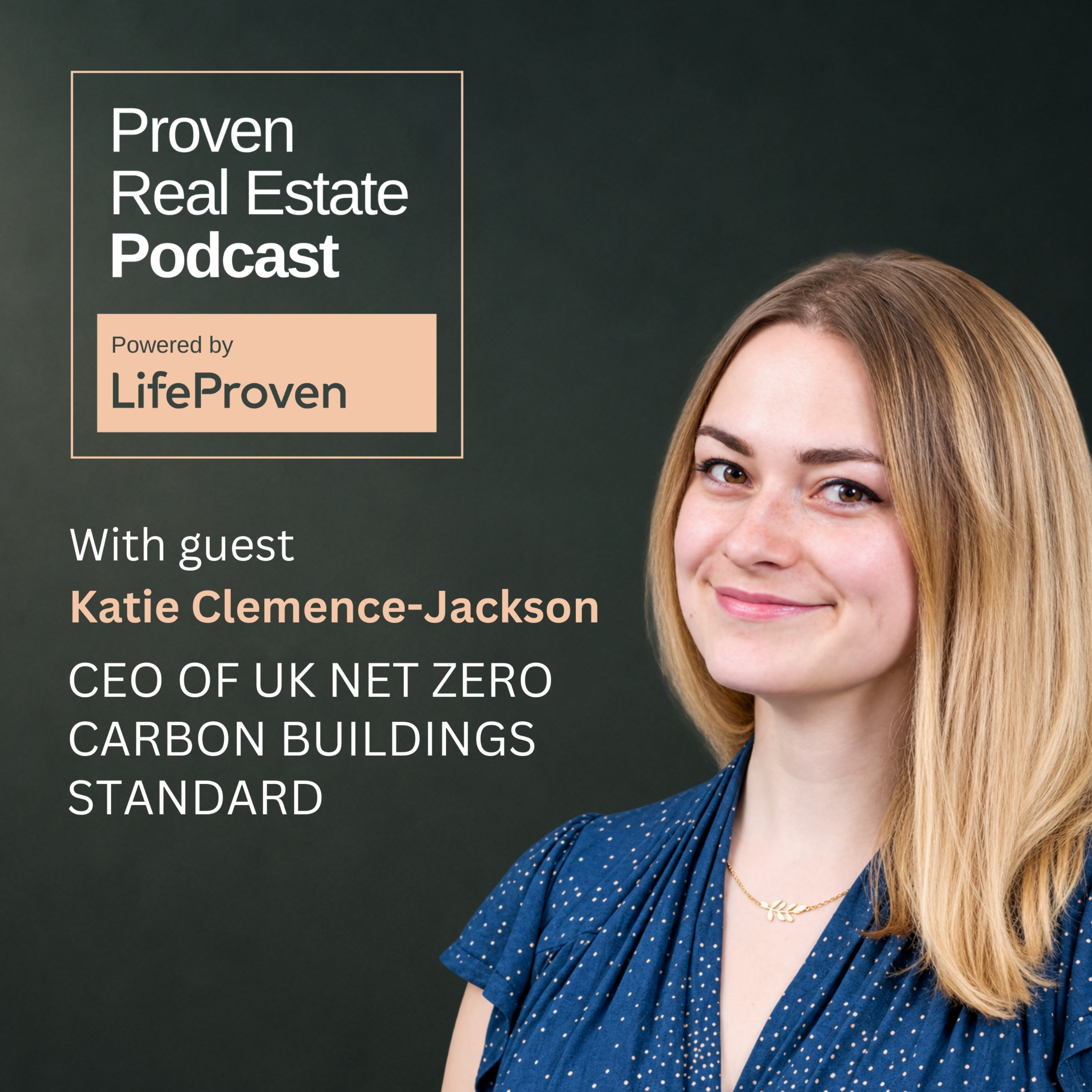 How the UK Net Zero Carbon Buildings Standard is Reshaping Real Estate 20.05.2026 56minThe UK Net Zero Carbon Buildings Standard is an industry-led initiative created to establish a unified, science-based definition of what constitutes a net zero carbon building in the UK. Developed collaboratively by leading built environment institutions, the standard provides measurable performance benchmarks for operational energy, embodied carbon, renewable energy generation, and whole-life building performance across both new and existing assets.In this episode, Katie Clemence-Jackson, CEO of the UK Net Zero Carbon Buildings Standard, explains how the initiative emerged in response to growing industry confusion around the meaning of “net zero” in real estate. She shares how the standard was developed through one of the largest collaborative efforts the UK property industry has undertaken, involving hundreds of volunteers, technical experts, institutions, and thousands of building data points.The conversation explores how the standard works in practice for both existing buildings and new developments, including operational energy limits, embodied carbon reporting, annual verification processes, and why measured in-use performance sits at the centre of credible net zero strategies. Katie also explains why the standard intentionally incentivises retrofit-first approaches and how many existing buildings may be closer to achieving net zero alignment than the industry currently assumes.We also discuss how the standard could influence wider areas of the real estate ecosystem, including sustainable finance, valuation, investment strategy, and future regulation. Throughout the episode, Katie offers a highly practical perspective on the future of net zero real estate, the importance of industry-wide consistency, and why better data, accountability, and collaboration will play a defining role in shaping future-resilient buildings and portfolios.Episode Chapters00:00 Katie’s background in engineering and sustainability05:10 The performance gap and what shaped her net zero thinking10:35 Why the UK Net Zero Carbon Buildings Standard was created18:20 How the standard defines net zero buildings26:45 Existing buildings, retrofit, and operational performance35:10 Embodied carbon, data collection, and verification42:30 New developments and designing for net zero from day one49:20 Net zero claims, industry consistency, and transparency56:40 Sustainable finance, valuation, and future-proofing assets01:03:10 The future vision for the standard and UK real estateAbout Katie Clemence-JacksonCEO of the UK Net Zero Carbon Buildings Standard. Katie leads the delivery and industry adoption of the UK’s first unified net zero carbon buildings framework, helping establish a consistent and measurable pathway for decarbonising the built environment.Katie began her career in engineering, specialising in building performance, sustainability, and operational energy. Her experience spans technical design, post-occupancy evaluation, and environmental performance analysis, with a particular focus on closing the gap between modeled and real-world building performance.Before becoming CEO, Katie played a central role in the development of the UK Net Zero Carbon Buildings Standard, initially joining the initiative as a project manager during its formative stages. Her work has involved coordinating technical working groups, industry consultation, pilot testing programmes, and collaboration across leading real estate institutions, developers, contractors, investors, and sustainability experts.
 -
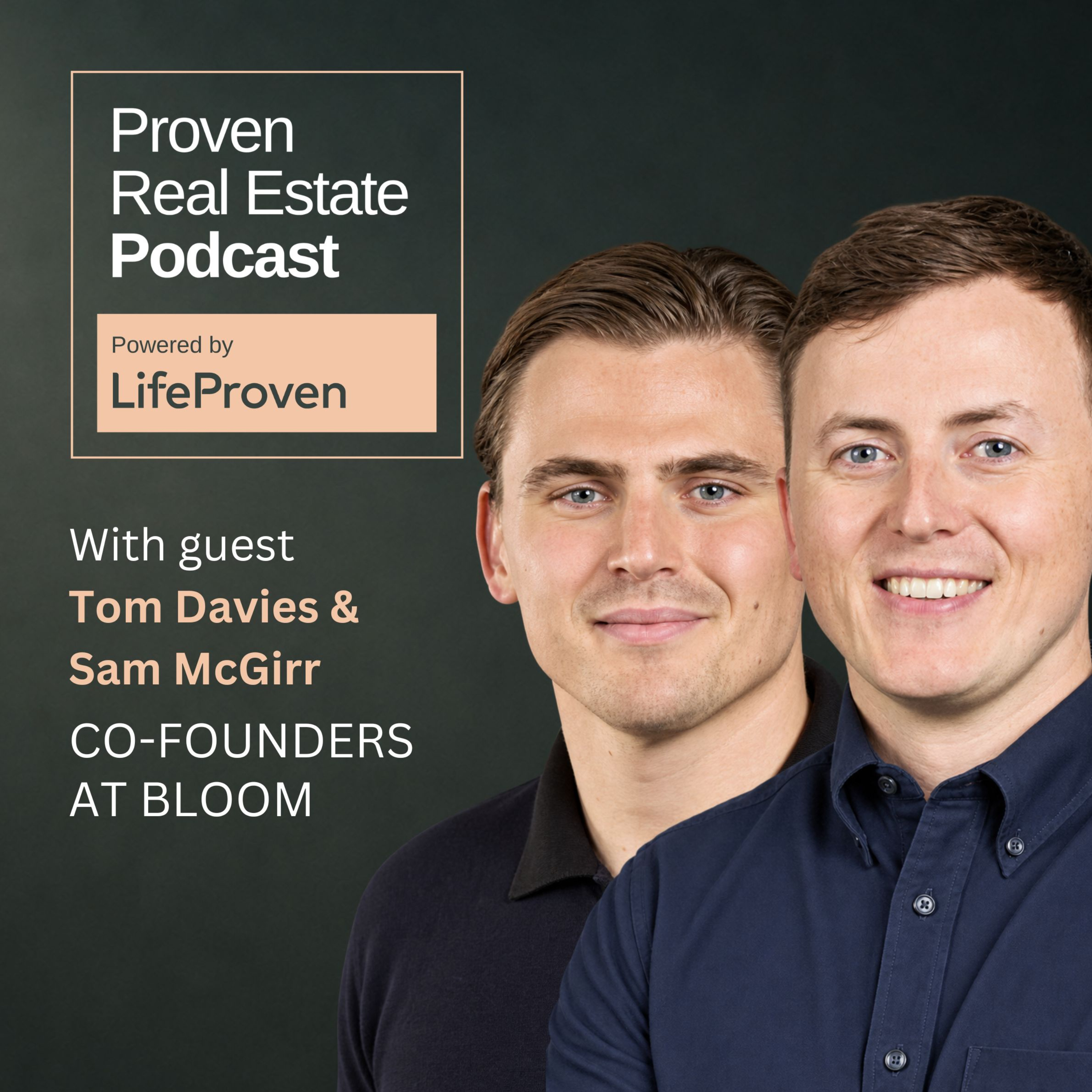 How Proactive Data & Deep Customer Engagement Shape Future-Resilient Warehousing 12.05.2026 56minBloom is an urban warehouse investment and development manager specialising in ultra-urban and last-mile logistics infrastructure across the UK. The business focuses on creating highly sustainable, design-led warehouse environments in dense city locations, helping modern businesses operate closer to customers while reducing congestion, delivery times, and carbon impact. In this episode, co-founders Tom Davies and Sam McGirr explain how Bloom emerged from a shared belief that cities, consumer behaviour, and logistics networks are changing faster than traditional industrial real estate can adapt. Their backgrounds span institutional investment, development, and operational real estate, but both saw the same opportunity. Businesses increasingly need flexible, centrally located warehouse space that allows them to serve customers faster, operate more sustainably, and integrate operational and corporate functions more effectively. The conversation explores the principles behind Bloom’s investment thesis and why the business has focused so heavily on “ultra-urban” warehousing in locations traditionally overlooked by the logistics sector. Tom and Sam explain how extensive occupier research shaped the company from day one, helping Bloom design assets around how businesses actually operate rather than relying on outdated assumptions. We also discuss Bloom’s pioneering work delivering multi-storey urban warehouse schemes in London, and why they believe the model represents a major evolution for industrial real estate in dense cities. The discussion covers sustainability, smart building technology, operational efficiency, and the growing importance of customer engagement and service-led landlord relationships. Throughout the episode, Tom and Sam offer a grounded look at how urban logistics is evolving, why sustainability and operational performance are increasingly interconnected, and what the future of industrial real estate may look like as cities continue to grow and densify.Episode Chapters00:00 Bloom’s origins and investment thesis05:10 Tom and Sam’s backgrounds in real estate12:20 Founding Bloom and identifying the urban logistics opportunity18:45 Ultra-urban warehousing and occupier demand24:30 Multi-storey industrial schemes and evolving warehouse design31:10 Sustainability, ESG, and operational efficiency37:50 Customer engagement and the future of occupier relationships43:15 Research, innovation, and evolving market trends49:35 Entrepreneurship, inspiration, and lessons from building BloomAbout Tom DaviesCo-Founder of Bloom. Tom leads the firm’s investment, development, and strategic growth initiatives across its urban logistics platforms.Before founding Bloom, Tom spent five years at Segro working across development, leasing, asset management, and investment. He later joined startup accelerator Antler, where his experience exploring urban logistics helped shape Bloom’s original investment thesis.About Sam McGirrCo-Founder of Bloom. Sam oversees investment, occupier strategy, and operational growth across the business.His experience spans office investment, development, and hospitality-led real estate in both the UK and North America. Sam brings a research-driven approach to understanding how occupiers use space and how urban logistics infrastructure is evolving.
 -
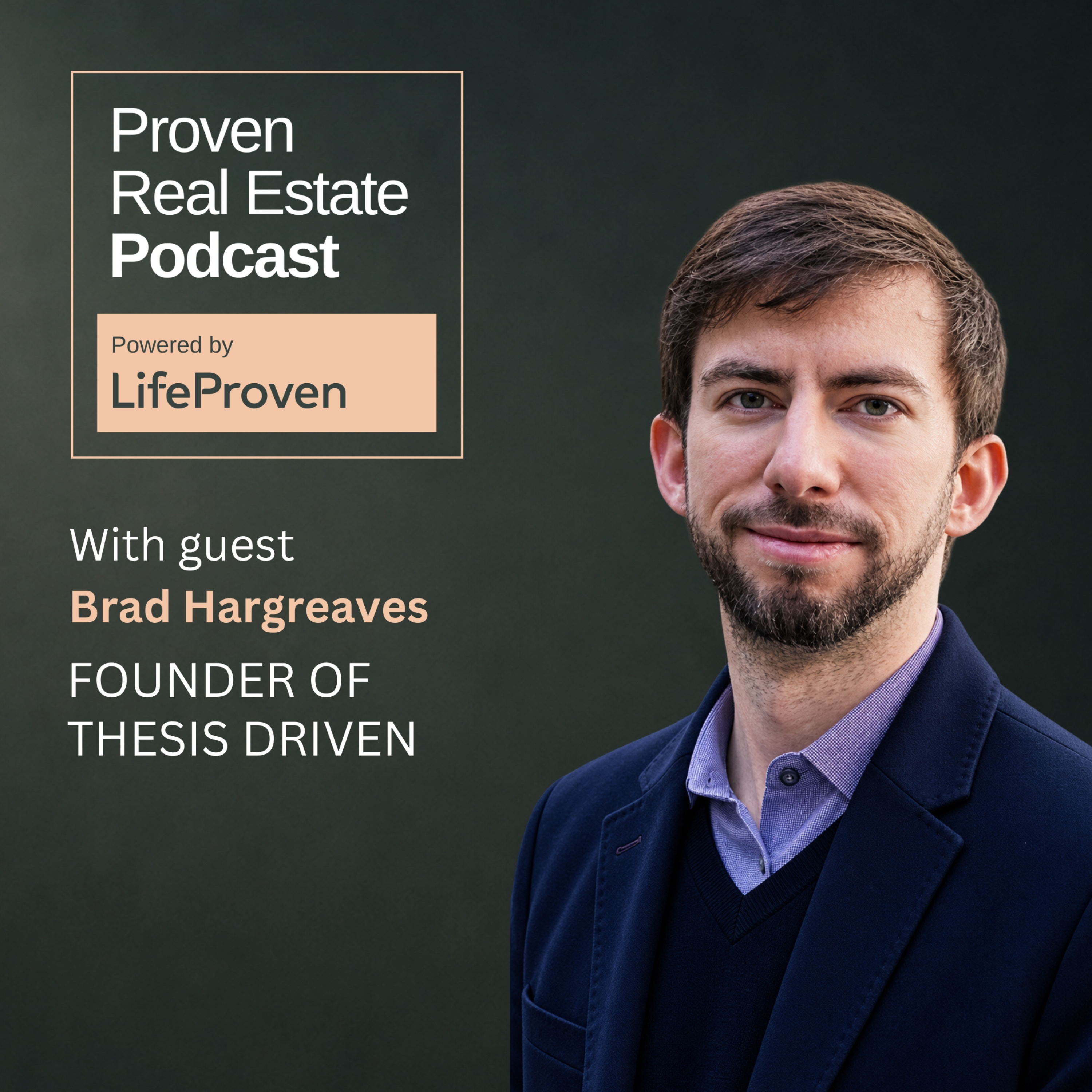 Real Estate, Automation and Institutional Legibility: The Thesis Driven View 22.01.2026 56min“You could automate most of property management today. The real constraint is not technology.” Brad Hargreaves joins the ESG in Property Podcast to explain where real estate is actually changing, and where it isn’t. Drawing on his experience building and exiting General Assembly and scaling Common into a multi-city co-living platform, Brad breaks down how operating models, capital requirements, and demographics are reshaping asset performance beneath the surface. The discussion focuses on why sector labels like “office” or “residential” are losing meaning, how institutional capital really decides what is investable, and why value is often created by turning fragmented, non-institutional assets into scalable product. Brad also explains where AI is already outperforming humans in leasing and collections, why development remains resistant to automation, and how efficiency gains introduce new risks such as rental application fraud. This episode is a practical framework for understanding how real estate economics and operating assumptions are shifting now, not in theory.
 -
 Dynamic Real Estate Asset Management: How to Use Less Carbon and Drive Financial Success 08.01.2026 53minV7 is an asset and development management company specialising in the transformation and decarbonisation of buildings. The team focuses on deep transformation and creating more sustainable, enjoyable environments that reduce carbon impact and deliver financial success for clients. In this episode, co-founder and director Chris Hunt explains how that philosophy took shape. His route into real estate ran from converting a dilapidated house in Bristol into flats, to 11 years at Cushman & Wakefield, to leading transformation projects at Legal & General. Over time, one theme kept repeating itself. Long-term financial strength relies on two fundamentals. Buildings must perform environmentally, and they must create places where people genuinely want to be. Everything else flows from that. The conversation explores the principles behind V7’s operating model. Chris sets out why their projects begin with first-principles thinking. Why standard assumptions around cost, materials, and specification need to be challenged. And why their philosophy of “use less, waste less” has become a core design tool for reducing embodied carbon, lowering operational costs, and strengthening long-term viability. We also discuss V7’s commitment to what Chris calls “bold transparency”, including publishing embodied carbon figures for their projects even when they sit above internal targets. It is a deliberate move to raise industry standards, cut through superficial ESG claims, and show in black and white what a building has actually consumed. The episode looks at the challenge of partner alignment, the role of cognitive diversity, and why V7 will walk away from investors or consultants who are not committed to building responsibly. It also addresses the growing engagement gap between developers and occupiers, and why the industry still struggles to communicate technical sustainability data in ways that genuinely resonate. Taken together, the conversation offers a clear, grounded picture of what it takes to deliver buildings that are financially resilient, lower carbon, and genuinely future-ready. Episode Chapters 00:00 V7’s philosophy and purpose 05:20 Chris Hunt’s background and early career 12:10 Founding V7 and the shift toward transformation 17:45 First-principles design and “use less, waste less” 23:30 Bold transparency and measuring embodied carbon 28:40 Choosing the right partners and building diverse teams 34:10 The occupier engagement challenge 40:55 Advice, inspiration, and the future of V7 About Chris Hunt Co-Founder and Director of V7. Chris leads the firm’s strategy across asset transformation, development, and decarbonisation. His experience spans more than 15 years in real estate, including senior roles at Cushman & Wakefield and Legal & General. With a background in both investment and hands-on development, Chris brings a detailed, first-principles approach to creating buildings that are financially resilient, environmentally responsible, and designed for modern ways of living and working.
 -
 Power, Pricing and Real Estate Resilience: A Lawyer’s Guide to the New Energy Landscape 11.12.2025 53min“It used to be a nice to have to be seen to be green for properties. Now it is an actual commercial imperative." Energy has moved to the centre of real estate value. Rising power prices, grid constraints, lender expectations and operational risk now sit behind every investment decision. Buildings that cannot secure affordable, low-carbon energy face higher operating costs, a growing brown discount and an increased risk of obsolescence. Those that can, gain an advantage on running costs, liquidity and access to finance. Jonathan Cohen explains how this shift has unfolded. As a specialist energy lawyer with more than 20 years’ experience, he advises utilities, project developers, major energy users, real estate owners and funders on clean-energy transactions across rooftop solar, battery storage, district heating, corporate PPAs and private-wire structures. His work sits at the intersection of infrastructure, regulation and property — where long-term value is increasingly determined. A major part of the discussion focuses on the rapid emergence of zero-capex models for on-site clean energy. Third-party providers now fund, build and maintain rooftop solar and battery systems on long leases. Landlords enhance their asset without deploying capital. Tenants receive cheaper, green power in a high-cost market. Funders gain long-term contracted revenues. We then turn to the hardest constraint of all: the grid. Connection delays stretching into the 2030s are reshaping development timelines and forcing new due-diligence practices. Jonathan sets out why the system is blocked, how “zombie” connection agreements created a backlog, and how new queue-management rules are designed to prioritise viable projects. The conversation also explores corporate power purchase agreements and private-wire arrangements. Jonathan explains where PPAs make sense, what lenders look for, and why location, credit quality and load profile determine whether a structure can deliver real savings and bankable economics. Finally, we examine the growing importance of green leases. Not as broad statements of intent, but as specific, measurable, enforceable clauses that hard-wire energy performance, cost-sharing and change-of-law provisions into the landlord–tenant relationship. The goal is simple: protect asset value, deliver operational efficiency and ensure that sustainability commitments are achieved in practice. The episode offers a clear picture of how energy, contracts and regulation now shape real-estate performance, and what owners, developers and occupiers must get right to build future-resilient assets rather than stranded ones. Episode Chapters 00:00 Introduction, context and why energy now sits at the heart of ESG 01:43 How energy and sustainability in real estate have evolved 05:52 Commercial drivers, zero capex clean tech and on site generation 15:27 Grid connection constraints and their impact on development strategy 26:18 District heat networks and the coming heat regulation regime 29:12 Corporate PPAs, pricing, risk allocation and lender expectations 37:10 Private wire arrangements and local energy solutions 38:54 Green leases, "bankable" clauses and aligning landlords and tenants 44:57 Sharing knowledge, collaboration and what comes next for the sector About Jonathan Cohen Jonathan Cohen is a Partner at Fladgate specialising in energy and low carbon infrastructure. He advises utilities, developers, major energy users, real estate investors, funders and energy services companies on the full life cycle of clean energy projects, from rooftop solar and battery storage through to district heating, EV charging and complex corporate PPAs. With more than twenty years of experience in the sector, Jonathan brings a detailed understanding of how regulation, contracts and financing structures shape the economics of energy for buildings, and how the right structures can protect value for both owners and occupiers.
 -
 Risk, Returns and Value-Add Real Estate: The Evonite Philosophy 12.11.2025 53min“Risk is often marginalised, especially during bull markets. We believe it should drive decision-making and portfolio construction at all times.” For Evonite, risk is the foundation of every decision. The firm focuses on medium-risk, value-add investing, built on disciplined underwriting, transparent analysis, and consistent performance for investors, not asset gathering. Jose Luis Pellicer explains how this philosophy came to define the business. Trained as an applied economist, he began his career analysing industries at Deutsche Bank before moving into real estate, a sector that combined geography, finance, corporate structure, and competition. Working with mentor Nick Tyrrell, he learned to approach property from first principles. That outsider’s perspective still shapes how Evonite challenges convention today. The Global Financial Crisis reinforced a central lesson: markets are driven by stories as much as by numbers, and people follow the herd. Pricing becomes detached from fundamentals until it no longer can. The skill lies in recognising when that exuberance has gone too far and acting accordingly. At the centre of Evonite’s approach is the Evonite risk score, a consistent analytical framework that measures and compares every potential investment before capital is deployed. It defines risk as financial downside, the risk of not achieving the underwritten return. Built on three core property risks: depreciation, vacancy, and liquidity, it blends scientific structure with human judgement to create a common scale for all deals. Evonite launched in 2024 to deliver investor performance in a market dominated by scale, to stay nimble in a changing geopolitical and regulatory landscape, and to bring consistent, transparent risk assessment into every decision. The conversation challenges consensus views and explores where opportunity may lie in sectors that most investors have written off, and why discipline, rather than conviction alone, will define success in the years ahead. Episode Chapters 00:00 Introduction to ESG in Property Podcast 02:11 Jose's Journey into Real Estate 09:32 Influential Figures and Learning Resources 19:58 Founding Principles of Evonite 26:18 Understanding Risk in Property Investment 27:06 Evonite A New Approach to Real Estate 28:54 Defining and Managing Risk 33:16 Strategies for Risk Management 36:49 Navigating High-Risk Investments 37:53 Contrarian Views on Investment Sectors 43:37 The Future of Office Spaces 44:52 Researching and Assessing Risks 51:25 Looking Ahead: The Future of Evonite About Jose Luis Pellicer Jose Luis Pellicer is Partner Strategy at Evonite, where he leads the firm’s investment and ESG strategy, chairs the Investment Committee, supports capital raising, and oversees marketing and communications. He brings more than 25 years of real estate experience. Before Evonite, he was Global Head of Investment Strategy at M&G Real Estate, chairing the Global Investment Committee and sitting on the executive committee. He has previously been a partner at Rockspring Property Investment Managers, later served as Patrizia’s Global Head of Research and a member of its senior leadership group, and has held roles at Goldman Sachs, AEW Europe, and Deutsche Bank.
 -
 Future-Ready Warehouses: European Green Logistics Space on ESG, Financial Returns, and Social Responsibility 23.10.2025 35min“To be green, the numbers have to be green.” For EGLS, sustainability is not an add-on. It is the business model. The company was founded to create the industrial buildings of the future, with a clear view that long-term value comes from embedding sustainability in every decision. CEO Ian Worboys explains how this works in practice. Warehouses must stand for 75 years, which means thinking beyond rent levels to lifecycle cost, resilience, and community impact. In a market where a significant proportion of UK logistics stock remains below EPC C, EGLS focuses on repositioning and retrofitting existing assets, proving that preservation and upgrade can protect investor returns while avoiding stranded assets. Ian outlines how the investment case is shifting. Green assets achieve valuation premiums, reduced voids, and access to favourable financing through green bonds. Occupiers like DHL and Amazon now demand sustainable buildings to meet their own carbon commitments. The job is to win over the CFO as much as the real estate team, by showing that being green protects the bottom line. At the same time, EGLS pushes the boundaries of new development. Low-carbon materials, advanced construction techniques, solar integration, and hydrogen power are explored across projects, with each scheme treated as a chance to learn and improve. This culture of evolution defines the company’s approach. Social value is equally central. The “Happy Worker” idea is built on evidence that better air quality, natural light, outdoor space, and amenities reduce absenteeism and improve productivity. From showers and bike sheds to landscaped areas with flowers, the details matter. Happier workers create a positive flow-on effect for families, neighbours, and communities. Good governance underpins everything. EGLS’s leadership team is built on decades of shared experience and trust, with governance structures in place from day one through parent company Kamco. This combination of cultural alignment, compliance, and long-term thinking ensures the company can scale across Europe while staying accountable. Episode Chapters 00:00 Foundational Vision: Personal Journeys and the Birth of EGLS 06:18, The Financial Mandate: Proving ESG Value and Stakeholder Education 14:40, Operational Strategy: Repositioning Assets, Supply Chain and Social Design 26:15, Governance, Evolution, and Looking to the Future of Logistics Spaces
 -
 Beyond the Bottom Line: Stories’ People First Approach 17.07.2025 55min“At Stories, we focus on development that puts people first. It is a serious commitment that shapes how we think, how we partner, and how we deliver.”Paul Clark and James Scott, two of the three co-founders of Stories, share how they build meaningful places through purpose-driven partnerships, place-specific responses and a long-term commitment to community value.With £100 million in patient capital, they partner with aligned landowners and institutions to deliver socially grounded, commercially viable schemes.They work through a very iterative framework, the Four Question Framework for wider key stakeholders:1. Does it work? Outcomes across community benefit, commercial performance and ESG.2. Do we love it? A check for design integrity, emotional resonance and ambition.3. Can we afford it? Funding structures that support the vision without compromise.4. Can we deliver it? The right governance, procurement and people to make it happen.From a homelessness hub in Westminster to a 10-acre town centre renewal in Frome, each project begins with a clear sense of why. That question anchors the process in purpose, brings teams into alignment, and keeps outcomes focused on what matters, beyond just the red line boundary.Their legal infrastructure supports this ethos. Stories use relational contracts, structures built on trust, not transactions. They formalise transparency, hold space for unexpected outcomes, and create the conditions for shared success. In a system where public and private interests often speak different languages, this approach builds a common one.What emerges is not a fixed blueprint, but a way of working – clear, intentional, and grounded in purpose. One that draws in like-minded partners, attracts talent, and allows complex projects to move forward with confidence and care.About the Guests:Paul Clark has a background in planning and development and a career spanning public, private, and third-sector roles. Paul has consistently focused on aligning commercial development with long-term social value. At Stories, he leads on strategy, partnerships, and governance - helping to shape projects that prioritise fairness, sustainability, and genuine community benefit. His approach blends deep industry knowledge with a commitment to collaboration and ethical practice in the built environment.James Scott studied engineering before joining the founding team at The Collective straight out of university, helping to grow the business from house-shares to large-scale purpose built co-living schemes. He co-founded Stories to prove development could fulfil a wider responsibility to people and place. He now leads on company strategy and operations, and is delivering several of Stories’ projects, aligning capital with community outcomes that last.Episode Chapters(00:00) - Introduction to ESG and Stories (02:36) - Personal Journeys into Real Estate (13:22) - Career Overviews and Influences (22:22) - Understanding Stories: A Purpose-Driven Approach(26:21) - The Fluidity of Development: Adapting to Local Needs(27:35) - The Importance of Reflection in Development (29:02) - Capturing the Magic: Intangibles in Development(29:55) - Navigating Financial and Delivery Challenges (32:44) - Intentionality in Leadership and Partnerships (34:48) - Building Relationships Through Word of Mouth (36:23) - Leadership Beyond the Developer (38:46) - The Concept of Relational Contracts (45:33) - Authenticity and Continuous LearningFurther Resources:Stories beyond the bottom line – creating meaningful places blog: https://www.stories.partners/post/beyond-the-bottom-line-creating-meaningful-places Stories Project Portfolio: https://www.stories.partners/projects Start with Why by Simon Sinek: https://simonsinek.com/books/start-with-why/ How Big Things Get Done: https://sites.prh.com/how-big-things-get-done-book
 -
 Social Impact Investor of the Year: How Oparo Social Delivers Supported Housing at Scale 18.06.2025 43minToby Wilde, founder of Oparo Social, joins Adam Hinds to discuss how a data-led investment model is delivering long-term supported housing that serves residents, investors and public services alike.Named Social Impact Investor of the Year 2024 at the UK Finance Awards by SME News, Oparo Social operates as a dedicated brand within Oparo Group, the UK’s first algorithm-led real estate investment company. The Group’s proprietary technology identifies undervalued or overlooked real estate assets. Oparo Social then partners with housing associations and local authorities to convert those assets into stable, well-managed homes for people facing homelessness, domestic abuse, addiction recovery or neurodiversity.To date, Oparo Social has delivered more than 135 supported homes. These schemes are structured through long-term Full Repairing and Insuring (FRI) leases aligned with Local Housing Allowance. The company has also secured institutional funding to deliver £500 million of housing, alongside mandates for hundreds more supported accommodation places.This episode explores how the model has been built to scale. It covers the use of repeatable delivery, consistent design standards and remote asset management. It also explains why psychologically informed design and operational efficiency are central to improving outcomes. Toby reflects on his entrepreneurial journey, including lessons from PropTech, early missteps, and the values that continue to shape how Oparo operates.About Toby Wilde and OparoToby Wilde is the founder of Oparo Group, Oparo Social and a founding partner of Sprift.com. He comes from the Milne family, known for delivering thousands of homes across the Thames Valley, particularly in supported, sheltered and retirement living. His family also founded one of the UK’s first regulated real estate funds under the 1980s BES scheme.Toby began his career in development and consultancy before helping build Sprift into one of the UK’s most widely used property data platforms. In 2019, he launched Oparo Group to apply data and technology to real estate investment. Oparo Social is the part of the business focused on supported housing, using the Group’s infrastructure to source, deliver and manage homes across the UK. Toby is a regular speaker on PropTech and social investment, and has volunteered with Ruskin Mill Trust and the Sophie Hayes Foundation.Episode Chapters00:00 – Introduction to Toby Wilde and Oparo Group01:27 – Toby’s journey into real estate05:33 – Career pathway and lessons from PropTech12:09 – The origins and mission of Oparo Social16:42 – How data and tech are applied to supported housing20:33 – Building infrastructure to manage distributed assets24:23 – Enhancing resident experience through design and remote monitoring29:09 – Designing for psychological wellbeing and stability32:43 – Balancing profit, purpose and public-sector value37:40 – The importance of resilience, character and long-term thinking40:55 – Why connection and community are essential to impactWhy This Episode MattersWith local authorities under pressure and supported housing in short supply, this episode offers a practical look at how private-sector models can contribute to public outcomes. Oparo Social’s approach shows that investor-backed housing can align with social needs without compromising on quality, consistency or returns.
 -
 Creating Social Cities: How Noiascape is Reinventing Urban Living 27.03.2025 57minHello, hello, hello! In this episode of The ESG in Property Podcast, Adam Hinds and Jordan Relfe, co-founders of LifeProven, speak with visionary brothers Tom and James Teatum, founders of Noiascape—a London-based developer and operator dedicated to redefining modern urban living. Noiascape thoughtfully integrates private spaces with communal areas to foster meaningful social interactions, resulting in significant demand and waiting lists of up to two years for their developments. Listen in as we discuss how Noiascape is reshaping residential spaces, promoting genuine community connections, and thoughtfully responding to the changing lifestyles of urban dwellers.Episode Overview:Tom and James Teatum share their distinctive philosophy of urban living, highlighting the importance of blending personal spaces with communal interaction to build vibrant communities. Drawing from their manifesto and practical experience, they explain how thoughtful architectural design and operational management are central to their developments' success.About Our Guests:Tom and James Teatum transitioned from careers in architecture to becoming developers and operators after recognising the limitations of conventional residential offerings. Influenced by their family's construction background and inspired by renowned architects like Richard Rogers, they founded Noiascape with a clear ambition: to create thoughtfully designed living environments that facilitate authentic connections and cultural experiences. Their approach prioritises design excellence and meaningful operational management, setting a new standard for urban residential spaces.Key Topics Explored:• Philosophy of Space and Connection: Tom and James share their belief that cities thrive on interactions happening in the spaces between buildings. They discuss Noiascape's practical strategies to encourage spontaneous social engagement and stronger community ties.• Enabling Cultural Expression: Discover how Noiascape actively integrates cultural activities into their developments, supporting emerging artists and enriching community life through events, exhibitions, and creative opportunities.• Environmental Approach in Practice: The conversation covers Noiascape's practical environmental strategies, including high-performance insulation, renewable energy systems, and intelligent technology designed to reduce energy consumption through everyday living rituals.• Operational Excellence and Future Vision: Tom and James discuss how strategic investment in operational experiences directly impacts resident satisfaction and retention. They outline their plans to scale their innovative approach beyond London, emphasising the importance of collaboration with investment partners who align with their values and vision for community-focused urban development.Join Us & Learn More:Tune in to discover Noiascape’s distinctive model and their thoughtful response to contemporary urban housing challenges. Essential listening for anyone interested in innovative real estate development, community-building strategies, and the future of city living. Listen now to gain a deeper understanding of the vision behind Noiascape.
 -
 Dare to Differentiate: Lessons in Creative Development from HUB’s Robert Sloss 27.02.2025 42minHow do you transform underused sites into thriving, sustainable communities? In this episode of The ESG in Property Podcast, Robert Sloss, CEO of HUB, joins Adam Hinds and Jordan Relfe to discuss HUB’s approach to Build to-Rent co-living, urban regeneration, and long-term investment. He shares insights on navigating market cycles, unlocking challenging sites, and delivering high-quality homes that create lasting social impact.Topics Covered in This Episode1. Lessons from Market Cycles:• How the early ‘90s property downturn shaped Robert’s approach to long-term development• The impact of interest rates and economic shifts on real estate• Why developers need to think beyond short-term market trends2. Regeneration, Investment, and Development Strategy:• HUB’s approach to town centre regeneration and working with local stakeholders• The benefits and challenges of converting office buildings into residential homes, as seen in Cornerstone at the Barbican• Why HUB is investing in cross-laminated timber (CLT) for office buildings, including at One Maidenhead• The role of Build-to-Rent and co-living in modern urban housing, as demonstrated by Queen’s Quarter in Croydon, Latitude in Leeds, and Pines Way in Bath3. Sustainability and the People, Planet, Progress Framework:• How HUB integrates long-term sustainability targets into its developments• The challenge of balancing investment returns with social and environmental responsibility• How HUB measures success beyond financial returns4. Team Culture and Governance:• Why HUB prioritises a small, highly skilled team over a significant headcount• The impact of employee ownership and internal talent development• How HUB stays big enough to make a difference but agile enough to innovateWhy This Episode Matters?This episode provides a first-hand look at how HUB delivers housing in city centres while navigating market cycles, sustainability targets, and investment challenges. Robert shares real-world insights into urban regeneration, placemaking, and the future of real estate, making this a must-listen for investors, developers, and ESG professionals.About Robert Sloss and HUBRobert Sloss is co-founder and CEO of HUB, a progressive, living-led developer focused on transformative housing and regeneration projects in city centres. Since launching in 2012, HUB has completed or is developing over 9,000 homes across the UK, working in partnership with institutional investors, local authorities, and housing associations.HUB is recognised for delivering high-quality mid-market Build-to-Rent and co-living schemes, often unlocking complex or stalled sites. The company led one of London’s first institutionally backed BTR schemes and continues undertaking ambitious regeneration projects. Their developments range from large-scale urban housing to the redevelopment of former commercial and industrial sites, always emphasising social value and placemaking.Recent projects include:• One Maidenhead – A town centre regeneration delivering new homes, public spaces, and commercial use.• Queen’s Quarter (Croydon) – A Build-to-Rent scheme featuring a community-led redesign of a public park.• Cornerstone (Barbican, London) – The conversion of a 70-year-old office building into co-living accommodation.• Latitude (Leeds) – A 951-home BTR project transforming underused industrial land.• Pines Way (Bath) – Redeveloping a 4.5-acre brownfield site adjacent to Bath city centre.
 -
 Embodied Carbon, Green Leases & Stakeholder Engagement: Lessons from Stanhopes Sustainability Journey 30.01.2025 1godz 1minHow do leading developers like Stanhope tackle climate risks, reduce carbon emissions, and implement effective ESG strategies? In this episode of The ESG in Property Podcast, Adam Hinds and Jordan Relfe MRICs speak with Nils Rage, Head of ESG at Stanhope PLC, a developer responsible for over £40 billion in real estate assets and £4 billion under management. About Nils Rage: Nils shares how he has built a comprehensive ESG framework at Stanhope, integrating sustainability into every stage of the property lifecycle—from pre-acquisition to design, construction, and ongoing operations. With extensive expertise in real estate development and asset management, he explains how ESG is transforming the sector and delivering commercial, social, and environmental value. Key Discussion Points: Climate Resilience in Property: Nils breaks down how Stanhope addresses major risks like flooding, heat stress, and water scarcity. He also discusses the importance of working with insurers to understand physical risks and maintain long-term asset insurability. Decarbonisation in Practice: Learn how Stanhope sets and enforces embodied carbon targets by trade package, reducing emissions without additional costs or delays. Nils highlights how these practices align with CREM (Carbon Risk Real Estate Monitor) decarbonisation pathways. Tenant Engagement and Green Leases: Nils explains Stanhope’s approach to collaborating with occupiers, implementing green lease clauses, and using smart building technology to optimise energy use. These efforts have delivered an 18% reduction in energy consumption across their office portfolio in just one year. Social Value Strategies: Discover how Stanhope tailors social impact initiatives to local needs, addressing issues such as cost-of-living challenges, biodiversity loss, and inclusive economic growth. Episode Chapters: 00:00 Introduction to ESG in Real Estate 07:07 Nils Rage's Journey and Career Path 13:46 The Evolution of Nils' Role at Stanhope 20:53 Understanding ESG-Related Risks 30:06 Climate Resilience and Its Importance 32:29 Navigating Climate Risk and Insurance 35:38 Understanding Heat Stress in Buildings 38:21 Implementing Sustainable Strategies in Construction 44:10 Engaging with Subcontractors for Sustainability 50:26 The Role of AI in Real Estate 53:39 Decarbonization and Tenant Engagement Found it valuable? Subscribe, share, and review the podcast to stay updated on the latest in ESG and property development.
 -
 The Founder of ESG: How a Team of Renegades Defined Responsible Investment 16.01.2025 1godz 5minAdam Hinds and Jordan Relfe welcome Paul Clements-Hunt on the ESG in Property Podcast, the visionary who transformed global finance with three simple letters. His remarkable journey from tabloid journalism to coining ESG and the Principles for Responsible Investment offers a fascinating glimpse into how sustainable finance evolved into a £121 trillion movement. Over three decades, Paul has shaped how global investment thinks and acts. What began as a planned two-year stint at the United Nations evolved into a transformative 12-year journey that would revolutionise investment thinking. As a self-described "left-leaning greenie but card-carrying capitalist," Paul and his team of "bright, off-reservation renegades" created ESG and the Principles for Responsible Investment (PRI). Today, as Managing Partner of The Blended Capital Group and Strategic Advisor at Mishcon de Reya, he continues to shape the future of sustainable investment. The ecosystem he catalysed now includes more than 6,000 institutions and 112 stock exchanges backing UN principles and partnerships.
 -
 Growing Places: The Innovative Development Strategy Shaping Communities 27.11.2024 50minIn this episode of the ESG in Property Podcast, host Adam Hinds explores a transformative approach to property development with Tom Larsson, the innovative founder of Grow Places. About Tom Larsson and Grow Places: Tom Larsson brings over a decade of experience in leading complex urban developments. After training as an architect and working with leading London practices, he spent ten years at Stanhope PLC, where he rose to become Head of Design and Development Director. During his tenure, he led major London projects including the landmark Television Centre redevelopment in White City, transforming the former BBC headquarters into a vibrant mixed-use destination. In 2021, Tom founded Grow Places to pioneer a different approach to property development, one focused on evolution rather than revolution. Drawing from his architectural background and extensive development experience, Tom's vision centres on improving quality of life through thoughtful, community-focused real estate development. Key Discussion Points: Evolution Over Revolution: Why respecting existing communities creates better development outcomes Data-Driven Development: Using demographic and socio-economic analysis to shape project decisions Stakeholder Trust: Building transparency into every stage of development Mixed-Use Innovation: Creating resilient developments that serve diverse community needs Future-Focused Design: Planning for generational impact Community Engagement: Practical approaches to building lasting relationships Risk Management: How transparency reduces project risk Value Creation: The commercial benefits of community-focused development Long-term Vision: Building for both current and future generations Real-world Application: Insights from the Truman Brewery redevelopment Tom shares insights from current projects, including the Truman Brewery redevelopment in East London, where Grow Places works with institutional investors, private landowners like Truman Estates, and charities to deliver sustainable urban regeneration. Episode Chapters: (00:00) - Introduction to ESG in Property Podcast (01:39) - Understanding Stakeholders in Real Estate (04:35) - Tom Larsson's Journey into Real Estate (10:04) - Founding Grow Places: A New Approach (15:33) - The Concept of Place Growing vs Place Making (17:44) - The Purpose Behind the Manifesto (39:20) - Quality of Life and Community Impact (42:11) - Long-Term Vision and Stakeholder Engagement (44:49) - Operational Success and Community Empowerment sustainable development, property development, real estate investment, urban planning, community engagement, stakeholder management, mixed-use development, quality of life, urban regeneration, sustainable real estate, property management, development strategy, ESG in real estate, sustainable urban development, Truman Brewery redevelopment
Podobne podcasty


Popularny w
Ten podcast pojawia się również w listach podcastów tych krajów.
