
YaleCourses
YaleCourses
0
YaleCourses provides access to lectures and academic programs from Yale University, including complete sets from the Open Yale Courses initiative. The channel aims to train a broadly based, highly disciplined intellect without prescribing how it will be used. Students can also find complementary syllabi, transcripts, and other resources on the Open Yale Courses website. The podcast offers a window into the core of the university's classrooms and academic offerings.
Odcinki
-
 8. Human Foibles, Fraud, Manipulation, and Regulation 25.09.2026 1godz 18minFinancial Markets (ECON 252)Regulation of financial and securities markets is intended to protect investors while still enabling them to make personal investment decisions. Psychological phenomena, such as magical thinking, overconfidence, and representativeness heuristic can cause deviations from rational behavior and distort financial decision-making. However, regulation and regulatory bodies, such as the SEC, FDIC, and SIPC, most of which were created just after the Great Depression, are intended to help prevent the manipulation of investors' psychological foibles and maintain trust in the markets so that a broad spectrum of investors will continue to participate.00:00 - Chapter 1. Introduction 03:24 - Chapter 2. Human Errors in Financial Decision-Making 22:34 - Chapter 3. Why Regulation of Finance Is Necessary 27:51 - Chapter 4. The Rise of the Securities and Exchange Commission 39:18 - Chapter 5. Regulation of Private Investments and Hedge Funds 49:14 - Chapter 6. Nongovernmental Surveillance of Insider Trading and Accounting Regulation 59:45 - Chapter 7. Protections for the Individual Investor: the SIPC and the FDIC01:10:38 - Chapter 8. Conclusion Complete course materials are available at the Open Yale Courses website: http://open.yale.edu/coursesThis course was recorded in Spring 2008. Learn more about your ad choices. Visit megaphone.fm/adchoices
 -
 5. Telling a Free Story: Fugitive Slaves and the Underground Railroad in Myth and Reality 25.09.2026 56minThe Civil War and Reconstruction (HIST 119)Professor Blight discusses the rise of abolitionism. Blight begins with an introduction to the genre of slave narratives, with particular attention to Frederick Douglass' 1845 narrative. The lecture then moves on to discuss the culture in which antebellum reform grew--the factors that encouraged its growth, as well as those that retarded it. Professor Blight then describes the movement towards radical abolitionism, stopping briefly on colonization and gradualism before introducing the character and ideology of William Lloyd Garrison.00:00 - Chapter 1. Frederick Douglass and the Slave Narrative09:46 - Chapter 2. The Development of Abolitionism in the North22:37 - Chapter 3. Colonization and the Idea of Gradualism30:18 - Chapter 4. The Radicalization of Anti-slavery Thinkers38:43 - Chapter 5. The Ideas of William Lloyd Garrison46:42 - Chapter 6. Concluding Thoughts on Different AbolitionismsComplete course materials are available at the Open Yale Courses website: http://open.yale.edu/coursesThis course was recorded in Spring 2008. Learn more about your ad choices. Visit megaphone.fm/adchoices
 -
 8. Dred Scott, Bleeding Kansas, and the Impending Crisis of the Union, 1855-58 25.09.2026 59minThe Civil War and Reconstruction (HIST 119)Professor Blight continues his march through the political events of the 1850s. Blight continues his description of the aftermath of the Kansas-Nebraska Act of 1854, describing the guerilla war that reigned in the territory of Kansas for much of 1856. The lecture continues, describing the caning of Senator Charles Sumner on the floor of the US Senate and the birth of the Republican party. The lecture concludes with the near-victory of Republican candidate John C. Fremont in the presidential election of 1856, and the passage of the Dred Scott decision in 1857.00:00 - Chapter 1. Introduction: The Passing of the Kansas-Nebraska Act07:43 - Chapter 2. The Early Republican Party21:32 - Chapter 3. Bleeding Kansas and the Beating of Charles Sumner37:31 - Chapter 4. Fremont's Near-Victory and the Failure of the Lecompton Constitution47:01 - Chapter 5. The Case of Dred Scott and ConclusionComplete course materials are available at the Open Yale Courses website: http://open.yale.edu/coursesThis course was recorded in Spring 2008. Learn more about your ad choices. Visit megaphone.fm/adchoices
 -
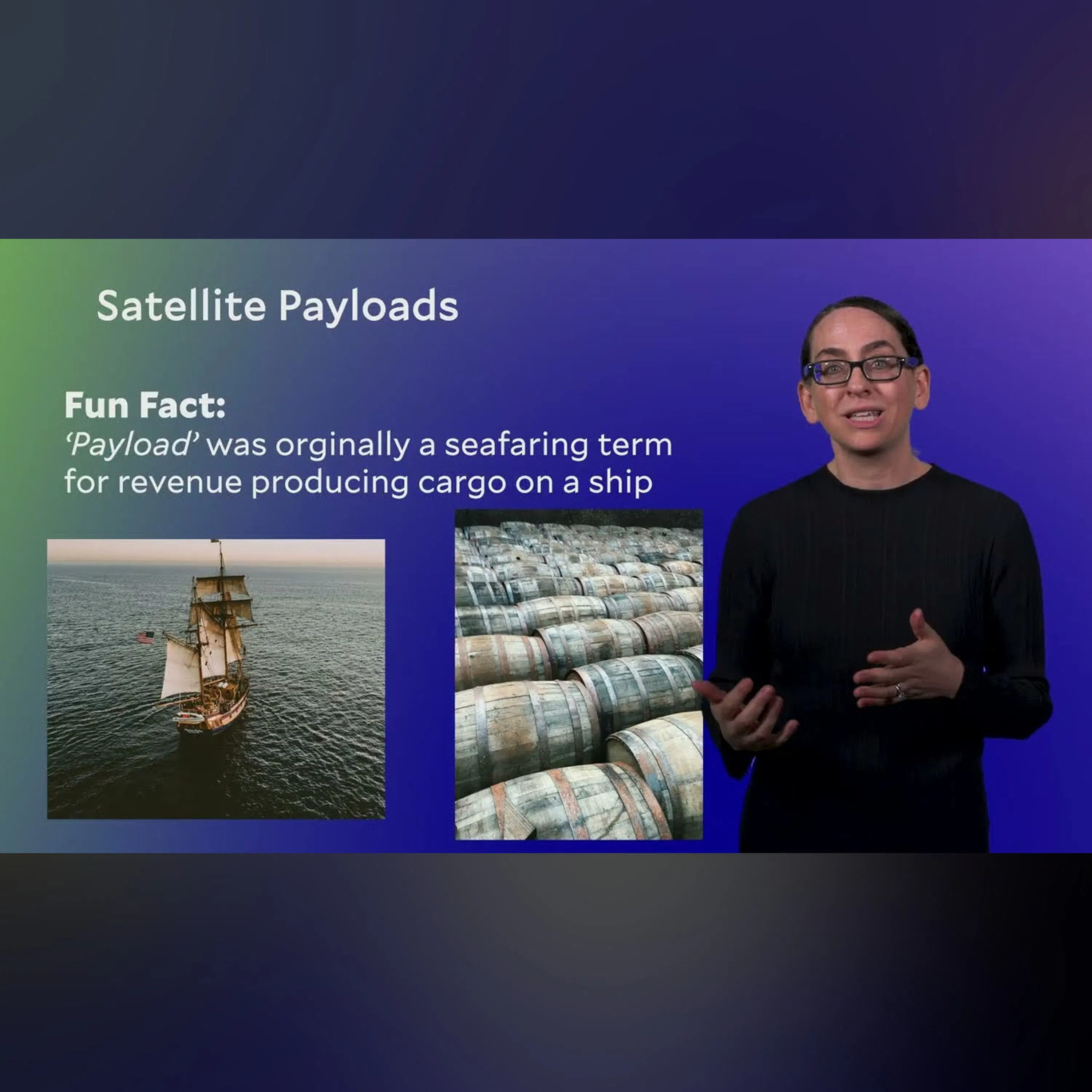 4.1 | Understanding Satellite Payloads | Rocket Science for Everyone with Marla Geha 25.09.2026 6minHave you ever wondered what exactly is inside the satellites orbiting Earth and what their purpose is? In this lesson, we explore satellite payloads, the crucial instruments and components that make satellites function. We'll identify common elements like solar panels and the satellite bus, and then delve into the vast array of missions satellites undertake, from providing internet and GPS to monitoring weather and conducting scientific research, highlighting how each mission shapes its unique payload.🎯 Learning Objectives• Define what constitutes a satellite payload.• Identify common structural and power components of a satellite, such as solar panels and the satellite bus.• Describe the wide variety of missions satellites undertake, including communication, navigation, Earth monitoring, and scientific research.• Explain how the specific goals of a satellite's mission dictate its payload requirements.📚 About the CourseThis course is an intuitive introduction to rocket science in our everyday lives.Modern life increasingly depends on technology provided by Earth-orbiting satellites, from detailed weather predictions to broad-band internet and GPS. How are satellites launched into orbit and how do they work once they get there? Why are rockets used to get into orbit and how are they different from airplanes? This introductory course is aimed at a wide non-technical audience and is appropriate for all ages. 📺 Watch the full playlist on YouTube: https://www.youtube.com/playlist?list=PLh9mgdi4rNexC1fSWLlpQx_Gjj_0DhjVE 🎓 Enroll on Coursera for assessments and a certificate: https://www.coursera.org/learn/rocket-science-for-everyone 🌐 Explore more learning opportunities on Yale Online: https://online.yale.edu/courses/rocket-science-everyone #RocketScienceForEveryone #YaleOnline #SatellitePayloads #SpaceScience #STEMEducation #AerospaceEngineering #LearnOnline Learn more about your ad choices. Visit megaphone.fm/adchoices
 -
 1. Finance and Insurance as Powerful Forces in Our Economy and Society 25.09.2026 1godz 20minFinancial Markets (ECON 252)Professor Shiller provides a description of the course, Financial Markets, including administrative details and the topics to be discussed in each lecture. He briefly discusses the importance of studying finance and each key topic. Lecture topics will include: behavioral finance, financial technology, financial instruments, commercial banking, investment banking, financial markets and institutions, real estate, regulation, monetary policy, and democratization of finance.00:00 - Chapter 1. Introduction to the Course 11:24 - Chapter 2. Textbooks and Course Logistics 24:05 - Chapter 3. Technology and the Subprime Crisis31:19 - Chapter 4. Is Studying Finance Moral? 46:44 - Chapter 5. Topics Covered in the CourseComplete course materials are available at the Open Yale Courses website: http://open.yale.edu/coursesThis course was recorded in Spring 2008. Learn more about your ad choices. Visit megaphone.fm/adchoices
 -
 Class 5 - Shruti Puri: Erasure Errors and Rydberg Atoms 25.09.2026 1godz 35minThis video is the live capture of the Yale Quantum Institute Course on Quantum Error Correction, held at the Yale University in July 2025, in partnership with NC A&T. This short course will provide viewers strong foundation on Quantum Error Detection & Quantum Error Correction. Viewers are encouraged to take an introduction to quantum information science before viewing this content. Thank you to the Yale ASCEND Initiative for making this short course possible. And for more information on everything quantum at Yale, visit quantuminstitute.yale.edu Learn more about your ad choices. Visit megaphone.fm/adchoices
 -
 9. Biomolecular Engineering: Engineering of Immunity 25.09.2026 53minFrontiers of Biomedical Engineering (BENG 100)Professor Saltzman talks about the importance of vaccines, and particularly the role of bioengineering in vaccine development. He first addresses the question of "what is a vaccine" and the role of the immune system. He then describes the biological basis, symptoms, and history of smallpox as a devastating disease worldwide, and how--starting with the work of Edward Jenner--an effective vaccine was systematically developed from cow lesions. Next, methods to deliver vaccine to a wide population are introduced. Finally, Professor Saltzman touches on the possible reemergence of smallpox as weapon for bioterrorism.00:00 - Chapter 1. Introduction04:42 - Chapter 2. Vaccine13:56 - Chapter 3. Smallpox and History of Early Vaccine Development29:05 - Chapter 4. History of Modern Smallpox Vaccinations41:27 - Chapter 5. Threat of Bioterrorism and ConclusionComplete course materials are available at the Open Yale Courses website: http://open.yale.edu/coursesThis course was recorded in Spring 2008. Learn more about your ad choices. Visit megaphone.fm/adchoices
 -
 2.6 | AI and Machine Learning in Medicine: Emerging Issues and FDA Regulations | Medical Software Course 25.09.2026 8minIn this lesson, we dive into the exciting yet complex world of artificial intelligence and machine learning in medicine. We explore the foundational role of vast, high-quality data in AI's success, alongside the unique regulatory challenges posed by self-updating AI algorithms in medical software.🎯 Learning Objectives• Explain the role of deep learning in the current excitement around AI/ML.• Identify the critical importance of data (clean, annotated, diverse) for AI/ML model training.• Discuss the regulatory challenges posed by adaptive AI/ML software in medical devices.• Outline the FDA's proposed frameworks and initiatives, like the Precertification Program, for regulating AI/ML medical software. Learn more about your ad choices. Visit megaphone.fm/adchoices
 -
 9. Sparta (cont.) 25.09.2026 1godz 19minIntroduction to Ancient Greek History (CLCV 205)In this lecture, Professor Donald Kagan explores the development and character of Sparta. He points out that in Sparta, the ethos of the polis was present to an extraordinary degree. Then he describes how this came about. In short, Professor Kagan argues that the Spartans were able to create a distinct military culture on account of their subjugation of the inhabitants of Messenia, who were forced to carry on the work of farming while the Spartans trained for war. Finally, Professor Kagan examines the education and training of the Spartan citizen as well as the constitution of Sparta.00:00 - Chapter 1. An Introduction to Sparta and Its Roots20:34 - Chapter 2. Understanding Spartan Slavery and Its Implications25:25 - Chapter 3. The Training and Education of a Spartan Boy43:13 - Chapter 4. Sameness, Contradiction and Inequality49:44 - Chapter 5. Women's Roles in Spartan Society57:48 - Chapter 6. The Importance of the Polis and Its Needs01:07:01 - Chapter 7. The Formal Spartan ConstitutionComplete course materials are available at the Open Yale Courses website: http://open.yale.edu/coursesThis course was recorded in Fall 2007. Learn more about your ad choices. Visit megaphone.fm/adchoices
 -
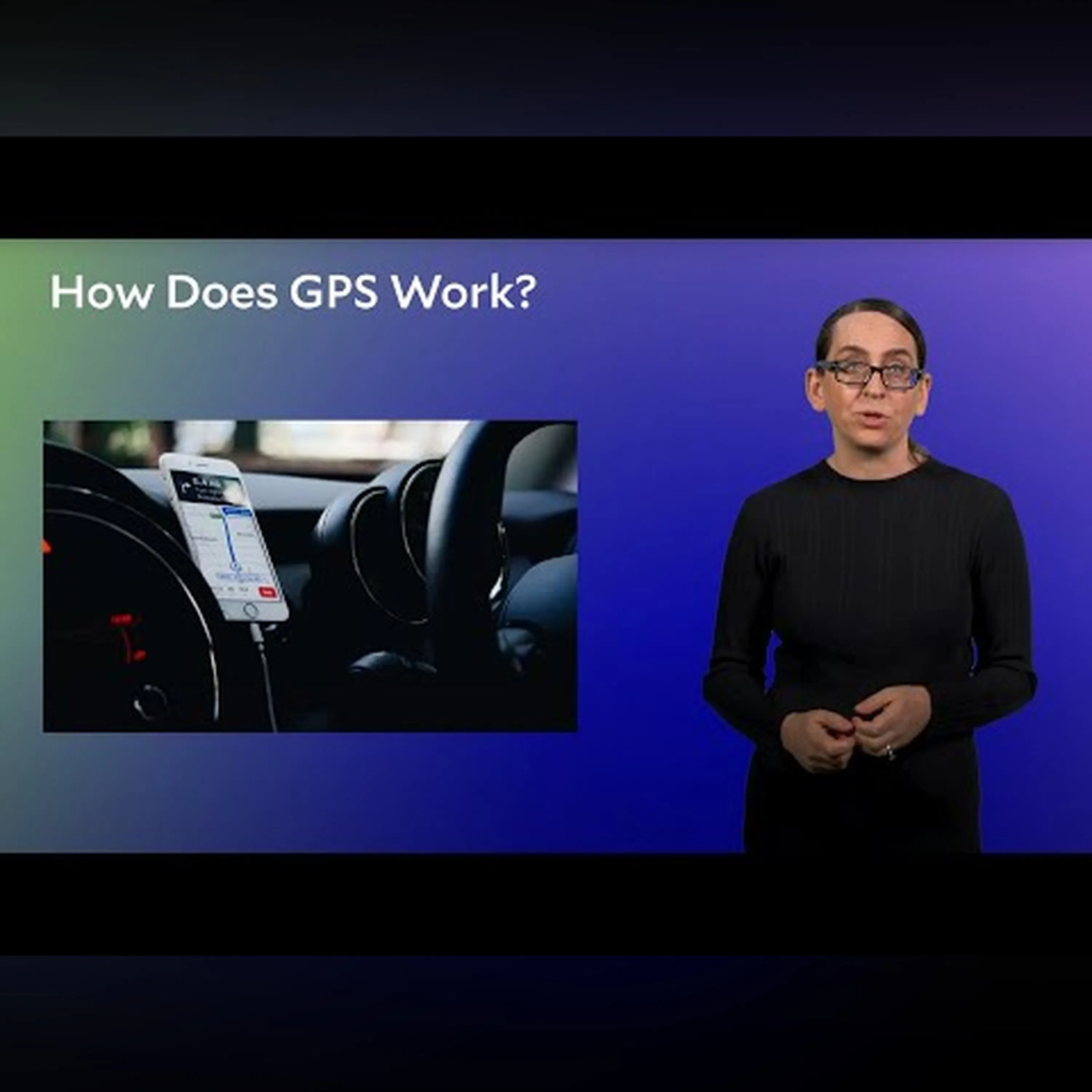 2.2 | Medium Earth Orbit and GPS | Rocket Science for Everyone with Yale’s Marla Geha 25.09.2026 15minEver wondered how your phone knows exactly where you are, even in the middle of nowhere? In this lesson, we delve into the world of Medium Earth Orbit (MEO), a fascinating region of space located between 2,000 and 35,000 km above Earth. While far fewer satellites reside here compared to Low Earth Orbit (LEO), MEO is the critical home for Global Positioning System (GPS) satellites, despite the challenges posed by the treacherous Van Allen Belts. Discover why these navigation powerhouses orbit at 20,000 km, how they use precise timing and triangulation to pinpoint your location, and the global reliance on this vital technology.🎯 Learning Objectives• Identify the characteristics and challenges of Medium Earth Orbit (MEO), including the role of the Van Allen Belts.• Explain why MEO is the optimal orbit for Global Positioning System (GPS) satellites.• Describe the core mechanism by which GPS satellites determine a user's location through precise timing and triangulation.• Recognize the global importance and widespread applications of GPS technology.• Name other international satellite navigation systems beyond GPS.📚 About the CourseThis course is an intuitive introduction to rocket science in our everyday lives.Modern life increasingly depends on technology provided by Earth-orbiting satellites, from detailed weather predictions to broad-band internet and GPS. How are satellites launched into orbit and how do they work once they get there? Why are rockets used to get into orbit and how are they different from airplanes? This introductory course is aimed at a wide non-technical audience and is appropriate for all ages. 📺 Watch the full playlist on YouTube: https://www.youtube.com/playlist?list=PLh9mgdi4rNexC1fSWLlpQx_Gjj_0DhjVE 🎓 Enroll on Coursera for assessments and a certificate: https://www.coursera.org/learn/rocket-science-for-everyone 🌐 Explore more learning opportunities on Yale Online: https://online.yale.edu/courses/rocket-science-everyone #RocketScienceForEveryone #YaleOnline #MEOSatellites #GPS #SpaceScience #STEMEducation #LearnOnline Learn more about your ad choices. Visit megaphone.fm/adchoices
 -
 19. Biomechanics and Orthopedics (cont.) 25.09.2026 58minFrontiers of Biomedical Engineering (BENG 100)Professor Saltzman begins the lecture with discussion of the importance of motion for the survival and propagation of any living species. He presents the different modes of motion, taking first the example flight to talk about force balance, such as the magnitude of propulsive force that must be generated overcome drag to produce forward motion. Next, the mechanics of walking, running, cycling and swimming is discussed, with emphasis on efficient use of energy, overcoming drag and friction, and the influence of organism shape and size. An equation to calculate drag force of a spherical object of radius, r, moving at velocity, v, in a medium with viscosity, μ, is introduced: Fd = 6πvμr. Finally, Professor Saltzman talks about design of the artificial hip, which biomedical engineers must take into consideration the biomechanics and natural function of the pelvic bone.00:00 - Chapter 1. Introduction to Locomotion09:10 - Chapter 2. The Mechanics of Flight18:28 - Chapter 3. The Physics of Walking26:53 - Chapter 4. Efficiencies of Walking, Running, Cycling37:56 - Chapter 5. Mechanics and Efficiency of Swimming45:04 - Chapter 6. Design in Biomechanics and ConclusionComplete course materials are available at the Open Yale Courses website: http://open.yale.edu/coursesThis course was recorded in Spring 2008. Learn more about your ad choices. Visit megaphone.fm/adchoices
 -
 21. Forwards and Futures 25.09.2026 1godz 18minFinancial Markets (ECON 252)Futures markets were started in Osaka, Japan in the 1600s to create an authoritative and meaningful market price for agricultural products, using standardized contracts. Since then, futures markets have been copied around the world to allow the hedging various future risks, financial and other. In the United States, the Chicago Mercantile Exchange and the Chicago Board of Trade have been the most popular futures trading markets. Although futures markets are changing and becoming more electronic, they are still important risk management tools for farmers and present financial opportunities for all manner of hedgers and arbitrageurs.00:00 - Chapter 1. Introduction: Thoughts on Guest Speakers07:23 - Chapter 2. From Osaka's Rice Warehouses: The Development of the Forward and Futures Market 24:47 - Chapter 3. Forward Contracts for Currency Exchange and Interest Rates 35:30 - Chapter 4. The Completely Financial Futures Market 51:44 - Chapter 5. A Case Study of Futures: The Price of Wheat and the Question of Storage 01:00:47 - Chapter 6. Backwardation and Spot Premiums Complete course materials are available at the Open Yale Courses website: http://open.yale.edu/coursesThis course was recorded in Spring 2008. Learn more about your ad choices. Visit megaphone.fm/adchoices
 -
 3.2 | Why Doctors Hate EHRs? Understanding Clinical IT | Medical Software Course 25.09.2026 8minHave you ever wondered what technological infrastructure supports most hospitals and healthcare settings today? In this lesson, we dive into Clinical Information Technology (IT), with a primary focus on Electronic Health Records (EHRs). We'll examine the core components and purpose of EHRs, their historical transition from paper records, and the controversial impact they've had on clinician workflows—including insights into why doctors resisted them—alongside their immense benefits for patient data management and medical research. We'll also explore the common network protocols, like HL7, that enable these crucial systems.🎯 Learning Objectives• Define Clinical Information Technology (IT), Electronic Health Records (EHRs), and Electronic Medical Records (EMRs).• Understand the purpose and key components of EHR systems in modern healthcare.• Discuss the challenges and benefits of EHR adoption from both clinician and patient perspectives.• Identify HL7 as a primary network protocol for interfacing with EHR systems. Learn more about your ad choices. Visit megaphone.fm/adchoices
 -
 2. The Universal Principle of Risk Management: Pooling and the Hedging of Risks 25.09.2026 1godz 15minFinancial Markets (ECON 252)Statistics and mathematics underlie the theories of finance. Probability Theory and various distribution types are important to understanding finance. Risk management, for instance, depends on tools such as variance, standard deviation, correlation, and regression analysis. Financial analysis methods such as present values and valuing streams of payments are fundamental to understanding the time value of money and have been in practice for centuries.00:00 - Chapter 1. The Etymology of Probability 10:01 - Chapter 2. The Beginning of Probability Theory 15:38 - Chapter 3. Measures of Central Tendency: Independence and Geometric Average 33:12 - Chapter 4. Measures of Dispersion and Statistical Applications 50:39 - Chapter 5. Present Value 01:03:46 - Chapter 6. The Expected Utility Theory and Conclusion Complete course materials are available at the Open Yale Courses website: http://open.yale.edu/coursesThis course was recorded in Spring 2008. Learn more about your ad choices. Visit megaphone.fm/adchoices
 -
 1.4 | Earth’s Orbital Regions | LEO, MEO, GEO in Rocket Science for Everyone with Yale’s Marla Geha 25.09.2026 5minWhere do satellites orbit? In this lesson, we define the various regions around Earth where satellites and space debris are found, including Low Earth Orbit (LEO), Medium Earth Orbit (MEO), and Geosynchronous Orbit (GEO). Discover what types of objects inhabit these regions and their practical applications, from the International Space Station to GPS and weather satellites.🎯 Learning Objectives• Define Low Earth Orbit (LEO) and identify objects found within it.• Understand Medium Earth Orbit (MEO) and its practical applications like GPS.• Explain Geosynchronous Orbit (GEO) and its common uses for communication satellites.• Distinguish between the different orbital regions based on their altitudes.📚 About the CourseThis course is an intuitive introduction to rocket science in our everyday lives.Modern life increasingly depends on technology provided by Earth-orbiting satellites, from detailed weather predictions to broad-band internet and GPS. How are satellites launched into orbit and how do they work once they get there? Why are rockets used to get into orbit and how are they different from airplanes? This introductory course is aimed at a wide non-technical audience and is appropriate for all ages. 📺 Watch the full playlist on YouTube: https://www.youtube.com/playlist?list=PLh9mgdi4rNexC1fSWLlpQx_Gjj_0DhjVE 🎓 Enroll on Coursera for assessments and a certificate: https://www.coursera.org/learn/rocket-science-for-everyone 🌐 Explore more learning opportunities on Yale Online: https://online.yale.edu/courses/rocket-science-everyone #RocketScienceForEveryone #YaleOnline #SpaceScience #LEO #MEO #GEO #SatelliteScience #STEMEducation #LearnOnline Learn more about your ad choices. Visit megaphone.fm/adchoices
 -
 4. The Rise of the Polis 25.09.2026 1godz 14minIntroduction to Ancient Greek History (CLCV 205)In this lecture, Professor Donald Kagan offers a sketch of the Greek heroic code of ethics. He shows that in this community, arête (manly virtue) and honor are extremely important and even worth dying for, as the case of Achilles makes clear. In addition, Professor Kagan shows how this society eventually produced a new phenomenon, the rise of the polis. The discussion ends with a strong emphasis on the importance of the polis in Greek history.00:00 - Chapter 1. Defining Arête10:48 - Chapter 2. Impacts on Western Civilization36:02 - Chapter 3. The Rise of the Polis45:41 - Chapter 4. The Features and Importance of the PolisComplete course materials are available at the Open Yale Courses website: http://open.yale.edu/coursesThis course was recorded in Fall 2007. Learn more about your ad choices. Visit megaphone.fm/adchoices
 -
 3.1 | Unpacking the Clinical Environment: Users, Buyers and Regulations — Medical Software Course 25.09.2026 11minHave you ever wondered about all the hidden layers of the healthcare system that medical software must navigate? In this lesson, we dive deep into the clinical environment, exploring the constraints it imposes and identifying the diverse stakeholders involved beyond just patients and doctors. We'll also examine the critical role of associated technologies like EHR and imaging databases, and the pervasive importance of data privacy, security, and cybersecurity regulations, underscoring that no medical software is an island. We further explore the often-complex relationship between the software user and the ultimate customer or payer.🎯 Learning Objectives• Understand the constraints and complexities of the clinical environment for medical software development.• Identify the diverse range of stakeholders in the healthcare system, beyond just patients and doctors.• Recognize the critical role of data privacy, security, and cybersecurity regulations (e.g., HIPAA, GDPR) in medical software.• Appreciate that medical software is typically part of a larger workflow and requires integration with other systems and standards.• Differentiate between the end-user and the purchaser of medical software and its implications for product design. Learn more about your ad choices. Visit megaphone.fm/adchoices
 -
 12.2 | Healthcare's Shifting Landscape: New Business Models Led by Software| Medical Software Course 25.09.2026 20minHow are healthcare business models adapting to a rapidly changing world? In this lesson, we explore the significant drivers behind the evolution of healthcare business models, from increasing costs and technological advancements to new approaches like value-based care. We'll examine various strategic models adopted by health systems and delve into the impact of patient-driven technologies and the role of software in fostering sustainable innovation.🎯 Learning Objectives• Understand the forces driving changes in healthcare business and revenue models.• Identify and differentiate between key strategic models for health systems, such as leader, experience, integrator, and manager.• Explore the concepts of value-based healthcare and the learning healthcare system, recognizing their impact on patient outcomes and cost.• Recognize how patient-driven technologies and on-demand healthcare are empowering consumers and transforming service delivery.• Learn about the RAPID framework for achieving sustainable innovation in healthcare through regulatory, alternatives, patients, innovation, and data considerations. Learn more about your ad choices. Visit megaphone.fm/adchoices
 -
 402 | Unlock Your Creativity: 7 Steps to Generate Impactful Ideas - Social Entrepreneurship Course 25.09.2026 10minIn this lesson, discover a comprehensive 7-step workshop designed to help you and your team generate innovative ideas effectively. This process emphasizes the importance of diverse teams, framing problems as design challenges, and testing concepts through prototypes, ensuring your solutions are desirable, feasible, and impactful.🎯 Learning Objectives• Assemble a diverse team for collaborative idea generation.• Transform a problem statement into a clear design question.• Apply effective brainstorming techniques to produce a wide range of ideas.• Utilize key criteria (desirability, feasibility, viability, impact, and personal passion) to select the most promising ideas.• Create prototypes to make ideas tangible for testing with end users.📚 About the Course Have you ever wondered what it would be like to create real change? You don't have to start your own organization to make a difference in the world. Everyone can learn the social entrepreneurship mindset and skillset to build social impact. In this course, you will immerse yourself in a social or environmental challenge you want to tackle. You'll start by researching your topic of choice, talking to people, and ideating a potential solution that you can contribute. Then, you'll build a business model around that solution, understanding concepts like measuring social change, ensuring financial viability, funding and pitching. This course is a safe space to experiment and explore. You'll be guided by a ten stage framework to help structure your journey. Along the way, you'll hear from social entrepreneurs around the world through case studies and campus conversations. These include Yale alumni, members of the New Haven community, and global changemakers. Everyone is welcome to join this course! You can apply your lived, learned, or professional experience to discover how you're going to make a difference. 📺 Watch the full playlist on YouTube: https://www.youtube.com/playlist?list=PLh9mgdi4rNezbi0aRJeVnt99ynTVZG1PL🎓 Enroll on Coursera for assessments and a certificate: https://online.yale.edu/courses/creating-change-through-social-entrepreneurship🌐 Explore more learning opportunities on Yale Online: https://online.yale.edu/courses/creating-change-through-social-entrepreneurship#SocialEntrepreneurship #YaleCourse #Impact #Changemakers #BusinessPlan #DesignThinking Learn more about your ad choices. Visit megaphone.fm/adchoices
 -
 Class 6 - Aleksander Kubica: Decoding Problem and Statistical-Mechanical Mapping 25.09.2026 2godz 15minThis video is the live capture of the Yale Quantum Institute Course on Quantum Error Correction, held at the Yale University in July 2025, in partnership with NC A&T. This short course will provide viewers strong foundation on Quantum Error Detection & Quantum Error Correction. Viewers are encouraged to take an introduction to quantum information science before viewing this content. Thank you to the Yale ASCEND Initiative for making this short course possible. And for more information on everything quantum at Yale, visit quantuminstitute.yale.edu Learn more about your ad choices. Visit megaphone.fm/adchoices
Podobne podcasty


Popularny w
Ten podcast pojawia się również w listach podcastów tych krajów.

