
Strange Epochs • Weird History
Strange History • Sleep Podcast
0
Strange Epochs is a history podcast that explores bizarre and largely forgotten true events from the past. Host Shawn Spainhour recounts extraordinary stories like the Dancing Plague of 1518, the Cadaver Synod, and the Great Emu War. The show aims to immerse listeners in the strange, atmospheric experiences of people who lived through these events. It is less of a lecture and more of an experiential journey into history's most inexplicable moments.
Odcinki
-
 The Black Death Flagellants: When Europe Bled for God — Germany, 1349 15.09.2026 44minBetween 1348 and 1350, the Black Death killed one in three people in Europe. In some cities, half the population. In some villages, everyone. The priests were dying alongside their congregations. The doctors had nothing. And into this catastrophe, a movement emerged.Groups of men — sometimes hundreds, sometimes thousands — walked from town to town across Europe in white robes marked with red crosses. When they arrived at the town square, they stripped to the waist and beat themselves with leather whips tipped with metal spikes until the blood ran down their backs and spattered the walls. Three times a day. For thirty-three and a half days. In front of everyone who had gathered to watch.They were the Flagellants. The Brothers of the Cross. They believed that their blood would wash away the collective sin of humanity and stop the plague. They also believed they did not need the Church — that their sacrifice superseded the sacraments entirely. That last belief is why the Pope condemned them.Host Shawn Spainhour takes you into the full story: the specific scale of devastation that produced the movement, the theology that drove it, the crowds that welcomed them and the authorities that feared them, and what happens when a civilization's entire framework for understanding suffering stops being sufficient.If you love history, true crime, or storytelling — or if you're just looking for something to listen to on a long drive or drift off to sleep — this one is for you.Strange Epochs is a weekly narrative history podcast hosted by Shawn Spainhour. Each episode takes one strange, true, documented moment from somewhere in the long span of human history and sits with it — slow, atmospheric, and built for deep listening. New episodes every Tuesday. If this is your first episode, there are twenty-three more waiting for you.Sources:Wikipedia contributors. Flagellant. Wikipedia, Wikimedia Foundation, 2024.Wikipedia contributors. Black Death. Wikipedia, Wikimedia Foundation, 2024.History in Numbers. Flagellants. historyinnumbers.com, 2024.Catholic Encyclopedia. Flagellants. newadvent.org, 2024.Grokipedia. Flagellant. grokipedia.com, 2026.Fitzwilliam Museum, Cambridge. The Flagellants. fitzmuseum.cam.ac.uk, 2024.Boccaccio, Giovanni. The Decameron. Circa 1353.Ziegler, Philip. The Black Death. Collins, 1969.Kelly, John. The Great Mortality: An Intimate History of the Black Death. HarperCollins, 2005.
 -
 The Mad Parliament: The Day Barons Cornered a King — Oxford, England, 1258 08.09.2026 42minHere's the full package for Episode 23:The Mad Parliament: The Day Barons Cornered a King — Oxford, England, 1258In June of 1258, a group of English barons rode into Oxford wearing armor, surrounded their king, and forced him to accept something no English monarch had ever accepted before: that he could not govern without their permission.Henry III needed money. The barons had it. The price was a document called the Provisions of Oxford — a set of constitutional reforms that stripped the crown of its personal authority and distributed it among a council of fifteen barons who would supervise his ministers, control his treasury, and oversee the administration of his kingdom. Parliament would meet three times a year to monitor them. The king had been cornered, outmaneuvered, and systematically dismantled in a single afternoon.Henry's supporters called it the Parliamentum Insanum. The Mad Parliament.Host Shawn Spainhour takes you into the full story: the financial disasters and foreign favorites that had made Henry III one of the most resented kings in English history, the French-born baron Simon de Montfort who led the reform faction against his own brother-in-law, and the specific afternoon in Oxford that — in a direct and traceable line — became one of the ancestors of every modern democratic legislature. The men in that hall were acting entirely out of self-interest. History didn't care.If you love history, true crime, or storytelling — or if you're just looking for something to listen to on a long drive or drift off to sleep — this one is for you.Strange Epochs is a weekly narrative history podcast hosted by Shawn Spainhour. Each episode takes one strange, true, documented moment from somewhere in the long span of human history and sits with it — slow, atmospheric, and built for deep listening. New episodes every Tuesday. If this is your first episode, there are twenty-two more waiting for you.Sources:Wikipedia contributors. Oxford Parliament (1258). Wikipedia, Wikimedia Foundation, 2024.Wikipedia contributors. Provisions of Oxford. Wikipedia, Wikimedia Foundation, 2024.Wikipedia contributors. Simon de Montfort, sixth Earl of Leicester. Wikipedia, Wikimedia Foundation, 2024.Britannica editors. Provisions of Oxford. Encyclopaedia Britannica, updated 2024.UK Parliament. The Provisions of Oxford. parliament.uk, 2024.The National Archives. The Mad Parliament, 1258. nationalarchives.gov.uk, 2024.Britain Express. The Provisions of Oxford. britainexpress.com, 2024.Carpenter, David. The Struggle for Mastery: The Penguin History of Britain 1066 to 1284. Penguin, 2004.Maddicott, J.R. Simon de Montfort. Cambridge University Press, 1994.
 -
 The Ghost Army: Inflatable Tanks, Sound Effects, and the Artists Who Fooled the Nazis — Europe, 1944 01.09.2026 44minIn the spring of 1944, the United States Army assembled a unit unlike any other in the history of warfare. Eleven hundred men — painters, illustrators, designers, architects, sound engineers, and radio operators recruited from art schools, advertising agencies, and theater companies — were given inflatable tanks, a collection of sound effects records, and one mission: make the Germans believe they were somewhere they weren't.The 23rd Headquarters Special Troops. The Ghost Army.They carried out twenty-one deception operations in ten months across France, Luxembourg, and Germany. They impersonated entire divisions. They broadcast the sounds of massed tank columns through speakers mounted on half-tracks. They painted fake unit insignia on real vehicles and staged them where German reconnaissance aircraft would photograph them. They saved an estimated fifteen thousand to thirty thousand American lives. Their existence was classified for fifty years. Most of the men came home, had careers and families, grew old, and never told anyone what they had done.Host Shawn Spainhour takes you into the full story: how the unit was conceived, how it operated, the men who served in it, and the specific audacity required to conduct a deception operation within earshot of the enemy with nothing more lethal than a paintbrush and a recording of tank engines.If you love history, true crime, or storytelling — or if you're just looking for something to listen to on a long drive or drift off to sleep — this one is for you.Strange Epochs is a weekly narrative history podcast hosted by Shawn Spainhour. Each episode takes one strange, true, documented moment from somewhere in the long span of human history and sits with it — slow, atmospheric, and built for deep listening. New episodes every Tuesday. If this is your first episode, there are twenty-one more waiting for you.Sources:Wikipedia contributors. Ghost Army. Wikipedia, Wikimedia Foundation, 2024.Ghost Army Legacy Project. Official History of the Twenty-Third Headquarters Special Troops. ghostarmy.org, 2024.Smithsonian Magazine. How the Ghost Army of World War II Used Art to Deceive the Nazis. November, 2023.National World War II Museum. Ghost Army: The Combat Con Artists of World War II. Traveling Exhibition, 2023.War History Online. Ghost Army of World War II: They Fought with Art, Not Guns — and It Worked. February, 2026.Beyer, Rick. The Ghost Army of World War II. Princeton Architectural Press, 2015.Reit, Seymour. Masquerade: The Amazing Camouflage Deceptions of World War II. Hawthorn Books, 1978.United States Army. Fort Leonard Wood examines World War II Ghost Army deception tactics. army.mil, 2021.
 -
 The Somerton Man: A Body, a Code, and a Mystery That Won't Close — Adelaide, Australia, 1948 25.08.2026 43minOn the morning of December 1st, 1948, the body of a well-dressed man was found propped against a seawall on Somerton Beach in Adelaide, Australia. He had no wallet. No identification of any kind. The labels had been cut from every item of his clothing. The cause of death could not be determined. The only unusual item found on his person was a small scrap of paper tucked into a hidden pocket in his trousers, printed with two words in Persian.Tamám Shud. It is finished.What followed is one of the most famous cold cases in history. There is a book of Persian poetry with a phone number penciled in the back. There is a woman who knew more than she ever admitted. There is a coded message that no one has ever deciphered. There is a suitcase at the train station containing items labelled with a name that is not the dead man's. There is a plaster cast that, when shown to the woman with the phone number, made her physically faint. Seventy-four years after the body was found, DNA analysis gave the man a name. It did not explain the code, or the woman, or how he died, or why he came to Adelaide at all.Host Shawn Spainhour takes you through the full story — every thread, every dead end, and the parts that remain, in all the ways that matter most, completely open.If you love history, true crime, or storytelling — or if you're just looking for something to listen to on a long drive or drift off to sleep — this one is for you.Strange Epochs is a weekly narrative history podcast hosted by Shawn Spainhour. Each episode takes one strange, true, documented moment from somewhere in the long span of human history and sits with it — slow, atmospheric, and built for deep listening. New episodes every Tuesday. If this is your first episode, there are twenty more waiting for you.Sources:Wikipedia contributors. Somerton Man. Wikipedia, Wikimedia Foundation, 2024.Smithsonian Magazine. The Enduring Mystery of the Somerton Man. February, 2025.CNN. Somerton Man mystery solved as DNA points to man's identity, professor claims. July 26, 2022.InDaily. Somerton Man's identity revealed, professor says. July 27, 2022.UPI. Identity mystery of Australia's Somerton Man solved with DNA after seventy-four years. July 27, 2022.Abbott, Derek A. and Fitzpatrick, Colleen M. Forensic genetic genealogy identification of the Somerton Man. Research announcement, University of Adelaide, 2022.PR Newswire. The Somerton Man Identified. July 26, 2022.Explore the Archive. The Mystery of the Somerton Man. 2023.
 -
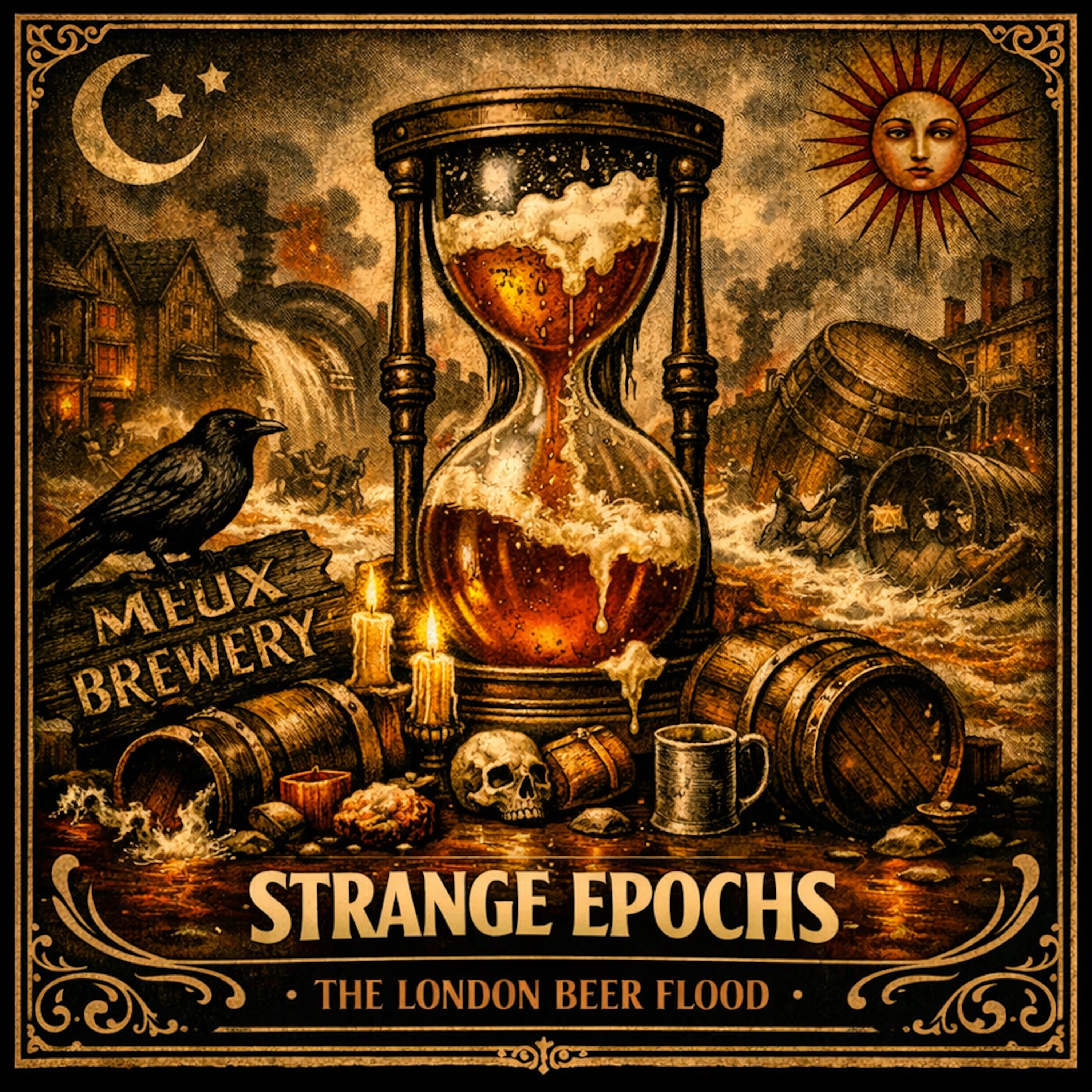 The London Beer Flood: When a Wave of Porter Killed Eight People — St. Giles, London, 1814 19.08.2026 44minOn the afternoon of October 17th, 1814, an iron hoop on a twenty-two-foot fermentation vat at a London brewery snapped. The pressure triggered a chain reaction. The back wall of the brewery collapsed. Between one hundred and twenty-eight thousand and three hundred and twenty-three thousand gallons of dark porter ale poured into the streets of St. Giles — one of the most overcrowded and desperately poor neighborhoods in the city — at the speed of a wave.Eight people died. Five of them were mourners at an Irish wake for a two-year-old boy who had died the day before. A mother and her daughter taking tea were killed when the flood collapsed their house. A girl died in the street. An elderly woman died of the shock.The brewery was taken to court. The court ruled it was an act of God. The brewery avoided paying any compensation to the victims' families — and received a refund from Parliament for the lost beer.Host Shawn Spainhour takes you into the full story: the specific poverty of St. Giles, the industrial brewery that towered over it, the people who died on an ordinary Monday afternoon, and the specific geometry of who bears the cost when the law has not yet caught up with the industry that caused the harm.If you love history, true crime, or storytelling — or if you're just looking for something to listen to on a long drive or drift off to sleep — this one is for you.Strange Epochs is a weekly narrative history podcast hosted by Shawn Spainhour. Each episode takes one strange, true, documented moment from somewhere in the long span of human history and sits with it — slow, atmospheric, and built for deep listening. New episodes every Tuesday. If this is your first episode, there are nineteen more waiting for you.Sources:Wikipedia contributors. London Beer Flood. Wikipedia, Wikimedia Foundation, 2024.History.com editors. The London Beer Flood. A and E Television Networks, 2025.Historic UK. The London Beer Flood of 1814. 2023.The History Press. The London Beer Flood. 2024.The History Reader. The London Beer Flood of 1814. 2025.Explore the Archive. The Tragic and Bizarre London Beer Flood of 1814. 2023.The Social Historian. London Beer Flood of 1814. 2018.Cornell, Martyn. So What Really Happened on October 17th, 1814? Zythophile Blog, 2009.
 -
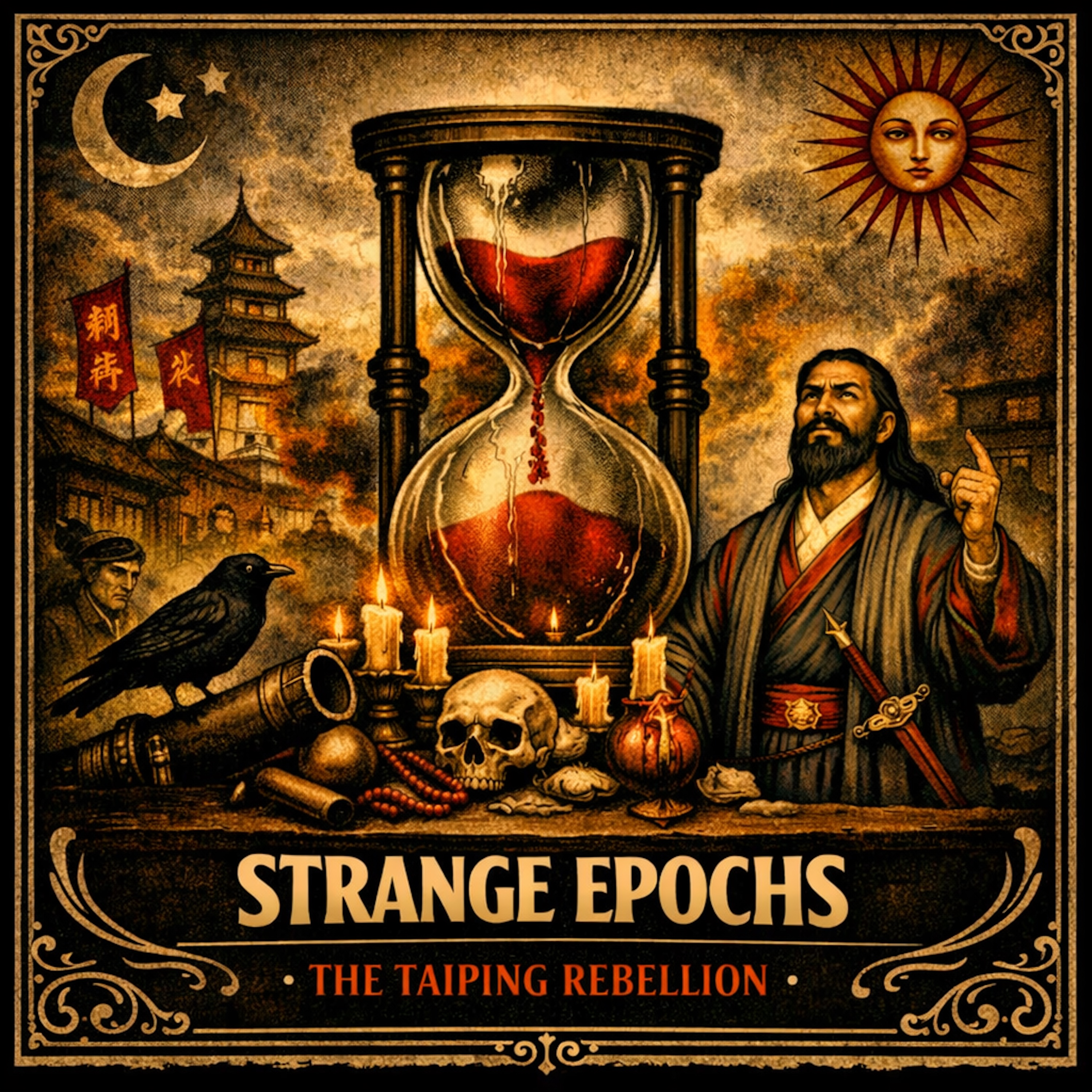 The Taiping Rebellion: The Bloodiest Civil War You've Never Heard Of — China, 1850 12.08.2026 45minIn 1836, a young man named Hong Xiuquan failed the imperial civil service examination and walked home carrying a packet of Christian pamphlets a missionary had handed him on the street. Two years later he suffered a complete mental breakdown — forty days of fever and visions. When he finally read those pamphlets six years after receiving them, he understood with complete and terrible clarity what the visions had meant.He was the younger brother of Jesus Christ. The second son of God. Sent to China to destroy demons, overthrow the Qing dynasty, and establish the Heavenly Kingdom of Great Peace on earth.What followed was the bloodiest civil war in human history. The Taiping Rebellion lasted fourteen years. Estimates of the death toll range from twenty million to fifty million people. More people may have died in this conflict than in the First World War. Most people in the Western world have never heard of it.Host Shawn Spainhour takes you into the full story: the examination culture that broke Hong Xiuquan, the theology he built from a fever dream and a borrowed pamphlet, the Heavenly Kingdom he actually governed for fourteen years, and the coalition of forces that eventually destroyed it — leaving behind a death toll that still staggers the imagination.If you love history, true crime, or storytelling — or if you're just looking for something to listen to on a long drive or drift off to sleep — this one is for you.Strange Epochs is a weekly narrative history podcast hosted by Shawn Spainhour. Each episode takes one strange, true, documented moment from somewhere in the long span of human history and sits with it — slow, atmospheric, and built for deep listening. New episodes every Tuesday. If this is your first episode, there are eighteen more waiting for you.Sources:Wikipedia contributors. Taiping Rebellion. Wikipedia, Wikimedia Foundation, 2024.Wikipedia contributors. Hong Xiuquan. Wikipedia, Wikimedia Foundation, 2024.Britannica editors. Taiping Rebellion. Encyclopaedia Britannica, updated 2024.Britannica editors. Hong Xiuquan. Encyclopaedia Britannica, updated 2024.Platt, Stephen R. Autumn in the Heavenly Kingdom: China, the West, and the Epic Story of the Taiping Civil War. Knopf, 2012.Spence, Jonathan D. God's Chinese Son: The Taiping Heavenly Kingdom of Hong Xiuquan. Norton, 1996.History Sensei. The Taiping Rebellion: When Jesus Christ's Brother Led the Deadliest War in Human History. 2025.Cosmundus. How a Christian Cult Almost Took Over China: The Taiping Rebellion. 2024.New World Encyclopedia. Taiping Rebellion. 2023.
 -
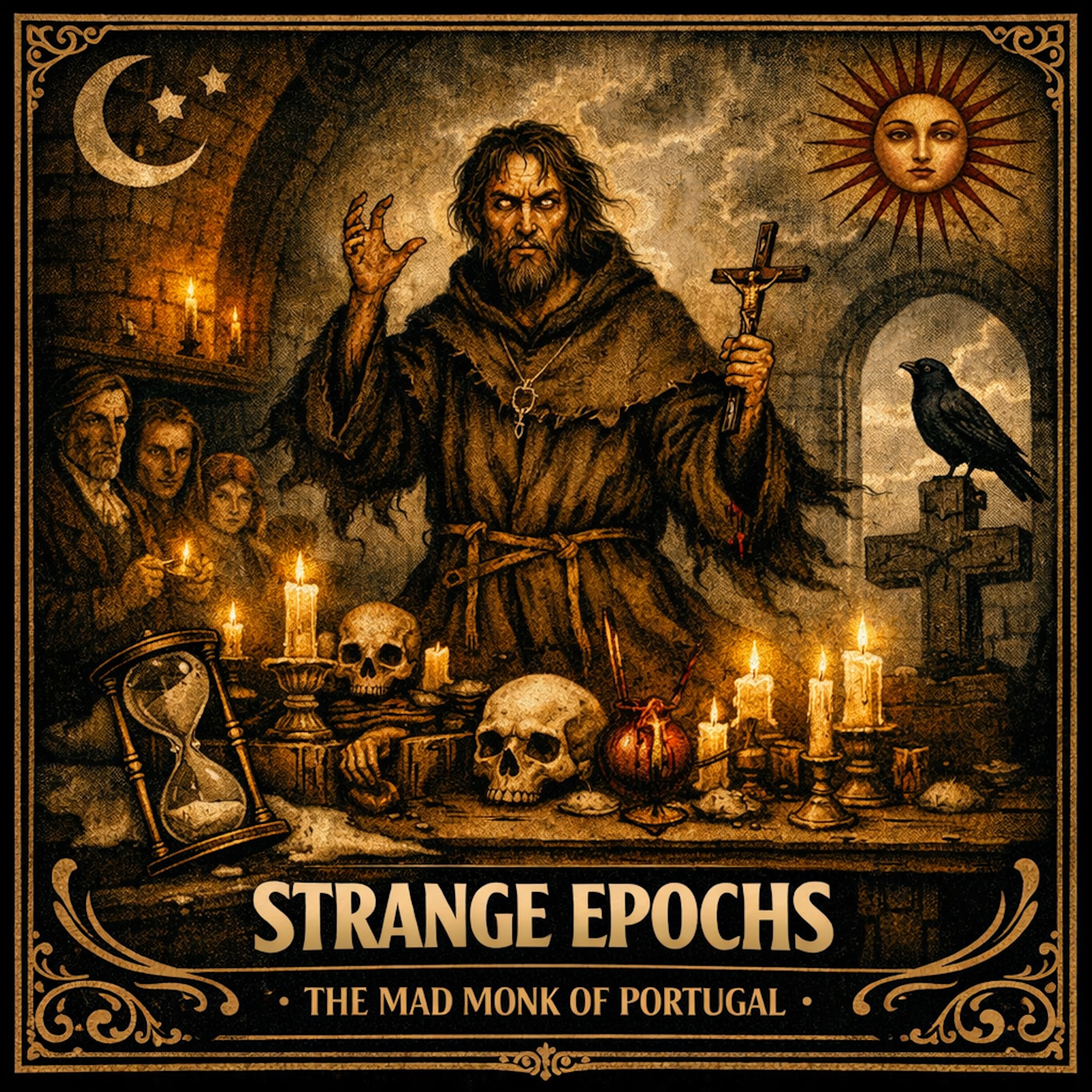 The Mad Monk of Portugal: The Hidden King Who Never Came Back — Morocco, 1578 05.08.2026 46minIn August of 1578, King Sebastian of Portugal rode into battle in the African desert against the advice of his commanders, the King of Spain, and the Pope. He was twenty-four years old. He led fourteen thousand men deep into Morocco in the heat of an African summer, toward a waiting army he could not defeat, because he believed — genuinely, completely believed — that he was the Hidden King of prophecy, destined to conquer Africa and usher in a new age of divine justice. He did not come back. Eight thousand of his men died with him. His body was never conclusively identified.Portugal lost its king, its independence, and sixty years of its sovereignty in a single afternoon.Host Shawn Spainhour takes you into the full story: a shoemaker in a small walled town who wrote prophecies that were banned by the Inquisition and copied illegally for centuries, the disastrous Battle of Alcácer Quibir, the false kings who rose up in Sebastian's name, and the messianic cult of Sebastianism — the belief that the Hidden King would return on a foggy morning, riding in from the sea, to restore Portugal to greatness. The greatest Portuguese poet of the twentieth century built his masterwork around it. Portugal waited for four hundred years.He has not come back yet.If you love history, true crime, or storytelling — or if you're just looking for something to listen to on a long drive or drift off to sleep — this one is for you.Strange Epochs is a weekly narrative history podcast hosted by Shawn Spainhour. Each episode takes one strange, true, documented moment from somewhere in the long span of human history and sits with it — slow, atmospheric, and built for deep listening. New episodes every Tuesday. If this is your first episode, there are seventeen more waiting for you.Sources:Wikipedia contributors. Sebastianism. Wikipedia, Wikimedia Foundation, 2024.Wikipedia contributors. Gonçalo Anes Bandarra. Wikipedia, Wikimedia Foundation, 2024.Wikipedia contributors. Battle of Alcácer Quibir. Wikipedia, Wikimedia Foundation, 2024.Wikipedia contributors. Sebastian, King of Portugal. Wikipedia, Wikimedia Foundation, 2024.Berlin, Henry. Gonçalo Anes Bandarra: The Craft of Prophecy and the Literature of Apocalypse. Writing in the End Times: Apocalyptic Imagination in the Hispanic World. University of Minnesota Press, 2019.Da Cunha, Euclides. Os Sertões. Laemmert, 1892. English translation: Rebellion in the Backlands. University of Chicago Press, 1944.Pessoa, Fernando. Mensagem. Parceria António Maria Pereira, 1934.Algarve History Association. Portugal: Land of Myth and Legend — Of Sebastianismo. 2022.Brewminate. Sebastianism: The Calabrian Charlatan and Medieval Messianic Nationalism. 2024.Visit Portugal. Casa do Bandarra, Trancoso. Portuguese Tourism Board, 2024.
 -
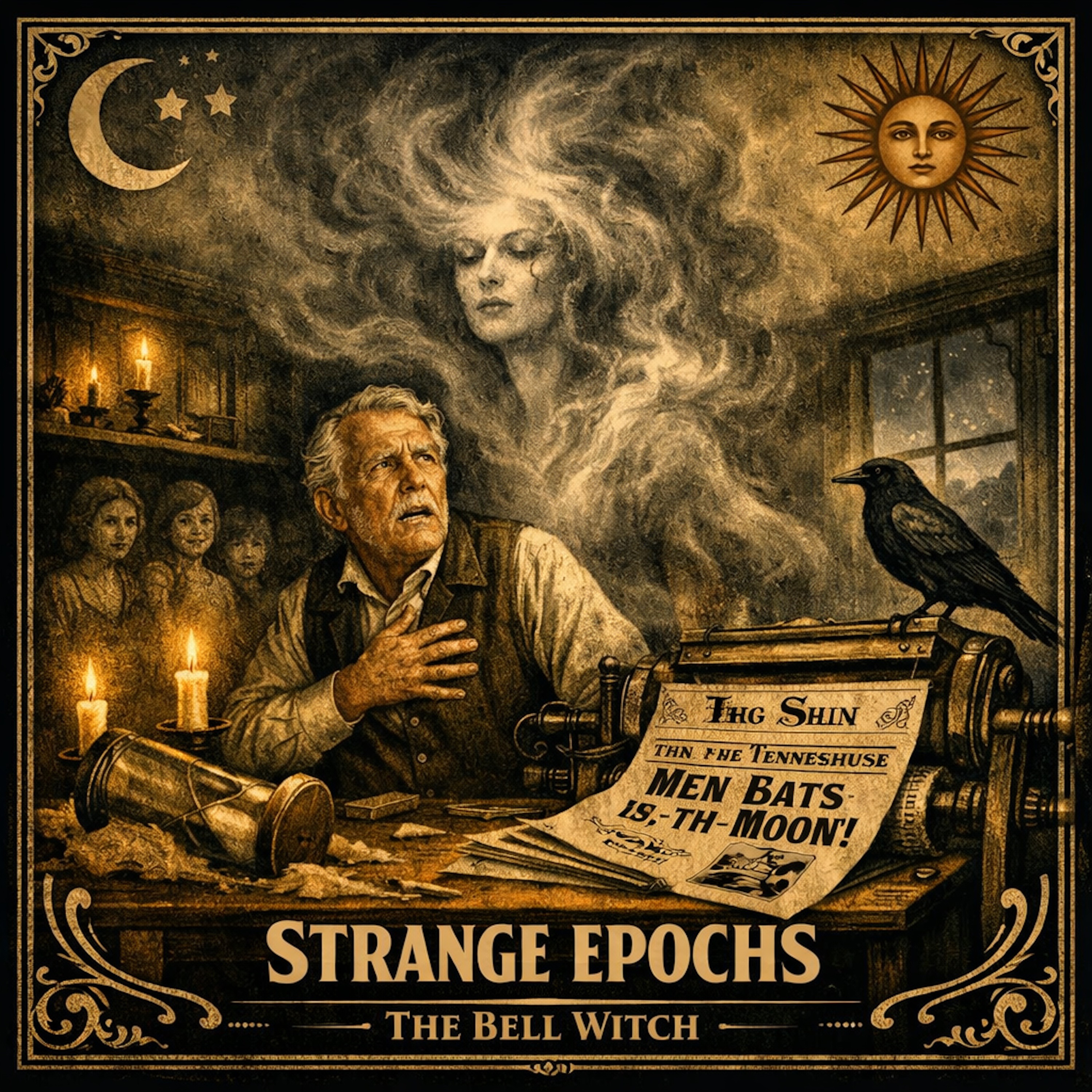 The Bell Witch: America's Most Documented Supernatural Case — Robertson County, Tennessee, 1817 29.07.2026 43minIn 1817, a farming family in Robertson County, Tennessee, began hearing sounds in the walls of their log house at night. Knocking. Scratching. Chains being dragged. Over four years, whatever it was grew into something that spoke. That sang hymns. That quoted scripture. That slapped, pinched, and pulled hair. That drove the man of the house to his death and, according to the accounts, took credit for it.The Bell Witch is considered America's most documented supernatural case. Not the most famous — though it is extremely famous. The most documented. There are accounts from dozens of witnesses, including neighbors, visiting clergymen, and at least one future President of the United States. The events ran from 1817 to 1821, and they were written about and argued about for the rest of the nineteenth century and well into the twentieth.Nobody has ever explained them.Host Shawn Spainhour takes you into the full story: the Bell family; the enslaved people who worked their land; the four years of escalating events; the explanations that have been proposed and the reasons none of them fully close the case; and what it means that a documented paper trail with named witnesses and primary sources still leaves so much unanswered.If you love history, true crime, or storytelling — or if you're just looking for something to listen to on a long drive or drift off to sleep — this one is for you.Strange Epochs is a weekly narrative history podcast hosted by Shawn Spainhour. Each episode takes one strange, true, documented moment from somewhere in the long span of human history and sits with it, slow, atmospheric, and built for deep listening. New episodes every Tuesday. If this is your first episode, there are sixteen more waiting for you.Sources:Wikipedia contributors. Bell Witch. Wikipedia, Wikimedia Foundation, 2024.Ingram, Martin V. An Authenticated History of the Famous Bell Witch. Clarksville, Tennessee, 1894.Bell, Richard. Our Family Trouble. Manuscript diary, circa 1820 to 1846. Referenced in Ingram.Appalachian Historian. The Bell Witch of Tennessee: Legend, History, and Memory. 2026.Mental Floss. The Bell Witch of Tennessee. 2023.Explore Southern History. The Bell Witch Haunting — Adams, Tennessee. 2024.Tennessee State Museum. Tennessee Legends: The Bell Witch. 2023.Nashville Adventures. The Bell Witch: Tennessee's Darkest Haunting. 2025.
 -
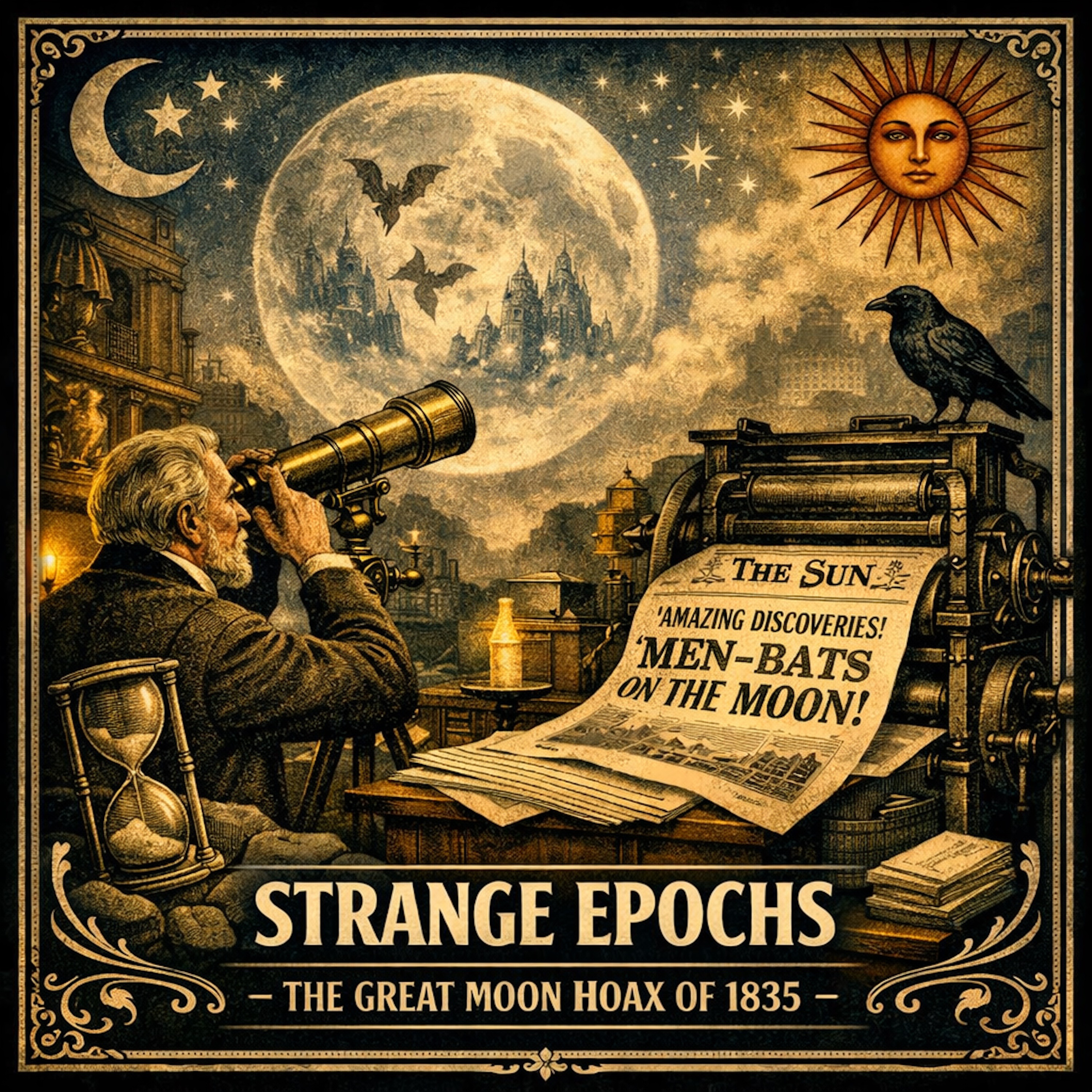 The Great Moon Hoax: Bat-Men, Blue Unicorns, and the Newspaper That Fooled New York — 1835 22.07.2026 45minIn August of 1835, a New York newspaper called The Sun published a story claiming that the British astronomer Sir John Herschel, using a powerful new telescope in South Africa, had discovered life on the moon. Not signs of habitability. Life. Lush forests, rushing rivers, herds of blue unicorns, bipedal beavers who carried their young under their arms, and a race of winged humanoids — bat-men — who lived in communities, built temples, and appeared to practice agriculture.The story ran across six articles over two weeks, cited a real astronomer, and deployed the vocabulary of nineteenth-century science with enough precision to sound credible. The New York Times called the discoveries probable. Religious groups began planning missionary expeditions. The Sun's circulation shot from eight thousand to nearly twenty thousand copies a day, making it briefly the most widely read newspaper in the world. Every word of it was fabricated.Host Shawn Spainhour takes you into the full story: the cutthroat world of the penny press, the reporter who wrote it, the city that believed it, and the specific question the Great Moon Hoax has never stopped raising, when we want something to be true badly enough, how hard do we actually look to see if it isn't?If you love history, true crime, or storytelling — or if you're just looking for something to listen to on a long drive or drift off to sleep — this one is for you.Strange Epochs is a weekly narrative history podcast hosted by Shawn Spainhour. Each episode takes one strange, true, documented moment from somewhere in the long span of human history and sits with it, slow, atmospheric, and built for deep listening. New episodes every Tuesday. If this is your first episode, there are fifteen more waiting for you.Sources:Wikipedia contributors. Great Moon Hoax. Wikipedia, Wikimedia Foundation, 2024.Goodman, Matthew. The Sun and the Moon: The Remarkable True Account of Hoaxers, Showmen, Dueling Journalists, and Lunar Man-Bats in Nineteenth-Century New York. Basic Books, 2008.Locke, Richard Adams. Great Astronomical Discoveries Lately Made by Sir John Herschel. The Sun, New York, August 25 through September 16, 1835.Britannica editors. Great Moon Hoax. Encyclopaedia Britannica, 2026.History.com editors. The Great Moon Hoax is published in the New York Sun. A and E Television Networks, 2025.The Saturday Evening Post. The Great Moon Hoax of 1835. August 26, 2020.The Conversation. Batmen and Unicorns: Inside the Original Moon Hoax. 2021.EarthSky. The Great Moon Hoax of 1835: Would you have believed it? August 25, 2023.MIT Deepfakes and Media. The Great Moon Hoax as an early example of viral misinformation. 2023.
 -
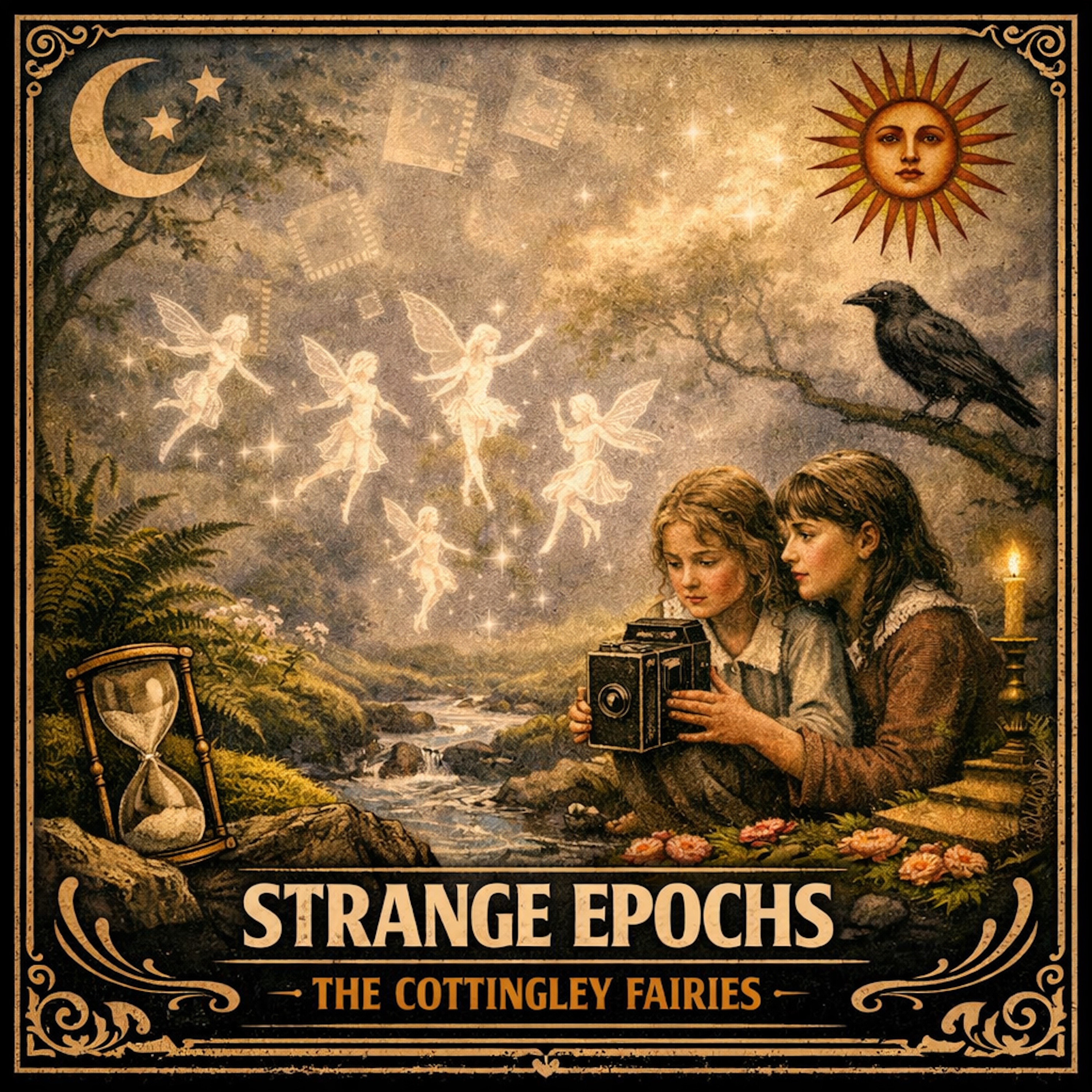 The Cottingley Fairies: The Hoax That Fooled Sherlock Holmes — Yorkshire, 1917 15.07.2026 43minIn the summer of 1917, two girls in a village in Yorkshire cut fairy figures out of a book, propped them up with hatpins in the grass beside a stream, and took a photograph. The photograph eventually reached Arthur Conan Doyle, the creator of the most famously rational fictional detective in the history of literature, who announced publicly, in the Christmas issue of The Strand Magazine, that it was the most important photographic evidence of supernatural phenomena ever produced. He staked his considerable reputation on it. He was wrong. He would not discover he was wrong for years.Host Shawn Spainhour takes you into the full story: Frances Griffiths, newly arrived from South Africa and homesick in an English village, and her older cousin Elsie Wright, the girl who knew how to use a camera. The specific grief of a world at war that made millions of people desperate to believe in something beyond the material. The decades of interviews, investigations, and expert analyses that failed to expose what two girls had done with scissors and hatpins. And the ending — sixty-six years later, when both women were old, when they finally admitted what they had done. One of them added a caveat: the fifth photograph, she said, was real.If you love history, true crime, or storytelling — or if you're just looking for something to listen to on a long drive or drift off to sleep — this one is for you.Strange Epochs is a weekly narrative history podcast hosted by Shawn Spainhour. Each episode takes one strange, true, documented moment from somewhere in the long span of human history and sits with it, slow, atmospheric, and built for deep listening. New episodes every Tuesday. If this is your first episode, there are fourteen more waiting for you.Sources:Wikipedia contributors. Cottingley Fairies. Wikipedia, Wikimedia Foundation, 2024.Cooper, Joe. The Case of the Cottingley Fairies. Robert Hale, 1990.Conan Doyle, Arthur. Fairies Photographed: An Epoch-Making Event. The Strand Magazine, December 1920.Conan Doyle, Arthur. The Coming of the Fairies. Hodder and Stoughton, 1922.University of Leeds. The Cottingley Fairies: A Study in Deception. Google Arts and Culture Exhibition, 2021.Historic UK. The Cottingley Fairies. 2023.Time Magazine. Fairies and Fake News: Lessons of the 1917 Cottingley Hoax. 2017.National Science and Media Museum, Bradford. Cottingley Fairies collection.Google Arts and Culture. The Cottingley Fairies — A Study in Deception. University of Leeds Special Collections.
 -
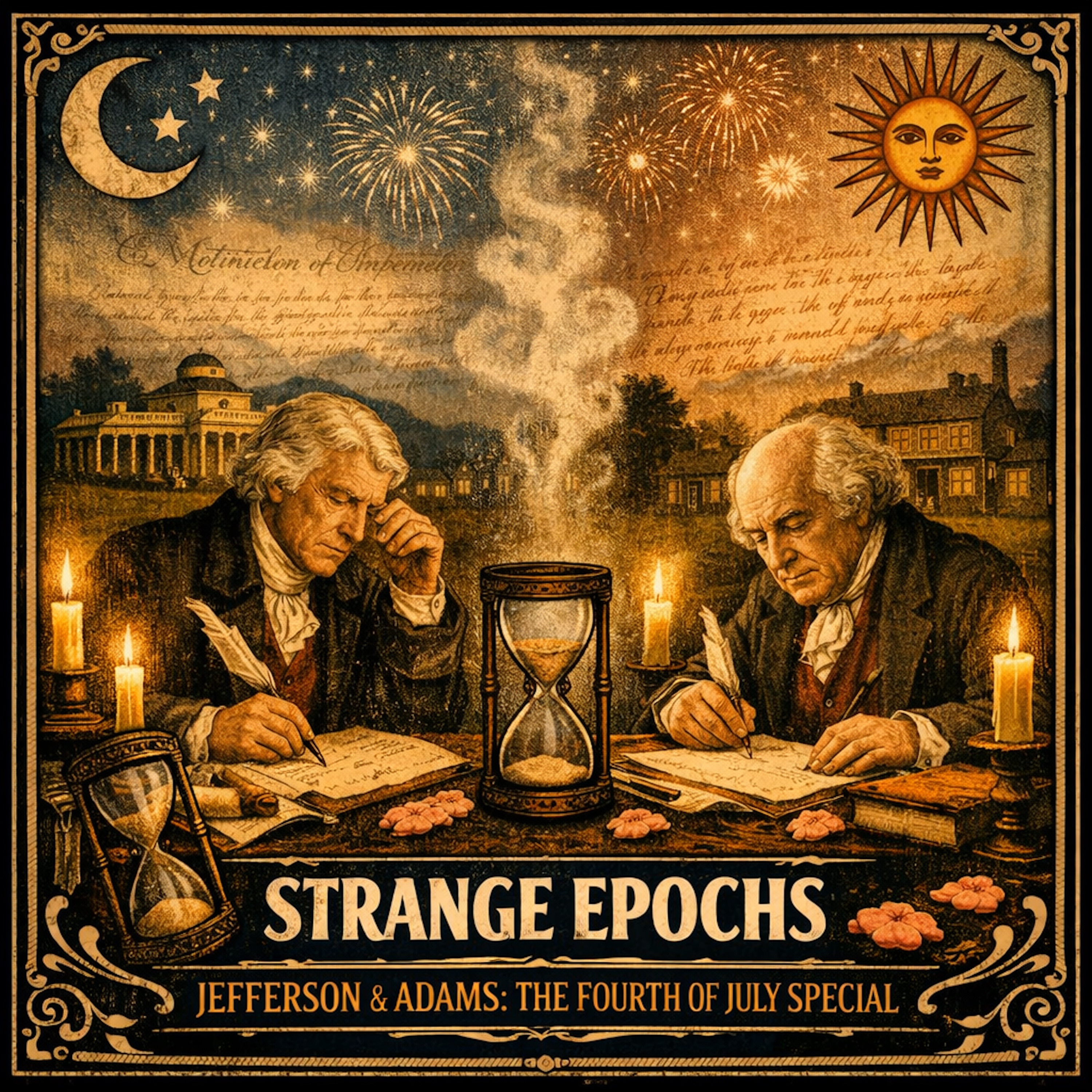 Thomas Jefferson Still Survives: A Fourth of July Special — July 4th, 1826 05.07.2026 45minOn July 4th, 1826 — fifty years to the day after the Declaration of Independence was adopted — two of the men who wrote it, signed it, and spent their lives arguing about what it meant died on the same day. Within five hours of each other. John Adams in Quincy, Massachusetts. Thomas Jefferson at Monticello in Virginia.Adams' last words, spoken in the failing light of that afternoon, were these: Thomas Jefferson still survives. He was wrong. Jefferson had died five hours earlier.Host Shawn Spainhour takes you into the full story: the friendship between Adams and Jefferson, the bitter political falling out that silenced them for years, the remarkable fifteen-year correspondence that brought them back together, and the two old men, separated by five hundred miles, writing to each other about death as it slowly approached. This is not a patriotic episode. It is a story about what it means to outlive your era, to reconcile with your oldest enemy, and to die on the most symbolically loaded day in the history of the country you helped create.If you love history, true crime, or storytelling — or if you're just looking for something to listen to on a long drive or drift off to sleep — this one is for you.Strange Epochs is a weekly narrative history podcast hosted by Shawn Spainhour. Each episode takes one strange, true, documented moment from somewhere in the long span of human history and sits with it, slow, atmospheric, and built for deep listening. New episodes every Tuesday. If this is your first episode, there are thirteen more waiting for you.Sources:McCullough, David. John Adams. Simon and Schuster, 2001.Meacham, Jon. Thomas Jefferson: The Art of Power. Random House, 2012.Cappon, Lester J., ed. The Adams-Jefferson Letters: The Complete Correspondence Between Thomas Jefferson and Abigail and John Adams. University of North Carolina Press, 1959.Wikipedia contributors. Deaths of John Adams and Thomas Jefferson. Wikipedia, Wikimedia Foundation, 2024.Massachusetts Historical Society. Thomas Jefferson Survives: The Last Letters of Jefferson and Adams. Beehive Blog, 2016.Monticello.org. Jefferson and Adams. Thomas Jefferson Foundation, 2024.History.com editors. Thomas Jefferson and John Adams die. A and E Television Networks, 2024.Library of Congress. Deaths of John Adams and Thomas Jefferson on July Fourth. Headlines and Heroes Blog, 2022.All That's Interesting. Inside the Death of President John Adams. 2025.
 -
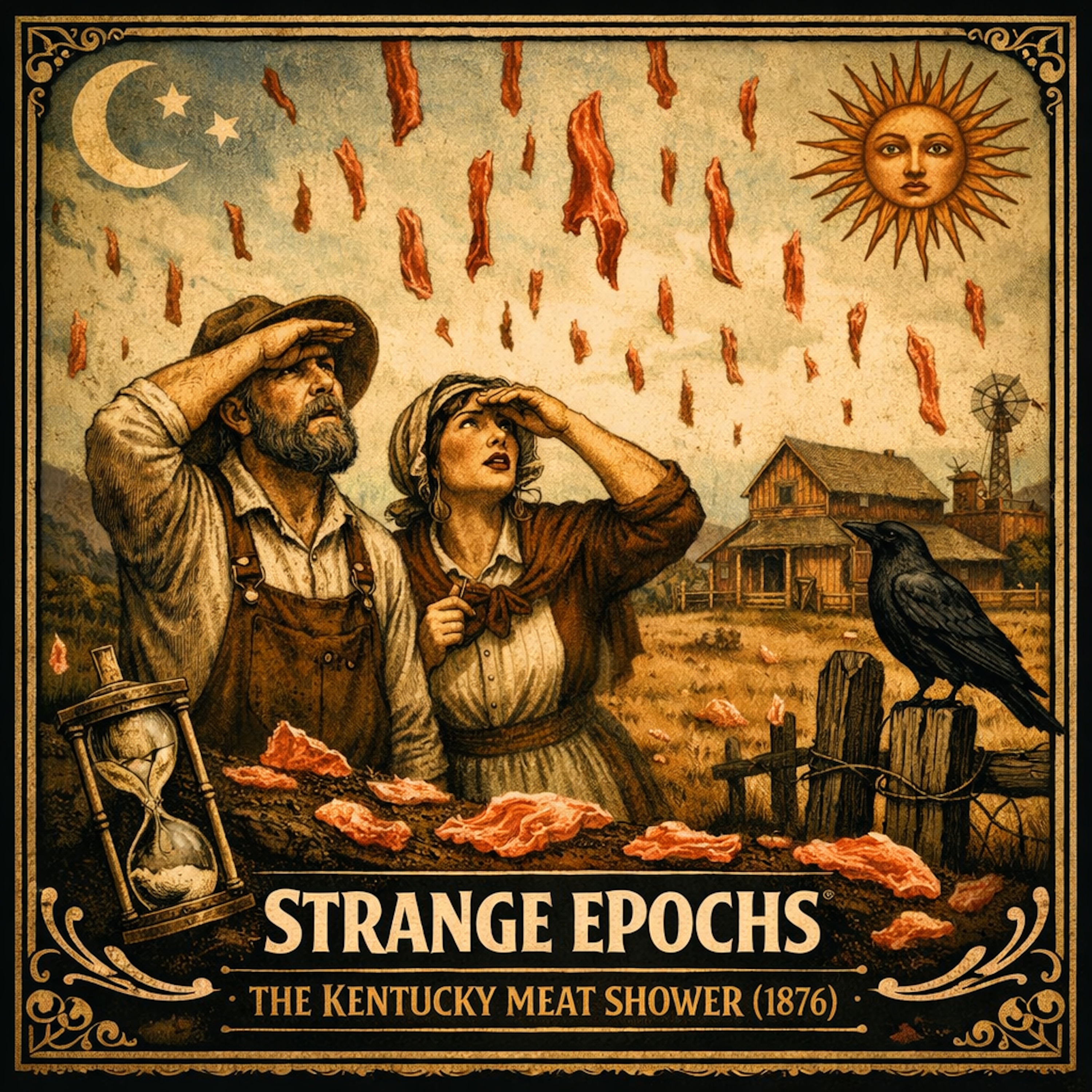 The Kentucky Meat Shower: It Rained Flesh in Bath County — Kentucky, 1876 01.07.2026 43minOn March 3rd, 1876, on a clear afternoon in Bath County, Kentucky, chunks of raw meat fell from a cloudless sky onto a farm near Olympian Springs. The event lasted approximately two minutes. The meat covered an area roughly the size of a football field, in pieces ranging from the size of a hailstorm to the size of a woman's hand. The New York Times reported it. Scientific American wrote it up. Laboratories across the country analyzed the samples and confirmed they were genuine animal tissue—lung, muscle, cartilage, and connective tissue. Real meat. From a clear sky. With no explanation before or after.Host Shawn Spainhour takes you into the full story: Rebecca Crouch, who was standing outside making soap when it started; the scientists who raced to identify what exactly had fallen; the leading theory involving mass-vomiting vultures; and the deep strangeness of an event that has been documented, analyzed, and discussed for a hundred and fifty years and still sits in that specific uncomfortable gap between almost certainly explained and definitively explained. Bath County, Kentucky, still holds an annual festival to commemorate the day it rained flesh. The meat shower is their thing. They have leaned into it completely.If you love history, true crime, or storytelling — or if you're just looking for something to listen to on a long drive or drift off to sleep — this one is for you.Strange Epochs is a weekly narrative history podcast hosted by Shawn Spainhour. Each episode takes one strange, true, documented moment from somewhere in the long span of human history and sits with it—slow, atmospheric, and built for deep listening. New episodes every Tuesday. If this is your first episode, there are twelve more waiting for you.Sources are listed in the show notes:Wikipedia contributors. Kentucky meat shower. Wikipedia, Wikimedia Foundation, 2024.New York Times. Flesh Descending in a Shower. March 9, 1876.Kastenbine, L.D. The Kentucky Meat Shower. Louisville Medical News, 1876.Edwards, Arthur Mead. The Kentucky Shower of Flesh. Scientific American Supplement, 1876.Hamilton, Allan McLane and Arnold, J.W.S. Analysis of specimens from the Kentucky meat shower. Medical Record, 1876.Scientific American. The Kentucky Shower of Flesh. 1876.Fort, Charles. The Book of the Damned. Boni and Liveright, 1919.BBC Science Focus Magazine. Here's the very strange reason Kentucky was once showered in meat. 2025.LPM Public Radio. Kentucky Meat Shower one hundred and fiftieth anniversary draws hundreds to Bath County. March 7, 2026.Transylvania University Monroe Moosnick Medical and Science Museum. Preserved specimen from the 1876 Kentucky meat shower.
 -
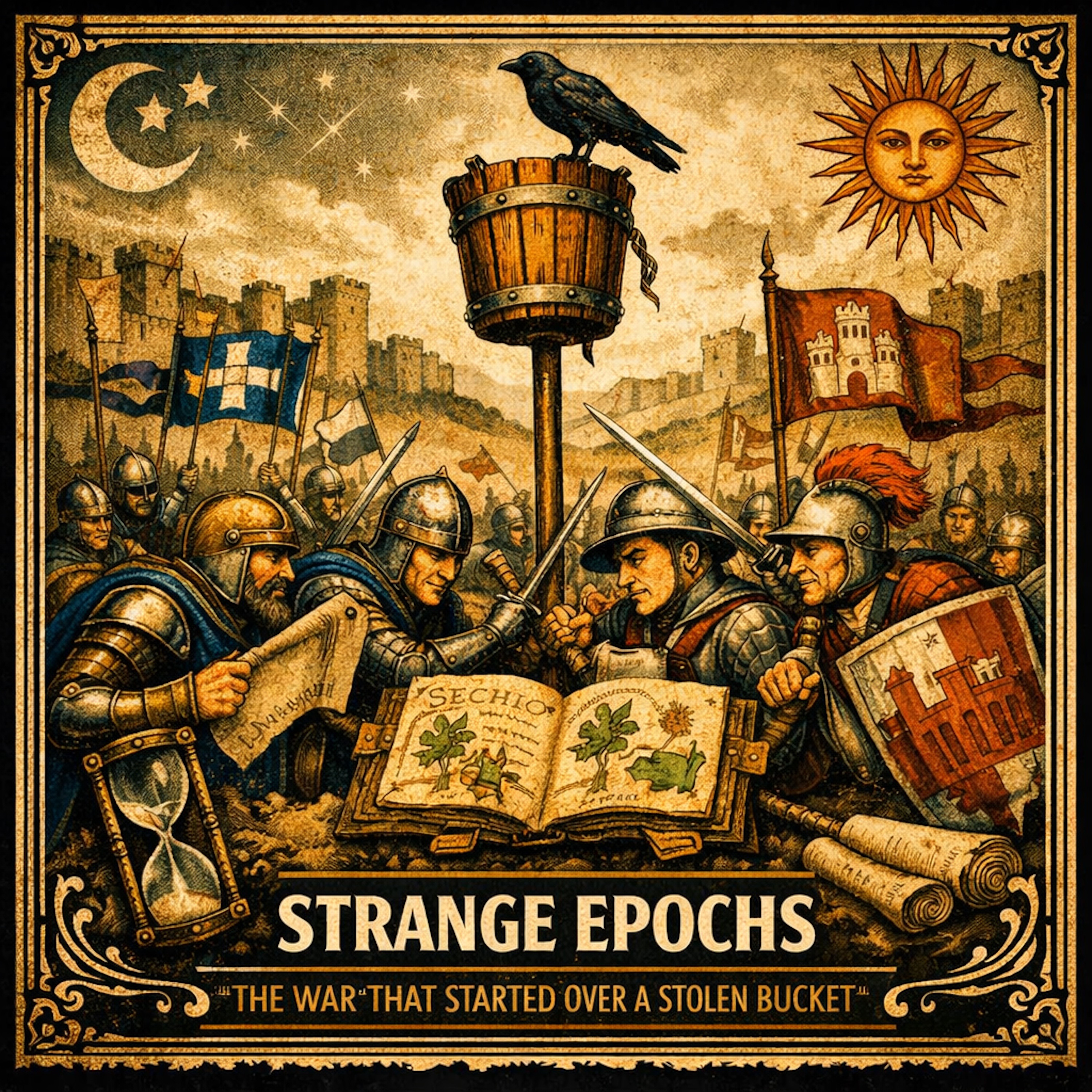 The War of the Bucket: Two Cities, One Wooden Pail, Thousands Dead — Italy, 1325 24.06.2026 43minIn 1325, soldiers from Modena snuck into the city of Bologna in the middle of the night and stole a wooden bucket from a well. Bologna declared war. Two thousand men died. The bucket is still in Modena. Bologna has never gotten it back.That is the legend. The truth is messier, bloodier, and in some ways more interesting. Behind the bucket were two hundred years of accumulated grievance between two rival Italian city-states, the grinding factional violence of the Guelph and Ghibelline conflict, and a battle in which a seven-thousand-man Modenese force defeated a Bolognese army more than four times its size—then held a celebratory race outside the walls of the city they had just humiliated.Host Shawn Spainhour takes you into the full story: the specific mechanics of how medieval Italian city-states fought and why they could never stop; the Battle of Zappolino and the military craft that turned a hopeless mismatch into a rout; the seventeenth-century satirical epic poem the conflict inspired; and the bucket itself—still sitting in a tower in Modena seven hundred years later, still not returned, still the subject of a rivalry that has never quite died.If you love history, true crime, or storytelling — or if you're just looking for something to listen to on a long drive or drift off to sleep — this one is for you.Strange Epochs is a weekly narrative history podcast hosted by Shawn Spainhour. Each episode takes one strange, true, documented moment from somewhere in the long span of human history and sits with it—slow, atmospheric, and built for deep listening. New episodes every Tuesday. If this is your first episode, there are eleven more waiting for you.Sources are listed in the show notes:Wikipedia contributors. War of the Bucket. Wikipedia, Wikimedia Foundation, 2024.Wikipedia contributors. Battle of Zappolino. Wikipedia, Wikimedia Foundation, 2024.Tassoni, Alessandro. La secchia rapita. Paris, 1622.Griffoni, Matteo. Conflictus Zapolini, Memoriale historicum de rebus bononiensium. Circa 1325.Abulafia, David, ed. The New Cambridge Medieval History, Volume Five. Cambridge University Press, 1999.Britannica editors. Guelphs and Ghibellines. Encyclopaedia Britannica, updated 2024.HistoryNet. What We Learned from the Battle of Zappolino, 1325. 2022.All That's Interesting. The Bizarre History of the War of the Bucket. 2023.Amusing Planet. The War of the Bucket. 2023.
 -
 The Voynich Manuscript: A 500-Year-Old Book No One Can Read — Yale University 17.06.2026 43minA book exists. It is sitting right now in a climate-controlled vault at Yale University. It has been photographed, digitized, and made freely available online. Professional cryptographers, linguists, historians, and astronomers have studied it for over a century. The NSA has studied it. The greatest codebreaker of the twentieth century studied it for years and walked away without an answer.Not one word of it has ever been decoded.The Voynich Manuscript is a five-hundred-year-old book written in a script that matches no known language, filled with detailed illustrations of plants that do not exist, star charts for constellations no one recognizes, and page after page of small nude figures arranged in elaborate systems of pools and tubes that make no physical sense. The vellum is real. The ink is real. The hand that wrote it was confident and practiced. And whatever it says has defeated every attempt to read it.Host Shawn Spainhour takes you through the full story: the manuscript's journey from a Holy Roman Emperor's collection to a Jesuit archive to a Yale vault; the statistical properties of the script that suggest it is not random; the parade of failed decipherments; and the two possibilities that remain—that the manuscript contains something genuinely significant or that it is the most successful hoax in the history of Western culture. Both are extraordinary. Neither has been ruled out.If you love history, true crime, or storytelling — or if you're just looking for something to listen to on a long drive or drift off to sleep — this one is for you.Strange Epochs is a weekly narrative history podcast hosted by Shawn Spainhour. Each episode takes one strange, true, documented moment from somewhere in the long span of human history and sits with it—slow, atmospheric, and built for deep listening. New episodes every Tuesday. If this is your first episode, there are ten more waiting for you.Sources are listed in the show notes:Wikipedia contributors. Voynich manuscript. Wikipedia, Wikimedia Foundation, 2024.Beinecke Rare Book and Manuscript Library, Yale University. Voynich Manuscript collection page. 2024.Britannica editors. Voynich manuscript. Encyclopaedia Britannica, updated 2024.History.com editors. The Mysterious Contents of the Voynich Manuscript. 2025.Montemurro, Marcelo A. and Zanette, Damian H. Keywords and Co-Occurrence Patterns in the Voynich Manuscript: An Information-Theoretic Analysis. PLOS ONE, 2013.The Art Newspaper. The Voynich Manuscript revealed: five things you probably didn't know about the Medieval masterpiece. 2025.Kennedy, Gerry and Churchill, Rob. The Voynich Manuscript. Orion Publishing Group, 2004.D'Imperio, Mary. The Voynich Manuscript: An Elegant Enigma. National Security Agency, 1978.
 -
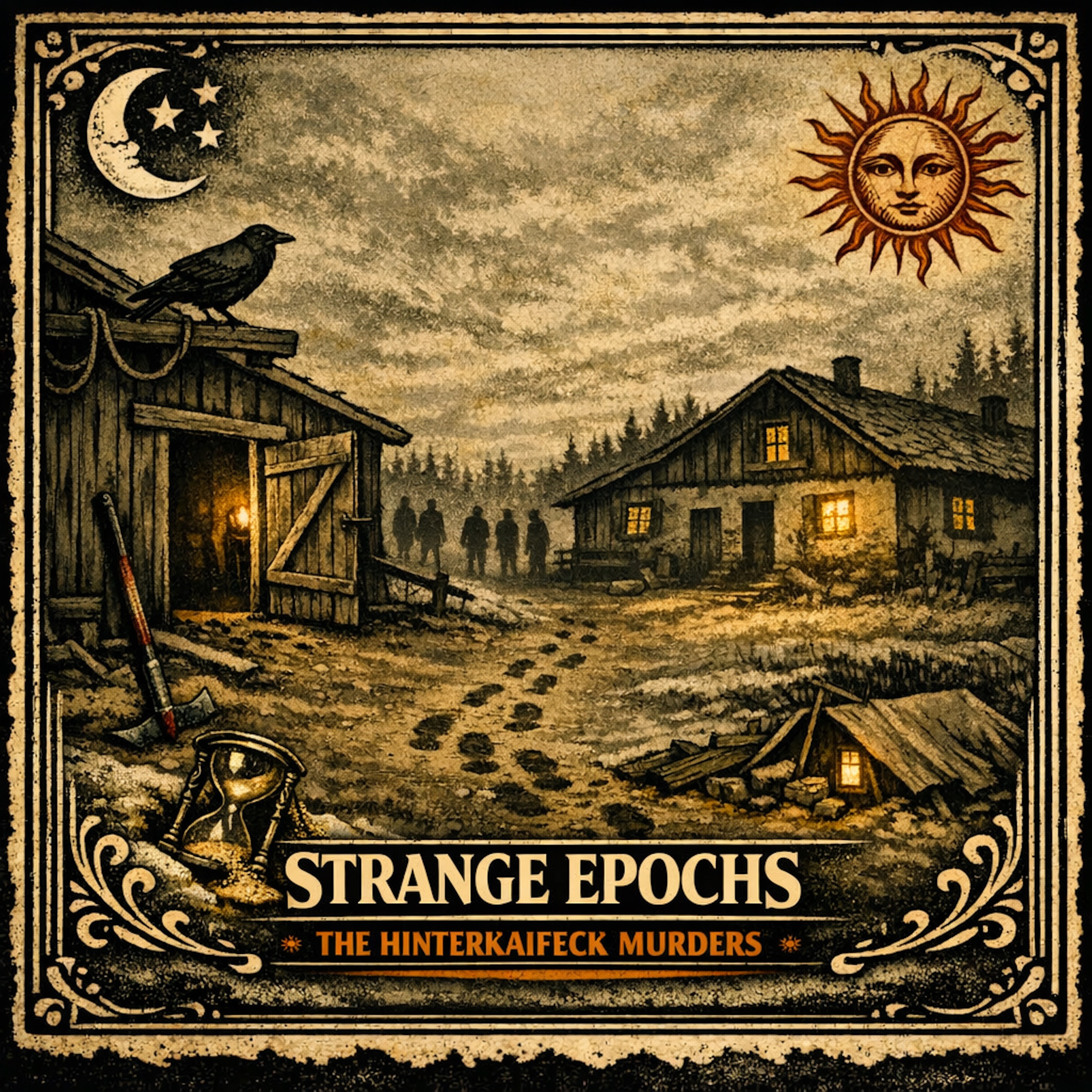 Hinterkaifeck Murders: Six Dead, One Killer Who Stayed — Bavaria, 1922 10.06.2026 42minIn late March of 1922, six people were murdered on a remote Bavarian farmstead north of Munich. The killer was never caught. But what makes Hinterkaifeck unlike any other unsolved case in German history is not the murders themselves—it is what came after. Someone stayed. For four days following the killings, whoever did it continued living on the farm. They fed the livestock. They lit the fires. They ate food from the kitchen. They turned the calendar page. The bodies of the family lay covered in hay in the barn the entire time.Host Shawn Spainhour takes you into the full story: the Gruber family and the specific shadows in their history that may have sealed their fate; the footprints in the snow that led to the farm and never led back out; the sounds in the attic that the previous maid had reported for weeks before she quit; and the over one hundred suspects investigated across a century of trying. In 2007, a team of German Police Academy students re-examined the case and claimed they knew who the killer was—but refused to name them.The case has never been officially solved.If you love history, true crime, or storytelling — or if you're just looking for something to listen to on a long drive or drift off to sleep — this one is for you.Strange Epochs is a weekly narrative history podcast hosted by Shawn Spainhour. Each episode takes one strange, true, documented moment from somewhere in the long span of human history and sits with it—slow, atmospheric, and built for deep listening. New episodes every Tuesday. If this is your first episode, there are ten more waiting for you.Sources are listed in the show notes:Wikipedia contributors. Hinterkaifeck murders. Wikipedia, Wikimedia Foundation, 2024.Mental Floss. The Chilling Story of the Hinterkaifeck Killings, Germany's Most Famous Unsolved Crime. 2023.All That's Interesting. The Gruesome True Story of the Unsolved Hinterkaifeck Murders. 2023.Bavarian State Archives Munich. Investigation files on the Hinterkaifeck case, 1922 to 1923.Reingruber, Georg. Initial investigation report, Hinterkaifeck farmstead. April 5, 1922.Aumüller, Johann Baptist. Post-mortem examination report, Hinterkaifeck victims. April 5 and 6, 1922.German Police Academy Fürstenfeldbruck. Criminological re-examination of the Hinterkaifeck case. 2007.Headcount Coffee. The Unsolved Hinterkaifeck Murders That Still Defy Explanation. 2026.
 -
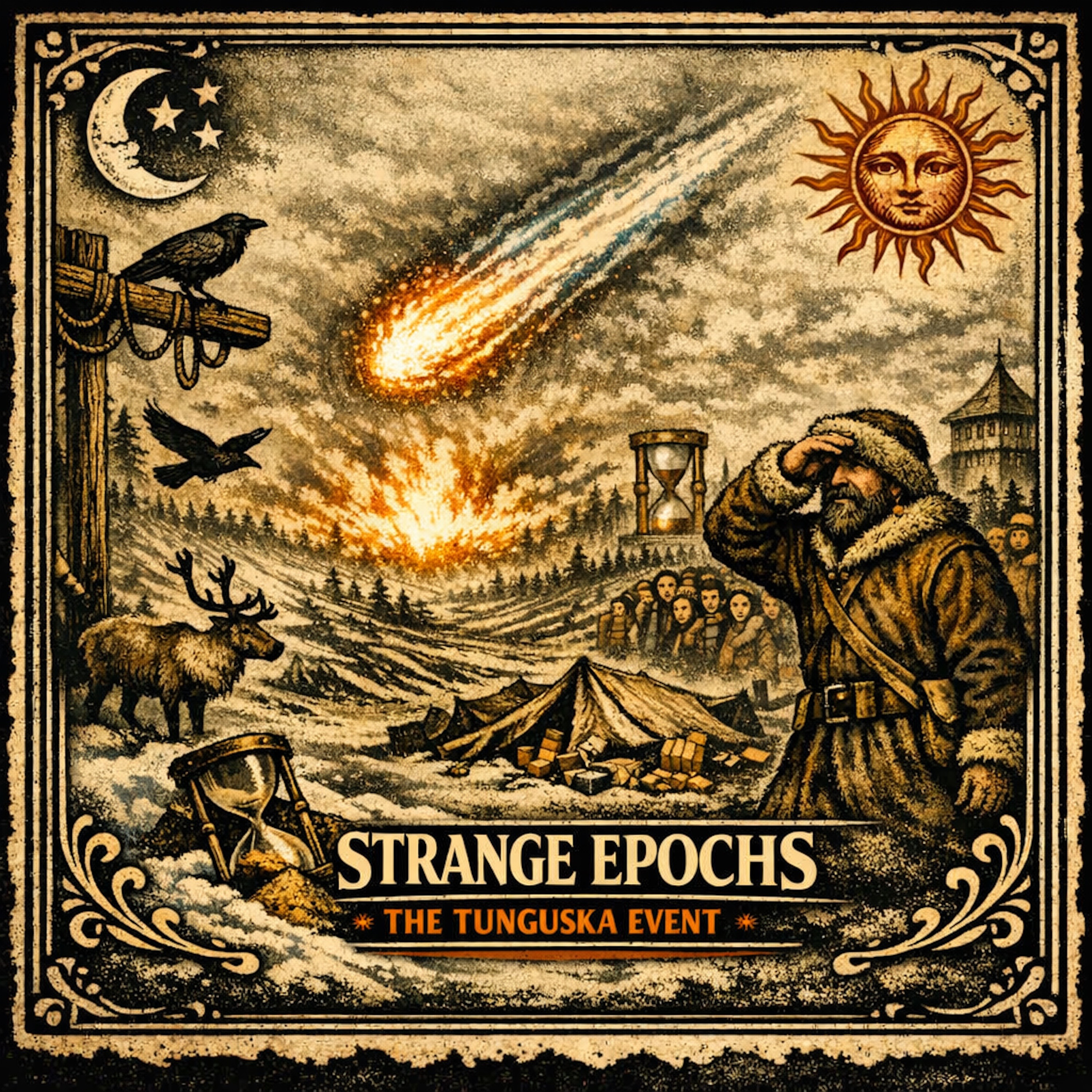 The Tunguska Event: The Largest Impact in Recorded History — Siberia, 1908 03.06.2026 43minOn the morning of June 30th, 1908, something traveling at sixty thousand miles per hour entered the atmosphere above central Siberia and exploded with the force of a thousand Hiroshima bombs. Eighty million trees were flattened across two thousand square kilometers of forest. The shockwave circled the globe twice. For several nights afterward, the skies over London glowed bright enough to read a newspaper by at midnight. The thing that caused all of it left no crater, no wreckage, and almost nothing recoverable. It simply vanished.Host Shawn Spainhour takes you into the full story: the indigenous Evenki people who felt the heat and were thrown from their feet and named it after their god of thunder, the Russian scientist who spent years fighting for an expedition to reach the site, and the century of investigation that followed — from alien spacecraft theories to the quiet, definitive work of dendrochronology and microparticle analysis. The Tunguska event is not a mystery anymore. But what it means for the planet we live on is a question worth sitting with very carefully.Strange Epochs tells true stories from history's stranger corners. Each episode is written for deep listening — slow, atmospheric, and immersive. Whether you're behind the wheel, unwinding after a long day, or settling in for sleep, this show is built to pull you in and carry you somewhere else.Sources are listed in the show notes:Wikipedia contributors. Tunguska event. Wikipedia, Wikimedia Foundation, 2024.NASA History. One hundred and fifteen years ago: The Tunguska Asteroid Impact Event. 2023.Britannica editors. Tunguska event. Encyclopaedia Britannica, updated 2024.Planetary Science Institute. The 1908 Siberia Explosion: Reconstructing an Asteroid Impact from Eyewitness Accounts. 2023.Royal Observatory Greenwich. The Tunguska Event Explained. 2023.Origins: Current Events in Historical Perspective. The 1908 Tunguska Event and the Threats of Tomorrow. Ohio State University, 2018.Vasiliev, N.V., Kovalevsky, A.F., Razin, S.A., Epiktetova, L.E. Eyewitness Accounts of Tunguska. 1981.Kulik, Leonid. Reports on the Tunguska expeditions, 1927 to 1939. Soviet Academy of Sciences.
 -
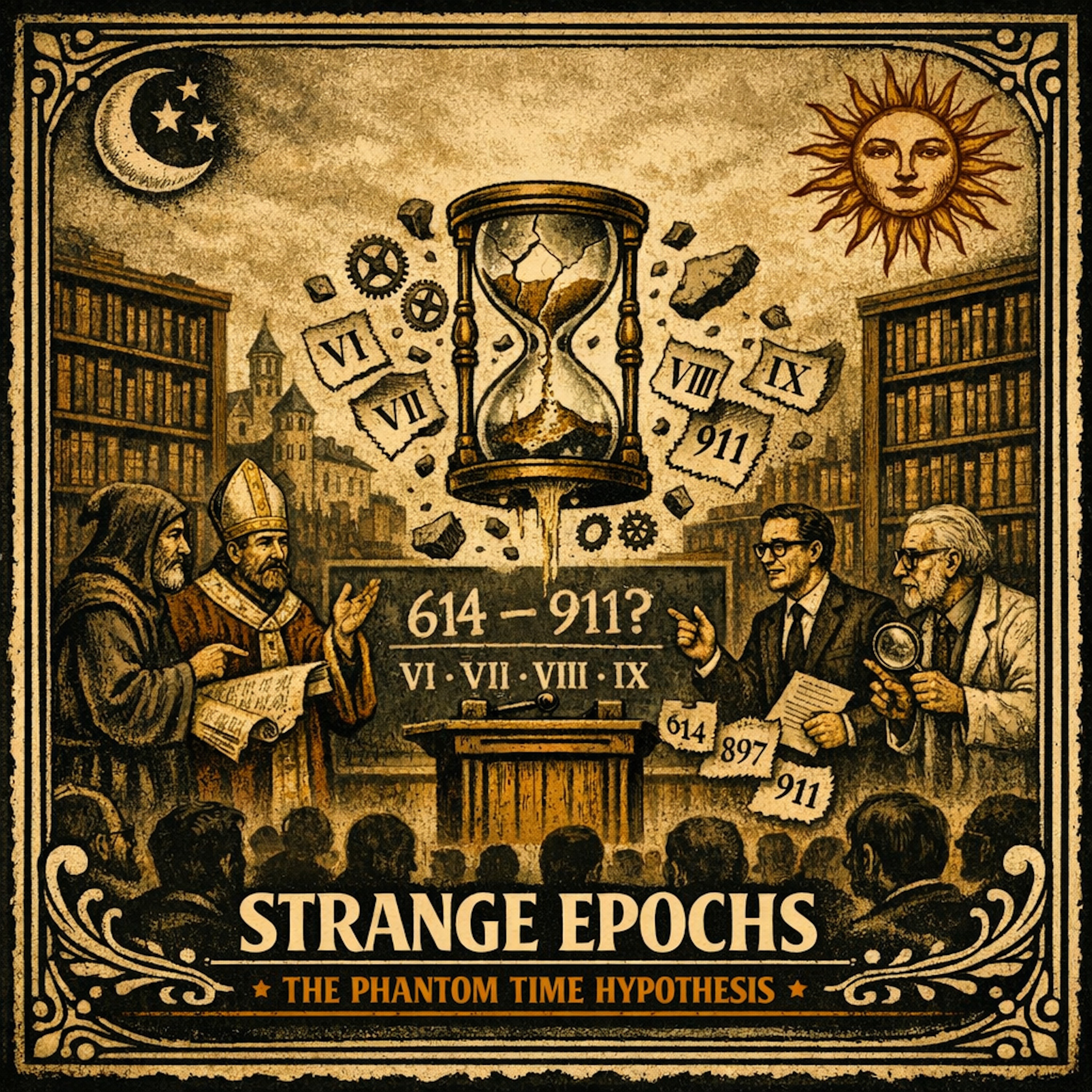 The Phantom Time Hypothesis: Did Someone Steal 297 Years of History? — Europe, 996 27.05.2026 46minIn 1996, a German author named Heribert Illig published a theory that became a bestseller: that 297 years of human history were simply invented. The entire Carolingian period. The life and reign of Charlemagne. The Viking Age. The rise of Islam. All of it, according to Illig, fabricated by a Holy Roman Emperor, a Pope, and possibly a Byzantine Emperor — men who conspired to insert three centuries into the historical record so their own reigns would fall at the symbolically significant year one thousand.Host Shawn Spainhour walks you through the full theory — the calendar argument that started it, the archaeological gaps Illig pointed to, and the case for a fictional Charlemagne — and then through the evidence that dismantles it: astronomical records, tree rings, radiocarbon dating, and the meticulous calendars of the Islamic world, none of which were consulted by Illig and none of which cooperate with his timeline. The Phantom Time Hypothesis is wrong. But the question underneath it — how do we actually know what we know about the past? — is one worth sitting with.Strange Epochs tells true stories from history's stranger corners. Each episode is written for deep listening — slow, atmospheric, and immersive. Whether you're behind the wheel, unwinding after a long day, or settling in for sleep, this show is built to pull you in and carry you somewhere else.Sources are listed in the show notes:Illig, Heribert. Das erfundene Mittelalter: Die größte Zeitfälschung der Geschichte. Econ Verlag, 1996.Wikipedia contributors. Phantom time conspiracy theory. Wikipedia, Wikimedia Foundation, 2024.Ethik und Sozialwissenschaften. Symposium on the Phantom Time Hypothesis. Volume 8, 1997.Discover Magazine. What Is the Truth Behind the Controversial Phantom Time Hypothesis? 2023.Big Think. Phantom time hypothesis: Did a power-hungry pope fabricate centuries of history? 2023.Damn Interesting. The Phantom Time Hypothesis. Alan Bellows, 2005.Sky History. The Phantom Time Conspiracy: Are three hundred years of human history made up? 2023.Discovery UK. Phantom Time Hypothesis: Did We Really Invent Centuries of History? 2025.
 -
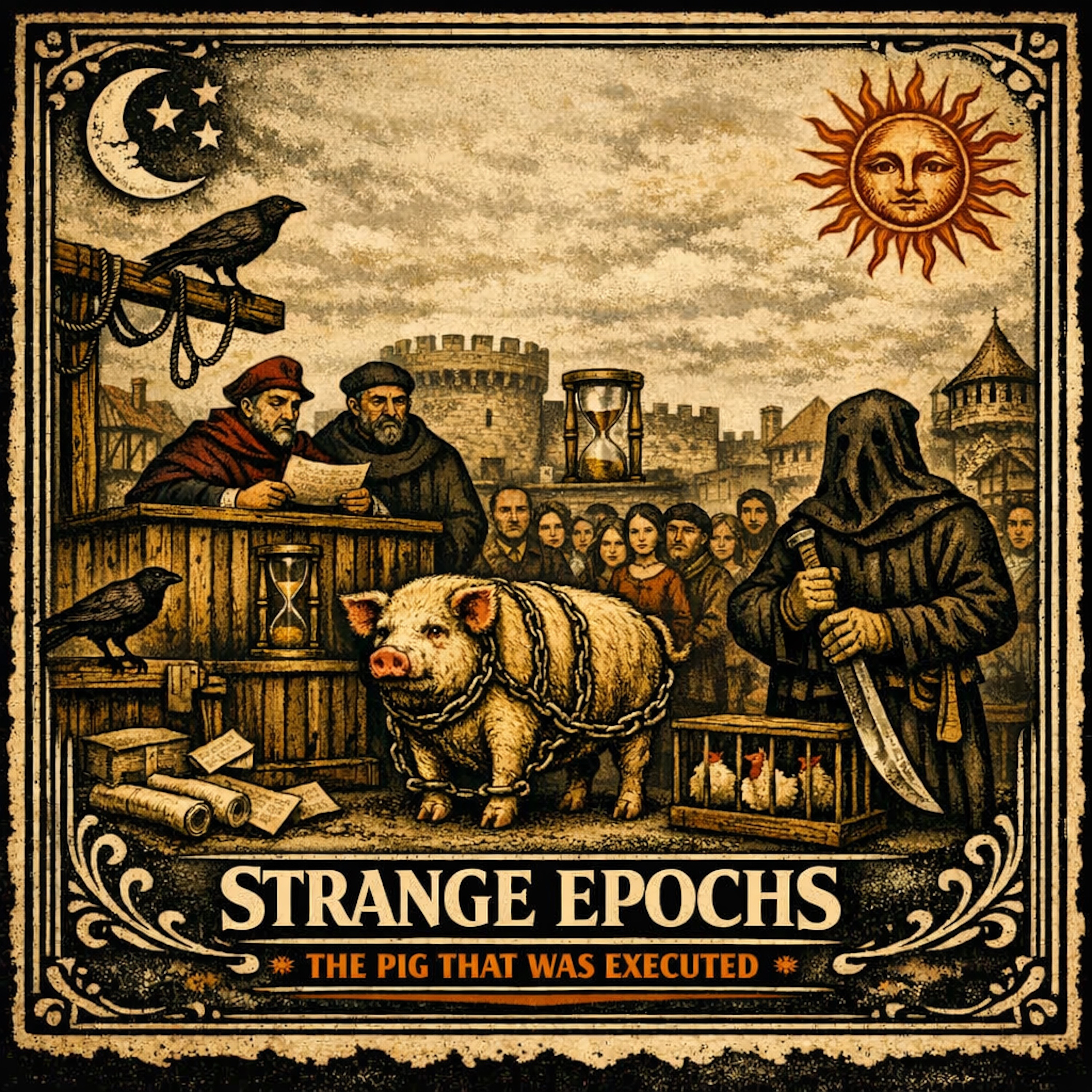 The Pig That Was Executed: Justice, Animals, and the Medieval Mind — France, 1457 20.05.2026 43minIn medieval France, a pig was formally arrested, given a defense lawyer, brought before a judge, found guilty, dressed in human clothing, and publicly hanged. This was not an isolated incident. Between the thirteenth and eighteenth centuries, there are documented records of over two hundred animal trials across Europe — pigs, bulls, rats, weevils, caterpillars, and at least one rooster accused of the capital crime of laying an egg. Every proceeding was conducted with complete legal seriousness. Every sentence was carried out by a professional executioner who received new gloves afterward, as they did after hanging a human being.Host Shawn Spainhour takes you inside the worldview that made this not just possible but perfectly logical — a medieval understanding of justice, order, and humanity's place in creation that was coherent, deliberate, and deeply revealing about how an entire civilization understood itself. This is not a story about superstition or madness. It is a story about what law means, who it applies to, and what happens when a society draws the boundaries of moral responsibility around everything that lives.Strange Epochs tells true stories from history's stranger corners. Each episode is written for deep listening — slow, atmospheric, and immersive. Whether you're behind the wheel, unwinding after a long day, or settling in for sleep, this show is built to pull you in and carry you somewhere else.Sources are listed in the show notes:Evans, E.P. The Criminal Prosecution and Capital Punishment of Animals. William Heinemann, 1896.Cohen, Esther. Law, Folklore, and Animal Lore. Past and Present, Volume 110, 1986.Dinzelbacher, Peter. Animal Trials: A Multidisciplinary Approach. Journal of Medieval History, Volume 32, 2006.Gins, Sven. Casting Justice Before Swine: Late Medieval Pig Trials as Instances of Human Exceptionalism. University of Groningen, 2023.Wikipedia contributors. Animal trial. Wikipedia, Wikimedia Foundation, 2024.History Today. Pigs Might Try. Alexander Lee, 2020.JSTOR Daily. When Societies Put Animals on Trial. 2020.Popular Science. In Medieval France, Murderous Pigs Faced Trial and Execution. 2026.Ancient Origins. Medieval Justice: Pig Was Tried in Court, Sentenced and Executed for Murder. 2022.
 -
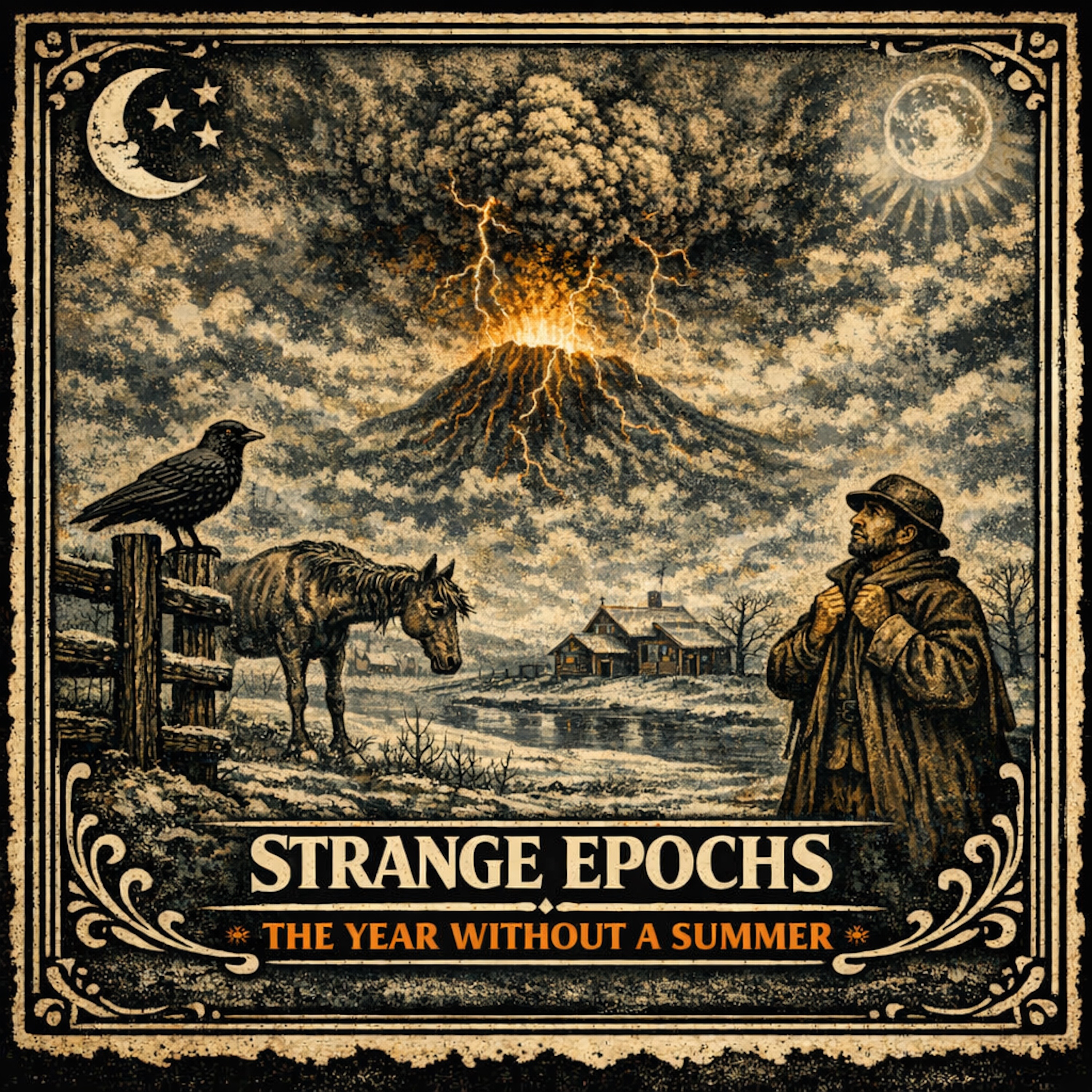 The Year Without a Summer: When a Volcano Froze the World — Global, 1816 12.05.2026 46minIn 1816, summer never came. Crops failed in June. It snowed in July. Families across the Northern Hemisphere watched their harvests die in the ground and had no idea why. A volcano on the other side of the world — Mount Tambora in Indonesia — had erupted the year before with a force so massive it put enough material into the atmosphere to change the climate of an entire hemisphere. The people starving in Vermont and Ireland and Bengal had never heard of it.Host Shawn Spainhour takes you through the full story: the eruption of Tambora in April 1815, the slow creep of its effects across the globe, the famines and food riots and mass migrations it triggered, the new strain of cholera it helped unleash, and the strange red sunsets that painters couldn't stop painting. And on the shores of Lake Geneva, a young woman named Mary Shelley — stuck indoors through a cold, dark Swiss summer — sat down and invented Frankenstein.Strange Epochs tells true stories from history's stranger corners. Each episode is written for deep listening — slow, atmospheric, and immersive. Whether you're behind the wheel, unwinding after a long day, or settling in for sleep, this show is built to pull you in and carry you somewhere else.Sources are listed in the show notes:Wood, Gillen D'Arcy. Tambora: The Eruption That Changed the World. Princeton University Press, 2014.Post, John D. The Last Great Subsistence Crisis in the Western World. Johns Hopkins University Press, 1977.Wikipedia contributors. Year Without a Summer. Wikipedia, Wikimedia Foundation, 2024.Wikipedia contributors. 1815 eruption of Mount Tambora. Wikipedia, Wikimedia Foundation, 2024.National Park Service. 1816: The Year Without Summer. U.S. National Park Service, 2022.Britannica editors. Mount Tambora eruption. Encyclopaedia Britannica, updated 2024.Oppenheimer, Clive. Eruptions That Shook the World. Cambridge University Press, 2011.Shelley, Mary. Frankenstein; or, The Modern Prometheus. Lackinton, Hughes, Harding, Mavor, and Jones, 1818.U.S. Geological Survey. New England's 1816 Mackerel Year, Volcanoes and Climate Change Today. 2017.
 -
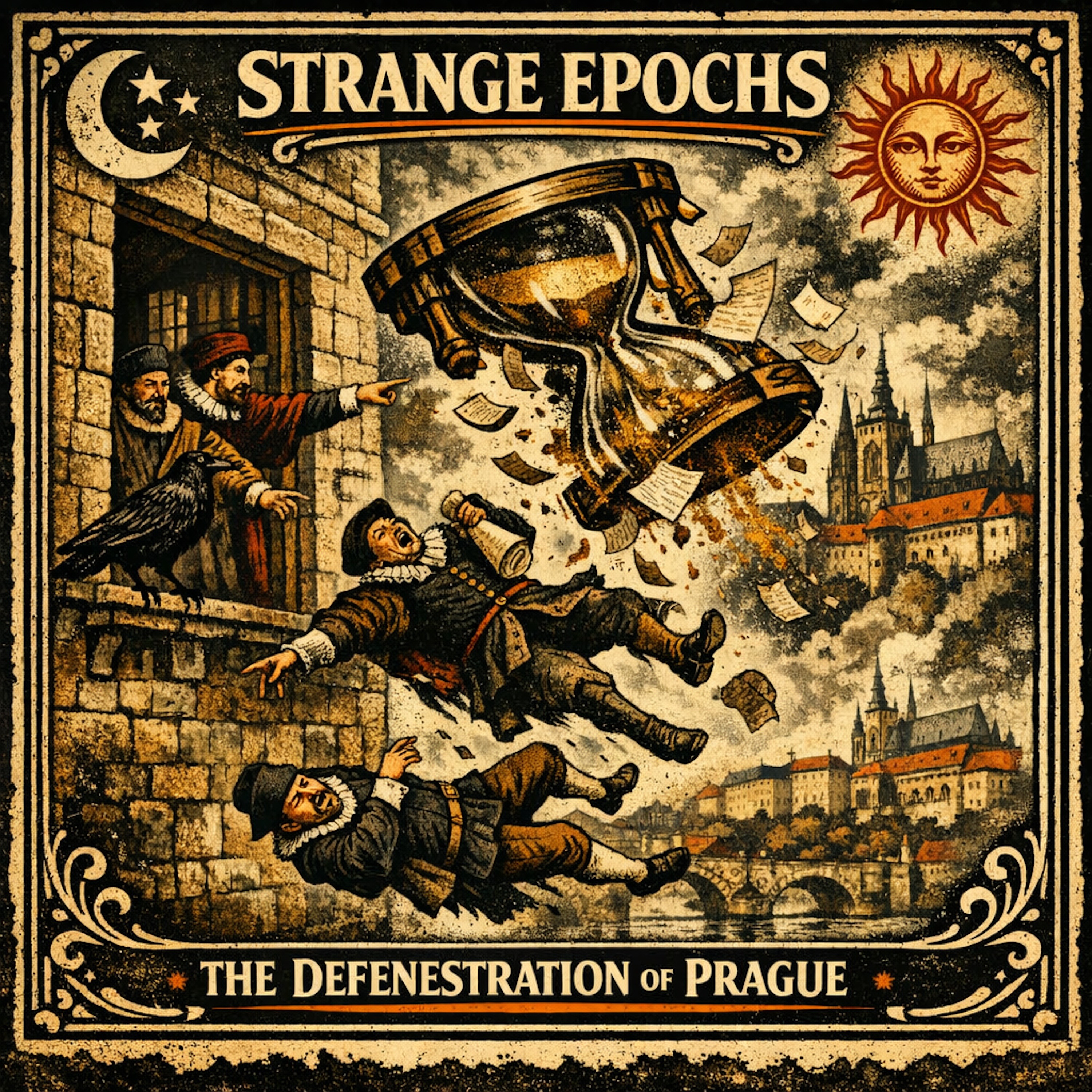 The Defenestration of Prague: Three Men, One Window, Thirty Years of War — Prague, 1618 05.05.2026 38minOn the morning of May 23rd, 1618, a group of Protestant noblemen marched into the royal council chamber of Prague Castle and threw three men out of a window. The drop was seventy feet. All three survived. Catholics said it was angels. Protestants said it was a dung heap. Both sides immediately printed pamphlets. And within months, the Thirty Years War had begun — a conflict that would kill up to eleven million people and permanently reshape the relationship between religion and political power in the Western world.Host Shawn Spainhour takes you into the full story: the centuries of religious tension between Catholic and Protestant powers in central Europe, the fragile Bohemian nobility and their collision with Habsburg authority, and the three men who fell from that window and set an entire continent on fire. This episode follows the chain of consequence from a single morning in Prague all the way to the Peace of Westphalia in 1648 — the settlement that laid the foundation for the modern nation-state and the separation of church and state.Strange Epochs tells true stories from history's stranger corners. Each episode is written for deep listening — slow, atmospheric, and immersive. Whether you're behind the wheel, unwinding after a long day, or settling in for sleep, this show is built to pull you in and carry you somewhere else.Sources are listed in the show notes:Wilson, Peter H. The Thirty Years War: Europe's Tragedy. Harvard University Press, 2009.Parker, Geoffrey. The Thirty Years War. Routledge, second edition, 1987.Wikipedia contributors. Defenestrations of Prague. Wikipedia, Wikimedia Foundation, 2024.Britannica editors. Defenestration of Prague. Encyclopaedia Britannica, updated 2024.German History in Documents and Images. The War Begins: The Defenestration of Prague, May 1618. German Historical Institute, Washington D.C., 2023.Slavata, Wilhelm. Personal memoir and account of the defenestration, circa 1620–1630. Referenced in Wilson and Parker.Public Domain Review. Windows Onto History: The Defenestrations of Prague. 2024.Origins: Current Events in Historical Perspective. Out the Window: Religion, Politics, and a Defenestration in Prague. Ohio State University, 2018.
Podobne podcasty


Popularny w
Ten podcast pojawia się również w listach podcastów tych krajów.
