
Himal Southasian Podcast Channel
Himal Southasian Podcast Channel
0
Himal Southasian Podcast Channel presents audio from Himal Southasian, a magazine covering politics and culture across Southasia. Founded in 1987, the publication is based in Kathmandu and reports on regional affairs. Episodes feature long-form journalism, essays, and commentary on history, society, and the arts from a Southasian perspective. The podcast brings the magazine's analysis and storytelling to listeners in audio form.
Odcinki
-
 Bobuq Sayed on queer Afghan lives beyond borders: Southasia Review of Books #42 18.09.2026 1godz 6minTwo queer Afghan men, each forced away from home by circumstances beyond their control, find themselves in Istanbul, where their paths cross in unexpected ways. The writer, artist and poet Bobuq Sayed’s debut novel, ‘No God But Us’, follows Delbar, an aspiring drag queen who leaves his family in Washington DC after being outed, and Mansur, who has left Tehran and is trying to build a life in Istanbul while supporting the family he left behind. As their lives become increasingly entangled, the novel brings questions of love, family, migration and survival into sharp focus, asking what it means to build a life on your own terms, and what you might be willing to give up for it. It is also about the forces – political and personal – that shape the choices we’re able to make. In this episode of the Southasia Review of Books podcast – a show from Himal featuring conversations with celebrated authors and emerging literary voices from across Southasia – we speak to Bobuq Sayed about ‘No God But Us’, and the questions of borders, belonging, queerness and identity that run through the novel.This episode is now available on Youtube: https://youtu.be/b8J1iOz8SWk✨ Thank you for listening to the Southasia Review of Books podcast from Himal Southasian. If you enjoyed this episode, please share, subscribe, rate and review the show on your favourite podcast apps.▶️ If you haven’t already, please subscribe to the Himal Southasian YouTube channel and help us spread the word by sharing these conversations widely.✉️ We’d love to hear your thoughts. Leave a comment on YouTube or write to us at [email protected].📚 Sign up for the Southasia Review of Books newsletter for a roundup of our latest reviews, essays, interviews and literary news from across Southasia: https://www.himalmag.com/newsletters/ 🙏🏼 If you’d like to support our work, please consider becoming a Himal Patron to help make conversations like this possible and sustain our work throughout the year: https://www.himalmag.com/#/portal
 -
 Sowmiya Ashok on what Keeladi tells us about India’s past – and present: Southasia Review of Books #41 21.08.2026 48minIn The Dig: Keeladi and the Politics of India’s Past, the Chennai-based journalist Sowmiya Ashok begins with an archaeological excavation in a village outside Madurai in the state of Tamil Nadu and unfolds a much larger story about history, identity, and the struggle over who gets to narrate India’s past. Since its discovery in 2014, Keeladi has become one of India’s most contested archaeological sites, drawing in debates around Tamil identity, language and nationalism. Moving between excavation trenches, museums, literary texts, and conversations with archaeologists, historians, and people across India, the book explores how political battles over science and history shape the way the past is understood in the present, and what the contestations around these sites Keeladi reveal about contemporary India itself. This episode is now available on Youtube: https://youtu.be/PN3pGg5t3qgApple Podcasts: https://podcasts.apple.com/us/podcast/sowmiya-ashok-on-what-keeladi-tells-us-about-indias/id1464880116?i=1000784834408✨ Thank you for listening to the Southasia Review of Books podcast from Himal Southasian. If you enjoyed this episode, please share, subscribe, rate and review the show on your favourite podcast apps.▶️ If you haven’t already, please subscribe to the Himal Southasian YouTube channel and help us spread the word by sharing these conversations widely.✉️ We’d love to hear your thoughts. Leave a comment on YouTube or write to us at [email protected].📚 Sign up for the Southasia Review of Books newsletter for a roundup of our latest reviews, essays, interviews and literary news from across Southasia: https://www.himalmag.com/newsletters/ 🙏🏼 If you’d like to support our work, please consider becoming a Himal Patron to help make conversations like this possible and sustain our work throughout the year: https://www.himalmag.com/#/portal
 -
 Mirza Waheed on writing beyond the radicalisation story: Southasia Review of Books #40 24.07.2026 1godz 4minWhat does it mean to reckon with loss when there are no clear answers? In Maryam & Son, Mirza Waheed explores that question through the story of Maryam Ali, a mother in London whose son disappears and is drawn into a distant conflict in Iraq. As she waits for answers, the novel moves between memory and grief, tracing what happens when the certainties of motherhood begin to unravel and private grief collides with public narratives. Waheed is the author of four acclaimed novels, including The Collaborator, The Book of Gold Leaves and Tell Her Everything. His work has been widely recognised for its explorations of conflict, memory and belonging, particularly in relation to Kashmir. In this episode of the Southasia Review of Books podcast, Waheed discusses his new novel, the language of bureaucracy and surveillance, motherhood, and the ways in which the media transforms deeply personal tragedies into public spectacle. This episode is now available on Youtube: https://youtu.be/kQZ-GZvH1jQ✨ Thank you for listening to the Southasia Review of Books podcast from Himal Southasian. If you enjoyed this episode, please share, subscribe, rate and review the show on your favourite podcast apps.▶️ If you haven’t already, please subscribe to the Himal Southasian YouTube channel and help us spread the word by sharing these conversations widely.✉️ We’d love to hear your thoughts. Leave a comment on YouTube or write to us at [email protected].📚 Sign up for the Southasia Review of Books newsletter for a roundup of our latest reviews, essays, interviews and literary news from across Southasia: https://www.himalmag.com/newsletters/ 🙏🏼 If you’d like to support our work, please consider becoming a Himal Patron to help make conversations like this possible and sustain our work throughout the year: https://www.himalmag.com/#/portal
 -
 Joe Sacco on the book Penguin India wouldn’t distribute: Southasia Review of Books #39 26.06.2026 39minEpisode description: For more than three decades, Joe Sacco has been at the forefront of graphic journalism, combining rigorous reporting with comics to document conflict, displacement and political violence. His landmark works, including ‘Palestine’ and ‘Footnotes in Gaza’, have helped define an entire genre and inspired generations of cartoonists and journalists.His latest book, ‘The Once and Future Riot’ (2025), turns its attention to India, examining the 2013 Muzaffarnagar riots in Uttar Pradesh and the political forces that shaped them. In doing so, it asks larger questions about violence, democracy, memory and the stories societies tell about themselves in the aftermath of conflict.The book has also become the subject of a controversy of its own. Earlier this year, Penguin India decided not to distribute it after raising a series of legal and editorial objections, prompting wider debates about censorship and how histories of violence are told.In this episode of the Southasia Review of Books podcast – a show from Himal Southasian featuring conversations with celebrated authors and emerging literary voices from across Southasia – we speak to Sacco about ‘The Once and Future Riot’, the controversy surrounding its publication, and more. This episode is also available on-Youtube: https://youtu.be/FemACGTJhywApple Podcasts: https://podcasts.apple.com/us/podcast/joe-sacco-on-the-book-penguin-india-wouldnt/id1464880116?i=1000774285127
 -
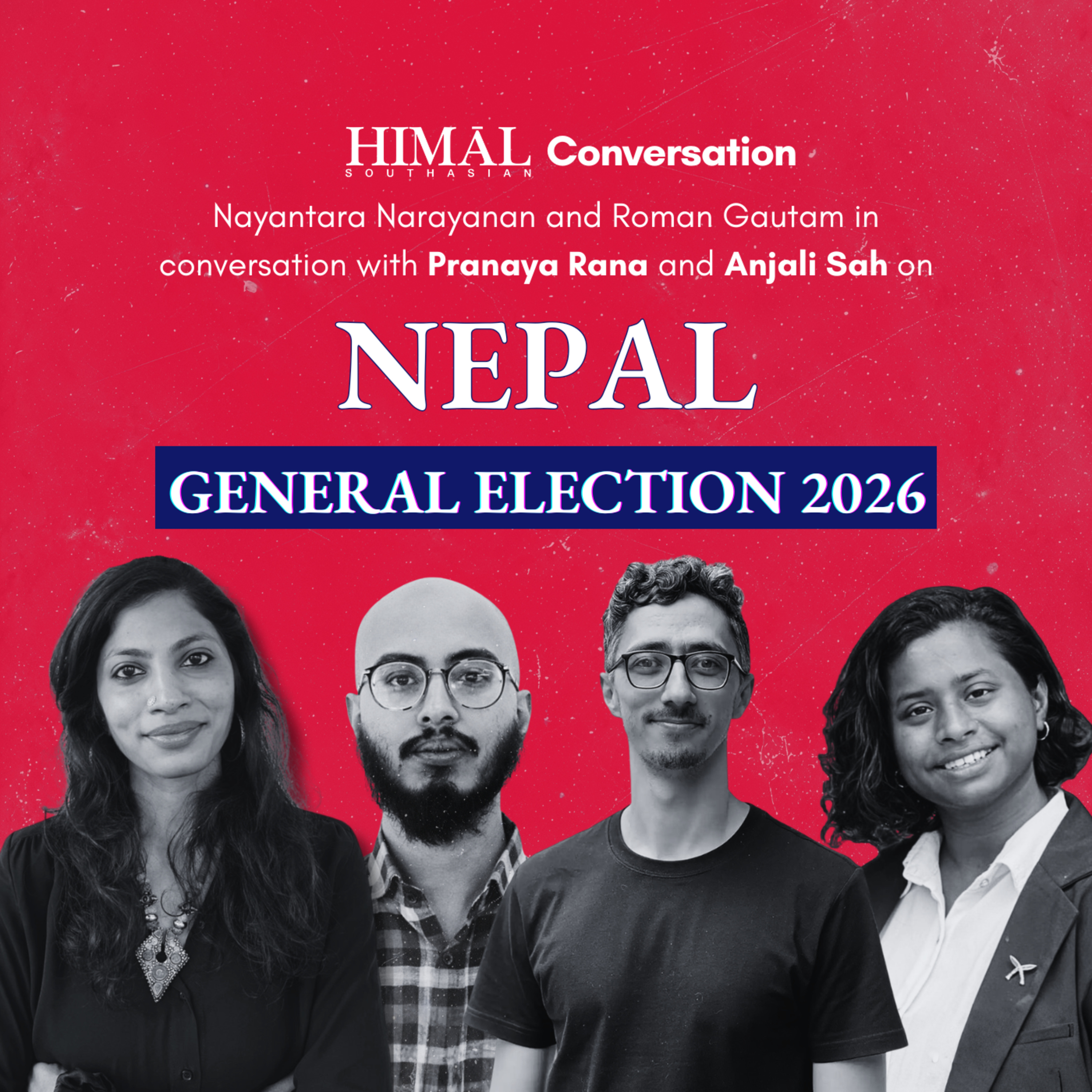 Nepal Elections 2026: Parties, Power, and the Promise of Change | Himal Conversations 28.02.2026 1godz 8minNepal goes to the polls on 5 March 2026. But what do these elections actually mean for a country still navigating the turbulence of its recent past?In this episode, Himal's editor Roman Gautam and associate editor Nayantara Narayanan are joined by law student and intersectional feminist Anjali Sah and writer and journalist Pranaya Rana for a wide-ranging conversation on Nepal's upcoming general elections.They dig into the parties contesting and what they actually stand for, the tired persistence of the old guard and whether a new generation of politics is genuinely possible, the unfinished business of federalism, the stubborn underrepresentation of women candidates, and very importantly - what last year's Gen Z protests revealed about the deep frustrations simmering beneath the surface of Nepali public life.Nepal has been through a remarkable and often painful political journey, from monarchy to republic, from civil war to constitution, and yet the same faces, the same compromises, and the same impunity have a way of enduring. This conversation asks whether March 5 is a turning point, or another chapter in a longer story of deferred hope.
 -
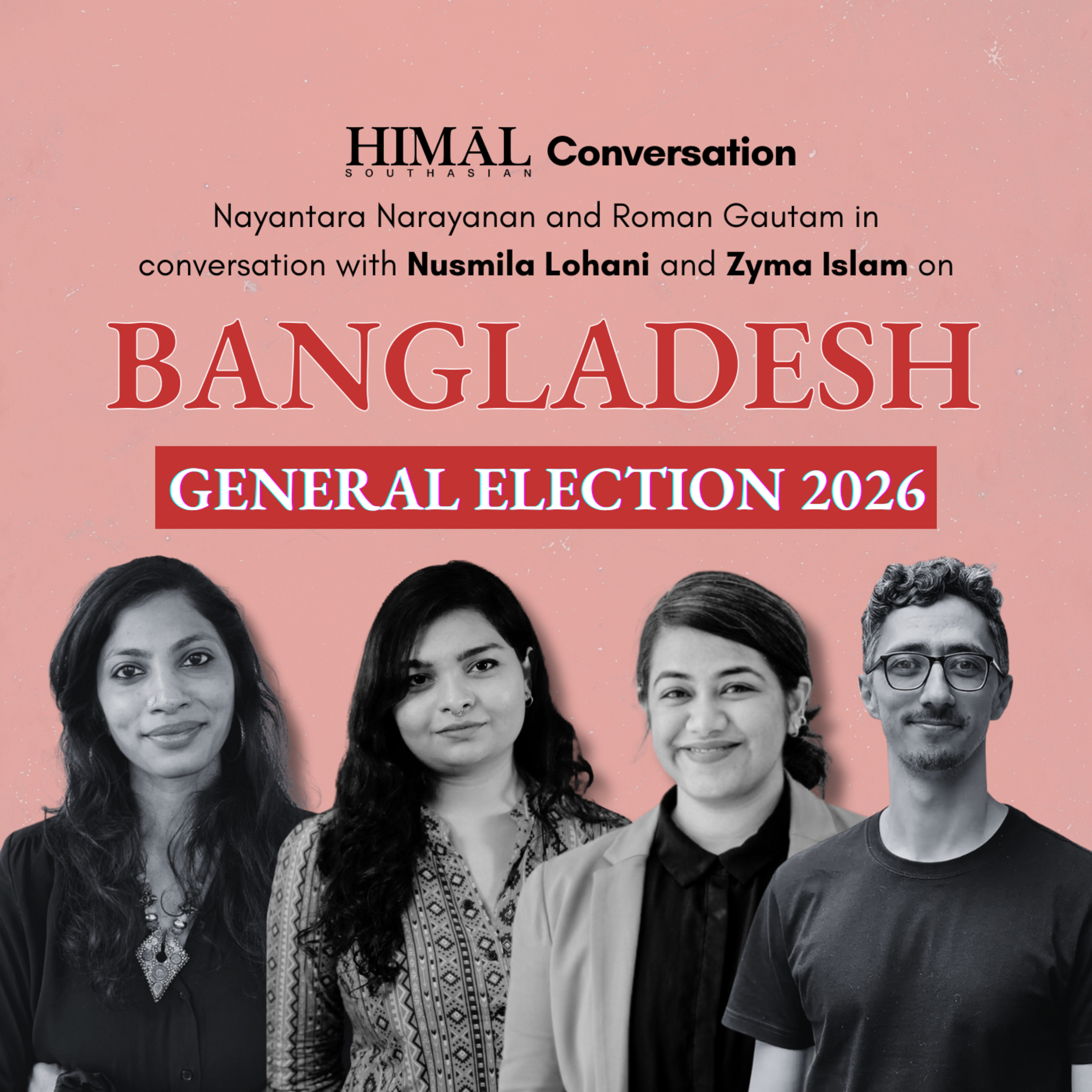 The high stakes of the 2026 Bangladesh election | Nusmila Lohani and Zyma Islam 11.02.2026 54minOn 12 February 2026, Bangladesh holds its first election since the July Revolution in 2024 that overthrew the authoritarian government of Sheikh Hasina and the Awami League. These polls are among the most critical in the country’s tumultuous history. Hasina’s exile, a ban on the Awami League and a generational change in the Bangladesh Nationalist Party (BNP) after Khaleda Zia’s death have transformed the face of Bangladesh politics. Himal's editor Roman Gautam and associate editor Nayantara Narayanan speak to Bangladeshi journalists Zyma Islam and Nusmita Lohani to unpack Bangladesh’s contested present and recent past, offering nuance and deeper perspective to make sense of the election and what comes after it. Read the rest of our coverage here :https://www.himalmag.com/politics/bangladesh-election-bnp-jamaat-islamist-hasinYou can also listen to this conversation on🎧 YouTube: https://youtu.be/HqEEI5GNna4 🎧 Apple podcasts:Himal Southasian is Southasia’s first and only regional news and analysis magazine. Stretching from Afghanistan to Burma, from Tibet to the Maldives, this region of more than 1.4 billion people shares great swathes of interlocking geography, culture and history. Yet today neighbouring countries can barely talk to one another, much less speak in a common voice. For three decades, Himal Southasian has strived to define, nurture, and amplify that voice. Read more: https://www.himalmag.com/Support our independent journalism and become a Patron of Himal: https://www.himalmag.com/support-himalFind us on: https://twitter.com/Himalistanhttps://www.facebook.com/himal.southasianhttps://www.instagram.com/himalistan/#bangladesh #bangladeshelection2026 #democracy #awamileague #bnp #sheikhhasina #southasianvoices #southasianlanguage #southasiageopolitics #editorialanalysis #journalism #southasianews #netrachannel #dailystar #politics #podcast #politicalupdates #politicalpodcast #generalknowledge #general #generalelections
 -
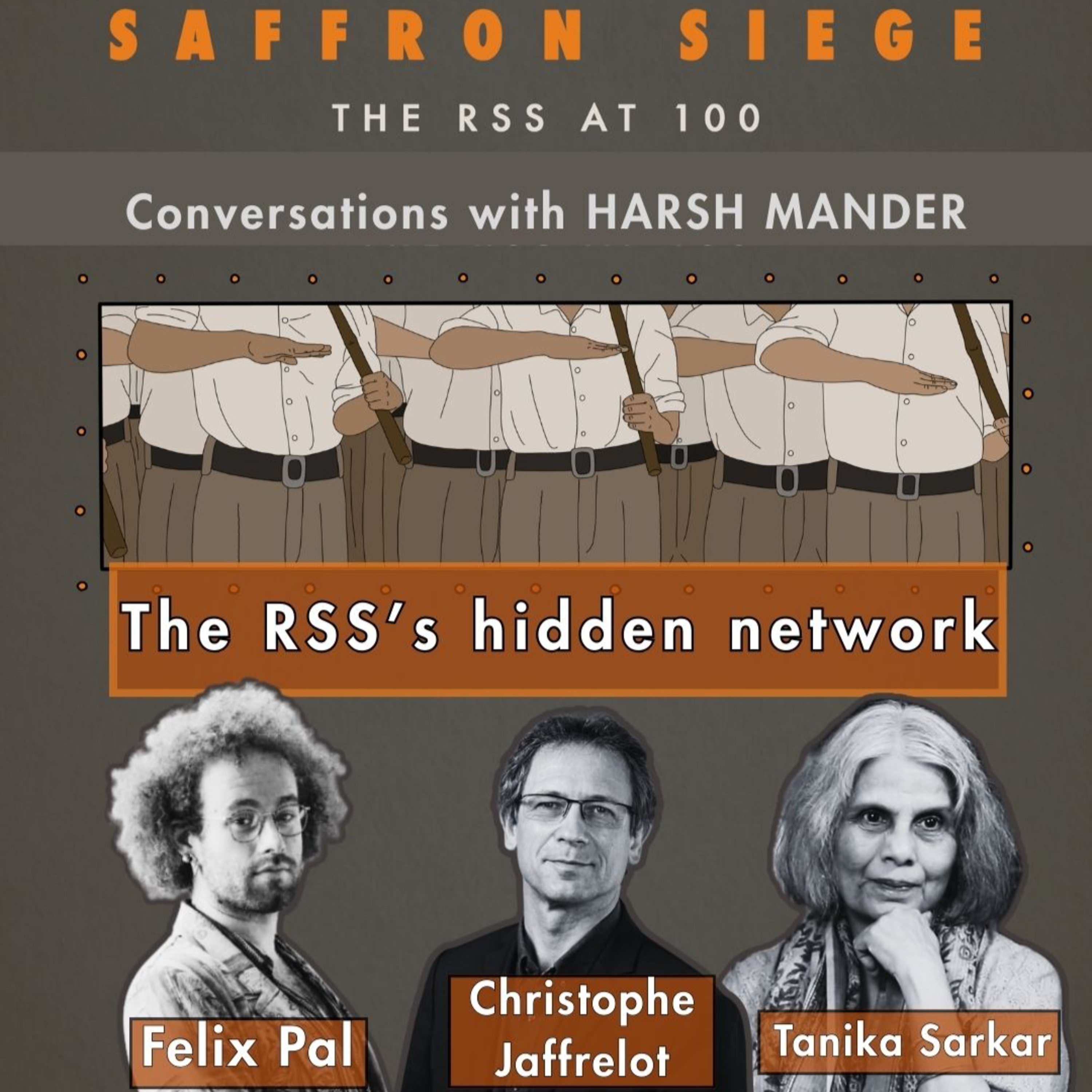 Felix Pal, Christophe Jaffrelot & Tanika Sarkar on the RSS’s hidden network 07.01.2026 1godz 5minIn this special episode of Saffron Siege: The RSS at 100, Harsh Mander speaks to Felix Pal, a lecturer on political science and international relations at the University of Western Australia, about his six-year long research into the RSS and its affiliates recently published in The Caravan magazine. The research revealed a network of 2500 organisations around the world that are directly or indirectly connected to the RSS, and overtly or covertly espousing its ideas.Commenting on the findings are Christophe Jaffrelot, a political scientist at Sciences Po who specialises in Southasia and has written several important books in India’s politics, and Tanika Sarkar, a historian of modern India who works on religion, gender and politics in Southasia, in particular on women and the Hindu Right. You can watch this full episode on YouTube: https://youtu.be/FSg9h0NXipUThis episode is part of Season Two of Partitions of the Heart. In this season, Harsh Mander speaks to leading scholars and observers who have studied the RSS closely. Together, they examine its roots and core principles, its Hindutva agenda, and its corrosive role in India’s public and social life across a century. Production: Imaad ul Hasan, Lydia Smith, Ritika Chauhan, Nayantara NarayananHimal Southasian is Southasia’s first and only regional news and analysis magazine. Stretching from Afghanistan to Burma, from Tibet to the Maldives, this region of more than 1.4 billion people shares great swathes of interlocking geography, culture and history. Yet today neighbouring countries can barely talk to one another, much less speak in a common voice. For three decades, Himal Southasian has strived to define, nurture, and amplify that voice. Read more: https://www.himalmag.com/Support our independent journalism and become a Patron of Himal: https://www.himalmag.com/support-himalFind us on: https://twitter.com/Himalistanhttps://www.facebook.com/himal.southasianhttps://www.instagram.com/himalistan/
 -
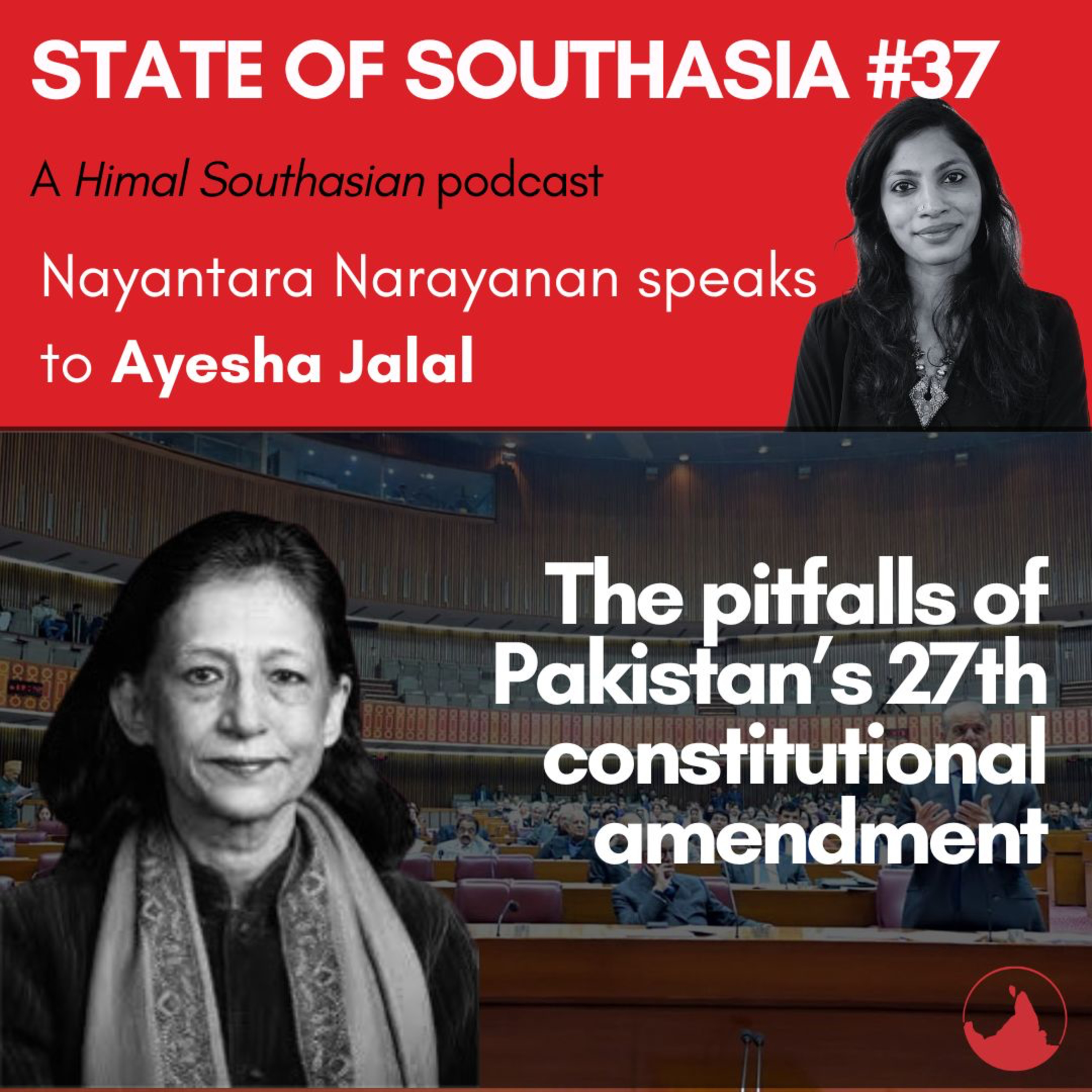 Ayesha Jalal on Pakistan’s 27th constitutional amendment: State of Southasia #37 22.12.2025 29minPakistan has been reshaped by its 27th constitutional amendment that was passed in November. The amendment has formalised the military’s so-far unofficial dominance in the country’s governing structure into explicit constitutional supremacy. It was passed by a politically fragile parliament facing questions over its own legitimacy and elevates the army chief Asim Munir to an almost unassailable position as the Chief of Defence Forces. What had long operated as an informal military veto over civilian politics is now written into the basic law of the state, transforming Pakistan’s power structure for years to come.The amendment also rewires the judiciary, creating a new Federal Constitutional Court whose judges are effectively chosen and controlled by the executive and legislature, both themselves deeply aligned with the military establishment. By stripping the existing Supreme Court of most constitutional jurisdiction and reshaping the body that appoints and transfers judges, the changes leave little room for independent legal scrutiny of military or executive overreach.In this episode of State of Southasia, Ayesha Jalal, the Mary Richardson professor of history, arts and sciences at the Fletcher graduate school in Tufts University, speaks to Ayesha Jalal about Pakistan after the 27th amendment – what has changed and what has not, and what political players and civil society must do to reclaim democratic spaces in the country. You can also listen to this episode on: 🎧 YouTube: https://youtu.be/eXiuTQ6ppkM🎧 Apple podcasts:https://apple.co/4p7YhHtEpisode notes:Ayesha Jalal’s recommendations:- The State of Martial Rule: The Origins of Pakistan's Political Economy of Defence – Ayesha Jalal (non-fiction)- Crossed Swords: Pakistan, Its Army, and the Wars Within – Shuja Nawaz (non-fiction)- A Case of Exploding Mangoes – Mohammed Hanif (fiction)Further reading from Himal’s archives:In Pakistan, a mightier military and a judiciary undone (https://www.himalmag.com/politics/pakistan-27amendment-constitution-military-asim-munir)- Pakistan’s struggle to reshape its fiscal federalism (https://www.himalmag.com/politics/pakistan-fiscal-federalism-province-punjab-budget)- Asim Munir’s promotion to field marshal signals an authoritarian Pakistan (https://www.himalmag.com/politics/pakistan-military-asim-munir-authoritarianism)- Pakistan is losing friends fast in both Beijing and Washington DC (https://www.himalmag.com/politics/pakistan-unitedstates-china-taliban-security)Himal Southasian is Southasia’s first and only regional news and analysis magazine. Stretching from Afghanistan to Burma, from Tibet to the Maldives, this region of more than 1.4 billion people shares great swathes of interlocking geography, culture and history. Yet today neighbouring countries can barely talk to one another, much less speak in a common voice. For three decades, Himal Southasian has strived to define, nurture, and amplify that voice. Read more: https://www.himalmag.com/Support our independent journalism and become a Patron of Himal: https://www.himalmag.com/support-himalFind us on: https://twitter.com/Himalistanhttps://www.facebook.com/himal.southasianhttps://www.instagram.com/himalistan/
 -
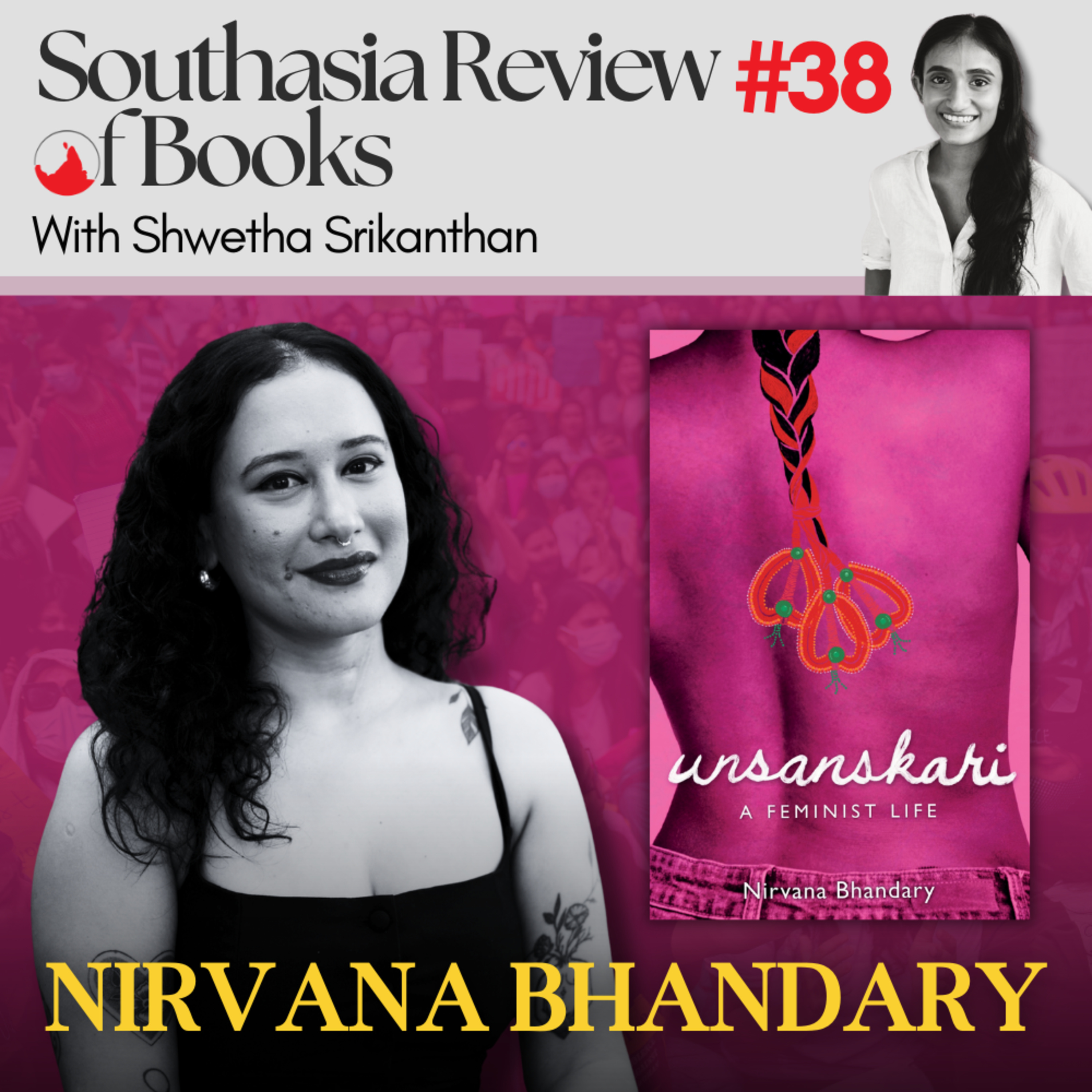 Nirvana Bhandary on what it means to be a feminist in Nepal today: Southasia Review of Books podcast #38 15.12.2025 45minA conversation with the writer and filmmaker Nirvana Bhandary on her collection of essays exploring feminist thought, lived experience and the generational shifts transforming contemporary Nepali womanhood.Welcome to the Southasia Review of Books podcast, where we speak to celebrated authors and emerging literary voices from across Southasia. In this episode, Shwetha Srikanthan speaks to the writer and filmmaker Nirvana Bhandary about her new book, Unsanskari: A Feminist Life (October 2025). Unsanskari: A Feminist Life by Nirvana Bhandary is a collection of essays, reflections and sharp cultural observations on what it means to be a Nepali woman beyond traditional expectations and patriarchal norms. From queerness and body politics to marriage, migration, intersectionality and intergenerational feminism, the book traces the cultural and political shifts shaping women’s lives today – and makes a compelling case for why claiming one’s femininity, and refusing to be “sanskari”, remains a radical act.This episode is now available on Spotify: https://open.spotify.com/episode/5VYhKdPlydfIkUivuDYtAdApple Podcasts: https://apple.co/3KBb1s6Youtube: https://youtu.be/4TeurmZBBcA'Unsanskari: A Feminist Life' by Nirvana Bhandary (October 2025): https://linktr.ee/Unsanskari✨ Thank you for listening to the Southasia Review of Books Podcast from Himal Southasian. If you like this episode, please share widely, rate, review, subscribe and download the show on your favourite podcast apps. ✉️ Let’s keep the conversation going – please share your thoughts on the episode. Leave us a comment on Youtube or write to us at [email protected].🙏🏼 To make conversations like this possible, we need the support of our listeners like you. Become a paying Himal Patron to support the Southasia Review of Books: https://www.himalmag.com/support-himal📚 Sign up to receive the Southasia Review of Books newsletter for Himal’s spotlight on Southasian literature, our latest conversations, and more: https://bit.ly/southasia-review-of-books
 -
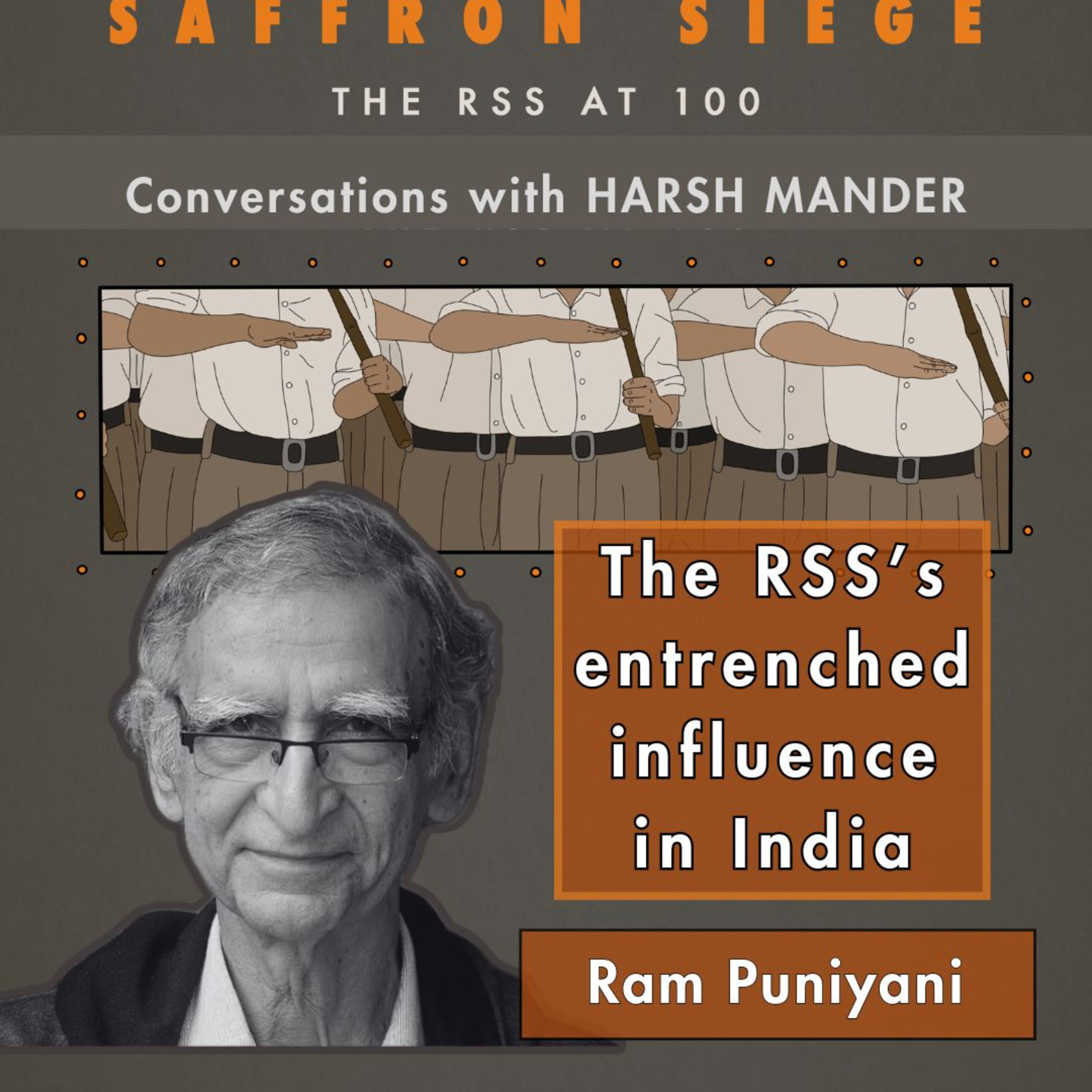 Ram Puniyani & Harsh Mander on the RSS’s entrenched influence on India’s polity 03.12.2025 1godz 3minIn this episode of Saffron Siege, the writer, historian and social activist Ram Puniyani explains the background of India’s freedom struggle in which the RSS was founded. He says the the founders of the RSS were reacting to the education of Dalits and women and the influx of average people into the national movement. On the other hand, they were influenced by the fascist nationalism growing in Europe. “The RSS stands for the presentation of old values, which they call the golden period of Hindu history represented by the Manusmriti, the values of caste and gender hierarchy,” Puniyani says. It also stands against religious minorities – Muslims to begin with and Christians to be followed up. Over the years the RSS and its ideologues, many who went forward to become BJP leaders, systematically entrenched the RSS’s influence over India’s citizenry – from Lal Krishna Advani as information and broadcasting minister planting RSS characters into the media to Narendran Modi co-opting big corporates as chief minister of Gujarat in the early 2000s world to building their own social media in recent years. “This chain which has grown and is very powerful, very difficult to break. And mainly because I think we have to blame ourselves when all this was going on, what were we doing?” Puniyani says. You can watch this whole conversation on YouTube: https://youtu.be/orGOdfpGFxoThis episode is part of Season Two of Partitions of the Heart. In this season, Harsh Mander speaks to leading scholars and observers who have studied the RSS closely. Together, they examine its roots and core principles, its Hindutva agenda, and its corrosive role in India’s public and social life across a century.“Saffron Siege” runs from 17 September to 3 December 2025, with a new episode releasing every Wednesday. Himal’s podcasts are available on YouTube, Spotify and Apple Podcasts.Production: Imaad ul Hasan, Lydia Smith, Ritika Chauhan, Nayantara NarayananSupport Himal Podcasts and Himal's independent journalism for just USD 5 per month: https://payhere.lk/pay/oee1bdaf1Himal Southasian is Southasia’s first and only regional news and analysis magazine. Stretching from Afghanistan to Burma, from Tibet to the Maldives, this region of more than 1.4 billion people shares great swathes of interlocking geography, culture and history. Yet today neighbouring countries can barely talk to one another, much less speak in a common voice. For three decades, Himal Southasian has strived to define, nurture, and amplify that voice. Read more: https://www.himalmag.com/Support our independent journalism and become a Patron of Himal: https://www.himalmag.com/support-himalFind us on: https://twitter.com/Himalistanhttps://www.facebook.com/himal.southasian https://www.instagram.com/himalistan/
 -
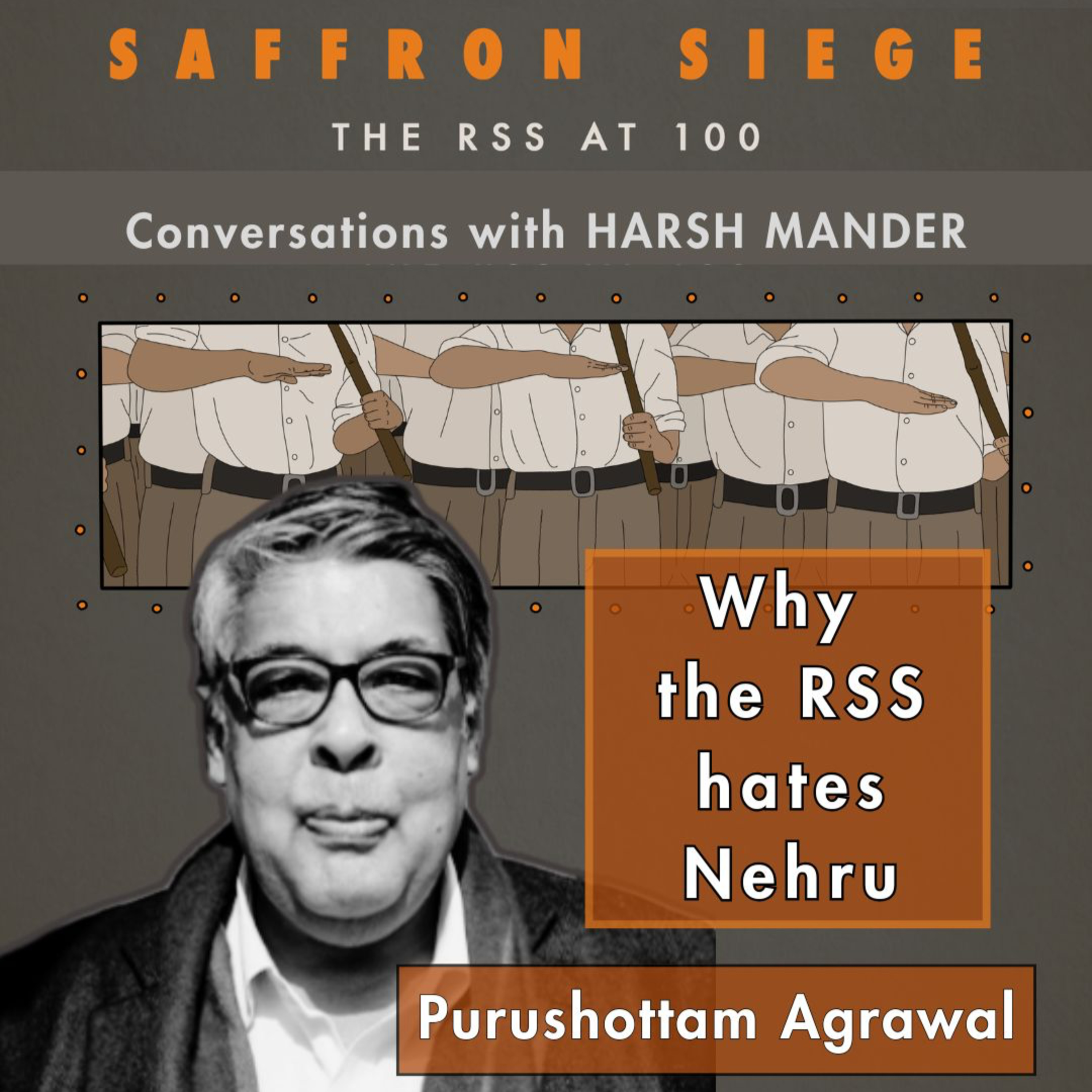 Purushottam Agrawal & Harsh Mander on why the RSS hates Nehru, and more 26.11.2025 1godzIndia’s first prime minister Jawaharlal Nehru has become a figure of hate and derision for the ruling Bharatiya Janata Party (BJP) under the leadership of Narendra Modi and for the Rashtriya Swayamsevak Sangh (RSS), its ideological parent. In this episode of Saffron Siege, Harsh Mander and historian Purushottam Agrawal examine the reasons for their particular resentment against Nehru. Agrawal ways that Nehru’s modernity of thought, the fact that he never used the idioms of religion in public speech and his relatability to Indians across geography and social divides makes him a symbol that the RSS has never been able to appropriate. “Nehru does not allow them to appropriate himself. So, if you cannot appropriate, you destroy”, says Agrawal. They also discuss the lack of the RSS’s self-identity beyond its antagonism towards India’s minorities, the fickleness of political parties who once opposed to the RSS and BJP’s fascist ideas and later became their allies, and the reasons behind Hindu radicalisation. You can watch the full conversation on YouTube: https://youtu.be/-0qrJfdTW0kThis episode is part of Season Two of Partitions of the Heart. In this season, Harsh Mander speaks to leading scholars and observers who have studied the RSS closely. Together, they examine its roots and core principles, its Hindutva agenda, and its corrosive role in India’s public and social life across a century“Saffron Siege” runs from 17 September to 3 December 2025, with a new episode releasing every Wednesday. Himal’s podcasts are available on YouTube, Spotify and Apple Podcasts.Production: Imaad ul Hasan, Lydia Smith, Ritika Chauhan, Nayantara NarayananHimal Southasian is Southasia’s first and only regional news and analysis magazine. Stretching from Afghanistan to Burma, from Tibet to the Maldives, this region of more than 1.4 billion people shares great swathes of interlocking geography, culture and history. Yet today neighbouring countries can barely talk to one another, much less speak in a common voice. For three decades, Himal Southasian has strived to define, nurture, and amplify that voice.Read more: https://www.himalmag.com/Support our independent journalism and become a Patron of Himal: https://www.himalmag.com/support-himalFind us on: https://twitter.com/Himalistanhttps://www.facebook.com/himal.southasianhttps://www.instagram.com/himalistan/
 -
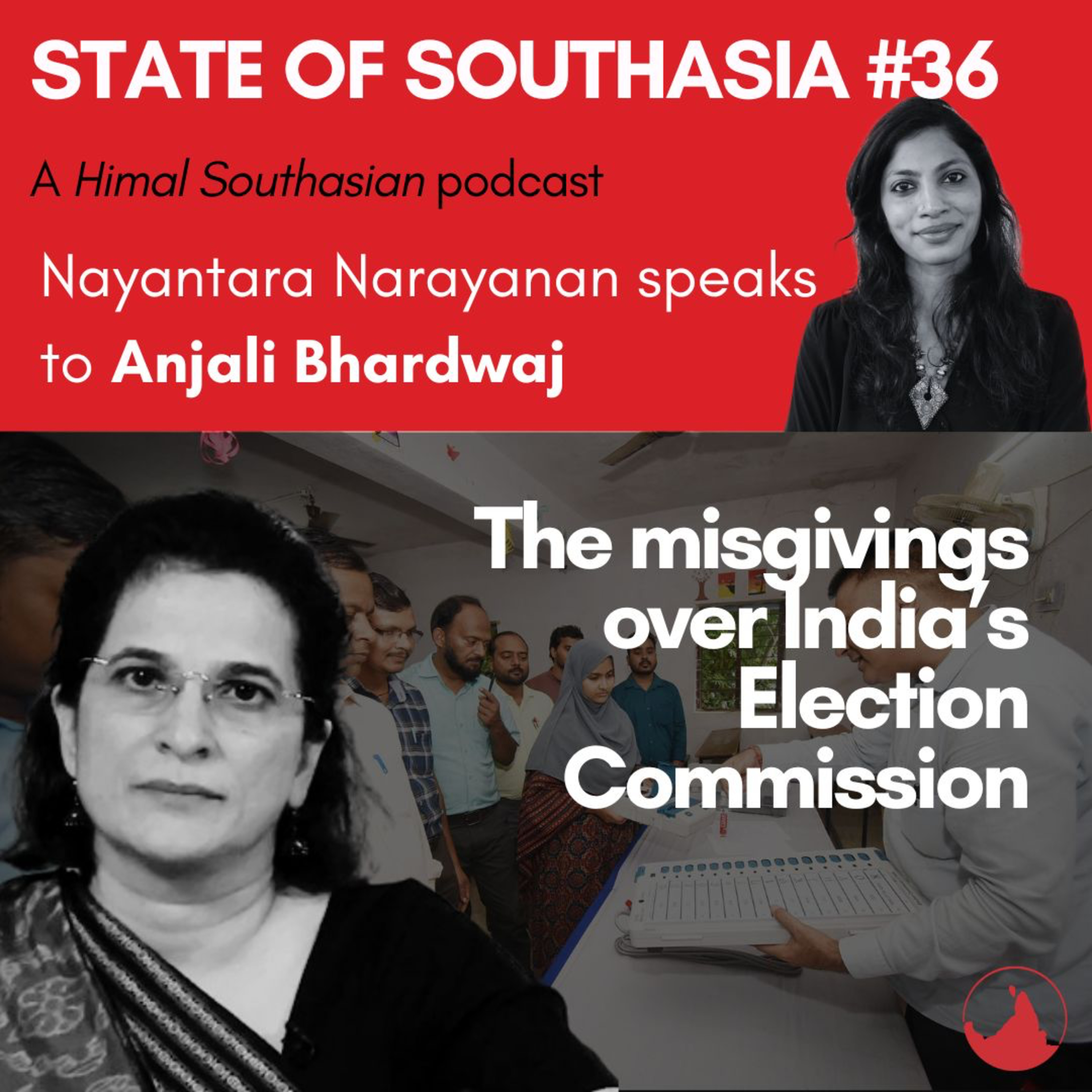 Anjali Bhardwaj on misgivings over India’s Election Commission: State of Southasia #36 24.11.2025 58minThe Election Commission of India was, for many years, one of the country’s most trusted public institutions lauded around the world for carrying out, every five years, the seemingly impossible task of India’s general elections. The commission was seen as non-partisan that did its work without fear or favour. That reputation has taken a hit in recent years. Since August this year, it has been facing a particularly difficult test of its credibility after Rahul Gandhi, the leader of the opposition, made allegations against the ruling Bharatiya Janata Party and the Election Commission ranging from voter fraud to inconsistencies in electoral rolls. These allegation were based on investigations into the Election Commission’s own records. Questions have also been raised over the commission’s Special Intensive Revision of voter lists before the Bihar state elections as to the timing and manner in which it was conducted and the commission’s possible motivations for such an exercise.In this episode of State of Southasia, Anjali Bhardwaj, a transparency and accountability activist speaks to Nayantara Narayanan about the behaviour of the Election Commission in the conduct of elections over the past decade, the recent allegations it and its reluctance to share election and voter data. She says all this raises “very serious concerns both about the health of India's democracy and about the legitimacy of the governments that are functioning at the centre and in the states.”You can also listen to this episode on: 🎧 YouTube: https://youtu.be/V6XhVNmMzJo 🎧 Apple podcasts: https://bit.ly/44iEnBYEpisode notes:Anjali Bhardwaj’s recommendations:Newton - Amit V. Masurkar (Hindi-language film)Janne Bhi Do Yaaro - Anjali Bhardwaj and Amrita Johri (podcast on The Wire)Electoral Democracy?: An Inquiry into the Fairness and Integrity of Elections in India – edited by M G Devasahayam (non-fiction)Further reading from Himal’s archives:India’s BJP government gamed the Jammu and Kashmir election – and still lostAakar Patel on the unprecedented threats to India’s election: State of Southasia #03With an unfree and unfair election, Pakistan prepares to repeat its pastIn Bangladesh’s sham election, the only real contest is geopoliticalHimal Southasian is Southasia’s first and only regional news and analysis magazine. Stretching from Afghanistan to Burma, from Tibet to the Maldives, this region of more than 1.4 billion people shares great swathes of interlocking geography, culture and history. Yet today neighbouring countries can barely talk to one another, much less speak in a common voice. For three decades, Himal Southasian has strived to define, nurture, and amplify that voice. Read more: https://www.himalmag.com/Support our independent journalism and become a Patron of Himal: https://www.himalmag.com/support-himalFind us on: https://twitter.com/Himalistan https://www.facebook.com/himal.southasian https://www.instagram.com/himalistan/
 -
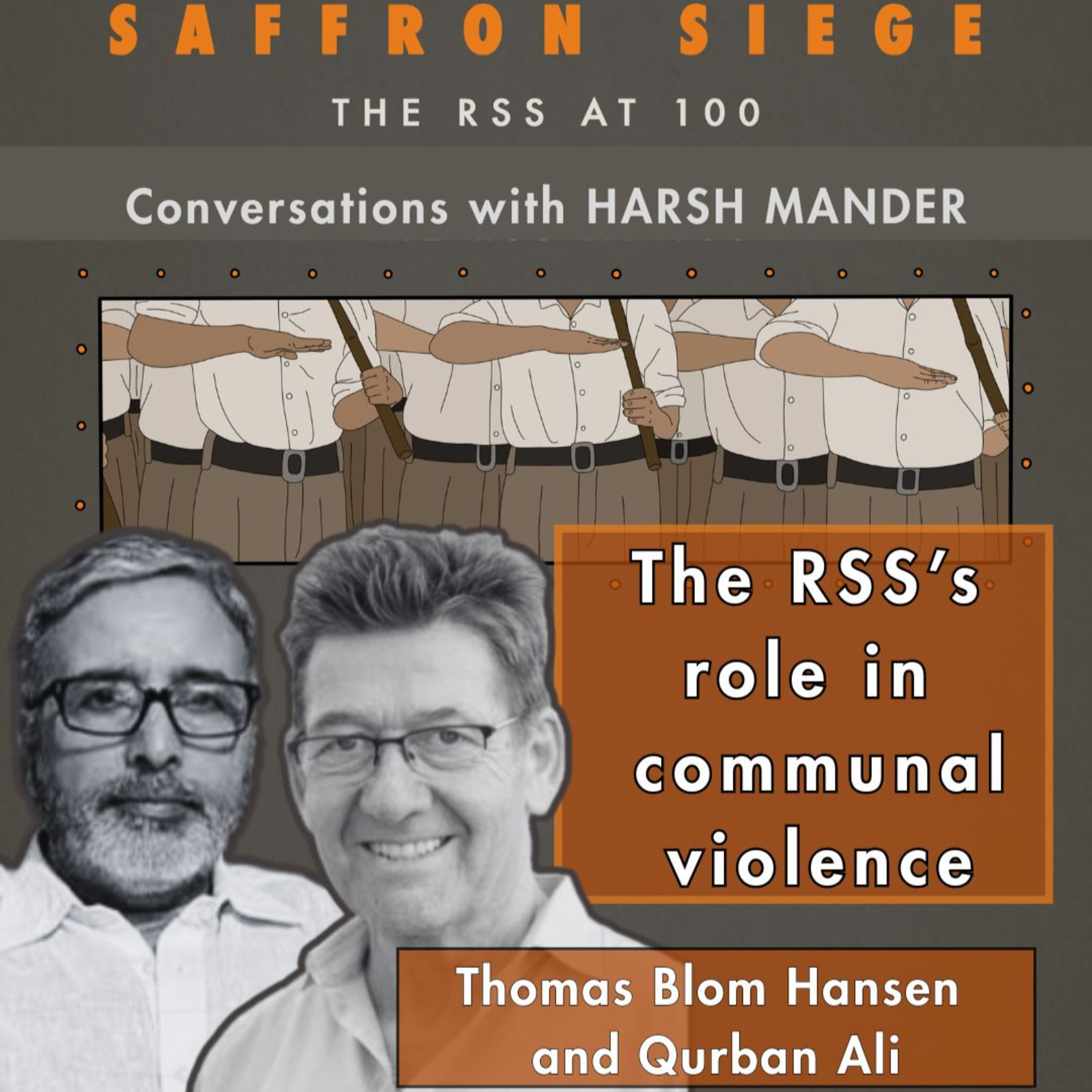 Thomas Blom Hansen, Qurban Ali & Harsh Mander on the RSS’s role in communal violence 19.11.2025 58minIn this episode of Saffron Siege, the anthropologist Thomas Blom Hansen and journalist Qurban Ali join Harsh Mande to examine how the RSS has triggered, enabled and executed riots, targeted communal attacks and other forms of communal violence in India over the 100 years of its existence. Ali who has reported on many of these incidents on the ground documents how many commissions have found the RSS culpable in riots dating back to Sholapur in 1967. Hansen talks about how violence is a central thesis of the RSS not only as a physical act but as a state of mind. You can watch this full discussion on YouTube: This episode is part of Season Two of Partitions of the Heart. In this season, Harsh Mander speaks to leading scholars and observers who have studied the RSS closely. Together, they examine its roots and core principles, its Hindutva agenda, and its corrosive role in India’s public and social life across a century“Saffron Siege” runs from 17 September to 3 December 2025, with a new episode releasing every Wednesday. Himal’s podcasts are available on YouTube, Spotify and Apple PodcastsProduction: Imaad ul Hasan, Lydia Smith, Ritika Chauhan, Nayantara NarayananSupport Himal Podcasts and Himal's independent journalism for just USD 5 per month: https://payhere.lk/pay/oee1bdaf1 Himal Southasian is Southasia’s first and only regional news and analysis magazine. Stretching from Afghanistan to Burma, from Tibet to the Maldives, this region of more than 1.4 billion people shares great swathes of interlocking geography, culture and history. Yet today neighbouring countries can barely talk to one another, much less speak in a common voice. For three decades, Himal Southasian has strived to define, nurture, and amplify that voice. Read more: https://www.himalmag.com/Support our independent journalism and become a Patron of Himal: https://www.himalmag.com/support-himalFind us on: https://twitter.com/Himalistanhttps://www.facebook.com/himal.southasianhttps://www.instagram.com/himalistan/
 -
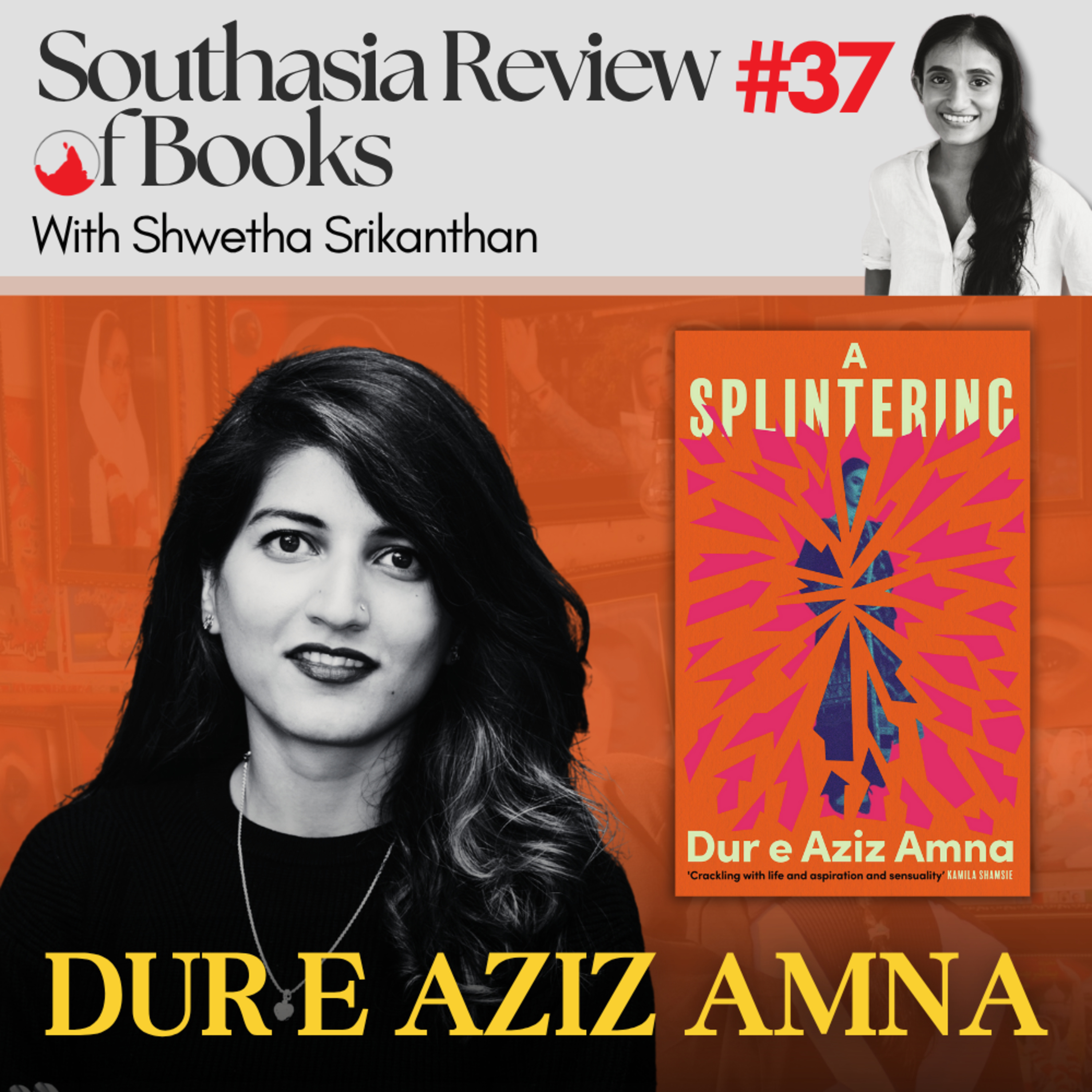 Dur e Aziz Amna on writing a story of womanhood and ambition in Pakistan: Southasia Review of Books podcast #37 17.11.2025 29minA conversation with the writer Dur e Aziz Amna about her second novel, ‘A Splintering’, and its exploration of class struggle, female rage, and the challenges of navigating social expectations across rural and urban Pakistan. Welcome to the Southasia Review of Books podcast, where we speak to celebrated authors and emerging literary voices from across Southasia. In this episode, Shwetha Srikanthan speaks to the writer Dur e Aziz Amna about her second novel, A Splintering (Duckworth Books, September 2025).In a village in rural Pakistan, Tara dreams of escaping the dust, the stench, and the violent grip of her brother. An education and marriage to a middle-class accountant takes her to the capital, but she soon learns that respectability can become its own kind of cage. Her hunger for freedom and social mobility only deepens, even as the shadows of her past loom large. Set against a backdrop of political unrest and everyday precarity, A Splintering by Dur e Aziz Amna is a gripping story of womanhood, desire and the costs of ambition. This episode is now available on Spotify: https://open.spotify.com/episode/27jWWI62lH3ytS48OLbiajApple Podcasts: https://podcasts.apple.com/lk/podcast/dur-e-aziz-amna-on-writing-a-story-of/id1464880116?i=1000737080095Youtube: https://youtu.be/rhOq9y3PjYI✨ Thank you for listening to the Southasia Review of Books Podcast from Himal Southasian. If you like this episode, please share widely, rate, review, subscribe and download the show on your favourite podcast apps. ✉️ Let’s keep the conversation going – please share your thoughts on the episode. Leave us a comment on Youtube or write to us at [email protected].🙏🏼 To make conversations like this possible, we need the support of our listeners like you. Become a paying Himal Patron to support the Southasia Review of Books: https://www.himalmag.com/support-himal📚 Sign up to receive the Southasia Review of Books newsletter for Himal’s spotlight on Southasian literature, our latest conversations, and more: https://bit.ly/southasia-review-of-books
 -
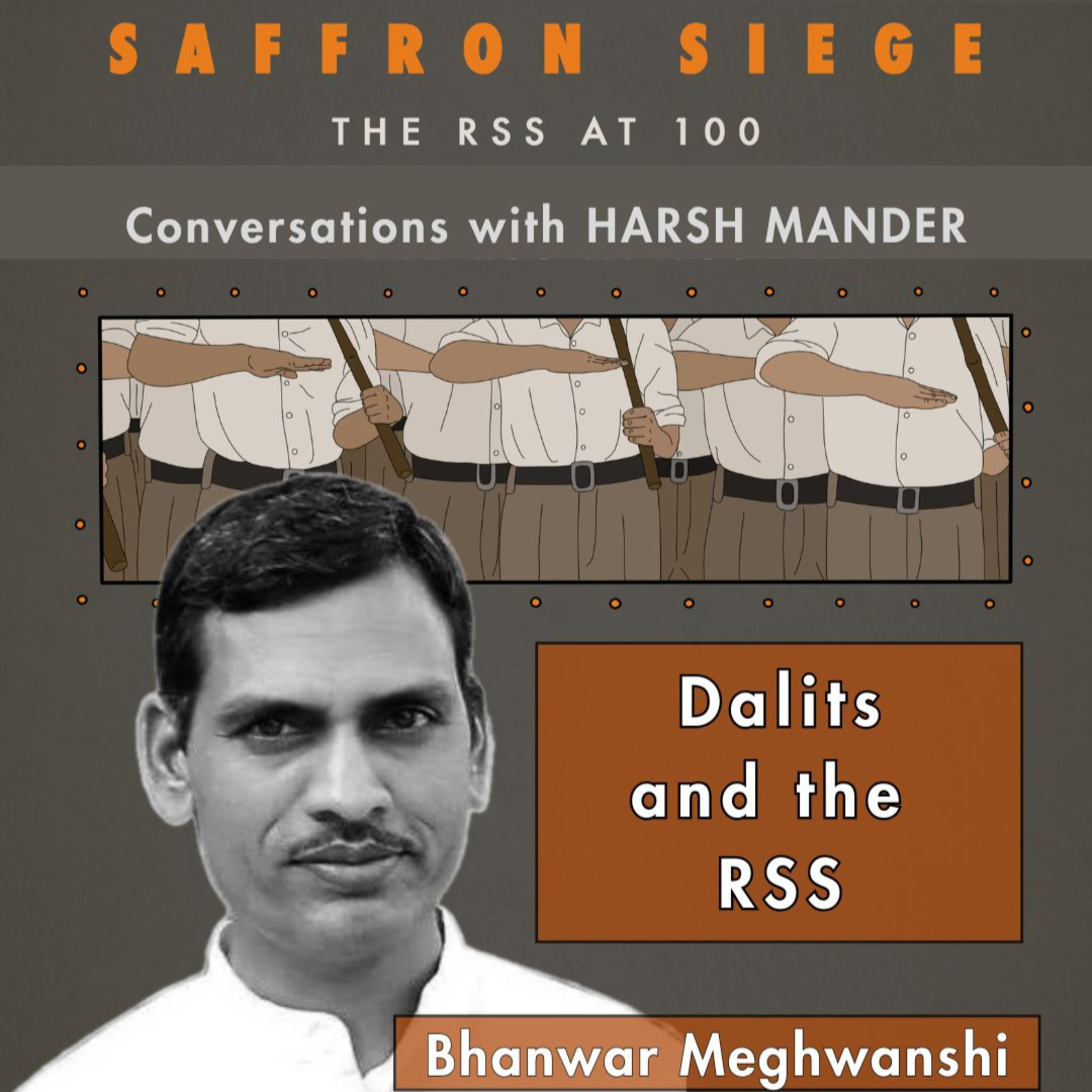 Bhanwar Meghwanshi & Harsh Mander on Dalits and the RSS 12.11.2025 1godz 6minBhanwar Meghwanshi, who is a writer and a social and political activist, was once a member of the Rashtriya Swayamsevak Sangh. He was a self-described “complete bhakt” with dreams of becoming a pracharak (preacher) till he realised that the RSS was as casteist as the rest of Hindu and Indian society. Meghwanshi who is a Dalit is now a strong opponent of the RSS and its divisive ideology. He describes his journey in this episode of Saffron Siege with Harsh Mander. Meghwanshi talks about how the RSS and the BJP use oppressed communities, such as the Dalits, to gain power through politics and to do their dirtiest communal work, such as being on the frontlines of communal violence. He says that the time has come for oppressed communities to unite against exploitation, especially by upper caste groups and India’s right wing ecosystem.🎧 You can watch the full episode with subtitles on YouTube: https://youtu.be/S7uXcpQrnkQThis episode is part of Season Two of Partitions of the Heart. In this season, Harsh Mander speaks to leading scholars and observers who have studied the RSS closely. Together, they examine its roots and core principles, its Hindutva agenda, and its corrosive role in India’s public and social life across a century.“Saffron Siege” runs from 17 September to 3 December 2025, with a new episode releasing every Wednesday. Himal’s podcasts are available on YouTube, Spotify and Apple Podcasts.Production: Imaad ul Hasan, Lydia Smith, Ritika Chauhan, Nayantara NarayananSupport Himal Podcasts and Himal's independent journalism for just USD 5 per month: https://payhere.lk/pay/oee1bdaf1 Himal Southasian is Southasia’s first and only regional news and analysis magazine. Stretching from Afghanistan to Burma, from Tibet to the Maldives, this region of more than 1.4 billion people shares great swathes of interlocking geography, culture and history. Yet today neighbouring countries can barely talk to one another, much less speak in a common voice. For three decades, Himal Southasian has strived to define, nurture, and amplify that voice. Read more: https://www.himalmag.com/Support our independent journalism and become a Patron of Himal: https://www.himalmag.com/support-himalFind us on:https://twitter.com/Himalistanhttps://www.facebook.com/himal.southasianhttps://www.instagram.com/himalistan/
 -
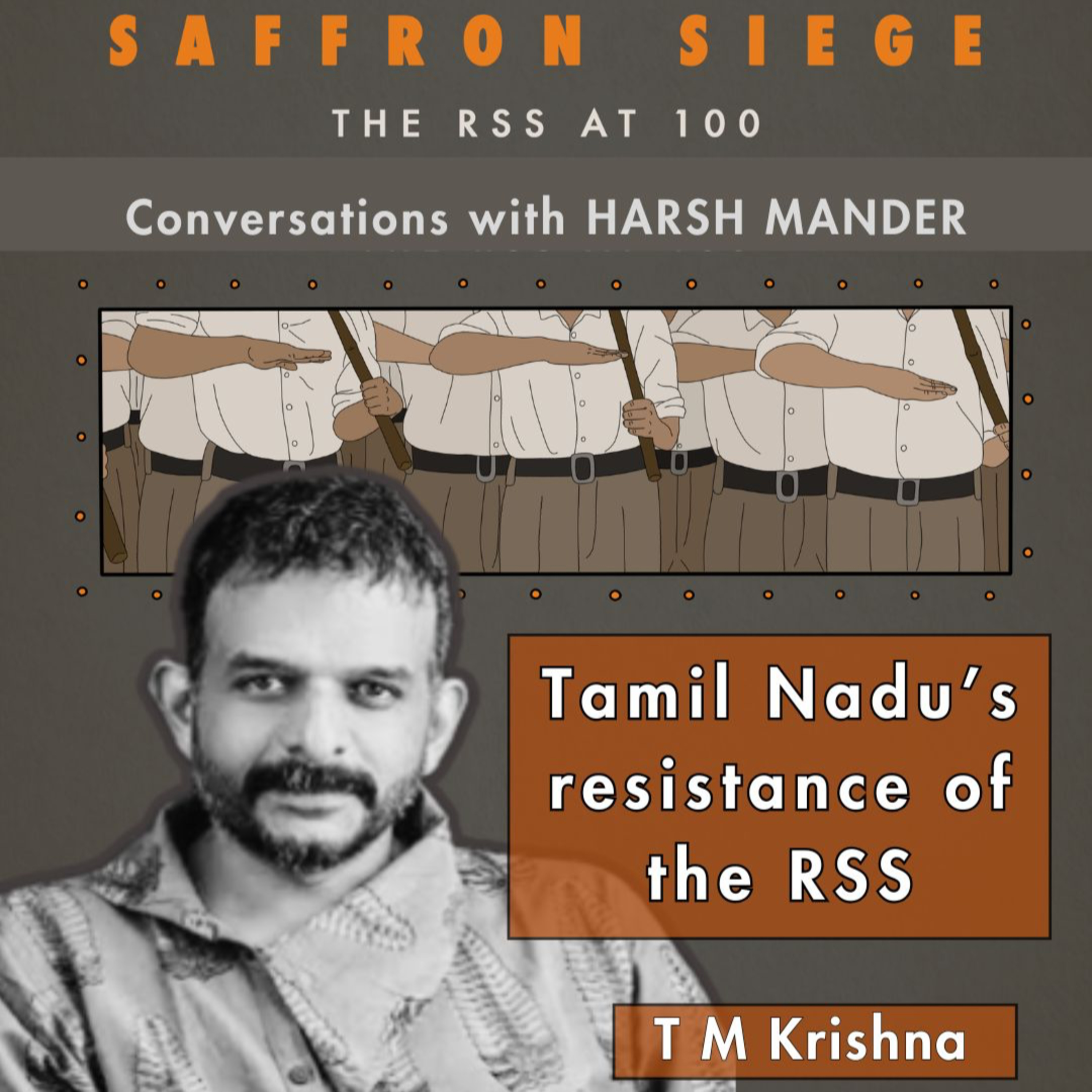 T M Krishna & Harsh Mander on Tamil Nadu’s resistance of the RSS 05.11.2025 1godz 5minThe trajectory of the RSS in south India is very different from its history and progress in the north and northeast of the country. While coastal Karnataka was the landing ground of the Sangh in the south as far back as the 1950s, Hindutva found little traction in large parts of the south till the last decade when Narendra Modi and his BJP have been in national power. The biggest resistance to the RSS and Hindutva has been in Tamil Nadu.In this episode, musician and socio-political commentator T M Krishna speaks to Harsh Mander about Tamil Nadu’s long history of social movements that has led to this resistance. They examine how the state’s linguistic and faith traditions have stood as a bulwark against the RSS’s attempts at homogenisation under a Hindu umbrella. Krishna points out the multiple streams of religious influence on arts in India, especially in music, and how the RSS has tried to deny this past in service of the ideological project. “Carnatic music is symbolic of something for the RSS. It is symbolic of that puritanical and cultural superiority… Homogenisation, or rather a linearisation, of that is convenient for them.”You can watch the full episode on YouTube: https://youtu.be/cPIGBhmk4usThis episode is part of Season Two of Partitions of the Heart. In this season, Harsh Mander speaks to leading scholars and observers who have studied the RSS closely. Together, they examine its roots and core principles, its Hindutva agenda, and its corrosive role in India’s public and social life across a century. “Saffron Siege” runs from 17 September to 3 December 2025, with a new episode releasing every Wednesday. Himal’s podcasts are available on YouTube, Spotify and Apple Podcasts.Production: Imaad ul Hasan, Lydia Smith, Ritika Chauhan, Nayantara NarayananSupport Himal Podcasts and Himal's independent journalism for just USD 5 per month: https://payhere.lk/pay/oee1bdaf1 Himal Southasian is Southasia’s first and only regional news and analysis magazine. Stretching from Afghanistan to Burma, from Tibet to the Maldives, this region of more than 1.4 billion people shares great swathes of interlocking geography, culture and history. Yet today neighbouring countries can barely talk to one another, much less speak in a common voice. For three decades, Himal Southasian has strived to define, nurture, and amplify that voice. Read more: https://www.himalmag.com/Support our independent journalism and become a Patron of Himal: https://www.himalmag.com/support-himalFind us on: https://twitter.com/Himalistanhttps://www.facebook.com/himal.southasianhttps://www.instagram.com/himalistan/
 -
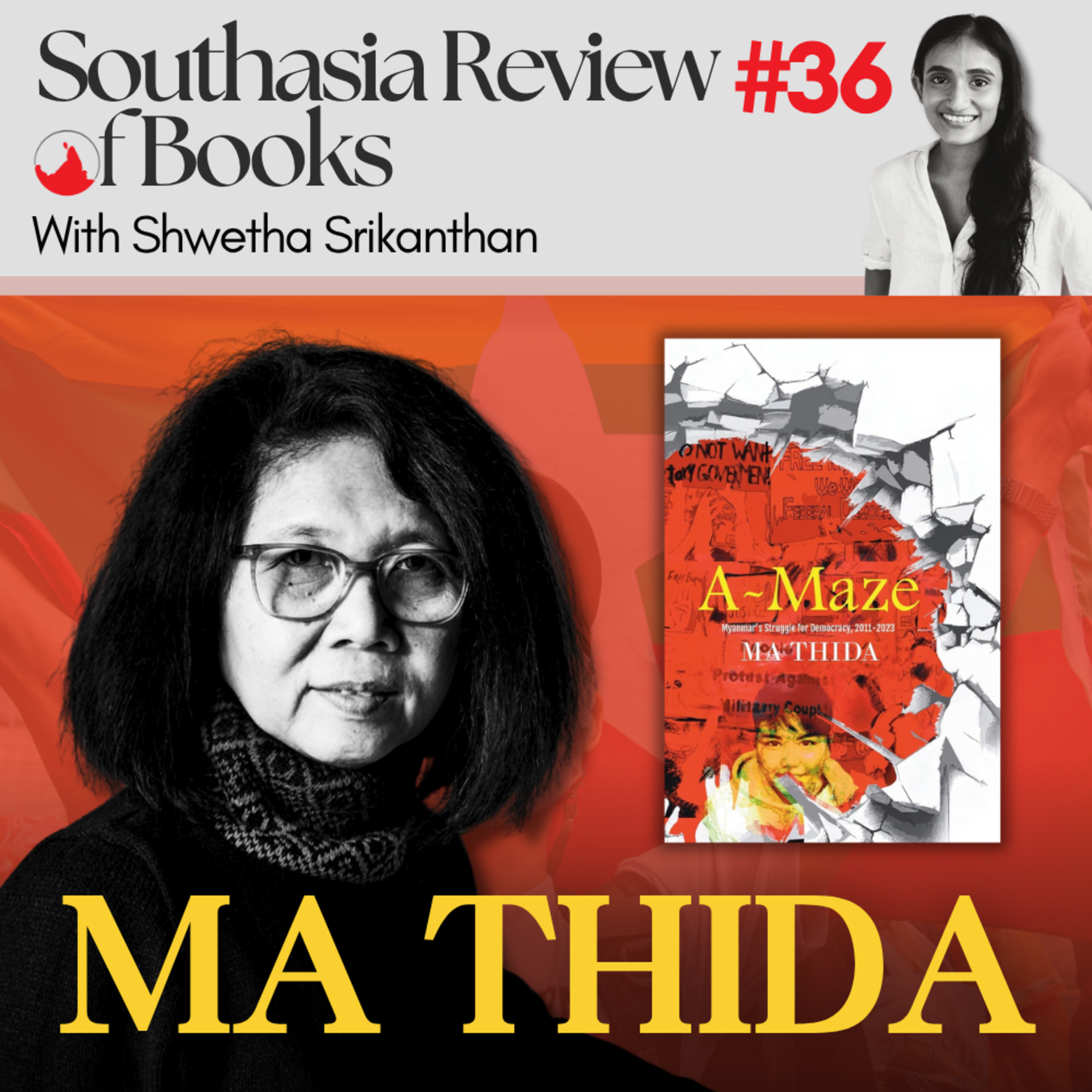 Ma Thida on Myanmar’s unfinished struggle for democracy: Southasia Review of Books podcast #36 03.11.2025 50minAs the Spring Revolution approaches its fifth year, Ma Thida, one of Myanmar’s foremost activists and intellectuals, reflects on the country’s political trajectory leading up to and beyond the 2021 military coup – and the people’s enduring fight for democracy. Welcome to the Southasia Review of Books podcast, where we speak to celebrated authors and emerging literary voices from across Southasia. In this episode, Shwetha Srikanthan speaks to the Burmese surgeon, award-winning writer and human-rights activist Ma Thida about her new book, A-Maze: Myanmar’s Struggle for Democracy, 2011-2023 (Balestier Press, May 2024). In February 2021, Myanmar’s junta staged a coup, ending a decade of fragile democratic transition and plunging the country back into military rule. What followed was the Spring Revolution – a nationwide movement, led above all by the country’s youth, which has continued to resist the junta through extraordinary courage and collective action.The road to democracy in Myanmar has been nearly four decades long, beginning with the 1988 uprising. Ma Thida – one of Myanmar’s leading activists and intellectuals – has lived through every turn of that journey. In her new book, A-Maze, she traces how far Myanmar has come, how far it still has to go, and how the people’s struggle since the 2021 coup has both deepened and redefined the country’s quest for democracy.The book looks at nearly three years of resistance and transformation, showing how the Spring Revolution isn’t just about ending military rule, but about breaking out of the larger “Maze” – the deep-rooted systems of control and inequality – and building together a new path toward a truly federal and democratic Myanmar.This episode is now available on Youtube: Spotify: https://open.spotify.com/episode/4EkNsOR7RzJYpxtG8VXM4DApple Podcasts: https://apple.co/3JA9rpC✨ Thank you for listening to the Southasia Review of Books Podcast from Himal Southasian. If you like this episode, please share widely, rate, review, subscribe and download the show on your favourite podcast apps. ✉️ Let’s keep the conversation going – please share your thoughts on the episode. Leave us a comment on Youtube or write to us at [email protected].🙏🏼 To make conversations like this possible, we need the support of our listeners like you. Become a paying Himal Patron to support the Southasia Review of Books: https://www.himalmag.com/support-himal📚 Sign up to receive the Southasia Review of Books newsletter for Himal’s spotlight on Southasian literature, our latest conversations, and more: https://bit.ly/southasia-review-of-books
 -
 Akshaya Mukul, Kunal Purohit & Harsh Mander on the RSS and Hindutva’s propaganda machinery 29.10.2025 55minHow has the RSS and Hindutva propaganda worked over a century? Journalists and writers Akshaya Mukul and Kunal Purohit dive into the strategies and successes with Harsh Mander on the this episode of Saffron Siege. Mukul examines the popularity Gita Press, which was founded in 1923 – two years before the RSS itself, and its many publications and how it insinuated itself into the consciousness of millions of Hindus. Purohit discusses the more recent phenomenon of Hindutva pop in which the internet has enabled young people in the smallest towns and villages to become Hindutva influencers regardless of education, access, gender or caste. 🎧 You can watch the full episode on YouTube: https://youtu.be/Kq6ffi92x5kThis episode is part of Season Two of Partitions of the Heart. In this season, Harsh Mander speaks to leading scholars and observers who have studied the RSS closely. Together, they examine its roots and core principles, its Hindutva agenda, and its corrosive role in India’s public and social life across a century. “Saffron Siege” runs from 17 September to 3 December 2025, with a new episode releasing every Wednesday. Himal’s podcasts are available on YouTube, Spotify and Apple Podcasts.Production: Imaad ul Hasan, Lydia Smith, Ritika Chauhan, Nayantara NarayananSupport Himal Podcasts and Himal's independent journalism for just USD 5 per month: https://payhere.lk/pay/oee1bdaf1Himal Southasian is Southasia’s first and only regional news and analysis magazine. Stretching from Afghanistan to Burma, from Tibet to the Maldives, this region of more than 1.4 billion people shares great swathes of interlocking geography, culture and history. Yet today neighbouring countries can barely talk to one another, much less speak in a common voice. For three decades, Himal Southasian has strived to define, nurture, and amplify that voice. Read more: https://www.himalmag.com/Support our independent journalism and become a Patron of Himal: https://www.himalmag.com/support-himalFind us on: https://twitter.com/Himalistanhttps://www.facebook.com/himal.southasianhttps://www.instagram.com/himalistan/
 -
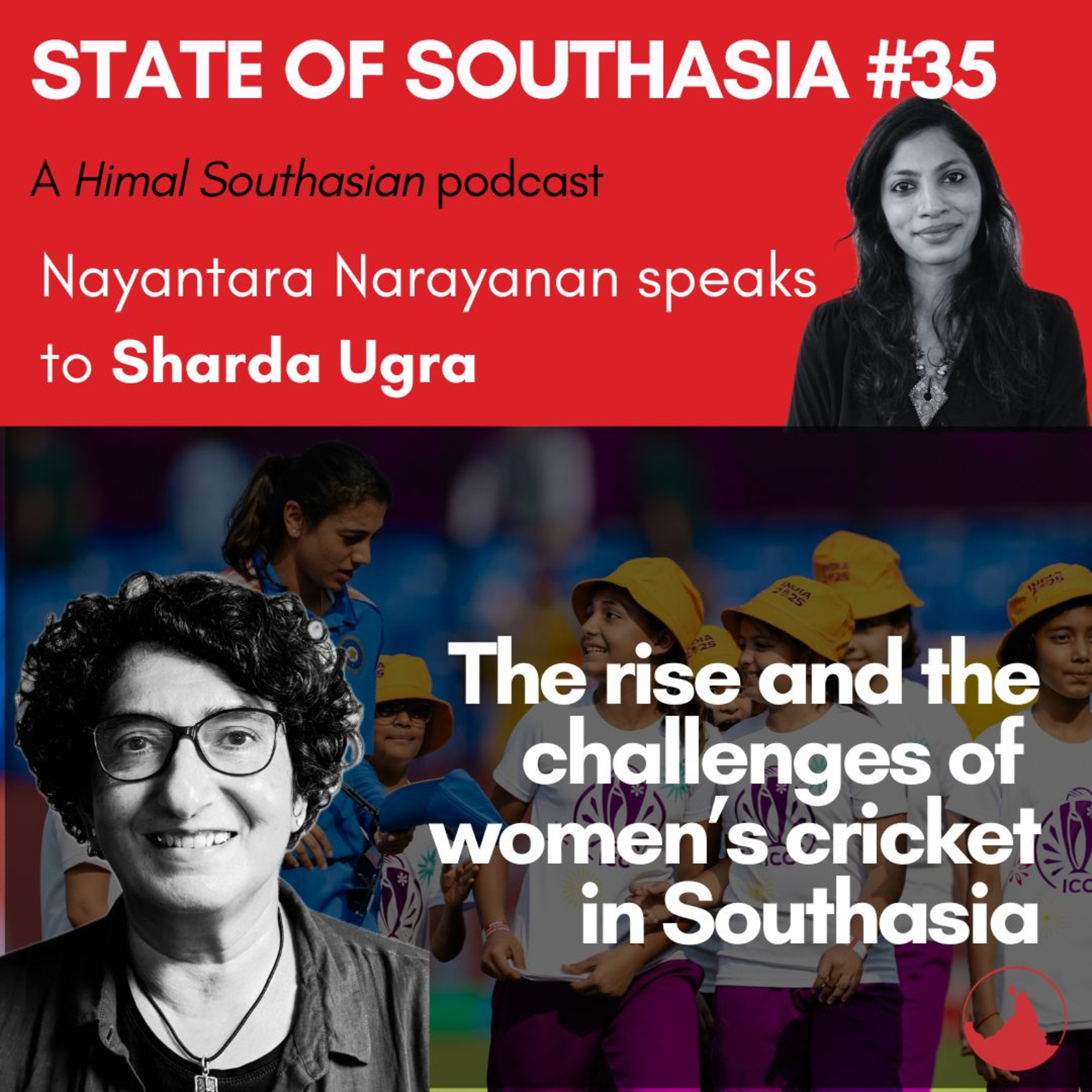 Sharda Ugra on the rise (and the challenges) of women’s cricket: State of Southasia #35 27.10.2025 46minAs the ICC Women’s Cricket World Cup reaches its final week, veteran sports journalist Sharda Ugra examines the progress that women’s cricket in Southasia has made in recent years – especially since 2017, when the ICC televised the tournament, drawing in a wider audience and greater interest – as well as persistent gaps shaping women’s cricket today. In this episode of State of Southasia, Ugra reflects on the growth in performance and professionalism across India, Bangladesh, Pakistan, and Sri Lanka, while also pointing to the uneven marketing, sponsorship, and administrative support that continue to hold the game back. Despite rising viewership and a handful of breakout stars, she notes that the sport still fights for the kind of institutional investment and fan enthusiasm long guaranteed to the men’s side.Amid the challenges, there are clear signs of change – from the Women’s Premier League opening new pathways for talent to the growing visibility of women in the sport. “One of the other really good things about this World Cup has been the presence of women everywhere,” Ugra says. “You see them – they're umpires, they're match referees, they’re officials, they’re in the commentary panel. It becomes normal for women to be in this space, which is a great thing.”You can also listen to this episode on: 🎧 YouTube: https://youtu.be/1E6nW76WOD0🎧 Apple podcasts: https://apple.co/3Wsiax4Episode notes:Sharda Ugra’s recommendations:- She Dared: Women in Indian Sport – Abhishek Dubey and Sanjeeb Mukherjea (non-fiction)- Unveiling Jazba: A History of Pakistan Women’s Cricket – Aayush Puthran (non-fiction)- The Fire Burns Blue: A History of Women's Cricket in India – Karunya Keshav and Sidhanta Patnaik (non-fiction)- Free Hit – Suprita Das (non-fiction)Further reading from Himal’s archives:A sports journalist’s journey alongside the rise of Sri Lankan women’s cricketThe 2025 Women’s World Cup could be India’s biggest cricketing moment in over 50 yearsBeyond the boundary: When a pandemic takes hold, even cricket knows when to stop buying its own hypeThe costly spectacle of cricket: What COVID-19 reveals about the spectacle of cricket and inequality within the cricket fraternityChanging the rules: The Supreme Court verdict on the Lodha committee report heralds radical shift in Indian cricket administrationCricketing rivalry with India can transform Australia’s view of Southasia – and of itselfJasprit Bumrah embodies a better kind of Indian cricketer – and a better IndiaHimal Southasian is Southasia’s first and only regional news and analysis magazine. Stretching from Afghanistan to Burma, from Tibet to the Maldives, this region of more than 1.4 billion people shares great swathes of interlocking geography, culture and history. Yet today neighbouring countries can barely talk to one another, much less speak in a common voice. For three decades, Himal Southasian has strived to define, nurture, and amplify that voice. Read more: https://www.himalmag.com/Support our independent journalism and become a Patron of Himal: https://www.himalmag.com/support-himalFind us on: https://twitter.com/Himalistanhttps://www.facebook.com/himal.southasianhttps://www.instagram.com/himalistan/
 -
 Kamal Nayan Choubey, Tariq Thachil & Harsh Mander on the RSS and Adivasis 22.10.2025 1godz 1minPolitical scientists Tariq Thachil and Kamal Nayan Choubey speak to Harsh Mander about how the RSS and its offshoots have made inroads into and are influencing tribal and Adivasi society. They discuss the role of the Vanvasi Kalyan Ashram and Ekal Vidyalayas in co-opting tribal communities into broader Hindu society and their stated goals of countering Christian missionaries and alleged conversion. You can watch this episode on YouTube: https://youtu.be/-un2dGnUbs8This episode is part of Season Two of Partitions of the Heart. In this season, Harsh Mander speaks to leading scholars and observers who have studied the RSS closely. Together, they examine its roots and core principles, its Hindutva agenda, and its corrosive role in India’s public and social life across a century. “Saffron Siege” runs from 17 September to 3 December 2025, with a new episode releasing every Wednesday. Himal’s podcasts are available on YouTube, Spotify and Apple Podcasts.Production: Imaad ul Hasan, Ayushi Malik, Lydia Smith, Ritika Chauhan, Nayantara NarayananSupport Himal Podcasts and Himal's independent journalism for just USD 5 per month: https://payhere.lk/pay/oee1bdaf1 Himal Southasian is Southasia’s first and only regional news and analysis magazine. Stretching from Afghanistan to Burma, from Tibet to the Maldives, this region of more than 1.4 billion people shares great swathes of interlocking geography, culture and history. Yet today neighbouring countries can barely talk to one another, much less speak in a common voice. For three decades, Himal Southasian has strived to define, nurture, and amplify that voice. Read more: https://www.himalmag.com/Support our independent journalism and become a Patron of Himal: https://www.himalmag.com/support-himalFind us on: https://twitter.com/Himalistanhttps://www.facebook.com/himal.southasianhttps://www.instagram.com/himalistan/
Stacja radiowa

Podobne podcasty


Popularny w
Ten podcast pojawia się również w listach podcastów tych krajów.
