
Beyond Coding
Patrick Akil
0
For software engineers ready to level up. Learn from CTOs, principal engineers, and tech leaders about the skills beyond coding: from technical mastery to product thinking and career growth. Created by Patrick Akil.
Episódios
-
 How Top Engineers Still Get Hired When Most Get Ghosted 16.09.2026 33minHow do top engineers still get hired in 2026 when most applicants get ghosted, 120,000 people have been laid off this year, and hiring managers say they can't find talent? A recruiter, a hiring lead, a career coach and an open source engineer explain why your resume is dead on arrival when every CV looks the same, and what actually gets you in the room instead.In this episode, we cover:Why 120,000 tech layoffs and 60,000 open engineering roles exist at the same timeWhy only 20% of LinkedIn messages get a reply, and how to write the ones that doWhy one hiring team bans AI tools in interviews and is building an agentic coding session insteadAdaptability and resilience: the two soft skills that keep you in the roomGetting hired through GitHub, referrals and open source when your CV can't stand outWhether junior engineers still have a path, and which engineering cohort is at risk in 3 to 5 yearsTitles vs scope: how to grow when your title never changesFor software engineers, students about to graduate, and anyone in tech who wants to know what recruiters and hiring managers are actually filtering on right now.Timestamps:00:00:00 - Intro: 1,000 Layoffs a Day00:00:47 - How Bad Is the Tech Job Market in 2026?00:02:05 - Why 120K Layoffs and 60K Open Jobs Don't Add Up00:03:40 - Why AI Tools Are Banned From Interviews00:06:28 - Hard Skills Get You In, Soft Skills Keep You There00:09:20 - "I'm a University Dropout": How GitHub Got Me Hired00:10:18 - CVs Are Too Good Now: Why Referrals Win00:13:04 - How to Get Your Open Source PR Merged00:15:02 - Why 80% of Your LinkedIn Messages Get Ghosted00:16:51 - How Open Source Led to a HashiCorp Job Offer00:19:15 - Is There Still a Place for Junior Engineers?00:22:00 - The Engineers Who'll Be Obsolete in 3 to 5 Years00:24:20 - Should You Contribute to Open Source at All?00:26:05 - AI Skills Required, Algorithms Still Tested00:27:54 - Stop Chasing Titles: Scope, Impact and Owning Your Career#softwareengineering #techjobs #careeradvice
 -
 Why an Ex-Googler Bet Everything on an Open-Source Database 09.09.2026 40minJordan Tigani helped create Google BigQuery, then got fired as Chief Product Officer on a Friday morning. He planned to hack on DuckDB to learn Rust. Investors offered to fund it before he'd decided to start a company. That company became MotherDuckIn this episode, we cover:The DuckDB Labs partnership: why MotherDuck gave the open-source creators a co-founder share instead of going open-coreFrom alpha to paid product: 11 founders, 3 to 4 months to alpha, two years to something people would pay forAI on top of the data warehouse: vibe-coded dashboards (Dives), pipelines (Flights), a context layer (Guides), and why business users catch mistakes analysts missAre dashboards dead? Jordan wrote "Big Data Is Dead"; his answer on dashboards is differentCareer advice: why you shouldn't want to work on the query optimizer, and the skill Jordan says matters moreFor engineers curious about database and infrastructure companies, open-source business models, and how AI is changing who gets to ask questions of data.Timestamps:00:00:00 - Intro00:00:32 - Fired on a Friday: how MotherDuck accidentally started00:04:50 - Giving DuckDB Labs a co-founder share of the company00:07:43 - Why most open-source SaaS products are just "managed"00:09:31 - Why VCs said yes: Snowflake, DuckDB, and BigQuery credibility00:10:50 - The 11-person founding team that skipped the wrong designs00:12:20 - Alpha in 4 months, beta in a year, paid in two00:15:20 - Vibe-coded BI: Dives, Flights, Guides, and an agent harness00:20:10 - The questions business users ask that analysts never do00:24:14 - Are dashboards dead in the age of agents?00:27:57 - Everybody wants to work on the optimizer (don't)00:31:23 - The engineer superpower most engineers look down on00:33:20 - Writing: the one skill Jordan would learn (and still hates)00:36:05 - Does contributing to DuckDB get you hired at MotherDuck?00:37:20 - Why a database company leaned into the duck#MotherDuck #DuckDB #SoftwareEngineering
 -
 How the Best Engineers Build a World Model (Google Earth Creator & Niantic Spatial CTO) 02.09.2026 37minNiantic Spatial CTO Brian McClendon on how the best engineers solve problems most give up on — from a 4D model of the world to shipping research in months. He built Google Earth and ran Google Maps for over a decade, and he's been there, done that. What he's building now is harder, and it's already live for customers. Along the way: who makes it on his team and who doesn't, and the one piece of advice he'd give every engineer using AI.In this video, we cover:- The 4D model of the world: visual positioning, change detection, and treating a pile of photos like a database- Gaussian splats and real-to-sim: capturing a room and loading it into Nvidia Isaac to train robots- Turning a research idea into a production service in six months- What Google Maps taught him about building for robots instead of humans- Designing problems AI can self-check, and why token maxing is a wasteFor engineers and engineering leaders who want to work on problems that don't have a known answer yet — and who want to know what a CTO who's built the definitive product in his field looks for in the people he hires.Recorded at the AI4 conference 2026. Timestamps:00:00:00 - Google Earth? Been There, Done That00:00:46 - Turning a Research Idea Into Production in 6 Months00:02:37 - How Any Photo Gets Located Within Half a Meter00:06:37 - The Long-Term Goal: A 4D Model of the World00:08:37 - Treating a Pile of Photos Like a Database00:11:58 - What Google Maps Taught Him About Training Robots00:15:22 - Gaussian Splats Explained in Plain Terms00:17:42 - The Unsolved Problem: Scale and Semantic Change00:20:34 - Why Google Earth Is Good Enough00:22:09 - Who Makes It on His Team and Who Doesn't00:23:38 - Designing Problems AI Can Self-Check00:26:03 - The Insights Hidden in the Physical World00:28:18 - Digital Twins, Cities, and Ready Player One00:31:35 - Visual Positioning When GPS Gets Spoofed00:33:24 - Token Maxing Is Bullshit: Advice for EngineersGuest: Brian McClendon, CTO at Niantic Spatial. The engineer behind Google Earth; ran Google Maps for over a decade.https://www.linkedin.com/in/brianmcclendon#NianticSpatial #GoogleEarth #SoftwareEngineering
 -
 How New Staff Engineers Build Judgment Without Years of Experience 26.08.2026 49minHow do new staff engineers build judgment without the years of experience that used to come with the role? Mallika Rao, engineering leader in big tech, explains why the data-structures-and-algorithms foundation everyone was trained on is no longer enough on its own, and where the complexity has actually shifted now that AI writes the implementation.In this video, we cover:Why "how does AI affect engineers" is the wrong question, and what to ask insteadRehearsing multiple futures: what judgment looks like in a staff engineerThe case method: building judgment from incident reports and system design history instead of waiting years for itCognitive coordination, code review load, and the surprise ask for more meetings at staff levelTiger teams vs scaled teams, trust as architecture, and building evals from a spreadsheetSplitting planning from execution so engineers stop falling behind with agentsTaste vs judgment, and how to build both outside of softwareIf you've just made staff, or you're about to, this conversation gives you a frame for what the level actually demands now and how to grow into it faster than the old apprenticeship allowed.Recorded at the AI4 conference 2026. Timestamps:00:00:00 - How AI Is Changing Senior Engineering Careers00:00:41 - Why "How Does AI Affect Engineers" Is the Wrong Question00:03:26 - What Judgment Actually Is: Rehearsing Multiple Futures00:05:24 - Why Data Structures and Algorithms Are No Longer Enough00:07:22 - Learning Judgment From Incident Reports Like the 2017 S3 Outage00:11:13 - The New Staff Engineer's Core Challenge: Cognitive Coordination00:14:48 - What Managers, Universities, and Shakespeare Each Owe You00:17:55 - Code Review Load, Meeting Notes, and the Surprise Ask for More Meetings00:23:59 - Trust as Architecture: Why Evals Started as a Spreadsheet00:27:09 - Tiger Teams vs Big Teams: Product Managers Reviewing Code00:32:39 - Why Some Engineers Can't Keep Up With Agents00:35:46 - Local AI Champions and Splitting Planning From Execution00:38:38 - Go Deep or Go Broad? Search in a World of Agents00:44:12 - Taste vs Judgment: Thinking in 50 LayersGuest: Mallika Rao, engineering leader in big tech.Rehearshing the Future framework If by Rudyard Kipling
 -
 Amazon AI Lead: What Differentiates The Best AI Coding Models 19.08.2026 41minHow does Amazon build its agentic AI? Michael Giannangeli, Head of Product for Amazon Nova and Agentic AI, breaks down evals, RL gyms, and model routing. He also explains why the bottleneck in software has shifted away from engineering hours and what takes its place.In this video, we cover:The eval lifecycle: building from real failure modes, saturation, and why 100% means deleteRL gyms: training models on real environments like migrations, DevOps, and pen testingModel routing, cost-per-token trade-offs, and why routing isn't solvedThe agent stack of an Amazon product lead: Claude Code, Codex, and KiroAutonomous migrations, trust, and how much human-in-the-loop survivesFor engineers and product people building with AI agents who want to see how a frontier lab actually closes its feedback loops.Recorded at the AI4 conference 2026. Timestamps:00:00:00 - Intro00:00:36 - The Agents an Amazon Product Lead Uses Daily00:03:36 - Why Nobody's Heard of Amazon Nova00:04:55 - Model Costs and the Routing Problem00:08:10 - Why Building Good Evals Is So Hard00:10:05 - When Evals Saturate and Get Deleted00:12:17 - Turning Real Failure Modes Into Hundreds of Evals00:15:26 - Improving Models Without Training on Customer Data00:18:26 - If Everyone Uses Agents, You Need Agents00:20:22 - The Bottleneck Is No Longer Engineering Hours00:23:20 - Ship Fast to Validate the Right Thing00:26:44 - Staying at the Frontier Amid Constant Noise00:29:37 - Spend 10-20% of Your Time Experimenting00:32:54 - RL Gyms: How Models Learn From Failure00:37:09 - Will Migrations Become Fully Autonomous?Guest: Michael Giannangeli - Head of Product, Agentic AI & Amazon Nova at Amazon#AmazonNova #AgenticAI #AIEngineering
 -
 Wes Bos: How Developers Stand Out When AI Writes the Code 12.08.2026 24minAI is changing what developers build, but code alone is no longer enough to prove what you can do. Wes Bos explains why engineers need to solve problems beyond syntax, how agent workflows are reshaping software development, and what still requires human thinking.In this conversation:The limits of generative UI and AI-generated designAgent loops, harnesses, and cheaper AI modelsThe rising cost of AI coding and the case for local hardwareWhy developer education is shifting from syntax to problem-solvingPersonal branding, conferences, newsletters, and AI-generated contentFor developers navigating AI-assisted coding, this episode explores the skills and signals that still help you stand out.This podcast was recorded at JSNation, the key web dev conference.OUTLINE00:00:00 - Code Is Not Enough for Developers00:00:32 - Why Generative UI Still Feels Unfinished00:04:35 - How Agent Loops Improve AI Coding00:07:06 - When Agent Workflows Become Standard Tools00:08:19 - Are Cheaper AI Models Good Enough?00:10:44 - Can AI Coding Costs Stay Sustainable?00:12:24 - What Engineers Need To Learn Now00:14:23 - Why Fundamentals Matter Beyond Syntax00:15:34 - How Non-Coders Are Building Production Tools00:16:21 - Why In-Person Conferences Still Matter00:18:11 - Personal Branding When Code Isn't Enough00:20:37 - Can Newsletters Beat The Attention Crisis?00:22:02 - Why AI-Generated Content Feels Insulting00:24:12 - Use AI To Scaffold, Not Think
 -
 Career Advice Every Software Engineer Needs Right Now 05.08.2026 55minAnswering engineer questions on AI pressure, career growth, product thinking and impact. Including the production incident I'm glad happened, and the mindset I refuse to accept when things break.In this video, we cover:- Whether managers are really demanding more output because of AI- Balancing fundamentals with AI coding tools and agents early in your career- Specialist vs generalist and when to lean into each- Visibility, personal branding and who gets credit for your work- Product thinking, evaluating impact and what I got wrong about content being kingFor software engineers at any level who want honest answers on career strategy in the agent era, from someone doing both engineering and product.Timestamps:00:00:00 - How to Spot the Next Big Thing00:03:15 - The Saying I Hate Most00:04:27 - The Production Mistake I'm Glad I Made00:07:32 - Are Managers Demanding More Because of AI?00:13:39 - Learning Fundamentals vs AI Coding Tools00:19:00 - Will AI Ever Get Good at Distributed Systems?00:20:51 - Specialist vs Generalist: When to Lean In00:26:35 - How to Become More Visible in Your Org00:31:49 - I Was Wrong: Content Isn't King00:35:03 - Workflows, Priorities and Hiring an Editor00:37:08 - What Being a Force Multiplier Really Means00:41:26 - How to Evaluate What's Worth Building00:45:01 - Product Thinking Without Years of Experience00:48:13 - Energy Management, Curiosity and Defining Success00:54:21 - Hair Talk
 -
 DX Expert: What The Best Engineers Solve After The Code Review Bottleneck 29.07.2026 1h 22minHow do you prove AI is shipping more features? Amos Haviv leads the Developer Workflow teams at Booking.com, supporting 4000 engineers operating 8000 repos.Everybody is burning through their AI budget right now and almost nobody can answer what it bought them. Amos can, because his team spent four years building an event system to debug their own SDLC before AI upped the urgency.In this video, we cover:Why verification is the bottleneck right now, and where it moves nextBuilding an event store that separates KTLO from real feature deliveryWhy static dashboards create the metric they measure, and the cobra story behind itAgent cost, model routing, and why Booking ignores token maxing entirelyRunning a developer survey with a 92% response rate across 3k+ engineersWho should own skills and MCPs: a central platform team or the domain experts?For platform engineers, engineering leaders, and anyone being asked to prove ROI on AI tooling this quarter.Timestamps:00:00:00 - Everyone is burning through their budget00:00:32 - Verification Is the Bottleneck Every Team Hit00:03:35 - 4,000 Engineers and 8,000 Repos at Booking.com00:06:48 - Why Copying Google and OpenAI Will Break You00:09:21 - Verification Is a Stack of Agents, Not One Review00:13:27 - Cost Is Becoming a Bottleneck of Its Own00:17:14 - Was the Internet a Bubble? What That Teaches Us00:25:32 - What Working With the Frontier Labs Looks Like00:28:26 - Debugging the SDLC With Four Years of Event Data00:30:24 - Do Engineers Using AI Actually Ship More Features?00:37:13 - Where to Start If You Measure Nothing Today00:45:01 - The Cobra Effect: When a Metric Becomes a Target00:52:23 - Everyone Is a Builder Now, and Everything Needs Support01:01:21 - Is AI Turning Every Engineer Into a Manager?01:03:46 - The Developer Survey With a 92% Response Rate01:10:09 - Who Owns Skills, MCPs, and the Enterprise Harness01:17:46 - Great Developer Experience Is High VelocityMentioned in the episode:High Output Management by Andy GroveThe Sovereign Individual (1997)The story of General MagicViews expressed are Amos's own and do not represent Booking.com.#AI #SoftwareEngineering #DeveloperExperience
 -
 AWS Veteran: The New Software Development Life Cycle 22.07.2026 1h 53min"I need to stop using Opus. This doesn't work." That was Heitor Lessa's conclusion after a refactor cost him 200 million tokens, and it forced him to rebuild the entire agent workflow now available for 1400 engineers. Heitor spent 11 years at AWS, built Lambda Powertools to 230 billion API calls a week, and in this episode he walks through the full SDLC workflow on screen, from discovery to merge check.In this episode, we cover:The product loop: discovery, whiteboarding, and the /roadmap commandSpec-driven development with Open Spec and why vanilla setups failThree model tiers: SOTA for planning, mid-tier for implementation, cheap models for reviewsMerge checks with adversarial reviewers and attestations that catch agents fabricating test resultsThe /retro command: using the Socratic method to make your workflow more deterministicIf you're an engineer figuring out how to work with agents at team scale without losing trust in your codebase, this is the workflow to steal. This is also the first Beyond Coding episode with visuals on screen, so let me know what you think of the format.Timestamps:00:00:00 - The Math Doesn't Add Up00:00:43 - Amazon Hypergrowth: 11 Years, 8 Different Roles00:03:29 - Learning From the Trenches as a Technical Account Manager00:08:38 - Developer Identity and the Birth of Lambda Powertools00:10:20 - The Hard Parts of Working in Public00:13:12 - How Powertools Hit 230 Billion API Calls a Week00:16:42 - Career Advice: Learn Adjacent Roles, Not More Tech00:19:37 - When Leadership Decisions Don't Make Sense to You00:23:21 - The Product Loop Starts With Discovery00:25:22 - From Whiteboard to /roadmap00:27:37 - Why Humans Plan First and Agents Come Second00:30:33 - Commands vs Skills Across 32 Different Models00:33:38 - Adversarial Reviewers on Every Plan00:36:07 - The Socratic Method, Explained00:40:29 - Why He Only Takes Paper Notes00:44:43 - The Five-Line Paper Trick for High-Stakes Meetings00:48:18 - /new-work: Capturing Scope Creep Without Derailing00:54:03 - The Dev Loop Begins: Open Spec Explore00:56:34 - Three Model Tiers: SOTA, Mid, Cheap00:57:43 - The $5,000/Month Per Engineer Question00:58:57 - Guardrails vs Autonomy for 1,400 Engineers01:04:22 - Auto-Sizer: Does This Task Even Need a Spec?01:07:26 - Decision Fatigue and Why Frameworks Win01:09:10 - The Plan Phase: Specs, Design, Formal Verification01:13:07 - The Refactor That Cost 200 Million Tokens01:15:11 - When Agents Forge Evidence They Ran Your Tests01:17:27 - Local-First Architecture Explained01:23:04 - The Apply Phase: Fully Autonomous Loops01:24:30 - Coding Was Never the Bottleneck01:26:39 - Why This Workflow Is an Investment01:27:39 - Decision Logs and the /onboarding Command01:29:06 - Running Agents Locally With Enterprise Governance01:32:42 - Hooks: Making Quality Gates Deterministic01:36:02 - Merge Checks: 15 Adversarial Reviewers Per Change01:38:30 - /retro: Interviewing Yourself to Improve the Loop01:43:12 - Trust, Loss of Trust, and Recovery With Agents01:48:02 - Experience, Scars, and Critical Thinking01:49:32 - Why Right Now Is the Time to Experiment01:52:04 - Conviction Comes From Being in the Loop#softwareengineering #aiagents #aws
 -
 Vercel VP: What Senior Engineers do Differently 15.07.2026 28minWhat senior engineers do differently has less to do with output than most career ladders suggest, and Lindsey Simon, VP of Engineering at Vercel, has watched the distinction sharpen as everyone in the valley becomes a "member of technical staff." From why new grads with hackathon years might out-prepare engineers with six years on the job, to what happens when PR throughput stops being your lever, this is a conversation about what earns seniority now.In this episode, we cover:Why engineering roles are consolidating into "member of technical staff"How to ask agents first and frame better questions to humansThe scope-of-impact ladder and what the best engineers systematizeLearning how to learn: closing gaps to 100% understandingWhy writing is the skill that scalesIf you're wondering whether your years of experience still compound, or you're early-career and tired of the "woe is the juniors" narrative, this one reframes both.This podcast was recorded at TechLead Conference, a conference for engineering leaders on adopting AI.TIMESTAMPS00:00:00 - Impact the Business00:00:31 - FOMO all the time: The 2006 Google Interview00:01:52 - Engineering Roles Are Consolidating00:02:52 - The "Member of Technical Staff" trend in SF00:03:33 - Interns Demo to the CTO00:04:33 - How New Grads Out-Prepare Senior Engineers00:06:10 - Ask Your Agent Before You Ask a Human00:08:01 - Digging Backwards Into Fundamental Understanding00:09:22 - "We're All Junior Engineers Again"00:10:22 - Management Is Not Leadership00:12:04 - Losing PR Throughput as Your #1 Lever00:13:11 - Fulfillment Beyond Shipping Features00:14:32 - Building for Fickle Engineers: Telemetry Beats Opinions00:16:11 - Watching Users Struggle With Your Product00:18:12 - Have Expectations for Seniors Actually Changed?00:19:57 - Claude Says a Month, It Takes Two Hours00:20:33 - What the Best Engineers Do Differently00:21:30 - How Vercel React Skill Came to Be00:22:23 - Why Conference Conversations Hit Different00:23:35 - Learning How to Learn: Close Gaps to 100%00:25:41 - The Case for Liberal Arts in Tech00:27:03 - Get Feedback Early, Don't Hide in the CaveGuest - Lindsey Simon, VP of Engineering at Vercel:https://www.linkedin.com/in/lindseysimon#softwareengineering #ai #careergrowth
 -
 Cracked Solo Dev: Why the Fastest Engineers Are Falling Behind 09.07.2026 40minThe fastest engineers are falling behind, and Kitze was one of them. He built his reputation on raw coding speed, then realized his coding wasn't competing with anyone's coding anymore, it was competing with their setups. Wake-up call for developers: Kitze now runs 140 projects solo with agent loops, and in this episode he breaks down what separates the engineers pulling ahead from the ones getting left behind.In this episode, we cover:Vibe coding vs vibe engineering, and how to get better results from your agentsPolice files: Self-correcting loops that end every agent turn with zero errorsWhy teams of 10 are collapsing into teams of 2, and who survivesThe rude awakening coming for engineers who refuse to adaptThe number one advice to stay on track and fight FOMOFor individual contributors, tech leads, and principal engineers who don't plan on falling behindThis podcast was recorded at React Summit, the biggest React conference worldwide.TIMESTAMPS:00:00:00 - Intro00:00:40 - Vibe Coding vs Vibe Engineering: The Real Difference00:02:16 - Police Files: The Self-Correcting Loop on Every Turn00:05:23 - Capture Every Frustration as a Rule00:06:53 - Why Being the Fastest Coder Stopped Mattering00:09:45 - Problem Solver vs Problem Lover: Pick One00:10:43 - The Rude Awakening Engineers Don't Want00:12:05 - Why Teams of 10 Become Teams of 200:13:09 - Loop Engineering: The Edge Anyone Can Build00:16:08 - Why No Agent Orchestrator Works Yet00:17:07 - Starting a Fresh Codebase: What Kitze Transfers00:19:14 - No Sidebars: Inventing an Agentic OS00:21:07 - How Kitze Shipped 300 Changes Across 200 Repos00:23:40 - We Are Becoming the Bottleneck00:24:25 - Why Leadership Must Give Engineers Room to Experiment00:26:16 - The Token Divide: Not Everyone Can Compete00:27:41 - Learn Now or Lose Access Later00:29:33 - The Culling: Coasting Is Going Away00:30:45 - Why LLM Code Reviews Beat Tired Seniors00:33:21 - Solo Engineers With Agent Swarms vs Teams00:34:53 - Agents Climbing the Org Chart to CEO00:36:03 - What Distinguishes the Best Engineers: Unblocking00:36:50 - Ego Is the Real Bottleneck00:37:55 - Kitze's #1 Advice: Stick to One Model
 -
 AI Cloud CTO: Why These Engineering Skills Get You Hired No Matter What 01.07.2026 58minDanila Shtan runs engineering at Nebius, one of the biggest AI clouds in the world, and he told me exactly which engineers he hires on the spot. There are only hundreds of people on the planet with the skill he wants most, and it is not the one you are grinding on. We get into which engineering skills are actually scarce and well paid today, and which ones are quietly on the way out.In this episode we cover:The engineering skills in highest demand right now and which ones are on the way outWhy an AI cloud CTO restricts Claude Code inside his own companyDan's rule for merging any AI-written code into productionWhy working with an agent is like managing a junior engineerThe interview question that surfaces top tier engineer qualitiesWhy he still runs algorithm interviews todayIf you are an engineer trying to work out where the value sits now that agents write the easy code, this is a straight answer from the person building the infrastructure underneath all of it.Timestamps:00:00:00 - AI Agents doing everything is a lie00:00:44 - What Nebius Actually Does00:04:31 - The Engineers In Highest Demand Right Now00:06:58 - Inside the Hiring Process00:08:12 - The Bootcamp: You Join the Company, Not a Team00:10:51 - Why You Can't Use AI in Their Interviews00:16:31 - Why He Banned the Word "Headcount"00:22:25 - Why a CTO Is Not a Technical Role00:24:49 - The One Skill Every Manager Needs00:25:48 - Why Smart People Fail at This00:28:17 - "The Promise of Agents Is Bullshit"00:31:39 - How AI Multiplies Your Baseline Skill00:35:32 - Why an AI Agent Is Just a Junior Engineer00:36:57 - Why He Won't Let His Team Use Claude Code00:37:46 - His Rule for Merging AI-Written Code00:40:28 - The Interview That Predicts Great Engineers00:42:32 - From T-Shaped to Round-Shaped Engineers00:44:30 - Is There Still a Path for Juniors?00:45:28 - Why Hard Skills No Longer Matter00:47:11 - The Engineers Who Will Become Obsolete00:50:04 - The Real Reason People Stay at Banks00:52:26 - Where AI Agents Actually Help00:54:40 - Why He Still Uses Algorithm Interviews00:56:05 - Tech Enthusiasts vs. Real Engineers#AIEngineering #TechCareers #SoftwareEngineering
 -
 Tech Career Expert: Why Applying to Jobs No Longer Works 24.06.2026 46min120,000 tech workers have been laid off in 2026, yet there are 60,000 open roles. Engineers applying are sending out 100 applications for zero replies. Former Reddit, Uber and Disney Plus recruiter Keki Mwaba breaks down why the market broke, why every resume now looks identical, and what gets you hired when yours looks like everyone else's.In this video, we cover:Why 120,000 layoffs and 60,000 open roles don't add upWhy CVs have become too good and it's no longer enoughHow to treat LinkedIn as a platformGetting into companies like OpenAI and AnthropicHow to reach out to people without seeming fakeIf you're a software engineer trying to stand out in the most competitive tech market in years, this is the playbook.Timestamps:00:00:00 - Intro00:00:35 - How bad is the tech job market in 2026?00:02:38 - 120,000 laid off, 60,000 jobs open: the math is not mathing00:04:05 - LinkedIn isn't a CV, it's a platform00:08:30 - The underrated move: comment your way into a job00:10:48 - Is AI ruining LinkedIn?00:13:50 - Never feel safe: how to prepare before a layoff00:15:34 - What layoffs do to the people who stay00:17:03 - "Did I just automate myself out of a job?"00:18:48 - Why every resume now looks the same00:20:11 - Why referrals beat applications00:22:13 - Do software engineers still have a future?00:23:32 - The staff engineer who wants to quit for plumbing00:26:16 - Patrick on his own job security00:30:21 - 70% of job descriptions now demand AI skills00:31:34 - Is middle management disappearing?00:33:53 - The impossible ask: stay current, deliver, and not burn out00:37:02 - How to get hired at OpenAI or Anthropic00:39:18 - How to message someone without seeming fake00:41:42 - Build a portfolio that shows your thinking00:45:12 - Your personal branding plan for the next few weeksGuest: Keki Mwaba, career and recruitment expert:https://www.linkedin.com/in/keki-mwaba#techjobs #softwareengineering #careeradvice
 -
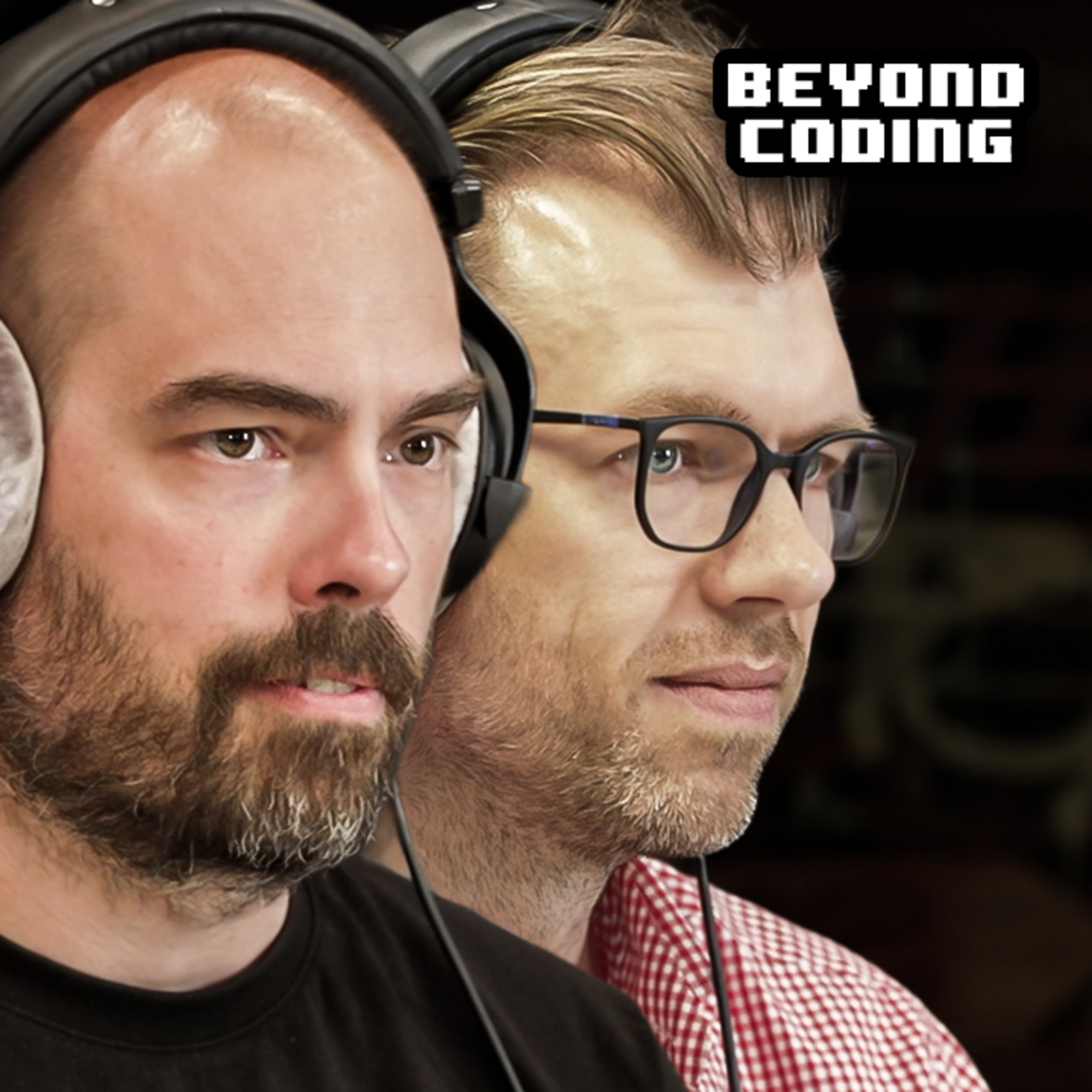 AI Frontrunners: Why Coding is Solved But Engineering is Not 17.06.2026 51minJeroen Gordijn and Jeroen Dee: two frontrunners who stopped writing code months ago and say software development is already solved. Typing code is no longer necessary, but what matters more now? If you're an engineer that loves coding, you're in a tougher spot than you might realize.In this video, we cover:- Why writing code is "solved" but engineering isn't- Spec-driven development and how to get it started in your team- The "Dark Factory" and why code review is a huge bottleneck- Model vs harness: what matters more, and why- The unhealthy side of agentic codingIf you write software for a living and you're trying to work out what your job becomes next, start here.Timestamps:00:00:00 - Coding Is No Longer Necessary00:00:43 - Why "Software Development Is Already Solved"00:02:57 - Should You Even Read the AI's Code?00:05:05 - What Is a "Dark Factory"?00:06:52 - If You Can Regenerate It, Why Care About Quality?00:07:49 - Spec-Driven Development Explained00:11:32 - Adopting Specs Without Starting From Scratch00:13:23 - Model vs Harness: What Matters More?00:17:27 - Is Your Harness the New IDE?00:20:18 - Why Everyone Plateaus (and the Innovation Token)00:22:50 - Where to Actually Spend Your Time00:24:57 - The Unhealthy Side: "It's Free Cocaine"00:28:00 - Is This Sustainable, or Just Subsidized?00:30:33 - Should You Run Models Locally?00:34:31 - Looping, Scale, and Automating Review00:37:53 - What's Left for Engineers to Do?00:39:13 - If You Love Writing Code, You're in Trouble00:41:18 - Why Teams Are Getting Smaller00:43:03 - What an "Agentic Company" Looks Like00:46:25 - How to Start: Find Your Spark00:50:13 - The One Habit That Keeps You AheadGuests: Jeroen Gordijn: https://www.linkedin.com/in/jeroengordijnJeroen Dee: https://www.linkedin.com/in/jeroendee#AgenticEngineering #SoftwareEngineering #Agents
 -
 AI Architect: Why The Best Software Engineers Are Solving Code Review Bottlenecks Now 10.06.2026 40minAI generates 10x more code, but your senior engineers still review it by hand and it's burning them out. Even Google admits code review is now the bottleneck nobody knows how to solve.Florian Buetow, AI engineer at Xebia, has been running experiments to eliminate the human from the review loop entirely, and what he found changes where engineers should focus their effort.In this episode, we cover:Why "stop doing code reviews" is a serious answer (and what replaces them)The guardrails that gave the most value: Semgrep rules, architectural unit tests, and stop hooksWhy your harness matters more than the modelHow Amazon and Google police AI-generated code with policiesAI burnout, cognitive debt, and "cognitive surrender": what stays your responsibilityStep one for adopting agentic software engineering in your team this weekWhether you're an individual developer drowning in AI-generated PRs or driving AI adoption across a large engineering org, you'll leave with concrete experiments to run.More from Florian:https://cracking-ai-engineering.comTimestamps:00:00:00 - Intro00:00:40 - Code Review Is Software Engineering's Biggest Bottleneck00:01:57 - How Amazon and Big Tech Police AI-Generated Code00:02:55 - Horizontal vs Vertical Scaling of AI Engineering00:04:37 - Why "No Code Reviews" Might Be the Answer00:05:22 - Engineering Environments That Give Agents Feedback00:06:46 - Why the Harness Matters More Than the Model00:07:21 - When Spec-Driven Development Failed and TDD Worked00:10:06 - Stop Hooks, Ralph Loops, and Automated Feedback00:11:30 - The Guardrails That Gave the Most Value00:14:00 - Architectural Constraints That Keep AI Code Sane00:15:07 - What Remains a Human Responsibility00:17:33 - Why All the Hard Work Moves Upfront Now00:18:47 - The Incredible Skill Junior Engineers Should Learn00:20:26 - AI Burnout: Why Engineers Are Exhausted00:22:42 - Cognitive Surrender: Letting the Agent Take Over00:23:25 - The Hand Grenade Problem with AI at Work00:24:08 - Outsourcing Code Review to AI Itself00:26:39 - Teams That Fully Adopted Spec-Driven Development00:29:01 - Can You Rebuild Software From Tests Alone?00:30:27 - How to Experiment and Stay Ahead00:33:15 - Spying on What Subagents Tell Each Other00:33:59 - Step One: How to Start with Guardrails00:36:08 - Data Mining Your Session Logs for Patterns00:37:00 - Stuck With One Harness? Here's What to Do00:38:28 - The One Experiment to Run This Week#softwareengineering #aicoding #codereview
 -
 Google AI Lead: The New Rules of Software Engineering 03.06.2026 23minAre you ready to adapt to the rapidly evolving rules of software development? In this deep dive, Logan Kilpatrick, Director and Engineer at Google DeepMind, breaks down how AI agents, advanced model-product symbiosis, and tools like Gemini 3.5 Flash are fundamentally shifting the engineering bottleneck. Learn how to maintain your competitive advantage by moving beyond the keyboard to focus on problem-solving, architectural taste, and system understanding.In this video, we cover:The changing role of the IDE and the rise of agent managers in code generation.Overcoming team bottlenecks in code review and CI/CD test execution execution loops.Why "agent coverage" and context integration are the next big tech stack metrics.Building a bulletproof software portfolio through permissionless open-source contributions.The critical difference between outsourcing intelligence versus outsourcing understanding.This episode is for software engineers, tech leads, and computer science students looking to future-proof their careers and reset their ambitions in the era of autonomous engineering agents.Timestamps:00:00:00 - Intro00:00:40 - Code Review Is Software Engineering's Biggest Bottleneck00:01:57 - How Amazon and Big Tech Police AI-Generated Code00:02:55 - Horizontal vs Vertical Scaling of AI Engineering00:04:37 - Why "No Code Reviews" Might Be the Answer00:05:22 - Engineering Environments That Give Agents Feedback00:06:46 - Why the Harness Matters More Than the Model00:07:21 - When Spec-Driven Development Failed and TDD Worked00:10:06 - Stop Hooks, Ralph Loops, and Automated Feedback00:11:30 - The Guardrails That Gave the Most Value00:14:00 - Architectural Constraints That Keep AI Code Sane00:15:07 - What Remains a Human Responsibility00:17:33 - Why All the Hard Work Moves Upfront Now00:18:47 - The Incredible Skill Junior Engineers Should Learn00:20:26 - AI Burnout: Why Engineers Are Exhausted00:22:42 - Cognitive Surrender: Letting the Agent Take Over00:23:25 - The Hand Grenade Problem with AI at Work00:24:08 - Outsourcing Code Review to AI Itself00:26:39 - Teams That Fully Adopted Spec-Driven Development00:29:01 - Can You Rebuild Software From Tests Alone?00:30:27 - How to Experiment and Stay Ahead00:33:15 - Spying on What Subagents Tell Each Other00:33:59 - Step One: How to Start with Guardrails00:36:08 - Data Mining Your Session Logs for Patterns00:37:00 - Stuck With One Harness? Here's What to Do00:38:28 - The One Experiment to Run This Week#SoftwareEngineering #AIAgents #GoogleDeepMind
 -
 Addy Osmani: Top Tier Software Engineers vs. AI Agents. The Mindset You Need 28.05.2026 17minAs AI agents transform software engineering, how do you leverage them without losing your coding skills or risking production disasters? In this episode, Google Cloud AI Director Addy Osmani breaks down the shift from babysitting basic models to mastering advanced agent harnesses.Discover how to safely delegate complex technical tasks while maintaining your human engineering identity and setting up secure boundaries for your AI.In this episode, we cover:Human Identity vs. Machine Identity: How to avoid the trap of "cognitive surrender" and keep your critical thinking sharp.Stopping the AI "Babysitting" Cycle: How to transition from constant manual oversight to secure agent governance.Rising Abstractions: Why agent harnesses (like Claude Code and Antigravity) are changing how software is built.The Verification Bottleneck: Why coding is easy, but verifying that your agent didn't ruin production is the real challenge.This episode is a must-watch for software engineers and tech leaders looking to integrate AI agents into their workflows safely and effectively. You’ll walk away with actionable frameworks to boost your development velocity without letting your own technical edge rot.Guest:Addy Osmani is a Director at Google Cloud AI, famous for his work on Google Chrome and focused on AI agents in software engineering.Timestamps:00:00:00 - Intro 00:00:45 - The Reality of "Babysitting" Your AI Agent Setup 00:01:16 - How to Stop Babysitting and Build Secure AI Agents 00:02:36 - The Dangerous Mistakes of Uncontrolled AI Experiments 00:03:39 - Rising Abstractions: From Code to Agent Harnesses 00:05:18 - Why You Should Delegate Technical Tasks to AI 00:07:05 - How to Choose the Best AI Agent Harness 00:08:31 - How to Manage Your Developer Innovation Budget 00:10:17 - Are We Losing Pair Programming to AI Agents? 00:12:14 - Cognitive Surrender: The Hidden Threat of Generated Code 00:13:40 - The Verification Bottleneck: How to Trust AI Code 00:15:59 - How to Safely Scale Your Personal AI Bandwidth#AIAgents #SoftwareEngineering #DeveloperProductivity
 -
 What World Class Software Engineers Do That You Don't 20.05.2026 32minAfter 250 episodes of Beyond Coding, a pattern shows up again and again: the engineers who thrive aren't the ones chasing the newest tool or the cleanest code. They're the ones who learn fast, keep things simple, and understand the business they're building for. This special pulls the sharpest moments from recent guests into one conversation about what actually makes a great software engineer in 2026.We cover:Why learning is the only skill that outlives every tool, language, and platformHow the best architects act more like scouts than cartographersWhy "simple is complicated enough" beats clean code dogma at scaleHow to design systems that evolve instead of trying to predict 10 years outWhat junior engineers should actually do in the age of AI agentsFor software engineers who want to think clearer, build better, and grow into the kind of engineer companies can't replace.Timestamps:00:00:00 - Intro00:00:17 - Why You Should Increase Your Breadth, Not Just Focus00:02:16 - The Only Skill That Survives Every Tech Cycle00:04:14 - Buzzwords Are Just Old Ideas in New Clothes00:05:26 - What Clients Say vs What They Actually Want00:06:45 - The Bad Architects Are Easier to Spot00:08:50 - Why Good Engineers Use Boring Technology00:11:40 - Stop Building for 100x Scale on Day One00:13:13 - The Dogma of Clean Code Is Hurting You00:15:15 - Simple Is Complicated Enough at Scale00:16:28 - Design Only for the Next Order of Magnitude00:18:19 - How to Talk Tech with Non-Technical Stakeholders00:19:30 - The $50,000-Per-Hour Container Terminal Lesson00:22:11 - Architects Are No Longer Cartographers, They're Scouts00:25:18 - Start with a Question, Not an Answer00:26:49 - Junior to Senior in the Age of AI Agents00:27:29 - Don't Be a Fool with a Tool00:29:43 - From Explicit to Implicit Knowledge Economy00:30:38 - Use AI to Validate, Not to Generate#softwareengineering #engineeringcareer #softwarearchitecture
 -
 What Separates Cracked Software Engineers From Everyone Else 06.05.2026 38minReddit Reacts is back. I'm taking the most controversial takes on software engineering from Reddit and giving you my unfiltered perspective on what's happening, from juniors leveraging AI tools, to the culling of engineers who refuse to adapt, to whether you should take a gap year after a layoff.In this episode, we cover:How to become technically "cracked" and what really separates great engineersWhy juniors learning with AI have an edge over 20-year veteransThe future of writing code by hand (and why fulfillment is shifting)Vibe coding, security holes, and what happens after 6 monthsThe brutal reality of layoffs, gap years, and AI-driven hiringIf you're an engineer trying to figure out where this industry is going and how to stay competitive, this one is for you.Mentioned in the episode:ADP List - free mentorship from senior engineersTimestamps:00:00:00 - Intro00:00:54 - How to Become Technically Cracked in 202600:05:35 - Will Juniors Who Only Code with AI Get Stuck?00:09:26 - Will Senior Engineers Stop Writing Code By Hand?00:11:11 - I Vibe Coded for 6 Months and It's a Disaster00:15:04 - Why Leaders Demand Screen Sharing on Incident Calls00:17:34 - "I Don't Do Anything and Still Get Promoted"00:20:33 - Have the Best Engineers Stopped Applying?00:25:39 - The Future of Software Engineering in the AI Era00:32:15 - Are Most Programmers Actually Bad?00:34:58 - Should You Take a Gap Year After a Layoff?#softwareengineering #aicoding #techcareers
 -
 DevOps Expert: How Elite Software Engineers Are Using Agents to Get Sh*t Done 29.04.2026 47minMost engineers are using AI coding tools without understanding what they actually are and it's costing them. Microsoft Certified Trainer Rob Bos has trained thousands of engineers on AI tooling, and he sees the same gaps in fundamentals show up again and again, regardless of seniority. This is what you need to know:What an LLM actually is (and why understanding this changes how you use it)Why prompt engineering isn't optionalHow AI magnifies your existing technical debt instead of fixing itThe 6-month learning curve nobody warns you aboutWhy your role as an engineer was never about writing codeThe environmental cost behind every promptWhether you're skeptical of AI tools or already living in agent mode, these are the fundamentals that separate engineers who get real value from those who get burned by the hype.Connect with Rob:https://www.linkedin.com/in/bosrobReferences:Token tracker: https://marketplace.visualstudio.com/items?itemName=RobBos.copilot-token-trackerDev survey: https://www.activestate.com/wp-content/uploads/2019/05/ActiveState-Developer-Survey-2019-Open-Source-Runtime-Pains.pdfTimestamps:00:00:00 - Intro00:00:43 - The #1 Thing Engineers Get Wrong About AI00:02:09 - How Much LLM Theory Do You Actually Need?00:03:58 - Why Pair Programming Is Still the Best Way to Learn AI00:05:26 - Why Rob Skips Tab Completion and Lives in Agent Mode00:07:03 - The "AI Doesn't Increase Productivity" Debate00:08:29 - Why Your Real Job Was Never Writing Code00:09:14 - The 2-Hours-of-Coding Problem No One Talks About00:11:02 - More Code = More Pressure on Your Review Process00:12:21 - Why AI Magnifies Existing Technical Debt00:13:39 - The Customer Who Couldn't Start AI With Developers Yet00:15:11 - The Future Engineer: Reviewer, Not Writer00:17:00 - Convincing the AI Skeptic Who Tried It Years Ago00:19:17 - LLMs Explained Without Visuals (Attention & Semantics)00:22:41 - Why Prompt Engineering Actually Matters00:24:20 - From Zero to Hero: The 6-Month Learning Curve00:26:18 - Is This Confrontational for 20-Year Veterans?00:29:30 - Becoming a Better Engineer by Thinking in Systems00:31:26 - Will AI Stop Working as Innovation Slows?00:34:26 - The Lost Art of Pair Programming with AI00:35:44 - Tribalism in AI Tools (And Why It's Pointless)00:37:33 - Tool Agnostic: Start With the Foundations00:39:40 - Is the IDE Still Relevant?00:40:50 - The Bluescreen Story That Changed His Mind00:41:47 - The Hidden Environmental Cost of AI Coding00:44:15 - 36 Million Tokens in 30 Days: What Does It Mean?00:45:47 - Running LLMs at the Edge to Cut the Footprint00:46:48 - Why You Should Be Allowed to Wait Five Minutes Longer00:47:05 - Outro#githubcopilot #aicoding #softwareengineering
Podcasts similares


Popular em
Este podcast também aparece nas paradas de podcasts destes países.


