
The Minefield
ABC Australia
0
In a world marked by wicked social problems, The Minefield helps you negotiate the ethical dilemmas, contradictory claims and unacknowledged complicities of modern life.
Episódios
-
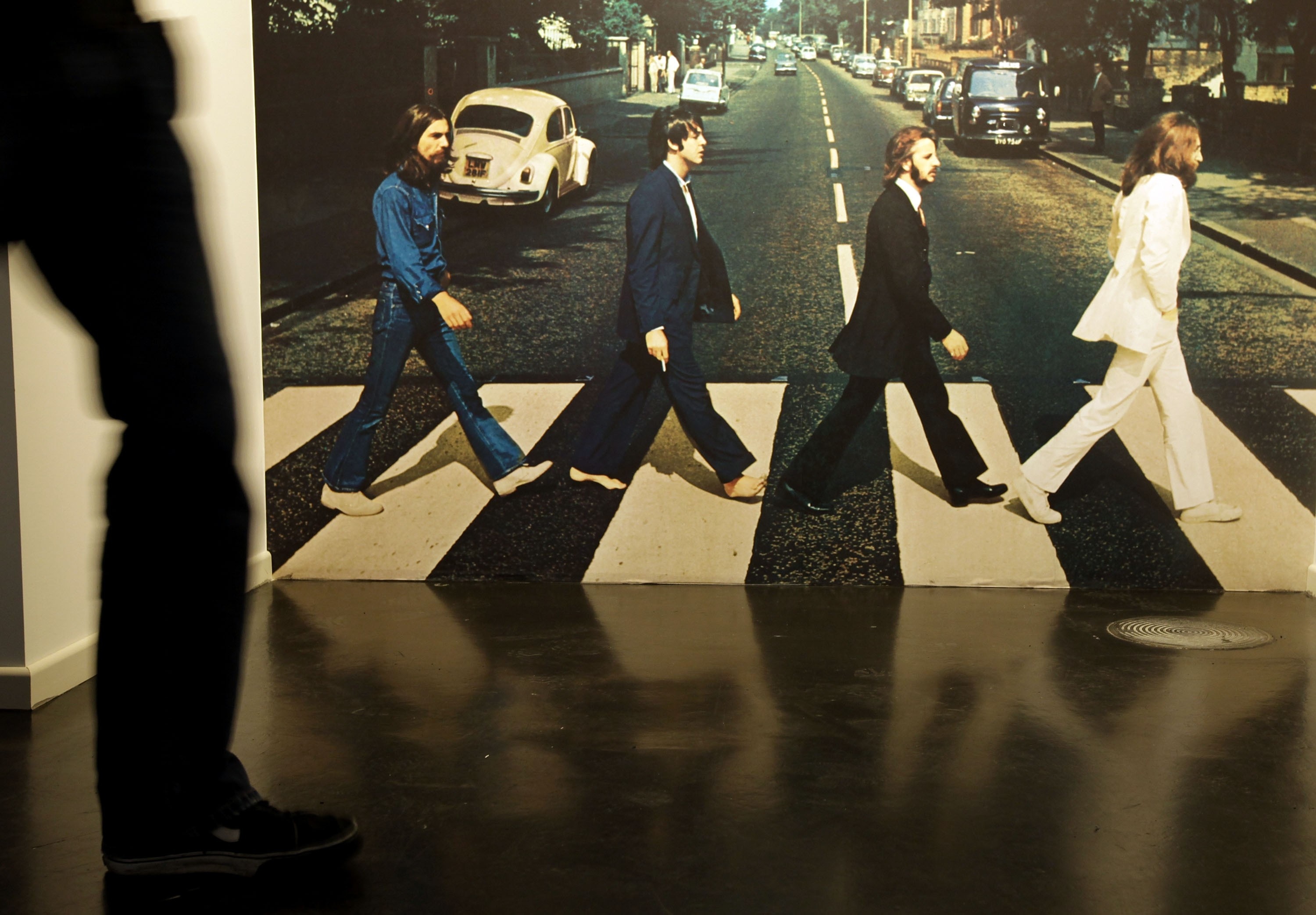 Last Words: Is ‘Abbey Road’ a fitting end to the Beatles? 24.09.2026 54minIn our previous explorations of famous “last words” — performances or compositions delivered with a certain end in view, with a sense of either culmination or parting, or with an eye to the future and hence to what one leaves behind — we limited ourselves to the words of individuals spoken to their followers or fellow-travellers. The words of the Prophet Muhammad and of Martin Luther King, Jr, were replete with exhortation; they functioned both as expressions of fidelity to a task, and as examples to be followed by others. Which is to say, the messages were oriented beyond their speakers, toward some greater goal their audience must take up and pursue — hence the Prophet Muhammad’s stress on fidelity and continuity (“All those who listen to me shall pass on my words to others and those to others again …”) and King’s on fearlessness and a “dangerous unselfishness” (“I’m not fearing any man …”). This next instalment is different in almost every way. The words are not of one individual but a group — perhaps the most famous group of the twentieth century. There is no “message” per se, and not really anything being communicated to others. Their words are largely self-referential, intensely personal, quasi-autobiographical or else plain nonsense. The goal of the composition, the “end” (telos) it has in view, is evidently nothing more than its own aesthetic perfection. It is not a performance as much as it is a production: bits and pieces of earlier ideas gathered together, elaborated, reworked, enhanced, added to and repeatedly overdubbed between 22 February and 19 August 1969. This is a reference, of course, to the last album recorded by The Beatles, Abbey Road. The album began amid the fragments, financial chaos and interpersonal strife of the infamous “Get Back” sessions of January 1969. And while Let It Be, which represents the uneven results of those recordings, appeared later in May 1970, Abbey Road is the album that has all the hallmarks of an “end”. But even this raises a number of questions. Does Abbey Road represent the culmination of their artistry as a band, the zenith of their formal innovation and musical experimentation? (Surely Sgt Pepper’s Lonely Heart Club Band can make a more compelling claim.) Does the album showcase an usual degree of creativity and invention? What are we to make of the clear borrowings (from Chuck Berry’s “You Can’t Catch Me” and Fleetwood Mac’s “Albatross”, to the first movement of Beethoven’s Piano Sonata No 14 in C Sharp Minor, a seventeenth-century song by Thomas Dekker and perhaps James Taylor’s “Something in the Way She Moves”) and moments of unadorned nostalgia — including doo-wop rock’n’roll throwbacks from their Hamburg days (such as “Oh! Darling” and “Polythene Pam”)? Or the fact that so much of the album is comprised of compositional orphans, off cuttings from The White Album and the “Get Back” sessions? As John Lennon would later complain: “Abbey Road was really unfinished songs all stuck together. None of the songs had anything to do with each other, no thread at all.” Moreover, Abbey Road is rife with contradictions and seemingly unreconciled elements. For instance, the album announces itself as a reunion of sorts, the getting back together of variously estranged band members who had been involved for months in side projects as solo artists, as movie actors, as music producers and studio musicians. But it then proceeds almost immediately to individuate them, featuring in quick succession songs that reflect their own peculiar style, voice and temperament — most apparent in George Harrison’s exquisite “Something” and “Here Comes the Sun”, whose delicacy and tenderness act as counterpoints to the sardonic edge and volcanic obsessiveness of Lennon’s “Come Together” and “I Want You (She’s So Heavy)”; but also evident in Ringo’s “Octopus’s Garden” which provides a playful complement to Paul’s persistent melancholy and nostalgia. And then there are Lennon’s intermittent absences d
 -
 Does a ‘digital duty of care’ put free speech at risk? 17.09.2026 54minEvidence has been mounting for more than a decade that social media tears away at the fabric of democratic life by eroding the conditions of deliberation, shared understanding and mutual trust; that it is the conduit of widespread misinformation, disinformation and malicious conspiracy theories; that it is a driver of hate, sexism and prejudice and has been used to incite violence; that its addictive design and prolonged exposure to harmful content has had egregious damage to the mental health and emotional wellbeing of adolescents. Until recently, the size of tech companies responsible for the social media platforms, the speed with which new technologies are being deployed and the scale at which they are being adopted has meant the companies have managed to stay several steps ahead of attempts to impose effective regulation and demand accountability. But a combination of the law catching up and a sharp turn in public sentiment against the companies themselves has led to a series of legislative responses around the world intended to mitigate the harms social media platforms cause. Last week, the federal government released the exposure draft of its Online Safety Amendment (Digital Duty of Care) Bill 2026. First floated in 2024, this is the third such measure the Albanese government has introduced — the others being its abandoned Communications Legislation Amendment (Combatting Misinformation and Disinformation) Bill 2024 and its world-leading Online Safety (Age-Restricted Social Media Platforms) Rules 2025. Alongside specific provisions to remove harmful content (such as AI generated “fake nude material”), the proposed legislation is notable in its adoption of more preventative measures, including requiring companies to conduct regular risk assessments in order to “proactively identify harmful content”. While this is a measure already in effect in the UK and parts of the EU, perhaps the more notable provision in the proposed legislation is giving social media users the ability to “opt out” of or “turn off” the algorithm that recommends content other than those accounts they follow on the basis of the activity on the platforms. The Prime Minister has insisted this measure is “not about censorship. It’s about giving people control themselves over what they see.” But that has not prevented his political opponents from accusing the government of of attempting to “censor and silence Australians” (Shadow Treasurer Tim Wilson) or of “building the Orwellian machinery” for censorship (One Nation Leader Pauline Hanson). As Nationals Leader Matt Canavan said to the ABC: “I’m deeply sceptical of giving any government, whether I was in charge, or Anika Wells is in charge, I’m deeply sceptical of giving any government the power to decide what you read on your phone.” Particular concerns have been raised about the discretionary power accorded to the Minister responsible under section 25C of the exposure draft of the Online Safety Amendment (Digital Duty of Care) Bill 2026 to “determine material or conduct, or a combination of material and conduct, that the Minister is satisfied may cause serious harm”. In 2021, similar concerns were expressed in response to the UK government’s own Online Safety Bill, which likewise proposed to legislate a digital duty of care. The Carnegie Trust, which helped develop the “duty of care” framework the government would adopt, articulated its worry that the draft legislation “takes too many powers” for the minister/secretary and advised that, in order to meet “international commitments on free speech”, there should be “a separation of powers between the executive and a communications regulator”. How much credence should be given to complaints that further regulating social media content poses a threat to freedom of speech in a country like Australia, which already has comparatively weak free-speech protections? Are these complaints merely self-interested, given that movements and populist parties on the
 -
 Is loyalty a virtue? 10.09.2026 54minIt is surely one of the more perverse achievements of modern marketing to have taken words that have a certain moral valence — which is to say, words that connote intimacy or an interpersonal bond — and use them to describe purely commercial or easily exploitable forms of behaviour, thereby stripping those words of what made them valuable in the first place. Consider what the word “share” meant before the advent of social media platforms: it encompassed such activities as partaking in a common meal, defusing interpersonal conflict by making a small sacrifice, and having a confiding, perhaps even intimate, conversation with another person. After the introduction of the “Share” button and its use as a way of measuring user “engagement”, the personal aspect that made the word appealing is lost within the sterility of forwarding a bit of content to somebody else. The same goes for the word “friend”. In the modern era, the template for the misuse of morally laden words for commercial purposes was established by the decision of marketing agencies in the 1940s to adopt the term “loyalty” as a way of describing the kind of customer behaviour they wanted to cultivate — namely, an “attitudinal and affective attachment that keeps the customer coming back regardless of convenience or changes in features or price relative to the competition”. But, of course, it could be argued that there is something about “loyalty” that lends itself to such use (in which case, can it really be called a perversion of the term?). Loyalty tends to be associated with two attributes: stickiness and solidarity. The former signals a determination to stand by a family member or acquaintance or organisation facing difficulties (this would represent the opposite of being a “fair weather friend”); the later suggests a desire to protect one’s “own” from either external attack or reputational damage. It is for this reason that hierarchical organisations and nations tend to prize loyalty above all else, and punish “disloyalty” accordingly. (Would it be too much to say that non-disclosure agreements are legally coercive means of achieving the protections loyalty is meant to afford?) And yet loyalty — the unwillingness to weaken or bring one’s own side into disrepute — can often come at the expense of both truthfulness and self-criticism. For this reason, moral philosophers and virtue theorists have been reluctant to call loyalty a “virtue”, because its virtuousness does not reside in the action itself but in the integrity and underlying commitments of that to which one is loyal. Which means that one can be loyal to the founding principles of an organisation by criticising the failure of that organisation to live up to those principles. What is civil disobedience other than a form of loyal dissent? If part of the power of the appeal to “loyalty” is the sense of morally that hangs around it — as Farid Zaid puts it, one of the things that “makes loyalty so dangerous is not only the hard that it does, but the goodness it mimics while doing it” — would it be better to use terms such as “fidelity” or “faithfulness” as a way of preserving what goodness we are hoping to preserve? To cite Zaid once again: “Faithfulness is not simply standing by a person or group because they are ours. It is answerability to the truth and meaning of a relationship, a promise, a vocation, an ideal. A faithful spouse is not merely one who remains aligned with the marriage in some external sense, but one who remains answerable to what marriage actually asks. A faithful citizen is not one who shields the nation from criticism, but one who remains answerable to the ideals by which the nation claims it should live.” Then, perhaps, we can leave talk of loyalty to insecure organisations and corporate rewards programs. READING: Farid Zaid, “What makes loyalty dangerous is not only the harm it does, but the goodness it mimics while doing it” (ABC Religion and Ethics, 20 April 2026) Alasdair MacInt
 -
 Live from the Festival of Dangerous Ideas: Does longevity threaten the future? 03.09.2026 54minIt is suitably ironic that one of the most poignant, and pertinent, moments in Homer’s The Odyssey was airbrushed out of Christopher Nolan’s blockbuster adaptation. The first time we meet Odysseus, the endlessly resourceful architect of the fall of Troy, he is indeed weeping on the shores of the nymph Kalypso’s island. But it is not due to the unrelieved guilt he feels from his war crimes; rather, we are told, “his tears never did dry, since the sweetness of life was trickling away / As he grieved for his return home” (Book V.153). For the immortal goddess had kept the mortal Odysseus for seven years, not in a prison, but in a paradise, an Eden-like cave warmed by fire, lined with fragrant trees, filled with carnal delights. Each night, Kalypso — unageing and beautiful, whose figure is described as “being in full bloom” — would sleep with Odysseus (“he unwilling, she all too willing”) and promise him at once agelessness and unending pleasure if he would but remain with her in her cave. Depart for Ithaca, “the land of your fathers”, she warns, and not only will he have an inferior wife awaiting him, but he will endure unimaginable hardship on his journey home. Since we are given a god’s-eye tour of Kalypso’s cave before we learn of the choice being put to Odysseus, surely the unequivocal nature of his response is meant to surprise — even though without it, there would be no story! Given the choice between immortality and solidarity with the hardships and daily joys of the world, Odysseus chooses the world, and death with it. “Such simple greatness is foreign to our minds today”, writes Albert Camus; “we simply lack the pride of the man who is faithful to his limitations — that is, the clairvoyant love of the human condition.” Increasing numbers of us seem prepared to turn our backs on the world in order to remain in Kalypso’s cave. Sometimes, this takes the form of attempts to so optimise the body that it defies, or indefinitely postpones, ageing and death (Bryan Johnson has become the face of this fanatical project, suspended as it is between ascetic self-discipline and transhumanist experimentation). For others, the more modest gains in longevity and good health into our eighties and nineties have made us more determined to hold onto power (here Rupert Murdoch would be one of any number of octogenarians who refuse “succession”). For all the ambition and self-importance that both tendencies project, there is something rather small, even petty, about the fear of accepting one’s limits, of ceding one’s power. By denying death and grasping tightly to what we’ve accumulated, we hope to remain significant. It is a human impulse immediately recognisable from Shakespeare’s Lear, and should invite our pity if its consequences for our common life weren’t so dire. As Samuel Moyn and Lucinda Holdforth have both argued, the refusal of human limits expressed in this determination to extend our lives and our influence comes at the expense of the young. Not only is their disenfranchisement fuelling a certain generational resentment, it may also represent a deformed moral conception of the proper end (telos) of human life. To adopt an old Rabbinical analogy, is our life meant to be a sponge that absorbs as much as possible, or a watering can that progressively pours itself out for the sake of others? This is no argument to consign the old to a state of “uselessness”, to collectively deem them at a certain age as surplus to requirement. (The monstrous vision of Christopher Buckley’s satirical 2007 novel Boomsday was that government incentives should be given to Baby Boomers to kill themselves once they reach 75.) But perhaps the sense of importance, of usefulness, can be reimagined by learning how to be faithful to our limits, by acquiring Odysseus’s “clairvoyant love of the human condition”. Guest: Lucinda Holdforth is a former speech writer and adviser to senior leaders across government and business. As an author, her work has incr
 -
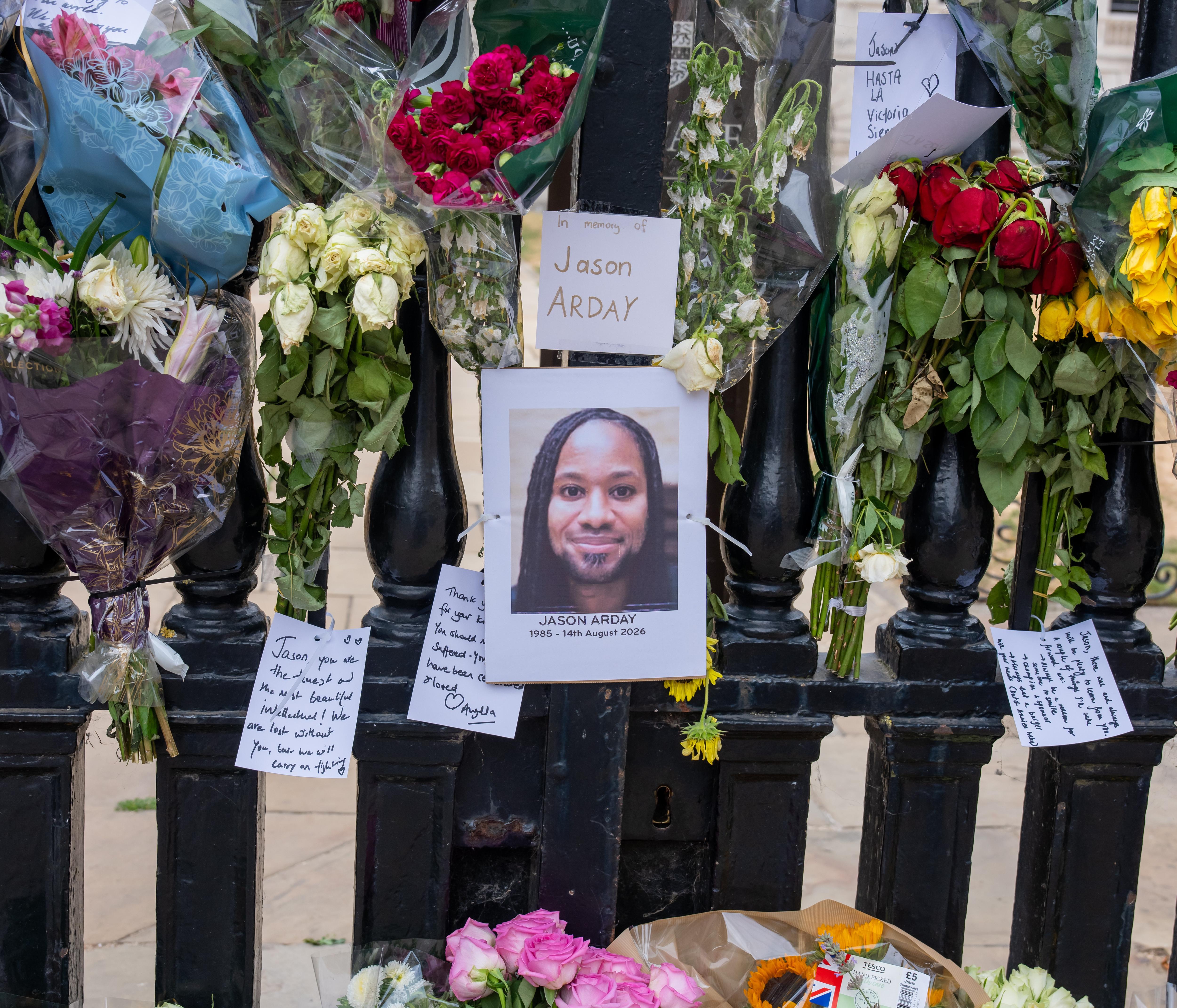 What response does Jason Arday’s life, and death, morally demand? 27.08.2026 53minIt is hard to imagine a series of events more tragic, more unseemly, more emblematic of the performativity and polarisation that dominate our time, than the premature rise, sudden fall and untimely death of Jason Arday. In 2023, the University of Cambridge announced that it had appointed Arday — a 37-year-old son of Ghanaian immigrants, who grew up in public housing in south London and only “began to read and write in his late teens” due to his autism diagnosis — to the position of Professor of Sociology of Education. Not only was he the youngest black professor in the university’s history, but he was promoted by Cambridge as an individual whose life story epitomises “the significant barriers that neurodivergent individuals, those from lower socio-economic backgrounds, and Black, Asian and Minority Ethnic people face when trying to build careers” in the academy. Arday was thus held up as a living proof that Cambridge was taking seriously the criticism, frequently voiced during the #BlackLivesMatter ferment, that there was a conspicuous lack of “black professors, and lecturers and senior lecturers and academics and researchers” at the university. He also represented a kind of downpayment on a larger promise to promote “greater inclusivity” among Cambridge’s otherwise exclusive academic community. Paradoxically, Cambridge even mentioned Arday’s struggle as a young academic to get published as uniquely qualifying him for the role of “helping as many ethnic minority and under-represented people as possible gain access to opportunities within the sector”: “When I started writing academic papers, I had no idea what I was doing … I did not have a mentor and no-one ever showed me how to write. Everything I submitted got violently rejected. The peer review process was so cruel, it was almost funny, but I treated it as a learning experience and, perversely, began to enjoy it.” It would become part of the Arday-mystique that he published his first peer-reviewed paper in 2018, after which he secured university posts at Roehampton, Durham, Glasgow and, finally, Cambridge just five years later. By any measure, this was a miraculous ascent to the pinnacle of academic prestige and influence. Before long Arday was fêted as a kind of celebrity in his own right — a philanthropist, an activist, above all, an inspiration in the aftermath of a bruising cultural reckoning with racial injustice. Within months of his appointment, however, the first allegations of academic misconduct were put to Cambridge: that Arday had failed to properly cite or adequately acknowledge earlier research in his 2018 paper. In 2025, a journalist at Times Higher Education, Jack Grove, undertook an investigation into further allegations of plagiarism in Arday’s PhD thesis and irregularities in his data in the 2018 paper. This then expanded into wider scrutiny of a number of Arday’s claims about his own biography and individual accomplishments. Grove submitted nearly 100 pages of evidence of academic misconduct to both Cambridge University and Liverpool John Moores University (which had awarded Arday his PhD). But while extensive corrections were made to his 2018 paper, Arday was cleared of plagiarising his PhD thesis and Cambridge reiterated its determination to “take a stand and speak out against the systematic attempts to erase Black scholarship”. Arday went on to file a police complaint against Jack Grove, alleging harassment, while a notorious law firm, Carter-Ruck, threatened Times Higher Education with defamation proceedings on his behalf if they published Grove’s investigation. It never ran. The issue largely receded from public view until late-July 2026, just weeks before the publication of Jason Arday’s memoir, Great and Unfortunate Things. Having been denied a more legitimate and perhaps measured outlet in Times Higher Education, the full gamut of allegations — fabrications, embellishments, plagiarism, errors in published research and so on — appeared in
 -
 Is opposition to data centres good news for democracy? 20.08.2026 54minAt a time of profound polarisation, when the fracturing of media ecosystems has been so complete that any agreement on threats to our common life seems impossible, an issue has emerged capable of bringing voters of every political persuasion together. Over the last year, popular opposition to the construction of the data centres in the United States has risen dramatically. According to a Gallup poll from May 2026, more than seventy per cent of Americans are opposed to the construction of a data centre in their area. In June, a Heatmap poll got the same result, and found that over fifty per cent of respondents said they favoured a ban on new data centres altogether. Meanwhile, fifteen states are considering, have introduced or already passed legislation temporarily banning data centre development. Something similar is happening in the UK and Australia, where government eagerness to attract vast investment from AI companies has encountered strident opposition from local communities and electorates. The Australian Greens have called for a moratorium on data centres, while Pauline Hanson’s One Nation Party is urging stronger government regulation on AI. The South Australian state government has tried to get out ahead of electoral anxieties by announcing a royal commission into AI. The proximate reasons for this opposition are straightforward enough. They primarily have to do with the effect of data centres on the environment, water and energy usage, utility costs, the amenity of adjacent communities and noise pollution. Lurking behind these concrete concerns is the more visceral alarm over the sheer speed of advances in AI over the last three years, along with the gargantuan sums of money frontier labs have spent in their pursuit of ever more “compute” and sources of data for training their models, as well as the out-sized influence that this new generation of tech oligarchs have had on government decision making. Behind it all, there are the deep-seated worries about what this will mean for human beings: whether workers will be sacrificed on the altar of the quest for artificial general intelligence; whether human labour will come to play a subordinate role to the efficient operations of machines (which is to say, whether we will be reduced to “reverse centaurs”, as Cory Doctorow puts it); whether work itself will lose its meaning. But does the way this popular opposition to data centres has coalesced into a broad-based if inchoate movement mark a productive development in modern democratic politics — say, the resurgence of “class” as a potent political force — or is this simply an extension of the pathologies that have eaten away at democratic politics for the better part of the last decade-and-a-half, including: what Pierre Rosanvallon calls the “negative sovereignty” of aggregated disaffection (which can unite around a common “no”, but cannot come together for a shared political project); populist antipathy toward monied and political elites alike; pervasive distrust that veers into unfalsifiable conspiracy theories. There are plenty of good reasons to be politically and ethically suspicious of AI, about the resources it demands, the benefits it promises and the distorting effects it has on the economy. But perhaps the most pressing question of all is whether opposition to data centres can turn into a way of making AI democratically accountable, and whether the limits erected by popular consultation and consent can translate into a deeper form of political empowerment — an affirmation of the importance of cooperation and deliberation for the flourishing of our communities? Guest: Craig Calhoun is University Professor of Social Sciences at Arizona State University and Visiting Professor of Sociology at Princeton University. He is in Australia to deliver the 2026 Thesis Eleven Annual Lecture on the decline of Western democracy, in Melbourne on 25 August 2026.
 -
 Should fat from cadavers be used for cosmetic procedures? 13.08.2026 54minThe widespread availability of GLP-1 based drugs has been lauded as a “revolution in weight loss” and as inaugurating the “end of obesity”. As we’ve discussed previously, health benefits aside, there are concerns that such weight-loss drugs don’t just leave certain cultural assumptions about beauty and body size unchallenged, but in fact reinforce a kind of cultural aesthetic hierarchy — elevating slimness to the level of a kind of moral demand (with the opprobrium that accompanies failure to live by it). Those concerns remain. But the uptake of use of GLP-1 drugs in places like the United States — where 11 per cent use drugs like Ozempic and Wegovy, according to Gallup — has intersected with a parallel cultural phenomenon in interesting and rather morbid ways. What happens when the demand to be slim encounters the idealisation of body shapes: fuller curves, more defined muscles, plumper lips, tighter skin, sharper cheeks? Not long after GLP-1 based drugs were made more widely available to the public for the purposes of weight loss, a series of fat-based fillers were made available to certain plastic surgeons who were experienced in working with fat. But unlike the more common procedure of autologous fat grafting — the process whereby the person’s own fat is removed by means of liposuction and injected into another part of the person’s body — these fat-based fillers are harvested from cadavers. The fat is then treated, bottled and injected into target areas in order to achieve the desired look. Though the treatment is expensive, it is becoming increasingly popular due to the “chunkier” and more “natural” look of the filler, and because the procedure doesn’t require either general anaesthesia or an extended recovery time. Most people will instinctively recoil from the prospect of injecting cadaver fat — parts of human bodies that have been reduced to “biological material” — into one’s own body for the purposes of cosmetic improvement. There is a certain moral intuition (is there not?) that goes deeper than the mere “ick factor” and approaches the sense that this is simply too superficial a use for human bodies to be put. Organ donations and transplant feel different to us — that the “gift” of an organ from a deceased body gives life to another. The harvesting and use of fat in the service of achieving an ideal body shape feels vulgar. But is this moral intuition fair? There are live questions about whether the family of the deceased know the uses to which the donated bodies of their loved ones are being put. Moreover, given the altruism of the act of donation itself, there is something ethically problematic about companies wanting to profit on the use of those bodies. But leave the question of consent to the side — or assume that consent was given for fat from the dead body to be used in this way — does that alleviate the ethical problems at play? Or does it merely deepen some of the concerns about the darker side of the current obsession with the aesthetics of the body? Renae Fomiatti examines the ways we are pushing ethical boundaries in our pursuit of aesthetic self-improvement, on ABC Religion and Ethics (12 August 2026). Leah Dolan reports on the use of cadaver fat to mould bodies that have experienced GLP-1 assisted rapid weight loss, for CNN (13 July 2026). Guest: Renae Fomiatti is an Australian Research Council DECRA Senior Research Fellow in the Australian Research Centre in Sex, Health and Society at La Trobe University.
 -
 How to protect democratic politics from the malign influence of money? 06.08.2026 54minEver since Aristotle, it has been recognised that money poses a particular threat to the integrity of political office. Ever the realist, Aristotle knew that those who seek political office are invariably motivated by a certain ambition (philótimo). Though not problematic in itself, but when combined with avarice (philochrematía) it can give rise to a form of corruption as corrosive as the unconstrained exercise of political power. For as Aristotle would put it, one who accepts gifts (katadōrodokoúmenos) will also be one who shows favouritism (katacharizómenos). He holds up as an example the council of “elders” (gérontas) in Sparta, who were “well known to have taken bribes and to have been guilty of partiality in public affairs” (Politics II.1271). The fault of the Spartan system, he concluded, the source of its underlying political rot, was a kind of pervasive unaccountability (aneuthúnos), such that citizens no longer had a reasonable expectation of impartial treatment from lawmakers — which is to say, they could no longer expect justice. The suspicion of hidden influence and the fear of special consideration undermine the faith of citizens in our shared institutions to behave justly. Even when these institutions are conducting themselves equitably and representatives are making decisions on principled grounds, the ubiquity of money in politics breeds mistrust and ensures that suspicion lingers just below the surface of democratic life. This is why any healthy political order depends on trust and is sustained through rigorous forms of public accountability. For once democratic faith is lost or significantly damaged, it lends credence to the claims of populist entrepreneurs and charlatans that politics per se is corrupt and that anti-democratic means are the only way to fix an untenable status quo. Concerns around overt political corruption and undue influence being exerted by oligarchs and billionaires over government policy have reached endemic levels in places like the United States, the UK and France over the last decade. And while Australia has been spared the luridness and eyewatering sums of political “donations” now commonplace in US politics, public faith in this country has nonetheless been challenged, to say the least, over the last month by a series of political scandals from across the political spectrum In each case, the question of money in politics goes deeper than what is legal — it goes to what corrupts public perception of, and faith in, democratic politics itself. Is that criterion best served through aggressive anti-corruption bodies? Or is there a case for something more thoroughgoing: not just caps on donations or a prohibition on donations from certain sectors, but a ban on private donations altogether? Guest: Yee-Fui Ng is an Associate Professor of Law at Monash University, where she specialises in the areas of public law and political integrity. Her most recent books are Combatting the Code: Regulating Automated Government Decision-Making in Comparative Context and The Rise of Political Advisors in the Westminster System.
 -
 What happens to our moral lives when we stop reading books? 30.07.2026 54minAccording to every available metric, the number of people who read books across almost every demographic in countries like Australia and the United States has fallen precipitously over the last fifteen years. Whether it be for enjoyment or edification, reading books is no longer something many of us choose to do. As Rose Horowitch writes in her recent cover story for The Atlantic, “The decline in reading cuts across age groups, gender, and education levels. Even the demographics that traditionally read the most — retirees, women, and college graduates — have seen a collapse.” This isn’t to say we don’t read. Indeed, the paradox is that this crisis of literacy comes at a time when we are inundated with words. The incessant production and circulation of texts constitute our cultural milieu, to the point that we could say these messages are our medium. But isn’t there is a vast difference between merely looking at or reacting to or skimming words on a screen, and the kind of sustained attentiveness or self-forgetting patience that is demanded by the commitment to immerse oneself in a book? Just as there is a vast difference between expressing oneself in writing and supplying prompts to a chatbot. It is not merely that the activity is different; so too is the effect the activities have on our inner life. When he was trying to make sense of the peculiar process involved in reading-with-understanding, the philosopher Ludwig Wittgenstein put it this way: “When I read a poem or narrative with feeling [mit Empfindung], surely something goes on in me which does not go on when I merely skim the lines [die Zeilen … überfliege] for information.” How are we to account for this difference? And how does it relate to the “something” that Wittgenstein refers to? The size of the text has something to do with it. Both Søren Kierkegaard in 1846 and Ray Bradbury in his 1953 novel Fahrenheit 451, warned against the effect of the ever-increasing abbreviation of our modes of writing on our interior lives. Bradbury’s nefarious Captain Beatty thus anticipated the trajectory that would lead to the advent of social media with remarkable precision: “Books cut shorter. Condensations. Digests. Tabloids. Everything boils down to the gag, the snap ending … Classics cut to fit fifteen-minute radio shows, then cut again to fill a two-minute book column … One column, two sentences, a headline! Then, in mid-air, all vanishes! Whirl man’s mind around about so fast under the pumping hands of publishers, exploiters, broadcasters that the centrifuge flings off all unnecessary, time-wasting thought!” But, as they say, size isn’t everything. Big books are not necessarily “good” or “serious” or “weighty” books, and there is an infinite distance between a well-wrought poem and a tweet. Rather, what seems to matter is the time that is involved, and the intensity or focus of the inner labour that the text demands. Which is to say, what matters is our exposure to the moral reality of another as it presents itself to us in that text. This brings us to the other paradox of our moment. The proliferation of modes of communication and expressions of opinion has not brought about greater exposure to the moral reality of others. Through the speed, the superficiality and the algorithmic selectivity of our rapid-fire systems of hypercommunication, we have effectively walled ourselves off from the strange, the other. As the Korean-German philosopher Byung Chul Han has argued, the “digital web inhabited by the ego has lost all that is foreign … we operate in the numerical space of the Same”. He continues: “Literature and art are on the way to the Other. The desire for the Other is their essential trait.” But today, “the silent voice of the Other is drowned out by the noise of the Same. The literary crisis ultimately stems from the expulsion of the Other.” In some religious traditions, there are habits that are instilled to prepare readers for encounter with the absolutely “Oth
 -
 Do prediction markets enhance our understanding of the world or corrupt it? 23.07.2026 54minEven for those who don’t gamble, the exponential growth of online sports betting since 2018 has made it impossible to avoid. Not only have odds and ads been seamlessly integrated into sports broadcasts, but the language of betting has now become pervasive in sports commentary. Thanks to ease of access through mobile technology and their relative value as ready-made “content”, speculation and predictions are the air that sports fans now breathe. It is into this cultural environment that prediction markets have recently exploded. Prediction markets are online platforms that accept wagers on whether relatively specific events will occur by a certain date, whose payout is determined by the likelihood of that event occurring. These zero-sum “event contracts” can cover everything from geopolitics to popular culture. Real examples include: will Justin Bieber perform during the World Cup final half-time show; what will the high temperature be in New York City on a particular day; will Nicolás Maduro still be the president of Venezuela at the end of 2025; will Trump use specific words during the State of the Union; will the second coming of Jesus Christ take place before 2027. Like sports betting, prediction markets have grown rapidly in both value and reach over the last two years. The odds of one platform accompanied the broadcast of the 2026 Golden Globe Awards, and at the end of 2025 media companies like The Wall Street Journal, CNN and CNBC announced partnerships with prediction markets to integrate their data directly into news coverage. Advocates for prediction markets insist they represent a sophisticated form of “crowd sourcing” and that, in a world of unaccountable punditry and rampant misinformation, the financial incentive is a way of getting people to “put their money where their mouth is”. (A similar rationale has been given for the superiority of calculated sports bets over irrational fandom.) We could think of this as a kind of corruption of Karl Marx’s famous aphorism from the Communist Manifesto: analysts have only interpreted the world, in various ways. The point, however, is to profit from it. Such high-minded epistemological justifications notwithstanding, we have already begun to witness the ethically problematic uses to which prediction markets can be put. In January 2026, one platform allowed users to bet on whether Iranian supreme leader Ayatollah Ali Khamenei would be ousted by 1 March (though the company subsequently issued refunds and refused to honour what amounts to a “death contract”). There has also been a predominance of perfectly timed bets on covert military operations involving Venezuela and Iran, leading the Anti-Corruption Data Collective to conclude “that certain categories of political prediction markets, especially those tied to military activity, display signs of asymmetric information and potential insider trading”. Such concerns over corruption have led both to the prosecution of a member of the US military and the passage of the Banning Event Trading on Sensitive Operations and Federal Functions (BETS OFF) Act by the US Senate, prohibiting politicians and staff from trading on prediction markets. This raises a number of pertinent questions. Do the epistemological claims offered by prediction markets hold up — or do they not only incentivise corrupt behaviour but, thereby, signal a pervasive distrust in more ethically credible sources of knowledge and expertise? In countries where prediction markets are not legal, like Australia, what does the habit of viewing the world through the predictive lens — which treats the trivial and the tragic alike as fodder for speculation and profit making — do to our sense of justice, legitimacy and decency? Guest: Adam Piovarchy is a Research Fellow at the University of Notre Dame Australia. He is a lead investigator on a research project examining the ethics and politics of prediction markets.
 -
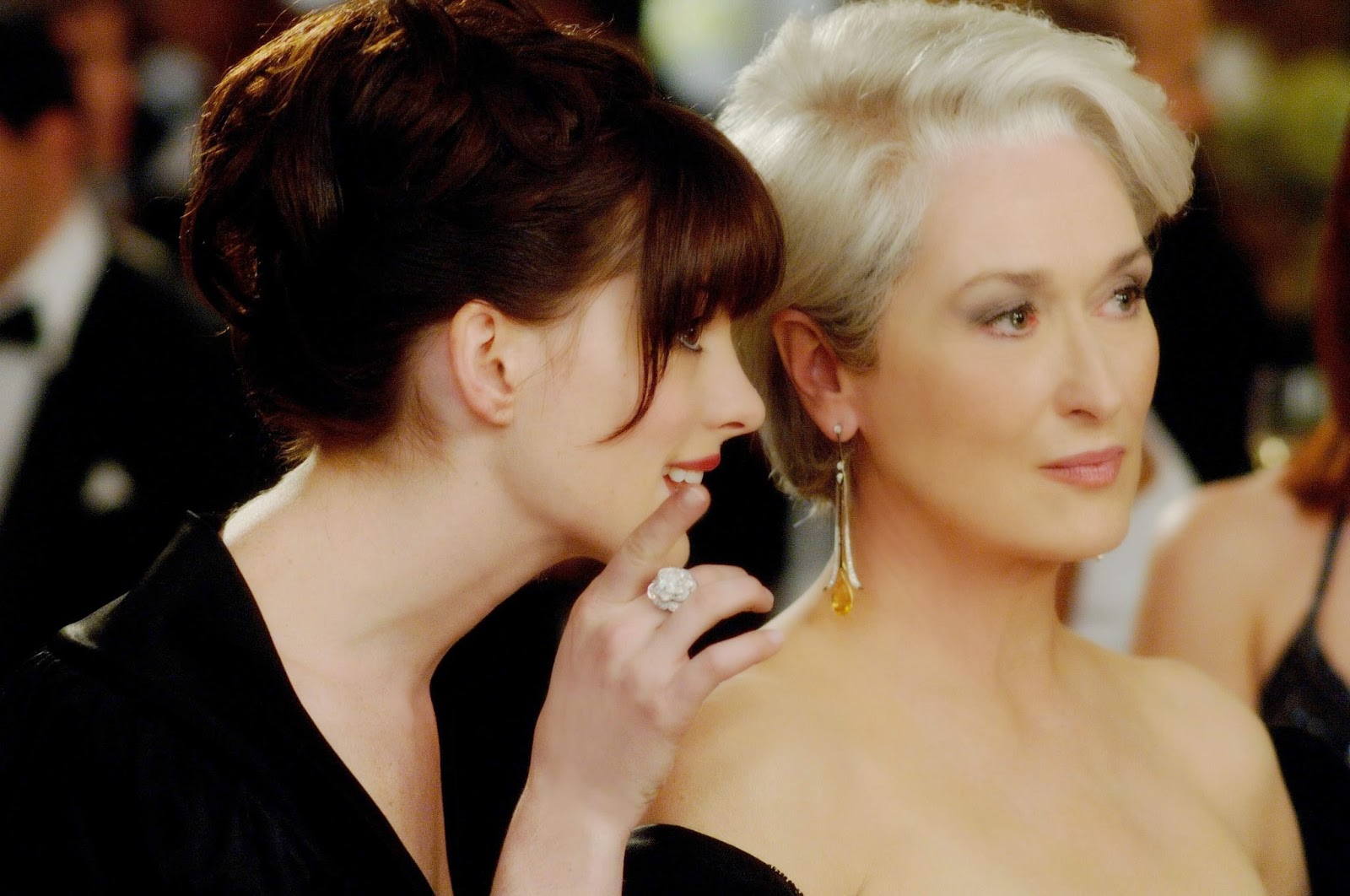 ‘The Devil Wears Prada’ — high fashion or vision of hell? 16.07.2026 54minIt’s no mystery why David Frankel’s 2006 film The Devil Wears Prada was a hit. The movie had all the ingredients of a certain kind of success. Take a bestselling novel (by Lauren Weisberger) about a midwestern girl trying to make it in the big city, place it in the hands of a screenwriter known for broadly appealing rom-coms (Aline Brosh McKenna), cast a much-loved screen legend in an uncharacteristically villainous role (Meryl Streep) and put her alongside a doe-eyed starlet on her way to becoming a superstar (Anne Hathaway) … then set the plot in the rarefied world of haute couture and divide it between New York and Paris — what’s not to love? What is a little surprising is that The Devil Wears Prada should have achieved the quality of a certain timelessness (despite being released a year before the now ubiquitous iPhone). It is a cinema classic whose enduring appeal and pop cultural resonance have been demonstrated by the global success of a sequel, two decades on. But does the film’s success point to narrative and thematic elements that run much deeper than the appeal of the glossy surface? Take, for instance, the obvious Faustian connection, evoked both in the title of the film and the blunt words of Emily (played by Emily Blunt) to Andrea Sachs (Hathaway): “You sold your soul the day you put on your first pair of Jimmy Choos.” The narrative arc of the film is, broadly, the naïve Andy’s “descent” into the world of high fashion, cultural influence and sterile, superficial beauty, only to step back from the hellmouth of corruptibility at the end, lest she too share Miranda Priestly’s (Streep) unhappy fate. Does this mean that Andy also shares in Faust’s culpability, less a victim than a participant in his own damnation? Who, then, plays the role of the seducer? Who is the film’s Mephistopheles, also trapped in a hell of diabolical design? Is it Emily — starved, harried, contemptuous, miserable? Is it Christian Thompson (Simon Baker) — urbane, erudite, well-connected, corrupting, and ultimately impotent? Surely it is Nigel (Stanley Tucci) — personable, appealing, but a slave to Miranda’s imperious demands, and a prisoner to a corrupted vision of beauty (“size six is the new fourteen”). And to what extent does Andy escape unscathed, given her string of broken relationships? The Devil Wears Prada also draws deeply on those specifically New York stories of tragic or monstrous success. Stories like Alexander Mackendrick’s 1957 The Sweet Smell of Success (with imperious newspaper columnist JJ Hunsecker playing the Miranda Priestly role) and Darren Aronofsky’s 2011 Black Swan, or John Badham’s 1977 Saturday Night Fever and Mary Harron’s 2000 American Psycho, or Oliver Stone’s 1987 Wall Street and Taylor Hackford’s 1997 The Devil’s Advocate. Is New York really a place of opportunity, or is it the kind of environment in which the price of success is one’s own soul? The transformation that Andy Sachs undergoes in the first half of the film initially looks like an external accommodation to a class or caste of society where one wants to belong — a sartorial equivalent of Eliza Doolittle in My Fair Lady, though with Nigel in the role of Henry Higgins. But if there is any lesson from the film, it is this: in a culture where appearance is essence — which is to say, how you look is who you are — the change of appearance rarely remains skin deep. Finally, The Devil Wears Prada trades on, and in no way resolves, one of the central contradictions in modern democracies — one that is explored at length by Elizabeth Anderson: in political cultures that prize agency and democratic self-determination, many workplaces are tyrannies, and bosses despots. The glimpses we get of Miranda’s unhappy home life, however sympathy inducing they are, does not reduce our sense that she presides over a domain in which she has no equals, no one to whom she is morally answerable. All there is, is the standard of aesthetic perfection and cultural sway to wh
 -
 Copyright theft is AI’s original sin — are we doomed to repeat it? 09.07.2026 54minEssential to the profitability and widespread adoption of modern technologies is the need to conceal their costs — the human labour, the unjust or exploitative working conditions, the environmental degradation and drain on natural resources, the reduction of precious goods to mere ‘raw material’. By means of such concealment, those who enjoy the conveniences these technologies afford are lulled into a state of (what Hannah Arendt called) “unthinkingness”. The benefits simply appear, and consumers are left incurious about how it could have happened so quickly, so cheaply, with so little friction. The other thing that is crucial for the success of such technologies is the way that their speed, financial backing and sheer scale project a sense of irresistibility — what Shoshana Zuboff has termed “the cult of inevitabilism”. Put otherwise, the belief that resistance, however principled and noble, is ultimately futile. So get on board or get out of the way. Artificial intelligence represents, in many ways, the apogee of both aspects. The assumption that AI development hovers somewhere between an “arms race” with existential stakes and the key to unlocking untold productivity and economic growth has had the effect of reducing calls for prudential care and democratic consultation to little more than inconveniences to be gotten around rather than objections to be engaged with meaningfully. At the same time, the twin mantras of “more compute” (more chips, more data centres, more electricity) and “more data sets” have been used to legitimate both the expenditure of unimaginable sums of money and the indiscriminate (and ultimately illegal) use of intellectual property for the training of AI models. You could call this theft generative AI’s original sin. In both cases, the guiding philosophy seems to be that the purportedly beneficial ends will have justified the unprincipled means. Which is to say, the emergence of artificial general intelligence will cicatrise the moral wound inflicted by these companies’ originary theft. After all, what’s a little copyright infringement between inhabitants of an AI-ushered utopia? And yet, beginning in 2024, despite the size, the rapaciousness and the heedlessness of these AI companies, a number of courageous pockets of profoundly human opposition have emerged. To date, perhaps the most consequential are the resistance on the part of local councils in the US and UK to the construction of data centres, and the lawsuits filed on behalf of writers, artists and some media companies against the illegal use of their copyrighted work to train generative AI models. Met with such opposition, unsurprisingly, AI companies are looking for new terrain on which to construct their data centres, and new sources of data to be strip-mined for their models. Concerns are that the Australian federal government is attempting to position itself as an attractive destination for these companies, and Australia as the beneficiary of the investments that come with them. But at what price to Australia’s creative industries? Last year, the Productivity Commission proposed a “text and data mining exception” to the Copyright Act, paving the way for AI models to be trained on the copyrighted work of Australian authors and artists. Concerned that this exemption may be revived as part of a proposed deal with AI companies to “attract more than $50 billion worth of datacentre investment”, authors and artists converged on Canberra last week to oppose any such dilution of legal protections to their intellectual property. The questions raised by this opposition are difficult and extremely consequential. Is “fair compensation” for the use of these artists’ works sufficient to heal the moral wound inflicted by the original theft of their work? Is the establishment of a fund to support future artists enough to encourage and sustain such creative work, when the cultural effect of AI is to devalue both human creativity and the time and la
 -
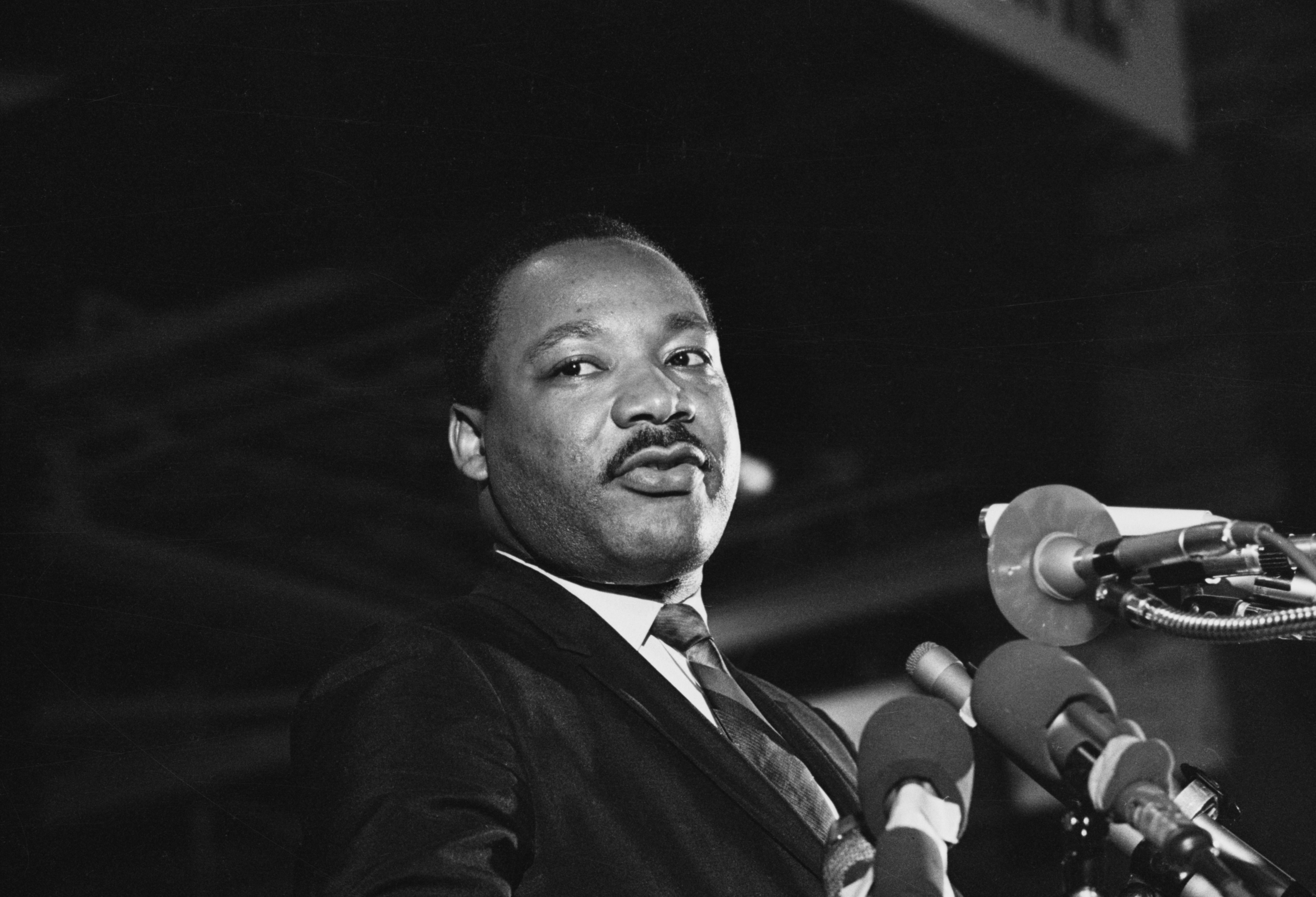 Last Words: ‘I’ve Been to the Mountaintop’ — Martin Luther King, Jr in Memphis 02.07.2026 54minIn 1967, after reaching the heights of social and political influence in 1963, after being awarded the Nobel Peace Prize in 1964, and having been instrumental in the passage of the Civil Rights Act in 1964 and the Voting Rights Act of 1965, Martin Luther King, Jr watched his popular support fall precipitously away. He had reached the lowest point of his life on the public stage, with fully two-thirds of Americans disapproving of him. King’s rousing vision of nonviolence — of racial coexistence within a community defined by mutuality, interdependence and love — seemed to be growing ever more remote following the landmark civil rights legislation. The Black Power movement was gaining influence, and in 1967 alone there had been 76 violent riots across major American cities. Then, in April 1967, King denounced the US military involvement in Vietnam — a war that was wildly popular with the vast majority of Americans. For his supporters, it was strategically counterproductive to so connect the cause of civil rights with the goals of peace activists; while Barry Goldwater, the standard bearer of a kind of atavistic conservatism, characterised King’s words as treasonous. King had also grown concerned that the Civil Rights and Voting Rights Acts represented, for many Americans, the end of their concern. This legislation had ushered in a kind of complacency that absolved them from any further inconvenience or moral concern. Now that Black people had been granted equality de jure, what was needed was for them to be accorded equality de facto — especially in education, employment and housing, and not only in the South. Therefore, in the autumn of 1967 King launched what would be known as the Poor People’s Campaign, which was meant to culminate in a new march on Washington DC in the spring of 1968. But disagreement with the ambitions and unruliness of the campaign from within, coupled with outright antipathy from the Johnson administration due to his opposition to the war in Vietnam, plunged King into a condition of deepening despair. Even as he gave himself with increasing desperation to the cause, and tried to rally support for the Poor People’s Campaign across the South, he suffered from a growing sense of futility. The constant threat of being killed did nothing to alleviate his depression. According to those closest to King, he was physically, emotionally, spiritually exhausted. In March 1968, King received a request from Memphis, Tennessee, to offer his support for the 1,300 of the city’s sanitation workers, who had gone on strike for better pay, the ability to organise and improved working conditions after two of their number had been killed on the job. King accepted the invitation, believing that Memphis would mark the beginning of a nationwide campaign against poverty and housing discrimination. In Memphis, he and his team met with reticence among their own number and political opposition to mass demonstrations — including a federal injunction obtained by the city prohibiting any demonstrations for ten days, after one such march had been derailed by violence. On the evening of 3 April, King was scheduled to speak at Bishop Charles Mason Temple. Because of severe storms, King believed turnout would be suppressed. He was, moreover, sick with the flu and asked Ralph Abernathy, whom he described as “the best friend that I have in the world”, to speak in his stead. But when Abernathy saw the church was filled to capacity, with more than 3,300 people packed into the building, they sent word back to King telling him the people needed to hear King speak, even if briefly. Once King arrived, Abernathy gave an unusually long introduction — close to 30 minutes — in order to minimise the strain on King himself. King spoke without notes, and was evidently unprepared. He habitually started his speeches slowly, haltingly, in order to allow them to reach a series of rhetorical peaks. But his weariness on this occasion was evident from th
 -
 Why the anxieties over multiculturalism? What’s the appeal of a monocultural society? 25.06.2026 54minIf One Nation leader Pauline Hanson managed to reignite a public debate with her assertion that Australia is “a multiracial society, but we must be monocultural” during her address last week to the National Press Club, it is only because certain anxieties over multiculturalism have long been smouldering in the social undergrowth, just waiting to be fanned into flame. The question of immigration, handwringing over the racial constitution of the nation and the desire to maintain Australia’s essential “Britishness” go back at least as far as the 1901 Immigration Restriction Act. And these concerns continued to resurface throughout the twentieth century. As the then Minister for Immigration and future leader of the Liberal Party, Billy Snedden, said in 1969 (the year after Enoch Powell’s “Rivers of Blood” speech): “I am quite determined we should have a monoculture, with everyone living in the same way, understanding each other, and sharing the same aspirations. We don’t want pluralism.” It wasn’t long afterward, the White Australia Policy was dismantled and multiculturalism became official national policy, culminating in the 1989 National Agenda for a Multicultural Australia. Just seven years later, the rise of John Howard and the election of Pauline Hanson placed both multiculturalism and immigration back on the table. Debates over the proper levels of immigration are, of course, entirely appropriate in a healthy democracy. Immigration policy is something about which citizens should be able to deliberate and disagree without fear being called xenophobic. But something potentially dangerous happens when the debate turns to multiculturalism, as longstanding government policy, itself. For then we are not discussing prudential concerns about the proper allocation of limited social and economic resources; instead, we are discussing the desirability, or not, of our fellow citizens, our neighbours, those with whom we find ourselves pursuing a common life. We are discussing who truly belongs, and who does not. One of the dangers of the discourse about “the utterly flawed policy of multiculturalism” (as Hanson put it) is that it turns fellow citizens into abstractions, other cultures into barriers, our neighbours themselves into impediments one’s own sense of wellbeing and social comfort. As John Dewey argued a century ago, it is not enough for our experience of democracy to be confined to elections and abstract values (call this the vertical orientation of democratic life); democratic habits must pervade everyday life and casual interactions with our fellow citizens (call this democracy’s horizontal or relational aspect). In the same way, multiculturalism cannot remain a government policy or series of eight goals; for it to become a moral reality, it must find inter-cultural expressions in civic life. It is in this way that we go from being strangers to one another, to fellow citizens. The desire not to feel like “strangers in our own home” or to be a “monocultural” society is surely a form of the desire to eliminate strangeness from our lives, to achieve what Pierre Rosanvallon calls the radical “simplification of the social bond” through the commonalities of culture, custom and language. But what does this longing conceal, and what does it assume both about “culture” and “national identity”? Guest: Glenda Ballantyne is a Senior Lecturer in Sociology at Swinburne University of Technology, and Coordinator of the Australian Intercultural Cities National Network.
 -
 One Nation is on the rise — but do we know what it means? 18.06.2026 54minOver the last twelve months, there have been two conspicuous trends in federal politics. One is the precipitous decline in electoral support for the Liberal Party, which began before last year’s federal election and has continued apace ever since. The other is the rise in One Nation’s electoral fortunes, which began to tick upwards in September but then took a leap in December and January. Both trends converged, rather spectacularly, in the latest Resolve Political Monitor, conducted for the Nine newspapers. Not only had the Coalition’s primary vote drop to 20 per cent (an all-time low), but One Nation’s primary vote shot up to 29 per cent (passing Labor on 28 per cent). Moreover, Pauline Hanson emerged as preferred prime minister with a third of respondents, while Anthony Albanese was selected by 29 per cent — opposition leader Angus Taylor took only 16 per cent of nominations. This poll comes little more than a month after One Nation won the Farrer by-election in rural New South Wales, with a commanding 40 per cent of the primary vote, thereby gaining its first lower house seat in federal parliament. And it came days before Pauline Hanson’s first address to the National Press Club in Canberra, three decades after she entered parliament. Almost exactly forty years ago, then opposition leader John Howard famously said “the times will suit me”. The same could now be said for Pauline Hanson. For three decades she has been a fixture of federal politics. The major parties have variously denounced and attempted to accommodate her views on immigration, multiculturalism and Indigenous policy, among other things. But while the political landscape around her has changed, she has not. If anything, due to the excesses of political rhetoric and perverse incentives of a social-media saturated informational ecosystem, the electorate has grown inured to what once would have been scandalous, perhaps even disqualifying. In an age of Trump, Hanson comes across to many voters as simply “plain spoken”, as the “voice of reason”. The question, however, is whether One Nation’s electoral support is, in fact, an affirmation of the party, its policies (such as they are) and its leader, or merely a kind of aggregated discontent with the major political parties? Is One Nation the temporary beneficiary of voter anxiety and anger — with polling and by-elections here functioning as a means of political communication — or does this point to a more profound disintegration of two-party politics? Does One Nation’s current rise reflect what Pierre Rosanvallon described as the three-fold simplification at the heart of populism’s more general appeal (the simplicity of the ‘natural’ social bond over against the difficulties of multiculturalism; the simplification of the cause of current social problems; the simplification of the political remedy, over against the complexities of deliberation) at a time of dizzying complexity? Either way, Pauline Hanson’s ability to both appeal to and harness electoral discontent in times that are characterised by “a near-constant sense of crisis, spanning the economic, social and political”, presents a challenge to the exercise of responsible political leadership — particularly that of someone like Anthony Albanese, whose moderation and commitment to a kind of gradualist centrism rarely touches the political passions that animate our current moment. Then again, in the UK and Europe, far-right parties have tended to poll well between elections and have even enjoyed a degree of success in European parliamentary elections and by-elections, only to see their support fall away come the general election. Is something similar happening in Australia? Guest: Paul Strangio is Emeritus Professor of Politics at Monash University and the author, most recently, of The Alchemy of Leadership: Seven Australian Prime Ministers in a Turbulent Twenty-first Century.
 -
 The ethics of ‘longtermism’ — what are our obligations to the future? 11.06.2026 54minOne of the criticisms often directed at democratic politics is that it is irresponsibly, even dangerously, short-term in its orientation. The wellbeing of future generations, to say nothing of the sustainability of the planet, rarely matter more to lawmakers than the cost-of-living pressures experienced by their constituents or the outcome of the next election cycle. Short-termism, therefore, would seem to be baked into democracy; hence, for some, the only way to act seriously with the future in mind would be for those with power and resources to do so unilaterally. There is no denying that democratic politics is constrained by short-term thinking. It is likewise true that our moral imaginations suffer from the incapacity to recognise the claim that future generations may properly make on our current actions — or even to recognise that such moral obligations exist in the first place. But there is no reason to deny such obligations. As Annette Baier argues, the “only special feature in the moral tie between us and future generations lies in the inferiority of our knowledge about them, not in the inferiority of their ontological status … Neither their non-presence, nor our ignorance of who exactly they are, nor our uncertainty concerning how many of them there are, rules out the appropriateness of recognizing rights on their part.” In line with this sentiment — though shorn of the concept of obligation that the language of “rights” assumes — a number of influential philosophers have made a case for what they’ve called “longtermism”. Its central tenets are relatively straightforward. William MacAskill lays them out in his best-selling book What We Owe the Future: “that, impartially considered, future people should count for no less, morally, than the present generation”; “that there may be a huge number of future people”; “that life, for them, could be extraordinarily good or inordinately bad”; “that we really can make a difference to the world they inhabit”. Because this outlook is wholly utilitarian, the “huge number of future people” is doing a great deal of work in MacAskill’s formulation. In effect, longtermism takes utilitarianism’s spatial concern with achieving “the greatest good for the greatest number” and transposes it temporally, onto the vastness of time. It doesn’t simply prioritise the indefinite prolongation of the human species in the face of possible extinction threats. It also accords a certain moral priority to the “untold number of future people”. So MacAskill writes: “Future people count, but we rarely count them. They cannot vote or lobby or run for public office, so politicians have scant incentive to think about them … They are utterly disenfranchised … I see longtermism as an extension of [social movements for civil rights and women’s suffrage]. Though we cannot give genuine political power to future people, we can at least give consideration to them. By abandoning the tyranny of the present over the future, we can act as trustees — helping to create a flourishing world for generations to come. This is of the utmost importance.” How, then, do we go about freeing the future from the “tyranny of the present” — which here should not be limited to mere short-term thinking, but also the expressions of our more proximate, immediate obligations to human and non-human creatures? It is at this point that longtermism’s consequentialism gives way to a certain technotopian impulse. Abandoning the logic of limits, of democratic restraint and reduction, of a more pastoral and educative understanding of democratic self-governance, longtermism favours instead the unleashing our technological capacities and reach. As Émile Torres puts it: “Longtermism tells us to maximise economic productivity, our control over nature, our presence in the Universe, the number of (simulated) people who exist in the future, the total amount of impersonal ‘value’ and so on. But to maximise, we must develop increasingly powerful — an
 -
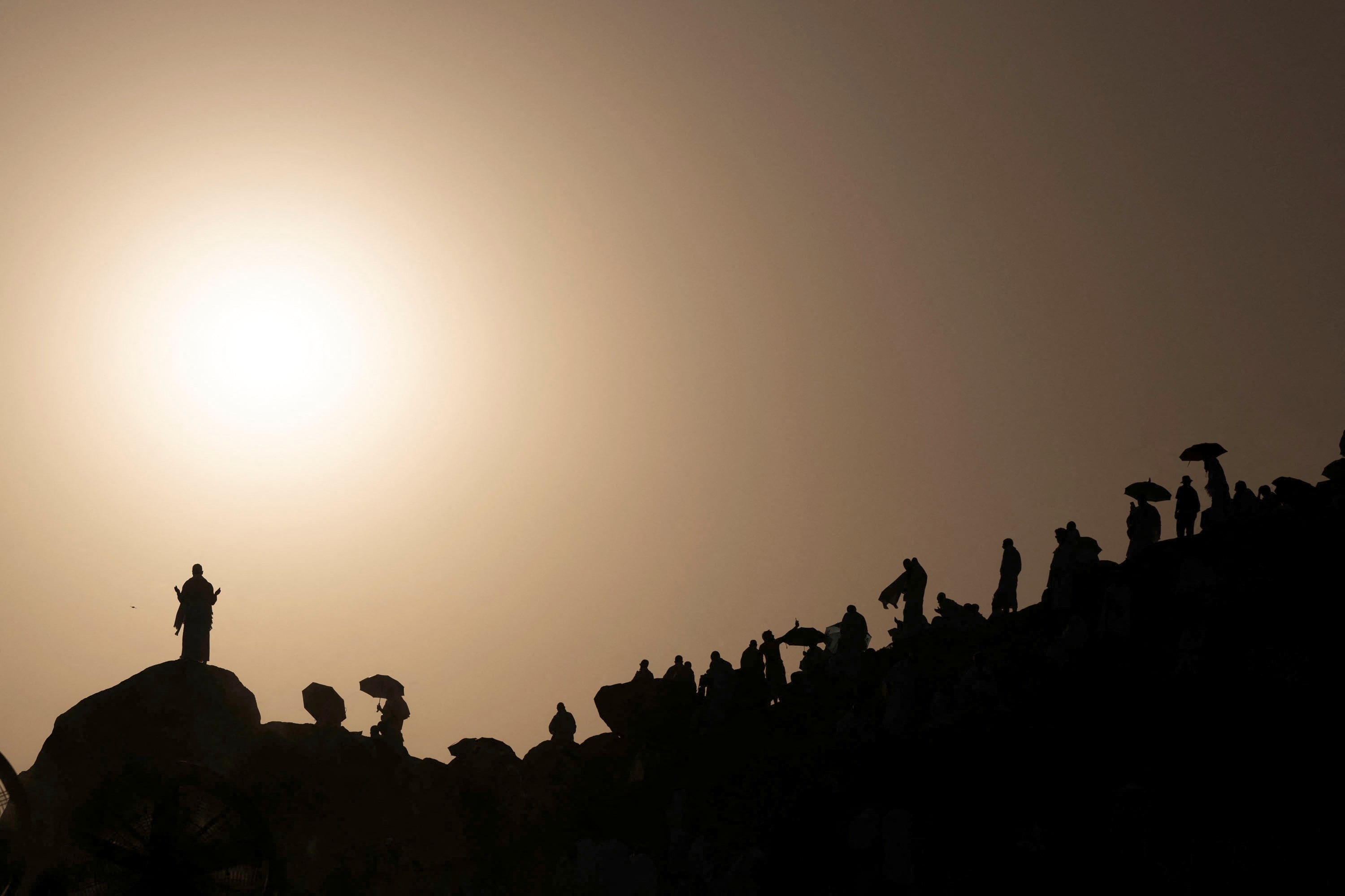 Last Words: The ‘Farewell Sermon’ of the Prophet Muhammad 04.06.2026 54minIt could be said that human beings reveal who they most truly are as they approach the end. For the end of one’s life is not simply its terminus ad quem; it is also its telos, its goal or meaning. A life that has been lived in the thrall of egotism, whose fundamental pursuit has been the safeguarding and satisfaction of the self, will almost certainly, at the end, turn inward upon itself and find itself grasping, desperately, at something like immortality — as the indefinite prolonging of the self. It would not be surprising for such a life to be shrunken, fearful, petty, suspicious, diminished at the end, rather than open-handed, open-hearted, at peace. Consider the example of Shakespeare’s King Lear, who craves flattery and reassuring falsehoods, who obsesses over small offenses and slights to his ego, who remains unconcerned with truthfulness and unnourished by the love of his youngest daughter. On the other hand, a life that is lived meaningfully — which is to say, a life that serves a purpose beyond itself — is able to approach the end without fear, not only because a certain humility has become a habit of life, but because the prospect of the end brings what is most important into sharper focus. This is perhaps what Socrates had in mind when he said that “the one aim of those who practice philosophy in the proper manner is to practice for dying and death” (Phaedo, 64a). Here we could think of Martin Luther King, Jr’s final sermon at Mason Temple in Memphis, Tennessee, on 3 April 1968, during which he reflects on threats made to his life. “Like anybody, I would like to live a long life”, he admits. “Longevity has its place.” Then he immediately says, “But I’m not concerned about that now. I just want to do God’ will … And I’m happy, tonight. I’m not worried about anything. I’m not fearing any man.” Or consider the philosopher Stanley Cavell, writing tenderly in his memoir that, “anticipating the ending of my life, I am becoming freer than ever of the desire to persuade”. Or Toni Morrison, after surveying modern literature’s fascination with evil (“Evil has vivid speech; Goodness bites its tongue”), affirms “these last forty years, I have become more and more invested in making sure acts of goodness (however casual or deliberate or misapplied or … blessed) produce language”. Only lives spent renouncing egotism, and pursuing what matters most, could speak such words. So occasionally over the coming months, we’re going to spend some time in the presence of those who are approaching the end, listening to what they have to say. It may not be the end of their lives, but their lives will, in each instance, be approaching a pivotal moment for which their habits of life, their daily devotion to a cause bigger than themselves, will have prepared them. Perhaps the most historically consequential of these moments has just been observed by millions of Muslims around the world. In February 632 CE, twenty-three years after receiving his first revelation in a cave near Mecca, the Prophet Muhammad would lead tens of thousands of his followers back to the city of his birth with the intent of guiding them through the full ritual of the hajj. It was to be his final pilgrimage. Over the course of several days, Muhammad led them in the seven processions around the Ka‘aba — the simple square structure believed to have been constructed by Adam, and then rebuilt by Ibrahim/Abraham, the first monotheist, and finally by Muhammad himself — followed by the journey back-and-forth seven times between the nearby hills of Safa and Marwa, thus re-enacting the frantic search of Hagar, wife of Ibrahim, for water for their dying child Ismail. The Prophet then led them to the plain next to the rocky hill of Arafat and addressed those gathered. His message has all the marks of finality about it. Here is part of what the Prophet said (the translation comes from Yahiya Emerick): “O People, listen to my words, because I don’t know if I will ever be with
 -
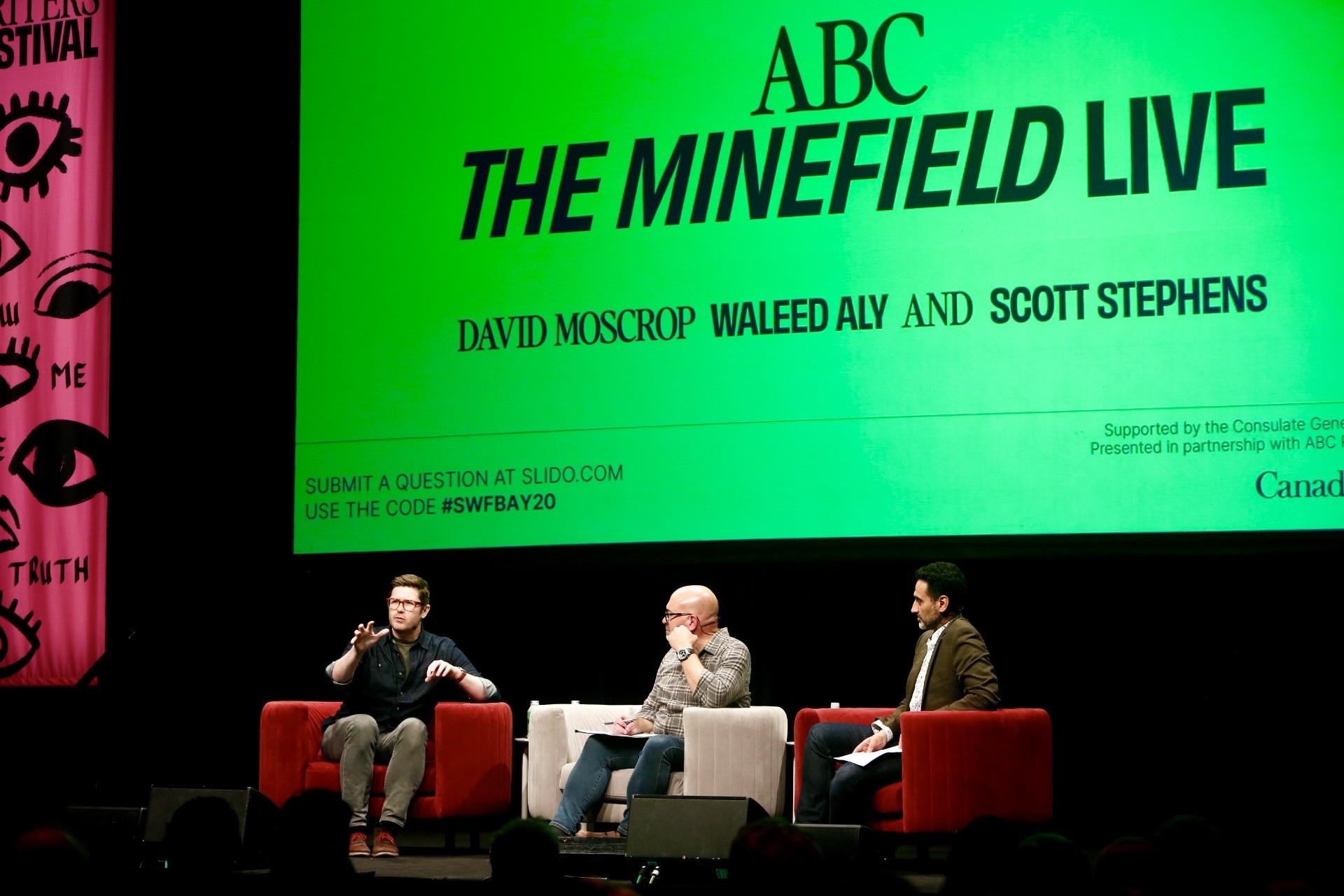 The Problem of Nationalism, with David Moscrop — Live at the Sydney Writers’ Festival 28.05.2026 54minIt’s common these days to refer to “the return of nationalism”. But that assumes that nationalism receded for a time, like the tide, and here the world is, now, getting its pants legs wet. Such an assumption misunderstands the peculiar character of nationalism. It would be better to think of it as a swell, as a political phenomenon that periodically gathers power and force, that crests and crashes, but that never entirely goes away. It’s always there, beneath us. Nationalism belongs to the emotional valence of the collective life of a nation state. Using the analogy of Aristotle’s taxonomy of the moral emotions — with, say, cowardice on one end of a continuum, foolhardiness on the other, and courage sitting in between — we could even think of nationalism as an extreme expression of the bundle of political emotions that ordinarily manifest as civic pride or patriotism, among them: love and fear, loyalty and hatred, attachment and jealousy. But with nationalism, it is as though the emotional balance is out of whack. Ever since the origin of the term at the end of the eighteenth century and its subsequent emergence in the nineteenth, nationalism has typically been associated with three components: Membership — the recognition of an “imagined community” constituted through shared language, ethnicity, religion, geography and so on; Self-determination — the demand for sovereignty over a defined territory; “Civil religion” — the existence of self-reinforcing symbols, practices, rituals, stories which serve to reify “the nation”, turning the abstract idea of national membership into a lived experience. While there is undeniable overlap with patriotism, nationalism adds the additional element of bellicosity. Not just national pride but superiority. Not just love of one’s own place and people (patria), but a corresponding antipathy toward other nations — including “others” within one’s own borders. Nationalism thus tends to be a Janus-faced phenomenon, with its heedless pursuit of territorial and tributary interests without and its requirement of the dominance of an ethnic and religious majority within. We could think of nationalism as the political equivalent of what happens when proper “self love” (amor sui) turns inward on itself (incurvatus in se) and devolves into egotism. Ever since the Second World War, nationalism has been indelibly associated with territorial ambition, categorical violence, a pseudo-religious zeal, utter partisan loyalty. As George Orwell puts it, “Nationalism is power hunger tempered by self-deception.” And yet over the last decade, a form of brazen nationalism has been willing to speak its name, to own its ambitions and cast off the veneer of polite cosmopolitanism. It has both fed off and fuelled intense popular emotions — fear, resentment, disgust, patriotic love — and seems willing to regard one’s nation as “beyond good and evil”, as answerable to no criteria other than its own interests. The problem, of course, is that bellicose nationalism invites responses in kind. Is nationalism a term that can be rehabilitated, or even redeemed? Orwell was convinced that “every nationalist is capable of the most flagrant dishonesty”; is nationalism compatible with the kind of constructive shame that follows from truthful encounters with one own history? Is it possible to cultivate an appropriate sense of self-love that does not devolve into group narcissism? David Moscrop is a Canadian political columnist and commentator. He is the author of Too Dumb for Democracy? Why We Make Bad Political Decisions and How We Can Make Better Ones and the forthcoming “On Nationalism”.
 -
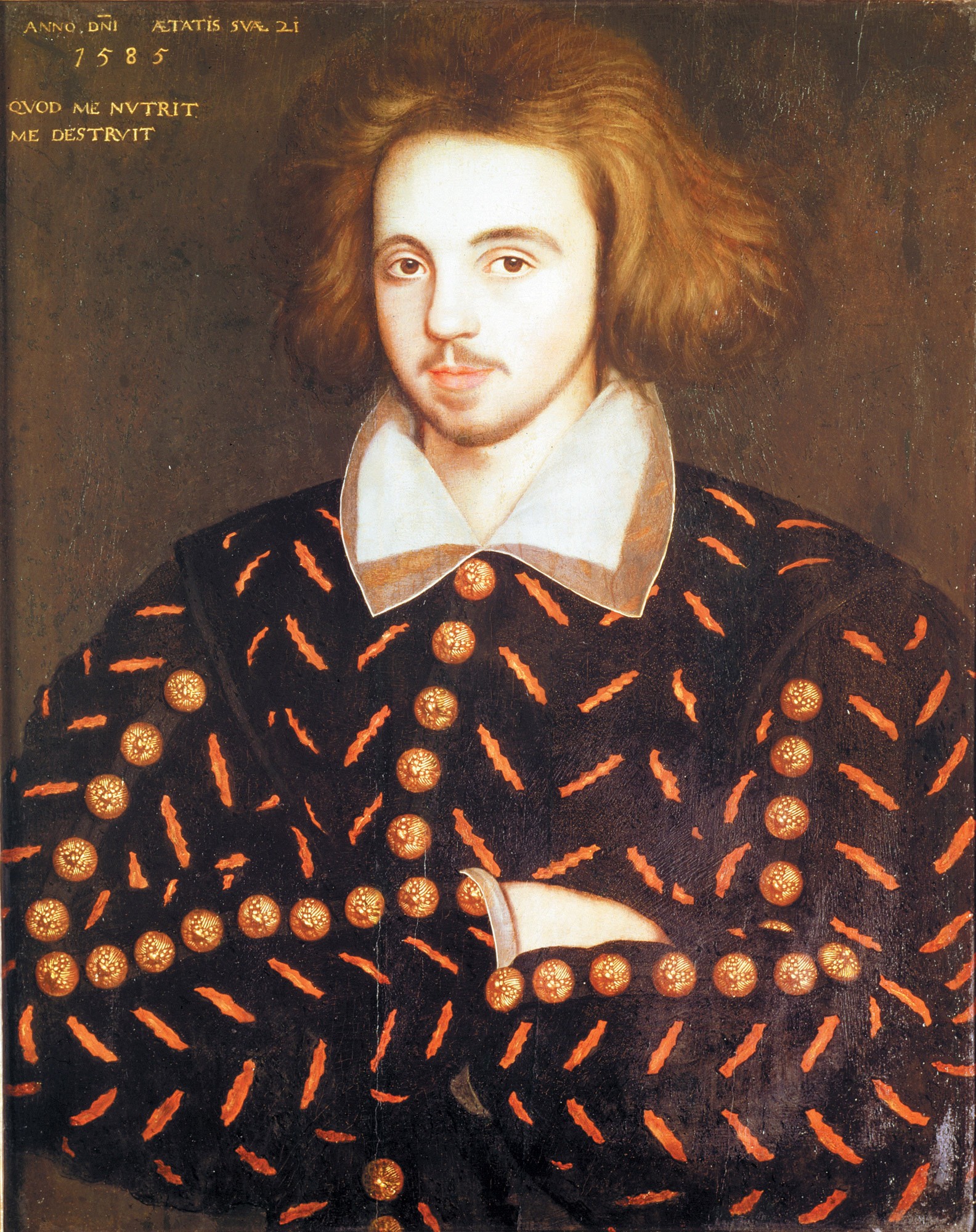 What is the moral of Marlowe’s ‘Doctor Faustus’? 21.05.2026 54minThere are four stories that could justifiably be described as foundational to Western culture: the temptation of Eve in the Garden of Eden; Prometheus’s gift of fire to humanity; Doctor Faustus’s pact with the devil; and Victor Frankenstein’s act of monstrous creation. Not only are the principal names immediately evocative to anyone who hears them, but that recognisability allows for nearly endless variations on their original themes. This is, in part, what gives these stories their staying power. But these stories could themselves be said to represent four variations on a still older theme: the longing for some forbidden knowledge, to transgress a proscribed limit — or as WH Auden would put it, the desire to “know too much”. In each instance, rightly or wrongly, the pursuit itself brings a severe punishment, even catastrophe. This is what gives each of these foundational stories an element of tragedy, of pathos. About whom could it not be said that, even though we know the danger of going too far, we want to do it anyway? And yet it is at this point that an important difference emerges between Faustus and the other three stories. Eating from the Tree of the Knowledge of Good and Evil, granting fire to humankind and giving life to a “creature” of one’s own making all point a certain ambition, a restlessness, an unwillingness to remain in a perceived state of underdevelopment or adolescence. The consequences of that restlessness may still be both foreseeable and severe, and so suggest a lack of wisdom or trust or prudence — but that doesn’t mean the acts themselves are either base or self-seeking. The same cannot quite be said of Christopher Marlowe’s depiction of Doctor John Faustus at the end of the sixteenth century. It is true that, at the outset, explicit reference is made to the flight of Icarus from Ovid’s Metamorphoses, who fastened wings to his back with wax, but which melted when he ventured too close to the sun. Speaking of Faustus: “His waxen wings did mount above his reach, / And, melting, heavens conspir’d his overthrow; / For, falling to a devilish exercise, / And glutted now with learning’s golden gifts, / He surfeits upon cursed necromancy …” But even here, the point is not that Faustus went further than he should in his chosen disciplines, but rather that he abandoned them in favour of sorcery. And what Faustus seeks from the outset is not so much forbidden knowledge as it is wealth and renown — his own version of Lucifer’s sin of “aspiring pride and insolence” — and his attraction to necromancy’s “words of art” are mere means to that end. In other words, the reference to Icarus places the emphasis not on the ambition of Faustus’s heaven-ward reach but on the precipitous nature of his subsequent fall. Indeed, the trajectory of Marlowe’s play could be said one of perpetual descent: from the heights of academia to the utter solitude of his plunge into hell. In Marlowe’s play, it is not Lucifer who is the tempter, but Faustus who actively seeks out the means of his own “voluptuousness” — on the belief that the cost (“his soul”) can either be indefinitely deferred or that the bill will never come due (“Come, I think hell’s a fable”, Faustus says; to which Mephistopheles replies, “Ay, think to still, till experience change thy mind”). The lesson of the tragedy of Doctor Faustus probably remains the ridiculousness of the exchange of long-term beatitude for short-term prosperity and pleasure. The bill always comes due. But what Marlowe also reminds us is that the punishment is already present in the solipsism, the self-enclosure of the lives heedlessly devoted to pleasure. As Mephistopheles puts it, “for where we are is hell”. Guest: Kate Flaherty is the Head of English and Senior Lecturer in English and Drama at the Australian National University.
 -
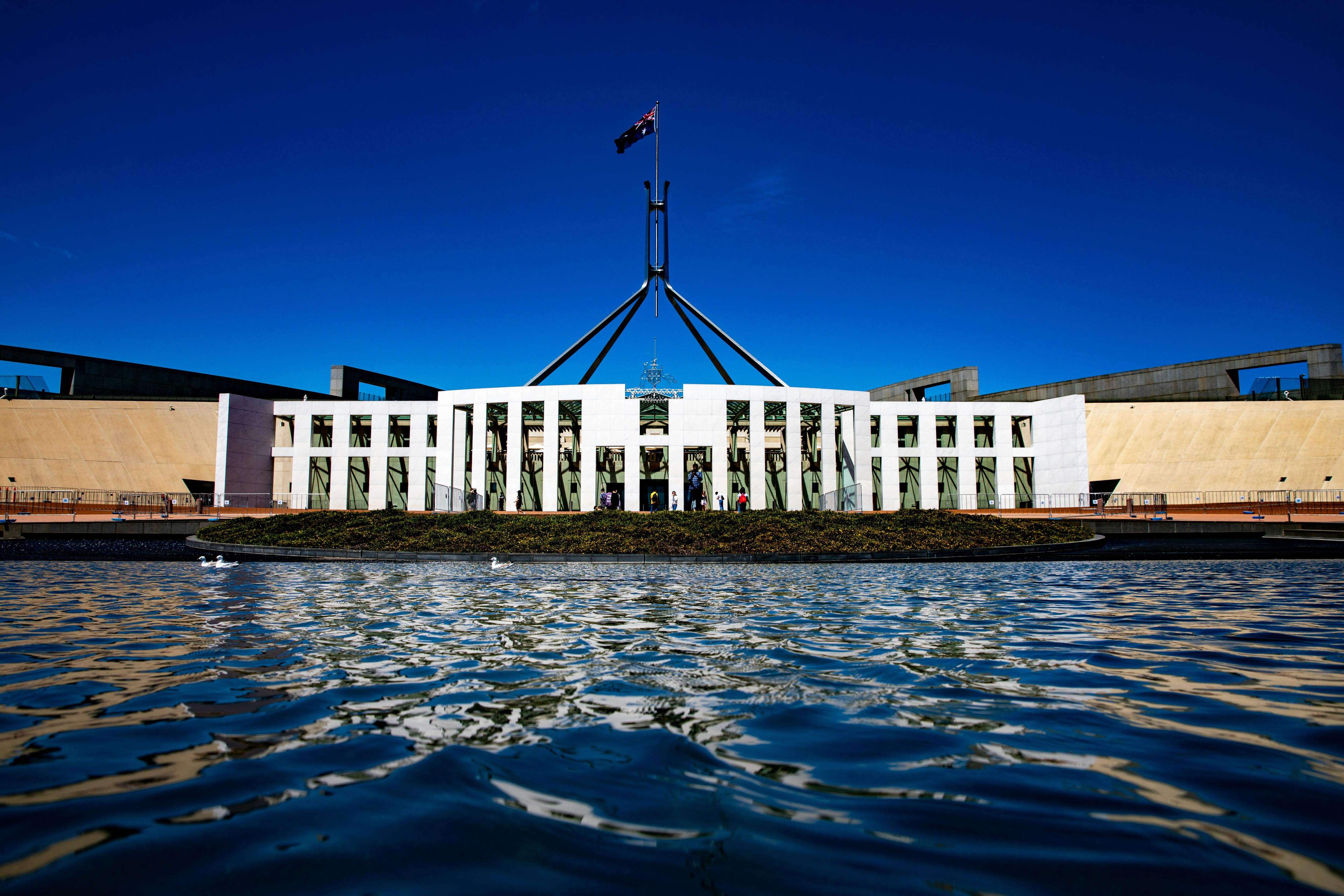 Does the budget have a coherent underlying philosophy? 14.05.2026 54minThe federal budget is, in many respects, the high point of Australia's political calendar. This federal budget is no exception. The public had been primed for weeks to expect a series of significant reforms this year. But it is striking how little there is in the budget by way of direct social benefit. The budget is broadly redistributive — it removes certain tax concessions that disproportionately benefit the wealthy — but it does not then distribute that additional tax revenue to those struggling with cost-of-living pressures. Even the $250 permanent annual tax offset for workers is quite modest and deliberately non-inflationary. It would seem that the object of this “rebalancing” through changes to capital gains tax, negative gearing and discretionary trusts is “intergenerational equity” itself: the budget adjusts the tax system so that it benefits property investors less than first home buyers — even if these benefits are dispersed over time and only gradually felt. The question is, does the underlying philosophy of this federal budget provide a template for budgets-to-come? Guest: Luara Ferracioli is Associate Professor in Political Philosophy at the University of Sydney, and Philosopher-in-Residence at the Sydney Policy Lab. — THE MINEFIELD - LIVE AT THE SYDNEY WRITERS’ FESTIVAL 24 May 2026 “The Return of Nationalism and the Crisis of Democracy” With each new election, geopolitical deal and technological advancement, it seems like the ideals of democracy are slipping away. In this special live recording of ABC Radio National’s The Minefield, hosts Waleed Aly and Scott Stephens discuss the state of democracy today with Canadian podcaster and political scientist David Moscrop. When: Sunday, 24 May 2026, 4-5pm Where: Carriageworks, 245 Wilson Street, Eveleigh, NSW, 2015 To purchase your tickets: https://www.swf.org.au/program/festival-2026/abc-the-minefield-live — NEXT WEEK: Christopher Marlowe’s “Doctor Faustus” Expressions like “deal with the devil”, “selling one’s soul” and “Faustian bargain” are woven through our language. And popular culture is filled with variations on the unsavoury theme of attaining wealth, fame and pleasure by permanently corrupting one’s soul. In the third week of May, Waleed and Scott will be turning their attention to the source of these tropes: Christopher Marlowe’s play “Doctor Faustus”. It was first performed in 1592, just a year before Marlowe’s own untimely death. It is neither a long nor an overly complicated play, but it is powerful and ethically rich. We will be discussing the so-called “A-Text” of Marlowe’s play, revised in 1604. We hope you’ll join us in reading the play beforehand.
Estação de rádio

Podcasts similares


Popular em
Este podcast também aparece nas paradas de podcasts destes países.


