
Translate This!
Barbier Inc.
0
A podcast about language, culture, life, and the hilarity of it all.
Episódios
-
 THE MELTING POT THEORY, A.K.A. HOW TO INTEGRATE NEWCOMERS INTO A SOCIETY PART 2 16.09.2026 1h 49minIn Part 1, the theory. In Part 2, the reckoning. Co-host Richard returns with Sweden as the ultimate real-world test of the Melting Pot vs. Salad Bowl debate — a country that formally adopted multicultural policy in 1975, was celebrated globally as its gold standard, and has since undergone one of the most dramatic integration policy reversals in the Western world. The paradox at its center: Sweden is simultaneously Europe's most tolerant country toward immigrants and the one where the most citizens believe integration has failed. What went wrong, what it means for language communities, and whether a third path exists beyond both models — it's all in the Season 3 finale, Part 2.
 -
 The Melting Pot Theory, A.K.A. how to integrate newcomers into a society. Part 1 09.09.2026 1h 6minMelting pot or salad bowl — and who decides which ingredients matter? In Part 1 of the Translate This! Season 2 finale, co-host Richard breaks down two of the most influential theories of cultural integration from the ground up. Where the food metaphors came from, what they reveal about identity and power, and why neither model is as tidy as it looks on paper. It's the foundation for everything that follows in Part 2 — and a conversation worth having before the real-world case study lands. 🌍🎙️ Part 1 of 2 — Season 2 Finale.
 -
 Does your airline seat make you anxious? There’s a reason why. 06.08.2026 1h 38minUp to 40% of people experience some form of flight anxiety, but how we feel it, express it, and cope with it is shaped by culture. In Episode 25, host Melissa explores the fear of flying through a global lens: the statistics, the science, personal space dynamics in aircraft cabins, cultural differences in anxiety and behavior at 35,000 feet, and the surprising roster of celebrities who won't board a plane at all. Equal parts data and storytelling, this one's for every nervous flyer who's ever gripped an armrest and pretended they were fine.
 -
 People are reproducing less. Why? 04.06.2026 2h 14minWhat happens to language and culture when the world starts running out of people? The global fertility rate has fallen from 5.0 births per woman in the 1960s to just 2.2 today. Researchers project it will drop to 1.59 by 2100, well below the 2.1 replacement level needed to sustain a population. In more than 1 in 10 countries, fertility is already below 1.4. South Korea recorded 0.72 in 2023. Some nations are on track to lose half their population within a century. These aren't abstract statistics. They describe the communities that need interpretation services, the school districts that depend on multilingual support, the healthcare systems that rely on language access to function. Demographic shifts are industry shifts, and this one is already underway. In this episode, Melissa and Richard explore the Birthgap documentary by data scientist and demographer Stephen J. Shaw, filmed across 24 countries, along with supporting research from the Lancet, the UN, and the Institute for Health Metrics and Evaluation. Topics covered: Why birth rates are declining, and who it's really affecting The finding that 80% of childless people didn't plan to be Which countries are hardest hit and what the consequences look like on the ground What depopulation means for language communities, migration patterns, and multilingual services Whether there's reason for optimism This is one of the most consequential demographic stories of our time. It also directly shapes the work we do in language services every day. Resources mentioned: Birthgap Documentary (Part 1): https://www.youtube.com/watch?v=m2GeVG0XYTc Additional resources: https://www.youtube.com/watch?v=_vJLwUThQQU
 -
 An Elephant Never Forgets: Melissa on Alzheimer’s and Genetic Risk 27.05.2026 1h 44minMelissa's childhood nickname was "Missyphant"—because an elephant never forgets, and neither did she. Her memory was her superpower. But Alzheimer's runs in her maternal line. And she carries one of the genes. Will the elephant one day forget everything? In her most personal episode yet, Melissa explores: The Genetic Reality: Having Alzheimer's genes in her maternal line What genetic risk actually means (risk factor, not certainty) Whether DNA is destiny (no—lifestyle matters enormously) New Treatments: First drugs that actually slow Alzheimer's progression (lecanemab, donanemab) Modest effects but real progress after decades of failure Hope that treatments will improve by the time she might need them Prevention Strategies: Exercise: strongest lifestyle intervention (30-50% risk reduction) Diet: Mediterranean/MIND diets show protective effects Cognitive engagement: use it or lose it applies to brains Social connection: isolation is risk factor Sleep quality: brain clears Alzheimer's proteins during sleep Cardiovascular health: what's good for heart is good for brain The Emotional Reality: Fear of losing what defines her Watching family members disappear into the disease Every memory lapse raises anxiety But also: agency, hope, living fully now The Complex Decision: Should you get genetic testing? Arguments for and against—no easy answer The Bottom Line: Melissa carries genetic risk. She might develop Alzheimer's. She might not. Genetics aren't destiny. She's doing everything she can while living fully in the present. And she's sharing her fear because talking about it helps everyone—millions of families face similar uncertainty. Listen now for honest conversation about genetics, fear, agency, and hope. Does Alzheimer's run in your family? You're not alone. Share your experience in the comments if you're comfortable. New episodes of Translate This! The Podcast drop every [insert day]. Subscribe wherever you listen to podcasts.
 -
 From Corner Offices to Chicken Coops—Richard on the Urban-to-Farm Movement 20.05.2026 1h 41minRichard tried farm life years ago in Virginia. Now he's watching a new generation make the same leap—and he's got perspective from having lived it. Is this sustainable transformation or COVID fantasy? Richard Explores: His Virginia Experience: What he learned trying to transition from urban life to farming (spoiler: it's way harder than it looks) The New Wave: Why young Americans are ditching corporate careers for farm life—tech workers, professionals, families seeking different path Harder or Easier?: How today's challenges compare to the past Harder: land prices, climate change, economic realities Easier: internet knowledge, e-commerce, remote work income, technology The Tech Advantage: Are urbanites bringing Silicon Valley innovation to agriculture? (Yes, but technology doesn't replace fundamentals) Physical Reality: The brutal truth about farming's demands on your body The Trade-Offs: Gain: meaningful work, connection to land, slower pace, purpose Lose: financial security, convenience, professional identity, physical comfort COVID Dream or Real Shift?: Some will return to cities. But enough will stay to matter. The Bottom Line: Farming is hard. Most will struggle. Some will fail. But some will succeed—creating new models for connecting people to land and food. The key: realistic expectations. Don't romanticize it. Understand it's physically demanding, financially uncertain, requires years to learn. But for some people, absolutely worth it. Richard's advice: Go in with eyes open, not Instagram fantasies. Listen now for honest assessment from someone who's lived it! Considering this transition? Already made it? Share your experience in the comments or on social media! New episodes of Translate This! The Podcast drop every Wednesday. Subscribe wherever you listen to podcasts.
 -
 Never Forget—DEVO, Devolution, and the Prophecy We Ignored 13.05.2026 1h 12minDEVO, the art-school band born from the trauma of Kent State, warned fifty years ago that humanity was “de-evolving”—becoming less thoughtful, less human, and more controlled by mass culture. Melissa explores how the 1970 Kent State shootings shaped their belief that civilization was fragile and progress was an illusion. Through robotic performances, matching outfits, and unsettling music, DEVO argued that technology, media, and conformity were turning people into passive automatons. What once seemed like cynical art-school provocation now feels eerily accurate. Attention spans have collapsed, social media rewards outrage over understanding, and public discourse has devolved into tribalism and dehumanization. We have endless information yet less wisdom, more connection yet deeper isolation. Algorithms push conformity while pretending to celebrate individuality. Melissa asks the uncomfortable question: Was DEVO right? Their warning wasn’t prophecy—it was a prediction about what happens when people stop thinking critically and let technology shape consciousness. This episode examines whether we’re still capable of reversing that decline—or if we’re already proving them right.
 -
 Richard Gets Zen: Lessons on Ego, Humility, and Growth 07.05.2026 1h 35minRichard's been doing some soul-searching about ego—and what he's discovering is changing how he approaches everything. Inspired by Ryan Holiday's "Ego is the Enemy," Richard examines how ego sabotages us at every stage and what freedom comes from learning to manage it. What Richard Explores, How Ego Sabotages: When starting: makes you talk instead of work When succeeding: stops you from continuing to learn When failing: prevents you from taking responsibility His Personal Moments: Richard gets vulnerable about times his ego has gotten in the way—and what happened when he set it aside Key Practices: Stay a student, even when you're the expert Let your work speak rather than promoting yourself Accept feedback without defensiveness Focus on quality over recognition Think about yourself less Living This in Belarus: Learning Russian, navigating new culture, building a life—Richard's finding constant opportunities to practice ego management. The experiences that humble you become the ones that help you grow… if you let them. The Insight: Managing ego isn't about becoming less confident. It's about becoming more wise. It's about focusing on actual competence rather than image. It's about thinking less about yourself and more about the work. Richard shares his ongoing journey with something difficult that makes life better when you work on it. Listen now for honest reflection on ego and growth. How has ego gotten in your way? What practices help you stay humble? Share your thoughts in the comments or on social media! New episodes of Translate This! The Podcast drop every week. Subscribe wherever you listen to podcasts.
 -
 GLP-1 Wonder Drugs: Melissa Separates Hype from Facts 10.03.2026 1h 40minShe thought the constant food obsession was normal. A GLP-1 drug proved her wrong. Ozempic. Wegovy. Mounjaro. Everyone's talking about them—but most of the conversation is either hype or backlash. In this episode of Translate This!, co-host Melissa cuts through the noise with a comprehensive, no-filter look at GLP-1 receptor agonist drugs: the science, the real benefits, the risks you need to know, and the financial reality most people aren't discussing. She also gets personal—sharing what it was like to live for decades with relentless "food noise," the constant mental preoccupation with eating that she assumed everyone experienced. And what happened when it finally stopped. You'll get the full picture: Cardiovascular, metabolic, and emerging longevity benefits beyond weight loss Side effects and serious risks, including muscle loss and long-term unknowns The brutal cost reality ($900–$1,500/month) and the access gap it creates Why these drugs work best alongside lifestyle changes, not instead of them Melissa's personal experience—honest, vulnerable, and genuinely useful This isn't medical advice. It's the balanced, informed conversation you deserve before making any decision. 🎙️ Translate This! — Real talk, real experience, no agenda.
 -
 The Vital Importance of Personal Branding As An Entrepreneurial Language Trainer 04.03.2026 1h 33minAre you a language trainer trying to build a business? Richard has essential wisdom to share: Being great at teaching isn't enough anymore. You need a personal brand. Personal branding isn't optional for entrepreneurial language trainers—it's survival. The language training market has gone global. A student in Tokyo can hire a coach in London, Manila, or Buenos Aires in minutes. If your pitch is "experienced teacher, all levels," you're invisible. In this episode of Translate This!, Richard breaks down why personal branding is the single most powerful lever language professionals have to build a sustainable, scalable business—and exactly how to use it. You'll learn: Why narrow positioning beats broad appeal every time How to define a Unique Value Proposition that actually differentiates you The trust-building framework that converts strangers into paying clients before they ever contact you Why content creation is your most underrated business asset The mindset shift from "teacher" to "entrepreneur" that changes everything Whether you're launching your language coaching practice or scaling an existing one, this episode delivers a practical, no-fluff framework for turning your expertise into a brand clients seek out—and pay premium rates for. Stop competing on price. Start competing on identity. 🎙️ Translate This! — Real talk for language professionals building real businesses.
 -
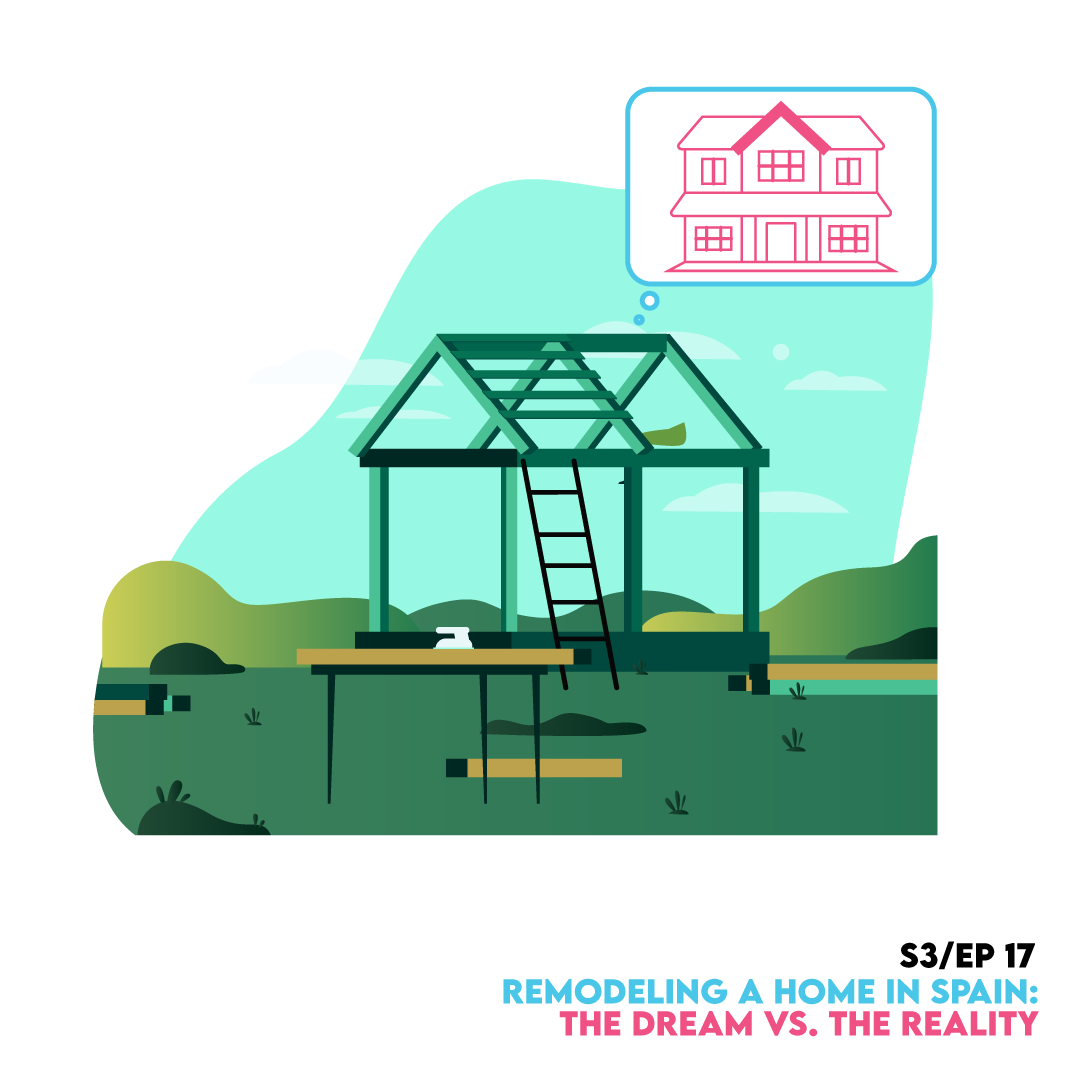 Remodeling a Home in Spain: Melissa’s Honest Assessment of Whether It Was Worth It 28.02.2026 1h 39minThe dream is seductive: owning a home in Spain, renovating it to your specifications, creating your personal European retreat. The imagery is powerful—sun-drenched terraces, charming local contractors, leisurely renovation timelines, and a beautiful result achieved with manageable effort and reasonable cost. The reality, as Melissa discovered, is significantly more complex. In this week's episode of Translate This! The Podcast, Melissa shares her real experience remodeling a home in Galicia, Spain—not the Instagram-filtered version, but the actual story with its costs, complications, and challenges. And she wrestles with the central question: Was it worth it? Galicia: Not Everyone's Spanish Dream Before diving into the renovation story, it's essential to understand the location—because Galicia is not the Spain most people envision when they fantasize about Spanish property. Galicia is Spain's northwestern region, bordered by the Atlantic Ocean and Portugal. It's green and often rainy, with a temperate maritime climate that has more in common with Ireland or Brittany than with the Mediterranean. Where most of Spain is hot and dry, Galicia is cool and wet. Where much of Spain is stereotypically associated with flamenco and bullfighting, Galicia has Celtic influences and bagpipe music. The landscape is stunning—dramatic coastlines, lush green hills, ancient forests—but it's not beach weather most of the year. The culture is rich and distinct, with its own language (Galician), strong culinary traditions (incredible seafood!), and a character separate from the rest of Spain. For some people, this is exactly what they want: a quieter, greener, less touristy Spain with strong cultural identity and natural beauty. For others who dream of endless Mediterranean sunshine, Galicia would be a disappointment. Melissa is clear about this. She's not marketing Galicia as a universal paradise or claiming it's objectively superior to other Spanish regions. She's acknowledging that it's different, that it appeals to specific sensibilities, and that understanding what you actually want—not the generic "Spanish dream" but the specific daily reality—is crucial before investing in property anywhere. If you're buying in Spain because you want hot, dry summers and beach culture, Galicia will not deliver that. If you're buying in Spain because you appreciate green landscapes, dramatic coastlines, Celtic-influenced culture, and a quieter lifestyle, Galicia might be perfect. Know which you want. The Renovation: Dreams Meet Reality Melissa's renovation story includes elements familiar to anyone who's tackled a major property project, amplified by the complications of doing it in a foreign country. Budget Surprises (There Were Many) Renovation projects famously exceed their budgets, but international projects have additional variables. Currency fluctuations can change costs between planning and execution. Material costs vary in ways that are hard to research from abroad. Labor rates may differ from what online resources suggest. Building codes might require different approaches than anticipated. Melissa discovered that the budget that seemed reasonable—even generous—at the project's start became inadequate as work progressed. Hidden structural issues emerged once walls were opened. Materials that appeared reasonably priced turned out to cost more once all factors were included. Work took longer than estimated, meaning more labor costs. Each surprise chipped away at the buffer until the budget no longer felt comfortable. This isn't unique to Spain or to Galicia—it's the nature of renovation. But doing it internationally means less ability to comparison shop, fewer cost-saving options, and more dependence on local contractors' estimates without the local knowledge to evaluate whether those estimates are reasonable. The Contractor Challenge Finding reliable contractors is difficult anywhere. Doing it in a foreign country, potentially a
 -
 Why Richard Loves Minsk: A Love Letter to an Underappreciated City 20.02.2026 1h 40minWhen people think about dream cities—places they'd love to live—Minsk, Belarus typically doesn't make the list. It's not Paris with its romance, New York with its energy, or Tokyo with its innovation. Travel influencer feeds and "best cities in the world" rankings rarely feature Minsk. It's quiet, understated, and largely unknown to Western audiences. But for Richard, host of Translate This! The Podcast, Minsk has become home. In this week's episode, he shares why he's fallen in love with this unexpected city. This isn't a tourism advertisement or an attempt to convince anyone that Minsk is objectively superior to other cities. It's simply Richard's genuine appreciation for a place that's given him something many famous cities couldn't: a good quality of life. The Beauty of Quiet One of the first things Richard mentions is Minsk's quietness. The city isn't characterized by frantic energy, constant noise, or the exhausting hustle culture that defines many major Western metropolitan areas. Life in Minsk moves at a different pace—one that feels sustainable rather than depleting. For anyone who's lived in cities where stress is just the baseline, Richard's description might sound almost radical. A city where you can actually hear yourself think? Where quiet is a feature rather than something you have to escape to find? That's Minsk. This isn't about Minsk being sleepy or lacking vitality. Rather, it's about a different relationship with urban pace. The city has energy and activity, but it hasn't confused busyness with liveliness or noise with vitality. Space exists here for calm, for reflection, for existing in public without sensory overload. For Richard, this has been transformative. Living in a city that offers urban conveniences without urban chaos has improved his daily quality of life in ways that are hard to quantify but impossible to ignore. Public Transportation That Actually Works Want to understand what Richard loves about Minsk? Listen to him talk about the public transportation system. His genuine enthusiasm for the metro and bus network reveals something important: when basic urban infrastructure functions well, it dramatically improves life quality. Minsk's public transportation is reliable. Trains and buses run on schedule. The network covers enough of the city to be genuinely useful for getting around. Critically, it's also affordable—public transit doesn't consume a significant portion of residents' income. Western audiences familiar with overcrowded subways, perpetually delayed buses, or transit systems so expensive that driving becomes the only practical option may find Minsk's setup almost utopian. But in Minsk, it's just how things work. The system prioritizes resident mobility. It serves people rather than maximizing profit or minimizing public investment. The result is infrastructure that actually fulfills its purpose: helping people move around their city easily, reliably, and affordably. Richard's appreciation for this reveals an important truth. When we talk about world-class cities, we often mean cities with prestige—not cities where basic infrastructure serves residents well. Minsk might not be glamorous, but it's functional in ways that many famous cities simply aren't. Safety as a Daily Reality Personal safety is another aspect of Minsk that Richard highlights. He feels safe there—not just in certain neighborhoods or at certain times of day, but throughout the city, at any hour. He can walk at night without the anxiety that accompanies nighttime walks in many other cities. Risk calculation isn't part of his daily routine. Security doesn't demand constant attention because it's not constantly threatened. For people who've lived in cities where personal safety is a background concern—where certain neighborhoods get avoided and nighttime requires vigilance—this level of security might be hard to imagine. But it's Richard's daily reality in Minsk. Th
 -
 Patriarchy on Heavy Rotation—Melissa Calls Out the Music Industry 11.02.2026 1h 34minEver notice how radio stations won't play two female artists back-to-back? There's a reason for that—and Melissa's calling it what it is: patriarchy. In this powerful episode, Melissa tackles the systemic sexism that keeps women artists off the airwaves and shares her own experiences with misogyny in the music industry. What Melissa Exposes: The Hidden Rule: Many radio programmers avoid playing female artists consecutively—justified with myths about what audiences want Lilith Fair's Success: The all-female festival grossed over $60 million, proving audiences LOVE women artists—then the industry ignored the lesson Personal Experience: Melissa shares her own encounters with discriminatory record producers and managers who dismissed her dreams Systemic Barriers: How the industry uses "neutral" business practices to maintain male dominance The Market Lie: The "women don't sell" narrative persists despite overwhelming evidence to the contrary The Reality: This was never about audience preference. It's always been about power—who has it and who's willing to share it. Melissa doesn't soften her language or make excuses. She names the problem clearly: this is misogyny, this is patriarchy, and it needs to change. This episode will make you angry. It should. But it also empowers—because naming the problem is the first step toward fixing it. Listen now and join the fight for equitable airwaves. Have your own experiences with industry discrimination? Share your story in the comments or on social media. Your voice matters. New episodes of Translate This! The Podcast drop every Wednesday. Subscribe wherever you listen to podcasts.
 -
 Second Time Around—Richard & Melissa Share Their Marriage Journeys 06.02.2026 1h 22minCan second marriages work? Richard and Melissa say yes—and they're sharing their personal stories to prove it. Richard: Almost 2 years into his second marriage after being single for 17 years. He talks about why that time alone mattered, how he knew he was ready to try again, and what he's learning about building a marriage differently this time. Melissa: Nearly 34 years into her second marriage. She offers the long view on what makes second marriages not just survive, but thrive for decades. The unique twist? Both married people who had never been married before. Talk about navigating different expectations! This episode explores: Why some second marriages fail while others thrive The statistics on second marriage success (they're more complicated than you think) What it's like when one person is on marriage #2 and the other is on marriage #1 Lessons from first marriages that actually help The keys to making it stick: self-awareness, communication, realistic expectations How time alone can prepare you for a healthier partnership Building something new instead of trying to fix what didn't work The bottom line: Second marriages require more work, more honesty, and more intentionality—but they can also offer deeper fulfillment precisely because they're built on wisdom earned through experience. Whether you're in a second marriage, considering one, or just believe in second chances, this vulnerable, honest conversation offers hope and practical insights. Listen now and join the conversation. Are you in a second (or third!) marriage? What made the difference for you? Share your story in the comments or on social media! New episodes of Translate This! The Podcast drop every week. Subscribe wherever you listen to podcasts.
 -
 Can We Eradicate the 22nd Amendment? Melissa Explores Presidential Term Limits 22.01.2026 1h 37minShould presidents be limited to two terms, or should voters decide how long they serve? In this episode, Melissa tackles one of the most provocative constitutional questions in American politics: Could we repeal the 22nd Amendment—and should we? The 22nd Amendment limits presidents to two terms. Ratified in 1951 after FDR's unprecedented four-term presidency, it transformed what had been a custom into a constitutional requirement. But is it a vital democratic safeguard or an unnecessary constraint on voter choice? Melissa explores both sides: For Term Limits: Prevents dangerous concentration of power Ensures democratic renewal and fresh leadership Protects against authoritarian tendencies Creates institutional checks and balances Against Term Limits: Limits voter sovereignty and democratic choice Many democracies function without them Forces out effective, experienced leaders Creates problematic "lame duck" presidencies The Constitutional Reality: Repealing the 22nd Amendment would require 2/3 of Congress and 3/4 of states—an extraordinarily high bar that reflects how difficult (and rare) constitutional changes should be. The Bigger Question: This isn't about any particular president or party. It's about the fundamental structures of democratic governance: How do we balance protecting democracy with respecting voter choice? What constraints should exist on elected leaders? Whether you think term limits are essential or outdated, this conversation will challenge you to think deeper about the constitutional structures that shape American democracy. Listen now and join the conversation. Where do you stand on presidential term limits? Share your thoughts in the comments or on social media! New episodes of Translate This! The Podcast drop every week. Subscribe wherever you listen to podcasts.
 -
 Going Public -The Celebrity Plastic Surgery Transparency Movement 19.11.2025 1h 31minCelebrities are done lying about their faces. Plastic surgery, once Hollywood's most poorly kept secret, is now being openly discussed—and sometimes celebrated. But is this transparency actually empowering, or does it just create new impossible standards? In this episode, we examine every angle of the celebrity cosmetic surgery trend: The Good: Honesty about procedures can reduce shame, set realistic expectations, and permit people to make informed choices about their own bodies. The Bad: When celebrities normalize expensive procedures, does that just create new pressures for everyone else? Is "natural beauty" becoming even more expensive and exclusive? The Ugly: From botched procedures to apparent addiction to "tweaking," there's a darker side to cosmetic enhancement culture that deserves attention. And it gets personal: Melissa shares her own experience going under the knife—why she did it, what it was like, and how she feels about it now. No filters, no regrets, just honest conversation. This isn't about judging anyone's choices. It's about understanding how celebrity culture shapes our relationship with beauty, authenticity, and our own faces. Ready to dive in? Listen now and join the conversation. Whether you've had work done, you're considering it, or you're completely against it, your perspective matters. New episodes of Translate This! The Podcast drop every [insert day]. Subscribe wherever you listen to podcasts. Share your thoughts: Have celebrities' openness about plastic surgery changed how you think about cosmetic procedures? Let us know in the comments or on social media!
 -
 RICHARD VS. RUSSIAN – A COMEDY OF ERRORS 06.11.2025 1h 34minLearning Russian is hard. Learning Russian while living in Belarus? That's a whole different level of complicated. In our newest episode, Richard pulls back the curtain on his ongoing struggle with one of the world's most challenging languages. From catastrophic case confusion to verb aspect anxiety, he's experiencing every pitfall that Western learners encounter when tackling Russian—and he's doing it all while navigating the subtle spelling differences between Russian and Belarusian. This isn't a polished success story. It's a real, unfiltered look at language learning in progress, complete with embarrassing mistakes, moments of confusion, and the humbling realization that mastery is still a long way off. But Richard isn't going it alone. He's calling on you—our community of listeners, native speakers, and fellow language enthusiasts—to help him survive this transition. Your tips, corrections, and encouragement aren't just appreciated; they're essential. Whether you're a Russian native, a successful learner, or someone who's also struggling through those six impossible cases, we want to hear from you. Listen now and join the conversation. Ready to share your Russian learning tips or commiserate with Richard? Connect with us on social media or drop a comment below! New episodes of Translate This! The Podcast drop each week. Subscribe wherever you listen to podcasts.
 -
 Borders: Sanctuary or Prison? 23.10.2025 1h 32minSome debates don't have easy answers. The question of political borders is one of them. In this week's episode of Translate This!, Melissa dives into a topic that sparks passionate disagreement across the political spectrum: Are borders necessary tools for national security and governance, or are they fundamentally unjust systems that exclude marginalized people from freely accessing a world that belongs to all humanity? The Stakes Are High This isn't an abstract philosophical question. Border policies affect millions of people every year—refugees fleeing violence, families seeking economic opportunity, individuals pursuing education or love across international lines. The way we answer this question has real consequences for real lives. The Case FOR Borders: Security and Sovereignty Melissa begins by examining the arguments in favor of maintaining strong political borders. National Security Proponents argue that borders are essential for protecting citizens from external threats. They allow nations to control who enters their territory, preventing criminals, terrorists, and others who might pose risks from entering freely. Resource Management Countries have finite resources—healthcare systems, education, housing, social services. Borders allow nations to manage these resources by regulating population flows and ensuring systems aren't overwhelmed beyond capacity. Rule of Law Defined boundaries create clear jurisdictions where laws apply. Without borders, enforcing regulations, maintaining order, and administering justice becomes nearly impossible. Cultural Preservation Many argue that borders help protect national identity, languages, traditions, and cultural values. They allow communities to maintain their unique character without being diluted by unlimited migration. Sovereignty Perhaps most fundamentally, borders represent national self-determination—the right of a people to govern themselves according to their own values and priorities. The Case AGAINST Borders: Exclusion and Inequality But Melissa doesn't stop there. She also explores the compelling arguments from those who view borders as inherently unjust. The Birth Lottery Critics point out that borders create a system where your entire life trajectory—access to safety, education, healthcare, economic opportunity—is determined by something completely outside your control: where you happened to be born. Is this just? Disproportionate Harm Border enforcement doesn't affect everyone equally. People from wealthy nations travel freely with powerful passports, while those from poorer countries face enormous barriers. This system disproportionately harms people from the Global South, refugees, and economically disadvantaged populations. Legally Codified Racism and Classism Historical and contemporary border policies often reveal patterns of racial and economic discrimination. Who gets in, who gets kept out, and under what conditions—these decisions frequently break down along lines of race and class. Humanitarian Crisis Strict border enforcement has led to thousands of deaths—people drowning in the Mediterranean, dying in deserts, or trapped in dangerous situations because legal pathways are closed to them. A Divided Earth Philosophically, critics ask: Who decided the Earth should be carved into parcels owned by nations? Why do some people get to claim certain land as exclusively theirs while excluding others from a planet that belongs to no one—or everyone? The Questions That Don't Have Easy Answers Throughout the episode, Melissa grapples with the tension between these perspectives: Can national security exist without exclusion? Or does protecting citizens inevitably require keeping some people out? How do we balance sovereignty with universal human rights? Do nations have the right to exclude anyone for any reason, or are there moral limits? What obligations do wealthy nations have? If global inequality is partly caused by historical exploitation, do rich countries ow
 -
 An Adult Foreigner Making Friends? 15.10.2025 1h 38minMaking friends as an adult is universally acknowledged as difficult. Add the complexity of living in a foreign country, and the challenge multiplies. But in the latest episode of Translate This!, Richard reveals a fascinating paradox about expat friendships that anyone who's lived abroad will recognize. Expats Are Better at Breaking the Ice Here's what might surprise you: expats are actually better at forming initial connections than most people. When you're far from home, navigating a new culture, and missing familiar comforts, you develop a natural ability to break through social barriers quickly. The shared experience of being an expat creates instant rapport. There's an unspoken understanding, a mutual recognition of the challenges and adventures that come with living abroad. This allows expats to form meaningful connections much faster than they might in their home countries. The Catch: Expiration Dates Are Built In But here's the hard truth Richard addresses: these friendships, as meaningful as they are, often come with expiration dates. Why? Because sustaining deep, lasting friendships requires something that expat life inherently lacks: consistent physical proximity. What True Friendships Need to Thrive Richard explains that real friendships need several key elements: Physical closeness to enable spontaneous meetups and regular face-to-face time Shared cultural experiences happening in real-time, in the same location Being present for both major life events and mundane everyday moments One-on-one interactions that build deep trust and understanding over time Video calls, WhatsApp messages, and annual visits can maintain a connection—but they can't fully replicate the depth that comes from being physically present in each other's lives. It's Not About Quality, It's About Geography This doesn't mean expat friendships aren't real or valuable. In fact, they can be some of the most intense and meaningful relationships we form. The bonds created through shared challenges, cultural discoveries, and mutual support in a foreign land are powerful. The issue is purely logistical: when someone moves to another country, or you do, maintaining the same level of closeness becomes nearly impossible. Different time zones, different daily realities, different cultural contexts—these create natural distance that even the strongest connection struggles to overcome indefinitely. Embracing the Reality Understanding this paradox is actually liberating. It allows us to: Fully invest in friendships while we have the opportunity Appreciate the intensity and meaning of temporary connections Let go without guilt when natural transitions occur Stay open to new friendships in each new location Maintain realistic expectations about long-distance relationships The Takeaway Expat friendships are a unique category of relationships—intense, meaningful, and often beautifully temporary. Rather than seeing this as a failure or disappointment, Richard encourages us to embrace it as part of the expat experience. The friendships you form abroad will shape you, support you through challenges, and create memories that last long after the friendships themselves have evolved into something different. And that's perfectly okay. Have you experienced the expat friendship paradox? Share your story in the comments below. Listen to the full episode of Translate This! to hear Richard's complete thoughts on navigating friendships as an expat, building community abroad, and finding connection in unexpected places.
 -
 MELISSA IS IN A NEW ENGLAND STATE OF MIND 01.10.2025 1h 32minWhen "Going Home" Feels Like Going Abroad: Melissa's New England Cultural Honeymoon From the Translate This! Podcast California-born, Spain-based, with a childhood stint in Upstate New York—Melissa's relationship with "home" is complicated. So when she returned to New England for an extended visit, she expected familiarity. What she got was a full-blown cultural honeymoon phase, complete with the kind of reverse culture shock that catches you completely off guard. The Honeymoon Phase At first, it was everything you'd imagine from a New England fall fantasy: The fall foliage was spectacular—those famous leaf peepers suddenly made complete sense. Watching the leaves change felt like nature's personal apology for every mediocre sunset you'd ever endured. The craft beer scene delivered on every hop-forward promise, and cider houses dotted the landscape like delicious, fermented pit stops. Farm-to-table wasn't just a trendy phrase; it was a way of life. And the maple syrup? Watching the process from tree to table was both educational and deeply satisfying in a way that's hard to explain if you haven't experienced it. The nature trails offered the kind of soul-feeding escapism that makes you forget about email for entire afternoons. Everything felt authentic, grounded, and refreshingly analog. Then came the parts the tourism board doesn't mention. Ticks. So many ticks. The constant vigilance required just to exist outdoors was exhausting. Bears made casual appearances, reminding Melissa that nature here doesn't just provide aesthetic backdrops—it actively participates in your daily routine whether you're ready or not. And the humidity? Spain had not prepared her for the kind of moisture-laden air that makes you question your clothing choices, your hair products, and your life decisions all at once. But the most disorienting part? The consumer overload. Walking into a Target after months in Spain felt like sensory warfare. The sheer volume of choices—47 types of cereal, 30 varieties of toothpaste, entire aisles dedicated to products she didn't know existed—was cognitively overwhelming. This wasn't just shopping fatigue. This was her brain trying to process a level of consumer abundance that she'd completely adjusted away from during her time abroad. Welcome to Reverse Culture Shock What Melissa experienced is textbook reverse culture shock—and it's often more disorienting than the original culture shock of moving abroad because you don't see it coming. When you move to a new country, you expect everything to feel different. You're mentally prepared for confusion, adjustment, and the steep learning curve of navigating unfamiliar systems. But when you return "home"? Your brain anticipates familiarity. It expects comfort. Instead, you notice everything with fresh eyes, and nothing feels quite right. The customer service interactions that used to feel normal now seem overly formal or strangely cheerful. The pace of life feels rushed or inefficient depending on where you've been. Even the physical spaces—grocery stores, shopping malls, parking lots—feel foreign in their scale and abundance. What does this have to do with Barbier? At Barbier, we specialize in cultural training precisely because these experiences are universal, complex, and often invisible to people who haven't experienced them firsthand. Understanding the phases of cultural adaptation isn't just academically interesting—it's essential for: Global teams managing employees across multiple locations Organizations supporting international assignments and repatriation HR professionals creating better onboarding and offboarding experiences Individuals navigating their own cross-cultural journeys Families supporting loved ones through transitions Culture shock and reverse culture shock are normal, predictable, and manageable when you understand what's happening and why. Most importantly, Melissa's New England honeymoon phase is a reminder that cultural adaptation isn't a o


