
Derms and Conditions
Dermsquared
0
Hear from leading dermatologists and experts as they discuss the hottest topics in dermatology. Tune in for clinical practice tips and treatment pearls you can implement quickly and efficiently into your busy practices.
Episódios
-
 Dermatomyositis in 2026: Are You Missing Anything Important in Real-World Practice? 10.09.2026 25minIn this episode, host James Q. Del Rosso, DO, welcomes dermatologist and rheumatologist Joseph Merola, MD, to discuss the diagnosis and management of dermatomyositis (DM). From subtle cutaneous clues and systemic involvement to malignancy risk, myositis-specific antibodies, and an expanding treatment pipeline, Dr Merola highlights what dermatologists should recognize when DM enters the differential. DM can present with classic findings such as Gottron papules, heliotrope rash, and the shawl sign, but other clues may be less obvious. Dr Merola discusses pruritic scalp disease, eyelid edema, linear extensor erythema, and nailfold capillary changes, as well as photodistributed eruptions that may be difficult to distinguish from cutaneous lupus. Beyond the skin, he outlines 5 areas to consider when evaluating patients with DM: cutaneous findings, muscle weakness, inflammatory arthritis, lung involvement, and malignancy. The conversation moves from clinical assessment to diagnostic workup, including evaluation of proximal muscle weakness, the importance of asking about dysphagia, and the role of CK and aldolase. Dr Merola also explains when EMG, MRI, or muscle biopsy may add value and when classic skin findings combined with weakness and/or elevated muscle enzymes may provide sufficient diagnostic information. Dr Del Rosso and Dr Merola also discuss malignancy risk and the clinical information provided by myositis-specific antibodies. Anti-TIF1γ and anti-NXP2 can signal greater malignancy risk, while anti-MDA5 is associated with clinically amyopathic disease and heightened concern for interstitial lung disease. Dr Merola considers how these findings can help inform risk assessment, screening, and collaboration with rheumatology and other specialties. Finally, they review the treatment of both cutaneous and muscle disease, from photoprotection and established systemic therapies to JAK inhibition and emerging targeted treatments. Dr Merola reflects on a growing therapeutic pipeline* for a disease in which cutaneous involvement, in particular, has historically been challenging to manage. Tune in to the episode for a clinically focused discussion of recognizing dermatomyositis, assessing systemic and malignancy risk, interpreting antibody profiles, and navigating treatment as new therapeutic options emerge. *This episode was recorded prior to FDA approval of brepocitinib. The FDA has since approved brepocitinib for use in the United States.
 -
 Sunscreens 2026: The Evolution of Expanded Photoprotection and A New Filter 27.08.2026 29minIn this episode of Derms and Conditions, host James Q. Del Rosso, DO, welcomes Darrell Rigel, MD, MS, for a discussion of photoprotection, sunscreen regulation, and how dermatologists can help patients make informed choices about sun protection. Dr Rigel begins by examining why melanoma prevention requires attention to both primary and secondary prevention. While reducing UV exposure and using sunscreen can help lower risk, early recognition and access to dermatologic care remain critical once a suspicious lesion develops. He discusses geographic differences in melanoma incidence and mortality in the United States and how factors such as UV exposure and access to care can contribute to these patterns. The conversation then traces the complicated regulatory history of sunscreens in the United States. Dr Rigel reviews developments from the emergence of higher-SPF products in the 1980s through subsequent FDA monographs, debates surrounding the safety and systemic absorption of sunscreen filters, and legislation intended to accelerate review of new ingredients. He explains how this history has contributed to the United States having fewer available UV filters than other parts of the world. A significant recent development is bemotrizinol, a broad-spectrum, photostable UV filter that has undergone extensive FDA-requested testing. Dr Rigel discusses its coverage across UVB and UVA wavelengths, cosmetic properties, and potential to expand sunscreen formulation options in the United States.* Drs Del Rosso and Rigel also address how clinicians can evaluate sunscreen products and counsel patients amid persistent misinformation. They discuss the importance of appropriate product testing, selecting products patients will actually use, and providing guidance on application of sprays, sticks, and other formulations. The discussion also considers photoprotection in patients with darker skin tones, including melanoma risk, UVA-associated dyspigmentation, and the importance of cosmetically acceptable formulations that minimize visible residue or white cast. Tune in to the episode to hear Drs Del Rosso and Rigel discuss the science and regulation behind modern sunscreens, strategies for addressing patient misconceptions, and ways to make consistent photoprotection more achievable across a range of skin types and patient preferences. *Editor’s note: This episode was recorded prior to FDA approval of bemotrizinol. The FDA has since approved bemotrizinol for use in the United States.
 -
 Spilling the Tea: Important Observations to Help Clinicians 20.08.2026 21minIn this episode of Derms and Conditions, host James Q. Del Rosso, DO, delivers a solo “Spilling the Tea” segment exploring clinical observations that may warrant a closer look. He examines dermatomyositis findings that can mimic more common conditions, nuances in prescribing language, the importance of a thorough hidradenitis suppurativa (HS) examination, and an unexpected case of rhabdomyolysis, highlighting details that can change how clinicians approach diagnosis and patient management. Dr Del Rosso begins with scalp pruritus as a potential manifestation of dermatomyositis. He reviews images showing how scalp involvement may resemble seborrheic dermatitis or psoriasis, with findings such as erythema, scaling, and hair thinning. He also examines nailfold changes, including prominent capillaries, capillary dropout, and abnormal cuticles, that can provide additional diagnostic clues. Recognizing these findings is particularly important given the potential systemic implications of dermatomyositis. The discussion then turns to limitations of use in prescribing information stating that certain therapies are “not recommended” in combination with other agents. Dr Del Rosso distinguishes this language from a formal contraindication and discusses the importance of understanding the evidence behind labeling when making treatment decisions. In HS, he emphasizes the value of a complete skin examination, including areas patients may initially be reluctant to expose. Assessing and palpating lesions can help distinguish active inflammatory findings, including abscesses, nodules, and draining tunnels, from established fibrotic or scarred disease. Finally, Dr Del Rosso shares the case of a 42-year-old woman receiving JAK inhibitor therapy who developed markedly elevated creatine kinase and rhabdomyolysis. Although her medication presented one possible explanation, further investigation revealed that she had gone several weeks without levothyroxine for hypothyroidism, another potential contributor. The case illustrates the importance of considering the full clinical picture when evaluating an unexpected finding or adverse event. Tune in to the episode for clinical observations that encourage a closer look at what may initially seem straightforward, from recognizing less familiar disease presentations and interpreting prescribing information precisely to conducting a thorough examination and considering multiple explanations for an unexpected finding.
 -
 Preventing Permanent Hair Loss: Early Diagnosis and Treatment of Scarring Alopecia 13.08.2026 18minIn this episode of Derms and Conditions, host James Q. Del Rosso, DO, welcomes Andrea Murina, MD, to discuss the early recognition and management of scarring alopecias. Their conversation explores why these conditions can be missed in their earliest stages, the clinical clues that help distinguish scarring from nonscarring alopecias, and approaches to diagnosis and treatment aimed at preventing permanent hair loss. Dr Murina reflects on how outdated perceptions that little could be done once scarring occurred motivated her to focus on these conditions. She explains that recognizing patients earlier in the disease course provides an opportunity to intervene before irreversible follicular destruction develops, setting the stage for a discussion of the timing, patterns, and diagnostic tools that support earlier diagnosis. They review the major categories of cicatricial alopecia, highlighting the relative ease of identifying neutrophilic disorders such as folliculitis decalvans and dissecting cellulitis, while noting that early lymphocytic disorders such as central centrifugal cicatricial alopecia (CCCA) and frontal fibrosing alopecia may initially resemble more common nonscarring conditions. Dr Murina next overviews the value of trichoscopy. She explains how dermatoscopic findings, including perifollicular scale, telangiectasias, follicular plugs, and changes in hair diameter, can help distinguish scarring from nonscarring alopecias, guide biopsy decisions, and improve biopsy yield by identifying the most inflamed follicles for sampling. The episode also reviews treatment strategies for common scarring alopecias. For CCCA, Dr Murina typically begins with topical and intralesional corticosteroids, adding doxycycline and antifungal shampoos when appropriate. For lichen planopilaris, she follows a similar approach while incorporating systemic therapies such as hydroxychloroquine, finasteride, or dutasteride. The discussion concludes with discoid lupus erythematosus, where she emphasizes that early treatment with high-potency topical and intralesional corticosteroids, along with appropriately dosed hydroxychloroquine, can produce meaningful improvement. Tune in to the episode to hear Dr Del Rosso and Dr Murina share diagnostic pearls, trichoscopic clues, biopsy strategies, and treatment approaches that can help clinicians identify scarring alopecias earlier and intervene before permanent hair loss occurs.
 -
 A Call to Action: Making Practice Guidelines More Helpful to Patient Care 06.08.2026 17minIn this episode of Derms and Conditions, host James Q. Del Rosso, DO, welcomes Joshua Burshtein, MD, chief dermatology resident at the University of Illinois Chicago, to discuss their recent Journal of Clinical and Aesthetic Dermatology publication, Topical Prescription Therapy for Psoriasis: An Expert Position Paper on Limitations of Published Guidelines and Treatment Selection with Updated Recommendations. Their conversation examines the intended role of clinical practice guidelines, the limitations that emerge as therapeutics evolve, and why clinician judgment remains central to individualized psoriasis care. They begin by defining what treatment guidelines are intended to accomplish: to provide an evidence-based framework for clinicians rather than a rigid set of rules. Dr Burshtein notes that although the paper focuses on topical psoriasis therapies, many of its core principles apply broadly across dermatology, particularly as rapid therapeutic advances challenge the ability of clinical guidelines to remain current. Dr Del Rosso discusses the downstream effects of this disconnect, noting that guidelines are often treated as mandates by third-party payers despite disclaimers stating that they should not replace clinician judgment. The speakers emphasize that treatment decisions should remain patient-centered, with clinicians, insurers, and manufacturers all contributing to timely access to appropriate care. They also explore additional limitations of clinical guidelines, including differences in methodology among organizations and the inability of any single document to encompass every available therapy. The discussion concludes with the importance of recognizing bias in guideline development while reinforcing that treatment selection should be guided by clinical evidence, physician expertise, and shared decision-making with the patient. Tune in to the full episode to hear Drs Del Rosso and Burshtein discuss the evolving role of clinical guidelines, their limitations in everyday practice, and why individualized clinical judgment remains essential to psoriasis care.
 -
 Translating Cytokine Soup to Clinical Practice: Untangling the Confusion 30.07.2026 27minIn this episode of Derms and Conditions, host James Q. Del Rosso, DO, welcomes Jason Hawkes, MD, MS, for a special Tea with Dr. D edition exploring the immunology that underpins inflammatory skin disease and how a deeper understanding of cytokine biology can inform clinical decision-making. The discussion begins by challenging the common tendency to classify diseases according to a single "dominant" cytokine or immune pathway. Drs Del Rosso and Hawkes emphasize that while frameworks such as type 1, type 2, and type 3 inflammation are valuable for organizing complex biology, they should be viewed as conceptual models rather than rigid categories, as immune responses are dynamic, overlapping, and highly interconnected. Using a series of educational slides, Dr Hawkes reviews how naïve T cells differentiate into distinct immune responses after interacting with antigen-presenting cells within the lymph node. He highlights 3 key cytokines that help clinicians remember the major pathways driving differentiation: IL-12 for type 1 inflammation, IL-4 for type 2 inflammation, and IL-23 for type 3 inflammation. These regulatory cytokines shape downstream immune responses that ultimately contribute to diseases such as atopic dermatitis and psoriasis. A major focus of the episode is the distinct but complementary roles of IL-4 and IL-13 in type 2 inflammation. Dr Hawkes explains why IL-4 serves as the critical regulator of type 2 immune differentiation, functioning within the lymph node to establish the broader immune response, while IL-13 plays a prominent role within peripheral tissues, particularly the skin. He also addresses the misconception that higher tissue expression necessarily indicates greater biologic importance, noting that cytokines often exert profound effects despite relatively low expression levels. Throughout the discussion, the speakers reinforce that cytokines should not be viewed in isolation. Their overlapping and synergistic effects help explain why patients can present with different clinical manifestations despite sharing common inflammatory mechanisms. Ultimately, the goal is not to identify a universally superior therapeutic target, but to understand each patient's disease biology well enough to select the therapy that best matches their clinical presentation. Tune in to the full episode to learn more about the foundations of type 1, type 2, and type 3 inflammation, the distinct roles of key cytokines in immune regulation and tissue disease, common misconceptions surrounding cytokine biology, and how a stronger understanding of immunology can support more personalized treatment decisions in everyday dermatology practice.
 -
 Anti-IL-23 Biologic Therapy: Expanding our Knowledge and Access for Patients with Psoriasis 23.07.2026 25minIn this episode of Derms and Conditions, host James Q. Del Rosso, DO, welcomes E. James Song, MD, for a discussion of the IL-23 pathway and its enduring role in psoriasis management. Although therapeutic options continue to expand, IL-23 remains a central target because of its key role in the IL-23/Th17 axis, one of the primary drivers of psoriatic disease. Dr Song reviews the current IL-23 therapeutic landscape, comparing available agents that target the pathway through different mechanisms. He highlights important distinctions among therapies, including dosing intervals, molecular characteristics, binding affinity, and immunogenicity, while emphasizing that all have demonstrated strong efficacy and favorable safety profiles. The conversation also explores how these pharmacologic differences do—and do not—translate into meaningful clinical differences. The conversation also explores patient access, with Drs Del Rosso and Song discussing how route of administration and insurance coverage can significantly influence treatment selection, particularly for Medicare beneficiaries. They examine the practical advantages of health care provider-administered therapy, including more reliable treatment delivery, closer patient follow-up, and reduced financial barriers for some patients. The discussion also addresses expectations for treatment response, emphasizing that IL-23 inhibitors may require more time than other biologic classes to achieve maximal benefit. Dr Song shares practical insights into assessing early improvement, counseling slower responders, and supporting long-term treatment persistence. The episode concludes with a review of the safety profile of IL-23 inhibitors, including their role in psoriasis with peripheral psoriatic arthritis, while discussing areas where these therapies remain more limited, such as axial disease and uveitis. Tune in to the full episode to learn more about the IL-23 pathway, the similarities and distinctions among available therapies, practical access considerations, and setting realistic expectations for treatment response in everyday psoriasis care.
 -
 Topical Therapy for AD: How Can an AhR Agonist Make a Difference? 16.07.2026 25minIn this episode of Derms and Conditions, host James Q. Del Rosso, DO, welcomes Alexandra Golant, MD, for a discussion on the evolving role of topical therapies in atopic dermatitis (AD). While systemic therapies have transformed care for patients with moderate to severe disease, this discussion explores how topical treatments remain essential, not only for managing flares but also for maintaining long-term disease control. Dr Golant reflects on how the topical treatment landscape has changed over the past several years. After decades in which topical corticosteroids remained the cornerstone of therapy, recent advances have introduced multiple nonsteroidal options with distinct mechanisms of action and improved suitability for chronic, proactive management. The conversation explores where topical corticosteroids continue to fit in modern AD management. Rather than viewing steroids as obsolete, Dr Golant advocates for a balanced approach that considers efficacy, access, and appropriate stewardship. She emphasizes that corticosteroids remain valuable for short-term use but encourages clinicians to transition thoughtfully to nonsteroidal therapies when appropriate. Dr Del Rosso and Dr Golant also review the expanding range of nonsteroidal topical therapies, including JAK inhibitors, PDE4 inhibitors, and the first-in-class aryl hydrocarbon receptor (AhR) agonist, tapinarof. Because AhR agonism represents an unfamiliar mechanism for many clinicians, Dr Golant explains how activation of this pathway not only reduces inflammatory signaling but also supports skin barrier function and antioxidant activity, helping address multiple aspects of AD pathophysiology. The discussion also examines emerging clinical experience with tapinarof in AD, including its once-daily dosing, favorable safety profile, and potential to provide durable disease control in some patients. Dr Golant highlights the importance of challenging outdated assumptions that nonsteroidal therapies are slower or less effective than topical corticosteroids, noting that newer agents can achieve meaningful improvements in itch and skin clearance while providing flexibility for long-term management. Tune in to the full episode to hear Drs Del Rosso and Golant discuss how they incorporate modern topical therapies into real-world AD management, where corticosteroids still have an important role, and why advances in nonsteroidal treatments are changing the way clinicians approach both acute flares and long-term disease control.
 -
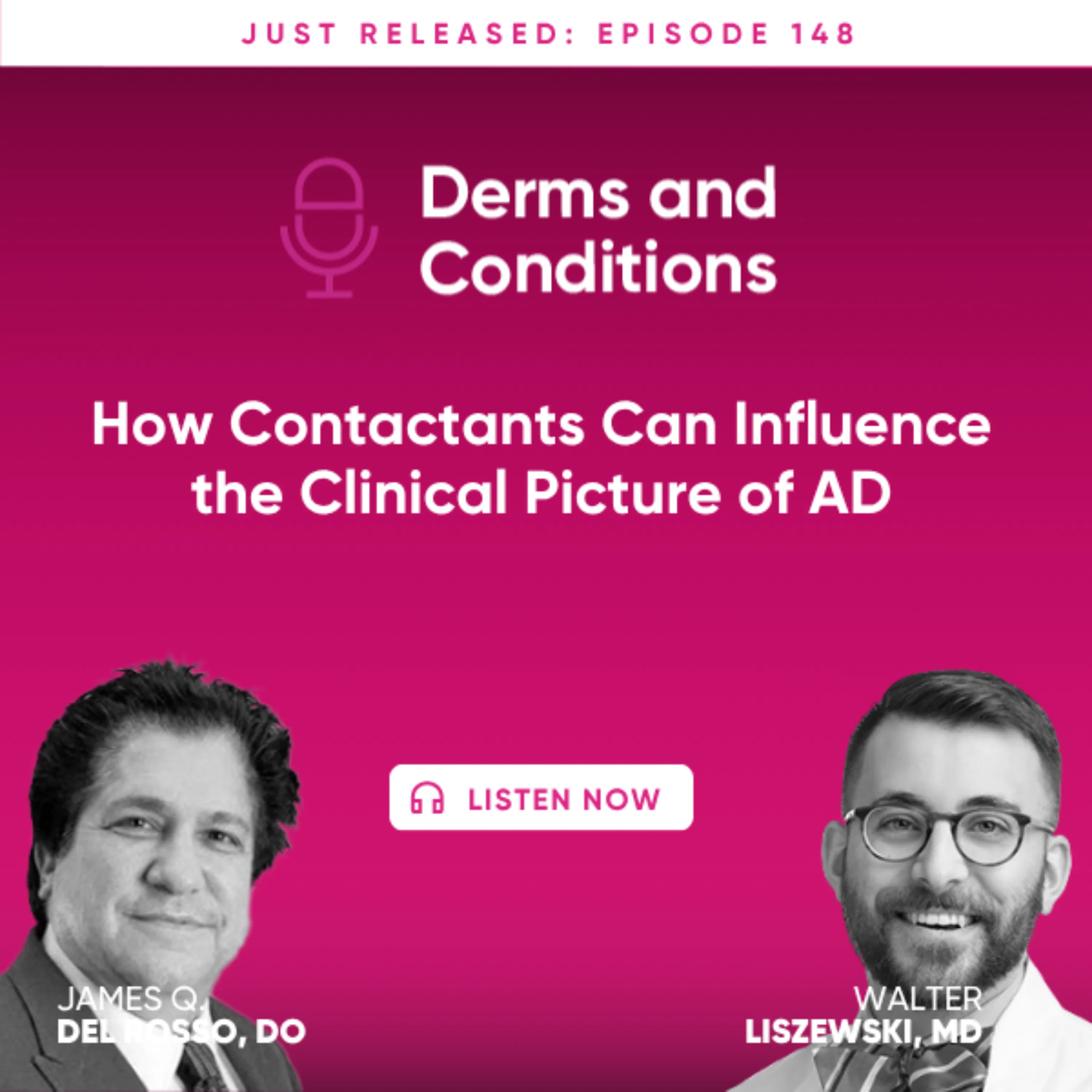 How Contactants Can Influence the Clinical Picture of AD 09.07.2026 33minIn this episode of Derms and Conditions, host James Q. Del Rosso, DO, welcomes Walter Liszewski, MD, for a discussion on the role of patch testing in patients with atopic dermatitis (AD), from the fundamentals of testing and interpretation to its application in patients with persistent or incomplete responses to therapy. Dr Liszewski explains why allergic contact dermatitis is frequently overlooked in dermatology practice and how it commonly overlaps with AD and irritant contact dermatitis. Because these conditions often appear clinically similar, Dr Liszewski explains that, unlike AD or irritant contact dermatitis, allergic contact dermatitis has a diagnostic test available, making patch testing an important tool when the underlying cause of eczema is uncertain. The conversation explores when patch testing should be considered in light of the absence of formal guidelines, with Dr Liszewski sharing his practical approach to identifying patients who may benefit from testing and how it can fit into the management of patients who continue to experience residual eczema despite advanced therapies. He also discusses the different reasons biologic-treated patients may have persistent disease and how patch testing can help distinguish allergic contact dermatitis from a more complex inflammatory phenotype. Dr Liszewski reviews practical considerations for preparing patients for patch testing, including which medications should be discontinued beforehand and which can generally be continued. He explains why he typically does not stop biologic therapy before testing, while outlining situations in which temporary interruption may be appropriate. The discussion also covers newer molecular testing that may provide additional information in difficult cases and introduces the "paraben paradox," an important concept illustrating how impaired skin barrier function can influence allergic responses. Tune in to the episode to gain a clearer understanding of when patch testing should be considered in patients with AD, learn how to approach patients with persistent or partial treatment responses, and learn practical considerations for preparing patients and optimizing test accuracy.
 -
 Unpacking My Dermatology Past: Sharing What I've Learned Along the Way to Improve Patient Care 18.06.2026 33minIn this episode of Derms and Conditions, host James Q. Del Rosso, DO, sits down with Melinda Gooderham, MD, for a wide-ranging conversation about the evolution of dermatology, clinical research, and the therapeutic advances that have transformed patient care over the course of her career. Dr Gooderham reflects on how an early frustration with patient access to emerging biologic therapies led her into clinical research, a decision that not only expanded treatment opportunities for her patients but also shaped her professional focus on inflammatory skin diseases. She discusses how participating in clinical trials deepens understanding of both disease states and therapeutic mechanisms, often accelerating the development of clinical expertise. The conversation explores some of the most dramatic changes she has witnessed in practice, particularly the impact of JAK inhibitors across multiple dermatologic conditions. Dr Gooderham shares observations from alopecia areata, granulomatous diseases, dermatomyositis, and bullous pemphigoid, highlighting instances where treatment responses exceeded expectations and significantly improved patients’ quality of life. Dr Del Rosso and Dr Gooderham also discuss areas where therapeutic expectations have been more tempered, including in the role of oral PDE4 inhibitors in psoriasis, before turning to the future of dermatology. Topics include the emergence of highly effective oral therapies, the potential for extended-duration biologics, and how these advances may reshape treatment decision-making and patient preferences. They conclude with an important discussion on the growing emphasis on early intervention. As treatment options continue to expand, the challenge is increasingly not whether a disease can be treated, but whether patients can be identified and managed early enough to prevent irreversible consequences and optimize long-term outcomes. Tune in to the episode to hear Dr Gooderham's reflections on the therapies, discoveries, and clinical moments that have most influenced her career, along with her perspective on where dermatology may be headed next.
 -
 Managing HS: What A Difference A Year Makes! 04.06.2026 40minIn this episode of Derms and Conditions, host James Q. Del Rosso, DO, welcomes back Michael Payette, MD, a dermatologist in private practice in Connecticut, for a wide-ranging discussion on the realities of managing hidradenitis suppurativa (HS) in clinical practice. Drawing from his experience running a dedicated HS clinic, Dr Payette reflects on what surprised him most after launching the practice, including the number of early-stage referrals and the growing recognition that even patients with relatively mild disease may benefit from more proactive care. The conversation highlights the importance of identifying HS earlier in its course, before patients develop irreversible scarring, sinus tracts, and other long-term sequelae. Drs Del Rosso and Payette discuss the logistical and emotional complexity of caring for patients with HS, emphasizing that meaningful visits cannot be compressed into a few minutes. Dr Payette shares how he structures conversations around realistic goal-setting, long-term therapeutic partnerships, and individualized treatment “buckets” ranging from topical and systemic therapies to lifestyle considerations, clinical trials, and surgery. The discussion also explores the psychological burden of HS, including how issues such as intimacy, work absenteeism, and social isolation often shape the patient experience as much as the physical disease itself. They also examines evolving treatment strategies for HS, including the challenges of managing patients in the mild-to-moderate range, the rationale for early intervention, and the growing role of combination therapy. Dr Payette shares insights on combining biologic and JAK inhibitor therapies in select patients, integrating GLP-1 agents into treatment plans, and balancing medical and surgical management to optimize outcomes. Throughout the discussion, both physicians emphasize the importance of empathy, collaboration, and helping dermatologists feel more comfortable initiating treatment for HS, even if they ultimately refer more advanced cases to specialized colleagues. Tune in to the episode to hear insights on building therapeutic relationships with patients with HS, approaching multifactorial disease management, recognizing opportunities for earlier intervention, and navigating the therapeutic landscape for this historically underserved disease state.
 -
 Oral Isotretinoin: Where Are We After 44 Years? 21.05.2026 28minIn this episode of Tea with Dr. D, host James Q. Del Rosso delivers a solo “Spilling the Tea” segment that revisits oral isotretinoin through a longitudinal lens, connecting its early clinical foundations to present-day practice. Framing isotretinoin as a “winding road,” Dr Del Rosso reflects on its 1982 approval, early safety observations, and the evolution of risk management strategies, including the iPLEDGE program. While concerns around psychiatric effects, inflammatory bowel disease, and teratogenicity have shaped prescribing behaviors, he emphasizes that most patients tolerate therapy well when appropriately monitored. A central theme is the value of foundational knowledge. Dr Del Rosso highlights considerations that remain highly relevant, including dosing flexibility, relapse patterns, treatment duration, and importantly, the impact of absorption on outcomes. Conventional formulations require adequate dietary fat for optimal bioavailability, and suboptimal fat intake may contribute to perceived treatment failure or relapse. He also reviews evolving data on dosing strategies, noting that a range of daily doses can achieve clearance. The priority, however, is durability of response. Clinicians are encouraged to focus on cumulative exposure and to individualize therapy, extending duration or adjusting dose as needed to maintain clearance. Newer formulations, including lidose and micronized isotretinoin, may help mitigate variability in absorption and improve consistency, though access and cost remain considerations. Additional insights address relapse risk and the importance of evaluating possible underlying contributors such as androgen excess. Laboratory monitoring practices have also evolved, with a more streamlined approach focusing on key parameters like liver enzymes and triglycerides, alongside strict adherence to pregnancy prevention protocols. Ultimately, the episode reinforces that while isotretinoin prescribing has modernized in certain respects, many core principles remain unchanged. Thoughtful dosing, attention to absorption, and individualized management are essential to optimizing long-term outcomes. Tune in to the episode to revisit the clinical foundations of isotretinoin, refine your approach to dosing and duration, and learn practical strategies for improving treatment consistency and long-term acne clearance.
 -
 The Life of Leon: How He Succeeds and He Makes It Look Easy 07.05.2026 30minIn this episode of Derms and Conditions, host James Q. Del Rosso, DO, welcomes Leon Kircik, MD, for a wide-ranging conversation that traces Dr Kircik’s journey from his upbringing in Turkey to building a thriving dermatology practice and research center in Louisville, Kentucky, and ultimately becoming one of the leading educators in the field. Dr Kircik reflects on the early influence of his father, whose emphasis on discipline and hard work shaped his approach to both medicine and business. After immigrating to the United States and completing dermatology training at the University at Buffalo, he recognized an oversaturated market in New York City and made the strategic decision to establish his practice in Louisville. There, he prioritized including access for Medicaid patients and offered extended hours to better meet patient needs. The discussion also explores the operational realities of running a high-functioning clinical research center. Dr Kircik shares insights into meeting both the administrative and logistical demands, particularly in the context of clinical studies, highlighting the importance of protocol adherence, consistent investigator presence, and delivering high-quality data to maintain industry trust. A notable portion of the conversation focuses investigator-initiated studies (ISS). While resource-intensive and carrying greater responsibility, Dr Kircik views ISS as an opportunity to answer clinically meaningful questions that industry-sponsored trials may not be able to address, ultimately contributing to scientific advancement and professional growth. Tune in to the episode to hear more of Dr Kircik’s reflections on building a multifaceted career as well as personal lessons ranging from real estate investments to maintaining professional commitments while recovering from a serious injury, all grounded in a consistent theme of resilience and sustained effort over time.
 -
 How Does Modern-Day Compounding Create Uncertainty, Inconsistency & Risk to Patients? 30.04.2026 26minIn this episode of Derms and Conditions, host James Q. Del Rosso, DO is joined by Stefan Weiss, MD for a focused discussion on compounding in dermatology, an area that often operates with less visibility but carries important clinical implications. The conversation centers on the regulatory and practical differences between 503A and 503B compounding pharmacies, with particular attention to 503A facilities, where customized medications are prepared based on individual prescriptions. They outline key concerns with this model, including variability in formulation, lack of standardized testing, and limited oversight compared with FDA-approved therapies. Unlike commercially developed medications, compounded products are not required to undergo stability testing, penetration studies, or clinical trials, raising questions about consistency, efficacy, and safety. A recurring theme is the challenge of knowing exactly what patients receive. Without controls on formulation integrity or bioavailability, clinicians may encounter variability not only between pharmacies, but even between batches from the same source, highlighting how this uncertainty can complicate treatment decisions. The episode also contrasts compounded therapies with FDA-approved options, using topical clascoterone as an example of a rigorously tested, standardized formulation. While both speakers acknowledge that compounding has a role, particularly in addressing unmet or niche patient needs, they note that its use today has expanded beyond its original intent. Tune in to the episode to hear how clinicians can approach compounded therapies with greater scrutiny, balance their use against standardized treatments, and make more informed decisions in everyday dermatology practice.
 -
 Changing Conversations in Acne Management 16.04.2026 35minIn this episode of Derms and Conditions, host James Q. Del Rosso, DO, is joined by Heather Woolery-Lloyd, MD, for a treatment-focused discussion on acne management in an era where patient expectations, product awareness, and regimen complexity continue to rise. The conversation opens with a shift many dermatologists are seeing in practice: patients arriving more informed and more influenced by social media, asking detailed questions about ingredients, formulations, and skin care routines. This evolving dynamic requires clinicians to not only select effective therapies but also contextualize an expanding array of over-the-counter and adjunctive options. Dr Woolery-Lloyd and Dr Del Rosso revisit foundational therapies such as benzoyl peroxide, addressing concerns around benzene and reinforcing its continued role as a reliable, effective agent. They emphasize the importance of formulation and tolerability, noting that lower concentrations (around 4% or less) can offer similar efficacy with reduced irritation when well-formulated. A central theme is the growing importance of the skin barrier and microbiome in acne management. The speakers highlight how barrier-supportive skin care, including moisturizers and adjunctive products, can improve both tolerability and clinical outcomes. They underscore that regimen success often depends on the full system of care, not just prescription therapies. The discussion also explores newer over-the-counter formulations, including polyhydroxy acids for gentle exfoliation, multifunctional moisturizers targeting post-inflammatory hyperpigmentation, and emerging adjuncts like hypochlorous acid sprays (particularly useful for truncal acne). Throughout, the episode reinforces a practical message: effective acne management today requires thoughtful integration of prescription therapies, formulation science, and patient-centered skin care guidance. Tune in to the episode to hear how clinicians are navigating increasingly informed patients, optimizing tolerability without sacrificing efficacy, and building acne regimens that account for both therapeutic impact and real-world adherence.
 -
 Acne Therapy: It’s Not Just the Tools You Have—It’s How You Use Them! 02.04.2026 26minIn this episode of Derms and Conditions, host James Q. Del Rosso, DO, is joined by Hilary Baldwin, MD, for a treatment-focused discussion on acne management, with particular attention to how newer topical therapies are reshaping treatment approaches. They begin by reflecting on how patient expectations and therapeutic options have shifted over the past decade. Dr Baldwin highlights improvements in topical formulations that have enhanced both efficacy and tolerability, allowing many patients with mild to moderate and even some severe acne to be managed with topicals alone. This shift has also reduced reliance on prolonged oral antibiotic use. They next address practical considerations, including access and adherence. Dr Baldwin discusses the role of specialty pharmacies in helping ensure patients receive prescribed therapies without substitution and the importance of providing specific skin care recommendations to minimize irritation and improve outcomes. A key focus of the conversation is topical clascoterone, a first-in-class androgen receptor inhibitor that targets the androgen-sebum pathway and reduces sebum production progressively over time. They emphasize the benefit of initiating it early and setting appropriate expectations with patients, as its therapeutic effects build over 2 to 3+ months. Both clinicians advocate pairing clascoterone from the outset with a combination of topical agents that addresses other pathophysiologic cascades in acne to provide early visible improvement while supporting longer-term disease control. Other agents, such as benzoyl peroxide, topical retinoids, and clindamycin, are available in combination topical formulations to allow for ease of use, including a triple-combination topical gel. They also discuss strategies for simplifying complex regimens, especially for younger patients, and review admixture data supporting compatibility between clascoterone and other topical agents. Tune in to the episode for practical pearls on designing combination topical regimens, setting realistic expectations with patients, and applying these strategies to optimize acne management. Disclaimer: This podcast is not intended to provide diagnosis, treatment, or medical advice. Content provided in this podcast is for educational purposes only. Please consult with a physician regarding any health-related diagnosis or treatment.
 -
 Attention to Lupus is Long Overdue! Better Understanding of Disease Leads to Better Therapies 19.03.2026 31minIn this episode of Derms and Conditions, host James Q. Del Rosso, DO, welcomes Joseph Merola, MD, for a clinically focused discussion on updates in cutaneous lupus erythematosus (CLE). Long considered an area with limited therapeutic progress, CLE is gaining renewed attention as advances in disease biology and immunopathogenesis begin to inform new therapeutic approaches. They begin by discussing the importance of early recognition, particularly for scarring forms such as discoid lupus erythematosus, where permanent damage often drives diagnosis rather than earlier inflammatory changes. To help clinicians recognize disease activity sooner, Dr Merola shares a practical mnemonic (PASTE) highlighting features including follicular plugging, atrophy, scarring, telangiectasia, and erythema. They next discuss the clinical nuances of subacute cutaneous lupus erythematosus, including the need to evaluate for drug-induced disease. Medications such as hydrochlorothiazide and over-the-counter proton pump inhibitors may act as triggers and require careful medication history review. They next review current and emerging treatment strategies. While first-line therapy remains centered on antimalarials such as hydroxychloroquine, attention is increasingly turning toward targeted therapies approved for other immune-mediated diseases. For example, anifrolumab, which inhibits type I interferon signaling and is approved for systemic lupus, has demonstrated activity in cutaneous lupus and is being evaluated in dedicated trials. Similarly, the TYK2 inhibitor deucravacitinib, approved for psoriasis and psoriatic arthritis, has shown signals of efficacy for lupus-associated skin disease in early studies. They then discuss investigational therapies being developed specifically for lupus pathways. Among these is litifilimab, a monoclonal antibody targeting plasmacytoid dendritic cells to reduce type I interferon signaling. With fast-track designation and emerging clinical data, litifilimab highlights ongoing efforts to develop therapies directed at key immunologic drivers of both cutaneous and systemic lupus. Tune in to the full episode to hear diagnostic pearls for recognizing CLE earlier, strategies for identifying drug-induced disease, and perspectives on emerging therapies under investigation for cutaneous lupus.
 -
 Modern Training Of Future Dermatologists: Maintaining Core Fundamentals In A Rapidly Changing Educational Landscape 12.03.2026 23minIn this episode of Derms and Conditions, host James Q. Del Rosso, DO, welcomes Michelle Tarbox, MD, for a candid discussion about the realities of leading a dermatology department and training the next generation of dermatologists. Dr Tarbox reflects on the vision she brought to her role as department chair and the principles that guide her approach to residency education. Central to that philosophy is cultivating enthusiastic, lifelong learners. While a strong grounding in foundational dermatology, including historical therapies, is essential, she emphasizes that residents must also be fluent in emerging therapies and evolving evidence. She highlights the value of conferences, podcasts, and other modern educational resources that help clinicians remain current while connecting learning to real-world practice. The conversation also explores the growing influence of artificial intelligence (AI) in medicine. Dr Tarbox notes that AI tools are becoming increasingly accessible and may support educational development and information gathering. However, she cautions that technology should complement, not replace, clinical judgment. Both clinicians agree that medical students and residents must learn to critically evaluate AI-generated content, verify references, and take responsibility for the work they sign their names to. She shares practical strategies for mentoring trainees in this area, including careful citation review and clear expectations around responsible AI use. Finally, she reflects on the leadership lessons she has learned since becoming chair, including the importance of communication, collaborative decision-making, and balancing ambitious ideas with institutional realities. Tune into the episode to hear Dr Tarbox share insights on dermatology leadership, residency education, responsible use of emerging technologies, and the behind-the-scenes decisions that shape the training of future dermatologists.
 -
 Challenging Recycled Dogma: Fine-Tuning Accuracy to Improve Patient Care 05.03.2026 34minIn this episode of Derms and Conditions, host James Q. Del Rosso, DO, welcomes David Seiter, FNP-C, for a wide-ranging discussion on challenging dermatologic dogma and integrating emerging evidence into clinical decision-making. They begin with Seiter sharing his approach to reviewing new literature, encouraging clinicians to look beyond mainstream dermatology journals to cross-disciplinary publications to help reshape long-held assumptions. Using lichen planus as an example, he revisits the entrenched association between diffuse lichen planus and hepatitis C. While many clinicians routinely test for hepatitis C in these patients, new data suggest the association is uncommon. More compelling, however, is the emerging link between persistent, widespread lichen planus and underlying malignancy. Seiter outlines how he thoughtfully screens for red flags and gaps in preventive care without alarming patients prematurely, reinforcing the importance of looking beyond a single lab test. The conversation then shifts to acanthosis nigricans, where traditional teaching centers on hyperglycemia and diabetes risk. Seiter explains why acanthosis nigricans is more accurately viewed as a marker of hyperinsulinemia rather than elevated A1c. He discusses incorporating HOMA-IR calculations to identify early insulin resistance, particularly in adolescents whose A1C may remain normal for years. Both clinicians stress that a “normal” A1C should not prematurely reassure patients when cutaneous markers signal metabolic risk. Additional topics include reconsidering intralesional triamcinolone as the default therapy for keloids, with discussion of emerging data on intralesional insulin as a potentially lower–adverse event alternative, and a pragmatic conversation about JAK inhibitor safety. Comparing adverse event data across agents, they emphasize individualized risk assessment, careful monitoring, and shared decision-making over reflexive fear of boxed warnings. Tune into the episode to explore how questioning assumptions, broadening your literature review, and contextualizing risk can sharpen your clinical reasoning and elevate patient care in everyday dermatology practice.
 -
 How to Manage Acne From the Start: Practical Tips on Integrating Newer Topical Approaches 26.02.2026 31minIn this episode of Derms and Conditions, host James Q. Del Rosso, DO, welcomes Lisa Swanson, MD, to explore how acne management continues to evolve and how newer topical therapies can be integrated thoughtfully from the outset. They begin with Dr Swanson highlighting an important clinical reality: acne is presenting at increasingly younger ages, prompting earlier conversations about skin care routines and long-term strategies. At the same time, dermatologists now have several truly novel topical options, an uncommon development in acne therapeutics over the past decade. Using a typical adolescent patient as a reference point, she then outlines the range of options she reviews in clinic: foundational topical regimens (retinoids, benzoyl peroxide combinations, clascoterone, topical minocycline foam, or fixed triple combinations), selective short courses of oral antibiotics, consideration of oral probiotics based on emerging data, and hormonal approaches in appropriate female patients. She emphasizes tailoring mechanisms when combining therapies; for example, pairing hormonal therapy with a topical that offers a complementary pathway. Dr Del Rosso revisits the 4 pillars of acne pathophysiology, highlighting androgen-driven sebum production as an upstream contributor. This leads to a focused discussion on clascoterone as the first topical androgen receptor inhibitor and how targeting sebum early may alter lesion development. Both clinicians stress that clascoterone is best viewed as foundational rather than adjunctive therapy, emphasizing the importance of setting realistic expectations on time to peak efficacy. The conversation also covers tolerability, barrier considerations, twice-daily adherence, and admixture data with common topical agents. Clinical pearls include setting early follow-ups to reinforce adherence, aligning office staff messaging, and using shared decision-making to balance patient priorities like oil control and pore appearance with mechanistic treatment goals. Tune in to the episode to hear real strategies for initiating acne therapy with intention, integrating newer topicals early, and guiding patients toward regimens that are both physiologically sound and sustainable in everyday practice.
Podcasts similares


Popular em
Este podcast também aparece nas paradas de podcasts destes países.
