
Philosophy Overdose
Philosophy Overdose
0
Philosophy Overdose is a collection of public and academic philosophy lectures and interviews, focusing mainly on analytic philosophy with occasional continental philosophy. The channel seeks out thought-provoking material that is often rare and features famous philosophers, sometimes offering translations from German and French. It is entirely non-commercial and intended for educational purposes, aiming to spread good philosophy content. Topics span epistemology, ethics, metaphysics, philosophy of mind, and many other branches of philosophy.
Episódios
-
 Reasons, Rationality, and Heuristics - Emma Borg (2024) 08.10.2026 1h 41minProfessor Emma Borg gives the second lecture in a series on "Reasons for Action" as part of the 2024 Frege Lectures in theoretical philosophy at the University of Tartu. Uploaded 08-04-25Do people generally do what they do on the basis of the reasons they have for acting? The standard philosophical answer - common-sense psychology or folk psychology - says yes. But recently the idea that humans are generally rational, reasons-responsive beings has come under considerable pressure, as a number of empirical findings (often in the fields of social, comparative, and developmental psychology) seem to suggest that, on the contrary, people are often blind to reasons, acting on gut feelings and intuitions, and are subject to various biases and other errors of reasoning. Although these empirical findings are now well-known (reaching beyond the ivory tower into the public consciousness), Emma Borg suggests that the precise problem for common-sense psychology remains unclear. There are (at least) three different arguments that could be made based on the empirical data. In her lectures, Emma Borg explains these three arguments and argues that the proponent of the common-sense view has responses to each of them. She concludes that the case against common-sense psychology can be rejected, and that we should hold on to the notion that action (of a typical adult) involves acting based on reasons. Emma Borg is Professor of Philosophy at the Institute of Philosophy, University of London. Her main research interests are the philosophy of language, philosophy of mind, and business ethics. Borg is the author of Minimal Semantics (2004) and Pursuing Meaning (2012), as well as two forthcoming books: A Very Short Introduction to Meaning and Acting for Reasons: In Defence of Common-Sense Psychology (all published by Oxford University Press). The latter book is also the basis for her Frege Lectures. 00:00 Talk 1:16:47 Q and A #philosophy #epistemology #psychology #rationality Learn more about your ad choices. Visit megaphone.fm/adchoices Learn more about your ad choices. Visit megaphone.fm/adchoices
 -
 Fallibilism's Payoff - Catherine Elgin 08.10.2026 55minCatherine Elgin discusses fallibilism in a 2016 lecture at the University of Edinburgh. Elgin's talk "True Enough": https://youtu.be/P5pKJGXuCNEUploaded 24-07-25#philosophy #epistemology #skepticism #science Learn more about your ad choices. Visit megaphone.fm/adchoices Learn more about your ad choices. Visit megaphone.fm/adchoices
 -
 Nietzsche on Nihilism and the Death of God - Ken Gemes 08.10.2026 1h 7minAudio recording of the first of two lectures by Ken Gemes on Nietzsche. In this first talk, Ken Gemes introduces Nietzsche as the philosopher of the death of God. Nietzsche claims that we have not yet fully understood the ramifications of the modern rejection of belief in God. Giving up the belief in God undermines all our values, though many cling to those values in the absence of God or of any other justificatory basis for those values. When we truly appreciate the meaning of the death of God, we will, says Nietzsche, lapse into nihilism; the inability to find any foundation for values and meaning in the world. This Nietzsche presciently predicts as the future of Europe for the next two hundred years. Nietzsche does not endorse nihilism but seeks to move beyond it to a new affirmation of this world, the one and only world. But what does Nietzsche mean exactly by nihilism? This is discussed in the talk. Uploaded 07-06-21The next lecture by Ken Gemes on Nietzsche: https://www.youtube.com/watch?v=7ejV1cHZL58Note, this is a re-upload. 00:00 Talk 31:42 Q and A #philosophy #nietzsche #nihilism #atheism #historyofphilosophy Learn more about your ad choices. Visit megaphone.fm/adchoices Learn more about your ad choices. Visit megaphone.fm/adchoices
 -
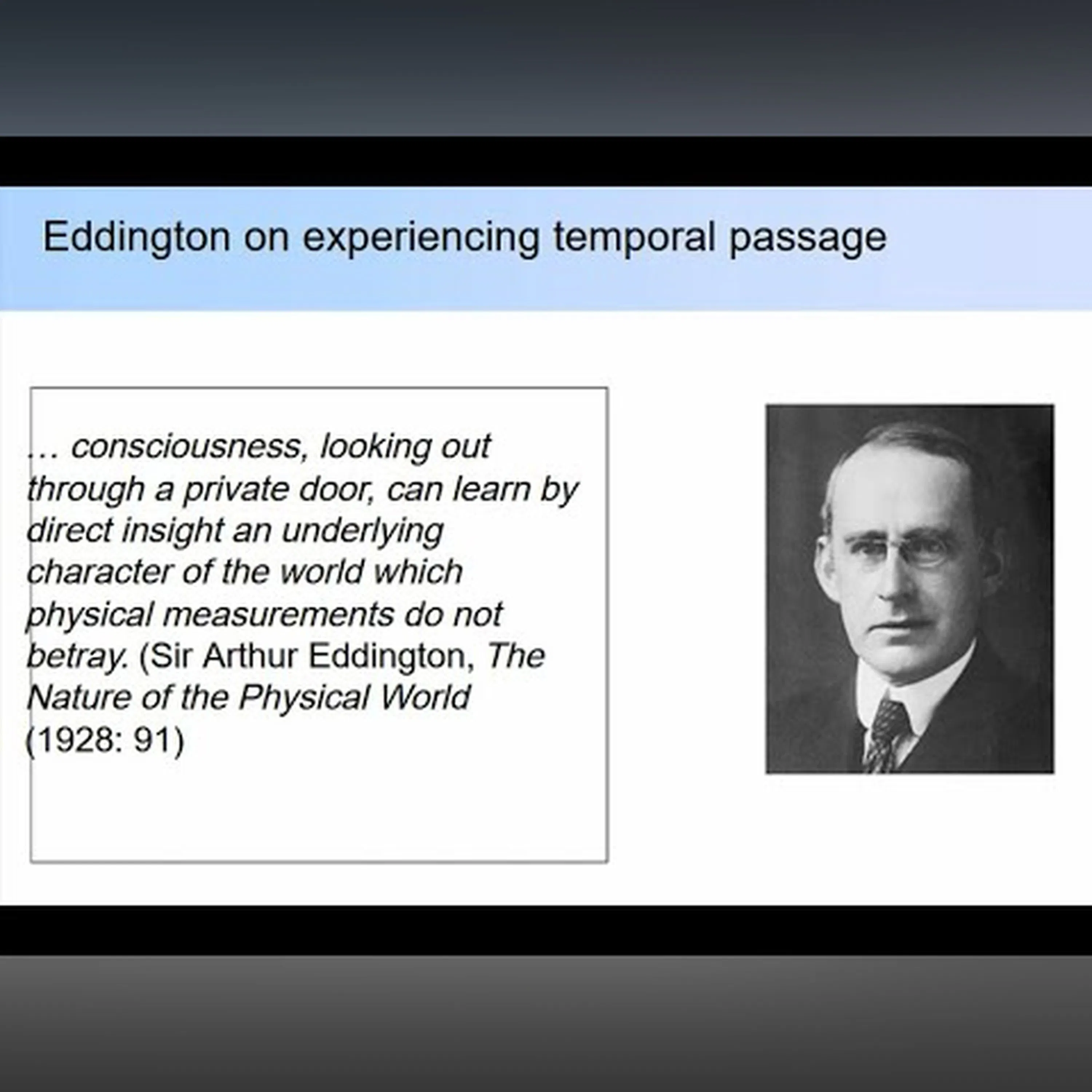 Does Time Really Pass? (Simon Prosser on the Illusion of Passage) 08.10.2026 52minWe are all familiar with the notion that time passes, but what does this mean? In this talk, Dr Simon Prosser argues that time does not pass. He begins by outlining some philosophical theories of temporal passage (A-theories of time, including presentism and the growing block view), along with a class of theories according to which time does not objectively pass (the B-theory of time, what's called eternalism or the block universe). He then goes over traditional problems for the notion of passage, including McTaggart's argument, the issue of the rate of passage, and the argument that passage is incompatible with modern physics (particularly with Einstein's special theory of relativity). He then goes on to argue that, despite appearances to the contrary, it is not actually possible to experience time passing. But because the best reason for thinking that time passes is our experience of it, we no longer have any good reason for thinking that time actually passes. If this is right, then it is an important project for philosophers and psychologists to explain why it seems to us that time passes when it doesn't really do so.Uploaded 05-07-21This was given at Durham University in 2012.Read more about the nature of time and some of the philosophical issues which arise: https://iep.utm.edu/time/00:00 Introduction01:39 A-Series and B-Series04:35 The A-Theory of Time05:34 The B-Theory of Time08:05 The Ontology of the A and B Theories11:13 Four Arguments Against Passage11:44 McTaggart's Paradox15:23 The Rate of Passage17:27 Einstein's Theory of Relativity20:07 Final Argument20:58 Could we Build a Device that detects Passage?23:07 Why No Physical Device can detect Passage25:25 Eddington on Experiencing Passage29:42 The Impossibility of Experiencing Passage39:56 Time does not Pass43:55 Summary#philosophy #time #philosophyoftime #metaphysics #epistemology #historyofphilosophy Learn more about your ad choices. Visit megaphone.fm/adchoices Learn more about your ad choices. Visit megaphone.fm/adchoices
 -
 Deep Blue's Victory: Dennett and Dreyfus on AI (1997) 08.10.2026 16minA news segment on Deep Blue's victory over world champion Garry Kasparov in 1997, which features commentary from both Daniel Dennett and Hubert Dreyfus on the possible significance for our understanding of artificial intelligence and ourselves as rational, conscious, intelligent beings. Uploaded 24-12-24#philosophy #artificialintelligence #dennett #chess #consciousness #debate Learn more about your ad choices. Visit megaphone.fm/adchoices Learn more about your ad choices. Visit megaphone.fm/adchoices
 -
 Isaiah Berlin Interview on Freedom (1974) 08.10.2026 31minThis is from an episode of the podcast Philosopher's Zone from a few years back. For more about the Philosopher's Zone: https://www.abc.net.au/radionational/programs/philosopherszone/ Uploaded 15-06-21#philosophy #isaiahberlin #freedom #kant #determinism #causality #freewill #historyofphilosophy Learn more about your ad choices. Visit megaphone.fm/adchoices Learn more about your ad choices. Visit megaphone.fm/adchoices
 -
 6 Concepts, Judgment and Deduction of the Categories - Kant's Critique of Pure Reason (Dan Robinson) 07.10.2026 46minDan Robinson gives the 6th lecture in a series of 8 on Immanuel Kant's Critique of Pure Reason. Empiricists have no explanation for how we move from "mere forms of thought" to objective concepts. The conditions necessary for the knowledge of an object require a priori categories as the enabling conditions of all human understanding.Uploaded 05-06-21This series looks at German Philosopher Immanuel Kant's seminal philosophical work 'The Critique of Pure Reason'. The lectures aim to outline and discuss some of the key philosophical issues raised in the book and to offer students and individuals thought provoking Kantian ideas surrounding metaphysics. Each lecture looks at particular questions raised in the work such as how do we know what we know and how do we find out about the world, dissects these questions with reference to Kant's work and discusses the broader philosophical implications. Anyone with an interest in Kant and philosophy will find these lectures thought provoking but accessible.This is series of lectures was given in 2011 at Oxford. Note, the audio has been improved. All 8 lectures: https://www.youtube.com/playlist?list=PLhP9EhPApKE_OdgqNgL0AJX9-gwr4tmLw#philosophy #kant #epistemology #metaphysics #empiricism #skepticism #historyofphilosophy Learn more about your ad choices. Visit megaphone.fm/adchoices Learn more about your ad choices. Visit megaphone.fm/adchoices
 -
 Two Kinds of Freedom: Negative vs Positive 07.10.2026 10minAnother re-upload of something that I put together awhile ago about Isaiah Berlin's famous distinction between the notion of positive versus negative liberty, and the related liberal conception of freedom. Uploaded 03-06-21#philosophy #isaiahberlin #politicaltheory #politicalphilosophy #historyofphilosophy Learn more about your ad choices. Visit megaphone.fm/adchoices Learn more about your ad choices. Visit megaphone.fm/adchoices
 -
 Hilary Putnam on Science and Non-Science (1977) 07.10.2026 6minA short clip of Hilary Putnam discussing science and the demarcation project in a 1977 interview with Bryan Magee on the philosophy of science. This is version of an upload from the other channel. The full interview can be found here: https://www.youtube.com/watch?v=JJB2q8ufAgk Uploaded 25-06-21#philosophy #epistemology #bryanmagee #philosophyofscience #science Learn more about your ad choices. Visit megaphone.fm/adchoices Learn more about your ad choices. Visit megaphone.fm/adchoices
 -
 Political Liberalism and its End 07.10.2026 30minPolitical liberalism has been extraordinarily successful, freeing the individual from custom, tribe, and tradition. The self-interested, self-directing individual has triumphed. But that great achievement may have come at a heavy cost. Unacceptable levels of inequality and the rise of a new global ruling class are two symptoms of a political system being lauded as the natural end point of history.Uploaded 20-06-21This is from an episode of the podcast Philosopher's Zone from a few years back with guest Patrick Deneen. More Philosopher's Zone: https://www.abc.net.au/radionational/programs/philosopherszone/#philosophy #politicalphilosophy #liberalism #politicaltheory #rawls #johnrawls #historyofphilosophy Learn more about your ad choices. Visit megaphone.fm/adchoices Learn more about your ad choices. Visit megaphone.fm/adchoices
 -
 4 The Restrained Romantics - Kant, Schiller and Fichte (Isaiah Berlin 1965) 07.10.2026 1h 4minIsaiah Berlin gives the 4th lecture in a series of 6 on Romanticism and its roots.Uploaded 06-06-21All 6 lectures: https://www.youtube.com/playlist?list=PLhP9EhPApKE_9uxkmfSIt2JJK6oKbXmd-For Berlin, the Romantics set in motion a vast, unparalleled revolution in humanity’s view of itself. They destroyed the traditional notions of objective truth and validity in ethics with incalculable, all-pervasive results. As he said of the Romantics elsewhere: “The world has never been the same since, and our politics and morals have been deeply transformed by them. Certainly this has been the most radical, and indeed dramatic, not to say terrifying, change in men’s outlook in modern times.”In these brilliant lectures Berlin surveys the myriad attempts to define Romanticism, distills its essence, traces its developments from its first stirrings to its apotheosis, and shows how its lasting legacy permeates our own outlook. Combining the freshness and immediacy of the spoken word with Berlin’s inimitable eloquence and wit, the lectures range over a cast of the greatest thinkers and artists of the eighteenth and nineteenth centuries, including Kant, Rousseau, Diderot, Schiller, Schlegel, Novalis, Goethe, Blake, Byron, and Beethoven. Berlin argues that the ideas and attitudes held by these and other figures helped to shape twentieth-century nationalism, existentialism, democracy, totalitarianism, and our ideas about heroic individuals, individual self-fulfillment, and the exalted place of art. This is the record of an intellectual bravura performance–of one of the century’s most influential philosophers dissecting and assessing a movement that changed the course of history. These Mellon lectures were delivered in Washington in 1965.00:00 Intro00:53 Kant25:42 Schiller47:34 Fichte#philosophy #romanticism #kant #isaiahberlin Learn more about your ad choices. Visit megaphone.fm/adchoices Learn more about your ad choices. Visit megaphone.fm/adchoices
 -
 Husserl's Phenomenology - Marvin Farber (1959) 07.10.2026 1h 2minAudio recording of a 1959 lecture given by Marvin Farber on Edmund Husserl and Phenomenology as part of a series on Creative Thinking at the Cooper Union Forum. Uploaded 24-09-24#philosophy #husserl #phenomenology #epistemology #historyofphilosophy Learn more about your ad choices. Visit megaphone.fm/adchoices Learn more about your ad choices. Visit megaphone.fm/adchoices
 -
 Nietzsche on the Value of Truth - Ken Gemes 07.10.2026 1h 28minAudio recording of the second lecture by Ken Gemes on Nietzsche. Nietzsche claims that with the rejection of religious underpinning of the value of truth (e.g. truth as God’s word and as something absolute), we can now raise the question of why and to what extent we should value truth. He argues that our need for meaning conflicts with our will to truth because such a will tends to destroy all mythologies including the mythology of value – our will to truth reveals that values are not objectively 'out there' in the world, but are merely our own projections onto the world. This knowledge eviscerates the world of meaning. This does not mean that Nietzsche rejects the value of truth. He instead rejects the notion, inherited from the Judeo-Christian worldview, that truth is an unconditional value. Such a notion of truth, destructive of all myth and meaning, is unliveable. The very claim that the truth is valuable, even if not unconditionally valuable, is itself one of those myths that help give life meaning.Uploaded 07-06-21You can find the previous talk here: https://www.youtube.com/watch?v=CHShypzrqGwNote, this is a re-upload. 00:00 Talk 46:53 Q and A #nietzsche #philosophy #ethics #historyofphilosophy Learn more about your ad choices. Visit megaphone.fm/adchoices Learn more about your ad choices. Visit megaphone.fm/adchoices
 -
 Wittgenstein - The Unsayable and Limits of Thought 07.10.2026 10minIn this clip, Ray Monk, Barry Smith, and Marie McGinn discuss the early Wittgenstein's thought in regards to the famous last proposition of the Tractatus: "Whereof one cannot speak, thereof one must be silent." This clip comes from an episode of the podcast In Our Time a few years back. For more information and the full episode, go to: https://www.bbc.co.uk/programmes/p0054945Uploaded 15-06-21More Short Clips: https://www.youtube.com/playlist?list=PLhP9EhPApKE8v8UVlc7JuuNHwvhkaOvzc#philosophy #wittgenstein #epistemology Learn more about your ad choices. Visit megaphone.fm/adchoices Learn more about your ad choices. Visit megaphone.fm/adchoices
 -
 G. A. Cohen does Isaiah Berlin (1991) 07.10.2026 4minG. A. Cohen impersonates Sir Isaiah Berlin in this short clip from 1991. Uploaded 28-06-25#philosophy #isaiahberlin Learn more about your ad choices. Visit megaphone.fm/adchoices Learn more about your ad choices. Visit megaphone.fm/adchoices
 -
 The Afterlife: How People Who Don’t Yet Exist Matter More to Us than People Who Do 07.10.2026 1h 40minSamuel Scheffler (University Professor of Philosophy and Law at New York University) delivers the first of his 2012 Tanner lectures at Berkeley with commentary from Susan R. Wolf (Edna J. Koury Professor of Philosophy at the University of North Carolina Chapel Hill). Note, the introduction has been edited out. Uploaded 04-05-2600:00 Lecture 59:50 Susan Wolf 1:15:53 Response #philosophy #ethics #moralphilosophy Learn more about your ad choices. Visit megaphone.fm/adchoices Learn more about your ad choices. Visit megaphone.fm/adchoices
 -
 Alvin Goldman on Freedom and Determinism (1982) 07.10.2026 21minAlvin Goldman discusses some of the philosophical problems regarding free will, determinism, and fatalism in a 1982 interview conducted by Wayne J. Pond in a segment of the show Soundings at the National Humanities Center. Uploaded 01-10-24#philosophy #freewill #determinism #causality #causation #metaphysics Learn more about your ad choices. Visit megaphone.fm/adchoices Learn more about your ad choices. Visit megaphone.fm/adchoices
 -
 The Right to Death - Antony Flew (1980) 07.10.2026 1h 1minAudio recording of a lecture given by the English philosopher Antony Flew on voluntary euthanasia and physician-assisted suicide at the Australian National University back in 1980. Uploaded 30-03-25#philosophy #ethics #medicalethics #moralphilosophy #bioethics Learn more about your ad choices. Visit megaphone.fm/adchoices Learn more about your ad choices. Visit megaphone.fm/adchoices
 -
 Justice for Hedgehogs - Ronald Dworkin (2011) 07.10.2026 37minAudio recording of a lecture by Ronald M. Dworkin on his book "Justice for Hedgehogs" at the Carnegie Council in 2011. The title is a reference to the Ancient Greek poet Archilochus who wrote that "the fox knows many things, but the hedgehog knows one big thing." Ronald Dworkin argues for one big thing: the unity of value. Uploaded 13-09-25#philosophy #politicalphilosophy #ethics #moralphilosophy #jurisprudence Learn more about your ad choices. Visit megaphone.fm/adchoices Learn more about your ad choices. Visit megaphone.fm/adchoices
 -
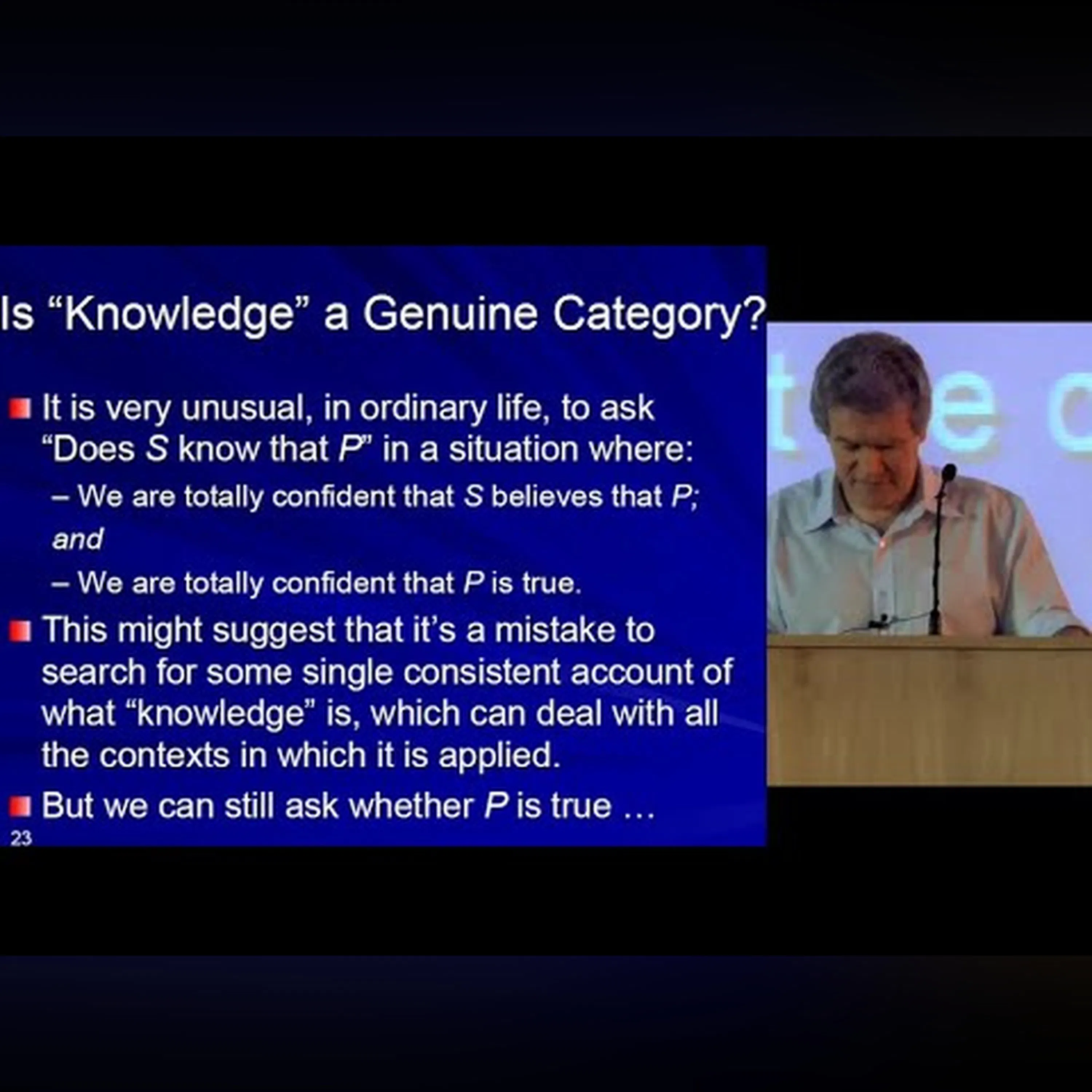 Knowledge and Scepticism - General Philosophy (Peter Millican) 07.10.2026 1hIn this lecture on General Philosophy, Professor Peter Millican discusses the traditional analysis of knowledge, Gettier cases, externalism, scepticism, and the ethics of belief. This comes from a 2010 series on General Philosophy. The slides have been added.Uploaded 08-06-21This series of lectures was delivered by Peter Millican to first-year philosophy students at the University of Oxford. The lectures comprise of the 8-week General Philosophy course, delivered to first year undergraduates. These lectures aim to provide a thorough introduction to many philosophical topics and to get students and others interested in thinking about key areas of philosophy. Taking a chronological view of the history of philosophy, each lecture is split into 3 or 4 sections which outline a particular philosophical problem and how different philosophers have attempted to resolve the issue. Individuals interested in the 'big' questions about life such as how we perceive the world, who we are in the world and whether we are free to act will find this series informative, comprehensive and accessible. Source: https://podcasts.ox.ac.uk/series/general-philosophyMore lectures on General Philosophy: https://www.youtube.com/playlist?list=PLhP9EhPApKE_xo2wvkm6qPZrUlAiRNHXb#philosophy #epistemology #skepticism #historyofphilosophy Learn more about your ad choices. Visit megaphone.fm/adchoices Learn more about your ad choices. Visit megaphone.fm/adchoices
Podcasts similares


Popular em
Este podcast também aparece nas paradas de podcasts destes países.
