
It's All Relative with Dr Eliza Filby
Dr Eliza Filby
0
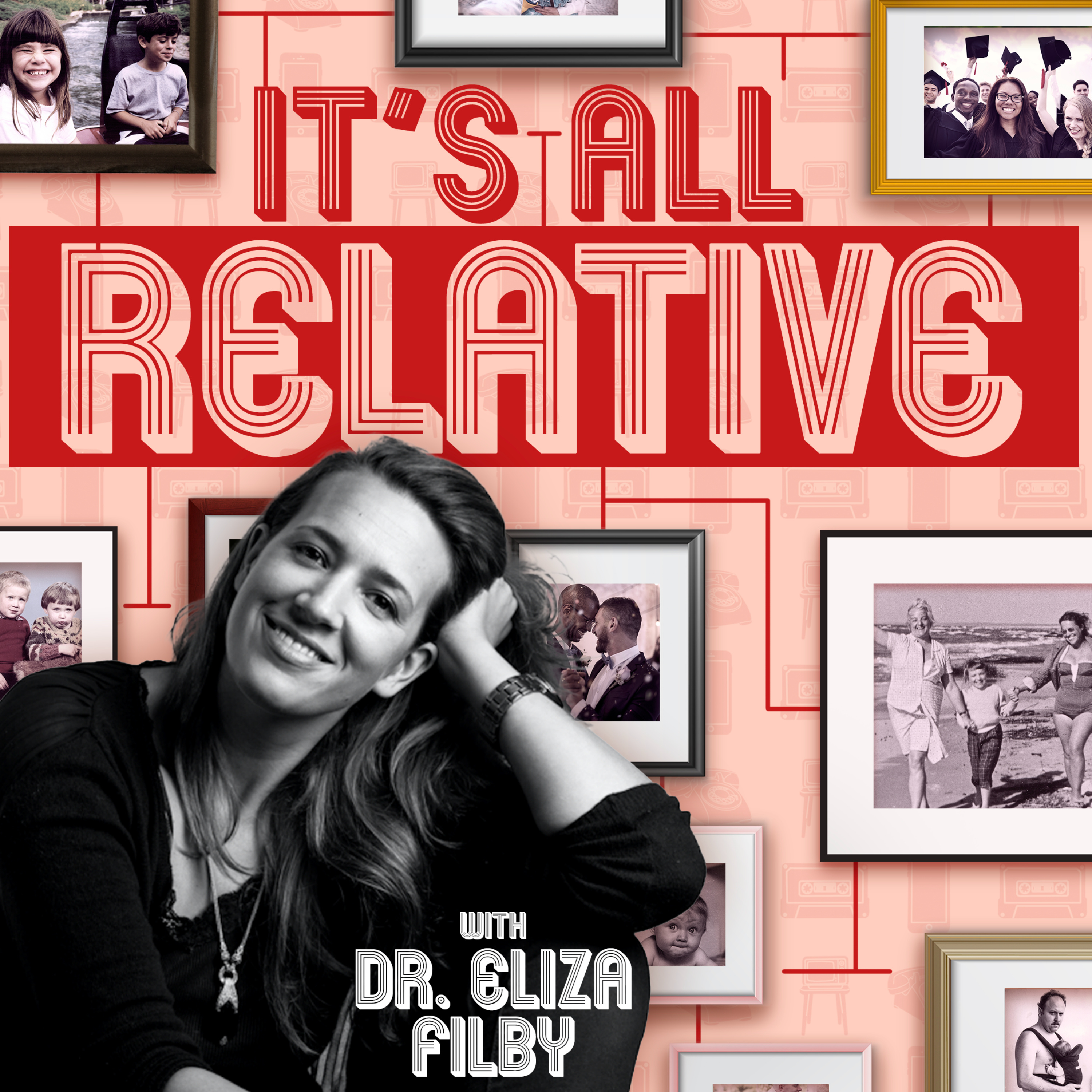
In each episode, host Dr Eliza Filby, a writer and historian, talks with relatives from different generations to explore how life has changed across generations. They discuss topics such as jobs, dating, music, and money, and look at whether generations really are that different. The conversations also bring out quirky family traditions and funny stories, giving the show a warm, Sunday-family-dinner feel.
Episódios
-
 Female Time Penalty | Why Corporate Time Favours Men Over Women 14.09.2026 23minWomen and men don't start the working day with the same relationship to time and we rarely talk about it.The pink tax, female time penalty, mental load, women at work, gender inequality, emotional labour, workplace productivity and AI are usually discussed as separate issues. I think they're connected. Women spend more time getting ready, more time organising family life and, often, more time doing the listening, mentoring and emotional work that keeps workplaces functioning. None of this fits particularly neatly into a culture obsessed with productivity, efficiency and measurable outputs.And that's what I talk about in this episode of It's All Relative: not simply the financial cost of being a woman, but the cost in time.It started with something very ordinary.Getting ready.🔔 FOLLOWFollow It's All Relative for weekly episodes exploring generations, work, wealth, housing, and the social and economic forces governing our lives.📩 SUBSCRIBE TO MY SUBSTACKEvery Friday I write about the generational, economic and cultural shifts changing how we live.📚 BUY INHERITOCRACYInheritocracy: It's Time to Talk About the Bank of Mum and Dad🌍 FIND ME ONLINEWebsiteLinkedInInstagram
 -
The Generational Inequality of Housing 11.09.2026 25minThe housing ladder is broken. For Millennials and Gen Z, buying a home increasingly requires a leap.The UK housing crisis, first-time buyers, house prices, mortgages, renting, the Bank of Mum and Dad, and inheritance have fundamentally changed what home ownership means. For previous generations, the property ladder promised gradual progress: buy a flat, build equity, trade up to a family home. For many Millennials and Gen Z, that ladder simply doesn't exist anymore.I started thinking about this when I moved house.I was surrounded by removal boxes, crying while writing the essay that became this episode. Suggest we remove this bit: 'sitting on a chaise', I had lived in that house, on and off, since I was 21. I wrote my PhD there. I moved back after my father died. I raised my family there. My children were conceived there.And leaving it made me think about how strangely we talk about housing.We've spent decades talking about property as an investment. Getting on the ladder. Moving up the ladder. Building equity. Making the "right" property decisions.But a house is also something much more fundamental.It's a home.And I think younger generations are rediscovering that distinction, partly because the economics of housing have changed so dramatically.🔔 FOLLOWFollow It's All Relative for weekly episodes exploring generations, work, wealth, housing, and the social and economic forces governing our lives.📩 SUBSCRIBE TO MY SUBSTACKEvery Friday I write about the generational, economic and cultural shifts changing how we live.📚 BUY INHERITOCRACYInheritocracy: It's Time to Talk About the Bank of Mum and Dad🌍 FIND ME ONLINEWebsiteLinkedInInstagram
-
The Bank of Mum and Dad Is Making Adults Financially Dependent | It's All Relative | Dr Eliza Filby 28.08.2026 25minDo you still lie to your parents about money? Even in your 40s? You are definitely not alone.The Bank of Mum and Dad, inheritance, generational wealth, financial independence, family money and the cost of living are changing the relationship between parents and their adult children. We talk a lot about the inequality created by parental wealth, but much less about what happens inside families when money changes hands.Because accepting money from your parents in adulthood can come with something else: scrutiny.This episode started with a reflection on a conversation I had with a woman in her 40s who admitted that she and her husband regularly agree a story before talking to her in-laws.The £150 Vinted dress? It was a bargain.The holiday? Avios.The expensive birthday party? Best not mention exactly what that cost.And these are financially successful, middle-aged adults.Once I started asking around, I realised how common this strange financial fibbing is. Research cited in the episode found that 29% of adults who had borrowed money from their parents admitted lying at least once about what the money was for.So why are grown adults still lying to their parents about money?I think it tells us something important about the rise of the Bank of Mum and Dad.🔔 Follow if you enjoy conversations about generations, relationships, AI, work, wealth and the social changes shaping modern life,📩 Subscribe to my SubstackEvery Friday I publish a free essay exploring the ideas behind these conversations.📚 Buy InheritocracyInheritocracy: It's Time to Talk About the Bank of Mum and Dad🌍 Follow meWebsiteLinkedInInstagram
-
Why Elon Musk Is Wrong About AI and The Future Of Work | It's All Relative 26.08.2026 22minElon Musk thinks we will have AI Abundance in 10 years. Everyone is asking whether AI will replace jobs. The AI bubble is potentially on the horizon. Beyond the hype and the panic however, is the more interesting question: what is AI revealing about the way we work today?Over the past few weeks, I've become increasingly convinced that we're focusing on the wrong AI story.Yes, artificial intelligence is changing work. Yes, it's making us more productive. And yes, it's transforming everything from recruitment to customer service.But the biggest impact of AI isn't what it's creating.It's what it's exposing.In this episode of It's All Relative, I explore three trends that are reshaping the workplace: the rise of employee surveillance, the explosion of shadow AI, and the surprising fact that Gen Z may be the generation asking the toughest questions about artificial intelligence.Taken together, they tell us something much bigger about the future of work.They reveal a workplace that has become increasingly digital, increasingly data-driven and, in many cases, increasingly disconnected from the very human relationships that make people better at their jobs.🔔 SubscribeIf you enjoy conversations about generations, relationships, AI, work, wealth and the social changes shaping modern life, subscribe for a new episode of It's All Relative every Wednesday.📩 Subscribe to my SubstackEvery Friday I publish a free essay exploring the ideas behind these conversations.📚 Buy InheritocracyInheritocracy: It's Time to Talk About the Bank of Mum and Dad🌍 Follow meWebsiteLinkedInInstagram
-
Why Men and Women Are Drifting Apart | The Gender Divide 18.08.2026 23minI address the gender divide, the manosphere, the femosphere, dating, social media algorithms, birth rates, and loneliness in this episode.Are men and women still living in the same world, or are our phones creating entirely different realities?I didn't set out to make an episode about the gender divide.It emerged after two completely different conversations. One was with demographer Dr Paul Morland about falling birth rates. The other was with Professor Jilly Kay about the rise of the femosphere. On the surface, they had almost nothing in common.Then we read the comments and analysed them.What struck me was that men and women were often watching the same interview and coming away with completely different interpretations. It made me wonder whether the biggest divide online today isn't political at all....but gender.🔔 SubscribeIf you enjoy conversations about generations, relationships, AI, work, wealth and the social changes shaping modern life, subscribe for a new episode of It's All Relative every Wednesday.📩 Subscribe to my SubstackEvery Friday I publish a free essay exploring the ideas behind these conversations.📚 Buy InheritocracyInheritocracy: It's Time to Talk About the Bank of Mum and Dad🌍 Follow meWebsiteLinkedInInstagram
-
Who Earns the Most in 2026? | The Answer Will Surprise You | It's All Relative 13.08.2026 24minWhich profession earns the most? Corporate lawyers, doctors, teachers, Tech? In the context of the housing crisis, the Bank of Mum and Dad, social mobility, and the future of work. If the cost of everything has gone up, who can still afford life on a salary alone?That was the question that sparked this episode.A few months ago, my team and I analysed a simple idea: if house prices, childcare, education and healthcare have all raced ahead of wages, which professions have actually kept up? Which profession earns the most?We often assume it's bankers who have come out on top. But the real winners have been corporate lawyers. Their salaries have continued to rise in the UK, largely because of fierce competition between US and UK law firms, while many other professions have watched their earning power steadily erode.This episode is about what their success tells us about the changing nature of work, wealth and opportunity.🔔 SubscribeIf you enjoy conversations about generations, work, wealth, AI and the forces reshaping modern society, subscribe for a new episode every week.📩 Subscribe to my SubstackRead the original essay behind this episode and receive my weekly analysis on generational change, work and wealth.📚 Buy InheritocracyInheritocracy: It's Time to Talk About the Bank of Mum and Dad🌍 Find me hereWebsiteLinkedInInstagram
-
Gen Z Aren’t Lazy | They’re Adapting to a Broken System | It's All Relative | Dr Eliza Filby 03.08.2026 24minGen Z, AI, the future of work, hybrid working, graduate jobs and career advice. Why has an entire generation been labelled lazy when the real story is that work itself has fundamentally changed?Every time I speak to senior leaders, the same questions come up.Why won't Gen Z come into the office?Why don't they stay in jobs?Why are they so obsessed with work-life balance?The assumption is always that the problem is Gen Z.I think the problem is work.For years, we've talked about younger generations as though they're uniquely entitled or unusually demanding. But if you step back and look at the world they've inherited, a different picture emerges.They entered the workplace during a global pandemic. Their first experience of work was often through a laptop screen. They watched the Great Resignation unfold, only to find themselves graduating into an economy shaped by AI, hiring freezes and rising economic uncertainty. At the same time, wages have struggled to keep pace with the soaring cost of housing, education and everyday life.So perhaps the more interesting question is why we expect them to behave as though work hasn't changed.In this episode of It's All Relative, I explore why I think we've misunderstood an entire generation.🔔 SubscribeSubscribe for weekly conversations about generations, AI, work, wealth and the social changes shaping modern life.📩 Subscribe to my SubstackEvery Friday I publish a free essay exploring the ideas behind these episodes.📚 Buy InheritocracyInheritocracy: It's Time to Talk About the Bank of Mum and Dad🌍 Find meWebsiteLinkedInInstagram
-
Career Advice Nobody Tells You | Freedom, Agility & Uncertainty | It's All Relative 14.07.2026 39minThe future of work is changing. Entrepreneurship, AI, portfolio careers, career advice, Gen Z, millennials, small business, financial resilience, purpose, and freedom are reshaping what a successful career looks like. In this episode, I reflect on my own journey from academia to building a business, and the career advice that completely changed my life.When I was in my thirties, someone gave me a piece of advice I've never forgotten: talk to people five to seven years ahead of you, not twenty. It transformed how I thought about my career, why I left academia, and ultimately how I built the business I run today.This isn't a "how to become an entrepreneur" video. In fact, I'm deeply sceptical of hustle culture, the glorification of entrepreneurship, and the endless LinkedIn clichés about success.Instead, this is an honest reflection on what it takes to build a career in an age where the old scripts no longer work.🔔FOLLOWIf you enjoy conversations about generations, work, wealth, technology and the future of society, follow for a new episode every week.📚 BUY MY BOOK – INHERITOCRACYInheritocracy: It's Time to Talk About the Bank of Mum and Dad📩 SUBSCRIBE TO MY SUBSTACKWeekly essays on generations, work, wealth, culture and the future.🌍 WHERE TO FIND MEWebsiteLinkedInInstagram
-
Capitalism Is Not Free Market | Grace Blakeley Explains Why | It's All Relative 01.07.2026 53minThe defining political emotion of the 21st century is powerlessness, says Grace Blakeley who I sat down with on this episode. Capitalism, inequality, stagnant wages, the housing crisis, Gen Z, millennials, entrepreneurship, AI, social mobility, and the future of work are all colliding in ways that are reshaping how we live, work, and think about our future.If capitalism won, why do so many people feel like they're losing? Grace argues that capitalism was never quite the free-market system we were promised. Instead, she suggests we live in an age of concentrated power, monopoly, political influence, and growing inequality. Together, we unpack how this affects everything from education and homeownership to entrepreneurship, community, social mobility, and our sense of freedom itself.🔔 FOLLOWIf you enjoy conversations about generations, wealth, work, demographics, technology, and social change, follow It's All Relative on Spotify and join me every week on It's All Relative.📩 SUBSCRIBE TO MY SUBSTACKWeekly essays and analysis on generations, work, wealth, and social change🌍 FIND ME ONLINEWebsiteLinkedInInstagram
-
Why Are Birth Rates Falling? The Real Cost of Having Children | Dr Paul Morland | It's All Relative 23.06.2026 47minBirth rates are collapsing. Fertility rates are falling. Populations are ageing. And governments around the world are starting to panic. I sit down with world-leading demographer Dr Paul Morland, author of No One Left, to explore one of the most important and misunderstood issues shaping our future: demographic decline.Together we unpack what falling birth rates really mean for economies, welfare systems, pensions, healthcare, housing, work and the future of generations to come.FOLLOW FOR MOREIf you enjoy conversations about generations, demographics, work, wealth, technology, and social change, follow It's All Relative on Spotify.📩 SUBSCRIBE TO MY SUBSTACKWeekly essays and analysis on generational change, work, wealth and society.📚 BUY MY BOOK: INHERITOCRACYInheritocracy: It's Time to Talk About the Bank of Mum and Dad🌍 FIND ME ONLINEWebsiteLinkedInInstagram
-
Is Gen Z the Most Misunderstood Generation? | It's All Relative with Konrad Collao 18.06.2026 35minI'm joined by youth culture expert and researcher Konrad Collao to unpack one of the most analysed, stereotyped, and misunderstood generations on the planet: Gen Z.Everyone seems to have an opinion about Gen Z.They're either saving the world or destroying it.They're activists or apathetic.Entrepreneurs or work-shy.Progressive heroes or victims of the manosphere.But what if most of what we think we know about Gen Z is wrong?Drawing on three years of research, thousands of interviews and one of the most comprehensive studies of young people in Britain, we explore what it's actually like to be Gen Z today.🔔 Follow on SpotifyA weekly show exploring generational change, work, technology, culture, and the forces shaping modern life.📩 Subscribe to My SubstackGet my weekly essays on generations, work, wealth and social change:📚 Buy InheritocracyMy book on inheritance, family wealth and the Bank of Mum and Dad:🌍 Find Me HereWebsiteInstagramLinkedIn
-
The Rise Of The Moonlighting Middle Class | The New Reality Of Work In 2026 | It's All Relative 12.06.2026 27minMultiple income streams, side hustles, moonlighting, portfolio careers, AI disruption, and remote work. Why are more professionals working two jobs, building side businesses and preparing for an increasingly uncertain economy?This week on It's All Relative, I explore the end of the one-salary life and the rise of the moonlighting middle-class professional.For years, we've associated multiple jobs with financial hardship. But something has changed.Increasingly, it's not just gig workers or low-income households juggling multiple sources of income. It's lawyers, teachers, doctors, consultants, creatives, and knowledge workers. It's the professional middle class.And that tells us something important.In this episode, I unpack why more people are hedging their bets, diversifying their income and questioning whether a single employer can still provide the security it once did.00:00 Intro01:53 Middle class moonlighting03:48 Multi income data surge05:04 AI enables overemployment05:53 Portfolio career benefits08:32 Employers and distrust11:11 Side hustle openness14:48 Public sector moonlighting17:05 Platform capitalism risks20:57 Community questionsFollow this ChannelA weekly show exploring generational change, work, wealth, technology, and the forces shaping modern life.Subscribe to my SubstackBuy InheritocracyMy book on inheritance, family wealth and the Bank of Mum and DadFind Me HereWebsite | Instagram | LinkedIn
-
Gen Z’s Money Problem Is Worse Than You Think | Gen Z Money Habits Explained | With Claer Barrett 11.06.2026 46minThis week on It’s All Relative, I sit down with Financial Times columnist Clare Barrett to unpack one of the defining generational questions of our time:What happens when an entire generation grows up expecting economic instability?Unlike millennials, who came of age during a consumer boom, Gen Z were shaped by the aftermath of the 2008 financial crisis, stagnant wages, unaffordable housing, and the collapse of the old promise that hard work guarantees security.And it’s changed how they think about money completely.In this episode, we explore:00:00 Intro02:34 Meet Clare Barrett03:40 Student Debt Reality Check05:15 Savvy Workplace Power06:19 Side Hustles New Normal08:44 Tuition Fees And Career ROI10:27 Deposit Versus Debt13:19 Happiness Curve Flattening14:20 Is University Still Worth It16:43 Gen Z Investing Boom22:15 Trading Apps And FinTok Risks23:44 Finance Influencers Rules24:21 Brands Chase Gen Z25:32 How Gen Z Learns Investing26:29 Frictionless Spending Debt28:07 Buy Now Pay Later Reality30:04 Housing Dream Slips Away31:11 Renting Landlord Ethics31:54 Help To Rent Debate33:49 Shared Ownership Pitfalls36:45 Money Talks Relationships38:10 Protect Yourself Legally40:59 Gen Z Money Openness43:50 Savvy Or Screwed Finale44:29 Episode Wrap And Outro🔔 Follow this ChannelA weekly show unpacking generational change, money, work, technology, and modern life.Follow so you don’t miss the next episode.🌍 Find Claer Barrett hereWebsiteFinancial Times ColumnInstagramLinkedIn📚 Buy InheritocracyMy book on inheritance, wealth and the Bank of Mum and Dad🌍 Find Me HereWebsiteInstagramLinkedIn
-
Who Can Afford To Be An Artist in 2026? | Why Art Is Only for the Rich Now | It's All Relative 04.06.2026 29minThis week on It’s All Relative, I explore one of the defining cultural questions of the 2020s: Who gets to be creative anymore?Because increasingly, traditional creative careers are becoming the preserve of the financially secure.The children of affluent families. The beneficiaries of the Bank of Mum and Dad. Those who can afford unpaid internships, unstable income and years of uncertainty. And that raises a bigger question:What has happened to working class creativity?In this episode, I explore:00:00 Intro00:53 Premise Explained02:05 Romanticising Struggling Artist03:52 Postwar Meritocracy in the Arts05:46 Access to Arts Closing07:57 Creative Industry Cuts And Class Data08:53 Creator Economy Shift12:34 Monetising Is A Slog14:12 Keep Creativity Private16:46 Arts Culture Beyond The West22:05 Community Questions🔔 Follow on SpotifyA weekly show exploring generational change, work, culture and the forces shaping modern life.Follow so you don’t miss the next episode.📩 Subscribe to My Substack📚 Buy InheritocracyMy book on inheritance, class and the Bank of Mum and Dad🌍 Find Me HereWebsiteInstagramLinkedIn
-
Side Hustles, Wages and the New Cost of Living Reality | It's All Relative 28.05.2026 31minThis week on It’s All Relative, I unpack exclusive polling data from OnePoll, looking at how under-45s in Britain are really coping financially.And the findings are stark.38% of respondents said they felt worse off after receiving a pay rise.Not because pay rises don’t matter.But because rising wages are being immediately absorbed by housing costs, childcare, debt repayments, tax, and the general cost of living.Which raises a much bigger question:What happens when work no longer feels like a reliable route to financial stability?In this episode, I explore:00:00 Intro01:54 Why Raises Feel Useless03:52 Patchwork Household Income05:20 Side Hustles Reality Check07:49 Two-Income Economy Trap09:08 Lone Parents Under Pressure11:07 Bank of Mum and Dad12:12 Luxury Redefined Today14:04 Three Ways People Adapt14:40 Community Q&A31:19 Wrap Up and Next Episode📩 Subscribe to My SubstackRead the full essay this episode is based on:👉 https://drelizafilby.substack.com/p/britains-under-45s-no-longer-runs📚 Buy InheritocracyMy book on inheritance, family wealth and the Bank of Mum and Dad:👉 https://www.amazon.co.uk/Inheritocracy-Time-Talk-Bank-Mum/dp/1911709809🌍 Find Me HereWebsite: https://www.elizafilby.comInstagram: https://www.instagram.com/drelizafilbyLinkedIn: https://www.linkedin.com/in/elizafilby
-
The Workplace Is Not Human Anymore | Why Gen Z Doesn’t Trust Work | It's All Relative 26.05.2026 38minThis week on It’s All Relative, I unpack my recent conversation with Simon Sinek and explore why AI is transforming work and exposing everything that was already broken about it.The collapse of stable careers.The erosion of loyalty between employer and employee.The rise of individualism.The breakdown of the old life script. For decades, we sold people a very clear promise: Work hard. Get a degree. Build a career. Buy a house. Build stability.And increasingly, that promise hasn’t been delivered in the way many people expected. Especially for millennials and Gen Z.In this episode, I explore:🔔 Subscribe to the ChannelA weekly show unpacking generational change, AI, work, culture, and the forces shaping modern life.Subscribe so you don’t miss the next episode.📩 Subscribe to My SubstackRead the full essay this episode is based on.📚 Buy InheritocracyMy book on inheritance, family wealth, and generational change🌍 Find Me HereWebsiteInstagramLinkedIn
-
People on 100K Think They’re Poor | The Salary That Doesn’t Mean What It Used To | It's All Relative 21.05.2026 35minAre you actually rich? Middle class wealth, income vs wealth, cost of living, generational wealth and inequality, why so many people feel poor in a rich country.If you earn £50k… you’re in the top 30% of earners in the UK.And yet most people on that salary would not describe themselves as rich.So what’s going on?In this episode of It’s All Relative, I unpack one of the biggest misconceptions shaping our politics and our sense of self:the idea that “the rich” are always someone else.The billionaire.The hedge fund manager.The 1%.But what if that’s not the full picture?What if wealth isn’t just concentrated at the very top… but spread more widely across what we might call the mass affluent?And what if many of us are both feeling squeezed… and sitting in wealth at the same time?In this episode, I explore:00:00 Intro03:30 Dinner Party Politics06:03 Advert Break Art Print06:57 Greens and Middle Class Squeeze10:03 Defining Who Is Rich11:20 Mass Affluent Hidden Wealth13:52 Britain Poorer Than We Think16:52 Expectations and Feeling Poor21:17 Community Questions29:11 Behind the Scenes Chat🔔 Subscribe to the ChannelA weekly show unpacking generational change, wealth, work and the forces shaping modern life.Subscribe so you don’t miss the next episode.📩 Subscribe to My SubstackRead the full essay this episode is based on:👉 https://drelizafilby.substack.com/p/you-are-probably-rich-you-just-dont📚 Buy InheritocracyMy book on inheritance, class and the Bank of Mum and Dad:👉 https://www.amazon.co.uk/Inheritocracy-Time-Talk-Bank-Mum/dp/1911709809🌍 Find Me HereWebsite: https://www.elizafilby.comInstagram: https://www.instagram.com/drelizafilbyLinkedIn: https://www.linkedin.com/in/elizafilby
-
Money Is Ruining Romance | The Real Cost of Love | It's All Relative 18.05.2026 22minAre women becoming more “materialistic”… or just more realistic? In this episode of It’s All Relative, I unpack one of the most controversial conversations happening right now around dating, relationships, and money. Because increasingly, we’re hearing that women are becoming more selective, more financially focused, even “gold diggers”.I don’t think that’s what’s happening. I think we’re seeing the rise of something else entirely: financial compatibility. And it reflects the economic reality of the 2020s...Stagnant wages.Unaffordable housing.Student debt.Expensive childcare.And the growing importance of the Bank of Mum and Dad.In this episode, I explore:00:00 Intro00:53 Gen Z Money Reality03:32 Gold Digger Myth06:33 Class Matching in Love10:27 Seesaw Marriages12:10 Algorithms, Dating Apps and Money13:58 Inheritance and Dynasties15:22 Quickfire Questions17:00 Community Questions19:47 Breadwinner Resentment21:09 Talk Money Before Kids21:42 Final Thoughts and OutroFollow so you don’t miss the next episode.📩 Subscribe to My SubstackRead the full essay this episode is based on:👉 https://drelizafilby.substack.com/p/its-not-gold-digging-just-realism📚 Buy Inheritocracy: My book on inheritance, class, and the Bank of Mum and Dad👉 https://www.amazon.co.uk/Inheritocracy-Time-Talk-Bank-Mum/dp/1911709809🌍 Find Me HereWebsite: https://www.elizafilby.comInstagram: https://www.instagram.com/drelizafilbyLinkedIn: https://www.linkedin.com/in/elizafilby
-
Is University A Rip-Off? | AI, Students And The Future Of University | It's All Relative 27.04.2026 25minAI in universities, ChatGPT students, is a degree still worth it? Future of education, student debt, and assessment — is AI exposing a deeper problem with higher education?Are universities facing an AI crisis… or is AI simply revealing a crisis that was already there?In this episode of It’s All Relative, I explore how AI is transforming university education — and why the real issue may not be students using ChatGPT, but the way we assess learning in the first place.Because here’s the reality:Around 88% of UK students are now using AI in their work.Detection software isn’t reliable.Essay writing is increasingly automatable.And universities are struggling to keep up.But I don’t think this is just about cheating.I think AI is exposing something much deeper.A system that has, for years, been drifting towards credentialism, grade inflation and a “customer model” of education.In this episode, I explore:00:00 Intro03:22 Fees Customers Credentialism04:29 Vivas and Oral Exams06:10 Break06:48 Quickfire Questions09:44 Work Skills and Inequality11:48 Book Plug Interlude13:02 Community Questions19:14 Lecturers Under Pressure20:39 Will Universities Change?22:41 Advice for Students Parents Employers🔔 Subscribe to the ChannelA weekly show unpacking generational change, work, education and the forces shaping modern life.Subscribe so you don’t miss the next episode.📩 Subscribe to My SubstackRead the full essay this episode is based on:👉 https://drelizafilby.substack.com/p/universities-dont-have-an-ai-problem📚 Buy InheritocracyMy book on inheritance, class and generational change:👉 https://www.amazon.co.uk/Inheritocracy-Time-Talk-Bank-Mum/dp/1911709809🌍 Find Me HereWebsite: https://www.elizafilby.comInstagram: https://www.instagram.com/drelizafilbyLinkedIn: https://www.linkedin.com/in/elizafilby
-
How Money Is Changing Friendship | Hidden Cost for Millennials & Gen Z | It's All Relative 14.04.2026 31minFriendship and money, class differences, millennials, Gen Z, social mobility, and the Bank of Mum and Dad. How money is reshaping our friendships.We don’t like to talk about money when it comes to friendship.It feels uncomfortable. Slightly taboo. Almost… inappropriate.Friendship is supposed to be the one space where money doesn’t matter.And yet, increasingly, I think it does.In this episode of It’s All Relative, I explore how money is infiltrating our friendships and why this feels particularly pronounced for millennials and Gen Z.One event can wipe out your disposable income for months.And beneath that sits something deeper.A growing divide between those who are financially supported by the Bank of Mum and Dad… and those who are not.In this episode:00:00 Intro03:29 Celebrating Friends Milestones04:08 Bank of Mum and Dad05:51 Money Divides by Generations08:03 Cross-Class Friendships10:28 Friends as Comparison11:31 Well-being and Ranking12:54 Gender Status Differences15:08 Community Questions17:49 Competition and Networking22:39 New Status Games24:56 Friendship Above Status28:29 Work Friends and Decline🔔 Subscribe to the ChannelA weekly show exploring generational change, work, wealth, family and the forces shaping modern life.Subscribe so you don’t miss the next episode.📩 Subscribe to My SubstackRead the full essay this episode is based on:👉 https://drelizafilby.substack.com/p/how-money-infiltrates-your-friendship📚 Buy InheritocracyMy book on inheritance, class and the Bank of Mum and Dad:👉 https://www.amazon.co.uk/Inheritocracy-Time-Talk-Bank-Mum/dp/1911709809🌍 Find Me HereWebsiteInstagramLinkedIn
Podcasts similares


Popular em
Este podcast também aparece nas paradas de podcasts destes países.
