
BIG IDEAS BY NEW ECONOMIES
Ollie Forsyth
0
Big Ideas by New Economies is a podcast that explores how iconic founders turned challenging moments into global companies. Hosted by Ollie Forsyth, each episode shares insights into entrepreneurship, resilience, and business building. The show aims to inspire aspiring founders by revealing the mindset and strategies behind successful ventures.
Episódios
-
 Webflow 14.09.2026 52minSubscribe to stay ahead of technology trends. Never miss future editions.Linda Tong, CEO of Webflow, joins us to explain how she's leading Webflow's transformation from a $4 billion website builder into an agentic marketing platform, why she believes the internet is filling up with AI-generated "garbage" from people who never asked what's worth building, and how she thinks about winning in a market where AI capability itself isn't a moat.During the episode, we also explore an interesting trend and tension: what it takes to build “taste” into AI-generated products when every model can now write clean code but none of them can reliably read a brand. Linda also shared how enterprise pricing negotiations are exposing the gap between what companies pay for and the value they actually get, and how she expects websites themselves to evolve from static pages into something closer to Google Maps: constantly reinteracting with and reshaping around each visitor.About Webflow Webflow gives every team the tools to build, manage, and grow a website that drives real revenue. Founded in 2013 by Vlad Magdalin, Sergie Magdalin, and Bryant Chou (via Y Combinator), it’s grown from a niche tool for freelance designers into infrastructure used by 300,000+ businesses. The company raised a $120M Series C in March 2022 at a $4B valuation and has taken in over $330M total.Watch now: Linda Tong, CEO at WebflowWatch or listen now across YouTube, Apple Podcasts, Spotify, and XDownload the transcript 👇Timestamps(0:00) Meet Linda Tong(2:04) The Current State of Building(2:40) What's Changed for Webflow in the Last 12 Months?(6:06) Base44 Reaches 10M Users and Lovable Raises $400M(8:02) How to Support Builders in This Era(9:18) How Do You Select Which AI Model to Partner With?(12:00) Is Taste the Next Biggest Moat?(13:41) Are Agentic Co-Workers Next?(16:03) Webflow's Current Challenges(18:46) How to Navigate Human Change(21:08) The Change of Software Pricing(25:12) Inside the Webflow CEO Role(26:32) How Do AI Models Affect Product Roadmaps?(28:35) Where Does AI Go Next Over the Next 6-12 Months?(32:52) Will Websites Still Be Relevant?(34:25) Building Trust With Your Fanatical Users(36:25) How Linda Runs Webflow(39:14) A Winning Mindset(41:10) Are We Just 1% of the Way There?(43:23) Airtable Acquisition(45:09) Ollie Joining as Linda's Chief of Staff(47:19) Personal Time Out(48:20) Board Members(50:50) Where Does Webflow Go From Here?Lessons from this episode with Linda: 1. Linda can build an app with a prompt, but still can’t book a doctor’s appointment less than 6 months out.Right after saying AI has barely scratched the surface of solving real problems, Linda brings up trying to schedule an appointment and being told the system doesn’t open bookings for another 6 months, so she’d have to call back in 3 months just to schedule it. Her point: we’re maybe 5% of the way to AI actually mattering in daily life.2. “Just have everything run agentically. Go watch Netflix.” She’s not buying it.Pushing back on the one-employee-plus-millions-of-agents narrative, Linda says AI still isn’t reliable enough to run unsupervised. You still need people reviewing and coaching the system regularly, and anyone claiming they’ve replaced their whole workforce with agents “is just not real.”3. “I’m paying for a million seats but only 10 people actually get value out of it.”Her example of what’s broken in software pricing: when she sits in on procurement negotiations, this is the exact complaint she hears. She argues it’s a sign the pricing was never actually tied to value in the first place, and that the constant tough renegotiations are the tell.4. Airtable sold for 2.5x revenue, after being privately valued at $11.5 billion.On how fast valuations are resetting: Airtable, a $500M-revenue company, got acquired at roughly 2.5x enterprise value, a fraction of the $11.5 billion it was last valued at privately. Her takeaway: “times are changing,” and the old rules for pricing a software company no longer hold.5. Internet garbage: Only 200 million of the internet’s 1.2 billion websites are actually alive.When Linda joined Webflow four years ago, she looked at the market and found roughly 1.2 billion websites live on the internet, but only around 200 million were active businesses actually being used. She says that ratio hasn’t meaningfully moved since, even as AI makes it trivial to spin up more of the other billion. The ability has shifted to build fast, people have built a lot of websites but that doesn’t automatically translate to tangible value. 6. AI didn’t kill the SDR job. It turned “send more emails” into “review the AI’s calls.”Her clearest change-management example: an entry-level SDR used to be capped by how many calls and emails they could physically make in a day. Now an AI agent makes the calls and writes the emails, and the job becomes reviewing what the agent learned and deciding what to test next. 7. Her agents don’t do one task and stop. They run until the goal is hit.She contrasts most “agents” today, which complete a task and hand it back for a human to judge, with what she calls closed-loop agentic workers: give it an outcome like “drive this much pipeline,” and it writes the brief, launches the campaign, measures results, and keeps iterating on its own. Her live example is Webflow’s AO agent, which pushes content and schema changes to improve a client’s visibility on answer engines like ChatGPT, then measures and repeats.8. Pricing debates (subscription vs. seat vs. consumption vs. outcome) Her contrarian take: none of these pricing models are wrong, they’re just successive attempts to get closer to charging for the actual value delivered. AI just makes it possible to meter something closer to real value than ever before.LinksFollow Ollie on X - https://x.com/ollieforsythFollow Linda on X - https://x.com/YayLTVist Webflow - https://webflow.comEpisode Partner - Discover Harmonic, your go-to startup database - https://harmonic.aiPrevious episodes includeSee all previous episodes here 👉If you enjoyed this episode, help sustain our work by clicking ❤️ and 🔄 at the top of this post. Get full access to NEW ECONOMIES at www.neweconomies.co/subscribe
 -
 Pegasystems 11.09.2026 56minSubscribe to stay ahead of technology trends. Never miss future editions.Alan Trefler, Founder and CEO of Pegasystems, joins us to unpack how a 40-year-old, $6 billion public company is thinking about AI, why he refuses to charge customers for tokens, and what it actually takes to survive five generational shifts in technology without losing your edge.You might not know this about Alan, but Pega’s first two clients, Citibank and Bank of America, signed on in 1984 and are still customers today. He shared why he thinks the real risk in enterprise AI isn’t the technology, it’s the incentive: “These guys are a little bit like drug dealers… passing out packets of tokens and getting people hooked.”About PegasystemsPega is an enterprise workflow automation company Alan founded in 1983 on the tagline “build for change.” The company has been public for 30 years, does close to $2 billion in annual revenue with over 5,000 employees, and serves roughly 800 of the world’s largest enterprises, including four decades of continuous relationships with the same banks it started with.Watch the episode nowThroughout this episode, we also cover why Pega put a literal “no token cost” badge on stage at Pega World and how it can actually afford that promise, the vector database strategy Pega chose over building its own foundation model so it can move freely between OpenAI, Claude, and Gemini, why Alan thinks the “cost cap on tokens” debate misses the point because competition, not government, is what brings prices down, and the math behind why a workflow running on a CPU is thousands of times cheaper than a reasoning session on a GPU.As the SaaS apocalypse debate rages on, we asked Alan directly whether AI coding tools are about to eat Pega’s forty-year business. We learn why he thinks the real moat was never the code, “they can compete on code, but they can’t compete on trust” - why his succession plan is basically “I’m not leaving” (his words: “my exit strategy is going to be a pine box”), and much more.Available everywhere you listen to podcasts: YouTube, Apple Podcasts, Spotify, and XDownload the transcript 👇Timestamps(0:00) Meet Alan Trefler(2:23) What Is Pegasystems?(5:26) How to Build Trust Today?(6:32) Being Public for 30 Years(7:59) The First Year of Going Public(11:56) Navigating the Frothy AI Market (?)(14:00) Stock Price Ups and Downs(20:00) Measuring the Cost of AI Compute(22:30) Why Absorb the Cost of Tokens for Customers?(26:57) Will There Be a Cost Cap on Tokens?(28:02) Treating AI Models with Fungibility(31:14) The SaaS Apocalypse(34:35) Does AI Replace Trust?(35:37) Inside Pega's Opportunities & Challenges(39:14) New Tools Outpacing Entire Revenue Streams(41:50) AI Talent & Agent Managers(43:46) New Roles Being Hired Today(45:46) Succession Planning(47:04) Ollie Joins Alan as Chief of Staff(48:45) Preparing for an Earnings Call(50:05) Being a Hands-On Leader(52:28) What Alan Does Outside of Work (55:03) One Board Member You Would Have on Your Board (56:11) Alan's LegacyLessons from this episode with Alan1. Customers do not need to pay for tokens Alan’s explanation for why Pega doesn’t charge customers for tokens: design the recipe once in the test kitchen, serve it a million times, no need to reinvent the dish every order. Concrete framing of design-time vs. runtime AI cost. 2. “A token is just an example of the BS that’s going on”The token-vs-words rant, why calling it “tokens” instead of “words” obscures cost on purpose. 3. Bubblicious behavior "I think the reality is that a bunch of what we're seeing is I would describe as bubblicious behavior. And so there is going to need to be some reallocation and there will be corrections."4. “My exit strategy is going to be a pine box”Some founders just keep going until the end of life and Alan said he is one of those. 5. The 27-slide self-congratulatory deckHis take on organizational culture and why he actively discourages “brilliant group” presentations. 6. Don’t go public too earlyPega was so advanced but also very early in their journey when they decided to go public. Looking back, Alan says - ‘‘Don’t go public too early’’ 7. Trust vs. transactional relationships“The people in transactional environments only show up when there’s a transaction.”LinksFollow Ollie on LinkedIn: https://www.linkedin.com/in/ollieforsythFollow Alan on LinkedIn: https://www.linkedin.com/in/alantreflerVisit Pegasystems: https://www.pega.comEpisode Partner - Discover Harmonic, your go-to startup database: https://harmonic.aiPrevious episodes includeSee all previous episodes here 👉If you enjoyed this episode, support our work by clicking ❤️ and 🔄 at the top of this post. Get full access to NEW ECONOMIES at www.neweconomies.co/subscribe
 -
 Felicis Ventures 08.09.2026 1h 6minSubscribe to stay ahead of technology trends. Never miss future editions.Aydin Senkut, Founder and Managing Partner at venture firm Felicis, joins the podcast at a pivotal moment in tech to unpack what’s happening across venture, whether LPs are concerned, and how to win as a firm in the current environment. You might not know this about Aydin, but he was actually one of the first employees at Google, working directly alongside Sergey Brin and Larry Page, with a key lesson: “Why the clearest signal from Larry Page wasn’t what he said yes to but the 80% of the time he said no.”About FelicisFelicis is a venture capital firm that backs iconic founders starting at Seed, with early bets on Notion, Canva, Shopify, Adyen, n8n, Supabase, and Mercor. Over 20 years, Felicis-backed companies have driven more than $300 billion in market value, and Aydin has appeared on the Forbes Midas List for 13 consecutive years.Watch Now - Investing In 50 UnicornsThroughout this episode, we also cover the origin of Felicis’s 1% founders pledge, a co-CEO’s idea borrowed from tennis mental coaching that now covers health therapy and coaching for 100+ founders with no strings attached; why Felicis is obsessed with “global resilience” and the four markets (space, defense, manufacturing, energy) big enough that 1% share still returns a fund; and the stat from Felicis’s own data showing the top 1% of exits have doubled in value every five years while the bottom 90% have stagnated.As venture faces its own AI challenges, we asked directly whether AI is coming for the junior analysts and associates learning the trade underneath Aydin. We learn why he thinks trust, not analysis, is the one thing AI can’t replicate, and why founders keep telling him they picked Felicis for the person across the table, not the term sheet, and much more. Available everywhere you listen to podcasts: YouTube, Apple Podcasts, Spotify, and XDownload the transcript 👇Timestamps(0:00) Meet Aydin Senkut(2:21) The State of Venture Today(3:49) About Felicis Ventures(6:35) Google's First Early Employees(8:09) Lessons from Larry and Sergey(10:11) Building Google from Nothing(13:10) Great Investors: Operators or Founders?(15:57) 13x on the Forbes Midas List(17:28) What Makes Felicis Successful(20:11) Navigating Crucible Bets(22:16) Characteristics of Unicorn Companies(25:22) Coaching Founders to Stay Disciplined(28:30) Longevity and Stewardship(32:56) The 1% Founders Pledge(40:21) Founders' Hardest Challenges Today(43:07) Building an Enduring Fund(46:52) From Meeting to Term Sheet(49:02) Inside Felicis(51:32) Are LPs Concerned About Venture?(57:28) AI and the Future of Young Venture Talent(1:00:29) The Opportunity for Emerging Managers(1:03:39) How Aydin Spends Time Outside VentureLessons from this episode with Aydin1. Being ruthlessly focus: “Cut nine things off your list” The core operating principle: it feels productive to work on 10 things, but real focus means having the courage to kill nine of them and go all-in on one.2. “Your weakness can be your strength” Aydin wasn’t an engineer, never worked at a big tech company, and built a philosophy around not needing technical depth, just needing to understand what makes a company succeed.3. Authenticity, trust, and doing the homework: “The personality of the investor really matters” Three concrete, teachable behaviors for building trust fast: no hidden layers, a track record of not going against people, and showing up with a prepared, original point of view.4. Market-sizing lesson for founders and investors: “Chase markets where 1% share still wins” The math behind why Felicis is focused on “global resilience”: pick markets big enough that even a small share of them clears the bar for a great outcome.5. Where does AI leave young talent in venture? Why he believes relationships, not analysis, are becoming the scarce resource in venture, and the “orchestra conductor” framing for how humans and AI should actually divide labor.Previous episodes includeSee all previous episodes here 👉If you enjoyed this episode, support our work by clicking ❤️ and 🔄 at the top of this post. Get full access to NEW ECONOMIES at www.neweconomies.co/subscribe
 -
 Bebo 03.09.2026 1h 8minSubscribe to stay ahead of technology trends. Never miss future editions.Our latest podcast guest is one incredible founder: Michael Birch, co-founder of Bebo, who shares how he started and scaled the social network into one of the most popular sites of its time before selling it to AOL for $850 million in 2008, how he reinvented himself after Bebo, and what he’s building now that Bebo is closed for good after 21 years.Watch now - Bebo Co-Founder: How to Build an $850 Million Social NetworkDuring the episode, we learn about Michael’s first entrepreneurial attempt, Ringo.com (another social network), which landed 400,000 members in three months on a $6,000 database server; how Bebo grew to a million users in nine days before going quiet for six months, until a basic quiz feature cracked engagement; and how The Battery, a members’ club in San Francisco, became his next act after the acquisition.We also explore an interesting question: what happens to a founder’s sense of identity when the company he and his wife, Xochi, spent years building is no longer theirs to run? Michael also shared that, although he’s technical at heart, he hasn’t written a line of code since January, building his latest venture almost entirely with AI, a glimpse of what building without a team could look like for the next generation of founders.Watch or listen now across YouTube, Apple Podcasts, Spotify, and XDownload the transcript 👇Timestamps(0:00) Meet Michael Birch(2:58) The Founding Story of Bebo(8:55) Why Bebo Went Viral(11:19) Bebo's First 12 Months(21:40) How Much Has Social Actually Changed?(23:58) Selling to AOL for $850M(29:50) Reinventing Your Identity Post-Acquisition(31:12) Starting The Battery(38:47) Technology or Hospitality?(39:54) Michael's Take on AI's Future(45:00) Is IRL Being Affected by AI?(47:55) Michael's Latest Venture: Bluebell(1:02:08) Building With Your SpouseOur notes from this episode with Michael1. Virality gets people in, engagement keeps them. Bebo stalled after launch despite a working social graph. A single “how well do you know me” quiz, which required non-members to create an account to see their results, fixed that and pushed growth to hundreds of thousands of users a day. 2. ‘‘We killed virality on purpose outside English-speaking markets.’’Bebo blocked non-English IP addresses from viral features so it wouldn’t blow up in markets he couldn’t support, staying deliberately focused on the UK, US, and other English-language countries. 3. A password scraper added 40 million users a year. Michael built a tool that logged into people’s Hotmail and Yahoo using their own passwords, pulled their address books, and mass-invited every contact. One overnight run alone added 100,000 members. 4. The $850M sale. Although a life changing amount of money to retire on, Michael never actually met anyone from AOL until the sale was officially closed. 5. The day the sale closed, he was unemployed. Michael and his wife were the only two people at the company not offered a job when AOL took over, despite three and a half years of building it together. 6. He thinks the technical moat he’s built his career on is gone by next year. He hasn’t written a line of code since January 1st, building his new app Bluebell entirely by directing AI, and expects deep technical understanding to stop mattering for shipping real products within the year. LinksFollow Ollie on X: https://x.com/ollieforsythFollow Michael on X: https://x.com/mickbirchSign-up to Michael’s Newsletter - The Long Way Back to Friends: Sign-up to Bluebell - Michael’s latest venture: https://bluebell.socialAbout BluebellBluebell is the social and messaging app Michael and Xochi Birch built as Bebo’s successor. It fuses DMs, group chats, and a feed into shared spaces called “pods,” with no public timeline, no follower count, and no feed of strangers to perform for.Previous episodes includeSee all previous episodes here 👉If you enjoyed this episode, help sustain our work by clicking ❤️ and 🔄 at the top of this post. Get full access to NEW ECONOMIES at www.neweconomies.co/subscribe
 -
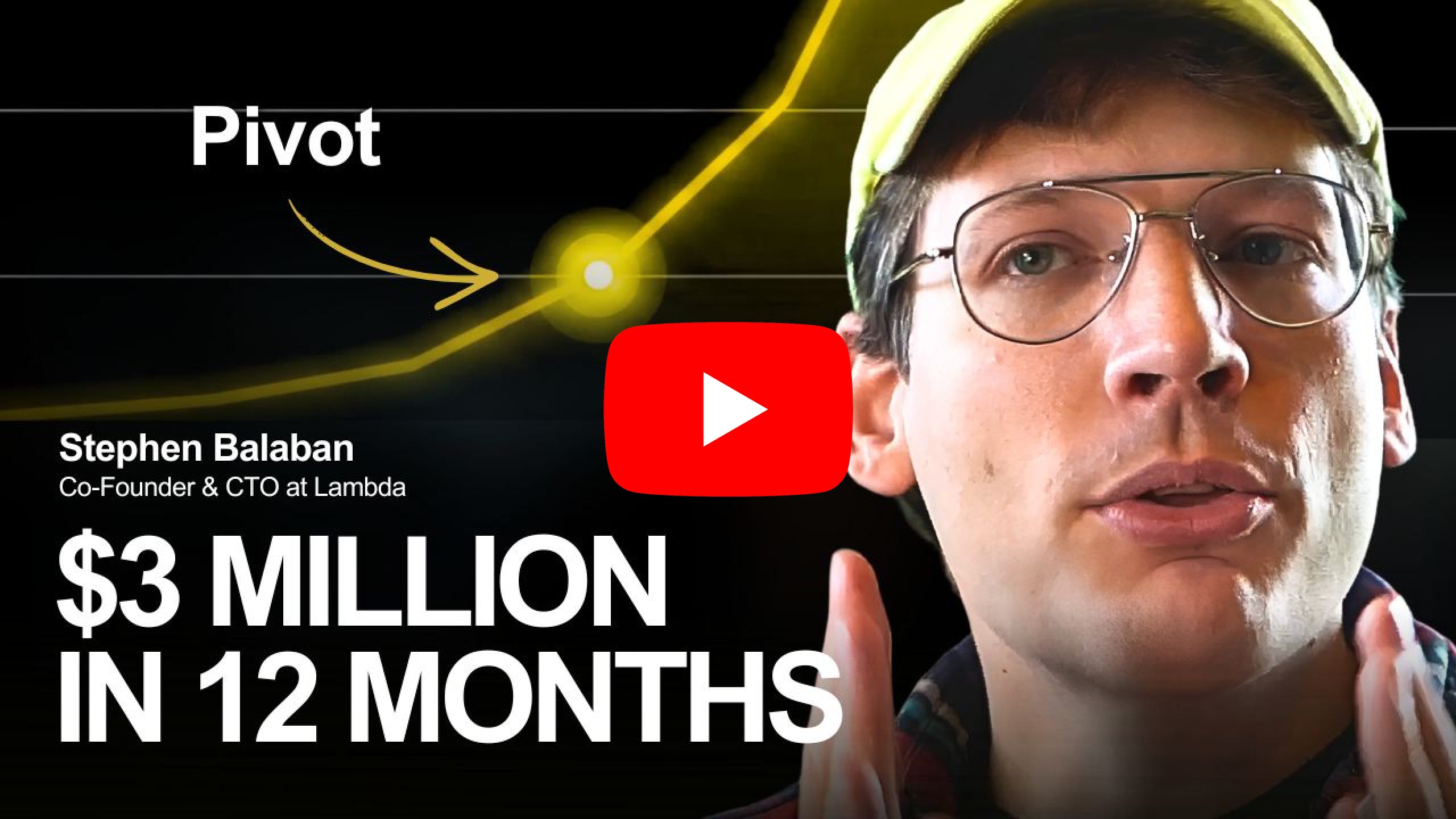 Lambda 27.08.2026 50minSubscribe to stay ahead of technology trends. Never miss future editions.Will GPUs become a new asset class? Our latest podcast guest may have some answers.Stephen Balaban, co-founder and CTO of Lambda, joins us to explain why a $40,000 monthly AWS bill was the best thing that ever happened to the company in its early days, why he recently handed over the CEO title after fourteen years at the helm, and what is really going on in the GPU market, and whether we should be concerned or excited about the opportunity.About LambdaLambda, branded “The Superintelligence Cloud,” is an AI infrastructure company founded in 2012 that builds and operates gigawatt-scale AI factories and GPU supercomputers for training and inference, serving AI researchers, enterprises, and hyperscalers.Watch now - Stephen Balaban, co-founder at LambdaDuring our latest episode, we also learn how Lambda pivoted from a facial-recognition startup, to a data-collection hardware product called Lambda Hat, to an AI consulting shop nobody would fund, to the largest generator of Deep Dream images on the internet, before finally landing on an opportunity that very few saw coming: GPU cloud businesses. We also explore an interesting trend and opportunity: could GPUs become a new institutional asset class? We also discuss the lessons Lambda learned from partnering with one of the world’s most talked-about companies: Nvidia.Watch or listen now across YouTube, Apple Podcasts, Spotify, and XDownload the transcript 👇Timestamps(0:00) Meet Stephen Balaban(2:13) The State of GPUs(4:40) 2026: Is This the Breakthrough Year?(6:27) Starting Lambda in 2012(11:14) Spotting the GPU Opportunity(16:42) How Stephen Stays Focused(18:47) Starting a Company with Your Brother(21:44) Stepping Down as CEO(27:52) How to Find a New CEO(29:34) Not Raising from Traditional VCs(31:30) Where Does the GPU Opportunity Go Next?(34:35) GPUs Becoming an Asset Class(36:15) What Keeps Stephen Up at Night(39:33) How Many AI Models Will There Be?(41:15) Partnering with Jensen Huang(46:21) How Technology Has ChangedOur notes from this conversation1. Pivoting isn’t a failure mode for Lambda, it’s the operating model.Since 2012 the company has run through roughly half a dozen pivots: facial recognition software, an AR data-collection hardware product called Lambda Hat, a failed “Accenture for AI” consulting play no VC would fund, and Dreamscope, an app that became the largest generator of Deep Dream images on the internet before the fad died. Stephen’s rule: try something, if it works keep doing it, if it doesn’t move on.2. An expensive AWS bill accidentally invented the company’s real business.At the peak of the Deep Dream craze, Lambda was paying $40,000 a month to Amazon, nearly enough to sink it. An early investor pushed the team to build their own servers instead. The $60,000 CapEx bet to build workstations wiped out that $40,000 monthly OpEx completely. Workstation sales went from $35,000 in March to $140,000 in May, on the way to $3 million in revenue that first year. The GPU cloud business was the byproduct of a cash crunch, not the plan.3. GPUs are becoming an asset class, not a depreciating expense.Short sellers have argued GPUs carry a three-year usable life. Lambda’s counterevidence: V100s launched in 2017 are still nearly fully sold out in its cloud today, generating cash flow almost a decade later. Balaban’s comparison is insurance companies parking their float in power plants and toll roads, stable infrastructure that institutional and eventually retail capital moves toward as a category matures.4. Starting a company with your brother for moral support.As a solo founder, your mood on any given day is the company’s mood that day. A co-founder averages two signals instead of riding one. Stephen credits this as much as anything for surviving Lambda’s early years, run out of a small Chinatown apartment with his brother and co-founder, Michael.5. The requirement to study computer science to build software is gone.The clearest signal: anyone can now ship real tools built with Claude, people he describes as "meant to be programmers" who majored in something else. The real gate was never a CS credential, it was structured thinking, and that gate is now open to anyone.LinksFollow Ollie on X: https://x.com/ollieforsythFollow Stephen on X: https://x.com/stephenbalabanVisit Lambda: https://lambda.aiPrevious episodes includeSee all previous episodes here 👉If you enjoyed this episode, help sustain our work by clicking ❤️ and 🔄 at the top of this post. Get full access to NEW ECONOMIES at www.neweconomies.co/subscribe
 -
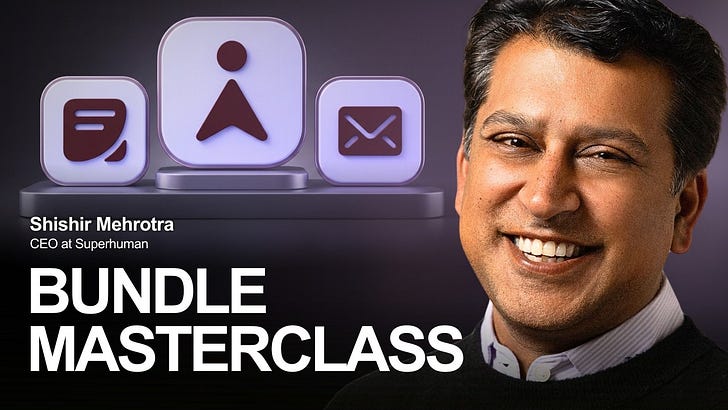 Superhuman 21.08.2026 1h 7minSubscribe to stay ahead of technology trends. Never miss future editions.Shishir Mehrotra, CEO of Superhuman, joins NEW ECONOMIES to explain why he renamed a 16-year-old company mid-flight instead of just adding a new label on top, why he built his own board by ranking every past boss he’s ever had instead of chasing famous names, and why the real threat to a legacy SaaS category isn’t a faster competitor but the coordination problem AI agents are about to make bigger, not smaller.About SuperhumanSuperhuman is an AI-native productivity suite built from products including, Grammarly, Superhuman Mail (formerly called Superhuman), Superhuman Docs (formerly Coda), and Superhuman Go, serving over 40 million people and 50,000 organizations worldwide.During this episode, we also hear the four myths of bundling Shishir learned after his time running YouTube’s failed paid products, why marginal churn contribution, not usage, is the real basis for how bundlers split revenue, and how that same framework now governs how he prices and packages Superhuman’s four products. We get into why he treats a rebrand as a “do no harm” exercise for the existing brand first, the DACI-based ritual (Driver, Approver, Contributor, and Informed) his company uses to kill ad hoc meetings entirely, and why he thinks the SaaS apocalypse thesis has the coordination math backwards.We close on his “Jeopardy style” critique of most board meetings, why he’d rather ask a departing CEO to shadow him for a week than assume he already knows what’s unique about how he runs his own, and how a decade of hitting inbox zero taught him that the goal was never to answer faster, it was to never touch the same email twice.Watch or listen now across YouTube, Apple Podcasts, Spotify, and XDownload the transcript 👇Timestamps(0:00) Meet Shishir Mehrotra(1:50) The Naming Process for Superhuman(9:45) How Rahul (the original founder of Superhuman) and Shishir Met(11:28) Launching and Building Coda in 2014(14:42) Lessons from Reid Hoffman(17:51) Picking the Right Investors as Partners(19:49) What Is Bad Capital?(21:42) The Art of Bundling Products(31:38) The SaaS Apocalypse(37:50) What’s Missing from Superhuman’s Bundle(42:40) Getting to Inbox Zero(50:15) A Week with Shishir(54:50) How to Build a Board(1:00:30) Dream Board MemberOur notes from this conversation1. Bundles aren’t priced by usage, they’re priced by churn risk.ESPN and History Channel got nearly identical viewing hours on cable, yet ESPN was paid ~20x more. Shishir’s term for the real driver: marginal churn contribution, how many subscribers would cancel if you pulled that one product. That’s what bundlers were actually pricing, even without a name for it.2. Renaming a 16-year-old company isn’t mechanical, it’s telling 1,500 people their login just changed.Google’s rebrand to Alphabet was additive; almost nothing changed for employees. Superhuman was different, a name change, not an addition, so every login and website had to move. Decision to roll out: ~4 months.3. Pick a board member the way you’d pick a boss. Shishir and his co-founder listed every past boss they’d ever had, 12–15 people, and ranked by who got the best work out of them, not who they liked most. 4. AI agents don’t kill SaaS demand, they multiply the coordination problem.You don’t need a CRM because you have 10 humans selling; you need it to coordinate them. Swap in 100 virtual sellers and that coordination problem gets harder. His take on usage-based pricing: it’s less philosophy, more workaround, nobody knows how to price a “virtual seat” yet.5. Inbox zero isn’t about answering fast. It’s about never touching an email twice.Auto-labels sort mail into ~10 “piles”: inbox, recruiting, customers, media, each handled at a different cadence. Borrowing from Intercom’s Des Traynor: your inbox is what others think you should work on, your to-do list is what you think you should work on, your calendar is what you actually work on. The job is making those three match.6. The best bundles minimize super-fan overlap, not maximize it.Most founders assume a bundle should serve one audience deeply. Shishir’s thoughts: you want each product pulling in a different audience, Superhuman Mail skews sales/recruiting, Grammarly skews writers and students, so the bundle expands reach instead of just deepening engagement with the same crowd.7. Casual fans, not super fans, are where bundles create value.A la carte pricing only captures people who both want a product enough to pay full price and have the energy to go find it, super fans. Bundling unlocks everyone else: people who wouldn’t have sought the product out alone but will use it once it’s already there.8. Good investors act like long-term teammates. Bad ones act like bankers.Shishir’s litmus test: how does an investor behave when a company has to make a short-term-costly, long-term-right call? Reference-check by talking to people who worked with them for years, not just a call or two, the pattern only shows up under real pressure.LinksFollow Ollie on X: https://x.com/ollieforsythFollow Shishir on X: https://x.com/shishirmehrotraDiscover Superhuman: https://superhuman.comPartners for today’s episode:Harmonic: Your go-to startup database: https://harmonic.aiHostinger: A go-to tool for builders: https://hostinger.com/neweconomiesUse code NEWECONOMIES for 10% off.Previous episodes includeSee all previous episodes here 👉If you enjoyed this episode, help sustain our work by clicking ❤️ and 🔄 at the top of this post. Get full access to NEW ECONOMIES at www.neweconomies.co/subscribe
 -
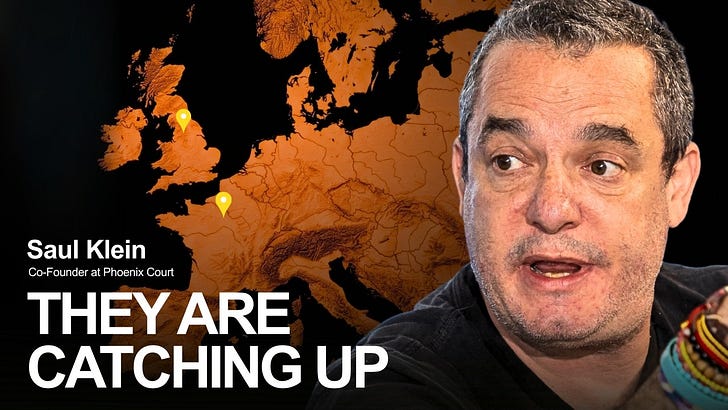 Europe Is Catching Up 19.08.2026 57minSubscribe to stay ahead of technology trends. Never miss future editions.Saul Klein, co-founder and Managing Partner of Phoenix Court, joins the podcast to make the case that the UK is quietly the third biggest innovation economy in the world after the US and China, why capital has become a commodity, and what real venture value-add looks like when every fund says “we have money.” Saul also walks through building LoveFilm as a scrappy answer to Netflix, joining Skype during its 400,000-users-a-day growth spurt, and how he things about venture stewardship. About Phoenix CourtPhoenix Court is the London-based home of LocalGlobe, Latitude, and Solar, backing entrepreneurs building global businesses from pre-seed through scale-up. Founded in 2015 by Saul and Robin Klein, the firm has helped back over 700 companies that have grown from seed to $100 million-plus in revenue, and LocalGlobe ranks as EMEA’s number one seed fund. Watch Now: Saul Klein — Co-founder at Phoenix CourtWatch or listen now across YouTube, Apple Podcasts, Spotify, and XDownload the transcript 👇Timestamps(0:00) Meet Saul Klein(2:21) Starting LoveFilm(8:48) LoveFilm's Route to Market(11:10) Building Skype(17:30) Skype's Early Network Effects(19:29) Is Europe Still a Great Place to Build?(24:10) Which Are the Best Regions to Start?(31:10) Hardest Challenges in Scaling in Europe(35:26) How Should Founders Select Investors?(43:47) VC Stewardship & Shared Ownership(52:36) What Would Saul Build Tomorrow?Our notes from this conversation* Capital is a commodity. Access to a contract is not.With 20,000 VCs in the world, “we have money” isn’t a value proposition, it’s the line every fund uses. Saul’s actual differentiator: nondilutive revenue, a real purchase order or contract, then access to the right talent, then capital formation most founders don’t know exists. His analogy: 20,000 barber shops all shouting “I cut hair” until someone breaks the pattern.* Netflix’s real innovation wasn’t DVDs by mail. It was demand data.LoveFilm’s (the company Saul founded) edge wasn’t logistics, it was the queue: people ranked 20-50 titles, giving the business live demand data that became leverage with studios. The company hit $100M+ revenue growing 30-40% a year, largely by powering DVD rental for Tesco, ITV, Odeon and MSN.* Skype grew 400,000 users a day, and Saul couldn’t spend a marketing budget.Product-driven virality was adding users faster than paid acquisition could. In 12-18 months the team went from ~20-30 people to 500, and Skype’s revenue went from zero to $200 million.* Blindly chasing the US as market #2 is what Saul calls a catastrophic error.Most investors are “sheep,” and following them west assumes the US is one easy market, it’s actually fifty fragmented jurisdictions and usually the toughest “red ocean” to enter second. Zoopla, a strong #2 to Rightmove in a market worth hundreds of millions, is his proof a well-chosen home market often beats the US by default.* Phoenix Court’s & venture stewardship. Structured as a company, not an LLP, since year one, a rarity among ~20,000 global funds - Phoenix Court has always shared profit and carry with every employee, not just partners. LinksFollow Ollie on X: https://x.com/ollieforsyth Follow Saul on X: https://x.com/cape Phoenix Court: https://www.phoenixcourt.vcOur partner for today’s episode is Harmonic - the go-to startup database: https://harmonic.aiPrevious episodes includeSee all previous episodes here 👉If you enjoyed this episode, help sustain our work by clicking ❤️ and 🔄 at the top of this post. Get full access to NEW ECONOMIES at www.neweconomies.co/subscribe
 -
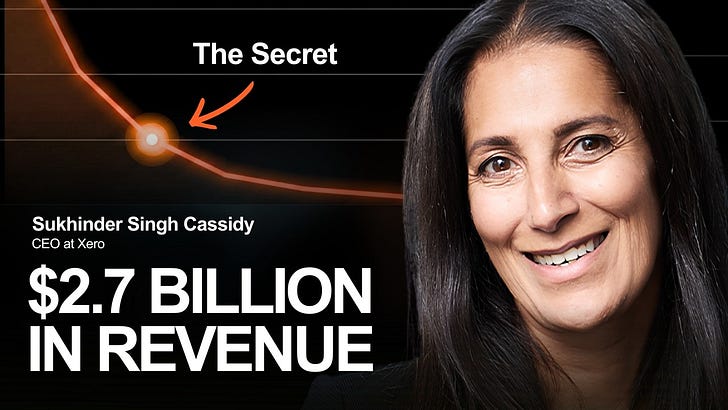 Xero 16.08.2026 52minSubscribe to stay ahead of technology trends. Never miss future editions.Sukhinder Singh Cassidy, CEO of Xero, joins NEW ECONOMIES to explain why cracking the US took twenty years and an acquisition despite Xero being the more open, cheaper alternative to Intuit, why she treats “respected vs. liked” as a false choice a new CEO has to reject on day one, and why the biggest threat to a twenty-year-old platform isn’t a faster competitor but the capital and infrastructure it takes to replicate what that platform already owns.About XeroXero is a global small business platform serving over 5 million customers across 180 countries, providing cloud-based accounting, payments, and payroll software for small businesses and their advisers.Watch Now - Sukhinder Singh Cassidy - CEO at XeroDuring this episode, we also cover the strategy behind narrowing Xero’s US focus from “5 million customers” to a single unicorn-revenue number, how a survey of Xero’s own customer base splits into a majority still non-native to AI and a fast-growing minority already building on the company’s APIs (4x since January), and why Airtable selling for $1.2B on $450M in revenue is the cautionary tale for the current market. As we know, layoffs happen across many companies, and Xero was no exception. Six weeks after joining as CEO, Sukhinder laid off 700–800 employees. We get into how she ran the numbers and surveys, and why she believes accountants will outlast the “Claude will just tell you the answer” argument because human judgment and advice still matter.We close on why she’d rather be model-agnostic than bet the business on a single AI partner, what a week actually looks like running a 5,000-person public company, and how she keeps a fiercely scheduled career next to a deliberately unscheduled personal life. Available everywhere you listen to podcasts: YouTube, Apple Podcasts, Spotify, and XDownload the transcript 👇Timestamps (0:00) Meet Sukhinder Singh Cassidy(2:17) The Current State of Xero(5:35) Why America Was So Hard to Crack(10:05) Why It's Important to Focus(12:55) Joining Xero as CEO(16:40) Being Respected vs. Liked(22:57) How to Prepare for a Layoff(27:30) Being a Publicly Listed Company CEO(30:07) The State of SMBs(33:30) Thinking How to Partner with AI Models(36:24) How Much Code Is Written by AI?(38:39) How Does Xero Stay Relevant?(42:51) Is Trust the Next Biggest Moat?(43:39) The Biggest Opportunity for Xero(46:00) Will Accountants Still Be Relevant?(48:08) Companies Who Aren't Hiring AI Talent(49:05) Ollie Joins as Sukhinder’s Chief of Staff(50:39) Personal Time OutOur notes from this conversation1. Being liked and being respected are different jobs, and she picked one.When we asked during the episode, Sukhinder is direct about it: over a thirty-year career, she’s optimized for going where her strengths are valued and her values fit, not for being liked. That meant walking into Xero, presuming people are smart and honest, and telling them the hard truth on day one rather than sugarcoating the situation. 2. She benchmarked the layoff before she announced it. Three months before officially becoming CEO, she surveyed over a thousand Xero employees, ran an outside-in with McKinsey against comparable SaaS companies, and read the data back to the company twice before cutting 700–800 roles six weeks later. The data made the decision defensible: it didn’t make it easy. She openly shares that she was heartbroken announcing it, and got Slack messages that day from employees she’d never met, checking if she was okay. This can say a lot about the company culture. 3. Cracking America took twenty years because incumbency beats a better product.Intuit is twice Xero’s age, born in the US, with 100% of its attention on that one market. Xero had to double its US organic growth rate, bring on US engineers building for US customers instead of running the market from the southern hemisphere, and narrow its pitch to “easier, cheaper, more open” before the US became its fastest-growing region, helped along by the Melio acquisition.4. Public company CEO in a choppy market means the job doesn’t change. Her answer to “what’s hardest right now” is basically: nothing new, be a value creator, be focused, keep delivering through good times and bad. She thinks the market currently can’t tell one SaaS company from another, and her job is to keep 5,000 employees focused on Xero’s own numbers rather than the noise.5. Most SMBs aren’t using AI yet, and that gap is the opportunity.Xero’s own customer survey shows the majority of small businesses are still early in their AI adoption. A smaller, fast-growing minority is already comfortable enough to use Claude for real financial actions: API usage on Xero is up 4x since January. She sees Xero’s job as meeting the whole spectrum, from AI chat for the least advanced to XeroForce for the most.6. Trust, not code, is becoming a real moat for companies. Her response to a competitor who can build “a thin slice of software faster” is: sure, but can you raise the capital, acquire the customers, get the data trusted, and be accurate and compliant across every job a customer needs done? Ollie points to Airtable’s $1.2B sale on $450M in revenue as the cautionary tale: the product was replicable, the twenty years of infrastructure, data, and distribution weren’t.LinksFollow Ollie on LinkedIn: https://www.linkedin.com/in/ollieforsythFollow Sukhinder on LinkedIn: https://www.linkedin.com/in/sukhindersVisit Xero: https://www.xero.comEpisode Partners - Harmonic, the go-to startup database: https://harmonic.aiEpisode Partners: Hostinger, a go-to tool for builders: https://hostinger.com/neweconomies. Enter code NEWECONOMIES for 10% off.Previous episodes includeSee all previous episodes here 👉If you enjoyed this episode, help sustain our work by clicking ❤️ and 🔄 at the top of this post. Get full access to NEW ECONOMIES at www.neweconomies.co/subscribe
 -
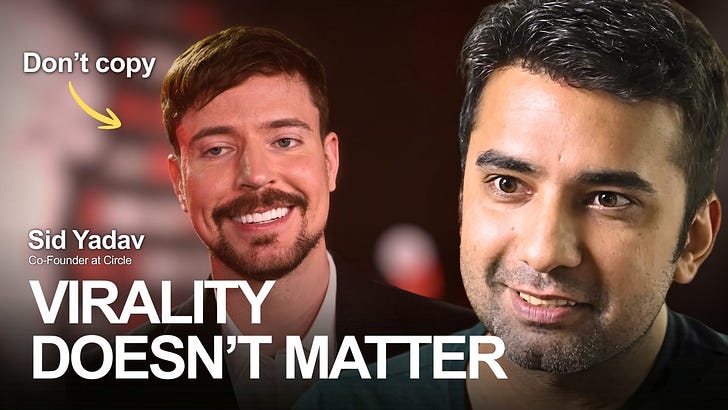 Circle 09.08.2026 1h 5minSubscribe to stay ahead of technology trends. Never miss future editions.Sid Yadav, co-founder of Circle, joins the podcast to break down what it takes for creators to succeed in 2026 and beyond: building real communities, capturing attention through audience-building, and using taste as a creative edge. Sid also shares what creators and platforms should be doing more of, how to actually start building an audience, and the possibilities that open up once you do. About Circle Circle is a technology company helping creators, entrepreneurs, and brands build and monetize thriving online communities. Every day, tens of thousands of communities turn to Circle to run memberships, courses, events, and discussions - all in one place. With over $60 million in annual recurring revenue and a growing suite of AI-powered tools through Circle AI, they help creators go beyond content and build real, lasting businesses.Watch Now: Sid Yadav - co-founder at Circle We also cover why chasing audience size is “playing the game on hard mode,” and how most creators have a blind spot around lifetime value, never building products beyond the content itself. We get into the Sean Ellis product-market-fit framework Circle borrowed from Superhuman’s early playbook, why a nurse-coaching collective is one of Circle’s most successful communities, and why Sid thinks YC is secretly the best community business in the world, monetizing through a 7% pre-seed stake rather than membership fees. We close on Circle AI and the Eclipse launch: the shift from platform to AI partner that guides creators through every failure point of building a community: the one board seat Sid still wants, and where he thinks digital businesses go over the next 10 to 20 years.Watch or listen now across YouTube, Apple Podcasts, Spotify, and XOur notes from this conversation1. Audience and LTV are two different equations, and most creators only optimize one.Circle’s model for creator businesses is audience × lifetime value. Everyone obsesses over growing the audience side: subscribers, views, virality - while ignoring LTV entirely: what products, memberships, or experiences you actually sell to the people already paying attention.2. Chasing viral reach is “playing the game on hard mode.”Sid draws a hard line between shallow attention (a video going viral to an anonymous crowd) and durable attention (people who recognize your brand and follow you across formats). The 1,000 true fans who’ll pay you repeatedly beat 100,000 people who saw one video once.3. An audience is not a community, and conflating the two is where most creators fail.An audience consumes your content. A community is the subset that shows up for each other around a shared transformation. Sid’s biggest predictor of failed communities: no defined answer to “who is this person becoming in 3, 6, and 12 months?”4. Circle’s own founding came from watching Teachable’s best creators outgrow static courses.Sid and his co-founders noticed the strongest course creators were building community around their content, not just selling video modules. That became Circle’s founding thesis: community, not education, is the better organizing principle for the creator economy.5. They borrowed the product-market-fit framework from Superhuman.Circle’s early growth process: mandatory founder demos, a curated waitlist, and tracking the Sean Ellis “how disappointed would you be” score, came directly from Rahul Vohra’s public playbook. Rahul later became a seed investor in Circle.6. One of Circle’s most successful communities is a nurse coaching collective.Nurses with demanding 9-to-5 shifts join, get trained into coaches, and build a second income stream outside their original job. Sid holds it up as the model: concrete transformation, massive addressable market, members who stay for years.7. YC is the best community business that’s never called itself one.Office hours, a founder network, an alumni network, and one unifying ritual (demo day) - monetized through a 7% pre-seed stake rather than subscription fees. He thinks more community builders should study the YC model instead of the average Discord server.8. Circle AI is a bet that the platform itself should diagnose your failure point.Rather than a generic feature, Circle AI is built to sit “next to you” and identify exactly where you are in the failure sequence - no audience, undefined transformation, missing rituals, or burnout - then guide you to the next step.9. Taste has two components, and AI abundance makes both more valuable, not less.Sid breaks taste into perspective (your unique, non-commoditized point of view) and craft (fine-tuned execution quality). As AI makes content production free, he argues taste becomes the only differentiator left.LinksFollow Ollie on X: https://x.com/ollieforsythFollow Sid on X: https://x.com/sidyadavVisit Circle: https://circle.soPartnership: Harmonic is the go-to startup database - https://harmonic.aiPartnership: Hostinger is a go-to tool for builders. Subscribers receive 10% off here - https://hostinger.com/neweconomies.Previous episodes includeSee all previous episode here 👉If you enjoyed this episode, help sustain our work by clicking ❤️ and 🔄 at the top of this post. Get full access to NEW ECONOMIES at www.neweconomies.co/subscribe
 -
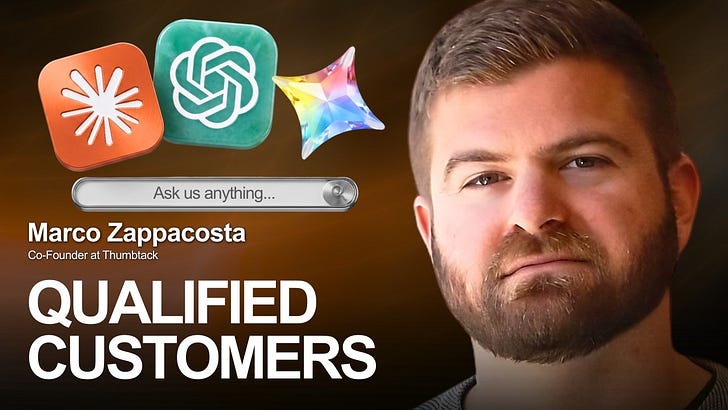 Thumbtack 06.08.2026 57minSubscribe to stay ahead of technology trends. Never miss future editions.Marco Zappacosta, co-founder and CEO of Thumbtack, joins NEW ECONOMIES to explain why Google search volume has reaccelerated to an all-time high post-ChatGPT, why the customers now converting through AI chat are more qualified and further into their decision than any channel Thumbtack has seen before, and why marketplaces for hiring humans, unlike commodity marketplaces such as Uber or food delivery, are mediated by certainty and confidence rather than speed and price.About Thumbtack Thumbtack is a technology company helping millions of people confidently care for and improve their homes. Every day in every county of the U.S., people turn to Thumbtack to complete small fixes, routine maintenance, and major improvements. With over 12 million 5-star projects and counting, they help homeowners and home professionals accomplish more.Watch Now: Marco Zappacosta - co-founder of ThumbtackWe also cover why word of mouth, not a competitor, is Thumbtack’s biggest threat, capturing 80% of home-services demand through calls to neighbors and posts in group chats, and how LLMs are finally solving a personalization problem Thumbtack couldn’t crack in 20 years, replacing one generic question set per category with fully bespoke, project-specific questioning, using Marco’s own Murphy bed installation as the test case. We get into why almost no startup has survived in a marketplace category with close to a trillion dollars of spend, and what half the Thumbtack product team is now rebuilding around AI.We close on the interface shift Marco almost missed, voice, not text, the board seat he still wants to fill, and where he expects human-capital marketplaces to go over the next 20 years.This was a fascinating episode! Available everywhere you listen to podcasts. Watch or listen now across YouTube, Apple Podcasts, Spotify, and XDownload the transcript 👇Timestamps (0:00) Meet Marco Zappacosta(1:57) Thumbtack Turns Nearly 20(3:00) Why Marketplaces Are Challenging(6:30) Thumbtack's First 12 Months(8:57) How Thumbtack Uses AI Today(17:34) The Ideal Customer Profile(19:18) How Homeownership Is Changing(24:09) Why Experts Have High Expectations(26:55) Building Trust With Users in Today's Environment(29:03) Experts Communicating Offline(30:54) Tensions With Marketplaces(33:12) Integrating AI Into Thumbtack's Complex Stack(38:42) Where and How to Place Bets(42:04) The Next Big Opportunity(44:29) How Marco Runs Thumbtack(51:02) What Is Still Yet to Be Achieved?(52:14) Rapid FireOur notes from this conversation1. AI customers convert better than search customers ever did. Post-ChatGPT, Google search volume for Thumbtack-relevant categories has reaccelerated to its highest point ever, but the more telling shift is on the AI side: users arriving via ChatGPT or Claude are more qualified, more motivated, and further into the decision than a typical search customer. Volume is still low, but Marco is treating it as the leading indicator for how discovery gets rebuilt.2. Word of mouth, not a competitor, is Thumbtack’s real adversary. 80% of home-services demand still flows through a call to a neighbor or a post in a group chat. Marco sees the AI moment as the first real chance to intercept that demand before it disappears into an informal network Thumbtack can’t see or monetize.3. Hiring a human is not a commodity purchase. Marketplaces like Uber and food delivery compete on speed and price because the average basket is under $50. Home services average around $1,000 per purchase with real consequences for getting it wrong, so the decision is mediated by certainty and peace of mind, not convenience.4. Marketplaces are brutal to bootstrap — and that difficulty is the moat. Despite near-trillion-dollar category spend, almost no home-services startup has survived alongside incumbents like Angi and Yelp. The same friction that kills most entrants is what protects the few that break through to compounding scale.5. LLMs are solving a 20-year personalization problem overnight. Thumbtack historically applied one generic question set per project category, fine for common jobs, useless for anything niche. Marco’s own Murphy bed installation became the test case: an LLM asked the right follow-up questions instantly, something no static form could match at that level of specificity.6. Half the product team is now rebuilding around AI. Marco describes the integration as touching everything, core matching, the customer and pro experience, pricing, refunds, monetization. It’s a ground-up rebuild, not a feature bolted on top.7. Voice is the interface shift he almost missed. Asked what he’s changed his mind on in the past year, Marco points to voice as input and output, not because it’s novel, but because it removes typing entirely for how his kids and Thumbtack’s pros interact with technology. He doesn’t think it kills the keyboard, but expects it to sit alongside it as a default mode.The board seat he still wants to fill: a technologist. His current board covers CFO, CEO, and COO backgrounds, but he’s missing a product-obsessed technologist, someone in the mold of Snap’s Evan Spiegel, to pressure-test where AI takes the product next.LinksFollow Ollie on X - https://x.com/ollieforsyth.Follow Marco on X - https://x.com/mlz.Visit Thumbtack - http://thumbtack.com.Partnership: Harmonic is the go-to startup database - https://harmonic.ai.Partnership: Hostinger is as a go-to tool for builders. Subscribers receive 10% off here - https://hostinger.com/neweconomies.Previous episodes includeSee all previous episode here 👉If you enjoyed this episode, help sustain our work by clicking ❤️ and 🔄 at the top of this post. Get full access to NEW ECONOMIES at www.neweconomies.co/subscribe
 -
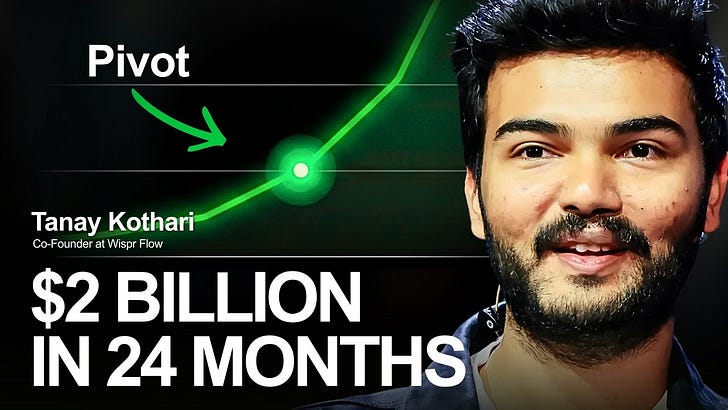 Wispr Flow 30.07.2026 41minSubscribe to stay ahead of technology trends. Never miss future editions.Tanay Kothari, founder of Wispr Flow, joins NEW ECONOMIES to unpack why most startups don’t die from bad ideas but from chasing too many good ones, and why matching your number of initiatives to your organizational capacity matters more than simply working longer hours.About Wispr Flow Wispr Flow turns voice into clean text. 4x faster than typing. 85% zero-edit. Speak naturally. Write perfectly.Watch now: Tanay Kothari - Founder of Wispr Flow We also get into the future of voice dictation and whether the keyboard is on its way out; how Wispr built an enterprise sales motion from scratch in less than a year, now accounting for a third of the company's revenue and serving more than half of the Fortune 500; the pricing psychology behind why ChatGPT feels free while Claude feels like a paid product; and why Wispr chose to build its own voice models in-house instead of relying on third-party AI providers.We close on the story behind Wispr’s tuk-tuk campaign in India, how Tanay structures his week acting as chief of staff to the whole company, and a quickfire round covering his dream board pick and a free idea for Wispr Flow for creators by Ollie. Watch or listen now across YouTube, Apple Podcasts, Spotify, and XDownload the transcript 👇Timestamps(0:00) Meet Tanay Kothari(1:50) Why Tanay Started Wispr(4:12) Building a Rocket Ship with Discipline(8:52) Why Now Is the Moment for Voice Dictation(12:27) Launching Wispr in India(14:51) Why Computing Is Still So Expensive(17:48) Why You Must Listen to Customers(24:00) How Tanay Stays Focused(27:00) Wispr's Internal Product Roadmap(29:15) Ollie Becomes Tanay's Chief of Staff(32:58) How to Keep the Talent Bar High(37:10) Rapid-Fire RoundOur notes from this conversation* Most startups don’t fail from bad ideas, they fail from mismatched capacities.Tanay’s reframe: the opposite of distraction isn’t focus, because focus can point at the wrong thing just as easily as the right one. A thousand-person company can be laser-focused and still fail if what it’s focused on doesn’t match what it can actually execute. His fix is mechanical, match your number of initiatives to your organizational capacity, because a task that took five people to build takes ten or twenty to maintain.* Enterprise wasn’t bolted on. It was built from zero in under a year.Wispr went from a pure consumer motion to a third of total revenue coming from B2B, with 15,000 companies and more than half the Fortune 500 as customers including: Microsoft, Nvidia, Notion, Clay, and Klarna. Companies like Slack and Notion took four to eight years to make that same consumer-to-enterprise jump. Tanay’s team compressed it into twelve months by treating it as a different product, not a repackaged one.* ChatGPT feels free. Claude feels paid. That gap is the whole game.This isn’t a throwaway comparison, it’s Tanay’s actual pricing philosophy. Perception of price is one of the most under-used levers founders have, more powerful than the marketing budget behind it. It’s why ChatGPT crossed a billion monthly active users while Anthropic, by his account, remains far behind on volume despite the stronger product.* When nobody had a good enough model, Wispr stopped shopping and started building.The team tried routing through other providers first and found the accuracy ceiling too low for voice specifically. So they built their own frontier voice lab from scratch, 15 people today, headed to 40 by the end of the year. The bet is that harness engineering, squeezing frontier performance out of cheaper models, only gets you so far before you have to own the stack.* The keyboard isn’t dying of old age. It’s being made obsolete by 700 million people who never wanted it.Tanay’s most pointed number: 700 million people worldwide have dyslexia or a speech impediment, and for them typing isn’t friction, it’s the single worst way to interact with technology. Voice isn’t a UX preference for that group, it’s the first real unlock they’ve had. * There’s no fixed job at the top, just whichever fire is biggest that week.Tanay describes his own role as deliberately fluid: one week he’s PMing a launch, the next he’s deep in Figma five days a week, the one after that he’s building out a CRO’s B2B function from scratch. The throughline isn’t a job title, it’s finding “the most important dumpster fire in the company that is not being taken care of” and sitting in it until it’s solved.* Five to ten hours a week with users isn’t research. It’s the entire strategy.Tanay doesn’t outsource customer insight to a feedback form. He sits beside users, watches their day, and treats that time as non-negotiable, not because it’s good practice, but because he thinks no company has ever succeeded without it. The line he keeps coming back to: your single job is to figure out what people want and give it to them, and everything else is downstream of that.LinksFollow Ollie on X - https://x.com/ollieforsythFollow Tanay on X - https://x.com/tankotsTry Wispr Flow - https://wisprflow.aiPrevious episodes includeIf you enjoyed this episode, help sustain our work by clicking ❤️ and 🔄 at the top of this post. Get full access to NEW ECONOMIES at www.neweconomies.co/subscribe
 -
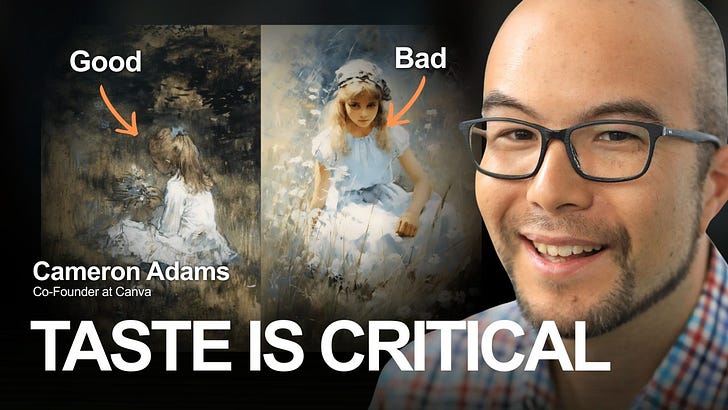 Cameron Adams (Canva) 29.07.2026 57minSubscribe to stay ahead of technology trends. Never miss future editions.Cameron Adams, co-founder and Chief Product Officer at Canva, joins NEW ECONOMIES to explain why AI gives creators more options than ever but not more chances to send the right message, and why taste becomes the real opportunity once every tool produces passable designs. Watch now: Cameron Adams - Co-Founder at CanvaWe also get into the contrarian bet behind Canva’s early success - ignoring The Lean Startup playbook to spend six extra months on user testing before launch, plus where AI is actually moving inside the product, from Canva AI 2.0 to magic layers to voice as the next creative interface. We close on the fourteen-year journey of co-founding Canva with Melanie Perkins and Cliff Obrecht, and what Cam thinks creators should be focusing on going forward. Watch or listen now on YouTube, Apple Podcasts, Spotify, and XDownload the transcriptTimestamps(00:00) Meet Cameron Adams(02:06) Canva Create 2.0(05:13) The Canva Founding Story(07:45) Canva's First 6–12 Months(09:45) Building Fanatical Early Users(11:37) Landing the First Users(15:35) How Canva Stays Relevant(17:03) Canva's Focus on AI(19:50) Taste Is the New Differentiator(21:46) What Design Platforms Do Best Today(25:24) Canva's Most Popular Features(27:04) Inside Canva's Product Roadmap(34:05) What Creators Should Focus On(36:35) What Cam Is Most Excited About(38:25) AI-Generated Content(42:22) Why Music Is the Next Big Trend(46:10) Anyone Can Build Now(49:12) Cam's AI Stack(50:34) Ollie Joins as Cam's Chief of Staff(51:28) Co-Founder Relationships(56:00) What's Next for CanvaOur notes from this conversation* AI gives you more options, not more chances.You can now generate ten, twenty, thirty plus versions of anything using these AI tools, but the audience still only lets you send one message, maybe two at most. Cam’s take: the volume of options AI produces doesn’t lower the stakes of choosing correctly, it raises them. Great taste matters more than ever.* The moat isn’t the model, it’s the product workflow around it.One prompt box spitting out one image is table stakes now - anyone can do it. Canva’s edge comes from pulling teams, brand context, and every stage of a project into a single loop, which is why a quarter of a billion people bring their colleagues, friends, and family into the suite of product offerings with them.* Ignoring conventional wisdom was the actual growth hack.Investors were pushing Canva to ship fast per the famous playbook: The Lean Startup by Eric Ries. They spent six extra months on user testing instead, betting that a polished first experience would turn users into fanatical fans. Cam believes that patience became Canva’s early advantage. By delaying launch until the experience felt polished, the team laid the foundations for Canva’s organic growth loop.* Voice is the next interface opportunity. Cam points to Africa as a voice-first market by necessity, places where typing was never the default way people interacted with technology. Whoever wins on voice interfaces wins access to users that keyboard-first products never reached. The death of the keyboard may be looming. * Fully AI-generated content plateaus. AI-assisted creators don’t.AI Micro-dramas out of China are going viral on the strength of human storytelling, not the fact that they’re AI-made. Cam’s bet: pure AI-generated content is a novelty that settles into a niche, while creators who use AI to extend their own taste keep compounding. * Velocity and quality aren’t in tension anymore, they’re the same discipline.Canva mapped every feature shipped over the previous three months and found it had delivered more product output than at any point in the company’s fourteen-year history. Cam’s explanation isn’t “we cut corners” - it’s that better internal tools let designers and engineers prototype more ideas and still nail the one that ships.* Fourteen-year co-founder relationships survive on self-awareness, as well as chemistry.Cam’s answer to what makes Canva’s founding team last isn’t just the shared vision, it’s each person knowing precisely what they’re great at, what they’re not, and staying a well-rounded contributor instead of hiding in one fixed lane. That’s what let three people cover for each other for over a decade without competing for the same territory.LinksFollow Ollie on X: https://x.com/ollieforsythFollow Cameron on X: https://x.com/themaninblueSign up to Canva: https://www.canva.comListen to all previous episodes: https://www.neweconomies.co/podcastSubscribe to Cam's newsletter: https://promptedwithcam.substack.com/Subscribe to Cam's podcast: https://www.youtube.com/playlist?list=PLATYfhN6gQz_ynkjnu_d63u1Qp600SlBHPrevious episodes includeIf you enjoyed this episode, help sustain our work by clicking ❤️ and 🔄 at the top of this post.…..Brought to you by Harmonic - The complete startup database. Get full access to NEW ECONOMIES at www.neweconomies.co/subscribe
 -
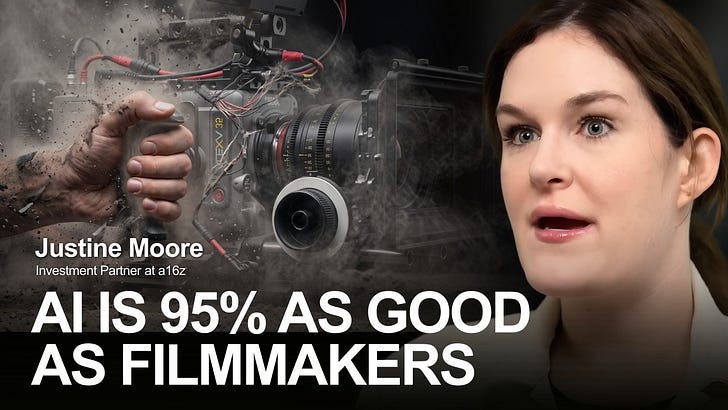 Justine Moore: Andreessen Horowitz 23.07.2026 50minSubscribe to stay ahead of technology trends. Never miss future editions.Consumers care less about how something was made. Justine Moore is a Partner at Andreessen Horowitz investing across AI and consumer, and one of the earliest backers of ElevenLabs. In this episode, she breaks down why AI microdramas are becoming one of the fastest-growing entertainment formats in the world, why China’s microdrama market has already overtaken its domestic box office, and why the U.S is only now catching up. Watch now: AI Microdramas Are Exploding We also explore why the first wave of AI video creators were attention seekers rather than storytellers, why that’s changing fast as real creatives move into the space, and why Justine thinks the “AI slop” debate misses the point entirely: slop existed long before AI, and the label won’t matter once most content is partially AI-made anyway.We close the episode on why Justine believes agents that work before you ask are the next real unlock in consumer AI. Watch or listen now on YouTube, Apple Podcasts, Spotify, and XDownload the transcriptTimestamps(0:00) Meet Justine Moore (1:52) Generative Media's Inflection Point (4:23) AI Microdramas Are Exploding (10:02) Why AI Dramas Are New Forms of Entertainment (13:52) How to Create AI Microdramas (17:28) The Adoption of AI Microdramas (22:00) Content Becoming Timely vs. Timeless (25:00) Should Creators Be Disclosing AI Features? (33:45) How to Build AI Generative Media Startups(40:13) Justine's Favorite Agents (41:45) Is Consumer Tech Back? (45:15) Justine's Startup Ideas (46:40) Founders to WatchOur notes from this conversation1. AI video is finally good enough to stand on its own.Early AI videos attracted attention because they were novel. Today, that's no longer the story. As Justine describes, model quality has improved to the point where AI-generated video can hold a viewer's attention with a coherent storyline. The competitive advantage is shifting from the technology itself to the creativity of the people using it.2. Cheaper AI production is opening opportunities that global studios will eventually adopt.Microdramas are the clearest signals of what is actually possible. Creators are already using AI to generate backgrounds, visual effects and techniques that were previously handled with CGI. The expectation is that major film studios will follow the same path, not to replace production or talent, but to cut costs on specific parts of production. 3. Ollie started producing a micro drama. This is what is possible! Ollie built a short microdrama around the Nike origin story to stress-test the opportunities directly. The narrative, design and aesthetics came together fast and relatively cheaply. There are still gaps where these platforms can improve, for example: transitions between chapters aren’t natural yet, storytelling in the creator’s tone of voice has a way to go until perfect, and the cost to create these compounds very quickly once you’re iterating and constantly editing. Watch here4. Consumers care less about how something was madeJustine’s instinct is that mass-market audiences aren’t selecting for or against something because it’s AI-made, they’re asking whether it’s good. The people fixated on provenance are concentrated on X and Reddit, which is a different audience than the one actually consuming the content at scale.5. Timely vs. timeless is a more useful lens than AI vs. human.The human vs. AI comparison is the wrong split. Slop predates AI entirely, it was never a tooling problem, it’s a quality-and-intent problem, which is why “timeless” content (built to hold up regardless of when or how it was made) survives that axis and disposable content doesn’t. During the episode, we also talked about if creators should be disclosing if AI tools were used and if so how. However, Justine thinks labeling is a losing battle: content is heading toward being partially AI-made by default, at which point a label stops signaling anything useful.6. The hardest part of building here right now is differentiation.Competing with OpenAI or Google at the foundation-model layer has gotten expensive enough that most new entrants shouldn’t attempt it. The real contest is one layer up, at the app and workflow level: the question isn’t whether you can build on top of the models, it’s who you serve and why they stay instead of switching to the next thin wrapper.7. AI agents will matter more for individual creators than for big companies.Justine’s case is that solo creators and small teams are the most resource-constrained group in the market, so offloading admin and logistics to agents is a bigger unlock for them than for anyone already running a team to handle it.LinksFollow Ollie on X - https://x.com/ollieforsythFollow Justine on X - https://x.com/venturetwinsJustine's market map on AI Microdramas:Previous episodes includeIf you enjoyed this episode, help sustain our work by clicking ❤️ and 🔄 at the top of this post.…Brought to you by Hostinger. Use code NEWECONOMIES for 10% off. Get full access to NEW ECONOMIES at www.neweconomies.co/subscribe
 -
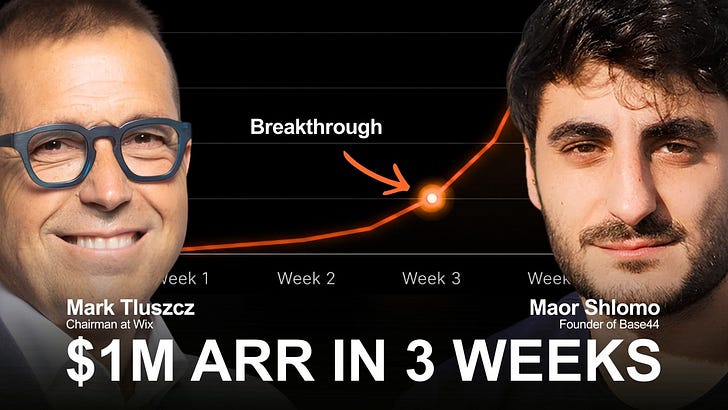 $1M ARR in 3 Weeks. $150M ARR One Year Later 21.07.2026 56minSubscribe to stay ahead of technology trends. Never miss future editions.Maor Shlomo, founder of Base44, and Mark Tluszcz, Chairman at Wix, join NEW ECONOMIES to unpack the fastest-moving acquisition story in vibe coding: a solo founder who hit $1M in annualized revenue three weeks after launch, sold Base44 to Wix for $80M within months, and grew the business from roughly $3M to $150M in annualized revenue in the year since the deal closed. Maor walks through the origin story — building a tool for his now-wife’s CRM problem, wanting to give non-technical people a way to build tools rather than just websites — and the operational chaos that followed, including running the platform solo with no monitoring and fielding a security scare in the middle of his brother’s wedding. Mark also explains why Wix, twenty years into believing non-technical people deserve real building tools, saw Base44 not as a bolt-on but as the natural extension of what Wix had been doing since 2006.WATCH NOW: $1M ARR IN 3 WEEKSThroughout the episode, we get into why owning the full stack — front end, back end, and now the model layer — was non-negotiable for both companies, culminating in the release of Base 1, Base44’s own fine-tuned model for building web applications, and why Maor thinks the real bottleneck has already shifted from writing code to making good product decisions: as coding stops being the constraint, taste, distribution, and the judgment to know what’s worth building become the differentiators. We also cover the coming wave of vibe-coded enterprise tools, why “verticalized” models beat horizontal ones for this category, and the emerging idea of Base44 acting less like a coding assistant and more like a co-founder.We close on where Maor and Mark think the next big opportunities sit — re-humanizing technology through live events and the “off planet opportunity” (space) opened up by the SpaceX IPO — and who each of them would want on their board, landing, unexpectedly, on… Watch or listen now on YouTube, Apple Podcasts, Spotify, and XDownload the transcriptTimestamps(0:00) Meet Maor Shlomo & Mark Tluszcz(2:00) The Origin of Wix(4:07) The Base44 Founding Story(7:30) $1M in Revenue in Just 3 Weeks(9:23) The Craziest Base44 Story(12:08) Why Wix Acquired Base44(20:42) Launching Base44's AI Model(30:07) Why You Should Own the Stack(32:33) How We Update AI Models(34:18) What's Still Missing for AI Builders?(39:36) The State of Vibe Coding(47:40) Tech Predictions from Maor & MarkOur notes from this conversation* Coding stopped being the bottleneck. What to build is.Base44 hit $1M in annualized revenue three weeks after launch, then a couple million within three months — solo, with no funding. Maor’s line: “coding is not the issue anymore. The question is what are you going to build.” That’s the thesis for the next few years, not just the next few months.* Why Base44 and Wix teamed-up Wix approached Base44 because a “crazy guy” running a one-man show kept generating enough noise that people started telling Mark’s team to buy him. Nir Zohar, Wix’s President, sealed the vibe over steak; the real decision came later, with Maor and Avishai Abrahami (CEO and Founder at Wix) at a whiteboard in the middle of the night, mapping three paths: stay bootstrapped, raise a lot of money, or partner with Wix. Maor’s real hesitation wasn’t valuation — it was fear of scaling the “magic” too fast and killing the thing that made it work. Avishai’s answer was structural, not financial: lean on Wix for the boring infrastructure, stay lean and move fast everywhere else.* Owning the front and back end obligates you to own the middleware too.Base44’s release of Base 1 — its own fine-tuned model for building web applications — wasn’t a marketing move, it was the logical endpoint of a stack Wix and Base44 already owned end to end. Mark’s framing: If you own the front end and the back end, you eventually have to own how you deliver the service between them, or you’re dependent on someone else’s pricing and roadmap.* Scale generates the training data that makes owning a model worth it.Two things moved Base44’s model timeline up by a year or more: open-source models reaching frontier-adjacent quality, and Base44’s own traffic generating millions of usable data points. The lesson generalizes — building your own model only makes sense once you have the volume to fine-tune it well, not before.* The next differentiator isn’t code quality — it’s taste.Horizontal coding models are good at many things. Base44’s bet is that a model trained specifically on what makes a good product decision — not just working code — becomes a durable edge as raw code generation becomes commoditized across every vibe coding platform.* Distribution, not creation, is the unsolved problem for builders.Mark’s read on the ecosystem: Plenty of products get built, very few get used, because building well and marketing well are different skills. Base44’s answer is a beta “distribution layer” that uses its own context on each app — B2B or consumer, local or global — to recommend a growth playbook, not just more features.* Vibe coding is quietly eating enterprise software, not just side projects.The skepticism about production-readiness a year ago has given way to real adoption: internal tools, dashboards, and niche SaaS products built by domain experts with zero developers on staff. Maor’s example — a former restaurant manager building an invoicing tool for local restaurants — is the shape of a much larger shift in who gets to start a software business.* Nobody has visibility past about three months, and that’s the honest answer.Maor won’t pretend to forecast a year out — internal roadmaps only run two or three months because the ground moves that fast. What he will say: Frontier-model costs keep compressing, open source keeps closing the gap, and the category itself is widening past web apps into games, slide decks, and design — anywhere code can define an output.* Building in public is now a distribution channel, not a personality quirk.Maor’s early growth came from documenting the numbers, the features, and the struggles publicly every day, not from a marketing budget. His conclusion for founders generally: Storytelling and audience-building are becoming as valuable a skill as the product itself, especially for anyone starting without capital.* A board doesn’t need people like you. It needs people who aren’t.Mark’s operating principle for Wix’s board — deliberately including outsiders like the CEO of Manchester City for a completely different read on marketing and culture — showed up again when asked who they’d add next: both landed on the same instinct, that the highest-leverage addition is someone who understands modern culture and storytelling, not another operator who thinks like they do.LinksFollow Ollie on X - https://x.com/ollieforsythFollow Maor on X - https://x.com/MaorShlomoFollow Mark on X - https://x.com/marktluszczVisit Base44 - http://base44.comVisit Wix - http://wix.comPrevious episodes include If you enjoyed this episode, help sustain our work by clicking ❤️ and 🔄 at the top of this post.…..Brought to you by Harmonic Get full access to NEW ECONOMIES at www.neweconomies.co/subscribe
 -
 Reid Hoffman: LinkedIn 19.07.2026 1hSubscribe to stay ahead of technology trends. Never miss future editions.Reid Hoffman, co-founder of LinkedIn, joins NEW ECONOMIES to explain why we’re still underutilizing AI, why agent management — not individual contribution — becomes the default mode of work within three years, and why the next decade of company-building rewards taste and judgment over raw skill: once AI can draw, code, and write as well as any specialist, the only thing left to own is the specific, unrepeatable bar for what excellence looks like.We also cover why AI carries a positive perception across Asia, the Middle East, and Latin America while triggering data-center bans and slowdown politics in the US and Europe — and why 91% of non-Chinese AI market cap still sits within 30 miles of Silicon Valley. We get into the founding story behind Manas AI — Reid’s drug-discovery venture, plus whether Silicon Valley is still the best place to start a company.We close on the lessons Reid has learned from Microsoft CEO Satya Nadella and the technology trends Reid is most excited about next.Watch or listen now on YouTube, Apple Podcasts, and SpotifyDownload the transcriptTimestamps (0:00) Meet Reid Hoffman (1:36) Why Most People Are Under Utilizing AI (5:28) How Should We Be Using AI? (7:17) Why Agent Managers Are Next (8:47) Are We Taking AI Seriously Enough? (11:58) How Is Blitzscaling Different Today? (15:00) Is Silicon Valley Still The Best Region? (16:27) Should Startups Partner with AI Models? (21:37) Personalized AI & Taste (24:28) Is Distribution The New Moat for Startups? (26:19) Does AI Have a Negative PR Problem? (28:48) What Would Reid Coach Governments? (33:20) It’s Not Just Anthropic or OpenAI (36:36) The IPO Gold Rush (38:32) Sam vs Dario Characteristics (42:30) Lessons from Satya Nadella (47:30) Ollie Joins As Reid’s Chief of Staff (49:39) Reid’s Trends (55:27) Fire RoundOur notes from this conversation* The next career move isn’t a skill — it’s a headcount.Individual contributors are giving way to agent managers, each overseeing anywhere from a handful to tens of thousands of agents. Reid’s timeline: broad-based adoption within three years, starting with coding and spreading into every “digital closing loop.”* Non-US, non-Europe just inherited the industrial revolution’s rematch.AI carries a negative PR perception in the US and Europe (job-loss anxiety, data-center bans) and a positive one everywhere else — Asia, the Middle East, Latin America, Africa. Reid calls it the reverse revenge of the industrial revolution: the regions that missed the first wave may lead the cognitive one.* Distribution didn’t die — it became the AI amplifier.Moats aren’t dead, but they’ve changed shape. Existing companies with distribution aren’t finished; they’re only finished if they refuse to plug AI into what they already own. Refuse, and “the dinosaur decay has started.”* Wrapper businesses are living on borrowed time.If a competitor can point Claude Code or Codex at your product and rebuild it for the token cost, you were never defensible. The businesses that survive have a theory of the game: network effects, enterprise integration, or data loops the model can’t just absorb as a feature.* Hand skill is depreciating. Taste is the new scarce resource.AI coordination doesn’t need better hand-eye coordination to draw well — so that skill’s value drops. What rises: judgment about what excellence actually looks like, in code, writing, and product. Reid expects taste and context-awareness to matter for decades, not quarters.* The market isn’t consolidating to three companies — it’s expanding to ten or fifteen.Reid’s eight-year-old antitrust argument held: from five-to-seven heading toward ten-to-fifteen frontier and adjacent players, not three. That’s good for entrepreneurs — more potential acquirers, more room to build something valuable without having to out-build OpenAI or Anthropic.* Blitzscaling didn’t disappear — it moved from headcount to compute.The old version was maximum organizational scale under uncertainty. The new version: build something in two weeks, throw it away, rebuild — at higher velocity and higher risk — while a much smaller human team manages a much larger agent workforce.* Trust gets built by value, not by messaging.Reid’s answer to AI skepticism isn’t a better narrative — it’s a free medical assistant, a lease-reading legal agent, a tutor on every phone. “It isn’t by a story of words... how you get trust is by seeing value.”LinksFollow Ollie on X - https://x.com/ollieforsyth Follow Reid on X - https://x.com/reidhoffman Subscribe to Reid’s Podcast, Masters of Scale - https://mastersofscale.com/Discover Reid’s other projects: https://beacons.ai/reidhoffman Reid’s Books - Blitzscaling & SuperagencyRelated previous episodesIf you enjoyed this episode, help sustain our work by clicking ❤️ and 🔄 at the top of this post. Get full access to NEW ECONOMIES at www.neweconomies.co/subscribe
 -
 Mark Manson 16.07.2026 44minSubscribe to stay ahead of technology trends. Never miss future editions.Mark Manson is someone you've probably heard of before. He's the author of The Subtle Art of Not Giving a F*ck, which has sold more than 20 million copies worldwide. In this episode, he shares some incredible advice on life, what it takes to become a successful creator, why creators should think more like founders, and what he's building next - including his self-help app, Purpose.Throughout the episode, we also explore why he believes AI content and human content are splitting into two permanent tracks, why non-fiction book sales are down 20–30% and what an “AI-proof” book would actually need to look like, and why Mark thinks the next decade of media rewards trust and credibility over cleverness — because the moment ChatGPT can write as well as he can, the only thing left to own is the specific, unrepeatable mix of experience that makes his voice his.If that’s not enough, we go deep on the founding story behind Purpose, his new AI life-advice app built to do what ChatGPT can’t — actually challenge you instead of just agreeing with you — plus why traditional publishing has banned AI outright while his own two-person research team now outproduces the four-person team he had two years ago, and much more.Timestamps (0:00) Meet Mark Manson (2:20) The Subtle Art of Not Giving a F*ck(9:00) Why Creators Should Think Like Founders (17:17) NEW MEDIA: Will AI Content Survive? (19:30) How Mark Manson Uses AI (26:55) How To Write A Non-Fiction Book Today (32:34) How To Master Your Edge Case (35:13) Has The Subtle Art of Not Giving a F*ck Changed? (37:13) The Subtle Art of Not Giving a F*ck Anymore(39:46) Mark’s App - PurposeWatch or listen now on YouTube, Apple Podcasts, and SpotifyDownload the transcriptOur notes from this conversation1. AI self-help is coming for most of human self-help.Therapy, coaching, and advice are all just language processed through experience — exactly what LLMs are built for. Mark’s bet with his new app, Purpose, is that AI will do it better and cheaper than most coaches ever could.2. Non-fiction is on a countdown.Sales are down 20–30% over two years — not to podcasts, but to AI. Readers now get a chapter in, then interrogate the idea in ChatGPT instead. Survival means novel frameworks AI couldn’t have generated on demand.3. Media is splitting into AI content and human content.AI is closing in on pure entertainment and education — it can already find the platonic ideal of what makes someone laugh or cry. What it can’t replicate is the parasocial layer: trust, belonging, a specific person’s judgment.4. The moat isn’t the idea — it’s the audience you own.Mark regrets chasing traditional publisher/Audible/Netflix deals instead of owning distribution directly. Mel Robbins did it right: a viral book converted deliberately into live events, podcasts, and an owned brand.5. Everyone needs a 99.9th-percentile intersection.As AI closes the gap on any single skill, defensibility shifts to combinations — three or four things that overlap in one person and can’t be cleanly copied. Not one moat, a stack of them.6. Trust-dependent verticals resist AI longest.Relationships and money are getting hotter, not colder, in the AI era — because people don’t want the same answer ChatGPT gives everyone else. Credibility itself is becoming the scarce resource.7. AI compounds — and legacy media is opting out.Mark’s research team shrank from four to two while output and quality went up. Meanwhile traditional publishing often bans AI outright, ceding a gap that compounds every quarter against competitors who didn’t wait.8. Good advice has a shelf life.Mark’s own “give a f*ck about less” advice was right for an overwhelmed era — but it also fed the tribalism defining today’s polarization. Advice isn’t universal; it’s tied to the context that produced it.LinksFollow Ollie on X here. Follow Mark on X here.Follow Mark on Instagram here. Download Mark’s new app Purpose here.Interested in NEW MEDIA? Visit our latest project on the most promising new media creators here. Related previous episodesIf you enjoyed this episode, help sustain our work by clicking ❤️ and 🔄 at the top of this post. Get full access to NEW ECONOMIES at www.neweconomies.co/subscribe
 -
 The Eventbrite Story | Julia & Kevin Hartz 05.07.2026 49minSubscribe to stay ahead of technology trends. Never miss future editions.How Eventbrite survived the business apocalypse — and why the internet made real life more valuable than everHusband and Wife duo Kevin and Julia Hartz, co-founders at Eventbrite, join us on the NEW ECONOMIES podcast show to share how they built one of the world’s largest event marketplaces, navigating a leadership transition after a decade as co-founders, surviving COVID when their entire industry (and revenue) shut down overnight, and why the future belongs to companies bringing people together. About Eventbrite:Eventbrite is one of the world's largest event technology platforms, enabling anyone to create, promote, and sell tickets for live experiences. Since its founding in 2006, the company has powered millions of events across more than 180 countries, helping creators — from independent organizers to major venues — connect with audiences at scale.In our latest podcast episode, Kevin and Julia share Eventbrite's origin story — from a married founding team working out of a windowless office and surviving on cup noodles to building a global marketplace that transformed how people create and discover live experiences. They explain why curiosity became their greatest competitive advantage, why they ignored conventional startup advice by serving every event category from day one, and why complementary founders consistently outperform identical ones.If that’s not enough, we also unpack the brutal reality of leading a public company through COVID after revenue turned negative almost overnight, why acting before everyone agrees is often a founder’s greatest advantage, what selling Eventbrite to Bending Spoons (who went public this week) taught them about long-term stewardship, and why, despite every wave of technology, they believe the most valuable human experiences will always happen in real life.Timestamps(0:00) Kevin & Julia Hartz(1:45) A Blossoming Relationship(3:40) The Aha Moment for Eventbrite(8:15) Ideas Outside Eventbrite(9:24) Eventbrite’s First Year(12:50) The Product Market Fit Moment(14:58) Building a Self-Serving Product(17:25) 2016: Julia Takes Over as CEO(23:00) The Brilliance of Eventbrite vs. Competitors(30:22) The COVID Moment That Changed Us(38:22) IRL Is Back(41:34) Bending Spoon Acquires Eventbrite(45:13) A* Star Raises $450M(47:10) Young Founders to Watch(48:25) What’s Next?Watch or listen now on YouTube, Apple Podcasts, and SpotifyDownload the transcriptOur notes from this conversation* Eventbrite wasn’t built to sell tickets — it was built to make gathering possible.Kevin and Julia saw ticketing as an overlooked payments problem. If anyone could create an event as easily as sending an email, millions of communities, creators, and organizers could exist that otherwise never would.* The best co-founding teams divide by strengths, not titles.From day one, they focused on complementary abilities instead of overlapping responsibilities. Rather than competing for the same decisions, each founder owned the areas where they naturally created the most leverage.* Curiosity became the company’s competitive advantage.The early years weren’t spent making assumptions — they attended events, watched customers, worked the door themselves, and continuously simplified the product based on real behavior instead of internal opinions.* Product-market fit expanded by following customers, not chasing categories.Instead of focusing on one niche, Eventbrite launched broadly and observed where adoption naturally emerged. Every new customer segment revealed the next opportunity to build for.* Crisis rewards speed more than certainty.When COVID shut down live events almost overnight, the team assumed the worst immediately. They raised capital, reshaped the roadmap, focused on customer survival, and acted long before the situation became obvious to everyone else.* The internet didn’t replace real life — it made it more valuable.Every major technology wave has changed how people connect, but none has replaced the human desire to gather. Digital platforms increasingly become discovery engines for experiences that ultimately happen offline.* Building companies isn’t a chapter — it’s an identity.Even after taking Eventbrite public, leading it through COVID, and eventually selling it, Kevin and Julia continue building new companies and backing founders. For them, entrepreneurship isn’t a milestone — it’s how they approach the world.LinksSubscribe to NEW ECONOMIES on YouTube.Follow Ollie on X: https://x.com/ollieforsyth.Follow Julia on X: https://x.com/juliahartz.Follow Kevin on X: https://x.com/kevinhartz.Visit A* Capital: https://www.a-star.co. Related previous episodesIf you enjoyed this episode, help sustain our work by clicking ❤️ and 🔄 at the top of this post. Get full access to NEW ECONOMIES at www.neweconomies.co/subscribe
 -
 How We Access The Best Companies 28.06.2026 50minSubscribe to stay ahead of technology trends. Never miss future editions.Ben Miller, CEO and Co-Founder at Fundrise, joins NEW ECONOMIES to explore the future of investing in an AI-driven world. From democratizing private markets to backing the next generation of technology companies, Ben explains why software is entering a new era of disruption, and how AI could reshape everything from work and housing to healthcare and human longevity.About Fundrise: Fundrise is the largest direct-to-consumer alternative asset manager with more than 385,000 active investors, 2.1 million platform users, and $3.3 billion in assets across real estate, venture, and private credit.In this episode, we explore why Fundrise expanded beyond real estate into venture investing, how Ben thinks about building with conviction instead of institutional consensus, and why some of the best investment decisions come from waiting rather than deploying capital on schedule.We also go deep on how AI is reshaping software, venture, and the broader economy — from why application-layer businesses may become harder to sustain, to why capital is increasingly concentrating around models, compute, and infrastructure.If that’s not enough, we also discuss why venture is far more relationship-driven than most people realize, why investors often overstate their impact relative to founders, and why Ben believes the next great opportunities won’t come from another consumer app — but from applying AI to the physical world through biology, materials, energy, and longevity.Watch or listen now on YouTube, Apple Podcasts, and SpotifyDownload the transcriptTimestamps(0:00) Ben Miller (1:42) Democratizing Access To Private Markets (9:50) Venture vs. Real Estate (12:48) Getting Access To Companies (15:07) Venture Is Changing (20:10) What Happens Next? (22:10) Companies Going Public (28:16) Where Are The Next Opportunities? (31:22) The Impact of Longevity (33:30) Tough Categories Right Now (35:15) Thoughts On Vibe Coding Tools (36:12) Ollie Joining As Chief of Staff (37:35) How Ben Uses AI (40:53) The Next Big Act For Fundrise (44:22) What Categories Would Ben Build In? (46:13) Rapid FireOur notes from this conversation* Fundrise was built as a reaction to the financial system.The idea didn’t start with real estate — it started with distrust. After living through the 2008 financial crisis firsthand, Ben’s view became simple: people should be able to own real assets directly instead of relying entirely on financial institutions.* Private markets became consumer products.Fundrise saw the opportunity earlier: It took institutional investing models — private equity, real estate funds, venture — and rebuilt them for individuals. The thesis wasn’t to invent a new asset class. It was to open access to one that already existed.* Great investing often means not doing what you said you would.The team raised venture capital to invest in tech — and then barely invested for a year. Instead of deploying because markets expected it, they waited. Flexibility became an advantage over institutional pressure.* Access in venture is more random than people admit.From the outside, venture looks like a system. Inside, it often looks like relationships, timing, and proximity. Many of the best investments happen through unexpected connections rather than structured processes.* Founders create outcomes. Investors mostly provide fuel.The venture industry talks heavily about value-add. Ben’s view: teams build companies. Capital matters. Advice occasionally matters. But execution compounds more than introductions.* AI is making software easier — and company building harder.As models become more capable, application layers become vulnerable. Product roadmaps compress. Builders increasingly compete not just with startups, but with the platforms underneath them.* Capital is concentrating faster than people expect.AI isn’t only changing software — it’s redirecting capital. Trillions are flowing into models, compute, and infrastructure, creating second-order effects across housing, credit, real estate, and the broader economy.* The next breakthrough isn’t digital — it’s physical.The most exciting opportunities may not be chat interfaces or copilots. They may come from applying AI to biology, materials, medicine, energy, and the physical world itself.* The future belongs to people willing to suffer for the hard decisions.Ben’s framework for leadership is simple: the best decisions are often the ones that are personally painful. Building means choosing uncertainty, absorbing pressure, and taking responsibility before outcomes are obvious.* Learning remains the ultimate competitive advantage.The next company, sector, or wave rarely looks obvious in advance. Curiosity, experimentation, and being willing to look outside your category matter more than defending a fixed identity.LinksSubscribe to NEW ECONOMIES on YouTube Follow Ollie on X (https://x.com/ollieforsyth) Follow Ben on X (https://x.com/BenMillerise)Related previous episodesIf you enjoyed this episode, help sustain our work by clicking ❤️ and 🔄 at the top of this post. Get full access to NEW ECONOMIES at www.neweconomies.co/subscribe
 -
 Why We Sold To Grammarly | Rahul Vohra 21.06.2026 1h 1minSubscribe to stay ahead of technology trends. Never miss future editions.Why email never died — and why Superhuman is betting on voice, AI, and the future of workRahul Vohra, founder of Superhuman and now CEO of Superhuman Mail inside the newly formed Superhuman group, joins NEW ECONOMIES on why email remains the most important layer of modern work, how AI is transforming productivity beyond the inbox, and why distribution and focus matter more than technical moats in the age of infinite software.In our latest podcast episode with Rahul, we unpack Superhuman’s eleven-year journey — from the contrarian decision to reinvent email when everyone said it was dead, to building one of Silicon Valley’s most iconic productivity brands and eventually becoming the foundation for a much bigger ambition: the AI-native productivity suite.We also explore why voice could become the default interface for knowledge work, how AI assistants are becoming a new growth channel for software companies, and why Rahul believes the next generation of winners won’t be defined by who writes the best code — but by who owns distribution, executes relentlessly, and knows what not to build.If that’s not enough, we go deep on the acquisition story that led Grammarly to rename the entire company around Superhuman, why email continues to outperform every prediction of its demise, and what building the productivity bundle of the future actually looks like.Watch or listen now on YouTube, Apple Podcasts, and SpotifyDownload the transcriptTimestamps(0:00) Rahul Vohra(1:44) Why Go After Disrupting Email(4:22) Will Email Still Stay Relevant?(9:20) The Impact of Voice(14:20) PLG: Sent by Superhuman(18:57) Why Moats Are Becoming Increasingly Hard to Build(24:30) How Does Superhuman Group Stay Focused?(28:55) Inside Superhuman(33:20) Missing Products from the Bundle(36:52) The Acquisition(45:45) Ollie Joining as Chief of Staff(47:45) Angel InvestingOur notes from this conversation* Email is still the most important protocol at work.Every few years someone declares email dead — and every few years they’re wrong. Email remains identity, authentication, and the default layer for company communication. The interface will change. The infrastructure probably won’t.* Voice is becoming the new keyboard.The breakthrough isn’t transcription — it’s intent. Instead of writing emails, scheduling meetings, and prompting AI manually, people will increasingly speak outcomes and let software execute. Work becomes orchestration.* The biggest moats aren’t technical anymore.Software is becoming cheaper and easier to build. Features get copied faster than ever. Distribution, trust, brand, and knowing exactly what not to build are becoming the new defensibility.* Distribution compounds. Products alone don’t.The winners won’t necessarily be the teams with the smartest models — they’ll be the teams that own attention, create habits, and get embedded where users already work. Distribution has become product.* AI changes interfaces before it changes infrastructure.Voice, agents, and AI-native workflows will reshape how we interact with email, docs, and software — but the systems underneath often survive much longer than people expect.* Focus becomes more valuable as building gets easier.When the cost of creation trends toward zero, restraint becomes leverage. The companies that win won’t build the most — they’ll build the few things that matter.* The next growth channel is AI itself.Users are no longer only discovering products through search, social, or sales. Increasingly, AI assistants recommend, connect, and even activate software on behalf of users. Tools such as The Prompting Company help companies get cited in AI models for example. * The future isn’t humans or AI — it’s humans with AI.The products that endure won’t remove people from work. They’ll amplify judgment, creativity, and decision-making while automation handles the repetitive layers underneath.Links Subscribe to NEW ECONOMIES on YouTube here. Follow Ollie on X (https://x.com/ollieforsyth) Follow Rahul on X (https://x.com/rahulvohra) Sign up to Superhuman (https://superhuman.com)Related previous episodesIf you enjoyed this episode, help sustain our work by clicking ❤️ and 🔄 at the top of this post. Get full access to NEW ECONOMIES at www.neweconomies.co/subscribe
 -
 Replit's President & Head of AI | Michele Catasta 16.06.2026 49minSubscribe to stay ahead of technology trends. Never miss future editions.Why I built the coding tool everyone dismissed — then watched it take over the Fortune 500Michele Catasta, President and Head of AI at Replit, joins NEW ECONOMIES on why vibe coding is no longer just for hobbyists, how Replit went from a side project to having 85% of the Fortune 500 as users, and why 2026 is the year everyone becomes an agent manager.In our latest podcast episode with Michele, we discuss Replit's origin story — a fifteen-year journey that started as an open source side project in 2011 and spent years building infrastructure in obscurity before the AI unlock that changed everything — and how launching the very first vibe coding agent on the market, before the term even existed, put Replit at the centre of a category it invented.We also unpack why the SaaS apocalypse is real but overblown, why technical moats don't matter as much as execution moats, and how a crucible encounter with Replit's founder Amjad over a primitive AI demo set the course for what the product would eventually become.If that’s not enough, we also explore why Replit scrambled an enterprise sales team almost overnight after Fortune 500 IT departments started knocking, the Visa partnership that lets anyone monetize a product they built in a single prompt, and why Michele believes the coding problem is almost solved — and what that means for where Replit goes next.Watch or listen now on YouTube, Apple Podcasts, and SpotifyDownload the transcript Timestamps(0:00) Michele Catasta(1:25) The State of AI(3:25) The Impact of AI Companies Going Public(6:17) What Michele Is Most Excited About(8:50) Replit's Founding Story(18:40) Where Is Vibe Coding Going Next?(21:00) The Role for PMs Today(26:07) What Are Agent Managers?(33:42) Are Technical Moats Relevant?(36:31) Visa Partnership(40:05) Ollie Joining as Chief of Staff(43:48) How to Stay Disciplined(46:27) Rapid Fire RoundOur notes from this conversation1. Launch before the category has a name.Replit shipped a vibe coding agent months before the term even existed. They didn’t wait for validation — they built, launched, and let users define the market. Lesson to founders is to just launch fast.2. Sometimes being early means writing the playbook, which is totally okay!Product–market fit as we know can takes ages to figure out. For a decade, Replit looked technically strong but commercially stuck. Those years built the infrastructure and conviction that made the AI moment possible. Remember, successes very rarely happens overnight.3. Enterprise wasn’t actually a strategy for the team - their users pulled them there. When employees started building internal tools, IT followed. Strong PLG can create demand before sales does.4. Technical moats fade. Execution moats compound.Features can be copied. Judgment can’t. A decade of learning what breaks, scales, and actually matters becomes the real advantage.5. Coding is becoming the easy part.The harder problem is everything around it — integrations, payments, governance, and infrastructure. The product becomes the platform.6. 2026 is the year of ‘’the agent manager.’‘Work shifts from creating everything yourself to directing, reviewing, and orchestrating multiple agents. The operating model changes before the job titles do.LinksSubscribe to NEW ECONOMIES: @NEWECONOMIESPODFollow Ollie on X (https://x.com/ollieforsyth) Follow Michele on X (https://x.com/pirroh) Sign up to Replit: (https://replit.com)Related previous episodesIf you enjoyed this episode, help sustain our work by clicking ❤️ and 🔄 at the top of this post. Get full access to NEW ECONOMIES at www.neweconomies.co/subscribe
Podcasts similares


Popular em
Este podcast também aparece nas paradas de podcasts destes países.
