
Alt Goes Mainstream: The Latest on Alternative Investments, WealthTech, & Private Markets
Michael Sidgmore
0
Alt Goes Mainstream is a podcast featuring interviews with experts at the intersection of private markets and wealth management. It covers investment strategies such as private equity, private credit, venture capital, and real estate, along with tools like asset allocation and evergreen funds. The show is aimed at both experienced wealth managers and individual investors seeking diversified portfolios. It shares insights from executives and founders at major financial institutions and alternative asset management firms.
Episódios
-
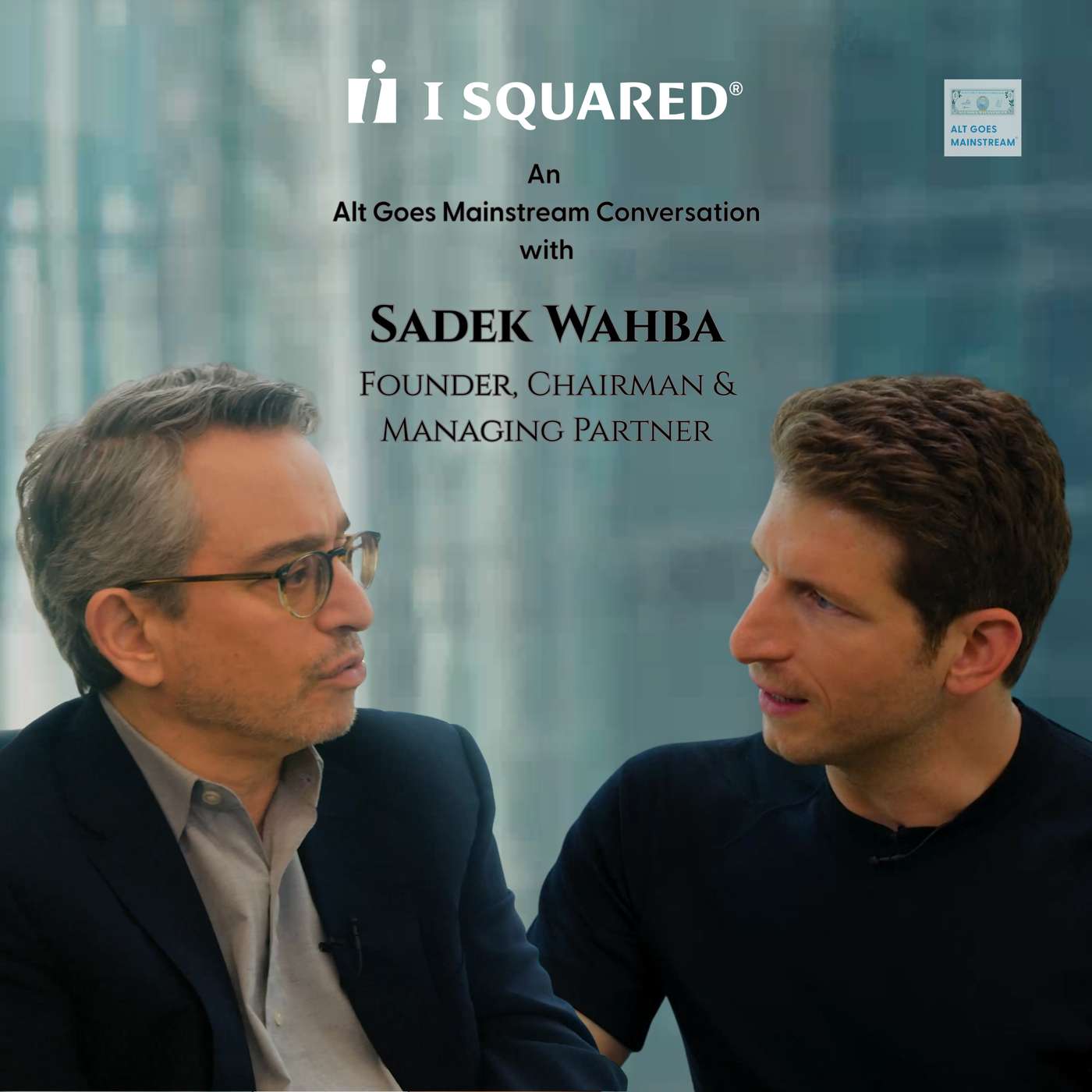 I Squared's Dr. Sadek Wahba - it's time to "Build" 17.09.2026 1h 16minWelcome back to the Alt Goes Mainstream podcast.We went to Miami to sit down with the professor of infrastructure investing and Founder, Chairman, and Managing Partner of I Squared, Dr. Sadek Wahba. Sadek has blended academic knowledge and a practical approach to infrastructure investing to build I Squared into a $60B infrastructure investment firm in 14 years, some of which he has adroitly distilled into the 2024 book that he authored, Build: Investing in America’s Infrastructure.We had such a fascinating and wide-ranging discussion that I’ve decided to break down our conversation into chapters.“We are enormously boring by design”: From the World Bank to building a $60B infrastructure investing behemoth[00:00:00–00:16:19]Sadek has been investing in a category, infrastructure, that he calls “invsible until it’s missing.” He’s brought experience as an economist at The World Bank and running Morgan Stanley Infrastructure as CEO to bear as he has built out I Squared into a leading infrastructure investment firm.Some notable quotes from this chapter:“You open your tap water, you never think where the water comes from … So you take a lot of that for granted.”“For better or worse, it may say something about us being enormously boring, but the only thing we do is infrastructure.”“With the boom in AI, and the need for power and data centers … add another five-plus trillion dollars that will need to be invested in transmission lines, power generation, data centers, fiber optics and all sorts of infrastructure.”No free lunch: ownership, regulation, and the ghost of Flint[00:16:19–00:32:40]U.S. infrastructure has shifted from private ownership to overleveraged municipalities. Sadek breaks down what has gone wrong with different infrastructure investment models around the world by dissecting who owns an asset, who manages it, who regulates it, and why collapsing those three roles into one is exactly what happened in Flint, Michigan.Some notable quotes from this chapter:“I’m sorry to say, but there’s no free lunch. Whether it’s a public good or not, that public good requires inputs, produces an output, and someone has to pay for it.” “There are three things that matter when you think about infrastructure: the ownership of the asset, who manages it, and who regulates it. If the entity that owns, manages, and regulates it are the same, you have a problem.”“They managed it, they regulated it, and they owned it. So if I wanted to complain to the regulator … the manager is the regulator. But the real owner is the manager who’s also the regulator.” (Sadek on what happened in the Flint, Michigan water crisis).If it sounds too good to be true, it probably is[00:32:40–00:51:06]Sadek takes us inside I Squared’s investing playbook. He discusses why they walked away from a Norwegian gas deal promising 14-15% returns, and why regulatory risk is the hardest thing to underwrite. Sadek also shares where he believes value is created in the next decade.If it’s too good to be true, then it’s probably not true. And that, for me, is rule number one.” “How can you make a return of 14%, 15% on something which is a hundred percent regulated and where you take very little risk? That, to me, doesn’t exist.” “The adoption of AI technology is probably the single biggest opportunity we see in infrastructure over the coming years.”Fishing in a different pond: the mid-market and the democratization of infrastructure[00:51:06–01:07:19]Sadek explains how a firm that has a $15B fund to deploy still focuses on the “mid-market,” why banks have abandoned the $50-100M loan, and why individual investors can play a role in financing assets that they use every day.“Our funds could be $15B in size … people say, “You’re joking, right? That’s not mid-market” And the answer is, well, no, it is … because we invest globally.”“I hope the day comes where most airports in the US are not owned by funds, but they’re publicly listed. Instead of being owned by a municipality, you and I can buy the shares of that company.”“If regulators are not paid, they’re not incentivized to do a good job.”Onshoring, national security, and what drives Sadek[01:07:19–01:17:15]Sadek shares why private capital can help fill the gap for funding infrastructure needs as growing government debt makes it harder for governments to keep footing the bill. He also discusses the case for onshoring beyond politics and what motivates him. “Private capital will per force play a critical role if you want to maintain sustainable economic growth rates. If you want lower per capita income, if you want higher unemployment … then don’t have the private sector invest in it.”“I can think of two reasons [for onshoring] that have nothing to do with politics: national security, and supply chain issues."“What drives me is to be able to produce something that people find useful, that people use to better their lives. And if you can do that in any small way, I think that’s enormously rewarding.”BioDr. Sadek Wahba is Chairman and Managing Partner of I Square Capital, an independent global infrastructure investment manager based in Miami, Florida, with $60 billion in assets under management.He has worked at Morgan Stanley where he was the CEO of Morgan Stanley Infrastructure, a global platform for infrastructure investment and as an economist at The World Bank. Sadek is an advocate for transformative approaches to infrastructure investment and a frequent commentator about the need for more investment in infrastructure to promote sustainable economic growth. He was a presidential appointment to the National Infrastructure Advisory Council, which advises the White House on reducing the physical and cyber risks and improving the security and resilience of critical infrastructure in the U.S. He was part of the expert committee on the World Economic Forum’s first report on global infrastructure investments and was named Global Infrastructure Personality of the Year twice, as well as Global Infrastructure Personality of the Decade, by Private Equity International (PEI). He frequently appears on Bloomberg, CNBC, Nasdaq, and other networks, including Op-eds in the Financial Times and other leading journals.He holds a Ph.D. in economics from Harvard University, an M.Sc. in economics from the London School of Economics (LSE) and a B.A. in economics from the American University in Cairo. He is a published author on economic research and one of his publications was selected by MIT as one of their 50 most influential papers in the last 50 years His book Build: Investing in America’s Infrastructure published by Georgetown University Press published in 2024 is in its second printing.Sadek is a Senior Fellow at the Development Res...
 -
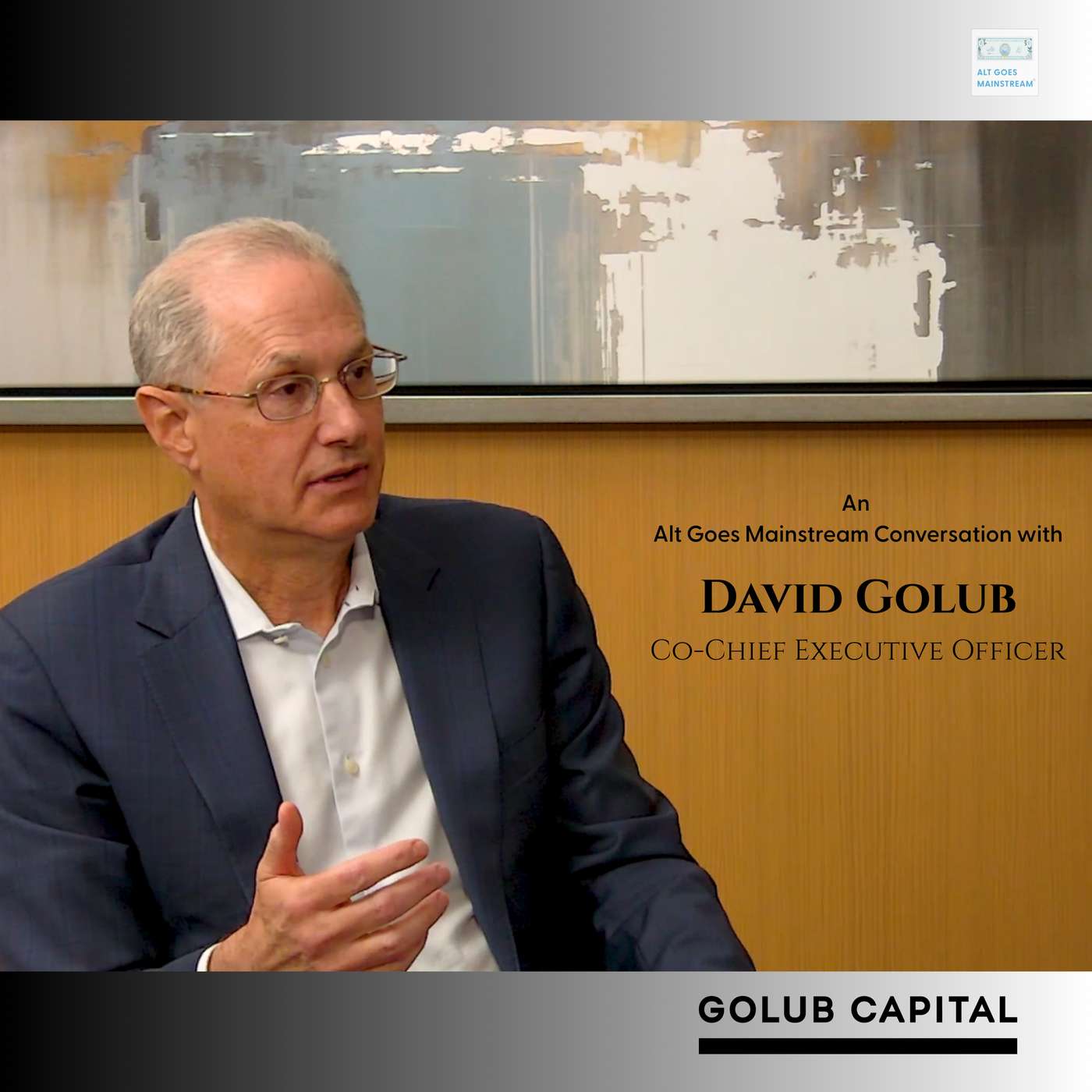 Golub Capital’s David Golub - inside the mind of one of private credit’s pioneers 10.09.2026 1h 10minWelcome back to the Alt Goes Mainstream podcast.We went to Golub Capital’s New York office to sit down with Co-CEO David Golub.David Golub and his brother Lawrence both started their careers in private equity. It was their experiences in private equity in the 1990s that turned them into private credit pioneers.Lawrence and David have built Golub Capital into a $95B private credit behemoth, largely due to their pioneering decision to create the “one-stop” unitranche loan solution for sponsor-backed companies after spotting a gap in the sponsor finance market. Fast forward over 30 years, and Golub Capital is one of the leaders in private credit. David discussed how Golub has spent the balance of its life as a scaled specialist credit manager “honing the competitive advantages” that make the firm so unique. Golub has built a cadre of 200 high-quality sponsor relationships with many of the industry’s top private equity firms, which call on them when they are seeking sponsor financing for their companies.David and I had a fascinating conversation that covered everything from the early days of private credit to the story of pioneering unitranche loans to what LPs should look for in GPs to the psychology of relationships and partnerships. We discussed:What David and Lawrence saw in the early days of private equity informed how they decided to build Golub.Why the unitranche loan became popular with private equity sponsors.What Golub looks for in relationships with private equity sponsors.Why focus has been a key driver of scaling Golub’s business.What LPs should ask GPs when evaluating their fund and firm.Why LPs should evaluate GPs based on how GPs think about their own business.The psychology of relationships and partnerships.How David’s experience being surrounded by a family of psychologists and psychiatrists has given him an edge in investing, negotiating, and building win-win relationships.BioDavid Golub is Co-Chief Executive Officer of Golub Capital, a market-leading, award-winning direct lender and experienced private credit manager. As of April 1, 2026, Golub Capital had over $90 billion of capital under management, a gross measure of invested capital including leverage. Golub Capital partners with institutional investors and family offices, offering tailored solutions for investors’ credit asset strategies. The Firm specializes in delivering reliable, creative and compelling financing solutions to companies backed by private equity sponsors. Golub Capital has been a top 3 U.S. Middle Market Bookrunner each year from 2008 through Q1 2026 for senior secured loans of up to $500 million for leveraged buyouts. Golub Capital has been consistently recognized with industry awards, including Lender of the Year, Americas (Private Debt Investor, 2014, 2015, 2016, 2018, 2021, 2022, 2023, 2024) Lender of the Decade, Americas (Private Debt Investor, 2023), Senior Lender of the Decade, Americas (Private Debt Investor, 2023), Senior Lender of the Year, Americas (Private Debt Investor, 2015, 2016, 2017, 2019, 2020, 2023, 2025) and BDC Manager of the Year, Americas (Private Debt Investor, 2015, 2016, 2017, 2023).Mr. Golub is active in charitable and civic organizations. Mr. Golub is a member of the Founder’s Council of the Michael J. Fox Foundation for Parkinson’s Research, where he was the first board Chairman and a long-time director. Mr. Golub is Co-Founder and Chair of the Golub Capital Nonprofit Board Fellows Network, which operates at 20 leading business schools; its mission is to make nonprofit boards more effective by training hundreds of MBA students each year to become highly skilled nonprofit directors. Mr. Golub is a member of the Association of Marshall Scholars’ Director’s Circle and previously was a member of the Stanford Graduate School of Business Advisory Council. He has served on the boards of the Loan Syndications and Trading Association, the Hudson Guild and the World Policy Institute. Mr. Golub is on the board of directors of Burton Snowboards and has served on the boards of numerous public and private companies.Prior to joining Golub Capital in 2003, Mr. Golub was a Managing Director of Centre Partners, a leading middle market private equity firm, and of Corporate Partners, a Lazard-sponsored $1.5 billion private equity fund formed to acquire significant minority stakes in established companies.Mr. Golub earned his AB degree magna cum laude in Government from Harvard College. He received an MPhil in International Relations from Oxford University, where he was a Marshall Scholar, and an MBA from Stanford Graduate School of Business, where he was an Arjay Miller Scholar.Thanks, David, for sharing your wisdom, expertise, and passion about private credit, the business of asset management, and the psychology of relationships.Show Notes00:00 Introduction01:23 A Message from Ultimus Fund Solutions, Our Sponsor02:26 David’s Career Shift to Credit06:07 Sponsor Finance Market Gap10:56 Unitranche Origins12:47 Crisis As Catalyst14:25 Distressed Value Lens16:21 What Makes A Good Business19:39 Relationships And Game Theory21:26 Capital Isn’t Proprietary25:39 Being First Call26:21 Managing Growth Carefully27:29 Fundraising Versus Opportunity28:08 Only The Paranoid Survive29:17 Staying A Specialist29:45 Capacity And Performance32:47 Scale As Advantage36:23 Raising Capital Follows Winners37:12 Future PE Picks Few Lenders37:52 Credit Partner as A Signal38:37 Doing Homework on Sponsors39:02 Big “n” Investing Mindset39:16 Risk Real vs Perceived41:30 Press Noise and Redemptions42:22 Darwinian Moment Ahead42:54 Why Terms Improve Next44:42 Portfolio Stress Reality Check47:51 Junior Debt Trouble Spot48:10 Underwriting the Manager51:06 Ask the Why52:00 What Keeps You Up at Night54:13 Culture of Constructive Doubt54:57 Testing Analytical Thinking55:53 Building the Wealth Channel56:45 Early Days Wealth Fundraising58:11 Diversifying the Investor Base01:00:45 Decades Mindset and Focus01:01:35 Specialization and Infrastructure01:02:39 More of the Same 01:03:21 Adjacencies Like GP Secondaries01:03:42 Continuation Vehicles Rationale01:05:22 Psychology and Relationships01:06:48 Problem Solving Builds Trust01:07:51 Authenticity Over Tactics01:09:23 Closing ReflectionsA Word from Our Sponsor, UltimusThis episode of Alt Goes Mainstream is brought to you by Ultimus, the full-service fund administrator and transfer agent powering asset managers in private and public markets. As alts go mainstream, you need real expertise to handle complex fund structures, connect with key distribution partners, and handle sophisticated compliance, reporting, and transparency demands.That’s Ultimus: high-tech, high-touch solutions for over 450 clients and 2,500 funds with $775B in assets under administration. Backed by an expert team of over 1,200 employees, they place client service at the core of their busin...
 -
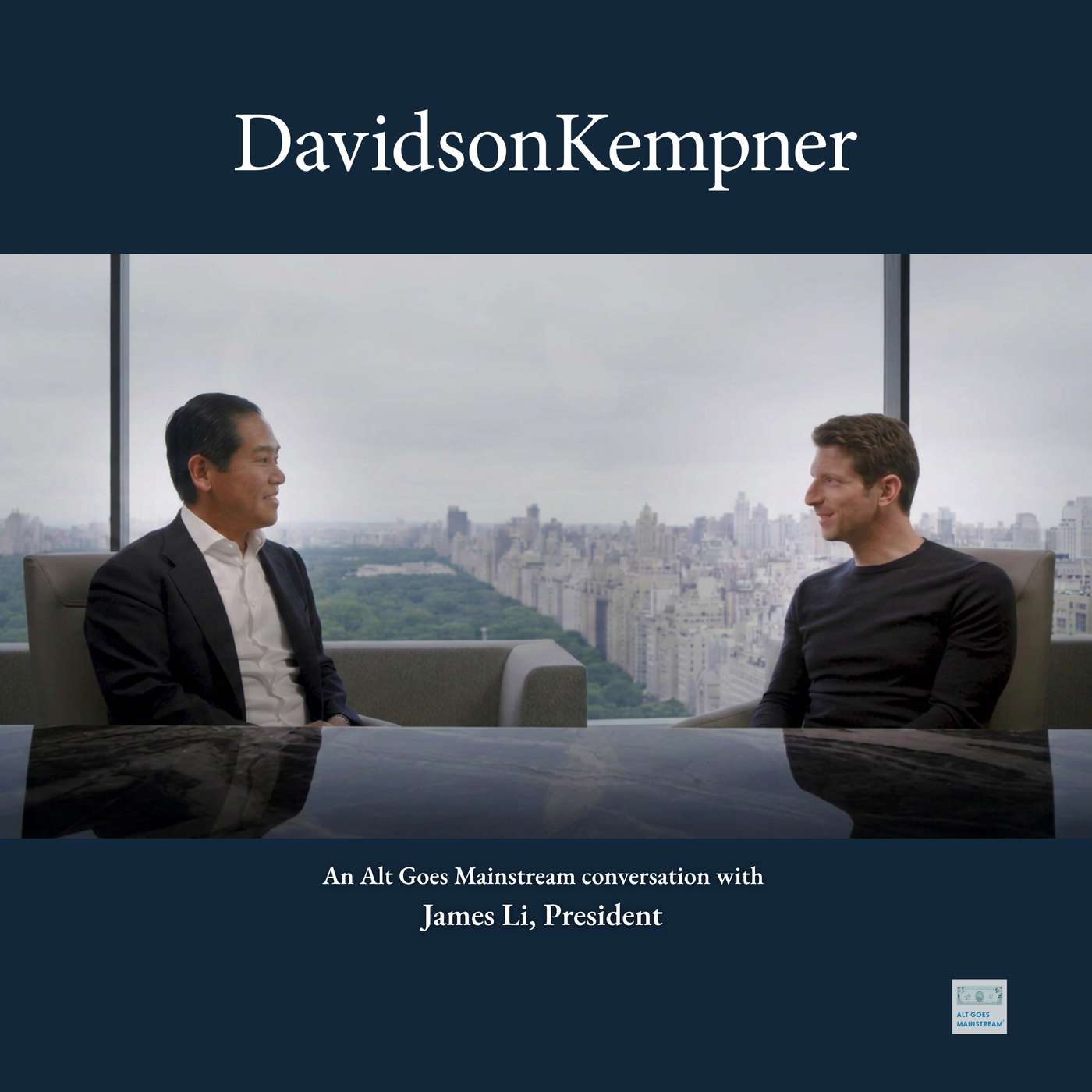 Davidson Kempner’s James Li - “no situation is too complex” 08.09.2026 58minWelcome back to the Alt Goes Mainstream podcast.Today’s podcast takes us to the heart of New York City to talk with James Li, the President and Partner of Davidson Kempner, a firm that was an early participant in the merger arbitrage, distressed debt, and opportunistic credit industries.Davidson Kempner’s heritage lies in cutting through complexity to find value.Founded in 1983, Davidson Kempner’s origins began in merger arbitrage, distressed debt, and opportunistic credit. The firm, which now has around 1,800 clients, began accepting outside capital in 1987 and has since built out its investment platform to include convertible arbitrage, long / short equities, asset-based lending, and real estate strategies.Davidson Kempner has since grown to almost $40B in AUM across public and private markets strategies.The firm has a penchant for navigating complex situations across public and private markets to opportunistically uncover value, noting that “no situation is too complex for [them].” James unpacked how the firm’s family office DNA has evolved across three generations of leadership into a scaled investment platform across public and private markets to inform the firm’s relative value investing perspective.James and I had a fascinating conversation on a number of pressing topics at the intersection of public and private markets. We covered:How do public market feedback loops inform private market investments?How post-GFC growth in private equity has created “indigestion” in the system.What the current state of private equity means for capital solutions opportunities.Why distressed and opportunistic credit can be countercyclical.What it means to be a relative value investor and how Davidson Kempner navigates different sectors, markets, geographies, and asset classes.What deglobalization means for investing in private markets.Why are allocators shifting toward absolute return strategies?How Davidson Kempner’s family office DNA has informed how they approach working with the wealth channel.BioJames Li is the President and a Partner at Davidson Kempner. Mr. Li also co-manages the Client Partnerships & Business Development department and oversees the Firm’s Capital Markets, Strategy and Treasury Teams. He joined the Firm in 2018 and is based in the New York office.Before joining Davidson Kempner, Mr. Li was a Managing Director in the Client Relationship Management and Strategy Group at Goldman, Sachs & Co. Mr. Li received a B.S. from Columbia University.Thanks, James, for sharing your wisdom, expertise, and passion about public and private markets and your approach to investing in complex situations.Show Notes00:00 Live From Davidson Kempner’s Office in NYC01:36 A Message from Ultimus Fund Solutions02:37 Introduction to James Li03:36 Career Roots At Goldman05:16 Discovering Davidson Kempner06:13 Three Generations Of Leadership06:42 Family Office DNA08:23 Investing In Complexity10:44 Where Complexity Pays12:20 Liquid Versus Private Feedback13:37 Macro Shifts And Deglobalization16:01 Finding Edge In Less Crowded Markets17:28 Private Capital Indigestion18:47 Capital Solutions Playbook20:48 Building Operating Capabilities25:59 Allocator Shift In Credit31:26 Hedge Funds Return32:12 Post GFC Lessons32:48 Fees Volatility Gating33:13 Evergreen Vehicle Design34:04 Liquidity Over Leverage34:15 Leverage Risk Explained35:14 Semi Liquid Marking Issues35:36 Flows Back To Hedge Funds36:26 Wealth Channel Education37:14 Merger Arb Basics38:34 Global Credit Toolkit39:18 Portfolio Velocity Risk40:58 Investment-Led Ownership43:43 Scale Competition Edge44:28 Restructuring Repayment Focus45:43 Building Wealth Business54:07 Firm Vision And DNAA Word from Our Sponsor, UltimusThis episode of Alt Goes Mainstream is brought to you by Ultimus, the full-service fund administrator and transfer agent powering asset managers in private and public markets. As alts go mainstream, you need real expertise to handle complex fund structures, connect with key distribution partners, and handle sophisticated compliance, reporting, and transparency demands.That’s Ultimus: high-tech, high-touch solutions for over 450 clients and 2,500 funds with $775B in assets under administration. Backed by an expert team of over 1,200 employees, they place client service at the core of their business, helping you navigate complexity during your fund structuring or launch and then supporting you through every stage of growth. Whether you’re already in the market or thinking about entering private wealth, you can trust their team’s deep expertise in retail alternatives to help you reach your goals.Learn more at ultimusfundsolutions.com or email [email protected] thank Ultimus for their support of alts going mainstream.Editing and post-production work for this episode was provided by The Podcast Consultant.
 -
 Ardian’s Ava Mallin - “managing money is managing emotion” 02.09.2026 15minWelcome back to the Alt Goes Mainstream podcast.We were live from iCapital Connect’s conference in Phoenix, where we sat down with some of the industry’s leaders across asset management and wealth management.We spoke with Ava Mallin, Managing Director, US Private Wealth Solutions at Ardian.Ava brings a distinctive approach to how she works with the wealth channel. She emphasized that asset managers should treat capital as a client’s legacy rather than “just dollars.” Speaking of legacy, Ardian is a firm with a rich legacy. The firm was born in 1996, when AXA’s Chairman, Claude Bébéar, chairman of AXA, asked Dominique Senequier to create a private equity arm for the insurer. And so AXA Private Equity was born. The firm’s first fund launched with a $100M French Buyout fund and two external clients.Today, Ardian stands tall as a giant in private markets, spanning asset classes and managing over $200B AUM.As a firm that provides investment solutions and customized strategies, Ardian thinks deeply about the breadth and depth of its relationships with LPs. Ava brings this perspective to bear in the wealth channel, which was evident in our conversation.Ava shared how she brings a uniquely human perspective to fundraising and partnering with the wealth channel. She believes managing money is managing emotion, which is critical for GPs to understand how wealth advisors manage their relationships with clients.We had a fascinating conversation, covering: The importance of understanding the human and emotional side that it takes to build enduring partnerships with LPs.Why US LPs have a growing interest in diversification and want exposure to Europe.Why secondaries is a partnership business with LPs and GPs.The importance of educating the wealth channel on private markets.Why Ardian prefers the term “evergreen” over “semi-liquid.” Why GPs should work with the wealth channel only if they have true commitment to the channel and top-down support from senior leadership.BioAva Mallin joined Ardian in 2022. She is responsible for Private Wealth relationships in the US. Prior to joining Ardian, she spent seven years at Carlyle in their Private Wealth group. She is based in New York.Thanks, Ava, for sharing your wisdom, expertise, and passion for how you approach working with the wealth channel and your focus on EQ as part of building relationships with advisors that enable them to treat their clients' capital as legacy. Show Notes00:00 Live From iCapital Connect00:23 A Message From Ultimus Fund Solutions01:21 Meet Ardian’s Ava Mallin01:48 Money And Emotion03:11 Ardian Culture And Fit03:45 Secondaries Partnership Model04:45 Building US Wealth Business05:59 Evergreen Liquidity Mindset07:26 Educating Advisors And Clients09:02 Brand And Leadership Support10:13 Authenticity In Sales11:28 Listening And Curiosity12:29 Just Because You Can, Doesn’t Mean You Should13:31 Getting Firmwide Buy In14:11 Wealth Channel Challenges14:47 Closing ThoughtsA Word from Our Sponsor, UltimusThis episode of Alt Goes Mainstream is brought to you by Ultimus, the full-service fund administrator and transfer agent powering asset managers in private and public markets. As alts go mainstream, you need real expertise to handle complex fund structures, connect with key distribution partners, and handle sophisticated compliance, reporting, and transparency demands.That’s Ultimus: high-tech, high-touch solutions for over 450 clients and 2,500 funds with $775B in assets under administration. Backed by an expert team of over 1,200 employees, they place client service at the core of their business, helping you navigate complexity during your fund structuring or launch and then supporting you through every stage of growth. Whether you’re already in the market or thinking about entering private wealth, you can trust their team’s deep expertise in retail alternatives to help you reach your goals.Learn more at ultimusfundsolutions.com or email [email protected] thank Ultimus for their support of alts going mainstream.Editing and post-production work for this episode was provided by The Podcast Consultant.
 -
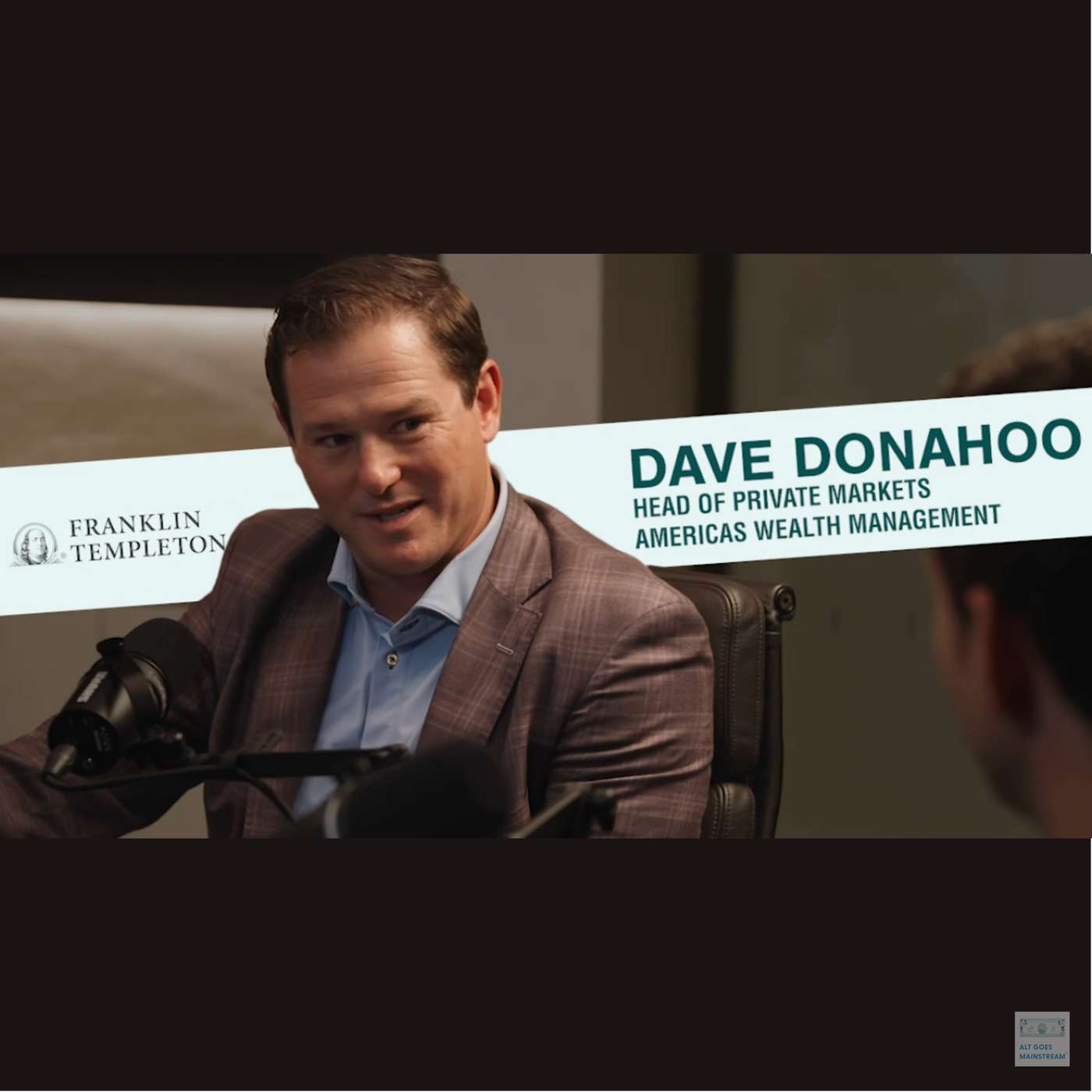 Franklin Templeton’s Dave Donahoo - “start with the end client” - live from AGM’s RIA Field Trip 19.08.2026 32minWelcome back to the Alt Goes Mainstream podcast.We were live from AGM’s RIA Field Trip at Franklin Templeton’s New York office in Madison Square Park with Franklin Templeton’s Head of Private Markets - Americas Wealth Management Dave Donahoo to discuss the nuances of serving the wealth channel.Dave brings the perspective of someone who has seen the wealth channel handle multiple market cycles and an understanding of both traditional and alternative asset management, while always keeping the outcome for the end investor in mind.Dave started his career in the depths of the 2008 financial crisis at T. Rowe Price, where he worked with individual investors. He rose up the ranks of T. Rowe Price and then joined Blackstone as a Principal in the firm’s Private Wealth Solutions business before moving to Franklin Templeton as Head of Private Markets - Americas Wealth Management.Unpacking nuances in private markets, Dave discussed why he believes a “family of specialists” with a “narrow scope” is critical for a private markets investment platform and how a traditional asset manager can approach building brand in private markets. We had a fascinating discussion, covering:How Dave’s background starting his career working with individual investors has informed how he approaches creating solutions for the wealth channel.Why LPs want to do more with fewer partners and what this means for GPs.Specialists vs. generalists.Why RIAs have “cold call fatigue.”What RIAs want from a product perspective and why differentiation, trust, and proactive client service are top of the list.How asset managers can approach brand-building.The product innovation roadmap and what the path to 401(k) and DC products might look like.Thanks, Dave, for sharing a fascinating window into the wealth channel and for your passion, expertise, and dedication to providing private markets solutions to the wealth channel.Show Notes00:04 Live from Franklin Templeton RIA Field Trip00:07 Meet Dave Donahoo02:31 Lehman Day One Story03:15 Thrown Into the Phone Queues03:37 Teacher Call and Investor Fear04:53 Start With the End Client05:26 From T Rowe to Blackstone05:53 Blackstone Wealth Playbook07:18 Why Franklin Was the Fit08:09 Traditional Manager Advantages09:09 Platform Synergies in Wealth10:16 Challenges of Going Private10:36 Brand Transformation Story11:44 Internal Alignment and Change12:16 What the Brand Should Signal12:50 Specialist Managers Philosophy13:44 Building Perpetuals the Right Way14:13 Defining the Right Structure15:44 Evergreen Structure Depends16:09 Secondaries Structure Choice18:10 Infrastructure Partnership Model20:02 Preserving Investment Cultures21:50 Data and AI Cross Collaboration24:17 Macro Insights Across Platforms25:47 Product Innovation Roadmap27:06 Private Markets in 401k Plans27:53 What Model Portfolios Mean29:06 What RIAs Want Most30:21 Client Service and HonestyA Word from Our Sponsor, UltimusThis episode of Alt Goes Mainstream is brought to you by Ultimus, the full-service fund administrator and transfer agent powering asset managers in private and public markets. As alts go mainstream, you need real expertise to handle complex fund structures, connect with key distribution partners, and handle sophisticated compliance, reporting, and transparency demands.That’s Ultimus: high-tech, high-touch solutions for over 450 clients and 2,500 funds with $775B in assets under administration. Backed by an expert team of over 1,200 employees, they place client service at the core of their business, helping you navigate complexity during your fund structuring or launch and then supporting you through every stage of growth. Whether you’re already in the market or thinking about entering private wealth, you can trust their team’s deep expertise in retail alternatives to help you reach your goals.Learn more at ultimusfundsolutions.com or email [email protected] thank Ultimus for their support of alts going mainstream.Editing and post-production work for this episode was provided by The Podcast Consultant.
 -
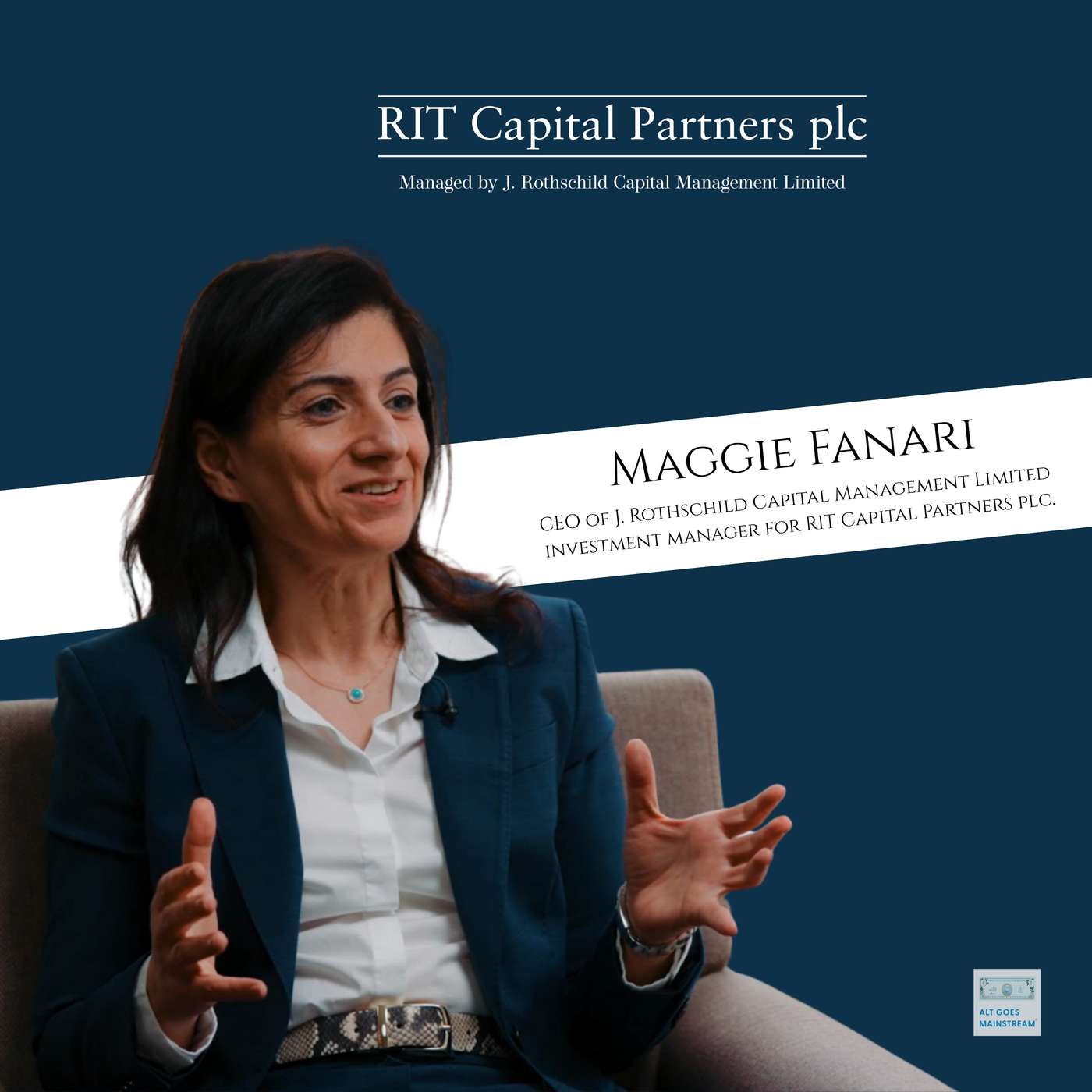 RIT Capital Partners' Maggie Fanari - why permanent capital is a privilege 12.08.2026 57minWelcome back to the Alt Goes Mainstream podcast.Today’s podcast takes us to the heart of London, where we sat down with Maggie Fanari, the CEO of J Rothschild Capital Management Limited, manager of RIT Capital Partners plc. RIT blends a rich heritage with a modern approach to both asset allocation and private markets. Lord Jacob Rothschild founded Rothschild Investment Trust in 1971. RIT listed on the London Stock Exchange with total assets of £280M. Today, the firm stands tall as one of the UK’s largest investment trusts with over £4.7B of total assets.The firm’s permanent capital and family office heritage have enabled the firm to think long-term, according to Maggie. “Permanent capital is a privilege,” she said.Maggie has brought an institutional allocator’s background to RIT. She joined as CEO of RIT from Ontario Teachers’ Pension Plan in 2024, where she was Senior Managing Director, Global Group Head of High Conviction Equities at OTPP, which has a global mandate to invest in public and private companies.Maggie and I had a fascinating discussion about how the firm invests across public and private markets, balancing both top-down portfolio construction and bottom-up asset selection. We covered:How RIT has aimed to compound wealth over time.Why top-down portfolio construction and bottom-up asset allocation are equally important.How can investors capture as much growth, limit market volatility, and compound growth over a long period of time?How RIT finds unique and different managers in private markets, which includes some of the top investors in the world.What market structure changes mean for investing across public and private markets?How to invest when the world order has changed.Taking a family office mindset and applying that investment mindset for investors in RIT.Why permanent capital is a privilege.How to be early to a theme rather than chase the trend.Why RIT decided to invest in SpaceX, Anthropic, OpenAI, Databricks, and Epic Systems.Where do investors bucket RIT into their asset allocation?What is a manager’s edge and how can they apply that edge with consistency?Why depth of network matters for private markets managers.Why RIT invested in firms like Thrive, Greenoaks, and Ribbit.BioMaggie Fanari is the CEO of J. Rothschild Capital Management Limited (JRCM) , investment manager for RIT Capital Partners plc. She is Chair of JRCM’s Investment Committee.Maggie was previously Senior Managing Director, Global Group Head of High Conviction Equities at Ontario Teachers’ Pension Plan, which has a global mandate to invest in public and private companies.At Ontario Teachers’, she served as a member of many of the pension plan’s investment committees. She was involved in the execution of investments across a variety of asset classes (private and public), including supporting the development and execution of the venture and growth business.Before joining Ontario Teachers’, Maggie worked at KPMG and Scotia Capital. Maggie is a chartered accountant and a CFA charter holder. She also holds a BBA from the Schulich School of Business at York University and ICD.D certification from the Institute of Corporate Directors.Maggie served as a non-executive director on the Board of RIT Capital Partners plc from April 2019 to February 2024.Thanks, Maggie, for sharing your wisdom, expertise, and passion across public and private markets and your thoughtful perspectives from your experiences as an institutional investor.This podcast was recorded on 15 June 2026, and therefore all RIT data is provided as at 31/05/2026. Show Notes00:42 Meet Maggie Fanari03:44 Teachers’ Pension Roots04:51 Top Down Meets Bottom Up05:50 Allocating In New Paradigm06:15 Diversification Returns07:02 Volatility Creates Opportunity07:22 What Makes RIT Unique08:08 Compounding With Downside09:41 Brand Opens Doors10:05 Backing Emerging Managers11:57 Co-Invest Importance12:36 Returns And Realizations13:22 Great Co-Investor Playbook15:02 Building AI Theme Exposure16:06 Sourcing Deals Like SpaceX16:37 Public Private Value Split20:09 Public Themes And Sovereignty20:58 Moats And Terminal Value24:06 Permanent Capital Edge25:07 Oversubscribed Fund Access26:46 Underwriting And Discipline27:17 Why AI Needs Capital27:49 Anthropic Growth Math28:15 Databricks Scale Comparison28:41 Can Funds Get Bigger30:22 FOMO And Chasing30:47 Portfolio Allocation Guardrails31:47 Permanent Capital Advantage32:13 Right Sized Private Exposure32:51 Liquidity And Realizations33:28 Owning Winners At Scale34:11 Private To Public Hold34:41 Re Underwriting Post IPO35:38 Retail Investor Impact36:20 Public Market Liquidity Needs37:57 Why Investment Trusts Work38:56 Discounts As Margin Safety40:08 How Shareholders Allocate41:03 Sentiment Shifts In Cycles42:02 What Makes Great Managers43:14 Manager Edge Examples45:02 AI And Finding Leaders46:56 Consolidation And Differentiation47:51 Being A Great LP Partner48:50 Macro Lens As Edge49:42 Private Signals Inform Public50:48 Culture One Team One NAV51:28 Risk And Scenario Analysis52:59 Multipolar World Investing54:14 Geopolitics In Diligence55:10 Permanent Capital Best Of BothA Word from Our Sponsor, UltimusThis episode of Alt Goes Mainstream is brought to you by Ultimus, the full-service fund administrator and transfer agent powering asset managers in private and public markets. As alts go mainstream, you need real expertise to handle complex fund structures, connect with key distribution partners, and handle sophisticated compliance, reporting, and transparency demands.That’s Ultimus: high-tech, high-touch solutions for over 450 clients and 2,500 funds with $775B in assets under administration. Backed by an expert team of over 1,200 employees, they place client service at the core of their business, helping you navigate complexity during your fund structuring or launch and then supporting you through every stage of growth. Whether you’re already in the market or thinking about entering private wealth, you can trust their team’s deep expertise in retail alternatives to help you reach your goals.Learn more at ultimusfundsolutions.com or email [email protected] thank Ultimus for their support of alts going mainstream.Editing and post-production work for this episode was provided by The Podcast Consultant.
 -
 Wellington Management's Mike Trihy - going long on evergreen funds: AGM Live from SuperReturn 06.08.2026 24minWelcome back to the Alt Goes Mainstream podcast.We sat down with Mike Trihy, Head of Portfolio Management for the Venture Growth Evergreen strategy at Wellington Management.We were live from Berlin, which becomes the “capital of private capital” in June as private equity industry leaders make the annual pilgrimage to the city for one of the marquee private equity conferences, SuperReturn Berlin.With Prosek Partners and former Bloomberg TV journalist Deirdre Bolton as my producer, along with her team, we took over a Tiny Space cabin to hold big conversations with some of the industry’s leading alternative asset managers.Wellington Management has a rich heritage as an independently owned asset manager. The firm, which has taken a research-driven approach and long-term thinking to active management in public markets and, increasingly, in private markets, is nearing its 100-year anniversary. Wellington has grown to over $1.3T in AUM and is the largest sub-advisor in the world.Mike joined from Bow River Capital to run Wellington’s Venture Growth Evergreen strategy, which will focus on direct growth and venture investments, secondaries, and select fund investments. Mike brings deep expertise in the evergreen fund management space, co-founding and scaling Bow River’s evergreen private markets platform and working as a portfolio manager at evergreen pioneer Partners Group.Mike and I had a fascinating discussion about the current state of evergreen funds and the venture and growth investing market. We covered:The evolution of evergreen private markets funds.The convergence of public and private investing.Lessons learned from building and managing evergreen funds at Partners Group and Bow River.The importance of portfolio construction, liquidity planning, and evergreen fund operations.Which firms are well-positioned to run and manage evergreen funds?Partnerships in asset management.How the market may shake out and why structure must match the asset, the client, and the liquidity terms. LP composition, evergreens vs. drawdowns across wealth and institutions, and the role of partnerships. What the potential wave of mega IPOs could mean for DPI, exits, and private market fundraising.BioAs lead portfolio manager for the Venture Growth Evergreen (“VGE”) strategy, Mike is responsible for overall portfolio construction and allocation of capital across direct growth and venture investments, secondaries, and select fund investments. He also oversees risk management, liquidity management, and cash flow forecasting for the evergreen fund.Prior to joining Wellington Management in 2025 Mike was a portfolio manager at Bow River Capital, where he co-founded and scaled their evergreen private markets platform while overseeing the fund’s investment activity across multiple private markets asset classes. Prior to Bow River, he was a portfolio manager at Partners Group where he was responsible for portfolio construction and asset allocation for evergreen products and custom separate account mandates. He started his investment career at wealth-focused listed private equity firm Red Rocks Capital.Mike graduated from the University of Colorado with a degree in finance, and he is a CFA and CAIA charterholder.Thanks, Mike, for sharing your wisdom, expertise, and perspectives on private markets and evergreen funds.Show Notes00:00 Live from SuperReturn Berlin00:12 Meet Mike Trihy02:06 Defining the Perfect Evergreen02:27 Evergreen vs Drawdown DNA02:42 Deal Flow Isn’t Everything03:01 Portfolio Construction Focus03:20 Cashflow Planning Mindset03:33 Operations and Valuations03:47 Sales and Flow Forecasting04:03 Regulation and Complexity04:11 Fiduciary Growth Discipline04:46 Do Firms Have the Toolkit05:20 Scale vs Boutique Nuances05:42 When Bottom Up Fails06:18 The Deal Flow Constraint06:44 Should There Be More07:00 Shakeout and Quality Wins08:07 No One Best Wrapper08:28 Matching Assets and Clients09:43 LP Mix and Herding Risk11:34 Evergreens Future in Wealth13:21 Public Markets DNA Advantage14:56 Partnerships and Mega IPOs17:07 Private Markets Stay Private18:52 DPI and Exit Wave Impact20:17 Public vs Private Valuations22:21 What Happens Faster Slower24:08 Closing
 -
 Investcorp Strategic Capital Group's Anthony Maniscalco - the evolution of GP stakes 05.08.2026 41minWelcome back to the Alt Goes Mainstream podcast.We sat down with Anthony Maniscalco, the Managing Partner and Business Head of Investcorp Strategic Capital Group (ISCG).We were live from Berlin, which becomes the “capital of private capital” in June as private equity industry leaders make the annual pilgrimage to the city for one of the marquee private equity conferences, SuperReturn Berlin.With Prosek Partners and former Bloomberg TV journalist Deirdre Bolton as my producer, along with her team, we took over a Tiny Space cabin to hold big conversations with some of the industry’s leading alternative asset managers.Investcorp has been a pioneer in private equity. Since its founding in 1982, the firm has grown from a “boutique Gulf firm” into a global and diversified alternative asset manager. Investcorp launched its Strategic Capital Group (SCG) (GP stakes) business long after its founding in 1982. But the firm brought in a pioneer to launch and build SCG into a leading GP stakes firm, which now has over $2.2B of AUM. Anthony has been involved in GP stakes from the industry’s early days. He was a founding member of Blackstone Strategic Capital Holdings, a $3.3B private, permanent capital vehicle focused on acquiring minority interests in alternative asset manager GPs. He was also a Managing Director of the Hedge Fund Solutions business at The Blackstone Group. Prior to joining Investcorp, Anthony was a Managing Director and Co-Head of Credit Suisse Anteil Capital Partners. Launched in 2019, Investcorp’s SCG acquires minority interests in alternative asset managers, particularly GPs that manage longer-duration private capital strategies. SCG has completed 12 investments since inception.Anthony and I had a fascinating conversation about the evolution of GP stakes and the benefits of GP stakes for investors. We covered:Why have stakes shifted from hedge funds to alternative asset managers?Why the features of the alternative asset management business model (contracted management fees, locked-up capital, less key-person risk) can make for a good GP stake investment.Why a GP would sell an equity stake in its firm to finance its growth.Unpacking the middle-market GP landscape and where middle-market GPs need help growing their firm.The evolution from fund to firm and what’s next for GP stakes.BioAnthony Maniscalco is the Managing Partner and Business Head of Investcorp Strategic Capital Group (ISCG), based in New York. ISCG is focused on providing capital solutions to the GPs of mid-sized private market alternative asset managers. ISCG closed its inaugural fund in the Spring of 2022 and currently manages over $2.2 billion of AUM. In his current role, Mr. Maniscalco is focused on managing the overall business, sourcing new investment opportunities, advising portfolio GPs and is the chairperson of the Investment Committee.Prior to his current role, Mr. Maniscalco was a Managing Director and Co-Head of Credit Suisse Anteil Capital Partners. Prior to this, he was Managing Director of the Hedge Fund Solutions business at The Blackstone Group. At Blackstone, he was a founding member and on the investment committee of Blackstone Strategic Capital Holdings, a USD 3.3 billion private, permanent capital vehicle focused on acquiring minority interests in alternative asset manager GPs.Prior to Blackstone, Mr. Maniscalco was Head of Alternative Asset Management Banking at Barclays (and its predecessor Lehman Brothers) within its Financial Institutions Group. Prior to this role, Mr. Maniscalco was head of the Media and Telecom vertical within Lehman Brothers’ Leveraged Finance Group.Early in his career, he worked at Bank of America and its predecessor Continental Bank in Chicago, focused on high-yield, mezzanine, syndicated bank loans, and interim financing products.Anthony holds a B.S. from Indiana University (2026 College Football National Champions!) and an M.B.A. from the University of Chicago.Thanks, Anthony, for sharing your expertise, wisdom, and passion about GP stakes and the business of alternative asset management.Show Notes00:00 Live From Berlin00:15 Meet Anthony Maniscalco02:56 Early Staking Was Hedge Funds03:05 Banks And Prime Brokerage03:40 Private Equity Hits A Wall03:53 Shift To Private Equity Stakes04:30 Why Stakes Are Attractive04:54 Locked In Fee Streams05:31 Carry And Diversification06:06 How LPs Classify Stakes06:59 Three Allocation Buckets07:55 Strategic Access Flywheel09:05 Tougher Fundraising Today09:19 Why Middle Market09:05 Fundraising Help For GPs10:55 Underwriting Growth Readiness12:15 Primary Capital Use Of Proceeds12:49 Why Equity Is Worth It14:46 Talent Retention And Next Gen15:46 Wealth Channel Fit18:23 Portfolio Construction Framework19:36 Why Venture Is Harder23:23 From Fund To Firm24:34 Liquidity And Exit Paths27:35 Prefs, Debt, And New Solutions38:41 Continuation Vehicles Flywheel41:02 Closing Thoughts
 -
 Coller Capital's Jake Elmhirst - secondaries coming in first: AGM Live at SuperReturn 04.08.2026 29minWelcome back to the Alt Goes Mainstream podcast.We sat down with Jake Elmhirst, Partner, Head of Private Wealth Secondaries Solutions and Head of Capital Formation at Coller Capital.We were live from Berlin, which becomes the “capital of private capital” in June as private equity industry leaders make the annual pilgrimage to the city for one of the marquee private equity conferences, SuperReturn Berlin.With Prosek Partners and former Bloomberg TV journalist Deirdre Bolton as my producer, along with her team, we took over a Tiny Space cabin to hold big conversations with some of the industry’s leading alternative asset managers.Coller Capital has been a pioneer in the rapidly growing secondaries market. Coller’s tagline? “First in secondaries.” Coller might be “first in secondaries.” The industry they focus on has moved to the forefront of private markets. Secondaries are coming in first for many LPs, in part because secondaries are now an active portfolio management solution for LPs (LP-led secondaries) and a way for LPs and GPs to continue to invest in the growth and value appreciation of some of their funds’ best assets (GP-led secondaries). The firm completed its first secondaries transaction in 1990 and its first GP-led investment in 1996. Today, Coller has $55B in AUM (as of 3/31/26). Jake joined Coller after a long career at UBS, where he partnered with Coller from a few different vantage points co-founding and co-leading the Private Funds Group within UBS Investment Bank and leading the Private Markets effort within UBS Global Wealth Management. His perspective on Coller was very much a reason why he decided to leave his farm in Yorkshire (as a 23rd generation farmer!) to join Coller as they build out their wealth efforts.Jake and I had a fascinating conversation about the evolution of secondaries and how they are increasingly “solutions” for LPs and GPs. We covered:Jake’s experience witnessing the rise of the early days of private markets and how that’s shaped how he thinks about secondaries today.Why secondaries are becoming “solutions” for LPs and GPs.Why secondaries can be a core portfolio holding.The features of secondaries. The drivers of the increase in LP-led sales.Why have GP-led continuation vehicles become a popular solution?Why secondaries make sense for private wealth investors.BioJake is a Partner and Head of Private Wealth Secondaries Solutions and Head of Capital Formation. He is based in the firm’s London office.Prior to joining Coller Capital in April 2022, Jake spent 25 years at UBS where he led the Private Markets effort within UBS Global Wealth Management, based in London. Prior to that, Jake co-founded and co-led the Private Funds Group within UBS Investment Bank, based in New York.He previously worked at Freshfields in London, where he qualified as a solicitor working in the Tax Team with a focus on collective investment schemes.Jake has a degree in Law (LLB) from the University of Bristol.Jake Elmhirst is a registered representative of Parallel Distributors LLC.Thanks, Jake, for sharing your wisdom, expertise, and passion in private markets, private wealth, and secondaries. Show Notes 00:00 Live in Berlin Intro00:39 Jake Elmhirst’s Career Journey02:08 Wealth Channel Lessons05:06 Farming Roots Detour07:34 Secondaries Liquidity Fix09:26 Continuation Vehicles Impact11:21 Wealth Channel and Scale13:21 Why Secondaries Work15:15 Core Holding for Wealth16:31 Discount Versus Quality18:43 Underwriting in CV Era20:56 Evergreen Portfolio Mix21:56 Future of Solutions23:02 Toolbox Expansion Ideas24:55 Why Scale Matters25:53 Discount Nuance Explained27:30 Active Portfolio Management28:45 Closing Thoughts
 -
 Goldman Sachs' Kyle Kniffen - the arc of alternatives at Goldman Sachs: AGM Live at SuperReturn 30.07.2026 23minWelcome back to the Alt Goes Mainstream podcast.We sat down with Kyle Kniffen, Managing Director, Global Head of Alternatives, Third Party Wealth at Goldman Sachs. We were live from Berlin, which becomes the “capital of private capital” in June as private equity industry leaders make the annual pilgrimage to the city for one of the marquee private equity conferences, SuperReturn Berlin.With Prosek Partners and former Bloomberg TV journalist Deirdre Bolton as my producer, along with her team, we took over a Tiny Space cabin to hold big conversations with some of the industry’s leading alternative asset managers.A little over two years ago, I wrote on AGM about how, at $456B in AUM in alternatives, Goldman Sachs was a “sleeping giant” in private markets. In reality, Goldman is anything but a sleeping giant in private markets, having started its private equity business in 1984 and earning the distinction of being a top-5 alternatives manager by AUM across both traditional and alternative asset managers.Today, Goldman has grown its alternatives business to over $625B in AUM.The firm has expanded its platform with the acquisition of Industry Ventures and a partnership with T. Rowe Price to deliver public and private markets solutions to the wealth channel, and, most recently, the creation of its Alternative Investment Platform to provide HNW clients with direct access to private companies.The evolution of Goldman’s Alternatives business reflects a thoughtful, measured approach to understanding the needs of wealth channel investors and finding the utility and purpose of strategy, product, and product structure.That was much of the focus of the conversation Kyle and I had in Berlin. We discussed the objective and utility of private markets in a portfolio. We covered:The growth of evergreen funds.Why evergreens are the product structure of choice.Why are evergreens also appealing to institutional allocators, insurance companies, and UHNW investors?How GPs and LPs are approaching LP composition to evergreen vehicles.The next wave of product innovation.The build, buy, partner framework Why Goldman is so excited about the GeoWealth partnership and what the future of model portfolios look like.What is not known but should be known about the Goldman Alternatives franchise.BioKyle Kniffen is a managing director in the Client Solutions Group within Goldman Sachs Asset Management. He serves as global head of Alternatives for Third Party Wealth (TPW), overseeing client strategy for the firm’s TPW clients globally, delivering the power of the Alternatives investing platform to a broad set of individual investors through our partnerships with financial intermediary clients and their advisors, including Private Banks, Broker-Dealers, RIAs and other distribution platforms. Kyle partners closely with leadership across our Alternatives franchise to develop products that meet our clients’ evolving needs. He is also co-chair of the AWM Global Distribution Working Group.Prior to this role, Kyle was in Alternative Capital Markets (ACM), serving as head of ACM for Goldman Sachs Ayco and leading coverage for One Goldman Sachs financial sponsors globally. He joined Goldman Sachs in 2018 as a vice president in ACM and was named managing director in 2021.Prior to joining Goldman Sachs, Kyle led a variety of distribution and product management teams for Bank of America’s Alternative Investment Group within their Global Wealth and Investment Management division.Kyle is a board member for the Institute of Portfolio Alternatives (IPA), and a member of The Economic Club of New York. Kyle earned a BA from Gettysburg College.Thanks, Kyle, for sharing your wisdom, expertise, and passion about private markets and serving the wealth channel.Show Notes00:00 AGM Live from SuperReturn Berlin00:22 Meet Kyle Kniffin01:10 Wealth Meets Private Markets01:37 Big Pools Little Allocation02:24 Alt Strategies Explosion03:04 Lessons from Hedge Funds03:34 Start with Client Goals03:53 Risk Liquidity Tradeoffs04:10 Portfolio Utility First04:25 Holistic Private Markets04:44 Fit and Terms Matter05:07 Setting Expectations05:32 Product Innovation Shift05:52 Evergreens and Flexibility06:10 Monthly Access and Tactics06:39 Evergreen Growth Rates06:45 Education and Dispersion07:15 Why Evergreens Exist07:41 Diversification Lower Minimums08:04 Operational Simplicity08:21 Evergreen Nuance Phase One08:47 Goldman in Third Party Wealth09:26 Institutions Buying Evergreens10:31 LP Mix and Liquidity Caps11:36 Institutionalizing Wealth Platforms13:29 Goldman Platform Advantage14:46 Feeding the Evergreen Engine15:13 GeoWealth and Model Portfolios15:45 T Rowe Price Collaboration16:12 Build vs Buy Partner Balance16:42 Industry Ventures Acquisition17:33 Goldman Alts Heritage18:35 Pioneering GP Stakes19:45 Secondaries Since 199820:12 Apex of Private Markets21:08 Will Secondaries Be Core21:48 Max Flexibility for Wealth22:42 Customization vs Scale23:16 Flagships Then Bespoke23:49 Lessons from Private Wealth25:10 Broader Menu of Privates25:34 Closing Thoughts
 -
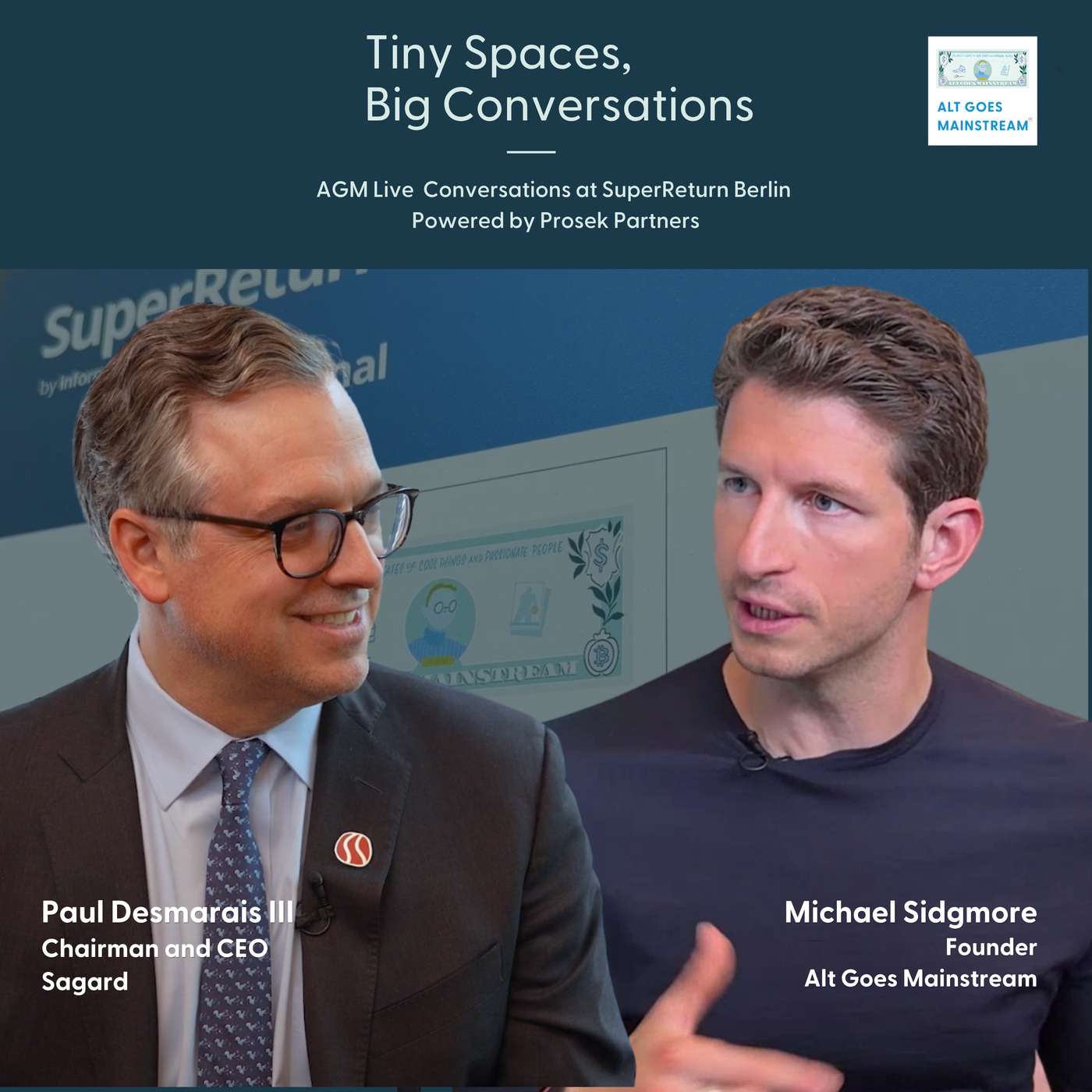 Sagard's Paul Desmarais III - building the next generation alternative asset manager: AGM Live at SuperReturn 29.07.2026 25minWelcome back to the Alt Goes Mainstream podcast.We sat down with Paul Desmarais III, the Co-Founder, Chairman, and CEO of Sagard, the fast-growing $46B global multi-strategy alternative asset manager.We were live from Berlin, which becomes the “capital of private capital” in June as private equity industry leaders make the annual pilgrimage to the city for one of the marquee private equity conferences, SuperReturn Berlin.With Prosek Partners and former Bloomberg TV journalist Deirdre Bolton as my producer, along with her team, we took over a Tiny Space cabin to hold big conversations with some of the industry’s leading alternative asset managers.Sagard combines a rich history and heritage of building asset management businesses with a modern approach to building a global alternative asset manager.Paul’s deep understanding of the industry comes from being part of a family of multiple generations of asset management pioneers in Canada who have built some of the industry’s largest financial services businesses. Paul is the “next first generation” of asset management pioneers to come out of the Desmarais family. He started Sagard with $400M in seed capital in 2016 and, in ten short years, has grown the platform into a global multi-strategy alternative asset manager with over $46B. Sagard’s mission to empower founders by being a business that builds businesses shines through in the approach Paul and the team have taken in building Sagard. The firm has incubated, built, and acquired asset management talent and firms to scale across strategy and geography into the global platform that it is today.Paul and I had a fascinating conversation about the business of asset management and why Sagard exists to serve entrepreneurs around the world. We covered:Sagard’s entrepreneurial DNA.What does it mean to build a business that builds businesses?Being the “next first generation.”How Sagard approaches the buy, build, partner framework of asset management businesses.How Sagard has expanded its platform across asset classes and strategies.How to build a global, multi-strategy asset management brand.Why specialization matters in asset management.How to approach the wealth channel.The decentralized pod shop model.The future of private markets.BioPaul Desmarais III is the Chairman and CEO of Sagard, an alternative asset management firm active in venture capital, private equity, credit, and real estate.Paul has led Sagard since 2016, along with a handful of close partners bound by a common vision: partnering with entrepreneurs to catalyze transformation in our investments and communities. Sagard has experienced outstanding growth, with assets under management increasing to over $46B.Under Paul, Sagard has built a global network of expertise that helps companies lead, embrace, and stay ahead of disruptive trends, expanding activity in North America, Europe, and the Middle East. Paul engages actively in growing Sagard companies. Within the Sagard ecosystem, Paul is the Executive Chairman and Co-Founder of Portage (fintech & financial services investing) and the Chairman and Co-Founder of Diagram (venture builder). Within the investment portfolios, he is the Chairman of Wealthsimple, Novisto, and Sagard Wealth, and a director of Nesto and Midas. Paul also sits on the board of Empower, the number two 401(k) business in the U.S.Show Notes00:00 Live From SuperReturn00:10 Meet Paul Desmarais III01:06 Family Business Roots01:23 G1 Entrepreneur Mindset01:35 Launching Sagard 201601:51 Generational Reinvention02:02 Early Spark To Build03:40 Learning From Mistakes04:33 By Entrepreneurs For Entrepreneurs04:45 Sagard Origin Story04:58 Power Corp Alternatives Gap05:43 Starting With Credit06:10 Serving Beyond The Family06:46 Alignment With Family Capital07:19 Customer First Performance07:44 Team Money Invested07:53 Generational Time Horizon08:47 Patience Builds Partnerships09:22 Innovation In The DNA09:39 Regional To Global Champions09:53 Why Reinvention Matters10:26 Platform Strategy Mix11:02 Pillars Of The Firm11:25 Fintech Ecosystem Flywheel11:35 Building The Competitive Moat12:07 Emerging Managers Advantage12:41 Synergies At Scale13:08 Designing Collaboration13:47 Incentives And Shared Carry15:07 Values Drive Culture23:25 Legacy And Entrepreneur Impact24:39 Closing Thanks
 -
 Brookfield's Anuj Ranjan - "own the boring that makes exciting possible": AGM Live at SuperReturn 28.07.2026 31minWelcome back to the Alt Goes Mainstream podcast.We sat down with Brookfield Private Equity CEO Anuj Ranjan. We were live from Berlin, which becomes the “capital of private capital” in June as private equity industry leaders make the annual pilgrimage to the city for one of the marquee private equity conferences, SuperReturn Berlin.With Prosek Partners and former Bloomberg TV journalist Deirdre Bolton as my producer, along with her team, we took over a Tiny Space cabin to hold big conversations with some of the industry’s leading alternative asset managers.Brookfield has a rich legacy as an asset owner and operator of some of the “businesses that drive the global economy.” Brookfield is a firm where skin in the game (~25% of every fund includes an investment from Brookfield’s balance sheet) meets scale and synergies across its investment platform, which spans private equity, infrastructure, real estate, credit, and energy.Now, they are looking to own what’s next.What will the next era of private equity require? A different approach, according to Brookfield Private Equity CEO Anuj Ranjan. The conversation that Anuj and I had in the Tiny Space cabin covered big themes.Brookfield is investing in the megatrends that are driving the world’s economy across its platform, from digitalization to decarbonization to deglobalization. The firm’s focus on industrials in its private equity business makes it well equipped to invest in essential companies, as Brookfield aptly describes their investment focus as “own[ing] the boring that makes exciting possible.”Anuj and I had a fascinating conversation about the current state of private equity and what it will take to drive value in a new era for the industry where “12 is the new 5.” We covered:Brookfield’s history as an owner-operator.How the firm’s long-term perspective informs its investments in and ownership of private equity-backed companies.Anuj’s experience investing in India was an exercise in patience.Why is today the era of “roll up your sleeves private equity?”How Brookfield is approaching value creation in industrial companies.Where Brookfield believes it can leverage AI to create post-deal operational value.Why Brookfield partnered with OpenAI to create DeployCo in order to scale enterprise AI deployment.Where are we in the adoption curve of physical AI and robotics?BioAnuj Ranjan is Chief Executive Officer of Brookfield’s Private Equity Group and Brookfield Business Corporation. In this role, Mr. Ranjan is responsible for the investments, operations, and expansion of the Private Equity business, in addition to managing Brookfield’s external strategic partnerships. He is a member of Brookfield’s Executive Committee.Mr. Ranjan joined Brookfield in 2006 and has held various positions within the company and its affiliates. He established and previously led Brookfield’s India and Middle East operations.Mr. Ranjan holds a Master of Business Administration degree from Ivey Business School at Western University and a Bachelor of Science degree from the University of Alberta.Thanks, Anuj, for sharing your wisdom, expertise, and passion about private markets and how to create value through operating companies better.Show Notes00:00 Welcome to SuperReturn00:07 Meet Anuj Ranjan00:55 From Software to Finance02:03 Building India and Mideast02:48 India Deal Frenzy03:17 Five Years of Patience03:22 Learning Before Buying03:28 First True Buyouts04:06 Profits and Team Growth04:16 Taking Model Global04:32 Growth Amid Headwinds04:58 Roll Up Sleeves Private Equity Era05:06 Operational Value Creation05:12 Brookfield Platform DNA05:33 Balance Sheet Advantage05:54 Long-Term Investing06:12 Patience Gets Rewarded07:14 Testing Tech on Balance Sheet07:32 Owning What’s Next07:41 AI Needs Hard Assets07:58 Brookfield at the Center09:09 One Firm Collaboration09:51 Platform Informs Deals11:27 Westinghouse Nuclear Bet15:19 Picking the Right Carve Outs16:34 Pricing Power Example17:51 From Five to Twelve18:59 Why Carve Outs Win Now20:05 AI for Industrial Ops20:53 Data Before AI22:12 Predictive Maintenance Story23:31 Physical AI and Robotics24:52 Digitizing the Physical World25:33 Humanoid Robotics Timeline26:28 Deploying AI at Scale26:56 Execution Beats Innovation27:52 Best AI Investment Thesis28:00 Buying Boring Businesses28:52 AI Ready Leadership Team29:30 Hiring Real Tech Leaders30:00 Blockbuster vs Netflix30:43 Closing Reflections
 -
 Vista Equity Partners' Monti Saroya - "harnessing" the power of AI in the enterprise: AGM Live at SuperReturn 22.07.2026 25minWelcome back to the Alt Goes Mainstream podcast.We sat down with Vista Equity Partners’ Senior Managing Director, Co-Head of Flagship Fund, Monti Saroya. We were live from Berlin, which becomes the “capital of private capital” in June as private equity industry leaders make the annual pilgrimage to the city for one of the marquee private equity conferences, SuperReturn Berlin.With Prosek Partners and former Bloomberg TV journalist Deirdre Bolton as my producer, along with her team, we took over a Tiny Space cabin to hold big conversations with some of the industry’s leading alternative asset managers.Vista Equity Partners has been a pioneer in enterprise software investing. They have been at the forefront of every major technology platform shift, whether it was on-prem to cloud, the adoption of enterprise software, and now the agentification of the enterprise with AI.The $103B AUM scaled specialist software investor has dedicated its efforts to building “mission critical” enterprise software companies that organizations can’t live without.Monti has had a front-row seat in building and developing both infrastructure and software that the technology industry can’t live without. He brings to bear the perspective of someone who lived through the early days of the internet from his time at Cisco Systems and Siebel Systems. Through this lens, and drawing on his experience investing in enterprise software companies since joining Vista in 2008, Monti is able to make sense of where, how, and why AI will be adopted within the enterprise, and what it means for both operators and investors.This conversation with Monti was one of the most illuminating conversations I’ve had on AI recently. He pieced together so much of what is happening in AI today, covering:The different layers of AI adoption.Why “harness” companies can be valuable.Where AI agents are having the most impact on a business.Why open source is the next wave of the AI buildout.The Linux lesson for AI.Why Monti is so excited about the firm’s investment in SambaNova.Do “harness” companies have a moat?Why the moats for many AI companies might surprise you.Why sovereign AI is the next big thing.BioMonti Saroya joined Vista Equity Partners in 2008 and is Co-Head of the Vista Flagship Fund and sits on its Investment Committee.Additionally, Monti serves as a member of Vista’s Executive Committee, the firm’s governing and decision- making body for matters affecting its overall management and strategic direction, and Vista’s Private Equity Management Committee, the firm’s decision-making body for matters affecting Vista’s overall private equity platform.Monti is also the Co-Chief Executive Officer of VistaOne, Vista’s evergreen private equity vehicle, and serves on the Investment Committee. Monti helps lead Vista’s artificial intelligence initiatives, driving the firm’s approach to AI adoption through strategic partnerships and the deployment of AI-enabled infrastructure and capabilities across the platform and portfolio ecosystem.He currently sits on the boards of Acumatica, Allvue Systems, Avalara, Cloud Software Group, Duck Creek, Finastra, Infoblox, Playlist, Smartsheet, Solera, among others. Monti was actively involved in the firm’s investments in Apptio, Cvent (NASDAQ: CVT), Datto (formerly NYSE: MSP), Marketo, PowerSchool (formerly NYSE: PWSC), SumTotal, The ACTIVENetwork, and Transfirst, among others.Prior to Vista, Monti worked as a Senior Research Analyst for JMP Securities, where he provided research for buy-side clients on public on-demand (SaaS) companies. Monti previously worked as an Associate on the enterprise software/applications team. Before JMP, Monti worked at Siebel Systems in a sales capacity for the CRM On Demand division. Prior to Siebel, Monti worked for Cisco Systems in various operations roles.Thanks, Monti, for sharing your wisdom, expertise, and passion about AI, enterprise software, and technology transformations.Show Notes00:00 Intro: Live from SuperReturn00:10 Meet Monti Saroya00:20 Why AI Matters Now00:41 Career Origins Cisco00:57 Building Internet 1.0 01:21 Infrastructure Before Apps01:25 From Compute to Giants01:38 AI as New Buildout01:56 Internet 1.0 Lessons02:17 Change Slower Then Bigger02:48 Consumer Adoption First03:08 What We Underestimate03:26 AI Like Electricity03:41 Three Layer AI Stack04:03 Cloud Providers Layer04:15 App Layer Value Capture04:26 What Is the App Layer04:41 Software Needs Humans05:25 Agents System of Action05:53 Where Agents Impact Today06:20 Engineering Productivity Gains07:29 Augment Not Replace07:51 Rearchitecting With AI08:16 Harnesses Around Intelligence09:17 Routing Cuts Compute Cost09:26 Model Choice and Governance10:55 Enterprise Goals Drive AI11:51 Workflow Context Is Key12:47 SambaNova Compute Economics14:27 Token Subsidies Ending15:39 Open Source Next Wave16:02 Linux Lesson for AI17:03 Deploying Is the Hard Part17:40 Vista Agentic Factory18:42 Avoiding Services Trap19:05 Where Value Gets Created19:32 NeoCloud Inference Centers20:21 Harness Companies and Moats21:05 Enterprise Software Reality Check21:51 CFOs Demand ROI Metrics22:44 Word Association Game23:15 Workflow Specific Future23:48 Sovereign AI Is Coming24:24 Wrap Up and Thanks
 -
 Apax's Andrew Sillitoe and Mitch Truwit - buying complexity for value in the middle market: AGM Live from SuperReturn 21.07.2026 28minWelcome back to the Alt Goes Mainstream podcast.We were live from Berlin, which becomes the “capital of private capital” in June as the private equity’s industry leaders make the annual pilgrimage to the city for one of the marquee private equity conferences, SuperReturn Berlin.Much of the SuperReturn conference is centered on fundraising. GPs take up every available space — from hotel rooms to Tiny Space cabins that line the parking spots on Budapester Strasse outside of the InterContinental conference venue — to conduct meetings with LPs.With Prosek Partners and former Bloomberg TV journalist Deirdre Bolton as my producer, along with her team, we took over a Tiny Space cabin to hold big conversations with some of the industry’s leading alternative asset managers.Our first conversation was with Apax Co-CEOs Andrew Sillitoe and Mitch Truwit.Apax is one of the pioneers in the private equity industry. The firm’s rich history dates back to the 1970s, when its founders, Alan Patricof (US), Sir Ronald Cohen (UK), and Maurice Tchénio (France), came together to establish the first US-UK partnership firm in private equity. During that time period, the firm backed Steve Jobs and the first iteration of Apple. The UK and US firms merged in 1981, laying the foundation for Apax.Today, Apax stands at over $80B in aggregate funds raised. The firm underwent its second leadership transition in 2014, when Andrew and Mitch were elected as Co-CEOs, succeeding Martin Halusa, who became Chairman.Apax sits in a unique position. They are a scaled platform that focuses on the middle market. They operate across three sectors, Tech, Services, and Digital / Consumer, infusing a digital DNA and value creation team into everything they do. Their platform spans “a mile wide and a mile deep,” which is what much of the conversation between Andrew, Mitch, and me unpacked.We had a fascinating discussion about the current state of private equity and the middle market, why Apax focuses on “density-driven business models,” why the firm focuses on carveouts in the middle market, what’s underappreciated about the middle market, why it’s important to “buy in the right neighborhood and fix it up,” and how the firm’s core values of “having impact through insight and tenacity” drive every decision they make.BiosAndrew Sillitoe has been Co-CEO of Apax since 2014. He is Chairman of the Apax Global Investment Committee and the Digital Investment Committee, amongst others. He is also a member of the Apax Executive Committee. He has been based in London since joining the Firm in 1998, focusing on Tech & Telco investments.Andrew has been involved in a number of investments including Inmarsat, Intelsat, King, Orange Switzerland, TIVIT, TDC and Unilabs.Prior to joining Apax, Andrew was a consultant at LEK. Andrew holds an MA in Politics, Philosophy and Economics from the University of Oxford and an MBA from INSEAD.BoardsAndrew has previously served on the boards of Inmarsat, King, Intelsat, Orange Switzerland and TDC.Mitch Truwit is Co-CEO of Apax, based in New York.Prior to joining Apax in 2006, Mitch was the President and CEO of Orbitz Worldwide between 2005 and 2006 and was the Executive Vice President and Chief Operating Officer of priceline.com between 2001 and 2005.Mitch is a graduate of Vassar College where he received a BA in Political Science. He also holds an MBA from the Harvard Business School.BoardsMitch serves as a Board member of Openlane and Trade Me. Prior boards include Advantage Sales & Marketing, Assured Partners, Dealer.com, Bankrate, Garda World, Hub International, Trader Canada, Boats Group and Quality Distribution Inc.Mitch serves on the charitable boards of the Apax Foundation, the John McEnroe Tennis Project, Posse and StreetSquash.Thanks, Andrew and Mitch, for a fascinating conversation and for sharing your expertise, wisdom, and passion at the intersection of investing and operating in private equity.Show Notes00:00 Meet Apax co-CEOs, Andrew Sillitoe and Mitch Truwit00:26 Andrew’s Origins at Apax00:47 Private Equity Then vs Now01:25 Apax Growth and Values01:45 Curiosity as a Differentiator02:04 Mitch’s Operator Background02:56 Why Mitch Joined Apax03:40 Defining the Middle Market04:14 Why Sub-Billion EV Works04:59 Middle Market Talent Gap05:20 Carve Outs as a Strategy05:29 TRADER Corporation - Canada App Turnaround06:12 Scaled Platform Advantage07:14 Digital DNA and AI Wave07:50 Top Line Growth Lever08:36 Add-ons and TAM Expansion09:33 ECI Case Study Roll Up10:07 Integration Over Collection10:28 Exit Options in a Bigger PE World10:59 Building for Multiple Buyers11:45 Fund Size Discipline12:34 Choosing Returns Over AUM13:16 Understanding Firm DNA14:01 Global Micro Investing14:49 Making Global Pods Work15:50 Scale Specialization Flexibility17:08 Where to Invest Now19:23 Buying Complexity for Value20:15 Moats and Investment Committee22:13 Why Middle Market Excites Them23:19 Future of PE and AI at Scale24:50 Impact Insight Tenacity Culture25:54 Obligation to Dissent Story26:55 Aspirational Brand Analogy27:48 Wrap Up and Thanks
 -
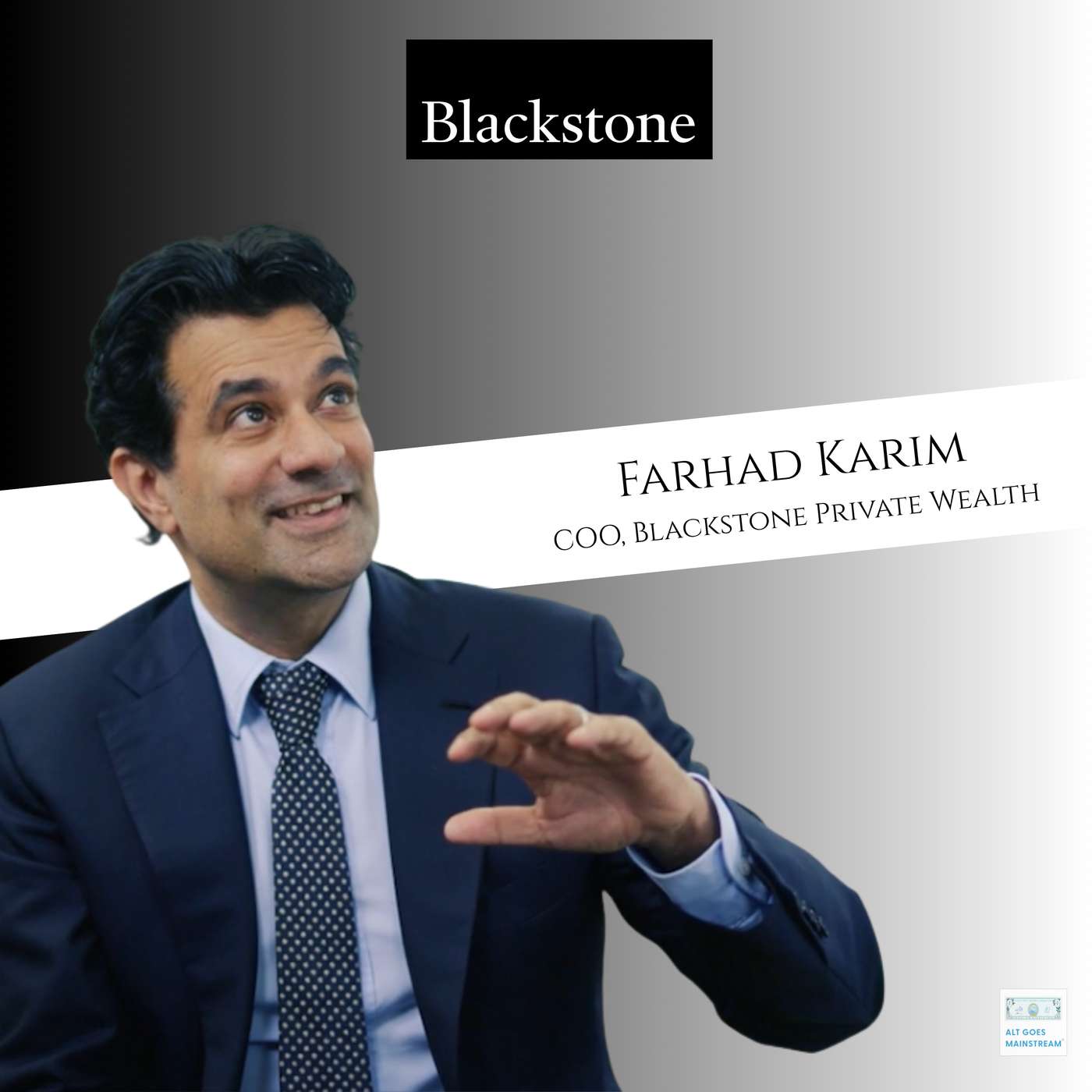 Blackstone's Farhad Karim - a "relentless" focus on serving private wealth 09.07.2026 38minWelcome back to the Alt Goes Mainstream podcast.Today’s podcast takes us to the heart of Mayfair in London, where Blackstone Private Wealth COO Farhad Karim shared the firm’s history and evolution in Europe. He took a walk down memory lane to discuss the firm’s 25th anniversary in Europe as we walked through Berkeley Square from Blackstone’s current office to their new office at the other end of the square, highlighting how the firm has become the largest owner of commercial real estate in Europe and the importance of building a local presence in the region.Farhad took on the role of Chief Operating Officer of Blackstone Private Wealth in 2024 after a career at Blackstone that included serving as Chairman and Chief Operating Officer of Blackstone Europe and holding a senior leadership role in the firm’s Real Estate business.Farhad and I had a fascinating discussion about the evolution of Blackstone’s business in Europe and the firm’s Private Wealth business globally. We covered:Why it’s important to “meet people where they are at.”What Farhad learned from his experience as chairman of Blackstone Europe.Building and expanding Blackstone’s Private Wealth business.How Blackstone will continue to be a pioneer in private wealth.The next phase of product innovation in the wealth channel.How an international perspective has shaped Farhad's approach to building the Private Wealth business.Harmonizing the institutional and private wealth businesses when delivering solutions to LPs.The human element of working with wealth.What it means to be “relentless.”Perspectives on evergreen funds.The scale of opportunity, information, and access.Thanks, Farhad, for sharing your wisdom, expertise, and passion about private markets and private wealth.Show Notes00:33 A Message from Our Sponsor, Ultimus Fund Solutions02:14 Farhad’s Blackstone Journey03:37 Speed and Certainty Culture04:07 Real Estate to Wealth Channel Parallels05:04 Building for Local Markets06:16 On-the-Ground Coverage Worldwide07:45 Education at Scale08:52 How Well Advisors Understand Private Markets10:45 Early Innings Adoption12:09 Packaging Private Markets Products13:46 Simplicity vs Customization14:39 Consolidation and Institutionalization19:14 Global Trends Localization19:33 Scale and Deal Competition20:11 AI Advantage in Investing20:53 Portfolio Ops AI Playbook21:42 Private Markets Risk Setup22:17 Noise Versus Facts22:57 Fighting False Narratives23:42 Wealth Channel Narrative24:18 Why Private Markets Matter25:10 Investing Through Geopolitics26:25 Evergreen Versus Drawdown27:21 Discipline Over Structure28:28 Semi-liquid as a Feature29:17 Evergreen for Founders30:39 Evergreen Mindset and Compounding32:01 Owning the Narrative Direct35:22 Fiduciary Seriousness Balance36:15 Relentless Culture Explained38:39 Closing Footnotes(Timestamp 02:46.7): Largest owners of commercial real estate in Europe.(Timestamp 31:33.0): Reference to Class I annualized, inception-to-date return from January 2017.A Word from Our Sponsor, UltimusThis episode of Alt Goes Mainstream is brought to you by Ultimus, the full-service fund administrator and transfer agent powering asset managers in private and public markets. As alts go mainstream, you need real expertise to handle complex fund structures, connect with key distribution partners, and handle sophisticated compliance, reporting, and transparency demands.That’s Ultimus: high-tech, high-touch solutions for over 450 clients and 2,500 funds with $775B in assets under administration. Backed by an expert team of over 1,200 employees, they place client service at the core of their business, helping you navigate complexity during your fund structuring or launch and then supporting you through every stage of growth. Whether you’re already in the market or thinking about entering private wealth, you can trust their team’s deep expertise in retail alternatives to help you reach your goals.Learn more at ultimusfundsolutions.com or email [email protected] thank Ultimus for their support of alts going mainstream.
 -
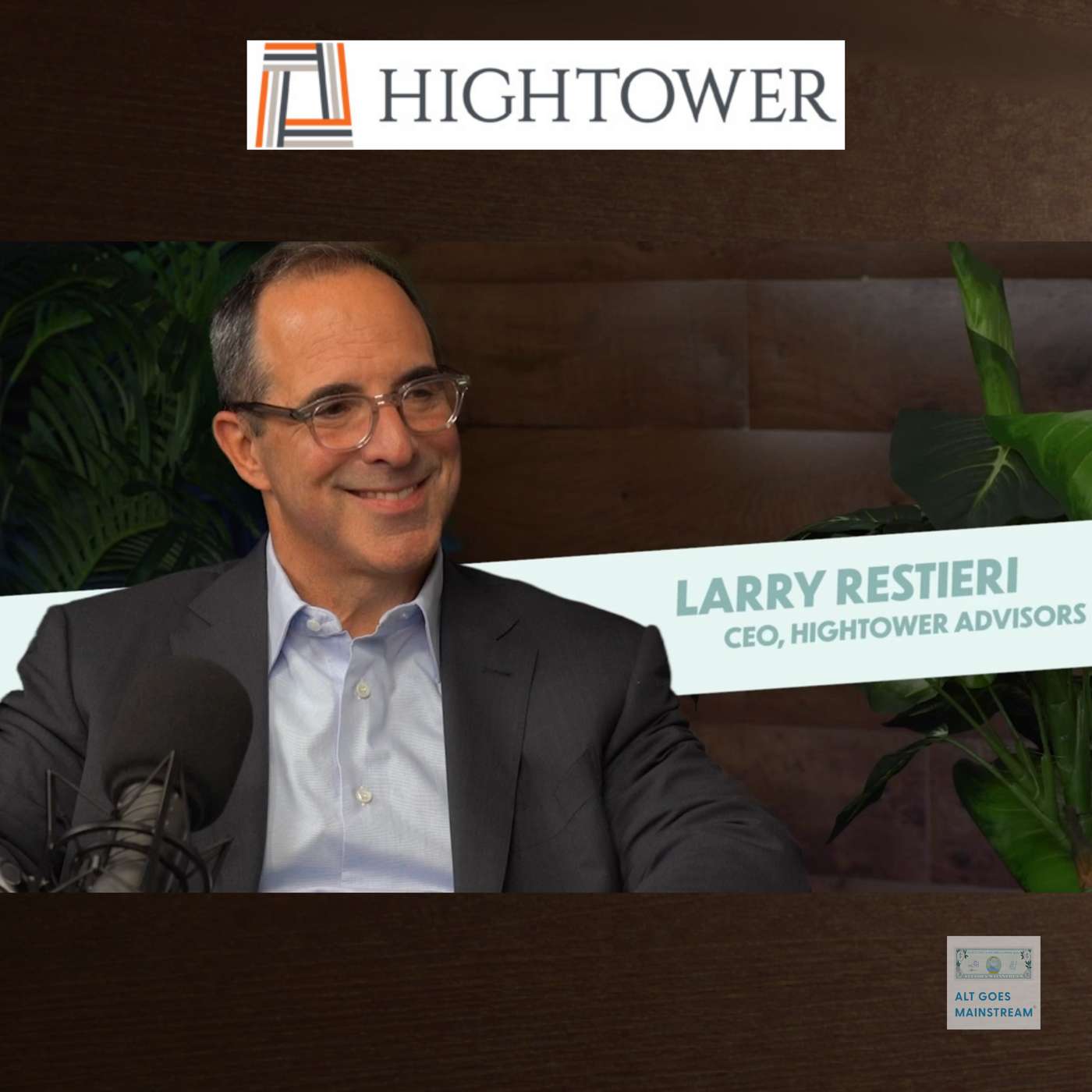 Hightower's Larry Restieri - building a $1T RIA and operating at the intersection of private markets and private wealth 02.07.2026 50minWelcome back to the Alt Goes Mainstream podcast.Today’s episode dives deep into the world of wealth management with someone whose career is emblematic of the intersection of private markets and private wealth.We sat down with Larry Restieri, the CEO of Hightower.Larry is the CEO and a member of the Board of Directors at Hightower, a national wealth management firm that empowers financial advisors to deliver sophisticated investment and financial services to clients.Larry joined the firm in June 2025 from Goldman Sachs, where he was a Partner. Larry served as the CEO of Goldman’s AYCO business, which specializes in workplace financial planning and private wealth advisory services.He held a variety of leadership roles at Goldman across its wealth and asset management divisions, including heading up the Alternative Capital Markets business.Larry and I had a fascinating conversation about the continuing convergence of private markets and private wealth from someone who was at the forefront of this industry transformation. We covered:The evolution of private markets within the wealth channel.Lessons learned from Larry’s time building Goldman’s Alternative Capital Markets business and the AYCO business.The path to building Hightower into a $1T RIA. The build-out of Hightower’s Signature Wealth brand.What does the continued buildout of private equity-backed platforms mean for the evolution of wealth management?What drives financial advisors?The benefits of the independent RIA model.How and why wealth clients should be thinking about private markets.Thanks, Larry, for sharing your wisdom, expertise, and passion at the intersection of private markets and private wealth.Show Notes00:15 Meet Larry Restieri01:22 Sponsor Message from Ultimus Fund Solutions05:37 Larry Career Journey11:21 Why Hightower12:02 Next Wealth Evolution14:37 Democratizing Alternatives17:08 Education And Expectations18:14 GPs And Distribution19:49 Big Versus Niche Managers22:09 Platform Due Diligence23:20 NEPC And Hightower One26:18 Trillion Dollar RIAs27:42 What Advisors Want28:57 Building Hightower One29:27 Signature Wealth Brand30:41 Acquiring The Bahnsen Group31:57 Why Brand Matters32:22 The Volkswagen Brand Analogy34:15 Culture and Community36:34 Hightower 3.0 Strategy37:59 Open Architecture Explained41:04 Private Equity Exits43:06 Multiples and Deal Discipline44:49 Markets and Cash Flow46:20 Private Markets Adoption49:10 GPs Serving RIAs52:33 Closing ReflectionsA Word from Our Sponsor, UltimusThis episode of Alt Goes Mainstream is brought to you by Ultimus, the full-service fund administrator and transfer agent powering asset managers in private and public markets. As alts go mainstream, you need real expertise to handle complex fund structures, connect with key distribution partners, and handle sophisticated compliance, reporting, and transparency demands.That’s Ultimus: high-tech, high-touch solutions for over 450 clients and 2,500 funds with $775B in assets under administration. Backed by an expert team of over 1,200 employees, they place client service at the core of their business, helping you navigate complexity during your fund structuring or launch and then supporting you through every stage of growth. Whether you’re already in the market or thinking about entering private wealth, you can trust their team’s deep expertise in retail alternatives to help you reach your goals.Learn more at ultimusfundsolutions.com or email [email protected] thank Ultimus for their support of alts going mainstream.Editing and post-production work for this episode was provided by The Podcast Consultant.
 -
 Oak Hill Advisors' Eric Muller - operating at the intersection of public and private credit: live from iCapital Connect 30.06.2026 31minWelcome back to the Alt Goes Mainstream podcast.We were live from iCapital Connect’s conference in Phoenix, where we sat down with some of the industry’s leaders across asset management and wealth management.Eric Muller is Portfolio Manager & Partner, CEO - BDCs for Oak Hill Advisors (OHA). Oak Hill, which was acquired by T. Rowe Price in December 2021, has $112B AUM across performing and distressed credit-related investments in North America, Europe and other geographies.Eric shares responsibility for leading OHA’s private credit business and has primary management responsibility for OHA’s BDCs. Prior to joining OHA in 2018, Mr. Muller worked in Goldman Sachs’ Merchant Banking Division, where he was a Partner in the Private Credit Group, responsible for leading its private senior lending business in North America and managing vehicles that invested across the spectrum of the credit market. With credit on the minds of many, Eric provided a nuanced perspective on the current state of the credit markets and where to uncover both opportunity and risk in the market.Eric and I had a fascinating conversation about the current state of private credit. We discussed:How his experience in private equity has informed how he approaches credit investing.What are the risk / reward trade-offs in private credit?Why credit investors need to be pessimists.How LPs should evaluate private credit firms and why the ability to do workouts matters.How do private equity sponsors pick their credit partners?Why private credit firms might have higher recovery rates than liquid credit markets.How OHA’s combination with T. Rowe Price has helped the firm productize for the wealth channel.What are misconceptions about private credit risk and liquidity?Where are the opportunities in liquid credit versus illiquid credit?Thanks, Eric, for sharing your wisdom, expertise, and passion for private credit and private markets.Show Notes00:00 Relative Value Lens00:11 A Message from Ultimus Fund Solutions01:08 Live at iCapital Connect01:46 Early Career at Goldman01:59 Mezzanine Fund Era02:23 GFC Timing Advantage02:51 Running Private Credit03:03 Joining Oak Hill04:15 PE Lessons for Credit04:30 Different Investor Questions04:56 Credit Risk Reward Mindset05:45 Optimistic Pessimist06:16 Downside With Right Tail06:47 Workouts and Distressed Skills08:02 Private vs Liquid Recoveries08:19 Aligned Lenders in Private08:54 Sponsor Relationships Matter09:22 Choosing the Right Partners10:46 Volatility Reveals Behavior11:22 Is Capital Commodity12:39 OHA Distressed DNA13:31 Crossroads of Markets14:26 Challenges of Unconstrained15:22 Risk Spectrum for LPs16:19 T Rowe Deal Rationale17:18 Democratizing Alts Access19:10 One Ticker Multi Strategy20:28 Liquidity Wrappers Tradeoffs21:49 Quasi Liquid Reality Check22:35 Liquid vs Illiquid Risk23:27 Diligence Questions for LPs24:33 Origination Edge and Speed26:19 Public-Private Financing Choice26:55 Alts in Target Date Funds28:41 Private Credit Misconceptions30:30 Closing ThoughtsA Word from Our Sponsor, UltimusThis episode of Alt Goes Mainstream is brought to you by Ultimus, the full-service fund administrator and transfer agent powering asset managers in private and public markets. As alts go mainstream, you need real expertise to handle complex fund structures, connect with key distribution partners, and handle sophisticated compliance, reporting, and transparency demands.That’s Ultimus: high-tech, high-touch solutions for over 450 clients and 2,500 funds with $775B in assets under administration. Backed by an expert team of over 1,200 employees, they place client service at the core of their business, helping you navigate complexity during your fund structuring or launch and then supporting you through every stage of growth. Whether you’re already in the market or thinking about entering private wealth, you can trust their team’s deep expertise in retail alternatives to help you reach your goals.Learn more at ultimusfundsolutions.com or email [email protected] thank Ultimus for their support of alts going mainstream.DisclosuresThe views expressed are the interviewee’s, are subject to change without notice, and may differ from those of other T. Rowe Price associates. Information and opinions are derived from proprietary and nonproprietary sources deemed to be reliable; the accuracy of those sources is not guaranteed. This material does not constitute a distribution, offer, invitation, recommendation, or solicitation to sell or buy any securities. It does not constitute investment advice and should not be relied upon as such. Investors should seek independent legal and financial advice, including advice as to tax consequences, before making any investment decision.Some or all alternative investments may not be suitable for certain investors. Alternative investments are typically speculative and involve a substantial degree of risk. Each fund and account may be leveraged and engage in other speculative practices that may increase the risk of investment loss. Investors must realize that they could lose all or a substantial amount of their investment. In addition, the fees and expenses charged may be higher than the fees and expenses of other investment alternatives, which will reduce profits. T. Rowe Price has $1.7T total assets under management and OHA has $112B assets under management as of March 31, 2026.In the United States, securities are offered through T. Rowe Price Investment Services, Inc., a broker dealer, registered with the U.S. Securities and Exchange Commission and a member of FINRA. Securities are offered through T. Rowe Price Investment Services, Inc., and advisory services are offered by Oak Hill Advisors, L.P. OHA is a T. Rowe Price company. T. Rowe Price Investment Services, Inc. and Oak Hill Advisors, L.P. are affiliated. 5629822
 -
 Oaktree's Danielle Poli - private credit: "boring is beautiful" - live from AGM's RIA Field Trip 25.06.2026 32minWelcome back to the Alt Goes Mainstream podcast.We were live from AGM’s RIA Field Trip at Brookfield’s New York office at Brookfield Place with Oaktree Managing Director and Co-Portfolio Manager Danielle Poli to unpack why private credit is at a crossroads and why dispersion is growing. Danielle has a unique perch to form a developed view on the current state of private credit. She sits at the intersection of public and private credit, providing her with perspectives on where opportunities and risks lie across the liquidity spectrum. Danielle is a founding member of Oaktree’s Global Credit strategy and its Investment Committee, which was established in 2017. She’s been an important contributor to its growth into a scaled multi-asset credit platform. She previously led Oaktree’s product specialist group, which she helped build into a global team supporting credit, private equity, and real estate. She joined Oaktree in 201 and has nearly two decades of experience in private markets. She has been named to Barron’s list of the 100 Most Influential Women in U.S. Finance. Danielle and I had a fascinating conversation about the current state of private credit, where cracks might be emerging and where to find pockets of opportunity amid the dislocations. We covered:Why is boring beautiful in private credit?Where are we in the credit cycle?Why it’s important to have a contrarian mindset.Where, why, and how dispersion is rising in credit.How to underwrite software investments post-AI. Why asset-backed finance can be a diversifier.Why now could be the time to prepare for opportunistic and rescue lending opportunities, as maturities are fast approaching.How to balance public and private credit investing. Thanks, Danielle, for sharing your wisdom, expertise, and passion about private credit. Show Notes00:00 Live Podcast Intro00:06 Meet Danielle Poli00:17 Contrarian Mindset 00:34 Our Sponsor, Ultimus Fund Solutions01:32 Where Private Credit Stands Today02:22 Bifurcation and ABF Rise02:59 Liquid vs Private Convergence03:36 Danielle’s Career Background04:13 Why Liquidity Matters04:39 Dislocation Advantages05:10 Risk Return Tradeoffs05:18 Liquidity Premium Compression05:41 Covenants and Complexity06:01 Not All Private Credit is Equal06:34 Corporate vs Asset-Backed07:05 Why ABF Diversifies07:30 How Allocators Fund ABF07:49 Credit Taking Share from Equities08:49 Tough Direct Lending Vintages09:22 Rates Shock and Leverage09:43 AI Disrupts Software Credit10:41 Oaktree Software Underweight12:01 Underwriting Software Post AI12:57 Inside the Investment Committee13:57 Selling Rallies and Positioning31:30 Closing ThoughtsA Word from Our Sponsor, UltimusThis episode of Alt Goes Mainstream is brought to you by Ultimus, the full-service fund administrator and transfer agent powering asset managers in private and public markets. As alts go mainstream, you need real expertise to handle complex fund structures, connect with key distribution partners, and handle sophisticated compliance, reporting, and transparency demands.That’s Ultimus: high-tech, high-touch solutions for over 450 clients and 2,500 funds with $775B in assets under administration. Backed by an expert team of over 1,200 employees, they place client service at the core of their business, helping you navigate complexity during your fund structuring or launch and then supporting you through every stage of growth. Whether you’re already in the market or thinking about entering private wealth, you can trust their team’s deep expertise in retail alternatives to help you reach your goals.Learn more at ultimusfundsolutions.com or email [email protected] thank Ultimus for their support of alts going mainstream.
 -
 Breaking bread at Franklin Templeton's Private Markets RIA Advisory Council - Franklin Templeton's Dave Donahoo and Summit Wealth Group's Chelsea Ganey 23.06.2026 43minWelcome back to the Alt Goes Mainstream podcast.Building community is central to enabling an industry to grow. There are few better ways to build community and foster trusted relationships than to break bread. As the wealth channel continues to expand its adoption of private markets, peer-to-peer learning becomes ever more important. Sharing experiences and perspectives is what will help the wealth channel adopt private market solutions thoughtfully and responsibly.That’s what happened at Franklin Templeton’s Private Markets RIA Advisory Council event and dinner at BLACKBARN recently. Bread was broken. Relationships were built. We also found time to record a podcast at a dinner table with Franklin Templeton’s Head of Private Markets - Americas Wealth Management Dave Donahoo and Summit Wealth Group’s CIO Chelsea Ganey. The discussion granted access to a direct, honest, and raw window into perspectives on how asset managers and wealth managers can work together to educate one another and help move the industry forward. And yes, bread was broken before and after the podcast.Please enjoy this fantastic conversation with Dave and Chelsea on the state of private markets and private wealth and how both asset managers and wealth managers can balance customization and differentiation with scale.Thanks, Dave and Chelsea, for such a thoughtful and fascinating conversation.Show Notes00:00 A message from Ultimus, our Sponsor00:57 Meet The Guests01:07 Private Markets Are Eating World01:29 Why Create RIA Council01:49 Franklin Client-First DNA02:09 From Public To Private02:43 Listening Beyond Product03:07 Peer To Peer Insights04:12 Chelsea On The Benefits of Advisory Council04:36 Inbox Overload And Filtering05:10 Serving Diverse RIA Needs06:15 Many RIAs Within One06:30 What CIOs Need Most06:54 Educating Advisors At Scale07:32 GPs Must Listen Better08:26 What Education Really Means09:01 Repeatable Advisor Resources09:54 Avoid Oversimplifying Complexity10:30 Education Shifts To Choice11:50 Balancing Choice And Customization13:13 Centralized Menu For Scale15:10 Sober Selling And Integrity16:30 Franklin Private Markets Platform17:59 Specialist Managers Model18:28 Infrastructure Partnership Play19:22 Do More With Less Managers21:04 Holistic Options For Advisors21:47 Where Product Innovation Goes22:23 Sun Moon Stars Aligning22:53 Future Access 401k Models23:12 Start With Investment Why23:29 Allocator Innovation Lens24:09 Models Versus Customization24:35 Why Innovation Matters24:53 No One Right Way25:18 Whats Still Missing25:33 Scaling And The Middle25:55 Magic Wand Question26:19 Plumbing And Reporting26:32 Perpetual Structure Tradeoffs26:46 Protecting Investment Integrity27:30 Long Term Over Short Term27:42 Need More CIO Mindsets28:03 Strategic Allocation For Alts28:50 Chelsea On Strategic Framing29:34 Making Liquidity Intuitive30:06 Educating On Liquidity Risk30:29 Private Markets Risk Reframe31:32 Dave On Portfolio Construction32:14 Standardizing Industry Terms32:42 Building Trust With Liquidity33:45 A Fun Question38:10 Client Analogies That Stick40:43 Fat Pitch Opportunities Today42:53 Closing Thoughts And ThanksA Word from Our Sponsor, UltimusThis episode of Alt Goes Mainstream is brought to you by Ultimus, the full-service fund administrator and transfer agent powering asset managers in private and public markets. As alts go mainstream, you need real expertise to handle complex fund structures, connect with key distribution partners, and handle sophisticated compliance, reporting, and transparency demands.That’s Ultimus: high-tech, high-touch solutions for over 450 clients and 2,500 funds with $775B in assets under administration. Backed by an expert team of over 1,200 employees, they place client service at the core of their business, helping you navigate complexity during your fund structuring or launch and then supporting you through every stage of growth. Whether you’re already in the market or thinking about entering private wealth, you can trust their team’s deep expertise in retail alternatives to help you reach your goals.Learn more at ultimusfundsolutions.com or email [email protected] thank Ultimus for their support of alts going mainstream.
 -
 Juventus' Giorgio Chiellini - life lessons in sports and business from a world-class performer on and off the field 11.06.2026 55minWelcome back to the Alt Goes Mainstream podcast.We went to a mecca of football to film the latest episode. This conversation takes us to Turin, Italy, where we were in the Juventus Creator Lab with Italian football (I mean soccer for the Americans) legend and one of the best defenders of all time Giorgio Chiellini.Giorgio’s career and playing style were defined by Juventus’ very motto, fino alla fine (“until the end”). It’s also a mentality that he brings to every aspect of life on and off the pitch. After an illustrious playing career at one of the world’s biggest clubs, Juventus, and a career that also included two World Cup appearances for Italy and winning the Euro 2020 as the Captain of Italy, Giorgio came back home to Turin rejoin the club where he starred for 17 years: Juventus. Giorgio has gone from the pitch to the boardroom, helping to lead Juventus as the Director of Football Strategy. He has brought the player’s perspective to the business side of football, balancing the nuances of sports and business.Despite the demands that Giorgio faced on the field as a player to maintain a standard of play at the highest levels of the game, he found time during his career to pursue his passion for business. He received his MBA while playing for Juventus and also was involved in the player development side in his final years as a player at LAFC. More recently, he became an investor in LAFC and in Mercury13, a multi-club investor in women’s football teams, including FC Como. He’s also an active investor in the European startup community.Giorgio and I had a wide-ranging and fascinating conversation that covered several dimensions of the business of sport. We discussed:How teams, owners, and investors can balance both the sport and business aspects of the game.What it means for sports now that players can have bigger social followings than their clubs or leagues.How Juventus has built and amplified its brand through initiatives like the Creator Lab.How clubs like Juventus can help players build their off-field brand while maintaining a high-quality on-field product.How Giorgio’s work off the field while playing informed how he wanted to spend his time post-career in business.What Giorgio’s day-to-day is like as Director of Football Strategy for Juventus.Why Giorgio invested in LAFC and what he thinks about the future of the MLS.What American owners and investors can learn from European soccer clubs and owners, and what European clubs and owners can learn from American owners and investors.Thanks, Giorgio, for sharing your wisdom, expertise, and enthusiasm at the intersection of sports and business.Note: this episode was filmed in October 2025 with a plan to publish the conversation around the World Cup.Show Notes00:00 Split Second Decision01:06 A Message from Our Sponsor, Ultimus02:10 Meet Giorgio Chiellini04:17 What Is the Juventus Creator Lab04:36 Building Fans Through Content05:27 Football Brand Goes Global06:15 Revenue From Winning06:43 Two Hearts One Club07:52 Winning Versus Storytelling08:40 Fans Everywhere Now09:27 Too Many Games Problem09:51 Stakeholders and Calendar11:00 Owner Advice Communication11:28 From Kid to Club 14:12 Film Study for Matches15:02 The Saka Tactical Foul17:26 Social Media and Mental Health29:32 US World Cup Reality29:45 Grassroots Long Game30:09 MLS and USL Momentum30:14 Stadiums and Growth30:20 MLS Season vs Playoffs30:46 Supporters Shield Incentives31:11 Travel and Rest Mentality31:33 Europe Stakes Comparison31:54 Highlights Era Question32:24 Bite-Sized Sports Culture33:40 Choosing What to Watch33:55 Sports Must Adapt34:33 Owners Business View35:15 TV Rights and Strategy36:05 Institutional Money Trend36:42 Why Funds Love Sports37:04 Balancing Profit and Emotion38:12 Fiduciary Duty vs Winning39:15 Permanent Capital Advantage40:42 Mission Values Legacy41:54 Juventus DNA and Family44:31 Leadership Lessons Learned45:38 From Captain to Executive47:05 Humanity and Energy48:21 Player to Business Challenges50:00 Investing in Italian Startups51:47 How He Picks Investments52:43 Innovation and AI in Sport53:16 Favorite Alternative Investment54:34 Profitability and Winning55:21 ClosingA Word from Our Sponsor, UltimusThis episode of Alt Goes Mainstream is brought to you by Ultimus, the full-service fund administrator and transfer agent powering asset managers in private and public markets. As alts go mainstream, you need real expertise to handle complex fund structures, connect with key distribution partners, and handle sophisticated compliance, reporting, and transparency demands.That’s Ultimus: high-tech, high-touch solutions for over 450 clients and 2,500 funds with $775B in assets under administration. Backed by an expert team of over 1,200 employees, they place client service at the core of their business, helping you navigate complexity during your fund structuring or launch and then supporting you through every stage of growth. Whether you’re already in the market or thinking about entering private wealth, you can trust their team’s deep expertise in retail alternatives to help you reach your goals.Learn more at ultimusfundsolutions.com or email [email protected] thank Ultimus for their support of alts going mainstream.Editing and post-production work for this episode was provided by The Podcast Consultant.
Podcasts similares


Popular em
Este podcast também aparece nas paradas de podcasts destes países.
