
Who Arted: Weekly Art History for All Ages
Kyle Wood
0
Who Arted is an art history and art education podcast that explores art in all its forms, from traditional fine art to video game design, dance, and culinary arts. Each episode tells the story of a different artist and artwork, making art history fun and accessible to everyone. The podcast is written and produced by an art teacher and releases new episodes every Monday and Friday.
Эпизоды
-
 Ettore Sottsass | Carlton & Memphis Design 14.09.2026 14минEttore Sottsass was an Italian architect and designer who transformed the design landscape of the late 20th century by challenging the rigid functionalism of modernist architecture. Born in Austria and trained in Turin, Sottsass cultivated a philosophy centered on human joy and playful expression, values cemented during his time as a prisoner of war in World War II. After gaining international acclaim for iconic industrial works like the bright red Olivetti Valentine typewriter, he grew disillusioned with corporate minimalism. In December 1980, Sottsass gathered a collective of young international designers in Milan to establish the Memphis Group, a radical movement that debuted in 1981 and defined 1980s postmodern aesthetics through electric neon colors, asymmetric geometry, and whimsical laminates. A definitive example of this design philosophy is Sottsass’s 1981 Carlton bookcase, a monumental room divider created for the inaugural Memphis Milano exhibition. Constructed from medium-density fiberboard clad in vibrant plastic laminates, the piece playfully subverts conventional luxury furniture by utilizing synthetic materials and slanted shelves that embrace visual chaos over utilitarian storage. Featuring an anthropomorphic, totem-like silhouette set above a signature squiggled "Bacterio" pattern base, the Carlton merges ancient ceremonial forms with contemporary pop culture. Sottsass's boundary-pushing creations proved that the primary function of design extends beyond mere utility, serving instead to inject emotion, humor, and vitality into daily life. Check out my other podcasts Fun Facts Daily | Art Smart | Rainbow Puppy Science Lab Who ARTed is an Airwave Media Podcast. If you are interested in advertising on this or any other Airwave Media show, email: [email protected] Learn more about your ad choices. Visit megaphone.fm/adchoices
 -
 Author Interview CJ Denton | La Pittura 07.09.2026 37минMy guest this week is CJ Denton, author of a new novel called La Pittura. While his work is historical fiction, in preparation for the book, he conducted extensive research into the life of Artemisia Gentileschi, one of the most celebrated painters of the Italian Baroque era. We discussed her life and work particularly focusing on Self-Portrait as the Allegory of Painting (La Pittura), painted during her period in London around 1638–1639. She developed exceptional technical skill from an early age, learning the demanding craft of grinding raw pigments, sizing canvases, and mastering perspective in an era that severely limited professional opportunities for women. While discussions often fixate on her 1612 trial following her assault by Agostino Tassi, Gentileschi’s artistic brilliance and historical significance are far greater than that one ugly chapter. She navigated the practical realities of a working professional artist in 17th-century Florence and Naples, managing contracts, courting powerful noble patrons like the Medici, maintaining correspondence with intellectual luminaries like Galileo Galilei, and eventually operating her own independent studio. Find CJ Denton and La Pittura online: Amazon: https://amzn.eu/d/0iYzGRsRFacebook: https://www.facebook.com/share/1HhUNc9APz/?mibextid=wwXIfr Author page: https://andrewsparke.com/our-authors/c-j-denton/ Check out my other podcasts Fun Facts Daily | Art Smart | Rainbow Puppy Science Lab Who ARTed is an Airwave Media Podcast. If you are interested in advertising on this or any other Airwave Media show, email: [email protected] Learn more about your ad choices. Visit megaphone.fm/adchoices
 -
 Author Interview: Ryan T. Pozzi | The Mess that Made Them 03.09.2026 43минToday I have a bonus episode in the feed. I originally planned to release my interview with Ryan T. Pozzi on Monday, but due to technical difficulties, I had to flip things around. Today, his new book, The Mess that Made Them, is hitting stores. The book focuses on the difficult circumstances that shaped a number of different artists. In our conversation, we focused primarily on Suzanne Valadon. French artist Suzanne Valadon led a life marked by radical reinvention, rising from poverty and unconventional beginnings to become a trailblazing figure in modern art. Born Marie-Clémentine Valadon in the late 19th century, she initially worked as a circus acrobat before an injury ended her performance career. She subsequently transitioned to modeling in the vibrant bohemian center of Montmartre, posing for renowned painters such as Pierre-Auguste Renoir, Henri de Toulouse-Lautrec, and Edgar Degas. Observing these artists closely while developing her own visual voice, Valadon taught herself to paint, mastering technical composition and earning serious recognition across Parisian art circles as an independent creative force. Valadon’s distinct visual style challenged traditional academic norms, most notably in celebrated works like The Blue Room (1923). Rather than adhering to the passive, idealized female nudes favored by the male gaze of the era, she portrayed everyday modern women with psychological depth, agency, and grounded realism. In The Blue Room, a clothed woman lounges casually in striped pajamas with books at her feet and a cigarette in hand, reclaiming the classic reclining figure motif. Through rich color palettes, expressive brushwork, and unflinching character studies, Valadon permanently disrupted classical conventions and cemented a vital, enduring legacy in art history. Check out my other podcasts Fun Facts Daily | Art Smart | Rainbow Puppy Science Lab Who ARTed is an Airwave Media Podcast. If you are interested in advertising on this or any other Airwave Media show, email: [email protected] Learn more about your ad choices. Visit megaphone.fm/adchoices
 -
 TLDR Eugène Delacroix | Liberty Leading the People 31.08.2026 13минEugène Delacroix stands as one of the defining figures of 19th-century French art and the leading pioneer of the Romantic movement. Rejecting the rigid, line-driven academic standards of Neoclassicism championed by contemporaries like Jean-Auguste-Dominique Ingres, Delacroix embraced raw emotion, expressive brushwork, and radiant color inspired by Peter Paul Rubens. From his controversial Paris Salon debut with The Barque of Dante (1822) and his role as a model for Théodore Géricault’s The Raft of the Medusa, to his transformative 1832 journey across Morocco and Algeria and his dramatic lithographic illustrations for Johann Wolfgang von Goethe's Faust, Delacroix consistently pushed the boundaries of visual expression. His most celebrated masterpiece, Liberty Leading the People (1830), commemorates the July Revolution that toppled King Charles X in favor of Louis-Philippe. Spanning over eight feet high and nearly eleven feet wide, the monumental canvas employs a classical pyramidal composition to organize a turbulent scene of urban revolt. At its center stands Marianne, the allegorical personification of Liberty, wearing a Phrygian cap and leading fighters across diverse social classes over a barricade of fallen bodies. Blending historical reality with powerful allegory, the painting remains an enduring global symbol of revolution, human freedom, and social justice housed in the permanent collection of the Musée du Louvre. Liberty Leading the People is one of the 250 artworks required for AP Art History. To learn more about other works from the curriculum, check out my AP Art History Cram Session playlist on Spotify. Check out my other podcasts Fun Facts Daily | Art Smart | Rainbow Puppy Science Lab Who ARTed is an Airwave Media Podcast. If you are interested in advertising on this or any other Airwave Media show, email: [email protected] Learn more about your ad choices. Visit megaphone.fm/adchoices
 -
 Joseph Ducreux | Self-Portrait of the Artist in the Guise of a Mocker 24.08.2026 11минJoseph Ducreux (1735–1802) was an innovative French portrait painter known for defying the rigid conventions of 18th-century academic art. After training under masters such as Jean-Baptiste Greuze, Ducreux gained acclaim for his pastel work, miniatures, and precise observational likenesses. His talent earned him royal commissions, including a diplomatic assignment to Vienna to paint a portrait of Marie Antoinette prior to her marriage to Louis XVI. Despite receiving royal patronage, Ducreux was never admitted into the prestigious Royal Academy of Painting and Sculpture, an outsider status that allowed him greater artistic freedom to explore human emotion and physiognomy outside the strict boundaries of traditional academic portraiture. During the social and political upheaval of the French Revolution, Ducreux produced a series of unconventional, theatrical self-portraits that broke the fourth wall by capturing exaggerated expressions such as yawning, stretching, and laughing. His most famous work, Self-Portrait of the Artist in the Guise of a Mocker (1793), depicts the painter grinning and pointing directly at the viewer, directly challenging the stoic, idealized norms of late 18th-century art. Aided by fellow painter Jacques-Louis David during the Reign of Terror, Ducreux navigated turbulent political shifts and continued exhibiting his expressive work until his death in 1802. In modern popular culture, Ducreux’s mocking self-portrait found a viral second life as an internet meme, pairing his 18th-century smug pose with verbose, archaic translations of contemporary hip-hop and pop lyrics. Listen Ad-Free on Patreon. For just $3 per month, you can get ad-free versions of Fun Facts Daily, Who ARTed and Art Smart. Head over to https://www.patreon.com/cw/FunFactsDailyPod if you are interested. Check out my other podcasts Fun Facts Daily | Art Smart | Rainbow Puppy Science Lab Who ARTed is an Airwave Media Podcast. If you are interested in advertising on this or any other Airwave Media show, email: [email protected] Learn more about your ad choices. Visit megaphone.fm/adchoices
 -
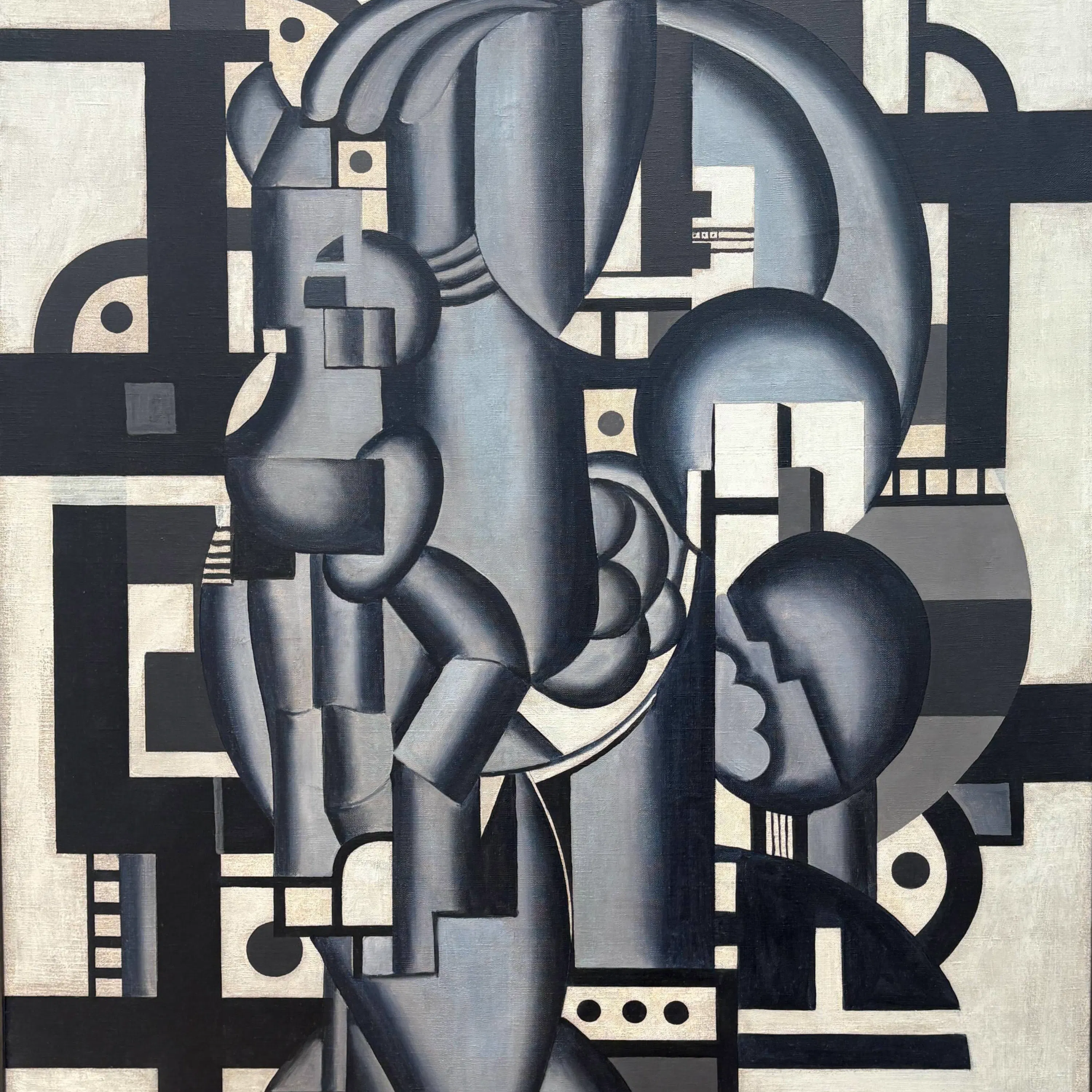 Fernand Léger | Composition in Blue 17.08.2026 11минFernand Léger was a pioneering French modernist painter whose foundational training as an architectural draftsman profoundly shaped his structured, geometric approach to art. After absorbing the influence of Paul Cézanne and collaborating among avant-garde circles in Paris, Léger developed a distinct variation of Cubism characterized by cylindrical, tubular forms, a style contemporary critics dubbed "Tubism." His military service in World War I, where he survived a gas attack, deepened his fascination with the industrial beauty of modern machinery and inspired his goal to create art accessible to working-class audiences. This perspective catalyzed his "Mechanical Period" during the 1920s, a phase marked by vibrant, machine-like compositions and urban motifs that celebrated industrial progress. Léger's 1921–1927 painting Composition in Blue, housed in the Art Institute of Chicago, exemplifies this mechanical aesthetic and demonstrates rigorous principles of design. Utilizing a limited monochromatic blue palette, hard-edged geometry, and carefully balanced line weights, the piece synthesizes three-dimensional volumetric shapes with flat planes. Beneath its paint layers, conservation analysis reveals a structured grid system that Léger used to systematically map the canvas. By translating machine components into universal abstract harmonies, Léger transformed industrial forms into a lasting modern aesthetic. Listen Ad-Free on Patreon. For just $3 per month, you can get ad-free versions of Fun Facts Daily, Who ARTed and Art Smart. Head over to https://www.patreon.com/cw/FunFactsDailyPod if you are interested. Who ARTed is an Airwave Media Podcast. If you are interested in advertising on this or any other Airwave Media show, email: [email protected] Learn more about your ad choices. Visit megaphone.fm/adchoices
 -
 Stuart Davis | Swing Landscape 10.08.2026 12минStuart Davis was an influential 20th-century American modernist painter who bridged European abstract movements like Cubism with distinctively American subjects and aesthetics. Born in 1892, Davis studied under Ashcan School leader Robert Henri in New York, where he initially focused on urban realism before finding inspiration in European avant-garde styles at the landmark 1913 Armory Show. Throughout the 1920s and 1930s, he incorporated commercial graphics, consumer packaging, and jazz rhythms into his visual compositions, pioneering an approach that prefigured Pop Art. Active in arts advocacy, Davis worked with the WPA Federal Art Project during the Great Depression and held teaching positions at institutions such as The New School and Yale. One of Davis’s defining works is Swing Landscape (1938), a monumental canvas commissioned by the WPA Federal Art Project for the Williamsburg Houses public housing development in Brooklyn. Taking inspiration from the coastal town of Gloucester, Massachusetts, and the urban energy of New York City, the painting fragmentarily blends industrial, nautical, and architectural motifs into a vibrant arrangement of flattened shapes and bold colors. Named after the swing era of jazz, the composition translates musical syncopation into visual rhythm through sharp geometric shifts and contrasting colors. Although never installed at its intended housing complex site, Swing Landscape stands as a benchmark of American abstract public art and currently resides in the collection of the Indiana University Art Museum. Listen Ad-Free on Patreon. For just $3 per month, you can get ad-free versions of Fun Facts Daily, Who ARTed and Art Smart. Head over to https://www.patreon.com/cw/FunFactsDailyPod if you are interested. Check out my other podcasts Fun Facts Daily | Art Smart | Rainbow Puppy Science Lab Who ARTed is an Airwave Media Podcast. If you are interested in advertising on this or any other Airwave Media show, email: [email protected] Learn more about your ad choices. Visit megaphone.fm/adchoices
 -
 Tamara de Lempicka | Tamara in a Green Bugatti (encore) 07.08.2026 10минTamara de Lempicka remains the definitive icon of the Art Deco era, blending polished Cubist techniques with the glamorous, high-stakes atmosphere of the Roaring Twenties. From her harrowing escape during the Russian Revolution to her transformation into a Parisian socialite and eventually a Hollywood favorite, her life was a calculated masterpiece of self-invention. Her signature style, characterized by "soft Cubism" and metallic, architectural lighting, captured the spirit of the "New Woman"—independent, liberated, and sophisticated. Known for her relentless self-promotion and a portfolio of portraits that defined modern luxury, she became a favorite of the European aristocracy and the American film elite alike. The legendary self-portrait Tamara in a Green Bugatti serves as a focal point for understanding both the artist and the Art Deco movement. This work embodies the era's obsession with speed, industry, and geometric precision, rejecting the organic curves of Art Nouveau in favor of sleek, machine-age aesthetics. Although she famously curated her public persona even swapping her modest yellow Renault for a high-performance Bugatti on canvas Lempicka’s influence on the world of fashion and fine art remains undeniable. Check out my other podcasts Fun Facts Daily | Art Smart | Rainbow Puppy Science Lab Who ARTed is an Airwave Media Podcast. If you are interested in advertising on this or any other Airwave Media show, email: [email protected] Learn more about your ad choices. Visit megaphone.fm/adchoices
 -
 Artist Interview Emil Wilson | The Nightingales 03.08.2026 43минMy guest this week is Emil Wilson, the author and illustrator behind the new graphic novel, The Nightingales. Wilson started his career in advertising before attending art school in his fifties, spurred by the sudden loss of a friend that motivated him to finally take a leap of faith and pursue his true creative passions. We dive into the moving, true story of compassion from 1985 that inspired the book, and he gives us a fantastic behind-the-scenes look at his unique, layered watercolor process. We also chat about why he deliberately avoided reading other comics so he could cultivate his own intimate, authentic, sketchbook-style aesthetic. Find Emil Wilson online: Emil’s website: https://emilwilsonart.com/ Book link: https://www.amazon.com/Nightingales-Emil-Wilson/dp/1668217775 Listen Ad-Free on Patreon. For just $3 per month, you can get ad-free versions of Fun Facts Daily, Who ARTed and Art Smart. Head over to https://www.patreon.com/cw/FunFactsDailyPod if you are interested. Check out my other podcasts Fun Facts Daily | Art Smart | Rainbow Puppy Science Lab Who ARTed is an Airwave Media Podcast. If you are interested in advertising on this or any other Airwave Media show, email: [email protected] Learn more about your ad choices. Visit megaphone.fm/adchoices
 -
 Francisco Goya | The Third of May 1808 (encore) 31.07.2026 16минFrancisco Goya (1746-1828) is one of Spain's most important and complex artists. His career bridged the gap between the Old Masters and the modern era. He found success as a court painter for the Spanish monarchy, creating bright, lively tapestry designs for the royal palaces. However, a devastating illness in 1792 that left him completely deaf marked a profound turning point. His art took on a darker, more critical tone, evident in his series of satirical etchings, Los Caprichos, which targeted the follies of Spanish society. The horrors he witnessed during Napoleon's invasion of Spain (1808-1814) were unflinchingly documented in his print series, The Disasters of War. In his final years in Spain, Goya painted his most enigmatic and disturbing works, the "Black Paintings," directly onto the walls of his country home, creating private, nightmarish visions like Saturn Devouring His Son. The Third of May 1808, painted in 1814, is a monumental and revolutionary depiction of war. Breaking from centuries of tradition that glorified battle, Goya focuses on the brutal, systematized execution of captured Spanish civilians by a faceless French firing squad. The painting's power comes from its raw emotion, its dramatic use of light to illuminate the victims, and its central, Christ-like figure whose gesture of martyrdom has become a universal symbol of protest. As one of the first truly modern paintings, The Third of May 1808 stripped war of its romance and its influence resonates through the history of art, most notably in works by Édouard Manet and Pablo Picasso's famous anti-war mural, Guernica. Related episodes: Édouard Manet Pablo Picasso Auguste Rodin Check out my other podcasts Fun Facts Daily | Art Smart | Rainbow Puppy Science Lab Who ARTed is an Airwave Media Podcast. If you are interested in advertising on this or any other Airwave Media show, email: [email protected] Learn more about your ad choices. Visit megaphone.fm/adchoices
 -
 Neil Harbisson | Cyborg Artist (encore) 27.07.2026 9минNeil Harbisson is a contemporary artist who hears colors. He deliberately chose to hear colors and to make that happen, he underwent surgery which has caused him to become the first person ever to be issued a government ID recognizing him as a cyborg. Harbisson has a condition known as achromatopsia. For him and others with complete achromatopsia, all three types of cones in the retina are nonfunctional. He sees using only his rods meaning there is no color in his vision. It is a relatively rare condition affecting only about one in every 30,000 people. The thing that is even more rare though is Harbisson’s management of the condition. First off, you might expect someone with this condition not to gravitate toward the arts, but while color is one of the elements of art, it is not required. Art is about human expression and creativity. Harbisson found a very creative means of enhancing his senses. Neil Harbisson has an antenna. Basically, there is a camera at the end of the antenna. A digital camera detects light and stores it as electrical signals. Inside the antenna, the colors are translated into sound. Different hues or colors are converted to different sound frequencies. It is actually attuned to even detect light that is invisible in the infrared and ultraviolet spectra. Related Episodes: Who ARTed | Wassily Kandinsky Art Smart | Photography I am taking some time off to rest over the summer. I will be putting encore presentations of previous episodes to make it easy for those who subscribe to the feed to discover or rediscover some great artists/works. I will be back with new episodes right around back to school season. Listen Ad-Free on Patreon. For just $3 per month, you can get ad-free versions of Fun Facts Daily, Who ARTed and Art Smart. Head over to https://www.patreon.com/cw/FunFactsDailyPod if you are interested. Check out my other podcasts Fun Facts Daily | Art Smart | Rainbow Puppy Science Lab Who ARTed is an Airwave Media Podcast. If you are interested in advertising on this or any other Airwave Media show, email: [email protected] Learn more about your ad choices. Visit megaphone.fm/adchoices
 -
 David Hockney | A Bigger Splash (encore) 24.07.2026 16минExplore the life and work of David Hockney, one of the most influential British artists of the 20th and 21st centuries. Born in Yorkshire in 1937, Hockney's rebellious spirit and prodigious talent were evident from his early days at the Royal College of Art. His move to Los Angeles in 1964 marked a pivotal moment, as he swapped the grey skies of England for the bright, constant sunlight of California. This new environment inspired his most iconic motifs, including pristine swimming pools, modernist architecture, and a vibrant, flat style perfectly captured with new acrylic paints. Hockney became celebrated for his psychologically rich double portraits, his innovative photographic collages known as "joiners," and in later years, a passionate return to painting the English landscape of his youth. A deep dive into Hockney's 1967 masterpiece, A Bigger Splash, reveals his genius for capturing time, motion, and atmosphere. The large 8 foot by 8 foot painting juxtaposes a serene, California setting with the chaotic, fleeting explosion of water from an unseen diver. While often associated with Pop Art, Hockney's work is deeply personal, celebrating the joy of looking and challenging the conventions of perception. From paintbrushes to the iPad, Hockney has remained a relentless innovator, solidifying his status as a modern master. I am taking some time off to rest over the summer. I will be putting encore presentations of previous episodes to make it easy for those who subscribe to the feed to discover or rediscover some great artists/works. I will be back with new episodes right around back to school season. Check out my other podcasts Fun Facts Daily | Art Smart | Rainbow Puppy Science Lab Who ARTed is an Airwave Media Podcast. If you are interested in advertising on this or any other Airwave Media show, email: [email protected] Learn more about your ad choices. Visit megaphone.fm/adchoices
 -
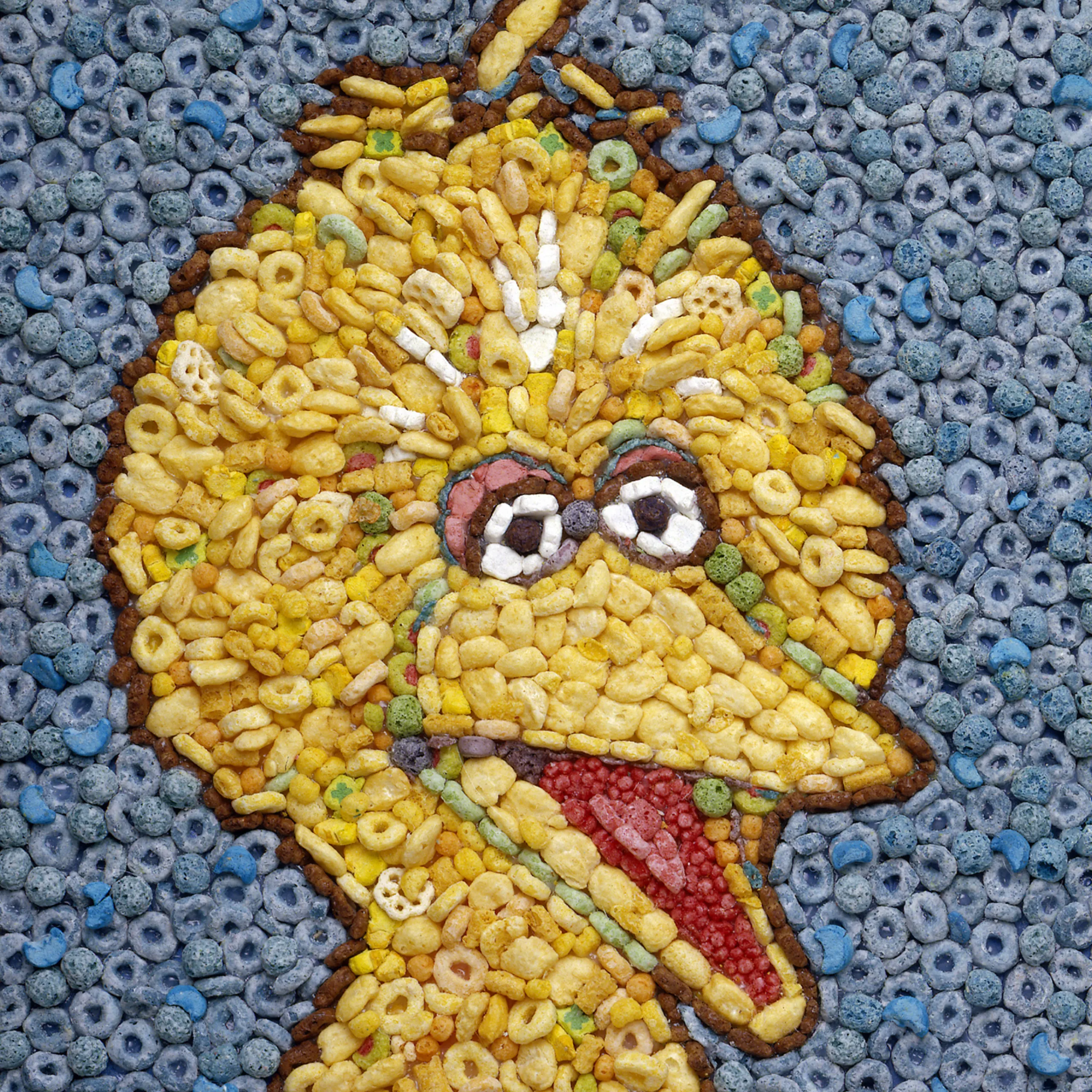 5 Artists Who Take Playing with Their Food to a Whole New Level (encore) 20.07.2026 9минToday I thought it would be fun to switch things up a little bit. Instead of focusing on just one artist and artwork, I’ve got 5 artists who work with food in ways most people would never consider. Jason Mecier creates mosaic portraits of celebrities using their favorite snacks, vices, and trash, making him a prominent figure in "junk art." Vik Muniz recreates famous paintings on a large scale using discarded materials, including garbage and chocolate syrup. Conrad Engelhardt crafts pointillist-style mosaics using wine corks, capitalizing on the various wine stains as his color palette. Jim Bachor fills city potholes with custom-made glass and marble tile mosaics, creating unexpected street art. Finally, Kristen Cumings uses thousands of Jelly Belly jelly beans to create vibrant mosaic masterpieces, including portraits and recreations of famous artworks. Cover art for this episode was Big Bird (breakfast cereal) by Jason Mecier. Image courtesy of the artist. I am taking some time off to rest over the summer. I will be putting encore presentations of previous episodes to make it easy for those who subscribe to the feed to discover or rediscover some great artists/works. I will be back with new episodes right around back to school season. Check out my other podcasts Fun Facts Daily | Art Smart | Rainbow Puppy Science Lab Who ARTed is an Airwave Media Podcast. If you are interested in advertising on this or any other Airwave Media show, email: [email protected] Learn more about your ad choices. Visit megaphone.fm/adchoices
 -
 TLDR Illuminated Manuscripts (encore) 17.07.2026 12минIlluminated manuscripts are the stunning, handcrafted books of the medieval world, created through a meticulous process in monastery workshops known as scriptoria. Scribes would copy text onto processed animal skin, or vellum, while artists known as illuminators added intricate illustrations and shimmering gold leaf. The term 'illuminated' comes from this dazzling use of gold and silver, which made the pages glitter like sacred objects. While gold provided the glimmer, the most precious material was often the brilliant blue pigment ultramarine, ground from lapis lazuli imported from Afghanistan. In addition to the sacred text, the margins of these books often contained whimsical and bizarre doodles, known as marginalia, featuring everything from knights battling snails to musical monkeys. A pinnacle of this art form is the Book of Kells, a masterpiece of Insular art created by Celtic monks around 800 CE. It is celebrated for its dense, complex Celtic knotwork and vibrant illustrations, most famously on its renowned Chi-Rho page (Folio 34r), a dizzying and meditative work of art that transforms the name of Christ into a sacred image filled with hidden figures and profound symbolism. I am taking some time off to rest over the summer. I will be putting encore presentations of previous episodes to make it easy for those who subscribe to the feed to discover or rediscover some great artists/works. I will be back with new episodes right around back to school season. Check out my other podcasts Fun Facts Daily | Art Smart | Rainbow Puppy Science Lab Who ARTed is an Airwave Media Podcast. If you are interested in advertising on this or any other Airwave Media show, email: [email protected] Learn more about your ad choices. Visit megaphone.fm/adchoices
 -
 Joan Miró | The Farm (encore) 13.07.2026 10минJoan Miró, a renowned Spanish painter, sculptor, and ceramicist, was born in Barcelona on April 20, 1893. Initially steered towards business, Miró's true passion was art. He studied at Barcelona's La Llotja School of Fine Arts and later the Escola d'Art. A period of illness led him to Mont-roig del Camp, a pivotal experience that solidified his commitment to painting and connection to nature. Miró absorbed influences from Fauvism and Cubism, joining the Courbet Group. In 1920, he moved to Paris, befriending Picasso and experiencing poverty, which fueled his art. His work The Farm marked a shift away from realism, and he later embraced Surrealism, developing a unique symbolic language. I am taking some time off to rest over the summer. I will be putting encore presentations of previous episodes to make it easy for those who subscribe to the feed to discover or rediscover some great artists/works. I will be back with new episodes right around back to school season. Listen Ad-Free on Patreon. For just $3 per month, you can get ad-free versions of Fun Facts Daily, Who ARTed and Art Smart. Head over to https://www.patreon.com/cw/FunFactsDailyPod if you are interested. Check out my other podcasts Fun Facts Daily | Art Smart | Rainbow Puppy Science Lab Who ARTed is an Airwave Media Podcast. If you are interested in advertising on this or any other Airwave Media show, email: [email protected] Learn more about your ad choices. Visit megaphone.fm/adchoices
 -
 Alfred Stieglitz | The Steerage (encore) 10.07.2026 11минI am taking some time off to rest over the summer. I will be putting encore presentations of previous episodes to make it easy for those who subscribe to the feed to discover or rediscover some great artists/works. I will be back with new episodes right around back to school season. Alfred Stieglitz is considered by many to be the father of modern photography. He looked at the camera as not simply a tool to document the world, but an artistic medium. His photograph The Steerage from 1907 is possibly his most famous work. As he set out on a European vacation, Alfred and his family were in first class, but he did not feel comfortable. He went out onto the deck and looked down at the people on the lower deck, the steerage. He said he wished he could mingle with them and he was struck by the lines and shapes on the ship as well as on the people's clothing. Everything about the scene laid out before him felt like a modern artwork and he sought to create a photograph using those lines and shapes to express his feeling in the moment. He ran back to his room and got his camera but only had one glass plate, one shot to capture the scene. Listen Ad-Free on Patreon. For just $3 per month, you can get ad-free versions of Fun Facts Daily, Who ARTed and Art Smart. Head over to https://www.patreon.com/cw/FunFactsDailyPod if you are interested. Check out my other podcasts Fun Facts Daily | Art Smart | Rainbow Puppy Science Lab Who ARTed is an Airwave Media Podcast. If you are interested in advertising on this or any other Airwave Media show, email: [email protected] Learn more about your ad choices. Visit megaphone.fm/adchoices
 -
 Possibilities 06.07.2026 41минPossibilities is a groundbreaking documentary that explores the enduring legacy of Helen Keller and the contemporary experiences of individuals who are blind, deafblind, or have low vision. My guest this week is Tony Stevens, one of the producers of the film and Assistant Vice President of Communications at the American Foundation for the Blind (AFB). The film bridges historical achievements with modern accessibility advocacy. It captures the everyday lives of 33 diverse people challenging pervasive misconceptions about visual impairment. The narrative grounds Keller's monumental impact such as her travels to 39 countries as a goodwill ambassador and receiving an honorary doctorate from Harvard, in the present-day realities of the disability rights movement. The film pioneers an innovative, highly inclusive approach to cinematic storytelling by fully integrating open audio description for all audiences. Rather than treating accessibility as a post-production afterthought, the production team incorporated it early in the process to craft a universally shared viewing experience. The audio description, voiced by narrator Satana Howery, deliberately breaks the fourth wall to transform a traditionally functional accessibility feature into a vital, artistic storytelling element. On June 27, 2026, Helen Keller’s 146th birthday, AFB’s award-winning documentary Possibilities made its global streaming debut. Start watching today by searching for Possibilities on Apple TV, Prime Video, Tubi, Biblio+, and Kanopy Listen Ad-Free on Patreon. For just $3 per month, you can get ad-free versions of Fun Facts Daily, Who ARTed and Art Smart. Head over to https://www.patreon.com/cw/FunFactsDailyPod if you are interested. Check out my other podcasts Fun Facts Daily | Art Smart | Rainbow Puppy Science Lab Who ARTed is an Airwave Media Podcast. If you are interested in advertising on this or any other Airwave Media show, email: [email protected] Learn more about your ad choices. Visit megaphone.fm/adchoices
 -
 Claes Oldenburg (encore) 03.07.2026 8минClaes Oldenburg (1929-2022), the Swedish-born American sculptor, wasn't your typical artist. He wasn't interested in grand figures or historical scenes. Instead, he found inspiration in the most unexpected places: the everyday objects that cluttered our lives. His art, a blend of Pop Art and gigantic whimsy, continues to transform cityscapes around the world. I am taking some time off to rest over the summer. I will be putting encore presentations of previous episodes to make it easy for those who subscribe to the feed to discover or rediscover some great artists/works. I will be back with new episodes right around back to school season. Related Episodes: Andy Warhol Roy Lichtenstein Yayoi Kusama Listen Ad-Free on Patreon. For just $3 per month, you can get ad-free versions of Fun Facts Daily, Who ARTed and Art Smart. Head over to https://www.patreon.com/cw/FunFactsDailyPod if you are interested. Learn more about your ad choices. Visit megaphone.fm/adchoices
 -
 Jack Kirby (encore) 29.06.2026 9минJack Kirby created some of the biggest names in the golden age of comics including: Fantastic Four, the X-Men, Iron Man, Black Panther, The Incredible Hulk. He basically populated the Marvel Universe. In 1970 though he felt like he wasn't getting the credit he deserved there and left Marvel for DC. There he created a series, Fourth World which I imagine he thought would demonstrate his brilliance and make Marvel wish they hadn’t blown it with him. The series was a commercial flop so maybe not the great “I told you so” he likely envisioned as he left Marvel for their rival, but some of the New Gods from the series live on in the DC Universe. Listen Ad-Free on Patreon. For just $3 per month, you can get ad-free versions of Fun Facts Daily, Who ARTed and Art Smart. Head over to https://www.patreon.com/cw/FunFactsDailyPod if you are interested. Check out my other podcasts Fun Facts Daily | Art Smart | Rainbow Puppy Science Lab Who ARTed is an Airwave Media Podcast. If you are interested in advertising on this or any other Airwave Media show, email: [email protected] Learn more about your ad choices. Visit megaphone.fm/adchoices
 -
 TLDR Sol LeWitt 26.06.2026 13минSol LeWitt was a pioneering American artist who played a crucial role in defining the Minimalist and Conceptual art movements. Born in Hartford, Connecticut, in 1928 to Russian immigrant parents, LeWitt pursued his early education in fine arts at Syracuse University before serving in the U.S. Army during the Korean War. Following his military service, he moved to New York City in 1953, where he immersed himself in the shifting art scene, studying at the School of Visual Arts and working as a graphic designer for the architect I.M. Pei. While working at the Museum of Modern Art in 1960 alongside other emerging artists like Dan Flavin and Robert Ryman, LeWitt began to actively reject the emotional subjectivity of Abstract Expressionism. His theories shifted the focus of artmaking from physical craftsmanship to intellectual concept, famously asserting that the idea behind a piece serves as a machine that generates the artwork itself. LeWitt’s revolutionary style took the form of three-dimensional "structures" often utilizing open geometric progressions based on the cube and his famous, large-scale wall drawings. Beginning in 1968, he stopped executing these wall drawings himself, instead authoring sets of instructions and diagrams for assistants or gallery technicians to follow. A prime example of this methodology is Wall Drawing #118, first executed in 1971, which relies on a strict instruction to place 50 random points on a wall and connect them all with straight lines, mathematically yielding exactly 1,225 lines regardless of who installs it. Beyond his independent creative output, LeWitt was deeply integrated into the artistic community as an avid collector, amassing thousands of pieces primarily by trading his own work with contemporaries. He continued his influential practice in Connecticut until his death in 2007 at the age of 78. Listen Ad-Free on Patreon. For just $3 per month, you can get ad-free versions of Fun Facts Daily, Who ARTed and Art Smart. Head over to https://www.patreon.com/cw/FunFactsDailyPod if you are interested. Check out my other podcasts Fun Facts Daily | Art Smart | Rainbow Puppy Science Lab Who ARTed is an Airwave Media Podcast. If you are interested in advertising on this or any other Airwave Media show, email: [email protected] Learn more about your ad choices. Visit megaphone.fm/adchoices
Похожие подкасты


Популярен в
Этот подкаст также попадал в подкаст-чарты этих стран.


