
The Great Women Artists
Katy Hessel
0
Created off the back of @thegreatwomenartists Instagram, this podcast is all about celebrating women artists. Presented by art historian and curator, Katy Hessel, this podcast interviews artists on their career, or curators, writers, or general art lovers, on the female artist who means the most to them.
Эпизоды
-
 Joan Snyder 03.06.2026 44минTODAY on the GWA Podcast is the esteemed painter Joan Snyder. Hailed for her large-scale gestural canvases that pulsate with colour, line and text, and are often layered with, buried in, or imploded with images of flowers, faces, or bodies, Snyder's all-encompassing works are nothing but electric. Sometimes large scale, with brushstrokes that populate the canvas like gemstones or musical scores with a whole range of keys: look at Snyder's work for a while, and it's like whole worlds emerge. Simultaneously soft but violent, beautiful yet aggressive, her works can evoke every season of emotion, just as she once wrote in her journal in 1972: "The strokes in my painting speak of my life and experiences. They are sometimes soft, they sometimes laugh, and are often violent. They bleed and cry. I speak of love and anguish, of fear, and mostly of hope." Born in 1940, Snyder came to art not straight away, but by chance during her studies at Rutgers University, when she was studying sociology in preparation for a career in social work. But it was under the mentorship of Billy Prichard that she pivoted to art, showing just how important teachers can be. Today we meet Joan in her Brooklyn studio, where she remains one of the legendary artists of her time. A recipient of a MacArthur Fellowship and an American Academy of Arts and Letters Award, and in museum collections all over the world, Snyder, at 85 – nearly 86 – is painting more than ever and this summer, will take to Paris for her upcoming show, Earthsongs at Thaddaeus Ropac Paris, and I cannot wait to find out more. Joan Snyder: Earthsongs opens 6 June at Thaddeus Ropac Paris https://ropac.net/exhibitions/796-joan-snyder-earthsongs/ THIS EPISODE IS GENEROUSLY SUPPORTED BY THE LEVETT COLLECTION: www.famm.com/en/ www.instagram.com/famm_mougins // www.merrellpublishers.com/9781858947037 Follow us: Katy Hessel: @thegreatwomenartists / @katy.hessel Sound editing by Tory Pope Co-produced with Molly LaFosse Music by Ben Wetherfield
 -
 Venice Biennale special: Lubaina Himid 05.05.2026 42минTODAY on the GWA Podcast: a very special bonus episode with Lubaina Himid, on her British Council Commission for the British Pavilion at Venice Biennale 2026, "Presenting History: Testing Translation". Returning to the podcast for the second time, Lubaina Himid is an acclaimed Lancashire-based artist working in paintings, sculpture, installations, archives, and more, whose career spans from the 1980s – when she was established as one of the leaders and trailblazers of Britain's Black Arts movement – to the 2020s, where she uses her art and her training in theatre to create all-encompassing works that tackle silenced histories. While you can go to episode 33 to hear a deep dive into Himid's life and work, today we are focusing on her pavilion for Great Britain at the 61st Venice Biennale! An event that happens every two years, thought of as the most important space to showcase art and artists, the Venice Biennale revolves around a central exhibition, this year curated by the late Koyo Kouoh, titled "In Minor Keys", and is often a signifier to define not just what is happening in the world, but how we can understand it through art. The rest of the Biennale is made up of pavilions – think of it like the Olympics of art, whereby countries have exhibition spaces, nominating an artist to stage a show to compete for the gold medal equivalent, The Golden Lion. For the British Pavilion this year Himid will showcase large multi-panel paintings drenched in her signature vibrant palette. In conversation with the British Pavilion's neoclassical architecture, the installation will present Britain as welcoming and airy, brimming with potential, albeit with an underlying sense of unease as the texts, images, and soundscape (made in collaboration with artist Magda Stawarska) subtly introduce tension. And I can't wait to find out more. Lubaina Himid's British Council Commission for the British Pavilion at the Venice Biennale will run from the 9th of May to the 22nd of November, 2026, and is curated by Ese Onojeruo. –– THIS EPISODE IS GENEROUSLY SUPPORTED BY THE LEVETT COLLECTION: www.famm.com/en/ www.instagram.com/famm_mougins // www.merrellpublishers.com/9781858947037 Follow us: Katy Hessel: @thegreatwomenartists / @katy.hessel Sound editing by Mikaela Carmichael Music by Ben Wetherfield
 -
Briony Fer on Sophie Taeuber-Arp 29.04.2026 45минTODAY on the GWA Podcast: esteemed art historian Briony Fer on the avant-garde icon, Sophie Taeuber-Arp. The Professor of History of Art at University College London and a Fellow of the British Academy, Briony Fer is one of the leading art historians in the world. Writing and publishing extensively on modern and contemporary art, specialising in the history of abstraction in the 20th century, Fer has curated monumental exhibitions on artists such as Anni Albers at the Tate Modern, Louise Bourgeois at the National Museum, Oslo, Eva Hesse at the Fruitmarket, Mel Bochner at Whitechapel, and more But the reason we are speaking with Fer today is because she has also just curated an exhibition “Sophie Taeuber-Arp: The Rule of Curves” at Hauser & Wirth Paris, and published a stunning book on the great artist, dancer, performer, puppet maker, bag weaver, teacher, stained-glass maker, sculptor, architect, and so much more, Sophie Taeuber-Arp… Born in Switzerland in 1889, Taeuber-Arp is famously associated with the Dada movement, a group of artists who formed post-devastation of World War I to make sense of a nonsensical world. Performing dance routines set to Hugo Ball poetry and turning to her geometric abstractions, full of explosions of colour, that can look equally mechanical as they are made with a human hand – as Fer writes, "diagrammatic and decorative” – Taebuer-Arp was at the forefront of modernism, conjuring new ways of working with form and colour, and exploring – and twisting – the grid, the icon of modern art, for the modern world - and I can’t wait to find out more. The book: https://shop.hauserwirth.com/products/sophie-taeuber-arp-la-regle-des-courbes-the-rule-of-curves THIS EPISODE IS GENEROUSLY SUPPORTED BY THE LEVETT COLLECTION: www.famm.com/en/ www.instagram.com/famm_mougins // www.merrellpublishers.com/9781858947037 Follow us: Katy Hessel: @thegreatwomenartists / @katy.hessel Sound editing by Mikaela Carmichael Music by Ben Wetherfield
-
Deborah Levy on Gertrude Stein 22.04.2026 38минTODAY on The Great Women Artists podcast is the esteemed writer, Deborah Levy on avant-garde pioneer Gertrude Stein. The author of several novels, including August Blue, Hot Milk and Swimming Home, alongside the critically acclaimed Living Autobiography trilogy (some of my favourite books of all time): Things I Don't Want to Know, The Cost of Living and Real Estate, Deborah Levy is one of the most recognisable and influential writers working today. She has been shortlisted twice each for the Goldsmiths Prize and the Booker Prize, is a fellow of the Royal Society of Literature, and has written for the Royal Shakespeare Company. But the reason why we are speaking with Levy today is because she has just published a new novel, My Year in Paris with Gertrude Stein, which follows a narrator who has travelled to Paris to find out more about Stein, the enigmatic, trailblazing writer and patron; a woman who bolted through the 19th to the 20th century and paved the way for modernism as we know it today, with her daring, experimental writing, from Tender Buttons to The Autobiography of Alice B. Toklas, and her patronage of artists such as Picasso, Cezanne, and Matisse – and I can’t wait to find out more. My Year in Paris with Gertrude Stein https://www.waterstones.com/book/my-year-in-paris-with-gertrude-stein/deborah-levy/2928377373535 THIS EPISODE IS GENEROUSLY SUPPORTED BY THE LEVETT COLLECTION: www.famm.com/en/ www.instagram.com/famm_mougins // www.merrellpublishers.com/9781858947037 Follow us: Katy Hessel: @thegreatwomenartists / @katy.hessel Sound editing by Mikaela Carmichael Music by Ben Wetherfield
-
 Alyce Mahon on Dorothea Tanning 14.04.2026 50минTODAY on the GWA Podcast, is art historian, Alyce Mahon discussing the great Surrealist, Dorothea Tanning. Born in Illinois in 1910, where she said “nothing happened but the wallpaper”, Tanning immersed herself in gothic literature to escape to other worlds. Travelling to Paris to hunt down the Surrealists, Tanning “entered” or “birthed” herself into art in 1942 with her self-portrait “Birthday”, which sees her bare-breasted and standing in front of slightly ajar doors that seemingly lead to nowhere. Settling in NYC, where she exhibited with Peggy Guggenheim, it was then to the wide-open landscape of Sedona Arizona, where she painted Caspar David Friedrich-like paintings of herself standing before nature – ”asserting the centrality of woman” (as Mahon wrote in her new book). She then returned to postwar France and, switching up her style, moved into a cloud-like and splintered abstractions, before turning to bodily-like soft-sculptures. Although she famously said, "don’t ask me to explain my paintings". Professor of Modern and Contemporary Art and a Fellow of Trinity College at the University of Cambridge, Mahon is one of the leading scholars on Surrealism in the world today. The author of numerous books including Surrealism and the Politics of Eros, 1938-1968 (2005), Eroticism & Art (2005), The Marquis de Sade and the Avant-Garde (2020), Mahon has also curated or advised on exhibitions on the likes of Leonor Fini, the great Argentine-born artist known for her meticulously rendered, proto-punk renaissance-like works, who she discussed with us on episode 48, as well as the Indian-born, once Cornish-based Ithell Colquhoun. Mahon was the curator of the monumental exhibition at Tate Modern in 2018, and now – has just published a brilliant, extensive book: Dorothea Tanning, a Surrealist world – our with Yale UP this month – that charts her life story across the places she lived in America and France and the place she imagined in her art, bringing alive her works, steeping them in history, and introducing us to Tanning’s surreal world – and I can’t wait to find out more. Alyce's book: https://yalebooks.co.uk/book/9780300244601/dorothea-tanning/ Get 20% off Dorothea Tanning: A Surrealist World by Alyce Mahon when you purchase via the Yale University Press London website www.yalebooks.co.uk (RRP £30, offer price: £24) Enter code ALYCE when prompted in the checkout. UK orders only. Includes FREE UK P&P. Offer expires on 8 June 2026. This is an exclusive offer that will only be honoured on yalebooks.co.uk (and not through other retailers) and cannot be used in conjunction with other promotions. –– THIS EPISODE IS GENEROUSLY SUPPORTED BY THE LEVETT COLLECTION: www.famm.com/en/ www.instagram.com/famm_mougins // www.merrellpublishers.com/9781858947037 Follow us: Katy Hessel: @thegreatwomenartists / @katy.hessel Sound editing by Nada Smiljanic Music by Ben Wetherfield
 -
Sonnet Stanfill on Elsa Schiaparelli 07.04.2026 47минTODAY on the GWA podcast: curator SONNET STANFILL on ELSA SCHIAPARELLI! Sonnet is the Senior Curator of Fashion at the V&A, where she has worked since 1999. Stanfill has curated numerous highly acclaimed exhibitions, such as New York Fashion Now, Ballgowns: British Glamour since 1950, and the landmark The Glamour of Italian Fashion (2014), which traveled to several museums across the US. She has published and lectured widely on various aspects of fashion design and holds an MA in the history of dress. But the reason why we are speaking with her today is because she has just curated the monumental exhibition, Elsa Schiaparelli: Fashion Becomes Art at the V&A, which charts the fearless life and daring work of the artist, designer, surrealist, influencer and general pioneer of who the modern woman was and what she could be. A creator of surrealist wonderlands with her fantastical gowns with floating eyes, lips, and lobsters, woven jackets embellished with astrological symbolism and mirrors inspired by Versailles, plus carrot-shaped buttons with embroidered cauliflowers, Schiaparelli – who also made jewellery and perfumes and wrote extensively – was one of the most inventive people of the 20th century. Born in Rome in 1890, she fled her conservative life for London, New York, and later Paris, where she befriended the surrealists and built a business on a scale hardly any woman had done before. Elsa Schiaparelli: Fashion Becomes Art, V&A South Kensington https://www.vam.ac.uk/exhibitions/schiaparelli?srsltid=AfmBOormAlPprtKeObeDZhw4NDLACOBGb9Z-ApA9ZHIsKAio0A3mDHAZ THIS EPISODE IS GENEROUSLY SUPPORTED BY THE LEVETT COLLECTION: www.famm.com/en/ www.instagram.com/famm_mougins // www.merrellpublishers.com/9781858947037 Follow us: Katy Hessel: @thegreatwomenartists / @katy.hessel Sound editing by Mikaela Carmichael. Music by Ben Wetherfield
-
Diane Apostolos-Cappadona on Mary Magdalene 02.04.2026 53минTODAY on the GWA Podcast: the esteemed scholar, author, and art historian DIANE APOSTOLOS-CAPPADONA on MARY MAGDALENE! Professor Emerita of Religious Art & Cultural History and Haub Director of the Catholic Studies Program at Georgetown University, and Distinguished Visiting Scholar in the Art History Program at The George Washington University, Apostolos-Cappadona has written extensively on art history. The author of Mary Magdalene: A Visual History (2023); A Guide to Christian Art (2020); Encyclopedia of Women in Religious Art (1996); Dictionary of Christian Art (1994); and The Spirit and the Vision: The Influence of Christian Romanticism on the Development of 19th-Century American Art (1995), and “In Search of Mary Magdalene: images and traditions” (2002)... Apostolos-Cappadona is one of the leading scholars in the world on religious art and, in particular, the image of Mary Magdalene. So - today - unlike in episodes where we deep-dive into a single artist, we will be taking an approach like we've previously done with Marina Warner on Eve, or Natalie Haynes on Medusa, and deep-diving into one of the most popular yet enigmatic figures in art: Mary Magdalene, who has been documented by artists in paint, sculpture, and more, for the past 16 centuries – and counting… and who seems to be portrayed differently every time. After all, Apostolos-Cappadona has referred to her as the most flexible figure in art. Look at images of her and you’ll see a reader, preacher, follower and witness; crying at the foot of the Cross, washing Christ’s feet or looking up to the heavens – repenting her sins with pearl-like tears – and too often conveniently exposing her chest. Sometimes identified by her jar of ointment or red robe (a contrast to the sanctified Virgin Mary’s blue), she is most popularly known, today, as Christ’s lover or a prostitute, despite no passage in the Bible describing her as such. Yet, the truth is we don’t know who she was, and it seems artists have adopted her in ways that coincide with their needs, and the needs of the time. THIS EPISODE IS GENEROUSLY SUPPORTED BY THE LEVETT COLLECTION: https://www.famm.com/en/ https://www.instagram.com/famm_mougins // https://www.merrellpublishers.com/9781858947037 Follow us: Katy Hessel: @thegreatwomenartists / @katy.hessel Sound editing by Tory Peters and Nada Smiljanic. Music by Ben Wetherfield
-
 Meryl Tankard on Pina Bausch 31.03.2026 43минTODAY on the GWA Podcast: choreographer Meryl Tankard on her mentor and friend, the legendary dancer and choreographer: PINA BAUSCH (1940-2009). Artist, choreographer, visionary, and trailblazer in bringing dance into the modern world, Pina Bausch – one of the most popular names when it comes to artists' influences – was hailed for her raw, haunting, experimental dances, and all-encompassing productions. Born in 1940 in Germany in the midst of WW2, from an early age Pina took ballet and dance lessons. In the 1950s, a scholarship at Juilliard took her to NYC, a time of great artistic reinvention, and then back to Germany, where she founded Tanztheater Wuppertal and created her groundbreaking choreographies. While the group, at first, faced hostility, the crowd – and the world – soon realized her innovations. On the magic of dancing with Pina Bausch, Meryl told me: "Every time we moved it had an emotion behind it ... that's what really shocked everyone at the beginning, because dance had always hidden the pain, hidden the insecurities; we had beautiful hair and costumes. And Pina went, 'let's forget all that. Let's talk about what you are really feeling'. She choreographed vulnerability. She choreographed all our insecurities, and she put music to it. People were just like, wow, that's me. They could see themselves." I meet with Meryl Tankard on the occasion of her creating a new encounter with Bausch's piece "Kontakthof", with “Kontakthof – Echoes of ‘78”, to be performed at Sadler’s Wells here in London (7–11 April). With nine of the original dancers returning to their roles, the production will integrate projections of archival footage from the original performance, reflecting the passage of time since its creation. And I can't wait to find out more! THIS EPISODE IS GENEROUSLY SUPPORTED BY THE LEVETT COLLECTION: https://www.famm.com/en/ https://www.instagram.com/famm_mougins // https://www.merrellpublishers.com/9781858947037 Follow us: Katy Hessel: @thegreatwomenartists / @katy.hessel Sound editing by Nada Smiljanic Music by Ben Wetherfield "Kontakthof – Echoes of '78" https://www.sadlerswells.com/on-tour/current-productions/kontakthof-echoes-of-78/
 -
Michaelina Wautier told by Katlijne Van der Stighelen (part 1) and Julien Domercq (part 2) 25.03.2026 59минI am so excited to say that my guests on the GWA Podcast are the esteemed scholar and curator, Katlijne Van der Stighelen, and Royal Acdemy senior curator, Julien Domercq! Part 1 – Katlijne Van der Stighelen Part 2 – Julien Domercq A professor at KU Leuven until 2024, who has published books on artist Anna Maria van Schurma, Katlijne is also a curator, having, in 1999, along with Mirjam Westen, curated the first ever exhibition on women artists in Belgium and the Netherlands. She is also the curator of Van Dyck l'Europeo: His Journey from Antwerp to Genoa and London', currently on view at the Palazzo Ducale in Genoa. But, the reason why we are speaking with Katlijne today is because she has, according to some news outlets, made the greatest artistic discovery of the 21st century - and no, we are not talking about Banksy. It was digging around in a museum basement just over 30 years ago that Katlijne stumbled upon the extraordinary work of Michaelina Wautier, then a totally obscure name not even known to 17th century specialists, active in the mid-1600s and at famed for her colossal paintings of mythological scenes, smaller meticulously rendered, almost breathable garlands of dazzling flowers, and portraits of strong female saints and characters, not unlike her Roman contemporary, Artemisia Gentileschi. But clearly something got lost upon the way – because until Katlijne’s work, Wautier’s name had been merely a footnote in art history. But now, thanks to decades of her tireless work, she is righting that wrong with Wautier’s first ever exhibition in the UK - following critically acclaimed shows at the Kunsthistorisches Museum, Vienna, MFA Boston, MAS-Museum in Antwerp, and more. Part one of this podcast will deep dive into this extraordinary artist – and story – and in the second half, we will walk around the exhibition with Royal Academy senior curator Julien Dormecq to transport you to London, and I can’t wait to find out more. ––– THIS EPISODE IS GENEROUSLY SUPPORTED BY THE LEVETT COLLECTION: https://www.famm.com/en/ https://www.instagram.com/famm_mougins // https://www.merrellpublishers.com/9781858947037 Follow us: Katy Hessel: @thegreatwomenartists / @katy.hessel Sound editing by Tory Peters Music by Ben Wetherfield
-
 Dita Amory on Helene Schjerfbeck 18.03.2026 41минTODAY on the GWA PODCAST: esteemed curator DITA AMORY, discussing HELENE SCHJERFBECK! Currently the Robert Lehman Curator in Charge of the Robert Lehman Collection at The Met, Amory has curated numerous critically-acclaimed exhibitions, such as Pierre Bonnard: the Late Interiors, Madame Cézanne, Félix Vallotton, Vertigo of Color, and more. A graduate of art history at Trinity College, Sarah Lawrence College, and the Institute of Fine Arts, New York University, where she earned a master’s degree – Amory began her career as a librarian, before becoming Curator of Drawings, then Chief Curator at the National Academy of Design. She joined the Met in 1997 as Assistant Curator of the Robert Lehman Collection, taking charge of the department in 2007 as Acting Associate Curator in Charge, and later Curator in Charge. And WOW has she worked on the most incredible projects since…. including the reason why we are speaking to her today: the extraordinary, current exhibition: Seeing Silence: The Paintings of Helene Schjerfbeck, that brings together 60 works by the Finnish-born artist, who travelled to Paris to study in the late 1800s, as one of few women who could be awarded an education on a par with their male counterparts. Leading an artistic life imbued with freedom, Schjerfbeck spent summers in Brittany – where she painted en plein air – producing radical paintings devoid of figures but full of modernist feeling. It was also here where she embarked on a life-long subject, her self-portrait, that she would tackle in Helsinki and beyond… She was an artist whose life moved with changes in the 20th century, and worked in a style that not only charted the changes in a war-filled world, but a woman battling with her own ageing. Seeing Silence: The Paintings of Helene Schjerfbeck is the first exhibition to showcase the work of the artist in a major US museum. On now, until April 5. https://www.metmuseum.org/exhibitions/seeing-silence-the-paintings-of-helene-schjerfbeck -- THIS EPISODE IS GENEROUSLY SUPPORTED BY THE LEVETT COLLECTION: https://www.famm.com/en/ https://www.instagram.com/famm_mougins // https://www.merrellpublishers.com/9781858947037 Follow us: Katy Hessel: @thegreatwomenartists / @katy.hessel Sound editing by Tory Peters and Nada Smiljanic Music by Ben Wetherfield
 -
 Nicholas Fox Weber on Anni Albers 11.03.2026 49минTODAY on the GWA Podcast: the renowned art historian and writer, Nicholas Fox Weber discussing ANNI ALBERS! A graduate of Columbia College and Yale University, who received his PhD at the University of Groningen, Weber is a prolific and esteemed author of over a dozen books – including The Bauhaus Group, Le Corbusier, Balthus A Biography, Patron Saints, The Art of Babar, and many more – as well as being the founder of a non-profit organisation that supports arts, education and medical care in Senegal… But! The reason why we are speaking to him today is because, for nearly 50 years, he has devoted himself to the lives and works of the pioneering 20th century German-born artists – who lived in the US for much of their adult life – Josef and Anni Albers. As the Executive Director of their foundation, Weber has written extensively on them, bringing their work to the fore, and championing and preserving their legacy. While Josef Albers is a trailblazing artist whose theories on colour, and teaching methods, have shaped much of contemporary art, it is the brilliant Anni Albers who we will be discussing today. Born in 1899, and a student of the Bauhaus and a teacher at Black Mountain College, Albers is known for spellbinding weavings that span large-scale practical wall-coverings to smaller thread-based works that she infused with geometric, rhythmic patterning and electric colouring. The first artist working in textile to be honoured with a major solo exhibition at the Museum of Modern Art, and a celebrated writer known for her books – On Designing / On Weaving – Albers, it is fair to say brought the medium into the modernist world, while also deeply rooting it in ancient textile traditions from around the world. I am delighted to be speaking to Weber ahead of the publication of his extraordinary new book, Anni Albers: A Life, out this April, that charts the life of this artist who he was lucky enough to call a close friend, and who we are lucky to now witness in a new way thanks to the extensive personal stories he has gathered from the many times they would meet, whereby he would rush to write down everything she said verbatim, so we could one day have this extraordinary record. HIS BOOK: https://www.waterstones.com/book/anni-albers/nicholas-fox-weber//9780300269376?sv1=affiliate&sv_campaign_id=626889&awc=3787_1773140986_d2d13306eaf5d21d4b7bc0e74ed2dd43&utm_source=626889&utm_medium=affiliate&utm_campaign=adstrong -- THIS EPISODE IS GENEROUSLY SUPPORTED BY THE LEVETT COLLECTION: https://www.famm.com/en/ https://www.instagram.com/famm_mougins // https://www.merrellpublishers.com/9781858947037 Follow us: Katy Hessel: @thegreatwomenartists / @katy.hessel Sound editing by Nada Smiljanic Music by Ben Wetherfield
 -
Katherine Rundell – World Book Day Special! 04.03.2026 48минI am so excited to say that my guest on the GWA Podcast is the author, academic, screenwriter, creator of fantastical worlds and nocturnal roof-climber, Katherine Rundell. An award-winning non-fiction author for adults and fiction writer for children – whose books have sold over 4million copies worldwide, Rundell has penned works that span from the Impossible Creatures series – set in magical, endangered Archipelago – to Rooftoppers, about a young girl called Sophie who climbs the roofs of Paris in search of her mother, which is, one of my favourites. Because another of Rundell’s great works is Why You Should Read Children’s Books Even Though You Are So Old and Wise, a small yet mighty book that argues for children’s fiction as integral to our reading output. A place which invites us not only to understand the fundamentals of good and evil, but reminds us of the importance of taking kids seriously, as Sophie, the protagonist in Rooftoppers, reminds us: “Do not underestimate children, do not underestimate girls.” I also highly recommend Rundell’s lecture on this subject that was published in the London Review of Books last winter. A Fellow of St Catherine’s College, Oxford and quondam fellow of All Souls College, Oxford – where she was admitted as the youngest fellow in 2008 – Rundell is also a scholar on the 16th century poet, preacher, politician, lawyer, Dean of St Paul’s Cathedral (and more) John Donne, with her electrically-written biography, Super Infinite: The Transformations of John Donne that won her the Baillie Gifford Prize. A #1 NYT and ST bestselling author, the winner of Waterstones Book of the Year, and the Author of the Year, as recognised by the British Book Awards, Rundell is one of our greatest thinkers, writers, creators, and campaigner for “putting imagination first”. And it is reading her books that I am reminded of that superpower, the brilliance of human capability that not only gets us to dream up different worlds, but imagine how we can make this complex one a much more beautiful and better place. This week marks World Book Day 2026, and excitingly the publication of my first children's book, so I couldn't be more honoured to speak with Katherine today, about writing, art, books, and more. –– KATHERINE'S BOOKS: https://www.waterstones.com/author/katherine-rundell/53343 MY CHILDREN'S BOOK! https://www.waterstones.com/book/the-story-of-art-without-men/katy-hessel/9780241824214 -- THIS EPISODE IS GENEROUSLY SUPPORTED BY THE LEVETT COLLECTION: https://www.famm.com/en/ https://www.instagram.com/famm_mougins // https://www.merrellpublishers.com/9781858947037 Follow us: Katy Hessel: @thegreatwomenartists / @katy.hessel Sound editing by Nada Smiljanic Music by Ben Wetherfield
-
 Tracey Emin 25.02.2026 1чDame Tracey Emin is BACK on The GWA Podcast! Hailed for her paintings, videos, textiles, neons, writing, sculptures, installations, and now, her extraordinary work as an educator, raising the next generation of artists at TKE Studios in Margate, right by where we are recording today – Emin has been at the forefront of art for more than four decades. Born in Croydon, and raised in Margate with her twin brother Paul, Emin had a complex child- and teenagehood, which she details in her part-memoir, Strangeland – as well as in works such as Why I Never Became a Dancer or Mad Tracey From Margate. Officially leaving school aged 15, Emin went to Maidstone College of Art, and onto the Royal College – where she won over her interviewees with her impressive sketch book selection. In 1993, she kept a shop in Brick Lane, titled “The Shop”, which ended with a party on her 30th birthday, and that year had her first exhibition – at a then-new gallery called White Cube. On view were objects she had collected over the years – from teenage diaries to toys, paintings, drawings and unsent letters. She titled it My Major Retrospective, just in case she never had another show. However, this was just the start. Emin has since exhibited all over the world – most recently the Yale Center for British Art, where I saw her work a floor above JMW Turner, getting me to realise the painterly relationship between the two artists – despite working 250 years apart – from how Emin plays with moods akin to his stormy weathers, to how the bodies in her paintings evoke his mountainous landscapes, with vein-like rivers. As well as Palazzo Strozzi, highlighting Emin's relationship to the history and iconography in Italian art – such as life, death and the crucifixion, to the decay of the body and enlightenment through spiritual (and sexual) quests. It challenged the city’s history, revealing the rawness of a woman's perspective in a culture that so rarely addressed it. Now, we meet in Margate on the occasion of the largest – and perhaps the most important – exhibition in her life so far, “A Second Life” opening at Tate Modern on 27 February, in the very city where her artistic life thrived. But it’s also a show taking place after monumental personal shifts, such as her mother’s passing in 2016, surviving cancer in 2020, the opening of her free studio-based art school in 2023, but also when the world couldn’t be more excited for Emin. She has said of this show to be a “true celebration of living” and I can’t wait to find out more… -- THIS EPISODE IS GENEROUSLY SUPPORTED BY THE LEVETT COLLECTION: https://www.famm.com/en/ https://www.instagram.com/famm_mougins // https://www.merrellpublishers.com/9781858947037 Follow us: Katy Hessel: @thegreatwomenartists / @katy.hessel Sound editing by Nada Smiljanic Music by Ben Wetherfield
 -
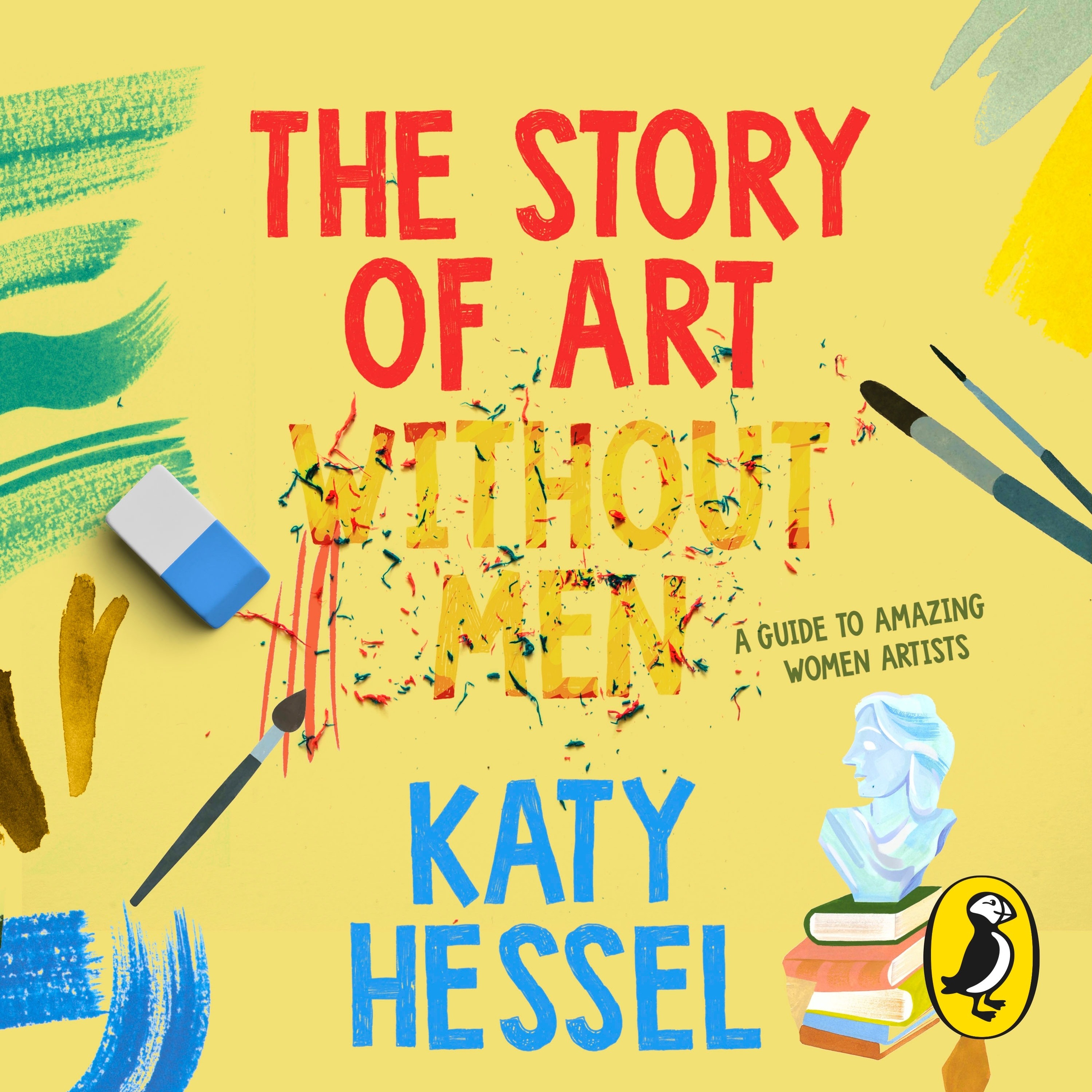 Audiobook teaser: The Story of Art without Men – for younger readers! 18.02.2026 10минI am very excited to announce that I have written a new book, The Story of Art without Men: An illustrated guide to amazing women artists (out on 5 March!). It’s an adaptation of The Story of Art without Men for readers aged 8–14 (and above), brought to life with beautiful illustrations by Ping Zhu and artworks from the past 500 years. From the Renaissance to the present day, via Cornwall, Japan, Paris and New York City, this book features a whole host of artistic trailblazers, freedom fighters, and game changers. We look at Surrealism – a movement born out of the horrors of the First World War in Paris, where artists turned to their imaginations and away from the broken world around them for inspiration… LISTEN TO A TEASER HERE... as I take my reader through the magical worlds of Leonora Carrington, Leonor Fini, Lee Miller, and more. Pre-order now: https://www.waterstones.com/book/the-story-of-art-without-men/katy-hessel/9780241738191 Signed copy: https://www.waterstones.com/book/the-story-of-art-without-men/katy-hessel/9780241824214 Personalised copy: https://www.pickledpepperbooks.co.uk/products/the-story-of-art-without-men-an-illustrated-guide-to-amazing-women-artists-personally-signed-pre-order-5th-march Audible version: https://www.audible.co.uk/pd/The-Story-of-Art-without-Men-Audiobook/B0FL842C9G?ref_pageloadid=not_applicable&pf_rd_p=af5062e9-57de-425c-9e02-6d8ad006b9aa&pf_rd_r=MPG0TFFB1QZHFK2NBZ63&plink=loLGYMj2VPTh5M0d&pageLoadId=eNJzHRjC9m8z0lhu&creativeId=83220593-1d50-4883-bad4-b5d505543719&ref=a_author_Ka_c9_lProduct_1_3
 -
 How to Live an Artful Life: December 30.11.2025 8минDear listeners, As we enter a new month of December, I wanted to share a teaser of the audiobook of my new book, How to Live an Artful Life. https://www.waterstones.com/book/how-to-live-an-artful-life/katy-hessel/9781529155204 Here is an extract from the month of December, featuring its introduction and the first five days. Each month is based around a theme. For example, January is about seeking out ideas, February is about love, and September focuses on time. December's is joy and features thoughts, reflections, creative exercises and daily routines from the likes of Laurie Anderson, Louise Bourgeois, Yoko Ono, Judy Chicago, Faith Ringgold, and more. A time of celebration, light and beauty; a time to spend with family and take part in festivities; to relish in the delights that the gift of art can give, and to take stock in everything you’ve discovered, learnt, tried and tasted this year. As we embark on this month, before we start again in January, think of December – like art – as a gift that has been given to you, full of work yet to be written, painted, sculpted and more; people whom you have yet to meet, talk to or fall in love with.
 -
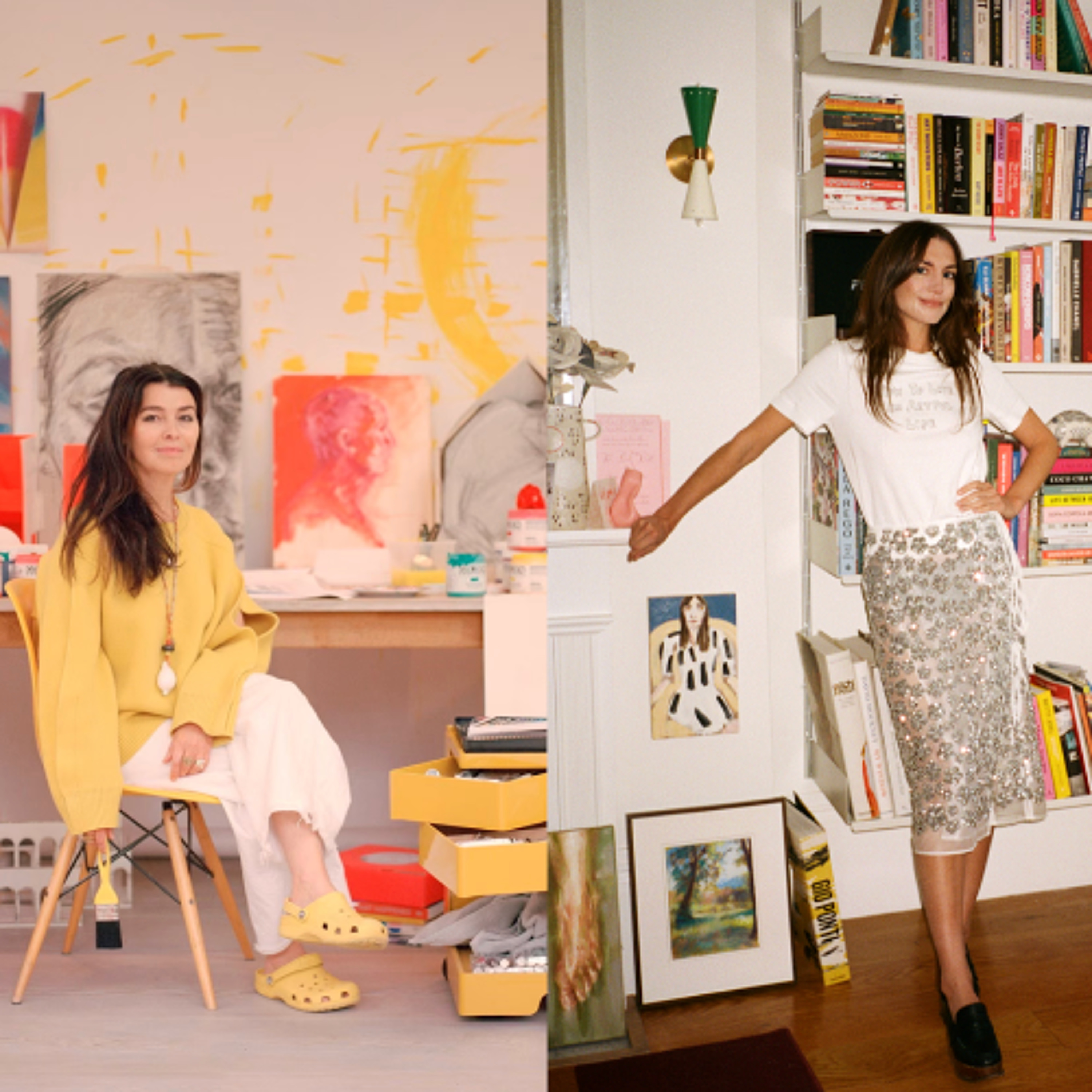 Bonus: Katy Hessel & Es Devlin 28.11.2025 58минI am so excited to bring you this conversation with the extraordinary Es Devlin, who joined me at Liberty last week to celebrate the release of How to Live an Artful Life. Es Devlin is an artist and stage designer renowned all over the world for her large-scale performative sculptures and environments – from theatre and opera design for the National Gallery and Royal Opera House, to kinetic stage sculptures for musicians like Beyoncé, U2 and Lady Gaga. She has also created luminous installations at the V&A, Serpentine Galleries, Somerset House, and more. Whether designing for Beyoncé, the opera, or creating public artworks, Es Devlin’s works dissolve the boundaries between art, architecture and performance, and encourage us to rethink our position in the world. Expertly led by the wonderful Hannah Macinnes, we touched on all things to do with living an artful life – Es’s morning routine; how we can get better at focusing our attention on one thing; artmaking as an expression of love; the artist hustle – and so much more. I can’t wait for you to hear it. Pick up your copy of How to Live an Artful Life: https://www.waterstones.com/book/how-to-live-an-artful-life/katy-hessel/9781529155204 An Atlas of Es Devlin https://www.waterstones.com/book/an-atlas-of-es-devlin/es-devlin/andrea-lipps/9780500023181
 -
Magda Keaney on Julia Margaret Cameron 12.11.2025 40минI am so excited to say that my guest on the GWA Podcast is the esteemed curator, author, and expert in photography, Madga Keany. Currently the Head Curator of International Art at the National Gallery of Art, Canberra, Magda was most recently Curator at the National Portrait Gallery, Canberra, and before that, Senior Curator, Photographs at the National Portrait Gallery London, where she lead the realisation of a major re-presentation of the Photographs Collection as part of the museum’s rehaul. Keany has curated shows and published texts on Australian art, design and social history, photography that ranges from the Victorian period to fashion, conflict and portraiture, solo presentations of portraits by Irving Penn, among many others. She has written for the groundbreaking Know My Name project, that put women artists in Australia on a global stage as well as for Cindy Sherman, A World History of Women Photographers, and more. …but it was her exhibition last year that really grabbed my attention: Francesca Woodman and Julia Margaret Cameron: Portraits to Dream in', that brought together the two photographers working 100 years apart, from very different worlds, circumstances and contexts, but which showed how these pioneering women shaped the medium, with their dreamlike pictures imbued with beauty, symbolism, classicism, transformation and more… So today, I couldn’t be more excited to delve into the life of the 19th century photographer, Julia Margaret Cameron, who, aged 49 in 1863, picked up a camera and, largely self-taught, crafted her distinct bohemian style pictures with that hazy sepia glow, that proved to not only be influential in Victorian Britain, but have a huge impact on photography at large. As Cameron once said: “My aspirations are to ennoble Photography and to secure for it the character and uses of High Art by combining the real & Ideal & sacrificing nothing of Truth by all possible devotion to poetry and beauty.” And I can’t wait to find out more. People mentioned: Julia Margaret Cameron (1815–1879) Francesca Woodman (1958–1981) John Herschel (1792–1871) Artworks: Julia Margaret Cameron, Annie, 1864; https://collections.vam.ac.uk/item/O81145/annie-photograph-cameron-julia-margaret/ Julia Margaret Cameron, Pomona, 1872; https://collections.vam.ac.uk/item/O1433678/pomona-photograph-cameron-julia-margaret/ Julia Margaret Cameron, Thomas Carlyle, 1867; https://www.metmuseum.org/art/collection/search/269434 Julia Margaret Cameron, The Astronomer, 1867; https://collections.vam.ac.uk/item/O1433637/the-astronomer-photograph-cameron-julia-margaret/ Julia Margaret Cameron, Ellen Terry, at the age of sixteen, 1864 https://www.metmuseum.org/art/collection/search/269433 -- THIS EPISODE IS GENEROUSLY SUPPORTED BY THE LEVETT COLLECTION: https://www.famm.com/en/ https://www.instagram.com/famm_mougins // https://www.merrellpublishers.com/9781858947037 Follow us: Katy Hessel: @thegreatwomenartists / @katy.hessel Sound editing by Nada Smiljanic Music by Ben Wetherfield
-
Megan Fontanella on Gabriele Münter 05.11.2025 42минI am so excited to say that my guest on the GWA Podcast today is the esteemed curator, Megan Fontanella. A specialist in Modern Art and Provenance at the Guggenheim New York, Fontanella’s research interests focus on late 19th and early 20th European art and the avant-garde in the USA. She has organised a plethora of exhibitions for the Guggenheim across the globe, from Visionaries: Creating a Modern Guggenheim (2017); Kandinsky (2020–21); Kandinsky: Around the Circle (2021–22; 2023–24); Young Picasso in Paris (2023), as well as travelling collection exhibitions in Australia, Canada, and Europe. But the reason why we are speaking to Fontanella today is because she is very excitingly curating a monumental exhibition by the German Expressionist, Gabriele Münter. Titled Contours of a World, the show – opening 7 November through to April 2026 – will feature 60 of the artist’s luminous, bold, sometimes rapidly-made paintings – from her portraits of friends to landscapes of the German alpine town of Murnau – that chart the changing face of modernism in art. Focusing on 1908 to 1920, it will deep-dive into her involvement with “The Blue Rider” – a group of visionary artists and writers who explored how colour and form could evoke emotion and spiritualist ideas – to the works she made during the First World War. Gabriele Münter: Contours of a World is on view at Guggenheim New York, 7 Nov – 26 Apr 2026: https://www.guggenheim.org/exhibition/gabriele-munter Artists mentioned: Gabriele Münter (1877–1962) Wassily Kandinsky (1866–1944) Marianne von Werefkin (1860–1938) Der Blaue Reiter (“The Blue Rider”) group Artworks mentioned: Gabriele Münter - Still Life on the Tram After Shopping (1909–1912) Gabriele Münter - Portrait of Marianne Werefkin (1909) Gabriele Münter - Boating (1910) Gabriele Münter - Meditation (1917) Gabriele Münter - Future (Woman in Stockholm) (1917) Gabriele Münter - Portrait of Anna Roslund (1917) Gabriele Münter - Lady in an Armchair, Writing (1929) Gabriele Munter - Breakfast of the Birds (1934) -- THIS EPISODE IS GENEROUSLY SUPPORTED BY THE LEVETT COLLECTION: https://www.famm.com/en/ https://www.instagram.com/famm_mougins // https://www.merrellpublishers.com/9781858947037 Follow us: Katy Hessel: @thegreatwomenartists / @katy.hessel Sound editing by Nada Smiljanic Music by Ben Wetherfield
-
Ekow Eshun on Toni Morrison, Octavia E. Butler, Hilary Mantel, Wangechi Mutu, and more 29.10.2025 1ч 2минI'm so excited to say that today’s guest on the Great Women Artist Podcast is the esteemed curator, writer, broadcaster and cultural trailblazer, Ekow Eshun. Born in North-west London in 1968, Eshun has been at the forefront of creative culture for decades. Writing across subjects and presenting documentaries, Eshun has curated groundbreaking exhibitions. From the 2022 In the Black Fantastic, at the Hayward in London – to The Time Is Always Now, a study of the Black figure and its representation in contemporary art, that began at London’s National Portrait Gallery, and has since travelled across the US. The author of multiple books: in 2006, he published his memoir: “Black Gold of the Sun: Searching for Home in England and Africa” an exploration of identity and race, that sees Eshun travelling through Ghana in search of his roots. And in 2024, The Strangers, a stunning work of creative nonfiction that tells the story of five pioneering Black men set against a vivid backdrop of art, culture, and resistance. So for this special episode we are going to deep dive into the women writers and artists who have influenced his life and career, including Morrison, the pioneering science fiction writer, Octavia E. Butler, Kenyan-American artist Wangechi Mutu, the Rotterdam based artist Ellen Gallagher, and photographer Liz Johnson Artur. Because, as Eshun himself says, “The great thing about working with artists is they don’t walk a straight line or think along linear paths; they think in patterns, allowing us to approach long-established conversations from a novel perspective.” Octavia E. Butler (1947–2006) Hilary Mantel (1952–2022) Wangechi Mutu (b.1972) Ellen Gallagher (b.1965) Liz Johnson Artur (1964) Toni Morrison (1931–2019) Exhibitions mentioned: In the Black Fantastic, 2022, Hayward Gallery, London: https://www.southbankcentre.co.uk/venues/hayward-gallery/past-exhibitions/in-the-black-fantastic/ The Time Is Always Now, 2024-present, touring: https://www.npg.org.uk/whatson/exhibitions/2024/the-time-is-always-now The Clearing, space Un gallery, Tokyo, November 2025; https://www.artweektokyo.com/en/institution-gallery/space-un/ Books mentioned: Octavia Butler - Parable of the Sower (1993) https://www.waterstones.com/book/parable-of-the-sower/octavia-e-butler/9781472263667 Octavia Butler - XenoGenesis trilogy; Dawn (1987), Adulthood Rites (1988), and Imago (1989) https://www.octaviabutler.com/xenogenesis-series Hilary Mantel - The Wolf Hall trilogy; Wolf Hall (2009), Bring Up the Bodies (2012), and The Mirror & the Light (2020) https://www.waterstones.com/book/wolf-hall/hilary-mantel/9780008381691 Ekow Eshun - Black Gold of the Sun: Searching for Home in England and Africa (2006): https://www.waterstones.com/book/9780141010960?sv1=affiliate&sv_campaign_id=117976&awc=3787_1761656125_d069bd054bf50de1a9bfc45991a52d17&utm_source=117976&utm_medium=affiliate&utm_campaign=Penguin+Books Ekow Eshun - The Strangers (2024): https://www.waterstones.com/book/the-strangers/ekow-eshun/9780241990698 Herman Melville - Moby Dick (1851) https://www.waterstones.com/book/moby-dick/herman-melville/andrew-delbanco/9780142437247 Toni Morrison - Beloved (1987) https://www.waterstones.com/book/beloved/toni-morrison/9780099760115 -- THIS EPISODE IS GENEROUSLY SUPPORTED BY THE LEVETT COLLECTION: https://www.famm.com/en/ https://www.instagram.com/famm_mougins // https://www.merrellpublishers.com/9781858947037 Follow us: Katy Hessel: @thegreatwomenartists / @katy.hessel Sound editing by Nada Smiljanic Music by Ben Wetherfield
-
Sally Mann 21.10.2025 51минI'm so excited to say that my guest on the Great Women Artist Podcast is one of the world's most renowned photographers working today, Sally Mann. Hailed for her images of nature in the remote American south – full of deeply layered memories and rivers that become characters of their own – and intimate portrayals of her children Jesse, Emmett and Virginia, Sally Mann creates photographs full of beauty. Beauty being something that is tied up with ephemerality, that is alive, that is in motion, something that we have to catch. As she aptly wrote in her 2015 memoir, Hold Still, “there cannot be any real beauty without the indolic whiff of decay.” Mann's photographs are therefore both painterly and fleeting. They capture people on the cusp of something else, whether that be illness or an increasingly decaying body, but she also captures the land, connecting us to the ancient and the natural worlds. Using an eight by 10 bellows camera and 19th century photographic techniques, her black and white aesthetic - that can be both dreamlike and hazy - chimes with her interest in memory and decay. Born in 1951 in Lexington, Virginia, Mann began her artistic career as a poet, but a deep dive in photography in the late 1960s whilst attending the Ansel Adams Gallery Yosemite Workshops was one of the catalysts for her photographic career. Words have always also taken center stage - she studied literature at Hollins College in Virginia in 1974 and completed an MA in creative writing the following year. She is the author of Hold Still: A Memoir with Photographs and was the subject of two documentaries, Blood Ties in 1994, and What Remains in 2006. However, this year she also released the New York Times bestselling book, Art Work: The Creative Life, a part memoir, part insight into her creative life, which is a strange and lonely one; one that is so personal and insular, and one that we can often take for granted and get angry at. Yet it was reading this that really reminded me about why so many of us do what we do… Books mentioned: Sally Mann - Hold Still: A Memoir with Photographs: https://www.waterstones.com/book/hold-still/sally-mann/9780241699287 Sally Mann - Art Work: The Creative Life: https://www.waterstones.com/book/art-work/sally-mann/9780241774540 Artists mentioned: Ansel Adams (1902–1984) Edward Weston (1886–1958) Cy Twombly (1928–2011) Bill Brandt (1904–1983) Robert Capa (1913–1954) Julia Margaret Cameron (1815–1879) Mary Ellen Mark (1940–2015) Joseph Szabo (b.1944) Lady Clementina Hawarden (1822–1865) Imogen Cunningham (1883–1976) Artworks mentioned: Sally Mann, The Perfect Tomato (1990): https://www.guggenheim.org/artwork/10396 Sally Mann, Immediate Family series (1984–1992) Sally Mann, Dead Duck (1988): https://observer.co.uk/culture/photography/article/sally-mann-my-quest-to-take-the-perfect-photograph-memoir Sally Mann, Marital Trust series (1990s to the early 2000s, to be exhibited at Gagosian in 2027) The Family of Man, a 1955 exhibition at MoMA, organised by Edward Steichen: https://www.moma.org/calendar/exhibitions/2429 -- THIS EPISODE IS GENEROUSLY SUPPORTED BY THE LEVETT COLLECTION: https://www.famm.com/en/ https://www.instagram.com/famm_mougins // https://www.merrellpublishers.com/9781858947037 Follow us: Katy Hessel: @thegreatwomenartists / @katy.hessel Sound editing by Nada Smiljanic Music by Ben Wetherfield
Похожие подкасты


Популярен в
Этот подкаст также попадал в подкаст-чарты этих стран.


