
Broad History
Isabelle Roughol
0
Broad History is a history podcast that reexamines the past with a focus on women's roles and perspectives. Hosted by Isabelle Roughol, it aims to tell the stories you thought you knew, but this time including the women who shaped history. The podcast covers a range of historical topics, offering a fresh and inclusive take on the events and figures that have defined our world.
Эпизоды
-
 American Revolution | Part 7 | Republican motherhood and the long impact of the Revolution (with Carol Berkin) 15.08.2026 47минRepublican motherhood is a fundamental concept of the early American republic. Women's political power, it argues, is exercised not at the ballot box but in their own separate sphere, where they raise good little patriots. Carol Berkin concludes our series with a look at the long impact of the American revolution for women and connects the dots with the United States' current political landscape, 250 years on. ★ Support this podcast ★ On this episode: Isabelle Roughol - Host Carol Berkin - Guest Click here to watch on Youtube. Reply on Bluesky Read the book🇬🇧 Find it in the UK bookshop 🇺🇸 Find it in the US bookstore(Affiliate bookshop.org links support Broad History and indie bookstores.)Jump to:(00:00) - Carole Berkin part 2 (new) (01:14) - Start of interview (01:28) - The French won the American Revolution (02:54) - The rise of girls' education (07:34) - What Abigail Adams did not mean (09:42) - Republican or civic motherhood (12:15) - Separate sphere ideology is coming back in the radical right (13:52) - "Femme couverte" (16:00) - From the Revolution to Seneca Falls (17:44) - The exile of loyalist women (22:03) - The betrayal of Black loyalists (28:52) - The fate of Black Americans who stayed (29:56) - Indigenous women had so much more autonomy and American women knew it (33:28) - Molly Brandt (35:54) - The Trail of Tears (38:11) - America's birth myth (41:09) - The Revolution, 250 years on (44:50) - Outro Click here to view the episode transcript.
 -
 American Revolution | Part 6 | Mercy Otis Warren and the female politicians (with Rosemarie Zagarri) 08.08.2026 50минMercy Otis Warren was what the Revolution called a "female politician" – a woman who cared about and discussed politics, a wholly new archetype for American society then. Her poems, plays and pamphlets – and ultimately her 3-volume history of the revolution – established her as a key political thinker of the movement for independence. But she walked a fine line: she never meant to "transgress the boundaries of (her) sex" and always thought of herself as a wife and mother first. To discuss her life and women's part in the political philosophy of the revolution, I'm joined by Mercy's biographer, Rosemarie Zagarri.Read the books🇺🇸 Buy Rosemarie Zagarri's books in the USA Woman's Dilemma: Mercy Otis Warren and the American Revolution: https://bookshop.org/a/79408/9781118775011Revolutionary Backlash: Women and Politics in the Early American Republic: https://bookshop.org/a/79408/9780812220735🇬🇧 Buy Rosemarie Zagarri's books in the UKA Woman's Dilemma: Mercy Otis Warren and the American Revolution: https://uk.bookshop.org/a/9178/9781118775011Revolutionary Backlash: Women and Politics in the Early American Republic: https://uk.bookshop.org/a/9178/9781666133929(Affiliate bookshop.org links support Broad History and indie bookstores.) ★ Support this podcast ★ On this episode: Isabelle Roughol - Host Rosemarie Zagarri - Guest Click here to watch on Youtube. Jump to:(00:00) - Intro (01:33) - Start of interview (02:00) - Mercy's unusual education (05:25) - Coming of age in the anti-British resistance (07:59) - A rare interest in politics (09:15) - Men's encouragement (12:09) - "A masculine genius" (13:45) - Warning the colonists and encouraging sacrifice (16:50) - The quintessential female politician (19:06) - Defending natural rights (21:35) - Embodying, not advocating women's rights (27:13) - The first historian of the American Revolution (29:25) - Why she opposed the Constitution (33:12) - Falling out with John Adams (39:04) - Women had the right to vote in 1776 in ONE state (43:30) - The French Revolution and the short-lived radical transatlantic conversation about women's rights (48:16) - Outro Click here to view the episode transcript.
 -
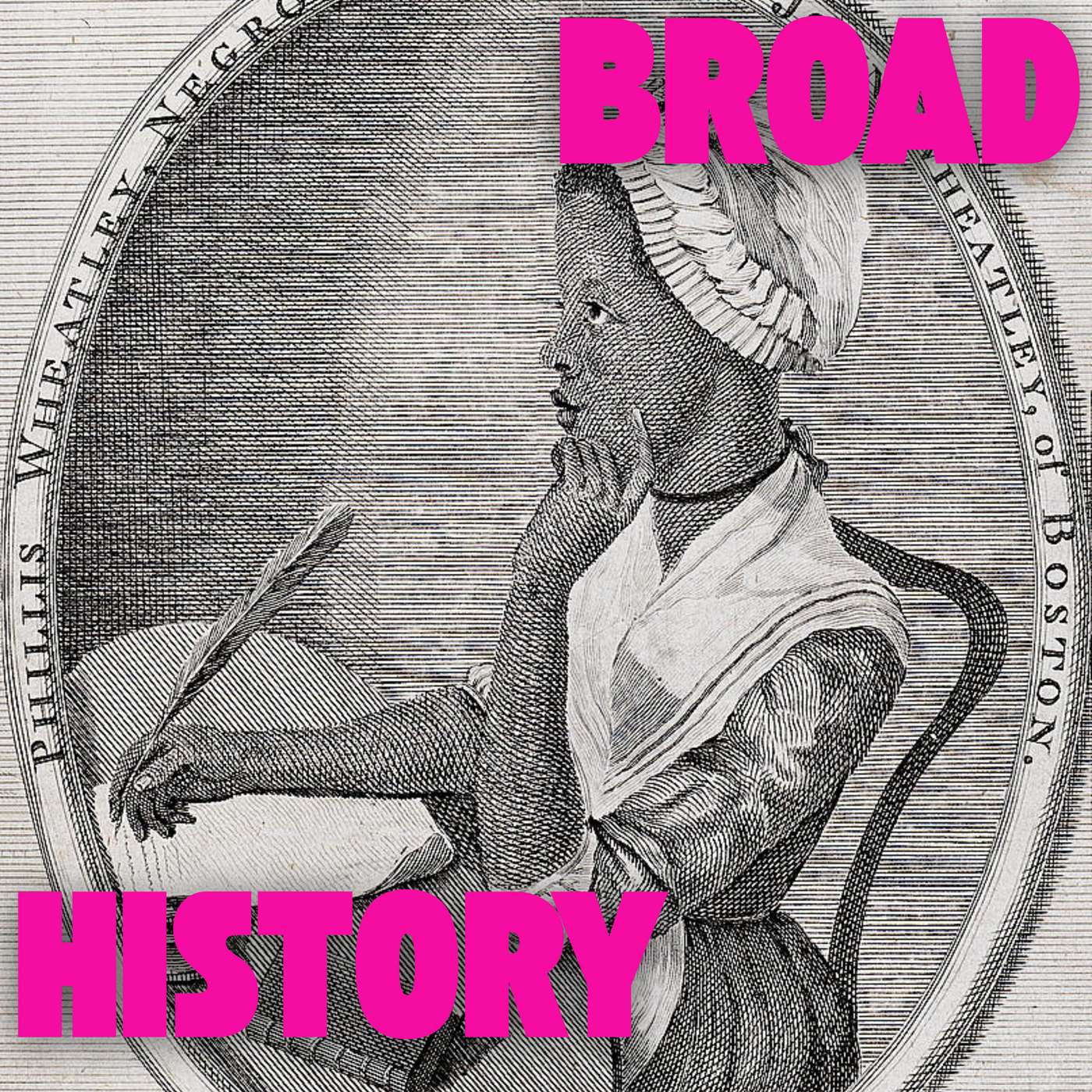 American Revolution | Part 5 | Phillis Wheatley Peters, unofficial poet laureate of the new United States (with Vin Carretta) 01.08.2026 51минPhillis Wheatley Peters was transported to America as an enslaved 7-year-old. She quickly became a literary prodigy and an international celebrity – the unofficial first poet laureate of a new nation, says her biographer Vincent Carretta. Together we explore her life, her legacy and recent findings that transform our understanding of the final years of her too-short life. 🇺🇸 Get the books: (Affiliate bookshop.org links support Broad History and indie bookstores.) ★ Support this podcast ★ On this episode: Isabelle Roughol - Host Vincent Carretta - Guest Click here to watch on Youtube. Read the books🇺🇸 Find them in the US bookstore🇬🇧 Shop the UK bookshop(Affiliate bookshop.org links support Broad History and indie bookstores.)Jump to:Click here to view the episode transcript.
 -
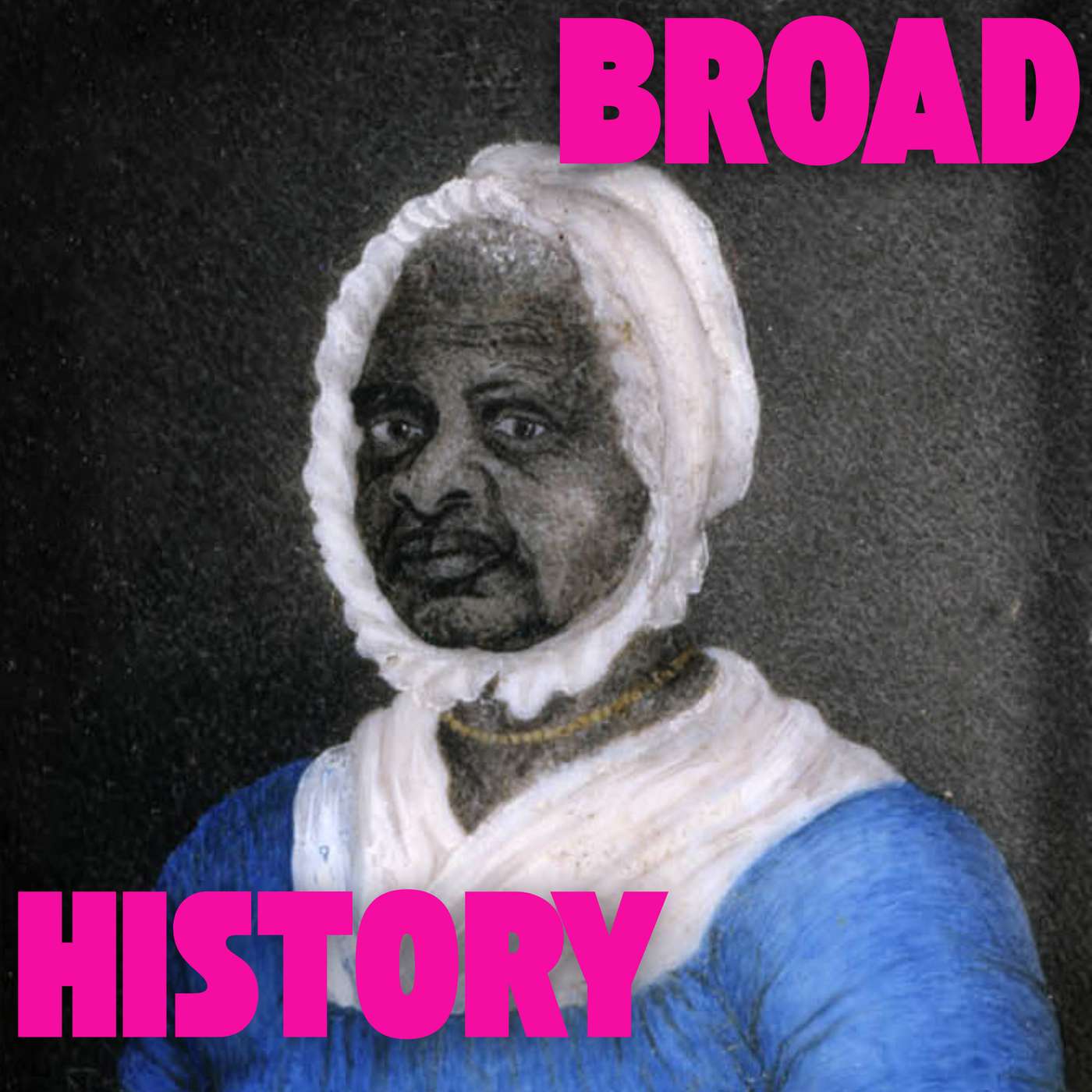 American Revolution | Part 4 | Elizabeth Freeman, the woman who sued her enslavers (with Errin Haines) 25.07.2026 40минWhen Elizabeth "Mumbet" Freeman overheard the opening of the new Massachussetts constitution in 1780 – "all men are born free and equal" – she knew the words had to apply to her, too. Elizabeth was the first enslaved woman to sue for and win her freedom in a US court. To talk about arguably the most impactful woman in this series and the true meaning of freedom and the American promise, I'm joined by Errin Haines, co-founder and editor-at-large of The 19th*. ★ Support this podcast ★ On this episode: Errin Haines - Guest Isabelle Roughol - Host Read Errin Haines' column about Elizabeth Freeman and subscribe to her newsletter for The 19th*, The AmendmentClick here to watch a video of this episode. Get Donna Tesiero's biography of Elizabeth Freeman, "A Revolutionary Woman"🇺🇸 in the US🇬🇧 in the UK(Affiliate bookshop.org links support Broad History and indie bookstores.)Jump to:(00:00) - Intro (02:12) - Why Elizabeth Freeman matters (04:31) - When Mumbet overhears the Massachussetts Constitution (06:26) - The heated shovel episode (07:40) - Theodore Sedgwick (09:24) - The hypocrisy of Massachussetts slavery (11:41) - Her separation from her parents in childhood (12:20) - Elizabeth's thriving life after slavery (14:53) - A true founder (18:09) - Elizabeth's double whammy as an enslaved person and a woman (21:36) - Raising the Sedgwick children (23:36) - Catharine Maria Sedgwick (25:40) - Buried on the Sedgwick family plot (27:28) - Everybody should know her name (30:10) - Errin's 250th series (34:27) - The next 250 days (38:09) - Outro Click here to view the episode transcript.
 -
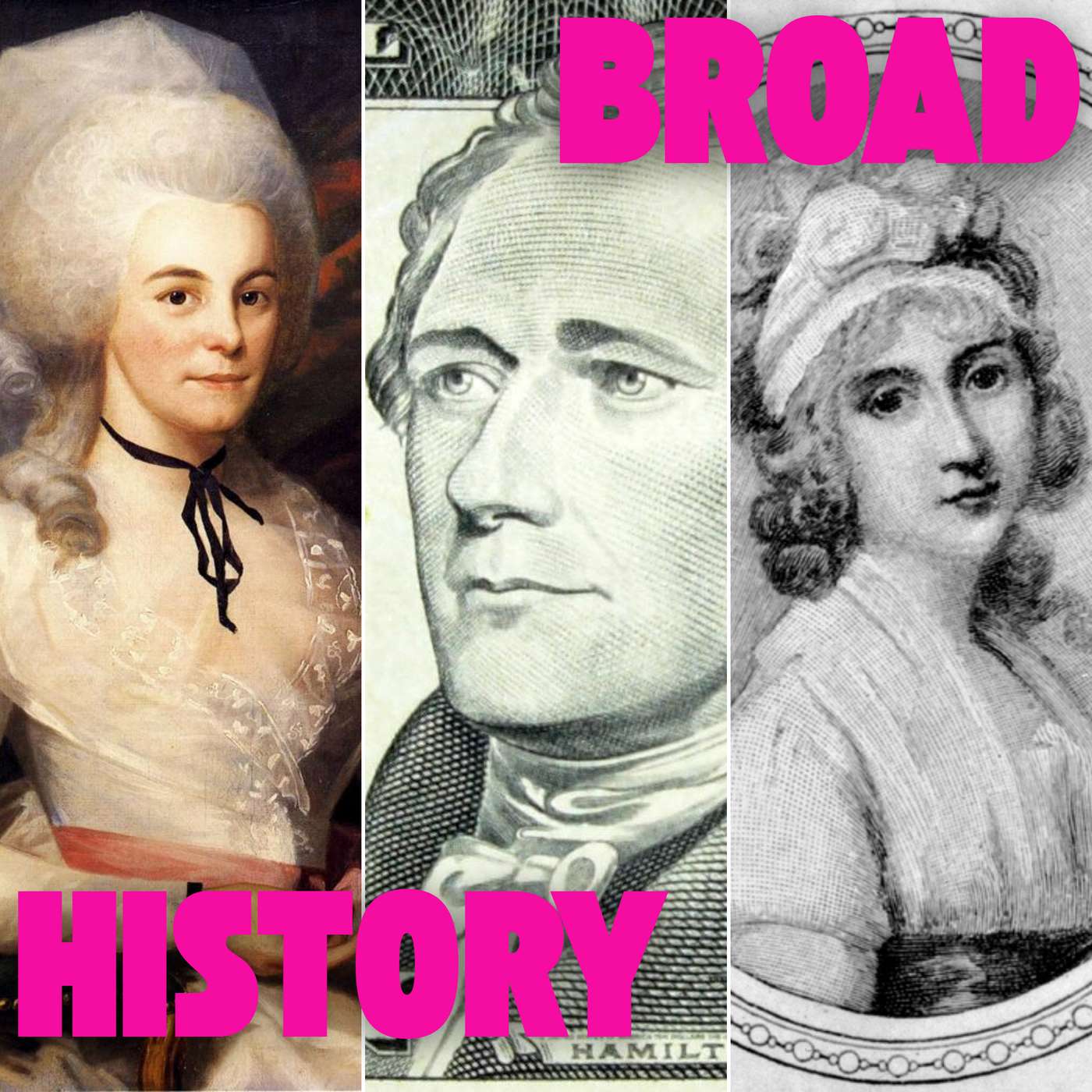 American Revolution | Part 3 | The Schuyler sisters: Inside America's most famous love triangle (with Amanda Vaill) 18.07.2026 55минWhat really happened between Angelica and Hamilton? Did she really ask her sister to "lend him to me for a little while"? Why did Eliza sign her name to the Federalist papers? Did Angelica get a little too close to Jefferson? What about all the Schuyler siblings who didn't make the musical? Join me in conversation with the Schuyler sisters' Pulitzer Prize-winning biographer Amanda Vaill for a look at the real stories inside America's most famous love triangle. ★ Support this podcast ★ On this episode: Isabelle Roughol - Host Jump to: (00:00) - Intro (01:51) - Failing the Bechdel test (04:40) - Catherine and Philip Schuyler, a productive marriage (06:42) - The story of Dutch colonisation in the Hudson Valley (10:28) - Romance, drama and theatrics: The Schuyler family's big feelings (13:41) - Education and why the Schuyler girls wouldn't have learned Latin (15:45) - Angelica's elopment and deceptive husband (23:39) - Angelica's pragmatism (24:44) - How Eliza meets Hamilton (not through Angelica) (30:00) - A forbidden love (34:40) - Ad break (34:41) - Did Angelica heighten the Jefferson-Hamilton feud? (40:11) - What actually happened between Angelica and Hamilton? (41:29) - Angelica's politics (43:49) - Eliza's role as Hamilton's intellectual sparring partner (50:39) - Eliza's widowhood Get the book🇺🇸 Get the book in the US🇬🇧 Shop in the UK bookshop (Affiliate bookshop.org links support Broad History and indie bookstores.)Click here to view the episode transcript. What do you think?Read & comment at broadhistory.comReply on Bluesky Email me: [email protected]
 -
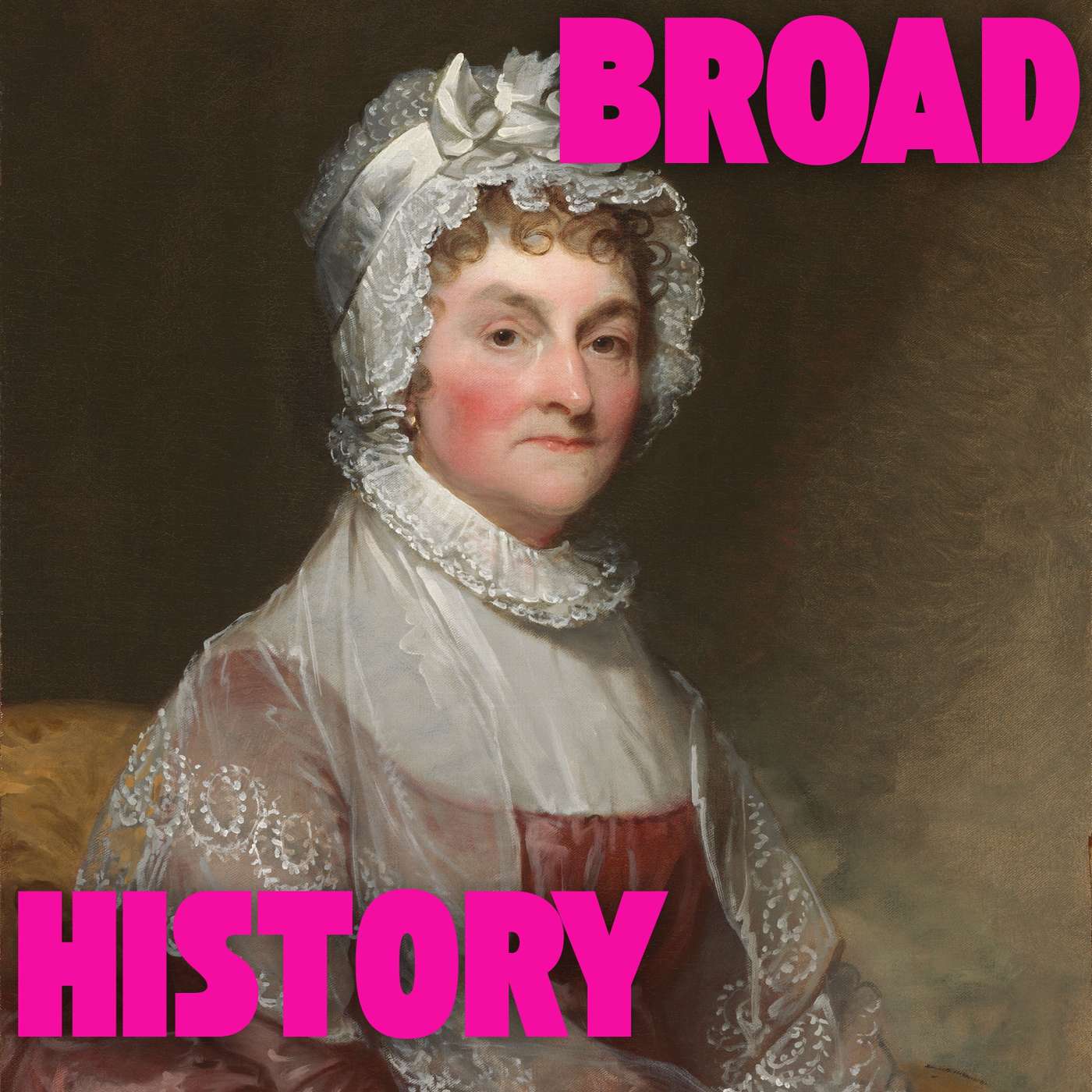 American Revolution | Part 2 | What Abigail Adams really meant by "Remember the ladies" (with Woody Holton) 11.07.2026 54минAbigail Adams made a killing in war bonds (and possibly a bit of insider trading). She used John Adams' diplomatic posting to import luxury goods from France and resell them at an insane markup. She's the reason her civil servant husband, unlike many of the founding fathers, did not die in massive debt. But as a married woman, she could not own anything in her own name or keep the proceeds of her clever investments. Her famous "Remember the ladies" was not, her biographer Woody Holton argues, a call for women's right to vote. Rather it was a plea to free women from the tyranny of bad husbands and from having their fate decided by the lottery of marriage. Meet Abigail Adams, loving partner, flawed mother, financial capitalist and women's advocate. ★ Support this podcast ★ Get the book🇺🇸 "Abigail Adams: A Life" and "Liberty is Sweet" by Woody Holton🇬🇧 "Liberty is Sweet" by Woody Holton. "Abigail Adams: A Life" is unavailable in the UK, but you can browse for other books on Women in the American Revolution.(Affiliate bookshop.org links support Broad History and indie bookstores.)Browse the Adams family archivesOn this episode: Isabelle Roughol - Host Woody Holton - Guest What do you think?Read & comment at broadhistory.comReply on Bluesky Email me: [email protected] to: (00:00) - AUDIO S2Ep2 Woody Holton (00:01) - Intro (02:22) - Woody Holton's path to Abigail Adams (04:18) - Abigail Adams, the capitalist (07:30) - John Adams's conservative attitude to money (09:35) - How Abigail sold imported goods from France (11:46) - Was Abigail guilty of insider trading? (12:43) - How a preacher's kid got to be so boldz (15:28) - Did the TV show get the Adams right? (17:56) - Phoebe Abdee and Abigail's ambivalent attitude to slavery (21:53) - Understanding Abigail's racism (24:52) - Golden Rule Contradictions (25:47) - (27:25) - Ad break (28:44) - "Remember the Ladies": Abigail's most famous letter (31:00) - Abigail was not a feminist (32:11) - "The vicious and the lawless" (35:50) - She was not advocating for political rights (37:19) - The disarming power of humour (38:32) - The mutual education of women (44:25) - The first First Lady in Washington (45:53) - What we don't like about Abigail (47:18) - The final will and testament of Abigail Adams (51:39) - Legacy and Farewell Click here to view the episode transcript.
 -
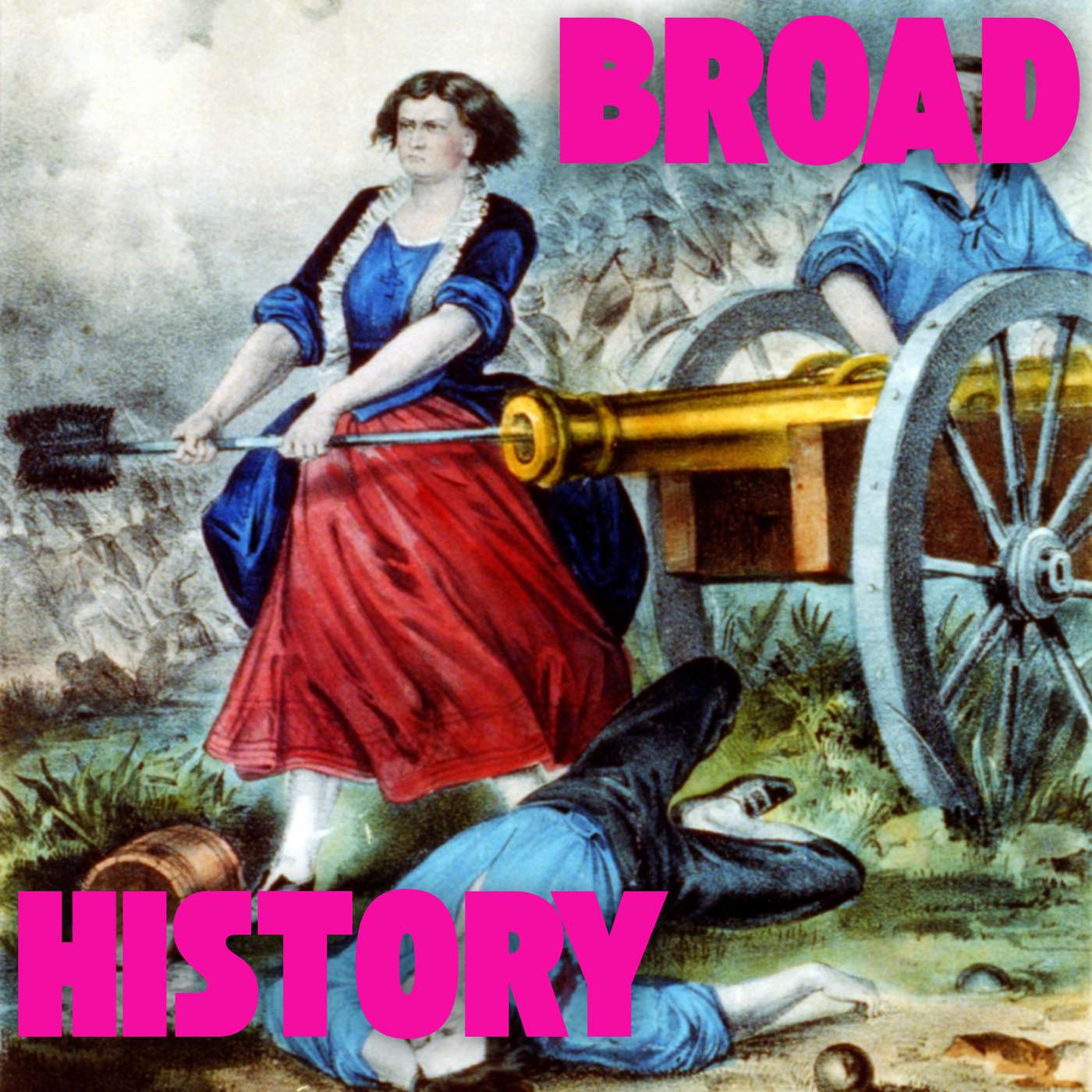 American Revolution | Part 1 | The political awakening of American women (with Carol Berkin) 04.07.2026 58минThe most radical thing about the American Revolution? The sudden politicisation of colonial women, argues Dr Carol Berkin, author of "Revolutionary Mothers" and one of the preeminent historians of women in the early United States. Women were the main organisers of the boycotts of British goods, which fanned the flames of revolution. They were involved in every aspect of the war – except in high politics, from which they were barred.Sign up for the newsletter at www.broadhistory.com. Listen early and without ads. Become a member at www.broadhistory.com/membership.On this episode: Isabelle Roughol - Host Carol Berkin - Guest What do you think?Read & comment at broadhistory.comEmail me: [email protected] to: (00:00) - S2 Ep01 Carol Berkin (04:18) - Meet Carol Berkin (04:24) - The three principles of colonial America's patriarchal society (09:05) - The permanent childhood of women (11:50) - The roots of revolution in the French and Indian war (17:00) - Boycotts, liberty cloth and the political radicalisation of women (24:03) - Loyalist women (26:32) - Break (28:38) - The revolution was the real Civil War (30:50) - The South bore the brunt of the fighting (33:42) - War is everywhere and women can't sit it out (36:39) - The heroism of ordinary people (38:08) - Riders and Spies: how women used being underestimated to serve the revolution (38:47) - Sybil Ludington (40:48) - Lydia Darragh (43:12) - Valley Forge and the army's instant cities (44:34) - Camp followers (46:17) - How laundresses saved Washington's army (49:08) - Molly Pitcher and women in combat (52:17) - Deborah Sampson (55:39) - Women Everywhere Except Politics Get the book🇺🇸 Buy the book in the US: https://bookshop.org/a/79408/9781400075324🇬🇧 Revolutionary Mothers is unavailable in the UK, but you can browse for other books on Women in the American Revolution(Affiliate bookshop.org links support Broad History and indie bookstores.)Click here to view the episode transcript. ★ Support this podcast ★
 -
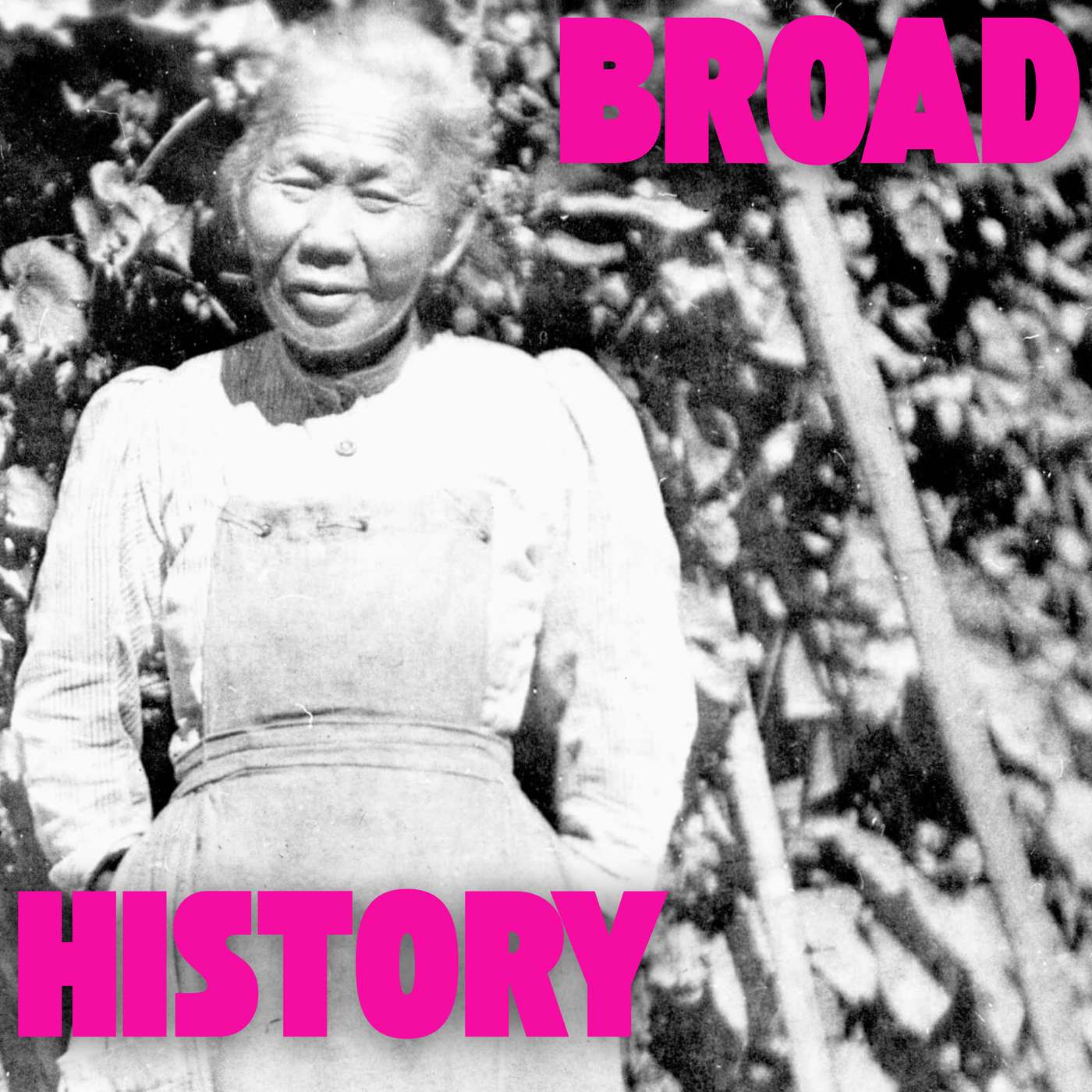 The Real American Frontier | Part 2 | The homesteaders trad wives would rather forget about (with Megan Kate Nelson) 06.06.2026 35минIn part 2 of our exploration of the American frontier, Megan Kate Nelson introduces two women who belie the homesteader image conservative "trad wives" like to harken back to. Polly Bemis was a Chinese immigrant who built a life and a community in Idaho, despite intense prejudice and stringent anti-Chinese immigration policies. Ella Watson was a self-made homesteader and small rancher, a so-called cattle queen who got on the wrong side of cattle barons in Wyoming and paid the price.Read more: How Chinese women were barred from the American dream ★ Support this podcast ★ On this episode: Isabelle Roughol - Host Megan Kate Nelson - Guest What do you think?Read & comment at broadhistory.comReply on Bluesky Email me: [email protected] to: (00:00) - Megan Kate Nelson part 2 (updated 29/7) (00:35) - Start of interview (01:03) - Introducing Polly Bemis (02:20) - The majority-Chinese American West (06:11) - Polly Bemis traveled without moving (08:29) - Chinese women were the first targets of US anti-immigrant policy (09:07) - The aggressive anti-Chinese immigration policies of the United States (11:29) - How big government made the West for white men (12:59) - Ella Watson's broken American dream (13:41) - The cattle queens (22:19) - A high tolerance for risk (23:46) - Why correcting the Frontier myth matters today (26:22) - How trad wives utilise the American Frontier (29:38) - What moment in history should we revisit from women's perspective? (33:47) - Outro Get the book🇺🇸 Buy the book🇬🇧 Shop the UK bookshop (Megan Kate Nelson's The Westerners is only available in the US)(Affiliate bookshop.org links support Broad History and indie bookstores.)Click here to view the episode transcript.
 -
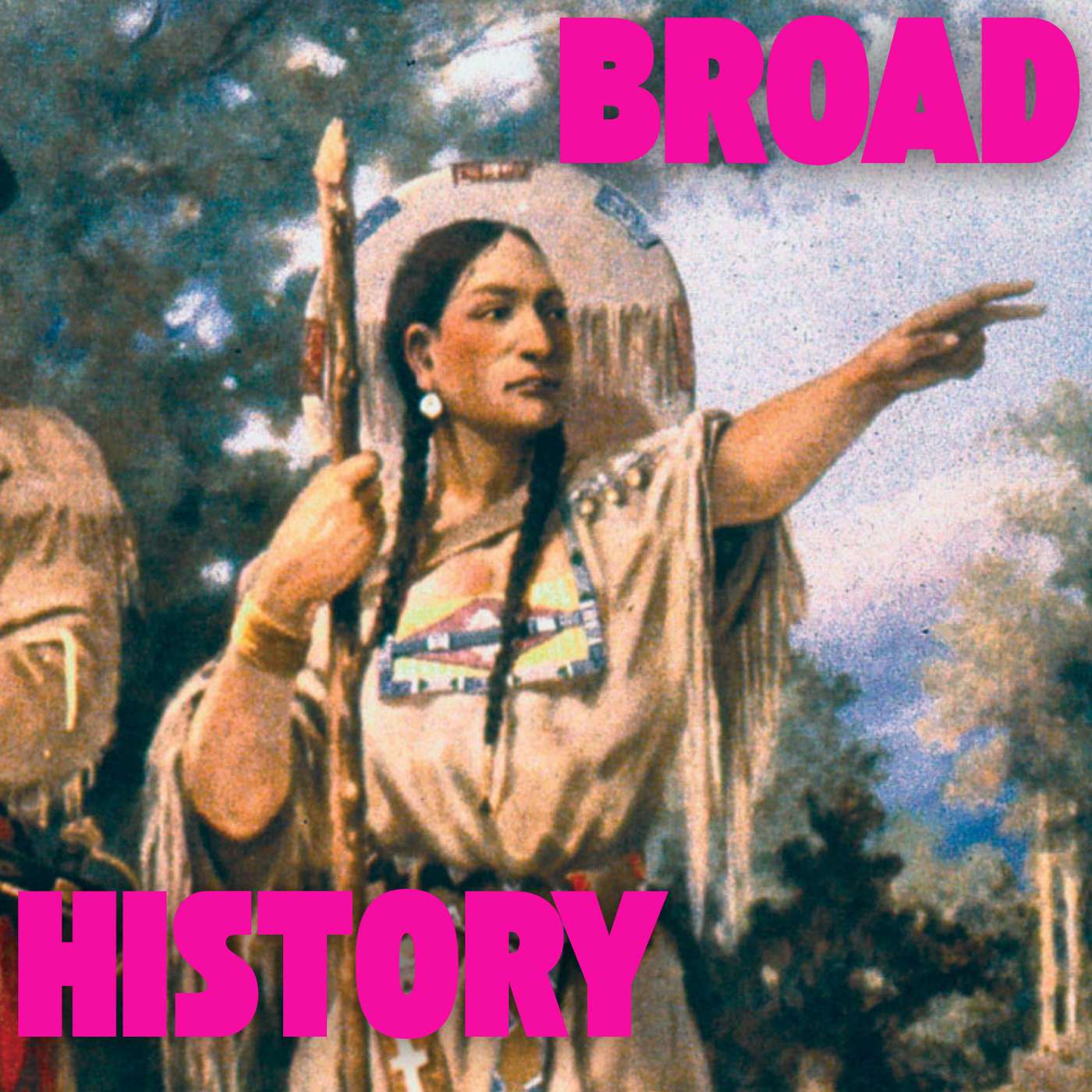 The Real American Frontier | Part 1 | The West you never hear about (with Megan Kate Nelson) 24.05.2026 39минThe Western frontier is a foundational myth of the United States. Historian Megan Kate Nelson is here to complicate it with the stories of women who do not at all fit the image of the American pioneer you probably imagine. In part 1 of this two-parter conversation, she (re)introduces us to Sacajawea, the Native American woman who led the Lewis and Clark expedition to the Pacific, and Gertrudis Barceló, an infamous gambling entrepreneur who became one of the richest people in the New Mexico territory. ★ Support this podcast ★ Members can listen to both parts of this conversation right away. Sign up at www.broadhistory.com/membership. On this episode: Isabelle Roughol - Host Megan Kate Nelson - Guest Jump to: (00:00) - Part 1 (01:37) - Start of interview (02:03) - The imaginary of the American Frontier (06:00) - What is Manifest Destiny? (08:15) - The West before it was the American West (10:58) - Sacajawea's superhero origin story (14:07) - Sacajawea, an explorer in her own right (18:17) - Exploring as a postpartum mother and how Clark ended up raising Sacajawea's children (22:05) - How Sacajawea became a suffrage icon (25:50) - How Gertrudis Barcelo made a fortune at Spanish monte (33:14) - The epitomy of the Western pioneer man -- in a Hispanic woman (37:31) - Part 2 teaser Get the book 🇺🇸 Buy "The Westerners" in the US bookstore🇬🇧 Shop in the UK bookshop(Affiliate bookshop.org links support Broad History and indie bookstores. "The Westerners" is not yet available in the UK unless as an import.)Click here to view the episode transcript.
 -
 History's super confused ideas about women's sex lives (with Kate Lister) 09.05.2026 49минThe ancient Greeks believed a woman's womb wandered through her body and made her ill. Medieval Europeans believed a woman's orgasm was necessary for conception. And the Victorians believed masturbation would drive you to madness. Sex historian Dr. Kate Lister — host of Betwixt the Sheets and author of Flick: A History of Sexual Pleasure — joins me for a tour through the wildly strange, often infuriating history of women's sexuality. For most of that history, women were believed to be the more sex-crazed gender. What can we say, girls will be girls... ★ Support this podcast ★ On this episode: Isabelle Roughol - Host Kate Lister - Guest What do you think?Read & comment at broadhistory.comEmail me: [email protected] to: (00:00) - AUDIO 07 Kate Lister (01:28) - "Girls will be girls": women as the emotionally unstable, hypersexed gender (03:58) - Why is women's sexuality so much more policed th an men's? (06:02) - The medicalisation and pathologizing of sexuality or the Victorian terror of masturbation (09:52) - The wandering womb (11:38) - Women as baby-crazed, emotional beings (13:42) - Are we talking about the menopause too much? (14:53) - The first woman to describe a female orgasm (she was a medieval nun) (19:52) - "Sex means putting a penis into something" (22:30) - Why lesbians have been relatively left alone (25:53) - The invention of privacy (28:24) - Victorian middle-class morality and the angel in the house (32:04) - Empire and the racialisation of female purity (34:56) - "Go and ask your mother" (39:21) - Where does a sex historian find sources? (41:01) - Why researching the history of pleasure matters (44:44) - The final question (47:34) - Conclusion Get the book🇬🇧 Buy the book in the UK: https://uk.bookshop.org/a/9178/9780857506436 🇺🇸 Shop in the US bookstore (Flick is not yet published in the US)(Affiliate bookshop.org links support Broad History and indie bookstores.)Click here to view the episode transcript.
 -
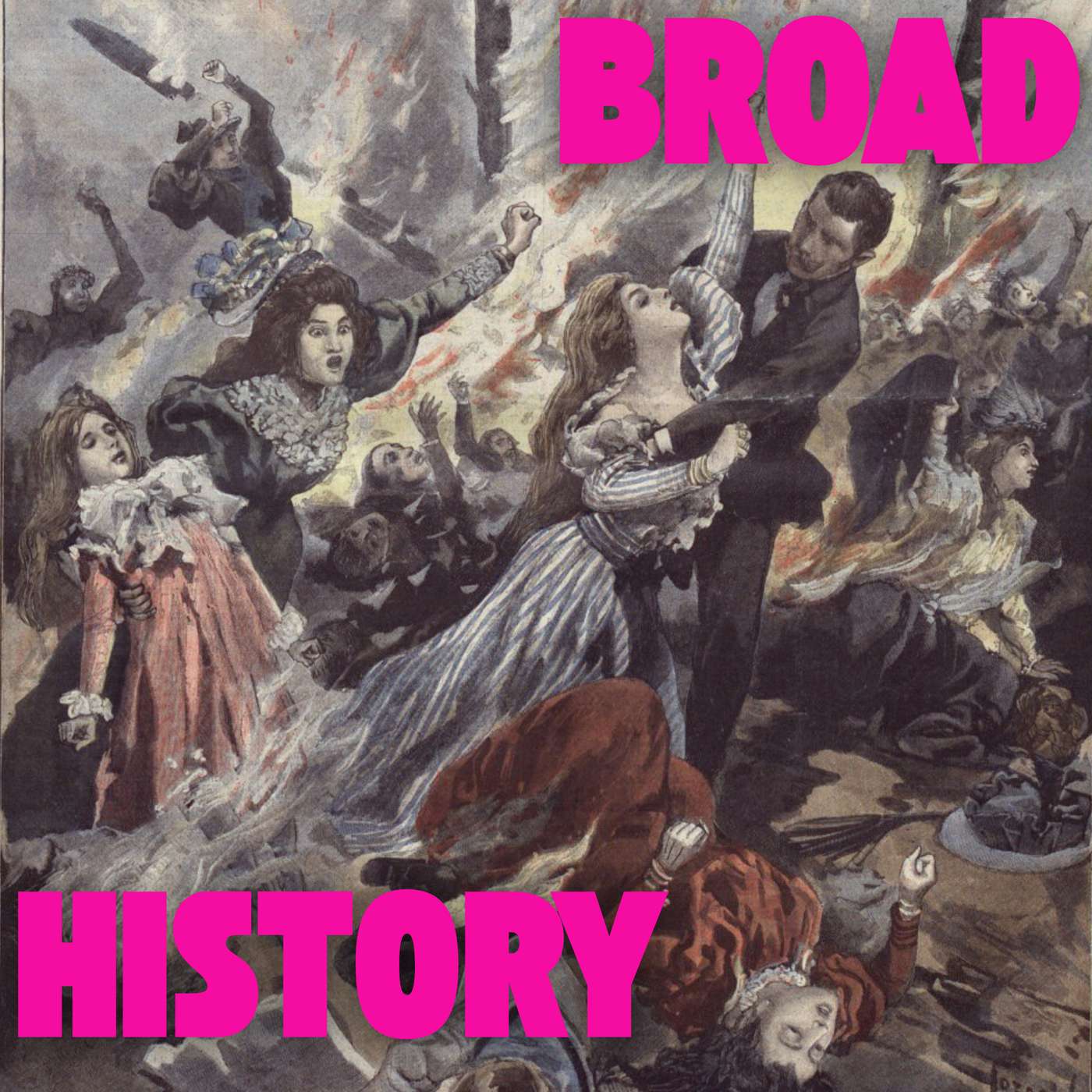 The fire that started a Victorian gender war (long read) 02.05.2026 21минParis, 1897. The Bazar de la Charité blaze killed 118 women and girls. Where were the men? ★ Support this podcast ★ On this episode: Isabelle Roughol - Host What do you think?Read & comment at broadhistory.comEmail me: [email protected] & comment on Youtube Jump to: (00:00) - Intro (00:35) - Member shout-out (01:55) - Upcoming guests (03:04) - This week's story (04:25) - Tuesday, May 4th, 1897: A fire at a Catholic charity sale. (08:13) - Cowardly Gentlemen and Working Class Heroes (10:43) - The "Knights Jitters" (11:54) - Heroes and martyrs in a political storm (14:32) - And women in all that? (16:41) - Did the behaviour of men cause more women to die? (17:56) - An intimate tragedy (18:46) - Outro Get the book🇬🇧 Shop in the UK bookshop 🇺🇸 Shop in the US bookstore(Affiliate bookshop.org links support Broad History and indie bookstores.)Click here to view the episode transcript.
 -
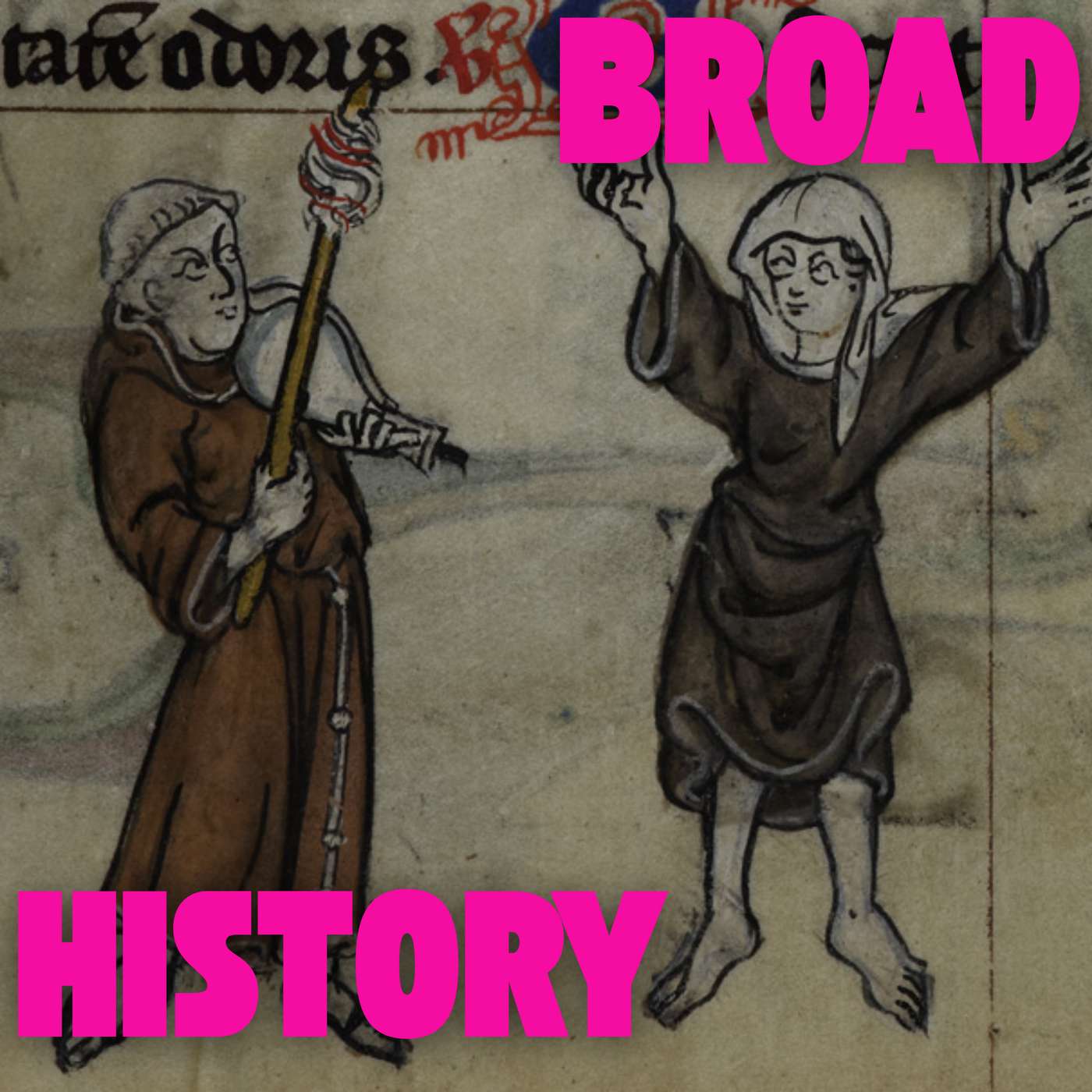 The gender pension gap of 1539, or how women got screwed by the Dissolution of Monasteries (long read) 21.04.2026 19минDon't work but don't get married and don't count on a living pension. This is an audio read of The gender pension gap of 1539, or how women got screwed by the Dissolution of Monasteries. ★ Support this podcast ★ On this episode: Isabelle Roughol - Host What do you think?Read & comment at broadhistory.comEmail me: [email protected] to: (00:00) - The Gender Pension Gap of 1539 (01:17) - The gender pension gap, or how women got screwed by the dissolution of monasteries. (02:37) - Dissolution 101 (04:01) - The (near) impossibility of marriage or work (06:00) - Pay on your way in, get paid on your way out (08:20) - Sidebar: What happened to "Jillian Heron the idiot"? (09:57) - The making of a pension gap (11:25) - Sidebar: How do we know all this? (13:56) - Sidebar: Could you live on £2.67 a year? (15:00) - "Many a young nun proved an old beggar" (18:06) - Outro 🇬🇧 Shop in the UK bookshop 🇺🇸 Shop in the US bookstore(Affiliate bookshop.org links support Broad History and indie bookstores.)Click here to view the episode transcript.
 -
 The women who invented modern war reporting (with Julia Cooke) 12.04.2026 43минJulia Cooke, author of Starry and Restless, joins me to bring back three women who were household names in their day — Rebecca West, Martha Gellhorn, and Mickey Hahn — pioneering journalists who covered wars, crossed borders, and revolutionised literary nonfiction decades before the men usually credited with inventing it. We talk about why these women's fame didn't survive them, the challenges of resurrecting female legacy, and what it meant — then and now — to want both a roaming career and a life with people you love.Sign up for the newsletter. ★ Support this podcast ★ On this episode Isabelle Roughol - Host Julia Cooke - Guest What do you think?Read & comment at broadhistory.comEmail me: [email protected] & comment on Youtube Jump to: (00:00) - AUDIO 04 Julia Cooke (corrected) (00:08) - "Women have no history" (03:03) - On the value of understanding the whole arc of a woman's career (06:16) - They were exceptional but not an exception (08:50) - Meet Rebecca West (11:34) - Meet Martha Gellhorn (14:50) - Meet Emily Hahn (17:16) - Writing about war the way no man ever had (19:21) - Superstars in their lifetime, disappeared in journalism history (22:33) - Fame Without Legacy (23:13) - "Women have no history" (24:00) - Motherhood, domesticity and ambition (28:46) - Making a home abroad (30:34) - Virginia Cowles, Julia Morgan and women who leave no archives (38:52) - Why men should read women's historyw (41:43) - Closing Thoughts (42:20) - Outro Get the book🇬🇧 Shop in the UK bookshop 🇺🇸 Shop in the US bookstore(Affiliate bookshop.org links support Broad History and indie bookstores.)Click here to view the episode transcript.
 -
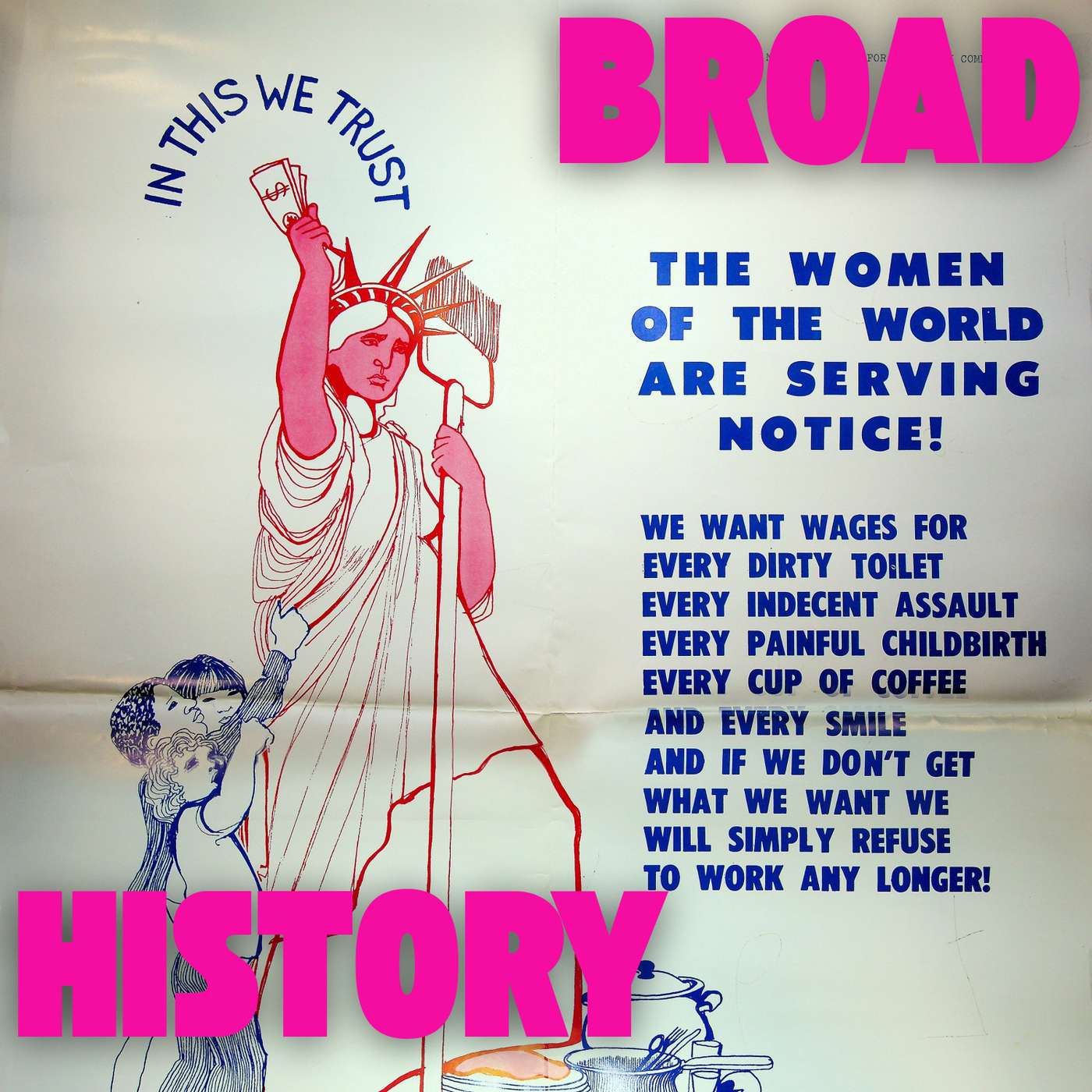 "All work is sh*t" or the anti Girl Boss feminism of the 1970s (with Emily Callaci) 24.03.2026 43минIn the 1970s, Wages for Housework demanded pay for cooking and cleaning without any illusions about making it in the workplace. What if work was never our liberator? On this episode: Isabelle Roughol - Host Emily Callaci - Guest Listen early and without ads. Become a member at www.broadhistory.com. ★ Support this podcast ★ 🇬🇧 Buy the book in the UK: https://uk.bookshop.org/a/9178/9780241502907🇺🇸 Buy the book in the US: https://bookshop.org/a/79408/9781541603516(Affiliate bookshop.org links support Broad History and indie bookstores.)Click here to watch a video of this episode. Click here to view the episode transcript. Chapters: (00:00) - MEMBERS 03 Wages for Housework (Emily Callaci) (01:32) - Addressing housework in the women's right struggle (02:51) - Two workers for the price of one (04:02) - "All work is shit" (07:53) - Not wages for housewives (10:45) - Biographies of 5 campaign leaders (11:21) - Selma James (13:50) - Mariarosa Dalla Costa (15:39) - Silvia Federici (17:51) - Wilmette Brown (19:59) - Margaret Prescott (22:23) - Welfare (26:55) - How far did the movement go? (29:34) - The care work of the climate crisis (32:41) - How housework got remarketed as care work (36:50) - How the campaign ended (38:46) - The long tail legacy of Wages for Housework
 -
 George Sand, the author who outsold Victor Hugo (with Fiona Sampson) 05.03.2026 46мин"We raise them like saints, then hand them over like fillies," she said of 19th-century girls. Her best-selling novels were an indictment of arranged marriages and the female condition. At home in France, her contemporaries – Hugo, Flaubert, Balzac – considered her a giant of literature. In England, she outsold Hugo and inspired the Brontë sisters. Today, we don't read her. She's fallen out of the literary canon. If she's known at all, it's for her private life, a scandalous reputation that pop culture has overblown.A new biography of George Sand by British academic and poet Fiona Sampson reveals a thoroughly modern woman, who was centuries ahead in claiming nothing more and nothing less than the freedom to be a complete person. Creators & Guests Isabelle Roughol - Host Fiona Sampson - Guest ★ Support this podcast ★ 🇬🇧 Buy the book in the UK: https://uk.bookshop.org/a/9178/9781529924336 🇺🇸 Buy the book in the US: https://bookshop.org/a/79408/9781324074915 (Affiliate bookshop.org links support Broad History and indie bookstores.)Click here to watch a video of this episode. Chapters: (00:00) - Intro (01:43) - How female authors drop out of the literary canon (05:07) - A girl of two worlds (09:02) - Nohant and a custody battle between two women (11:54) - George and boyhood (13:36) - To be a girl in the Bridgerton years: "we raise them like saints, we hand them over like fillies" (18:13) - How women writers rose in service to a growing reading public (20:09) - From unhappy provincial wife to Parisian auteur (24:24) - The making of a nom de plume (26:34) - What cross-dressing means to George (29:28) - Pushing the boundaries of a gendered language (32:12) - The writer of the female condition and the tragedy of marriage (38:00) - George Sand, international best-selling author (40:24) - The process of self-invention (45:41) - Outro Click here to view the episode transcript.
 -
 Women have always had jobs (with Victoria Bateman) 12.02.2026 50минForget the cliché that women suddenly joined the workforce in the middle of the 20th century. They've been active in the economy as long as there's been an economy and not anecdotally. Guest: Victoria Bateman, economic historian and author of Economica: A Global History of Women, Wealth and Power.🇬🇧 Buy the book in the UK: https://uk.bookshop.org/a/9178/9781035415779 🇺🇸 Buy the book in the US: https://bookshop.org/a/79408/9781541606067 (Affiliate bookshop.org links support Broad History and indie bookstores. Everyone wins.) ★ Support this podcast ★
 -
 Introducing Broad History 28.01.2026 2мин
Похожие подкасты


Популярен в
Этот подкаст также попадал в подкаст-чарты этих стран.


