
Dark Character Profiler
Fulcrum
0
Dark Character Profiler applies forensic psychology to fictional villains, anti-heroes, and morally complex characters. Each episode constructs a psychological case file using DSM-5-TR criteria, behavioral analysis, trauma history, and personality assessment. Side Quest Minisodes explore related psychological concepts like interrogation dynamics and redemption arcs.
Эпизоды
-
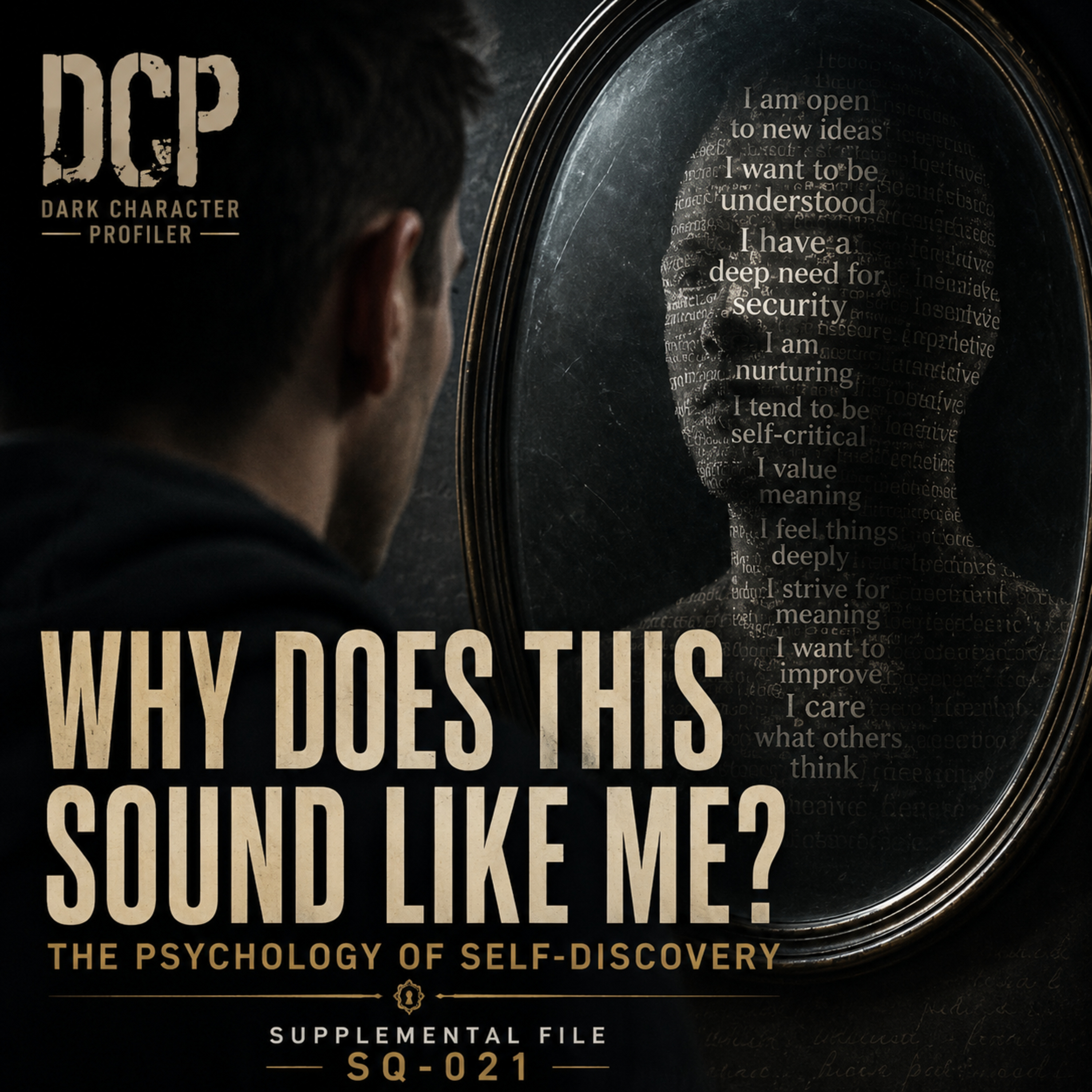 Why Does This Sound Like Me? | The Psychology of Self-Discovery 01.09.2026 19минHow easily can someone convince you that they know who you are? And why are we so interested in being told who we are?In this Side Quest, Fulcrum turns the experiment on you.You'll begin with a personality description and a simple question: How accurately does this describe you? But before the file closes, we're going to interrogate not only the description—but the way you evaluated it.Drawing on psychologist Bertram Forer's famous 1949 classroom demonstration and later research into the Barnum effect, personal validation, and confirmatory thinking, we explore why generalized personality feedback can sometimes feel surprisingly personal.But this isn't a case for dismissing tarot, personality systems, or every meaningful act of self-reflection as psychological trickery. A framework can provoke genuine insight without necessarily being a scientifically validated measure of personality.So perhaps the more interesting question isn't simply:“Does this description sound like me?”It's:“What did my mind do in order to find me there?”Also, before the Archive closes, Fulcrum has a special mission for the DCP community involving Avery the Poke Kid. Help us get Avery closer to 100,000 YouTube subscribers, his Silver Creator Award, and 1 million Instagram followers. 🔗 Avery's official YouTube, Instagram, and family GoFundMe: YouTube: https://www.youtube.com/@averythepokekidInstagram: https://www.instagram.com/averythepokekid/GoFundMe: https://www.gofundme.com/f/help-avery-keep-fighting-and-help-him-reach-his-dream🌐 Dark Character Profiler: https://darkfulcrummedia.comDark Character Profiler | Supplemental File SQ-021
 -
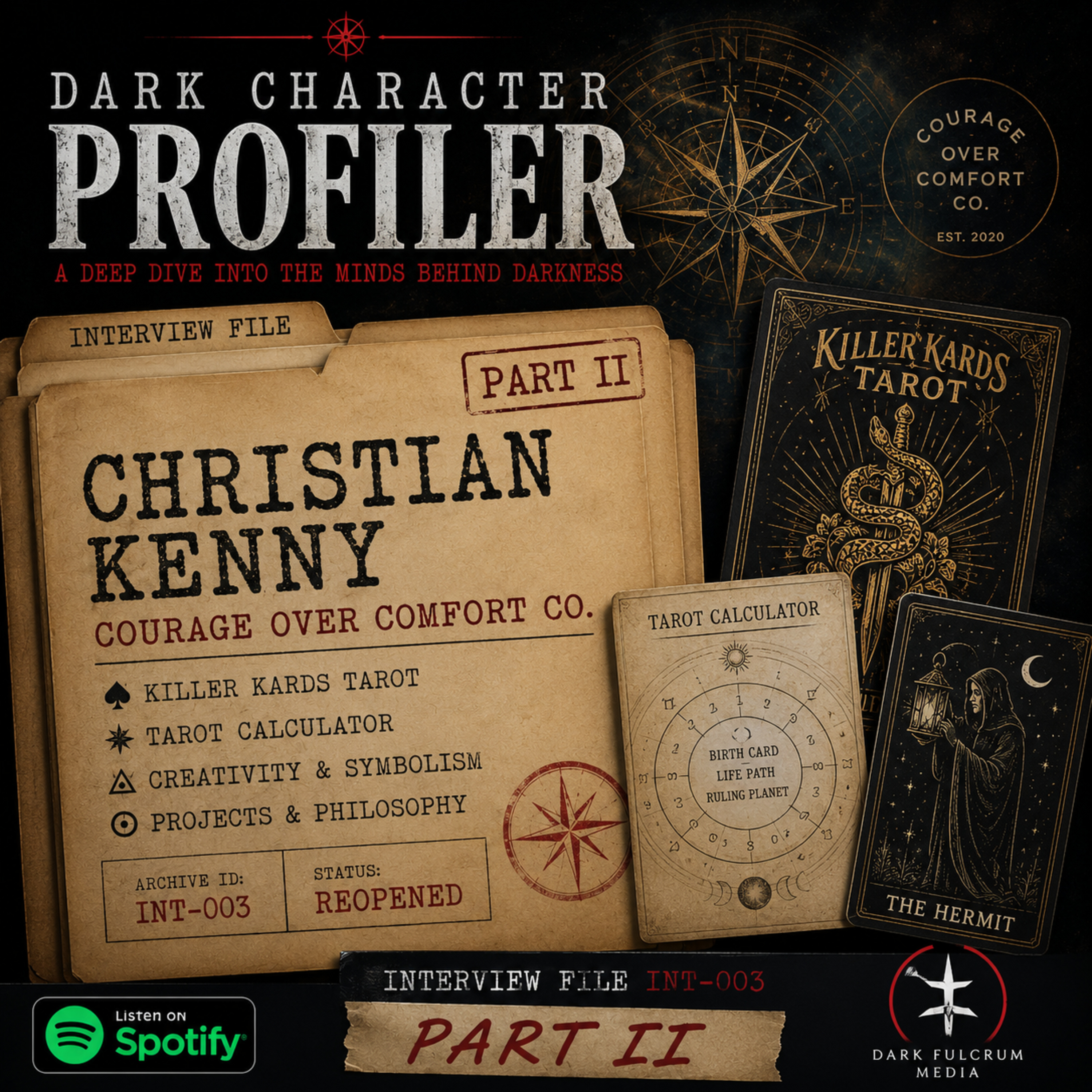 Interview File INT-003: Christian Kenny | Part II 18.08.2026 35минThe file has been reopened.In Part II of my conversation with Christian Kenny of Courage Over Comfort Co., we continue exploring creativity, symbolism, tarot, and the ideas behind his work.This time, the conversation becomes a little more personal.I try the tarot calculator on Christian's website, using my birth date to discover my birth card, life path, and ruling planet—and we explore what those results mean within the system.Our conversation also continues beyond tarot, touching on Christian's creative process, his projects, the ideas that drive his work, and the unexpected places inspiration can come from.Whether you approach tarot as spiritual practice, symbolism, art, self-reflection, or simply something you're curious about, this Interview File offers a chance to hear directly from the creator behind Killer Kards Tarot and the larger body of work surrounding it.Interview File: INT-003 — Part IISubject: Christian KennyClassification: Creator InterviewStatus: REOPENEDKiller Kards TarotThe tarot calculatorBirth cards, life paths, and ruling planetsSymbolism and self-reflectionCreativity and artistic processCourage Over Comfort Co.Christian's projects and creative philosophyChristian is also the designer behind DarkFulcrumMedia.com, the online home of Dark Fulcrum Media and Dark Character Profiler.Visit https://darkfulcrummedia.com to find the podcast on Spotify, Apple Podcasts, YouTube, Amazon Music, and other major platforms, as well as my streaming channels and social media.Links to Courage Over Comfort Co., Killer Kards Tarot, and Christian's social media will be listed here.Website: https://www.courageovercomfortco.com/Instagram: https://www.instagram.com/courageovercomfortco/?utm_source=ig_web_button_share_sheetTikTok: https://www.tiktok.com/@courageovercomfort444?is_from_webapp=1&sender_device=pcX/Twitter: https://x.com/courageovcmfort?s=20Interview File INT-003 concludes with this release.The file is now closed.
 -
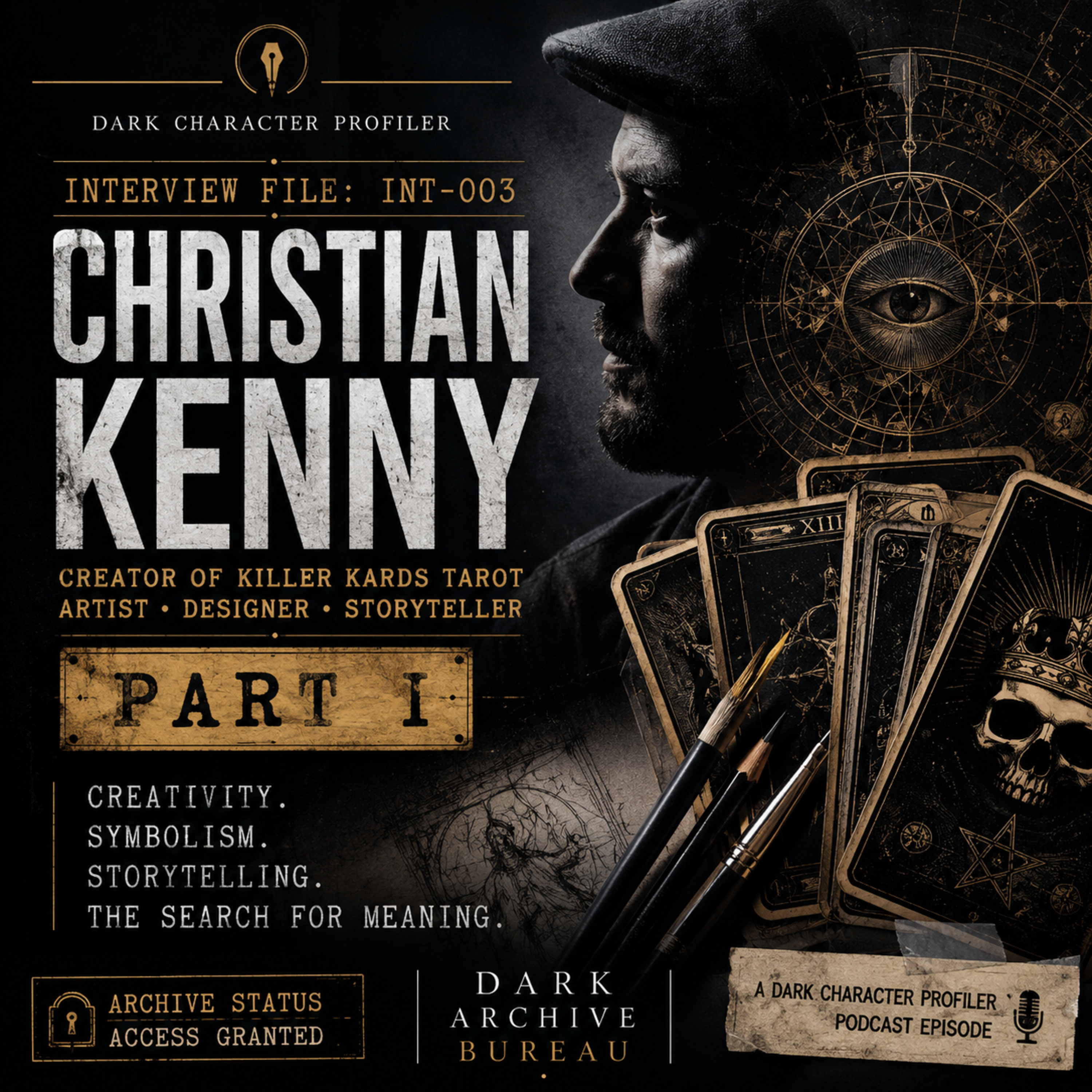 Interview File INT-003: Christian Kenny | Part I 28.07.2026 54минInterview File: INT-003 | Part ISubject: Christian KennyClassification: Creator InterviewToday's file opens a conversation with artist, designer, and creator Christian Kenny, best known for creating Killer Kards Tarot and for designing the Dark Fulcrum Media website—the online home of the Archive.In Part I, we explore the creative process behind his work, the role of symbolism in art and storytelling, and why humans are naturally drawn to images that encourage reflection and meaning. Along the way, we discuss creativity, inspiration, and the psychological connections between symbols and the stories we tell ourselves.This interview naturally unfolded into two distinct conversations. Rather than rushing through the ideas or cutting large portions of the discussion, Interview File INT-003 has been preserved in two parts. Part I concludes after Section 4, with Part II continuing the conversation from there.Topics CoveredThe origins of Killer Kards TarotCreativity and artistic inspirationSymbolism in visual storytellingPsychology and meaning-makingBuilding projects with intentionThe role of art in self-reflection🌐 Visit the ArchiveFind the podcast on your favorite platform, connect with me on social media, and explore the rest of Dark Fulcrum Media:https://www.darkfulcrummedia.com/
 -
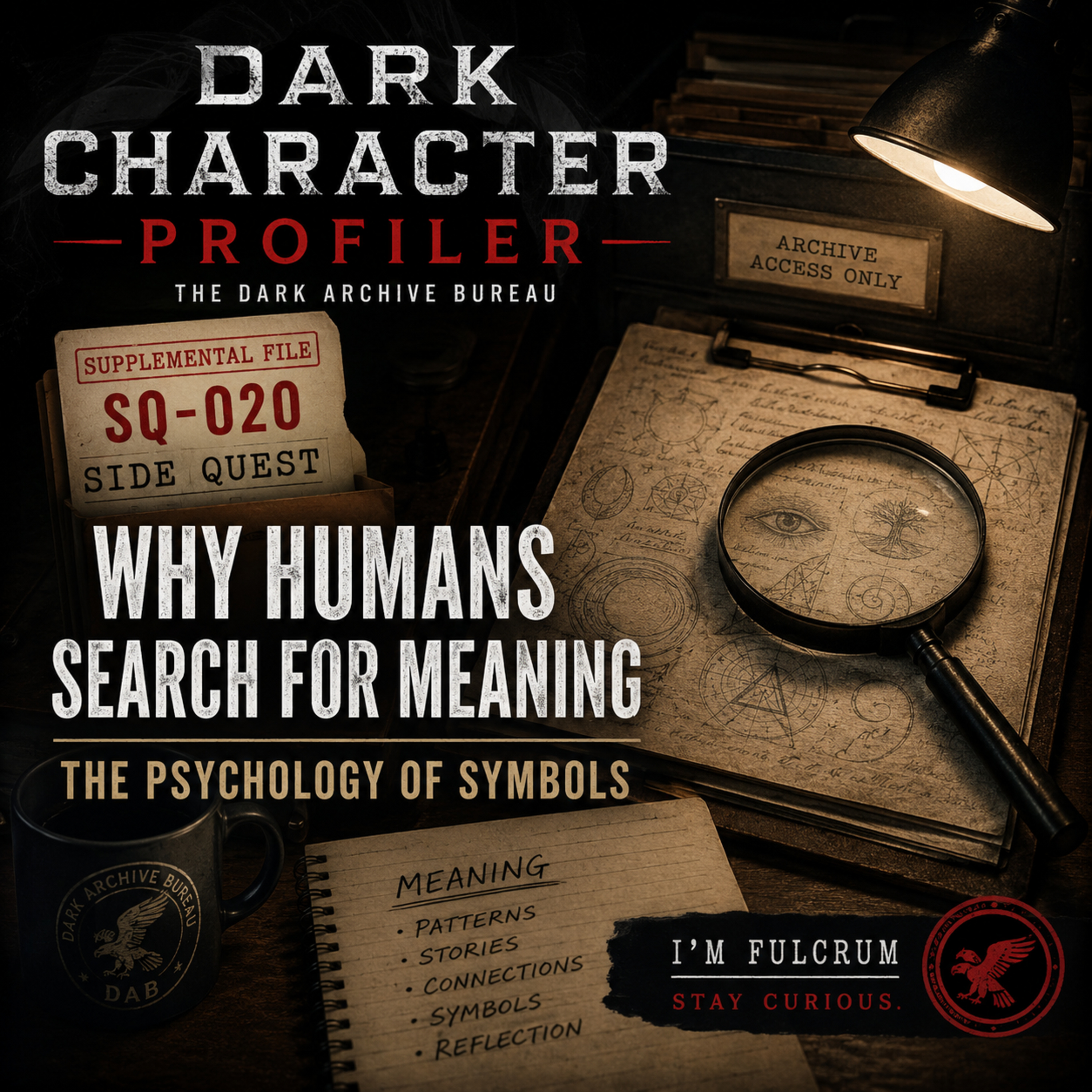 Side Quest: Why Humans Search for Meaning | The Psychology of Symbols 07.07.2026 9минWhy are human beings so drawn to symbols?From ancient myths to modern storytelling, our brains naturally search for patterns, meaning, and connection. In this Side Quest, Fulcrum explores the psychology behind symbolism, narrative identity, and why humans are wired to ask, "What does this mean?"Rather than debating whether symbols predict the future, this episode examines how they encourage self-reflection, shape personal identity, and help us make sense of our experiences.This episode also serves as an introduction to next week's interview with Christian Kenny, creator of Killer Kards Tarot, where we'll discuss creativity, symbolism, and the stories we tell ourselves.Archive File: SQ-020Classification: Supplemental Psychological Analysis🌐 Visit the Archivehttps://darkfulcrummedia.comArchive ReferencesBruner, J. (1990). Acts of Meaning. Harvard University Press.Frankl, V. E. (2006). Man's Search for Meaning. Beacon Press. (Original work published 1946)Jung, C. G. (1964). Man and His Symbols. Dell Publishing.McAdams, D. P. (2001). The Psychology of Life Stories. Review of General Psychology, 5(2), 100–122.Shermer, M. (2008). Patternicity: Finding Meaningful Patterns in Meaningless Noise. Scientific American.Steger, M. F. (2012). Making Meaning in Life. Psychological Inquiry, 23(4), 381–385.Further ReadingFor listeners interested in learning more about the psychology discussed in this episode:Viktor Frankl — Man's Search for MeaningCarl Jung — Man and His SymbolsDan McAdams — Narrative Identity ResearchMichael Shermer — Pattern Recognition and Belief FormationNext FileInterview File INT-003Subject: Christian KennyCreator of Killer Kards Tarot and Courage Over Comfort Co.We'll discuss creativity, symbolism, artistic inspiration, and why humans continue searching for meaning through stories and archetypes.
 -
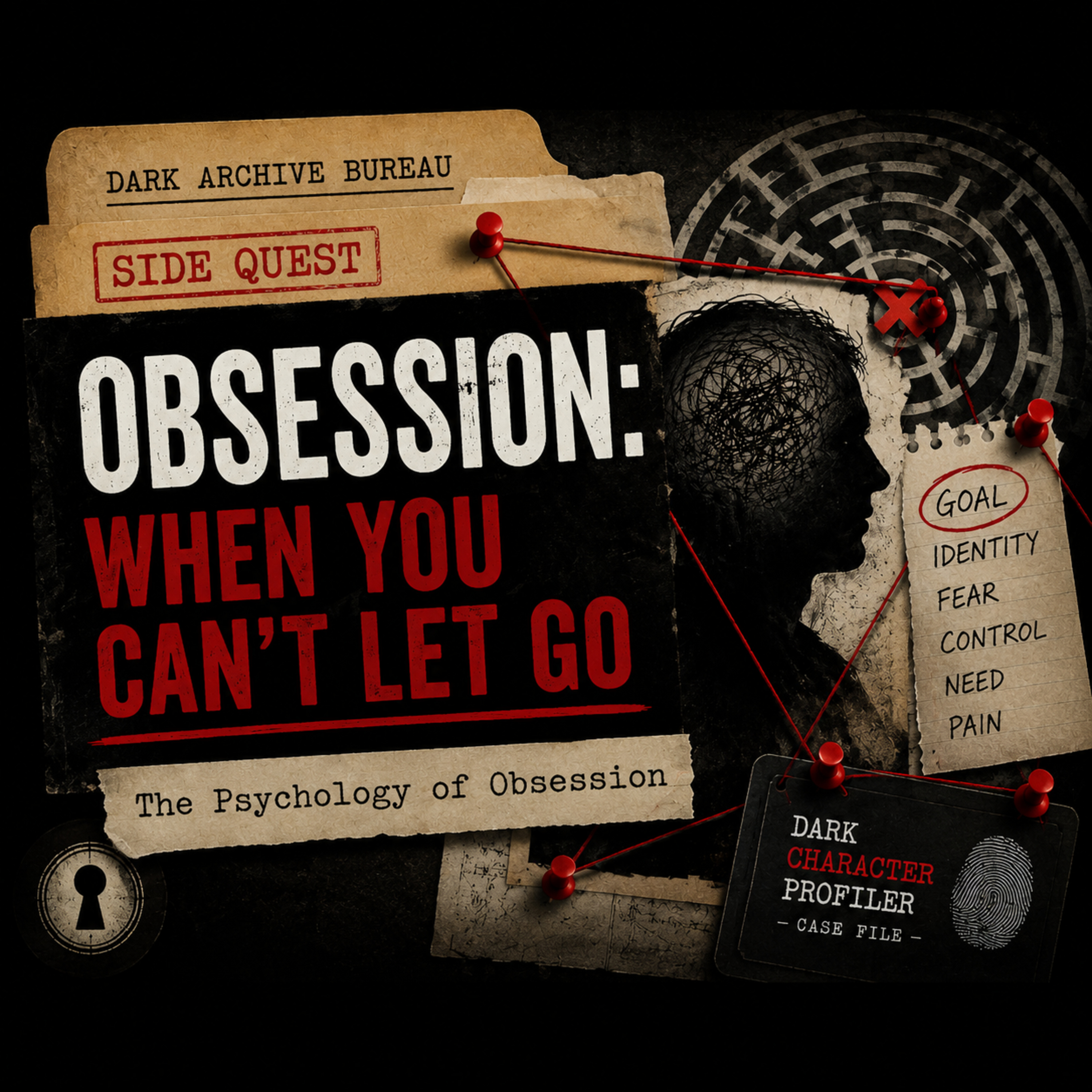 Why People Can't Let Go | The Psychology of Obsession 23.06.2026 8минWhy do some people struggle to let go—even when a goal, relationship, or dream is no longer helping them?In this Side Quest episode of Dark Character Profiler, Fulcrum explores the psychology of obsession, identity, persistence, and the hidden ways people become trapped by their own goals. Using insights from forensic psychology, cognitive psychology, and behavioral science, this episode examines the difference between healthy determination and unhealthy fixation.Topics include:Obsession and identityThe sunk cost effectPsychological flexibilityGoal attachmentPersistence vs. fixationWhy letting go can feel impossibleFeaturing a brief callback to the Plankton case file: Plankton: When Failure Becomes Identity.SourcesAmerican Psychiatric Association. (2022). DSM-5-TR.Arkes, H. R., & Blumer, C. (1985). The Psychology of Sunk Cost.Kahneman, D. (2011). Thinking, Fast and Slow.Hayes, S. C., Strosahl, K. D., & Wilson, K. G. (2011). Acceptance and Commitment Therapy.Beck, J. S. (2020). Cognitive Behavior Therapy: Basics and Beyond.Duckworth, A. (2016). Grit: The Power of Passion and Perseverance.Enter the ArchiveJoin the community & follow the investigation:https://discord.gg/dva6rJmVzthttps://x.com/Dark_Fulcrum
 -
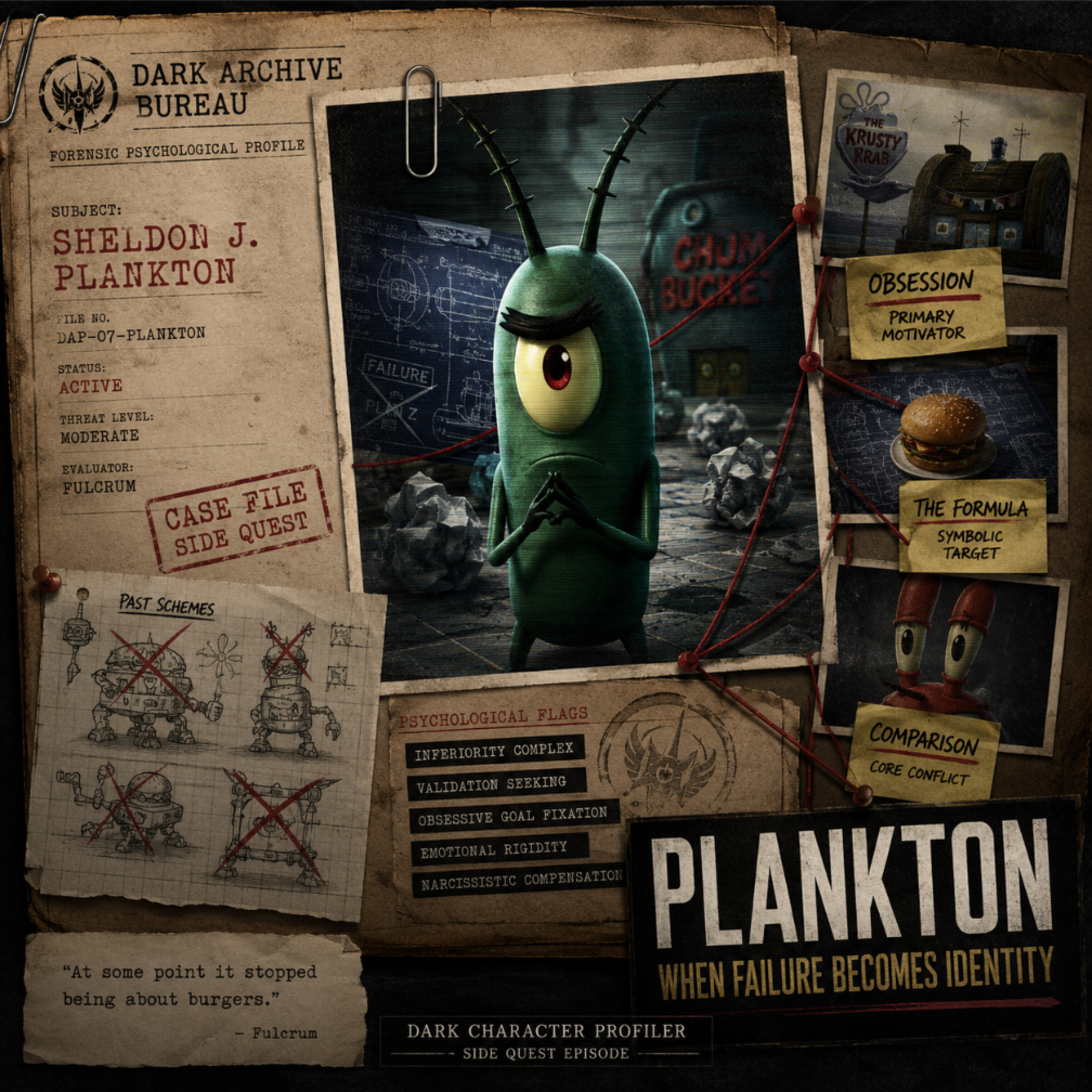 Plankton: When Failure Becomes Identity 09.06.2026 42минWhat happens when failure stops being something you experience and becomes something you believe you are?In this episode of Dark Character Profiler, Fulcrum opens the file on Sheldon J. Plankton from SpongeBob SquarePants. While often dismissed as a comedic villain, Plankton's decades-long pursuit of the Krabby Patty formula reveals a surprisingly complex psychological profile shaped by chronic comparison, unresolved resentment, obsessive goal fixation, and a desperate need for validation.Through the lens of forensic psychology, behavioral analysis, and the Archive's Hurricane Scale framework, this episode explores how a seemingly simple rivalry evolves into something far more psychologically significant.Topics include:Obsession and goal fixationInferiority and chronic comparisonNarcissistic compensationIdentity and self-worthEmotional rigidityFailure and validationRivalry psychologySymbolic goals and attachmentBeneath the gadgets, disguises, and burger thefts lies a surprisingly human question:How much of your identity can you tie to a single goal before letting go feels impossible?Sources & Frameworks ReferencedDSM-5-TR (American Psychiatric Association)Cognitive Therapy of Personality Disorders (Beck, Freeman & Davis)The New Science of Narcissism (Campbell & Crist)Borderline Conditions and Pathological Narcissism (Kernberg)The Analysis of the Self (Kohut)SpongeBob SquarePants (Stephen Hillenburg)Dark Character Profiler applies forensic psychology, behavioral analysis, and psychological frameworks to fictional characters for educational and entertainment purposes. No formal clinical diagnosis is being made."This file is closed.But not everything in the Archive stays buried."Enter the ArchiveJoin the community & follow the investigation:https://discord.gg/dva6rJmVzthttps://x.com/Dark_Fulcrum
 -
 Why Fictional Villains Feel So Real | Dark Character Profiler Side Quest 26.05.2026 9минWhy do fictional villains sometimes feel psychologically real?In this Side Quest episode of Dark Character Profiler, Fulcrum explores the psychology behind fictional villains, morally gray characters, and the emotional patterns that make audiences connect with them so deeply.From narcissism and obsession to trauma, identity, resentment, and the need for control, many iconic villains reflect real aspects of human psychology. This episode examines why characters like Homelander, Walter White, Darth Maul, and Patrick Bateman continue to resonate with audiences long after their stories end.Rather than glorifying villains, this discussion focuses on how fiction acts as a safe psychological lens—allowing people to explore difficult emotions, behavioral patterns, and moral questions through storytelling.Topics include:villain psychologyforensic psychologynarcissism and identitytrauma and emotional instabilitymorally gray characterswhy villains feel relatablestorytelling and psychologybehavioral analysis in fictionDark Character Profiler applies forensic psychology, behavioral analysis, and psychological frameworks to fictional characters and dark storytelling themes for educational and entertainment purposes.“This Side Quest is complete.Stay curious.”
 -
Why Fictional Villains Feel So Real | Dark Character Profiler Side Quest 26.05.2026 9минWhy do fictional villains sometimes feel more psychologically real than actual people?In this Side Quest from Dark Character Profiler, Fulcrum explores the psychology behind fictional villains, morally gray characters, and the emotional patterns that make audiences connect with them so deeply.From narcissism and obsession to trauma, identity, resentment, and the need for control, many fictional antagonists reflect very real aspects of human psychology. This episode examines why characters like Homelander, Walter White, Darth Maul, and Patrick Bateman continue to fascinate audiences long after their stories end.Rather than glorifying villains, this discussion focuses on how fiction acts as a safe psychological lens—allowing people to explore difficult emotions, behavioral patterns, and moral questions through storytelling.Topics include:villain psychologyforensic psychologynarcissism and identitytrauma and emotional instabilitywhy villains feel relatablemorally gray characterspsychological projection in fictionstorytelling and human behaviorDark Character Profiler applies forensic psychology, behavioral analysis, and psychological frameworks to fictional characters and dark storytelling themes for educational and entertainment purposes.“This Side Quest is complete.Stay curious.”
-
Side Quest: Darth Maul Revisited | The Missing Transformation 12.05.2026 13минDarth Maul didn’t just survive—he evolved.Fulcrum analyzes Maul’s transformation in Star Wars: Maul – Shadow Lord, bridging the gap between Star Wars: The Clone Wars and Star Wars Rebels.This episode breaks down control, patience, and long-term obsession through a forensic psychology lens.It’s the missing piece that explains who Maul becomes.ReferencesMaul: Shadow Lord — Episodes 1–10Star Wars: The Clone WarsStar Wars RebelsSolo: A Star Wars StoryAmerican Psychiatric Association. Diagnostic and Statistical Manual of Mental Disorders, Fifth Edition, Text Revision (DSM-5-TR). Washington, DC: American Psychiatric Association Publishing, 2022.(Referenced generally for psychological terminology and behavioral concepts.)Enter the Archive:Join the community & follow the investigation:https://discord.gg/dva6rJmVzthttps://x.com/Dark_Fulcrum
-
Homelander Psychology: Power, Control, and Emotional Instability (The Boys) 28.04.2026 25минHomelander isn’t just powerful—he’s dependent.Fulcrum breaks down the psychology behind control, validation, and emotional instability in The Boys. This episode explores how power without attachment creates volatility and fear-driven behavior. Released during the final season, this is the version of Homelander at his most unstable.ReferencesAmerican Psychiatric Association.Diagnostic and Statistical Manual of Mental Disorders (DSM-5-TR).5th ed., text revision. APA Publishing, 2022.Hare, Robert D.Without Conscience: The Disturbing World of the Psychopaths Among Us.Guilford Press, 1999.Herman, Judith.Trauma and Recovery.Basic Books, 1992.Kripke, Eric (Creator).The Boys.Meloy, J. Reid.The Psychopathic Mind: Origins, Dynamics, and Treatment.Jason Aronson, 1988.Ronningstam, Elsa.Narcissistic Personality Disorder: A Clinical Perspective.Guilford Press, 2005.van der Kolk, Bessel.The Body Keeps the Score.Penguin Books, 2014.Enter the Archive:Join the community & follow the investigation:https://discord.gg/dva6rJmVzthttps://x.com/Dark_Fulcrum
-
The Dancing Wolfeman | Inside the Mind of Author Rick London 14.04.2026 1ч 10минThis week, Fulcrum steps outside the archive for a special conversation with Rick London, author of The Dancing Wolfeman.In this interview, we explore the origins of one of the most unique characters in modern storytelling, breaking down the creative process, the psychology behind the Wolfeman, and the balance between humor, identity, and meaning.From character inspiration to reader interpretation, this episode offers a look at the mind behind the story and the deeper layers that might not be obvious at first glance.Whether you’re here for storytelling, psychology, or simply a great conversation, this is a different kind of case worth examining.Show NotesFulcrum steps outside the archive for a conversation with Rick London, exploring the origins and psychology behind The Dancing Wolfeman. Together, they discuss character creation, the creative process, the balance between humor and deeper meaning, and how readers interpret stories in unexpected ways.Connect with Rick London:https://x.com/RickLondon1964Check out The Dancing Wolfeman:https://www.amazon.com/Dancing-Wolfeman-Rick-London/dp/B0G6B3Z81Q Socials:https://x.com/DCPwith_FulcrumFulcrum Plays:https://www.twitch.tv/fulcrum_playshttps://www.youtube.com/@Fulcrum_Playshttps://rumble.com/user/Fulcrum_PlaysAffiliates:Never Ending Radio Show: https://neverendingradioshow.com/ A Kingdom of Ash and Steam: The Ogress Sonhttps://www.audible.com/pd/B0D7QN97N5/?source_code=AUDFPWS0223189MWU-BK-ACX0-403262&ref=acx_bty_BK_ACX0_403262_pd_us
-
A New Rhythm | Upcoming Changes and an Exciting Interview! 31.03.2026 1минIn this short announcement, I discuss a schedule change from weekly back to bi-weekly. I also tease an upcoming interview with Rick London, author of The Dancing Wolfeman. Produced and edited by Dark Fulcrum Media, LLCSocials:https://x.com/DCPwith_FulcrumFulcrum Plays:https://www.twitch.tv/fulcrum_playshttps://www.youtube.com/@Fulcrum_Playshttps://rumble.com/user/Fulcrum_Plays
-
Agent Eight-Zero | The Psychology of Identity & Control (Shadows of Carath) 24.03.2026 37минStep into the controlled mind of Agent Eight-Zero from Shadows of Carath. In this Dark Character Profiler episode, Fulcrum applies forensic psychology to examine a figure shaped by conditioning, control, and emotional suppression. Explore how identity erasure, obedience, and psychological manipulation create a weaponized individual — and what remains beneath the surface.Show NotesIn this episode of Dark Character Profiler, Fulcrum analyzes Agent Eight-Zero — a character defined not by who they were, but by what they were made to become.Agent Eight-Zero represents the psychological consequences of extreme conditioning: stripped identity, enforced obedience, and the systematic suppression of emotion. But even within control, something human persists.The psychological impact of identity erasure and forced rolesConditioning, compliance, and the breakdown of autonomyEmotional suppression and its long-term consequencesThe tension between programming and individualityTrauma bonding and institutional controlWhat defines identity when choice is removedWhether a weapon can reclaim personhoodThis episode examines the fine line between control and consciousness — and asks a central question: If identity is constructed, can it be reconstructed?🎧 Listener discretion advised.About Dark Character ProfilerWelcome to Dark Character Profiler, where we step into the minds of fiction’s most infamous figures.Each episode combines forensic psychology, mythology, and narrative analysis to explore what drives some of the most compelling characters in modern storytelling.Produced and edited by Dark Fulcrum Media, LLCReferences American Psychiatric Association.Diagnostic and Statistical Manual of Mental Disorders (DSM-5-TR).5th ed., text revision. APA Publishing, 2022.Croft, S. Donovan.Author Character Breakdown: Agent Eight-Zero. (Unpublished creator notes).Croft, S. Donovan.Shadows of Carath.Hare, Robert D.Without Conscience: The Disturbing World of the Psychopaths Among Us.Guilford Press, 1999.Lifton, Robert Jay.Thought Reform and the Psychology of Totalism.University of North Carolina Press, 1989.Meloy, J. Reid.The Psychopathic Mind: Origins, Dynamics, and Treatment.Jason Aronson, 1988.Porter, Stephen, et al.“Characteristics of Violent Offenders.”Aggression and Violent Behavior.Stone, Michael H.The Anatomy of Evil.Prometheus Books, 2009.Socials:https://x.com/DCPwith_FulcrumFulcrum Plays:https://www.twitch.tv/fulcrum_playshttps://www.youtube.com/@Fulcrum_Playshttps://rumble.com/user/Fulcrum_PlaysAffiliates:Never Ending Radio Show: https://neverendingradioshow.com/ A Kingdom of Ash and Steam: The Ogress Sonhttps://www.audible.com/pd/B0D7QN97N5/?source_code=AUDFPWS0223189MWU-BK-ACX0-403262&ref=acx_bty_BK_ACX0_403262_pd_us
-
Side Quest Minisode | Creators Who Keep Us Grounded 17.03.2026 7минIn this Side Quest Minisode of Dark Character Profiler, Fulcrum explores the role of content creators who provide stability, consistency, and emotional grounding in an increasingly chaotic digital landscape.Rather than reacting to every trending controversy or cultural flashpoint, some creators maintain a clear sense of purpose — offering their audiences a space that feels steady, intentional, and aligned with the reason people followed them in the first place.This episode examines the psychological impact of those creators and why their presence can feel so significant during periods of emotional saturation and cultural noise.In This EpisodeFulcrum explores:The concept of emotional saturation and why audiences seek stability onlineHow consistency and continuity create a sense of psychological safetyThe impact of Steve Burns and his return message to the generation that grew up with Blue's CluesThe mission-driven work of Paul Rosolie and the stabilizing effect of purpose-focused contentThe value of long-form conversation through Julian Dorey and its role in slowing down reaction-driven mediaWhy creators who remain grounded in their lane build stronger long-term trust with their audiencesKey Themes• Emotional regulation in digital environments• Consistency and trust in creator-audience relationships• Purpose-driven content versus reaction-driven content• The psychological impact of nostalgia and continuity• Long-form thinking in a short-form media landscapeAbout Dark Character ProfilerDark Character Profiler examines fictional characters and cultural narratives through the lens of forensic psychology, behavioral science, and narrative analysis.Side Quest Minisodes explore related psychological and cultural concepts connected to media, storytelling, and human behavior.Closing ThoughtSometimes the most powerful presence in a chaotic space isn’t the loudest voice — it’s the one that remains steady.
-
Darth Plagueis | The Psychology of Control, Immortality, and Power (Star Wars) 10.03.2026 40минWho was Darth Plagueis before he became the Sith Lord obsessed with conquering death?In this episode of Dark Character Profiler, we step into the mind of one of the most mysterious figures in Star Wars history. Known for his legendary attempts to manipulate the Force and create life itself, Darth Plagueis represents more than just a powerful Sith—he embodies the psychological drive for control, mastery, and the refusal to accept mortality.Through a forensic psychology lens, this episode examines the mind behind the myth.We explore:The psychological foundations of Plagueis’ obsession with cheating deathHis relationship to power, control, and ideological masteryThe role of cognitive control and emotional suppression in Sith philosophyHis influence on galactic economics through the InterGalactic Banking ClanAnd how his pursuit of dominance ultimately created the conditions for his own downfallThis episode also examines the mythic role Plagueis plays in the broader Star Wars narrative and why his attempts to manipulate life may have provoked the Force itself to respond.Because in Star Wars, evil does not create balance.It provokes it.Show NotesIn This EpisodeThe early life of Darth Plagueis and his path into the Sith orderThe psychological traits that shaped his obsession with mastery and immortalityThe Sith philosophy of control and the rejection of natural limitsPlagueis’ manipulation of galactic power through the InterGalactic Banking ClanThe mythic and narrative role of Plagueis in the Star Wars universeWhy attempts to dominate the Force often provoke unintended consequencesPsychological Themes DiscussedDeath anxiety and the denial of mortalityPathological control and perfectionismEmotional suppression and cognitive over-identification with ideologyPower acquisition as a coping mechanismFeatured CharacterDarth PlagueisA Muun Sith Lord whose obsession with manipulating the Force and conquering death would influence the rise of Darth Sidious and reshape the fate of the galaxy.About Dark Character ProfilerWelcome to Dark Character Profiler, where we step into the minds of fiction’s most infamous figures.Each episode combines forensic psychology, mythology, and narrative analysis to explore what drives some of the most compelling characters in modern storytelling.Produced and edited by FulcrumDark Fulcrum Media, LLCListener DiscretionThis podcast discusses fictional crimes, violence, and psychological themes. Listener discretion is advised.ReferencesAmerican Psychiatric Association.Diagnosticand Statistical Manual of Mental Disorders (DSM-5-TR).5th ed., text revision. APA Publishing, 2022.Fromm, E.Escape from Freedom.Farrar & Rinehart, 1941.Luceno, J.Darth Plagueis.Del Rey, 2012.Lifton, R. J.Thought Reform and thePsychology of Totalism.University of North Carolina Press, 1989.Litz, B. T., Stein, N., Delaney, E., Lebowitz, L., Nash,W. P., Silva, C., & Maguen, S.“Moral Injury and Moral Repair in War Veterans.”Clinical Psychology Review, 2009.Ronningstam, E.Narcissistic Personality Disorder: A Clinical Perspective.Guilford Press, 2005.Shay, J.Achilles in Vietnam: Combat Trauma and the Undoing of Character.Scribner, 1994.Star Wars: Episode III – Revenge of the SithLucasfilm, 2005.Socials:https://x.com/DCPwith_FulcrumAffiliates:Never Ending Radio Show: https://neverendingradioshow.com/ A Kingdom of Ash and Steam: The Ogress Sonhttps://www.audible.com/pd/B0D7QN97N5/?source_code=AUDFPWS0223189MWU-BK-ACX0-403262&ref=acx_bty_BK_ACX0_403262_pd_usFulcrum Plays:https://www.twitch.tv/fulcrum_playshttps://www.youtube.com/@Fulcrum_Playshttps://rumble.com/user/Fulcrum_Plays
-
Side Quest Minisode | Fixing Plagueis, The Acolyte, and the Chosen One 26.02.2026 10минWith Dave Filoni stepping into a new era of creative leadership at Lucasfilm, questions about canon stewardship feel more relevant than ever.In this Side Quest Special, we examine a subtle but important fracture in modern Star Wars myth: The Acolyte’s framing of Force-born twins, the shadowy presence of Darth Plagueis, and the risk of diminishing Anakin Skywalker’s singularity.This episode is not a rant. It’s a forensic myth analysis.We explore:• Why Plagueis must be a transgressor — not a spectator• The difference between engineered life and willed life• Why the Chosen One prophecy depends on hierarchy• And one clean, canon-preserving way to restore myth weight without retconning anythingThis conversation exists for a specific reason.Our next main Dark Character Profiler episode will be a full psychological and mythic analysis of Darth Plagueis. Before we step into that character deeply, we needed to clarify his role in the larger myth structure.Because if Plagueis matters…the hierarchy of miracles must make sense.📅 Programming Note: The full Plagueis analysis will release not next Tuesday but the following (3-10-26) to allow for additional research and production time.Evil never invents balance.It only provokes it.Show NotesIn This EpisodeLeadership shift at Lucasfilm and why it mattersThe mythic role of Darth PlagueisWhy reactive evil weakens narrative hierarchyEngineered life vs. willed life in Star WarsProtecting Anakin Skywalker’s singularityA canon-preserving reinterpretationWhy This Episode ExistsThis Side Quest Special sets the stage for our upcoming mainline Dark Character Profiler episode:Darth Plagueis: The Psychology of Control, Death Anxiety, and the God ComplexRelease Date: Not next Tuesday but the following (3-10-26)About Dark Character ProfilerWelcome to Dark Character Profiler, where we step into the minds of fiction’s most infamous figures.Produced and edited by FulcrumDark Fulcrum Media, LLCSocials:https://x.com/DCPwith_FulcrumAffiliates:Never Ending Radio Show: https://neverendingradioshow.com/ A Kingdom of Ash and Steam: The Ogress Sonhttps://www.audible.com/pd/B0D7QN97N5/?source_code=AUDFPWS0223189MWU-BK-ACX0-403262&ref=acx_bty_BK_ACX0_403262_pd_usFulcrum Plays:https://www.twitch.tv/fulcrum_playshttps://www.youtube.com/@Fulcrum_Playshttps://rumble.com/user/Fulcrum_Plays
-
Side Quest | Brief Delay & Update 20.02.2026 1минNext Tuesday's Side Quest will be delayed due to me being sick once again. Thank you for your patience and support. —Fulcrum
-
Dutch van der Linde | The Psychology of Charisma, Control, and Collapse (Red Dead Redemption Series) 17.02.2026 36минStep into the unraveling mind of Dutch van der Linde from the Red Dead Redemption series. In this Dark Character Profiler episode, Fulcrum applies forensic psychology to examine Dutch’s charismatic leadership, moral decline, and growing paranoia. Explore how ideology, narcissism, trauma, and desperation transform a revolutionary dreamer into a destructive force.In This Episode, We Explore:In this episode of Dark Character Profiler, Fulcrum breaks down the psychological evolution of Dutch van der Linde — a man who begins as a visionary outlaw philosopher and descends into instability, delusion, and moral collapse.Dutch is more than a gang leader. He is a rhetorician, a father figure, a revolutionary — and ultimately, a man unable to reconcile his ideals with reality.Dutch’s early ideological identity and “anti-civilization” philosophyCharismatic leadership and psychological influence over the Van der Linde gangNarcissistic traits vs. genuine revolutionary beliefTrauma, loss of control, and escalating paranoiaCognitive rigidity and the collapse of adaptive decision-makingThe psychological fracture between Dutch’s self-image and his actionsWhy Dutch remains one of gaming’s most complex antagonistsThis episode examines how power, pride, and wounded ego can distort even the most idealistic vision — and how the inability to adapt may be the true catalyst for collapse.🎧 Listener discretion advised.Presented by Dark Fulcrum Media:https://darkfulcrummedia.com/Socials:https://x.com/DCPwith_FulcrumFulcrum Plays:https://www.twitch.tv/fulcrum_playshttps://www.youtube.com/@Fulcrum_Playshttps://rumble.com/user/Fulcrum_PlaysAffiliates:Never Ending Radio Show: https://neverendingradioshow.com/ A Kingdom of Ash and Steam: The Ogress Sonhttps://www.audible.com/pd/B0D7QN97N5/?source_code=AUDFPWS0223189MWU-BK-ACX0-403262&ref=acx_bty_BK_ACX0_403262_pd_usReferences:American Psychiatric Association.Diagnostic and Statistical Manual of Mental Disorders (DSM-5-TR).5th ed., text revision. APA Publishing, 2022.Fromm, E.Escape from Freedom.Farrar & Rinehart, 1941.Kellerman, B.Bad Leadership: What It Is, How It Happens, Why It Matters.Harvard Business Review Press, 2004.Lifton, R. J.Thought Reform and the Psychology of Totalism.University of North Carolina Press, 1989.Litz, B. T., Stein, N., Delaney, E., Lebowitz, L., Nash, W. P., Silva, C., & Maguen, S.“Moral Injury and Moral Repair in War Veterans.”Clinical Psychology Review, 2009.Red Dead RedemptionRockstar Games, 2010.Red Dead Redemption 2Rockstar Games, 2018.Ronningstam, E.Narcissistic Personality Disorder: A Clinical Perspective.Guilford Press, 2005.Shay, J.Achilles in Vietnam: Combat Trauma and the Undoing of Character.Scribner, 1994.
-
Quick Schedule Update 02.02.2026This episode contains a brief audio update regarding a short delay in this week’s release due to illness.In the meantime, you can catch up or relisten to some of the past episodes on the podcast. Thank you for your patience and continued support — a new episode will be released as soon as I’m able.
-
Side Quest Minisode | Why We Misjudge Intelligence in Criminals 27.01.2026 7минWe often talk about criminals as if intelligence is obvious — labeling people as “masterminds” or dismissing them as “stupid” based on how a crime looks, how complex it seems, or how confidently someone speaks afterward. But psychology doesn’t support those shortcuts.In this Side Quest, Fulcrum explores why intelligence is so frequently misjudged in criminal behavior. From mistaking complexity for intellect, to confusing articulation with reasoning, to misunderstanding the role of stress, pressure, and intellectual disability, this episode breaks down how perception often replaces psychological reality.Rather than analyzing a specific case, this Side Quest focuses on the assumptions we bring to crime stories — and why those assumptions can distort understanding, responsibility, and justice.A reflective, psychology-forward exploration designed to clarify, not sensationalize.Show NotesThis Side Quest examines common misconceptions about intelligence in criminal behavior, including:Why complexity is often mistaken for intelligenceHow stress and pressure distort performanceThe difference between articulation and reasoningWhy confusion is frequently misread as deceptionHow intellectual disability is misunderstood in criminal contextsWhy audiences gravitate toward the idea of the “smart villain”Key Psychology ConceptsIntelligence as a multi-dimensional traitPerformance under stress vs baseline abilityCognitive overload and emotional regulationSuggestibility and authority pressureNarrative bias and perception shortcutsAbout Side QuestsSide Quests are shorter, reflective episodes of Dark Character Profiler that explore psychological concepts, misconceptions, and themes outside of full forensic case analysis. These episodes prioritize understanding and context over diagnosis or sensational storytelling.Listener NoteThis episode is intended for educational and discussion purposes only. It does not diagnose individuals or analyze specific real-world cases.Presented by Dark Fulcrum Media.Socials:https://x.com/DCPwith_FulcrumAffiliates:Never Ending Radio Show: https://neverendingradioshow.com/ A Kingdom of Ash and Steam: The Ogress Sonhttps://www.audible.com/pd/B0D7QN97N5/?source_code=AUDFPWS0223189MWU-BK-ACX0-403262&ref=acx_bty_BK_ACX0_403262_pd_usFulcrum Plays:https://www.twitch.tv/fulcrum_playshttps://www.youtube.com/@Fulcrum_Playshttps://rumble.com/user/Fulcrum_Plays
Радиостанция

Похожие подкасты


![THE DOUBLE[S]](https://cdn.radoxo.com/images/podcasts/68745-the-doubles.avif?v=1789516945)

Популярен в
Этот подкаст также попадал в подкаст-чарты этих стран.
