
Come & See Podcast
St Mark Coptic Orthodox Church in London
0
An Orthodox Bible study podcast from St. Mark Church in London, hosted by Ehab and Mina. Rooted in the timeless teachings of the Church Fathers, this podcast delves deep into Scripture, offering a rich, traditional perspective on God’s Word while uncovering its profound impact on our daily lives through engaging discussions. Whether you're just beginning your journey or seeking to deepen your faith, discover the beauty of God's Word and how it speaks to the heart of our modern world. Join us every Wednesday for fresh insights and spiritual growth!
Эпизоды
-
 Exodus 20: Grace before the Law 16.09.2026 44минBefore God gives a single commandment, He says this: "I am the Lord your God, who brought you out of the land of Egypt, out of the house of bondage." Grace comes first. They were not freed because they kept the law. They were given the law because they had been freed.The Ten Commandments are not a system of control. They are a manual for how human beings were designed to live — and a mirror that shows us how far we fall from it. Read at surface level they seem achievable. Read as Christ read them, they are impossible: murder becomes the destruction of a reputation, adultery becomes a look, theft becomes a desire we cannot put down. That is precisely the point. St. Paul calls the law a tutor, given to guard us and to lead us to Christ, because it can tell us what is right without ever being able to change us.In this episode we walk through all ten commandments and the questions they raise. What does it mean that God is jealous? How do we square visiting the iniquity of fathers upon children with Ezekiel's promise that the soul who sins shall die? What is the Sabbath rest actually for, and why did the Church move it to the day of the Resurrection? And why are icons not a violation of the second commandment?The chapter ends where it must. The people, terrified, stand far off and beg Moses to speak to God for them. And Moses walks alone into the thick darkness where God was.Key questions explored:Why does God recount the deliverance from Egypt before giving a single commandment?If the commandments cannot be kept, why were they given at all?What does it mean that God describes Himself as "a jealous God"?How do we reconcile "visiting the iniquity of the fathers upon the children" with Ezekiel 18?Why is making an icon not the same as making a carved image — and what changed at the Incarnation?What is the significance of the altar of unhewn stone with no steps?
 -
 Exodus 19: The Mountain Trembles 09.09.2026 34минThree months to the day since they walked out of Egypt, Israel arrives at the foot of Mount Sinai. They will not leave for a year. Everything that remains of Exodus, the whole of Leviticus, and half of Numbers takes place at this one mountain.And before God says a single commandment, He tells them how to prepare. Consecrate yourselves. Wash your clothes. Be ready on the third day. Do not come near the mountain, or even touch its base. This chapter is not about the law — it is about what it costs to come into the presence of God.In this episode we explore the extraordinary theology of Sinai. God tells Israel He bore them on eagles' wings and brought them to Himself, and calls them a kingdom of priests and a holy nation — words St. Peter will later apply directly to the Church. We look at the thick darkness in which God descends, and why the Fathers, especially St. Gregory of Nyssa, understood that darkness not as absence but as the mark of a God who can never be fully comprehended. We explore the three days of washing as a foreshadowing of baptism, the trumpet blast that no human hand sounded, and the astonishing detail recorded in Hebrews that Moses himself trembled.And underneath all of it: a God who sets boundaries not to keep His people out, but because He is preparing to come and dwell in their midst.Key questions explored:Why does God tell Israel to consecrate themselves and wait three days before He descends?What does it mean that God bore them "on eagles' wings" — and how do eagles carry their young?How can Israel be called "a kingdom of priests" while the priesthood of Aaron is still to come?Why does God appear in thick darkness rather than in light — and what did St. Gregory of Nyssa see in this?Why would touching the mountain bring death, and how does this change once we are adopted as sons and daughters?
 -
 Exodus 18: The Humility of Moses 02.09.2026 30минMoses leads two million people. He has parted a sea, called down plagues on an empire, and struck water from a rock. And when his father-in-law arrives at the camp, Moses goes out to meet him, bows to the ground, and kisses him.Jethro is a priest of Midian — descended from Abraham through Keturah, outside the covenant line, not of Israel. And yet he knows the true God, blesses Him, and offers sacrifice. The Church Fathers saw in him a portrait of the Gentiles who come to faith on hearing what God has done. Origen calls him a model of those who recognise God's power and join His people; St. Cyril of Alexandria writes that when the Gentiles acknowledge the work of God, they are drawn into His covenant and blessing.In this episode we explore Jethro's visit in full: the reunion of Moses with Zipporah and his two sons, and the meaning hidden in their names. The burnt offering Jethro brings, and the meal shared by Aaron and all the elders of Israel before God — a gathering that looks remarkably like the liturgy. And then the moment Jethro watches Moses judging the people alone from morning until evening and tells him plainly: "The thing that you do is not good. You will surely wear yourself out."The counsel that follows becomes the blueprint for order in the Church — rulers of thousands, hundreds, fifties, and tens. But the more remarkable thing is that Moses listened.Key questions explored:Who is Jethro, and how does a priest of Midian come to know and worship the God of Israel?What do the names Gershom and Eliezer reveal about Moses' years in exile?How can Jethro offer sacrifice before God when the priesthood has not yet been established?Why does Moses bow down to his father-in-law — and how is this different from worship?What does Jethro's system of delegated leadership reveal about the structure of the Church today?
 -
 Exodus 17: Strike the Rock 26.08.2026 19минThere is no water. The people are thirsty. And for the second time in a month, they turn on Moses — this time with enough fury that Moses fears for his life. "Why did you bring us out of Egypt to kill us with thirst?"God's instruction is simple and strange: take your staff — the same staff that parted the Red Sea — and strike the rock. Water will come out.St. Paul, writing to the Corinthians, will later say: "They drank from the spiritual Rock that followed them, and the Rock was Christ" (1 Corinthians 10:4). The rock is struck so that water flows. Christ is struck — crucified — so that living water flows for all who are thirsty.In this episode we explore Exodus chapter 17 in its entirety. The water from the rock opens the chapter; the battle with the Amalekites closes it. These two episodes are more connected than they appear. Moses stands on the hill with his staff raised, and while his hands are up, Israel prevails. When they drop, Amalek prevails. Aaron and Hur find a stone for Moses to sit on and hold his arms up — one on either side. The image of arms stretched wide, held up by others, on a hill, was not lost on the early Church.And at the end of the chapter, a new name appears for the first time in Scripture: Joshua — whose name in Hebrew is Yeshua. Jesus.Key questions explored:• What does St. Paul mean when he says "the Rock was Christ" — and how does this change how we read Exodus?• Why does God command Moses to strike the rock, rather than speak to it (as He will command later)?• What is the theological significance of Moses' raised arms during the battle with Amalek?• Why is Joshua introduced here — and what does his name foreshadow?
 -
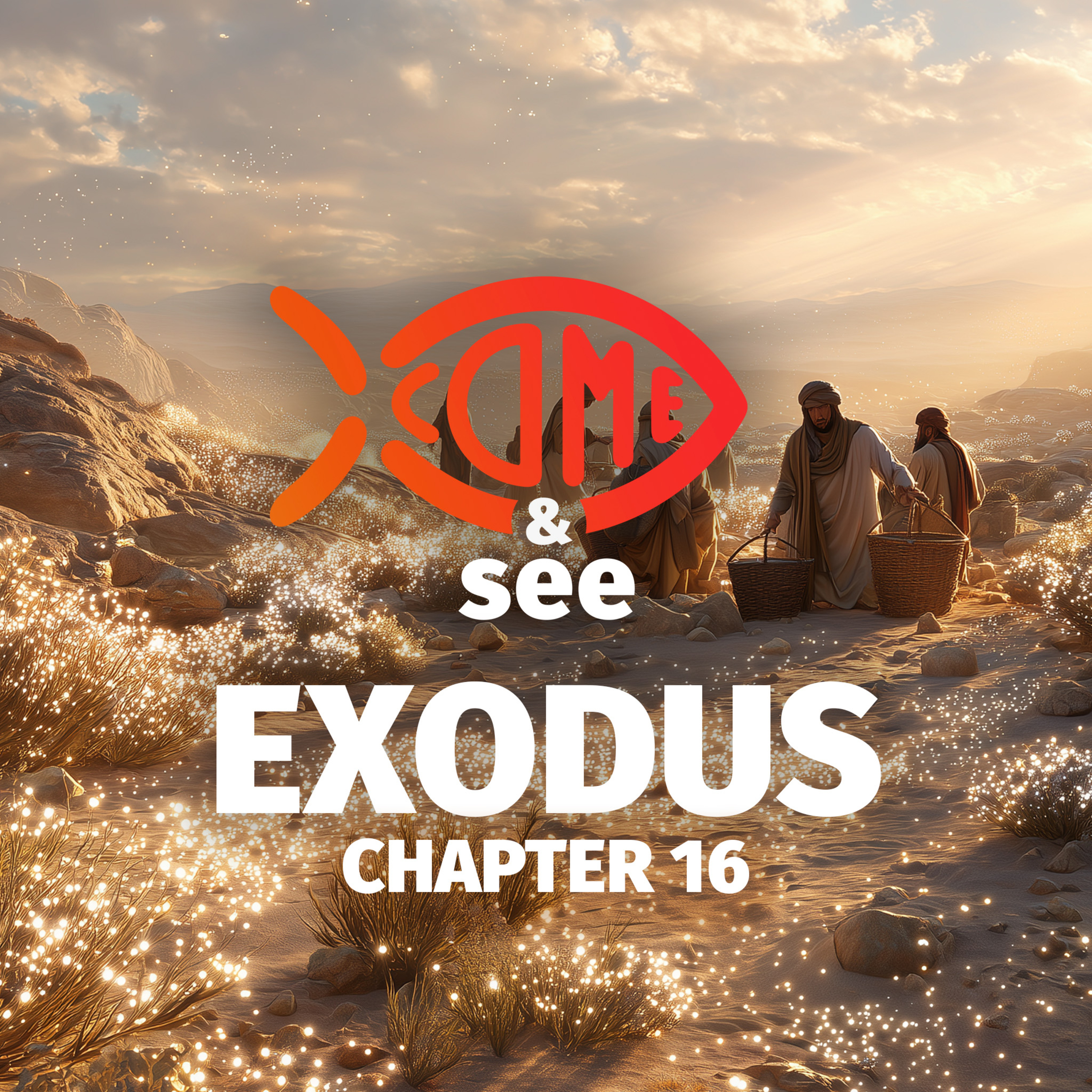 Exodus 16: Bread from Heaven 19.08.2026 38минIt has been six weeks since the Red Sea. The food is running out. And Israel, with remarkable speed, has begun to remember Egypt fondly — the fish they ate freely, the cucumbers, the melons, the leeks and garlic. They have forgotten the whips. They have forgotten the mud. What they remember is the food.This is not weakness unique to Israel. It is the human condition: suffering sharpens memory selectively, and comfort dulls it just as fast.God's response to their grumbling is not punishment. It is bread. Each morning, a thin, flake-like substance appears on the ground — "What is it?" the people say, which is exactly what the Hebrew word manna means. Each evening, quail cover the camp. The instructions are precise: gather only what you need for today. Do not keep it until morning. On the sixth day, gather double. On the seventh, rest.This is not merely food. It is a school. God is teaching His people to trust Him one day at a time.In this episode, we explore Exodus chapter 16 and its extraordinary theological depth — including how Jesus draws directly on this chapter in John 6 when He calls Himself the true bread from heaven, and how manna prefigures the Eucharist in ways that the Church Fathers found inexhaustible.Key questions explored:• Why does God restrict how much manna the people can gather — and what is He teaching them?• What is the significance of the double portion on the sixth day and the rest on the seventh?• How does Jesus use the language of Exodus 16 in John 6 to speak about the Eucharist?• What does manna as "bread from heaven" reveal about the nature of the Incarnation?
 -
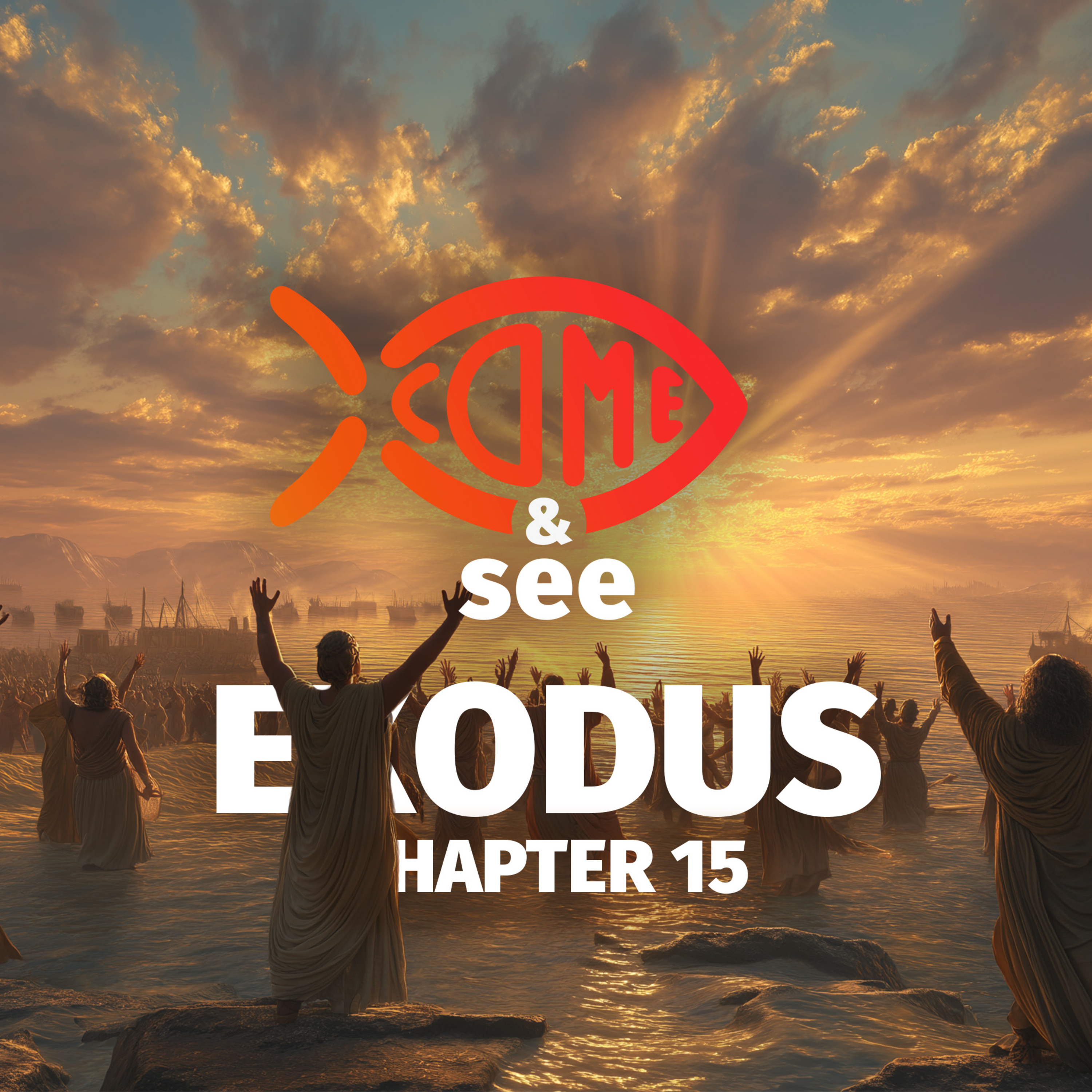 Exodus 15: The Song of Moses 12.08.2026 34минAfter the sea closes over Pharaoh's army, Israel does something that no amount of theological preparation quite prepares you for: they sing.The Song of Moses is the first great hymn of the Bible — a spontaneous eruption of praise from a people who have just witnessed the impossible. "The Lord is my strength and song, and He has become my salvation." Miriam takes up a tambourine. The women dance. And the song that erupts on the shore of the Red Sea echoes all the way to the book of Revelation, where the redeemed in heaven sing this same song before the throne of God.In this episode, we explore Exodus chapter 15 in depth. We look at how the Coptic Orthodox Church has preserved this hymn as the first of the Biblical Odes, sung as part of the midnight praises — and traditionally only sung by those who have been baptised, because you cannot sing the song of crossing if you have not crossed. We then travel with Israel to Marah, where the water is bitter and the people grumble, and discover that a tree thrown into the water makes it sweet — a moment the Church has long read as pointing to the cross.And finally, Elim: twelve springs, seventy palms, and rest.Key questions explored:• Why is the Song of Moses sung again in the book of Revelation — and what does this continuity reveal?• How does the Coptic tradition of singing this hymn only after baptism illuminate its spiritual meaning?• What is the theological significance of the tree that sweetened the bitter waters at Marah?• What does it mean that God identifies Himself as "the Lord who heals you" immediately after the miracle at Marah?
 -
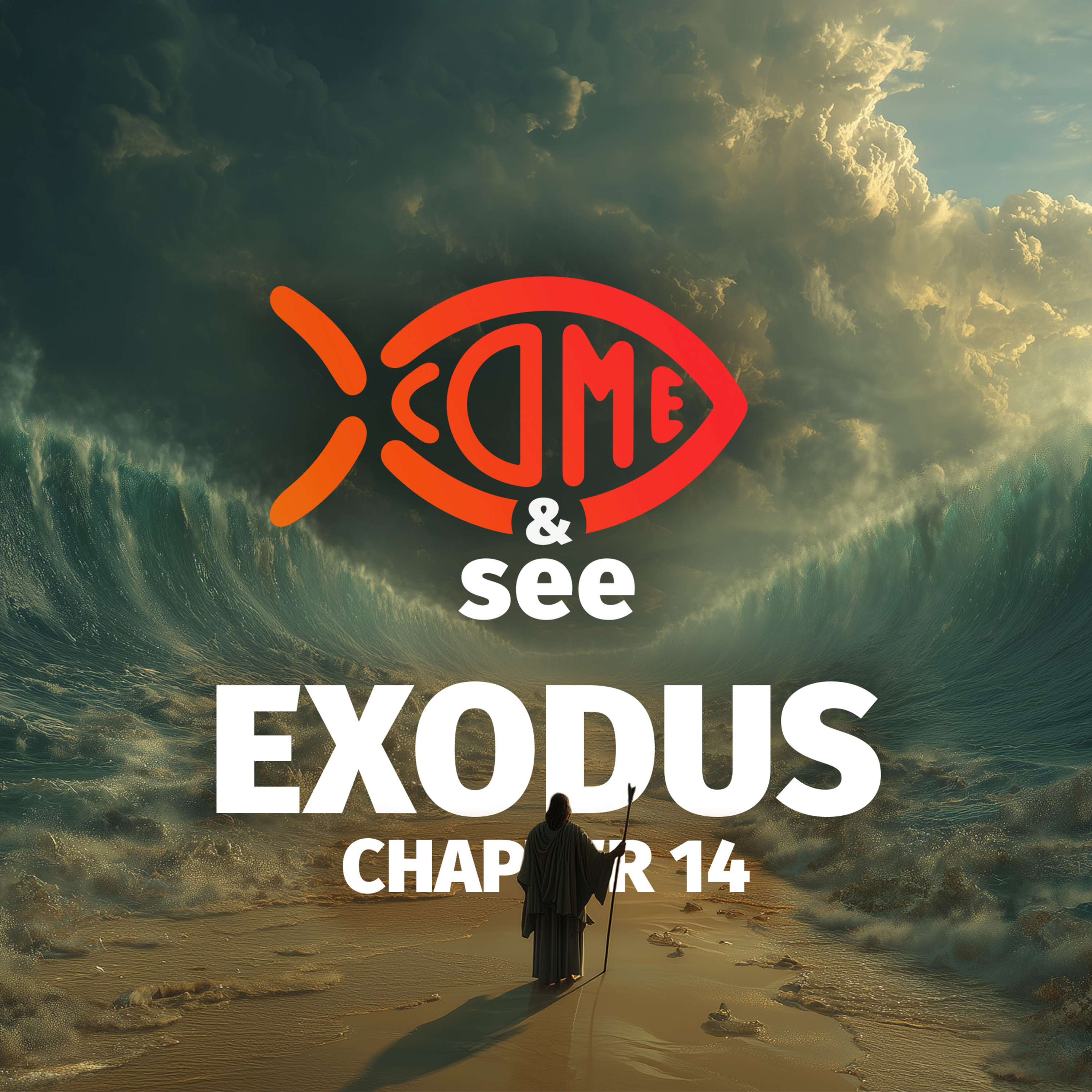 Exodus 14: Stand Still and See 05.08.2026 39минThe sea is in front of them. The Egyptian army is behind them. The wilderness is on either side. And the people of Israel do what human beings always do in impossible situations — they turn on the person who led them there."Were there not enough graves in Egypt?" they cry to Moses. "Why have you brought us out here to die?"Moses' answer is one of the most extraordinary commands in all of Scripture: "Stand still. And see the salvation of the Lord."Exodus chapter 14 is the crossing of the Red Sea — the defining moment of the Old Testament, the supreme act of deliverance before the cross itself. In this episode, we explore the theology beneath the miracle: why God hardened Pharaoh's heart, how the Angel of the Lord moved to stand between Israel and their enemy, and what St. Paul means when he says that Israel was "baptised into Moses in the cloud and in the sea" (1 Corinthians 10:1–2).The same water that saved Israel drowned their enemies. Baptism is not merely a ritual. It is a crossing over.Key questions explored:• Why did God lead Israel into what appeared to be a trap — with no escape?• What does it mean that God "hardened Pharaoh's heart," and how do we reconcile this with human free will?• How does St. Paul interpret the Red Sea crossing as a type of baptism?• What happened to the Egyptian army — and what does this say about the finality of God's deliverance?
 -
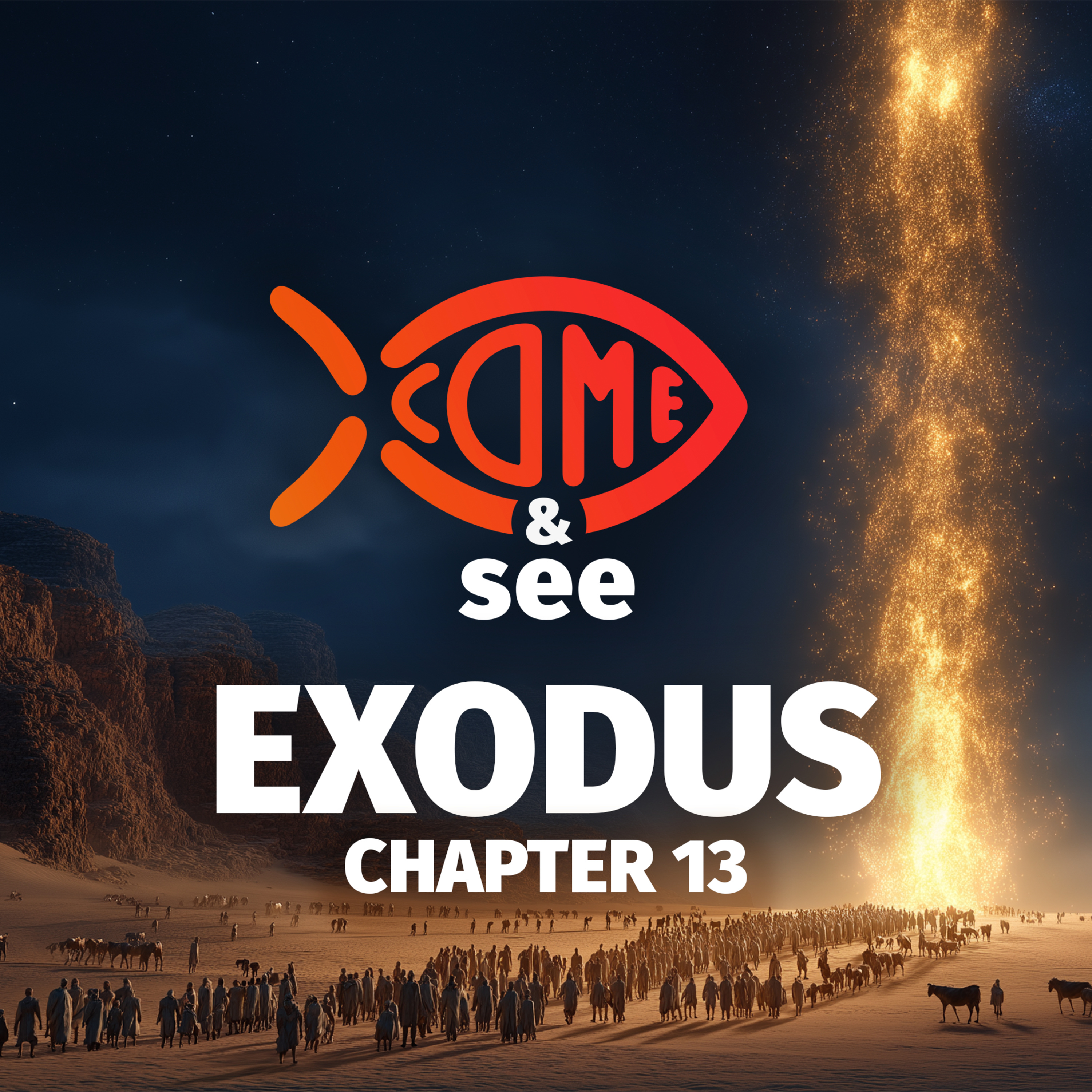 Exodus 13: The Longer Road 29.07.2026 28минGod could have taken Israel straight to the Promised Land. The direct route along the coast of Philistia was shorter, faster, and more obvious. God chose not to take it. Instead, He led them the long way — through the wilderness — because He knew that if they faced war too soon, they would run back to Egypt.The God who parts seas also plans routes.And sometimes the longer road is the more merciful one.In this episode, we explore Exodus chapter 13 and the rich theology woven into Israel's departure. The consecration of the firstborn — every firstborn son belonging to God, every firstborn donkey redeemed by a lamb — foreshadows the redemption of humanity by the Lamb of God.The Feast of Unleavened Bread is not just a commemoration of the past; it is a call to live in the reality of freedom right now.And then there is the pillar of cloud by day and the pillar of fire by night — the visible, tangible, constant presence of God guiding His people. He did not speak from a distance. He went with them.Key questions explored:Why did God choose the longer route — and what does this reveal about how He leads us?What does it mean that every firstborn donkey had to be redeemed by a lamb — or have its neck broken?How does the consecration of the firstborn point to Christ as the firstborn of all creation?What is the theological significance of the pillar of cloud and pillar of fire?
 -
 Exodus 12 Part 2: Armies of the Lord 22.07.2026 35минIt is midnight. A great cry goes up across Egypt — there is not a house without death. Pharaoh, broken at last, calls for Moses and Aaron in the dark. "Go," he says. "Take everything. And bless me also."Two million people walk out of Egypt that night. They go with silver and gold from their neighbours — the unpaid wages of generations of slavery, given freely in a night. A mixed multitude goes with them. And with every step, they are no longer called the congregation of Israel. They are called the armies of the Lord.This episode concludes our journey through Exodus chapter 12, exploring the Feast of Unleavened Bread as a call to total freedom from sin, the seven-day completeness of the feast, and why the Passover is to be observed "forever." We also explore the stunning detail that not a bone of the Passover lamb was to be broken — a detail the Gospel of John will remember at the cross.Key questions explored:• What does the removal of leaven (yeast) from the home symbolise spiritually?• Who was the "mixed multitude" that left Egypt — and what does this say about the universal scope of salvation?• Why does God insist that the Passover is observed "forever," and how does this relate to the Eucharist?• What does the unbroken bone of the Passover lamb reveal about the crucifixion of Jesus?
 -
 Exodus 12 Part 1: The Feast of Liberation 15.07.2026 38мин"This month shall be your beginning of months." God doesn't just deliver Israel — he resets their entire calendar. Everything before this moment is prologue. This is where it truly begins.In Exodus 12:1–7, God gives the Passover instructions in extraordinary detail, and almost every detail is a portrait of Christ. The lamb chosen on the 10th day — the day Jesus entered Jerusalem. The lamb kept in the house for five days, becoming part of the family, before being sacrificed — just as we must come to know Christ before we can understand what his sacrifice means. The lamb without blemish, male, in its prime — because Christ died in his prime, offering his very best. And the blood, placed not on the floor (we do not trample the blood of Christ), but on the two doorposts and the lintel — the sign of the cross.We also explore the striking phrase "congregation of Israel" — used here for the very first time in Scripture — and how it mirrors the Church established by the new Passover, the Eucharist. And we tackle the question many have wondered about: if every household had their own lamb, how is it "one" Passover? The same question people ask about the Eucharist being the same sacrifice in every church, in every city, at the same time.Key questions explored:• Why does God say "this month shall be the first of months" — and what does this new beginning point to?• What does it mean that the lamb was chosen on the 10th day, kept for five days, then sacrificed on the 14th?• Why must the lamb be without blemish, male, and one year old — and what does each detail reveal about Christ?• Why is the blood placed on the doorposts and lintel but not on the floor?• How is the Eucharist the "one sacrifice" when it is offered simultaneously in churches all over the world?
 -
 Exodus 11: The Last Night in Egypt 08.07.2026 28минEverything in Exodus has been building to this. Nine plagues, nine opportunities for Pharaoh to repent — and now the final warning is delivered. At midnight, God will pass through the land of Egypt. Every firstborn will die. Except where the blood of the lamb is on the doorpost.In this pivotal episode, we arrive at what many Church Fathers called the pinnacle of the entire Old Testament — and arguably of both Testaments. The Passover lamb is not merely a ritual. It is a revelation. It is God drawing back the curtain and showing us, centuries in advance, exactly what he is going to do through the sacrifice of his Son.We explore the profound theological weight of the blood as sign — the final sign in a progression from rainbow to circumcision. We draw the lines that run from the blood on the doorpost to the blood of the cross, from the angel of death passing over to eternal death passing over all who shelter in Christ.Key questions explored:• Why is Exodus 12 considered the theological pinnacle of the Old Testament?• How does the Passover lamb specifically foreshadow Christ's sacrifice on the cross?• What does the sequence of signs — rainbow, circumcision, blood — tell us about God's escalating covenant with humanity?• How should the knowledge that we are "passed over" by eternal death shape our daily lives?
 -
 Exodus 10: Not a Hoof Left Behind 01.07.2026 31минTwo plagues remain before the final, devastating blow — and Pharaoh is playing his last cards. As locusts devour what the hail has spared, and a palpable, tangible darkness covers Egypt for three days (while Israel has light in their homes), we watch Pharaoh offer Moses one compromise after another.You can go — but not far. Just the men. Take your children, but leave the livestock. Not a hoof, Moses replies. Not a single hoof.This episode unpacks Pharaoh's four failed compromises as a window into the strategies the enemy uses in our own spiritual lives — and the courage it takes to refuse every partial deal. We also explore the profound three-day darkness: the last Egyptian false god Ra, the sun god, is defeated in his own domain. And we sit with the Father's commentary on darkness as a type of the three days Christ spent in the tomb — and of the resurrection that follows.Key questions explored:• What are the "compromises" in our own lives — the ways we try to serve God partly, not fully?• What does "not a hoof left behind" mean for total surrender to God?• How does the three-day darkness over Egypt point forward to Christ's death and resurrection?• What does it mean that the Israelites had light in their homes even in the middle of Egypt's darkness?
 -
 Exodus 9: I Have Sinned 24.06.2026 39минWe apologise for the poor quality of sound as we had technical problems with Mina's microphone. All will be back to normal next episode.-----Plagues five, six, and seven arrive — and with them, an escalation that takes the breath away. Disease destroys Egypt's livestock. Boils break out on the skin of every Egyptian. Then fire and hail fall from the sky in a storm unlike anything Egypt has ever seen.For the first time, Pharaoh cracks. "I have sinned against the Lord your God, and against you," he says to Moses. Remove this plague, and I will let the people go. Moses prays. The plague stops. And Pharaoh changes his mind.This episode centres on one of the most human moments in all of Exodus: the difference between genuine repentance and crisis repentance. Pharaoh's confession looks real — but it isn't. The storm passes, and his heart hardens again. We've all been there. And we explore what true contrition looks like, why God distinguishes his people (Goshen was untouched throughout), and what it means to approach confession with a truly repentant heart rather than simply wanting the consequences to go away.Key questions explored:• What is the difference between genuine repentance and "crisis repentance"?• What does Pharaoh's repeated pattern of confessing and then hardening teach us about ourselves?• How does God's protection of Goshen throughout chapter 9 speak to his care for his people?• What does the plague of hail defeating the sky goddess (Nut) say theologically?
 -
 Exodus 7 & 8: God vs the Gods 17.06.2026 44минThe plagues have begun. Water turns to blood. Frogs cover the land. Gnats rise from the dust. Flies swarm everywhere. But to the ancient Egyptians, these weren't just natural disasters — they were a direct theological confrontation. Each plague targeted a specific deity in Egypt's elaborate pantheon, and one by one, those gods were shown to be powerless.This episode dives deep into the first four plagues of Egypt, exploring both the biblical text and the rich patristic commentary that sees in these plagues the story of God dismantling the false gods of every age. We also wrestle with one of the hardest questions in Exodus: what does it mean that God hardened Pharaoh's heart? Is God responsible for Pharaoh's choices?We draw on St. Cyril of Alexandria's powerful image — the same sun that softens wax also hardens clay — as a window into the mystery of divine sovereignty and human freedom. And we ask: where are the false gods in our own lives that God might be confronting?Key questions explored:• How does each of the first four plagues directly challenge an Egyptian deity?• What does the "hardening of Pharaoh's heart" mean — and who is really responsible?• Why does Goshen begin to be protected from the fourth plague onwards?• What false gods in our own hearts might God be confronting today?
 -
 Exodus 5 & 6: Bricks Without Straw 10.06.2026 43минMoses went to Pharaoh. He delivered the message. He asked for three days in the desert to worship God. And Pharaoh's response? He took away the straw and doubled the quota.Following God doesn't always make life easier — at least not straight away. The Israelites, whose hopes had been raised, now find themselves in a worse situation than before. They turn on Moses. Moses turns on God. And in one of the most intimate moments in all of Exodus, God responds to Moses' cry with something profound: six "I will" promises. I will bring you out. I will free you. I will redeem you. I will take you as my people. I will be your God. I will bring you into the land.We explore the gap between God's promises and present suffering — why God sometimes lets things get worse before they get better, what it means to have a spirit too crushed to hear good news, and how Exodus 6 foreshadows the covenant sealed in Christ's blood.Key questions explored:• Why does following God sometimes make things harder before they improve?• What does it mean that Israel's spirit was "too crushed" to hear God's promises?• How do God's six "I will" promises in Exodus 6 speak to us personally today?• What is the relationship between the covenant name YHWH and God's faithfulness?
 -
 Exodus 4: What's in Your Hand? 03.06.2026 54минGod has just revealed himself. He's given Moses his name. He's promised liberation for millions of enslaved people. And Moses' response? "But what if they don't believe me?"Exodus chapter 4 is a masterclass in how God meets human insecurity. Moses raises objection after objection — and each time, God quietly, patiently answers. A staff becomes a serpent. A hand becomes leprous and then whole. Water becomes blood. And then God asks a question that's really meant for all of us: what is that in your hand?The shepherd's staff is the most ordinary thing Moses owns — not even a sceptre like he once carried in Egypt's palace. But in God's hands, the ordinary becomes extraordinary. We explore this chapter's rich typology, drawing the link between the wooden staff and the wooden cross, between Moses' transformed inadequacy and our own. We also cover the mysterious circumcision scene — and what it reveals about the cost of God's call.Key questions explored:• What does "what's in your hand?" mean for how we offer our gifts to God?• How does Moses' humility in this chapter differ from his brash confidence 40 years before?• What does the staff-turned-serpent foreshadow about the cross?• Why does Aaron come alongside Moses — and what does that say about community in mission?
 -
 Exodus 3: Take Off Your Sandals 27.05.2026 48минMoses is 80 years old, tending sheep that aren't even his, somewhere at the back of the desert. He hasn't built an empire. He hasn't saved his people. By every worldly measure, his life is a failure. And then — a bush catches fire. And doesn't burn up.This is one of the most celebrated theophanies in all of Scripture, and it contains more theology than most of us will ever fully exhaust. The burning bush as a type of the Incarnation. The pre-incarnate Word of God appearing in fire. God revealing his personal name — I AM WHO I AM — for the first time in human history. And Moses, overwhelmed, asking the question we've all asked: Who am I?We explore the patristic readings of this chapter in depth, drawing on St. Gregory of Nyssa, St. Augustine, and St. Athanasius. We also ask what it means for us today to "take off our sandals" — to approach God with reverence rather than familiarity.Key questions explored:• Why does God reveal himself to Moses specifically during quiet time in the desert?• What does the burning bush reveal about the nature of the Incarnation?• What does "I AM WHO I AM" tell us about the eternity and unchangeability of God?• Where is God calling us to remove our sandals — to stand on holy ground?
 -
 Exodus 2: A Baby in a Basket 20.05.2026 33минA mother who refuses to give up. A basket sealed with pitch, placed on the Nile's wild waters. A baby who should have drowned — but didn't.Exodus 2 is a chapter of extraordinary women and a God who loves to work through the least expected circumstances. Moses' mother acts out of pure faith, doing the only thing she can and trusting God with the rest. Miriam watches. Pharaoh's own daughter opens the basket — and shows compassion where Pharaoh showed cruelty. And in a twist so wild only God could write it, Moses is handed back to his own mother to nurse — and Pharaoh's palace pays for it.We follow Moses into adulthood: his rash act of killing an Egyptian, his flight to Midian, his meeting with Zipporah at the well, and the quiet humbling of 40 desert years. And at the end, four simple but earth-shaking words: God heard their groaning.Key questions explored:• What does Moses' mother's act of faith teach us about trusting God when logic fails?• How does the basket on the Nile connect to Noah's ark and Christian baptism?• What does Moses' 40-year "detour" say about God's timing vs. our own?• How does the well scene foreshadow Jesus and the woman of Samaria?
 -
 Exodus 1: The More They Were Oppressed 13.05.2026 26минIt begins with a simple observation that carries the weight of the entire book: the more the Egyptians afflicted the children of Israel, the more they multiplied. Pharaoh — threatened by a people he no longer understands — tightens his grip. Slaves. Taskmasters. Bricks without straw. And then something worse: an order to the midwives to kill every Hebrew boy at birth.But the midwives feared God. And they did not obey.In this first deep dive into Exodus, we unpack one of scripture's most quietly radical stories: two women, Shiphrah and Puah, who chose God over Pharaoh. We wrestle with the tricky question of whether they lied — and what God's blessing of them means. We also explore why God sometimes seems to allow suffering to go on longer than we'd like, and what he might be doing in the waiting.Key questions explored:• Why does God allow his people to be oppressed? Where is he in the suffering?• Is it ever right to disobey a government for the sake of God?• Did the midwives lie — and does that affect how God blessed them?• In what ways does the early Church's growth under persecution mirror Israel's story?
 -
 Exodus: Introduction 06.05.2026 40минSeason 2 begins — and we could not have asked for a better guide to open it. In this special introduction to the Book of Exodus, we are joined by HE Archbishop Angaelos of the Diocese of London, whose wisdom and pastoral heart have inspired so many of us over the years. We are deeply honoured to have him with us.The Book of Exodus is not just ancient history. It is the story of our lives. The children of Israel, once prosperous under Joseph, find themselves enslaved — their privileges having become golden cages. Sound familiar? God, unsatisfied with anything less than our full freedom, sends Moses to lead his people out. But the journey is rarely a straight line.Together, we explore Exodus as a type of our own spiritual journey — from slavery to sin, through the wilderness, toward the Promised Land. We discuss Moses as a leader, the transformative gift of the Ten Commandments, the profound symbolism of the Passover, and God's tender presence in the pillar of cloud and fire.Key questions explored:• In what ways does our modern life mirror the slavery of Egypt?• What does the pillar of cloud and fire tell us about God's presence in our wilderness?• How does the Passover meal connect to the Eucharist we receive today?• What does God's patience with a "stiff-necked" people say about his love for us?
Похожие подкасты


Популярен в
Этот подкаст также попадал в подкаст-чарты этих стран.
