
Safe Aerospace Podcast
Americans for Safe Aerospace
0
The Safe Aerospace Podcast, hosted by former F/A-18 pilot Ryan Graves, brings together military aviators, commercial pilots, air traffic controllers, aerospace professionals, and policymakers to discuss UAP (unidentified aerial phenomena) in controlled airspace. Each episode features firsthand accounts from credentialed professionals, analysis of emerging policy developments, and conversations with researchers and lawmakers. The show aims to bring scientific rigor and institutional accountability to a long-stigmatized issue, exploring what UAP encounters mean for flight safety, national security, and airspace transparency.
Эпизоды
-
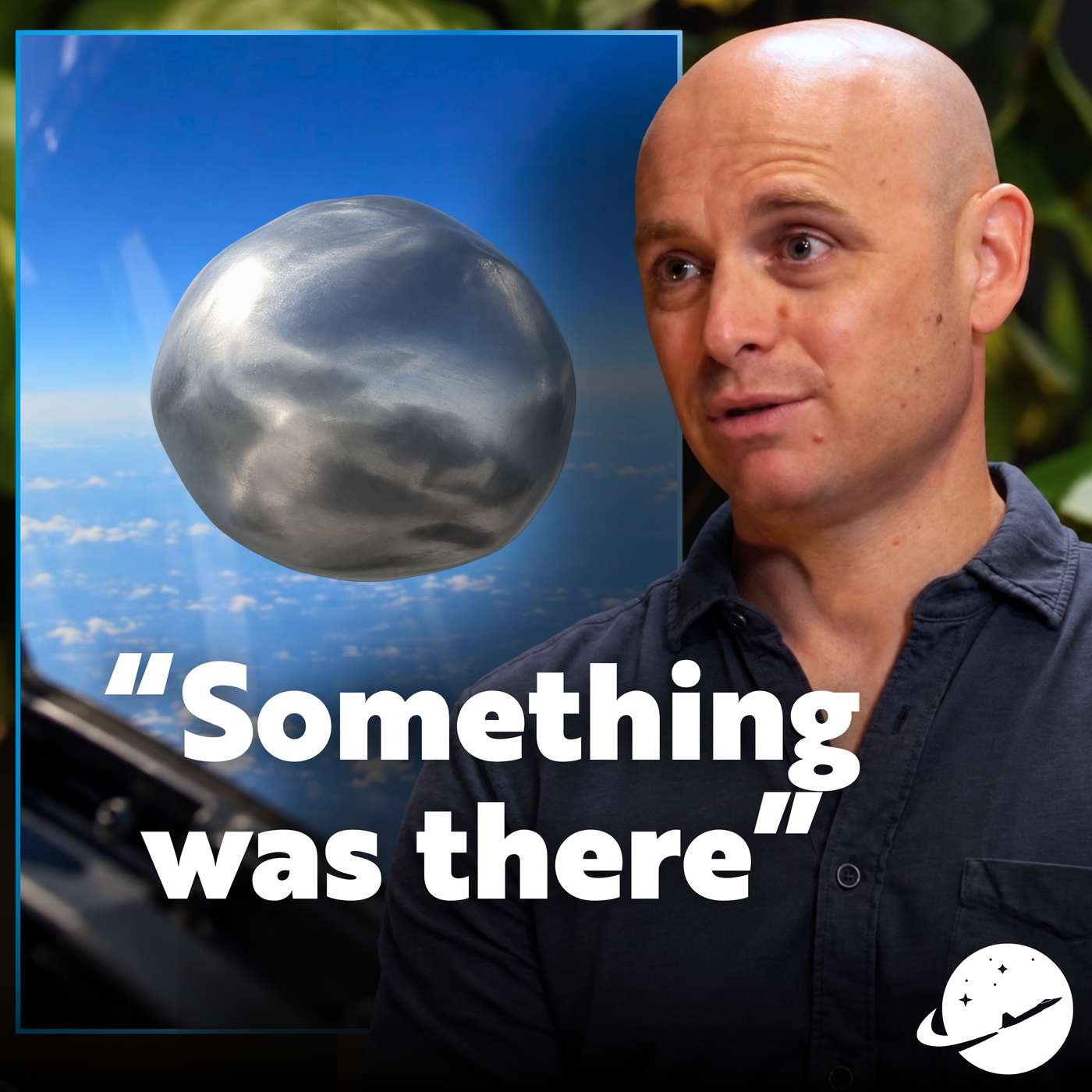 “That's No Balloon!”: F-18 Pilot Reconsiders His UAP Encounter | Austin Hulbert 11.09.2026 59минThree passes. A persistent radar contact. A brief glimpse of something silvery off the wing.Former Navy F-18 pilot Austin Hulbert and his weapons systems officer called it a balloon and moved on. Years later, Austin started building stratospheric balloons for the military. That explanation no longer made sense to him.I sit down with Austin, one of my instructors during Navy flight training, to revisit his encounter off the coast of Virginia Beach and what changed his mind. We discuss what he remembers seeing, what the radar was tracking, and why neither crew member thought much of it at the time.Austin also takes us inside his career in naval aviation and special operations, the return of balloons to modern warfare, and the challenge of detecting objects our air defenses weren’t built to find. Throughout the conversation, we return to a question familiar to many military aviators: What gets missed when pilots dismiss something they can’t explain?Learn more, become a member, and support our work at: safeaerospace.orgPlease like, subscribe, and share this episode to help us continue producing independent aviation-safety research and conversations.
 -
 Former DISA Contractor Saw a UAP Live on an MQ-9 Feed Over East Asia | Kevin Campbell 03.09.2026 50минWhat did a defense network engineer see while monitoring U.S. military drone feeds over the waters of East Asia?I sit down with former Defense Information Systems Agency (DISA) contractor Kevin Campbell, who supported satellite communications and monitored MQ-9 feeds from Hill Air Force Base. Kevin says he encountered several clips of unidentified objects in the East China Sea and Yellow Sea region—including one event he watched live. He describes a roughly spherical object moving just above the water, an elongated rust-colored form briefly visible in electro-optical imagery, and another luminous object that changed direction before it was lost from view.Our conversation examines how unusual footage was discovered and saved, the increased MQ-9 coverage Kevin says he observed after the first incident, and the lack of a clear reporting process inside his workplace. Kevin also discusses contacting Americans for Safe Aerospace, speaking with the FBI, his concerns about AARO’s early reporting pathway, and congressional interest in footage he believes may include one of the events he reported.Kevin does not claim to know what the objects were. He argues that the underlying footage should be preserved, analyzed, and, when possible, released so the public and policymakers can better assess what military sensors are recording.His account raises a broader aviation-safety and national-security question: How should agencies collect, retain, and share UAP data when important observations are scattered across systems and organizations?Learn more, become a member, and support our work at: safeaerospace.orgPlease like, subscribe, and share this episode to help us continue producing independent aviation-safety research and conversations.
 -
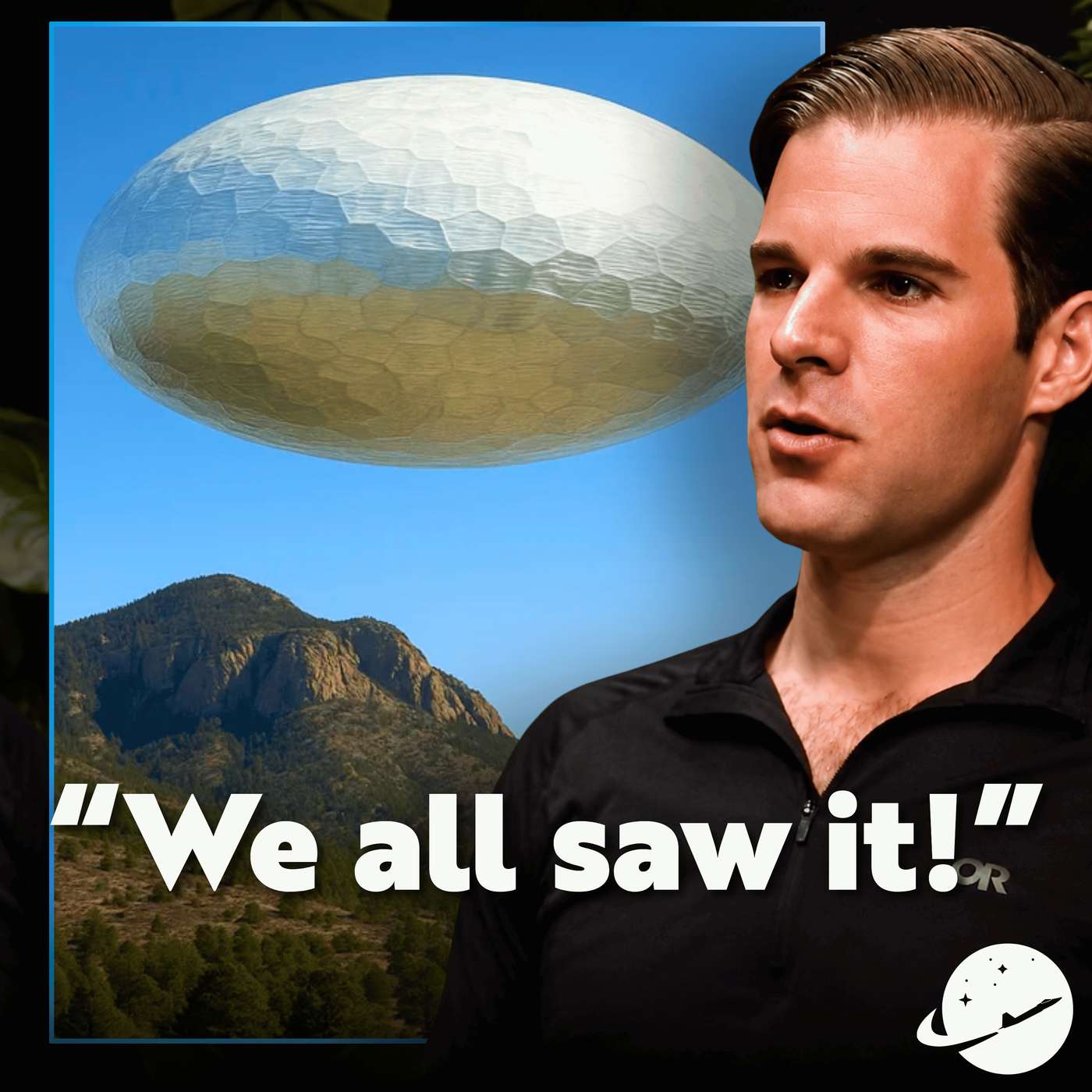 Intel Officers Saw a Massive Craft Over Cheyenne Mountain Complex | Caison Best 20.08.2026 1ч 16минWhat really happened over Cheyenne Mountain in February 2022?Ryan Graves sits down with former Army intelligence officer Caison Best, whose own unexplained broad-daylight sighting of a massive craft led him on a journey through the military and federal intelligence apparatus. After attempting to report the incident through official channels, Caison navigated an investigation by the Pentagon’s All-domain Anomaly Resolution Office (AARO) before engaging in an in-depth inquiry conducted by the FBI, culminating in his files and drawings recently being released to the public through the PURSUE program.Our conversation examines the physical characteristics of the asymmetric, white-porcelain geometric craft, the high-stakes Ukraine war briefing that occurred moments after the sighting, the stark contrast in investigative standards between AARO and the FBI, the psychological toll and peer-to-peer dynamics among military witnesses, and the broader patterns Caison observed while managing the witness intake process for Americans for Safe Aerospace (ASA).Whether this object was a highly advanced foreign asset, a classified domestic platform, or a true UAP, Caison’s experience reveals a troubling gap in how our national security apparatus processes, coordinates, and acts on critical intelligence from its own most highly vetted operators.Learn more, become a member, and support our work at: safeaerospace.orgPlease like, subscribe, and share this episode to help us continue producing independent aviation-safety research and conversations.
 -
 Phantom NJ Swarms: Uncovering 13,000 UAP Police Records with AI | John Malaska x Ryan Graves 28.07.2026 1ч 31минWhat really happened during the 2024 New Jersey drone wave?Ryan Graves sits down with AI researcher John Malaska, whose own unexplained thermal-camera sighting led him to investigate the incidents through public records. After contacting municipalities across New Jersey, John assembled approximately 13,000 records—including police reports, dispatch logs, emails, body-camera transcripts, drone telemetry, and government intelligence reports—and used AI to identify patterns within the data.Our conversation examines reports of possible electromagnetic interference, unidentified radar returns near airports, activity around reservoirs and other critical infrastructure, the difficulties faced by local police, and the gap between official assurances and what responding agencies documented.Whether these objects were drones, misidentified aircraft, UAP, or a combination of all three, the records reveal a serious weakness in America’s ability to understand and protect its increasingly congested low-altitude airspace.Learn more, become a member, and support our work at: safeaerospace.org.
 -
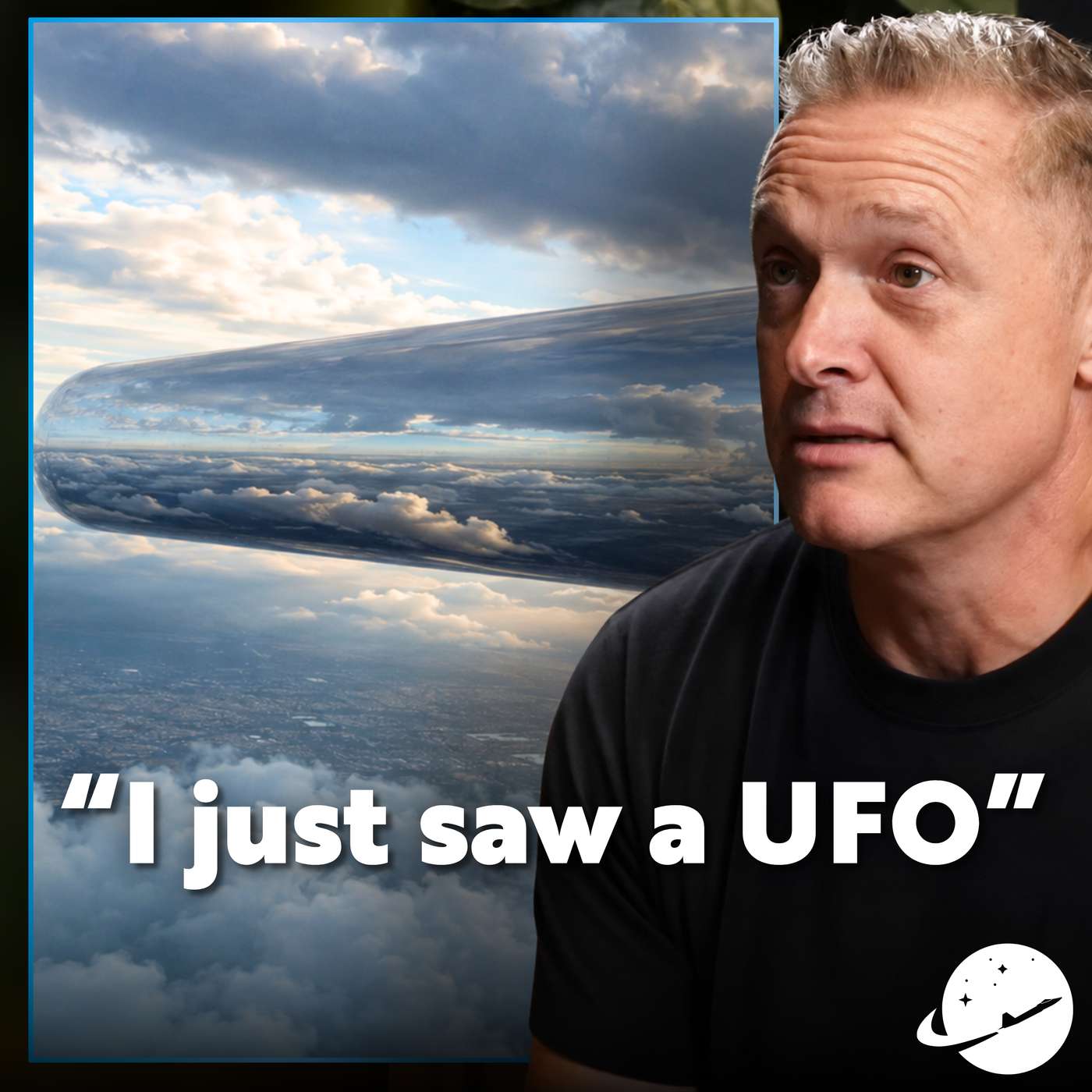 "The Size of a 737": Marine Fighter Pilot Benjamin Read on His UAP Near-Miss Over Houston 14.07.2026 1ч 21минA veteran Marine F-18 Hornet pilot, a commercial airliner climbing out of Houston, and an object "the size of a 737" hovering motionless between cloud layers — with air traffic control confirming an uncorrelated target that had been "popping on and off the scope all day." In this episode of the Safe Aerospace Podcast, former Navy F/A-18F pilot Ryan Graves talks with Benjamin Read, an 18-year Marine Corps aviator turned commercial airline captain, about the encounter that turned a lifelong skeptic into an advocate for pilot reporting.Reed describes a night departure out of Houston in May 2021: during a level-off, the controller called out unidentified traffic that neither pilot expected to see. What they found was a wingless, mercury-like, oblong object — a "Tic Tac" — holding perfectly still on their flight path. Reed rolled the aircraft to avoid it. At an estimated 500 feet, the object accelerated perpendicular to their wing line faster than anything he'd seen in two decades of military and civilian flying. The captain's photo captured nothing.Before the encounter, Read's story is remarkable on its own: enlisted helicopter mechanic to Hornet pilot, a G-induced spinal injury during a gun run for the Thai Royal Family, a FAC tour in Iraq recovering fallen Americans with Task Force Personnel Recovery, and a stint as a general's aide that convinced him every strange light in the sky had a classified explanation. This episode is about what happens when that worldview meets something it can't explain — and why he chose to report it to ASA rather than stay silent.In this episode:From enlisted avionics tech to single-seat Hornet pilot in JapanThe back injury that nearly ended his career — and the 90-day recovery that saved itWhy a former general's aide assumed all UAP were classified U.S. programsThe Houston encounter: ATC's uncorrelated radar target, the 500-foot pass, the instant acceleration"Don't lie": the cockpit conversation about what to tell ATCWhy pilots self-censor, and why reported cases may represent 1% of encountersNightly unexplained lights on West Coast routes — and how cockpit culture is changingReed's message to fellow pilots: "Don't be a coward"About the guest: Benjamin Read served 18 years in the U.S. Marine Corps, flying the F/A-18 Hornet from Japan and Afghanistan, serving as a forward air controller in Iraq, and instructing in the T-6 Texan before becoming a commercial airline captain.About the show: The Safe Aerospace Podcast is produced by Americans for Safe Aerospace (ASA), the nonprofit founded by Ryan Graves dedicated to aviation safety, airspace transparency, and rigorous scientific investigation of UAP. Read pilot reports and support our work at https://www.safeaerospace.orgBen will join ASA members for a live AMA one week after this episode airs — become a member at safeaerospace.org to submit your questions.
 -
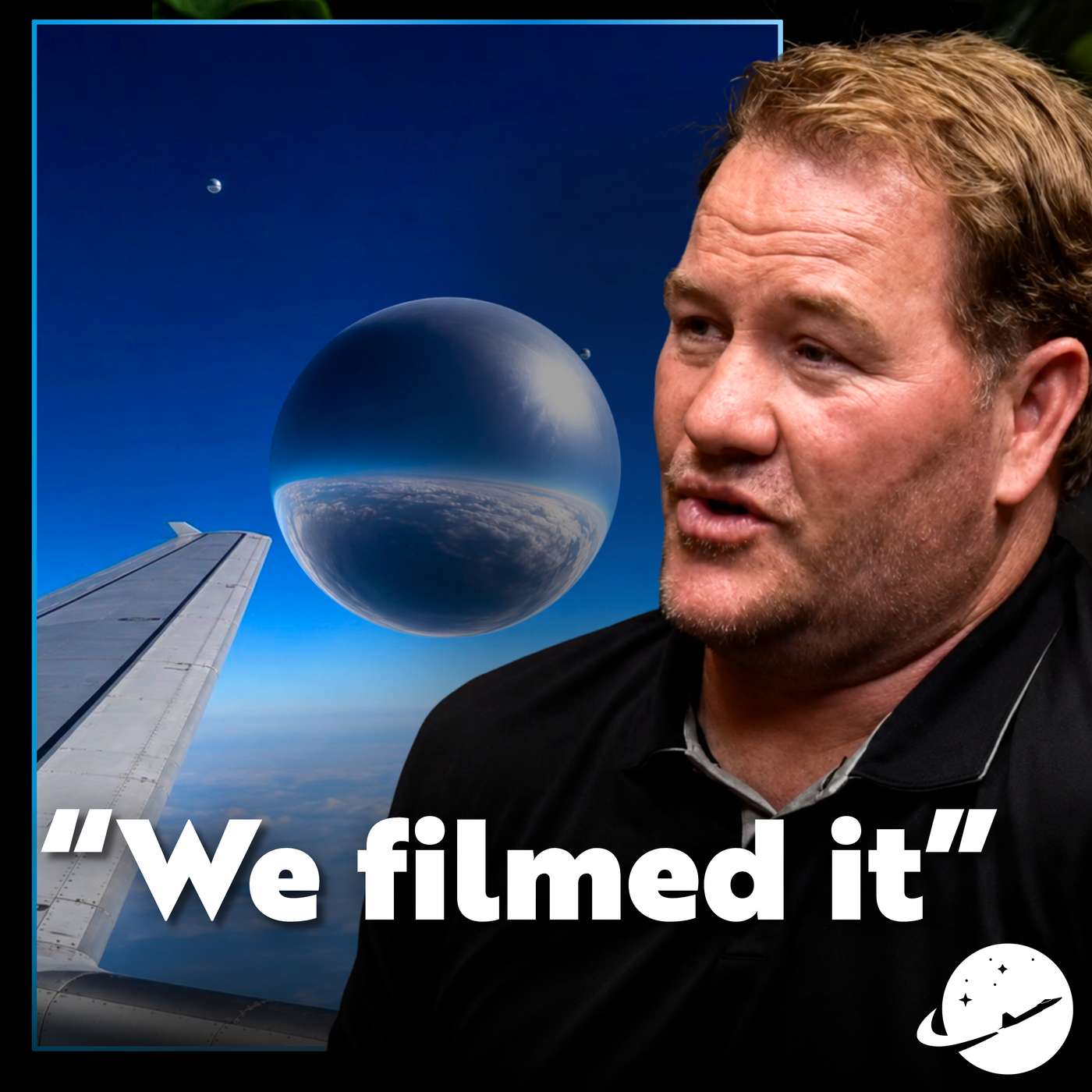 Inside the Radar Room: 26-Year Air Traffic Controller Jason Judy on UAP Sightings, Filtered Radar Data & the Chinese Balloon 10.07.2026 1ч 14минWhat do air traffic controllers actually see on their scopes when pilots report unidentified aerial phenomena? In the premiere episode of the Safe Aerospace Podcast, former U.S. Navy F/A-18F pilot Ryan Graves sits down with Jason Judy, a 26-year FAA air traffic controller turned corporate pilot, for a rare inside look at how UAP appear — and disappear — inside America's air traffic control system.Jason pulls back the curtain on what controllers discuss off-frequency: near misses with falling NASA balloon payloads, nightly UAP reports during 2021–2023 that had watch desk managers saying "they're back," an American Airlines crew tracked by an object bouncing off their wing nearly all the way to Salt Lake, and the radar playback of the 2023 Chinese balloon incident — including data suggesting an object accelerated from a 28-knot drift to over 1,200 knots in roughly a minute.The conversation also digs into the systemic issues ASA works on every day: why primary radar returns are filtered out above 23,000 feet, why raw radar data is erased after just 45 days, how stigma keeps pilots and controllers from filing reports, and what happened to the thousands of aviation UAP reports that vanished into classified archives.In this episode:How ATC radar actually works: primary vs. secondary returns and ADS-BWhy controllers never see most UAP — the 23,000 ft filtering problemThe 45-day data destruction window and the case for preserving raw radarUAP reports "almost every night" on mid shifts, 2021–2023The Chinese balloon radar playback and a 1,252-knot acceleration analysisStigma, reporting culture, and where early-2000s UFO reports actually wentAbout the guest: Jason Judy spent 26 years as an FAA air traffic controller, beginning at Fort Worth Center in 1997, before retiring in 2023 to fly corporate aviation.About the show: The Safe Aerospace Podcast is produced by Americans for Safe Aerospace (ASA), the nonprofit founded by Ryan Graves dedicated to aviation safety, airspace transparency, and rigorous scientific investigation of UAP. Learn more, read pilot reports, and support our work at https://www.safeaerospace.orgJason will be joining ASA members for a live AMA after this episode airs, become a member at safeaerospace.org to submit your questions.
Похожие подкасты


Популярен в
Этот подкаст также попадал в подкаст-чарты этих стран.

