
Taking LegalTech To Market
Paul Church
0
Taking Legal Tech To Market is a podcast where legal tech founders and revenue leaders share the real go-to-market playbooks behind successful legal technology companies. Each episode explores how these companies win, covering sales strategy, market positioning, go-to-market hiring, and lessons learned while scaling. Hosted by Paul Church, founder of Talent & Growth and a specialist recruiter for legal tech go-to-market talent. New episodes are released every week.
Эпизоды
-
 Why I Always Tell My Customers To Try My Competitors First | Maryam Salehijam | Founder: Andarzi 11.09.2026 27минMaryam Salehijam walked out of a Stanford Law visiting research position into LegalTech sales, with no legal background, no network, and a PhD in something completely different. That outsider perspective is exactly why she sees things most people in this market miss.In this episode Maryam breaks down the full picture: why the objection has shifted from "we don't trust AI" to "we're building our own," why she deliberately wants to be last in every evaluation cycle, why she tells buyers exactly where her competitors are better, and why you cannot sell AI to a burning out team.She also makes the most counterintuitive commercial argument in the episode, she actively recommends smaller subscriptions when a larger one would benefit her, tells customers not to buy when buying isn't right for them, and says the moment you stop doing that is the moment you stop building a referral engine.Maryam is ex CRO at Junior, an AI patent drafting platform. She ran the entire revenue function, lean, AI-enabled, with processes that run themselves.If you're selling into legal right now, hiring for a GTM role, or building a CRO function from scratch, this is the most honest account of what that actually looks like in 2026.Timestamps:00:00 — PhD to LegalTech CRO: the Stanford Law corridor moment04:41 — Why lawyers are miserable and why that matters to GTM05:08 — Junior's ICP: patent prosecutors, in-house IP, trademark teams06:28 — The best channel to reach your ICP in 202606:55 — Why email and cold calling are both dead08:03 — Organic word of mouth as the primary growth engine13:13 — The objection shift: from "we don't trust AI" to "we're building our own"17:24 — Be last in the evaluation cycle, not first19:07 — Why Maryam tells buyers who her competitors are and where they're better20:55 — You cannot sell AI to a burning out team21:47 — Three-year contracts before proving value: that's just selfish22:53 — What Maryam looks for when hiring for GTM23:36 — Why immigrants make great startup hires24:55 — How AI has replaced RevOps, sales ops, EAs, and most BDRs25:41 — The two automations that changed her sales process26:42 — What success looks like for Junior in the next 12 months🎙️ Taking LegalTech to Market is hosted by Paul Church, LegalTech recruiter, talent advisor, and one of the most listened-to voices in the space.Subscribe for new episodes every week.
 -
 You Didn't Even Read the Email Your AI Sent to Me. 09.09.2026 1минMaryam Salehijam is ex CRO at Junior, AI patent drafting. She's selling AI to lawyers. And she's also the person on the other side of your outbound sequence, watching salespeople ask questions that were already answered in the AI-generated email they clearly never read.In this trailer: why she deliberately wants to be last in every evaluation, why she tells buyers exactly who her competitors are and where they're better, and why the only GTM motion that still works in legal AI is one built entirely on trust. The objection used to be "we don't trust AI." Now it's "we're building our own." The playbook changed. Most people haven't noticed yet.Full episode going live on Friday.
 -
 The Hidden Cost of Staying When Your Industry Is About To Break | Nathan & Michael | Landfall IP 04.09.2026 39минNathan Mutter and Michael Drapkin were top outside counsel at Qualcomm, Micron, and Salesforce. When the ChatGPT moment hit, they didn't wait to see what would happen to their industry. They walked away from the most profitable position in the market and built Landfall IP, an AI native patent law firm, from scratch.In this episode they break down the full picture: why they built a law firm rather than a software product, how their Discovery Agent removes the biggest barrier between inventors and patent protection, why people want to buy trust and judgment rather than a tool that produces a piece of paper, and what the Malcolm Gladwell risk reframe actually means for any practitioner still sitting on the fence.MLD also makes the most important market observation in the episode: only 4% of total legal spend goes on technology. It should be 40%. Kirkland and Ellis is spending $500M over five years on building an AI platform. The firms willing to disrupt themselves are already diverging from the ones that aren't.If you're building for the legal market, selling into it, or considering leaving a traditional firm to join an AI native one, this is the most commercially honest 40 minutes on where the industry is going.Timestamps:00:00 — What Landfall IP actually is and who it serves01:04 — Why they left Qualcomm, Micron and Salesforce as outside counsel02:11 — The Malcolm Gladwell risk reframe that made the decision make sense03:32 — Nathan's background: from building missiles to patent law05:19 — Why they built a law firm rather than a software tool07:00 — Who they see as competition08:30 — The AI execution layer and what world class patent drafts look like10:00 — Pricing and accessibility: meeting clients where they are14:00 — The Discovery Agent: removing the friction between inventors and patents19:00 — How the interview process works and what clients experience23:00 — Why domain credibility beyond surface level is the trust differentiator28:00 — The quality tipping point: when it goes from nice to have to difference maker33:09 — The innovators' dilemma: profits per partner go up every year33:09 — Kirkland and Ellis spending $500M on AI over five years35:36 — How AI is expanding who gets access to legal counsel38:20 — Only 4% of legal spend is on technology. It should be 40%.39:03 — The human element that still closes every deal🎙️ Taking Legal Tech to Market is hosted by Paul Church — LegalTech recruiter, talent advisor, and one of the most listened-to voices in the space.Subscribe for new episodes every week.
 -
 They Left Qualcomm and Salesforce as Outside Counsel to Build This. Here's Why. 03.09.2026 1минProfits per partner go up every year. That's exactly why most law firms won't change.Nathan Mutter and Michael Drapkin were top outside counsel at Qualcomm, Micron, and Salesforce. When they saw what AI was going to do to their industry, they didn't wait. They walked away and built Landfall IP, an AI native law firm from the ground up.In this trailer: the Malcolm Gladwell risk reframe that made the decision make sense, the innovators' dilemma that's keeping every profitable firm on the wrong side of the change, and the number that explains the entire opportunity, only 4% of total legal spend goes on technology. It should be 40%.The firms willing to disrupt themselves are already diverging from the ones that aren't.Full episode live tomorrow on Taking LegalTech to Market. 🎙️
 -
 Why Free Pilots Are Killing Your Conversion Rate | Eimear McCann | Commercial Director: TrialView 28.08.2026 32минFirst demo: four years ago. Closed: last week. And that's not the exception, that's what selling into large law firms actually looks like when you're nine years in and still showing up.Eimear McCann is Commercial Director at TrialView, an AI disputes platform built for the full lifecycle of litigation. She joined in 2021 when the incumbent was so embedded that buyers genuinely thought they had a contract with the courts. What followed was two years of pure education, not selling, just proving that alternatives existed.In this episode Eimear covers everything that's changed since then: why free pilots with dummy data quietly kill your conversion rate before it starts, how the buyer's questions shifted from "why are you different?" to "what AI models are you using and where is the data hosted," why headline conference sponsorships only make sense if you're Harvey or Legora, and why outbound email had its golden era and it's over.She also talks about what great looks like for TrialView in H2 2026, the new agentic case intelligence layer on the platform, and why even if AI became more expensive than a human lawyer the fundamental tools and workflows in law have changed now forever.If you're selling into litigation technology, building for the disputes market, or hiring into LegalTech GTM, this is the most honest account of what that commercial motion actually looks like.Timestamps:00:00 — What TrialView does and who signs the contract01:56 — Stakeholder mapping in large law firm sales03:33 — Average sales cycle: 30 days to 4 years03:52 — Joining in 2021 when buyers thought they had one option06:01 — How the buyer conversation changed with the AI explosion06:20 — Old questions vs new questions: credibility, data hosting, AI models07:59 — AI-first vs domain-first: what buyers are really worried about09:54 — Pilots: why 95% convert and what the other 5% have in common11:29 — Free pilots with dummy data: two mistakes in one12:36 — Success criteria: why pilots without them almost never convert13:05 — What a tight pilot feedback loop actually looks like14:00 — GTM channels: what's working and what isn't in 202617:10 — Outbound email: the golden era is over18:00 — Events and conferences: ROI reality check21:21 — Headline sponsorship only works if you're Harvey or Legora22:50 — Community building and smaller tailored sessions24:46 — What a great LegalTech salesperson profile looks like26:37 — Do they need to be an ex-lawyer?27:49 — What great looks like for TrialView by end of 202629:10 — Is it a bubble? What's on the other side?31:37 — Why the workflows have changed forever regardless of what happens to AI🎙️ Taking LegalTech to Market is hosted by Paul Church, LegalTech recruiter, talent advisor, and one of the most listened-to voices in the space.Subscribe for new episodes every week.
 -
 First Demo 4 Years Ago. Closed Last Week. The TrialView GTM Story. 27.08.2026 1минThe first demo was four years ago. The deal closed last week. That's not a failure, that's what selling into large law firms actually looks like.Eimear McCann has been selling into litigation technology for nine years. In this trailer she covers the pilot mistakes that kill conversion rates, why free trials are worse than charged ones, why outbound email is over, and why headline sponsorships only make sense if you're Harvey or Legora.And underneath all of it: even if AI became more expensive than a human lawyer, the fundamental tools and workflows in law have changed now forever.Full episode live tomorrow on Taking Legal Tech to Market. 🎙️Link in description.
 -
 Why Word of Mouth Is Still The Strongest GTM Motion In Legal AI | Bryan Lee | CEO: Ruli AI 21.08.2026 31минSelling to in-house legal teams is harder than selling to law firms. They don't generate revenue, budgets are tighter, and teams are smaller. Bryan Lee built Ruli AI into that headwind anyway, and one early customer saved $850,000 in a year by replacing outside counsel spend with a 3-person in-house team using the platform.In this episode Bryan breaks down the full picture: why word of mouth is their strongest GTM motion, how Q2 2025 shifted buyers from point solutions to platforms, what happened when they built agentic AI two years before the market was ready, and how intimate GC dinners in New York and San Francisco became their highest-converting pipeline channel.He also talks about the geography of AI adoption in legal, why Silicon Valley legal teams are years ahead of everyone else, why Microsoft Copilot is still a first step for some buyers, and why the in-house legal market is about to absorb a significant portion of spend that currently goes to law firms.If you're selling into in-house legal, building for that market, or hiring into it, this is the most commercially honest account of what that GTM motion actually looks like in 2026.Timestamps:00:00 — What Ruli AI does and who it's for01:03 — Continuous legal intelligence as a category02:54 — AI sentiment in legal: early adopters vs late movers03:22 — The geography of AI adoption, Silicon Valley vs everywhere else05:30 — Q2 2025: buyers cut point solutions, platforms won06:47 — Why selling to in-house teams is harder than selling to law firms07:39 — The $850K saved in a year: how Ruli frames ROI for in-house buyers09:30 — Word of mouth as the primary GTM motion09:48 — Outbound channels: what's working and what isn't11:43 — Channel experimentation: LinkedIn, cold email, AI SDRs, Meta ads13:33 — One conference generating 50% of leads for 3 months13:33 — Partnership strategy with case management systems16:22 — Pricing mistakes and the YC framework for finding the ceiling19:03 — VC backed vs bootstrapped pricing strategy20:35 — How purchase blockers became the product roadmap24:26 — Agentic AI: built 2 years early, market just caught up26:11 — Hiring for the in-house legal GTM role27:05 — The one interview question Bryan asks every candidate29:50 — H2 2026: enterprise AE in New York, customer innovation day, growth targets🎙️ Taking LegalTech to Market is hosted by Paul Church, LegalTech recruiter, talent advisor, and one of the most listened-to voices in the space.Subscribe for new episodes every week.
 -
 She Saved $850K in a Year. That's How We Sell to In-House Legal Now. 20.08.2026 1минSelling to in-house legal teams is harder than selling to law firms. They don't generate revenue, which means every purchase needs a finance team sign-off.Bryan Lee built Ruli AI into that headwind anyway. One early customer saved $850,000 in a year by replacing outside counsel spend. That became the sales story. Not features. Not efficiency. A number the finance team couldn't argue with.In this trailer: why they built agentic AI two years before the market was ready, what happened in Q2 when buyers finally started cutting point solutions, and why a converted sceptic is worth more than any Google ad budget.Full episode live tomorrow on Taking Legal Tech to Market. 🎙️
 -
 THE £1M DEAL TRAP | Nick Morgan: Chief Client and Commercial Officer at Jalubro 14.08.2026 26минNick Morgan is number one salesperson in the door at Jalubro. No sales team behind him. No marketing function. No office. Just a 10-year-old professional services business pivoting into software, and a governance product that nobody in the market is talking about yet.In this episode Nick breaks down what it actually looks like to build a GTM motion from scratch with limited resource. Why he's outsourcing SDRs rather than hiring them. Why AEs are his first direct hire and what battle scars he's looking for. How he segments his day when everything is a priority. And why the minute a candidate says "I did it all myself", the interview is already over.He also talks about J10: a 10-layer governance product sitting across enterprise stacks to ensure every AI-driven and automated action is held to a singular policy position. It's the product the market hasn't caught up to yet, but the GCs and compliance officers are starting to ask for it.If you're building a sales function from zero inside an early-stage LegalTech company, this is the most honest 30 minutes on what that actually looks like.Timestamps:00:00 — What Jalubro actually sells and where the money comes from02:06 — Going to market as the first and only salesperson03:19 — Building sales from scratch vs building inside an established business04:31 — How to segment your day when everything is a priority05:55 — What J10 does and who buys it06:20 — The governance gap nobody in LegalTech is talking about08:00 — What the pitch for J10 actually sounds like10:11 — The shift from AI adoption to AI governance12:30 — How the sales cycle works and where deals stall13:58 — Stakeholder mapping and the alarm bell moment16:00 — Outsourcing SDRs vs hiring them directly17:00 — Why AEs are the first direct hire19:27 — Why SDRs need an office and AEs don't21:44 — The real cost of a bad sales hire22:53 — What success looks like by end of 202624:38 — The interview question that tells Nick everything🎙️ Taking LegalTech to Market is hosted by Paul Church, LegalTech recruiter, talent advisor, and one of the most listened-to voices in the space.Subscribe for new episodes every week.
 -
 Season 2: Episode 1 (Trailer) 13.08.2026 1минThe minute a contact says "I'll manage this myself, don't worry", that's not reassurance. That's a giant alarm bell.Nick Morgan has spent a decade inside enterprise legal technology, most recently as Chief Client & Commercial Officer at Jalubro. He's seen exactly how deals die, how governance gaps become business risks, and why the AI adoption conversation in legal is already over, the new conversation is about what happens when someone uses it wrong.In this trailer: why confidential data ends up in public LLMs, what the shift from AI adoption to AI governance means for every LegalTech vendor, and the one hiring signal that tells Nick everything he needs to know about whether someone belongs in his team.Full episode live tomorrow on Taking Legal Tech to Market. 🎙️
 -
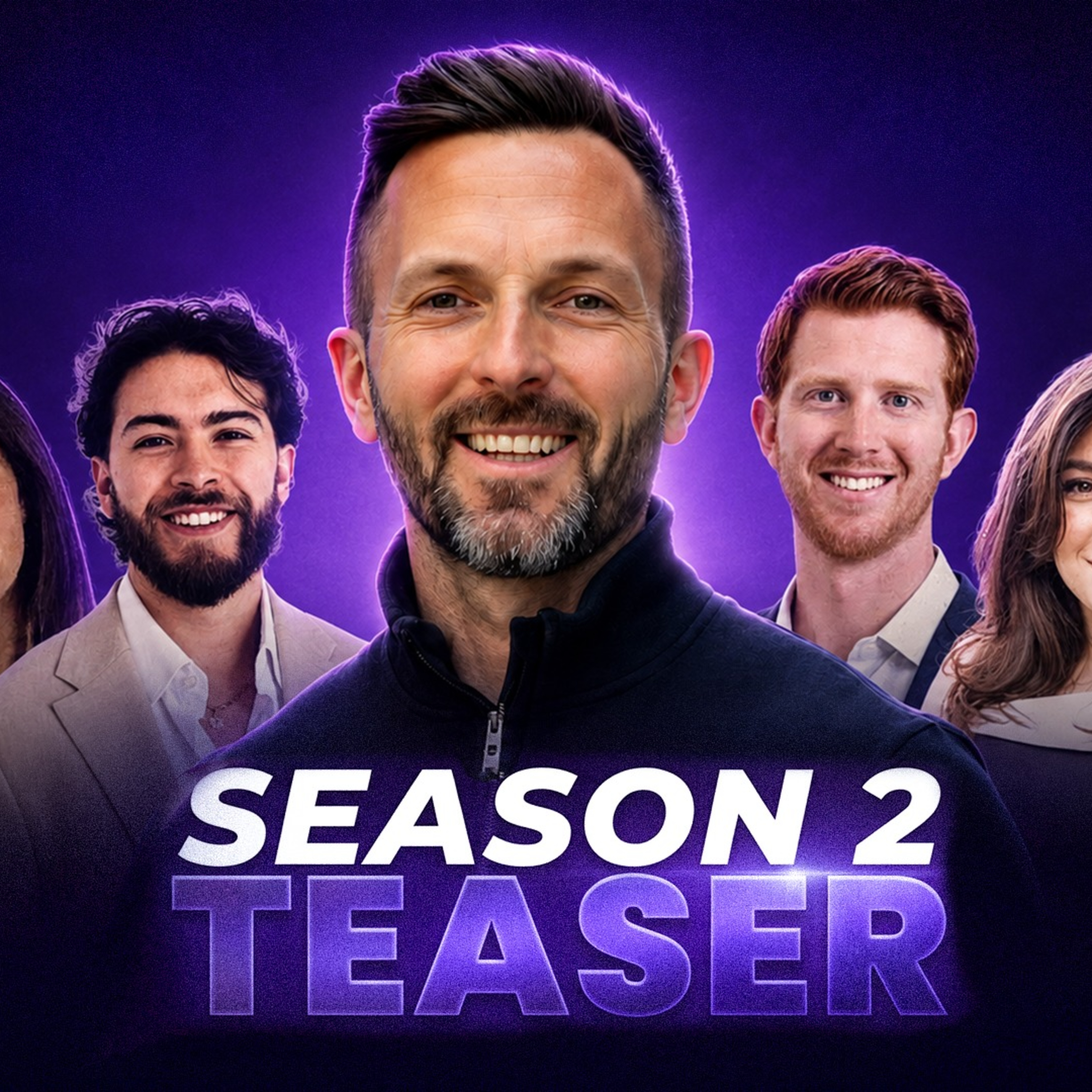 Taking LegalTech to Market | Season 2 Official Teaser 12.08.2026 1минFirst demo: 4 years ago. Closed: last week.6 founders and GTM leaders talking straight to camera about what selling, building, and scaling LegalTech actually looks like in 2026. No script. No polish. Just the honest version.Hosted by Paul Church, with guests:Jacob Adberstein · Reflekt LegalNathan Mutter & Michael Drapkin · Landfall IPMaryam Salehijam · JuniorEimear McCann · TrialViewBryan Lee · Ruli AINick Morgan · JalubroSeason 2 of Taking LegalTech to Market is coming. Subscribe so you don't miss the first episode.🎙️ Taking LegalTech to Market with Paul Church.
 -
 SEASON ONE RECAP 27.07.2026 2минTen conversations. Ten people who are actually doing it right now.Season 1 of Taking Legal Tech to Market features founders and GTM leaders who are building, selling, and scaling LegalTech businesses in real time. No theory. No retrospectives. The real playbooks, the real mistakes, and the real roadmaps.Chris Parsonson on why speed is the only advantage a startup has. Abhijat Saraswat on why not every dollar is worth closing. Ryan Fitzpatrick on vetting your clients as hard as they vet you. Dave Moore on why saying yes to everything is a red flag. Theo Cox on why a flashy demo is now table stakes. Andrew Ferguson on the AI outbound wave that already crashed. Alex Baker on why shaky foundations kill scaling teams. Sujith Jose on the email problem costing law firms half their day. Nick Holzherr on the wrapper question every LegalTech founder is quietly terrified of. Nathan Killick on why a great product and a terrible pilot are easier to have together than you think.All 10 episodes are live now. 🎙️Timestamps:00:00 — Chris Parsonson, Solve Intelligence00:07 — Abhijat Saraswat, Lupl00:13 — Ryan Fitzpatrick, Orbital00:20 — Dave Moore, Checkbox00:27 — Theo Cox, Wexler00:34 — Andrew Ferguson, Wordsmith00:41 — Alex Baker, Legal Tech Collective00:48 — Sujith Jose, Candle AI00:57 — Nick Holzherr, GitLaw01:05 — Nathan Killick, Definely🎙️ Taking Legal Tech to Market is hosted by Paul Church, LegalTech recruiter, talent advisor, and one of the most listened-to voices in the space.Subscribe for new episodes every week.
 -
 His First Pilot Sold One License. His Pilots Now Convert at 95% | Nathan Killick | GTM Lead: Definely 12.06.2026 45минNathan Killick's first pilot at Definely converted one license. From a firm he already knew. After four months in the role. He sat with that result, mapped exactly what broke, built a repeatable process from scratch, and hit over 100% of target in his first full year. His pilot conversion rate since then? 90-95%.That turnaround didn't come from the product. Definely is a great product. It came entirely from process, mutual action plans, Gantt charts, stakeholder mapping beyond the C-suite, and an obsessive checklist he runs on every single pilot without exception.In this episode Nathan breaks down the full GTM picture: why law firms start pilots wanting to buy and how vendors kill their own deals; how he grew US revenue from 1% to 30% without a US office; why the SDR and AE functions at most LegalTech companies are structured wrong; how he automated 75% of his pilot process using Claude and MCP; and why the value calculator he built using Thomson Reuters data changed every business case conversation he has.He also talks about what Freshfields going all-in with Anthropic signals for the broader market, why best-of-breed is starting to win against all-in-one, and the one question every early-stage LegalTech founder needs to answer before their next hire: if Harvey or Legora can absorb what you do, what's your moat?If you're building or selling in LegalTech right now, this is the most commercially honest 45 minutes available on what GTM actually looks like in 2026.Timestamps:00:00 — What top law firms are saying about AI right now00:44 — Build vs buy: Kirkland Ellis, Freshfields, Harvey, Legora03:22 — How Definely's GTM motion changed as AI took over drafting05:30 — Why you can't use AI to verify its own output07:23 — The independent verification layer law firms actually need08:15 — What the first conversation with a top 50 firm partner sounds like10:21 — Pilot process: why vendors kill their own deals13:30 — Honesty upfront: naming what you can't do before the pilot starts13:30 — Treating pilots as a project: Gantt charts and mutual action plans15:49 — One license. Then 90-95% conversion. What changed.16:13 — Building a repeatable pilot process from a failed first attempt18:36 — US expansion: 1% to 30% revenue without a US office18:36 -- Iltacon and conference-led relationship building21:00 — Stakeholder mapping beyond the obvious C-suite25:00 — Nine AI tools connected via MCP: what that looks like in practice27:00 — Data hygiene: why you can't put client data in free ChatGPT29:30 — Account coverage going from 40% to 80% with AI assistance31:20 — CRM updates: from 1 hour to 10 minutes with automated MEDDIC mapping33:20 — Meeting prep automated via Claude and Google Calendar35:42 — Where AI should and shouldn't sit in a LegalTech sales motion37:30 — The value calculator built using Thomson Reuters and Pursuit data39:56 — Final advice: find your moat before Harvey and Legora find it for you39:56 — When to hire a VP of Sales vs staying in founder-led sales44:40 — Closing thoughts🎙️ Taking LegalTech to Market is hosted by Paul Church, LegalTech recruiter, talent advisor, and one of the most listened-to voices in the space.Subscribe for new episodes every week.
 -
 Episode 10 (Trailer) 11.06.2026 1минOne license. From a firm he already knew. After four months in the role.Nathan Killick didn't spin it. He sat with the result, identified exactly what broke, and built a process so repeatable his pilot conversion rate hit 90-95%.In this trailer: why vendors kill their own deals, why copying everyone else's GTM playbook is a losing strategy, and the one question every LegalTech founder needs to answer right now, if Harvey or Legora can absorb what you do, what's your moat?Full episode live tomorrow. 🎙️ Taking LegalTech to Market.
 -
 No Demo. No Sales Call. No Salesperson. Here's The GTM Model | Nick Holzherr | Founder: GitLaw 05.06.2026 42минNick Holzherr spent millions of pounds on legal fees building and selling businesses, including selling Whisk to Samsung. That experience didn't just give him a product idea. It gave him a perspective on the law firm business model that most people in legal are too close to see clearly.80-90% of what you pay in a legal bill is overhead. AI makes that overhead free. But law firms are structured in a way that makes it almost impossible for them to pass those savings on. Which is why Nick didn't build GitLaw for law firms. He built it for the businesses that use them, and priced it at $20 a month with a free tier, no demos, no sales calls, and no salespeople.In this episode Nick breaks down the full GTM model: why your real competitor in the SMB legal market isn't Harvey or Legora, it's ChatGPT and Claude; why activation is the only metric that matters when the product is self-serve; how referral-led growth works when every document you send is an invite opportunity; and why he thinks people hire sales teams far too early.He also talks about the wrapper question every LegalTech founder is privately obsessing over, why a 15-person team can do the work of 100 with agents, what the LegalTech pricing stack looks like in 2027, and the one hiring framework that changes who gets interviewed for every commercial role.If you're building, selling, or investing in LegalTech, this is one of the most commercially honest conversations about where the market is going.Timestamps:00:00 — Introduction00:50 — Why GitLaw sells to businesses, not law firms01:03 — Spending millions on legal fees: the personal problem01:03 — 80-90% of a legal bill is overhead. AI makes it free.03:39 — Positioning against ChatGPT and Claude, not Harvey or Legora03:57 — Why DIY legal AI gets you to court05:30 — Templates, human-reviewed forms and how GitLaw reduces hallucination06:54 — Will lawyers still be needed in five years?07:14 — The AI 2027 question and why Nick is genuinely scared08:21 — The law firm pyramid: juniors charged out at 5x their salary10:02 — Senior lawyers privately asking Nick about their pensions12:36 — What qualified pipeline looks like with no sales team12:58 — Activation is the bottleneck, not acquisition or conversion16:06 — Will GitLaw ever have a sales team?16:13 — Referral-led growth: how DocuSign, Dropbox and Calendly did it17:35 — How AI agents run GTM operations at GitLaw18:10 — The Slack agent that knows everything about the business22:38 — 15 people doing the work of 100 with agents23:33 — The wrapper question: good AI wrapper vs bad AI wrapper26:49 — Context, garden tending and taste as durable competitive advantages29:49 — GitLaw from 10 to 25 people: what triggers it32:07 — What LegalTech GTM looks like in 202734:56 — Best GTM decision of the last 12 months: hiring AI native people35:37 — Worst GTM decision: paid social didn't work36:02 — Contrarian view: you don't need a sales team as early as you think37:10 — Remote first: why AI works better with written context40:34 — Final advice: hire for the role in 18 months, not 3 years ago🎙️ Taking Legal Tech to Market is hosted by Paul Church, LegalTech recruiter, talent advisor, and one of the most listened-to voices in the space.Subscribe for new episodes every week.
 -
 Episode 9 (Trailer) 04.06.2026 1мин80-90% of your legal bill is overhead. AI makes it free. Nick Holzherr spent millions building and selling businesses, and most of it went on legal fees. That experience didn't just give him a product idea. It gave him a view of the law firm business model that most people inside it can't see.In this trailer: the pyramid that makes law firm pricing impossible to reform, the wrapper question every LegalTech founder is quietly terrified of, and why a lot of the middle is going to run out of business.Full episode live tomorrow. 🎙️ Taking Legal Tech to Market.
 -
 Candle AI - Pivots, Pricing and The Conference Circuit | Sujith Jose | Founder: Candle AI 29.05.2026 33минHalf of every lawyer's day disappears into email. Not client work. Not billable hours. Email. And if a client doesn't hear back within 24 hours, that's already a signal of low customer satisfaction.Sujith Jose saw this from the outside. He's not a lawyer, his only experience with legal was his own immigration process. But that distance gave him a view of a problem the industry had normalized into invisibility. So he built Candle AI: an email assistant built specifically for law firms that saves lawyers up to 90 minutes a day.In this episode Sujith walks through the full GTM story, from a single conference pitch that became their first design partners, to why Meta ads outperformed LinkedIn and AI SDRs, to how one show generated over 50% of all leads for three months. He talks about pricing mistakes, the 90% trial-to-conversion rate, what purchase blockers taught him about product roadmap, and why the agentic adoption timeline in legal has compressed from two years to six months.One of the most honest accounts of early-stage LegalTech GTM you'll hear in 2026.Timestamps:00:00 — Introduction00:58 — What Candle AI does and who it's for01:31 — The 24-hour email rule and why it defines client satisfaction02:00 — Half a lawyer's day on email — the ABA statistic02:00 — The scaling trap: high touch service vs operational cost03:52 — Building in legal as a technical outsider05:50 — How a conference pitch became the product idea07:17 — First six months: design partners before sales08:51 — Expanding beyond immigration into all practice areas11:43 — Channel experimentation: LinkedIn, cold email, AI SDRs, Meta ads13:33 — One conference generating 50%+ of leads for three months13:33 — Partnership strategy with case management systems16:22 — The pricing mistake that cost them their closest advisor19:03 — VC backed vs bootstrapped pricing strategy20:35 — How purchase blockers became the product roadmap20:35 — 33% daily stickiness and 60–90 minutes average daily usage24:26 — AI adoption shift: law firms in 2024 vs now24:26 — Agentic workflows: two years compressed to six months26:11 — One month average sales cycle and 90% trial conversion27:44 — Hiring for agency, ownership, and AI leverage29:27 — Why everyone in a startup needs to be able to sell31:21 — What product market fit looks like from the inside31:21 — Next 12 months: marketing, inside sales, customer success hires🎙️ Taking Legal Tech to Market is hosted by Paul Church, LegalTech recruiter, talent advisor, and one of the most listened-to voices in the space.Subscribe for new episodes every week.
 -
 Episode 8 (Trailer) 28.05.2026 1минHalf of every lawyer's day disappears into email. If a client doesn't hear back within 24 hours, that's already a signal of failure. Sujith Jose saw this problem from the outside, and built Candle AI to fix it.Two months after his baby was born. One part-time engineer. A product that had to work fast.This is the trailer for the full episode of Taking LegalTech to Market, covering the GTM reality of building in legal without a legal background, what early-stage selling actually looks like, and why the hints of product market fit are finally showing up in the metrics.Full episode dropping tomorrow. 🎙️
 -
 The Hidden Cost Of Building LegalTech Before You Validate The Buyer 22.05.2026 34минAlex has spent 300 hours interviewing 200 LegalTech founders to produce one report. What came out of it wasn't a playbook, it was a diagnosis. Most founders build something they find intellectually interesting, then discover too late that nobody is willing to pay for it. The ones who survive figure out one thing first: are you giving the buyer an undeniable reason to change?In this episode, Alex breaks down the three stages every LegalTech company goes through, pre-revenue, first clients, and one to five million ARR, and the specific go-to-market mistake that kills companies at each one. He talks about why two successful pilots is not product market fit, why the nine to twelve month post-raise window is the most dangerous period any founder will face, and why adding headcount before you've proven repeatability is building on shaky foundations.He also calls out what's happening right now with vibe coding, the ability to build a prototype in an afternoon has made the validation problem worse, not better, because founders are moving even faster toward a market they haven't tested.If you work in LegalTech, sell into it, build for it, or recruit for it, this is the most commercially honest 35 minutes you'll spend this week.Timestamps:00:00 — The 9–12 month post-raise danger zone01:37 — What an undeniable reason to change actually looks like05:03 — First 90 days for a pre-seed founder08:41 — The vibe coding PMF problem11:47 — The two warning signals founders ignore17:15 — Geography and pricing mistakes in new markets21:21 — Why shaky foundations kill scaling teams23:45 — Pricing through the lens of the buyer26:17 — The spam cannon problem: 5,000 companies, one inbox30:23 — Where the LegalTech market is going nextTaking LegalTech to Market is hosted by Paul Church LegalTech recruiter, talent advisor, and founder of Talent and Growth.🎙️ Subscribe for new episodes every week.
 -
 Episode 7 (Trailer) 20.05.2026 2минThere are more than 5,000 LegalTech companies in the market right now. Most of them are blasting out cold emails, building products founders find interesting, and adding headcount on top of shaky foundations.In this trailer, Alex gets honest about why most LegalTech GTM fails before it starts, and what the companies that actually win are doing differently.New episode of Taking LegalTech To Market dropping on Friday. 🎙️
Похожие подкасты


Популярен в
Этот подкаст также попадал в подкаст-чарты этих стран.
