
Global Economy Podcast
ECIPE
0
The Global Economy Podcast is produced by ECIPE, a Brussels-based think tank focused on international economic policy. It examines global economic policy and politics, with a particular emphasis on Europe. The show aims to expose key debates of the present to critical scrutiny. It reflects ECIPE’s support for globalisation and an open world order, often offering irreverent and contrarian perspectives.
Эпизоды
-
 Episode 121: The Rise of Europe’s Litigation Economy – Will the New Product Liability Directive Make It Worse? with Oscar Guinea 03.03.2026 28минIn this episode, ECIPE’s Fredrik Erixon and Oscar Guinea talk about the EU’s revised Product Liability Directive (PLD) and how it risks fuelling many new class action lawsuits. Is it really good for Europe’s economy that it imports more of America’s litigation culture for managing collective redress? Together, they look into how the PLD expands “product” to include software, AI systems, algorithms, and digital files, and how new evidentiary presumptions and disclosure rules could lower the burden of proof for claimants. The discussion links the PLD to Europe’s growing “mass litigation” infrastructure (funders, specialised law firms, claim-bundling platforms), warns about forum shopping and Single Market fragmentation, and contrasts litigation-heavy models with Nordic approaches centred on public enforcement and alternative dispute resolution. You can watch a video recording of this conversation here. You can read a transcript of the chat here.
 -
 Episode 120: Cloud Resilience and Security – Why Exit, Portability and Lifecycle Design Matter with Nicky Stewart 16.02.2026 29минOn this episode of ECIPE’s Global Economy Podcast, our Director, Matthias Bauer, welcomes Nicky Stewart, Senior Advisor at the Open Cloud Coalition, for a conversation on cloud markets in Europe, and how policy debates focus too heavily on market concentration and hyperscalers rather than on contractual lock-in, licensing practices, and lifecycle design. Drawing on ECIPE’s study Cloud Resilience and Security: Why Exit, Portability and Lifecycle Design Matter, the episode explores switching barriers, multi-cloud strategies, public procurement, competition enforcement under the DMA, and the importance of resilience and cybersecurity for Europe’s digital economy. You can watch a video recording of this conversation here. You can read a transcript of the chat here. Nicky Stewart is currently Senior Advisor at the Open Cloud Coalition. In the past, she led the Cabinet Office government/industry Commercial workstream for G-Cloud. Nicky left the government in 2011 and was the former Commercial Director of UKCloud. She has been a member of the European Commission’s Expert Group on Cloud Computing Contracts and has taken an active role in the European Commission’s Cloud Special Interest Group. She was the vice chair of techUK’s Central Government Council and is on the Open Cloud for Research Environments Expert Advisory Board. Nicky is regularly quoted in the trade and national press on cloud issues.
 -
 Episode 119: The Trump Tariffs on Trial – What Are the Cases in the Supreme Court About? with Jeffrey Schwab 05.12.2025 36минIn this episode, Fredrik Erixon speaks to Jeffrey Schwab of the Liberty Justice Center about the legality of the “Liberation Day tariffs”. A ruling by the Supreme Court is expected soon, and Schwab is the plaintiff lawyer behind the case V.O.S. Selections, Inc. v. Trump. Schwab lays out his case and explains the constitutional limits of presidential tariff powers. They explore the legal arguments, implications for businesses, prospects for potential refunds, and the expected timeline for the Court’s ruling. You can watch a video recording of this conversation here. You can read a transcript of the chat here. Jeffrey Schwab serves as Senior Counsel and Interim Director of Litigation at the Liberty Justice Center, where he litigates cases to protect civil liberties and constitutional rights. Jeff has a particular interest in protecting the right of free speech and enforcing constitutional and other legal limits on government. He served as counsel for Mark Janus in Janus v. AFSCME, the landmark case in which the United States Supreme Court found that public employees could not be compelled to pay money to a union without their consent. He currently leads Liberty Justice Center’s efforts to enforce the Janus decision and protect public employees’ rights not to be forced to join or pay a union. Jeff has also served as lead counsel in Liberty Justice Center cases challenging restrictions on ride-share vehicles and home-sharing hosts, the implementation of a tax on Internet streaming services such as Netflix and Spotify on Chicago residents, and campaign finance laws that seek to benefit certain political contributors over others. Additionally, Jeff challenged an Illinois law limiting which courts people who seek to vindicate their constitutional rights against the state can file. He is admitted to practice in Illinois and is licensed in the US Supreme Court, the First, Second, Third, Seventh, Eighth, Ninth, and Tenth Circuit Court of Appeals, as well as federal district courts in Illinois.
 -
 Episode 118: Trade Policy 3.0 – Three Scenarios for Tomorrowland with Lucian Cernat 25.11.2025 26минIn this episode of our Global Economy Podcast, our Director, Oscar Guinea, talks with Lucian Cernat* about the latter’s new paper, Trade Policy 3.0: Three Scenarios for Tomorrowland. Their conversation outlines the evolution from trade policy 1.0 to 3.0 and how geopolitical tensions, resilience, and economic security shape today’s landscape. They cover the WTO’s role, lessons from COVID-19, and three future scenarios (immunity, sclerosis, and contagion), offering insights into the shifting global trade environment. You can read a transcript of the chat here. Read Lucian’s study here. Lucian Cernat is the Head of Trade in Goods, Tariff Negotiations, Technical Barriers to Trade, Customs and Rules of Origin at DG TRADE in the European Commission. Previously, he held the position of Head of Global Regulatory Cooperation and International Procurement Negotiation at the European Commission. Until 2008, he held various positions at the United Nations in Geneva dealing with trade and development issues. He has authored more than 20 publications on the development impact of trade policies, WTO negotiations, EU preferential market access, regional trade agreements, competition policy, corporate governance. Prior to his UN experience, he has been a Trade Diplomat with the Romanian Ministry of Foreign Affairs, and part of the negotiating team of bilateral FTAs with the EuroMed area and Baltic countries, preceding Romania’s accession to the EU. Lucian Cernat obtained a PhD from University of Manchester and a postgraduate diploma from Oxford University. He is also the author of Europeanization, Varieties of Capitalism and Economic Performance in Central and Eastern Europe (Palgrave Macmillan, 2006). *Disclaimer: the opinions expressed in this podcast are those of the guest and do not represent an official position by the European Commission.
 -
 Episode 117: The Big Steal – How Weak IP Rights Undermine Innovation and Markets with Jonathan Barnett 04.11.2025 34минECIPE’s Fredrik Erixon talks to Professor Jonathan Barnett, from the University of Southern California, about his recent book The Big Steal: Ideology, Interest, and the Undoing of Intellectual Property. Together, they discuss how policymakers have weakened IP protections in the last decades, partly because of shifting technologies and new ideas, and distorted innovation incentives. As a result, innovation and value generation have shifted between sectors and business models. The conversation also covers how strong IP rights contribute to long-term, high-value innovation, new entrepreneurship, and competition, drawing implications for Europe and global policy reform. You can watch a video recording of this conversation here. You can read a transcript of the chat here. Order Professor Barnett’s book “The Big Steal: Ideology, Interest, and the Undoing of Intellectual Property” here. Jonathan M. Barnett is the Torrey H. Webb Professor of Law at the University of Southern California, Gould School of Law, and director of the law school’s Media, Entertainment and Technology Law Program. He specialises in innovation law and policy, including antitrust, competition, corporate, and intellectual property law, with a focus on monetisation strategies and organisational structures in content and technology markets. He has published widely in scholarly and policy publications and comments regularly on innovation and competition policy in the press and at professional conferences. Prior to academia, he practised corporate law at a leading international law firm, specialising in mergers and acquisitions.
 -
 Episode 116: Globalisation in Retreat or Renewal? A Historical Perspective with Harold James 30.09.2025 44минIn this episode of the Global Economy Podcast, ECIPE’s Chief Economist, Erik van der Marel, sits down with Harold James, Professor at Princeton University and a leading expert on globalisation. Together, they dive into James’s book Seven Crashes: The Economic Crises That Shaped Globalisation, exploring how major economic shocks — from demand-side crises like the Great Depression and the 2008 financial meltdown to supply-side disruptions like the 1840s food crisis, the 1970s oil shock, and COVID-19 — have repeatedly reshaped the course of globalisation, either slowing it down or propelling it forward. During their conversation, Erik and Professor James discuss the potential for a renewed wave of globalisation following the current negative supply shock. They trace historical parallels between past technologies — such as steam power and containerisation — and institutions like joint-stock companies that once propelled globalisation forward, and today’s transformative technologies, such as AI, that are likely to do the same. The dialogue also examines US policy, semiconductor bottlenecks, rare earths, the global shift toward services, intellectual property, and the role of education in shaping the future of globalisation. You can watch a video recording of this conversation here. You can read a transcript of the chat here. Order Professor James’s book “Seven Crashes: The Economic Crises That Shaped Globalisation” here. Harold James, the Claude and Lore Kelly Professor in European Studies at Princeton University, is Professor of History and International Affairs at the Woodrow Wilson School, and an associate at the Bendheim Center for Finance. His books include a study of the interwar depression in Germany, The German Slump (1986); an analysis of the changing character of national identity in Germany, A German Identity 1770-1990 (1989); International Monetary Cooperation Since Bretton Woods (1996), and The End of Globalization (2001), which is available in 8 languages. He was also coauthor of a history of Deutsche Bank (1995), which won the Financial Times Global Business Book Award in 1996, and he wrote The Deutsche Bank and the Nazi Economic War Against the Jews (2001). His most recent books include Family Capitalism, Harvard University Press, 2006; The Creation and Destruction of Value: The Globalization Cycle, Harvard University Press, 2009; Making the European Monetary Union, Harvard University Press, 2012; The Euro and the Battle of Economic Ideas (with Markus K. Brunnermeier and Jean-Pierre Landau), Princeton University Press, 2016; Making A Modern Central Bank: The Bank of England 1979-2003, Cambridge University Press 2020; The War of Words: A Glossary of Globalization, Yale University Press 2021; Seven Crashes: The Economic Crises That Shaped Globalization, Yale University Press 2023. He is the official historian of the International Monetary Fund. In 2004, he was awarded the Helmut Schmidt Prize for Economic History, and in 2005 the Ludwig Erhard Prize for writing about economics. He writes a monthly column for Project Syndicate.
 -
 Episode 115: Trump’s Tariffs and the WTO’s Future with Stuart Harbinson 14.07.2025 46минIn this episode of the Global Economy Podcast, Fredrik Erixon speaks with Stuart Harbinson, former WTO Ambassador and senior fellow at ECIPE, about the state of global trade, the Trump tariffs, and the future of the World Trade Organization (WTO). They explore the erosion of the Most Favoured Nation (MFN) principle, the rise of bilateralism, and the threat this poses to multilateral trade rules. The discussion highlights historical lessons, the limits and opportunities for WTO reform, and the role of the WTO Secretariat. Harbinson also offers pragmatic insights into dispute settlement, the MPIA, and possible paths forward for preserving the multilateral trading system. Read Stuart’s blog “The WTO in the Age of Trump’s Trade Bullying – Should There Be WTO Reform?“. You can watch a video recording of this conversation here. You can read a transcript of the chat here. Stuart Harbinson had a distinguished career in public service in Hong Kong. From 1994 to 2002 he represented Hong Kong, and then the Hong Kong Special Administrative Region of China, in the WTO in Geneva. He subsequently joined the WTO Secretariat as Chief of Staff to Director-General Dr Supachai Panitchpakdi and then became Senior Adviser to Director-General Pascal Lamy. He has rich experience as a former Chairman of a number of WTO bodies, including the TRIPS and Services Councils, and the Dispute Settlement Body. He was Chairman of the WTO’s overarching body, the General Council overseeing preparations for the launch of the Doha round, and of the negotiating group handling the formative stages of the Doha negotiations on agriculture. He has also chaired a number of WTO dispute settlement panels. After leaving the WTO, he worked in the UNCTAD Secretariat and for international law firms in Geneva, and has undertaken several trade-related technical assistance projects. He currently serves as a part time adviser on international trade for Penta Group, the world’s first comprehensive stakeholder solutions firm.
 -
 Episode 114: Fence-Sitters and Frustrations – The EU’s Slow Path to Western Balkan Integration with Bernd Christoph Ströhm 07.07.2025 39минThis episode of the Global Economy Podcast, hosted by Philipp Lamprecht, features Dr Bernd Christoph Ströhm and focuses on the geopolitical and economic relevance of the Western Balkans for the European Union. The conversation explores the region’s strategic importance amid increasing competition from China and Russia, challenges in the EU enlargement process, and the growing frustration among Western Balkan countries over stalled accession talks. The episode highlights how EU regulations can impose unintended costs on neighbouring countries and calls for more flexible, credible, and inclusive policies. Bernd and Philipp advocate for a more responsive, strategic, and geopolitically aware EU approach to its neighbourhood. You can watch a video recording of this conversation here. You can read a transcript of the chat here. Dr Bernd Christoph Ströhm is a Senior Fellow at the European Centre for International Political Economy (ECIPE), a Senior Research Associate and Country Expert at the Vienna Institute for International Economic Studies (wiiw), and a Political Risk / OSINT Analyst at S&P Global. At ECIPE, his research focuses on Russia’s foreign policy dynamics, the influence of non-EU actors such as Russia and China on Southeastern Europe, the EU integration of the Western Balkans, and the economic and political development of the entire Western Balkan region. He holds a PhD in East European Studies and a master’s in Advanced International Studies. At the Vienna Institute for International Economic Studies (wiiw), he regularly drafts comprehensive macroeconomic analyses and policy forecast reports, assessing economic trends and policy impacts in the Central, Eastern and Southeastern Europe (CESEE) region. At S&P Global, he crafts analytical pieces on political risk-inducing events in the CESEE region, including policy changes and protest risks. He also monitors the outcomes of national and regional elections in the Western Balkans, while drafting country reports that evaluate political and governmental stability within the CESEE region. Bernd worked on numerous publications and different projects, including in-depth analyses of Chinese infrastructure investments in the Western Balkans for the European Parliament, a thorough cohesion policy study on Germany for the European Commission, or a study on free trade policy recommendations for the Central European Free Trade Agreement (CEFTA). He teaches as a Postdoctoral Teaching Fellow at the Diplomatic Academy of Vienna, where he holds interdisciplinary lectures and seminars. His lectures and seminars cover the evolution of the international system, the political and economic situation in the Western Balkans, and the geopolitical and geoeconomic influences of China and Russia on the region, as well as the evolution of Russia’s domestic and foreign policy dynamics.
 -
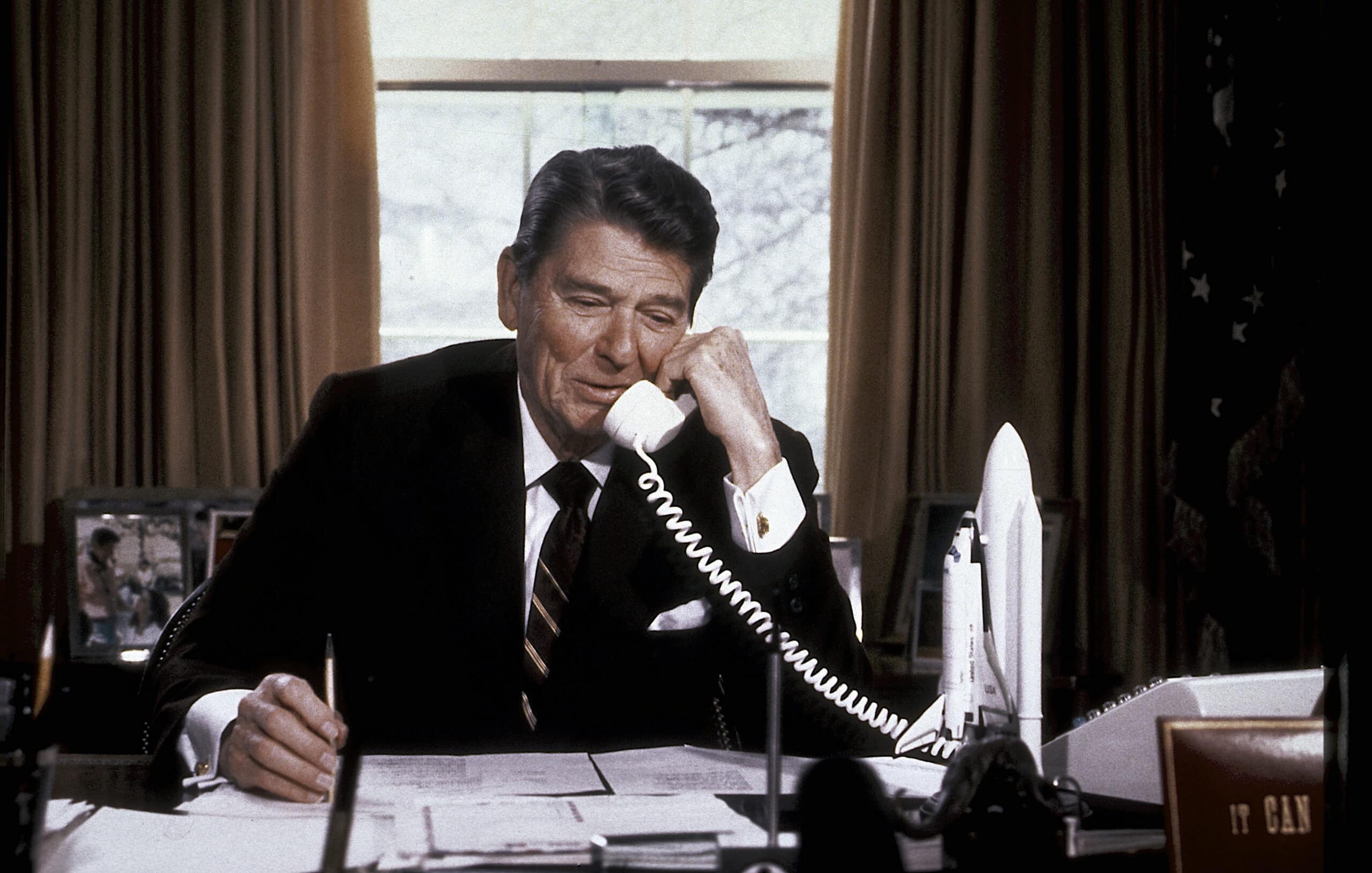 Episode 113: Inside the Reagan White House – Lessons for Today’s Politics with Frank Lavin 01.07.2025 40минFrank Lavin joins Fredrik Erixon on the ECIPE Global Economy podcast to discuss his book Inside the Reagan White House: A Front Row Seat to Presidential Leadership with Lessons for Today. The conversation centres on Reagan’s leadership and the philosophical pillars of his presidency. Lavin reflects on Reagan’s views on government, the Cold War, and his moral approach to foreign policy, comparing it to today’s tendency to use more grievance-driven rhetoric. They also explore Reagan’s ability to unite people across political divides, his optimism, and his focus on individual empowerment. The discussion highlights valuable leadership lessons for today’s political climate. You can watch a video recording of this conversation here. You can read a transcript of the chat here. Order Mr Lavin’s book “Inside the Reagan White House: A Front-Row Seat to Presidential Leadership with Lessons for Today” here. Frank Lavin is a visiting fellow at the Hoover Institution (Stanford University). He was CEO of Export Now and he is the author of several books on economics and international affairs, including “Home Front to Battlefront: An Ohio Teenager in World War II (War and Society in North America)”. Frank has had senior posts in national security and international policy in the administrations of the two Bush presidencies and was Director of Politics under Ronald Reagan.
 -
 Episodio Especial 4: Panamá entre Gigantes – Soberanía, Canal y Poder Global con Carlos Ruiz-Hernández 24.06.2025 51минEl episodio 4 del pódcast Sin Arancel de por Medio presenta una conversación con Carlos Ruiz-Hernández, ex vicecanciller de Panamá y actual asesor en CSIS y el Inter-American Dialogue. El diálogo aborda el papel de Panamá en la geopolítica actual, destacando su ingreso al Consejo de Seguridad de la ONU, su postura frente a la retórica de Donald Trump sobre el canal de Panamá, y la política exterior pragmática del presidente Mulino. También se analizan las relaciones con China, la salida del país de la Ruta de la Seda, y el papel estratégico de Panamá ante Estados Unidos, la Unión Europea y el cambio climático. Puedes leer una transcripción completa en español de la conversación aquí. Lee el post en Substack que acompaña a este episodio aquí. Suscríbete a Sin Arancel de por Medio en Apple Podcasts o Spotify, para no perderte ningún episodio, y en Substack, donde podrás encontrar información adicional a nuestras conversaciones. – Episode 4 of the podcast Sin Arancel de por Medio features a conversation with Carlos Ruiz-Hernández, former Deputy Foreign Minister of Panama and current advisor at CSIS and the Inter-American Dialogue. The discussion explores Panama’s role in global geopolitics, including its entry into the UN Security Council, its stance on Donald Trump’s rhetoric about the Panama Canal, and the pragmatic foreign policy of President Mulino. It also examines Panama’s relations with China, its exit from the Belt and Road Initiative, and its strategic position in relation to the United States, the European Union, and climate change. You can read a complete transcript of the conversation in English here. Find the Substack post (in Spanish) accompanying this piece here. Subscribe to Sin Arancel de por Medio on Apple Podcasts and Spotify, to not miss out on the release of any episodes, as well as on Substack, where we will share complimentary information to the conversations. Carlos Ruiz-Hernández, ha sido vicecanciller de la República de Panamá. Carlos cuenta con una destacada trayectoria diplomática. Entre sus logros destaca la entrada de Panamá como miembro no permanente del Consejo de Seguridad de las Naciones Unidas desde enero de 2025. En la actualidad, Carlos es asesor principal de política exterior en el Centro de Estudios Estratégicos e Internacionales, conocido por sus siglas en inglés como CSIS, con sede en Washington, y Senior Fellow del Inter-American Dialogue. – Carlos Ruiz-Hernández has served as Deputy Foreign Minister of the Republic of Panama and has a distinguished diplomatic career. Among his achievements is Panama’s entry as a non-permanent member of the UN Security Council in January 2025. Currently, he is a Senior Foreign Policy Advisor at the Center for Strategic and International Studies (CSIS), based in Washington, and a Senior Fellow at the Inter-American Dialogue.
 -
 Episode 112: Techno-Nationalism – Strategic Competition in the 21st Century with Alex Capri 03.06.2025 34минIn this episode of the ECIPE Global Economy Podcast, Fredrik Erixon speaks with Alex Capri about his new book Techno-Nationalism: How It Is Reshaping Trade, Geopolitics, and Society. The conversation explores the growing entanglement of technology, national security, and economic policy, focusing on key elements such as supply chain weaponisation, strategic decoupling, and tech diplomacy. Capri highlights the geopolitical competition over critical technologies like semiconductors and AI, the implications for global supply chains, and the strategic dilemmas faced by smaller countries. The discussion offers both historical context and forward-looking insight into a fragmenting yet innovation-driven global economy. You can purchase the book “Techno-Nationalism: How It Is Reshaping Trade, Geopolitics, and Society” here. You can watch a video recording of this conversation here. You can read a transcript of the chat here. Alex Capri teaches in the Business School at the National University of Singapore (NUS), and in the NUS Lee Kuan Yew School of Public Policy. He has worked extensively in China and Asia for two decades, where he was a partner and the regional leader of KPMG’s Asia Trade & Customs Practice, based in both Hong Kong and Singapore. Prior to his consulting career, he was a trade specialist in the U.S. Treasury Department, and the U.S. Customs Service. Alex is a regular panellist for the World Economic Forum (WEF). He writes for Forbes Asia and Nikkei Asia, and he is a frequent guest on global television and radio networks. Known for his expertise in supply chains, global trade, technology and geopolitics, he is a research fellow at the Hinrich Foundation, a senior fellow at the Australian Strategic Policy Institute (ASPI) and a board member of Purdue University’s Krach Institute of Tech-Diplomacy. He advises corporate boards on geo-economics and techno-nationalism and he provides guidance to clients on cross-border projects throughout Asia and the Indo-Pacific, the Middle East, Europe and the Americas. Alex holds an M.Sc. from the London School of Economics, in International Political Economy and a B.Sc. in International Relations, from the University of Southern California.
 -
 Episode 111: What Have We Learnt from Trump’s Tariff Mess? with Erik van der Marel 16.04.2025 42минOn this episode of the Global Economy Podcast, Fredrik Erixon speaks with ECIPE’s Chief Economist, Erik van der Marel, about the consequences of the Trump administration’s threat to impose tariffs, particularly in relation to global trade and the restructuring of the US economy. The conversation explores how US production and trade networks have evolved, the implications of high tariffs, and the impact of such policies on global value chains. It also highlights the integration of services, such as R&D, marketing, and consultancy, into new forms of globalisation. You can watch a video recording of this conversation here. You can read a transcript of the chat here.
 -
 Episodio Especial 3: La Crisis Migratoria y de Seguridad en América Latina con Érika Rodríguez Pinzón 14.04.2025 47минEn este episodio de Sin Arancel de Por Medio, nos centramos en los retos de la migración y la seguridad en América Latina. Oscar Guinea y Renata Zilli hablan con Érika Rodríguez Pinzón, directora de la Fundación Carolina, que explica la paradoja de que América Latina sea a la vez la región más pacífica en términos de guerra y, sin embargo, la más violenta debido al crimen organizado. La conversación aborda el vínculo entre los flujos migratorios, el auge de los grupos criminales y la globalización del comercio ilícito. Rodríguez Pinzón también aborda el debilitamiento de la democracia y de las estructuras de seguridad del Estado en la región, destacando el papel de la sociedad civil en la lucha contra la inseguridad. El episodio explora las complejidades de las políticas migratorias, en particular el impacto de las restricciones estadounidenses, y subraya la necesidad de sistemas migratorios flexibles y de la integración de trabajadores cualificados en el mercado laboral europeo. Puedes leer una transcripción completa en español de la conversación aquí. Lee el post en Substack que acompaña a este episodio aquí. Suscríbete a Sin Arancel de por Medio en Apple Podcasts o Spotify, para no perderte ningún episodio, y en Substack, donde podrás encontrar información adicional a nuestras conversaciones. – In this episode of Sin Arancel de Por Medio, we focus on the challenges of migration and security in Latin America. Oscar Guinea and Renata Zilli speak with Érika Rodríguez Pinzón, director of the Carolina Foundation, who explains the paradox that Latin America is both the most peaceful region in terms of war and yet the most violent due to organised crime. The conversation addresses the link between migratory flows, the rise of criminal groups and the globalisation of illicit trade. Rodríguez Pinzón also addresses the weakening of democracy and state security structures in the region, highlighting the role of civil society in the fight against insecurity. The episode explores the complexities of migration policies, in particular the impact of US restrictions, and stresses the need for flexible migration systems and the integration of skilled workers into the European labour market. You can read a complete transcript of the conversation in English here. Find the Substack post (in Spanish) accompanying this piece here. Subscribe to Sin Arancel de por Medio on Apple Podcasts and Spotify, to not miss out on the release of any episodes, as well as on Substack, where we will share complimentary information to the conversations. Érika Rodríguez Pinzón es socióloga y doctora en Relaciones Internacionales por la Universidad Autónoma de Madrid con diploma de estudios avanzados en teoría política, teoría de administración y gestión pública. Ha sido investigadora asociada del Instituto Complutense de Estudios Internacionales y profesora de sociología del desarrollo internacional en la misma universidad. Además, ha sido reconocida por tres años consecutivos como una de las mujeres líderes del top 100 de España en la revista Magazine en la categoría de académicas. También ha sido reconocida con la medalla al mérito del Consejo de Bogotá en 2018 por su trabajo en favor de la igualdad. Además, fue asesora especial del alto representante de la Unión Europea para las Relaciones con América Latina, Ad Honorem, y actualmente es directora de la Fundación Carolina, una institución que forma parte de la Agencia Española de Cooperación Internacional y tiene como objetivo promover la cooperación educativa y científica entre España y América Latina. – Érika Rodríguez Pinzón is a sociologist and PhD in International Relations from the Universidad Autónoma de Madrid, with a diploma in advanced studies in political theory, public administration, and management. She has been an associate researcher at the Complutense Institute of International Studies and a professor of sociology of international development at the same university. She has also bee
 -
 Episode 110: How Diffusing New Technologies Defines Great Powers with Jeffrey Ding 07.04.2025 51минIn this episode of ECIPE’s Global Economy podcast, Fredrik Erixon speaks with Jeffrey Ding, assistant professor at George Washington University, about his book Technology and the Rise of Great Powers: How Diffusion Shapes Economic Competition. They discuss how the diffusion of general-purpose technologies, rather than just leading-edge innovation, drives national economic power. Drawing on historical cases from the Industrial Revolutions to today’s AI race, Ding explains why widespread adoption across sectors is more critical than simply being first. The conversation explores implications for the US, China, and Europe in the current technological competition. You can purchase the book “Technology and the Rise of Great Powers: How Diffusion Shapes Economic Competition” here. You can watch a video recording of this conversation here. You can read a transcript of the chat here. Jeffrey Ding is an Assistant Professor of Political Science at George Washington University. Prior to this role, Ding served as a postdoctoral fellow at Stanford’s Center for International Security and Cooperation, sponsored by Stanford’s Institute for Human-Centered Artificial Intelligence. Ding’s research focuses on great power competition and cooperation in emerging technologies, the political economy of innovation, and China’s scientific and technological capabilities. His work has been published or is forthcoming in the European Journal of International Relations, European Journal of International Security, Foreign Affairs, International Studies Quarterly, Review of International Political Economy, and Security Studies, and his research has been cited in major outlets such as The Washington Post and The Financial Times. Ding earned his PhD in 2021 from the University of Oxford, where he was a Rhodes Scholar. Previously, he worked as a researcher for Georgetown’s Center for Security and Emerging Technology and Oxford’s Centre for the Governance of AI. Originally from Iowa City, Ding is a lifelong Hawkeye fan and a proud graduate of the University of Iowa.
 -
 Episode 109: The Rise of Mass Litigation in Europe – Why Should We Be Worried? with Oscar Guinea 04.04.2025 37минThis episode of the Global Economy Podcast features Fredrik Erixon and Oscar Guinea discussing our new study on the rise of mass litigation in Europe. They explore how collective actions, often imported from the US, are increasingly impacting European firms, especially innovative ones, through legal costs, uncertainty, and changes in compliance behaviour. The conversation highlights differences between European and US regulatory systems, the role of third-party litigation funding, and the economic consequences for competitiveness and innovation. The Netherlands, Germany, and Portugal emerge as key hotspots due to more accessible legal frameworks. The study warns of significant costs and unintended effects. You can find the report “The Impact of Increased Mass Litigation in Europe” here. You can watch a video recording of this conversation here. You can read a transcript of the chat here.
 -
 Episode 108: Sin Arancel de por Medio – The New ECIPE Podcast for Spanish-speaking and Latin American Audiences with Oscar Guinea and Renata Zilli 06.03.2025 15минFredrik Erixon introduces a special episode of ECIPE’s Global Economy Podcast to announce the new ECIPE podcast designed for Spanish-speaking and Latin American audiences: Sin Arancel de por Medio. The hosts, Renata Zilli and Oscar Guinea, join the discussion, to present this project and its aim to provide a comprehensive understanding of how global politics affects Latin America, along with the region’s economic, political, and social developments, by featuring insights from a wide array of experts, political leaders, and academics from various countries and backgrounds. Transcripts of the conversations will be available in English. Subscribe to Sin Arancel de por Medio on Apple Podcasts and Spotify, to not miss out on the release of any episodes, as well as on Substack, where we will share complimentary information to the recordings. Watch a video version of the announcement here. You can find a transcript of this episode here.
 -
 Episodio Especial 2: El Rol de América Latina ante Trump 2.0 y el Nuevo Orden Internacional con José Juan Ruiz 06.03.2025 39минEn este episodio de Sin Arancel de por Medio, Oscar Guinea y Renata Zilli abordan los desafíos y estrategias de América Latina frente al regreso de Donald Trump a la presidencia de EE.UU, junto a José Juan Ruiz, presidente del Real Instituto Elcano. José Juan destaca la importancia de entender la política exterior de la administración Trump, caracterizada por una vuelta a la geopolítica de poder del siglo XIX, y señala que América Latina debe adoptar una estrategia conjunta y no meramente bilateral. Además, se discuten las implicaciones de la “Great Power Competition” entre EE.UU. y China y cómo esto afecta a la región, la necesidad de fortalecer las instituciones, y la importancia de reducir la informalidad económica en América Latina para mejorar su desarrollo. Puedes leer una transcripción completa en español de la conversación aquí. Lee el post en Substack que acompaña a este episodio aquí. Suscríbete a Sin Arancel de por Medio en Apple Podcasts o Spotify, para no perderte ningún episodio, y en Substack, donde podrás encontrar información adicional a nuestras conversaciones. – In this episode of Sin Arancel de por Medio, Oscar Guinea and Renata Zilli discuss the challenges and strategies of Latin America in response to Donald Trump’s return to the presidency of the United States, alongside José Juan Ruiz, president of the Real Instituto Elcano. José Juan highlights the importance of understanding the foreign policy of the Trump administration, characterised by a return to 19th-century power geopolitics, and points out that Latin America must adopt a joint strategy rather than merely a bilateral one. Additionally, they discuss the implications of the “Great Power Competition” between the United States and China and how this affects the region, the need to strengthen institutions, and the importance of reducing economic informality in Latin America to improve its development. You can read a complete transcript of the conversation in English here. Find the Substack post (in Spanish) accompanying this piece here. Subscribe to Sin Arancel de por Medio on Apple Podcasts and Spotify, to not miss out on the release of any episodes, as well as on Substack, where we will share complimentary information to the conversations. José Juan Ruiz es el presidente del Real Instituto Elcano, uno de los think tanks más influyentes de España y de Europa. Con una destacada trayectoria como economista, José Juan cuenta con experiencia tanto en el sector público como en el privado. Antes de su cargo actual en Elcano, José Juan se desempeñó como economista jefe y director del Departamento de Investigación del Banco Interamericano de Desarrollo. A lo largo de su carrera, ha escrito sobre una amplia variedad de temas, que incluyen política comercial, política monetaria, y los contextos de España, la Unión Europea y América Latina. – José Juan Ruiz is the President of the Real Instituto Elcano, one of the most influential think tanks in Spain and Europe. With a distinguished career as an economist, José Juan has experience in both the public and private sectors. Before his current role at Elcano, José Juan served as Chief Economist and Director of the Research Department at the Inter-American Development Bank. Throughout his career, he has written on a wide variety of topics, including trade policy, monetary policy, and the contexts of Spain, the European Union, and Latin America.
 -
 Episodio Especial 1: México entre Estados Unidos y Europa – Desafíos y Oportunidades Comerciales con César Guerra 06.03.2025 37минEl primer episodio de “Sin Arancel de por Medio” trata sobre los desafíos y oportunidades comerciales de México entre Estados Unidos y Europa. Oscar Guinea y Renata Zilli analizan junto a nuestro primer invitado César Guerra, experto en relaciones comerciales de México y Secretario General de MexChamEU, las políticas de Donald Trump hacia México, y cómo México puede responder a las amenazas arancelarias de Estados Unidos. Además, se explora la modernización del acuerdo comercial entre México y la Unión Europea, y las complejidades que existen para negociar con un actor único como es la UE. Puedes leer una transcripción completa en español de la conversación aquí. Lee el post en Substack que acompaña a este episodio aquí. Suscríbete a Sin Arancel de por Medio en Apple Podcasts o Spotify, para no perderte ningún episodio, y en Substack, donde podrás encontrar información adicional a nuestras conversaciones. – The first episode of “Sin Arancel de por Medio” looks into the trade challenges and opportunities for Mexico in dealing with the United States and Europe. Oscar Guinea and Renata Zilli, along with our first guest César Guerra, expert in trade relations for Mexico and the Secretary-General of MexChamEU, discuss Donald Trump’s policies towards Mexico and how Mexico can respond to the tariff threats from the United States. Additionally, the modernisation of the trade agreement between Mexico and the European Union is explored, including the complexities of negotiating with a unique actor such as the EU. You can read a complete transcript of the conversation in English here. Find the Substack post (in Spanish) accompanying this piece here. Subscribe to Sin Arancel de por Medio on Apple Podcasts and Spotify, to not miss out on the release of any episodes, as well as on Substack, where we will share complimentary information to the conversations. César Guerra es fundador de Trade and Access Consulting, en donde es consultor de comercio y temas europeos. Además, es miembro fundador y secretario general de la Cámara de Comercio México-Unión Europea, MexChamEU, organismo sin fines de lucro que busca promover los intereses comerciales y económicos entre México y la Unión Europea. En el pasado trabajó más de 25 años en el área de negociaciones comerciales internacionales de la Secretaría de Economía de México, principalmente en temas de agricultura, acceso a mercados, reglas de origen, OMC, y fue el jefe negociador de la modernización del acuerdo entre México y la Unión Europea, además de representante de la Secretaría de Economía en Bruselas ante las instituciones europeas. – César Guerra is the founder of Trade and Access Consulting, where he works as a trade and European issues consultant. He is also a founding member and the Secretary-General of the Mexico-European Union Chamber of Commerce, MexChamEU, a non-profit organisation that seeks to promote trade and economic interests between Mexico and the European Union. Previously, he worked for over 25 years in the area of international trade negotiations for the Ministry of Economy of Mexico, primarily on issues related to agriculture, market access, rules of origin, WTO, and he was the chief negotiator for the modernisation of the agreement between Mexico and the European Union, as well as the representative of the Ministry of Economy in Brussels to the European institutions.
 -
 Episode 107: European Competitiveness – Analysing Key Challenges and Solutions with Oscar Guinea 25.02.2025 33минIn this episode of ECIPE's Global Economy Podcast, Fredrik Erixon and Oscar Guinea delve into Europe's competitiveness challenges. They discuss the European Commission's Competitiveness Compass and its heavy reliance on the Draghi report. Key issues explored include high energy prices, digital regulation, and market dynamism. The conversation highlights the impact of energy costs on European firms, the complex regulatory environment affecting the digital economy, and the need for creative destruction to enhance productivity. They also touch upon the importance of trade policy and foreign direct investment in boosting Europe's competitiveness. This episode offers valuable insights into the critical factors shaping Europe's economic future and the necessary steps to improve its global standing. You can watch a video recording of this conversation here. You can read a transcript of the chat here.
 -
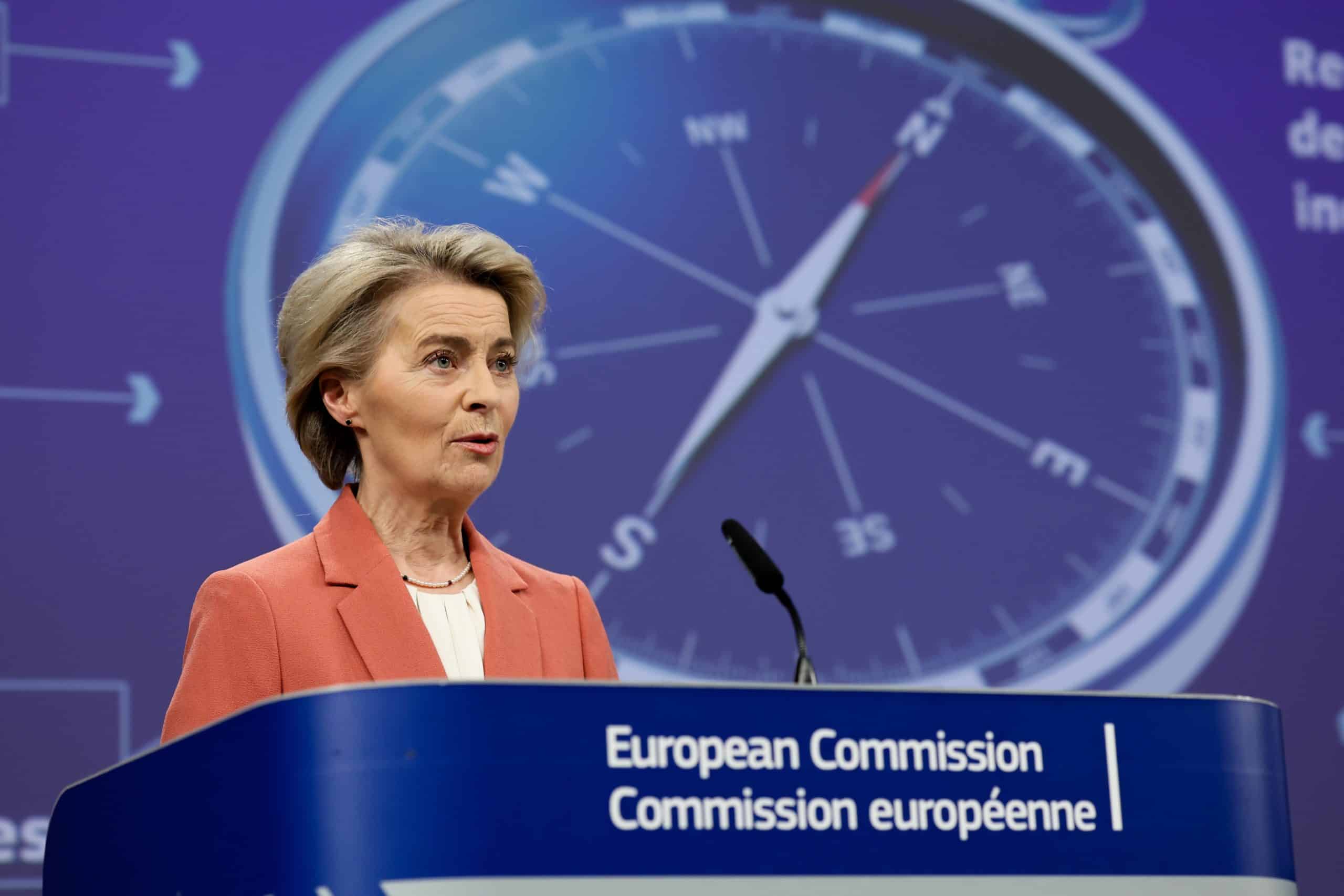 Episode 106: Europe’s Competitiveness Compass – Lost or Just Misdirected? with Pieter Garicano 17.02.2025 36минOur Senior Economist, Oscar Guinea, talks with Pieter Garicano, author of Silicon Continent, about Europe's competitiveness and the recently released Competitiveness Compass proposal by the European Commission. Garicano highlights three key issues: Lack of funding and member state buy-in for initiatives like the 28th legal regime for startups, Denial of trade-offs, particularly regarding decarbonisation and energy prices, Over-reliance on government strategies rather than private sector enterprise. He also discusses the EU's energy investment issues, focusing on intermittent renewables and the resulting price volatility. Furthermore, he addresses the challenges of data center development in Europe due to power availability and the complexities of AI development, citing restrictive regulations like the AI Act and GDPR as hindering innovation. Finally, he contrasts Europe's industrial policy with China's successful EV strategy, emphasising the need to allow failure, focus on clear objectives, and encourage competition. He concludes that Europe's regulatory environment and labour laws stifle innovation and scaling, risking a significant growth gap with the US. You can watch a video recording of the chat here. You can read a transcript of the conversation here. Pieter Garicano is a Philosophy, Politics, and Economics graduate from the University of Oxford and co-author, along with Luis Garicano, of Silicon Continent—a weekly blog on Substack that analyses why the EU is falling behind Asia and the US in AI, innovation, and growth. He is also the Managing Editor at Works in Progress, a magazine of new and underrated ideas to improve the world (Stripe), and an Emergent Ventures Grantee at the Mercatus Center, George Mason University.
Похожие подкасты


Популярен в
Этот подкаст также попадал в подкаст-чарты этих стран.
