
IELTS with Fiona: a comprehensive guide to IELTS
IELTS with Fiona
1
Join me for a weekly talk-through of IELTS topics to help you learn about the issues, vocabulary, tips and strategies you need to prepare. Find all my tips on my website ieltsetc.com and join the Members Academy for all the downloads, step-by-step online courses, and support to get you a Band 7+ in the IELTS test.
Epizódy
-
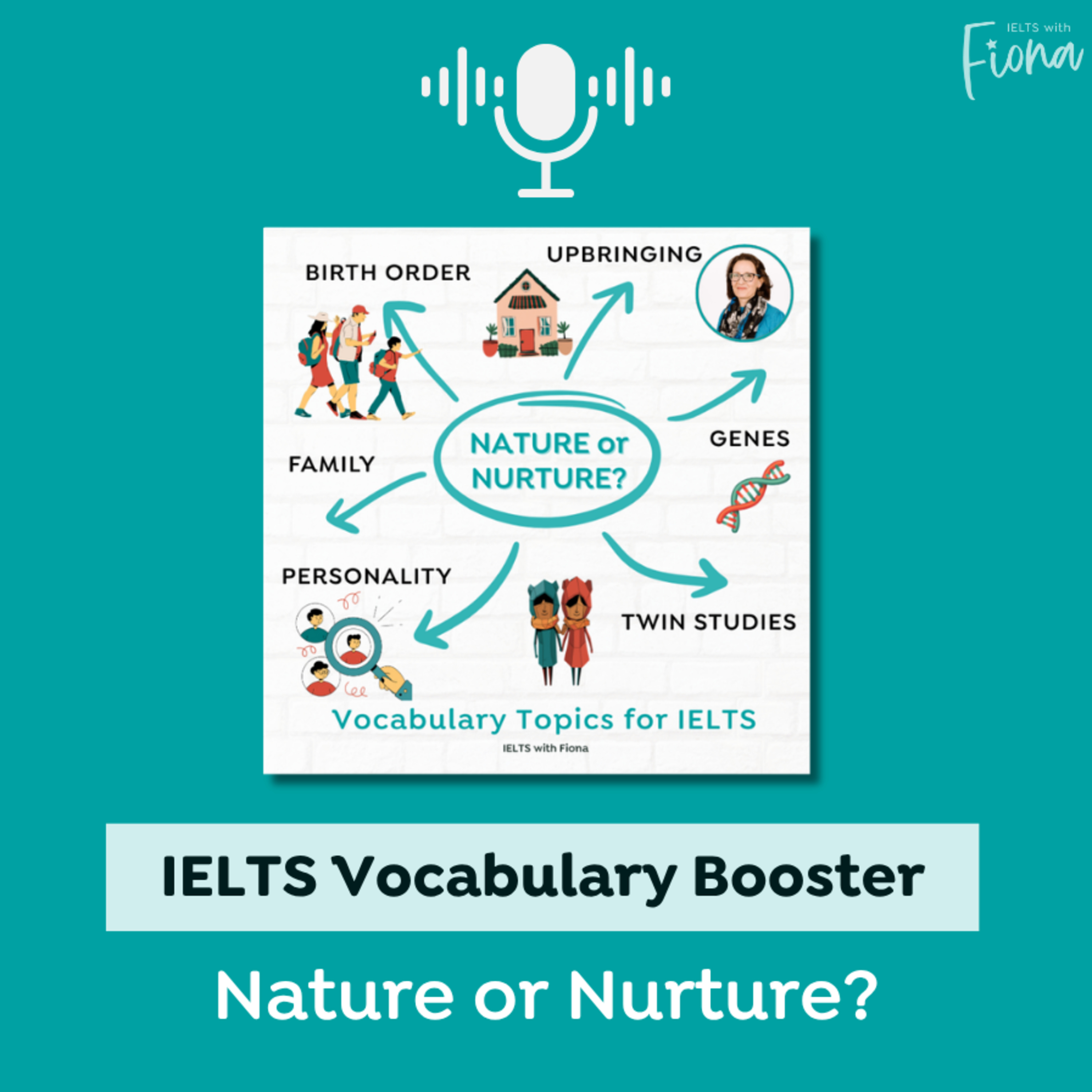 IELTS Vocabulary: Nature or Nurture? 06.06.2026 28minIn this podcast, you'll learn key words and concepts that will help you understand and discuss the topic of nature and nurture.🧬 nature = the traits we are born with (genetics)🏠 nurture = the experiences we go through in life (environment)The lesson is based around a reading text called 'The Unselfish Gene'.Find the full lesson notes with audio, video and model answers for Speaking and Writing on my website https://ieltsetc.com.
 -
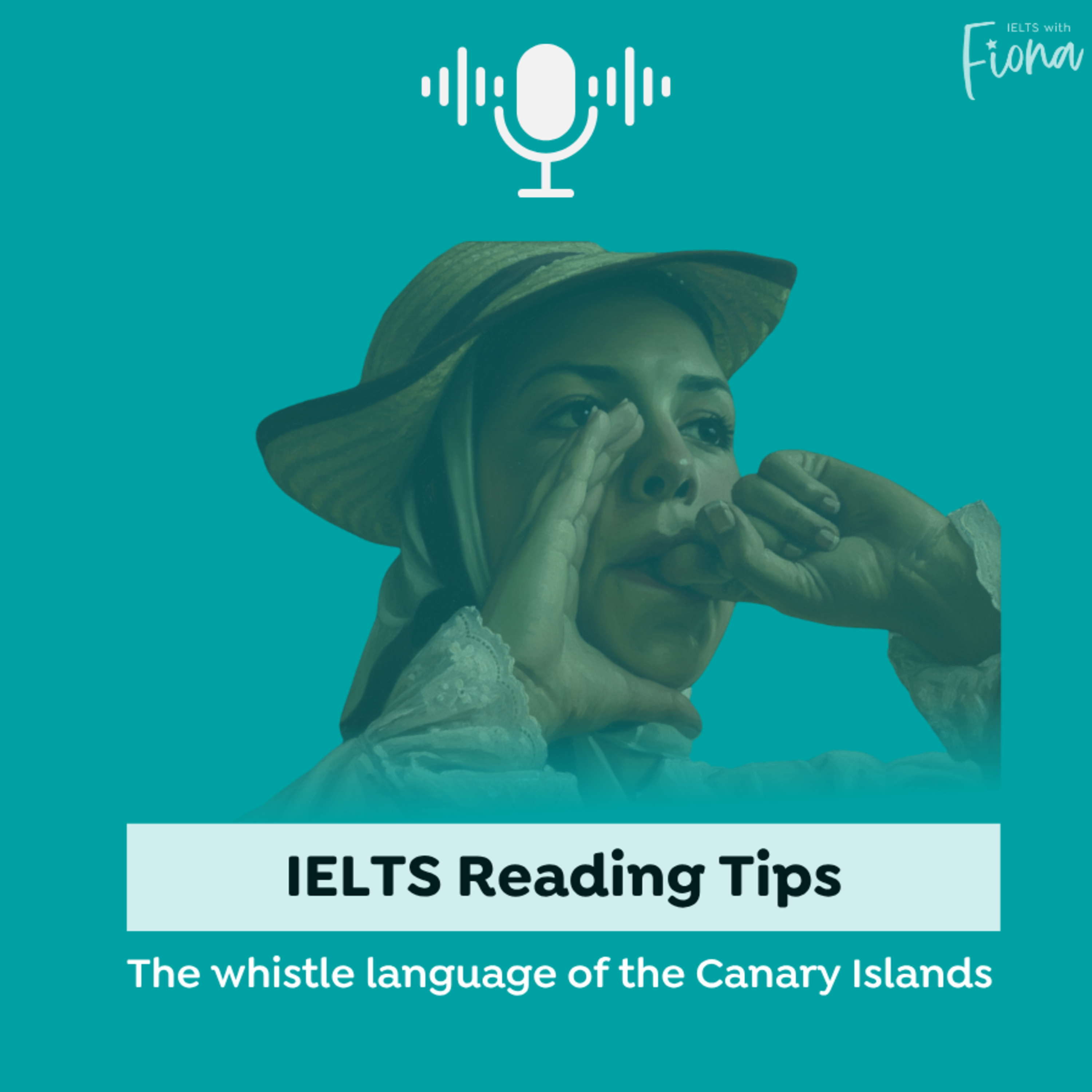 IELTS Reading Tips: Languages and Learning (Silbo Gomero) 06.04.2026 22minIn this episode, we explore the topic of language(s) in IELTS.From bilingualism and language learning to language loss and global communication, you’ll learn the key vocabulary and ideas you need for Reading, Listening, Writing, and Speaking. Perfect for boosting both your confidence and your band score.This podcast focuses on a reading about Silbo Gomero, a whistling language in the Canary Islands.⛳️ Learn 3 common keywords in True, False, Not Given questions.Get the full lesson in the Bronze Members Academy.https://ieltsetc.com/2026/04/ielts-vocab-topic-languages-learning/
 -
 IELTS Listening: Céide fields 24.03.2026 18minIn this episode, we use the story of the Céide Fields (an archaeological site in Ireland) to help you improve the skills you need for IELTS Listening.You’ll practise following a real lecture-style talk, identifying key information, making educated guesses, and dealing with common challenges such as recognising paraphrasing, understanding fast speech, and listening for common gap fill answers and spelling patterns for uncountable nouns and plurals.We also focus on useful topic vocabulary for IELTS, especially words related to archaeology and farming, and show you how these ideas can appear in different sections of the test.By the end of the episode, you’ll feel more confident handling Section 4 of the IELTS Listening test while building the vocabulary and strategies you need for a higher band score.bog 🌧️🌿a very wet area of land where the ground is soft and full of water, often with thick layers of peat that can preserve plants and objects for a long time.excavation 🏺digging in the ground to find old objects or structuresNeolithic 🪨relating to the late Stone Age, when people first farmed and lived in settlementssettlement 🏠a place where people live, often long-termgrazing 🐄 animals eating grass in a fieldpaddocks 🚜small fields where animals are keptsoil fertility 🌱 how good the soil is for growing plantscrop rotation 🌾🔁 growing different crops in the same field over timelivestock 🐑 farm animals such as cows and sheepsettlement farming 🏡🌾 farming done by people living permanently in one placefood storage 🫙keeping food to use later
 -
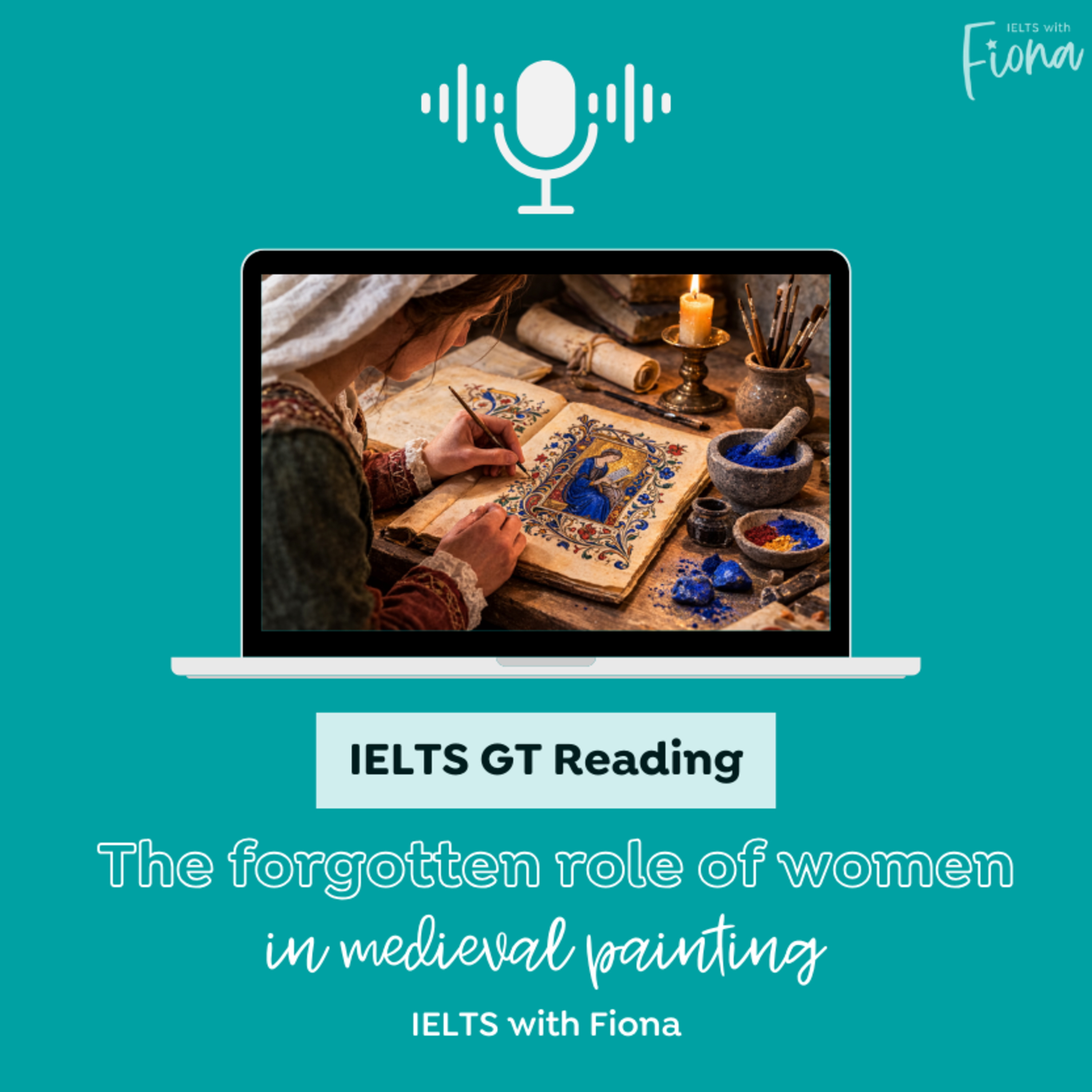 IELTS GT Reading: Women in medieval art 12.03.2026 26min🧑🎨 In this podcast you'll learn ideas and vocabulary related to the theme of GENDER, specifically the forgotten role of women in medieval art.GET THE FULL LESSON ON MY WEBSITE:https://ieltsetc.com/ielts-tips-and-tricks/Text SummaryA recent archaeological discovery shows that women may have played a more important role in medieval art than people once thought. Scientists found tiny bits of lapis lazuli in the teeth of a medieval woman buried in Germany. This suggests she may have been an artist who painted manuscripts. The discovery shows that studying dental tartar can reveal surprising information about people’s work and daily lives in the past.Key vocabplaque /plak/ is a colorless film of bacteria, food particles, and saliva that constantly forms on teeth.tartar /tɑːtə/ is plaque that has hardened, usually yellow or brown, and requires professional dental cleaning to removeGender comes up in all parts of the IELTS test - here are some of the podcasts I've already made:📚 Reading - Marie Curie, Georgia O'Keeffe, and The History of Women's Football🎧 Listening - Women's attitudes to finance🗣️ Speaking Part 3 - Gender stereotypes and inequality✍️ Writing - Men and Women in Bar ChartsUSEFUL VOCABULARYgender stereotypes 🧩fixed ideas about what men or women can or should dobehind the times ⏳old-fashioned attitudes that hold back progressrole modelspeople who set an example and inspire others 👩🏻🔬to break down barriersto remove obstacles that stop people from progressing 🔨the pay gap 💰📉the difference between men’s and women’s salaries for the same workequality ⚖️equal treatment and opportunities for everyonea patriarchal society🏛️a society where men hold the main powera male-dominated field 👨💼a profession where most people are men 👨💼#IELTS
 -
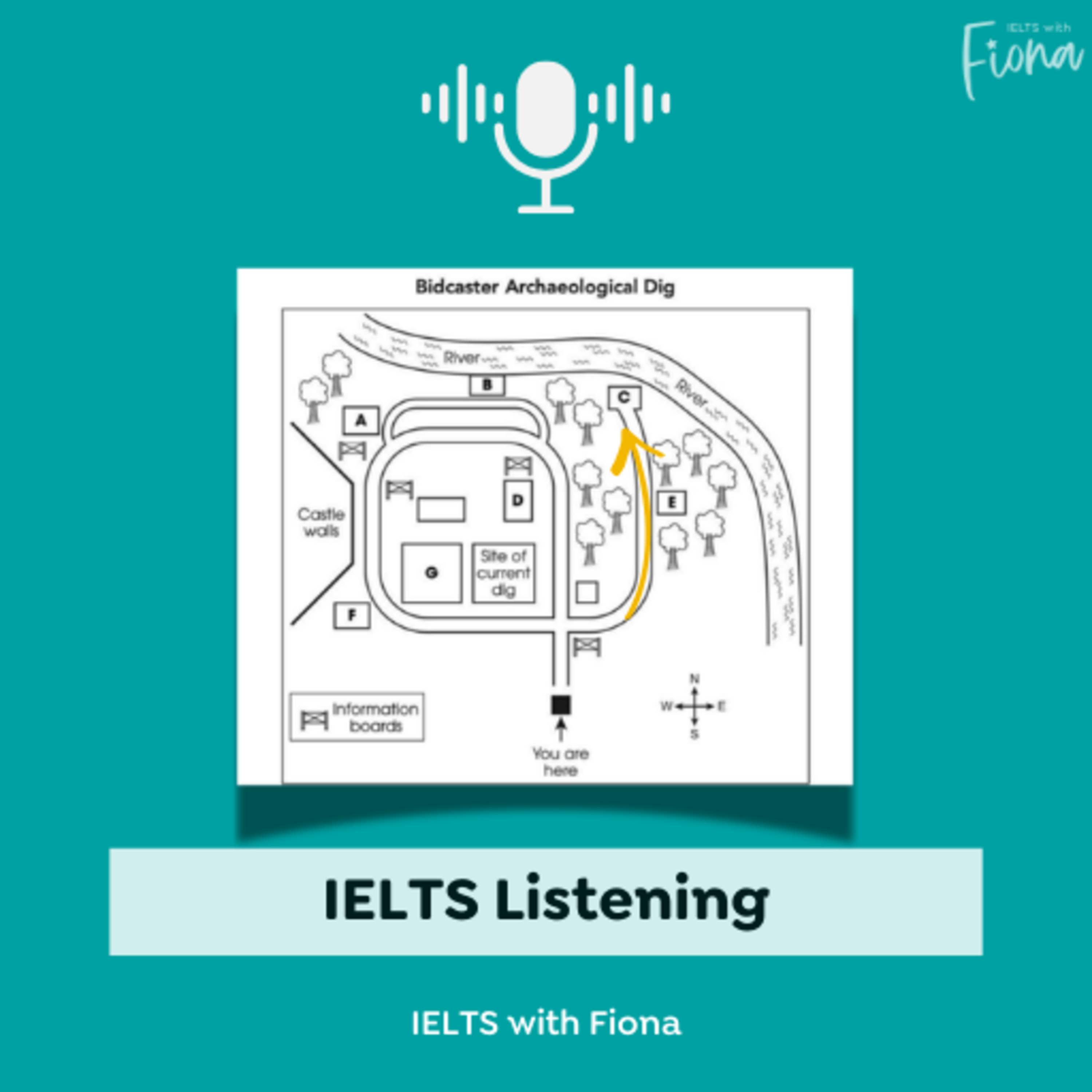 IELTS Listening: Bidcaster Archaeological Dig 04.03.2026 25minThis Listening Part 2 about an archaeological dig will help you review maps 🗺️ and vocabulary related to the topic of Civilisation 🏺.Get the full Listening Course on my website: https://ieltsetc.com/courses
 -
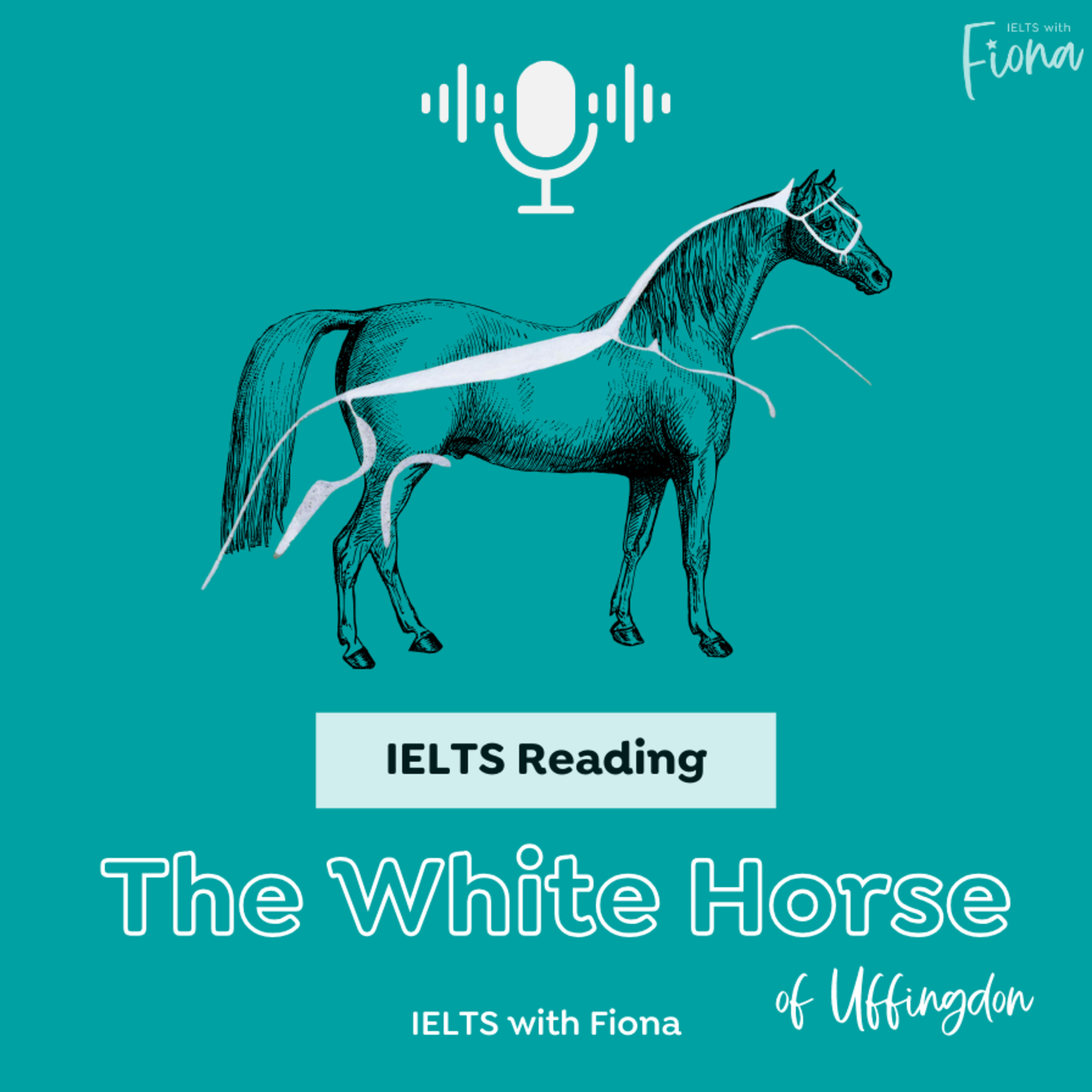 IELTS Reading: The White Horse of Uffington 20.02.2026 26min🏮 To celebrate the Lunar New Year and the Year of the Horse, here's an Academic Passage 1 text all about The White Horse of Uffington - an ancient chalk figure cut into a hillside in England. The text discusses how and when this 'geoglyph' was created, and my podcast walks you through a set of Gapfill Summary and True False Not Given (TFNG) questions. It includes tips about:⛳️ red flag clues in TFNG questions, especially comparisons and the use of 'most' (= the vast majority)how to skip information that you don't need how 'known as' and 'called' lead you quickly to the answer At the end, we review vocabulary related to ancient customs and traditional celebrations that you can use in the Speaking Test.👉 Join the Members Academy for the full lesson and lots more on a variety of IELTS topics. Go to my website for more information: ieltsetc.com.Useful expressions🎏 This festival is deeply rooted in history.📆 This ceremony marks the start of the new year.🎉 These traditions are passed down through generations.💃🏽 There is a festive atmosphere in the streets.👹 It is a communal celebration with music and dancing.🎎 Many people wear traditional costumes.🪦 Families pay respect to their ancestors during the festival.🧧It is a public holiday, so everyone can celebrate.🎎 Family celebrations give us a strong sense of belonging.🏮 Traditional festivals are important for our cultural identity.
 -
 IELTS Reading: Georgia O'Keeffe 🧑🎨 06.02.2026 19minThis Academic Reading Passage 1, which is about the life of a well-known artist, will help you review the huge topic of art and the arts in IELTS.This topic covers writers (Charles Dickens, Victor Hugo in the Listening Test) and sculptors (Henry Moore in the Reading Test) as well as theatres, art galleries, pottery, photography and music. In the Speaking Test, you might be asked to describe a favourite painting, or to talk about a time you visited an exhibition or museum. This reading includes lots of vocabulary that will help you describe a painting with precise language.Get the full notes, video, tapescript, vocabulary lists, quizzes and model answers on my website and join the Members Academy for my comprehensive guide to IELTS Test Preparation.Describe a picture or painting you like. You should say: what the painting is about who painted it where you first saw it and explain why you like it. Some useful expressionsThe painting that left a lasting impression on me is… 🖼️The reason this piece means so much to me is… 💖The painting depicts… 🖼️To me, it represents… 🎭Personally, I find it incredibly… 🌈The use of colour really stands out… 🎨It has a timeless quality… ⌛
 -
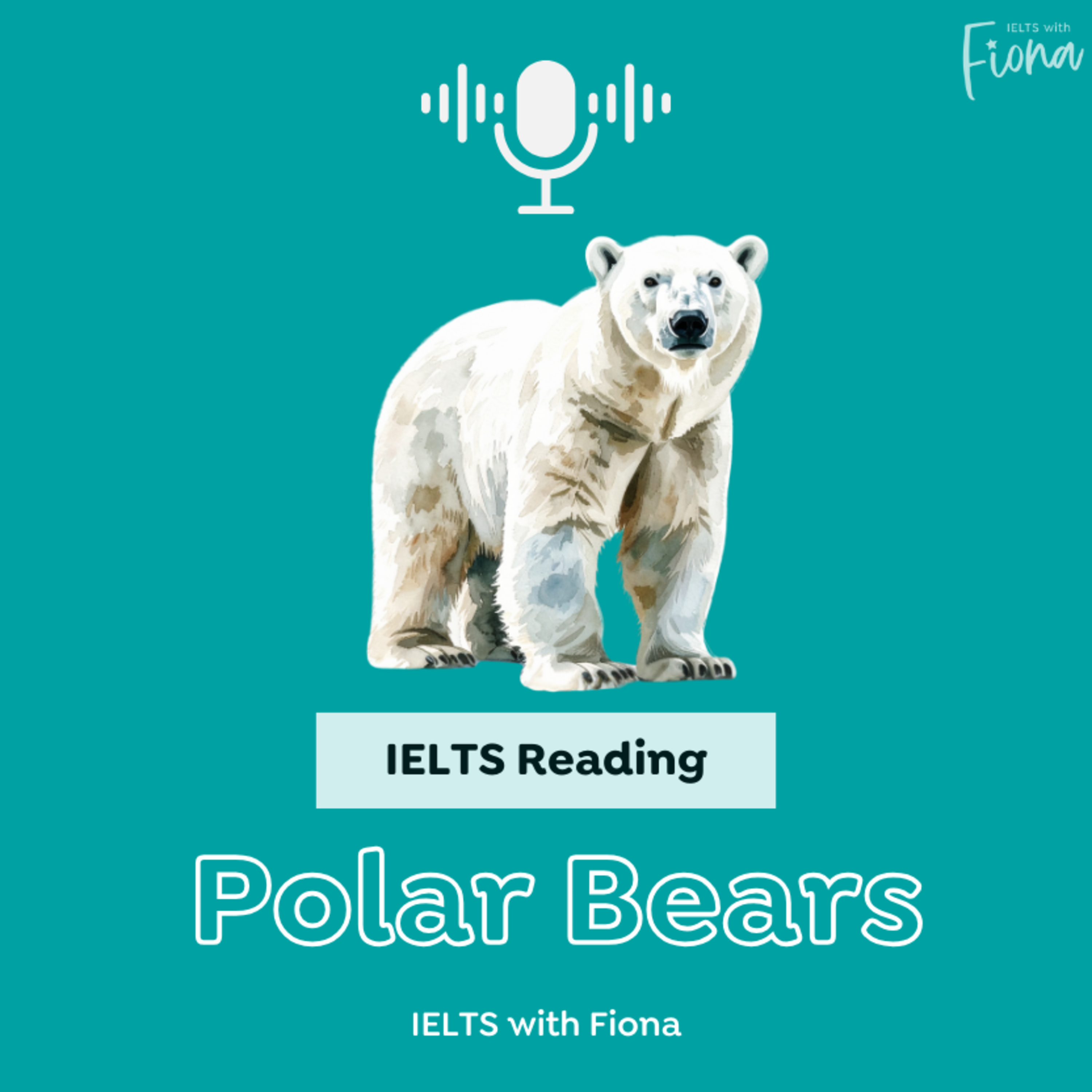 IELTS Reading: Why we need to protect polar bears 27.01.2026 22minIn this podcast you'll learn tips about guessing True False and Not Given questions, reference words, and how to use conditional sentences in your Writing Task 2.This text about polar bears explains how they are uniquely adapted to extreme Arctic conditions and possess genetic traits that may help scientists understand health problems in humans. threatened – at risk of harm or extinction ❄️adapted – changed to suit particular conditions 🐾genetic – relating to genes or inherited characteristics 🧪mutation – a change in a gene 🔬conservation – the protection of animals and the environment 🌱extinction – the complete disappearance of a species 🦣a breakthrough – an important discovery or development 💡
 -
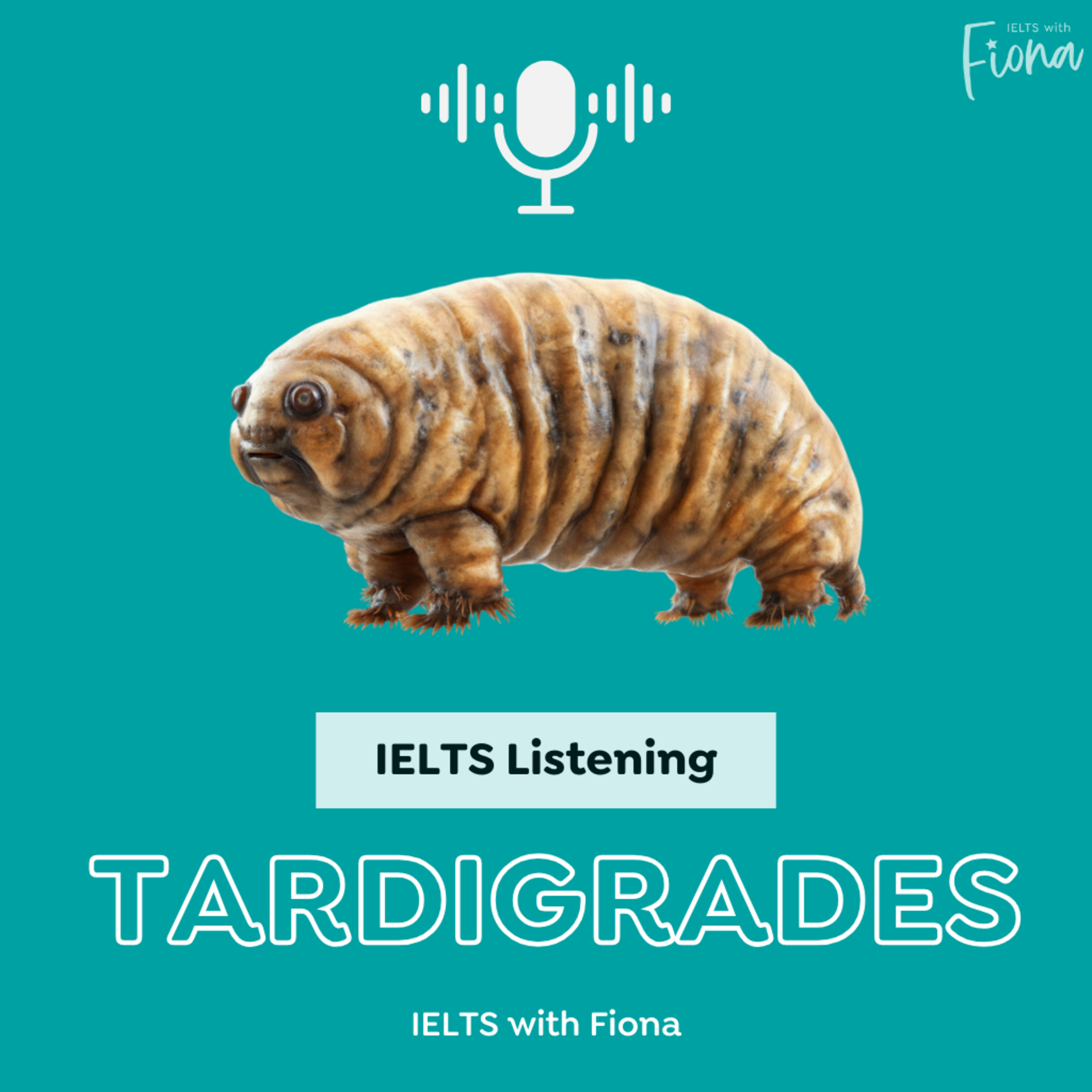 IELTS Listening: Tardigrades 20.01.2026 18minThis IELTS Listening Part 4 is about research into microscopic animals called tardigrades or ‘water bears’. The speaker explains their extreme survival abilities - a topic that we covered in the previous Reading Podcast ('The secret of staying young').This is an essential topic in IELTS, so don't miss this chance to review the vocabulary related to ageing and longevity.You'll also pick up lots of tips related to gapfill questions.Get the full lesson on my website:https://ieltsetc.com/2026/01/ielts-vocabulary-topic-ageing/#ielts #ieltslisteningUseful Vocabularyconservation status 🌍 - the level of protection or risk faced by a speciesdecade 🗓️ - a period of ten yearsendangered ⚠️ - at risk of disappearing completelyextinction ☄️ - the total disappearance of a specieshabitat 🌿 - the natural place where an animal or plant livesinvertebrate 🦐 - an animal without a backbonemetabolism ⚙️ - the chemical processes that keep an organism alivemicroscopic 🔬 - so small it can only be seen with a microscopespecies 🧬 - a group of similar organisms that can reproducethriving 🌟 - growing well and surviving successfully
 -
 IELTS Reading: The secret of staying young 12.01.2026 24minIn this podcast, you'll work through an IELTS Academic Reading Passage 1 about ageing ('The secret of staying young') in a clear, guided way. I will take you step by step through gap fill and True False Not Given questions, so you can see how to find key information quickly. The episode helps you improve skimming, scanning, and careful reading skills. You can get the full lesson, with the video, extra practice and support on my website, IELTS with Fiona.The Vocabulary Topic for this episode is all about ageing - the website lesson includes everything you need to discuss this topic in the Speaking Test and IELTS Writing Part 2.🐜 Reading SummaryYsabel Giraldo studied Pheidole dentata ants to see how aging affects them. She tested ants of different ages on tasks like caring for young, following scent trails, reacting to light, and hunting prey. She also examined their brains for dying cells and important chemicals. Surprisingly, older ants performed as well as younger ones, showing no decline. Giraldo’s research suggests these social ants stay healthy with age, which could help scientists understand aging in humans and other social animals.Key vocabularyaging ⏳ – getting olderan ant 🐜 – a small insectan experiment 🧪 – a test to discover somethingthe brain 🧠 – the part of the body that controls thinking and movementto care for ❤️ – to look after someone or somethinghealthy 💪 – strong and wellin good shape 💯 – healthy and strong physically or mentallysocial 🤝 – living in groupsto stay fit 🏋️ – to remain healthy and stronga scientist 👩🔬 – a person who studies nature or sciencea worker 🐝 – an ant that does tasks in the colonya trail 🛤️ – a path marked by scent (smell)prey 🐞 – an animal that is hunted for fooda colony 🏘️ – a group of ants or insects living togetherbehavior 🐾 – the way someone or something actsto reproduce 🍼 – to have babies or make new lifeto deteriorate 💀 – to become worse with ageto decline 📉 – to become worse
 -
IELTS Reading: Plant thermometers 🌡️ 07.05.2025 30minHow Plants Sense Temperature – IELTS Reading Made EasyThis episode breaks down a challenging IELTS Reading Passage about how plants use light and temperature to grow. I’ll guide you through the key ideas, explain tricky vocabulary, and help you answer the questions with confidence. Perfect for Band 6–8 students who want to improve comprehension, build science-related vocabulary, and boost their IELTS Reading score.
-
 IELTS Reading: Music and the emotions 18.02.2025 27minIn this lesson, you'll learn how to use the words you DON'T KNOW to get the right answers!It's a difficult Academic Reading Part 3, which contains several scientific terms that might cause confusion.But I will show you how IELTS uses these words for gapfills, and you'll learn the 6 'triggers' that indicate the answer.Get the full video lesson in the Bronze Membership on my website, and in the full Members Academy.https://ieltsetc.com/ielts-tips-and-tricks/Reading SummaryMusic is a powerful force that affects our emotions. When we listen to music we love, our body reacts—our heartbeat increases, and our muscles receive more blood. Scientists have found that music directly influences the brain, especially by releasing dopamine, a chemical that makes us feel pleasure.A study in Canada used brain scans to examine why music has such a strong effect. Researchers found that dopamine is released both when we hear a beautiful part of a song and before it happens. This suggests that our brain enjoys the feeling of anticipation, or waiting for something exciting.The way music is structured also plays a role. If a song is too predictable, it is boring. Great composers, like Beethoven, create patterns in their music and then delay repeating them to build suspense. This delay makes the final moment of resolution much more emotional.A famous music expert,Leonard Meyer, explained that the emotions in music do not come from its connection to real-life experiences but from how it plays with our expectations. Our brain enjoys the mix of predictability and surprise, which keeps us engaged and emotionally connected to the music.Keywords: affects – Changes or influences something. reacts – Responds to something by changing in some way. anticipation – The feeling of excitement when waiting for something to happen. predictable – Easy to guess or expect. delay – To make something happen later than expected. suspense – A feeling of excitement or nervousness while waiting for something to happen. expectations – Beliefs about what will happen in the future. engaged – Focused and interested in something.
 -
IELTS Reading: Maternity Allowance (Money Vocabulary Topic) 20.01.2025 23minThis month, we've been exploring the huge topic of MONEY in the Members Academy.It comes up in ALL parts of the test, so in this lesson, we examine two very similar General Training Texts in order to learn more about the topic of government benefit systems and the allowances that you might be entitled to.Each country's benefit system is different, so it's really worth a listen as you'll learn valuable information and keywords.Get the video and full text with vocabulary list in the Bronze Academy on my website.https://ieltsetc.com/ielts-tips-and-tricks/
-
IELTS Reading: Forced Rhubarb 23.12.2024 23minThis is a lovely reading about forced rhubarb: its history and how it is grown and harvested.There are 3 question sets: Matching Headings Multiple Choice GapfillIn this lesson you'll learn more about the general topic of FOOD and how this topic is tested in all parts of the IELTS test.Get the full lesson in the Bronze Academy on my website.https://ieltsetc.com/2024/12/ielts-vocabulary-of-food-cooking-and-eating/
-
IELTS Pie Charts - how to avoid making this common mistake 13.12.2024 12minAlways check the title of a pie chart to make sure you're providing an accurate summary of the data.Pie charts show percentage and proportion, not numbers. Here's an example of a mistake that is very easy to make when you're under pressure.So practise plenty of pie charts before the test and get ready to use the language related to pie charts - listen till the end to find the 'marc' verbs that will help you.Get the full lesson on my website and in the Members Academy Study Programme.https://beacons.ai/ieltswithfiona#ielts #ieltstask1 #ieltspiechart
-
How to learn prepositions from IELTS Reading (The impact of climate change on butterflies) 23.11.2024 30minIn this lesson, we'll analyse a Part 1 Reading text with the purpose of improving our understanding and use of prepositions.First, we go through the True, False and Not Given questions, followed by the Gapfill questions and then we go back to the first paragraph to analyse the prepositions.This is something that I recommend you do regularly - spend 5-10 minutes 'noticing' language from real contexts like the Reading and Listening tests.In the lesson you'll learn how to do this yourself and build up your independent learning skills. The vocabulary from the lesson will also help you with Writing Task 1 (Describing a Natural Cycle).Get more help with Prepositions, and find my Preposition Workbook on my website:https://ieltsetc.com/ielts-grammar-complete-guide/prepositions/
-
 IELTS Grammar snack: A shocking 97% 05.11.2024 9minDid you know that uou can use "a/an + adjective" before a statistic to express your reaction to the number?This technique adds emphasis and helps the listener or reader understand your perspective on the data. Examples: A staggering 95% of teenagers spend over 4 hours daily on social media. An alarming 62% of young adults report experiencing significant anxiety. A heartening 78% of volunteers say they feel more connected to their community. A disappointing 34% of students complete their language learning goals. An impressive 92% of renewable energy targets were met this year. A troubling 46% of food produced globally goes to waste. A surprising 55% of people have never traveled outside their home country.Listen to find out how to use this structure in IELTS Academic Writing Task 1 reports.Get the full document from my daily tip (31st October 2024).https://app.getbeamer.com/ieltswithfiona/en/halloween-grammar
 -
 IELTS Listening: A Science Experiment 15.10.2024 26minIn this lesson you'll learn 5 IELTS Listening Tips that (I'm guessing) nobody told you about.Get the full lesson with bonus materials in the Bronze Academy on my website.https://ieltsetc.com/2024/10/5-ielts-listening-tips-nobody-told-you-about/
 -
 Can I use personal pronouns in IELTS Writing? 08.10.2024 18minGet the free lesson on my blog: How to use personal pronouns in IELTS Writing. In this lesson, we look at ways of USING and AVOIDING personal pronouns in Writing Task 2 essays. You'll learn when to use "I", "we" and "you", and you'll get examples of how to avoid personal pronouns by using plurals, the passive voice, and more general language. https://ieltsetc.com/personal-pronouns-in-ielts-writing/
 -
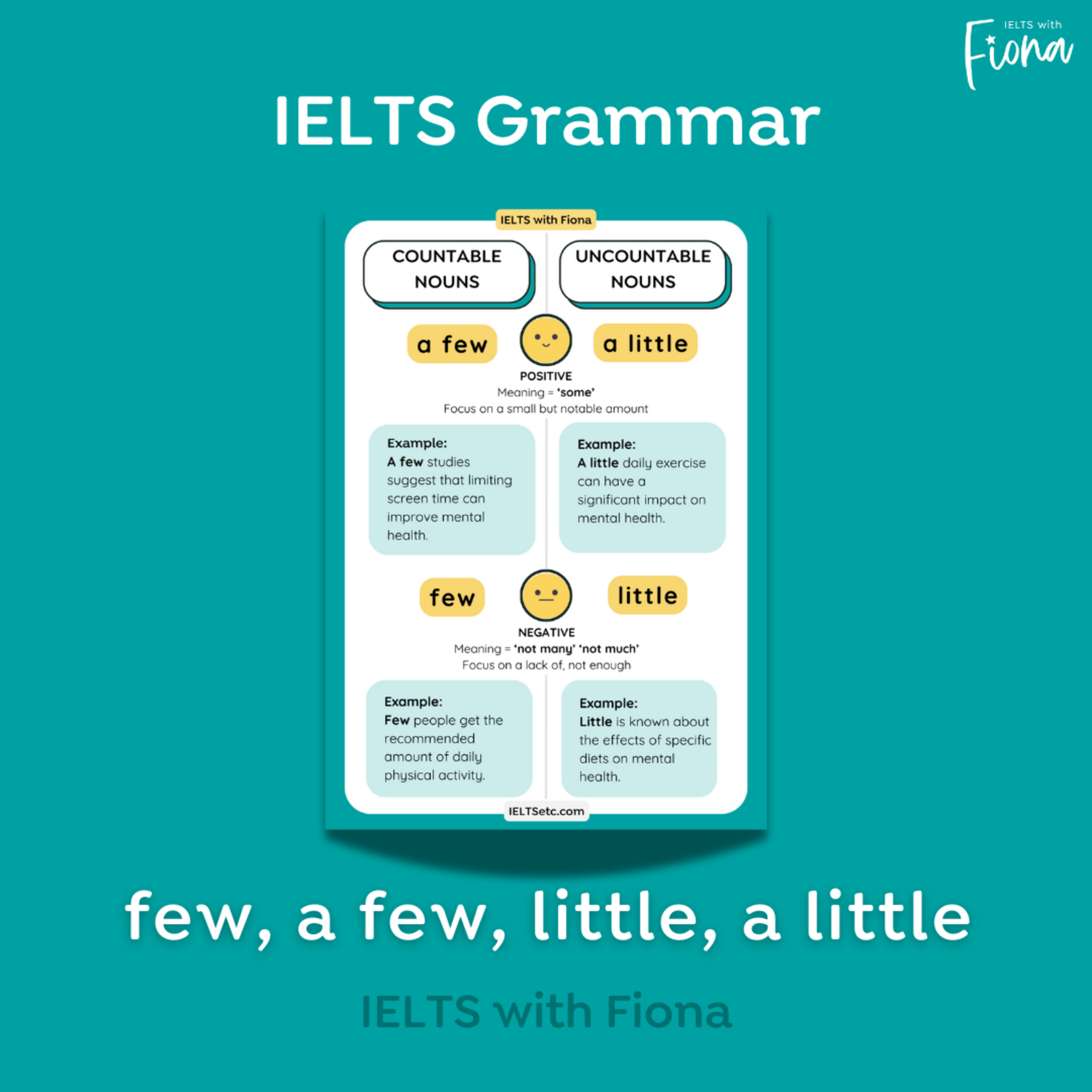 IELTS Grammar: Quantifiers few, a few, little, a little 24.09.2024 18minIf you really want to make a difference to your test score, stop practising grammar with useless examples that you'll never use in the IELTS test! In this grammar review we look at how to use few, a few, little and a little SPECIFICALLY FOR the IELTS test.You'll learn useful expressions that you can use in the Writing and Speaking Tests, and you'll find out how to avoid common mistakes with these quantifiers in the Reading and Listening Tests.Get the full lesson in the Bronze Academy, starting at just $4 per month.The full lesson includes: a set of IELTS-related phrases for each quantifier a set of practice questions for each quantifier an interactive review of all quantifiers 3 Listening video extracts with real test audio, tapescripts, answers and explanations 3 Reading extracts The most common mistake with 'few' Formal and Informal alternatives 10 examples for GT lettershttps://ieltsetc.com/2024/09/quantifiers-few-a-few-little-a-little/
Podobné podcasty


Obľúbený v
Tento podcast sa objavuje aj v rebríčkoch podcastov týchto krajín.


