
Honey Bee Obscura Podcast
Jim Tew
0
The weekly podcast exploring the joys, challenges, and curiosities of keeping honey bees. Hosted by Dr. Jim Tew and produced by Jeff Ott, Honey Bee Obscura delivers short, focused conversations that dive into the details of beekeeping—from practical how-tos to quirky observations. Perfect for learning something new on the way to the apiary, at home, or wherever your bees take you.
Epizódy
-
 Plain Talk: Autumn Walkabout (303) 01.10.2026 14minSometimes, the best beekeeping activity is simply taking a walk and watching the bees. In this episode of Honey Bee Obscura, Dr. Jim Tew heads into a nearby field for an informal autumn walkabout. His destination is a stand of goldenrod, where he hopes to observe honey bees and other insects taking advantage of the season's remaining flowers. Along the way, Jim encounters butterflies, bumblebees, wasps, and plenty of goldenrod. He wonders why some plants attract more insects than others, observes differences in goldenrod growth, and considers how the changing landscape influences the availability of fall forage. The walk also brings back memories of his early beekeeping days at Auburn University. Jim recalls encountering the distinctive smell of a strong autumn nectar flow for the first time—and mistakenly worrying that his colonies had developed American foulbrood! Returning to his bee yard, Jim reflects on observation hives, seasonal changes, and the unmistakable aroma associated with fall nectar production. But this episode is about more than honey bees and goldenrod. It's also about staying active, appreciating the outdoors, and finding satisfaction in simply observing the natural world. Join Jim for a relaxed autumn walk and a reminder that sometimes beekeeping is about enjoying the bees rather than managing them. ______________________ Thanks to Betterbee for sponsoring today's episode. Betterbee's mission is to support every beekeeper with excellent customer service, continued education and quality equipment. From their colorful and informative catalog to their support of beekeeper educational activities, including this podcast series, Betterbee truly is Beekeepers Serving Beekeepers. See for yourself at www.betterbee.com We'd like to thank Vita Bee Health for supporting the podcast. Vita provides proven tools for controlling Varroa—from Apistan and Apiguard to the new VarroxSan extended-release oxalic acid strips—helping beekeepers keep stronger, healthier colonies. Thanks to Bee Culture, the Magazine of American Beekeeping, for their support of Honey Bee Obscura. Available in print and digital at www.beeculture.com ______________________ Honey Bee Obscura is brought to you by Growing Planet Media, LLC, the home of Beekeeping Today Podcast. Music: Heart & Soul by Gyom, All We Know by Midway Music; Christmas Avenue by Immersive Music; original guitar music by Jeffrey Ott Cartoons by: John Martin (Beezwax Comics) Copyright © 2026 by Growing Planet Media, LLC
 -
 Plain Talk: Other Stinging Insects (302) 24.09.2026 17minFall has arrived, and Dr. Jim Tew is taking listeners on another walk through his bee yard. But this week, the conversation wanders beyond honey bees. It begins at the county fair, where yellow jackets hovering around food and garbage cans are routinely called "bees." Jim reflects on how quickly a beekeeper becomes known as the neighborhood "bee person"—and how that inevitably leads to calls about insects that aren't honey bees at all. Along the way, Jim recalls helping a neighbor with a wasp nest in a mailbox and tells the memorable story of removing a large hornet nest from a tree while standing on a ladder, carefully holding the entire nest inside a garbage bag. The nest survived the adventure. Jim mostly did, too. He also looks back at growing up around paper wasps in Alabama and considers bumblebees, carpenter bees, yellow jackets, and the other stinging insects beekeepers are often expected to understand. The lesson isn't that every beekeeper needs to become an expert in wasps and hornets. But knowing enough to recognize what's actually causing a problem—and when simply leaving an insect alone may be the best choice—comes with being the person everyone knows keeps bees. ______________________ Thanks to Betterbee for sponsoring today's episode. Betterbee's mission is to support every beekeeper with excellent customer service, continued education and quality equipment. From their colorful and informative catalog to their support of beekeeper educational activities, including this podcast series, Betterbee truly is Beekeepers Serving Beekeepers. See for yourself at www.betterbee.com We'd like to thank Vita Bee Health for supporting the podcast. Vita provides proven tools for controlling Varroa—from Apistan and Apiguard to the new VarroxSan extended-release oxalic acid strips—helping beekeepers keep stronger, healthier colonies. Thanks to Bee Culture, the Magazine of American Beekeeping, for their support of Honey Bee Obscura. Available in print and digital at www.beeculture.com ______________________ Honey Bee Obscura is brought to you by Growing Planet Media, LLC, the home of Beekeeping Today Podcast. Music: Heart & Soul by Gyom, All We Know by Midway Music; Christmas Avenue by Immersive Music; original guitar music by Jeffrey Ott Cartoons by: John Martin (Beezwax Comics) Copyright © 2026 by Growing Planet Media, LLC
 -
 Small-Scale Honey Extraction with Anne Frey (301) 17.09.2026 20minHoney extraction can be rewarding, but for a small operation it can also be sticky, awkward, and surprisingly hard on the wrists. In this episode of Honey Bee Obscura, Jim Tew and Anne Frey compare practical ways to get a modest honey crop from the comb without pretending there is one perfect setup. Jim traces his own path from a two-frame extractor to larger equipment at Ohio State and, decades later, back to a small extractor for seven or eight colonies. Anne suggests that beginners first borrow an extractor and other processing equipment from a local beekeeping club, while Jim makes the case for keeping durable stainless-steel tools that may become useful again as an operation changes. They examine uncapping options ranging from cold and heated knives to uncapping planes, scratchers, and rollers. Anne explains why a pulling motion can be easier on the wrist and what happens to wax fragments after pierced cappings release their honey. The conversation also covers settling and straining honey, saving cappings, and the tradeoffs of crush-and-strain processing. Small extractors bring another challenge: vibration. Jim and Anne swap inventive approaches involving floor anchors, plywood bases, added weight, wheeled stands, and even a spring-mounted utility trailer. They also discuss running multiple small extractors instead of immediately buying a larger machine. Their conclusion is simple: match the equipment to the size of the operation, stay open to changing the process, and keep every surface and tool clean. ______________________ Thanks to Betterbee for sponsoring today's episode. Betterbee's mission is to support every beekeeper with excellent customer service, continued education and quality equipment. From their colorful and informative catalog to their support of beekeeper educational activities, including this podcast series, Betterbee truly is Beekeepers Serving Beekeepers. See for yourself at www.betterbee.com We'd like to thank Vita Bee Health for supporting the podcast. Vita provides proven tools for controlling Varroa—from Apistan and Apiguard to the new VarroxSan extended-release oxalic acid strips—helping beekeepers keep stronger, healthier colonies. Thanks to Bee Culture, the Magazine of American Beekeeping, for their support of Honey Bee Obscura. Available in print and digital at www.beeculture.com ______________________ Honey Bee Obscura is brought to you by Growing Planet Media, LLC, the home of Beekeeping Today Podcast. Music: Heart & Soul by Gyom, All We Know by Midway Music; Christmas Avenue by Immersive Music; original guitar music by Jeffrey Ott Cartoons by: John Martin (Beezwax Comics) Copyright © 2026 by Growing Planet Media, LLC
 -
 Reflections on the 300th Episode 10.09.2026 20minIn this special 300th episode of Honey Bee Obscura, Dr. Jim Tew heads back to his bee yard for a thoughtful look at where the podcast began, where it has taken him, and why these weekly conversations have come to mean so much. Jim remembers how the late Kim Flottum repeatedly tried to persuade him to give podcasting a chance. Jim was committed to video and initially saw an audio-only program as a step backward. Kim, however, was persistent. What began as an experiment with short conversations eventually found its rhythm as the relaxed, 20-minute "plain talk" discussions listeners know today. Jim recalls the friendship—and occasional disagreements—that made his conversations with Kim memorable, from eight-frame equipment to queen introduction and the value of a beekeeper's time. But he also reflects on the difficult years that followed, including Kim's declining health and death and the loss of Jim's wife. During that period, returning to the bee yard and talking with listeners became an important source of normalcy, focus, and continuity. Now, 300 episodes later, Jim considers how his own approach to beekeeping continues to evolve. He may work his colonies differently than he once did, but his curiosity remains. And that, perhaps, is what Honey Bee Obscura has always been about: not having every answer, but continuing the conversation. Most of all, Jim has a simple message for listeners who have traveled this road with him: thank you. ______________________ Thanks to Betterbee for sponsoring today's episode. Betterbee's mission is to support every beekeeper with excellent customer service, continued education and quality equipment. From their colorful and informative catalog to their support of beekeeper educational activities, including this podcast series, Betterbee truly is Beekeepers Serving Beekeepers. See for yourself at www.betterbee.com We'd like to thank Vita Bee Health for supporting the podcast. Vita provides proven tools for controlling Varroa—from Apistan and Apiguard to the new VarroxSan extended-release oxalic acid strips—helping beekeepers keep stronger, healthier colonies. Thanks to Bee Culture, the Magazine of American Beekeeping, for their support of Honey Bee Obscura. Available in print and digital at www.beeculture.com ______________________ Honey Bee Obscura is brought to you by Growing Planet Media, LLC, the home of Beekeeping Today Podcast. Music: Heart & Soul by Gyom, All We Know by Midway Music; Christmas Avenue by Immersive Music; original guitar music by Jeffrey Ott Cartoons by: John Martin (Beezwax Comics) Copyright © 2026 by Growing Planet Media, LLC
 -
 Small Late-Summer Colonies with Anne Frey (299) 03.09.2026 21minLate summer can expose the colonies that simply haven't kept pace. Maybe they're late splits, small nucs, colonies recovering from swarming, or colonies that never developed the population you expected. What should you do with them before winter? In this episode of Honey Bee Obscura, Jim Tew welcomes Anne Frey of Betterbee for a practical conversation about managing small colonies as summer gives way to fall. Anne and Jim discuss how small a colony can be and still have a reasonable chance of overwintering, along with ways beekeepers can improve those odds. That includes making sure Varroa mites are under control, providing adequate honey and pollen, donating resources from stronger colonies, reducing environmental stresses, adding top insulation, and positioning small colonies so they can benefit from shared warmth. They also explore overwintering nucs above stronger colonies using double-screen boards, multi-compartment equipment, equalizing colonies with frames of capped brood, and when simply combining two weak colonies may be the better choice. And what about moving colonies indoors—or even hauling them hundreds of miles south? Jim has stories about both. The bottom line: small colonies require extra attention, realistic expectations, and sometimes a willingness to cut your losses while protecting valuable drawn comb for another season. ______________________ Thanks to Betterbee for sponsoring today's episode. Betterbee's mission is to support every beekeeper with excellent customer service, continued education and quality equipment. From their colorful and informative catalog to their support of beekeeper educational activities, including this podcast series, Betterbee truly is Beekeepers Serving Beekeepers. See for yourself at www.betterbee.com We'd like to thank Vita Bee Health for supporting the podcast. Vita provides proven tools for controlling Varroa—from Apistan and Apiguard to the new VarroxSan extended-release oxalic acid strips—helping beekeepers keep stronger, healthier colonies. Thanks to Bee Culture, the Magazine of American Beekeeping, for their support of Honey Bee Obscura. Available in print and digital at www.beeculture.com ______________________ Honey Bee Obscura is brought to you by Growing Planet Media, LLC, the home of Beekeeping Today Podcast. Music: Heart & Soul by Gyom, All We Know by Midway Music; Christmas Avenue by Immersive Music; original guitar music by Jeffrey Ott Cartoons by: John Martin (Beezwax Comics) Copyright © 2026 by Growing Planet Media, LLC
 -
 Archive Special: Fall Feeding with Kim Flottum (298) 27.08.2026 16minWhen should you feed your honey bees—and when is feeding simply masking another problem? In this Honey Bee Obscura Archive Special, we revisit a conversation between Jim Tew and the late Kim Flottum about one of beekeeping's perennial fall questions: fall feeding of colonies in preparation for winter. Kim and Jim begin with a deceptively simple question: Why are you feeding? A colony may need supplemental food because of poor forage, unfavorable weather, a newly created split, inadequate stores, or another management decision. But feeding can also become what Jim calls a "management Band-Aid"—something that helps a colony through a temporary shortage without addressing why it became short on stores in the first place. From there, they tackle the practical questions. What should you feed? Thin or thick sugar syrup? Fondant? Dry granulated sugar? And with entrance feeders, top feeders, division-board feeders, and other options available, is there really one "best" method? For northern beekeepers preparing colonies for winter, Jim and Kim discuss the amount of stored honey they historically looked for and an old but useful technique: weighing or "hefting" a hive to estimate its stores. They explain why learning what a properly provisioned hive feels like can help a beekeeper decide whether intervention is necessary. Most importantly, they emphasize that meaningful fall feeding can require a significant commitment. Bringing an underweight colony up to adequate winter stores may require gallons of syrup—not simply feeding once and assuming the problem is solved. The takeaway is classic Jim and Kim: feed when you need to, understand why you need to, and stop when the colony has what it needs. ______________________ Thanks to Betterbee for sponsoring today's episode. Betterbee's mission is to support every beekeeper with excellent customer service, continued education and quality equipment. From their colorful and informative catalog to their support of beekeeper educational activities, including this podcast series, Betterbee truly is Beekeepers Serving Beekeepers. See for yourself at www.betterbee.com We'd like to thank Vita Bee Health for supporting the podcast. Vita provides proven tools for controlling Varroa—from Apistan and Apiguard to the new VarroxSan extended-release oxalic acid strips—helping beekeepers keep stronger, healthier colonies. Thanks to Bee Culture, the Magazine of American Beekeeping, for their support of Honey Bee Obscura. Available in print and digital at www.beeculture.com ______________________ Honey Bee Obscura is brought to you by Growing Planet Media, LLC, the home of Beekeeping Today Podcast. Music: Heart & Soul by Gyom, All We Know by Midway Music; Christmas Avenue by Immersive Music; original guitar music by Jeffrey Ott Cartoons by: John Martin (Beezwax Comics) Copyright © 2026 by Growing Planet Media, LLC
 -
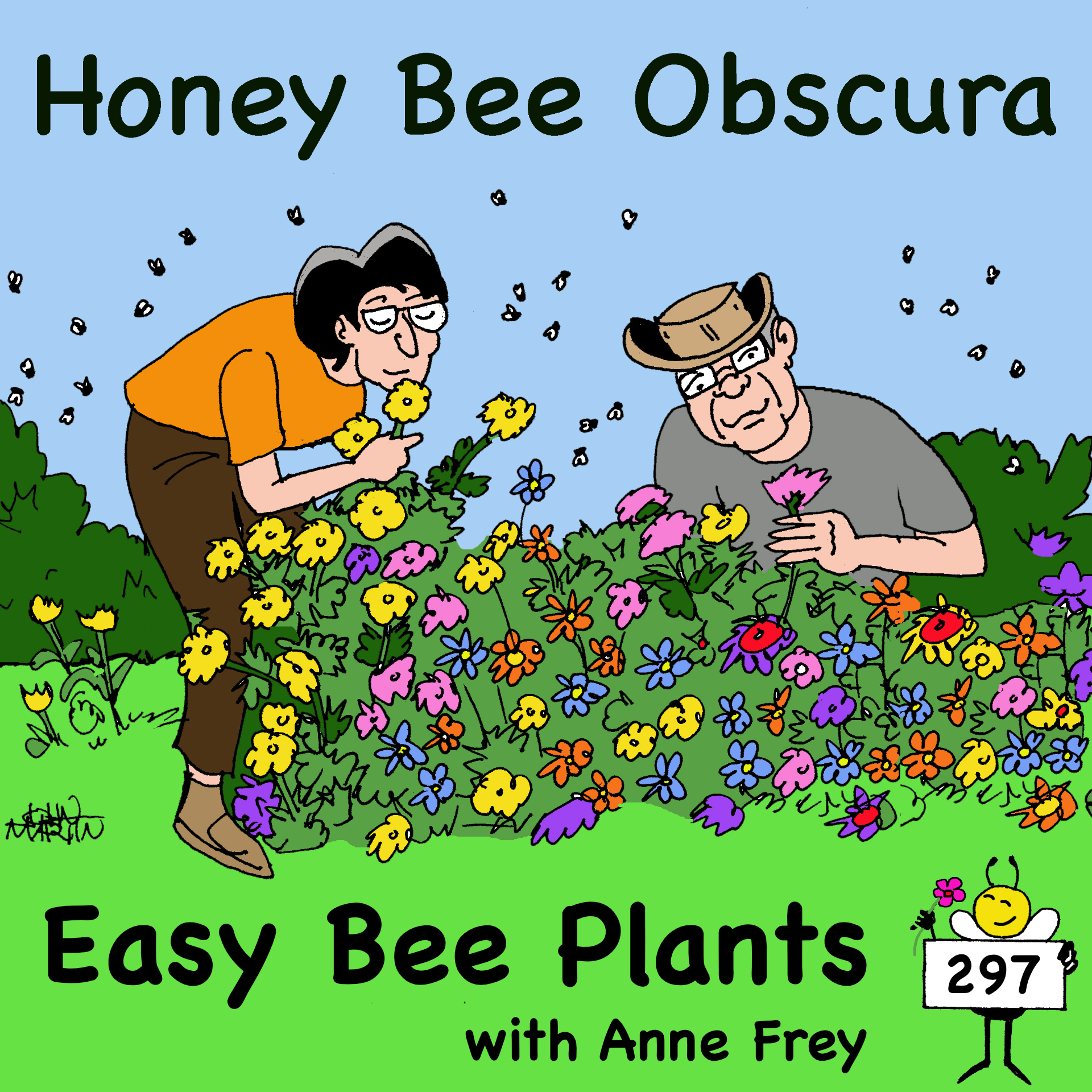 Easy Bee Plants with Anne Frey (297) 20.08.2026 19minWhat can the average beekeeper realistically plant to help honey bees and other pollinators? Jim Tew is joined by Anne Frey of Betterbee for a practical and sometimes wandering—in the best possible way—conversation about bee forage. They begin with the idea of planting wildflowers and quickly confront the question of scale. If meaningful forage can require substantial acreage, what can a beekeeper with an ordinary backyard actually accomplish? Anne suggests thinking beyond wildflower plots. A single well-chosen tree, such as an American basswood or linden, can provide an impressive concentration of flowers when it blooms. Jim recalls basswood honey from his years in Maryland and shares the story of a nearby 250-acre farm planted entirely in sunflowers—a spectacular sight that attracted people as readily as it attracted pollinators. They also talk about soybeans, tulip poplar, bee-bee tree (Evodia), and the temptation beekeepers sometimes have to plant anything honey bees find attractive. That leads to an important caution: a plant being good forage doesn't necessarily mean it belongs in your landscape. Some highly attractive plants can also be invasive. Ultimately, Jim and Anne arrive at perhaps the easiest approach of all: when possible, leave some land wild. Locally adapted flowering plants—or what we often dismiss as weeds—may provide more benefit than an introduced wildflower mix. And a perfectly manicured lawn? From a bee's perspective, Anne suggests it might not be much better than a parking lot. You don't need to transform an acre. Plant a native tree, tolerate some untidiness, preserve existing forage, and pay attention to what the bees are already telling you they like. ______________________ Thanks to Betterbee for sponsoring today's episode. Betterbee's mission is to support every beekeeper with excellent customer service, continued education and quality equipment. From their colorful and informative catalog to their support of beekeeper educational activities, including this podcast series, Betterbee truly is Beekeepers Serving Beekeepers. See for yourself at www.betterbee.com We'd like to thank Vita Bee Health for supporting the podcast. Vita provides proven tools for controlling Varroa—from Apistan and Apiguard to the new VarroxSan extended-release oxalic acid strips—helping beekeepers keep stronger, healthier colonies. ______________________ Honey Bee Obscura is brought to you by Growing Planet Media, LLC, the home of Beekeeping Today Podcast. Music: Heart & Soul by Gyom, All We Know by Midway Music; Christmas Avenue by Immersive Music; original guitar music by Jeffrey Ott Cartoons by: John Martin (Beezwax Comics) Copyright © 2026 by Growing Planet Media, LLC
 -
 Plain Talk: Old Beekeeping Books (296) 13.08.2026 23minOn a quiet, rainy morning, Jim Tew opens a few fragile old beekeeping books and takes us on an unscripted trip through the practices, tools, and ideas of beekeepers who came before us. Jim explores techniques that once seemed perfectly practical but have largely disappeared from modern apiaries—from tobacco smoke and unusual comb-cutting tools to swarm-catching contraptions, division boards, and methods for transferring bees from box hives. Along the way, he considers old hive designs, the ingenuity attributed to honey bees, and some wonderfully obscure pieces of beekeeping equipment whose purposes aren't always immediately obvious today. But this episode isn't really about returning to old-fashioned beekeeping. It's about understanding where modern beekeeping came from. As Jim puts it, he doesn't want to live in the past, but he respects it. Today's Langstroth equipment, hive tools, management techniques, and even our ideas about honey bee genetics represent only a snapshot in beekeeping's continuing evolution. The way we keep bees 25 or 50 years from now may look just as different from today's practices as today's apiary looks compared with one from the nineteenth century. Jim closes with Fifty Years Among the Bees by C. C. Miller and a reminder that old beekeeping books give us something valuable: a chance to visit another beekeeper's time and place—and perhaps better appreciate our own. ______________________ Thanks to Betterbee for sponsoring today's episode. Betterbee's mission is to support every beekeeper with excellent customer service, continued education and quality equipment. From their colorful and informative catalog to their support of beekeeper educational activities, including this podcast series, Betterbee truly is Beekeepers Serving Beekeepers. See for yourself at www.betterbee.com We'd like to thank Vita Bee Health for supporting the podcast. Vita provides proven tools for controlling Varroa—from Apistan and Apiguard to the new VarroxSan extended-release oxalic acid strips—helping beekeepers keep stronger, healthier colonies. ______________________ Honey Bee Obscura is brought to you by Growing Planet Media, LLC, the home of Beekeeping Today Podcast. Music: Heart & Soul by Gyom, All We Know by Midway Music; Christmas Avenue by Immersive Music; original guitar music by Jeffrey Ott Cartoons by: John Martin (Beezwax Comics) Copyright © 2026 by Growing Planet Media, LLC
 -
 Tiny Hives Update with Sherry (295) 06.08.2026 23minNot every colony survives—and sometimes the best lesson comes from the colonies that don't. This week on Honey Bee Obscura, Jim Tew provides tiny hives update for the listeners and decribes how they're progressing as July draws to a close. One of those colonies belongs to his longtime colleague, Sherry, who rescued a very small swarm earlier in the season. Unfortunately, what Jim finds is a sobering reminder that small, late-season colonies often face overwhelming odds. Mouse activity, almost no flight at the entrance, and the realities of midsummer dearth all point toward a colony that simply never gained enough strength. Back at his own apiary, Jim examines two similarly small "after swarms" (often called secondary swarms) and reflects on why these tiny colonies form in the first place. He discusses virgin queens, delayed brood production, the challenges of building population late in the season, and why even experienced beekeepers still have unanswered questions about swarm biology. Along the way, Jim shares a memorable story of a forgotten nucleus colony that unexpectedly survived an entire Ohio winter, reminding us that honey bees occasionally defy our expectations. The episode concludes with reflections on knowing when not to disturb healthy colonies during summer dearth, accepting that natural losses are part of beekeeping, and embracing the continual learning that keeps even veteran beekeepers curious after decades in the bee yard. ______________________ Thanks to Betterbee for sponsoring today's episode. Betterbee's mission is to support every beekeeper with excellent customer service, continued education and quality equipment. From their colorful and informative catalog to their support of beekeeper educational activities, including this podcast series, Betterbee truly is Beekeepers Serving Beekeepers. See for yourself at www.betterbee.com We'd like to thank Vita Bee Health for supporting the podcast. Vita provides proven tools for controlling Varroa—from Apistan and Apiguard to the new VarroxSan extended-release oxalic acid strips—helping beekeepers keep stronger, healthier colonies. ______________________ Honey Bee Obscura is brought to you by Growing Planet Media, LLC, the home of Beekeeping Today Podcast. Music: Heart & Soul by Gyom, All We Know by Midway Music; Christmas Avenue by Immersive Music; original guitar music by Jeffrey Ott Cartoons by: John Martin (Beezwax Comics) Copyright © 2026 by Growing Planet Media, LLC
 -
 Memorable Stings with Anne Frey (294) 30.07.2026 20minEvery beekeeper remembers a few stings that stand out above all the rest. This week on Honey Bee Obscura, Dr. Jim Tew and Anne Frey share some of their most memorable experiences with honey bee stings—stories that range from painful to humorous, but all serve as reminders that working with bees always deserves respect. Jim recounts the unforgettable moment when a single bee flew directly into his nostril during an educational demonstration, producing one of the most painful stings of his career. Anne follows with stories of dramatic facial swelling after venturing into the apiary without a veil and discusses how even experienced beekeepers occasionally become a little too confident around their colonies. Together they explain why these memorable incidents are unusual rather than typical, offering reassurance that most bee stings are minor annoyances for experienced beekeepers. They also discuss practical topics including choosing loose-fitting protective clothing, why baggy bee suits reduce the severity of stings, staying hydrated during summer inspections, and avoiding unnecessary risks in the apiary. The episode also highlights how experience teaches humility. Even after decades of working bees, both Jim and Anne emphasize that honey bees deserve respect every time a hive is opened. If you've ever had a sting you'll never forget—or simply want to hear two experienced beekeepers share entertaining stories from years in the apiary—you'll enjoy this week's conversation. ______________________ Thanks to Betterbee for sponsoring today's episode. Betterbee's mission is to support every beekeeper with excellent customer service, continued education and quality equipment. From their colorful and informative catalog to their support of beekeeper educational activities, including this podcast series, Betterbee truly is Beekeepers Serving Beekeepers. See for yourself at www.betterbee.com We'd like to thank Vita Bee Health for supporting the podcast. Vita provides proven tools for controlling Varroa—from Apistan and Apiguard to the new VarroxSan extended-release oxalic acid strips—helping beekeepers keep stronger, healthier colonies. ______________________ Honey Bee Obscura is brought to you by Growing Planet Media, LLC, the home of Beekeeping Today Podcast. Music: Heart & Soul by Gyom, All We Know by Midway Music; Christmas Avenue by Immersive Music; original guitar music by Jeffrey Ott Cartoons by: John Martin (Beezwax Comics) Copyright © 2026 by Growing Planet Media, LLC
 -
 Beekeeping in Hot Weather with Anne Frey (293) 23.07.2026 19minSummer heat changes the way both beekeepers and honey bee colonies operate. In this episode, Jim Tew is joined by Anne Frey of Betterbee to explore what beekeeping in hot weather really means inside and outside the hive. Jim begins by asking a simple question: are bees actually bothered by heat, or is it mostly the beekeeper who suffers? Anne explains that while honey bees evolved in warm climates and are remarkably effective at regulating hive temperature and humidity, beekeepers should think carefully before disturbing colonies that are already working hard to maintain those conditions. The discussion highlights the value of simply observing colony entrances rather than opening hives unnecessarily. Entrance activity, pollen collection, fanning behavior, and bearding all provide valuable information while allowing the colony to continue regulating its environment. Anne also shares practical guidance on managing Varroa mites during hot weather. Different mite treatments have different maximum application temperatures, making product selection especially important during midsummer. She discusses the temperature limitations of Formic Pro®, along with alternatives such as Apiguard®, ApiLife Var®, Apivar®, and repeated oxalic acid dribble treatments depending on colony conditions and local weather. Jim and Anne finish by discussing water sources, climate differences across North America, and practical ways beekeepers can help colonies during periods of prolonged heat while avoiding unnecessary stress on the bees. ______________________ Thanks to Betterbee for sponsoring today's episode. Betterbee's mission is to support every beekeeper with excellent customer service, continued education and quality equipment. From their colorful and informative catalog to their support of beekeeper educational activities, including this podcast series, Betterbee truly is Beekeepers Serving Beekeepers. See for yourself at www.betterbee.com We'd like to thank Vita Bee Health for supporting the podcast. Vita provides proven tools for controlling Varroa—from Apistan and Apiguard to the new VarroxSan extended-release oxalic acid strips—helping beekeepers keep stronger, healthier colonies. ______________________ Honey Bee Obscura is brought to you by Growing Planet Media, LLC, the home of Beekeeping Today Podcast. Music: Heart & Soul by Gyom, All We Know by Midway Music; Christmas Avenue by Immersive Music; original guitar music by Jeffrey Ott Cartoons by: John Martin (Beezwax Comics) Copyright © 2026 by Growing Planet Media, LLC
 -
 Archive Special: Removing Honey (292) 16.07.2026 18minRemoving honey from a hive sounds simple until the supers are full. In this Honey Bee Obscura Archive Special, the late Kim Flottum and Dr. Jim Tew revisit one of the most physically demanding jobs in beekeeping: harvesting honey. They compare their different backyard setups, discuss how they remove bees from honey supers, and explain why careful planning can make the work safer for both the beekeeper and the bees. Kim describes his streamlined approach using eight-frame medium supers, a utility trailer, and an electric leaf blower to clear bees before transporting supers to his garage. Jim, managing more colonies and heavier equipment, shares why he prefers gasoline-powered blowers, heavy protective clothing, plenty of smoke, and equipment positioned within easy lifting distance. The conversation also explores alternatives such as escape boards, bee repellents, and strategies for minimizing drifting bees around neighboring properties. Kim and Jim discuss handling the inevitable bees that accompany harvested supers into the extracting room, and why every beekeeper develops techniques that fit their own operation. As they prepare colonies for late-summer mite treatments and the approaching goldenrod flow, they reflect on the considerable work required to harvest honey—and why every gifted jar of honey should be appreciated as the product of countless hours of labor by both beekeeper and bees. ______________________ Thanks to Betterbee for sponsoring today's episode. Betterbee's mission is to support every beekeeper with excellent customer service, continued education and quality equipment. From their colorful and informative catalog to their support of beekeeper educational activities, including this podcast series, Betterbee truly is Beekeepers Serving Beekeepers. See for yourself at www.betterbee.com We'd like to thank Vita Bee Health for supporting the podcast. Vita provides proven tools for controlling Varroa—from Apistan and Apiguard to the new VarroxSan extended-release oxalic acid strips—helping beekeepers keep stronger, healthier colonies. ______________________ Honey Bee Obscura is brought to you by Growing Planet Media, LLC, the home of Beekeeping Today Podcast. Music: Heart & Soul by Gyom, All We Know by Midway Music; Christmas Avenue by Immersive Music; original guitar music by Jeffrey Ott Cartoons by: John Martin (Beezwax Comics) Copyright © 2026 by Growing Planet Media, LLC
 -
 Plain Talk: Hot Bees, Ants and Weeds (291) 09.07.2026 29minAs summer temperatures climb across much of North America, Dr. Jim Tew reflects on what extreme heat means for both honey bees and the people who care for them. Speaking from his Ohio bee yard during an intense July heat wave, Jim shares why years of experience—and a healthy respect for aging—have changed how he approaches midsummer beekeeping. Rather than opening colonies simply to satisfy curiosity, Jim explains why strong colonies should often be left alone during periods of excessive heat, allowing the bees to maintain the carefully regulated temperatures they need inside the hive. He also discusses practical ways beekeepers can adjust their own work schedules by borrowing lessons from earlier generations who routinely worked outdoors before the day's highest temperatures. The conversation then shifts to an often-overlooked subject: ants. Drawing from decades of beekeeping in both Alabama and Ohio, Jim explores the surprisingly complex relationship between ants and honey bee colonies. While ants are commonly viewed as pests, Jim describes situations where they may actually provide ecological benefits by cleaning hive debris and helping suppress wax moth infestations in dead colonies. Finally, Jim reflects on adapting both his beekeeping and his bee yard to changing physical abilities. Rather than striving for perfectly manicured apiaries, he shares his evolving philosophy of working with nature, maintaining accessible pathways through a more natural landscape while continuing to enjoy the bees that have shaped so much of his life. _____________________ Thanks to Betterbee for sponsoring today's episode. Betterbee's mission is to support every beekeeper with excellent customer service, continued education and quality equipment. From their colorful and informative catalog to their support of beekeeper educational activities, including this podcast series, Betterbee truly is Beekeepers Serving Beekeepers. See for yourself at www.betterbee.com We'd like to thank Vita Bee Health for supporting the podcast. Vita provides proven tools for controlling Varroa—from Apistan and Apiguard to the new VarroxSan extended-release oxalic acid strips—helping beekeepers keep stronger, healthier colonies. ______________________ Honey Bee Obscura is brought to you by Growing Planet Media, LLC, the home of Beekeeping Today Podcast. Music: Heart & Soul by Gyom, All We Know by Midway Music; Christmas Avenue by Immersive Music; original guitar music by Jeffrey Ott Cartoons by: John Martin (Beezwax Comics) Copyright © 2026 by Growing Planet Media, LLC
 -
 A Small Open Colony (290) 02.07.2026 17minSometimes honey bees choose unusual places to live. In this episode of Honey Bee Obscura, Jim Tew visits the property of longtime bee lab colleague Sherry to examine a remarkably small colony that has established itself completely exposed on a fallen tree branch near a blueberry and elderberry planting. The colony consists of only a few combs suspended in the open, just inches above the ground, with no cavity protection and little chance of surviving winter without intervention. Jim and Sherry discuss how small swarms occasionally abandon their search for a suitable nesting cavity, why this colony may have settled where it did, and what would be required to transfer the bees into conventional equipment. They review traditional cut-out methods, comb transfer techniques, feeding requirements, and the challenges of helping an exposed colony survive. Along the way, Jim explores concepts such as swarm behavior, scout bee decision-making, nest site selection, and stigmergy while considering whether this tiny colony can be given a second chance. Will the bees remain where they are, or will they eventually be moved into a nucleus hive? Jim and Sherry share their observations and discuss what may happen next. _____________________ Thanks to Betterbee for sponsoring today's episode. Betterbee's mission is to support every beekeeper with excellent customer service, continued education and quality equipment. From their colorful and informative catalog to their support of beekeeper educational activities, including this podcast series, Betterbee truly is Beekeepers Serving Beekeepers. See for yourself at www.betterbee.com We'd like to thank Vita Bee Health for supporting the podcast. Vita provides proven tools for controlling Varroa—from Apistan and Apiguard to the new VarroxSan extended-release oxalic acid strips—helping beekeepers keep stronger, healthier colonies. ______________________ Honey Bee Obscura is brought to you by Growing Planet Media, LLC, the home of Beekeeping Today Podcast. Music: Heart & Soul by Gyom, All We Know by Midway Music; Christmas Avenue by Immersive Music; original guitar music by Jeffrey Ott Cartoons by: John Martin (Beezwax Comics) Copyright © 2026 by Growing Planet Media, LLC
 -
 Plain Talk: Hot Bees (289) 25.06.2026 24minSummer heat brings a familiar sight to many beekeepers: honey bees clustered outside the hive entrance, hanging from the landing board, and covering the front of the colony. In this episode of Honey Bee Obscura, Jim Tew reflects on what beekeepers often call "bearding" and shares memories from decades of working bees in the heat of the Deep South. Jim explains why colonies gather outside during hot weather and why this behavior is often a normal part of colony temperature regulation rather than a sign of trouble. From long days in Alabama bee yards to late-night pollination moves, he recalls the challenges of managing large colonies when temperatures remain high long after sunset. Along the way, Jim shares stories about moving bees for pollination, dealing with protective clothing before modern ventilated suits existed, encountering rattlesnakes and black widow spiders in remote bee yards, and learning valuable lessons from commercial beekeepers about transporting colonies safely. The discussion also turns to the many other creatures attracted to an apiary. Deer, raccoons, skunks, bears, spiders, and countless other animals often become part of the larger ecosystem surrounding honey bee colonies. Part practical beekeeping discussion and part personal reflection, this episode offers a thoughtful look at how honey bees cope with summer heat and how a lifetime of beekeeping experiences can be triggered by something as simple as a cluster of bees gathered outside the hive on a warm evening. ______________________ Thanks to Betterbee for sponsoring today's episode. Betterbee's mission is to support every beekeeper with excellent customer service, continued education and quality equipment. From their colorful and informative catalog to their support of beekeeper educational activities, including this podcast series, Betterbee truly is Beekeepers Serving Beekeepers. See for yourself at www.betterbee.com We'd like to thank Vita Bee Health for supporting the podcast. Vita provides proven tools for controlling Varroa—from Apistan and Apiguard to the new VarroxSan extended-release oxalic acid strips—helping beekeepers keep stronger, healthier colonies. ______________________ Honey Bee Obscura is brought to you by Growing Planet Media, LLC, the home of Beekeeping Today Podcast. Music: Heart & Soul by Gyom, All We Know by Midway Music; Christmas Avenue by Immersive Music; original guitar music by Jeffrey Ott Cartoons by: John Martin (Beezwax Comics) Copyright © 2026 by Growing Planet Media, LLC
 -
 Archive Special: Working Bees in the Heat (288) 18.06.2026 16minIn this Honey Bee Obscura Archive Special, Jim Tew and Kim Flottum revisit an important topic that becomes increasingly relevant as summer progresses: working bees in the heat of summer. As colonies reach peak population and honey supers become heavier, beekeeping becomes more physically demanding. Jim reflects on how beekeeping changes between the pleasant days of spring and the demanding conditions of midsummer, when heat, humidity, heavier equipment, and defensive colonies can turn routine inspections into challenging work. Drawing on article research and discussions conducted with the late Ann Harman, Kim explains the physiological dangers associated with working bees in hot weather. The discussion covers heat cramps, heat exhaustion, and heat stroke, including warning signs that beekeepers should recognize before serious medical issues develop. Kim emphasizes that heat-related illness can affect beekeepers of any age and experience level. The conversation explores practical strategies for reducing heat stress while working colonies, including scheduling inspections during cooler parts of the day, taking advantage of shade, staying hydrated before and during bee work, using modern ventilated veils, carrying water into the apiary, and recognizing when conditions require stopping work and returning another day. Jim and Kim also discuss the importance of safety planning, particularly for beekeepers working alone. Topics include informing family members of bee yard locations, carrying communication devices, understanding emergency response considerations, and avoiding the temptation to push through fatigue simply to finish a task. Although originally recorded years ago, the advice remains highly relevant for beekeepers facing summer temperatures, humidity, and physically demanding colony management tasks. ______________________ Thanks to Betterbee for sponsoring today's episode. Betterbee's mission is to support every beekeeper with excellent customer service, continued education and quality equipment. From their colorful and informative catalog to their support of beekeeper educational activities, including this podcast series, Betterbee truly is Beekeepers Serving Beekeepers. See for yourself at www.betterbee.com We'd like to thank Vita Bee Health for supporting the podcast. Vita provides proven tools for controlling Varroa—from Apistan and Apiguard to the new VarroxSan extended-release oxalic acid strips—helping beekeepers keep stronger, healthier colonies. ______________________ Honey Bee Obscura is brought to you by Growing Planet Media, LLC, the home of Beekeeping Today Podcast. Music: Heart & Soul by Gyom, All We Know by Midway Music; Christmas Avenue by Immersive Music; original guitar music by Jeffrey Ott Cartoons by: John Martin (Beezwax Comics) Copyright © 2026 by Growing Planet Media, LLC
 -
 Plain Talk: Tall Grass In The Bee Yard (287) 11.06.2026 20minIn this reflective episode of Honey Bee Obscura, Dr. Jim Tew walks back to his bee yard after several days of rain and immediately confronts a familiar challenge: grass and weeds that have grown well beyond manageable height. What begins as a discussion about mowing quickly becomes a thoughtful examination of aging, beekeeping alone, and adapting expectations to changing circumstances. Jim candidly shares the realities of maintaining an apiary at seventy-eight years old. Managing thirteen thriving colonies, coping with allergies, operating equipment in summer heat, and maintaining property without assistance all raise practical questions about how beekeeping changes over time. Rather than seeking sympathy, Jim explores the adjustments that many longtime beekeepers eventually face as physical limitations become part of the craft. The discussion turns to vegetation management around the apiary, including his experiences with naturally occurring wildflower growth, the challenges of maintaining access paths, and his decision to avoid herbicides despite their widespread historical use in beekeeping operations. Jim reviews current discussions surrounding glyphosate and reflects on changing attitudes toward chemical weed control. Along the way, he provides updates on two recently captured swarms, discusses the resilience of small colonies, and shares observations about natural comb construction. His curiosity about how bees build and reinforce comb leads to broader thoughts on natural nest architecture, propolis use, and how much traditional beekeeping may have overlooked about honey bee biology. Throughout the episode, Jim offers an honest and personal perspective on continuing to care for bees later in life while balancing practical realities, physical limitations, and a lifelong fascination with honey bees. ______________________ Thanks to Betterbee for sponsoring today's episode. Betterbee's mission is to support every beekeeper with excellent customer service, continued education and quality equipment. From their colorful and informative catalog to their support of beekeeper educational activities, including this podcast series, Betterbee truly is Beekeepers Serving Beekeepers. See for yourself at www.betterbee.com We'd like to thank Vita Bee Health for supporting the podcast. Vita provides proven tools for controlling Varroa—from Apistan and Apiguard to the new VarroxSan extended-release oxalic acid strips—helping beekeepers keep stronger, healthier colonies. ______________________ Honey Bee Obscura is brought to you by Growing Planet Media, LLC, the home of Beekeeping Today Podcast. Music: Heart & Soul by Gyom, All We Know by Midway Music; Christmas Avenue by Immersive Music; original guitar music by Jeffrey Ott Cartoons by: John Martin (Beezwax Comics) Copyright © 2026 by Growing Planet Media, LLC
 -
 Plain Talk: Five Nice Hives (286) 04.06.2026 21minIn this episode of Honey Bee Obscura, Jim Tew heads into the bee yard to check on five package colonies installed earlier in the spring. What begins as a routine inspection quickly becomes a reminder of how rapidly healthy colonies can develop during a favorable season. Each colony is thriving, filling its equipment and signaling that additional space will soon be needed to prevent overcrowding and potential swarming. Jim also revisits a topic familiar to many beekeepers: heavily propolized colonies. After several challenging years that limited regular hive inspections, he discusses the realities of managing frames that have become firmly glued in place. This leads to a field test of an oscillating multi-tool as a possible aid for cutting through propolis and freeing stuck frames. Working directly in the apiary, Jim evaluates whether the tool offers practical value or is simply another interesting beekeeping experiment. Along the way, he shares observations about package colony growth, the effects of warm weather on propolis consistency, the challenges of working with plastic frames in heavily propolized colonies, and his continuing curiosity about beekeepers who successfully manage colonies in a single deep brood chamber. As always, Jim combines practical observations, honest field notes, and thoughtful questions from a lifetime of beekeeping experience. ______________________ Thanks to Betterbee for sponsoring today's episode. Betterbee's mission is to support every beekeeper with excellent customer service, continued education and quality equipment. From their colorful and informative catalog to their support of beekeeper educational activities, including this podcast series, Betterbee truly is Beekeepers Serving Beekeepers. See for yourself at www.betterbee.com We'd like to thank Vita Bee Health for supporting the podcast. Vita provides proven tools for controlling Varroa—from Apistan and Apiguard to the new VarroxSan extended-release oxalic acid strips—helping beekeepers keep stronger, healthier colonies. ______________________ Honey Bee Obscura is brought to you by Growing Planet Media, LLC, the home of Beekeeping Today Podcast. Music: Heart & Soul by Gyom, All We Know by Midway Music; Christmas Avenue by Immersive Music; original guitar music by Jeffrey Ott Cartoons by: John Martin (Beezwax Comics) Copyright © 2026 by Growing Planet Media, LLC
 -
 A Novice Teaches Beekeeping (285) 28.05.2026 16minJim Tew welcomes his grandson, Will Laditka, back to Honey Bee Obscura for a candid conversation about the realities of learning beekeeping as a young beginner. Will reflects on losing his first colonies, the emotional impact of what initially appeared to be American Foulbrood, and how those difficult experiences ultimately strengthened his understanding of honey bee management. Jim and Will discuss the importance of learning through setbacks, the challenge of managing Varroa, and why resilience is one of the most important qualities for new beekeepers. The discussion also explores how beekeeping intersects with education and communication. Will shares how he recently used beekeeping as the subject of a college speech presentation, explaining basic hive equipment, bee communication, pheromones, and colony behavior to classmates unfamiliar with bees. The conversation highlights how honey bees can engage audiences far outside traditional beekeeping circles. Jim and Will also compare beginner beekeeping experiences across generations. Jim reflects on the simplicity and affordability of starting beekeeping decades ago, while Will explains how modern equipment costs and management expectations can make entering the hobby more difficult for younger beekeepers today. Together, they discuss how beekeeping has evolved while still maintaining the same lessons of patience, observation, and continual learning. This episode offers thoughtful perspective for beginning beekeepers, especially younger listeners navigating the steep learning curve of modern honey bee management. ______________________ Thanks to Betterbee for sponsoring today's episode. Betterbee's mission is to support every beekeeper with excellent customer service, continued education and quality equipment. From their colorful and informative catalog to their support of beekeeper educational activities, including this podcast series, Betterbee truly is Beekeepers Serving Beekeepers. See for yourself at www.betterbee.com We'd like to thank Vita Bee Health for supporting the podcast. Vita provides proven tools for controlling Varroa—from Apistan and Apiguard to the new VarroxSan extended-release oxalic acid strips—helping beekeepers keep stronger, healthier colonies. ______________________ Honey Bee Obscura is brought to you by Growing Planet Media, LLC, the home of Beekeeping Today Podcast. Music: Heart & Soul by Gyom, All We Know by Midway Music; Christmas Avenue by Immersive Music; original guitar music by Jeffrey Ott Cartoons by: John Martin (Beezwax Comics) Copyright © 2026 by Growing Planet Media, LLC
 -
 The Wayward Swarm, Part 4 (284) 21.05.2026 15minIn this final installment of the "Wayward Swarm" saga, Dr. Jim Tew and Jason Ferrell return to the colony that has caused more trouble, worry, and excitement than either expected. After multiple attempts to recover and hive the swarm — including ladders, falls, cold weather, bee vacuums, overloaded trap cages, and weeks of uncertainty — Jim finally opens the hive for the first inspection. What they discover surprises both of them. Despite losing a significant number of bees during the ordeal and never once seeing the queen after the swarm was collected, the colony survived. Jim and Jason find eggs and young larvae spread across multiple frames, confirming that the queen successfully survived the swarm capture, the transfer, and the difficult conditions that followed. Along the way, Jim reflects on how quickly beekeeping can shift from "not enough bees" to "too many bees," especially after unexpectedly strong overwintered colonies and package installations. He also shares thoughts on aging in the bee yard, the realities of ladder work, swarm management decisions, and the unpredictable nature of small mating swarms. The discussion also touches on package colony buildup, swarm behavior, queen survival, feeding small colonies, and the strange tendency for swarms to revisit the same locations. Mostly, though, this episode captures the humor, frustration, and satisfaction that often accompany real-world beekeeping. As Jim says, this may well become "a beautiful three or four segment issue on how not to hive a swarm." ______________________ Thanks to Betterbee for sponsoring today's episode. Betterbee's mission is to support every beekeeper with excellent customer service, continued education and quality equipment. From their colorful and informative catalog to their support of beekeeper educational activities, including this podcast series, Betterbee truly is Beekeepers Serving Beekeepers. See for yourself at www.betterbee.com We'd like to thank Vita Bee Health for supporting the podcast. Vita provides proven tools for controlling Varroa—from Apistan and Apiguard to the new VarroxSan extended-release oxalic acid strips—helping beekeepers keep stronger, healthier colonies. ______________________ Honey Bee Obscura is brought to you by Growing Planet Media, LLC, the home of Beekeeping Today Podcast. Music: Heart & Soul by Gyom, All We Know by Midway Music; Christmas Avenue by Immersive Music; original guitar music by Jeffrey Ott Cartoons by: John Martin (Beezwax Comics) Copyright © 2026 by Growing Planet Media, LLC
Podobné podcasty


Obľúbený v
Tento podcast sa objavuje aj v rebríčkoch podcastov týchto krajín.
