
InPrincipio Podcast
InPrincipio
0
Books, readings, and historical studies with a Catholic perspective.
Epizódy
-
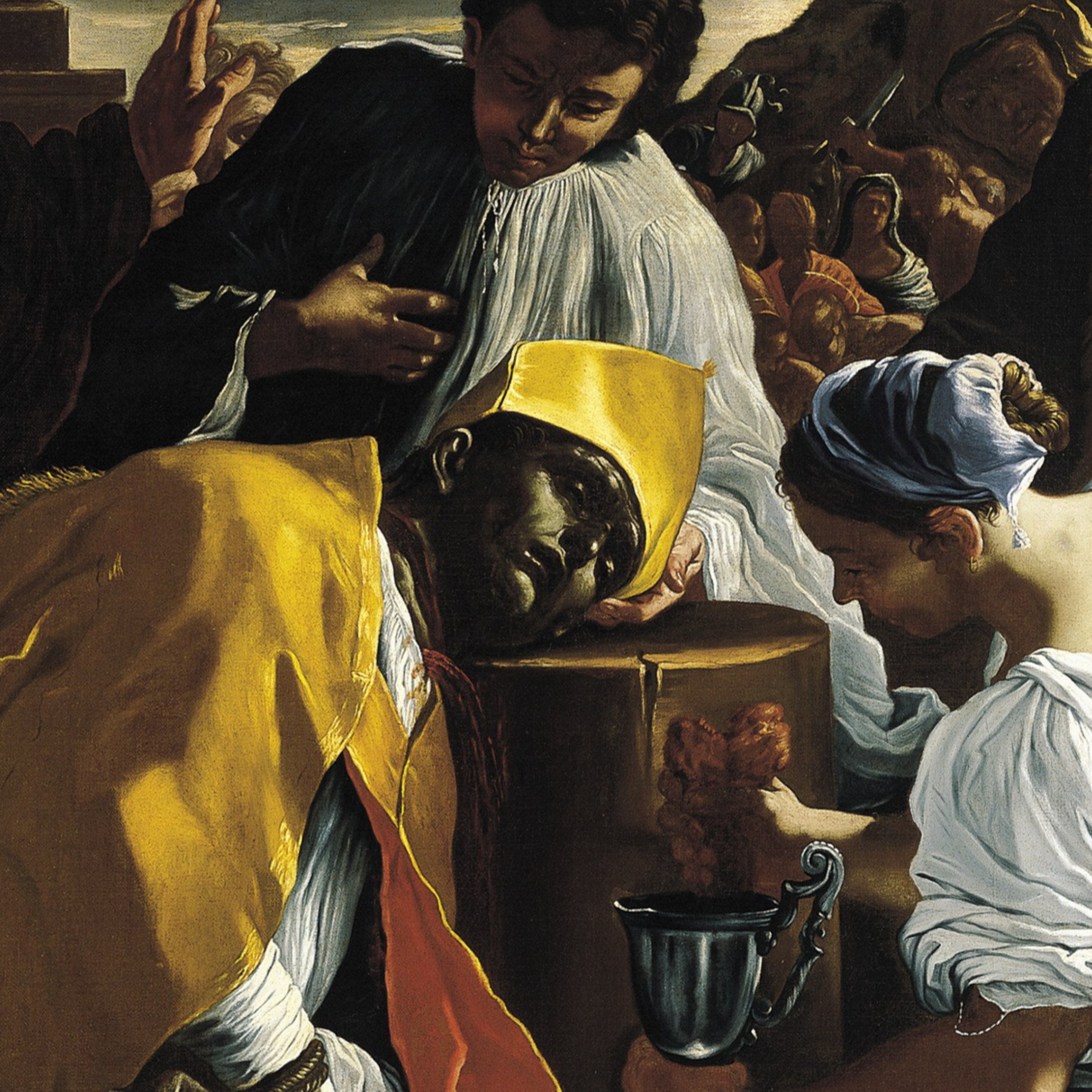 St. Januarius (September 19) — From Dom Guéranger’s Liturgical Year 18.09.2026 7minA meditation for the Feast of the St. Januarius, from Dom Guéranger’s “The Liturgical Year”, Volume V of the Time after Pentecost.Saint Januarius, or San Gennaro, was Bishop of Benevento and a zealous pastor who suffered martyrdom during the persecution of the Emperor Diocletian in the early fourth century. According to ancient tradition, he was arrested together with several companions and condemned to death after refusing to renounce Christ. After surviving an attempt to throw him to wild beasts, he and his companions were taken to the Solfatara near Pozzuoli, where they were beheaded. His relics were eventually translated to Naples, where he has long been honored as the city's principal patron. A small quantity of his blood, preserved in a vial, is traditionally said to liquefy several times each year, most notably on his feast day, September 19, a phenomenon that has been venerated by the faithful for centuries. St. Januarius is remembered especially for his courageous confession of the Faith and his willingness to give his life rather than deny Christ.Please note that Servant of God Dom Prosper Guéranger went to his eternal reward in 1875; at this point, Volumes I-IX (Advent to Pentecost Saturday) had been completed, but Volumes X-XV (Trinity Sunday to Advent) had not yet been completed. Thus, the remaining readings of the Liturgical Year, from Trinity Sunday until Advent, were not directly authored by Dom Prosper, but were the work of his disciple Dom Lucien Fromage. Dom Prosper Guéranger's The Liturgical Year, a monumental fifteen-volume work, offers a comprehensive exploration of the Catholic Church’s liturgical calendar, guiding readers through the spiritual and historical richness of the Church’s worship. Written in the 19th century, the series provides daily meditations, historical context, and liturgical texts for the Mass and Divine Office, covering the entire cycle of seasons—Advent, Christmas, Lent, Passiontide, Easter, and the Time after Pentecost—as well as feast days of saints. Guéranger’s work, rooted in a deep contemplative spirit, aims to immerse the faithful in the Church’s prayerful life, emphasizing the unity of faith through the axiom lex orandi, lex credendi ("the law of prayer is the law of belief"), and remains a cherished resource for Catholics seeking to deepen their spiritual lives. Dom Prosper Guéranger (1805–1875) was a French Benedictine monk, liturgical scholar, and founder of the Solesmes Abbey, renowned for his pivotal role in reviving the Benedictine Order in France and restoring the Roman liturgy after the disruptions of the French Revolution. Born in Sablé-sur-Sarthe, he entered the priesthood in 1827 and, inspired by a vision to restore monastic life, reestablished the Benedictine community at Solesmes in 1833, becoming its first abbot. A staunch defender of ultramontanism and traditional Catholic worship, he also championed the revival of Gregorian chant, significantly influencing the liturgical renewal movement.Link to the Dom Guéranger's Liturgical Year playlist (updated daily): https://www.youtube.com/playlist?list=PLZKdyYnV_bkh7rH6piW0ShgsdcefFoOvJIf you would like to support this channel: Patreon: https://www.patreon.com/cw/InprincipioPodcast PayPal: https://www.paypal.com/donate/?hosted_button_id=U5EZ9X2CE2V7W Venmo: https://venmo.com/u/InPrincipioPodcast Zelle: [email protected]; or search for Zelle tag “inprincipiopodcast” Checks may be written out to ‘InPrincipio Podcast’ and mailed to: P.O. Box 117 Cedar Ridge, CA 95924Sincere thanks to all who are able to contribute, by your prayers, your patronage, or otherwise. Your support sustains this work and helps make these readings available to others.Artwork: “The Martyrdom of Saint Gennaro” by Mattia Preti c.1685
 -
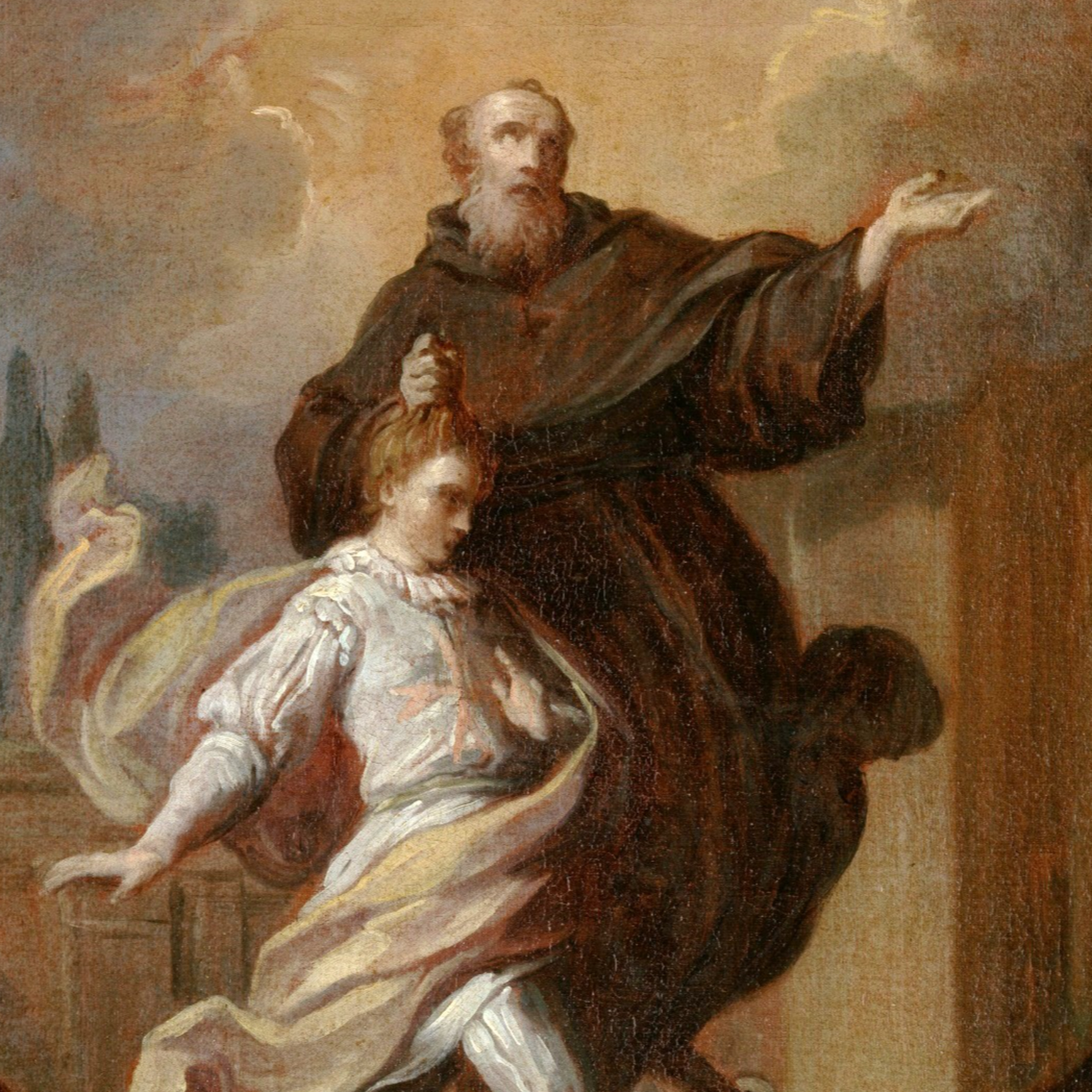 St. Joseph of Cupertino (September 18) — From Dom Guéranger’s Liturgical Year 17.09.2026 10minA meditation for the Feast of the St. Joseph of Cupertino, from Dom Guéranger’s “The Liturgical Year”, Volume V of the Time after Pentecost.St. Joseph of Cupertino was an Italian Franciscan friar renowned for his profound humility, simplicity, and extraordinary mystical graces. Born in Cupertino in 1603, he endured poverty and difficulties in his youth before eventually being received into the Conventual Franciscan Order. He became particularly famous for his frequent ecstasies and miraculous levitations, especially when contemplating sacred subjects, and was sometimes unable to remain on the ground during Mass or other acts of devotion. Despite these extraordinary phenomena, St. Joseph considered himself a poor and unworthy sinner and sought to obey his superiors with great humility. He had a special devotion to the Blessed Virgin Mary and the Holy Eucharist, and his life was marked by prayer, penance, charity, and a childlike trust in God. He died in Osimo in 1663 and was canonized by Pope Clement XIII in 1767. He is traditionally invoked by students, particularly those facing examinations, because of the difficulties he himself experienced in his studies.Please note that Servant of God Dom Prosper Guéranger went to his eternal reward in 1875; at this point, Volumes I-IX (Advent to Pentecost Saturday) had been completed, but Volumes X-XV (Trinity Sunday to Advent) had not yet been completed. Thus, the remaining readings of the Liturgical Year, from Trinity Sunday until Advent, were not directly authored by Dom Prosper, but were the work of his disciple Dom Lucien Fromage. Dom Prosper Guéranger's The Liturgical Year, a monumental fifteen-volume work, offers a comprehensive exploration of the Catholic Church’s liturgical calendar, guiding readers through the spiritual and historical richness of the Church’s worship. Written in the 19th century, the series provides daily meditations, historical context, and liturgical texts for the Mass and Divine Office, covering the entire cycle of seasons—Advent, Christmas, Lent, Passiontide, Easter, and the Time after Pentecost—as well as feast days of saints. Guéranger’s work, rooted in a deep contemplative spirit, aims to immerse the faithful in the Church’s prayerful life, emphasizing the unity of faith through the axiom lex orandi, lex credendi ("the law of prayer is the law of belief"), and remains a cherished resource for Catholics seeking to deepen their spiritual lives. Dom Prosper Guéranger (1805–1875) was a French Benedictine monk, liturgical scholar, and founder of the Solesmes Abbey, renowned for his pivotal role in reviving the Benedictine Order in France and restoring the Roman liturgy after the disruptions of the French Revolution. Born in Sablé-sur-Sarthe, he entered the priesthood in 1827 and, inspired by a vision to restore monastic life, reestablished the Benedictine community at Solesmes in 1833, becoming its first abbot. A staunch defender of ultramontanism and traditional Catholic worship, he also championed the revival of Gregorian chant, significantly influencing the liturgical renewal movement.Link to the Dom Guéranger's Liturgical Year playlist (updated daily): https://www.youtube.com/playlist?list=PLZKdyYnV_bkh7rH6piW0ShgsdcefFoOvJIf you would like to support this channel: Patreon: https://www.patreon.com/cw/InprincipioPodcast PayPal: https://www.paypal.com/donate/?hosted_button_id=U5EZ9X2CE2V7W Venmo: https://venmo.com/u/InPrincipioPodcast Zelle: [email protected]; or search for Zelle tag “inprincipiopodcast” Checks may be written out to ‘InPrincipio Podcast’ and mailed to: P.O. Box 117 Cedar Ridge, CA 95924Sincere thanks to all who are able to contribute, by your prayers, your patronage, or otherwise. Your support sustains this work and helps make these readings available to others.Artwork: “A Miracle of Saint Joseph of Cupertino” by Placido Costanzi c.1750
 -
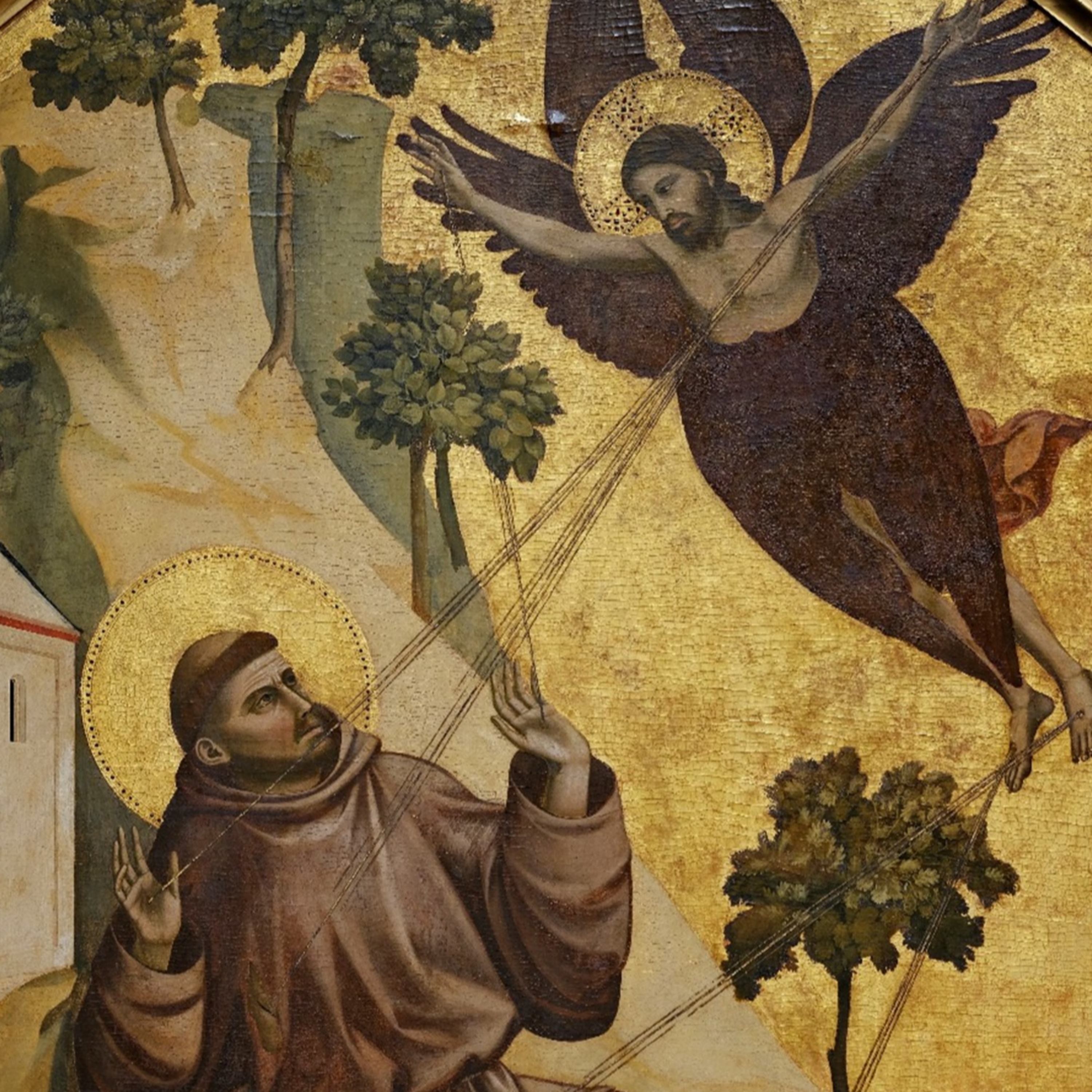 The Stigmata of St. Francis (September 17) — From Dom Guéranger’s Liturgical Year 16.09.2026 10minA meditation for the Feast of the Stigmata of St. Francis, from Dom Guéranger’s “The Liturgical Year”, Volume V of the Time after Pentecost.The Feast of the Stigmata of St. Francis, observed on September 17 , commemorates the miraculous impression of the wounds of Our Lord’s Passion upon St. Francis of Assisi in 1224, two years before his death. While fasting and praying on Mount La Verna during a forty-day retreat, Francis received a vision of a Seraph bearing the figure of the Crucified Christ, and afterward the five wounds of Christ appeared upon his hands, feet, and side. These sacred marks, known as the stigmata, remained with him until his death and made him an extraordinary living image of the suffering Savior. The feast honors this singular grace and the profound conformity to Christ which Francis sought throughout his life, especially his love of the Cross and his desire to share in the Passion of Our Lord.Please note that Servant of God Dom Prosper Guéranger went to his eternal reward in 1875; at this point, Volumes I-IX (Advent to Pentecost Saturday) had been completed, but Volumes X-XV (Trinity Sunday to Advent) had not yet been completed. Thus, the remaining readings of the Liturgical Year, from Trinity Sunday until Advent, were not directly authored by Dom Prosper, but were the work of his disciple Dom Lucien Fromage. Dom Prosper Guéranger's The Liturgical Year, a monumental fifteen-volume work, offers a comprehensive exploration of the Catholic Church’s liturgical calendar, guiding readers through the spiritual and historical richness of the Church’s worship. Written in the 19th century, the series provides daily meditations, historical context, and liturgical texts for the Mass and Divine Office, covering the entire cycle of seasons—Advent, Christmas, Lent, Passiontide, Easter, and the Time after Pentecost—as well as feast days of saints. Guéranger’s work, rooted in a deep contemplative spirit, aims to immerse the faithful in the Church’s prayerful life, emphasizing the unity of faith through the axiom lex orandi, lex credendi ("the law of prayer is the law of belief"), and remains a cherished resource for Catholics seeking to deepen their spiritual lives. Dom Prosper Guéranger (1805–1875) was a French Benedictine monk, liturgical scholar, and founder of the Solesmes Abbey, renowned for his pivotal role in reviving the Benedictine Order in France and restoring the Roman liturgy after the disruptions of the French Revolution. Born in Sablé-sur-Sarthe, he entered the priesthood in 1827 and, inspired by a vision to restore monastic life, reestablished the Benedictine community at Solesmes in 1833, becoming its first abbot. A staunch defender of ultramontanism and traditional Catholic worship, he also championed the revival of Gregorian chant, significantly influencing the liturgical renewal movement.Link to the Dom Guéranger's Liturgical Year playlist (updated daily): https://www.youtube.com/playlist?list=PLZKdyYnV_bkh7rH6piW0ShgsdcefFoOvJIf you would like to support this channel: Patreon: https://www.patreon.com/cw/InprincipioPodcast PayPal: https://www.paypal.com/donate/?hosted_button_id=U5EZ9X2CE2V7W Venmo: https://venmo.com/u/InPrincipioPodcast Zelle: [email protected]; or search for Zelle tag “inprincipiopodcast” Checks may be written out to ‘InPrincipio Podcast’ and mailed to: P.O. Box 117 Cedar Ridge, CA 95924Sincere thanks to all who are able to contribute, by your prayers, your patronage, or otherwise. Your support sustains this work and helps make these readings available to others.Artwork: “Saint Francis Receiving the Stigmata” by Giotto c.1300
 -
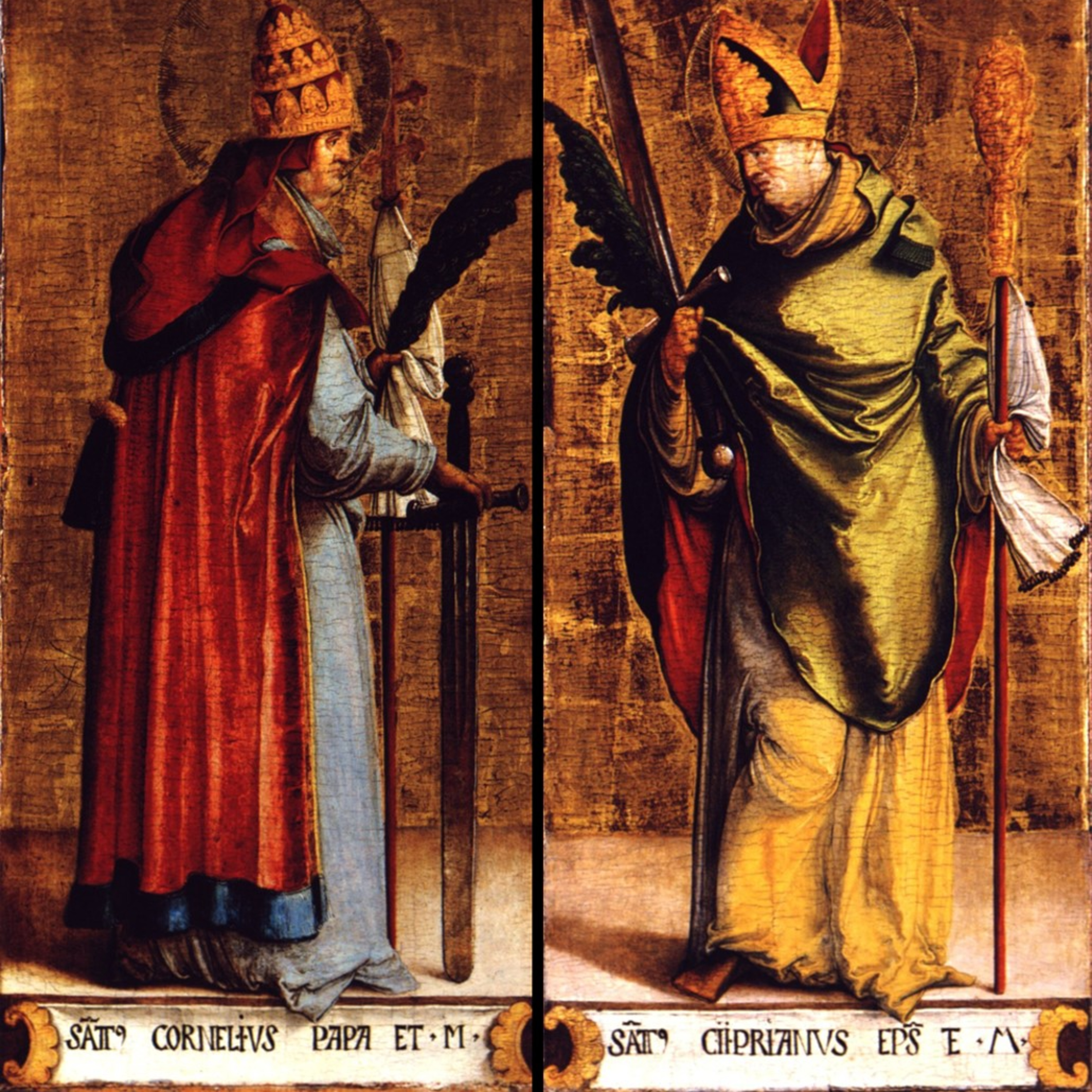 Pope St. Cornelius and St. Cyprian (September 16) — From Dom Guéranger’s Liturgical Year 15.09.2026 18minA meditation for the Feast of Pope Saint Cornelius and Saint Cyprian, from Dom Guéranger’s “The Liturgical Year”, Volume V of the Time after Pentecost.Pope Saint Cornelius and Saint Cyprian, both celebrated on September 16 in the traditional Roman calendar, were great defenders of the Church during the persecution of the Emperor Decius in the third century. Cornelius became Pope in 251 and courageously opposed the rigorist priest Novatian, who claimed that Christians who had denied the Faith during persecution could never be reconciled to the Church, while Cornelius upheld the Church’s authority to forgive repentant sinners. Saint Cyprian, Bishop of Carthage and one of the most distinguished Fathers of the early Church, supported Cornelius in this controversy and became one of the Pope’s closest allies. Cyprian himself was martyred by beheading in 258 under the Emperor Valerian, while Cornelius had already been exiled to Centumcellae, where he died in 253. Their close friendship and common defense of the Church’s unity, mercy, and authority have made them enduring examples of fidelity amid persecution and doctrinal controversy.Please note that Servant of God Dom Prosper Guéranger went to his eternal reward in 1875; at this point, Volumes I-IX (Advent to Pentecost Saturday) had been completed, but Volumes X-XV (Trinity Sunday to Advent) had not yet been completed. Thus, the remaining readings of the Liturgical Year, from Trinity Sunday until Advent, were not directly authored by Dom Prosper, but were the work of his disciple Dom Lucien Fromage. Dom Prosper Guéranger's The Liturgical Year, a monumental fifteen-volume work, offers a comprehensive exploration of the Catholic Church’s liturgical calendar, guiding readers through the spiritual and historical richness of the Church’s worship. Written in the 19th century, the series provides daily meditations, historical context, and liturgical texts for the Mass and Divine Office, covering the entire cycle of seasons—Advent, Christmas, Lent, Passiontide, Easter, and the Time after Pentecost—as well as feast days of saints. Guéranger’s work, rooted in a deep contemplative spirit, aims to immerse the faithful in the Church’s prayerful life, emphasizing the unity of faith through the axiom lex orandi, lex credendi ("the law of prayer is the law of belief"), and remains a cherished resource for Catholics seeking to deepen their spiritual lives. Dom Prosper Guéranger (1805–1875) was a French Benedictine monk, liturgical scholar, and founder of the Solesmes Abbey, renowned for his pivotal role in reviving the Benedictine Order in France and restoring the Roman liturgy after the disruptions of the French Revolution. Born in Sablé-sur-Sarthe, he entered the priesthood in 1827 and, inspired by a vision to restore monastic life, reestablished the Benedictine community at Solesmes in 1833, becoming its first abbot. A staunch defender of ultramontanism and traditional Catholic worship, he also championed the revival of Gregorian chant, significantly influencing the liturgical renewal movement.Link to the Dom Guéranger's Liturgical Year playlist (updated daily): https://www.youtube.com/playlist?list=PLZKdyYnV_bkh7rH6piW0ShgsdcefFoOvJIf you would like to support this channel: Patreon: https://www.patreon.com/cw/InprincipioPodcast PayPal: https://www.paypal.com/donate/?hosted_button_id=U5EZ9X2CE2V7W Venmo: https://venmo.com/u/InPrincipioPodcast Zelle: [email protected]; or search for Zelle tag “inprincipiopodcast” Checks may be written out to ‘InPrincipio Podcast’ and mailed to: P.O. Box 117 Cedar Ridge, CA 95924Sincere thanks to all who are able to contribute, by your prayers, your patronage, or otherwise. Your support sustains this work and helps make these readings available to others.Artwork: “Saints Cornelius and Cyprianus” by Master of Messkirch (fl. 1520–1540)
 -
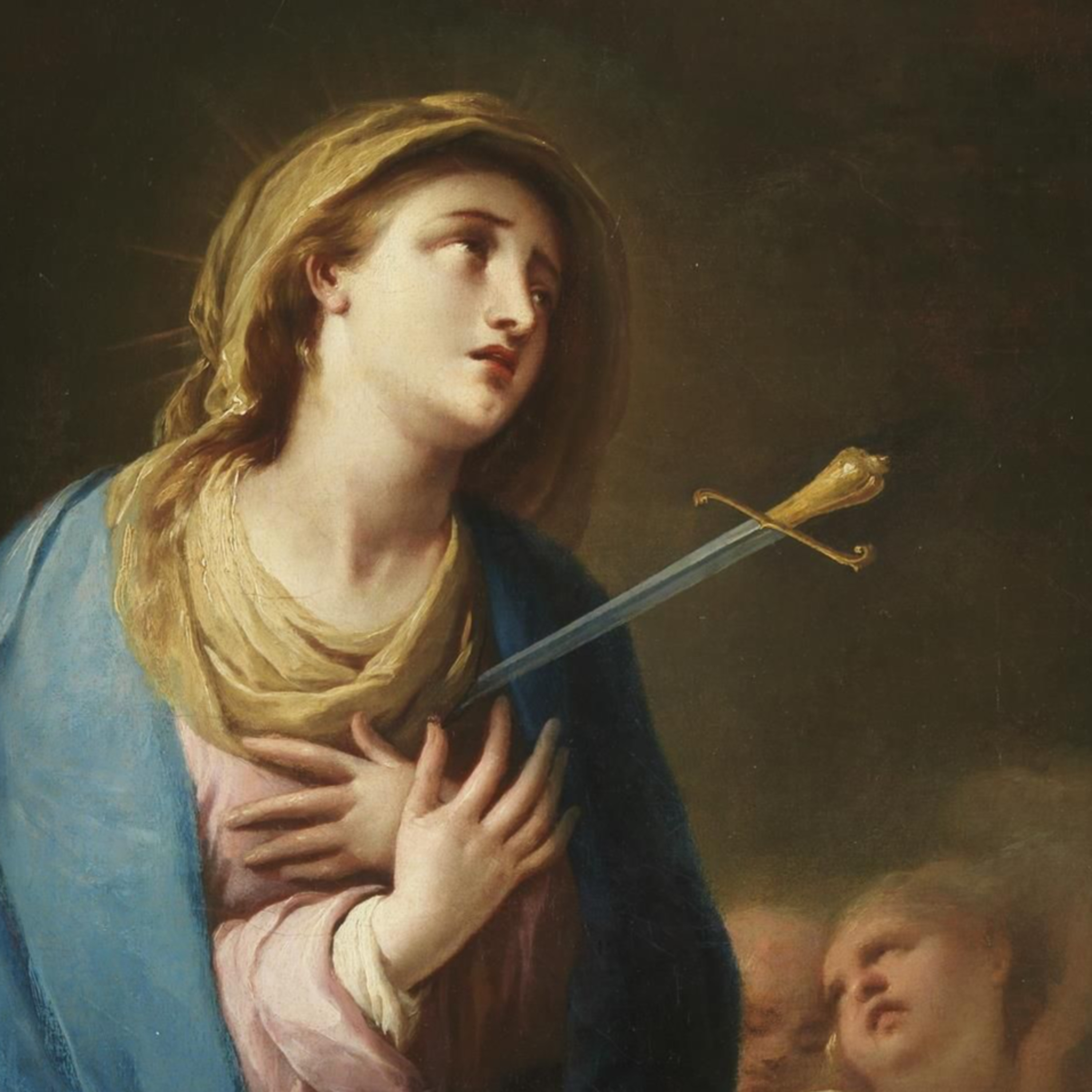 The Seven Sorrows of the Blessed Virgin Mary (September 15) — From Dom Guéranger’s Liturgical Year 14.09.2026 26minA meditation for the Feast of the Seven Sorrows of the Blessed Virgin Mary, from Dom Guéranger’s “The Liturgical Year”, Volume V of the Time after Pentecost.The Feast of the Seven Sorrows of the Blessed Virgin Mary, traditionally observed on September 15, honors the profound sorrows endured by the Blessed Virgin Mary in union with the sufferings of her Divine Son. The seven sorrows traditionally commemorated are the prophecy of Simeon, the Flight into Egypt, the loss of the Child Jesus in the Temple, the meeting of Jesus carrying His Cross, the Crucifixion, the taking down of Jesus from the Cross, and the burial of Jesus. This feast arose from the devotion to Mary's Seven Sorrows and is distinct from the earlier observance of Our Lady of Sorrows on the Friday of Passion Week, which places the same devotion more directly within the remembrance of Christ's Passion. The September feast follows immediately upon the Feast of the Exaltation of the Holy Cross, emphasizing the union of the Blessed Virgin with the sacrifice of her Son. In contemplating her sorrows, the faithful honor Mary as the Mother of Sorrows, who remained steadfast beneath the Cross, and seek through her example and intercession to unite their own sufferings more perfectly with those of Our Lord.Dom Prosper Guéranger's The Liturgical Year, a monumental fifteen-volume work, offers a comprehensive exploration of the Catholic Church’s liturgical calendar, guiding readers through the spiritual and historical richness of the Church’s worship. Written in the 19th century, the series provides daily meditations, historical context, and liturgical texts for the Mass and Divine Office, covering the entire cycle of seasons—Advent, Christmas, Lent, Passiontide, Easter, and the Time after Pentecost—as well as feast days of saints. Guéranger’s work, rooted in a deep contemplative spirit, aims to immerse the faithful in the Church’s prayerful life, emphasizing the unity of faith through the axiom lex orandi, lex credendi ("the law of prayer is the law of belief"), and remains a cherished resource for Catholics seeking to deepen their spiritual lives. Dom Prosper Guéranger (1805–1875) was a French Benedictine monk, liturgical scholar, and founder of the Solesmes Abbey, renowned for his pivotal role in reviving the Benedictine Order in France and restoring the Roman liturgy after the disruptions of the French Revolution. Born in Sablé-sur-Sarthe, he entered the priesthood in 1827 and, inspired by a vision to restore monastic life, reestablished the Benedictine community at Solesmes in 1833, becoming its first abbot. A staunch defender of ultramontanism and traditional Catholic worship, he also championed the revival of Gregorian chant, significantly influencing the liturgical renewal movement.Link to the Dom Guéranger's Liturgical Year playlist (updated daily): https://www.youtube.com/playlist?list=PLZKdyYnV_bkh7rH6piW0ShgsdcefFoOvJIf you would like to support this channel: Patreon: https://www.patreon.com/cw/InprincipioPodcast PayPal: https://www.paypal.com/donate/?hosted_button_id=U5EZ9X2CE2V7W Venmo: https://venmo.com/u/InPrincipioPodcast Zelle: [email protected]; or search for Zelle tag “inprincipiopodcast” Checks may be written out to ‘InPrincipio Podcast’ and mailed to: P.O. Box 117 Cedar Ridge, CA 95924Sincere thanks to all who are able to contribute, by your prayers, your patronage, or otherwise. Your support sustains this work and helps make these readings available to others.Artwork: “The Virgin Dolorosa (La Dolorosa)” by José Camarón y Bononat (1731-1803)
 -
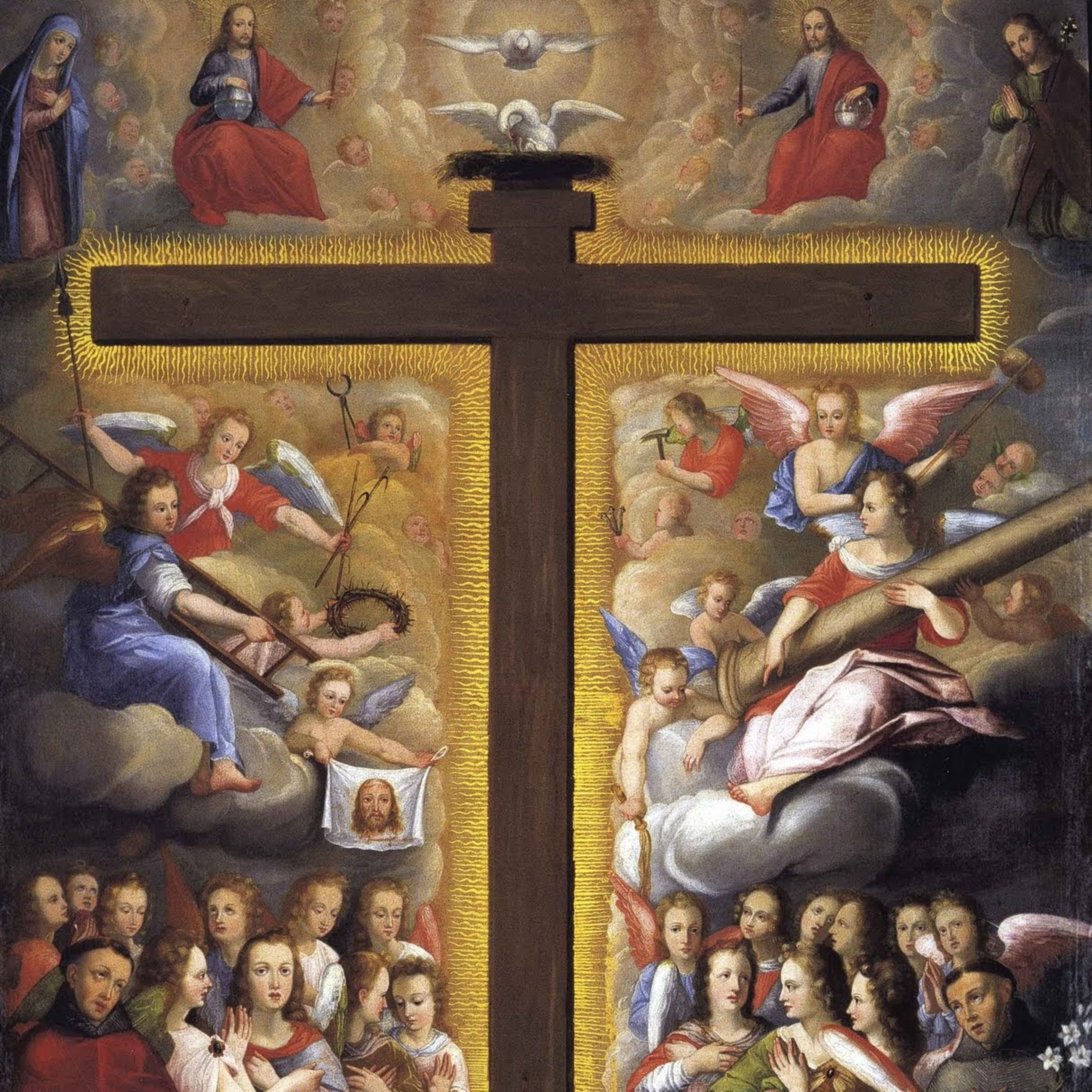 The Exaltation of the Holy Cross (September 14) — From Dom Guéranger’s Liturgical Year 13.09.2026 16minA meditation for the Feast of the Exaltation of the Holy Cross, from Dom Guéranger’s “The Liturgical Year”, Volume V of the Time after Pentecost.The Feast of the Exaltation of the Holy Cross, celebrated on September 14, commemorates the triumph and glory of the Cross of Christ, through which Our Lord redeemed the world. The feast recalls especially the recovery of the True Cross from the Persians by the Emperor Heraclius in the seventh century and its solemn restoration to Jerusalem, while also celebrating the earlier dedication of the Basilica of the Holy Sepulchre. The Church rejoices that the instrument of Christ’s humiliation and death has become the glorious sign of His victory over sin and Satan, teaching the faithful to venerate the Cross not merely as an historical relic, but as the sacred altar upon which the price of our salvation was paid. On this day, Christians are invited to glory in the Cross, embrace its sacrifices, and follow Christ along the way of self-denial, knowing that through the Cross comes resurrection, victory, and eternal life.Please note that Servant of God Dom Prosper Guéranger went to his eternal reward in 1875; at this point, Volumes I-IX (Advent to Pentecost Saturday) had been completed, but Volumes X-XV (Trinity Sunday to Advent) had not yet been completed. Thus, the remaining readings of the Liturgical Year, from Trinity Sunday until Advent, were not directly authored by Dom Prosper, but were the work of his disciple Dom Lucien Fromage. Dom Prosper Guéranger's The Liturgical Year, a monumental fifteen-volume work, offers a comprehensive exploration of the Catholic Church’s liturgical calendar, guiding readers through the spiritual and historical richness of the Church’s worship. Written in the 19th century, the series provides daily meditations, historical context, and liturgical texts for the Mass and Divine Office, covering the entire cycle of seasons—Advent, Christmas, Lent, Passiontide, Easter, and the Time after Pentecost—as well as feast days of saints. Guéranger’s work, rooted in a deep contemplative spirit, aims to immerse the faithful in the Church’s prayerful life, emphasizing the unity of faith through the axiom lex orandi, lex credendi ("the law of prayer is the law of belief"), and remains a cherished resource for Catholics seeking to deepen their spiritual lives. Dom Prosper Guéranger (1805–1875) was a French Benedictine monk, liturgical scholar, and founder of the Solesmes Abbey, renowned for his pivotal role in reviving the Benedictine Order in France and restoring the Roman liturgy after the disruptions of the French Revolution. Born in Sablé-sur-Sarthe, he entered the priesthood in 1827 and, inspired by a vision to restore monastic life, reestablished the Benedictine community at Solesmes in 1833, becoming its first abbot. A staunch defender of ultramontanism and traditional Catholic worship, he also championed the revival of Gregorian chant, significantly influencing the liturgical renewal movement.Link to the Dom Guéranger's Liturgical Year playlist (updated daily): https://www.youtube.com/playlist?list=PLZKdyYnV_bkh7rH6piW0ShgsdcefFoOvJIf you would like to support this channel: Patreon: https://www.patreon.com/cw/InprincipioPodcast PayPal: https://www.paypal.com/donate/?hosted_button_id=U5EZ9X2CE2V7W Venmo: https://venmo.com/u/InPrincipioPodcast Zelle: [email protected]; or search for Zelle tag “inprincipiopodcast” Checks may be written out to ‘InPrincipio Podcast’ and mailed to: P.O. Box 117 Cedar Ridge, CA 95924Sincere thanks to all who are able to contribute, by your prayers, your patronage, or otherwise. Your support sustains this work and helps make these readings available to others.Artwork: “Allegory of the Crucifixion with Jesuit Saints", Francisco Antonio Vallejo, c1770
 -
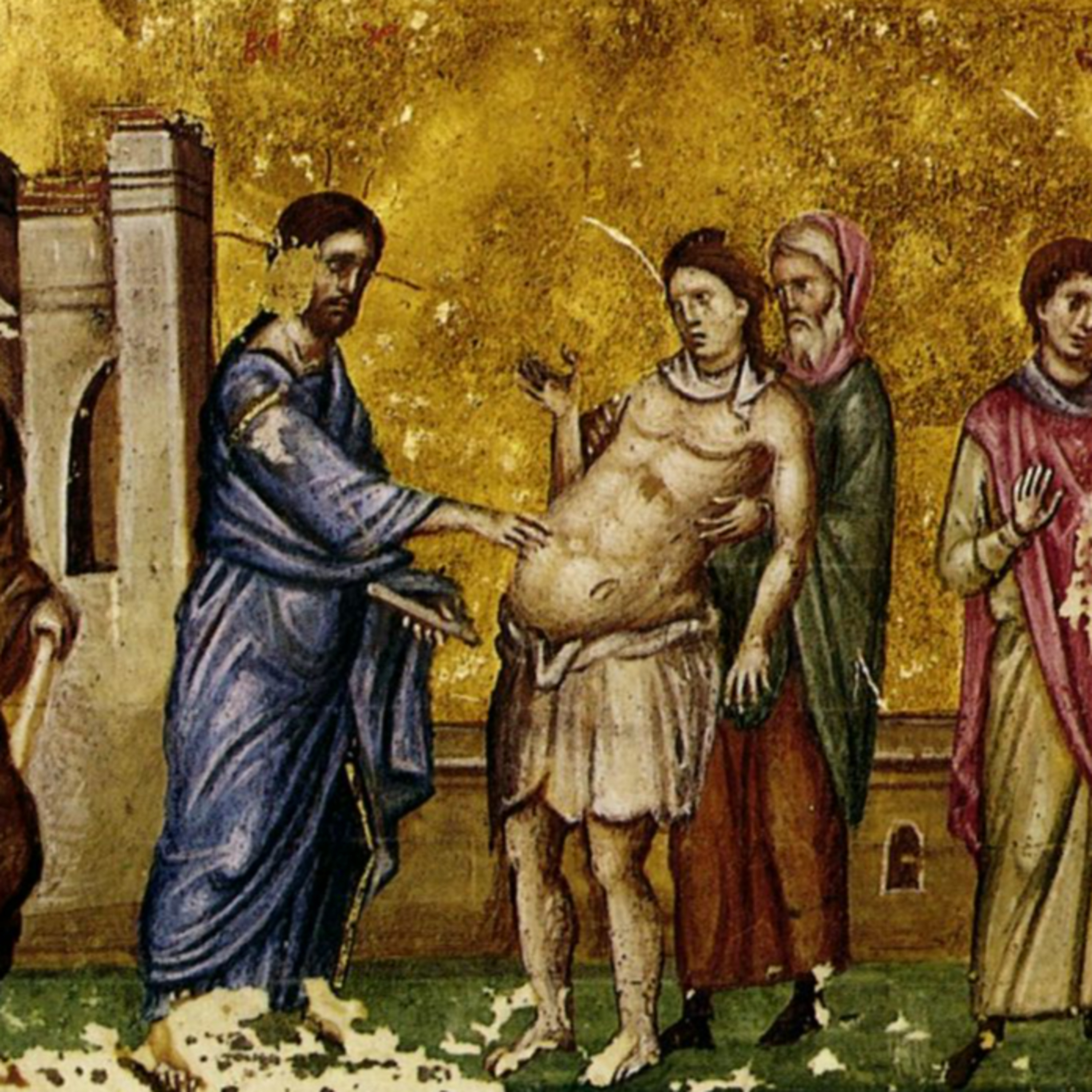 The Sixteenth Sunday after Pentecost — From Dom Guéranger’s Liturgical Year 12.09.2026 36minA meditation for the Sixteenth Sunday after Pentecost, from Dom Guéranger’s “The Liturgical Year”, Volume II of the Time after Pentecost. Please note that Servant of God Dom Prosper Guéranger went to his eternal reward in 1875; at this point, Volumes I-IX (Advent to Pentecost Saturday) had been completed, but Volumes X-XV (Trinity Sunday to Advent) had not yet been completed. Thus, the remaining readings of the Liturgical Year, from Trinity Sunday until Advent, were not directly authored by Dom Prosper, but were the work of his disciple Dom Lucien Fromage. Dom Prosper Guéranger's The Liturgical Year, a monumental fifteen-volume work, offers a comprehensive exploration of the Catholic Church’s liturgical calendar, guiding readers through the spiritual and historical richness of the Church’s worship. Written in the 19th century, the series provides daily meditations, historical context, and liturgical texts for the Mass and Divine Office, covering the entire cycle of seasons—Advent, Christmas, Lent, Passiontide, Easter, and the Time after Pentecost—as well as feast days of saints. Guéranger’s work, rooted in a deep contemplative spirit, aims to immerse the faithful in the Church’s prayerful life, emphasizing the unity of faith through the axiom lex orandi, lex credendi ("the law of prayer is the law of belief"), and remains a cherished resource for Catholics seeking to deepen their spiritual lives. Dom Prosper Guéranger (1805–1875) was a French Benedictine monk, liturgical scholar, and founder of the Solesmes Abbey, renowned for his pivotal role in reviving the Benedictine Order in France and restoring the Roman liturgy after the disruptions of the French Revolution. Born in Sablé-sur-Sarthe, he entered the priesthood in 1827 and, inspired by a vision to restore monastic life, reestablished the Benedictine community at Solesmes in 1833, becoming its first abbot. A staunch defender of ultramontanism and traditional Catholic worship, he also championed the revival of Gregorian chant, significantly influencing the liturgical renewal movement.Link to the Dom Guéranger's Liturgical Year playlist (updated daily): https://www.youtube.com/playlist?list=PLZKdyYnV_bkh7rH6piW0ShgsdcefFoOvJIf you would like to support this channel: Patreon: https://www.patreon.com/cw/InprincipioPodcast PayPal: https://www.paypal.com/donate/?hosted_button_id=U5EZ9X2CE2V7W Venmo: https://venmo.com/u/InPrincipioPodcast Zelle: [email protected]; or search for Zelle tag “inprincipiopodcast” Checks may be written out to ‘InPrincipio Podcast’ and mailed to: P.O. Box 117 Cedar Ridge, CA 95924Sincere thanks to all who are able to contribute, by your prayers, your patronage, or otherwise. Your support sustains this work and helps make these readings available to others.Artwork: “Jesus healing a man with dropsy on the Sabbath”, Byzantine manuscript illumination, Manuscript 5, folio 299v from the Iviron Monastery on Mount Athos, 13th centuryMusic: “Ave Maria” (Gregorian chant), from Vesperae de Confessore non Pontifice in honor of Saint Vincent PallottiPerformed by Schola Gregoriana, Pallottine Seminary (Ołtarzew, Poland) | Conductor: Fr. Dariusz SmolarekLicense: CC BY-SA 3.0 — https://creativecommons.org/licenses/by-sa/3.0/Changes: noneExcept where otherwise noted, original content © InPrincipio Podcast.
 -
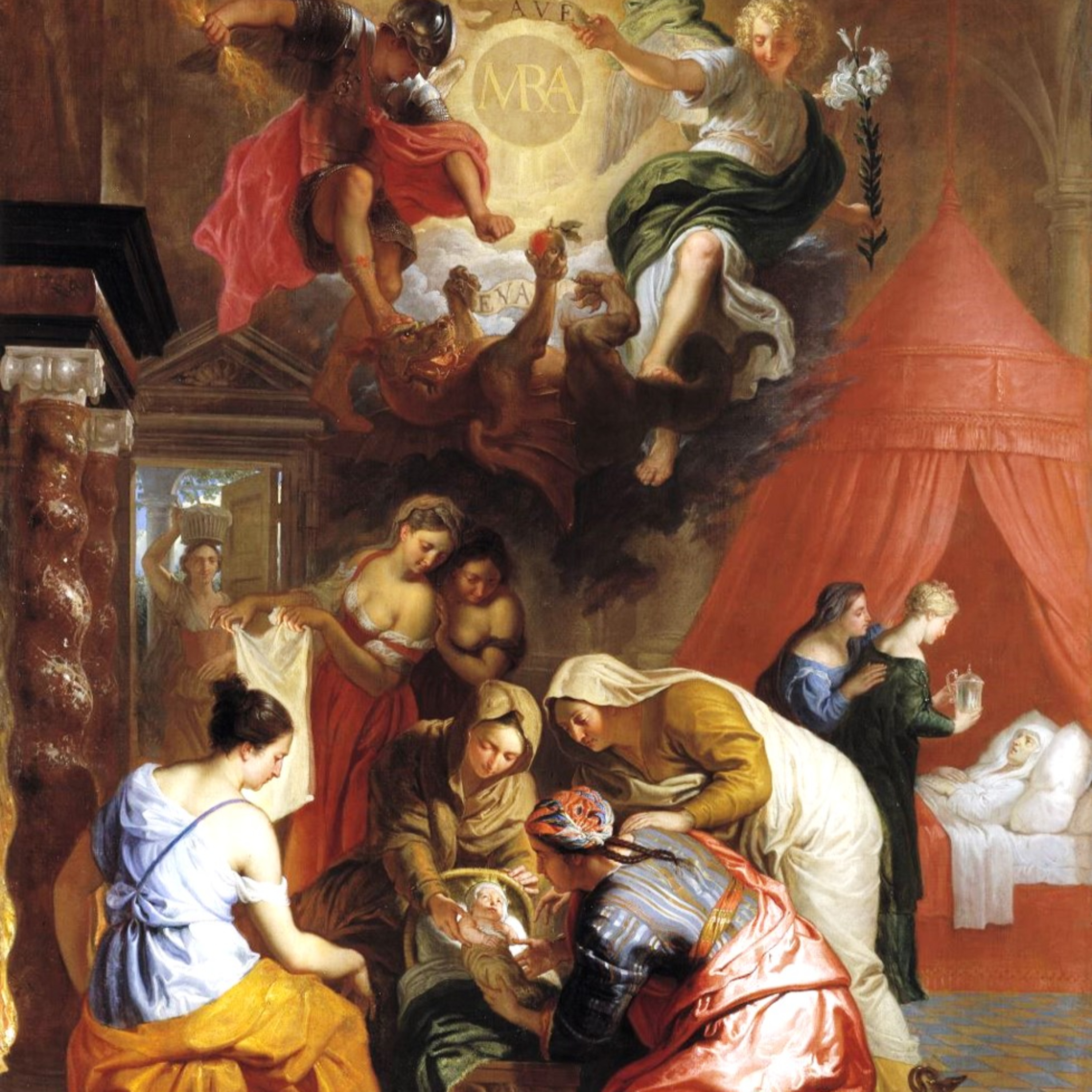 Fifth Day within the Octave of the Nativity of the BVM (September 12) — From Dom Guéranger 11.09.2026 7minA meditation for the Fifth Day within the Octave of the Nativity of the Blessed Virgin Mary, from Dom Guéranger’s “The Liturgical Year”, Volume V of the Time after Pentecost.The Feast of the Nativity of the Blessed Virgin Mary, celebrated on September 8, commemorates the birth of the Mother of God, through whom the Savior of the world would come into the flesh. Ancient Christian tradition holds that she was born to Saints Joachim and Anne after they had long remained childless, and that her birth was a special gift of divine providence in preparation for the Incarnation. The Church rejoices in her nativity as the dawn preceding the rising of the Sun of Justice, for Mary was chosen from all eternity to be the Mother of Jesus Christ and was preserved by God's grace from the beginning of her existence. Her birth therefore marks the first visible appearance of the one who would become the living temple of God and the vessel of our salvation, and it invites the faithful to rejoice with heaven at the coming of her who would bring forth the Redeemer.Please note that Servant of God Dom Prosper Guéranger went to his eternal reward in 1875; at this point, Volumes I-IX (Advent to Pentecost Saturday) had been completed, but Volumes X-XV (Trinity Sunday to Advent) had not yet been completed. Thus, the remaining readings of the Liturgical Year, from Trinity Sunday until Advent, were not directly authored by Dom Prosper, but were the work of his disciple Dom Lucien Fromage. Dom Prosper Guéranger's The Liturgical Year, a monumental fifteen-volume work, offers a comprehensive exploration of the Catholic Church’s liturgical calendar, guiding readers through the spiritual and historical richness of the Church’s worship. Written in the 19th century, the series provides daily meditations, historical context, and liturgical texts for the Mass and Divine Office, covering the entire cycle of seasons—Advent, Christmas, Lent, Passiontide, Easter, and the Time after Pentecost—as well as feast days of saints. Guéranger’s work, rooted in a deep contemplative spirit, aims to immerse the faithful in the Church’s prayerful life, emphasizing the unity of faith through the axiom lex orandi, lex credendi ("the law of prayer is the law of belief"), and remains a cherished resource for Catholics seeking to deepen their spiritual lives. Dom Prosper Guéranger (1805–1875) was a French Benedictine monk, liturgical scholar, and founder of the Solesmes Abbey, renowned for his pivotal role in reviving the Benedictine Order in France and restoring the Roman liturgy after the disruptions of the French Revolution. Born in Sablé-sur-Sarthe, he entered the priesthood in 1827 and, inspired by a vision to restore monastic life, reestablished the Benedictine community at Solesmes in 1833, becoming its first abbot. A staunch defender of ultramontanism and traditional Catholic worship, he also championed the revival of Gregorian chant, significantly influencing the liturgical renewal movement.Link to the Dom Guéranger's Liturgical Year playlist (updated daily): https://www.youtube.com/playlist?list=PLZKdyYnV_bkh7rH6piW0ShgsdcefFoOvJIf you would like to support this channel: Patreon: https://www.patreon.com/cw/InprincipioPodcast PayPal: https://www.paypal.com/donate/?hosted_button_id=U5EZ9X2CE2V7W Venmo: https://venmo.com/u/InPrincipioPodcast Zelle: [email protected]; or search for Zelle tag “inprincipiopodcast” Checks may be written out to ‘InPrincipio Podcast’ and mailed to: P.O. Box 117 Cedar Ridge, CA 95924Sincere thanks to all who are able to contribute, by your prayers, your patronage, or otherwise. Your support sustains this work and helps make these readings available to others.Artwork: “The Birth of the Virgin” by Erasmus Quellinus II, c.1660
 -
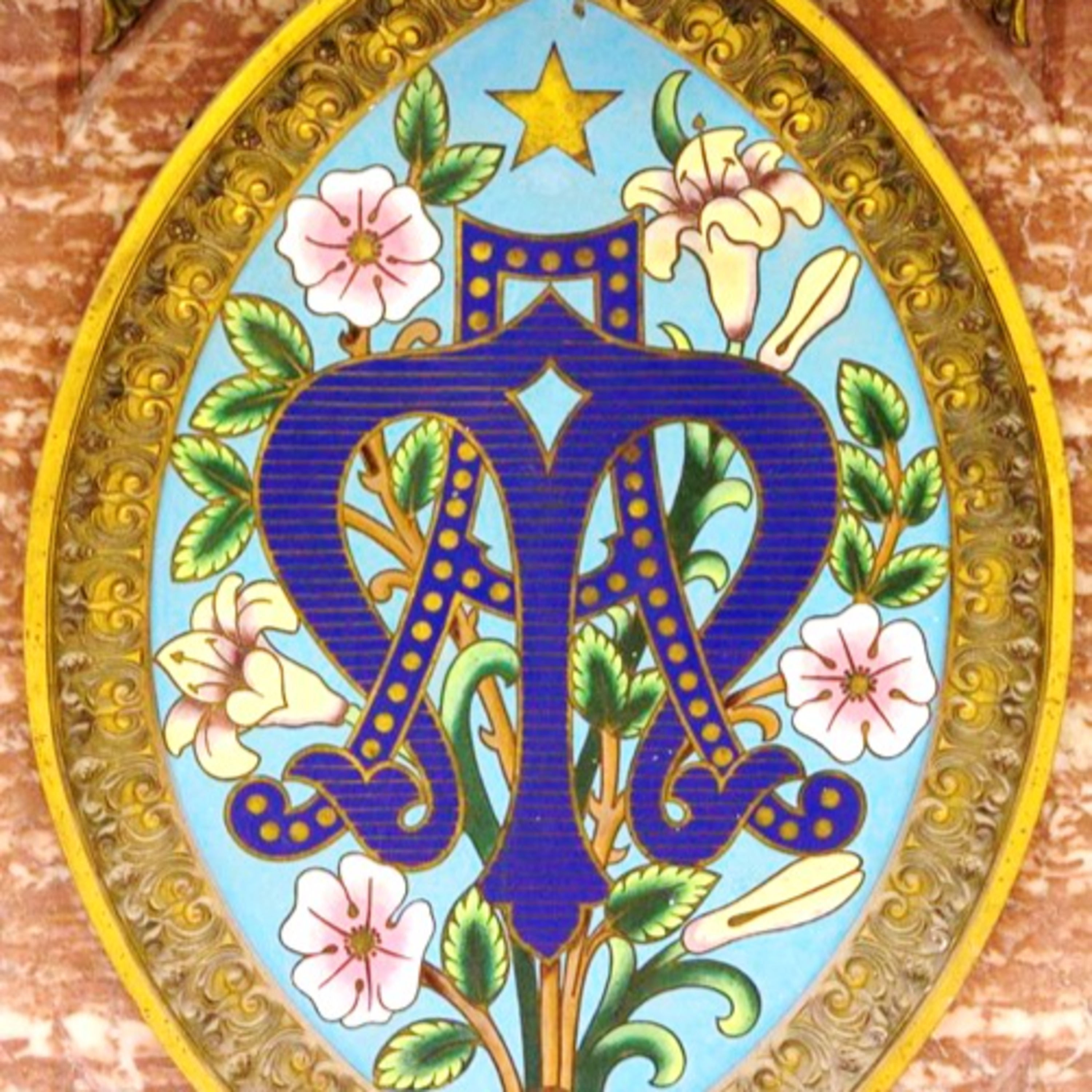 The Most Holy Name of Mary (September 12) — From Dom Guéranger’s Liturgical Year 11.09.2026 21minA meditation for the Feast of the Most Holy Name of Mary, from Dom Guéranger’s “The Liturgical Year”, Volume V of the Time after Pentecost.The Feast of the Most Holy Name of Mary honors the sacred name of the Blessed Virgin, a name chosen by God and associated with the Mother of Our Savior from the beginning of her life. The name Mary, while having several proposed meanings, has traditionally been understood as signifying such qualities as beauty, sovereignty, and bitterness, fittingly expressing the dignity and virtues of her who was chosen to be the Mother of God and Queen of Heaven. Devotion to Mary's holy name grew especially after the Christian victory at the Battle of Vienna in 1683, and the feast was extended to the universal Church by Pope Innocent XI as a thanksgiving for that victory. The feast invites the faithful to honor the name of Mary with love and confidence, remembering that she is the merciful Mother and powerful intercessor of Christians, and that her name, like her person, leads the faithful to her divine Son, Jesus Christ.Please note that Servant of God Dom Prosper Guéranger went to his eternal reward in 1875; at this point, Volumes I-IX (Advent to Pentecost Saturday) had been completed, but Volumes X-XV (Trinity Sunday to Advent) had not yet been completed. Thus, the remaining readings of the Liturgical Year, from Trinity Sunday until Advent, were not directly authored by Dom Prosper, but were the work of his disciple Dom Lucien Fromage. Dom Prosper Guéranger's The Liturgical Year, a monumental fifteen-volume work, offers a comprehensive exploration of the Catholic Church’s liturgical calendar, guiding readers through the spiritual and historical richness of the Church’s worship. Written in the 19th century, the series provides daily meditations, historical context, and liturgical texts for the Mass and Divine Office, covering the entire cycle of seasons—Advent, Christmas, Lent, Passiontide, Easter, and the Time after Pentecost—as well as feast days of saints. Guéranger’s work, rooted in a deep contemplative spirit, aims to immerse the faithful in the Church’s prayerful life, emphasizing the unity of faith through the axiom lex orandi, lex credendi ("the law of prayer is the law of belief"), and remains a cherished resource for Catholics seeking to deepen their spiritual lives. Dom Prosper Guéranger (1805–1875) was a French Benedictine monk, liturgical scholar, and founder of the Solesmes Abbey, renowned for his pivotal role in reviving the Benedictine Order in France and restoring the Roman liturgy after the disruptions of the French Revolution. Born in Sablé-sur-Sarthe, he entered the priesthood in 1827 and, inspired by a vision to restore monastic life, reestablished the Benedictine community at Solesmes in 1833, becoming its first abbot. A staunch defender of ultramontanism and traditional Catholic worship, he also championed the revival of Gregorian chant, significantly influencing the liturgical renewal movement.Link to the Dom Guéranger's Liturgical Year playlist (updated daily): https://www.youtube.com/playlist?list=PLZKdyYnV_bkh7rH6piW0ShgsdcefFoOvJIf you would like to support this channel: Patreon: https://www.patreon.com/cw/InprincipioPodcast PayPal: https://www.paypal.com/donate/?hosted_button_id=U5EZ9X2CE2V7W Venmo: https://venmo.com/u/InPrincipioPodcast Zelle: [email protected]; or search for Zelle tag “inprincipiopodcast” Checks may be written out to ‘InPrincipio Podcast’ and mailed to: P.O. Box 117 Cedar Ridge, CA 95924Sincere thanks to all who are able to contribute, by your prayers, your patronage, or otherwise. Your support sustains this work and helps make these readings available to others.Artwork: “Auspice Maria” monogram, from the Basilica of Our Lady of the Rosary, Lourdes
 -
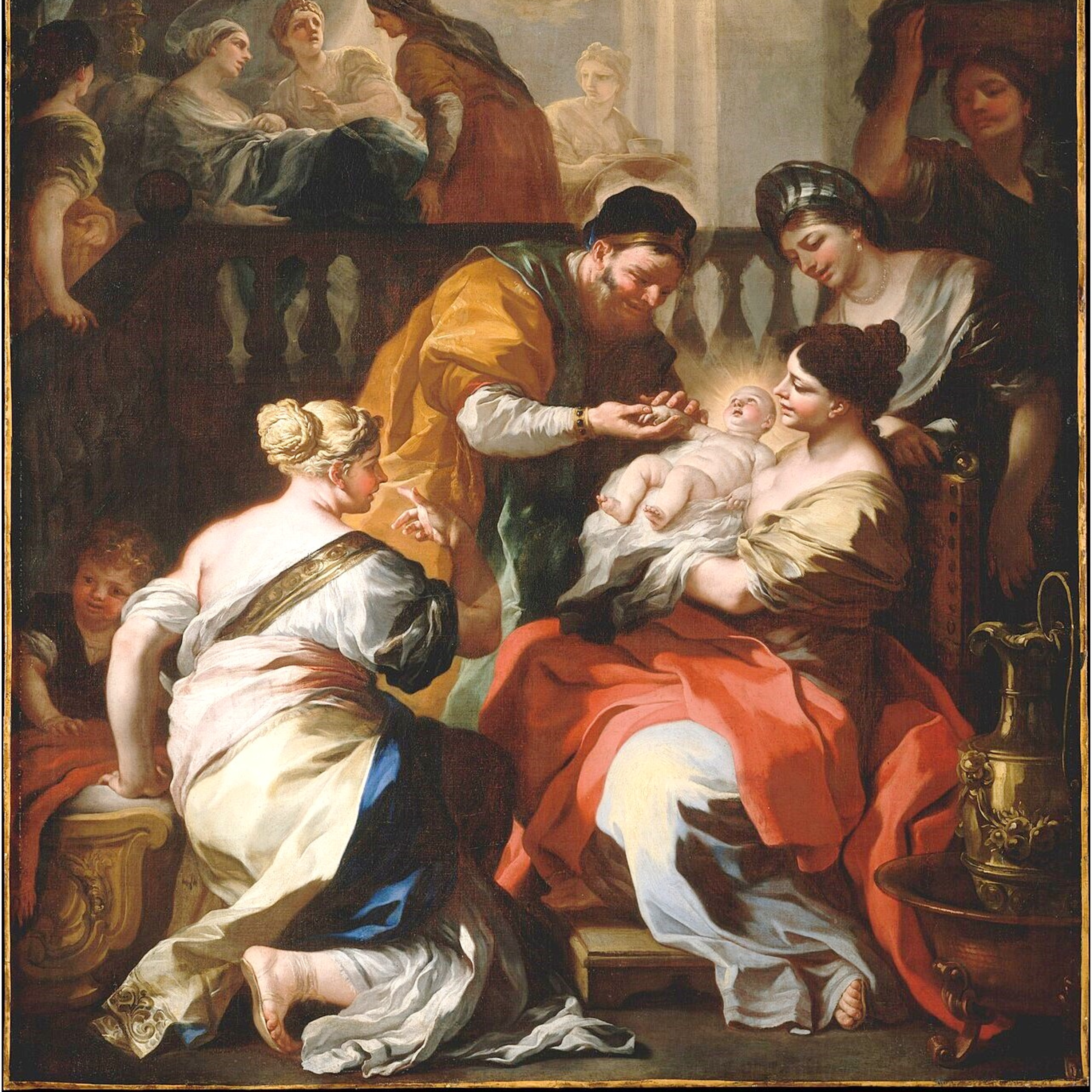 Fourth Day within the Octave of the Nativity of the BVM (September 11) — From Dom Guéranger’s Liturgical Year 10.09.2026 8minA meditation for the Fourth Day within the Octave of the Nativity of the Blessed Virgin Mary, from Dom Guéranger’s “The Liturgical Year”, Volume V of the Time after Pentecost.Please note that Servant of God Dom Prosper Guéranger went to his eternal reward in 1875; at this point, Volumes I-IX (Advent to Pentecost Saturday) had been completed, but Volumes X-XV (Trinity Sunday to Advent) had not yet been completed. Thus, the remaining readings of the Liturgical Year, from Trinity Sunday until Advent, were not directly authored by Dom Prosper, but were the work of his disciple Dom Lucien Fromage. Dom Prosper Guéranger's The Liturgical Year, a monumental fifteen-volume work, offers a comprehensive exploration of the Catholic Church’s liturgical calendar, guiding readers through the spiritual and historical richness of the Church’s worship. Written in the 19th century, the series provides daily meditations, historical context, and liturgical texts for the Mass and Divine Office, covering the entire cycle of seasons—Advent, Christmas, Lent, Passiontide, Easter, and the Time after Pentecost—as well as feast days of saints. Guéranger’s work, rooted in a deep contemplative spirit, aims to immerse the faithful in the Church’s prayerful life, emphasizing the unity of faith through the axiom lex orandi, lex credendi ("the law of prayer is the law of belief"), and remains a cherished resource for Catholics seeking to deepen their spiritual lives. Dom Prosper Guéranger (1805–1875) was a French Benedictine monk, liturgical scholar, and founder of the Solesmes Abbey, renowned for his pivotal role in reviving the Benedictine Order in France and restoring the Roman liturgy after the disruptions of the French Revolution. Born in Sablé-sur-Sarthe, he entered the priesthood in 1827 and, inspired by a vision to restore monastic life, reestablished the Benedictine community at Solesmes in 1833, becoming its first abbot. A staunch defender of ultramontanism and traditional Catholic worship, he also championed the revival of Gregorian chant, significantly influencing the liturgical renewal movement.Link to the Dom Guéranger's Liturgical Year playlist (updated daily): https://www.youtube.com/playlist?list=PLZKdyYnV_bkh7rH6piW0ShgsdcefFoOvJIf you would like to support this channel: Patreon: https://www.patreon.com/cw/InprincipioPodcast PayPal: https://www.paypal.com/donate/?hosted_button_id=U5EZ9X2CE2V7W Venmo: https://venmo.com/u/InPrincipioPodcast Zelle: [email protected]; or search for Zelle tag “inprincipiopodcast” Checks may be written out to ‘InPrincipio Podcast’ and mailed to: P.O. Box 117 Cedar Ridge, CA 95924Sincere thanks to all who are able to contribute, by your prayers, your patronage, or otherwise. Your support sustains this work and helps make these readings available to others.Artwork: “The Birth of the Virgin” by Francesco Solimena, c.1690 Music: “Ave Maria” (Gregorian chant), from Vesperae de Confessore non Pontifice in honor of Saint Vincent PallottiPerformed by Schola Gregoriana, Pallottine Seminary (Ołtarzew, Poland) | Conductor: Fr. Dariusz SmolarekLicense: CC BY-SA 3.0 — https://creativecommons.org/licenses/by-sa/3.0/Changes: noneExcept where otherwise noted, original content © InPrincipio Podcast.
 -
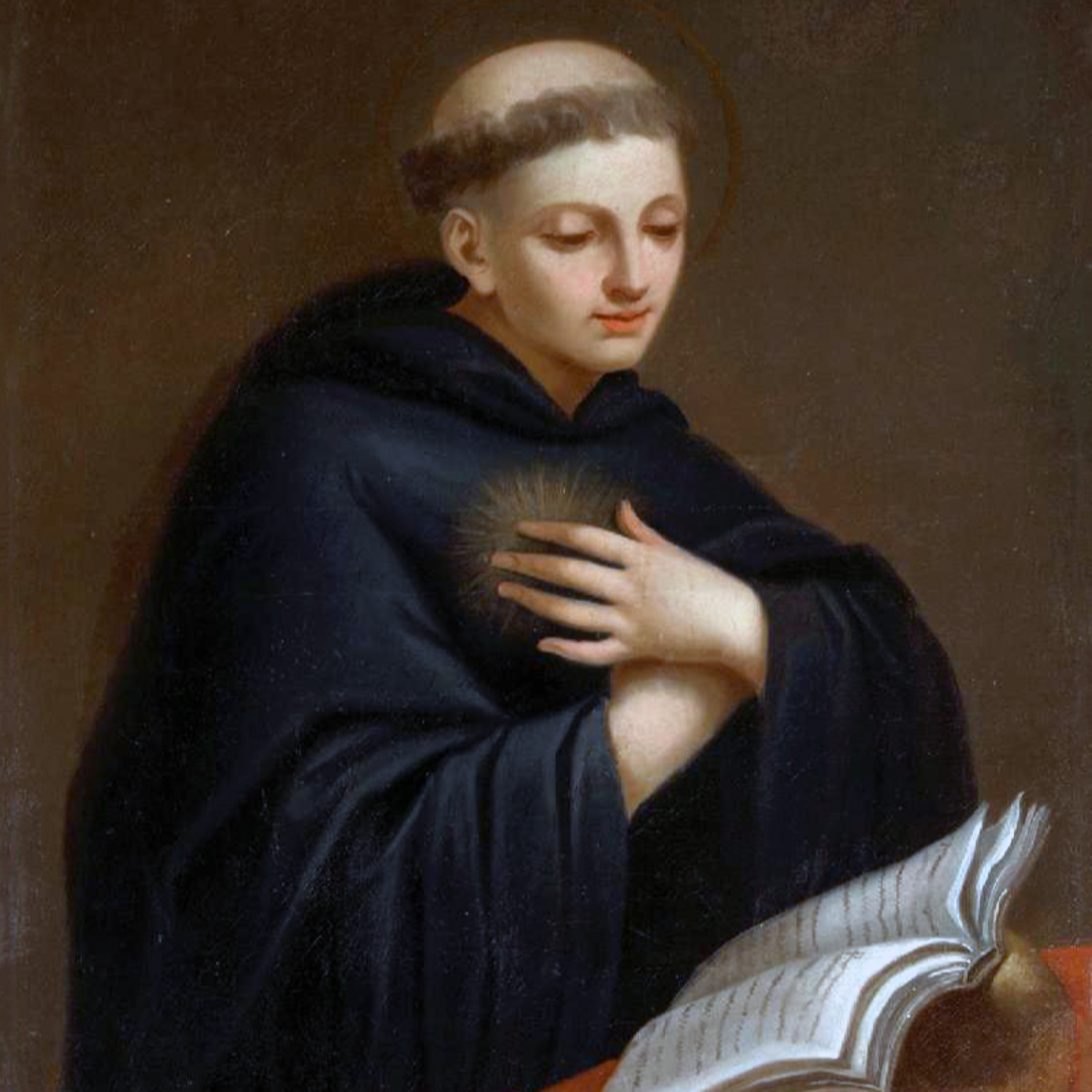 St. Nicholas of Tolentino (September 10) — From Dom Guéranger’s Liturgical Year 09.09.2026 7minA meditation for the Feast of Saint Nicholas of Tolentino, from Dom Guéranger’s “The Liturgical Year”, Volume V of the Time after Pentecost.Saint Nicholas of Tolentino was an Italian Augustinian friar and priest who became renowned for his austere life, deep devotion to prayer, and charitable care for the poor and suffering. Born at Sant’Angelo in Pontano around 1245, he entered the Order of Hermits of Saint Augustine and spent much of his religious life in Tolentino, where he became a zealous preacher and confessor. He was especially devoted to the souls in Purgatory, offering prayers and penances for the dead, and many miracles were attributed to his intercession, including healings and the multiplication of food for the poor. His gentle charity, humility, and continual mortification made him beloved by the people, and after his death in 1305 his tomb became a place of pilgrimage. He was canonized by Pope Eugene IV in 1446, becoming the first member of the Augustinian Order to be formally canonized.Please note that Servant of God Dom Prosper Guéranger went to his eternal reward in 1875; at this point, Volumes I-IX (Advent to Pentecost Saturday) had been completed, but Volumes X-XV (Trinity Sunday to Advent) had not yet been completed. Thus, the remaining readings of the Liturgical Year, from Trinity Sunday until Advent, were not directly authored by Dom Prosper, but were the work of his disciple Dom Lucien Fromage. Dom Prosper Guéranger's The Liturgical Year, a monumental fifteen-volume work, offers a comprehensive exploration of the Catholic Church’s liturgical calendar, guiding readers through the spiritual and historical richness of the Church’s worship. Written in the 19th century, the series provides daily meditations, historical context, and liturgical texts for the Mass and Divine Office, covering the entire cycle of seasons—Advent, Christmas, Lent, Passiontide, Easter, and the Time after Pentecost—as well as feast days of saints. Guéranger’s work, rooted in a deep contemplative spirit, aims to immerse the faithful in the Church’s prayerful life, emphasizing the unity of faith through the axiom lex orandi, lex credendi ("the law of prayer is the law of belief"), and remains a cherished resource for Catholics seeking to deepen their spiritual lives. Dom Prosper Guéranger (1805–1875) was a French Benedictine monk, liturgical scholar, and founder of the Solesmes Abbey, renowned for his pivotal role in reviving the Benedictine Order in France and restoring the Roman liturgy after the disruptions of the French Revolution. Born in Sablé-sur-Sarthe, he entered the priesthood in 1827 and, inspired by a vision to restore monastic life, reestablished the Benedictine community at Solesmes in 1833, becoming its first abbot. A staunch defender of ultramontanism and traditional Catholic worship, he also championed the revival of Gregorian chant, significantly influencing the liturgical renewal movement.Link to the Dom Guéranger's Liturgical Year playlist (updated daily): https://www.youtube.com/playlist?list=PLZKdyYnV_bkh7rH6piW0ShgsdcefFoOvJIf you would like to support this channel: Patreon: https://www.patreon.com/cw/InprincipioPodcast PayPal: https://www.paypal.com/donate/?hosted_button_id=U5EZ9X2CE2V7W Venmo: https://venmo.com/u/InPrincipioPodcast Zelle: [email protected]; or search for Zelle tag “inprincipiopodcast” Checks may be written out to ‘InPrincipio Podcast’ and mailed to: P.O. Box 117 Cedar Ridge, CA 95924Sincere thanks to all who are able to contribute, by your prayers, your patronage, or otherwise. Your support sustains this work and helps make these readings available to others.Artwork: “St. Nicholas of Tolentino” by Ambito Bolognese (the Bolognese School) c. 1799
 -
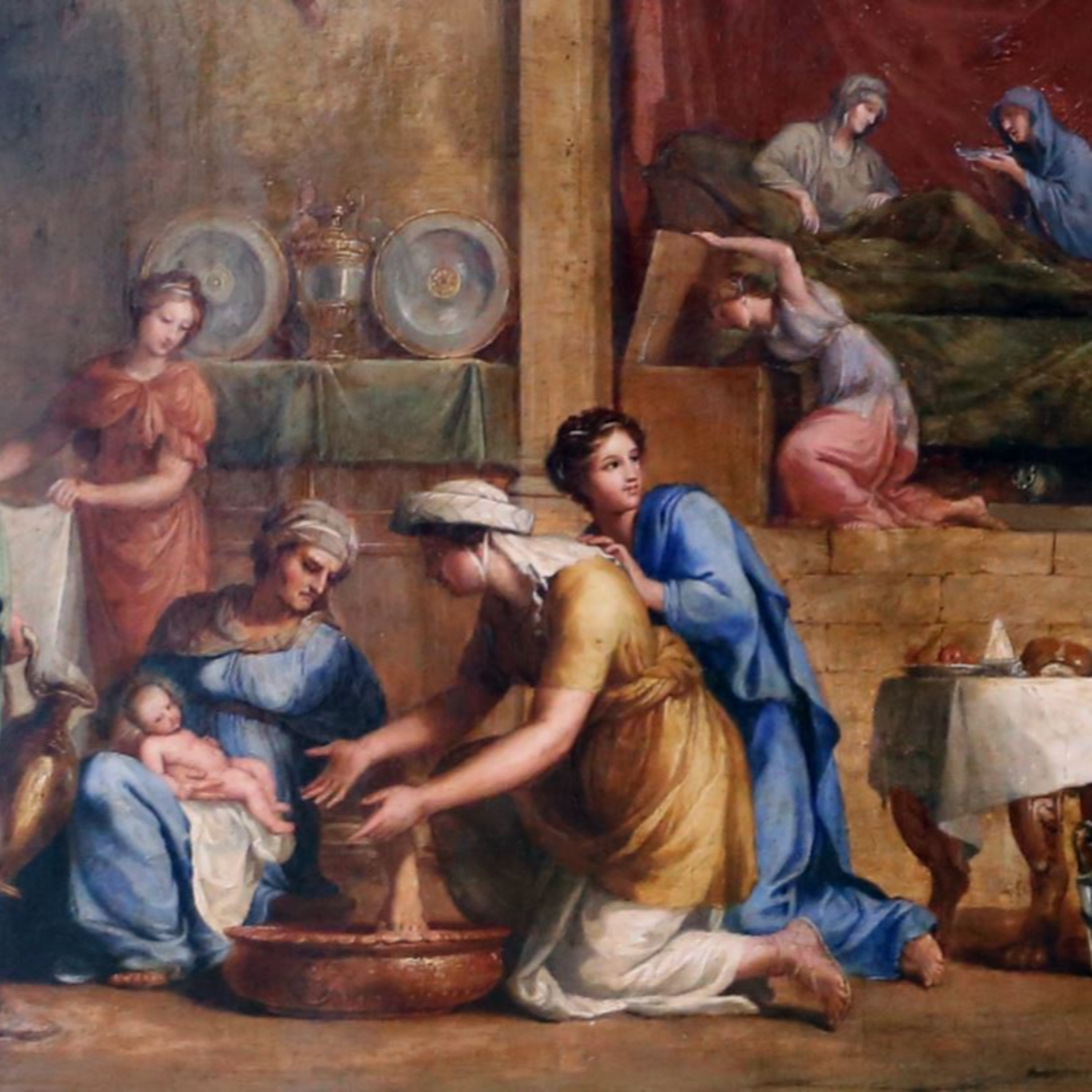 Second Day within the Octave of the Nativity of the BVM (September 9) — From Dom Guéranger 09.09.2026 8minA meditation for the Second Day within the Octave of the Nativity of the Blessed Virgin Mary, from Dom Guéranger’s “The Liturgical Year”, Volume V of the Time after Pentecost.The Feast of the Nativity of the Blessed Virgin Mary, celebrated on September 8, commemorates the birth of the Mother of God, through whom the Savior of the world would come into the flesh. Ancient Christian tradition holds that she was born to Saints Joachim and Anne after they had long remained childless, and that her birth was a special gift of divine providence in preparation for the Incarnation. The Church rejoices in her nativity as the dawn preceding the rising of the Sun of Justice, for Mary was chosen from all eternity to be the Mother of Jesus Christ and was preserved by God's grace from the beginning of her existence. Her birth therefore marks the first visible appearance of the one who would become the living temple of God and the vessel of our salvation, and it invites the faithful to rejoice with heaven at the coming of her who would bring forth the Redeemer.Please note that Servant of God Dom Prosper Guéranger went to his eternal reward in 1875; at this point, Volumes I-IX (Advent to Pentecost Saturday) had been completed, but Volumes X-XV (Trinity Sunday to Advent) had not yet been completed. Thus, the remaining readings of the Liturgical Year, from Trinity Sunday until Advent, were not directly authored by Dom Prosper, but were the work of his disciple Dom Lucien Fromage. Dom Prosper Guéranger's The Liturgical Year, a monumental fifteen-volume work, offers a comprehensive exploration of the Catholic Church’s liturgical calendar, guiding readers through the spiritual and historical richness of the Church’s worship. Written in the 19th century, the series provides daily meditations, historical context, and liturgical texts for the Mass and Divine Office, covering the entire cycle of seasons—Advent, Christmas, Lent, Passiontide, Easter, and the Time after Pentecost—as well as feast days of saints. Guéranger’s work, rooted in a deep contemplative spirit, aims to immerse the faithful in the Church’s prayerful life, emphasizing the unity of faith through the axiom lex orandi, lex credendi ("the law of prayer is the law of belief"), and remains a cherished resource for Catholics seeking to deepen their spiritual lives. Dom Prosper Guéranger (1805–1875) was a French Benedictine monk, liturgical scholar, and founder of the Solesmes Abbey, renowned for his pivotal role in reviving the Benedictine Order in France and restoring the Roman liturgy after the disruptions of the French Revolution. Born in Sablé-sur-Sarthe, he entered the priesthood in 1827 and, inspired by a vision to restore monastic life, reestablished the Benedictine community at Solesmes in 1833, becoming its first abbot. A staunch defender of ultramontanism and traditional Catholic worship, he also championed the revival of Gregorian chant, significantly influencing the liturgical renewal movement.Link to the Dom Guéranger's Liturgical Year playlist (updated daily): https://www.youtube.com/playlist?list=PLZKdyYnV_bkh7rH6piW0ShgsdcefFoOvJIf you would like to support this channel: If you would like to support this channel: Patreon: https://www.patreon.com/cw/InprincipioPodcast PayPal: https://www.paypal.com/donate/?hosted_button_id=U5EZ9X2CE2V7W Venmo: https://venmo.com/u/InPrincipioPodcast Zelle: [email protected]; or search for Zelle tag “inprincipiopodcast” Checks may be written out to ‘InPrincipio Podcast’ and mailed to: P.O. Box 117 Cedar Ridge, CA 95924Sincere thanks to all who are able to contribute, by your prayers, your patronage, or otherwise. Your support sustains this work and helps make these readings available to others.Artwork: “ The Birth of the Virgin" Jacques Stella, 1644
 -
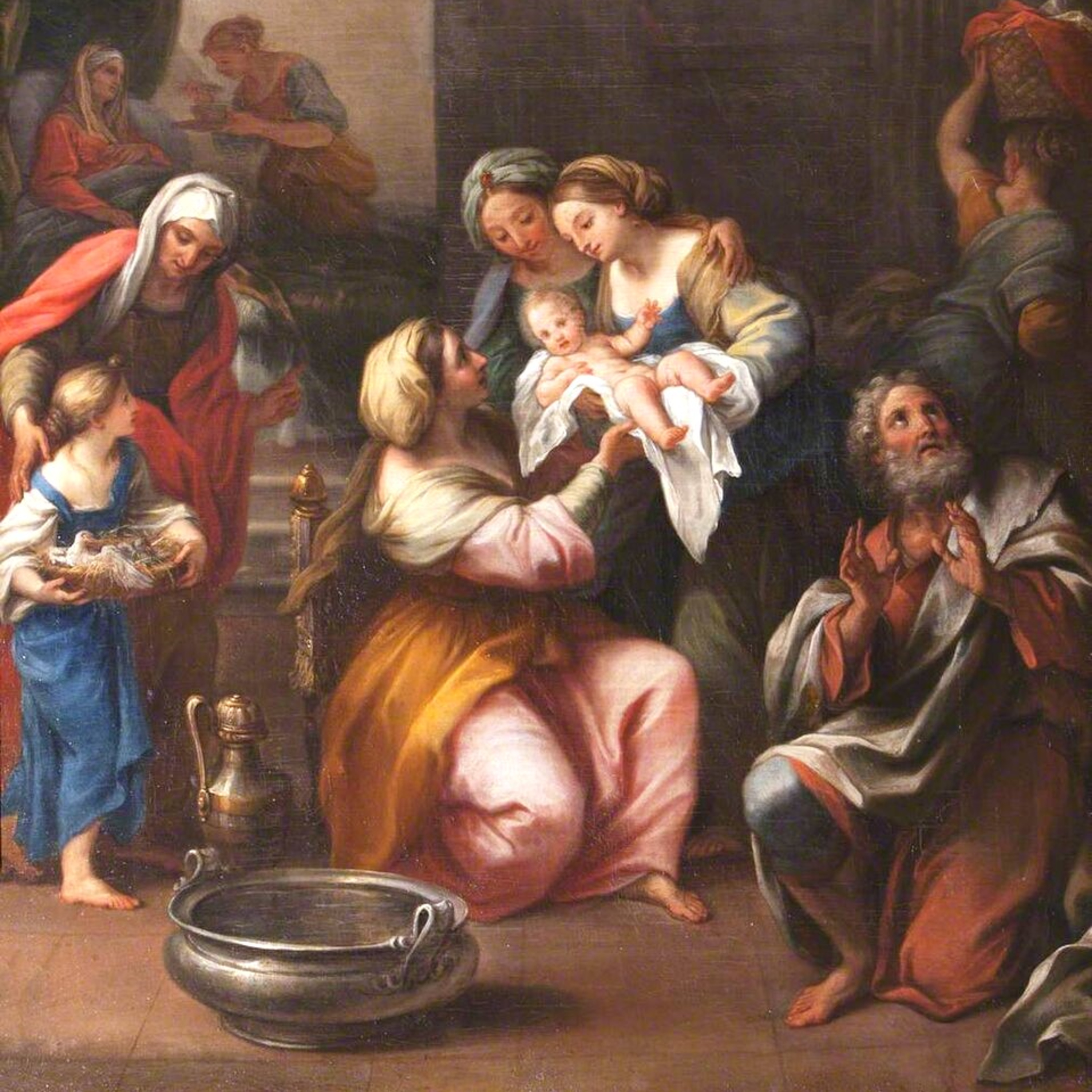 The Nativity of the Blessed Virgin Mary (September 8) — From Dom Guéranger’s Liturgical Year 08.09.2026 51minA meditation for the Feast of the Nativity of the Blessed Virgin Mary, from Dom Guéranger’s “The Liturgical Year”, Volume V of the Time after Pentecost.The Feast of the Nativity of the Blessed Virgin Mary, celebrated on September 8, commemorates the birth of the Mother of God, through whom the Savior of the world would come into the flesh. Ancient Christian tradition holds that she was born to Saints Joachim and Anne after they had long remained childless, and that her birth was a special gift of divine providence in preparation for the Incarnation. The Church rejoices in her nativity as the dawn preceding the rising of the Sun of Justice, for Mary was chosen from all eternity to be the Mother of Jesus Christ and was preserved by God's grace from the beginning of her existence. Her birth therefore marks the first visible appearance of the one who would become the living temple of God and the vessel of our salvation, and it invites the faithful to rejoice with heaven at the coming of her who would bring forth the Redeemer.Please note that Servant of God Dom Prosper Guéranger went to his eternal reward in 1875; at this point, Volumes I-IX (Advent to Pentecost Saturday) had been completed, but Volumes X-XV (Trinity Sunday to Advent) had not yet been completed. Thus, the remaining readings of the Liturgical Year, from Trinity Sunday until Advent, were not directly authored by Dom Prosper, but were the work of his disciple Dom Lucien Fromage. Dom Prosper Guéranger's The Liturgical Year, a monumental fifteen-volume work, offers a comprehensive exploration of the Catholic Church’s liturgical calendar, guiding readers through the spiritual and historical richness of the Church’s worship. Written in the 19th century, the series provides daily meditations, historical context, and liturgical texts for the Mass and Divine Office, covering the entire cycle of seasons—Advent, Christmas, Lent, Passiontide, Easter, and the Time after Pentecost—as well as feast days of saints. Guéranger’s work, rooted in a deep contemplative spirit, aims to immerse the faithful in the Church’s prayerful life, emphasizing the unity of faith through the axiom lex orandi, lex credendi ("the law of prayer is the law of belief"), and remains a cherished resource for Catholics seeking to deepen their spiritual lives. Dom Prosper Guéranger (1805–1875) was a French Benedictine monk, liturgical scholar, and founder of the Solesmes Abbey, renowned for his pivotal role in reviving the Benedictine Order in France and restoring the Roman liturgy after the disruptions of the French Revolution. Born in Sablé-sur-Sarthe, he entered the priesthood in 1827 and, inspired by a vision to restore monastic life, reestablished the Benedictine community at Solesmes in 1833, becoming its first abbot. A staunch defender of ultramontanism and traditional Catholic worship, he also championed the revival of Gregorian chant, significantly influencing the liturgical renewal movement.Link to the Dom Guéranger's Liturgical Year playlist (updated daily): https://www.youtube.com/playlist?list=PLZKdyYnV_bkh7rH6piW0ShgsdcefFoOvJIf you would like to support this channel: Patreon: https://www.patreon.com/cw/InprincipioPodcast PayPal: https://www.paypal.com/donate/?hosted_button_id=U5EZ9X2CE2V7W Venmo: https://venmo.com/u/InPrincipioPodcast Zelle: [email protected]; or search for Zelle tag “inprincipiopodcast” Checks may be written out to ‘InPrincipio Podcast’ and mailed to: P.O. Box 117 Cedar Ridge, CA 95924Sincere thanks to all who are able to contribute, by your prayers, your patronage, or otherwise. Your support sustains this work and helps make these readings available to others.Artwork: “Birth of the Virgin” by Giuseppe Bartolomeo Chiari (1654–1727)
 -
 Christ Renews His Intercession — Explanation of the Holy Mass by Fr. Martin von Cochem (Chapter 7) 07.09.2026 25min'Explanation of the Holy Sacrifice of the Mass' by Fr. Martin von Cochem is a classic 17th-century Catholic devotional work that passionately and engagingly explains the immense spiritual value, mystery, and supernatural power of the Holy Sacrifice of the Mass. Drawing on Scripture, the Church Fathers, and mystical theology, Cochem portrays the Mass as a re-presentation of Christ’s sacrifice on Calvary, a source of infinite grace, and the highest act of worship that unites heaven and earth. Through vivid anecdotes, historical insights, and practical exhortations, von Cochem urges Catholics to attend Mass with fervent attention, revealing its "incredible" merits such as remission of sins, protection from evil, and heavenly rewards, ultimately transforming routine participation into a life-altering encounter that divides one's existence into "before" and "after" this revelation, fostering a renewed zeal for Eucharistic worship.Father Martin von Cochem (1634–1712) was a German Capuchin friar, preacher, and spiritual writer renowned for his deep piety and his ability to explain the Catholic faith in clear and fervent language accessible to ordinary people. Born in Cochem on the Moselle River, he entered the Capuchin Order as a young man and devoted his life to pastoral work, preaching missions throughout Germany, and combating religious indifference in the wake of the Thirty Years’ War. His writings, composed in both Latin and German, include the Explanation of the Holy Sacrifice of the Mass, The Four Last Things, and The Life of Christ, all of which reflect his profound devotion to the Eucharist and his zeal for the salvation of souls. His works became spiritual classics, widely read among clergy and laity alike for their vivid imagery, theological clarity, and heartfelt appeal to deeper faith and reverence toward the mysteries of God. Note: The modern title of this work is "The Incredible Catholic Mass", published by TAN books, and currently under copyright. The original German title, published in the 17th century, was "Erklärung des heiligen Meßopfers", commonly translated as "Explanation of the Holy Sacrifice of the Mass" in English in the 18th and 19th centuries. This is the title that we will be using for this audiobook series on InPrincipio Podcast (at times abbreviated to 'Explanation of the Holy Mass' or other variations), and the text is that of the Benziger Brothers, New York, 1896. Link to the ‘Explanation of the Holy Sacrifice of the Mass’ Audiobook playlist: https://www.youtube.com/playlist?list=PLZKdyYnV_bkgm1BUAsp5JndFfo4WZABrFIf you would like to support this channel: Patreon: https://www.patreon.com/cw/InprincipioPodcast PayPal: https://www.paypal.com/donate/?hosted_button_id=U5EZ9X2CE2V7W Venmo: https://venmo.com/u/InPrincipioPodcast Zelle: [email protected]; or search for Zelle tag “inprincipiopodcast” Checks may be written out to ‘InPrincipio Podcast’ and mailed to: P.O. Box 117 Cedar Ridge, CA 95924Sincere thanks to all who are able to contribute, by your prayers, your patronage, or otherwise. Your support sustains this work and helps make these readings available to others.Artwork: Christ in Gethsemane by Giuseppe Mancinelli (1813-1875) Music: “Ave Maria” (Gregorian chant), from Vesperae de Confessore non Pontifice in honor of Saint Vincent PallottiPerformed by Schola Gregoriana, Pallottine Seminary (Ołtarzew, Poland) | Conductor: Fr. Dariusz SmolarekLicense: CC BY-SA 3.0 — https://creativecommons.org/licenses/by-sa/3.0/Changes: noneExcept where otherwise noted, original content © InPrincipio Podcast.
 -
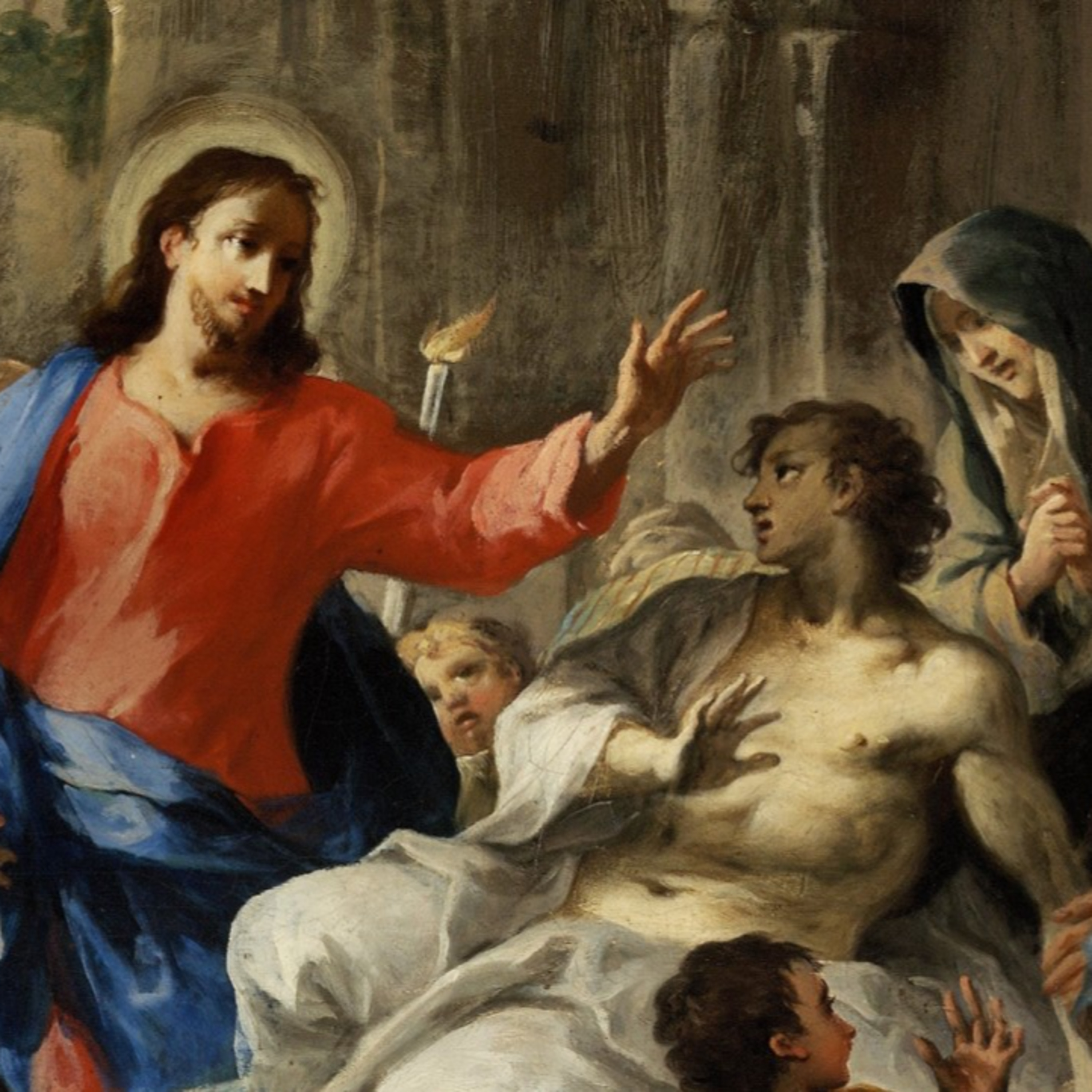 The Fifteenth Sunday after Pentecost — From Dom Guéranger’s Liturgical Year 06.09.2026 28minA meditation for the Fifteenth Sunday after Pentecost, from Dom Guéranger’s “The Liturgical Year”, Volume II of the Time after Pentecost. Please note that Servant of God Dom Prosper Guéranger went to his eternal reward in 1875; at this point, Volumes I-IX (Advent to Pentecost Saturday) had been completed, but Volumes X-XV (Trinity Sunday to Advent) had not yet been completed. Thus, the remaining readings of the Liturgical Year, from Trinity Sunday until Advent, were not directly authored by Dom Prosper, but were the work of his disciple Dom Lucien Fromage. Dom Prosper Guéranger's The Liturgical Year, a monumental fifteen-volume work, offers a comprehensive exploration of the Catholic Church’s liturgical calendar, guiding readers through the spiritual and historical richness of the Church’s worship. Written in the 19th century, the series provides daily meditations, historical context, and liturgical texts for the Mass and Divine Office, covering the entire cycle of seasons—Advent, Christmas, Lent, Passiontide, Easter, and the Time after Pentecost—as well as feast days of saints. Guéranger’s work, rooted in a deep contemplative spirit, aims to immerse the faithful in the Church’s prayerful life, emphasizing the unity of faith through the axiom lex orandi, lex credendi ("the law of prayer is the law of belief"), and remains a cherished resource for Catholics seeking to deepen their spiritual lives. Dom Prosper Guéranger (1805–1875) was a French Benedictine monk, liturgical scholar, and founder of the Solesmes Abbey, renowned for his pivotal role in reviving the Benedictine Order in France and restoring the Roman liturgy after the disruptions of the French Revolution. Born in Sablé-sur-Sarthe, he entered the priesthood in 1827 and, inspired by a vision to restore monastic life, reestablished the Benedictine community at Solesmes in 1833, becoming its first abbot. A staunch defender of ultramontanism and traditional Catholic worship, he also championed the revival of Gregorian chant, significantly influencing the liturgical renewal movement.Link to the Dom Guéranger's Liturgical Year playlist (updated daily): https://www.youtube.com/playlist?list=PLZKdyYnV_bkh7rH6piW0ShgsdcefFoOvJIf you would like to support this channel: Patreon: https://www.patreon.com/cw/InprincipioPodcast PayPal: https://www.paypal.com/donate/?hosted_button_id=U5EZ9X2CE2V7W Venmo: https://venmo.com/u/InPrincipioPodcast Zelle: [email protected]; or search for Zelle tag “inprincipiopodcast” Checks may be written out to ‘InPrincipio Podcast’ and mailed to: P.O. Box 117 Cedar Ridge, CA 95924Sincere thanks to all who are able to contribute, by your prayers, your patronage, or otherwise. Your support sustains this work and helps make these readings available to others.Artwork: “Raising of the Son of the Widow of Nain” by Martino Altomonte, 1731Music: “Ave Maria” (Gregorian chant), from Vesperae de Confessore non Pontifice in honor of Saint Vincent PallottiPerformed by Schola Gregoriana, Pallottine Seminary (Ołtarzew, Poland) | Conductor: Fr. Dariusz SmolarekLicense: CC BY-SA 3.0 — https://creativecommons.org/licenses/by-sa/3.0/Changes: noneExcept where otherwise noted, original content © InPrincipio Podcast.
 -
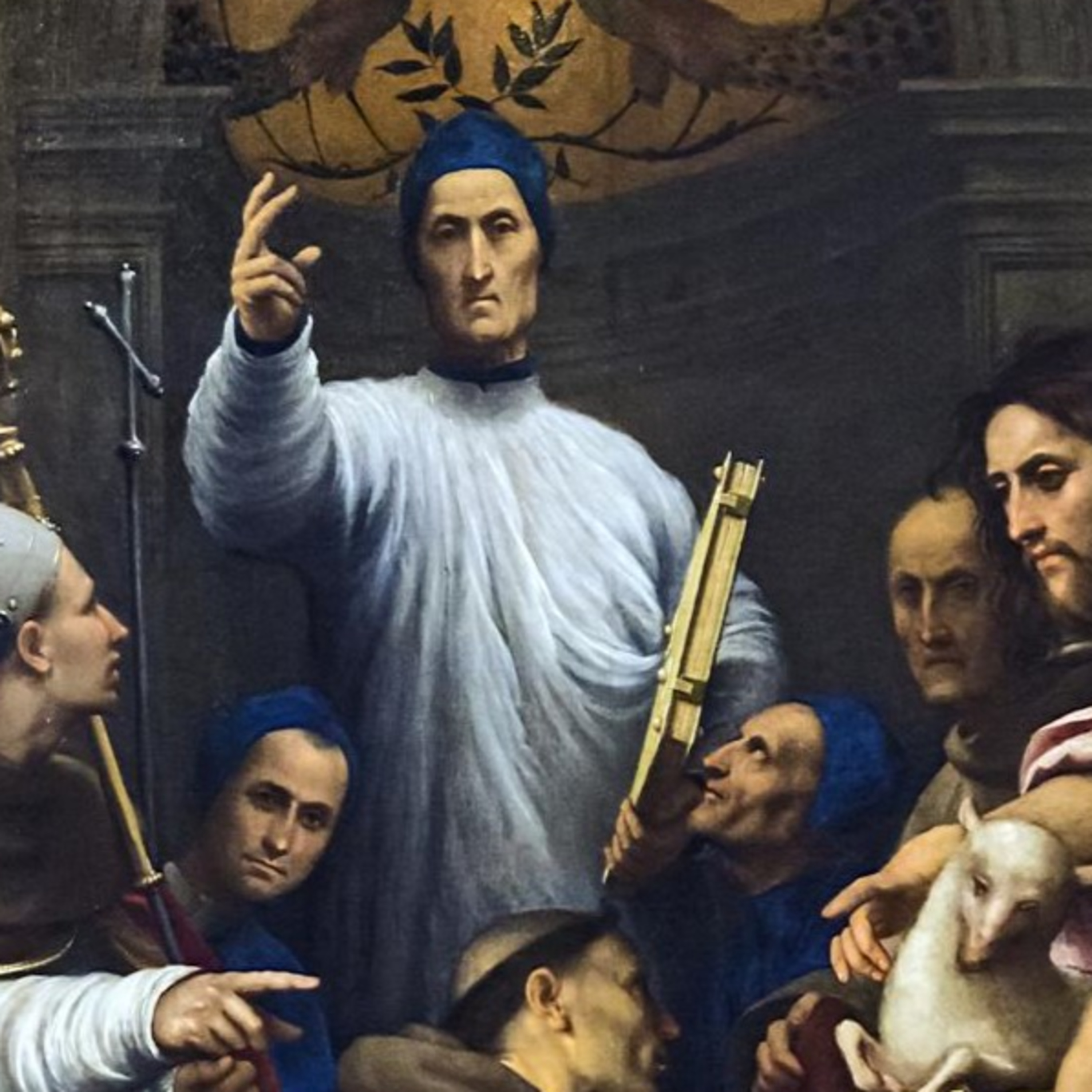 St. Laurence Justinian (September 5) — From Dom Guéranger’s Liturgical Year 05.09.2026 13minA meditation for the Feast of Saint Laurence Justinian, from Dom Guéranger’s “The Liturgical Year”, Volume V of the Time after Pentecost.Saint Laurence Justinian (1381–1456) was a Venetian nobleman who renounced a life of wealth and privilege to embrace poverty, prayer, and the religious life. He entered the Congregation of the Canons Regular of San Giorgio in Alga, where his holiness, humility, and zeal for reform soon made him a respected spiritual leader. Appointed Bishop of Castello and later the first Patriarch of Venice, he devoted himself to the care of the poor, the reform of clergy and religious, and the spiritual renewal of his people, while maintaining a life of profound prayer and penance. Despite the honors he received, he remained humble and detached from worldly status, regarding himself as a servant of Christ and His Church. He died on January 8, 1456, and was canonized by Pope Alexander VIII in 1690.Please note that Servant of God Dom Prosper Guéranger went to his eternal reward in 1875; at this point, Volumes I-IX (Advent to Pentecost Saturday) had been completed, but Volumes X-XV (Trinity Sunday to Advent) had not yet been completed. Thus, the remaining readings of the Liturgical Year, from Trinity Sunday until Advent, were not directly authored by Dom Prosper, but were the work of his disciple Dom Lucien Fromage. Dom Prosper Guéranger's The Liturgical Year, a monumental fifteen-volume work, offers a comprehensive exploration of the Catholic Church’s liturgical calendar, guiding readers through the spiritual and historical richness of the Church’s worship. Written in the 19th century, the series provides daily meditations, historical context, and liturgical texts for the Mass and Divine Office, covering the entire cycle of seasons—Advent, Christmas, Lent, Passiontide, Easter, and the Time after Pentecost—as well as feast days of saints. Guéranger’s work, rooted in a deep contemplative spirit, aims to immerse the faithful in the Church’s prayerful life, emphasizing the unity of faith through the axiom lex orandi, lex credendi ("the law of prayer is the law of belief"), and remains a cherished resource for Catholics seeking to deepen their spiritual lives. Dom Prosper Guéranger (1805–1875) was a French Benedictine monk, liturgical scholar, and founder of the Solesmes Abbey, renowned for his pivotal role in reviving the Benedictine Order in France and restoring the Roman liturgy after the disruptions of the French Revolution. Born in Sablé-sur-Sarthe, he entered the priesthood in 1827 and, inspired by a vision to restore monastic life, reestablished the Benedictine community at Solesmes in 1833, becoming its first abbot. A staunch defender of ultramontanism and traditional Catholic worship, he also championed the revival of Gregorian chant, significantly influencing the liturgical renewal movement.Link to the Dom Guéranger's Liturgical Year playlist (updated daily): https://www.youtube.com/playlist?list=PLZKdyYnV_bkh7rH6piW0ShgsdcefFoOvJIf you would like to support this channel: Patreon: https://www.patreon.com/cw/InprincipioPodcast PayPal: https://www.paypal.com/donate/?hosted_button_id=U5EZ9X2CE2V7W Venmo: https://venmo.com/u/InPrincipioPodcast Zelle: [email protected]; or search for Zelle tag “inprincipiopodcast” Checks may be written out to ‘InPrincipio Podcast’ and mailed to: P.O. Box 117 Cedar Ridge, CA 95924Sincere thanks to all who are able to contribute, by your prayers, your patronage, or otherwise. Your support sustains this work and helps make these readings available to others.Artwork: "Blessed Giovanni Giustiniani and Saints" by Il Pordenone, 1532
 -
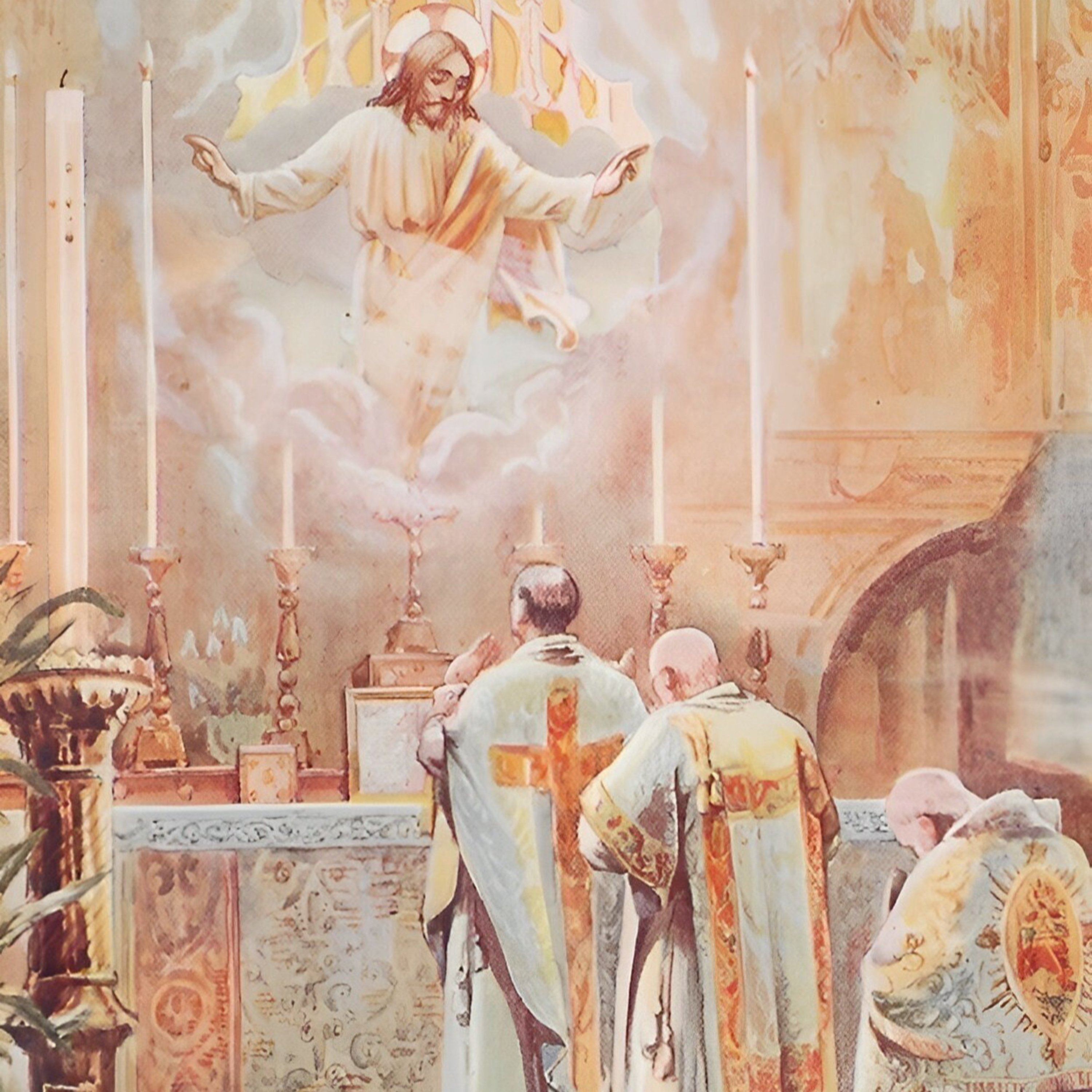 Christ Renews His Life in the Mass — Fr. Martin von Cochem (Audiobook, Ch. 6) 03.09.2026 19minChapter 6 of the Explanation of the Holy Mass by Fr. Martin von Cochem: In the Holy Mass Christ Renews His Life.'Explanation of the Holy Sacrifice of the Mass' by Fr. Martin von Cochem is a classic 17th-century Catholic devotional work that passionately and engagingly explains the immense spiritual value, mystery, and supernatural power of the Holy Sacrifice of the Mass. Drawing on Scripture, the Church Fathers, and mystical theology, Cochem portrays the Mass as a re-presentation of Christ’s sacrifice on Calvary, a source of infinite grace, and the highest act of worship that unites heaven and earth. Through vivid anecdotes, historical insights, and practical exhortations, von Cochem urges Catholics to attend Mass with fervent attention, revealing its "incredible" merits such as remission of sins, protection from evil, and heavenly rewards, ultimately transforming routine participation into a life-altering encounter that divides one's existence into "before" and "after" this revelation, fostering a renewed zeal for Eucharistic worship.Father Martin von Cochem (1634–1712) was a German Capuchin friar, preacher, and spiritual writer renowned for his deep piety and his ability to explain the Catholic faith in clear and fervent language accessible to ordinary people. Born in Cochem on the Moselle River, he entered the Capuchin Order as a young man and devoted his life to pastoral work, preaching missions throughout Germany, and combating religious indifference in the wake of the Thirty Years’ War. His writings, composed in both Latin and German, include the Explanation of the Holy Sacrifice of the Mass, The Four Last Things, and The Life of Christ, all of which reflect his profound devotion to the Eucharist and his zeal for the salvation of souls. His works became spiritual classics, widely read among clergy and laity alike for their vivid imagery, theological clarity, and heartfelt appeal to deeper faith and reverence toward the mysteries of God. Note: The modern title of this work is "The Incredible Catholic Mass", published by TAN books, and currently under copyright. The original German title, published in the 17th century, was "Erklärung des heiligen Meßopfers", commonly translated as "Explanation of the Holy Sacrifice of the Mass" in English in the 18th and 19th centuries. This is the title that we will be using for this audiobook series on InPrincipio Podcast (at times abbreviated to 'Explanation of the Holy Mass' or other variations), and the text is that of the Benziger Brothers, New York, 1896. Link to the ‘Explanation of the Holy Sacrifice of the Mass’ Audiobook playlist: https://www.youtube.com/playlist?list=PLZKdyYnV_bkgm1BUAsp5JndFfo4WZABrFIf you would like to support this channel: Patreon: https://www.patreon.com/cw/InprincipioPodcast PayPal: https://www.paypal.com/donate/?hosted_button_id=U5EZ9X2CE2V7W Venmo: https://venmo.com/u/InPrincipioPodcast Zelle: [email protected]; or search for Zelle tag “inprincipiopodcast” Checks may be written out to ‘InPrincipio Podcast’ and mailed to: P.O. Box 117 Cedar Ridge, CA 95924Sincere thanks to all who are able to contribute, by your prayers, your patronage, or otherwise. Your support sustains this work and helps make these readings available to others.Artwork: “The Holy Mass” by Thomas Noyes-Lewis
 -
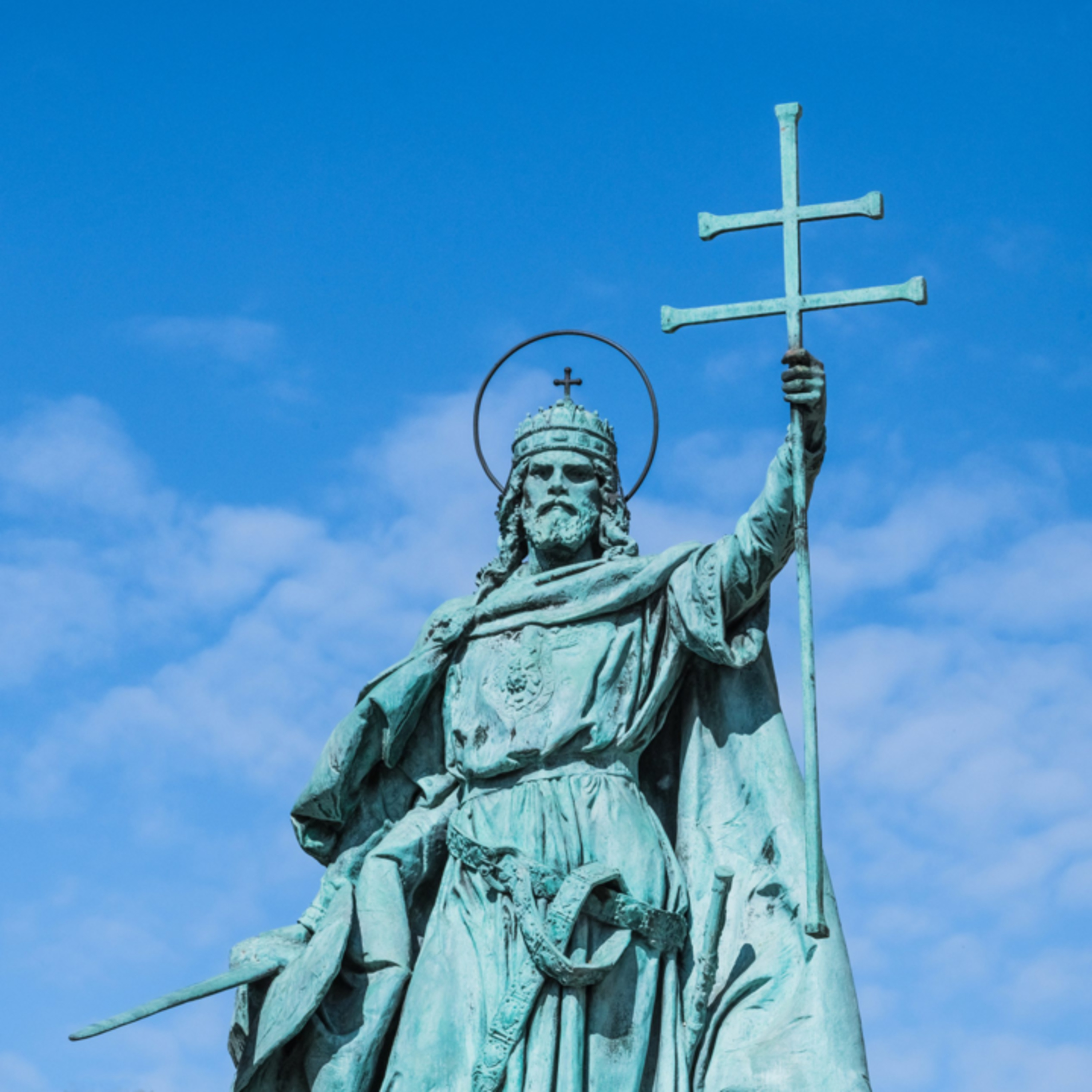 King St. Stephen of Hungary (September 2) — From Dom Guéranger’s Liturgical Year 02.09.2026 14minA meditation for the Feast of King Saint Stephen of Hungary, from Dom Guéranger’s “The Liturgical Year”, Volume V of the Time after Pentecost.King Saint Stephen of Hungary (c. 975–1038) was the first King of Hungary and the great apostle of the Hungarian nation. Baptized as a Christian and crowned king around the year 1000, he devoted his reign to establishing Christianity throughout his kingdom, founding dioceses, monasteries, and churches while organizing Hungary according to Christian law and governance. He invited missionaries and clergy from throughout Europe and worked tirelessly to suppress pagan practices and establish the Catholic faith among his people. Known for his wisdom, justice, charity, and devotion to the Blessed Virgin Mary, Saint Stephen regarded his kingdom as entrusted to God and sought to rule as a Christian king rather than merely a worldly sovereign. He died in 1038 and was canonized in 1083, becoming the patron and enduring national saint of Hungary.Please note that Servant of God Dom Prosper Guéranger went to his eternal reward in 1875; at this point, Volumes I-IX (Advent to Pentecost Saturday) had been completed, but Volumes X-XV (Trinity Sunday to Advent) had not yet been completed. Thus, the remaining readings of the Liturgical Year, from Trinity Sunday until Advent, were not directly authored by Dom Prosper, but were the work of his disciple Dom Lucien Fromage. Dom Prosper Guéranger's The Liturgical Year, a monumental fifteen-volume work, offers a comprehensive exploration of the Catholic Church’s liturgical calendar, guiding readers through the spiritual and historical richness of the Church’s worship. Written in the 19th century, the series provides daily meditations, historical context, and liturgical texts for the Mass and Divine Office, covering the entire cycle of seasons—Advent, Christmas, Lent, Passiontide, Easter, and the Time after Pentecost—as well as feast days of saints. Guéranger’s work, rooted in a deep contemplative spirit, aims to immerse the faithful in the Church’s prayerful life, emphasizing the unity of faith through the axiom lex orandi, lex credendi ("the law of prayer is the law of belief"), and remains a cherished resource for Catholics seeking to deepen their spiritual lives. Dom Prosper Guéranger (1805–1875) was a French Benedictine monk, liturgical scholar, and founder of the Solesmes Abbey, renowned for his pivotal role in reviving the Benedictine Order in France and restoring the Roman liturgy after the disruptions of the French Revolution. Born in Sablé-sur-Sarthe, he entered the priesthood in 1827 and, inspired by a vision to restore monastic life, reestablished the Benedictine community at Solesmes in 1833, becoming its first abbot. A staunch defender of ultramontanism and traditional Catholic worship, he also championed the revival of Gregorian chant, significantly influencing the liturgical renewal movement.Link to the Dom Guéranger's Liturgical Year playlist (updated daily): https://www.youtube.com/playlist?list=PLZKdyYnV_bkh7rH6piW0ShgsdcefFoOvJIf you would like to support this channel: Patreon: https://www.patreon.com/cw/InprincipioPodcast PayPal: https://www.paypal.com/donate/?hosted_button_id=U5EZ9X2CE2V7W Venmo: https://venmo.com/u/InPrincipioPodcast Zelle: [email protected]; or search for Zelle tag “inprincipiopodcast” Checks may be written out to ‘InPrincipio Podcast’ and mailed to: P.O. Box 117 Cedar Ridge, CA 95924Sincere thanks to all who are able to contribute, by your prayers, your patronage, or otherwise. Your support sustains this work and helps make these readings available to others.Artwork: “The Baptism of Vajk [King St. Stephen]”, by Gyula Benczúr, 1875; Statue of King St. Stephen in the Millennium Monument, Heroes' Square, Budapest, Hungary.
 -
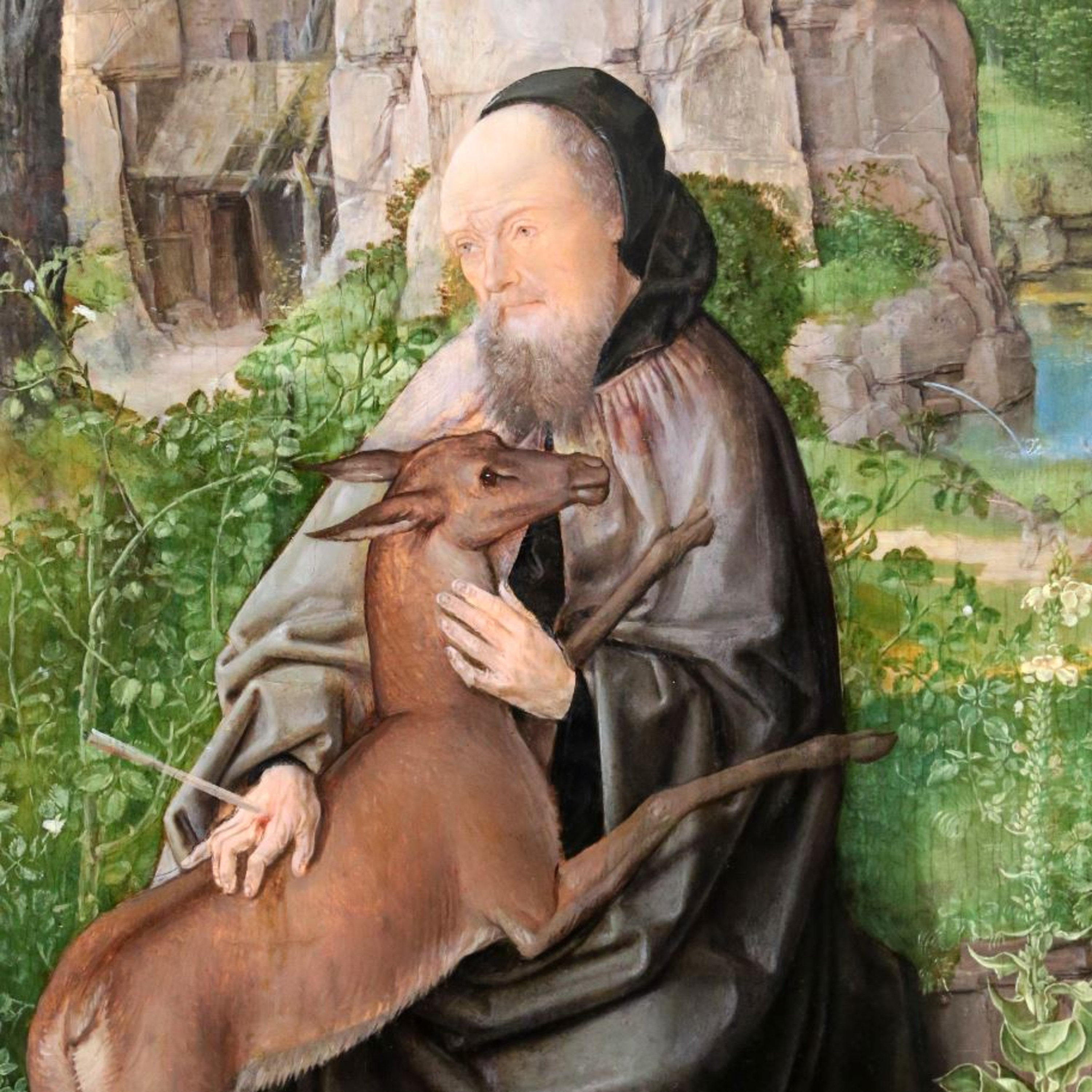 St. Giles (September 1) — From Dom Guéranger’s Liturgical Year 01.09.2026 11minA meditation for the Feast of St. Giles, from Dom Guéranger’s “The Liturgical Year”, Volume V of the Time after Pentecost.Saint Giles (c. 650–c. 724) was a Greek-born hermit and abbot who lived a life of profound solitude and prayer in the forests of southern Gaul, near the Rhône. According to tradition, he lived for many years in a cave, sustained by the milk of a hind, until the animal was pursued by hunters and sought refuge with Giles. When the king's hunters discovered him, Giles was accidentally wounded by an arrow, and the king, moved by his holiness, gave him land on which he founded a monastery that became the celebrated Abbey of Saint-Gilles. Giles became renowned for his humility, charity, and miracles, and his shrine attracted pilgrims throughout the Middle Ages. He was especially invoked as a protector against illness and physical afflictions, and he became one of the Fourteen Holy Helpers. His feast is traditionally celebrated on September 1.Please note that Servant of God Dom Prosper Guéranger went to his eternal reward in 1875; at this point, Volumes I-IX (Advent to Pentecost Saturday) had been completed, but Volumes X-XV (Trinity Sunday to Advent) had not yet been completed. Thus, the remaining readings of the Liturgical Year, from Trinity Sunday until Advent, were not directly authored by Dom Prosper, but were the work of his disciple Dom Lucien Fromage. Dom Prosper Guéranger's The Liturgical Year, a monumental fifteen-volume work, offers a comprehensive exploration of the Catholic Church’s liturgical calendar, guiding readers through the spiritual and historical richness of the Church’s worship. Written in the 19th century, the series provides daily meditations, historical context, and liturgical texts for the Mass and Divine Office, covering the entire cycle of seasons—Advent, Christmas, Lent, Passiontide, Easter, and the Time after Pentecost—as well as feast days of saints. Guéranger’s work, rooted in a deep contemplative spirit, aims to immerse the faithful in the Church’s prayerful life, emphasizing the unity of faith through the axiom lex orandi, lex credendi ("the law of prayer is the law of belief"), and remains a cherished resource for Catholics seeking to deepen their spiritual lives. Dom Prosper Guéranger (1805–1875) was a French Benedictine monk, liturgical scholar, and founder of the Solesmes Abbey, renowned for his pivotal role in reviving the Benedictine Order in France and restoring the Roman liturgy after the disruptions of the French Revolution. Born in Sablé-sur-Sarthe, he entered the priesthood in 1827 and, inspired by a vision to restore monastic life, reestablished the Benedictine community at Solesmes in 1833, becoming its first abbot. A staunch defender of ultramontanism and traditional Catholic worship, he also championed the revival of Gregorian chant, significantly influencing the liturgical renewal movement.Link to the Dom Guéranger's Liturgical Year playlist (updated daily): https://www.youtube.com/playlist?list=PLZKdyYnV_bkh7rH6piW0ShgsdcefFoOvJIf you would like to support this channel: Patreon: https://www.patreon.com/cw/InprincipioPodcast PayPal: https://www.paypal.com/donate/?hosted_button_id=U5EZ9X2CE2V7W Venmo: https://venmo.com/u/InPrincipioPodcast Zelle: [email protected]; or search for Zelle tag “inprincipiopodcast” Checks may be written out to ‘InPrincipio Podcast’ and mailed to: P.O. Box 117 Cedar Ridge, CA 95924Sincere thanks to all who are able to contribute, by your prayers, your patronage, or otherwise. Your support sustains this work and helps make these readings available to others.Artwork: “Saint Giles and the Hind" by the Master of Saint Giles c. 1500
 -
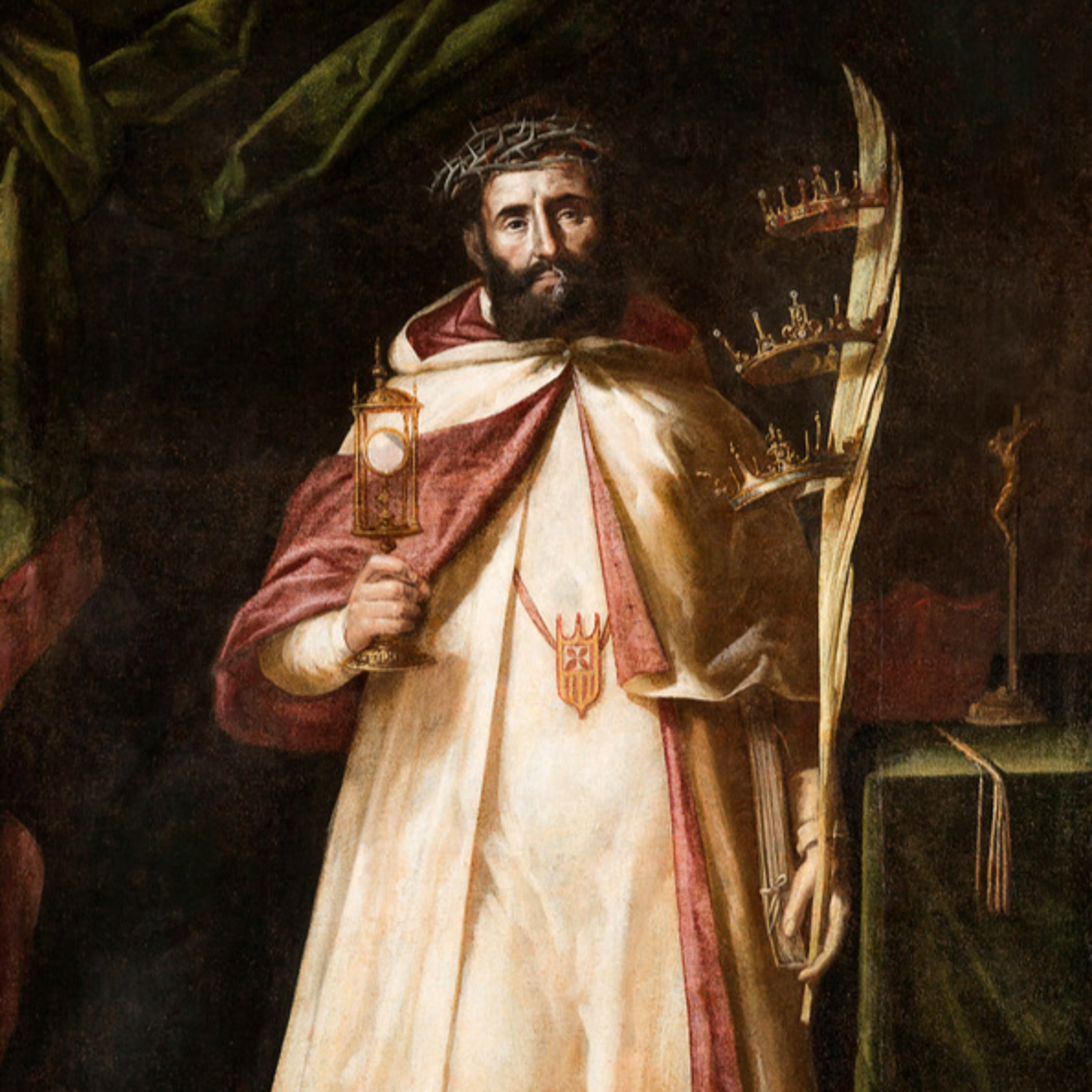 St. Raymond Nonnatus (August 31) — From Dom Guéranger’s Liturgical Year 30.08.2026 9minA meditation for the Feast of St. Raymond Nonnatus, from Dom Guéranger’s “The Liturgical Year”, Volume V of the Time after Pentecost.Saint Raymond Nonnatus (c. 1204–1240) was a Spanish Mercedarian religious renowned for his devotion to the redemption of Christians held captive by the Moors. Born in Portell, Catalonia, he joined the newly founded Order of the Blessed Virgin Mary of Mercy and traveled to North Africa, where he ransomed numerous captives and eventually offered himself in exchange for their freedom. While imprisoned, he endured severe torture and suffering for preaching the Catholic faith, and according to tradition, his captors pierced his lips and fastened them with a padlock to prevent him from preaching. After his release, he was called to Rome by Pope Gregory IX, but died on the journey in 1240. His extraordinary charity, courage, and willingness to suffer for the salvation of others made him one of the great saints of the Mercedarian Order, and he is traditionally invoked as a patron of childbirth and expectant mothers.Please note that Servant of God Dom Prosper Guéranger went to his eternal reward in 1875; at this point, Volumes I-IX (Advent to Pentecost Saturday) had been completed, but Volumes X-XV (Trinity Sunday to Advent) had not yet been completed. Thus, the remaining readings of the Liturgical Year, from Trinity Sunday until Advent, were not directly authored by Dom Prosper, but were the work of his disciple Dom Lucien Fromage. Dom Prosper Guéranger's The Liturgical Year, a monumental fifteen-volume work, offers a comprehensive exploration of the Catholic Church’s liturgical calendar, guiding readers through the spiritual and historical richness of the Church’s worship. Written in the 19th century, the series provides daily meditations, historical context, and liturgical texts for the Mass and Divine Office, covering the entire cycle of seasons—Advent, Christmas, Lent, Passiontide, Easter, and the Time after Pentecost—as well as feast days of saints. Guéranger’s work, rooted in a deep contemplative spirit, aims to immerse the faithful in the Church’s prayerful life, emphasizing the unity of faith through the axiom lex orandi, lex credendi ("the law of prayer is the law of belief"), and remains a cherished resource for Catholics seeking to deepen their spiritual lives. Dom Prosper Guéranger (1805–1875) was a French Benedictine monk, liturgical scholar, and founder of the Solesmes Abbey, renowned for his pivotal role in reviving the Benedictine Order in France and restoring the Roman liturgy after the disruptions of the French Revolution. Born in Sablé-sur-Sarthe, he entered the priesthood in 1827 and, inspired by a vision to restore monastic life, reestablished the Benedictine community at Solesmes in 1833, becoming its first abbot. A staunch defender of ultramontanism and traditional Catholic worship, he also championed the revival of Gregorian chant, significantly influencing the liturgical renewal movement.Link to the Dom Guéranger's Liturgical Year playlist (updated daily): https://www.youtube.com/playlist?list=PLZKdyYnV_bkh7rH6piW0ShgsdcefFoOvJIf you would like to support this channel: Patreon: https://www.patreon.com/cw/InprincipioPodcast PayPal: https://www.paypal.com/donate/?hosted_button_id=U5EZ9X2CE2V7W Venmo: https://venmo.com/u/InPrincipioPodcast Zelle: [email protected]; or search for Zelle tag “inprincipiopodcast” Checks may be written out to ‘InPrincipio Podcast’ and mailed to: P.O. Box 117 Cedar Ridge, CA 95924Sincere thanks to all who are able to contribute, by your prayers, your patronage, or otherwise. Your support sustains this work and helps make these readings available to others.Artwork: “Saint Raymond Nonnatus” by Antonio del Castillo y Saavedra, 1640Music: “Ave Maria” (Gregorian chant)Performed by Schola Gregoriana, Pallottine Seminary (Ołtarzew, Poland) | Conductor: Fr. Dariusz Smolarek
Podobné podcasty


Obľúbený v
Tento podcast sa objavuje aj v rebríčkoch podcastov týchto krajín.
