
All That We Touch
Impact Studios
0
Exploring the entangled relationships between technology, society, nature and politics. All that we touch, we change, and all that we change changes us.
Epizódy
-
 All That We Touch... at the pub 24.09.2026 50minWelcome to the party!In this episode, recorded live at in Chippendale, at the Abercrombie Hotel, we officially launch All That We Touch.You'll hear two lively conversations.In the first, Monica Attard from UTS's Centre for Media Transition speaks with researcher Heather Ford and writer Richard Cooke about the ins and outs, the highs and lows, of having your own Wikipedia page.In the second, Stuart White, of UTS's Institute for Sustainable Futures, explores how recycling human urine for fertiliser might open up endless possibilities, not just for a larger circular economy in nutrients, but for rethinking our relationship to all kinds of "waste." Stuart is in conversation with researchers Kerry Tozer and Jordan Roods.VoicesProfessor Monica Attard OAM is co-director of the Centre for Media Transition at UTS, a cross disciplinary research centre investigating journalism best practice, regulatory adaptation, information disorder and news media business models. Monica is well known for her long career in journalism across radio, television and digital media.Associate Professor Heather Ford is an ARC Future Fellow and Professor in the School of Communication and Social Sciences at UTS. She is the author of Writing the Revolution: Wikipedia and the Survival of Facts in the Digital Age (2022, MIT Press).Richard Cooke is an author, reporter and screenwriter. The author of three books, he is the former US correspondent and current contributing editor to the 'The Monthly' magazine. His latest book is The Last Best Place On The Internet: A Human History of Wikipedia (2026, Granta).Professor Stuart White directs the Institute for Sustainable Futures, where he leads a team of researchers who create change towards sustainable futures through independent, project-based research.Kerry Tozer is a doctoral researcher at the Institute for Sustainable Futures, UTS.Jordan Roods is a doctoral researcher, Institute for Sustainable Futures, UTS.CreditsThis episode of All That We Touch was recorded live on Gadigal Land in Sydney by Simon Branthwaite, who also mixed and edited the episode.All That We Touch is an Impact Studios podcast. Its executive producer is Sarah Gilbert.
 -
 Liquid Gold bonus: All That We Touch goes to SXSW 09.09.2026 55minWhat would it actually take to build a functioning circular economy in nutrients, starting with recycling human urine?That's the question driving this bonus episode of Liquid Gold, recorded live at South by Southwest Sydney 2025. UTS researcher Dana Cordell chairs a panel that pushes past the novelty of "wee as fertiliser" into the harder territory: phosphorus scarcity, wastewater emissions, contamination risk, and who should be paying for pollution in the first place.The conversation moves from Django Seccombe explaining why Sydney Water spends up to two billion dollars a year dealing with nutrients it could be recovering instead, to organic garlic grower Dr Michelle Zeibots on the practical "yuck factor" of getting farmers to actually use urine-derived fertiliser, to policy expert Liana Downey on why consumers so often end up carrying the cost of decisions made further up the supply chain.VOICESKerry Tozer is a doctoral researcher at the Institute for Sustainable Futures, UTSJordan Roods is a doctoral researcher at the Institute for Sustainable Futures, UTSAssociate Professor Dana Cordell is a Research Director at the Institute for Sustainable Futures where she leads the Food Systems research group. Dana works with stakeholders across Australia, EU, UK, Sweden, Vietnam, Sri Lanka, India, China, Malawi and the U.S. to identify how food systems can transform and circularise in response to a range of sustainability challenges, from climate change to urban sprawl, to the global phosphorus challenge.Django Seccombe is an environmental engineer who splits his time between establishing and embedding circular economy practice in Sydney Water and developing cross industry circular economy projects in the private sector. His projects cut across water, energy, food and waste systems.Dr Michelle Zeibots is a garlic farmer and a researcher with UTS’ Institute for Sustainable Futures, specialising in the analysis of sustainable urban passenger transport systems.Liana Downey is an experienced strategic advisor who helps leaders change the world. As Executive Director of Liana Downey & Associates, Liana and her team work with nonprofits, governments and social enterprises globally to increase impact. She is the author of Mission Control: how non profits and governments can focus, achieve more and change the world (Routledge, 2016).Have your sayJordan and Kerry have put together a short anonymous survey to hear what listeners think about urine recycling – "peecycling"! – and the problems it could solve. The survey link is in the show notes on the episode page. Participants who share their contact details go into a draw to win one of three $50 AUD Visa gift cards. Please make sure you read the participant information sheet and complete the consent requirements before completing the survey or uploading any audio or video that could identify you.Try it for yourselfYou can purchase your own bottle of eco-friendly urine-derived fertiliser to sprinkle on your plants via this link: https://www.nicegreentech.com/productsFurther readingTurning food waste into tasteFrom flush to fertiliser, urine is liquid goldYou can find plenty of fact sheets and articles about the future of urine recycling and a circular nutrient economy at the NiCE Hub website.CreditsProducer: Celine Teo-BlockeySound Engineering: Melissa MayAdditional Music: Om BhandariCover Art: Alexandra MorrisExecutive Producer, Impact Studios: Sarah GilbertAll That We Touch is an Impact Studios production, made on Gadigal land in Warrane/Sydney.
 -
 Liquid Gold 25.08.2026 37minEvery time we flush, we send a valuable resource down the drain: phosphorus, one of the essential building blocks of life and a key ingredient in the fertiliser that grows the world's food, along with nitrogen and potassium.Meanwhile, we mine phosphate rock and potash, and generate climate pollution to manufacture ammonia (rich in nitrogen) to produce industrial fertiliser - essential for growing food to feed a hungry planetBut what if, instead of extracting our fertiliser in ways that damage the planet, we harnessed the waste our own bodies produce, feeding it back into the food chain, where it belongs?In this episode, host Angelica Ojinnaka-Psillakis traces how humans went from managing waste locally to flushing it away without a second thought. And with researchers Jordan Roods and Kerry Tozer, she explores the growing movement to recover nutrients from urine and turn them back into fertiliser — from university labs in Sydney, to a redesigned toilet prototype, and to a community-scale ‘peecycling’ program in Vermont.VoicesAngelica Ojinnaka-Psillakis — host; health and social researcherNicola Cama — historian, City of SydneyMichelle Maloney — legal scholar, advocate for earth-centred governanceKerry Tozer — doctoral researcher, Institute for Sustainable Futures, UTSJordan Roods — doctoral researcher, Institute for Sustainable Futures, UTSDana Cordell — associate professor, UTS; research supervisor to Kerry and JordanCara Beal — professor of environmental science and health; director, Cities Research Institute, Griffith UniversityAbe Noe-Hayes — Rich Earth Institute, VermontHave your sayJordan and Kerry have put together a short anonymous survey to hear what listeners think about urine recycling – "peecycling"! – and the problems it could solve. The survey link is in the show notes on the episode page. Participants who share their contact details go into a draw to win one of three $50 AUD Visa gift cards. Please make sure you read the participant information sheet and complete the consent requirements before completing the survey or uploading any audio or video that could identify you.Try it for yourselfYou can purchase your own bottle of eco-friendly urine-derived fertiliser to sprinkle on your plants via this link: https://www.nicegreentech.com/productsFurther readingYou can find plenty of fact sheets and articles about the future of urine recycling and a circular nutrient economy at the NiCE Hub website.You can learn more about the Rich Earth Institute here.CreditsHost: Angelica Ojinnaka-Psillakis, with Jordan Roods and Kerry TozerProducers: Britta Jorgensen and Celine Teo-BlockeySound Engineering: Melissa MayAdditional Music: Om BhandariCover Art: Alexandra MorrisEditorial Support: Jane Curtis, Michelle Ransom-Hughes, Tamson Pietsch, Rachael CusickExecutive Producer, Impact Studios: Sarah GilbertThanks also to: Professor Ho Kyong Shon, Dr Ibrahim El Saliby, Associate Professor Jan-Olof Drangert, Professor Cara Beal, Dr Michelle Maloney, Dr Haley Joyell Smith, Gary Leeson, Mark Dunn, and Ed Hickson.Liquid Gold is an Impact Studios production, made on Gadigal land.
 -
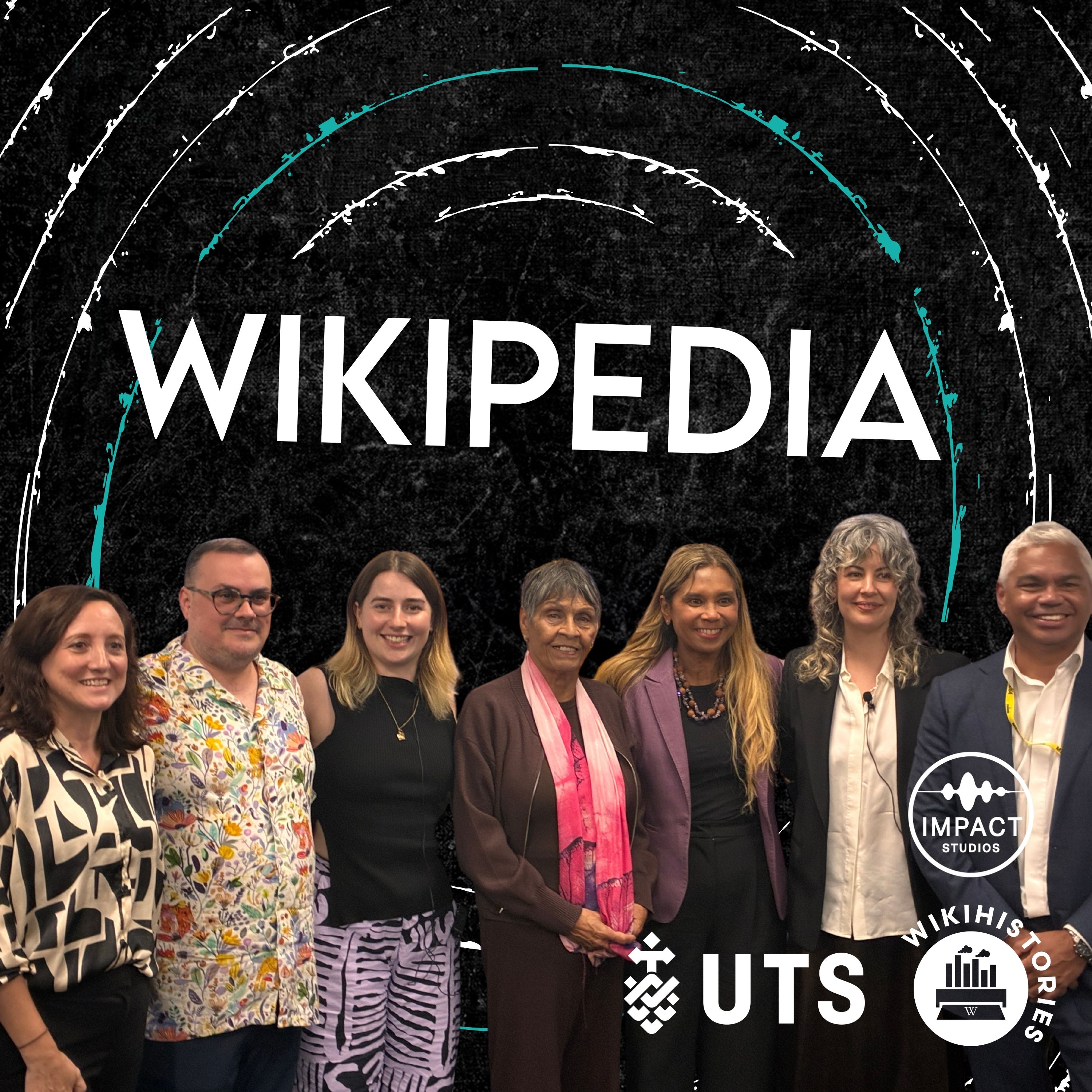 Live panel: Wikimedia Australia and Dr Terri Janke's guide to working with First Nations content responsibly 18.08.2026 1h 52minHow can Wikipedia editors work with Indigenous content in a responsible way?Hear a panel discussion with Indigenous lawyers Dr Terri Janke, Shavonne Wright, and Matilda Langford on the new Wikimedia Australia guide to respectful, accurate engagement with Indigenous knowledge.Oral knowledge can't be referenced under Wikipedia's own rules, and that hits Indigenous knowledge hardest. Most Australian editors are non-Indigenous, and our research found their confidence with Indigenous content varies widely.Hear how a new practical guide, developed with Wikimedia Australia and led by Dr Terri Janke, will support you to include and edit First Nations content on Wikipedia.Recorded live at WikiCon Australia 2026.Indigenous Cultural and Intellectual Property (ICIP) and Indigenous Data Sovereignty GuideWikimedia Australia has adopted the Guide as organisational practice for our Board, staff and funded projects. We are also pleased to share it as recommended good practice for editors and contributors who want to engage responsibly with Indigenous content across Wikimedia projects.It's grounded in a set of clear values:Valuing relationships and accuracy over quantityRespecting Indigenous cultural authority and protocolsBeing transparent about what is shared on Wiki platformsSupporting Indigenous agency and authorshipAvoiding harmRather than prescribing rules, the Guide outlines a risk-assessment approach, helping contributors to think through whether the content in front of them is lower-risk (general, non-sensitive Indigenous content) or something that calls for a higher level of caution (culturally sensitive, secret or sacred, or offensive material), and steps to follow in each case.It provides guidance on reliable sources and citation, metadata and description. It also addresses free, prior and informed consent (FPIC) – the principle that communities have the right to make decisions about their own knowledge before it's used.Read the Indigenous Cultural and Intellectual Property (ICIP) and Indigenous Data Sovereignty guide ‘The White Paper: the questions we’re still sitting with’The Guide gives practical direction. The CultureStrong White Paper is honest about what's unresolved.It examines where open licensing and customary law pull against each other, where the law is silent, and where the wider Wikimedia movement, not just in Australia but worldwide, needs to keep talking.It also looks ahead. It recommends developing a dedicated First Nations Protocol for Wikimedia Australia through a staged, Indigenous-led process shaped with communities, Knowledge Holders and Wikimedians.Such a Protocol would deliver what the editing community is asking for: scenario-based guidance that reflects the diversity of the 200-plus First Nations across the Australian continent, and offering a methodology other Wikimedia chapters could adapt internationally.Read the White PaperThe text above is from Wikimedia Australia’s Respecting First Nations knowledge on Wikimedia platformsVoicesHeather Ford is an ARC Future Fellow and Professor in the School of Communication and Social Sciences at UTS. She is a former Advisory Board member of the Wikimedia Foundation and the author of “Writing the Revolution: Wikipedia and the Survival of Facts in the Digital Age” published by MIT Press.Terri Janke is a Wuthathi, Yadhaigana and Meriam woman and a nationally and internationally recognised expert on Indigenous Cultural and Intellectual Property (ICIP). As Solicitor Director and owner of Terri Janke and Company, Terri leads a multidisciplinary team delivering legal and advisory services across ICIP, copyright, trade marks, business law and governance.John Paul Janke is a journalist, National Indigenous Affairs Editor at NITV and co-host of their flagship news and current affairs program The Point.Shevawn Wright is a Nunga and Irish practising artist and lawyer with expertise in the fine arts as well as commercial and construction law. Her areas of specialty include infrastructure projects and arts related legal issues. Shevaun is passionate about empowering First Nations people to thrive in both the public and private sectors through legal advocacy, broader community training and innovative contractual solutions.Matilda Langford is a paralegal at TJC who is skilled in community consultation, law, politics, and social media communications. Matilda completed her Bachelor of Arts (Politics) (2022) and her Bachelor of Laws (2024) from the University of Sydney.Elliot Bledsoe is the President of Wikimedia Australia, the Australian chapter of the international Wikimedia Foundation – and he is Co-lead of Creative Commons Australia – the local Chapter of the CC Global Network which promotes and encourages the use of CC licences in Australia. Elliott also runs Agentry, an arts marketing micro-consultancy.This panel discussion was recorded by Jane Curtis at WikiCon Australia 2026 in Canberra, Australia.CreditsThe executive producer of this series is Heather Ford.The series is hosted by Heather Ford, Francesca Sidoti and Richard Cooke.Produced by Jane Curtis. Associate producer is Francesa Sidoti.Sound by John Jacobs.Executive Producer of UTS Impact Studios is Sarah Gilbert.It’s produced on Gadigal Country in Sydney Australia.wikihistories is supported by Australian Research Council Grant DP220100662, ‘Wikipedia and the Nation’s Story: Towards Equity in Knowledge Production’.Find out more at wikihistories.nethttps://doi.org/10.5281/zenodo.23027428
 -
 Research and teach with Wikipedia: In the classroom and library 11.08.2026 32minEvery student uses Wikipedia. Some schools and teachers still tell them not to.This episode asks why, and explains how to teach Wikipedia literacy to primary and secondary school students, instead of banning it outright.Researchers Heather Ford and Simon Knight answer questions and hear advice from teachers Ben Lawless, Marty Douglas and David Boon, and librarian Michelle Sadler.Hear what good, critical Wikipedia use looks like in the classroom or library: questions to ask before even opening Wikipedia; checking the Talk page; and lateral reading.Teachers: Using Wikipedia in the Classroom A set of resources from the Wikimedia Foundation:Using Wikipedia to foster media and information literacy skills: Teachers Introductory booklet PDF (2020, 10 pages)Teachers’ Guide Module 1 PDF (2021, 72 pages)Teachers’ Guide Module 2 PDF (2021, 65 pages)Teachers’ Guide Module 3 PDF (2021, 56 pages)Reading Wikipedia in the Classroom (All languages) PDFsFive Ways to Use Wikipedia in the ClassroomA Wikimedia blog post on how to integrate Wikipedia into classroom practice with:Source investigationEditing for accuracyFact-Checking and Identifying MisinformationNeutral Point of View PracticeCollaborative EditingStudents: Using Wikipedia in the ClassroomA quick guide to using Wikipedia in a way that won’t make your teacher angry: Students Introductory booklet PDF (2020, 7 pages)Checklist for how we verify claims: Card Catalog newletterEchoing host Heather Ford's advice in this episode, Hana Lee Goldin lists these verification techniques in her newsletter Card Catalog (September 2026):Search with intentRecognise document typesIdentify interestsTrace provenanceRead laterallyQuestion what feels rightRead more about each of these in Hana Lee Goldin's newsletter Card Catalogue: The Baseline Skill of the AI age.WikiEdu For Instructors and their StudentsWikiEdu is an accredited program run in the US and Canada. However, its resources are available for everyone.In its flagship program, higher education instructors replace traditional assignments with the creation and improvement of Wikipedia articles.In place of writing a traditional term paper, students take on a real-world assignment that requires them to identify reliable sources, evaluate evidence, and synthesize complex information for a public audience.Read instructor resources on:crucial information for designing successful Wikipedia assignments.successful strategies for incorporating Wikipedia assignmentsengage in theoretical thinking around Wikipedia and knowledge productionRead students resources on:Editing WikipediaIllustrating WikipediaEvaluating Wikipediatopic-specific guidelines for contributors.More readingXKCD comic with 'Citation needed'Original XKCD comic 285 Wikipedian ProtesterAn explanation of XKCD comic 285 on the 'explain xkcd' wikiUsing Wikipedia in the University classroom Authentic assessments: using Wikipedia in the University classroom (University of Sussex blog, 2022): The Educational Enhancement Team at the University of Sussex, UK, on how many of their academic Schools and Departments are looking at how they can add more authentic assessments to their modules - including Wikipedia assessments.Comparing Wikipedia, encyclopedias and AIComparing Wikipedia, Traditional Encyclopedias, and Generative AI: The Wikipedia Assignment as Tool for Student Information Literacies (WikiEd blog, 2025): Professor Katie Hold had students compare a traditional encyclopedia, a Wikipedia article, and a generative AI query on their research topics as an information-literacy exercise. Students grew more appreciative of Wikipedia's verifiable sourcing, while criticizing AI outputs for inaccuracies, broken citations, and closely mirroring Wikipedia without attribution. The exercise reinforced that all three sources work best as starting points for further research, not endpoints.ResearchWikipedia no worse for science info than Britannica, study finds (The Guardian, 2005)Internet encyclopaedias go head to head by Jim Giles (Nature, 2005)VoicesHeather Ford is an ARC Future Fellow and Professor in the School of Communication and Social Sciences at UTS. She is a former Advisory Board member of the Wikimedia Foundation and the author of “Writing the Revolution: Wikipedia and the Survival of Facts in the Digital Age” published by MIT Press.Simon Knight is a member of the University of Technology Sydney Centre for Research on Education in a Digital Society (UTS: CREDS), and its founding Director. Dr Knight researches how people learn to navigate uncertainty, disagreement, and evidence, and the mediating role of technology in that.CreditsThe executive producer of this series is Heather Ford.The series is hosted by Heather Ford, Francesca Sidoti and Richard Cooke.Produced by Jane Curtis. Associate producer is Francesa Sidoti.Sound by John Jacobs.Executive Producer of UTS Impact Studios is Sarah Gilbert.It’s produced on Gadigal Country in Sydney Australia.wikihistories is supported by Australian Research Council Grant DP220100662, ‘Wikipedia and the Nation’s Story: Towards Equity in Knowledge Production’.Find out more at wikihistories.nethttps://doi.org/10.5281/zenodo.23027428
 -
 Play along: The Wikipedia quiz 04.08.2026 12minFive questions. Two hosts. One deceptively simple quiz. Can Wikipedia articles really be edited by anyone? Does the site rely on your $5 donations, or is there more to the story?Host Heather Ford goes head-to-head with guest Simon Knight in a true-or-false showdown about Wikipedia. Almost nothing is as straightforward as it sounds.This is All That We Touch: Wikipedia, a documentary podcast series exploring what shapes the world's most-read encyclopaedia, and how to use it better.Every question in this episode comes the Wikimedia Foundation's 2025 Global Readers Survey, testing how well people understand the site they use every day.Play along and test your knowledge!VoicesHeather Ford is an ARC Future Fellow and Professor in the School of Communication and Social Sciences at UTS. She is a former Advisory Board member of the Wikimedia Foundation and the author of “Writing the Revolution: Wikipedia and the Survival of Facts in the Digital Age” published by MIT Press.Simon Knight is a member of the University of Technology Sydney Centre for Research on Education in a Digital Society (UTS: CREDS), and its founding Director. Dr Knight researches how people learn to navigate uncertainty, disagreement, and evidence, and the mediating role of technology in that.Quiz questions and more readingQuiz question #1 True or false? Wikipedia articles can be changed by anyone.You can and cannot change Wikipedia (Wikipedia) A community essay on editing, reverting edits, blocks and bans, page protection, oversight and deletion.Who writes Wikipedia? (Wikipedia) A community essay on the types of editors and the demographic skew of the volunteer base.Study reveals bot-on-bot editing wars raging on Wikipedia's pages (The Guardian, 2017) Over time, the encyclopedia’s software robots can become locked in combat, undoing each other’s edits and changing links, say researchers.Quiz question #2 True or false? Wikipedia articles must have picturesWikimedia Commons A media file repository making available public domain and freely licensed educational media content (images, sound and video clips) to everyone, in their own language.Commons Courtesy: Reusing Creative Commons-licensed media is easier than you think by Joshua Leach (The Ink Tank blog, 2025)Quiz question #3 True or false? Wikipedia articles change over timeWikipedia at 25: What the data tells us (Pew Research Centre, 2026) Answers to some common questions about the site, based on data from Wikipedia and Wikimedia Statistics, including Which pages have been edited the most? And Which pages have had the most views or edits in a single day?An Encyclopedia with Breaking News by Brian Keegan (MIT Press, 2019) Wikipedia's unexpected ability to generate high-quality articles about current events is a critical part of its success story; Keegan offers lessons taken from this for addressing the sludge polluting other online platforms.The language geography of Wikipedia by Martin Dittus and Mark Graham (Oxford Internet Institute, 2022)Deaths in 2026 Wikipedia pageQuiz question #4 True or false? The people who write Wikipedia articles are unpaid volunteers.Wikipedia How-To Guides for editors with a conflict of interest (The Ink Tank blog) How to properly request updates, whether adding a new logo, correcting errors, or handling disputes, without violating Wikipedia’s policies.Paid editors on Wikipedia: Should you be worried? (Kim Osman, The Conversation, 2014)Wikipedia:Conflict of interest/Paid contribution disclosure policyQuiz question #5 True or false? Wikipedia relies on donations to support its operations.How is Wikipedia funded? (Wikimedia Foundation, 2025)Fundraising statistics (Wikipedia, 2025)CreditsThe executive producer of this series is Heather Ford.The series is hosted by Heather Ford, Francesca Sidoti and Richard Cooke.Produced by Jane Curtis. Associate producer is Francesa Sidoti.Sound by John Jacobs.Bell music composition by Maksim Voloshin-Cleary.Executive Producer of UTS Impact Studios is Sarah Gilbert.It’s produced on Gadigal Country in Sydney Australia.wikihistories is supported by Australian Research Council Grant DP220100662, ‘Wikipedia and the Nation’s Story: Towards Equity in Knowledge Production’.Find out more at wikihistories.nethttps://doi.org/10.5281/zenodo.23027428
 -
 The 'Last Best Place on the Internet': Will Wikipedia survive AI? 28.07.2026 29minIn the future, will Wikipedia still be written by humans?This episode asks what happens to that promise as two very different futures close in.Co-host and author Richard Cooke calls Wikipedia ‘the last best place on the internet’ - one of the only things still standing from the early web's promise of a civic, collaborative internet.This episode traces two futures already taking shape. The first is AI.It might surprise you how long Wikipedia has used AI successfully. And unsuccessfully...Like in the strange true story of a Wikipedia language edition almost entirely about insects, written in Cebuano by one Swedish professor's bot, as a tribute to his wife.Now generative AI like ChatGPT is raising the stakes again.The second future is hiding in plain sight, on Wikipedia's own turf: an ambitious project to turn its millions of articles into structured, machine-readable facts that could be translated into any language, instantly.A utopian dream - or the thing that replaces human editors?VoicesHeather Ford is an ARC Future Fellow and Professor in the School of Communication and Social Sciences at UTS. She is a former Advisory Board member of the Wikimedia Foundation and the author of “Writing the Revolution: Wikipedia and the Survival of Facts in the Digital Age” published by MIT Press.Dr Francesca Sidoti is a Postdoctoral Research Associate with the ARC Discovery project ‘Wikipedia and the nation’s story: towards equity in knowledge production’ in the Faculty of Arts and Social Sciences.Richard Cooke is an author, reporter and screenwriter. The author of three books, he is the former US correspondent and current contributing editor to The Monthly magazine. His latest book is The Last Best Place On The Internet: A Human History of Wikipedia.Dr Michael Falk is a Senior Lecturer in Digital Studies at the University of Melbourne, and is a computational literary scholar, data scientist, speaker and writer. In all his work, he aims to combine the creativity of the arts with the rigour and precision of data science.Josh Lim a long-time Wikipedia editor, and the founder of Wikimedia Philippines. He speaks seven languages and works as a community manager. He has a strong interest in studying the dynamics of tech communities, particularly on the Wikimedia projects but also at large.ResearchFalk, Michael. ‘Wikilambda the Ultimate: The Wikimedia Foundation’s Search for the Perfect Language’. AI & SOCIETY, 2026, https://doi.org/10.1007/s00146-026-02899-w.In 2020 the Wikimedia foundation launched its first new project in nearly a decade, and includes Abstract Wikipedia, a language-agnostic Wikipedia that will be dynamically translated into the reader’s native tongue.The project is designed to address a fundamental bias in Wikipedia, namely its bias towards majority languages such as English and Spanish.More reading'Wikipedia Warriors'List of people imprisoned for editing Wikipedia (Wikipedia)EFF Launches New Offline Campaign for Saudi Wikipedian Osama Khalid by Jillian C. York (Electronic Frontier Foundation, 2026)Wiki warriors: activists fighting to keep truth of brutal Marcos regime in Philippines alive (The Guardian, 2017)The last best placeThe Last Best Place on the Internet: A Human History of Wikipedia by Richard Cooke (Black Inc Books, 2026)Wikipedia Is the Last Best Place on the Internet by Richard Cooke (Wired, 2020)How Wikipedia became the responsible adult of the internet by Stephen Harrison (Australian Financial Review, 2019)Peer productionHere Comes Everybody: How change happens when people come together by Clay Shirky (Penguin, 2009)The Wealth of Networks: How Social Production Transforms Markets and Freedom by Yochai Benkler (Yale University Press, 2006)Wikipedia and AIWikipedia bans AI-generated content in its online encyclopedia (The Guardian, 2026)Breathe, Don’t Panic, there is a different story about Wikimedia + AI futures by Sadads (The Signpost, 2026)Wikipedia goes to war against AI slop articles with new deletion policy (PC World, 2025)Vandalism on Wikipedia (Wikipedia)Cebuano WikipediaWikipedia's largest non-English version was created by a bot. Generative AI poses new problems (ABC, 2025)Cebuano Wikipedia, a large language edition Wikipedia finally has a WikiClub! (Wikimedia 2024)WikidataTeaching Wikipedia to write itself by Rebecca J. Rosen (The Atlantic, 2012)Abstract WikipediaWikiLambda the Ultimate by e mln e and Tilman Bayer (The Signpost, 2026)Some reflections on designing Abstract Wikipedia so far by Maria Keet (Keet blog, 2023)Leibniz' characteristica universalis [universal language] on WikipediaGottfried Wilhelm Leibniz on WikipediaCreditsThe executive producer of this series is Heather Ford.The series is hosted by Heather Ford, Francesca Sidoti and Richard Cooke.Produced by Jane Curtis. Associate producer is Francesa Sidoti.Sound by John Jacobs.Bell music composition by Maksim Voloshin-Cleary.Executive Producer of UTS Impact Studios is Sarah Gilbert.It’s produced on Gadigal Country in Sydney Australia.wikihistories is supported by Australian Research Council Grant DP220100662, ‘Wikipedia and the Nation’s Story: Towards Equity in Knowledge Production’.Find out more at wikihistories.netTranscriptEpisode 3 Will Wikipedia survive AI? Transcript PDFhttps://doi.org/10.5281/zenodo.23027428
 -
 Wikipedia's three big fights: What knowledge counts? 21.07.2026 28minWikipedia promised to be the sum of all human knowledge. Then the fighting started.Host Heather Ford and writer Richard Cooke walk through three of Wikipedia's biggest fight. Not the daily edit wars over the spelling of yoghurt, but the fights over what Wikipedia is, and whose knowledge gets to be part of it.There are more than 300 language versions of Wikipedia. So why does everyone treat the English one as the real one?A game played by millions of people can't get a Wikipedia page.And two warring camps of editors, with very nerdy names, quietly decide what deserves to exist on Wikipedia. One side almost always wins.Three fights. All of them shaping what you learn from the world's biggest encyclopedia.VoicesHeather Ford is an ARC Future Fellow and Professor in the School of Communication and Social Sciences at UTS. She is the author of “Writing the Revolution: Wikipedia and the Survival of Facts in the Digital Age” published by MIT Press.Richard Cooke is an author, reporter and screenwriter. The author of three books, he is the former US correspondent and current contributing editor to the The Monthly magazine. His latest book is The Last Best Place On The Internet: A Human History of Wikipedia.Achal Prabhala is a writer, researcher, and activist based in Bangalore, India, whose work spans two decades and two intersecting causes: access to medicines in the Global South, and the politics of knowledge. Prabhala runs the AccessIBSA project, which is an inter-disciplinary campaign for access to medicines in India, Brazil and South Africa. He served on the Wikimedia Foundation's advisory board from 2006 and was an advisor on the Whose Knowledge? campaign.Florence Devouard is a speaker and independent digital strategy consultant, and she facilitate the discovery of and participation in Wikimedia projects through conferences, seminars, and training sessions on wiki software, Wikipedia, online communities, collaboration, and knowledge management. In 2006 she was President of the Wikimedia Foundation. Since 2008, she has served on the Wikimedia Foundation's Advisory Board.Research linksOpeningIndigenous games Australian Government: Australian Sports CommissionFight #1 English Wikipedia as the ‘invisible centre’WikiGap: Promoting Epistemic Equity by Surfacing Knowledge Gaps Between English Wikipedia and other Language Editions (arXiv 2025) argues that although Wikipedia is architecturally multilingual and aspires to provide knowledge to "every single person on the planet in their own language," its design and community practices systematically privilege English content, and at the interface level this dynamic obscures cross-linguistic differences.How is Wikipedia funded? (Wikimedia Foundation 2025) Wikipedia is funded primarily through single or monthly donations from millions of individuals around the world. Each year, around 2,000 individuals and institutions make donations of above $1,000 to the Wikimedia Foundation.Writing the Revolution: Wikipedia and the Survival of Facts in the Digital Age (MIT Press 2022) An extended case study by Heather Ford of English Wikipedia functioning as the venue where the globally authoritative account of a non-Anglophone event, the 2011 Egyptian Revolution, gets negotiated.“What an un-wiki way of doing things”: Wikipedia’s multilingual policy and metalinguistic practice ( 2011) Wikipedia defines itself as "the biggest multilingual free-content encyclopaedia on the internet," making an explicit language policy part of its mission statement. Astrid Ensslin argues that when you critically examine what Wikipedia actually does, its policies, its interface, its symbols, its community practices, this multilingual self-image conceals a deeply Anglo-centric structure.Fight #2 Oral citationsOral Citations project on WikipediaEthnographies of the Digitally Dispossessed (In The Routledge Companion to Media Anthropology 2022) A book chapter describing the oral citations project and its ethnographic study by Heather Ford.Possible Enlightenments: Wikipedia’s Encyclopedic Promise and Epistemological Failure (MIT Press 2019) Wikipedia challenges traditional notions of expertise, authorship, access, and transparency. It also conserves features of the genre that characterize its emergence from western Enlightenment logic. Given Wikipedia's maturity, Matthew Vetter asks how do we understand this contradiction?When Knowledge Isn’t Written, Does It Still Count? (New York Times 2011)Fight #3 Inclusionists vs DeletionistsRepresentation and the problem of bibliographic imagination on Wikipedia (Luyt 2021). A history of the inclusionist versus deletionist debate, how it influenced the representation of the Phillippine-American War on Wikipedia, and exarcerbated representational gaps on the platform.The Missing Wikipedians (In Critical Point of View: A Wikipedia Reader 2012) An early discussion of the cultures of deletionism in the context of African topics (using a case study of Makmende, the Kenyan internet meme on Wikipedia) by Heather Ford.Wikipedia approaches its limits (The Guardian 2009) The online encyclopaedia is about to hit 3m articles in English – but growth is stalling as 'inclusionists' and 'deletionists' fight for control.Further reading and watchingPeople are Knowledge documentary by Achal Prabhala (Vimeo 2011)Interview with Achal Prabhala (The Believer 2014)Writer and activist Achal Prabhala on expanding the parameters for what is considered knowledge (Bubblegum Club 2018)Wikipedia and the Crisis of Knowledge Equity by Jake Orlowitz (Medium 2026)Clips9/11 news montage (YouTube 2001)Creative Commons Summit 2021: Keynote by Achal Prabhala (YouTube 2021)CreditsThe executive producer of this series is Heather Ford.The series is hosted by Heather Ford, Francesca Sidoti and Richard Cooke.Produced by Jane Curtis. Associate producer is Francesa Sidoti.Story consultant is Rachael Cusick. Sound by John Jacobs.Bell music composition by Maksim Voloshin-Cleary.Executive Producer of UTS Impact Studios is Sarah Gilbert.It’s produced on Gadigal Country in Sydney Australia.wikihistories is supported by Australian Research Council Grant DP220100662, ‘Wikipedia and the Nation’s Story:...
 -
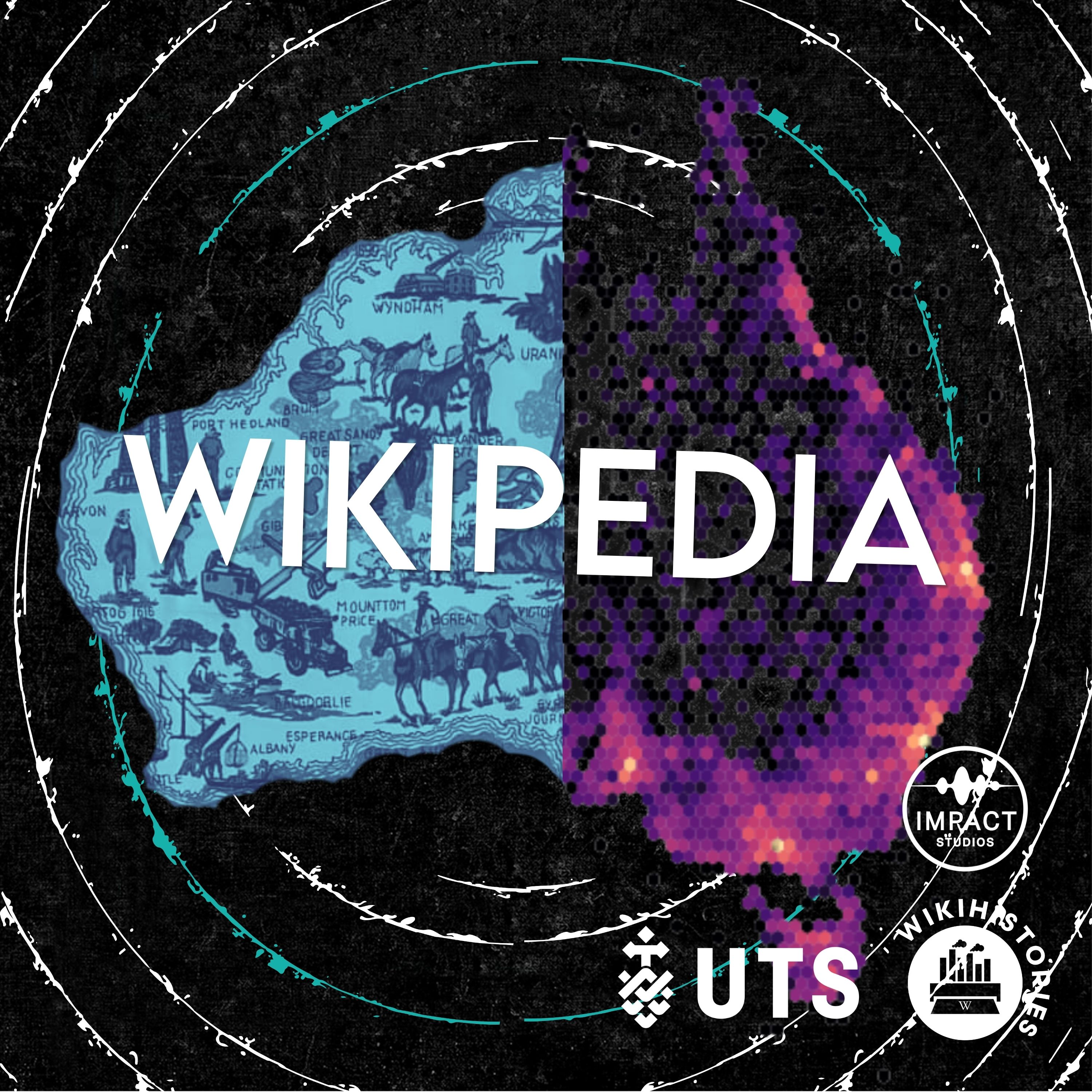 Australia and Wikipedia: The bias in the map 14.07.2026 36minWikipedia doesn't set out to play favourites. But when a made-up Melbourne suburb has more history than real Australian places, something is shaping what gets written.Who - or what - decides which Australian places matter on Wikipedia?Hosts Heather Ford and Francesca Sidoti go looking, through a map of 35,000 places, a street corner in Penrith, and a fight over one island's name.How is Wikipedia biased, and why? The answer will surprise you.VoicesHeather Ford is an ARC Future Fellow and Professor in the School of Communication and Social Sciences at UTS. She is the author of “Writing the Revolution: Wikipedia and the Survival of Facts in the Digital Age” published by MIT Press.Dr Francesca Sidoti is a Postdoctoral Research Associate with the ARC Discovery project ‘Wikipedia and the nation’s story: towards equity in knowledge production’ in the Faculty of Arts and Social Sciences.Dr Michael Falk is a Senior Lecturer in Digital Studies at the University of Melbourne, and is a computational literary scholar, data scientist, speaker and writer. In all his work, he aims to combine the creativity of the arts with the rigour and precision of data science.Research linksAustralian places and WikipediaMap of Australian places on Wikipedia (Wikihistories: 2025)Map showing Edit intensity of Australian place articles: English Wikipedia (Wikihistories: 2025)Full report: How Australian places are represented on Wikipedia (Wikihistories: 2025)We analysed 35,000 Wikipedia entries about Australian places. Some of them sanitise history (The Conversation: 2024)Erinsborough Wikipedia PagePenrith Wikipedia pageK'gari Wikipedia pageBias and WikipediaCan History be Open Source? Wikipedia and the Future of the Past by Roy Rosenzweig (The Journal of American History Volume 2006)Wikipedia's known unknowns (The Guardian 2009) The earliest geographical analyses of Wikipedia’s geographical biases is described Professor Mark Graham. ‘Anyone can edit’, not everyone does: Wikipedia’s infrastructure and the gender gap ( Social Studies of Science 2017) How Wikipedia’s infrastructure introduces new and less visible sources of gender disparity, by Heather Ford and Judy Wajcman.Who Gets To Be Notable And Who Doesn't: Gender Bias On Wiki (NPR All Things Considered 2021) On Wikipedia, gender inequality is hiding in plain sight. Of more than a million and a half biographies - that's on the English-language version - fewer than 19% are about women. A recent study by Francesca Tripodi brings some new insight into why that is.Demographic disparity in Wikipedia coverage: a global perspective (EPJ Data Sci. 2025)Even though people identifying as female and non-binary genders have been better represented in terms of the number of Wikipedia language editions over time, and they are currently better covered than males, current global coverage of people on Wikipedia still shows disparities in both gender and geographical location of biographical subjects in various dimensions.Wikipedia editorsWho is contributing to Wikimedia projects? (Wikimedia Foundation, nd) The Wikipedia “Change the Stats” page that collates research into the Wikipedia editor base as a baseline for increasing the diversity of Wikipedia editors.Community Insights Report (Wikimedia Foundation, 2020) A survey with 2500 Wikimedians looking at their demographics, social and technological experiences. Findings from the survey included:Wikimedia contributors are 87% male. Almost half live in Europe and one-fifth in Northern America, as compared to 9.7% and 4.8% of the global population.Fewer than 1% of Wikipedia’s editor base in the U.S. identify as Black or African American.Although women were still markedly underrepresented among contributors, there was a modest increase in women contributors between 2019 (11.5%) and 2020 (15.0%).Further reading“Finding Eliza: power and colonial storytelling” by Larissa Behrendt (2016)“Finding Eliza” exhibition at Hervey Bay Regional Gallery until 16 August 2026ClipsJimmy Wales on bias: Lex Fridman podcast 19 June 2023Comedian Guy Williams on visiting Rottnest IslandHerbs French Letter World Heritage Fraser Island officially restored to Indigenous name, K'gari, supported by public (ABC News 7 June 2023)CreditsThe executive producer of this series is Heather Ford.The series is hosted by Heather Ford, Francesca Sidoti and Richard Cooke.Produced by Jane Curtis. Associate producer is Francesa Sidoti.Story consultant is Rachael Cusick. Sound by John Jacobs.Thanks for feedback from Sarah Gilbert, Regina Botros, Celine Teo-Blockey, Siobhan Moylan, Lachlan A Court, Zlata Maltceva, Rosa Ellen, and Kate Lawrence.All That We Touch artwork by Alexandra Morris. Episode tiles by Jane Curtis.Bell music composition by Maksim Voloshin-Cleary.Executive Producer of UTS Impact Studios is Sarah Gilbert.It’s produced on Gadigal Country in Sydney Australia.wikihistories is supported by Australian Research Council Grant DP220100662, ‘Wikipedia and the Nation’s Story: Towards Equity in Knowledge Production’.Find out more at wikihistories.netTranscriptsWikipedia and Australia: the bias in the map Transcript Word docWikipedia and Australia: the bias in the map Transcript PDFhttps://doi.org/10.5281/zenodo.23027428
 -
 Introducing... All That We Touch: Wikipedia 07.07.2026 2minIt started as a joke. An encyclopedia anyone could edit? Now it’s one of the ten most visited websites in the world.Even when you think you're not using it, you probably are. It's feeding your search results, your voice assistant, your AI chatbot.But if Wikipedia shapes how we understand the world, what shapes Wikipedia?Host Heather Ford, researcher Francesca Sidoti, and author Richard Cooke investigate the site and all that it touches.Episode 1 asks, what does Australia look like on Wikipedia? The answer takes you from a fictional soap-opera suburb to a dispute over what a place should be called.Episode 2 goes inside the three big fights that made Wikipedia what it is today.Episode 3 asks what its future holds, in the age of generative AI?Episode 4 is a True/False quiz with nuanced answers to simple questions.Episode 5 is for teachers and students wanting practical tips on how to research and teach with Wikipedia.Episode 6 is for Wikipedia editors wanting to share First Nations knowledge respectfully.All That We Touch: Wikipedia is produced by Impact Studios at the University of Technology Sydney.First episode coming soon. Follow now so you don't miss it.VoicesProfessor Heather Ford is an ARC Future Fellow and Professor in the School of Communication and Social Sciences at UTS. She is the author of “Writing the Revolution: Wikipedia and the Survival of Facts in the Digital Age” published by MIT Press.Dr Francesca Sidoti is a Postdoctoral Research Associate with the ARC Discovery project ‘Wikipedia and the nation’s story: towards equity in knowledge production’ in the Faculty of Arts and Social Sciences.Richard Cooke is an author, reporter and screenwriter. The author of three books, he is the former US correspondent and current contributing editor to The Monthly magazine. His latest book is The Last Best Place On The Internet: A Human History of Wikipedia.ResearchTop ten websites in the world by traffic in May 2026: SemrushCreditsThe executive producer of this series is Heather Ford.It is hosted by Heather Ford, Francesca Sidoti and Richard Cooke.Produced by Jane Curtis. Associate producer is Francesa Sidoti.Story consultant is Rachael Cusick. Sound by John Jacobs.Bell music composition by Maksim Voloshin-Cleary.Executive Producer of UTS Impact Studios is Sarah Gilbert.It’s produced on Gadigal Country in Sydney Australia.wikihistories is supported by Australian Research Council Grant DP220100662, ‘Wikipedia and the Nation’s Story: Towards Equity in Knowledge Production’.wikihistories.nethttps://doi.org/10.5281/zenodo.23027428
 -
 Introducing... All That We Touch: Investigating the relationship between technology and society 30.06.2026 5minAre we really separate from the things we make? Do we really control our own tools? And where do we end, and they begin?All That We Touch explores the relationship between technology and society, and how the things we make shape and reshape us in turn.Host Matt Ryan speaks with Tamson Pietsch about the podcast's central questions and its sources of inspiration.In a changing climate, the powerful Western notion that humans are separate from nature, enjoying dominion over it, is coming undone. Meanwhile, digital life has us doubting whether we are fully in control of some of our most everyday objects and technologies.Our title is taken from Octavia Butler's novel, The Parable of the Sower. The dystopian story opens with the lines "all that we touch, we change, and all that we change changes us." It's a credo that seems to neatly sum up philosopher Bruno Latour's central idea: that humans, tools, language and technologies are bound together in networks where nothing stands apart, pure and untouched.You'll hear a sneak preview of the first two stories we'll bring you over the coming months, on a podcast that will feature documentaries, talks and recordings of live events - all on that theme of technology and society.VoicesDr Matthew Ryan is a Chancellor's Research Fellow at UTS' Faculty of Design and Society.Associate Professor Tamson Pietsch is director of UTS' Australian Centre for Public History at UTS and managing director of Impact Studios.Actress Lynne Thigpen reads the excerpt from The Parable of the Sower by Octavia E. Buter.Professor Heather Ford and Dr Francesca Sidoti, along with author Richard Cooke, present our inaugural series on Wikipedia - coming very soon.Michelle Maloney and Abe Noe-Hayes feature in a forthcoming episode, Liquid Gold.CreditsProduced by Lachlan A'Court.Excerpt from Parable of the Sower is by Octavia E. Butler, narrated by Lynne Thigpen, provided courtesy of Recorded Books, © 2000. The full recording is available wherever audiobooks are sold.All That We Touch is made on Gadigal land, in Sydney, by UTS Impact Studios.Executive producer is Sarah Gilbert.Further listeningTo learn more about Bruno Latour, you can listen to Ep 169 of Philosophize This! or Ep 230 and 231 of The Partially Examined Life.The Parable of the Sower, read by Lynne Thigpen, is available at Audible. You can hear an excellent discussion of the novel on Backlisted, Ep 223.
Podobné podcasty


Obľúbený v
Tento podcast sa objavuje aj v rebríčkoch podcastov týchto krajín.
