
The Story of London
Saul
0
The Story of London is a podcast that narrates the history of London as a single chronological tale, from its origins to the present day. Each episode covers a specific period or event, exploring the actions of both the powerful and the marginalized. The podcast aims to be historically accurate while maintaining an engaging and lighthearted tone. New episodes are released weekly.
Epizódy
-
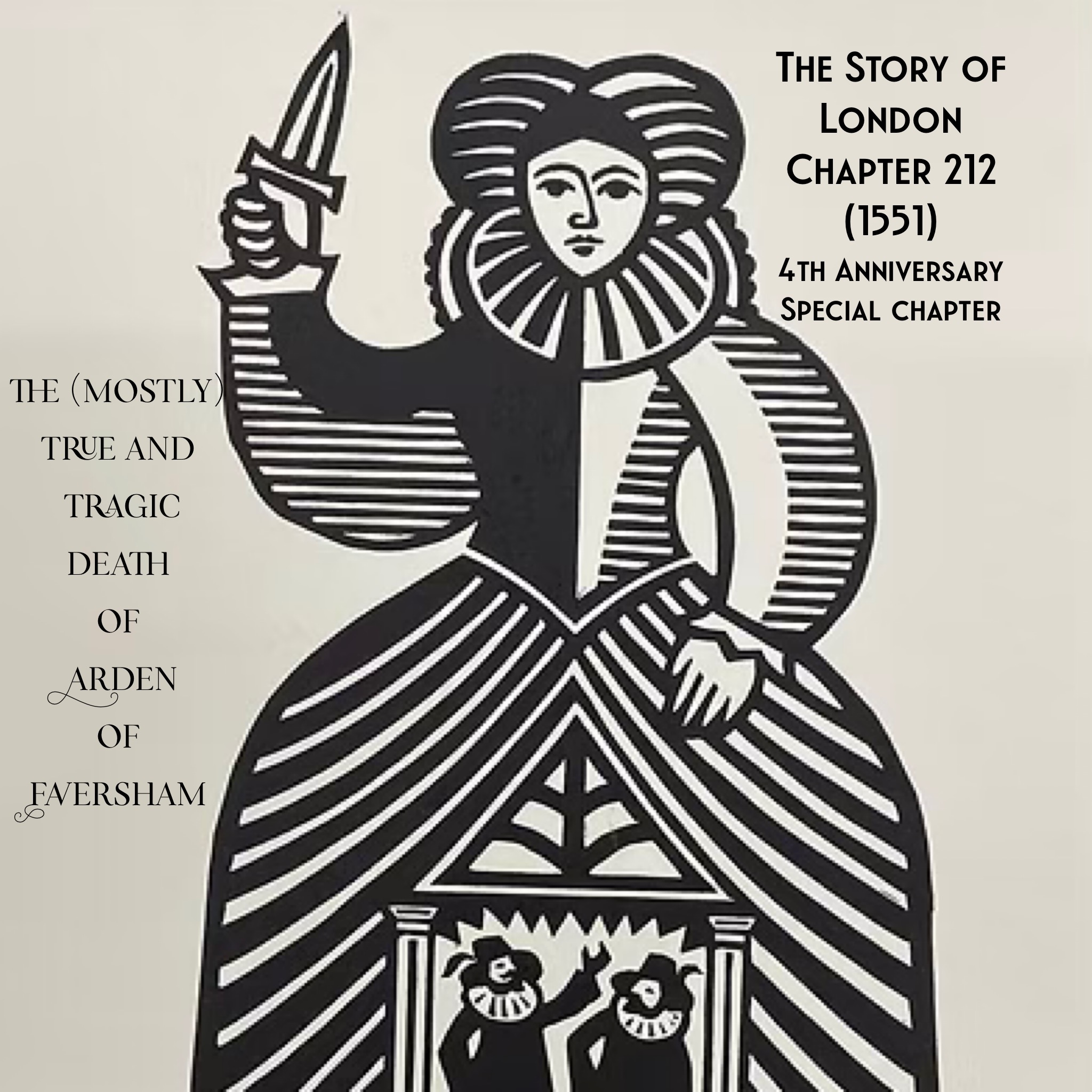 Chapter 212- The (mostly) true and tragic death of Arden of Faversham (1551) 4th Anniversary Special 16.09.2026 1h 2minFebruary 1551… and in a small town near London a terrible murder takes place; a man is killed by his wife and a large assortment of colourful characters, and the case of it creates an uproar that scandalises London all that year… and beyond. The crime became immortalised in poems, ballads, plays, and over 25 years later was included in detail in one of the great historical accounts of the history of England. What was it that so intoxicated the Tudor audiences that they were drawn back again and again to rehash the details so salacious? In this special chapter, made to celebrate our 4th anniversary, we examine the most detailed account of this event to see what it tells us about the time, and to witness an amazing story of London Grocers, criminal soldiers, and children who helped murder their own father. Cover includes detail of a cover of Arden of Faversham, produced by the artist Hugh Ribbans.
 -
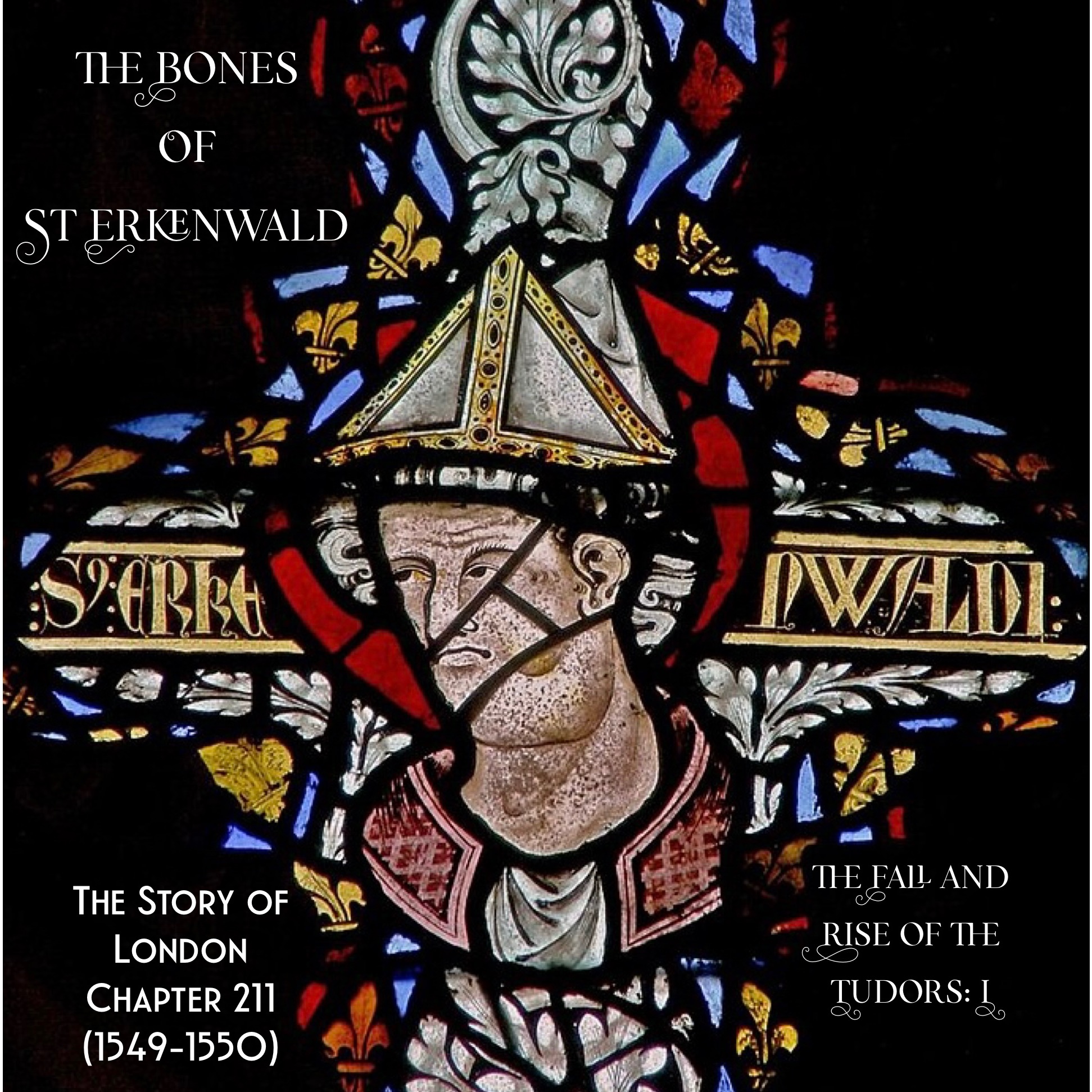 Chapter 211: The Bones of St Erkenwald (1549-1550) (The Fall and Rise of the Tudors: I) 10.09.2026 51minWelcome to the first of two special episodes celebrating the 4th birthday of the Story of London! In the years 1548 and 1549, London existed under the reign of the child King Edward VI, and his Lord Protector, Edward Seymour, the Duke of Somerset… and was heading towards a series of political crisis that would rock it to its core. And the opening one begins now…We see the tale why London’s merchants found themselves at odds with the protectorate regime; how it witnessed the country slip out from under the governments control; how a political disagreement became a crisis, and how suddenly, London the city was presented by a terrible choice… and a moment where one man of the Common Council of the city may have prevented a civil war. All of this, and the awfully sad loss of the remains of London’s ancient Patron Saint… and this is only the open salvo in the disaster to come.Cover art includes a close up of the window to St Erkenwald, in Soulton Hall.
 -
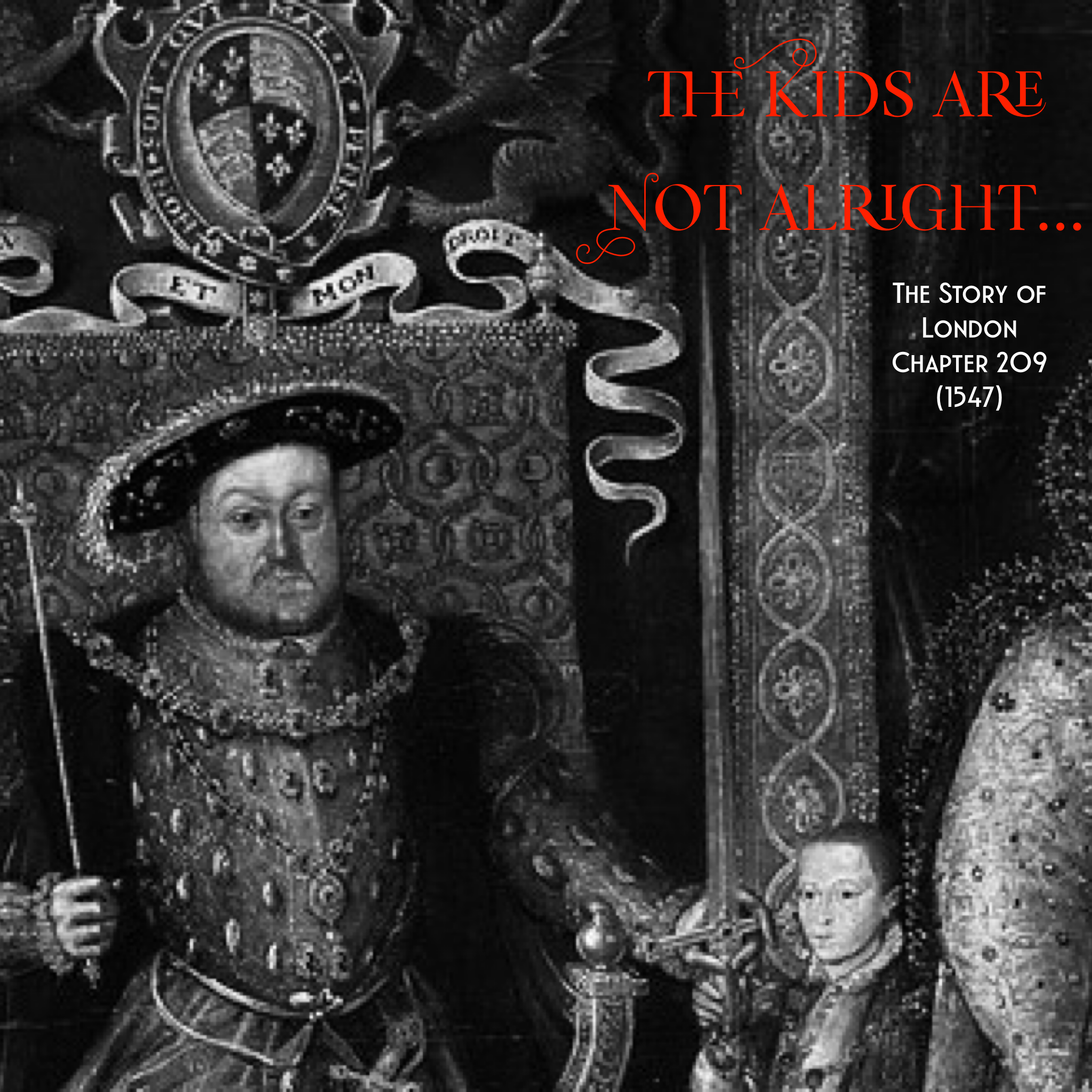 Chapter 209- The Kids are NOT alright… (1547) (The Aftermath of Henry VIII: Part 1) 26.08.2026 48minWe are back with a two part examination of the immediate aftermath of the death of King Henry VIII- and look at the impact of his death upon his family (especially his children), the government of England and upon how London reacted to it all.A nine year old boy was now on the throne of England… this changed everything. Lets find out how… Cover features a detail from “An Allegory of the Tudor Succession” c.1590, Unknown painter
 -
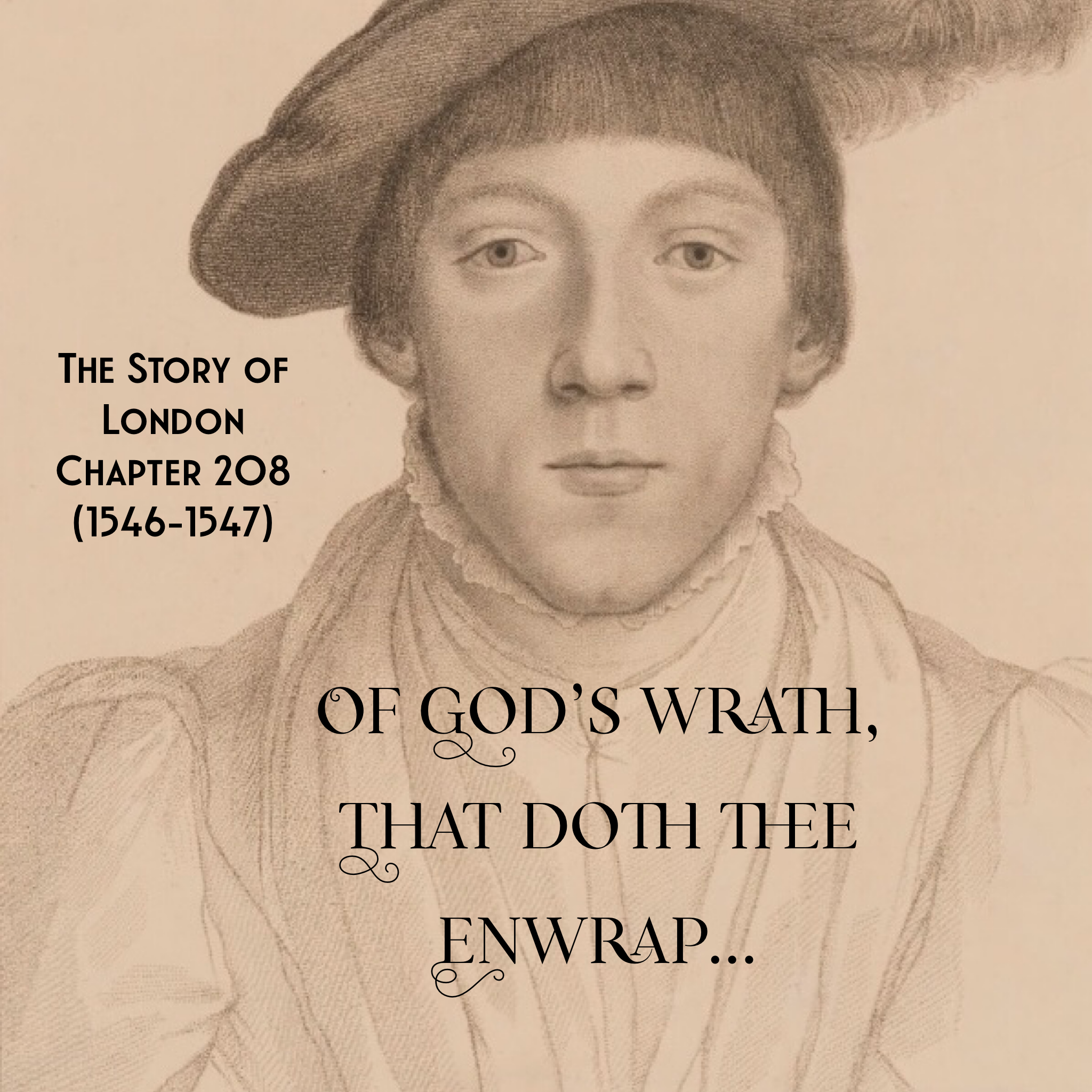 Chapter 208- “Of God’s Wrath, that doth thee enwrap…” (1546-1547) 20.08.2026 56minWe return after a short break, and tell the story of London during the final two years of the reign of Henry VIII- a chapter that not only documents the declining health and mental state of the aging king, but also shows how right up to the end, his regime was as deadly and as vicious as ever.This is London witnessing the trial of a noble whose cause became one London supported… even if he was the kind of man to wander the streets firing crossbows at passersby. Welcome to a city which reflected the paradoxical nature of the regime itself.Cover shows detail of a sketch of Henry Howard, Earl of Surrey, credited to Hans Holbein the Younger.
 -
 Chapter 207- “Alack! Poor mouse!” (1546) 30.07.2026 57min1546- a year which saw the full tyranny of Henry VIII bloom across London; when the city was not being forced to buy tonnes of surplus wheat from the King; when it was not celebrating the end of the War with France; and when it was not almost burning the wives of cattle barons… it was dealing with a great many things.One of these was the closure of its legal red light district over on Bankside, an event which actually caused the spread of illegal sex trade; but it also witnessed a wild year wherein the 6th wife of Henry VIII came within an inch of being arrested for heresy, and an amazing, and bold woman called Anne Askew found herself suffering a horrendous death upon Smithfield. Welcome to the last full year of the life of Henry VIII- it alls it gory detail.Cover features Portrait of Anne Askew by Hans Eworth (1560)
 -
 Chapter 206- “Some for one thing, some for another…” (1543-1546) 23.07.2026 51minThe Story finds itself in the last years of the reign of Henry VIII- and we find our metropolis a place where innocent simple teenagers are burned alive, where security clampdowns see curfews and house searches, where ships explode on the Thames, where thousands of men leave the streets to march out to war, where the economy contracts, where no one is safe, and where all of this is caused by an obese, diseased, angry, foul tempered man, playing games with people and dragging all down into insanity.Cover includes portrait of Henry VIII by Cornelis Metsys.
 -
 Chapter 205- “Lombard street shall be exercised…” (1520-1550) 15.07.2026 52minAn episode where we look under the surface to see what the cities merchants were doing- and run into some surprising truths; this was London at the birth of modern capitalism, and this chapter takes you though the sophisticated financial operations taking place in the city, the newly emergent international trade in credit, why Antwerp was showing the way London had to follow, and introduce a family who would dominate trade in the city over a few generations; the Gresham dynasty.Welcome to the ground floor in the revolution that will change London forever… Cover includes altered picture of the Mercer’s Maid, symbol of the Mercer Livery Company, Dryden Street, London
 -
 Chapter 204- “No man dare speak against…” (1539-1544) 08.07.2026 54minHenry VIII was a tyrant. He was a brutal, wilful, petulant king, whose desire to do whatever the hell he felt like and deal with the consequences later, had driven his country into uncharted and dangerous waters. And this is his reign made manifest upon the streets of London- a city filled with massive mock battles on the river, accidental shootings of washerwomen, new churches to prevent bodies being dragged through Whitehall Palace, confusing mass executions of both Protestants and Catholics on the same day, parades of soldiers never destined to fight, and the king going through wives faster than some residents went though a decent jacket.And in all of this- that highest ranked of all London residents, Thomas Cromwell was to fall from power and be put to death. The sheer madness of the king made manifest in a city just trying to cope with his whims… Cover includes altered version of the portrait of Henry VIII, done by Hans Eworth based on the original by Hans Holbein the Younger (1540-1547)
 -
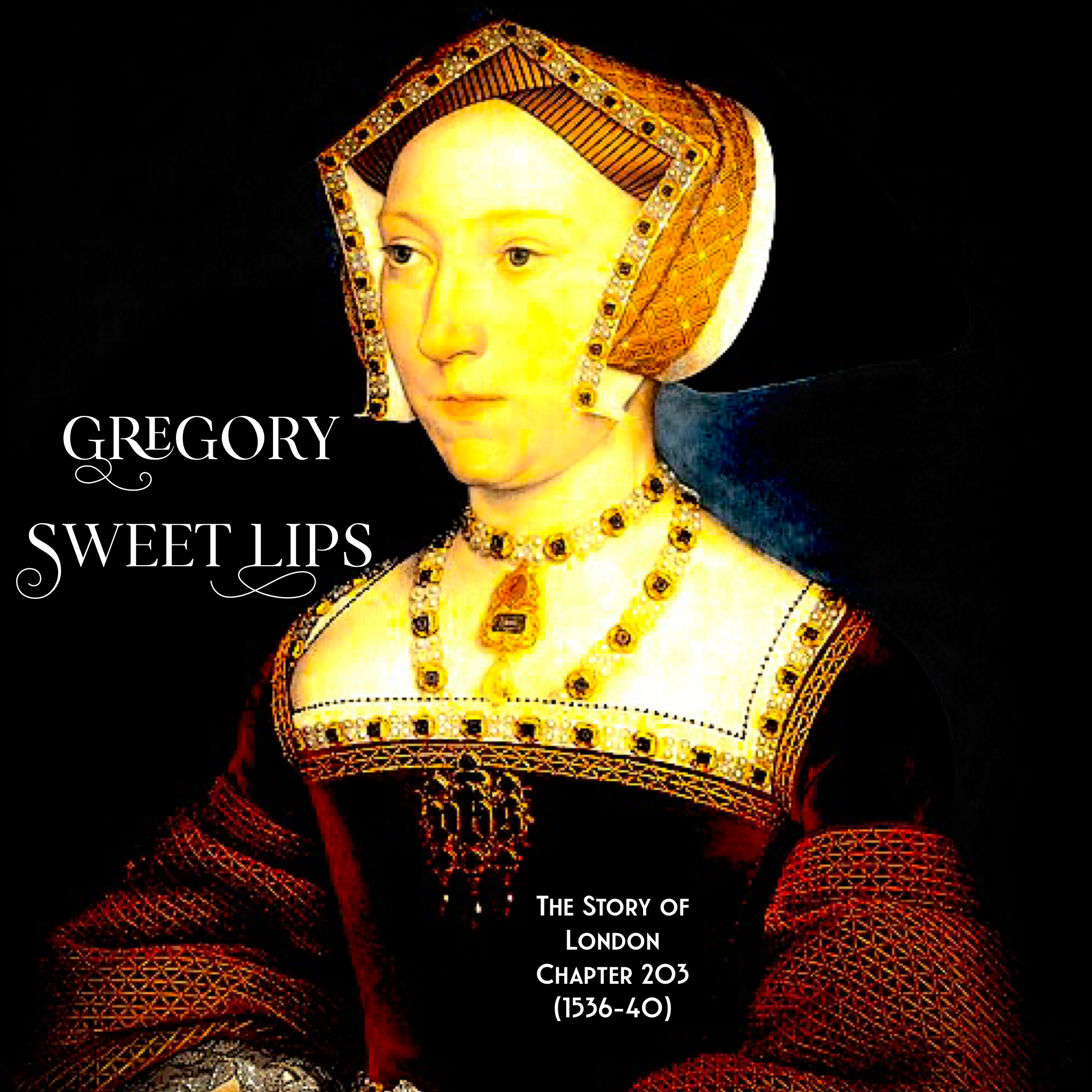 Chapter 203- Gregory Sweet Lips (1536-1540) 25.06.2026 52minThis weeks chapter examines four busy years in the story of our city- culminating in the first death by shooting in its history; along the way we explore a country descending into resentment, resignation and eventually rebellion as Henry VIII descends into tyranny. We examine the seeming madness of his actions, from the speed and ferocity with which he turned on Ann Boleyn, to the dramatic sudden marriage to Lady Jane Seymour, to suddenly being married to a German princess…Along the way we look as the city copes with massive rebellions in the north, violent turmoil in Calais, and crucially, explore why the city itself remained peaceful- discovering that while the king increasingly gave way to his own dark passions, perhaps driven there by a near fatal accident, London’s mercers and others began to look to each other for continuity.Cover includes detail from the portrait of Queen Jane Seymour by Hans Holbein the Younger.
 -
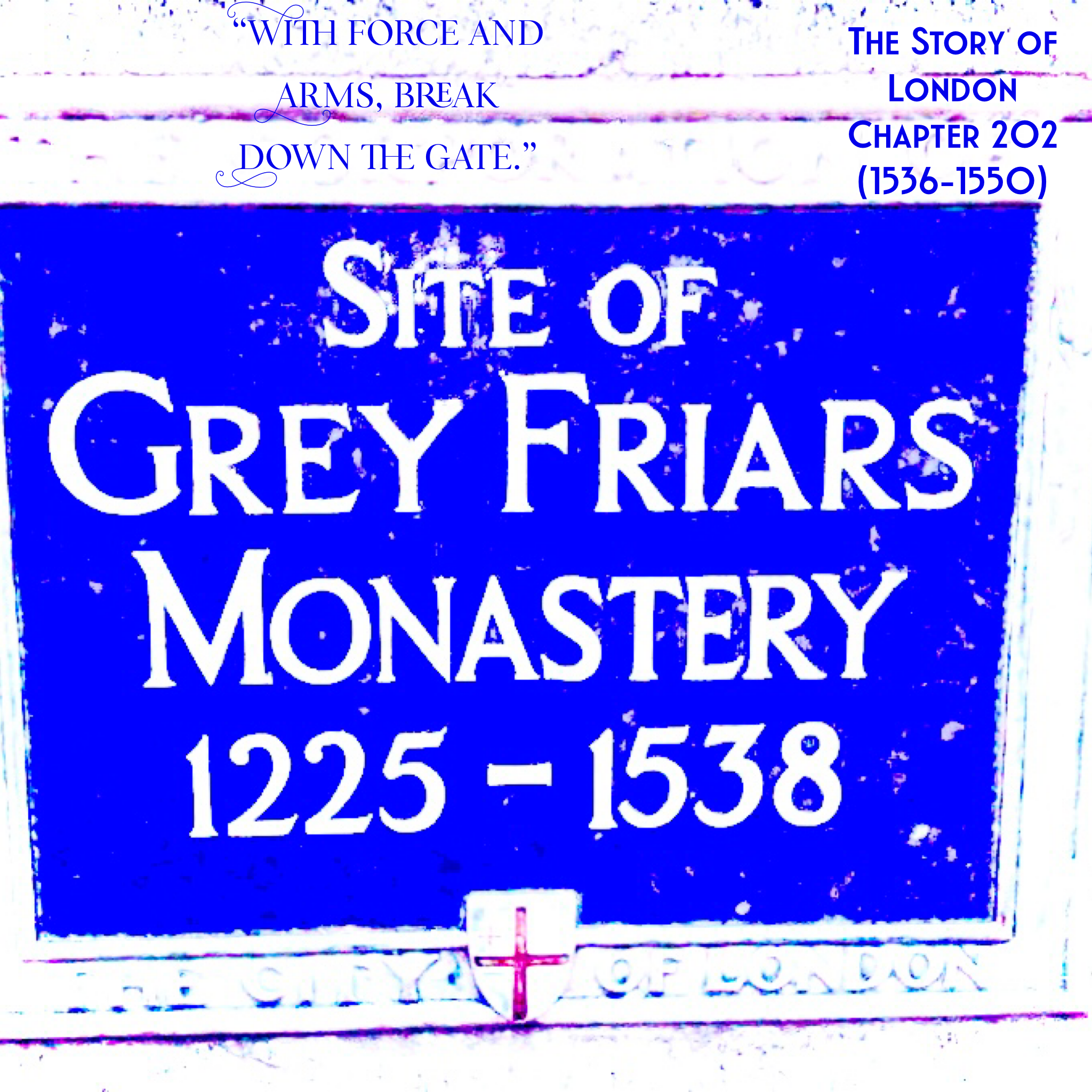 Chapter 202- “With force and arms break down the gate” (1536-1550) 17.06.2026 54minWe take a pause from the narrative, to examine, in detail, what the dissolution of the monasteries of London meant for the city- literally, who gained the land and the buildings, what did they do with them, and how much money was made from this?What we see is series of deals that will influence London for the next few decades, as a plethora of new landlords and new homes erupted, and how a small bunch of people were able to make a fortune out of this.Cover includes photograph of the blue plaque denoting the site of Grey Friars Monastery, the City of London
 -
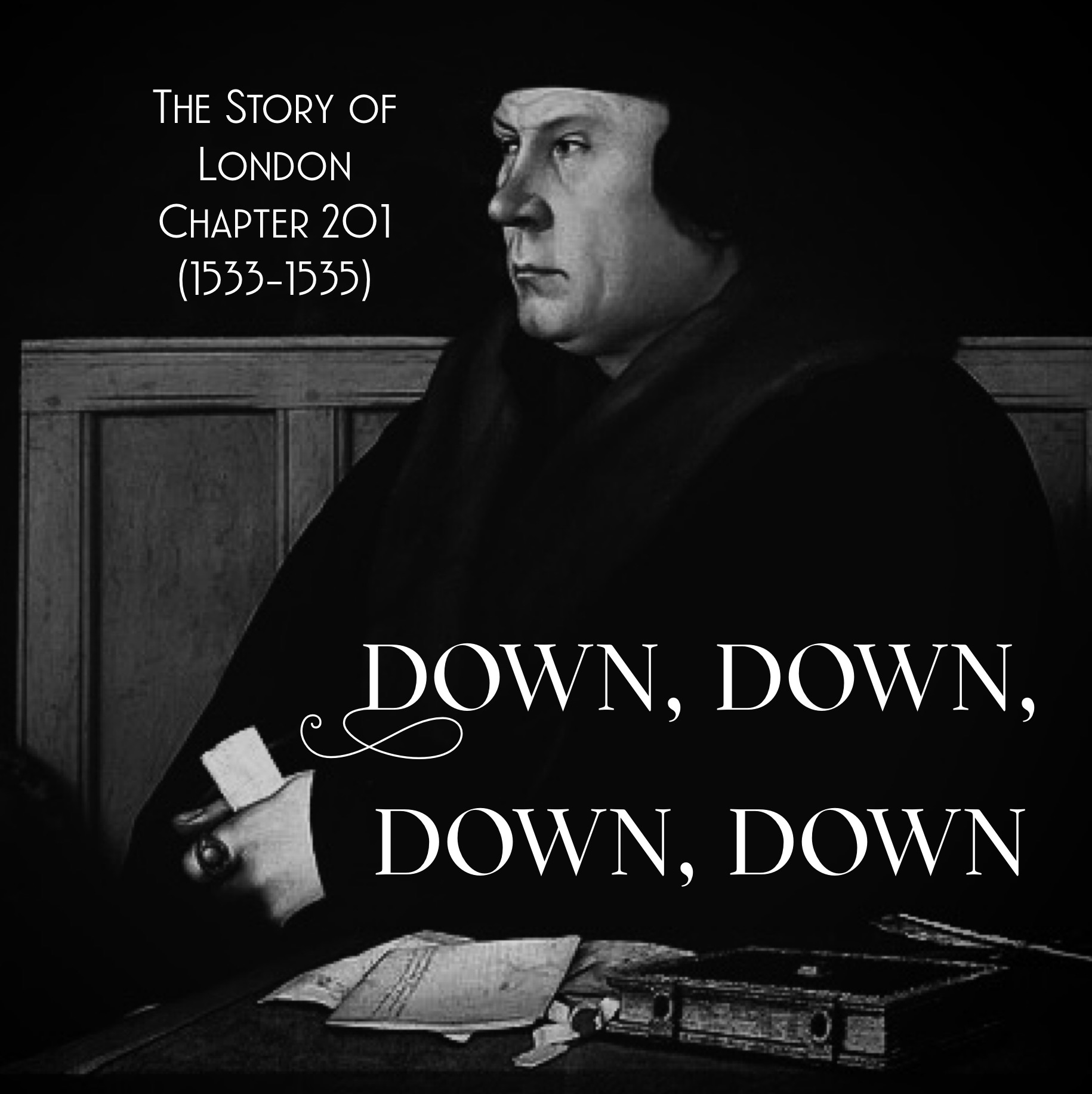 Chapter 201- Down, down, down, down… (1533-1535) 10.06.2026 55minWe return with the story as we examine the circumstances that saw a drastic change in fortunes for the cities two most powerful residents- for Thomas Cromwell? His rise in power and status, and his leaving of a physical mark upon the very fabric of the city.For Thomas More? The opposite. The driven man, rushing headlong towards his own death, the circumstances of his life making it impossible to avoid.And around this, a city on the edge of panic, the politics of the new Queen, and much more, as the Story of London reaches the end of the saga of ‘The Boy from Milk Street’.Cover features the Portrait of Thomas Cromwell, attributed to Hans Holbein the Younger, c.1533, Frick copy of original.
 -
 Chapter 200- “She has raised a fire…” (1528-1534) 27.05.2026 57minThis week we examine the tale of Elizabeth Barton- holy woman, prophetess, political demagogue and the figure who openly defied Henry VIII over his desire to marry Anne Boleyn. But her story is one which drops us into a world of religious fervour, popular discontent, and public humiliation, as her extraordinary tale reveals the unspoken opposition and helplessness to what the king was doing…Cover contains a detail from ‘Portrait of a Lady’ by Rogier van der Weyden, c.1460, often erroneously said to be a portrait of Elizabeth Barton.
 -
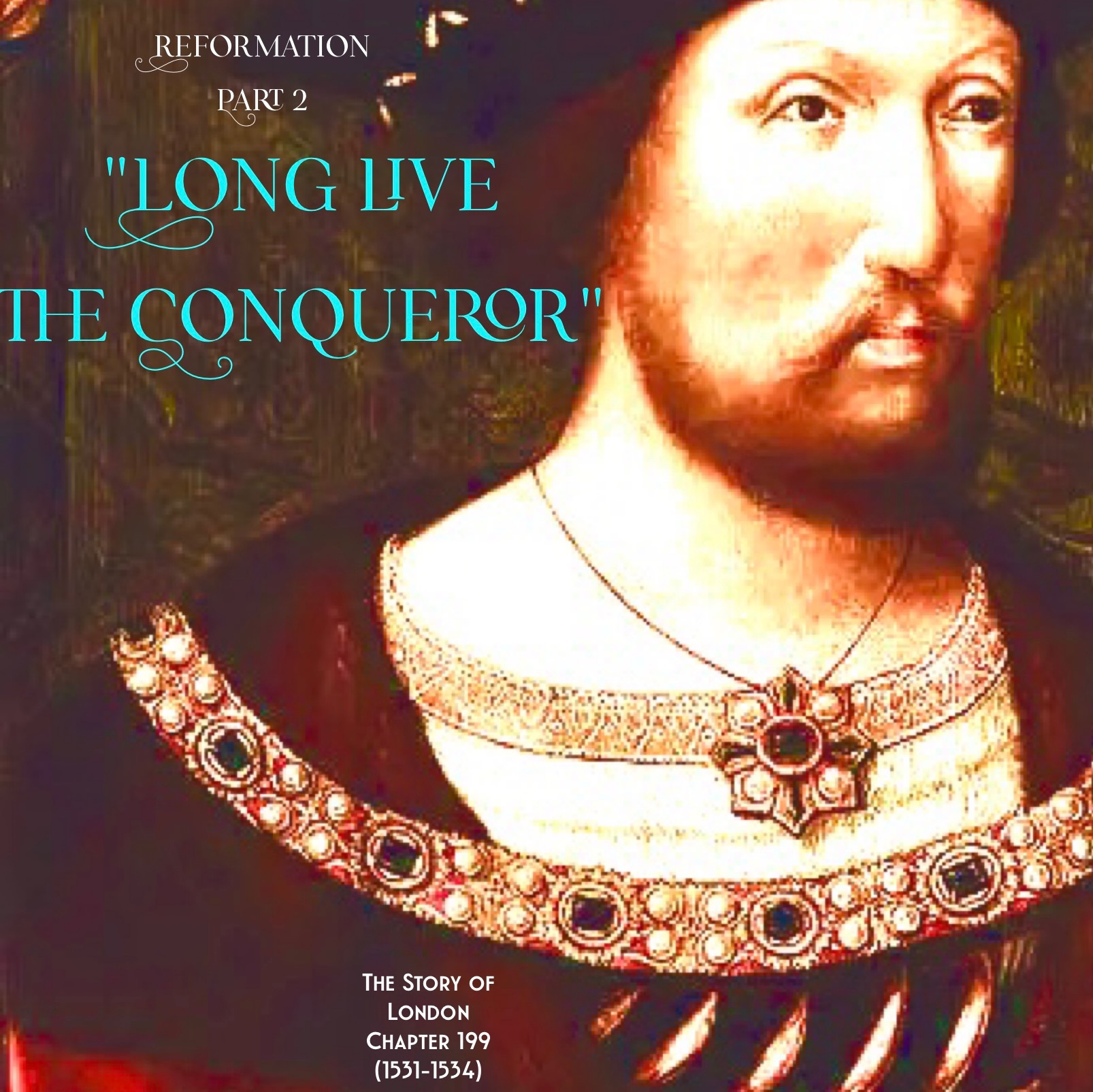 Chapter 199- “Long live the Conqueror” (Reformation 2/2) (1531-1534) 20.05.2026 50minThe complex and convoluted tale of Henry VIII’s break with Rome continues as the myriad passions of the King run headlong into his own doubt, a sudden need for international travel, the issues caused by him consummating his relationship with Anne Boleyn and more.Meanwhile Westminster was being completely rebuilt, lepers were being cast out onto the streets, and murderous cooks are being boiled alive- welcome to London at the start of the Reformation!Cover features detail from ‘Portrait of Henry VIII’, c 1520’ by unknown artist.
 -
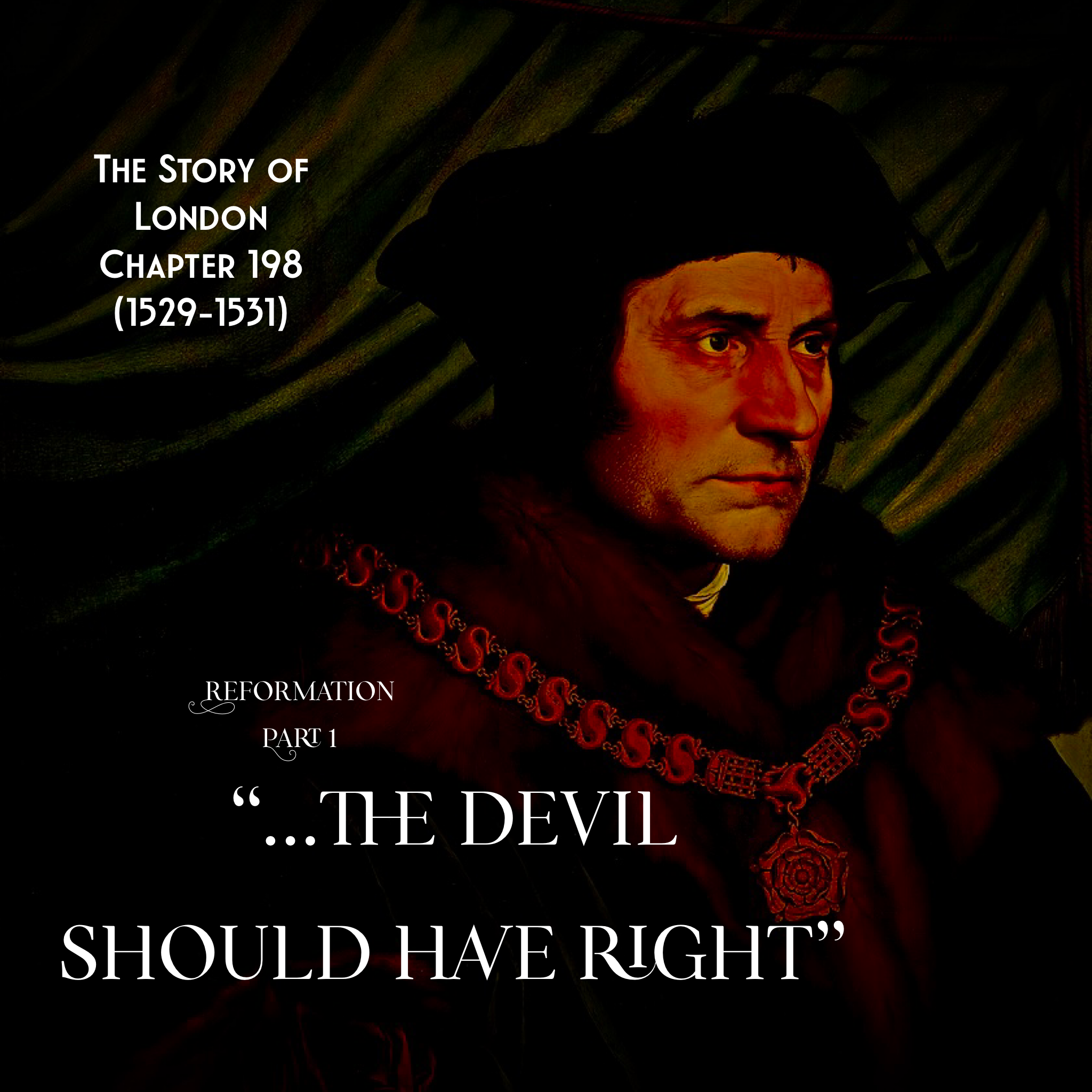 Chapter 198- “…The Devil should have right” (Reformation 1/2) (1529-1531) 14.05.2026 49minSurprisingly, the forces that drove the most dramatic changes in England, were born, cultivated and found expression within London. The Story reaches a moment of grand political crisis- Chancellors fall, parliament flexes its muscles, the capricious King makes up arguments as he goes along, and London carries on, providing intellectual and emotional fuel for it all. And while this happens, Thomas More, the judge from Milk Street, ascends the highest position in all the land, while still presiding over cases of London criminality, and being the face of the kings sudden desire to start killing heretics… welcome to the open salvos of the Reformation.Cover includes a detail of the portrait of Sir Thomas More, by Hans Holbein the Younger (1527),
 -
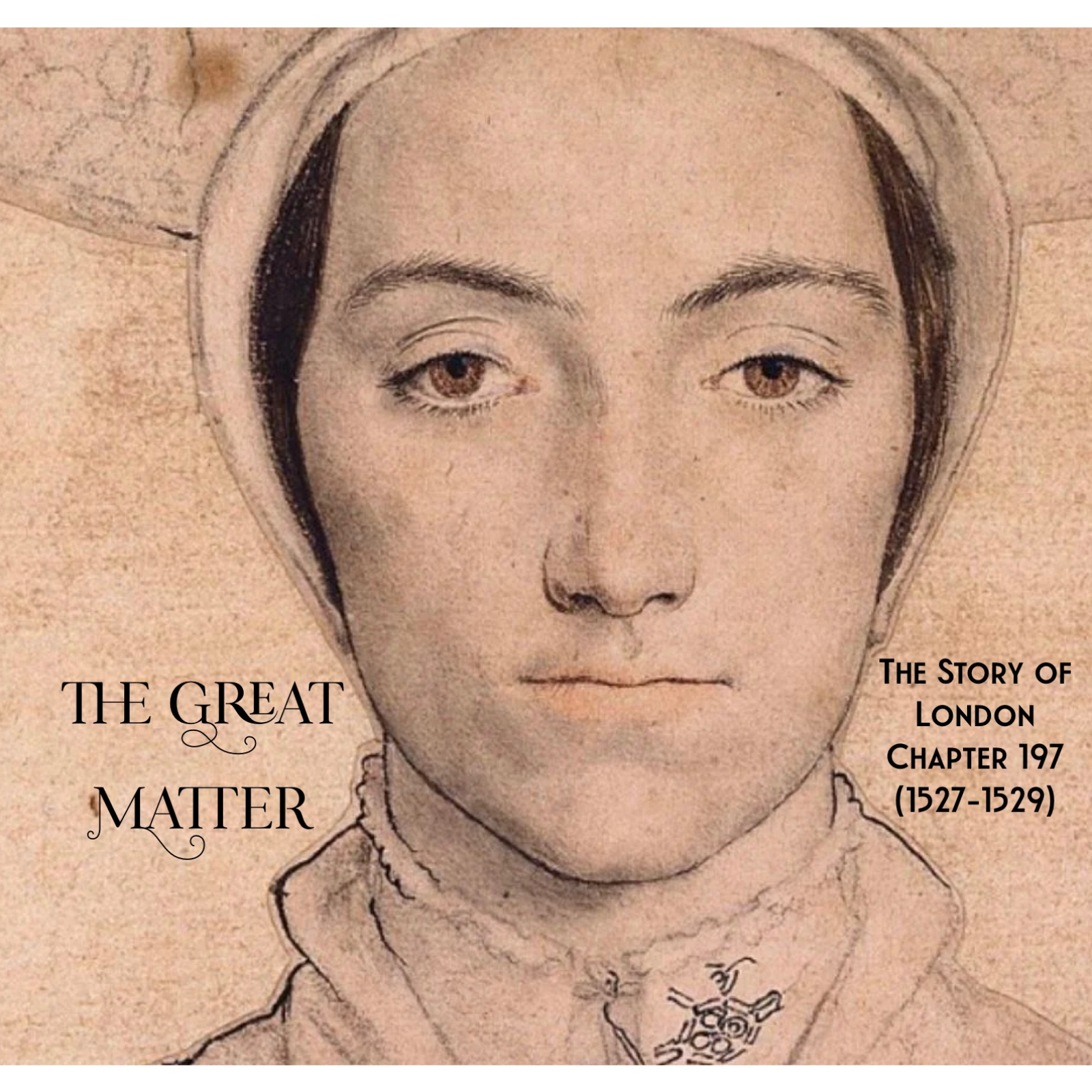 Chapter 197- The Great Matter (1527-1529) 06.05.2026 54minA episode that explores one thing above all else- the rather soap opera type melodrama of Henry VIII seeking to end his marriage to Catherine of Aragon; but while this story dominates domestic and to a degree international politics over these years there is more than just that happening… London has to cope with drought and food shortages, a brutal outbreak of Sweating Sickness, and a growing campaign of religious dissent within the city. A fraught two years indeed…Cover includes sketch by Hans Holbein the Younger, recently identified by one team as possibly being that of Anne Boleyn; this claim is contested by many.
 -
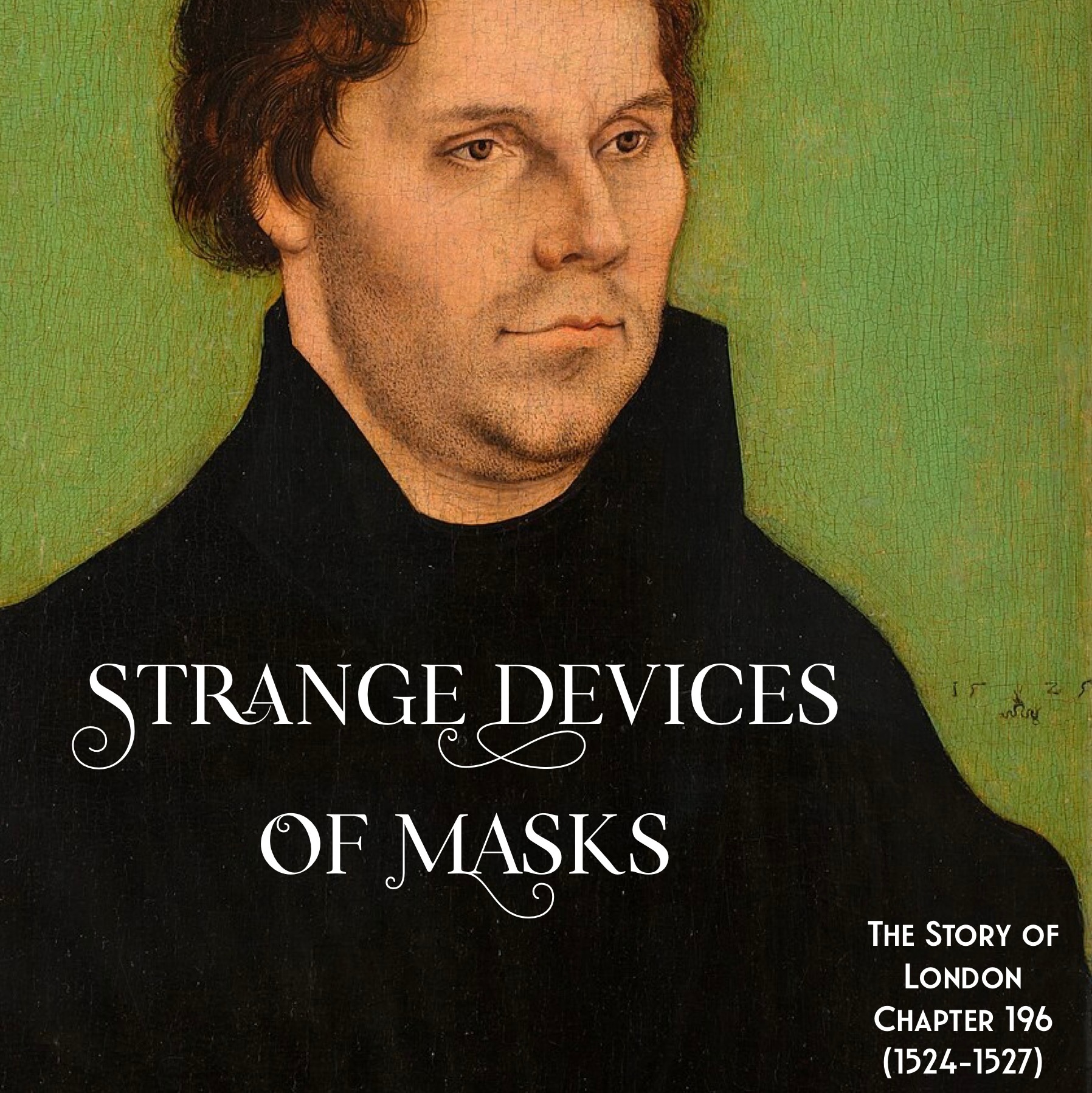 Chapter 196- ‘Strange Devices of Masks’ (1524-1527) 29.04.2026 55minThe mid-1520’s was an era where London was witnessing events both strange and tumultuous; Thomas More was leading armed raids into the homes of German merchants; the war with the Holy Roman Empire against France, suddenly became a war with France against the Holt Roman Empire; where Christmas pageants saw the careers of senior lawyers left in ruins and where a rich young northerner got into trouble for falling in love with an English girl with French style.This was a few years where the cities life was following a simple trajectory, carrying on as it always did, with new livery halls, and wild bonfires and celebrations and jousts at good news… but behind the mask of the era, something terrible was coming.Cover includes detail from portrait of Martin Luther, by Lucas Cranach the Elder, c.1525
 -
 Chapter 195- The Still Christmas (1521-1524) 22.04.2026 53minThe early part of the 1520’s was filled with many tales; royal bestsellers provoking a flame war in print; royal visits that saw new bridges built over the Fleet River; scandalous and brutal murders involving beautiful young noble women. Around them all, London continues, coping with mild mass hysteria, Mayors who refuse to take their posts, and a plague outbreak that causes the city to go so quiet with fear, that December it was known as ‘The Still Christmas’.Cover art features portrait of Charles V, copy by Ruben’s from an original by Titian.
 -
 Chapter 194- Troynovant & Amaurotum (1517-1521) 15.04.2026 53minThe story re-focuses itself on the city over the next few years; quiet ones in the chronicle of the place, and yet ideal to look over London and its sense of place. By the end of this decade it was to undergo massive changes, so now is a perfect time to remind ourselves of how it looked and felt; from the rise of the booksellers of St Paul’s Churchyard, to the blatant militancy of the Guilds towards foreigners regardless of the Kings fury at the rioters in last chapter; from the curious case of the murder of a tailor whose death started a debate that was to have huge implications in the years to come, to how its houses were built- this is an episode about its sounds, its smells, its people and more. The city was poised between two ideas of itself- the mythic Troynovant, ancient, unchanging, defined by its traditions; and the imaginary Amaurotum, its dark mirror as reflected in Thomas More’s bestseller, Utopia. And of the event in distant Germany which was to herald in the new age…Cover features photograph of The London Wall.
 -
 Chapter 193- The Dance of Evil May Day (II: Pugna Pro Patria) (1517) 08.04.2026 58minOn April 30th, 1517 a meeting between an Italian diplomat and the King of England takes place in Richmond Palace. This starts a sequence of events that sees London that night suddenly plunged into a cauldron of violence- a mob of young men rampage from one end of the city to another. And yet… no one is killed. The damage is slight. The riot is over as quickly as it began.But what comes after that, starting the following dawn, is one of the more horrific events in London’s history; something so traumatic, it is felt a generation later and impacts upon the city for decades. Presenting part 2 of the tale of the Evil May Day Riot.Cover contains detail of ‘The Taking of Christ’ by Caravaggio, 1602
 -
 Chapter 192- The Dance of Evil May Day (I: The Beginning of the Grudge) (1514-1517) 01.04.2026 55minMay. 1517. London is rocked by a riot directed towards the foreigners living within its walls, an orgy of violence forever known as the ‘Evil May Day’. But just how bad were these riots? Were they as savage as the authorities made them out to be… or is the memory of them influenced by the response of a capricious and vengeful king?The Story of London examines the background and events of this event to try and work out why the city found itself plunged into a sea of violence that summer, most of it done by men in uniform. This chapter we explore the context- the background of events in Europe, England and London that fed into the riots themselves…Cover contains detail of ‘The Taking of Christ’ by Caravaggio, 1602
Podobné podcasty


Obľúbený v
Tento podcast sa objavuje aj v rebríčkoch podcastov týchto krajín.
