
Phantom Power
SpectreVision Radio
0
Phantom Power is a podcast that explores the invisible influence of sound on our lives. Host Dr. Mack Hagood interviews sound scholars, artists, and acoustic ecologists about topics like noise-cancelling headphones, silent films, audiobooks, computer speech, and the politics of listening. The show combines intellectual rigor with great audio, making it accessible to both newcomers and experts in sound studies. It is part of the SpectreVision Radio network, which focuses on the intersection of arts and the uncanny.
Epizode
-
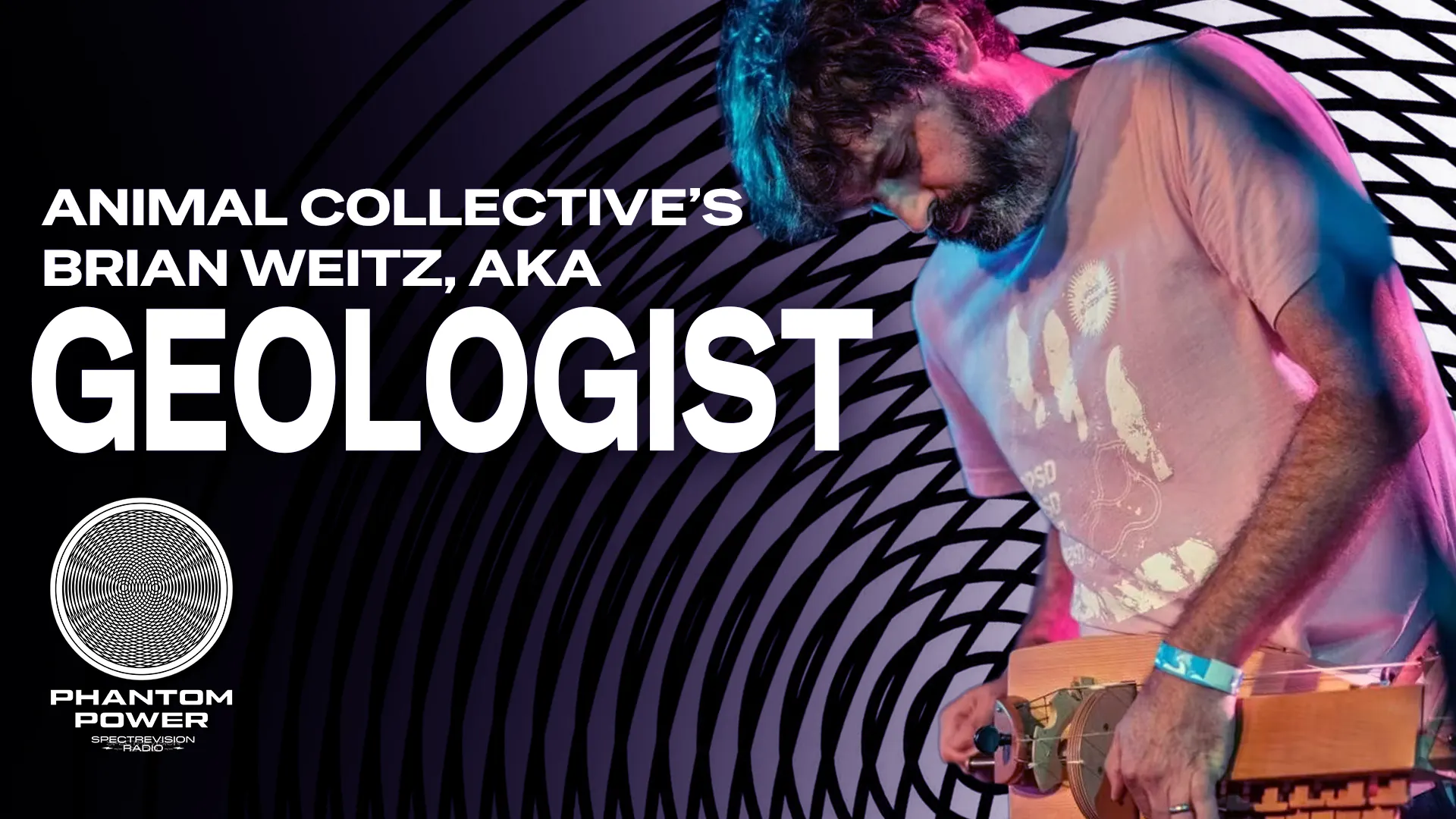 Animal Collective’s Geologist: Still Digging Up Sonic Gems 18.09.2026 49minBest known as Geologist, Animal Collective’s Brian Weitz injects synthesizers, samples, animal sounds, and field recordings into that band's enchantingly strange sound world. Recently, Weitz has been on a creative tear, releasing a solo album and several other projects, including Croz Boyce with Avey Tare. In our interview, he talks about sonic texture, the internet’s influence on music culture, and his obsession with the hand-cranked medieval instrument, the hurdy-gurdy. In this conversation, we talk about sound, technology, and the music business: the first sounds that caught Brian's young ear; his love of that classic turn of the millennium technology the MiniDisc player; Animal Collective’s determination never to sound too “trad”; the strange opportunities and pressures of early internet fame; And the hurdy-gurdy--that infernal machine that fuels so much of Brian's recent creativity. Phantom Power members will get the full interview, including Brian’s background in ocean conservation—we talk about scuba diving the recordings of seals and walruses that found their way into Animal Collective tracks. Plus Brian's reading and listening recommendations. You can become a member at mackhagood.com . And Croz Boyce will perform at Cincinnati’s Talk Low Music Festival on Saturday, September 26, at the Contemporary Arts Center. Phantom Power is proud to sponsor Talk Low, and I hope to see some of you there. Cited Media: Albums: Michael Jackson - Thriller (1982) Panda Bear - Panda Bear (1999) Animal Collective - Spirit They're Gone, Spirit They've Vanished (2000) The Strokes - Is This It (2001) Animal Collective - Campfire Songs (2003) Animal Collective - Sung Tongs (2004) Animal Collective - Feels (2005) Animal Collective - Merriweather Post Pavilion (2009) Animal Collective - Meeting of the Waters (2017) Floating Points, Pharoah Sanders & The London Symphony Orchestra - Promises (2021) Randall Poster - For the Birds: The Birdsong Project (benefiting Audubon Society & Macaulay Library, Cornell) (2022) Motherfuckers, JMB & Co (2025) Geologist - Can I Get a Pack of Camel Lights (2026) Avey Tare & Geologist present Croz Boyce - Croz Boyce (2026) Climax Golden Twins - Imperial Household Orchestra David Crosby - If I Could Only Remember My Name (1971) Valentin Clastrier - solo hurdy-gurdy record New Psychoactives - Animal Collective side project (SoundCloud) Series & Platforms: Daryl Hall - Live at Daryl's House (web series) Fugazi - Live Archive Series Artists: Crosby, Stills & Nash Sonic Youth Chapters: 0:00 Intro5:15 Early Musical Memories12:27 New York Scene & Early Records16:05 Band Philosophy & Internet Era22:00 Music Business & Fan Community27:40 Croz Boyce & Recent Work31:58 Naming Croz Boyce36:48 The Hurdy-Gurdy41:17 College Radio & Keiji Haino47:32 Outro Click here to read the full transcript Learn more about your ad choices. Visit megaphone.fm/adchoices
 -
 Tashi Dorji: The Radical Openness of Improvisation 28.08.2026 52minIn the early 2010s self-taught guitarist Tashi Dorji was recording improvised guitar explorations in his home near Asheville, North Carolina. These self-released outings drew on his unique mix of musical influences from the Buddhist music of his childhood in Bhutan to the Western music he discovered through shortwave radio and bootleg tapes of MTV videos. Subsequently inspired by punk rock as well as the outsider guitar styles of John Fahey, Derek Bailey, Mark Ribot, and Sir Richard Bishop, Tashi was developing a percussively rhythmic sound all his own. Guitarist Ben Chasny of Six Organs of Admittance was so inspired by Tashi Dorji's playing that he started a record label to release Tashi’s self-titled vinyl debut in 2014. Since then, Tashi's released records on Drag City, collaborated with musicians like John Dieterich of Deerhoof and Tony Buck of the Necks, and toured with Godspeed, You! Black Emperor. Tashi is going to be coming to Cincinnati to take part in the Talk Low Music Festival, which is running September 24th through 27th. He'll be performing with Faith Coloccia on Saturday, September 26th. Phantom Power is a sponsor of the Talk Low Festival, which features a great lineup of adventurous music link in the show notes. So I thought this would be a great opportunity to talk improvised music with someone who has dedicated his life to it. Tashi has developed a philosophy of improvisation that challenges ideas of permanence, hierarchy, and value. We discuss the radical openness of improv in life and music and we talk about the record that opened his ears to open tunings, as well as how a condenser microphone and a pair of headphones changed his relationship to the guitar. We also discuss his early life in Bhutan, that tiny country located in the Eastern Himalayas between China and India. Of course our members will get an extended version of the conversation, including Tashi's recommendations of things to read, listen to and do more information at http://mackhagood.com . Visit Tashi Dorji’s Bandcamp. Cited Media: Albums & Records: Tashi Dorji - Blue Twelve (2014) Tashi Dorji - We Will Be Wherever the Fires Are Lit (2024) Tashi Dorji - Low Clouds Hang, This Land Is On Fire (2026) Ry Cooder & Vishwa Mohan Bhatt - A Meeting by the River (1993) Joe Pass - Virtuoso (1974) Nirvana - Nevermind (1991) Neil Young - Heart of Gold (1972) Raphael Rogiński - Plays John Coltrane and Langston Hughes (2024) Miles Davis Sun City Girls 75 Dollar Bill Pavement Bonnie “Prince” Billy Tesla Cinderella Metallica Slayer Jon Bon Jov Soundgarden Alice In Chains Butthole Surfers Smashing Pumpkins Midnight Oil Michael Jackson Books: Dan DiPiero - Book on Improvising in Everyday LifeLaozi - Tao Te Ching (~6th Century BCE)Emma GoldmanAlexander Berkman Articles & Interviews: Andy Slater - On Visual Impairment and Sound ArtVijay Iyer - Writings on ImprovisationMark Masters - Retrospective on Tashi Dorji Chapters: 0:00 Intro & Welcome3:00 Guitar Influences & Touring5:00 Recording & Sound Discovery10:00 Patterns & Prepared Guitar16:00 Philosophy of Improvisation21:00 Collaborating with Others24:00 Musical Origins in Bhutan29:00 Shortwave Radio & Western Rock34:00 Leaving Bhutan for America43:00 Buddhism & Recent Work49:33 Outro To read the full transcript click here. Learn more about your ad choices. Visit megaphone.fm/adchoices
 -
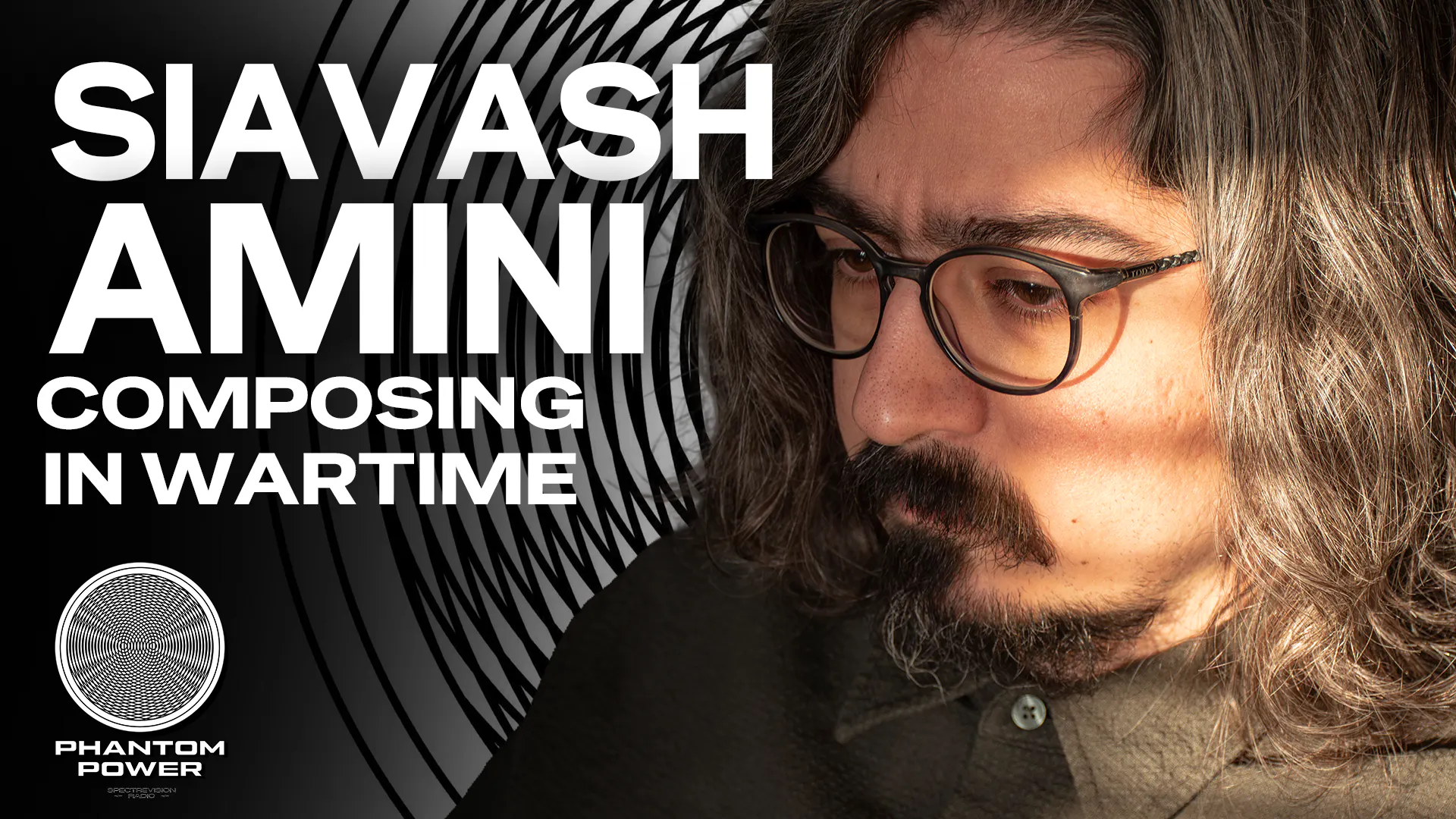 Disquiet in Tehran (Siavash Amini) 14.08.2026 53minSiavash Amini is an experimental composer living in Tehran, trying to live his life and hone his craft amid United States bombings and government crackdowns. Amazingly, he is still creating. August 28th will see release of his collaboration with the American theorist and poet Eugene Thacker, Songs for Sad Poets Vol. III (Hallow Ground). He’ll also soon drop a solo record, Beneath the Pine on Lawrence English's Room 40 label. In this conversation, we talk about the war, Siavash's daily life, and what he'd like to ask of people on the left in the United States and Israel. We also dive into his two albums and his text-based composition techniques. For the full unedited conversation, become a member at mackhagood.com. Finally, please consider joining Siavash's Patreon page. It's the best way that you can support a great artist going through the unimaginable. Cited Media: Music: Mazen Kerbaj - Starry Night (2006) Albums: Siavash Amini & Eugene Thacker - Songs for Sad Poets, Vol. 1 & 2 (2022) Siavash Amini & Eugene Thacker - Songs for Sad Poets, Vol. 3 (2025) Siavash Amini - There Beneath the Pine (UNRELEASED) Literature: Sadegh Hedayat - Three Drops of Blood (1932) Sadegh Hedayat - Buried Alive (1930) Theorists/Writers: Eugene Thacker - In the Dust of This Planet (2011) Matt Finney Chapters: 0:00 Intro3:49 Daily Life in Tehran7:58 Western Indifference11:56 Art Under Fire13:26 New Records21:28 There Beneath the Pine23:54 Persian Music Influence26:47 Collaborating with Eugene Thacker28:48 Songs for Sad Poets Origins32:57 UTAU Vocals Technique40:11 Nation States & Dialogue47:36 Still Making Music To read the full transcript click here. Learn more about your ad choices. Visit megaphone.fm/adchoices
 -
 Audiobook Superstar Robin Miles: The Full Interview 31.07.2026 1h 53minWhile Mack takes a summer break, we bring you this treat from the archives: the full-members-only version of his 2024 interview with beloved audiobook narrator Robin Miles. This episode features almost an hour of additional content, including our What’s Good segment where Robin unsurprisingly makes some really great book recommendations! To get access to all our members’ content, past and future, become a member at mackhagood.com. This episode is a masterclass in audiobook narration and acting with an acclaimed actor, casting director, audiobook narrator and audiobook director. Miles has narrated over 500 audiobooks, collecting numerous industry awards and, in 2017, was added to the Audible Narrator Hall of Fame. She’s the most recognizable voice in literary Afrofuturism, having interpreted books by Octavia E. Butler, Nalo Hopkinson, N.K. Jemisin, and Nnedi Okorafor. Miles holds a BA and an MFA from Yale. She has taught young actors and narrators at conservatories across the country and she has an amazing talent for doing accents—something we really dig deep into on this podcast. In this conversation we talk about technique, the audiobook industry, and the politics of vocal representation. How do we avoid the misrepresentation of marginalized people on the one hand and vocal typecasting on the other? Cited Media: Books: Nalo Hopkinson - Midnight Robber (2000) N.K. Jemisin - The City We Became (2020) N.K. Jemisin - The World We Make (2022) N.K. Jemisin - Broken Earth trilogy (2015–2017) Octavia E. Butler - Patternmaster series (1976–1984) Octavia E. Butler - Kindred (1979) Octavia E. Butler - Parable of the Sower (1993) Octavia E. Butler - Parable of the Talents (1998) Octavia E. Butler - Xenogenesis series (1987–1989) Tananarive Due - The Good House (2003) Isabel Wilkerson - Caste (2020) Isabel Wilkerson - The Warmth of Other Suns (2010) Bell Hooks - Teaching to Transgress (1994) Bell Hooks - Teaching Community (2003) Bell Hooks - Teaching Critical Thinking (2010) Dennis Lehane - Small Mercies (2023) Ian Reid - We Spread (2022) Cicely Tyson - Just As I Am (2021) Karina Yan Glaser - The Vanderbeekers series (2017–present) Nnedi Okorafor - Binti series (2015–2018) Taylor Jenkins Reid - The Seven Husbands of Evelyn Hugo (2017) Plays: Suzan-Lori Parks - Topdog/Underdog (2001) Tony Kushner - Angels in America (1991–1992) 0:00 Intro & preamble4:51 Guest intro: Robin Miles11:03 Teaching acting17:00 Script marking technique20:48 Character switching & IPA24:08 The IPA explained25:19 Vocal colors & authorship27:53 Physical embodiment of text35:54 Nalo Hopkinson deep dive40:56 Roles in audiobook production51:44 Broken Earth & sci-fi voicing1:12:09 Politics of representation1:16:33 Recording gear & software1:19:44 AI vs. human narration1:30:08 Writing & narrator matching1:45:16 What's Good Click here to read the full transcript Learn more about your ad choices. Visit megaphone.fm/adchoices
 -
 Noise, Tinnitus and Affect Theory: Marie Thompson Extended Interview Recast 17.07.2026 1h 27minWhile Mack takes a summer break, we bring you this treat from the archives: the full-members-only version of his 2024 interview with the influential theorist of noise and affect theory, Dr. Marie Thompson. This episode features 40 minutes of additional content on Thompson’s research on tinnitus and hearing loss. To get access to all our members’ content, past and future, become a member at mackhagood.com. Feminist sound scholar and musician Marie Thompson is a theorist of noise. She has also been one of the key thinkers in integrating the study of sound with the study of affect. Noise is a notorious concept that means different things different people. In this conversation, Marie Thompson examines noise through the affect theory of Gilles Deleuze and Baruch Spinoza as well as the systems theory of Michel Serres. We’ll also talk about her critique of acoustic ecology and a rather public debate she had with sound scholar Christoph Cox. And if you don’t know what any of that means, don’t worry—we break it down! Dr. Thompson is Senior Lecturer in Popular Music at the Open University in the UK. She is the author of Beyond Unwanted Sound: Noise, Affect, and Aesthetic Moralism (Bloomsbury, 2017) and the co-editor of Sound, Music, Affect: Theorizing Sonic Experience (Bloomsbury, 2013). She has developed Open University courses on topics such as Dolly Parton and Dub sound systems. Cited Media: Books: Steve Goodman - Sonic Warfare (2010) Marie Thompson & Ian Biddle (eds.) - Sound, Music, Affect (2013) Marie Thompson - Beyond Unwanted Sound: Noise, Affect and Aesthetic Moralism (2017) Jacques Attali - Noise: The Political Economy of Music (1985) Michel Serres - The Parasite (1980) R. Murray Schafer - The Tuning of the World (1977) Anahid Kassabian - Ubiquitous Listening (2013) Rosemarie Garland-Thomson - Extraordinary Bodies (1997) Eric Drott - Streaming Music, Streaming Capital (2024) Paul Rekret - Take This Hammer: Work, Song, Crisis (2024) Melinda Cooper - Family Values: Between Neoliberalism and the New Social Conservatism (2017) Claude Shannon & Warren Weaver - The Mathematical Theory of Communication (1998) Articles / Journal Pieces: Marie Thompson - "Whiteness and the Ontological Turn in Sound Studies," Parallax (2017) Annie Goh - "Sounding Situated Knowledges," Parallax (2017) George Lewis - "Improvised Music after 1950: Afrological and Eurological Perspectives" (2002) Christoph Cox - "Sonic Flux: Sound, Art, and Metaphysics” Parallax (2017) Journals: The Senses and Society: The Aesthetics of Tinnitus Capacious: Journal for Emerging Affect Inquiry Chapters: 0:21 Intro5:17 Introducing Marie Thompson7:57 Liverpool music roots10:38 PhD at Newcastle14:55 Defining noise20:38 Spinoza & affect39:44 Materialism debate with Cox47:57 Tinnitus1:09:04 Tinnitus & ableism in sound studies1:13:11 Normate listening1:23:57 Closing thoughts1:24:22 What's Good segment To read the full transcript click here Learn more about your ad choices. Visit megaphone.fm/adchoices
 -
 Podcasting's Politics of Empathy with Jason Loviglio 26.06.2026 1h 8minToday we talk radio, podcasting, and democracy with Jason Loviglio. Jason is an expert on the history of National Public Radio and a key theorist of how audio media have changed the public sphere. He traces the politics of radio down to the smallest details, like the kinds of mics that are used, the way radio personalities use their voices, even the fan mail that comes in. In this episode, Jason Loviglio discusses everything from FDR's fireside chats to the politics of NPR to his new book, Empathy Machines: This American Life, Podcasting and the Public Radio Structure of Feeling, the first full-length book on This American Life. He argues that TAL was designed from the start to function as an empathy machine, but over the years, the politics of that empathy have changed substantially. Jason Loviglio is Professor of Media and Communication Studies at University of Maryland, Baltimore County. Jason is the author of Radio's Intimate Public: Network Broadcasting and Mass Mediated Democracy. He's the co-editor of Radio Journal and he has edited three different volumes on radio. Cited Media: Books: Jason Loviglio - Radio's Intimate Public: Network Broadcasting and Mass-Mediated Democracy (2005) Jason Loviglio - Empathy Machines: This American Life, Podcasting and the Public Radio Structure of Feeling (2026) Benedict Anderson - Imagined Communities: Reflections on the Origin and Spread of Nationalism (1983) James Tobin - The Man He Became: How FDR Defied Polio to Win the Presidency (2014) Eric Nuzum - Make Noise: A Creator's Guide to Podcasting and Great Audio Storytelling (2019) Sara Ahmed - The Cultural Politics of Emotion (2004) Raymond Williams - Marxism and Literature (1977) Podcasts / Radio Programs: This American Life (1995–present) Essays / Speeches: Newton Minow - Television and the Public Interest "Vast Wasteland" Speech (1961) Theodor Adorno - The Culture Industry Reconsidered (1975) Chapters: 0:00 Intro5:15 Intimate Public10:35 FDR's Radio Voice17:00 Radio & Affect27:41 NPR's Origins39:31 This American Life44:40 Ira Glass's Formula52:59 Empathy & Its Limits1:02:27 Podcast Explosion To read the full transcript click here. Learn more about your ad choices. Visit megaphone.fm/adchoices
 -
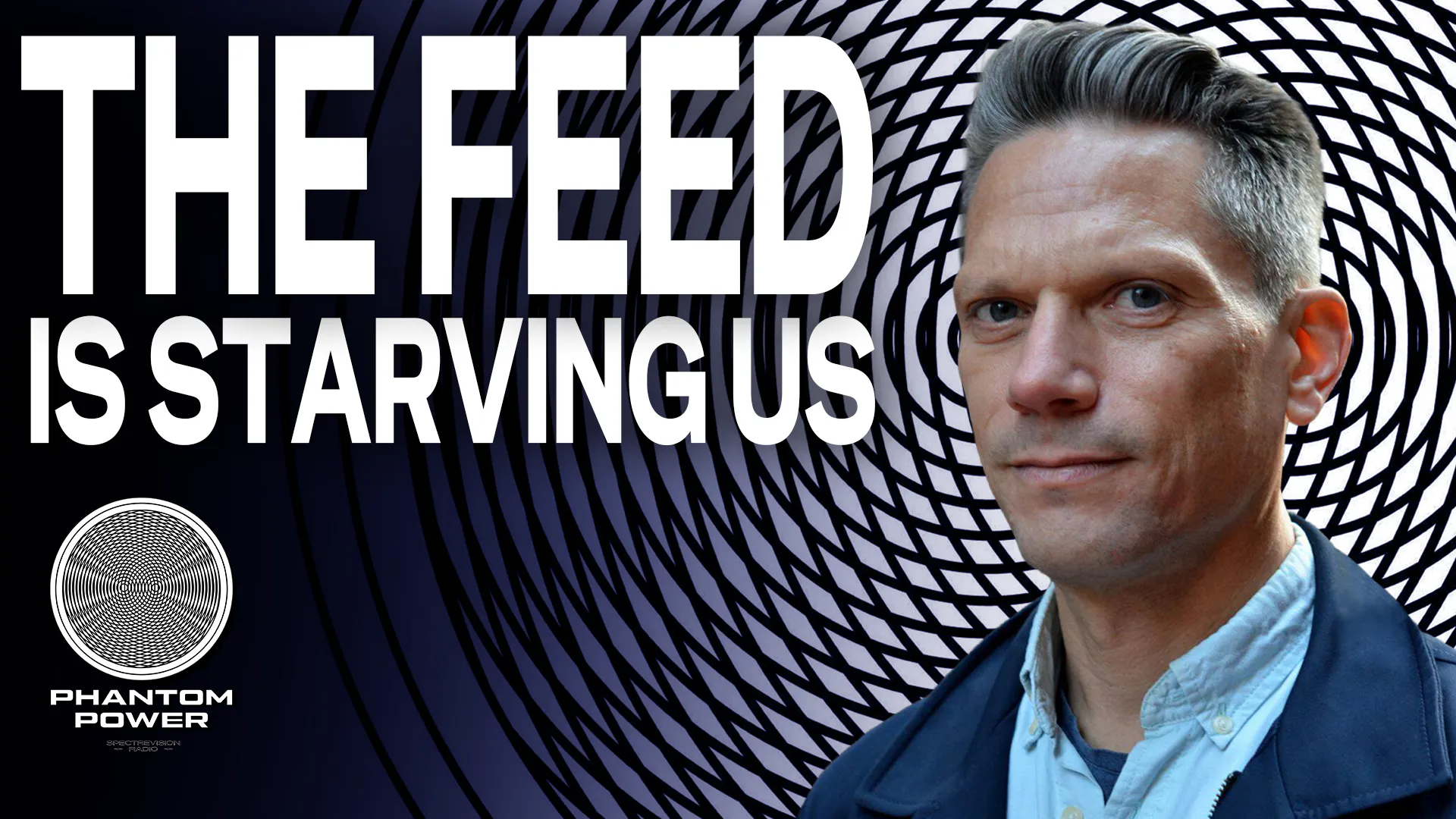 Digital feeds, malnourished students 12.06.2026 44minToday we’re doing one of our occasional episodes where host Mack Hagood talks about a new essay he’s written for our newsletter “Feed Logic and the Failure to Thrive” Mack writes that students and professors are struggling, both academically and spiritually. He tries to diagnose the issue he felt in his classrooms this year and the role technology may play in it. For new listeners, Mack is a writer and researcher who studies sound, technology, and culture. He is the author of Hush: Media and Sonic Self-Control, a book on noise-canceling headphones, white noise, tinnitus, and the ways people use sound to manage modern life. He is currently writing a new book for Penguin Press, and he also hosts this podcast Phantom Power, where he interviews artists, scholars, musicians, and sound designers about the invisible power of sound in everyday life. Besides all that, Mack is a university professor and that’s what his most recent essay is about. Click here to read the newsletter for free. Cited Media: Film:Mary Bronstein - If I Had Legs I'd Kick You (2025) Books:Ben Lerner - Transcription (2026)Mack Hagood - Hush: Media and Sonic Self-Control (2019)Hartmut Rosa - Resonance: A Sociology of Our Relationship to the World (2019) Newsletter/Essay:Mack Hagood - Feed Logic and the Failure to Thrive (2025) Lecture:Amar Bose - MIT Lecture on Engineering Chapters: 0:00 Intro1:58 The Essay & Its Response3:13 ARFID as Metaphor8:38 University Pressures & AI9:50 Student Disengagement14:05 Feed Logic & Screen Time16:30 Ultra-Processed Communication29:50 Student Doubleness & Motivation36:05 Resonance vs. Control To read the full transcript click here Learn more about your ad choices. Visit megaphone.fm/adchoices
 -
 Did Moog ruin synths? Suzanne Ciani reveals analog's original sin 29.05.2026 58minToday we talk to modular synth pioneer Suzanne Ciani and MIT Spatial Sound Lab researcher KamranV. Suzanne and Kamran both love quadraphonic sound, and they have a new quad release coming out on June 4th called Ciani/Orkest. They are on a mission to make quadraphonic music accessible to both musicians and to listeners, and in this interview, Kamran will explain how, you, with no special equipment, can listen to their new album in quad. We'll also get into how analog synthesizers actually work, the early history of Buchla synths versus Moog synths, why Suzanne thinks keyboards diminish the potential of synths, and how Suzanne designed some of the most recognizable sounds of the 1980s. Suzanne Ciani is a Grammy Award nominated composer, electronic musician, and neoclassical recording artist who has released over 20 solo albums, including Seven Waves and The Velocity of Love. Her work has been featured in Hollywood films, video games, and countless commercials. She was inducted into the first class of keyboard magazine's Hall of Fame, alongside Bob Moog, Don Buchla, and Dave Smith. And she was the subject of the feature documentary, A Life in Waves. KamranV is an arts technologist and MIT Spatial Sound Lab researcher, and he's a National Endowment for the Arts grant recipient. He's worked at Interscope Records, produced immersive music releases for Nine Inch Nails, Sting, and Beck, and he ran the music tech fest, Moogfest. He's also on the board of dublab. Cited Media: Music & Albums: Suzanne Ciani - Ciani/Orkest (2026) Suzanne Ciani - Live Quadraphonic (2016) Suzanne Ciani - The Velocity of Love (1986) Suzanne Ciani - Seven Waves (1982) Wendy Carlos - Switched-On Bach (1968) Stevie Wonder - Talking Book (1972) The Rentals Film & TV: 3-2-1 Contact, PBS (1980–1988) Brett Whitcomb - A Life in Waves (2017) Suzanne Ciani on David Letterman (1980) Events & Festivals: Moogfest AES Convention Amsterdam Dance Event NAMM Tools & Plugins: KamranV - QUARK Plugin (free) Record Labels & Archives: Finders Keepers Records AKP Recordings Mr. Bonzai Chapters: 0:00 Intro5:45 Meet the Guests6:28 Sound Design & Commercials13:45 High Art vs Low Culture19:03 Ciani Orkest24:42 Moog vs Buchla26:36 How Modular Synths Work36:15 Quadrophonic Sound45:13 The QUARK Plugin50:24 Seven Waves Click here to read the full transcript Learn more about your ad choices. Visit megaphone.fm/adchoices
 -
 Anonymous Sounds: Library Music 15.05.2026 52minToday, we look at some of the hidden labor that creates the ubiquitous music that we hear all around us. Today we talk to Nessa Johnston and Jamie Sexton, co-editors (with Elodie A. Roy) of Anonymous Sounds, Library Music and Screen Cultures in the 1960s and 1970s. It's the first scholarly book that takes a comprehensive look at the early off-the-shelf music industry that soundtracked TV, movies, radio, and commercials and it argues that these anonymous individuals had a major collective impact on the music of the era. This show is part of a series of occasional episodes and newsletters about the roles that music and sound play in public space. Nessa Johnston is lecturer in screen studies and digital media at the University of Liverpool. Jamie Sexton is associate professor of film and television studies at North University. If you'd like to hear the full version of our conversation, including their reading and listening recommendations, you can become a member at http://mackhagood.com. Cited Media: Articles / Essays: Anahid Kassabian - "Ubiquitous Listening: Affect, Attention, and Distributed Subjectivity" (2013) Ryan Bradley - "It’s the Music You Hear All Day, Without Ever Noticing" (New York Times Magazine, 2026) Philip Tagg - writings on library/functional music Books: Nessa Johnston, Jamie Sexton & Elodie A. Roy - Anonymous Sounds: Library Music and Screen Cultures in the 1960s and 1970s (2024) David Hollander - Unusual Sounds: The Hidden History of Library Music (2018) Simon Reynolds - Retromania: Pop Culture's Addiction to Its Own Past (2011) Films / Documentaries: The Library Music Film (2018) Music: Luciano Michelini - Frolic (1974) John Pearson - Heavy Action (1974) Barry 7 (of Add N to (x)) - Connectors series Luke Vibert - Nuggets Podcasts: Phantom Power - The Lost Sounds of Silent Cinema: Vaudeville, Magic Lanterns, and Movie Palaces w/ Rick Altman, and Eric Dienstfrey (2019) Chapters: 0:00 Intro0:49 Ubiquitous Music4:27 Meet the Guests5:01 What is Library Music6:54 Early History13:35 Taste & Anonymity27:47 The '60s & '70s Boom32:22 Name that Tune38:24 Crate Diggers & Sampling45:30 AI & the Future49:51 Outro Click here to read the full transcript Learn more about your ad choices. Visit megaphone.fm/adchoices
 -
 William Basinski: From 'NASA Brat' to Space Cowboy 24.04.2026 41minIn the fall of 2001, an obscure experimental musician decided to revisit some analog tape loops he had made back in the early eighties. Inspired by the work of Steve Reich, Brian Eno, and Robert Fripp, William Basinski had created his own distinctive practice of taping easy listening music off the radio, cutting the tape into loops, roughly a foot long, and then slowing it way down. The result transformed music into something profound as these brief loops of time became capacious ambient spaces. William Basinski's, eighties creations anticipated coming trends in loop based production, noise, ambient and slowed, and reverbed music, but very few people were paying attention at the time. Then in the summer of 2001, Basinski decided to digitize some of his favorite loops from his 1980s archive, and that's when everything changed. As he played the old tapes back, the magnetic ferrite that had captured the music began flaking off the plastic backing of the tape. The very act of digitally preserving the tapes was also destroying them. Basinski could hear the sound of decay, the death of an old medium captured by a new one. Grounded in decades of art practice, Basinski recognized what he had and he knew to stay out of the way, adding just a bit of reverb, but otherwise letting the tapes sing their swan song. The resulting tracks became known as The Disintegration Loops, and he finished them right as the events of September 11th unfolded. From a rooftop in Brooklyn, he videotaped the smoking ruins of the Twin Towers, and then he synced the video to the music he had just made. The Disintegration Loops is regarded as one of the most important artworks associated with 9/11. It's part of the permanent collection of the national September 11th Memorial and Museum. The record received glowing praise in The Wire and Pitchfork and Basinski became one of the most influential figures in ambient and experimental music. And now 25 years after the disintegration loops creation, William Basinski is on an American tour to mark the anniversary, and I'm thrilled to have him on the show today. We talk about the tour, his sonic practice, his surprising childhood as what he calls a NASA brat. His background in classical jazz and rock music, our mutual love of shortwave radio, and even his amazing fashion sense. Click here to find more information about William Basinski’s upcoming tour. Cited Media: Steve Reich - It's Gonna Rain (1965) Steve Reich - Music for 18 Musicians (1978) William Basinski - Shortwavemusic (1980s) William Basinski - Water Music (self-released) William Basinski - The Disintegration Loops (2002–2003) William Basinski - September 23rd (reissued ~2024) William S. Burroughs - Naked Lunch (1959) Pitchfork - Disintegration Loops review by Mark Richardson Chapters: 0:42 Intro & Background4:28 The Tour6:02 NASA Brat11:42 Classical Training12:36 Music School & Influences15:14 San Francisco Years26:36 The Disintegration Loops29:29 Release & Reception34:30 Shortwave Radio37:12 Fashion & Style39:30 Outro Click here to read the full transcript Learn more about your ad choices. Visit megaphone.fm/adchoices
 -
 How to Listen Like a Fish with Marine Biologist Sophie Nedelec 10.04.2026 56minDo fish have ears? What is the nature of underwater hearing and how does it differ from hearing in the air? If humans are the evolutionary descendants of ocean creatures, do we retain any fishy traces in the way we hear the world? And what about all the noise we humans make in our oceans? If we want to save the planet, do we need to learn to listen like the fishes once again? Today we explore these questions with Marine biologist and bioacoustics expert Dr. Sophie Nedelec. Nedelec has a PhD in bioacoustics and behavioral ecology from the University of Bristol. She is a Dorothy Hodgkin Fellow of the Royal Society and he's a senior research fellow at the University of Exeter. She researches underwater sound, sensory ecology, and human’s sonic impacts on the environment and sustainability. Speaking of oceans, today marks a bit of a sea change here at Phantom Power: the addition of occasional “SOS” episodes on the Science of Sound with co-host Dr. Nathan Morehouse. Nate's an Associate Professor of Biological Sciences at the University of Cincinnati, where he also serves as the Director of the Institute for Research in Sensing (IRiS), an interdisciplinary research institute focused on sensing, perception, and sensor technology development through adventurous integration of insights from the sciences, engineering, humanities, and arts. Cited Media: Sophie L. Nedelec et al. - "Particle Motion: The Missing Link in Underwater Acoustic Ecology" (2016) Sophie L. Nedelec et al. - Motorboat noise impacts parental behaviour and offspring survival in a reef fish (2017) Sophie L. Nedelec et al. - Hormonal and behavioural effects of motorboat noise on wild coral reef fish (2020) Sophie L. Nedelec et al. - Soundscapes and living communities in coral reefs: temporal and spatial variation (2015) Machine Listening (Sean Dockery, James Parker, Joel Stern) - Environments 12 (2023) Chapters: 0:00 Intro0:52 Meet the Guests1:42 Introducing SOS Episodes4:25 Do Fish Have Ears?9:29 The Otolith Explained12:44 The Lateral Line26:29 Particle Motion: The Missing Link34:57 Protecting Marine Life36:58 Boat Speed & Noise45:06 Reef Restoration with Sound49:23 Noise Cancellation Underwater54:52 Outro Click here to read the full transcript Learn more about your ad choices. Visit megaphone.fm/adchoices
 -
 Talking Back to the “The Oral Theory of Everything” 27.03.2026 40minWhy does a sixty-year-old media theory resurface in the media every few years, while journalists ignore the great communication scholarship that has emerged in the meantime? More importantly, what effects does antiquated thinking have on the public understanding of our current digital discontent? In this episode, Cameron Naylor interviews our usual host, Mack Hagood, about his recent newsletter, “Oral Residue: A Zombie Media Theory Rises Again.” Marshall McLuhan and Walter J. Ong believed that all of human history is dividable into three eras: the oral, the literate, and the electronic. However, this kind of “Great Divide” thinking has long been criticized by scholars who study oral communication, literacy, media, and sound. In this episode we talk about the good, bad, and ugly of McLuhan and Ong’s long legacy. Cited Media: Marshall McLuhan - Understanding Media (1964) Walter J. Ong - Orality and Literacy (1982) Raymond Williams - Television: Technology and Cultural Form (1974) Derek Thompson - Plain English (podcast episode with Joe Weisenthal) (2026) Jonathan Sterne - The Audible Past Harold Innis - works on communication theory Eric Havelock - works on orality and literacy Gerard Manley Hopkins - Poetry Homer - The Iliad and The Odyssey (8th century BCE) Chapters: 0:00 Introduction 0:44 Episode Overview 3:20 Introducing Mack Hagood 4:14 First Encounter with Ong 8:52 Discovering McLuhan 17:25 Why McLuhan Keeps Returning 25:49 Critiques of the Great Divide 33:36 The Ear as a Source of Terror 37:40 Closing Thoughts 38:33 Outro Click here for the full transcript. Learn more about your ad choices. Visit megaphone.fm/adchoices
 -
 The Internet Promised Creative Freedom. What Happened? 13.03.2026 50minCreativity doesn’t come out of thin air–it evolves in relation to the communities around us and the tools available to us. Some of the most common forms of everyday creative works–memes, podcasts, vertical videos–barely existed a couple of decades ago. And obviously, we can’t ignore the changing economics of creative industries, which wield an outsized influence over what kind of work gets made. Today host Mack Hagood talks to legendary podcast executive Julie Shapiro’s about what it means to be creative in the year 2026, particularly from an audio perspective. Given their shared history in 20th century indie music scenes, they also talk about the ways that indie music and fan culture shaped them–and how practices like zine making shaped the internet as we know it. But does the current shape of the internet promote good creative work and a fulfilling life? In this frank conversation, Mack and Julie discuss the challenges of making a living as a creative and doing fulfilling work when the digital system does its best to prevent those things. In our members-only version of the podcast, Mack and Julie discuss the turn to video podcasting and in the What's Good segment, Julie suggests some incredible podcasts to listen to, as well as things to do and to read. Cited Media: Nancy Baym - Playing to the Crowd: Musicians, Audiences, and the Intimate Work of Connection (2018) Nigel Poor & Earlonne Woods - Ear Hustle (Radiotopia/PRX) Nathan Heller - The Battle for Attention: How do we hold on to what matters in a distracted age? (2024)Tumi Magnússon - Voyage There and Back (2015) Chapters: 00:00 Introduction 03:27 Mardi Gras and Mobile Sound 13:47 Indie Music Origins 26:15 DIY Ethics and Community 30:32 Being Broke vs Career Pressure 44:37 How DIY Became the Internet 57:47 Returning to Creative Roots 01:05:12 The Podcast Industry Crisis 01:22:32 Information vs Experience 01:31:21 Making Work in This Moment Click here to read the full transcript Learn more about your ad choices. Visit megaphone.fm/adchoices
 -
 What makes a podcast great? Legendary producer Julie Shapiro shows us. 27.02.2026 47minToday we go on a listening tour with audio legend Julie Shapiro, who has helped define what radio and podcasts could be over the past 25-plus years. Shapiro co-founded the Third Coast International Audio Festival, one of the most prestigious and influential awards in audio. She was a longtime executive at PRX Radiotopia, home of shows like Song Exploder, Kitchen Sisters Present and Everything is Alive. She helped launch and executive produced narrative podcasts such as Ear Hustle, first recorded inside San Quentin State Prison. Her shows have won Webby awards and Signal awards and been nominated for the Pulitzer Prize. In this episode, host Mack Hagood plays stellar moments from Julie’s long history in audio and asks her to elaborate on how they were made and what made them great. They also discuss the current industry retrenchment, where budgets are shrinking and low-ambition video chat shows are redefining the very meaning of the word podcast. It’s an illuminating conversation that will appeal to fans and have audio producers taking notes. Finally, Julie discusses her new project with partner John DeLore, Audio Flux—a platform and podcast for short audio pieces that is inspiring fantastic new works from around the world. The Audio Flux Podcast was just named by The New Yorker as one of the top 10 podcasts of 2025. In this episode Julie announces a call for new works that Phantom Power listeners might want to respond to! Audio Showcase: Katie Mingle - The Dead Can't Do You Nothin' (Third Coast Audio Festival) Owen Ever & Laine Kaplan-Levenson - A Field Guide to Gay Animals (Canadaland) Nigel Poor & Earlonne Woods - Ear Hustle (Radiotopia/PRX) Vivien Schütz & Laura Rojas Aponte - Red Card (AudioFlux) Julie Shapiro & John DeLore - AudioFlux Radio Shows/Podcasts: Hrishikesh Hirway - Song Exploder (Radiotopia) The Kitchen Sisters - The Kitchen Sisters Present (Radiotopia) Ian Chillag - Everything is Alive (Radiotopia) Roman Mars - 99% Invisible (Radiotopia) Sarah Koenig - Serial (Serial Productions) Ira Glass - This American Life (WBEZ/PRX) Jad Abumrad & Robert Krulwich - Radiolab (WNYC) Gwen Macsai - Re:sound (Third Coast/WBEZ) Signal Hill (Audio Magazine) Organizations/Festivals: Third Coast International Audio Festival PRX Radiotopia Radio Workshop Chapters: 0:00 Introduction 0:21 Julie Shapiro Introduction 5:44 Listening Habits 8:26 Katie Mingle: The Dead Can't Do You Nothin' 9:52 Third Coast Audio Festival 16:47 A Field Guide to Gay Animals 24:38 Ear Hustle Ep. 7 Unwritten. 9:47-11:07 32:17 Red Card by Vivien Schütz and Laura Rojas Aponte (AudioFlux) 36:28 Audio Flux Circuit Seven - Trash or Treasure 44:50 Closing Remarks Click here to read the full transcript Learn more about your ad choices. Visit megaphone.fm/adchoices
 -
 Noise, power, and Minneapolis: Gabriel Mendel interview (Part 2) 30.01.2026 51minThe year is off to a very disturbing start thanks to ICE’s violent paramilitary incursion in Minneapolis-St. Paul. Minnesota citizens have responded with mass protests and direct action, much of it sonic in nature—with the sound of whistles alerting neighbors and making life harder on ICE. This episode, we speak with an expert on noise, power, and protest who also happens to live and teach in Minneapolis: Gabriel Saloman Mindel. Gabriel is one half of the Noise band Yellow Swans. Last month, we discussed the aesthetics and politics of noise music. This month, Gabriel discusses settler-colonial ways of treating the land, humans, and the soundscape in service of capital and political power, as well as noise, protest, and political power in the troubling context of current events. This episode features an interview we did in November and excepts from a follow-up in December, after the ICE incursion began. If you’d like to hear the full conversation about Minneapolis, we’ll be dropping it in our members feed. (If finances are an issue, just drop us a line an we’ll get you access.) Gabriel has an MFA from Simon Fraser University and a PhD in the History of Consciousness from UC, Santa Cruz. He teaches at. Learn about upcoming Yellow Swans shows on their Instagram. Also mentioned: Mack’s launched a new newsletter series, "What has the digital done to our listening?" Media Cited Hildegard Westerkamp - Kits Beach Soundwalk (1989) Prince - 1999 (Official Music Video) Raven Chacon - Voiceless Mass (2021) Hildegard Westerkamp - "The New Museum of Anthropology in Vancouver: An Acoustic Dump" Gabriel Mindel - "Sovereignty, Sonic Limits Music and Spectacle at the Border" in Studies in Social Justice (2025) Chapters: 01:40 Guest Introduction: Gabriel Saloman Mindel 05:16 Gabriel's Academic Journey 09:36 Settler Colonialism and Soundscapes 26:21 Silence and Indigenous Perspectives 27:34 Raven Chacon's Voiceless Mass 30:39 Prince and the End of the World 39:09 Operation Metro Surge 43:42 Direct Action and Protest Click here to read the full transcript Learn more about your ad choices. Visit megaphone.fm/adchoices
 -
 Gabriel Saloman Mindel Pt. 1: Yellow Swans, Noise, and the Art of Pushing Boundaries 26.12.2025 1h 3minGabriel Saloman Mindel is a lot more than one half of the United States best known noise bands. He's also an interdisciplinary artist and a scholar whose research studies the interplay between sound and power, as he theorizes how noise can push the limits of the body in struggles over space and political autonomy. Gabriel has an MFA from Simon Fraser University and a PhD in the History of Consciousness from UC Santa Cruz. He's also a longtime Phantom Power listener and supporter of the show. We first met a little over a year ago at the Unsound Festival in Poland, where Yellow Swans played a packed reunion show. It's been a lovely thing to get to know him--he's a gentle soul who makes aggressive sounds tied to some serious ethical and political commitments. In today's interview, we talk about the history and music of Yellow Swans, the interplay between noise, ethics, aesthetics, and politics. Gabriel even breaks down how he and Pete produced the track we were just listening to. Even if you're not a fan of noise music, I think you're going to love this fascinating conversation. And next month, we'll play part two of the interview, in which Gabriel discusses his scholarship on the work of other artists, including Raven Chacon, Hildegard Westerkamp, and Prince. You can find Yellow Swans online at Bandcamp and Instagram. They will be performing at GRM's annual Présences Électronique festival on Feb 13. In London, first at the Lexington on Feb 16 and then Corsica on Feb 18, and then finish at Bozar in Brussels. Chapters: 0:00 Intro & Welcome 5:53 Gabriel Saloman Mindel 6:52 What is a Yellow Swans Show? 12:48 Early Influences & Discovering Noise 13:45 DIY, Punk, and the Noise Scene 21:57 Noise, Community, and Spirituality 22:45 Performance, Consent, and Audience Experience 24:00 Paradoxes: Noise, Calm, and Reception 29:17 Crafting the Sound: Gear & Process 41:43 Band Dynamics & Collaboration 45:07 Legacy, Recognition, and Touring 51:04 Art, Politics, and the Noise Scene 53:09 Fascism, Provocation, and Identity in Noise 59:44 Inclusivity and Change in the Scene 60:24 Outro: Thanks & What’s Next Click here to read the full transcript. Learn more about your ad choices. Visit megaphone.fm/adchoices
 -
 African Music Technology: Branding, Identity, and the Global Music Market w/ Kingsley Kwadwo Okyere, Louise Meintjes, and Reginold Royston 28.11.2025 1h 2minToday host Mack Hagood is joined by three remarkable scholars whose work sits at the intersection of African music, technology, and culture. Dr. Louise Meintjes is Marcello Lotti Professor at Duke University. She's a distinguished ethnomusicologist whose groundbreaking research on South African music has transformed how we understand the recording studio as a site of cultural negotiation and creative production. Media anthropologist Dr. Reginold Royston is an Associate Professor jointly-appointed in the School of Information (formerly SLIS) and the Department of African Cultural Studies at the University of Wisconsin-Madison. He examines a range of African and African diasporic media and technology, from Black Atlantic audiobooks to African podcasting to viral dance videos emanating from Ghana and Chicago's footwork scene. And Kingsley Okyere is graduate student at Penn whose work on African and Afro-diasporic musical circulation and genres is bringing fresh perspectives on the sounds shaping the continent today. In this episode, we explore the evolution of Afrobeats and Amapiano, two genres that have captured global attention in recent years. We also discuss how technology and diaspora networks have shaped African popular music, examine questions of genre, identity, and global circulation, and consider the social and political contexts that inform music production and reception across the continent and beyond. Chapters: 3:21 Meet the Guests: African Music Scholars 6:03 What Are Afrobeats and Amapiano? 7:56 Afrobeats vs. Afrobeat: History & Identity 11:49 Branding, World Music, and South African Context 14:29 Recording Studios as Sites of Negotiation 17:42 Digital Networks and Diaspora Influence 23:23 Listening Practices: Streaming, Social Media, and Algorithms 29:00 Dance, Timelines, and Global Rhythms 33:13 Economic Realities and Global Music Industry Click here to read the full transcript. Learn more about your ad choices. Visit megaphone.fm/adchoices
 -
 Irv Teibel’s Environments, AI Audio, and the Future of Listening w/ Machine Listening 31.10.2025 55minHow did we humans become so dependent on white noise machines, noise-canceling headphones, lo-fi girl and other technologies that help us privatize and individualize our soundscape? An important character in that cultural history is Irv Teibel, whose environments series helped change how we listen. These records were the first to use recorded natural soundscapes as technologies to change how we feel and function. My guests this episode are Joel Stern and James Parker, two thirds of the art and research collective known as Machine Listening—a group that shares my fascination with Teibel. With their partner Sean Dockray, James and Joel have released a vinyl record called Environments 12: New Concepts in Acoustic Enrichment. This album reimagines Irv Teibel’s 1970s Environments albums—those “relaxation records” made for stressed-out people—as a set of soundscapes made for the stressed-out environment itself. The project mixes archival nature recordings, synthetic atmospheres, and AI-generated voices into strange new habitats. Narrators—some human, some machine—tell fables about seashores, reefs, and animal enclosures, where the line between the natural and the artificial dissolves. The result is a haunting, witty, and thought-provoking album that asks what it means to listen when both humans and environments are under pressure. Machine Listening’s art and research practice is deeply engaged with the politics of datasets, algorithmic systems, surveillance, and the shifting dynamics of power in “listening” technologies. Among other things, they interrogate how voice assistants, smart speakers, and algorithmic audio systems mediate — and often extract data from — human sound. Their installations and performances have been shown in institutions worldwide, including the Australian Centre for Contemporary Art, Warsaw Museum of Modern Art, and at festivals like Unsound. In short, Machine Listening blends creative and critical strategies to explore and expose the hidden infrastructures of acoustic power. James Parker and Joel Stern are both based in Melbourne Australia, where Parker is Associate Professor at Melbourne Law School and Stern is Research Fellow at RMIT School of Media and Communication. In this conversation we go deep on environments, AI, and recent innovations that surveil and remediate the environment in order to save it--for example playing recordings of healthy ocean reefs to sick ones to improve their vitality. It's some pretty wild shit. As always, you can join to get the extra long version of this conversation, including our guests recommendations on things to read, listen and do. Just go to mackhagood.com to join. That's also where you should go to get our free monthly newsletter with all kinds of great links and resources for people obsessed with sound. We just dropped the first edition and I'm telling you, it's brimming with sonic content that I can't squeeze into the podcast. Chapters: 0:00 The Origins of Environments: Irv Teibel’s Ocean Recording 7:14 Introducing Machine Listening: Art, Technology, and Sound 13:08 The Environments Series: Cultural Impact and Reception 18:58 Avant-Garde Meets Commerce: Teibel’s Methods and Influence 24:51 Bell Labs, IBM, and the Birth of Machine Listening 30:53 Simulation, Emulation, and the Legacy of Environments 36:53 Environments 12: Reimagining Soundscapes for the Environment 42:45 Technologies of the Self and Environmentality 47:55 Sound Design for Zoos: From Field Recordings to Animal Welfare 53:39 Closing Thoughts and Future Directions For full transcript visit irv-teibels-environments-ai-audio-and-the-future-of-listening-w-machine-listening Learn more about your ad choices. Visit megaphone.fm/adchoices
 -
 Horror Film Sound Designer Graham Reznick on Crafting the Uncanny 26.09.2025 1h 1minGraham Reznick is a multifaceted sound designer, screenwriter, director, and musician, best known for his work on indie horror films like Ti West's X and the critically acclaimed video game Until Dawn. In this episode, Reznick discusses Rabbit Trap, a film based on Welsh folklore blending analog synthesis with supernatural soundscapes. Host Mack Hagood and Reznick begin talking about horror sound design as a technical and creative process, examining how he crafted specific uncanny soundscapes in the film. The conversation then expands to the evolving relationship between sound design and musical scores in horror films, Reznick's limited series on Shudder called "Dead Wax: A Vinyl Hunter's Tale" and a discussion of haunted media, sensory deprivation, brainwave entrainment, self-improvement tapes from the 1970s, and other Halloween-appropriate topics! Members of Phantom Power can hear our ad-free, extended version, which includes Reznick's world-record breaking work as a writer on the video game Until Dawn. Last but not least, we find ‘What’s Good?’ according to Graham, where he recommends things to read, do, and listen to! Join us at phantompod.org or mackhagood.com]! That’s also where you can also sign up for our free Phantom Power newsletter, which will drop on the second Friday of every month and feature news, reviews, and interviews not found on the podcast. Chapters: 00:00 Introduction to Phantom Power 01:19 Meet Graham Reznick: Sound Designer Extraordinaire 01:59 Rabbit Trap: A Sound-Centric Horror Film 02:29 Graham Reznick's Career Highlights 04:00 Phantom Power Membership and Newsletter 04:52 Interview with Graham Reznick Begins 05:00 Rabbit Trap: Plot and Sound Design Insights 10:40 Creating the Uncanny Soundscape 14:11 The Evolution of Sound Design in Horror 20:56 Sound Design Techniques and Tools 26:33 Exploring the Fairy Circle Scene 35:48 Dead Wax: A Vinyl Hunter's Tale 39:58 The Allure of Forbidden Media 43:31 The Evolution of Online Culture 44:34 Magic, Dark Arts, and Haunted Media 46:54 Sensory Deprivation and Inner Worlds 49:25 The Power of Sound and Music 52:45 The Impact of Individualized Media For the full transcript visit: https://www.mackhagood.com/podcast/inside-the-sound-of-the-uncanny-rabbit-trap-sound-design-and-haunted-media-w-graham-reznick/ Learn more about your ad choices. Visit megaphone.fm/adchoices
 -
Maurice Rocco: Race, Queerness, and Thai Music Culture w/ Benjamin Tausig 29.08.2025 1h 21minWith movie star looks and a raucous piano style, Maurice Rocco made a splash in the 1940’s, influencing future rock and rollers Little Richard and Jerry Lee Lewis. By the 60s, however, he was a has-been in the U.S., playing lounges in Bangkok, Thailand until his grisly murder by a pair of male sex workers. In his deeply insightful book Bangkok After Dark, ethnomusicologist Benjamin Tausig reclaims Rocco’s forgotten story and reveals its broader context, exploring the intersection of race, queerness, and transnational music cultures during the cold war era. Benjamin Tausig is a scholar of music, sound and politics in Southeast Asia teaching at Stony Brook University, New York. Working between music, sound studies, Asian studies, and anthropology, his publications cover topics such as the soundscape of political procest in Thauland, Luk thung and mor lam, and the impact of American military presence on Southeast Asian culture. In this episode we discuss his two books, Bangkok is Ringing, which provides a lucid and in-depth ethnography of the Thailand’s Red Shirt anti-government protest movement, and Bangkok After Dark. In a wide-ranging conversation, we cover everything from Mack and Ben’s early days in sound studies to the proto-music videos known as “soundies” to the psychedelic roots of Thai music genres like luk thung. Our Patreons get an extended cut of this interview, including our ‘what’s good?’ section, revealing Ben’s top picks for things to read, do, and listen to! Sign up to listen at Patreon.com/phantompower. Chapters: 00:00 Introduction: Maurice Rocco and the Forgotten Soundies 03:57 Welcome & Meet Benjamin Taussig 08:15 Sound Studies, Graduate School, and Early Interests 13:15 Fieldwork in Thailand: Urban Sound and Space 18:15 Learning Thai and Immersing in Bangkok 22:45 Language, Tonality, and Sonic Culture 27:45 The Red Shirt Movement and Thai Political Soundscapes 36:29 Protest, Democracy, and the Limits of Sound 44:10 Thai Music Genres: Luk Thung, Mor Lam, and Protest 51:00 Sonic Niches, Censorship, and Speaking Out 54:49 Maurice Rocco: From American Jazz Star to Bangkok 1:02:58 The Vietnam War, American Influence, and Thai Psychedelia 1:09:38 Race, Queerness, and Identity in 1960s-70s Thailand 1:14:05 Rocco’s Final Years, Legacy, and Reflections For the full transcript visit https://phantompod.org/benjamin-tausig-bangkok-after-dark/. Learn more about your ad choices. Visit megaphone.fm/adchoices
Podobni podkasti


Priljubljen v
Ta podkast je tudi v lestvicah podkastov teh držav.
