
A Good Length
Dr. Venu Bhamidi
0
A Good Length is a podcast hosted by Dr. Venu Bhamidi exploring modern masculinity, men’s health, fatherhood, family law, relationships, divorce and the pressures facing men today. Through honest conversations, expert insights, and lived experience, the show creates a space where difficult topics can be discussed without shame, hostility, or ideological extremes. Ultimately, it aims to foster positive masculinity and build stronger men, families, and communities.
Epizode
-
 The Power of a Good Woman after a Bad Day 03.10.2026 37minWhy do so many men sit in the driveway before walking inside after a hard day? And what changes when the person waiting behind that front door makes them feel safe?In this episode of A Good Length, Vascular Surgeon Dr. Venu Bhamidi explores the power of a good woman after a bad day: the psychology, the biology, and the hard-won lessons from divorce, self-reflection and finding love again.This isn't a fantasy about the perfect partner. It's an honest conversation about emotional safety, men's mental health, and why a man who comes home to genuine peace doesn't shrink, he expands.In this episode:- Why high-performing men are so good at "appearing fine," and what it costs them- What happens in your nervous system when you walk through the front door (cortisol, oxytocin and the science of co-regulation)- The four things most men want from a partner but rarely say out loud: softness, peace, loyalty and recognition- Why tying your self-worth to your output is so exhausting- What men regret at the end of their lives, from 20 years as a doctor- Secure attachment in adults: why emotional safety makes men braver at work and more patient at home- The trap of intermittent warmth, and why men stay in draining relationships too long- Why it has to go both ways: what a good woman deserves in return- Learning to receive love when you've spent a lifetime saying "I'm fine"- The Five-Minute Driveway Reset: a simple ritual to stop carrying a bad day into your homeIf this episode put words to something you've been carrying, share it with a man who needs it, or with the good woman in your life who might not know how much she matters.Subscribe Now for weekly conversations on men's psychology, health, fatherhood and masculinity.REFERENCESCoan, Schaefer & Davidson (2006). Lending a hand: social regulation of the neural response to threat. Psychological Science.Holt-Lunstad, Smith & Layton (2010). Social relationships and mortality risk. PLoS Medicine.Robles et al. (2014). Marital quality and health: a meta-analytic review. Psychological Bulletin.Feeney (2004). A secure base: responsive support of goal strivings. Journal of Personality and Social Psychology.Butler & Randall (2013). Emotional coregulation in close relationships. Emotion Review.Balban et al. (2023). Brief structured respiration practices enhance mood. Cell Reports Medicine.Books: The Good Life (Waldinger & Schulz), The Top Five Regrets of the Dying (Bronnie Ware), Hold Me Tight (Sue Johnson), The Seven Principles for Making Marriage Work (John Gottman), I Don't Want to Talk About It (Terrence Real).SupportIf you're struggling, or your relationship involves fear or control, MensLine Australia is available 24/7 on 1300 78 99 78. In an emergency, call 000.This content is for education and reflection and is not a substitute for personal medical or psychological advice.#MensHealth #Relationships #Divorce #Masculinity #marriage
 -
What relocation does to fathers and children 20.09.2026 33minTime can be divided. Distance cannot.When separated parents live in the same city, a child keeps the architecture of their life: the same school, the same friends, the same streets. When a court permits relocation, one parent's relationship doesn't shrink. It changes category. He becomes an adult who arrives, is hosted, and leaves.This episode is addressed to the judges of the Federal Circuit and Family Court of Australia, and to the report writers and Independent Children's Lawyers who advise them. It isn't an argument about divorce, and it isn't a complaint about mothers. It's about one decision: the one that puts real geographical distance between a child and a parent who loves them.It covers what the research actually shows about non-resident fathers, why video calls can't carry a childhood, how a loving relationship can erode without anybody causing it, why delay decides these cases before the final hearing does, and why relocation is one of the few orders a court can make that time will not let it take back.Safety comes first, and nothing here asks any court to lower that threshold. But where both parents are safe, loving and capable, distance is the one variable in the order that quietly decides everything else.Chapters00:00 An open letter to the bench01:23 Same city is not the same thing02:45 A visitor in his own children's lives04:09 Section 60CC and the cost of absence05:06 Quantity of contact, quality of fathering06:46 "Dad doesn't even know me"08:48 Unproven risk10:01 A screen can't carry a childhood11:09 The only door12:41 When novelty becomes disruption14:14 Erosion without fault15:43 The adolescent window17:15 The Disneyland Dad19:18 Why fathers stop21:32 A grief with no name22:35 The child's answer23:44 Delay makes the decision24:50 The order you can't take back26:44 The ask27:51 The judgment ends, the consequences don't29:14 Three friendsSupportIf this episode is close to home, please don't sit with it alone.MensLine Australia — 1300 78 99 78Lifeline — 13 11 14Emergency — 000This episode discusses parental separation, grief and suicide.Nothing in this episode is legal advice. If you're facing a relocation application, get advice from a family lawyer in your jurisdiction.#fatherhood #marriage #divorce #agoodlength #menshealth
-
"I Knew I Was Done" — The Doctor Who Woke Up Paralysed at 25 12.09.2026 55minWhat happens to a man’s identity when the life he built suddenly disappears? For some men, that happens through divorce, separation, marriage breakdown, changes in fatherhood or career loss. For Dr Dinesh Palipana, it happened in an instant.In 2010, while studying medicine, Dinesh was involved in a catastrophic car accident that caused a spinal cord injury and left him quadriplegic.In this episode of A Good Length, Dr Venu Bhamidi sits down with Dinesh — doctor, lawyer, researcher, author and disability advocate — for a remarkably candid conversation about identity, masculinity, disability, relationships, intimacy, men’s mental health, resilience and rebuilding life after profound change. Dinesh takes us back to the moment he realised he was paralysed. We also go somewhere conversations about disability rarely go: dating, attraction, sexuality, relationships, physical touch and intimacy.How does a man understand masculinity when his body no longer works as it once did? What happens to sexual identity and desirability after catastrophic injury? And how do you allow someone else to see you vulnerable when you struggle to accept your own body? But this conversation is about IDENTITY AFTER LOSS.Men rebuilding after divorce, separation, marriage breakdown, changes in fatherhood, retirement, career failure, illness or disability face very different circumstances, but often encounter the same fundamental question: Who am I when the role that defined me disappears?Before his accident, Dinesh associated success with career, money, cars, a house, marriage, children and status. Today, he sees identity differently. Bodies change. Careers end. Marriages can end. Children grow up. Money disappears. Status fades. Dinesh advocates for building identity around values: integrity, gratitude, friendship, service, character and purpose.We also discuss depression and suicide, male friendship, quality of life after disability, hope in medicine, spinal cord injury research and what Dinesh would say to someone wondering whether life is still worth living.A Good Length explores the conversations men often don’t have — divorce, marriage, separation, fatherhood, men’s health, relationships, masculinity, identity and rebuilding when life doesn’t go according to plan. Subscribe for new episodes on masculinity, fatherhood, identity, health and the things men don't say out loud.#AGoodLength #DineshPalipana #MensMentalHealth #depression #SpinalCordInjury #Masculinity #Disability #MensHealth #Identity #Resilience #BioSpine CHAPTERS00:00 — A story that seems impossible01:15 — Who Dinesh was before03:37 — Depression in law school, and how he found medicine05:54 — The last ordinary day07:37 — Waking up unable to move08:58 — "It's going to be okay, Mum"10:11 — What happens to manhood when the body fails11:38 — Two years without looking in a mirror12:39 — Needing help vs feeling helpless13:31 — The friend who didn't make it to the weekend16:01 — What doctors say to catastrophically injured patients that's useless17:38 — Who gets to decide what a life is worth20:12 — Pity, discrimination, and what actually gets under his skin22:16 — Is being "inspirational" a prison?23:50 — Who sees you on the bad days24:46 — Male friendship, and why the group chat matters26:46 — Did achievement replace independence?27:43 — The thing he misses most: human touch29:19 — Disability, intimacy and sexual desirability32:27 — Sex, identity and being a man34:14 — Love, loyalty, and the dynamic he still hasn't solved37:06 — Healthy ambition vs proving people wrong37:49 — The barn, and the moon40:14 — Impermanence, Buddhism and letting go of who you think you are42:59 — Advice for any man who's just lost his identity45:18 — The one thing he can't make peace with46:52 — BioSpine and a world without paralysis49:19 — Hope vs scientific detachment51:44 — Quickfire54:18 — To the man lying in a hospital bed tonight
-
Control After Divorce: How to Survive High-Conflict Co-Parenting 06.09.2026 37minHow do you deal with a controlling ex after divorce without allowing high-conflict co-parenting to consume your life? Dr Venu Bhamidi examines post-separation control, emotional bait, difficult co-parenting communication, the BIFF and grey rock methods, financial conflict, parenting boundaries and the fear many fathers experience of becoming a visitor in their children's lives.The objective isn't to win every argument. It's to understand what you actually control—your communication, reactions, boundaries, parenting and home—and stop surrendering your peace trying to control what you don't.A practical conversation about divorce, fatherhood, emotional regulation and playing the long game when co-parenting becomes a battle for control.A Good Length with Dr Venu Bhamidi - Real conversations about male advocacy, men’s health and how men can develop positive and productive lives.#Divorce #CoParenting #highconflict #fatherhood #menshealth #agoodlength
-
Why Men Fall Apart After Divorce 23.08.2026 37minWhy do some men appear to fall apart after divorce?For many couples, the official separation isn't actually day one. One partner may have spent months or years emotionally processing the end of the marriage, while the other experiences it as a sudden collapse of family, home, identity and control.In this episode of A Good Length, Dr. Venu Bhamidi examines the psychology of divorce for men and the experience of fathers after separation.We explore why men can feel blindsided by divorce; the difference between the initiator and non-initiator; why male social networks often collapse after separation; loneliness and isolation among divorced fathers; the loss of everyday fatherhood; anger, grief and emotional dysregulation; and why a man's behaviour during the worst period of his life can sometimes become retrospective "evidence" against him.The episode also examines the social dynamics surrounding divorce: how narratives form, why mutual friendships disappear, why men often rely too heavily on their romantic partner for emotional support, and why rebuilding an independent social network is critical to long-term recovery.Most importantly, this episode is about what men can actually control. Stop trying to win every narrative. Build your own community. Protect your children from the conflict. Regulate your behaviour when emotions are at their highest. Look after your sleep, physical health and alcohol intake. And recognise that rebuilding life after divorce is rarely about simply "moving on."Sometimes the goal is learning to carry what happened without allowing it to deform the person you become.A Good Length — Real conversations about male advocacy, men’s health and fostering positive masculinity.Topics: divorce for men, men's mental health, divorced fathers, fatherhood after separation, male loneliness, separation, relationships, masculinity, co-parenting, life after divorce, rebuilding after divorce and men's social isolation.Academic References1. Leopold, T. (2018). Gender Differences in the Consequences of Divorce: A Study of Multiple Outcomes. Demography, 55(3), 769–797. (Key panel data examining short-term subjective well-being collapses in men vs. chronic economic impacts in women).2. Shor,E., et al. (2021). Union Dissolution and Acute Mental Health Crises: A Longitudinal Assessment of Post-Separation Gender Trajectories. Journal of Health and Social Behavior, 62(2), 145–162. (Examining acute emotional distress and health declines immediately following marital separation).3. Rosenfeld, M. J. (2015/2018). Who wants the breakup? Gender and breakup in heterosexual couples. Presented to the American Sociological Association; analysis of the How Couples Meet and Stay Together survey, waves 2009–2015. StanfordUniversity.4. Milardo, R. M. (1987). Changes in social networks of women and men following divorce: A review. Journal of Family Issues, 8(1), 78–96.5. Rosenthal, C. J. (1985). Kinkeeping in the familial division of labour. Journal of Marriage and Family, 47(4), 965–974.6. Ferrara, A., & Vergara, D. (2025). Theorizing mankeeping: The male friendship recession and women's associated labor as a structural component of gender inequality. Psychology of Men & Masculinities. American Psychological Association.7. Patulny, R. (2012). Social contact, efficacy and support amongst Australian fathers. Journal of Family Studies, 18(2–3), 222–234. [ABS General Social Survey 2006.]8. Australian Institute of Family Studies. Social connectedness among Australian males. Ten to Men: The Australian Longitudinal Study on Male Health, Waves 1–2 (2013/14,2015/16).9. Kruk, E. (2010). Collateral damage: The lived experience of fathers removed from their children after divorce. Journal of Comparative Family Studies.10. Perales, F., et al. (2024). Predictors of male loneliness across life stages: An Australian study of longitudinal data. BMC Public Health, 24. [HILDA Survey, waves 2–21.]
-
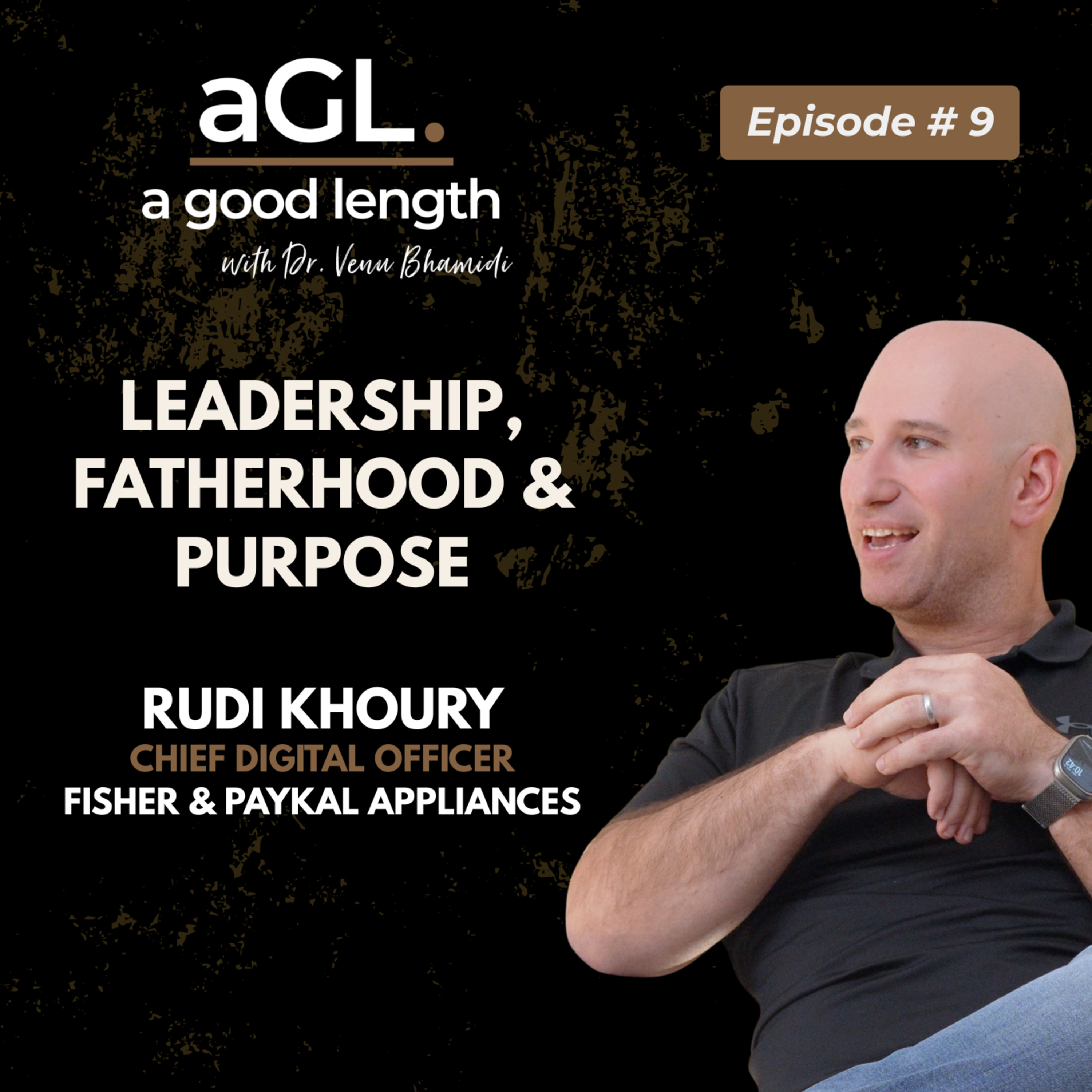 Leadership, Fatherhood & Purpose with Rudi Khouri (Chief Digital Officer, Fisher & Paykal Appliances) 09.08.2026 1h 8minSuccess doesn’t happen by accident. Neither does great fatherhood. In this episode of A Good Length, I sit down with Rudi Khoury (Chief Digital Officer at Fisher & Paykel Appliances), to explore what it really takes to build a successful career without sacrificing your family, values or integrity. Growing up without his father from the age of 11, Rudi shares how his mother, grandparents, uncles and mentors shaped the man he became. We discuss leadership, ambition, purpose, parenting, marriage, resilience and why today’s young men need positive role models more than ever.We also dive into:* Growing up without a father* Why mentors matter* Balancing executive leadership with family life* The hidden cost of ambition* Marriage, partnership and shared leadership* Raising resilient children* Why victim mentality holds people back* Building purpose instead of chasing comfort* Preparing children for an AI-driven future* Financial literacy and delayed gratification* Health, relationships and long-term successThis conversation isn’t about perfection. It’s about becoming intentional—at work, at home and as a parent. If you’re a father, husband, leader or simply trying to build a meaningful life, this episode is for you.Subscribe for new conversations on Sundays.⸻Chapters00:00 Introduction00:30 Growing up without a father05:35 Male role models and mentorship07:38 Building ambition and purpose09:37 Balancing career and family11:34 The personal cost of success14:09 Being present as a husband and father15:55 Raising sons and daughters20:05 Why community shapes your children23:03 Preparing children for the modern world27:28 Purpose vs victim mentality32:05 Sport, leadership and resilience36:44 Leadership at work vs leadership at home41:20 Marriage under pressure48:00 Staying connected through family life50:40 AI and the future of work57:34 Advice to his younger self1:05:44 Health, friendship and long-term success1:07:24 Choosing the right life partner#Fatherhood #Leadership #MensHealth #Parenting #Marriage #Purpose #Success #PersonalGrowth #Podcast #AGoodLength
 -
 Guilt & Shame after a failed marriage 26.07.2026 35minIn this deeply honest episode of “A Good Length,” I share my personal journey through divorce, confronting the profound shame and guilt that often accompany the end of a marriage, especially for men. Moving beyond socially acceptable language, I dive into the silent struggles men face, exploring the cultural expectations of masculinity, the physiological toll of unprocessed emotions, and the isolating grip of rumination.Drawing on insights from experts like Brené Brown, Pauline Boss, and Viktor Frankl, this episode offers a powerful framework for understanding the difference between guilt and shame, and how to transform accountability into healing. I discuss the critical role of therapy, authentic male friendships, and self-compassion in navigating post-divorce recovery. I also address the unique challenges fathers face, offering guidance on how to forgive oneself for the impact on children and build a new, authentic identity.This isn’t just a conversation about divorce; it’s about reclaiming your narrative, finding strength in vulnerability, and moving from grief to growth. If you’re a man grappling with the aftermath of a failed relationship, or simply seeking a deeper understanding of male emotional well-being, this episode is a vital listen.Crisis Support:If you or someone you know needs support, please reach out:Lifeline: 13 11 14Beyond Blue: 1300 22 4636Men’s Line Australia: 1300 78 99 78#Divorce #MensMentalHealth #Shame #Guilt #Healing #Masculinity #Relationships #Fatherhood #SelfCompassion #Therapy #EmotionalWellbeing #Podcast #VenuBhamidi #AGoodLengthReferences:Boss, P. (1999). Ambiguous Loss: Learning to Live with Unresolved Grief. Harvard University Press.Brooks, G.R. (2010). Beyond the Crisis of Masculinity. American Psychological Association.Brown, B. (2010). The Gifts of Imperfection. Hazelden Publishing.Brown, S. (2009). Play: How It Shapes the Brain, Opens the Imagination, and Invigorates the Soul. Avery.Campbell, J. (1949). The Hero with a Thousand Faces. Pantheon Books.Farrell, W. & Gray, J. (2018). The Boy Crisis. BenBella Books.Frankl, V.E. (1946). Man's Search for Meaning. Beacon Press.Germer, C.K. (2009). The Mindful Path to Self-Compassion. Guilford Press.Glover, R.A. (2000). No More Mr. Nice Guy. Running Press.Hayes, S.C., Strosahl, K.D., & Wilson, K.G. (1999). Acceptance and Commitment Therapy. Guilford Press.Hetherington, E.M. & Kelly, J. (2002). For Better or For Worse: Divorce Reconsidered. W.W. Norton.Kposowa, A.J. (2003). Divorce and suicide risk. Journal of Epidemiology and Community Health, 57(12), 993.Lebow, J.L. et al. (2012). Research on the treatment of couple distress. Journal of Marital and Family Therapy, 38(1), 145–168.Liu, H., Waite, L., & Shen, S. (2018). Social Science & Medicine, 201, 107–115.Luskin, F. (2002). Forgive for Good. HarperCollins.Neff, K. (2011). Self-Compassion: The Proven Power of Being Kind to Yourself. William Morrow.Nolen-Hoeksema, S. (2000). The role of rumination in depressive disorders. Journal of Abnormal Psychology, 109(3), 504–511.Pennebaker, J.W. & Smyth, J.M. (2016). Opening Up by Writing It Down. Guilford Press.Perel, E. (2017). The State of Affairs: Rethinking Infidelity. Harper.Peterson, J.B. (1999). Maps of Meaning: The Architecture of Belief. Routledge.Reeves, R. (2022). Of Boys and Men. Brookings Institution Press.Seligman, M.E.P. (2011). Flourish. Free Press.Van der Kolk, B. (2014). The Body Keeps the Score. Viking.Walker, M. (2017). Why We Sleep. Scribner.Wallerstein, J.S. & Lewis, J. (2004). Psychoanalytic Psychology, 21(3), 353–370.Winnicott, D.W. (1971). Playing and Reality. Tavistock.
 -
 Child Support: Why the System Is Broken — And How to Fix It 19.07.2026 42minChild support in Australia isn't a system that guarantees money reaches children — it's a formula that transfers wealth between adults and calls it justice. In this episode of I break down exactly how the current system ties custody time to cash, why that turns parenting time into a financial lever, and why the incentive structure is quietly manufacturing the very conflict it claims to prevent. This isn't an argument that fathers are victims or that mothers are villains. It's a structural critique — of a system built on decades-old assumptions about gender, parenting, and money — and a practical, evidence-based blueprint for what genuine reform would look like.If you're a father navigating separation, a policymaker, or just someone who wants to understand why family law conflict is so often financially — not emotionally — driven, this episode lays out the architecture of the problem and a real path forward.In this episode:– How Services Australia's child support formula actually works, and why the 35% and 66% care thresholds change everything financially– Why tying money to nights turns custody into a financial negotiation– The case for decoupling child support from custody time entirely– A direct third-party payment model: paying schools, health funds, and childcare providers instead of an ex-partner– Voluntary underemployment and the "capacity to earn" loophole– Binding Financial Agreements (BFAs) and Binding Child Support Agreements (BCSAs) — the contractual protections most men never use– The weaponisation of custody and family law allegations for financial leverage– What the research says about shared parenting and child development outcomesChapters:Introduction: When Everything You Assumed About Fatherhood Gets Fed Into a MachineSection 1: The Architecture of the Problem (how the formula actually works, the 35% and 66% thresholds)Section 2: Uncoupling Finances From Parenting TimeSection 3: Direct Payment to Third Parties — The Operational ModelSection 4: Equalised Parenting Outcomes — When the Money DisappearsSection 5: Voluntary Underemployment — The Invisible ManipulationSection 6: Binding Financial Agreements & Binding Child Support AgreementsSection 7: The Weaponisation of CustodySection 8: The Real Cost to ChildrenSection 9: The Bigger PictureSources & References:Australian Institute of Family Studies (2019). Post-separation parenting arrangements and developmental outcomes for children: Overview Report. Melbourne: AIFS.Nielsen, L. (2014). Shared physical custody: Summary of 40 studies on outcomes for children. Journal of Divorce & Remarriage, 55(8), 613–635.Cancian, M., & Meyer, D.R. (2014). Testing the economic independence hypothesis. Demography, 51(3), 857–880.Trinder, L. (2010). Shared residence: A review of recent research evidence. Child and Family Law Quarterly, 22(4), 475–498.Skinner, C., Bradshaw, J., & Davidson, J. (2007). Child Support Policy: An International Perspective. UK DWP, Research Report No. 405.Australian Law Reform Commission (2019). Family Law for the Future. Report 135. Canberra: ALRC.Sarkadi, A., Kristiansson, R., Oberklaid, F., & Bremberg, S. (2008). Fathers' involvement and children's developmental outcomes. Acta Paediatrica, 97(2), 153–158.Smyth, B. (Ed.) (2004). Parent-child contact and post-separation parenting arrangements. AIFS Research Report No. 9.Rhoades, H. (2010). The rise and rise of shared parenting laws. Canadian Journal of Family Law, 25(1), 185–210.Family Law Act 1975 (Cth), Part VIIIA — Financial Agreements.Child Support (Assessment) Act 1989 (Cth), Part 6 — Child Support Agreements.Disclaimer: This episode is for general information and discussion purposes only and does not constitute legal or financial advice. Always seek independent legal advice from a qualified family lawyer for your specific circumstances.#ChildSupport #FamilyLaw #Fatherhood #Divorce #Custody #Parenting #FamilyCourt #Podcast
 -
Is there still a place for traditional gender roles? 12.07.2026 46minTraditional gender roles aren't the problem — the silence around them is. In this episode, I break down the provider myth: the men quietly crushed by being taken for granted, and the men shamed for stepping outside the breadwinner script. Drawing on research into role strain, masculine identity, and relationship satisfaction — plus my own failed marriage — I lay out what genuine, freely chosen roles actually require, and why "choice" without honest conversation is just a prison with a nice origin story.References:1. Umberson, D., Pudrovska, T., & Reczek, C. (2010). Parenthood, childlessness, and well-being: A life course perspective. Journal of Health and Social Behavior, 51(4), 612–629. https://doi.org/10.1177/00221465103838982. Levant, R. F., Hall, R. J., Williams, C. M., & Hasan, N. T. (2009). Gender differences in alexithymia. Psychology of Men & Masculinity, 10(3), 190–203. https://doi.org/10.1037/a00156523. Doucet, A. (2016). Is the stay-at-home father a feminist act? Fathering, 14(2), 182–198. https://doi.org/10.3149/fth.1402.1824. Kramer, K. Z., Kelly, E. L., & McCulloch, J. B. (2015). Stay-at-home fathers: Definition and characteristics based on 34 years of CPS data. Journal of Family Issues, 36(12), 1651–1673. https://doi.org/10.1177/0192513X135024795. Fetterolf, J. C., & Eagly, A. H. (2011). Do young women expect gender equality in their future lives? An answer from a possible selves experiment. Psychology of Women Quarterly, 35(2), 252–270.https://doi.org/10.1177/0361684310391frm Books ReferencedPeterson, J. B. (2018). 12 Rules for Life: An Antidote to Chaos. Random House Canada.Pollack, W. (1998). Real Boys: Rescuing Our Sons from the Myths of Boyhood. Random House.Gilmore, D. D. (1990). Manhood in the Making: Cultural Concepts of Masculinity. Yale University Press.Parsons, T., & Bales, R. F. (1955). Family, Socialization and Interaction Process. Free Press.Brown, B. (2010). The Gifts of Imperfection: Let Go of Who You Think You're Supposed to Be and Embrace Who You Are. Hazelden Publishing.
-
What modern men can learn from feminism 05.07.2026 37minWhat if the feminist movement — arguably the most successful identity movement of the last 100 years — holds the roadmap for how men need to evolve today?In this episode of A Good Length, I make the case that feminism expanded what a woman could be, while men's internal idea of manhood stayed largely unchanged. That mismatch is at the heart of the modern male identity crisis.Drawing on Simone de Beauvoir, Betty Friedan, Richard Reeves, Andrew Huberman, Anna Machin, Jordan Peterson, and Warren Farrell, I walk through seven lessons a healthy masculinity movement can take from feminism's playbook — from expanding identity beyond provider/protector, to building brotherhood, to separating advocacy from hatred.I also get personal: what domestic, parenting, and emotional independence actually look like for fathers, why they matter in family court, and what I learned rebuilding my own life after divorce.This is a conversation about expanding masculinity, not erasing it. Share it with a man who needs it.I'm Dr. Venu Bhamidi. I hope this one lands on a good length.References:Australian Institute of Health and Welfare. (2023). Suicide and self-harm monitoring. AIHW. https://www.aihw.gov.au/suicide-self-harm-monitoringBrown, B. (2012). Daring Greatly: How the Courage to Be Vulnerable Transforms the Way We Live, Love, Parent, and Lead. Gotham Books.Cigna. (2020). Loneliness and the Workplace: 2020 U.S. Report. Cigna Corporation.de Beauvoir, S. (1949). The Second Sex. Gallimard.Farrell, W. (1993). The Myth of Male Power. Simon & Schuster.Friedan, B. (1963). The Feminine Mystique. W. W. Norton.Huberman, A. (2022). The Science of Emotions and Relationships. Huberman Lab Podcast.Episode 13.Kimmel, M. (2008). Guyland: The Perilous World Where Boys Become Men. HarperCollins.Levant, R. F., & Richmond, K. (2007). A review of research on masculinity ideologies using the Male Role Norms Inventory. Journal of Men's Studies, 15(2), 130–146.Machin, A. (2018). The Life of Dad: The Making of the Modern Father. Simon & Schuster.Perel, E. (2006). Mating in Captivity: Unlocking Erotic Intelligence. HarperCollins.Peterson, J. B. (2018). 12 Rules for Life: An Antidote to Chaos. Random House Canada.Reeves, R. V. (2022). Of Boys and Men: Why the Modern Male Is Struggling, Why ItMatters, and What to Do About It. Brookings Institution Press.van der Kolk, B. (2014). The Body Keeps the Score: Brain, Mind, and Body in the Healing of Trauma. Viking.Australian Bureau of Statistics. (2021). How Australians Use Their Time, 2020–21. ABS. https://www.abs.gov.au/statistics/people/people-and-communities/how-australians-use-their-timeFamily Law Act 1975 (Cth), s 60CC — Factors in determining what is in a child's best interests. Federal Register of Legislation. https://www.legislation.gov.auMachin, A. (2018). The Life of Dad: The Making of the Modern Father. Simon & Schuster.Australian Institute of Family Studies. (2023). Families Then and Now: Parenting. AIFS. https://aifs.gov.au🎙 A Good Length with Dr. Venu BhamidiYouTube: https://www.youtube.com/channel/UCo0gj8PM5yrJ3Dnleh_RGlQSpotify: https://open.spotify.com/show/5XbFjzywgGH5mfl4o0pEMD Apple Podcasts: https://podcasts.apple.com/us/podcast/a-good-length/id1896891417 Instagram: https://www.instagram.com/agoodlength?igsh=ZGRxejZjZ2xmMjI4&utm_source=qrFacebook: https://www.facebook.com/agoodlength/ TikTok: www.tiktok.com/@a_good_length
-
Is Marriage Worth it in 2026? 28.06.2026 43minShould a Man Get Married in 2026? The honest, data-driven answer.Every man is asking this question — in the gym, at the pub, in his own head at 2am. But almost nobody is asking it out loud. Dr. Venu Bhamidi does exactly that. In this episode of A Good Length, Dr Bhamidi unpacks the marriage question with the clarity it deserves — not with cynicism, not with romanticism, but with facts, law, and hard-won personal experience.What you'll learn:Why the marriage contract changed fundamentally in 1975 — and why most men were never toldThe real Australian divorce statistics (and why the 40% figure is actually optimistic)Who initiates divorce — and what that means for men legally and financiallyHow Australian Family Law divides assets, and why "50-50" is rarely the realityThe 2024 custody law changes every father needs to understandA 5-step framework for any man genuinely considering marriage in 2026Why disengaged men, MGTOW, and declining marriage rates are a symptom — not the causeDr. Bhamidi also shares what he lost personally — and what he wishes he'd known.This isn't an anti-marriage episode. It's a pro-informed-marriage episode#AustralianFamilyLaw #DivorceLaw #ModernMasculinity #MensMentalHealth #FamilyLawAustralia #fathers #fatherhood #BindingFinancialAgreement #FamilyLawAct #DivorcedDads #FatherhoodAcrossDistance #FatherlessAmerica #AGoodLength #DrVenuBhamidi #MensPodcast #PositiveMasculinity #ModernDating #RelationshipAdvice #MarriageAdvice #Dating2026
-
The Attack on Masculine Competence 21.06.2026 42minThere is a quiet war being waged on modern masculinity — not with weapons, but through classrooms, algorithms, media narratives, and the stories young men are being told about themselves. In this episode, Dr Venu Bhamidi makes the case that masculine competence — the drive to build, protect, provide, and master your craft — is under direct cultural and institutional attack, and the data backs him up. Dr. Bhamidi examines why boys are falling behind in education, why men are dying by suicide at three to four times the rate of women, and why our public conversation keeps missing the point.This episode covers:The 5 core capacities of masculine competenceThe science of precarious manhood and what happens when male identity is destabilisedThe 5 cultural mechanisms eroding male competence — and how to name them clearlyThe difference between competence-centred and resentment-centred masculinity content8 grounded principles for rebuilding masculine identity under pressureThe generational contract between older and younger men — and why it's breaking downThis is not an argument against women. It is an honest, evidence-based examination of what men need to thrive — and what happens to families, communities, and society when we fail to provide it.🎙 A Good Length with Dr. Venu BhamidiInstagram: @agoodlengthpodcastSpotify: https://open.spotify.com/show/5XbFjzywgGH5mfl4o0pEMDApple Podcasts: https://podcasts.apple.com/us/podcast/a-good-length/id1896891417Facebook: https://www.facebook.com/agoodlength/YouTube: https://www.youtube.com/channel/UCo0gj8PM5yrJ3Dnleh_RGlQ#MenMatter #MensHealth #Fatherhood #MentalHealth #MaleAdvocacy #PsychologicalSafety #Divorce #FamilyLaw #MensMentalHealth #ParentalAlienation #Masculinity #SeparatedFathers #SuicidePrevention #fatherhood #mentoo #fatherson #dadsmatter #AGoodLength #DrVenuBhamidi #fathers #mentoo #dadsandsonsReferences1. Mokhwelepa, L.W., & Sumbane, G.O. (2025). Men's Mental Health Matters: The Impact of Traditional Masculinity Norms on Men's Willingness to Seek Mental Health Support. American Journal of Men's Health2. Legewie, J., & DiPrete, T.A. (2012). SchoolContext and the Gender Gap in Educational Achievement. American Sociological Review,3. Feldman, H.A., et al. (2002). Age Trends in Serum Testosterone in Middle-Aged Men: Longitudinal Results from the Massachusetts Male Aging Study. Journal of Clinical Endocrinology & Metabolism, 4. Coleman, D., Feigelman, W., & Rosen, Z. (2020). Association of high traditional masculinity and risk of suicide death.JAMA Psychiatry5. Glasser, N.J., et al. (2024). Male gender expressivity and diagnosis and treatment of modifiable cardiovascular diseaserisks. JAMA Network Open.6. Rice, S. (2021). Gender norms and the mentalhealth of boys and young men. The Lancet Public Health.7. Galdas, P.M., et al. (2025). Designing men'shealth policy: the 5R Framework. The Lancet Public Health.8. Vandello, J.A., et al. (2008). Precarious manhood. Journal of Personality and Social Psychology, 9. Bareket, O. (2025). Lost opportunities: How gendered arrangements harm men. PNAS (Proceedings of the National Academy of Sciences).10. McGraw, J., et al. (2021). Masculinity and men's health service use across four social generations. Ten to Men: Australian Longitudinal Study on Male Health.11. DiPrete, T.A., & Buchmann, C. (2013). The Rise of Women: The Growing Gender Gap in Education. Russell Sage Foundation.Books1. Richard Reeves — Of Boys and Men: Why theModern Male Is Struggling (2022).2. Warren Farrell & John Gray — The Boy Crisis(2018). B3. Connell, R.W. (2005). Masculinities, 2ndEdition4. Robert Glover — No More Mr. Nice Guy (2003).
-
The Cost of speaking up 14.06.2026 23minIn this episode, Dr. Venu Bhamidi explores the growing crisis of psychological safety for men. Why do so many men remain silent about their pain? What happens when vulnerability feels dangerous? And what are the consequences for fathers, families, relationships and society when men no longer believe it is safe to tell the truth about their experiences?Drawing on personal experience, psychological research, and broader cultural observations, this conversation examines male silence, emotional suppression, depression, addiction, suicide, fatherhood, family law, and the importance of creating spaces where men can speak honestly without fear of ridicule, dismissal, or retaliation. It is a conversation about recognising that men suffer too, and that a healthy society should be capable of holding both truths at the same time. Openness without psychological safety feels less like vulnerability and more like exposure.This episode examines:Why men often choose silence over honestyThe hidden cost of psychological unsafetyThe link between suppressed pain, depression, addiction, anger and suicideWhy separated fathers often feel unable to share their experiencesThe paradox of modern conversations around male vulnerabilityThe false binary that says supporting men means opposing womenHow we create safer spaces for men to speak, heal and reconnectThis is not a conversation about blame. It is a conversation about understanding If this episode resonates with you, please follow the show, leave a rating, and share it with someone who may need to hear it.🎙 A Good Length with Dr. Venu BhamidiInstagram: @agoodlengthpodcastSpotify: https://open.spotify.com/show/5XbFjzywgGH5mfl4o0pEMDApple Podcasts: https://podcasts.apple.com/us/podcast/a-good-length/id1896891417Facebook: https://www.facebook.com/agoodlength/YouTube: https://www.youtube.com/channel/UCo0gj8PM5yrJ3Dnleh_RGlQ#MenMatter #MensHealth #Fatherhood #MentalHealth #MaleAdvocacy #PsychologicalSafety #Divorce #FamilyLaw #MensMentalHealth #ParentalAlienation #Masculinity #SeparatedFathers #SuicidePrevention #fatherhood #mentoo #fatherson #dadsmatter #AGoodLength #DrVenuBhamidiAcademic Reference/Citations:Addis, M. E., & Mahalik, J.R. (2003). Men, masculinity, and the contexts of help seeking. American Psychologist, 58(1), 5–14.Australian Bureau of Statistics (2023). Causes of Death, Australia. ABS. Retrieved from abs.gov.au.Levant, R. F., & Richmond, K. (2007). A review of research on masculinity ideologies using the male role norms inventory. The Journal of Men’s Studies, 14(2), 130–146.Mahalik, J. R., et al. (2003). Development of the Conformity to Masculine Norms Inventory. Psychology of Men & Masculinity, 4(1), 3–25.Reeves, R. V. (2022). Of Boys and Men: Why the Modern Male Is Struggling, Why It Matters, and What to Do About It. Brookings Institution Press.Seidler, Z. E., et al. (2016). The role of masculinity in men’s help-seeking for depression: A systematic review. Clinical Psychology Review, 49, 106–118.van der Kolk, B. (2014). The Body Keeps the Score: Brain, Mind, and Body in the Healing of Trauma. Viking.Wyllie, C., et al. (2012). Men, suicide and society: Why disadvantaged men in mid-life die by suicide. Samaritans Research Report.
-
Introduction to a Good Length 07.06.2026 14minWelcome to the very first episode of A Good Length. I’m Dr. Venu Bhamidi, a Vascular Surgeon based on the Gold Coast, Australia. Im a father of two boys, and someone who has spent the last few years navigating many of the challenges that modern men face—fatherhood, relationships, separation, mental health, identity, purpose, and rebuilding after life’s setbacks. This podcast exists to explore male advocacy, men’s health, and the skills, habits, and mindsets that help men build meaningful lives. Through honest solo episodes and conversations with experts, professionals, fathers, husbands, athletes, and everyday men, we’ll tackle the topics that shape modern masculinity. We’ll discuss:• Men’s mental health• Fatherhood and parenting• Relationships and dating• Physical health and longevity• Purpose and identity• Family law and social issues• Leadership and resilience• Building masculine competenceIn this introductory episode, I share the personal story behind why I started this podcast, the challenges that inspired it, and the mission that drives it.Whether you’re a young man searching for direction, a father trying to be better, or simply someone who values thoughtful conversation, I hope you’ll find something here that helps.If you enjoy the episode, please subscribe, leave a review, and share it with someone who might benefit from the conversation.🎙️ Follow the podcast Youtube: https://www.youtube.com/@AGoodLengthApple PodcastsInstagram: https://www.instagram.com/agoodlength/Facebook: https://www.facebook.com/profile.php?id=61587106588205Tiktok: https://www.tiktok.com/@a_good_length
Podobni podkasti


Priljubljen v
Ta podkast je tudi v lestvicah podkastov teh držav.


