
PR in the Real World
Viva PR
0
PR in the Real World offers a unique perspective into the world of PR through the lens of a regional PR agency, Viva – recently named the CIPR's UK Small PR Consultancy of the Year. The podcast provides insights into PR, marketing, and communications, shaped by the communities Viva serves both geographically and across key sectors such as healthcare, advanced manufacturing, education, and the public sector. It highlights Viva's ethos that PR should be impact-driven, with guests offering tips on how to gain real-world results without relying on huge budgets or celebrity names.
Epizode
-
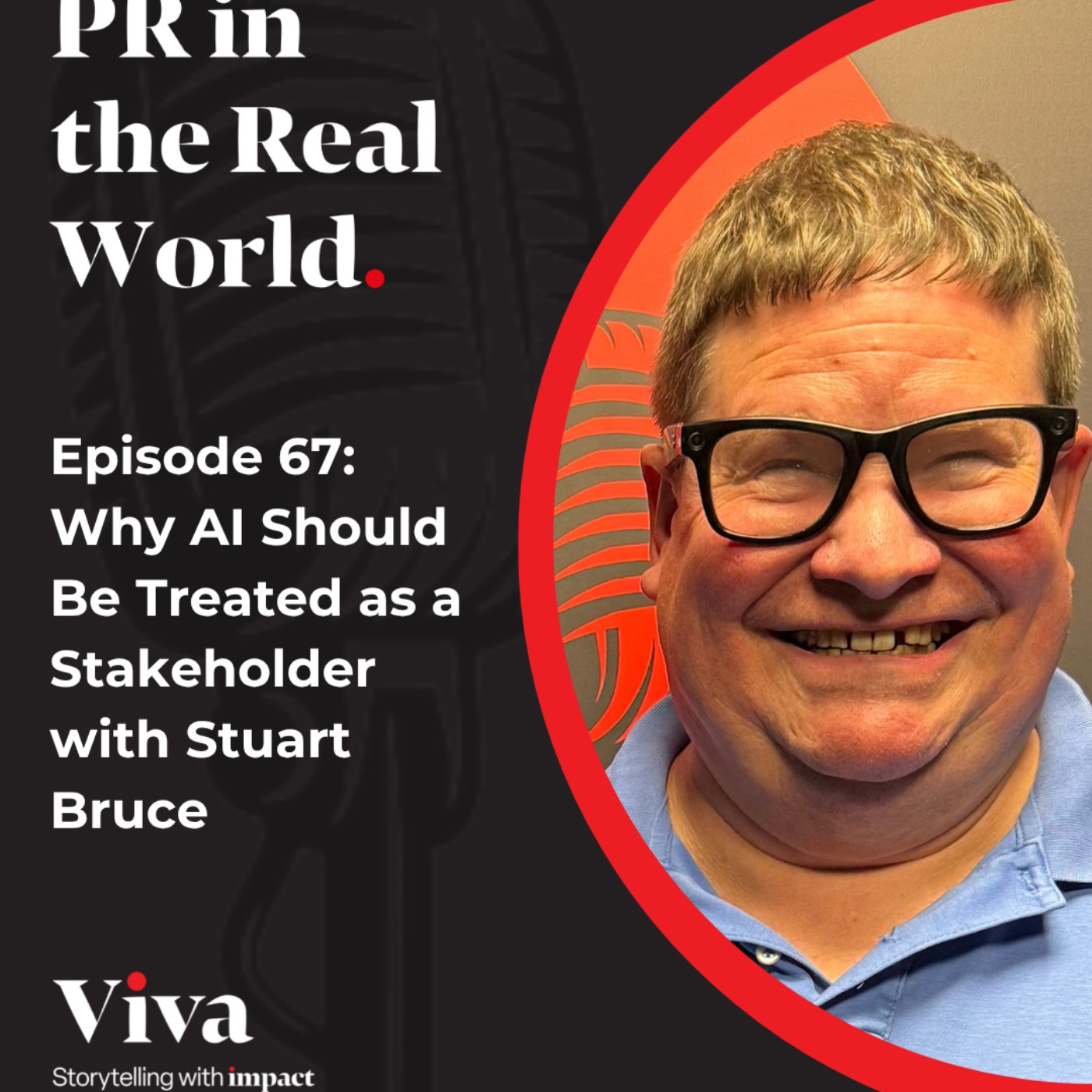 Why AI Should Be Treated as a Stakeholder with Stuart Bruce 21.09.2026 50minStuart Bruce, self-styled PR futurist and joint CEO of Purposeful Relations, joins Tony Garner on PR in the Real World to explain why AI has become the world's biggest reputation management engine. They unpack generative engine optimisation, the three factors shaping AI answers – recency, relevance and reputation – why crisis plans must treat AI as a stakeholder, and the story of helping now-PM Andy Burnham find his social media voice. Essential listening for PR and comms professionals. Hosted on Acast. See acast.com/privacy for more information.
 -
 The Case for PR at the Top Table with CIPR President Farzana Baduel 07.09.2026 27minWhy are organisations with talented PR teams still ending up in reputational crisis? Farzana Baduel has the answer, and she sees it play out every week on BBC Radio 4.Farzana - founder of Curzon PR, CIPR president, Oxford Saïd Business School resident PR expert, and co-host of BBC Radio 4's When It Hits the Fan - joins PR in the Real World to explore why this is the most consequential moment in PR's history.She unpacks AI's real impact on the profession, why PR professionals are 'diagonal thinkers' who belong in the boardroom, and why the crises organisations find themselves in are so often avoidable. Hosted on Acast. See acast.com/privacy for more information.
 -
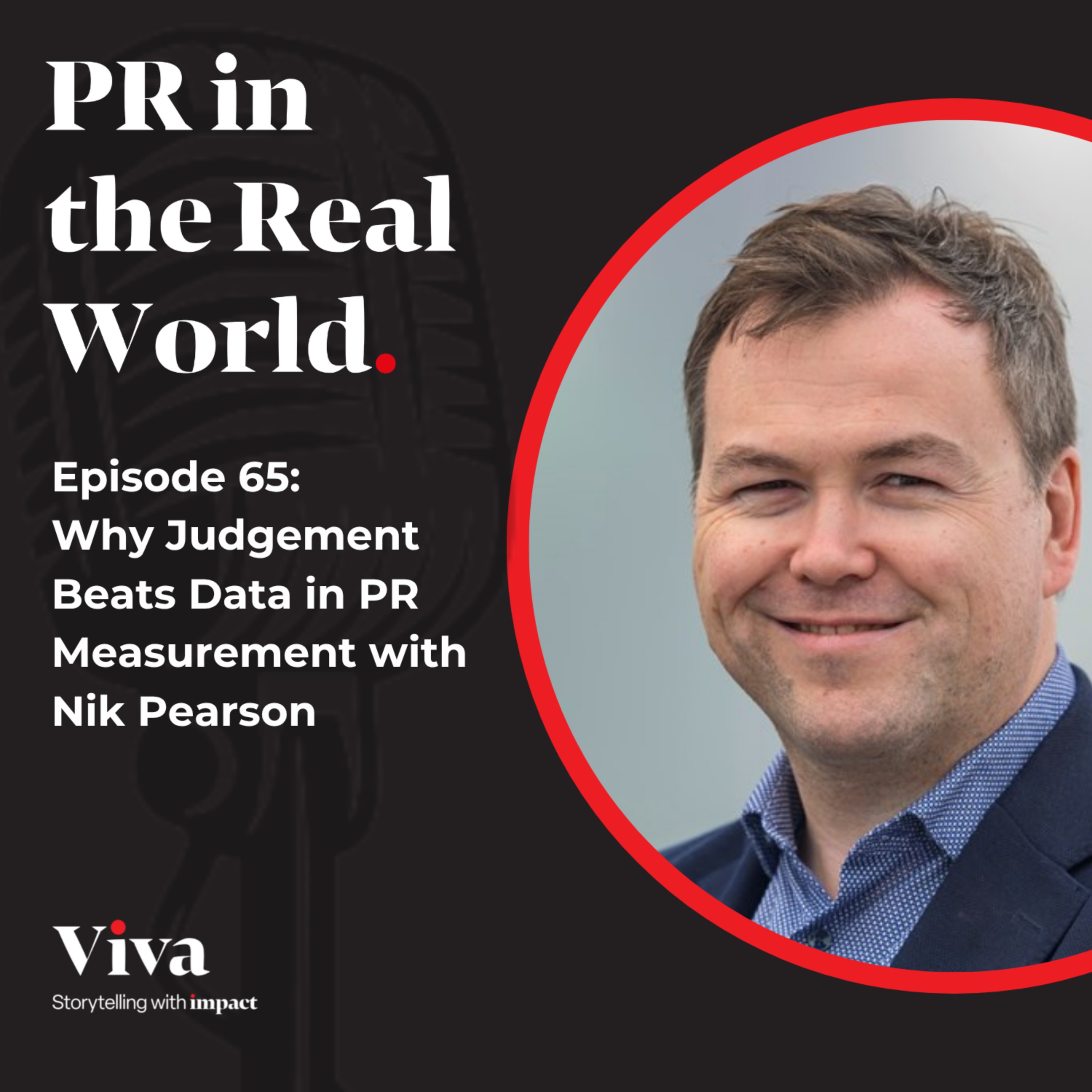 Why Judgement Beats Data in PR Measurement with Nik Pearson 24.08.2026 39minIn this episode of PR in the Real World, Tony Garner talks to Nik Pearson, who leads corporate communications and external affairs across Europe for Honda, about earning a seat at the table in PR. They discuss sharing downside risk, using the AMEC framework and judgement over data in measurement, and building trust across multinational comms teams. Nik also reflects on his move from Toyota dealerships into leadership, and what makes an inclusive, high‑trust culture. Hosted on Acast. See acast.com/privacy for more information.
 -
 Methodology and Mindsets with Shayoni Lynn 10.08.2026 45minBehavioural science is one of the most talked-about, and least understood, areas in PR. Shayoni Lynn, founder of behavioural science consultancy Lynn, joins Tony Garner on PR in the Real World to separate evidence from hype. She explains why diagnosis must come before intervention, how her team's research and randomised control trials shaped Welsh Government's 20mph campaign, and why protecting behaviours matters as much as creating them. Practical advice for teams of any size on building behavioural capability. Hosted on Acast. See acast.com/privacy for more information.
 -
 What Makes a Story Worth Printing with Richard Slater 27.07.2026 41minRichard Slater, founder of Lancashire Business View and the Red Rose Awards, joins Tony Garner on PR in the Real World to reveal what makes journalists bin a PR pitch, why AI-written press releases are instantly spotted, and how to craft a story worth printing. From newsroom instincts to judging a 1,000-strong awards night, Richard shares practical tips on pitching, storytelling, media relations and award entries that PR and marketing professionals can use today. Hosted on Acast. See acast.com/privacy for more information.
 -
 Communicating Complex Ideas Clearly with Alison Ramsay 13.07.2026 48minHow do you communicate complexity without losing clarity? In this episode of PR in the Real World, Alison Ramsay, Corporate Communications & Employee Experience Director at AWE, shares lessons from her career in defence communications. Discover why simplifying isn't "dumbing down", how data and employee experience are reshaping internal communications, and why great communicators treat employees like adults, not audiences. Hosted on Acast. See acast.com/privacy for more information.
 -
 How to Shape the Narrative with Autotrader’s Laura Harvey 29.06.2026 52minHow do you build a multi-disciplinary corporate affairs function completely from scratch while navigating a high-stakes stock market flotation?In this episode of PR in the Real World, host Tony Garner sits down with Laura Harvey, Director of Corporate Affairs at Auto Trader, to map out the mechanics of leading a modern in-house communications department.Laura Harvey joined Auto Trader at a critical turning point in its corporate history, just as the legacy brand completed its massive print-to-digital transformation and prepared to float on the London Stock Exchange as a newly minted PLC. Laura shares her journey of constructing a comprehensive, in-house team responsible for an incredibly broad remit that spans financial reporting, crisis management, internal culture alignment, consumer PR and regulatory public affairs.The conversation digs deep into how structural industry crises (specifically the 2015 "Dieselgate" emissions scandal) served as the unexpected catalyst for Auto Trader’s highly successful data-driven public affairs strategy. Laura reveals how providing objective consumer behaviour analytics transformed the business into an indispensable advisory partner for government bodies like the Department for Transport and the Treasury. From managing internal stakeholder networks across a 1,000-strong hybrid workforce to shifting your mindset from agency pace to deep institutional curiosity, this episode delivers an essential guide for corporate affairs leaders.From an operational and corporate governance perspective, this episode covers:The Architecture of an IPO Comms Function: Establishing mandatory reporting workflows, processes and investor relations frameworks from a blank sheet of paper.Data-Led Public Affairs Engineering: Leveraging proprietary commercial marketplace analytics to act as an authoritative information barometer for civil service policymakers.The Velocity Trap of Reactive PR: Moving beyond a perpetual, post-pandemic crisis footing by deliberately blocking out structural planning time to reset institutional strategies.The "Helicopter View" of Corporate Operations: Training internal communications teams to connect functional dots across siloed business units to unearth narrative synergies.Building a Tech-First Employee Culture: Transforming organisational values from a legacy, decentralised print operation into a unified, collaborative digital brand.The Agency-to-In-House Mindset Shift: Navigating the corporate transition by swapping multi-client rotation routines for deep, programmatic stakeholder management.Laura shares a behind-the-scenes look at Auto Trader's advanced collaborative workplace design within Manchester's Circle Square innovation district. She reflects on her early career roots executing consumer commodity indexing reports for Tilda Rice, launching digital television networks and navigating a surreal marine conservation media junket through Mexico and Guatemala.This discussion is required listening for:Corporate Affairs & Investor Relations Directors: Tasked with listed PLC compliance, macroeconomic tracking and multi-disciplinary department building.In-House Communications Managers: Seeking to expand their tactical remits into strategic public affairs, executive positioning and policy lobbying.PR Agency Account Directors & Founders: Looking to optimise their advisory services by truly understanding the internal regulatory and stakeholder pressures faced by corporate clients.Public Relations & Business Management Students: Analysing legacy brand transformations, marketplace dynamics and financial communication design. Hosted on Acast. See acast.com/privacy for more information.
 -
 The Leader Who Made Themselves Unnecessary with Sarah Ogden 17.06.2026 42minSarah Ogden, Chief Client Officer Europe at Zeno Group, joins Tony Garner to share 25 years of agency leadership insights for this episode of PR in the Real World. They cover what makes teams thrive, why AI threatens junior PR roles, the behavioural science underpinning great communications, and Zeno's Clarity 2030 research — revealing that 72% of comms leaders expect greater influence by 2030, but only 29% feel ready. Essential listening for PR professionals navigating a rapidly changing industry.Links and ReferencesZeno Clarity 2030 - https://clarity2030.zenogroup.com/ Hosted on Acast. See acast.com/privacy for more information.
 -
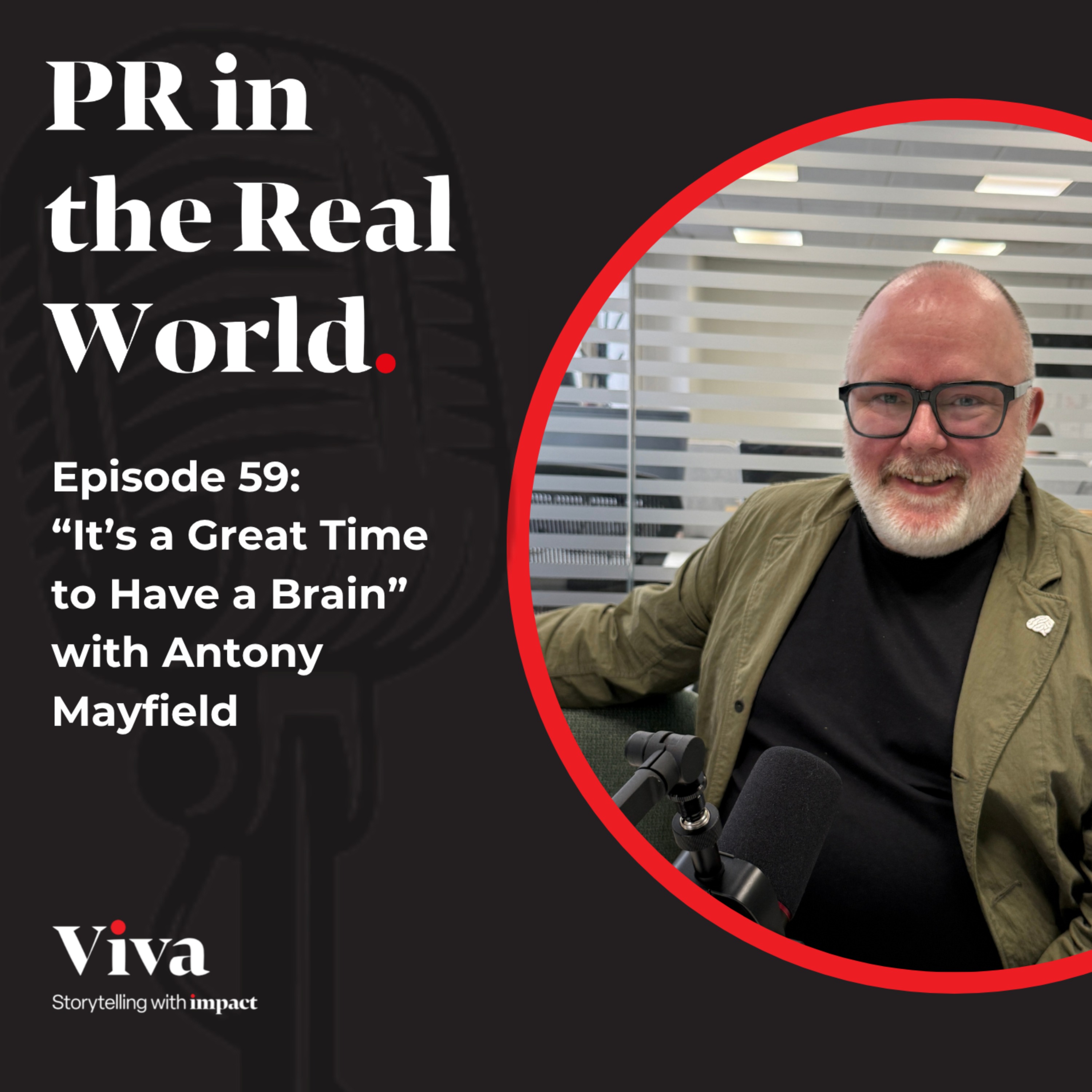 "It's a Great Time to Have a Brain" with Antony Mayfield 01.06.2026 59minWhat happens when you stop treating artificial intelligence like a simple tool and start treating it as a "cognitive accelerator"? In this episode of PR in the Real World, host Tony Garner sits down with tech prophet, author and CEO Antony Mayfield to unpack the reality of working alongside frontier AI models.Antony Mayfield, co-founder and CEO of digital change consultancy Brilliant Noise, has spent decades successfully calling technological shifts, from the initial corporate scepticism of social media to the sudden emergence of large language models (LLMs). Antony breaks down how he ripped up his agency's traditional operating structures to rebuild the business as a "living lab," providing clear operational strategies for any communications team looking to survive the next wave of automation.Moving past the basic "software-as-a-tool" approach, this episode explores complex, system-level change management. Antony outlines real-world workflows that went from weeks of production down to hours, including how his creative director prompted Claude to generate fully interactive website case studies and how his team entirely reconfigured a senior executive pitch deck for BMW over breakfast. Balancing deep curiosity with a disciplined, healthy scepticism, this conversation addresses the reality of rapid model updates, cybersecurity anxieties and the shift from conversational chatbots to autonomous, collaborative agent teams.From an operational and strategic perspective, this episode covers:The "Cognitive Accelerator" Metaphor: Understanding generative AI as an active thinking partner that speeds up strategic framing - while learning to spot the safety hazards of moving too fast.Building a Living Lab Team Culture: Why establishing cross-functional weekly "Show and Tells" accelerates organisational literacy far better than static corporate training modules.The Transition to Agentic Systems: Navigating the pivot from transactional prompt-and-response chatbots to sophisticated multi-agent workflows that automatically coordinate enterprise software.The "Services as Software" Shift: How the collapse of software production costs is fundamentally reshaping the billable-hours agency business model.Fostering AI Readiness & Psychological Safety: Why effective tech transformation requires leaders who admit they don't have all the answers, creating environments where teams can safely experiment, critique and fail.Why the Liberal Arts Still Win: How strong foundational skills in language, logic, philosophy and precise textual framing give communication professionals a distinct edge in an AI-driven market.Antony highlights the intense pace of international production through the lens of "involution," warns against the corporate trap of over-investing in rigid enterprise licenses without training for digital fluency and shares his personal media diet, including the Hard Fork podcast and Lenny Rachitsky's product management series.This episode is essential listening for:PR Agency Founders & Innovators: Transitioning away from legacy billing models toward productized services and agile operations.Chief Digital Officers & Change Consultants: Tasked with structuring secure, scalable AI integration plans for global brands.Creative Directors & Strategists: Looking to safely scale production and conceptual mood-boarding without losing artistic control or emotional resonance.Corporate Comms Leaders: Trying to balance near-future technological forecasting with steady, human-centric team leadership.Links and ReferencesBrilliant Noise - https://brilliantnoise.comBN Edition - https://bnedition.substack.com/Antonym - https://antonym.substack.com/Prepared Minds - https://brilliantnoise.com/prepared-minds/Lenny's Podcast - https://open.spotify.com/show/2dR1MUZEHCOnz1LVfNac0j?si=e0c080d940684c30Hard Fork - https://open.spotify.com/show/44fllCS2FTFr2x2kjP9xeT?si=3c36f7db396e4b5e Hosted on Acast. See acast.com/privacy for more information.
 -
 From a Welsh Farm to CIPR Agency of the Year with Vicki Spencer-Francis 18.05.2026 35minHow do you build a 36-strong, multi-award-winning agency from scratch with no client contacts and no corporate safety net? In this episode of PR in the Real World, Vicki Spencer-Francis, founder of Cowshed, reveals the triumphs, setbacks and strategic overhauls that led them to become the CIPR UK Agency of the Year.Vicki Spencer-Francis started her career in the bright lights of London television, working at Channel 4, launching CBeebies at the BBC and running major campaigns for Comic Relief. After a personal crossroads led her back to Wales, she transitioned into public sector communications before taking a leap of faith to launch Cowshed. Vicki opens up about how deeply personal setbacks fueled her desire to build an integrated creative agency focused strictly on causes that deliver genuine social value.The conversation goes behind the glitz of award ceremonies to tackle the realities of business disruption. Vicki shares how a massive 45% revenue drop at the start of the pandemic forced a total operational overhaul, transforming Cowshed from a loose collective into a highly structured, process-driven organisation. From pioneering the "COWSHED" campaign methodology to executing high-impact behavioural change initiatives for national adoption and railway networks, Vicki delivers a masterclass in resilient leadership, human insight and scaling an agency without losing your soul.From an operational and agency growth perspective, this episode covers:The Blueprint for Purpose-Led PR: Aligning your agency's client roster strictly with causes you care about to supercharge creative execution and team retention.The Post-COVID Operational Pivot: Overcoming structural blind spots by transforming baseline agency policies, onboarding and internal workflows after a crisis.The "COWSHED" Campaign Methodology: A proprietary strategic framework that roots every creative idea into direct audience engagement and human truths.Boots-on-the-Ground Community Engagement: Why physically paying a dedicated team to conduct town halls and face-to-face focus groups beats relying solely on digital data.Nurturing the Next Generation: Resisting the corporate temptation to replace entry-level roles with AI and focusing instead on mentoring young industry talent.The "Hollywood Model" Succession Strategy: Empowering a multi-disciplinary senior leadership team to run daily operations while the founder transitions to brand ambassadorship.Vicki shares the origin of her agency's distinctive name (derived from converting a literal cowshed on her family farm), the mechanics behind a highly successful 38% uplift in applications for the National Adoption Service's "Choose Family" campaign and how turning 50 permanently cured her of imposter syndrome.This episode is essential listening for:PR Agency Founders & Leaders: Looking to scale their headcount, refine internal processes, and transition to fully integrated creative services.Freelancers & Independent Consultants: Seeking inspiration on how to leverage past network connections into sustainable anchor contracts.Public Sector & Charity Marketers: Interested in how behavioural change insights are successfully deployed to influence target communities.Account Directors & Managers: Tasked with building authentic, empathetic campaign briefs for highly sensitive social issues. Hosted on Acast. See acast.com/privacy for more information.
 -
 The Story Behind 'AI for Public Relations' with Ben Verinder and Stephen Waddington 04.05.2026 59minIs uncritical AI adoption risking the future of PR? In this episode of PR in the Real World, host Tony Garner sits down with industry leaders Stephen Waddington and Ben Verinder to unpack their book, AI for Public Relations.Stephen and Ben have spent two years examining how machine cognition is rewriting the boundaries of PR. Moving past shallow "techno-optimism," they address structural disruptions like the "vanishing career ladder", detailing how automating entry-level tasks risks hollowing out middle management and cutting off vital tacit knowledge for the next generation.The conversation explores deep strategic shifts, including Generative Engine Optimisation (GEO) and System Zero Thinking (the unthinking handoff of human cognition to machines). This episode provides a vital framework for any leader determined to shape the technological future of the industry rather than simply react to it.From a strategic management perspective, this episode covers:System Zero Thinking: The cognitive risk of letting LLMs replace rational human sensemaking.The Vanishing Career Ladder: The hollowing out of junior and mid-management roles as machine workflows scale.Generative Engine Optimisation (GEO): Navigating brand visibility, indexing and citations in AI search models.The Cognitive Handoff: Creating training systems to preserve human expertise in automated workplaces.Risk & Data Taxonomies: Overcoming institutional paranoia by properly classifying public vs. proprietary data.The Gender Adoption Gap: Addressing the documented divergence in AI adoption rates across demographics.Stephen and Ben explain why they used handwritten collaboration instead of AI to write the book, ensuring deeper analytical rigour. They also discuss the University of Arizona's "trust penalty" research and why all book royalties are donated to Socially Mobile to support mid-career practitioners from underrepresented backgrounds.This milestone discussion is required listening for:PR Agency Directors: Rebuilding team structures, pricing models and workflow boundaries.In-House Comms Executives: Navigating procurement, risk registers and change management loops.Researchers & Ethicists: Studying the long-term impact of AI on white-collar labour markets.Public Affairs Leads: Assessing how automated sorting algorithms shape institutional reputation.Links and ReferencesAI for Public Relations — https://www.koganpage.com/marketing-communications/ai-for-public-relations-9781398625037 Socially Mobile — https://www.sociallymobile.org.uk/ AI for PR Conference, Communicate magazine — https://www.communicatemagazine.com/conference/ai-for-pr-conference-2026/ AI for Public Relations course — https://wadds.co.uk/ai-for-public-relations-one-day-online-course Similar EpisodesWhat AI Means for PR Measurement with Liam Kelly https://www.vivapr.co.uk/pr-in-the-real-world-media-intelligence/Why GEO is ‘PR's Biggest Opportunity in 20 Years’ with Darryl Sparey https://www.vivapr.co.uk/darryl-sparey-on-why-geo-is-prs-biggest-opportunity-in-20-years/Strategy, AI and Regional Powerhouses with Sarah Waddington https://www.vivapr.co.uk/pr-in-the-real-world-strategy-ai-regional-powerhouses/The Truth About AI with Ben Verinder https://www.vivapr.co.uk/the-truth-about-ai-with-ben-verinder/ Hosted on Acast. See acast.com/privacy for more information.
 -
 Why Great Storytelling Still Wins with Maria McGeoghan 27.04.2026 45minHow do you successfully transition from heading a major regional newsroom to orchestrating the internal communication strategy for a global 23,000-strong public broadcasting workforce? In this episode of PR in the Real World, we talk with Maria McGeoghan, former Editor of the Manchester Evening News and internal communications leader at the BBC.Maria McGeoghan’s distinguished career spans the frontline evolution of the UK media landscape. Breaking new ground as the first female editor of the Manchester Evening News in its 145-year history, Maria provides a candid reflection on managing newsroom dynamics during major corporate buyouts and rapid digital shifts. We trace her subsequent transition into high-level internal relations and employee engagement strategy within the BBC North ecosystem at MediaCityUK.The conversation explores the critical operational value of internal communications during cross-border crises like the pandemic response, where thousands of staff transitioned to remote production workflows within days. Maria breaks down the importance of avoiding communication vacuums, managing the "no surprises" doctrine across large divisions, and humanising major corporate structural shifts. From launching sustainability campaigns with rooftop beehives to building leadership alignment strategies for frontline managers, this episode delivers a blueprint for purpose-driven organisational engagement.From a PR perspective, this episode covers:The Evolution of Newsroom Culture: Navigating legacy media environments and establishing flexible, inclusive modern workplace standards.Managing Corporate Transitions: Maintaining editorial independence and staff morale during major structural relocations and digital-first transformations.The Strategic Value of Internal Comms: Lessons from the pandemic on utilising localised frameworks, clear toolkits, and proactive Q&As to align a massive workforce.The "No Surprises" Communication Doctrine: Prepping cross-divisional leadership teams for major announcements to prevent speculation and protect brand trust.Visible Leadership Engagement: Emphasising "management by walking about" and maintaining direct touchpoints with operational teams to understand shifting organisational cultures.Human-Centric Storytelling: Why impactful narratives, whether delivered internally or externally, must always prioritise authentic human experience over polished corporate scripts.Maria shares the engaging story behind the "Queen of the Keys" honey initiative at BBC North, which utilised collaborative staff branding to raise money for Children in Need. She also reflects on her early career covering regional health investigations, the reality of working alongside Director-General Tim Davie, and her post-BBC focus on producing documentary podcasts in Ireland and finishing a drama script tailored for Sarah Lancashire.This episode is relevant for professionals working in:Internal Communications & HR Directors: Looking for framework blueprints to coordinate large, multi-site employee transformations.PR Agency Directors & Founders: Seeking to align client media expectations with modern digital-first newsroom capacities.Corporate Comms Leaders: Tasked with building consistent executive messaging, media handling guidelines, and change management strategies. Links and References BBC North / Media City UK: https://www.mediacityuk.co.uk/BBC 5 Live: https://www.bbc.co.uk/sounds/play/live:bbc_radio_five_liveBBC Sounds: https://www.bbc.co.uk/soundsBBC Bitesize: https://www.bbc.co.uk/bitesizeBBC Local Radio – Make a Difference campaign: https://www.bbc.co.uk/makeadifferenceThe Scott Partnership: https://www.scottpr.com/Manchester Evening News: https://www.manchestereveningnews.co.uk/Lancashire Evening Telegraph: https://www.lancashiretelegraph.co.uk/Lancashire Evening Post: https://www.lep.co.uk/BBC Charter Review: https://www.gov.uk/government/news/government-launches-charter-review-to-future-proof-the-bbc Hosted on Acast. See acast.com/privacy for more information.
 -
 The Career Advice Every PR Professional Needs with Steve Dunne 13.04.2026 56minHow do you build enough authority to run corporate communications for a major multinational company by your mid-20s? In this episode of PR in the Real World, training expert and PR veteran Steve Dunne shares the exact strategies needed to build a resilient, high-value career in public relations.Steve Dunne’s career started by accident at age 16 when a corporate aptitude test declared him a hazard to engineering and placed him into the British Telecom press office. Over the next eight years, Steve used keen observation and structural mentorship to fast-track his growth, eventually running corporate comms for the massive brand before directing PR for HSBC and South African Airways. Steve reframes the traditional timeline for career progression, proving that authority in a boardroom relies entirely on professional expertise rather than age.The conversation explores the rigorous psychological demands of the PR sector, examining why public relations remains one of the toughest, most rejection-heavy industries. Steve outlines the fundamental mechanics of earning client respect, building a reliable media-triage instinct and why strategic practitioners must treat PR as a game of third-party endorsement rather than self-promotion. Whether you are entering an agency role or steering a corporate function, this episode offers a refreshing guide to managing your own career path.From a PR perspective, this episode covers:The Power of Mentorship: Finding a "warm dominant" mentor early in your career to accelerate skill development and build operational confidence.Earning Boardroom Authority: Shifting client perception away from age or demographic markers by establishing yourself as an expert with undeniable domain value.The Psychology of Rejection: Developing the thick skin and resilience required to handle the daily friction of a high-pressure corporate press office.PR as Third-Party Endorsement: Moving client expectations away from simple brand posturing toward trusted external validation.Accidental Skill Gathering: Capitalising on early career placement (such as hospital radio) to train an intuitive sense for headlines and spin.Strategic Self-Management: Taking direct accountability for your professional development loop rather than waiting for an employer to map it out.Steve shares a humorous look at his 16-year-old self conducting celebrity interviews for hospital radio at the Royal Free Hospital in North London, a venue right in the middle of historic constituencies held by Margaret Thatcher and Keir Starmer. He also explains why a solid foundation in basic English grammar and clear structural writing is still the ultimate differentiator for starting practitioners on Monday morning.This episode is relevant for professionals working in:Junior PR Account Executives: Looking for tactical steps to transition safely into account management and corporate pitching.In-House Communications Teams: Tasked with building trust and credibility alongside sceptical corporate executives and board members.PR Agency Founders & Directors: Seeking structured methods for internal talent management and professional mentoring.Marketing & Media Students: Looking for a realistic overview of the core competencies that define modern public relations success.Links and ReferencesSteve Dunne – Digital Drums: https://www.digitaldrums.co.ukSteve Dunne on LinkedIn: https://www.linkedin.com/in/steve-dunne-fprca-a1b527a/The PRCA: https://www.prca.global/The CIPR: https://www.cipr.co.uk/PR in the Real World podcast: https://www.vivapr.co.uk/viva-podcast/Viva PR: https://www.vivapr.co.ukSimilar episodes25 Lessons from 25 Years with Graham Goodkind: https://www.vivapr.co.uk/graham-goodkind-on-25-lessons-from-25-years-of-frank-pr/ Hosted on Acast. See acast.com/privacy for more information.
 -
 The Human Side to Public Sector Communications with Edna Boampong 30.03.2026 55minHow do you drive data-led behaviour change when the stakes include public health and human dignity? In this episode of PR in the Real World, Edna Boampong, Director of Communications at Liverpool City Council, breaks down strategic public sector PR.Edna Boampong has navigated an award-winning career from early event promotion at the Ministry of Sound to leadership within the NHS and local government. Edna explains why she shifted to the public sector to reduce inequality, starting with the historic "Smoke Free Manchester" campaign.Now leading Liverpool, Edna tackles the challenges unique to local government, including budget consultations, multi-agency working and internal comms for 6,000 staff. She also discusses confronting online hate, providing a raw look at how her team balances public engagement with the critical need to protect vulnerable community members and staff from digital racism.From a PR perspective, this episode covers:Data-Informed Behaviour Change: Moving away from "one-size-fits-all" campaigns to build localised, insight-driven messaging.Transparency in Change Comms: The necessity of open communication from day one to maintain public trust.The Strategic Shift: Positioning a comms department as a table-sitting strategic asset rather than a simple print repository.Diversity in PR: Confronting the reality that fewer than 5% of senior NHS comms roles are held by ethnic minorities.Managing Online Hate: Practical protocols for protecting campaign participants and staff from toxic comment sections.Gamification of Comms: Using hyper-localised humour and digital polls to educate residents on high-friction civic issues.Edna shares details of two major MJ Award-shortlisted initiatives: the "Talking Bins" recycling campaign using Scouse humour and the "This Is Liverpool" anti-racism strategy. She also shares how an argument over an Adele remix at a party sparked the connection with her husband.This episode is relevant for professionals working in:Local Authority Comms: Frameworks for crisis handling, budget rollouts and behaviour change.NHS PR Managers: Navigating structural transformation and health equity.DE&I Champions: Committed to anti-racist communication and building diverse talent pipelines.Social Media Managers: Tasked with community moderation and managing workplace psychological safety.Links and referencesConnect with Edna: https://www.linkedin.com/in/edna-boampong/ Edna’s appointment: https://liverpoolexpress.co.uk/liverpool-city-council-appoints-new-director-of-communications-and-engagement/ Edna Boampong – NHS Confederation profile: https://www.nhsconfed.org/people/edna-boampong Liverpool City Council – anti-racism commitment / This is Liverpool: https://liverpool.gov.uk/council/equality-diversity-and-inclusion/our-commitment-to-anti-racism Talking Bins / We’re Talking Bins campaign: https://liverpoolexpress.co.uk/third-liver-bird-highlights-liverpools-poor-recycling-rates Healthier Together programme (Greater Manchester): https://manchestercommunitycentral.org/news/healthier-together-integrated-impact-assessment-forums Similar episodesWhen PR is tested in real life with Sarah Keaveny https://www.vivapr.co.uk/when-pr-is-tested-in-real-life/ What Dry January can teach you about behaviour change with Joe Marley https://www.vivapr.co.uk/what-dry-january-can-teach-you-about-behaviour-change/ How brave and inclusive marketing can change lives with Louise Marsden https://www.vivapr.co.uk/pr-in-the-real-world-how-brave-inclusive-marketing-changes-lives/Comms-led change in the NHS with Neil Greaves https://www.vivapr.co.uk/pr-in-the-real-world-neil-greaves-comms-led-change-in-the-nhs/ Hosted on Acast. See acast.com/privacy for more information.
 -
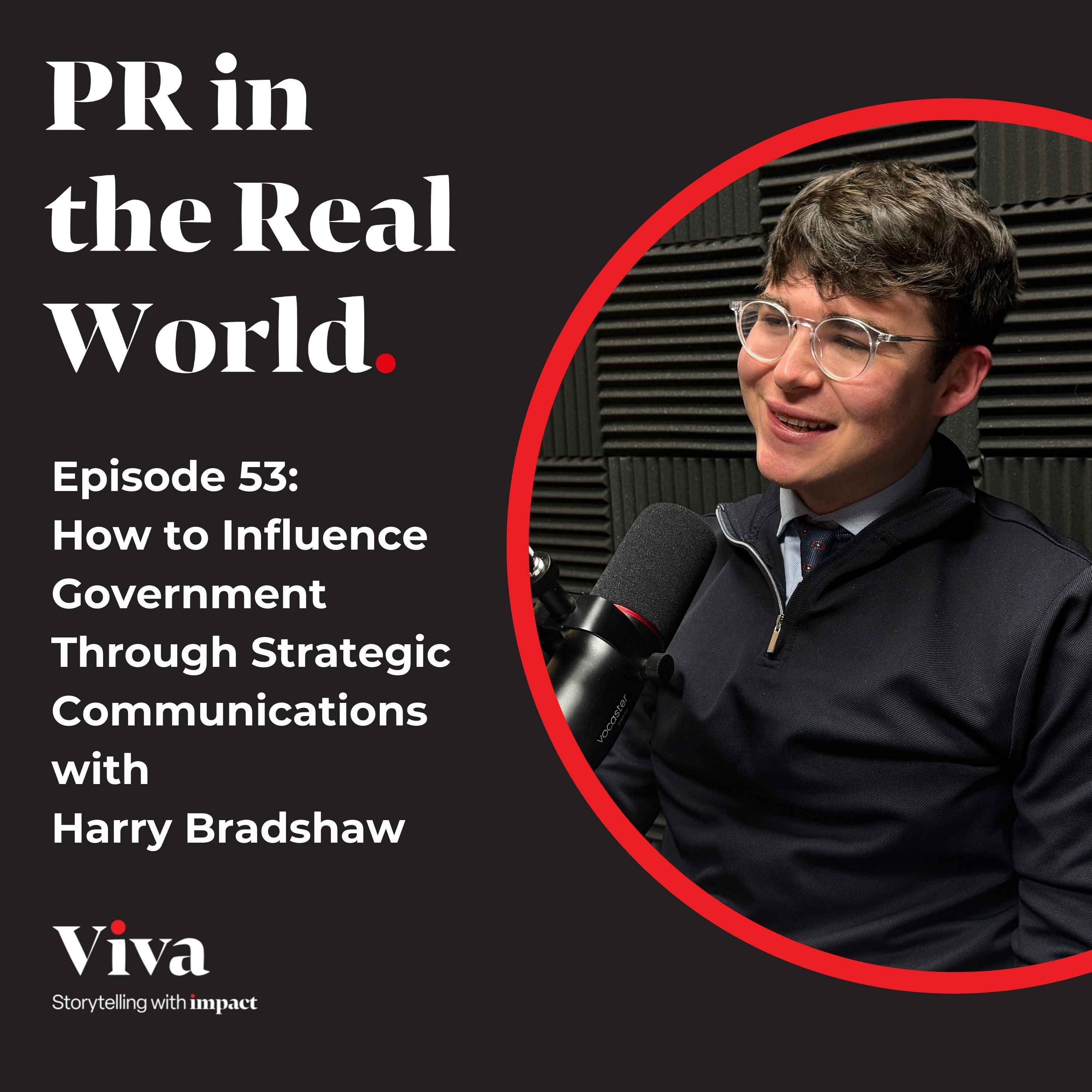 How to Influence Government Through Strategic Communications Harry Bradshaw 17.03.2026 34minHow do you move a policy idea from a 100-page research report into a live debate in the Houses of Parliament? This episode of PR in the Real World, Harry Bradshaw, Communications Manager at the Centre for Social Justice (CSJ), takes us inside the SW1 bubble to reveal how real political influence is won.Harry Bradshaw's career has been deeply embedded in the corridors of power, transitioning from running Westminster offices for Members of Parliament to leading the communications strategy for one of the UK’s most influential think tanks. We explore the dual engine room of the CSJ, developing rigorous, evidence-based policy and deploying strategic communications to advocate for it. Harry demystifies the "Westminster bubble," showing how proximity to power facilitates vital relationships, while explaining how the CSJ stays grounded in the real world through an alliance of 1,000 grassroots charities.The conversation covers the tactical realities of political public relations, including how the CSJ used newsjacking and targeted social media content to shape the narrative around the recent budget. Harry breaks down why grabby, attention-making statistics must be paired with "oven-ready" solutions for time-poor politicians. From the genesis of major legislation like Universal Credit and the Modern Slavery Act to utilising short-form video to capture the attention of a younger generation of MPs, this episode is an absolute blueprint for mastering public affairs.From a PR and communications perspective, this episode covers:The Anatomy of a Think Tank: Balancing the integrity of the research engine room with high-impact advocacy and policy promotion.The "Oven-Ready" Solution Rule: Why PRs must make life as easy as possible for time-poor politicians by providing pre-drafted briefs and seamless event logistics.Tension in the Attention Economy: Managing the constant balance between complex research and the grabby, front-page headline.The Mechanics of Political Influence: Using press splashes to build public momentum, followed by targeted social media tagging and face-to-face minister briefings.Multi-Party Stakeholder Engagement: Navigating an increasingly fragmented political landscape by maintaining strict independence and cross-party networks.The Peril of Posturing: Moving away from "meetings and photos for the sake of it" toward clear, quantifiable strategic policy asks.This episode is relevant for professionals working in:Public Affairs & Corporate PR: Looking for a practical guide on how to lobby government and influence SW1 policymakers.Charity & Third-Sector Comms: Seeking to scale their local impact up to national government agendas.Local Authorities & Regional Businesses: Trying to engage their local MPs to support community investments or civic projects.Political Science & Journalism Students: Analysing the intersection of public policy, think tanks, and national media.Harry is running the London Marathon in aid of Power2 - a CSJ charity. Power2 work in school's across the country to give students the support and guidance they need to reach their potential. You can donate, here: http://2026tcslondonmarathon.enthuse.com/pf/harry-bradshawLinks and ReferencesCentre for Social Justice – https://www.centreforsocialjustice.org.ukCSJ Alliance (network of small charities) – https://www.centreforsocialjustice.org.uk/about-us/allianceUniversal Credit (UK welfare reform referenced) – https://www.gov.uk/universal-creditModern Slavery Act 2015 – https://www.gov.uk/government/collections/modern-slavery-actWeMindTheGap charity – https://wemindthegap.org.ukOther similar episodesHow PR Changes Policy with Ruth Boston - https://www.vivapr.co.uk/pr-in-the-real-world-how-pr-changes-policy-influencing-the-national-agenda-with-ruth-boston/ Hosted on Acast. See acast.com/privacy for more information.
 -
 Shaping the News for Millions - Inside Reach plc with Chief Content Officer David Higgerson 03.03.2026 1hHow do you land a story across a network of 130+ media titles reaching millions of people daily? In this episode of PR in the Real World, David Higgerson, Chief Content Officer at Reach plc, pulls back the curtain on the modern newsroom to reveal how the digital transformation has rewritten the PR playbook.David Higgerson oversees the content strategy for some of the UK's most iconic national and regional brands, including The Mirror, The Express, the Manchester Evening News and the Liverpool Echo. Moving beyond the traditional print-first path, David tracks the seismic changes that have redefined modern reporting over the last two decades. He shifts the conversation from the static "press release distribution list" to real-time, cross-platform audience engagement, highlighting how regional title newsrooms have decentralised out into the communities they serve.The conversation addresses the modern realities of trust and fact-checking, diving into Reach plc's robust structural response to the proliferation of "fake experts" and AI-generated fabrications. David shares a powerful look at the mechanics behind high-impact campaigns, such as the Manchester Evening News's coverage of the Awab Ishak housing scandal, and explains how automated newsroom workflows and internal AI tools like "Guten" are deployed to free up journalists for deep investigative work. For any PR or communications professional trying to break through the digital noise, this episode provides a vital framework for delivering useful, reliable and memorable narratives.From a PR and communications perspective, this episode covers:The Transition to Multi-Platform Distribution: Why modern journalism focuses on packaging content for spaces where audiences live (like TikTok and Facebook) rather than relying solely on direct website homepage traffic.The Crackdown on "Fake Experts": Reach plc’s proactive deployment of a centralised, crowdsourced verification database to protect readers from AI-generated credentials and bad-faith PR pitches.Designing Stories for Digital Retention: Crafting multimedia assets that assist editors by answering the core reader criteria: Is this piece useful, memorable and reliable?AI Tool Integration in the Newsroom: Deploying natural language processing tools to parse complex council agendas and cross-platform duplication, maximising field reporting capacity.David shares the extraordinary operational insight that the Manchester Evening News contributes more to its regional economy than Manchester United and Manchester City football clubs combined. He also reflects on his early career starting as a reporter, the structural tension between platform algorithms and direct audience loyalty and his proudest legacy project: a campaign that successfully prevented the closure of local care homes in Clitheroe.This episode is relevant for professionals working in:PR Agency Directors & Account Managers: Seeking to construct reliable media relations strategies that survive rigorous editorial verification tiers.In-House Corporate Communicators: Looking to understand newsroom asset workflows, including B-roll, digital data packages and expert profiling.Journalism Students & Researchers: Analysing the evolution of media monetisation models, digital ethics and automated content workflows.Public Sector Public Affairs Leads: Evaluating how localised newsrooms preserve regional community cohesion and civic engagement.Links and ReferencesReach plc – https://www.reachplc.comManchester Evening News (MEN) Awaab Ishak investigation – https://www.manchestereveningnews.co.uk/news/greater-manchester-news/death-two-year-old-awaab-25740113Nottinghamshire Live – https://www.nottinghampost.comPress Gazette (fake experts investigation) – https://pressgazette.co.uk/news/fake-experts-seo-journalism/IPSO (Independent Press Standards Organisation) – https://www.ipso.co.ukBBC Local Democracy Reporting Service – https://www.bbc.com/lnp/ldrsShelter – https://www.shelter.org.uk Hosted on Acast. See acast.com/privacy for more information.
 -
 How Language Heals (or Harms) in a Crisis with Professor Lucy Easthope 17.02.2026 54minWhen tragedy strikes, can your words do more harm than the crisis itself? In this episode of PR in the Real World, Professor Lucy Easthope, the UK’s leading voice in disaster recovery, joins Tony Garner to unpack the devastating difference between "PR spin" and genuine, trauma-informed candour.Professor Lucy Easthope has spent her career advising governments, emergency services and global organisations through some of the most high-profile disasters in recent history, including 9/11, the 7/7 bombings, the pandemic response and the Manchester Arena attack. Inspired as a child by the toxic, defensive media framing of the Hillsborough disaster, Lucy has dedicated her life to ensuring victims and survivors are treated with dignity.The conversation explores why crisis comms must go beyond beautifully crafted text to take a true "helicopter view" of physical spaces, non-verbal cues and human emotion. Lucy introduces the concepts of "Hopium" (the danger of over-optimism and false timelines) and the "Disaster Recovery Graph," illustrating why leaning into short-term heroism tropes always triggers a long-term trust deficit. From the legal cliff-edge of civil litigation to prepping for a 24/7 news cycle, this episode is a blueprint for braver, more human crisis communication.From a PR and communications perspective, this episode covers:The "Helicopter View" of Crisis: Why structural context, environment and non-verbal signs matter just as much as a polished press release.The Danger of Hopium: How over-optimism and fake corporate apologies erode trust and leave organisations exposed when timelines inevitably fail.The Disaster Recovery Graph: Navigating the specific arc of a crisis—from the initial incident through the 8-week "honeymoon/heroism" phase to the inevitable slump and long-term investigation phase.Truth vs. Trust in a 24/7 World: Moving away from the archaic "feed the beast" mindset toward real-time accuracy and a unified corporate face.The Legal Cliff-Edge: Managing the jarring, brutal transition between empathetic early comms and the rigid, defensive realities of insurance and tort law.Respecting Comms Expertise: Why senior leaders must stop treating themselves as communication experts and empower their PR directors at the gold-command table.This episode is relevant for professionals working in:Crisis Communications & Reputation Management: Tasked with protecting organisational integrity during public reckonings.Emergency Planning & Blue Light Comms: Developing joint-agency responses through Local Resilience Forums (LRFs).Public Sector & Healthcare Leaders: Navigating statutory duties of candour, public inquiries and structural change.Investigative Journalists & Scholars: Specialising in disaster dialogue, ethnography and public accountability legislation.Links and ReferencesDr. Lucy Easthope – When the Dust Settles (book): https://www.hachette.co.uk/titles/lucy-easthope/when-the-dust-settles/9781529358247 Dr. Lucy Easthope – Come What May (book): https://www.hachette.co.uk/titles/lucy-easthope/come-what-may/9781399736220/ Desert Island Discs (Lucy Easthorpe episode, BBC Radio 4): https://www.globalplayer.com/podcasts/episodes/7DrsUDD/ Word of Mouth with Michael Rosen (episode featuring Lucy on disaster dialogue): https://open.spotify.com/episode/0To7fGDQwhztBumvv5tcnu BBC Radio 4 – Are You Ready? (programme mentioned): https://www.bbc.co.uk/programmes/m002n7mh Good Housekeeping (Lucy’s emergency preparedness interviews mentioned): https://www.goodhousekeeping.com/uk/health/a64618387/prepemergency-disaster/ Hillsborough (TV drama by Jimmy McGovern): https://www.imdb.com/title/tt0116533/ Amanda Coleman – work/book on reputation in crisis communications (mentioned): https://www.koganpage.com/marketing-communications/strategic-reputation-management-9781398617308 Amanda Coleman on PR in the Real World: https://www.vivapr.co.uk/pr-in-the-real-world-crisis-leadership/ Hosted on Acast. See acast.com/privacy for more information.
 -
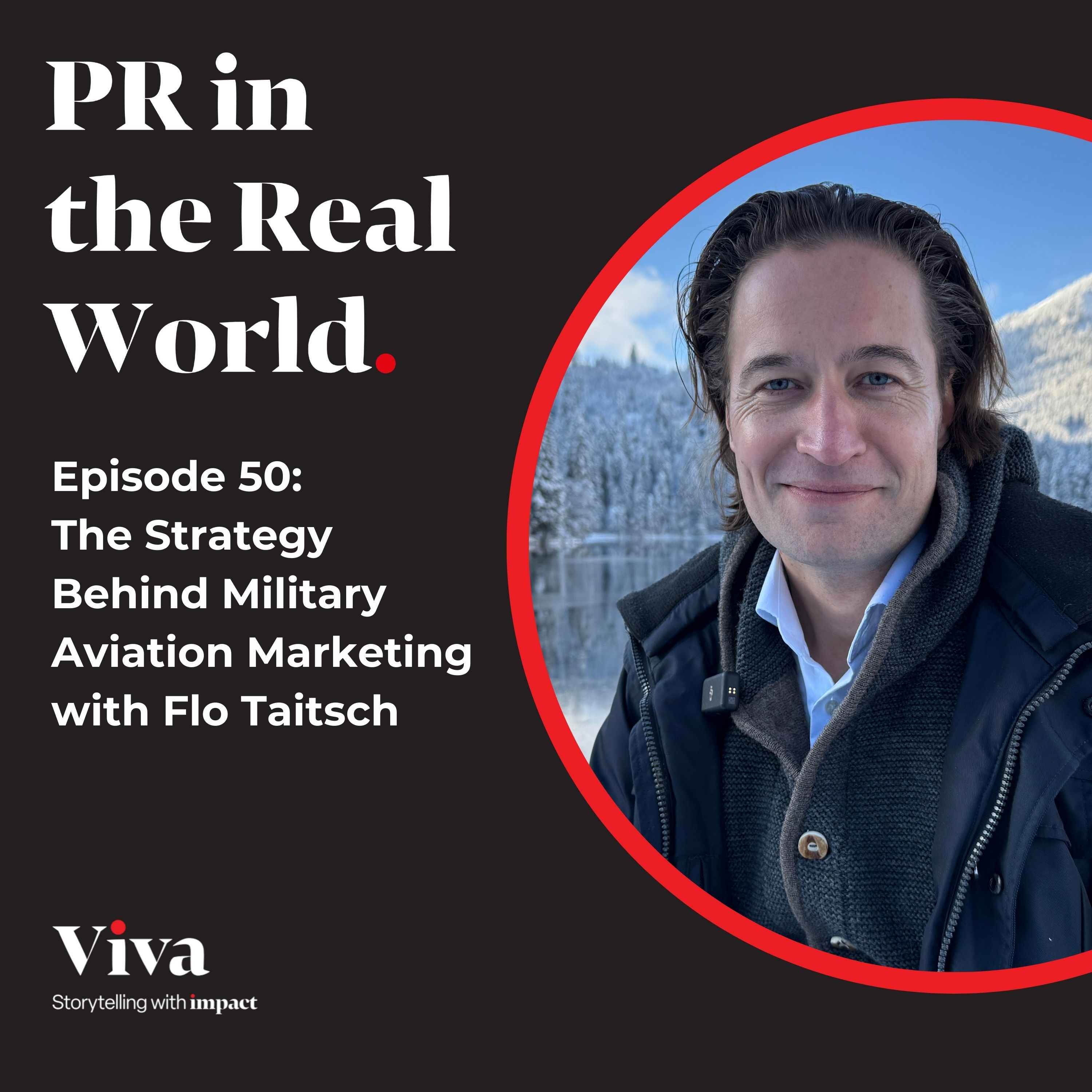 The Strategy Behind Military Aviation Marketing with Flo Taitsch 03.02.2026 30minHow do you turn a highly sensitive, secure defence program into a global social media powerhouse? In this 50th milestone episode of PR in the Real World, host Tony Garner travels to the Bavarian Alps to sit down with Flo Taitsch, Vice President of Communications and Marketing at Eurofighter Typhoon, to break down the strategy behind The Fighter Show.The Fighter Show has defied traditional defence sector conventions, rapidly growing into the world’s largest defence-focused social video program with millions of views. Flo shares the genesis of the YouTube show, which he famously conceptualised as a space "where Top Gear meets Top Gun." We explore the three-pronged strategic vision that drove the project: supporting international export sales, creating an active talent recruitment pipeline for partner companies (including BAE Systems, Airbus and Leonardo) and engaging a massive global aviation fan base.The conversation delves into the tactical realities of producing high-value, episodic digital content with a remarkably lean, part-time team. Flo speaks candidly about the transition from managing behind the scenes to hosting on camera in a non-native language, the logistical nightmare of a fortnightly production schedule and how the show successfully built a bridge across the military security fence. From the emotional impact on military families to the metrics that validate corporate investment, this episode offers a practical masterclass in modern comms leadership and calculated risk.From a PR and communications perspective, this episode covers:The "Top Gear meets Top Gun" Model: Creating an entertainment-first educational framework to avoid the "swipe past" phenomenon on social media algorithms.The Security Fence Bridge: Utilising unique, industry-insider access to demystify complex engineering environments for the public.Episodic Production Velocity: The operational and human strain of maintaining a fortnightly video publishing schedule with a part-time internal team.The Superhero Interview Technique: Providing psychological safety and patience to first-time, high-scrutiny operational guests to ensure authentic, premium on-screen delivery.The Ripple Effect of Internal PR: Giving military personnel and maintainers a public platform to explain their highly classified roles directly to their families.Evolving Video Analytics: Shifting focus from vanity view counts to qualitative metrics like localised watch time, geographic distribution and viewer retention.Flo outlines the rigorous process of planning The Fighter Show’s fourth season and describes the real-world impact of being recognised by flight surgeons and young spotters alike. He also shares his ultimate "dream episode" concept, uniting all Eurofighter partner nations in a single aerial formation and the historical evolution of tracking PR success, moving from physical newspaper clippings to sophisticated digital dashboards.This episode is relevant for professionals working in:B2B & Defence Sector PR: Looking for strategies to modernise communications around highly technical or sensitive products.Brand Managers & Directors: Seeking a blueprint for creating self-sustaining, high-impact owned media channels.Social Media Content Creators: Interested in high-yield corporate video production and YouTube audience retention.Corporate Comms Leaders: Looking to understand how to align creative content campaigns with hard talent recruitment and sales goals.Links and ReferencesConnect with Flo: https://www.linkedin.com/in/florian-taitsch-10aa29224/ Eurofighter Typhoon: https://www.eurofighter.com/ The Fighter Show (YouTube): https://www.youtube.com/@TheFighterShow Viva PR: https://vivapr.co.uk/ Royal International Air Tattoo: https://www.airtattoo.com/ Spitzingsee (setting): https://www.spitzingsee.de/Other episodes: https://www.vivapr.co.uk/viva-podcast/ Hosted on Acast. See acast.com/privacy for more information.
 -
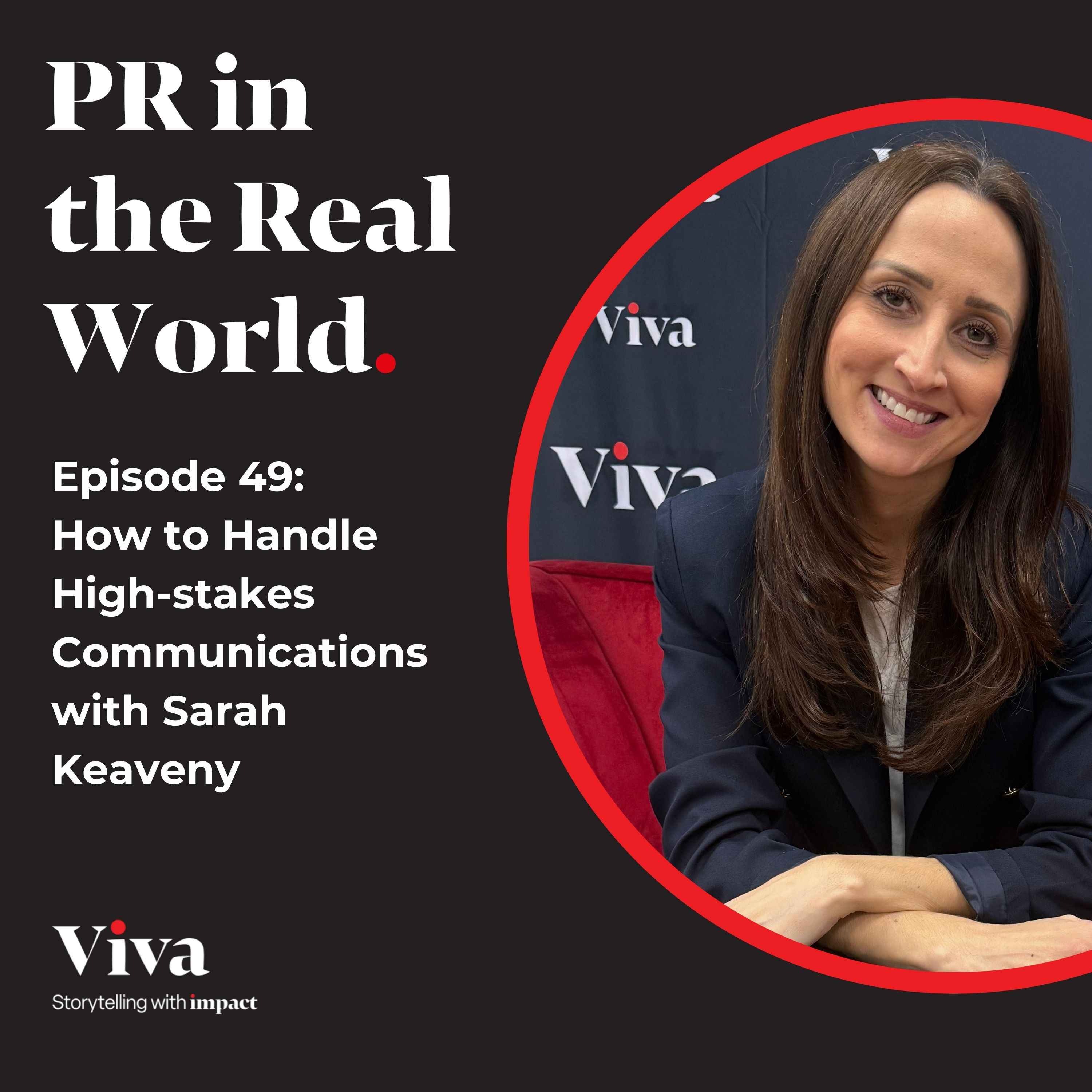 How to Handle High-stakes Communications with Sarah Keaveny 20.01.2026 57minHow do you lead a communications strategy when the consequences are a matter of life, death and national inquiry? In this episode of PR in the Real World, Sarah Keaveny, Head of External Communications at Manchester Metropolitan University, shares the raw realities of frontline public sector PR.Sarah Keaveny’s career is defined by pressure and purpose. Starting as a crime reporter at the Bury Times, Sarah learned early that "human stories" are the heartbeat of impactful journalism. She takes us through 14 intense years at Greater Manchester Fire and Rescue Service, where she managed the comms for tragic live incidents, including the line-of-duty death of a firefighter. We delve into the long-running reputational pressure of the Manchester Arena Inquiry and the essential role of humility and evidence when an organisation must prove it has genuinely changed.The conversation also explores Sarah’s work on the multi-award-winning ‘Is This Okay?’ campaign, a viral initiative tackling violence against women and girls. Sarah breaks down how to spark behaviour change on a shoestring budget and why she has now pivoted to proactive, strategic comms in the Higher Education sector. This episode is an essential guide for anyone navigating high-stakes reputation management while maintaining their own resilience.From a PR and communications perspective, this episode covers:The Transition from Newsroom to Frontline: Using reporter instincts (determination and tenacity) to manage emergency service comms.Managing Live Crisis Incidents: Building a 24/7 "newsroom-style" comms team within the Fire and Rescue Service.Reputation & The Arena Inquiry: Proving "genuine improvement" through evidence, data and the courage to ask awkward internal questions.Behaviour Change at Speed: The strategy behind the ‘Is This Okay?’ campaign; launching a viral movement in just four weeks.Bystander Theory in PR: Engaging men and boys specifically to challenge societal attitudes and low-level harassment.Strategic Pillars in Higher Education: Moving from 80% reactive work to 80% proactive strategy using the OASIS framework.Sarah shares a staggering statistic: Manchester Met contributes more to the local economy than both Manchester United and Manchester City combined. She also offers personal reflections on leadership, "poker faces," the value of national networks like FirePro and why reconnecting with her alma mater has brought her career full circle.This episode is relevant for professionals working in:Crisis Communications: Especially those in "blue light" services or local government.Public Sector PR: Navigating political stakeholders and multi-agency responses.Behaviour Change Specialists: Interested in low-budget, high-impact social campaigns.HE Professionals: Looking for insights on external engagement and purpose-led storytelling.Links and references Is This Okay? Campaign: https://isthisokgm.com/Mayor of Greater Manchester – Is This Okay? campaign launch: https://www.greatermanchester-ca.gov.uk/news/mayor-launches-latest-stage-of-campaign-to-tackle-gender-based-violence-with-hard-hitting-film/Greater Manchester Gender-Based Violence Strategy: https://www.greatermanchester-ca.gov.uk/what-we-do/safer-and-stronger-communities/gender-based-violence/isthisokManchester Metropolitan University: https://www.mmu.ac.uk/Manchester Metropolitan University – About: https://www.mmu.ac.uk/about-us/Greater Manchester Fire and Rescue Service: https://manchesterfire.gov.uk/More PR in the Real World: https://www.vivapr.co.uk/viva-podcast/ Hosted on Acast. See acast.com/privacy for more information.
 -
 How the ‘Dry January’ Campaign Changed a Culture with Joe Marley 06.01.2026 31minHow do you turn a personal experiment into a global cultural phenomenon that millions of people participate in every year? In this episode of PR in the Real World, we go behind the scenes of Alcohol Change UK with Joe Marley, Executive Director of Marketing and Communications, to discuss the strategy behind Dry January.Dry January is one of the UK’s most recognisable behaviour change campaigns, but its success isn’t accidental. Joe Marley shares the campaign's humble origins, starting with a single person training for a half-marathon, and how it has evolved over 15 years into a clinical tool supported by rigorous evidence. We explore why January provides the perfect "sliding doors" moment for a lifestyle reset and how the charity manages to keep an annual campaign feeling fresh without resorting to preachy or prescriptive messaging.The conversation dives deep into the "Science of Change," looking at why the Try Dry app is the campaign’s most valuable conversion tool and how 70% of supported participants are still drinking less six months later. Joe also discusses the "pressure of the best year," moving from vanity metrics to "sanity metrics," and why the most important day of the entire challenge is actually the 1st of February.From a PR and communications perspective, this episode covers:The Non-Prescriptive Tone: Why meeting people "wherever they are" is more effective than an anti-alcohol stance for long-term trust.The Try Dry App as a PR Lever: Using digital tools to gather baseline data, track impact, and provide year-round motivational touchpoints.Sustaining Annual Momentum: How to regroup every year using participant ambassadors, community champions, and fresh polling data.Sanity vs. Vanity Metrics: Shifting focus from simple "reach" to direct calls-to-action (app downloads) and long-term behavioural outcomes.Strategic Partnerships: Working with brands like Lucky Saint and local authorities to amplify the message to diverse audience segments.The Boxing Day Spike: Understanding the psychology of the "ready to commit" moment and front-loading content for late December.Joe discusses the 'Funny AF' (Alcohol Free) comedy campaign featuring Tom Rosenthal, designed to challenge the myth that alcohol is required for social fun. We also explore the "ripple effect" of alcohol harm; how changing one individual’s relationship with alcohol can positively impact families, workplaces and entire communities.This episode is relevant for professionals working in:Behaviour Change & Public Health: Seeking a blueprint for long-term health intervention campaigns.Non-Profit & Charity Comms: Interested in sustaining engagement for annual awareness months.Marketing Strategy: Looking for insights on audience segmentation (specifically targeting the 35+ male demographic).Digital PR: Focused on app-led conversion and data-driven storytelling.Links and ReferencesAlcohol Change UK: https://alcoholchange.org.ukDry January campaign: https://alcoholchange.org.uk/help-and-support/managing-your-drinking/dry-january/about-dry-january/the-dry-january-storyTry Dry app: https://alcoholchange.org.uk/help-and-support/managing-your-drinking/dry-january/get-involved/the-dry-january-appAlcohol Change UK Campaigns: https://alcoholchange.org.uk/get-involved/campaigns Hosted on Acast. See acast.com/privacy for more information.


