
The Impactful Coach: Learn Coaching Skills & Coaching Demos
Tobi Weghorn from metaFox Coaching Tools
0
The Impactful Coach is a podcast aimed at coaches, facilitators, and people developers who want to enhance the impact of their coaching sessions. Host Tobi Weghorn, co-founder of metaFox, interviews experienced practitioners to unpack practical coaching skills, methods, and tools. The show also includes live coaching demos, giving listeners a chance to learn from real coaching conversations. With a focus on mindset, methods, and hands-on techniques, it's designed to help coaching professionals grow their practice.
Epizode
-
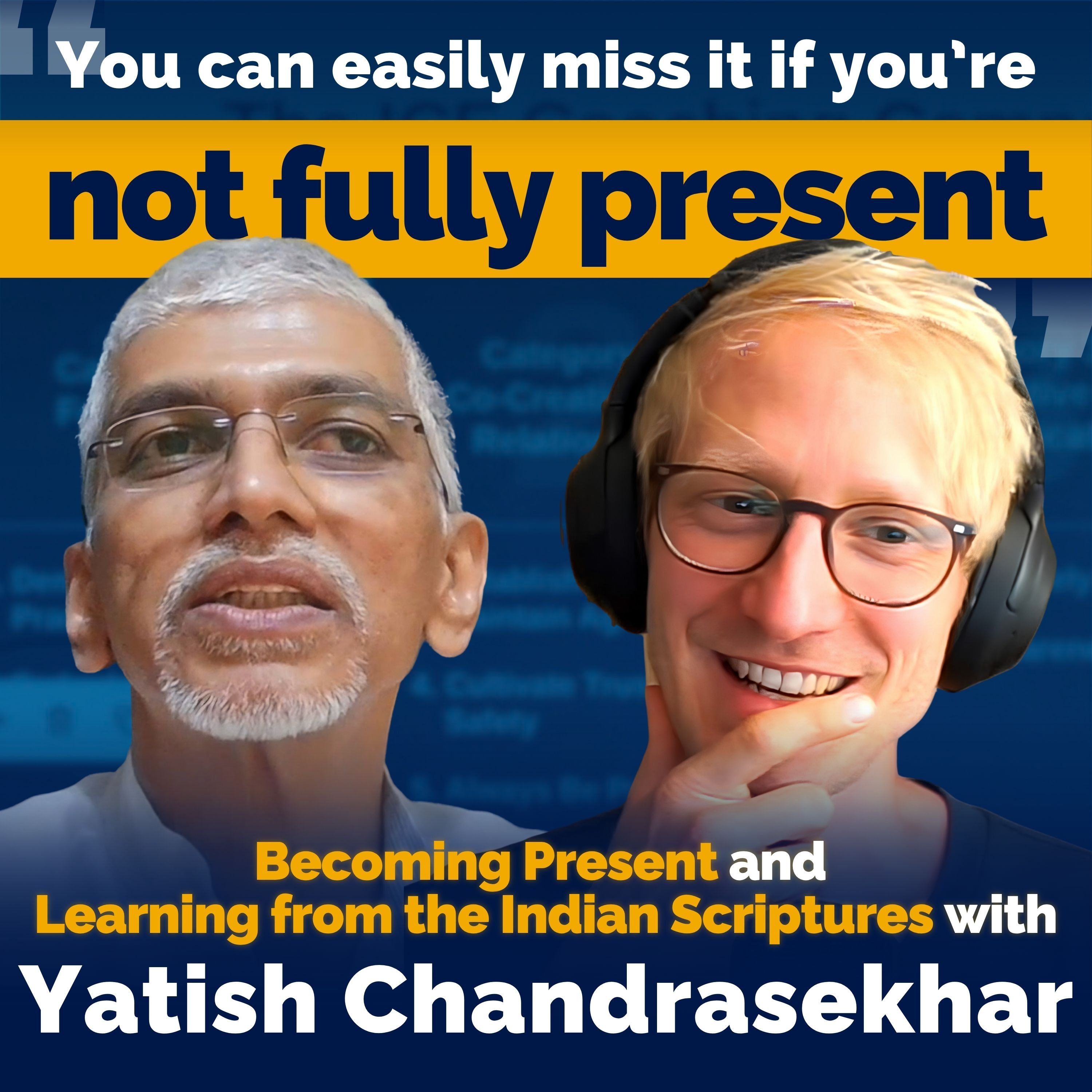 Becoming Present and What Coaches Learn from the Indian Scriptures with Yatish Chandrasekhar 25.09.2026 54minA coaching podcast with Yatish Chandrasekhar and Tobias Weghorn about coaching skills through the lens of Indian scriptures and modern coaching. Yatish, an ICF PCC coach educator from Bengaluru and the mind behind the Yogi Compass, shares why he believes India didn’t “catch up” with coaching—it’s been practicing it for thousands of years through dialogue-based teaching. Together, they connect the ICF core competencies to stages of learning like listening (Shravana), reflection (Manana), and contemplation (Nididhyasana), and explore coaching presence as a state of being rather than a technique. You’ll also hear practical ways to build a not knowing mindset—especially relevant in leader as coach conversations—using ideas like Sakshi Bhava (witness consciousness), silence, journaling, and breathwork.Key Learnings:Treat coaching skills like listening, reflection, and contemplation as a sequence: listen fully (Shravana), hold silence to let Manana happen, then help the client translate insights into action (ICF core competencies 6–8).Build coaching presence by “tending to zero”: reduce your need to contribute, rescue, or impress, so the client experiences more psychological safety and does more of the meaning-making.Practice a not knowing mindset (especially as a leader as coach) by asking curiosity-from-wonder questions like, “If you were taking all the decisions, how would you do it?” instead of jumping to solutions.Resources:Find your Coaching Tool: https://metaFox.euTry the metaFox Strengths Discovery: https://strengths-discovery.comConnect with Tobi on LinkedIn: https://linkedin.com/in/tobiasweghornEpisode Chapters:00:00 Not Knowing Mindset and Curiosity in Coaching01:00 Indian Scriptures Meet ICF Core Competencies09:00 Shravana, Manana, Nididhyasana as Coaching Skills13:00 Sakshi Bhava: Coaching Presence as Witness Consciousness19:00 “Coach to Zero, Client to 100” and Psychological Safety23:00 Leader as Coach: Shifting From Answers to Wonder44:00 Mentor Coaching: Silence, Reflection, and Avoiding the “Fixing” Trap47:00 Pranayama and Box Breathing to Access Presence
 -
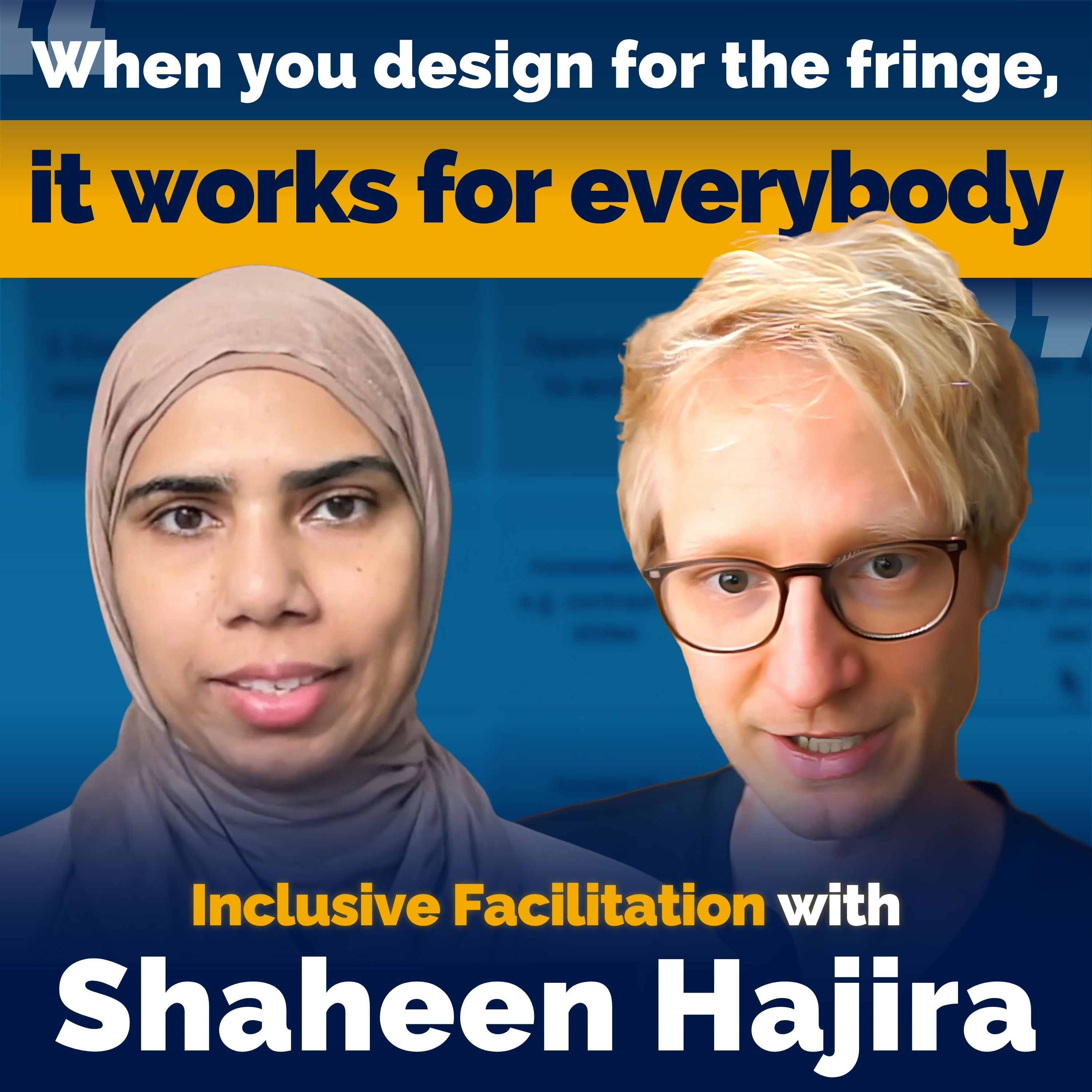 Inclusive Facilitation with Shaheen Hajira 11.09.2026 1h 2minA coaching podcast with Shaheen Hajira and Tobias Weghorn, digging into inclusive facilitation and what actually needs to change in how we design workshops so we don’t just hear from the fastest voices in the room. Shaheen shares practical moves like giving real thinking time, using Think Pair Share, and sending a clear “what to expect” email so more people can participate—especially in neurodiversity in workshops. You’ll also hear how co-design workshops shift power, plus Shaheen’s POWER framework (five lenses for spotting inclusion gaps) and what trauma-informed facilitation can look like in an ordinary session.Key Learnings:Use inclusive facilitation to change the default “raise your hand and speak” pattern: give 60–90 seconds of silent thinking time, then run Think Pair Share to bring in quieter voices and better ideas.Reduce cognitive load and support neurodiversity in workshops by sending a “what to expect” pre-work email (purpose/why, agenda, break times, and even prompts/questions) so people can prepare in their own way.Apply the POWER framework as a quick audit for co-design workshops: check Opportunity to Access, Wider Representation, Expression (choice + silence), Responsive Action (close the loop), and Power (what you can genuinely give away).Resources:Shaheen Hajira’s Website: https://taleemconsulting.comFind your Coaching Tool: https://metaFox.euTry the metaFox Strengths Discovery: https://strengths-discovery.comConnect with Tobi on LinkedIn: https://linkedin.com/in/tobiasweghornConnect with Shaheen Hajira: https://au.linkedin.com/in/hajirasReach out to Shaheen Hajira: [email protected], Pair, Share, also known as 1-2-4-All: https://www.liberatingstructures.com/1-1-2-4-all/Priya Parker's Pre-Game Idea: https://www.priyaparker.com/Episode Chapters:00:01 Inclusive Facilitation Starts With a Design Choice00:03 Learning In Context and Connection (Constructivist Social Learning)00:07 Co-Design Workshops and Who Gets Invited Into the Room00:16 Why “Raise Your Hand” Excludes People00:21 Think Pair Share and Giving People Options00:23 The Pre-Game Email for Neurodiversity in Workshops00:33 The POWER Framework: Five Lenses for Inclusion00:48 Trauma-Informed Facilitation in Everyday Sessions00:55 Auditing Workshop Design + The Picture Check-In Critique
 -
 Team Coaching with the 5 Dysfunctions of a Team with Tina Blunsdon 28.08.2026 58minA coaching podcast with Tina Blunston and Tobias Weghorn. They get practical about team coaching by tackling “bathroom chatter” (the real conversation that happens after the meeting) and using Patrick Lencioni’s five dysfunctions of a team as a starting point. Tina shares how she builds psychological safety in teams with simple exercises, why she asks the most senior person to go first when it’s about vulnerability (and last when it’s about decisions), and how she creates space for constructive conflict in meetings without it turning personal. You’ll also hear how she uses a DiSC assessment to create a shared language for communication and peer accountability.Key Learnings:Use team coaching to stop “bathroom chatter” by building trust first: run a DiSC assessment, then do quick vulnerability-based prompts (e.g., “a childhood challenge that shaped you”) to set up psychological safety in teams.Spark constructive conflict in meetings with structure: set ground rules, use “five whys,” and add simple voting (fist-to-five or 1–99 + “why”) to surface disagreement without making it about the person.Make accountability stick by co-creating peer rules: have the team define what “holding peers accountable” looks like (including early communication), write it down, and get explicit buy-in so team coaching doesn’t slide back after the workshop.Resources:Tina Blunston’s LinkedIn: https://www.linkedin.com/in/tina-blunsdon-8a9843127/The 5 Dysfunctions Of A Team (The Table Group): https://www.tablegroup.com/topics-and-resources/teamwork-5-dysfunctions/Find your Coaching Tool: https://metaFox.euTry the metaFox Strengths Discovery: https://strengths-discovery.comConnect with Tobi on LinkedIn: https://linkedin.com/in/tobiasweghornEpisode Chapters:00:00 Bathroom Chatter And Why Quiet Voices Matter01:00 Framing The Episode: Team Coaching And The Five Dysfunctions Of A Team06:55 DiSC Assessment As A First Step In Team Communication11:00 Building Trust And Psychological Safety In Teams22:00 Active Listening Drill: Headphones, Observation, And Body Language25:40 Healthy Rules For Constructive Conflict In Meetings (Five Whys, Baton)28:00 “Throwing A Grenade”: Facilitating Disagreement With Scaling Votes38:00 Decision-Making: Senior Vulnerable First, Senior Speaks Last40:50 Holding Peers Accountable With Team-Written Rules46:10 Blue, Red, Pause: Do The Work, Then Reflect On Results50:35 Learn Coaching: How To Start With Team Coaching In Real Companies
 -
 The Neuroscience of Emotions and Images with Sue Langley 14.08.2026 56minA coaching podcast with Sue Langley and Tobias Weghorn about coaching skills you can use to read emotional cues, expand emotional vocabulary, and work more intentionally with emotions in sessions. Starting with a simple picture-based check-in, Sue explains why using picture cards in coaching can help clients talk about what’s going on “behind the words” and access richer insights than a standard “How do you feel?” question. You’ll also hear the neuroscience angle behind emotion cards and emotional vocabulary, including how the limbic system vs prefrontal cortex in coaching can shape empathy, clarity, and progress. Along the way, Sue shares practical ways to notice body language and physiology (interoception) so you can learn coaching that’s both human and evidence-informed.Key Learnings:Use picture cards in coaching as a “third object” to help clients talk more openly: ask them to pick an image that matches how they feel, then explore the story behind it (this strengthens coaching skills and often reveals what words alone hide).Build emotion cards and emotional vocabulary into your sessions: have clients label more precise emotions (e.g., disappointed, embarrassed, guilty vs ashamed) to support emotional intelligence (perceive-connect-understand-manage) and make next steps clearer.Practice reading emotional cues and body language in real time: notice mismatches between words and physiology (jaw tension, staccato gestures, foot tapping) and choose whether to name it overtly or regulate your own energy to help the client shift state.Resources:Sue Langley’s Website: https://suelangley.comThe Langley Group Website: https://langleygroup.com.auFind your Coaching Tool: https://metaFox.euTry the metaFox Strengths Discovery: https://strengths-discovery.comConnect with Tobi on LinkedIn: https://linkedin.com/in/tobiasweghornEpisode Chapters:00:00 Reading Emotional Cues As A Coach01:00 Why Picture Cards Make Feelings Easier To Express04:00 Picture-Based Check-In: Two Images And What They Reveal08:45 Using Picture Cards In Coaching For Feedback And Strengths14:40 Limbic System vs Prefrontal Cortex in Coaching (What’s Happening In The Brain)19:45 Compassion vs Empathy: Staying Warm Without Losing Clarity23:20 Interoception: Using Physiology To Read Emotions (Foot Tapping Example)32:00 In-Session Techniques To Shift A Client’s State37:20 Emotion Cards And Emotional Vocabulary: Labeling For Better Management40:10 Shame vs Guilt: Why The Distinction Changes What Clients Do Next47:45 Strengths, Values, And Choosing The Right Tool In The Moment54:10 How To Learn More And Connect With Sue Langley
 -
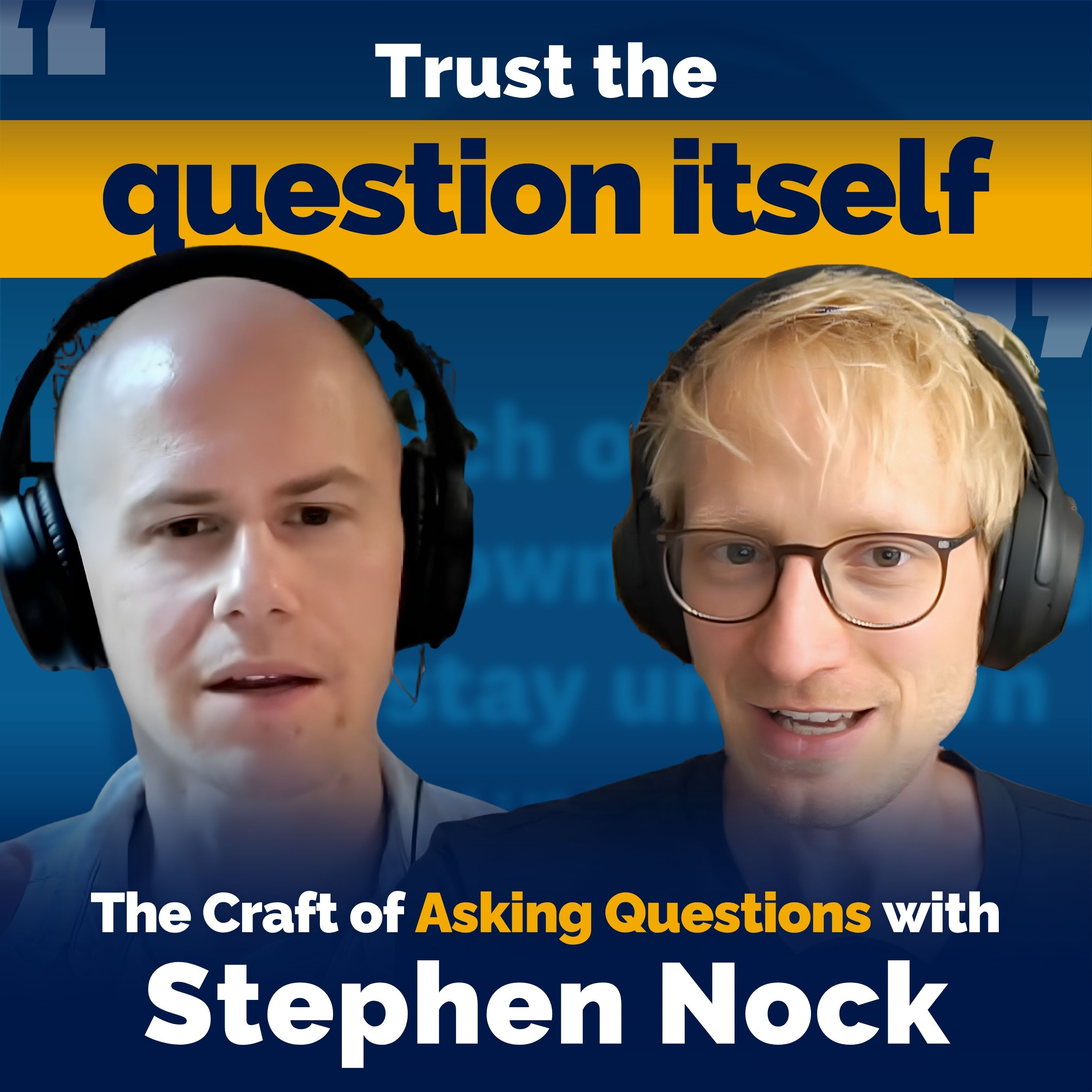 The Craft of Asking Questions with Stephen Nock 31.07.2026 53minA coaching podcast with Stephen Nock and Tobias Weghorn about sharpening your coaching skills through better questions and a stronger coaching presence. Using the episode’s intro as a starting point, Stephen and Tobi get practical about what makes a good coaching question (hint: it’s often less about the “perfect” wording and more about curiosity, tone, and timing). You’ll hear why what vs why questions can reduce defensiveness, how “And what else?” opens up new thinking, and how The Coaching Habit 7 questions can work as an everyday toolkit for coaches and leaders. They also explore journaling with coaching questions and Stephen’s And What Else coaching cards as a simple way to practice asking cleaner, more useful questions.Key Learnings:Build coaching skills by swapping “why” for “what” when you want depth without defensiveness (e.g., “What makes this important to you?” instead of “Why is this important?”).Use “And what else?” as a repeatable prompt to move beyond first answers—especially for idea generation and getting to the real challenge.Practice powerful coaching questions through journaling with coaching questions: write your first answer fast, then ask yourself what else is underneath it to find the question you’re really trying to answer.Resources:Find your Coaching Tool: https://metaFox.euTry the metaFox Strengths Discovery: https://strengths-discovery.comConnect with Tobi on LinkedIn: https://linkedin.com/in/tobiasweghornConnect with Stephen Nock on LinkedIn: https://linkedin.com/in/stephen-nockGet your own "And What Else?" Coaching Cards: https://metafox.eu/en-int/products/and-what-else-coaching-cardsFind out more about &joy Coaching: https://andjoy.coachNewsletter "And Now What?": https://andjoy.beehiiv.com/The Coaching Habit (Michael Bungay Stanier): https://www.mbs.works/the-coaching-habitThe Advice Trap (Michael Bungay Stanier): https://www.mbs.works/the-advice-trapEpisode Chapters:00:00 What Do You Want? Why “What” Questions Matter01:00 What Makes A Good Coaching Question?06:00 What Vs Why Questions (And When “Why” Backfires)15:00 The Coaching Habit 7 Questions As A Coaching Toolkit17:00 “And What Else?” For Idea Generation And Deeper Insight28:00 And What Else Coaching Cards: A 4-Step Question Flow33:00 A Live Coaching Demo: Enoughness, Trust, And Not Knowing41:00 Foster Trust: Working With Uncertainty In Coaching46:00 Presence, Calm, And The Coach’s “I Don’t Know” Mindset51:00 Where To Find Stephen + Journaling With Coaching Questions
 -
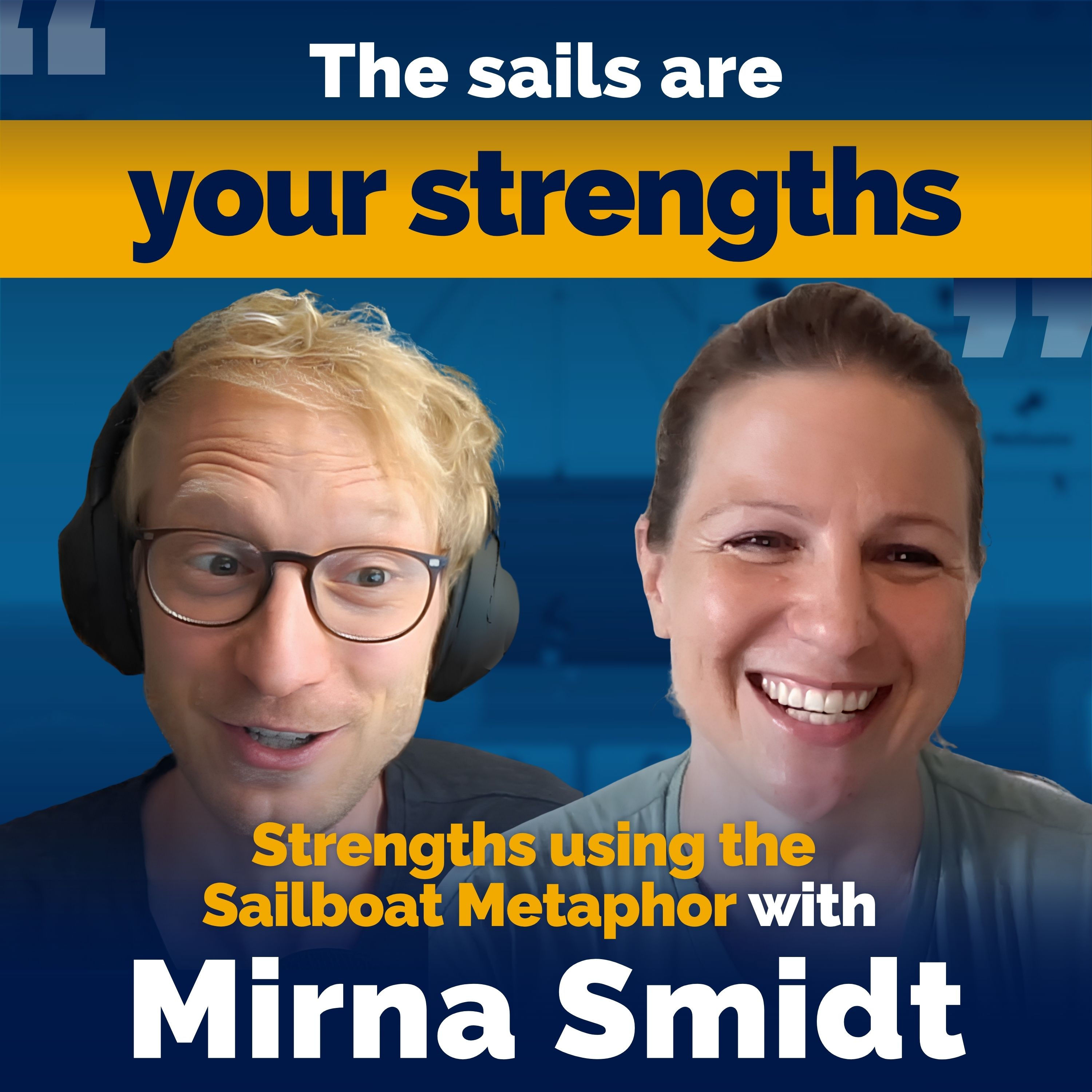 Designing Strengths-based Journeys with the Sailboat Metaphor with Mirna Smidt from Trainers Toolbox 17.07.2026 55minA coaching podcast with Mirna Smidt and Tobias Weghorn on coaching methods that make strengths work feel more intuitive, less “report-heavy,” and easier to remember. Mirna (Trainers Toolbox / Happiness Academy) shares how she uses positive psychology coaching tools in workshops and coaching, and why she prefers adapting frameworks instead of following them rigidly. You’ll learn the sailboat metaphor coaching model for combining goals, values, strengths-based coaching, and real-life constraints into one visual journey. They also connect strengths to flow state coaching—using strengths as a shortcut to more engagement, energy, and learning.Key Learnings:Use the sailboat metaphor coaching approach to balance “sails” (strengths/resources) with “leaks” (weaknesses/overused strengths), so strengths-based coaching doesn’t turn into ignoring problems—it becomes prioritizing what moves the client forward.Build flow state coaching into your sessions by matching challenge level and motivation, then use strengths as a practical shortcut to sustain focus and resilience (especially when clients feel stuck or low-energy).When debriefing a strengths assessment, make it actionable by translating the report into visuals (sails/leaks/other boats/weather) and adapt the method to the coaching goal instead of forcing a linear process—one of the most transferable coaching methods from this episode.Resources:Find your Coaching Tool: https://metaFox.euTry the metaFox Strengths Discovery: https://strengths-discovery.comConnect with Tobi on LinkedIn: https://linkedin.com/in/tobiasweghornConnect with Mirna on LinkedIn: https://www.linkedin.com/in/mirnasmidtPodcast on Strengths Overuse: https://trainers-toolbox.com/podcast-episodes-strengths-overused-what-to-do-when-your-strengths-become-your-weaknesses/Podcast on Sailboat Metaphor: https://trainers-toolbox.com/podcast-episodes-the-sailboat-metaphor-a-powerful-tool-to-work-with-strengths/Read more from: Hugo Alberts (2016): Sailboat MetaphorMirna's Miro Template on Sailboat Methaphor: Coming soon!Episode Chapters:00:00 Permission To Adapt Frameworks (Not Be Rigid)00:01 Positive Psychology, Strengths, And Flourishing00:05 PERMA And Positive Psychology Coaching Tools00:12 Flow State Coaching And Strengths As A Shortcut00:16 The Sailboat Metaphor Coaching Model (Sails Vs. Leaks)00:21 The Full Sailboat Map: Values, Goals, Weather, Other Boats00:27 How To Use The Model In Workshops (Non-Linear Coaching Methods)00:29 Strengths Assessment Debrief Using The Sailboat Visual00:39 Goal-Setting Prompts: Ikigai, Ideal Day, Rocking Chair00:44 Weather And Resilience: Control, Acceptance, And Resources
 -
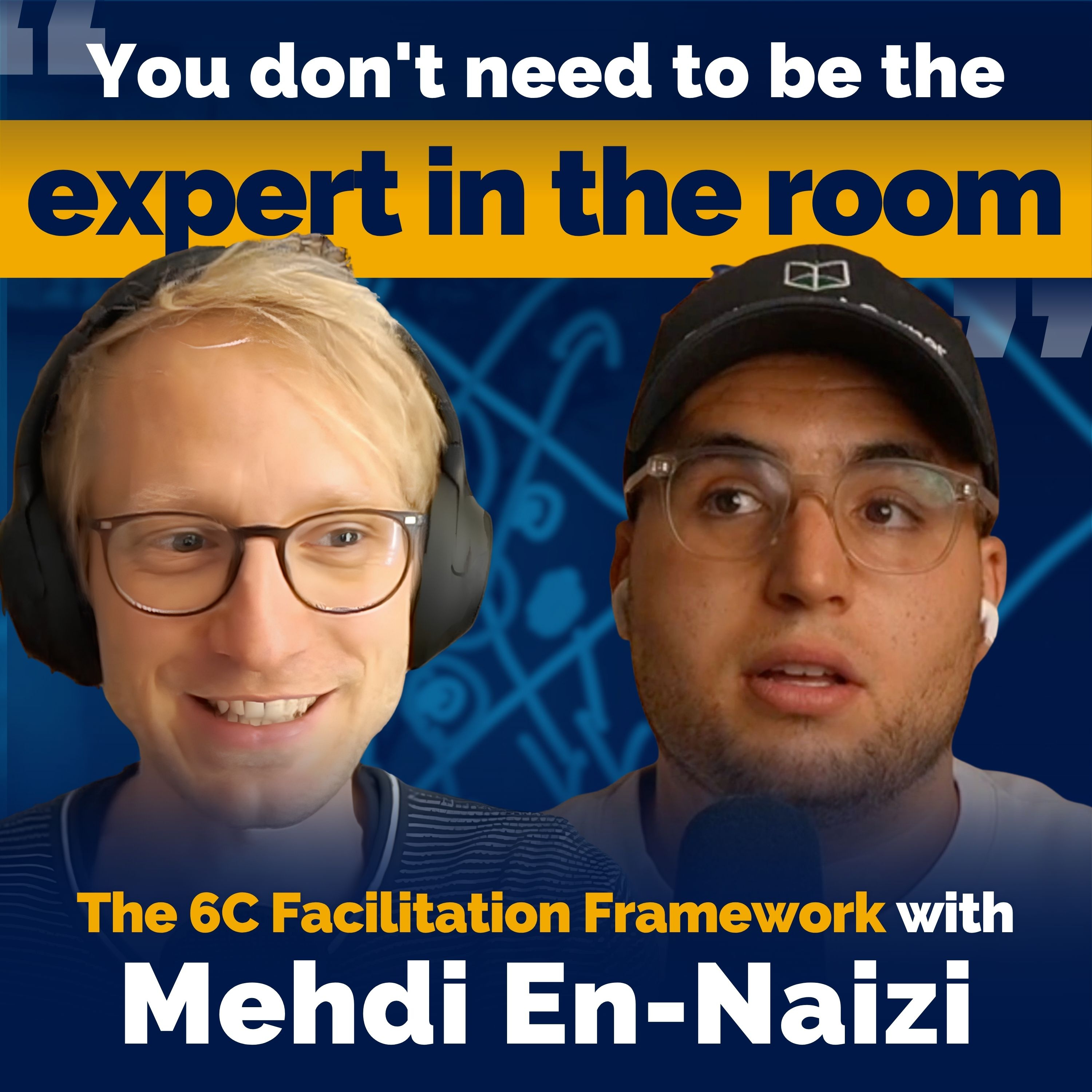 Why Facilitation Skills are Not Optional For You as a Coach with Mehdi El-Naizi 03.07.2026 51minA coaching podcast with Mehdi En Naizi and Tobias Weghorn. If you’ve ever sat through a cringe icebreaker and felt your body tense up, this episode is for you: we unpack coaching methods coaches can borrow from facilitation to build real psychological safety in workshops. Mehdi shares what stand-up comedy taught him about reading the room, designing workshop warm-up activities that create connection without awkwardness, and how to stay flexible when the “real problem” shows up mid-session. You’ll also get a practical walkthrough of the double diamond process and Mehdi’s 6C facilitation framework to structure group work from clear outcomes to commitment.Key Learnings:Use coaching methods from facilitation to build psychological safety in workshops: start with a low-risk warm-up that creates connection (with each other and the topic) instead of “embarrassing moment” icebreakers.Practice reading the room on purpose: use an early warm-up as a diagnostic to adapt your facilitation style, then keep checking engagement signals so you can pivot without derailing the session.Structure your group sessions with the double diamond process (diverge/converge on problem, then diverge/converge on solutions) and pressure-test your flow with the 6C facilitation framework so you end with clear commitments, not just good ideas.Resources:Mehdi En Naizi’s Website: https://facilitatorscorner.substack.com/Mehdi En Naizi’s LinkedIn: https://www.linkedin.com/in/mehdi-en-naizi-75b533116/Find your Coaching Tool: https://metaFox.euTry the metaFox Strengths Discovery: https://strengths-discovery.comConnect with Tobi on LinkedIn: https://linkedin.com/in/tobiasweghornEpisode Chapters:00:00 Creativity, Prompts, and the “Sunset” Warm-Up01:00 Psychological Safety in Workshops vs. Awkward Icebreakers03:00 Reading the Room: What Stand-Up Teaches Facilitators07:30 Why Coaches Need Group Facilitation Skills12:30 Contracting: Outcome, Purpose, and Success Metrics18:00 Preparing Your State: Rehearsing the First 5–10 Minutes24:00 Workshop Warm-Up Activities That Build Connection (No Cringe)30:00 Pivoting with the Double Diamond Process37:30 The 6C Facilitation Framework (Connect to Celebrate)44:00 Challenge the Client, Don’t Just Execute
 -
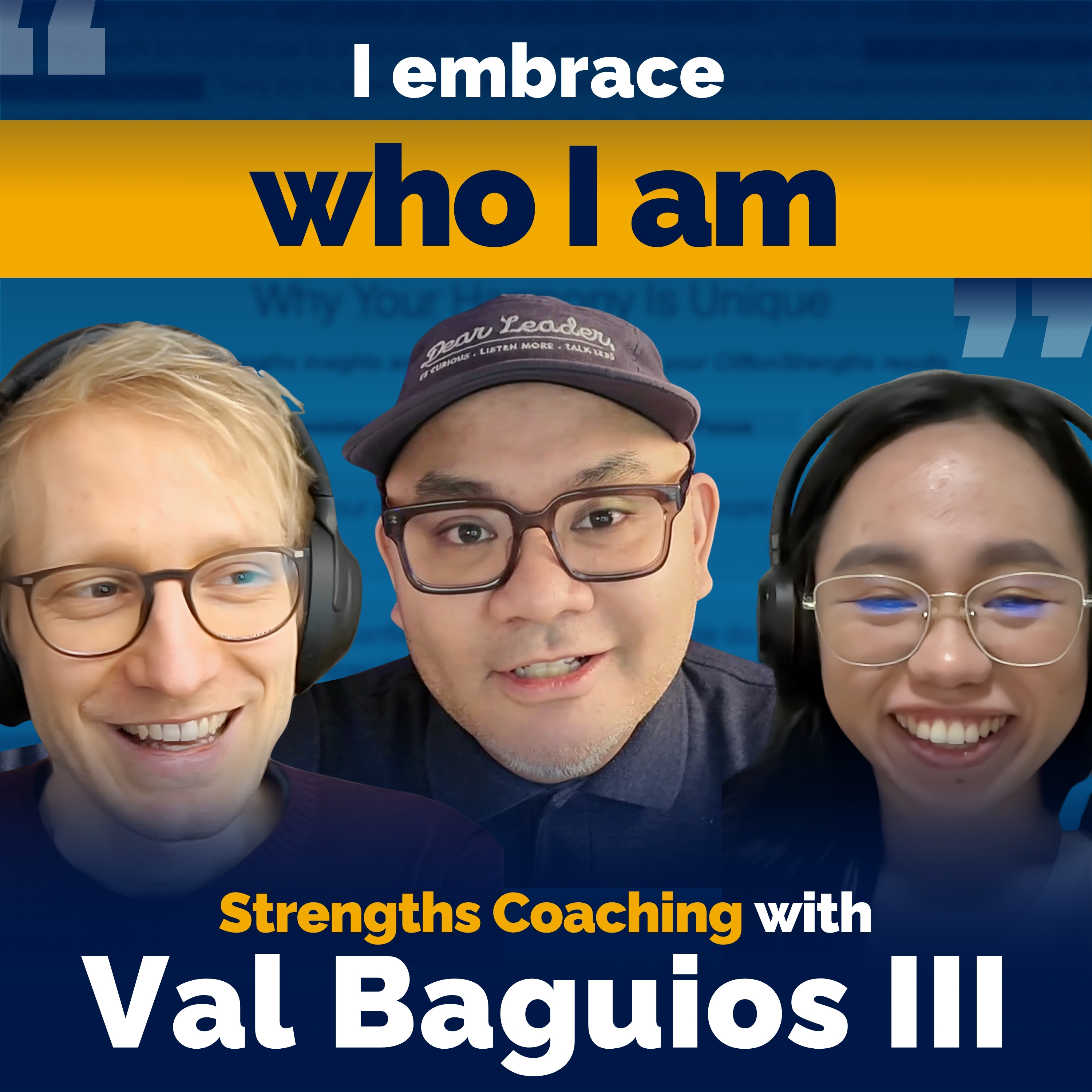 Strengths Coaching with Val Baguios III 19.06.2026 1h 2minA coaching podcast with Val Baguios III and Tobias Weghorn where you get a front-row seat to a live coaching demo using CliftonStrengths. Val coaches MetaFox COO Trisha through a Gallup CliftonStrengths report debrief, exploring how Consistency shows up as realism and how Harmony can slide into conflict avoidance. Along the way, you’ll hear strengths spotting in action and how strengths-based leadership coaching can focus less on “fixing weaknesses” and more on owning your leadership style. If you want to learn coaching by observing real moves in a session, this coaching podcast breaks down what the coach is listening for and how to turn insights into next steps.Key Learnings:Run a simple coaching demo homework: ask clients to track one real conflict moment and note their response to spot Harmony strength conflict avoidance patterns (and when it’s actually working).Use strengths spotting during storytelling: reflect back specific behaviors (e.g., setting one goal per month) and name the strength/theme you hear to build a strengths-based language clients can reuse in coaching.In strengths-based leadership coaching, “delegate the gap”: if innovation isn’t the client’s lane, design a step-by-step way to pull ideas from the team while still making decisions with their coaching demo strengths (e.g., Consistency + Focus).Resources:Val Baguios III's Website: https://solacademy.phVal Baguios III's LinkedIn: https://www.linkedin.com/in/valbaguiosd3rdCliftonStrengths Assessment (Gallup): https://www.gallup.com/cliftonstrengths/en/252137/home.aspxFind your Coaching Tool: https://metaFox.euTry the metaFox Strengths Discovery: https://strengths-discovery.comConnect with Tobi on LinkedIn: https://linkedin.com/in/tobiasweghornEpisode Chapters:00:00 Noticing Conflict Responses (Harmony & Consistency)01:33 Coaching Demo Setup: CliftonStrengths + Harmony as Conflict Avoidance03:17 Val’s Strengths Coaching Background (From Engineering to People Development)05:03 Strengths-Based Leadership Coaching for Managers and SME Owners11:00 Gallup CliftonStrengths Report Debrief: Achiever, Consistency, Harmony, Focus, Responsibility26:00 Strengths Spotting in Action (Naming Focus and Achiever)31:00 Overuse: When Harmony Turns Into Conflict Avoidance42:00 Delegating Weaknesses: Getting Innovation From the Team50:00 Naming, Claiming, Aiming: A Simple Strengths Coaching Flow59:10 Advice to Coaches: Take the Assessment and Find a Strengths Community
 -
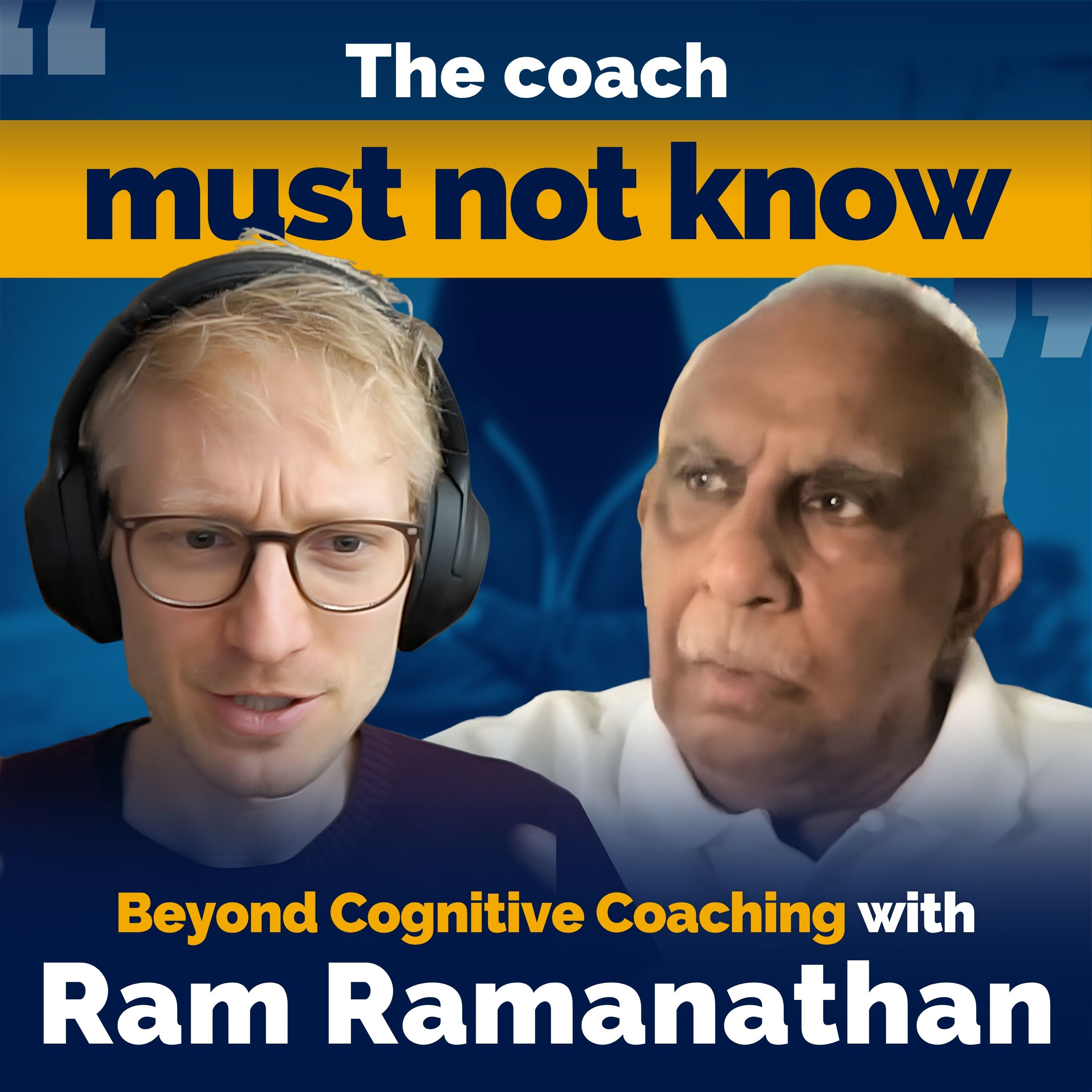 Beyond Cognitive Coaching: Somatic Energy Awareness with Ram Ramanathan 05.06.2026 55minA coaching podcast with Ram Ramanathan and Tobias Weghorn exploring why “not knowing” can be a stronger coaching stance than problem-solving, especially when clients are stuck in stories and perceptions. In this somatic coaching demo, Ram guides Tobi through a short, practical process that blends a body scan meditation for coaching with the sensory energy awareness model to access what’s actually happening in the body. You’ll hear how simple breathwork, sensing in the trunk (throat to belly), and metaphor work can shift a client’s state without needing the full backstory. The episode also touches on clean language coaching, NLP-style anchoring, and how to bring chakra-based coaching concepts into sessions with very cognitive, science-minded leaders.Key Learnings:Use a short somatic coaching demo flow to move clients from “fixing” into awareness: anchor a resourceful state, then scan for sensations in the trunk before asking any meaning-making questions.Apply the sensory energy awareness model by tracking sensation qualities (location, temperature, shape, movement) and letting them shift through attention and breath—before you go back to action steps.Borrow from clean language coaching: invite metaphor and imagery (or visual prompts) to help clients describe the felt sense precisely, while keeping you in “not knowing” and the client in self-discovery.Resources:Ram Ramanathan’s Website: https://www.coacharya.comRam Ramanathan’s LinkedIn: https://www.linkedin.com/in/ramsramanathan/Coacharya (YouTube Channel): https://www.youtube.com/@coacharyaClean Language (David Grove): https://cleanlanguage.co.uk/Nonviolent Communication (Marshall Rosenberg): https://www.cnvc.org/Find your Coaching Tool: https://metaFox.euTry the metaFox Strengths Discovery: https://strengths-discovery.comConnect with Tobi on LinkedIn: https://linkedin.com/in/tobiasweghornEpisode Chapters:00:00 Coaching As “Not Knowing” Vs. Problem-Solving01:00 Introduction: A Somatic Coaching Demo With Ram Ramanathan04:10 Why Cognitive Coaching Can Miss The “Raw Data”10:00 From “Is It True?” To “Is It Useful?” (Energy, Language, And Practice)14:50 Body Scan Meditation For Coaching: Centering And Anchoring A Resourceful State23:00 Sensing In The Body: Emptiness, Fog, Temperature, And Metaphor27:00 Breathwork Shifts The Felt Sense (Observer Effect)30:00 New Image, New State: Safety, Community, And Belonging37:00 Chakra-Based Coaching And Left/Right Nostril Breathing45:00 Bringing Somatic Work Into ICF-Style Coaching Without Needing The Story
 -
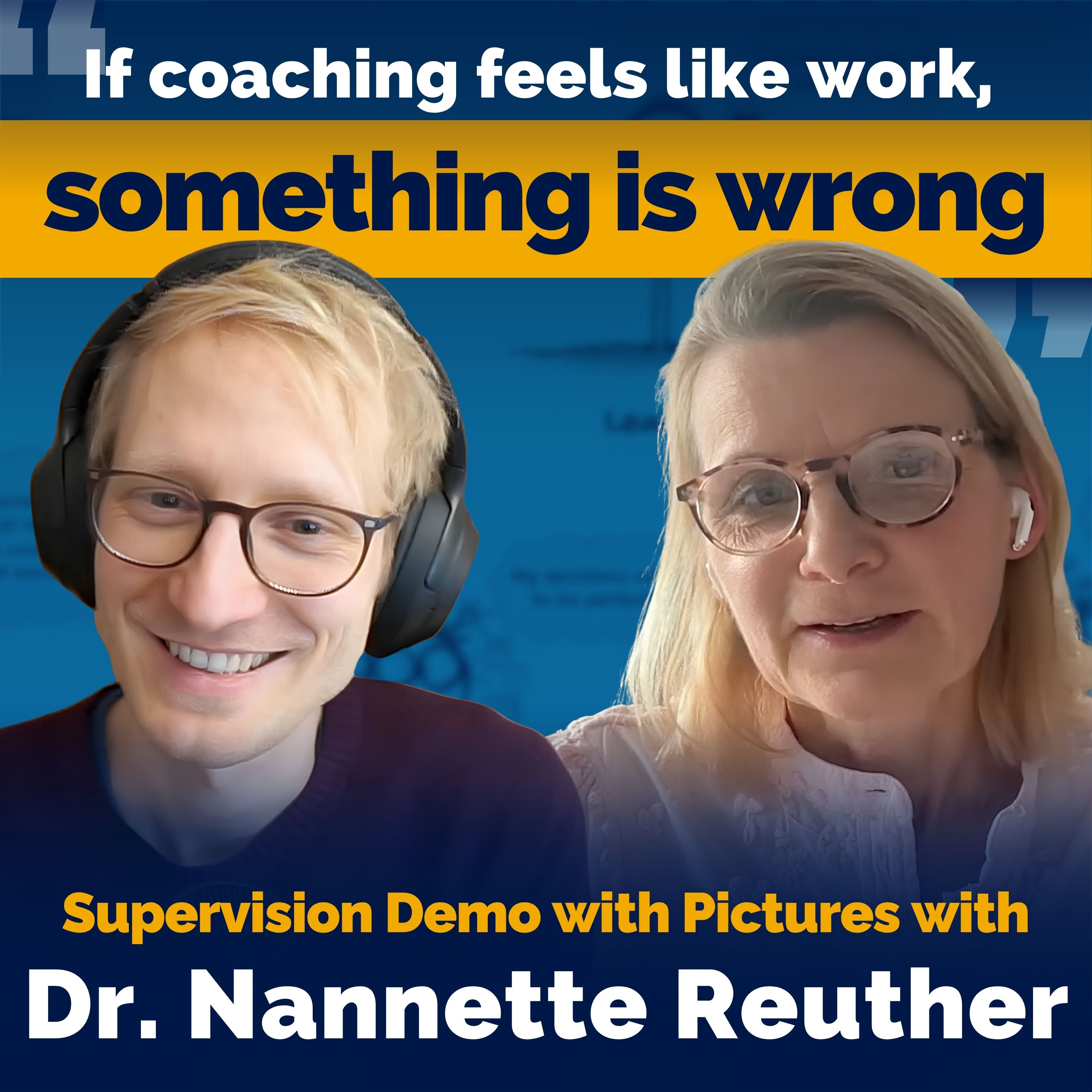 Supervision Demo with Pictures and Dr. Nannette Reuther 22.05.2026 58minA coaching podcast with Dr. Nannette Reuther and Tobias Weghorn. In this episode, Tobias brings two real client cases to explore what coaching supervision looks like in practice, including a supervision demo for coaches using images and metaphor. You’ll hear how supervision helps coaches notice when they’re taking over “the steering wheel,” and how simple ICF core competencies contracting can reset the partnership when sessions start to feel heavy. Along the way, Dr. Reuther shares practical ways to use coaching with images to bypass pure logic, access emotions, and build accountability.Key Learnings:Use coaching supervision to spot early warning signs you’re “doing the work for the client” (busy, heavy, exhausting) and pause to re-center in the coach role.Re-contract in the moment using ICF core competencies contracting: clarify where the client wants to “drive,” what they need right now (venting vs. moving forward), and what role they want you to play.Try coaching with images to shift from analysis to emotion: ask the client (or supervisee) what the image evokes, then use it as an accountability anchor for the next session (helpful alongside inner team model coaching when clients stay overly cognitive).Resources:Dr. Nannette Reuther's Website: https://supervision.partners/Dr. Nannette Reuther's LinkedIn: https://www.linkedin.com/in/dr-nannette-reuther-453956102/Find your Coaching Tool: https://metaFox.euTry the metaFox Strengths Discovery: https://strengths-discovery.comConnect with Tobi on LinkedIn: https://linkedin.com/in/tobiasweghornEpisode Chapters:00:00 When Coaching Starts Feeling Like Work01:00 Why Coaching Supervision Matters (And Why Tobi Finally Tried It)06:00 Coaching with Images: Why Pictures Bypass Logic and Create Accountability09:00 A Supervision Demo for Coaches: Using a Library Image in Group Supervision13:00 Case 1: The “Storyteller” Client and Letting Go of the Steering Wheel20:00 ICF Core Competencies Contracting in the Moment (Where Does the Client Want to Drive?)24:00 Coach Position vs. Personal Patterns: “Put Your Baggage in the Trunk”31:00 Case 2: Inner Team Model Coaching Meets a Very Rational Client36:00 Coffee-Spilling Metaphor: When Coaching Feels Exhausting40:00 Re-Contracting So You’re Coach, Not Consultant53:00 How to Get Started with Coaching Supervision (Accredited Supervisors, Groups, Budget)
 -
 The Art of Growing Up with Jerry Colonna: Coaching Queries, Ancestral Beliefs & Coaching vs Therapy 08.05.2026 41minA coaching podcast with Jerry Colonna and Tobias Weghorn, digging into radical self-inquiry coaching and what it really means to “grow up” as a leader and as a human. Jerry shares why the past is always present in executive coaching with a psychoanalytic perspective, and how compassion and curiosity unlock the unconscious patterns that keep clients stuck. You’ll also unpack his well-known “how have I been complicit” question, why “complicit” is different from “responsible,” and how shame and guilt derail real change. The episode also gets practical about coaching vs therapy boundaries, including when to bring in a therapist, and why coaching supervision for coaches (and strong referral networks) is part of the ethical job.Key Learnings:Use radical self-inquiry coaching to surface patterns without triggering shame: ask “How have I been complicit in creating the conditions I say I don’t want?” and follow it with curiosity about the hidden benefit (the IPO / intended positive outcome).Tighten coaching vs therapy boundaries by screening for pathology vs non-pathology, and have a plan: build a therapist referral network and agree that the psychotherapist leads the treatment plan if one is involved.Make coaching supervision for coaches non-negotiable: debrief intense client dynamics with a supervisor/peer group so you don’t get pulled into “doing it right” or hiding behind a rigid methodology.Resources:Jerry Colonna's Website: https://www.reboot.io/team/jerry-colonna/Jerry Colonna's LinkedIn: https://www.linkedin.com/in/jerrycolonna/Reboot (Book): https://www.reboot.io/reboot-book/Reunion (Book): https://www.reboot.io/reunion-book/Reboot Self-Inquiry Email Course: https://www.reboot.io/resources/Find your Coaching Tool: https://metaFox.euTry the metaFox Strengths Discovery: https://strengths-discovery.comConnect with Tobi on LinkedIn: https://linkedin.com/in/tobiasweghornEpisode Chapters:00:00 Coaching vs Therapy Boundaries: When to Bring in a Therapist02:12 What It Means to “Grow Up” + Radical Self-Inquiry Coaching04:34 The “How Have I Been Complicit?” Question (Complicit vs Responsible)09:00 Why Shame, Guilt, and Blame Block Change11:22 Finding the Hidden Benefit: The IPO (Intended Positive Outcome)14:05 Don’t Turn Questions Into a Script: Coaching Presence Over Methodology16:20 Executive Coaching With a Psychoanalytic Perspective: The Reboot Venn Diagram19:10 “Who Are You Really Serving Right Now?” and Ancestral Patterns26:10 How Reboot Bootcamps Work: Safety, Container, Dyads/Triads33:10 Pathology vs Non-Pathology + Coaching Supervision for Coaches
 -
 Befriending Inherited Beliefs: Coaching Demo with Jerry Colonna 24.04.2026 50minA coaching podcast with Jerry Colonna and Tobias Weghorn, centered around a coaching demo that quickly moves from “Am I enough?” to where that belief may come from in the first place. Tobi shares how safety and financial security shaped parts of his family story, and Jerry helps reframe those fears through compassion for inherited patterns. They also unpack why coaching mastery beyond methodology often requires dropping the “right way vs. wrong way” obsession and paying attention to what actually works in the moment. Along the way, they touch on radical self-inquiry, the role of supervision, and how countertransference and the third can become practical data for coaches.Key Learnings:Use coaching demo moments to surface the real driver (e.g., safety beliefs behind “not enough belief (I am enough)”), then work with what’s alive rather than forcing a script.Practice radical self-inquiry without shame: name the benefit of the inherited pattern first, then build change through repetition (not just cognitive insight) so the coaching demo insight sticks under stress.Build coaching supervision into your craft: track countertransference and the third (what you feel in-session) as information, so you don’t default to “more methodology” when you and your client feel stuck.Resources:Jerry Colonna's Website: https://www.reboot.io/team/jerry-colonna/Jerry Colonna's LinkedIn: https://www.linkedin.com/in/jerrycolonna/Reboot (Book): https://www.amazon.com/Reboot-Leadership-Art-Growing-Up/dp/0062749530Reunion (Book): https://www.amazon.com/Reunion-Leadership-Art-Growing-Up/dp/0062910587Reboot: https://www.reboot.io/Find your Coaching Tool: https://metaFox.euTry the metaFox Strengths Discovery: https://strengths-discovery.comConnect with Tobi on LinkedIn: https://linkedin.com/in/tobiasweghornEpisode Chapters:00:00 Mastery Beyond Methodology: The “Right Way” Trap01:00 Introduction: The “Am I Enough?” Belief And A Coaching Demo Setup04:00 Leaders, Safety, And The Human Condition Behind “Not Enough”14:00 Coaching Demo: Inherited Family Trauma And Safety Beliefs21:00 Making “I Am Enough” Stick: Benefits, Repetition, And Radical Self-Inquiry30:00 Why Coaches Get Stuck: Methodology, The Third, And Countertransference43:00 Coaching Supervision And Tracking What You Feel In Session47:00 A Practical Habit: Notes On What The Client Says vs. What You Feel
 -
 Visual Coaching Demo with Christina Merkley 10.04.2026 49minA coaching podcast with Christina Merkley and Tobias Weghorn where Tobi steps into the client seat for a real coaching demo and you get to experience what visual coaching feels like on a live digital canvas. Christina guides a step-by-step process using her visual self-inquiry map, moving from the “mind and doer” into somatic signals (hello, tight lungs) and into parts work (IFS coaching) with an exile, protectors, and inner child healing. The session lands in a grounded future self visualization where Tobi meets his 55-year-old self, borrows some calm perspective, and leaves with a simple way to reconnect anytime. If you want to learn coaching through an honest, in-the-moment demo, this episode shows how visuals can make inner work more tangible.Key Learnings:Run a simple coaching demo check-in: start with the “mind/doer,” name the protector, and explicitly invite “being” as a job the doer can do (presence before problem-solving).When a client is logically “fine” but the body isn’t, pivot into visual coaching + somatic inquiry: locate the sensation (e.g., lungs), greet it, and notice what naturally shifts before interpreting.Use parts work (IFS coaching) + future self visualization in one flow: meet the inner child, offer adult ally support (“I’ll always be with you”), then ask the future self for next-step guidance and a memorable anchor to revisit it.Resources:Book a visual coaching with Christina: https://www.shift-it-coach.com/services/private-coaching/Christina Merkley’s LinkedIn: https://www.linkedin.com/in/christina-merkley-0790b33/Try the visual coaching platform: https://metafox.onlineFind your (physical) Coaching Tool: https://metaFox.euConnect with Tobi on LinkedIn: https://linkedin.com/in/tobiasweghornEpisode Chapters:00:00 Meeting The Younger Self (Inner Child Healing)01:00 Why This Coaching Demo Blurs Coaching vs. Therapy02:00 Visual Self-Inquiry Map: How The Process Works05:00 Parts Work (IFS Coaching): Protectors, Managers, And The Mind-Doer10:00 From Logic To Body: Tight Lungs And Somatic Clues13:00 Presence Creates Space: “Give The Doer The Job Of Being”17:00 Finding The Origin Story: Belonging, The Village, And The Exile23:00 Reparenting Moment: Hugging The 5-Year-Old27:00 Future Self Visualization: Meeting The 55-Year-Old On The Couch37:00 Making It Tangible: Why Visual Coaching “Completes The Puzzle”
 -
 From Graphic Recording to Visual Coaching with Christina Merkley 27.03.2026 47minA coaching podcast with Christina Merkley and Tobias Weghorn. They unpack graphic recording at conferences and how Christina's "visual coaching" work today goes deeper - combining visual work with the coach’s role of holding space, asking questions, and mirroring what clients say on a live canvas. You’ll hear how graphic facilitation works in real time (not just as “fun notes”), why listening and synthesis matter as much as drawing, and how visuals can support visioning and action planning. Christina also walks through her SHIFT-IT process, including life map coaching and the “alignment work” that helps when plans stall at the “trouble at the border” between where you are and where you want to be.Key Learnings:Use visual coaching to “capture and reflect back” what clients say: listen for the few key nuggets, condense them, and place them on a simple canvas clients can react to in the moment.Borrow from graphic recording and graphic facilitation by making the visual build live during the session; it can improve clarity, recall, and follow-through (especially when you turn visioning and action planning into something visible and revisitable).Add a life map coaching step (a quick lifeline or a fuller history map) to harvest patterns, beliefs, and turning points—then use alignment work when the client’s stated goals and actual behavior don’t match.Resources:Book a visual coaching with Christina: https://www.shift-it-coach.com/services/private-coaching/Christina Merkley’s LinkedIn: https://www.linkedin.com/in/christina-merkley-0790b33/Try the visual coaching platform: https://metafox.onlineFind your (physical) Coaching Tool: https://metaFox.euConnect with Tobi on LinkedIn: https://linkedin.com/in/tobiasweghornEpisode Chapters:00:01 Visual Coaching Beyond Graphic Recording00:05 Graphic Facilitation vs. Static Visuals (Interactive, Live, Fast)00:08 From Conference Graphic Recording to Deeper 1:1 Visual Coaching00:13 The “Four Animals”: Studio Work vs. Process Work00:18 How Graphic Recording Works: Listening, Synthesis, and “Gold Nuggets”00:22 What Visuals Do to a Room (Attention, Buffering Intensity, Recall)00:31 Visual Coaching with Individuals: From Strategy to Somatics and Trauma Awareness00:33 SHIFT-IT + Life Map Coaching, Visioning and Action Planning, and Alignment Work00:45 Where to Find Christina (Shift-It-Coach.com)
 -
 3 Ways to Use AI to Become a More Impactful Coach with Tim Brownson 13.03.2026 41minA coaching podcast with Tim Brownson and Tobias Weghorn on how AI coaching tools can support (not replace) good coaching—if you use them with clear intent, permission, and discernment. In the intro, Tobi frames the big question: is AI a shortcut that dilutes the craft, or a tool that sharpens it while keeping your voice and integrity intact? Tim shares practical demos, including AI as coach supervisor for ICF mentor coaching feedback, plus ways to feed context fast (including voice-to-text prompts for ChatGPT). You’ll also hear how Google NotebookLM for coaches can help you stay “source-grounded” when working with your own transcripts and content.Key Learnings:Use AI coaching tools as a coach supervisor: with client consent, upload a session transcript and ask for ICF mentor coaching feedback on where you led the client, missed “killer questions,” or imposed values—then review critically and apply the learnings in your next session.Make AI outputs sound like you: improve results by feeding real context (your posts, transcripts, client avatar, values), assigning a clear role (e.g., mentor coach, copywriter), and iterating with “alternate viewpoints” to stress-test the draft.Speed up your learning and workflow: use Google NotebookLM for coaches to query your own library of episodes/transcripts and create summaries you can listen to, and use voice-to-text prompts for ChatGPT (or other models) to give richer instructions without typing.Resources:Tim Brownson’s Website: https://thefullybookedcoach.com/Tim Brownson’s LinkedIn: https://www.linkedin.com/in/timbrownson/Google NotebookLM: https://notebooklm.google/WillowVoice: https://willowvoice.com/WisprFlow: https://wisprflow.ai/Find your Coaching Tool: https://metaFox.euTry the metaFox Strengths Discovery: https://strengths-discovery.comConnect with Tobi on LinkedIn: https://linkedin.com/in/tobiasweghornEpisode Chapters:00:00 Pushing AI Harder Gets Better Results00:01 AI as Coach Supervisor: Shortcut or Sharpening the Craft?00:05 ICF Mentor Coaching Feedback with a Transcript + Prompt00:12 Google NotebookLM for Coaches: Source-Grounded Learning From Your Content00:19 Writing in Your Authentic Voice With Better Context00:23 Persona Prompts: Critique Your Copy Like a Skeptical Buyer00:30 Voice-to-Text Prompts for ChatGPT (Willow Voice, Whisper Flow)00:39 Getting Started: Why Paid AI Models Can Be Worth It
 -
 Values Coaching with the Clarity Method by Tim Brownson 27.02.2026 54minA coaching podcast with Tim Brownson and Tobias Weghorn exploring values coaching as a practical way to create clarity when clients feel stuck, conflicted, or at odds with other people or their workplace. Tim (aka “The Fully Booked Coach”) breaks down his Clarity Method step-by-step: identifying what’s non-negotiable, using a values ranking exercise to build a core values hierarchy, and then spotting internal and external value conflicts. You’ll also hear why anti-values in coaching matter just as much as “positive” values, and how they can reveal what clients are strongly motivated to move away from. If you’re looking to learn coaching approaches that get concrete quickly, this coaching podcast is a hands-on walkthrough you can borrow for your next session.Key Learnings:Use values coaching to turn “I don’t know what to do” into a clear choice: define the client’s meaning behind each value word, then build a core values hierarchy instead of assuming you both mean the same thing by “freedom,” “integrity,” or “connection.”Run a fast values ranking exercise (pairwise comparisons) to reduce overthinking and surface gut-level priorities; use the resulting values hierarchy to highlight internal and external value conflicts driving the client’s stress or indecision.Add anti-values in coaching by asking “Which is worse for you?” and rank them the same way; use anti-values to explain strong negative reactions (people/companies) and to uncover missing values (e.g., avoiding arrogance can point to valuing authenticity).Resources:Tim Brownson’s Website: https://thefullybookedcoach.com Tim Brownson’s LinkedIn: https://www.linkedin.com/in/timbrownson The Clarity Method (Book): https://www.goodreads.com/book/show/45858326-the-clarity-method The online coaching platform Tobi & Tim use on their demo: https://metaFox.online Find your paper-based Coaching Tool: https://metaFox.euConnect with Tobi on LinkedIn: https://linkedin.com/in/tobiasweghornEpisode Chapters:00:00 Anti-Values And Moving Away From What You Don’t Want01:00 Values Coaching, The Clarity Method, And Value Conflicts03:00 Why Values Create Breakthroughs (More Than Other Tools)08:00 The 3 Stages: Define Values, Build A Core Values Hierarchy, Resolve Conflicts12:00 Clarifying What A Value Word Means To The Client18:00 Money Isn’t A Value: What Money Represents27:00 The Values Ranking Exercise (Pairwise Comparisons)34:00 Anti-Values In Coaching: Rank What’s “Worst,” Not What You Prefer41:00 Internal And External Value Conflicts In Real Client Situations51:00 How To Learn Coaching With The Clarity Method (Getting Started)
 -
 Facilitating Feedback and Psychological Safety in Team Coaching with Nils Cornelissen 13.02.2026 36minA coaching podcast with Nils I. Cornelissen and Tobias Weghorn about psychological safety in teams and what it really takes to make high-performing groups speak honestly. Drawing on Google’s Project Aristotle, Nils shares how he helps executive team coaching clients build vulnerability in the boardroom (or offsite) without turning it into “touchy-feely theater.” You’ll hear why he intentionally “stains the white tablecloth” to role-model imperfection, plus two practical feedback methods you can use right away: the Keep Consider feedback method and a laser feedback exercise.Key Learnings:Build psychological safety in teams by role-modeling imperfection: name what you notice (as an offer), normalize reactive vs. creative states, and invite the “stupid questions” early so honesty becomes a habit.Use the Keep Consider feedback method as a 3–5 minute micro-ritual (e.g., monthly in exec meetings): each person shares one thing to keep and one thing to consider next time—no debating, just collecting patterns to improve collaboration.Run a laser feedback exercise to make behavioral feedback happen more often: pairs give 1 minute of pure appreciation, then 1 minute of “I’d appreciate it even more if…”, rotating partners to build trust and performance in executive team coaching.Resources:Return on Meaning, Nils' consultancy: https://www.returnonmeaning.com/nils-cornelissenThe Momentum Program of Return on Meaning: https://www.my-momentum.life/ Nils I. Cornelissen's LinkedIn: https://www.linkedin.com/in/nilscornelissen/Find your Coaching Tool: https://metaFox.euCoach online with https://metaFox.onlineConnect with Tobi on LinkedIn: https://linkedin.com/in/tobiasweghornEpisode Chapters:00:00 Failure Culture vs. “No Mistakes” and Missing Behavioral Feedback01:00 Intro: Psychological Safety in Teams (Google Project Aristotle)02:10 Entering the Boardroom: Executive Team Coaching Context and Characters06:00 Individual Journeys, Group Dynamics, and Creating Vulnerability08:00 Asking “Stupid Questions” to Shift Team Habits10:30 Contracting and Shared Responsibility in Team Coaching13:00 Role-Modeling Imperfection: The “Stain on the Tablecloth” Story20:30 Keep Consider Feedback Method (Fast, Balanced, Repeatable)26:00 Laser Feedback Exercise: Appreciation + “Even More If…”30:00 Habits, Feelings, and Getting Rational Leaders On Board
 -
 Executive Coaching and Preparing your State for Difficult Conversations with Nils Cornelissen 30.01.2026 47minA coaching podcast with Nils I. Cornelissen and Tobias Weghorn on why leadership coaching in times of transformation starts with the leader, not the org chart. Drawing from his work with executive teams in large corporations, Nils shares why organizational change management so often fails even when the strategy looks “right” on paper. You’ll hear practical ways to stay “above the line” (vs. “below the line”) in difficult conversations, including tiny questions that build ownership and a short centering routine for high-stakes moments. It’s a candid look at emotional intelligence for leaders, self-management, and how to model the mindset you want to see across the organization.Key Learnings:Use leadership coaching to shift ownership back to the team: when someone asks for a solution, respond with “What have you already tried?”, “Who have you talked to?”, and “What do you need from me?” to support adult-to-adult leadership.In executive team coaching, normalize noticing the “above the line below the line mindset”: watch for cues like “I’m right, they’re wrong” or “I’m surrounded by idiots” as early warning signs you’ve slipped into reactive mode.Before a difficult conversation, train emotional intelligence for leaders with a 60-second reset: sigh/breathe out, relax shoulders, feel your stance, then actively generate gratitude and empathy (“Why might their reaction make sense?”) to re-enter a creative state.Resources:Nils I. Cornelissen's Website: https://www.returnonmeaning.com/nils-cornelissenNils I. Cornelissen's LinkedIn: https://www.linkedin.com/in/nilscornelissen/Above the line vs. below the line video, Nils mentions: https://youtu.be/fLqzYDZAqCI?si=sOzQEXMTFzPxQnuN Find your Coaching Tool: https://metaFox.euTry the metaFox Strengths Discovery: https://strengths-discovery.comConnect with Tobi on LinkedIn: https://linkedin.com/in/tobiasweghornEpisode Chapters:00:06 “How Are You Going To Change?” Starting with the Leader00:12 Coaching the Solution Out of the Client (Not Solving It for Them)00:14 The 3 Questions That Build Ownership (Treat People Like Adults)00:22 Preparing for the Boardroom: Your Mindset Is the Tool00:25 The 60-Second Centering Routine (Sigh, Gratitude, Empathy)00:33 Above the Line Below the Line Mindset in Executive Team Coaching00:35 Inner Thermometers: How to Notice You’ve Gone Reactive00:42 Training Emotional Intelligence for Leaders (Momentum Program)
 -
 Mindset, Methods, Skills & Tools of Impactful Coaches: Highlights from one year 'Making of a Coach' 16.01.2026 41minA coaching podcast with Max Friedle and Tobias Weghorn to close out a year of "The Making of a Coach" and kick off the rebrand to "The Impactful Coach". Using Max’s coaching development framework (mindset, methods, skills, tools), they look back at highlights from coaching demos and episodes - and what actually makes sessions more impactful in real life. You’ll hear how solution focused coaching keeps conversations light and future-oriented, when the miracle question helps clients move fast, and why “ready, willing, and eager” can be a useful readiness gate. They also get practical about emotional hygiene before coaching sessions and silence as a coaching intervention (yes: count to six).Key Learnings:Use solution focused coaching to shift fast from “what’s wrong” to “what’s desirable”: explore exceptions first, then use the miracle question to help clients describe the desired future in detail.Build a simple readiness gate: only coach clients who are ready, willing, and eager - so the work stays with the client (and solution focused coaching doesn’t turn into problem-fixing).Practice emotional hygiene before coaching sessions and train silence as a coaching intervention: ask the question, hold eye contact, count to six, and let the client do the work.Resources:Find your Coaching Tool: https://metaFox.euCoach online: https://metaFox.online Try the metaFox Strengths Discovery: https://strengths-discovery.comConnect with Tobi: https://linkedin.com/in/tobiasweghornConnect with Max: https://www.linkedin.com/in/maximilianfriedle Episode Chapters:00:00 Teaser: Ready, Willing, And Eager + “You Gotta Shut Up At Times”01:00 Anniversary Episode: Rebrand To Impactful Coach03:00 The Coaching Development Framework: Mindset, Methods, Skills, Tools06:00 Mindset: Hold Space, Don’t Fix (“It’s Not The Pam Show”)09:00 Emotional Hygiene Before Coaching Sessions11:00 Methods: Readiness Gate + Coaching Demos Focus13:00 Solution Focused Coaching: Exceptions + Miracle Question16:00 Zurich Resource Model (ZRM) Picture Work Meets Somatics18:00 Skills: Silence As A Coaching Intervention (Count To Six)24:00 Tools: Shared Language (Belbin, Strengths, MBTI) + Risks Of “Boxing”34:00 What Changes In 2026: More Coaching Skills, Less CV Stories
 -
 Demo Coaching: Overcoming Imposter Syndrome through Clear Brand Positioning with Julika Franke 02.01.2026 45minOn this episode, Tobi meets Julika Franke for a coaching demo that starts as brand positioning and quickly turns into imposter syndrome coaching around stepping into a coach‑trainer role. Julika usually uses her Business Hub approach to map roles, goals, and visibility, revealing to come up with clear positioning and a crisp mission. In Tobi's example they find a way to fit all his hats under the vision statement of metaFox: "A world embracing emotional intelligence". Key Learnings:How a vision statement can serve as north star and unify different roles. How Julika defines a founder‑level role map (visionary, product developer, ambassador, trainer).How this kind of positioning work can be an alternative to mindset coaching for overcoming imposter syndrome.Resources:Julika Franke's Website: https://julika-franke.de/Julika Franke's LinkedIn: https://www.linkedin.com/in/julika-franke/Find your Coaching Tool: https://metaFox.euTry the metaFox Strengths Discovery: https://strengths-discovery.comConnect with Tobi on LinkedIn: https://linkedin.com/in/tobiasweghornEpisode Chapters:00:00 Opening: Emotional Intelligence And Identity Friction01:00 Coaching Demo Setup: From Positioning To Imposter Syndrome03:00 The Business Hub: Structuring Brand Positioning06:00 Meta Fox Inner Journey And Tools For Emotional Intelligence Coaching12:00 Training Roots: MBTI And Early Facilitation15:00 Naming The Imposter Syndrome Coaching Challenge18:00 Mission, Roles, And Personal Branding For Coaches25:00 Two Worlds Collide: Engineering Vs Coaching Identity35:00 From Clarity To Market: Positioning, Offer, And Visibility41:00 Rethinking The Coaching Industry And Value Focus
Podobni podkasti


Priljubljen v
Ta podkast je tudi v lestvicah podkastov teh držav.
