
Small State Diplomacy
Dr. Digby James Wren provides rich analysis of Small State Diplomacy
0
In each episode, Dr. Digby James Wren provides rich analysis of small state diplomacy, focusing on how smaller nations navigate power contradictions in the global system. The podcast covers topics such as multipolarity, climate change, BRICS+, ASEAN, the Global Majority, and the Belt and Road Initiative. It offers an academic yet accessible perspective on the shifting dynamics of international relations and the strategies of smaller countries.
Epizode
-
 Special Reports 25.05.2026 18minGet full access to Small State Diplomacy at smallstatediplomacy.substack.com/subscribe
 -
 On Iran and Trump's Deception and Trickery 25.03.2026 23min40 years of US-Israeli aggression against Iran has culminated in the 2026 war of choice and exposure of the limits of US power in a military environment dominated not by naval power and boots on the ground, but by drones and missiles. Tensions first shifted from a 1953 CIA-backed coup to direct military confrontation in 2026, driven by nuclear, geopolitical, economic [energy] and regional power struggles.Key Historical Precursors* 1953: The Coup of Mohammad Mosaddegh: The CIA and British intelligence orchestrated a coup to overthrow Iran’s democratically elected Prime Minister, reinstating Shah Mohammad Reza Pahlavi to protect oil interests.* 1979: Iranian Revolution and Hostage Crisis: Iran became an Islamic Republic, labeling the US “Great Satan.” Militants held 52 Americans hostage for 444 days, severing formal diplomatic ties.* 1980–1988: Iran-Iraq War: The US supported Iraq’s invasion of Iran, contributing to deep-seated mistrust.* 1988: Iran Air Flight 655: The U.S. Navy shot down an Iranian civilian airliner, killing 290 people.* 2002: “Axis of Evil”: President George W. Bush designated Iran as part of an “axis of evil” after revelations of undeclared nuclear facilities.Escalation Timeline (2015–2025)* 2015: Iran Nuclear Deal (JCPOA): The US and allies signed a deal with Iran to curb its nuclear program in exchange for sanctions relief.* 2018: U.S. Withdrawal: President Trump withdrew from the JCPOA, reimposing “maximum pressure” sanctions.* 2020: Killing of Qassem Soleimani: A U.S. drone strike killed the Iranian top military leader in Baghdad. Iran responded with missile attacks on U.S. bases in Iraq.* June 2025: 12-Day Israel-Iran War & US Intervention: Following attacks on Israel-backed groups, Israel and the US engaged in a 12-day offensive, targeting Iranian nuclear facilities (Fordow, Natanz) with bunker-buster bombs.* Sept 2025: “Snapback” Sanctions: UN sanctions were reimposed on Iran.The 2026 Iran War (Operation Epic Fury)* February 28, 2026: Operation Epic Fury Begins: The U.S. and Israel launched over 900 strikes in 12 hours. The campaign targeted Iranian missile sites, air defenses, and leadership.* March 1-2, 2026: Death of Khamenei: Reports confirmed the death of Iranian Supreme Leader Ali Khamenei in the initial strikes.* March 2026: Retaliation and Conflict Expansion: Iran retaliated by striking U.S. military bases in the Middle East, leading to at least six American service member deaths.* March 2026: Civilian Casualties: Initial strikes included a strike on a girls’ school in Minab, killing over 170 people.* March 20, 2026: Ongoing Conflict: Despite claims that the nuclear program was “obliterated,” the conflict remained ongoing with shifting goals, with U.S. officials projecting a potential weeks-long campaign.The US-Israeli war on Iran, officially named Operation Epic Fury, has been used to justify the Trump administration’s attempts to decapitate the theocratic rulers of Iran, destroy Iran’s missile capabilities, navy, and nuclear ambitions, and to stop its funding of regional shia allies, the Houthis, Hezbollah and Hamas. Get full access to Small State Diplomacy at smallstatediplomacy.substack.com/subscribe
 -
 FROM HEGEMONY TO TYRANNY 22.03.2026 6minThe June 2025 and February 2026 attacks on Iran, first by Israel and then the United States of America, has confirmed the transformation of the US republic from unipolar hegemon into a neuralgic global tyrant. The Trump administration has completed the post 9/11 transformation of the US into a fiscal military state dedicated to the subordination of the Western hemisphere, Western Asia, Western Pacific, and beyond. Alarmingly, the so-called ‘West,’ under the banner ‘Coalition of the Willing,’ has directly supported the Trump administrations turn to global violence. This quote from US Secretary of War, Pete Hegseth, March 2026 illustrates the dangerous Hollywood movie script banality of US ambitions.“If you kill Americans, if you threaten Americans anywhere on Earth, we will hunt you down without apology and without hesitation and we will kill you”As the most profound source of aggression and instability in the world the US has not only exposed its state of heightened neuralgia, caused by the rise of China and the Global South, but also its inability to foster diplomatic solutions to global challenges through the global multilateral framework including the United Nations. The US withdrawal from international organisations is a calculated strategy to deflect global abhorrence inspired by its naked aggression and stated objective to regain global hegemony.After president Biden’s failed attempt to collapse the economy and government of Russia, the Trump administration embarked on a grand strategy of global energy domination via the weaponisation of direct and secondary sanctions and unconstitutional tariffs on both allies and adversaries alike and, destructive military interventions in Syria, Venezuela, and Iran. These economic and military attacks compound the regional instability caused by previous US/NATO campaigns against Libya, occupation of Iraq, attempted colour revolutions in the Caucuses and, dénouement of its proxy war in Ukraine.In its campaign to disarm and suborn Iran, the US has adopted Israels tactics of pre-emptive attacks and assassinations and thereby set a historic precedent for the deceptive use of diplomatic negotiations to cover military preparation, conduct capture and assassination operations against foreign leaders and officials, and to ensure Israeli hegemony, via military superiority underwritten by the US, over the region stretching from the Nile to the Euphrates, including Gaza, Lebanon, Syria, Yemen and now Iran.While questions remain over the ability of Iran to withstand the US/Israeli assaults and maintain national and social stability, the Iranian strategy is to use its advanced missile and drone capabilities to disrupt regional air and sea transport and global energy supply chains by attacking US military bases, closing the Strait of Hormuz and demonstrating its ability to attack oil and gas infrastructure. By overstretching the US’ ability to provide missile interceptors to all bases and regional allies, hold naval forces beyond airstrike distance, force evacuation of US military personnel and increase the economic, political, and social costs of a potential region-wide conflict, Iran seeks to inflict maximum financial, logistical and social damage upon the US and its allies.However, the predatory tactics and strategies of Israel and the US are accelerating not only the political fragmentation of West Asia, including Türkiye, and Europe, but also US domestic politics. While the EU, especially Germany and the UK, struggle to reindustrialise after the energy shock caused by their failed NATO campaign to topple Vladimir Putin, a second Iran energy shock is likely to further diminish the political, economic and social cohesion of ‘Western’ states, including France, Japan and, most importantly, the United States itself.The Trump administration faces serious economic challenges over and above the surge in energy, and precious and critical mineral prices caused by its cynical aggression toward Iran. With an already unsustainable national debt of $38 trillion, a declining dollar and treasury values, all-time highs in equities and probable financial bubbles in AI and semiconductor production, sticky inflation, falling living standards, continuing de-industrialisation, the fallout from the Epstein files, and strained relations with nearly all its neighbours and allies, the Trump administration has chosen to double down on territorial expansion, and/or controlling influence, in an attempt to balance its national accounts with resource acquisition and global supply chain control.Looking deeper, the Trump administration’s disengagement from Europe, imposition of the ‘Donroe Doctrine’ in the western hemisphere and aggression against Iran is not only the desire to dominate global energy and finance markets, but a tyrannical fervour to leverage its new territorial and resource acquisitions, or proxy control thereof, to weaken Russia before returning to its ultimate objective of undermining the security of East and Southeast Asia to contain China.For the BRICS+ and the Global South, a sustained campaign of de-Americanisation, including limiting US social media and software generally, cultural and religious activities and expulsion of activist NGO’s are as necessary as de-dollarisation and reduced purchases of US goods and services, disposal of US treasuries, and the imposition of carefully crafted sanctions and tariffs - designed to weaken the US military’s ability to operate and sustain expeditionary violence against sovereign states.Meanwhile, the very fabric of the post-WWII global order has effectively unravelled as the Trump administration attempts to sabotage the global transition to multipolarity, which it sees as the cause of its economic and diplomatic decline, by imposing a new form of global tyranny. Donald Trump’s foreign policy of naked aggression and disregard for sovereignty and international (and domestic) law is generating a wave of “global adversity,” that inadvertently creates the very conditions and motives for further US [Western] decline and Donald Trump’s own downfall - “sic semper tyrannis – thus always to tyrants”.NB: Dr. Digby James Wren is the Chair of BRCP Geopolitical Risk Advisors (Beijing, Melbourne, Paris, Phnom Penh), Visiting Professor at ICES, France, and publisher of Small State Diplomacy Substack. Get full access to Small State Diplomacy at smallstatediplomacy.substack.com/subscribe
 -
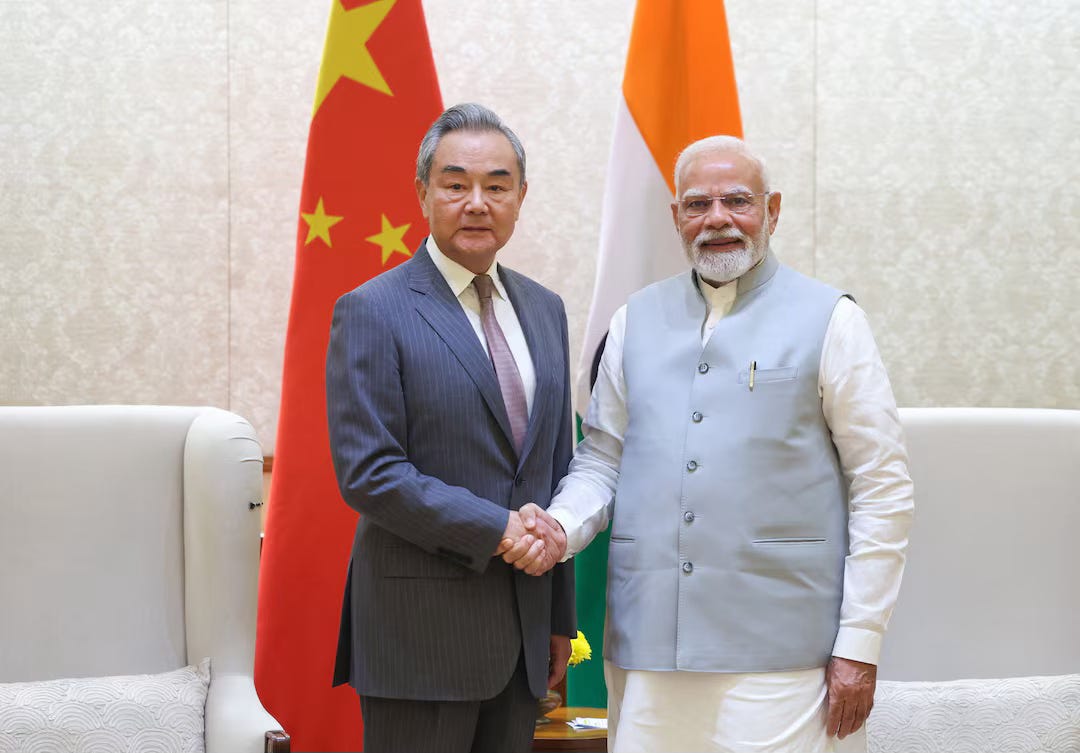 Tianjin SCO Summit 22.08.2025 56minAs the 2025 SCO Tianjin Summit approaches, we have produced a special program to discuss the expectations for the meeting, what the media can do to promote further collaboration, and the summit's broader significance for the world.List of Outcomes of the Meeting between the Foreign Ministers of China and India_Ministry of Foreign Affairs of the People's Republic of ChinaOn 18 August 2025, H.E. Mr. Wang Yi, Member of the Political Bureau of the Communist Party of China (CPC) Central Committee and Minister of Foreign Affairs of the People's Republic of China held bilateral talks with H.E. Dr. S.Jaishankar, External Affairs Minister of the Republic of India in New Delhi. The two sides had positive, constructive and forward-looking discussions on bilateral, regional and international issues of common interest and agreed on the following understandings and outcomes:1.Both sides underscored that the strategic guidance of the leaders of India and China plays an irreplaceable and crucial role in the development of India-China relations. They agreed that a stable, cooperative and forward-looking bilateral relationship is in their mutual interest to realize their development potential fully. They further agreed that both sides should earnestly implement the important common understandings reached between the two leaders and promote the sustained, sound and steady development of India-China relations.2.The Chinese side welcomed Indian Prime Minister Narendra Modi's attendance at the Shanghai Cooperation Organization (SCO) Summit to be held in Tianjin. The Indian side reaffirmed its full support to the Chinese SCO Presidency, and looked forward to a successful SCO Summit with fruitful outcomes.3.Both sides agreed to support each other in hosting successful diplomatic events. The Chinese side will support India in hosting the 2026 BRICS Summit. The Indian side will support China in hosting the 2027 BRICS Summit.4.Both sides agreed to explore and resume various official bilateral dialogue mechanisms and exchanges to enhance cooperation and address each other’s concerns and properly manage differences, including holding the Third Meeting of the India-China High-level Mechanism on People-to-People Exchanges in India in 2026.5.Both sides agreed to continue supporting each other in holding events in 2025 to commemorate the 75th anniversary of the establishment of diplomatic relations between India and China.6.Both sides agreed to resume direct flight connectivity between Chinese mainland and India at the earliest and finalize an updated Air Services Agreement. Both sides also agreed on the facilitation of visas to tourists, businesses, media and other visitors in both directions.7.Both sides agreed to continue and further expand the scale of Indian pilgrimage to Mount Gang Renpoche/Mt. Kailash and Lake Mapam Yun Tso/Manasarovar in Xizang Autonomous Region of China in 2026.8.Both sides agreed to facilitate trade and investment flows between the two countries through concrete measures.9. Both sides agreed to jointly maintain peace and tranquility in the border areas through friendly consultations.10.Both sides agreed to uphold multilateralism, enhance communication on major international and regional issues, maintain a rules-based multilateral trading system with the WTO at its core, and promote a multipolar world that safeguards the interest of developing countries.China FM Get full access to Small State Diplomacy at smallstatediplomacy.substack.com/subscribe
 -
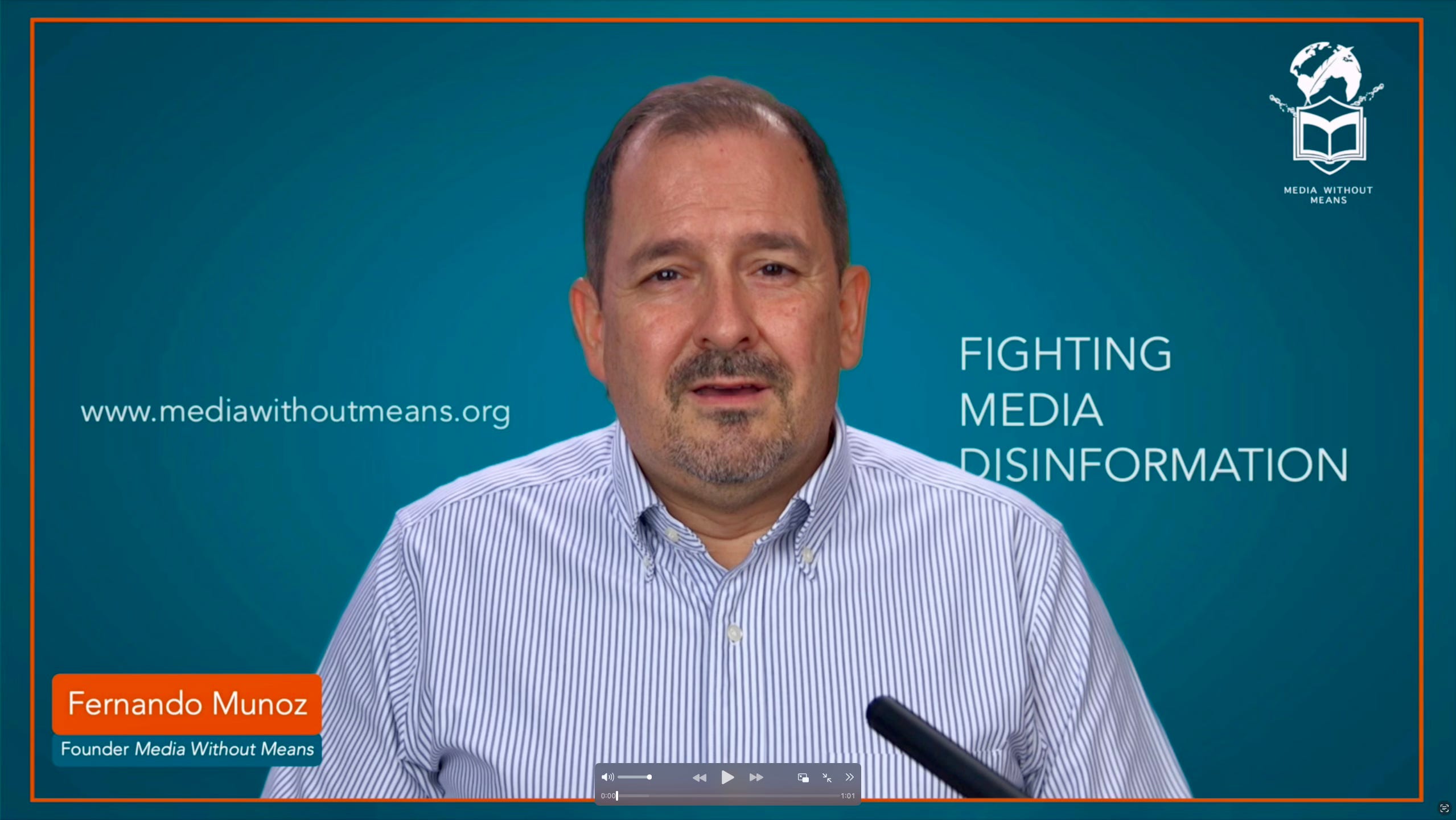 Latin America Must Forge Its Own Path Through Pragmatic Partnerships 14.05.2025 3minLatin America Must Forge Its Own Path Through Pragmatic Partnerships, Says Colombian Content Creator In a recent discussion, Fernando Muñoz Bernal, a Colombian content creator and advocate for Latin American sovereignty, urged nations within the Community of Latin American and Caribbean States (CELAC) to abandon outdated alliance-based mentalities and instead prioritize practical, solution-oriented partnerships. Speaking candidly about regional challenges, Muñoz emphasised that the future of Latin America hinges not on ideological alignment with global powers but on collaboration with partners who offer tangible benefits tailored to local needs. Rejecting Camp Politics in Favour of Solutions Muñoz critiqued the historical tendency of Latin American nations to align themselves with geopolitical blocs, arguing that such alliances often undermine regional autonomy. “The path forward isn’t about choosing camps—it’s about choosing solutions,” he stated. He highlighted China as a model partner, citing its track record of investing in infrastructure, technology, and education as evidence of its reliability. Unlike traditional powers, Muñoz noted, China’s approach emphasizes mutual benefit rather than dominance. “We don’t need to be behind one single country. We can choose whoever offers the best solutions,” he asserted. Divergent Development Paths: Latin America vs. China A central theme of Muñoz’s argument was the stark contrast between Latin America’s economic trajectory and China’s rise as a global innovator. While China strategically developed its manufacturing sector, educated its workforce, and embraced technological advancement, Latin America, he argued, lagged due to underinvestment and reliance on raw material exports. “We did not enjoy the possibilities China had to build its manufacturing base or educate its labor force,” Muñoz lamented. This disparity, he stressed, has left the region overly vulnerable to external pressures, such as U.S. tariffs, without the industrial resilience to counterbalance them. To bridge this gap, Muñoz called for urgent investments in domestic manufacturing, vocational training, and innovation. “We need to educate our people and build industries that allow us to compete globally,” he said. Only through self-reliance, he argued, can Latin America reduce dependency on volatile global markets and external political agendas. Dispelling Fear, Embracing Opportunity Muñoz also addressed widespread skepticism toward China in Latin America, attributing it to misinformation propagated by Western media and local elites. “All we hear are fears about China’s influence—what they ‘might do’ or ‘could do,’” he remarked. Such narratives, he argued, overshadow China’s adherence to the Five Principles of Peaceful Coexistence—a 1953 framework emphasizing mutual respect, non-aggression, and non-interference. “There’s no record of China violating these principles or imposing its will on others,” Muñoz contended, contrasting this with what he described as the United States’ history of interventionism. He urged Latin Americans to assess partnerships based on outcomes rather than rhetoric. “China works with us in a win-win manner. Why not choose them?” he asked, pointing to collaborative projects in renewable energy, telecommunications, and trade as proof of China’s constructive role. A Call for Paradigm Shifts For Muñoz, the key takeaway for CELAC nations is clear: sovereignty begins with pragmatic, non-ideological partnerships. He criticized the region’s elites for perpetuating dependency on traditional allies while dismissing alternatives. “We’ve been brainwashed to fear change,” he said, urging citizens to demand leaders who prioritize local development over geopolitical posturing. Ultimately, Muñoz envisions a Latin America that leverages global partnerships to build self-sufficiency rather than perpetuate subordination. “Our goal should be innovation, not allegiance,” he concluded. As the region grapples with economic uncertainty and shifting global power dynamics, his message underscores the urgency of redefining Latin America’s place in a multipolar world—one partnership at a time. https://mediawithoutmeans.org/en/Full Text: President Xi's keynote speech at the opening ceremony of the fourth ministerial meeting of the China-CELAC ForumBEIJING, May 13 (Xinhua) -- Chinese President Xi Jinping on Tuesday delivered a keynote speech at the opening ceremony of the fourth ministerial meeting of the China-CELAC (the Community of Latin American and Caribbean States) Forum.The following is the full text of the speech:Writing a New Chapter in BuildingA China-LAC Community with a Shared FutureKeynote Address by H.E. Xi JinpingPresident of the People's Republic of ChinaAt the Opening CeremonyOf the Fourth Ministerial Meeting of the China-CELAC ForumBeijing, May 13, 2025Your Excellency President Gustavo Petro,Your Excellency President Luiz Inácio Lula da Silva,Your Excellency President Gabriel Boric,Your Excellency President Dilma Rousseff,Delegates of CELAC Member States,Ladies and Gentlemen,Friends,It gives me great pleasure to meet so many old and new friends from Latin American and Caribbean (LAC) countries in Beijing. On behalf of the Chinese government and people, I extend a warm welcome to you all.In 2015, LAC delegates and I attended the opening ceremony of the First Ministerial Meeting of the China-CELAC Forum in Beijing, which marked the launch of the China-CELAC Forum. Ten years on, with dedicated nurturing of both sides, the Forum has grown from a tender sapling into a towering tree. This fills me with deep pride and satisfaction.Although China and the LAC region are geographically distant, the bonds of our friendship stretch back through centuries. As early as in the 16th century, Nao de China, or "Ships of China," laden with friendship, shuttled across the Pacific, marking the dawn of interactions and exchanges between China and the LAC region. From the 1960s onward, as New China established diplomatic ties with some LAC countries, exchanges and cooperation between the two sides became closer and closer. Since the turn of the century and in particular in recent years, China and LAC countries have ushered in a historic era of building a shared future.We stand shoulder to shoulder and support each other. China appreciates the long-standing commitment of LAC countries that have diplomatic ties with China to the one-China principle. China firmly supports LAC countries in pursuing development paths suited to their national conditions, safeguarding sovereignty and independence, and opposing external interference. In the 1960s, mass rallies and demonstrations took place across China in support of the Panamanian people's rightful claim to sovereignty over the Panama Canal. In the 1970s, during the Latin American campaign for 200-nautical-mile maritime rights, China voiced its resolute and unequivocal support for the legitimate demands of developing countries. For 32 consecutive times since 1992, China has consistently voted for the United Nations (U.N.) General Assembly resolutions calling for an end to the U.S. embargo against Cuba.We ride the tide of progress together to pursue win-win cooperation. Embracing the trend of economic globalization, China and LAC countries have deepened cooperation in trade, investment, finance, science and technology, infrastructure, and many other fields. Under the framework of high-quality Belt and Road cooperation, the two sides have implemented more than 200 infrastructure projects, creating over a million jobs. The China-LAC satellite cooperation program has set a model for high-tech South-South cooperation. The inauguration of Chancay Port in Peru has established a new land-and-sea connectivity link between Asia and Latin America. China has signed free trade agreements with Chile, Peru, Costa Rica, Ecuador, and Nicaragua. Last year, trade between China and LAC countries exceeded US$500 billion for the first time, an increase of over 40 times from the beginning of this century.We unite in tough times to conquer challenges through mutual support. China and LAC countries have collaborated on disaster prevention, mitigation and relief and on joint response to hurricanes, earthquakes and other natural disasters. Since 1993, China has dispatched 38 medical teams to the Caribbean. When the pandemic of the century struck, China was among the first to offer assistance to LAC countries, providing over 300 million doses of vaccines and nearly 40 million units of medical supplies and equipment, and sending multiple teams of medical experts. All this helped protect the lives of hundreds of millions across the region.We uphold solidarity and coordination and rise to global challenges with resolve. Together, China and LAC countries champion true multilateralism, uphold international fairness and justice, advance global governance reform, and promote multipolarization of the world and greater democracy in international relations. We have worked together to address global challenges like climate change, and advance progress in global biodiversity governance. China and Brazil jointly issued a six-point common understanding on the political settlement of the Ukraine crisis, which has been endorsed by more than 110 countries, contributing our wisdom and strength to resolving international hotspot issues.Facts have shown that China and LAC countries are advancing hand in hand as a community with a shared future. This community of ours is founded upon equality, powered by mutual benefit and win-win, invigorated by openness and inclusiveness, and dedicated to the people's well-being. It exhibits enduring vitality and holds immense promise.Distinguished Delegates,Friends,The century-defining transformation is accelerating across the globe, with multiple risks compounding one another. Such developments make unity and cooperation among nations indispensable for safeguarding global peace and stability and for promoting global development and prosperity. There are no winners in tariff wars or trade wars. Bullying or hegemonism only leads to self-isolation. China and LAC countries are important members of the Global South. Independence and autonomy are our glorious tradition. Development and revitalization are our inherent right. And fairness and justice are our common pursuit. In the face of seething undercurrents of geopolitical and bloc confrontation and the surging tide of unilateralism and protectionism, China stands ready to join hands with our LAC partners to launch five programs that advance our shared development and revitalization, and contribute to a China-LAC community with a shared future.The first is Solidarity Program. China will work with LAC countries to support each other on issues bearing on our respective core interests and major concerns. We must enhance exchanges in all fields, and strengthen communication and coordination on major international and regional issues. In the next three years, to facilitate our exchanges on national governance best practices, China will invite 300 members from political parties of CELAC member states every year to visit China. China supports the efforts by LAC countries in increasing their influence on the multilateral stage. We will work with LAC countries to firmly safeguard the international system with the U.N. at its core and the international order underpinned by international law, and to speak with one voice in international and regional affairs.The second is Development Program. China will work with LAC countries to implement the Global Development Initiative. We will resolutely uphold the multilateral trading system, ensure stable, unimpeded global industrial and supply chains, and promote an international environment of openness and cooperation. We should foster greater synergy between our development strategies, expand high-quality Belt and Road cooperation, and bolster cooperation in traditional areas such as infrastructure, agriculture and food, and energy and minerals. We should expand cooperation in emerging areas such as clean energy, 5G telecommunications, the digital economy and artificial intelligence, and carry out the China-LAC Science and Technology Partnership. China will increase imports of quality products from LAC countries, and encourage its enterprises to expand investment in the LAC region. We will provide a RMB66 billion yuan credit line to support LAC countries' development.The third is Civilization Program. China will work with LAC countries to implement the Global Civilization Initiative. We should uphold the vision of equality, mutual learning, dialogue, and inclusiveness between civilizations, and champion humanity's common values of peace, development, fairness, justice, democracy, and freedom. We should enhance China-LAC civilizational exchanges and mutual learning, including through a conference on China-LAC inter-civilizational dialogue. We should deepen cultural and artistic exchanges and cooperation, and hold the Latin American and Caribbean Arts Season. We should strengthen exchanges and cooperation in cultural heritage fields such as joint archaeological projects, conservation and restoration of ancient and historic sites, and museum exhibitions. We should also carry out collaborative studies of ancient civilizations and enhance cooperation to combat illicit trafficking of cultural property.The fourth is Peace Program. China will work with LAC countries to implement the Global Security Initiative. China supports the Proclamation of Latin America and the Caribbean as a Zone of Peace and the Declaration of Member States of the Agency for the Prohibition of Nuclear Weapons in Latin America and the Caribbean. The two sides should cooperate more closely in disaster governance, cybersecurity, counterterrorism, anti-corruption, narcotics control and combating transnational organized crime so as to safeguard security and stability in the region. China will organize law enforcement training programs tailored to the needs of CELAC member states, and do our best to provide equipment assistance.The fifth is People-to-People Connectivity Program. In the next three years, China will provide CELAC member states with 3,500 government scholarships, 10,000 training opportunities in China, 500 International Chinese Language Teachers Scholarships, 300 training opportunities for poverty reduction professionals, and 1,000 funded placements through the Chinese Bridge program. We will initiate 300 "small and beautiful" livelihood projects, actively promote vocational education cooperation programs such as Luban Workshop, and support CELAC member states in developing Chinese language education. We will also launch an exhibition of Chinese films and TV programs under The Bond, and work with LAC countries to translate and introduce 10 premium TV dramas and audiovisual programs annually to each other. China will host the China-LAC tourism dialogue with LAC countries. To facilitate friendly exchanges, China has decided to implement a visa exemption for five LAC countries as the first step, and will expand this policy coverage at proper times.Distinguished Delegates,Friends,As an 11th-century Chinese poet wrote, "Life's greatest joy comes from finding kindred spirits." Latin America has a similar proverb which goes, "The one who has a friend has a treasure." No matter how the world changes, China will always stand by LAC countries as a good friend and a good partner. Let us march forward together on our paths toward modernization, working together to write a new chapter in building a China-LAC community with a shared future. ■https://english.news.cn/20250513/2d9c7e8de4eb40ec873c314793ec880b/c.html Get full access to Small State Diplomacy at smallstatediplomacy.substack.com/subscribe
 -
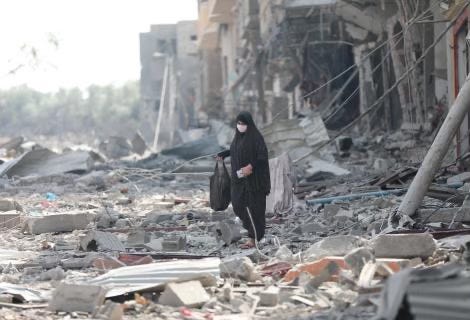 Will Gaza remain under the rubble of screaming silence? 01.05.2025 5minFeatured contributor Dr. Yasir Masood delivers a poignant commentary on the ongoing conflict in Gaza, highlighting the severe humanitarian crisis faced by Palestinians under the colonial Zionist project. It describes the devastating impact of the apartheid regime, which inflicts war crimes against the innocent, including children, turning their homes into rubble. Dr. Masood questions the morality of such acts and the silence of the international community, framing it as collaboration.It challenges the notion of security justifying slaughter and criticizes the hypocrisy of those promoting human rights while supporting the destruction of Palestinian lives. Dr. Masood’s narrative underscores the ideological underpinnings of the violence, masked as liberal democracy, and calls out the double standards of those who finance and support these actions while preaching civilization.Dr. Masood appeals to the global community to recognize the atrocities in Gaza, asking whether they will continue to ignore the suffering or take a stand, as China has called for. He advocates for an immediate ceasefire, the provision of humanitarian aid, and the establishment of peace that respects Palestinian dignity. Dr. Masood emphasises that choosing to remain silent is equivalent to taking sides in the conflict, urging for a collective outcry against the violations in Gaza.https://news.cgtn.com/news/2025-04-30/Will-Gaza-remain-under-the-rubble-of-screaming-silence--1CZFDadErGo/p.htmlThirteen killed, dozens under rubble as Israel bombs Gaza amid food crisisThe entire Strip, with a population of two million people, may be on the brink of famine as the World Food Programme runs out of supplies.Four victims, at least, were killed in a strike on a home in the city’s Sabra neighbourhood on Saturday, with the residents forced to dig the ground with their bare hands to reach people buried in the debris.Mahmoud Basal, spokesman for Gaza’s civil defence agency, said a lack of rescue equipment has prevented emergency workers from reaching those buried underneath the collapsed building bombed by Israel before dawn.“Our crews cannot reach them because of the lack of the necessary machinery,” he told the AFP news agency.Earlier this week, Israeli aircraft destroyed 40 engineering vehicles the civil defence teams were using to remove heavy debris during rescue operations.Israeli air raids also hit other parts of the Strip on Saturday, including al-Mawasi and Khan Younis, as the besieged territory faces impending mass starvation amid an ongoing genocide.After 18 months of the Israeli military invasion that has killed more than 51,000 Palestinians, the situation in Gaza “is probably the worst” it has been, the United Nations warned.The UN’s World Food Programme (WFP) on Friday said the entire Strip, with a population of two million people, may be on the brink of famine and aid kitchens are “expected to fully run out of food in the coming days”.Israel’s ongoing blockade has meant no food, fuel or medicine has entered Gaza for two months. For many Palestinians in Gaza, community kitchens were their only source of nutrition after Israeli forces destroyed almost all food production facilities.WFP has appealed to the international community to put pressure on Israel to lift the blockade, saying more than 116,000 metric tonnes of food assistance – enough to feed one million people for up to four months – are already positioned for delivery “as soon as borders reopen”.Reporting from Deir el-Balah on Saturday, Al Jazeera’s Tareq Abu Azzoum said the humanitarian crisis in the besieged territory “has reached a very unprecedented breaking point”.“Civilians are really struggling to cope with this crisis,” he said.Philippe Lazzarini, head of the UN Palestinian refugee agency UNRWA, said the crisis was “man-made”.Michael Fakhri, UN rapporteur on the right to food, said Israel is “executing this starvation campaign with no repercussions”.The World Health Organization said the situation was no different for medical supplies, with WHO chief Tedros Adhanom Ghebreyesus pleading on X for the aid blockade to end.At least 2,062 people have been killed in Gaza since Israel resumed its deadly campaign against Hamas on March 18, and more than 50,000 since October 7, 2023. Hamas’s attack on Israel killed 1,218 people, mostly civilians.https://www.aljazeera.com/news/2025/4/26/13-killed-dozens-under-rubble-as-israel-bombs-gaza-amid-food-crisisIsrael warns of 'larger' Gaza assault as air strikes kill at least 55Israeli air strikes on Gaza Thursday killed at least 55 people as the military warned of a wider assault if the remaining hostages seized during Hamas's October 7, 2023 attack on Israel were not released. The strikes came amid mounting pressure from Israeli officials and expanding evacuation orders, deepening the humanitarian crisis in the war-torn enclave.Gaza rescue teams and medics said Israeli air strikes killed at least 55 people on Thursday, as the military threatened an even larger offensive if hostages were not freed soon.Israel resumed its military assault in the Gaza Strip on March 18, after the collapse of a two-month ceasefire that had brought a temporary halt to fighting in the blockaded Palestinian territory.Israel's army chief, visiting troops in Gaza on Thursday, threatened to expand the offensive in Gaza if hostages seized during Hamas's October 7, 2023 attack on Israel were not released."If we do not see progress in the return of the hostages in the near future, we will expand our activities to a larger and more significant operation," Lieutenant General Eyal Zamir said.The warning came as the army issued fresh evacuation orders for northern areas of Gaza ahead of a planned attack.Earlier in the day, six members of one family – a couple and their four children – were killed when an air strike levelled their home in northern Gaza City, the civil defence agency said in a statement.Nidal al-Sarafiti, a relative, said the strike happened as the family was sleeping."What can I say? The destruction has spared no one," he told AFP.Nine people were killed and several wounded in another strike on a former police station in the Jabalia area of northern Gaza, according to a statement from the Indonesian hospital, where the casualties were taken."Everyone started running and screaming, not knowing what to do from the horror and severity of the bombing," said Abdel Qader Sabah, 23, from Jabalia.Israel's military said it struck a Hamas "command and control centre" in the area but did not say whether it was the police station.In another deadly attack, the bodies of 12 people were recovered after the Hajj Ali family home, also in Jabalia, was struck, the civil defence said.Another 28 people were killed in strikes across the territory, medics and the civil defence agency reported.They came as the Israeli military ordered Palestinians living in the northern areas of Beit Hanoun and Sheikh Zayed to evacuate ahead of an attack."Due to ongoing terrorist activities and sniper fire against IDF troops in the area, the IDF is intensely operating in the area," the military's Arabic-language spokesman Avichay Adraee said on X.The United Nations has warned that Israel's expanding evacuation orders across Gaza are resulting in the "forcible transfer" of people into ever-shrinking areas.Aid agencies estimate that the vast majority of Gaza's 2.4 million residents have been displaced at least once since the war began.Killed 'one by one'In the aftermath of a strike in Khan Younis, AFP footage showed bodies on the ground, including those of a young woman and a boy in body bags, surrounded by grieving relatives kissing and stroking their faces."One by one we are getting martyred, dying in pieces," said Rania al-Jumla who lost her sister in another strike in Khan Younis.Since Israel resumed its military operations, at least 1,978 people have been killed in Gaza, raising the overall death toll to at least 51,355 since the war began, according to the health ministry in the Hamas-run territory.The military acknowledged on Thursday that Israeli tank fire had killed a UN worker in the central Gaza city of Deir el-Balah last month, according to an investigation's initial findings.It had initially denied operating in the area where a Bulgarian employee of United Nations Office for Project Services (UNOPS) was killed on March 19.Bulgaria said it had received an "official apology" from Israel over the killing.The findings came after the military on Sunday reported on a separate probe into the killing of 15 Palestinian emergency workers in Gaza.It admitted that operational failures led to their deaths, and said a field commander would be dismissed.The war was ignited by the Hamas-led October 7 attack on Israel, which resulted in the deaths of 1,218 people, mostly civilians, according to an AFP tally based on official Israeli figures.During the attack, militants also abducted 251 people and took them to Gaza. Of those, 58 remain in captivity, including 34 the military says are dead.Israeli officials maintain that the ongoing military campaign is essential to securing the release of the remaining hostages.However, many families of the captives, along with thousands of protesters, have strongly criticised the authorities for pressing ahead with the offensive rather than striking a deal.https://www.france24.com/en/live-news/20250424-gaza-rescuers-say-israeli-strikes-kill-53 Get full access to Small State Diplomacy at smallstatediplomacy.substack.com/subscribe
 -
 US Cannibalisation of Allies and Partners 05.04.2025 19minThe Cannibalisation of allies and partners by the Trump administration highlights the increasing importance of China and its stabilising role for both the world economy and multilateralism.In the period from 1945, the US dominated global manufacturing with over 50% of the world’s total output. The US domination was manifest in its preponderant military and industrial complex,but it also began to decline almost immediately as the US attempted to subordinate the world economy and political activities to its own global vision of hegemony.And then there was the 1949 communist revolution and the imposition of a bamboo curtain by the Americans as they reneged on their Cairo declaration and decided to not return Taiwan directly to China. Get full access to Small State Diplomacy at smallstatediplomacy.substack.com/subscribe
 -
 Xinjiang Eyes Wide Open Ep 02 Khmer Dub 28.01.2025 25minContemporary Xinjiang, a region in northwest China known for its diverse ethnic cultures and stunning landscapes, has seen a burgeoning youth scene that blends outdoor adventure, extreme sports, music, and art. This vibrant subculture reflects the region's unique blend of tradition and modernity, as young people embrace global trends while staying rooted in their local heritage.### Outdoor Adventure and Extreme SportsXinjiang's dramatic geography, featuring the Tian Shan mountains, vast deserts, and pristine lakes, makes it a haven for outdoor enthusiasts. Young adventurers are increasingly drawn to activities like rock climbing, hiking, and mountain biking. The Tian Shan range, with its snow-capped peaks and rugged trails, is a hotspot for mountaineering and trekking. In winter, skiing and snowboarding have gained popularity, with resorts like Silk Road Ski Resort near Urumqi attracting both locals and tourists.Extreme sports are also on the rise. Paragliding, BASE jumping, and off-road driving are becoming more common, particularly among urban youth seeking adrenaline-pumping experiences. The Taklamakan Desert, one of the world's largest sandy deserts, offers a unique backdrop for dune bashing and desert camping, while the Karakoram Highway provides thrilling opportunities for motorbike tours and high-altitude cycling.### Music SceneXinjiang's music scene is a dynamic fusion of traditional and modern influences. Uyghur, Kazakh, and other ethnic groups have rich musical traditions, featuring instruments like the dutar (a two-stringed lute) and rawap (a plucked string instrument). These traditional sounds are increasingly being blended with contemporary genres like hip-hop, rock, and electronic music.Young musicians in Xinjiang are using platforms like Douyin (TikTok) and NetEase Cloud Music to share their work, gaining both local and national followings. Urumqi, the regional capital, has a growing number of live music venues and festivals that showcase this eclectic mix. The Xinjiang International Folk Music Festival, for example, highlights both traditional and modern performances, drawing artists and audiences from across the region and beyond.### Art and Cultural ExpressionThe art scene in Xinjiang is equally vibrant, with young artists exploring themes of identity, heritage, and modernity. Traditional crafts like carpet weaving, pottery, and embroidery are being reimagined by contemporary artists who incorporate modern designs and techniques. Street art and graffiti are also gaining traction, particularly in urban areas, where they serve as a form of self-expression and social commentary.Galleries and cultural centers in cities like Urumqi and Kashgar provide platforms for young artists to exhibit their work. These spaces often host exhibitions, workshops, and collaborative projects that bring together artists from different ethnic backgrounds, fostering a sense of unity and creativity.### Youth Culture and CommunityThe youth outdoor adventure, extreme sports, music, and art scenes in Xinjiang are not just about individual pursuits; they are also about building community. Social media plays a crucial role in connecting like-minded individuals, organizing events, and sharing experiences. Online forums and groups dedicated to specific activities or interests help young people find companions for their adventures or collaborators for their artistic projects.In a region often characterized by its cultural and ethnic diversity, these activities provide a common ground for young people to come together, celebrate their shared passions, and bridge cultural divides. Whether it's through a challenging hike in the mountains, a pulsating music festival, or a collaborative art project, the youth of Xinjiang are carving out a vibrant, inclusive, and dynamic cultural landscape. Get full access to Small State Diplomacy at smallstatediplomacy.substack.com/subscribe
 -
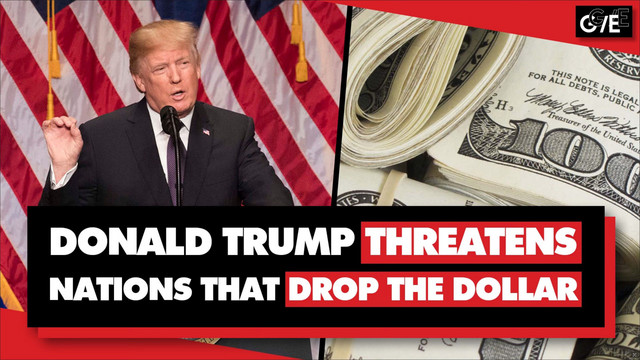 Blacklist: Biden unleashes sanctions on China. 17.01.2025 26minThe rapid turnover of G7 leaders has become a farce. Economic turmoil, a major change in global industrial investment and a river of US sanctions and the Team Trump tariff avalanche expected this year provide the bulk of today’s episode.A quick update on ASEAN and Cambodia FDI and the outlook for Trump tariffs on the world’s largest trade partnership between China and ASEAN.Australia’s sustainability transition is highly dependent on China’s EVs, but so is the UK and many are countries.Like, subscribe and share…https://www.patreon.com/c/TheChair844https://x.com/DGB365/https://www.linkedin.com/in/dgb365/https://www.youtube.com/@long_mekong Get full access to Small State Diplomacy at smallstatediplomacy.substack.com/subscribe
 -
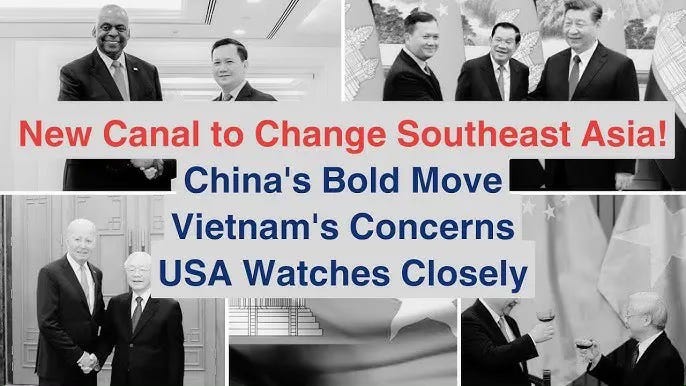 Belt and Road update 18.12.2024 29minBelt and Road updateEpisode 8 covers Cambodia's Techo Funan Canal & China's involvement & investment attitude as well as an update on risks to the Belt & Road in West Asia, Red Sea, Mediterranean, Africa & Ukraine.Check out my Multipolar Peace friends on YouTube below. Get full access to Small State Diplomacy at smallstatediplomacy.substack.com/subscribe
 -
 Panel: Does Asia Pacific welcome NATO’s footprint? 13.07.2024 53minNATO is boosting its visibility in the Asia Pacific region. For three years in a row, leaders or representatives of four Asia Pacific countries – Japan, South Korea, Australia and New Zealand – have attended the annual summit of the military alliance. The outgoing NATO Secretary-General Jens Stoltenberg has been an ardent advocator of Asia Pacific outreach, and his argument has been echoed by US officials as Washington, DC hosted this year’s NATO summit.What is behind NATO’s growing interest in Asia Pacific? Will NATO be a force for good if it establishes a sizeable footprint in the region? Host Ding Heng is joined by Digby James Wren, External Relations Advisor to the Royal Academy of Cambodia; Lee Pei May, Assistant Professor of Political Science at the International Islamic University Malaysia; Professor Shen Dingli from the Institute of International Studies, Fudan University.Listen to original here.Transcript below.Small State Diplomacy is a reader-supported publication. To receive new posts and support my work, consider becoming a free or paid subscriber. Get full access to Small State Diplomacy at smallstatediplomacy.substack.com/subscribe
 -
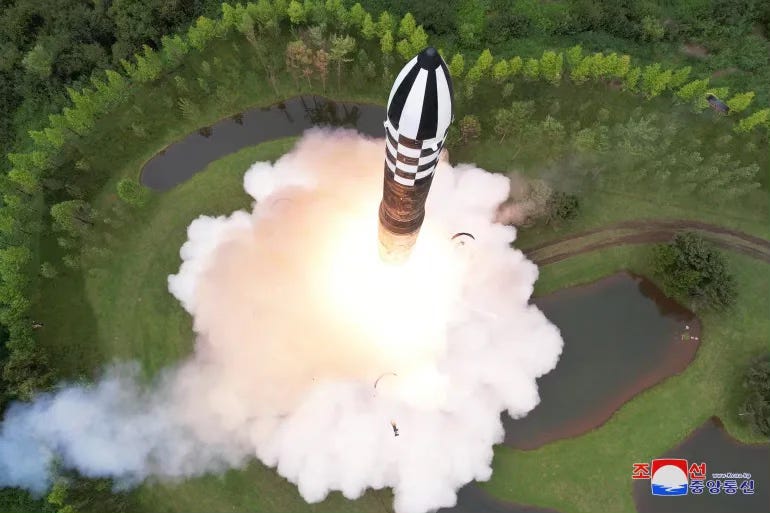 East Asian Asymmetry 25.03.2024 19minBy Kim JaheeWhile the DPRK-China relationship is a formal security alliance established by the DPRK-China Friendship Treaty signed in 1961, it differs from the usual asymmetric security alliance. Most of all, China’s diplomatic strategy, dating back to Deng Xiaoping (邓小平) of avoiding direct confrontation with the United States and allowing itself time to build up its national strength (韜光養晦) to become a regional superpower has kept the North Korean nuclear issue from becoming a priority in Chinese foreign policy. In this vein, during the Cold War, China sought to stabilize the regional security environment more broadly through détente with the United States and improved diplomatic relations with South Korea to create a stable security environment in the region.In addition, China, which joined the NPT after the successful nuclear test, rejected North Korea’s demand for the transfer of nuclear technology, claiming to defend the non-proliferation regime as a “responsible member” of the international community. As such, the Sino-North Korean asymmetric alliance is less likely than others to compel a response to each other‘s demands because the usual security-autonomy exchange formula has not been established. China‘s failure to provide security guarantees and North Korea‘s declining dependence on China have contributed to the diminishing value of each other.The situation is further complicated by North Korea‘s concerns and wariness about Chinese interference in its internal affairs. The alliance treaty clearly outlines concerns about these two countries interference in the internal affairs of the other. North Korea has been vigilant in preventing the expansion of pro-China groups within its elites group. Most importantly, North Korea has also conducted numerous nuclear and missile tests to demonstrate its nuclear capabilities to the world. Dismantling the country’s nuclear weapons is a challenging task, given North Korea’s nuclear capabilities, which are widely accepted as a foregone conclusion. Unlike previous six- party talks, where all parties committed to the denuclearization of North Korea, Russia and China have expressed reservations about the application of tougher UN sanctions.As North Korea’s nuclear program advances, it is anticipated to take a pragmatic stance grounded in national security concerns, rather than a normative approach, and even if China tries to contain North Korea’s nuclear program it will not be easy due to the fragile cohesion of the DPRK-China alliance. Thus, although China will undoubtedly be significant in forthcoming North Korean nuclear discussions, it is improbable that it will act as a normative arbitrator of anti-proliferation principles.As North Korea develops its nuclear capabilities, China’s leverage is likely to diminish. Therefore, rather than negotiating a complete nuclear agreement, China will likely move toward negotiating step-by-step nuclear disarmament. South Korea should be aware of this possibility and actively encourage China to play a responsible role. The time to do so is now.Read more here.Download the full volume here.NB: Kim Jahee is a Ph.D. candidate at Korea University, writing her dissertation on Alliance and Nuclear Proliferation dynamics.Dilemmas of DeterrenceThe United States’ Smart New Strategy Has Six Daunting Trade-offsBy CSIS (Washington)As the danger of war rises in the Western Pacific, the United States is racing to reset its military strategy. China’s astonishing military modernization—especially its arsenal of anti-access/area denial (A2/AD) capabilities—has fundamentally challenged the old U.S. approach, which focused on defeating aggression by projecting decisive power into the first island chain. In response, the Pentagon is attempting a great inversion: to defeat Chinese power projection against Taiwan or another target, it is emulating Beijing’s A2/AD strategy in hopes of making the Western Pacific a no-go zone for hostile forces.This change, which some defense analysts have advocated for years, is a necessary response to China’s daunting capabilities. It is a smart effort to make the geography of the region, and the inherent difficulty of power projection, work for, rather than against, the United States and its allies. Speed is essential in making this shift: Even as the statedU.S. view is that conflict is “neither imminent nor inevitable” in the Taiwan Strait, numerous U.S. officials have warned that conflict could plausibly occur in the region this decade. This urgency is catalyzing constructive action across multiple U.S. alliances and every U.S. military service as they seek to make the strategy real in the limited time that may be left.Every strategy brings dilemmas, though, and this strategy—call it “anti-access with American characteristics”—presents six crucial trade-offs the Pentagon and U.S. civilian leaders must address. Many of these challenges, moreover, must be confronted in coordination with U.S. allies and partners, but these conversations are not as advanced as they should be given the shrinking timeline and urgency of action. Strategy is the art of making hard choices, and the United States is only starting to reckon with the hard choices its new strategy involves.Washington’s Strategic ShiftU.S. strategy has been turned upside down by two key developments: China’s ballooning defense budget and its military-technological breakthroughs. Using defense resources made available by decades of rapid economic growth, the People’s Liberation Army (PLA) has developed a vast arsenal of capabilities—especially long-range missiles—designed to prevent U.S. forces from accessing bases along the Pacific’s first island chain, as well as in the waters and airspace within them. According to the Pentagon’s most recent public report on Chinese military power, for instance, Beijing now possesses roughly 1,000 medium-range ballistic missiles with a range of between 1,000 and 3,000 kilometers and 500 intermediate-range ballistic missiles with a range of between 3,000 and 5,500 kilometers. If a war were to break out, the PLA could now target nearly all U.S. forces within hundreds of miles of the Chinese coast.The result is a weakening of America’s ability to project power in a crucial region. A quarter century ago, China could barely detect, let alone destroy, U.S. aircraft carriers operating near its coast. Into the early 2010s, the Pentagon could—according to think tank reports—pursue a strategy that envisioned defeating Chinese aggression with a devastating precision-strike campaign against radars, missile bases, command-and-control centers, and other targets on Chinese soil.Today, however, Beijing can threaten aircraft carriers hundreds of miles away, as well as the surface ships that escort them and the bases they visit. A growing inventory of advanced fighters, as well as the world’s densest air defense network, can take a heavy toll on U.S. strike aircraft. Meanwhile, China’s rapid nuclear buildup makes the prospect of carrying the war onto its territory much riskier by giving Beijing more credible nuclear response options. In short, the days of easily projecting power to China’s shores are over.The United States needs new capabilities and concepts—as well as enhanced coalitions—to offset this historic change in the military balance. To be sure, the United States will continue to require ways of breaking down China’s battle networks and degrading its A2/AD capabilities. But simply doubling down on the traditional power projection strategy will not work under the current defense budget and in view of how formidable China’s A2/AD capabilities have become. Instead, U.S. forces are trying to flip the script: they are trying to deny China the ability to project its power outward. Rather than rely so heavily on a few large, vulnerable bases and scarce, expensive platforms like aircraft carriers, this strategy would empower smaller units that operate from more austere locations and fight with cheaper, more numerous, and more expendable weapons. The goal is to create a more resilient, diversified military posture up and down the Western Pacific with sufficient firepower to inflict an awful cost if the enemy attacks. The United States will not be able to reassert the level of military dominance it once enjoyed in the region, but it can prevent an age of Chinese dominance.What makes this approach attractive is the fact that holding U.S. forces at bay is only half the challenge China faces. To conquer Taiwan or otherwise upend the regional status quo, Beijing must replicate the traditional U.S. mission of power projection by moving troops, ships, and planes into hostile areas and sustaining them there indefinitely. In fact, Beijing is in the process of fielding four aircraft carriers with more to come; it is building other long-range ships and aircraft that can operate throughout the region and beyond. The more China invests in these larger, more expensive platforms and the more it tries to exert control in the Western Pacific, the more it makes itself the target of the very strategy its own military has employed.The United States has recently advanced several aspects of such a strategy. The first is real estate. Washington has secured or expanded U.S. access to bases in countries from Japan and the Philippines to Australia and Papua New Guinea, a crucial step in making U.S. forces more survivable if China attacks. There is significantly more work to do, but 2023 has been the most transformative year in a generation for America’s Indo-Pacific posture.The second aspect is capabilities. The Pentagon has announced programs such as the Replicator initiative, which seeks to build large numbers of small, cheap drones that can deliver devastating firepower. If these programs reach fruition, they could complement existing platforms, such as attack submarines and penetrating bombers, that can destroy Chinese forces within Beijing’s A2/AD zone.A third aspect involves concepts. The services are developing new (and somewhat embryonic) ways of employing these technologies. Examples include Expeditionary Advanced Base Operations, a Marine Corps initiative that involves using antiship missiles and other ground-based fires to target Chinese vessels from small islands in the Western Pacific, and Agile Combat Employment, an Air Force project that aims to preserve U.S. striking power by getting planes off of large, exposed bases when a crisis begins.And fourth is coalitions. To generate the necessary firepower, secure access to critical terrain, and confront China with the prospect of a big war against multiple adversaries, the United States has strengthened bilateral alliances with Australia, Japan, South Korea, and the Philippines while also investing in new partnerships—such as AUKUS—linking countries in the region and beyond.To be clear, anti-access with U.S. characteristics is more of a complement to than a pure replacement for the Pentagon’s old approach. Aircraft carriers and major surface combatants would be needed to defeat a Chinese blockade of Taiwan, for instance, even if they suffered heavy losses. Tactical fighters, long-range bombers, and other manned aircraft will play an important role in delivering munitions and partnering with unmanned systems. The United States will still need to find ways of suppressing China’s air defenses and hindering its kill chains. But legacy approaches alone cannot defeat a Chinese attack at acceptable cost. The United States needs asymmetric ways of thinning out enemy forces and preventing them from achieving their objectives.To succeed, the United States will need a two-part force. A blunting layer of dispersed forces must survive the initial onslaught and prevent Chinese forces from winning a quick, decisive victory. Then a follow-on force of U.S. ships and aircraft will need to push into the theater to decisively defeat the remaining Chinese units. Ultimately, this might not be sufficient to terminate a conflict, but it would neutralize the immediate threat and buy time for other options meant to persuade Beijing to call it quits, such as a long-term economic pressure campaign.America’s new strategy, however, also raises new questions: Can a blunting force remain effective if it is exposed to devastating Chinese missile salvoes and cannot easily be resupplied? Could these smaller units deter a conflict as well as larger and more visible ships and aircraft could? Should U.S. power projection forces remain in the first island chain or pull back to more defendable positions farther away? How hard should the United States push for access to new bases? Are allies prepared to play their part in this new strategy? And to what extent would anti-access with U.S. characteristics just redirect China’s effort toward gray zone coercion?These are difficult questions. They involve hard trade-offs between survivability and lethality, concealing and revealing, close-in and standoff operations, speed and sustainability, sovereignty and efficiency, and gray zone and high-intensity conflict. As the United States tries to prepare for or, preferably, deter a potentially devastating conflict, these six issues require urgent attention and debate.Survivability or LethalityA fundamental feature of today’s environment is the development of accuracy independent of range, which makes it possible to precisely strike targets at great distances. This is why China’s ballistic missile force, the largest in the world, poses such a threat to the aircraft and surface ships that the United States would need to project power into the Western Pacific. Hardening airfields and investing in air and missile defenses can help, but the cost-exchange ratio favors the attacker, since most missiles are significantly cheaper than the interceptors that engage them. If U.S. forces remain on large bases at Guam or Okinawa, they risk being destroyed. Military units must disperse and hide to survive. The dilemma is that once they do, they will struggle to generate the striking power—the lethality—needed to defeat a Chinese assault.This problem involves logistics and sustainment: the more dispersed one’s forces, the harder it is to keep them well supplied. The Air Force, for instance, has shown it can get attack aircraft out of vulnerable places in a hurry. Less certain is whether it can deliver the fuel, weapons, and other support those planes will need to conduct combat missions from wherever they go to ride out the storm. If U.S. planes cannot fly strike missions in the opening days or weeks of a Taiwan crisis, Taipei might fold and close Washington’s window to respond. Similar challenges afflict the Army’s Multi-Domain Operations concept.To be fair, the picture varies across the services. By making significant changes to its force structure, the Marine Corps has become better positioned to distribute small units across numerous islands while also equipping them with real firepower. Yet services that rely on large platforms (the Navy), large bases (the Air Force), or large formations (the Army) have more work to do to make their forces survivable without undermining their ability to land a lethal punch.Conceal or RevealAs new operational concepts take shape around smaller, more dispersed units, the Pentagon will face another challenge: how to deter China with less visible forces. The accuracy of today’s weapons means visible forces are increasingly vulnerable, but the best capabilities for deterring opponents and reassuring friends are those they can plainly see. Alternatively, concealing capabilities can help maximize their effect on the battlefield but undercuts their deterrent value before a conflict begins.Take, for example, one of America’s most effective deterrents—the purported ability to disrupt Chinese power projection by using cyberattacks to disable PLA command, control, and communications. Disclosing the details of this capability would require revealing U.S. access to Chinese networks, which would give Beijing a chance to close breaches. The same basic problem would apply to revealing new operating locations or highly secretive systems, such as advanced undersea drones, stealthy aircraft, space-based capabilities, and others.A related issue involves timing. Unveiling new capabilities during a crisis might bolster deterrence but could come too late, after Chinese leaders have made the crucial decision to act. Publicly revealing new capabilities in the opening phases of a crisis could increase tensions, complicate efforts to deescalate, and lead third parties to blame Washington for the conflict. Admittedly, these are not new problems. But they are made more difficult by the fact that the United States no longer has such overwhelming conventional superiority, so it must hold more in reserve to surprise Chinese military commanders and complicate their operations after the shooting starts.Close-in or StandoffA third trade-off involves geography: Where should the United States place these more dispersed forces? For decades, U.S. power projection was so effective that even massed forward-deployed forces were largely invulnerable to enemy attack, and U.S. dominance was so pronounced that even faraway forces could reach the theater in time to make the vital difference. Today, however, China could do catastrophic damage to the Pentagon’s forward-most forces, whether they be ships near the Taiwan Strait or units on the ground in Okinawa. Moreover, if China can quickly establish dominance in and around the Taiwan Strait, assets stationed farther away might not arrive soon enough to prevent a fait accompli.Thus, the dilemma: if the United States stations most of its combat power along the first island chain, the PLA could conduct a crippling first strike. Yet if Washington keeps the bulk of its forces over the horizon at bases in the second island chain or even farther away, then China might be emboldened to try the fait accompli. Of course, if Beijing chooses to kill a large number of Americans in a first strike, it is probably choosing a long, bloody war with an enraged superpower as well. But even in that case, U.S. allies would face the possibility of being pounded as U.S. forces fight from distant locations—not exactly a recipe for alliance cohesion in a crucial moment.An answer—albeit an uncomfortable one—is to divide U.S. forces into two elements. Some units would serve as frontline forces to blunt Chinese attacks and reassure allied publics. These forces would constitute a bulwark and a trip wire: they would deny China the option of using force without bloodying U.S. personnel. They would commit the United States to the fight while also giving Washington some combat power early on. The objective of these forces would not be to establish U.S. dominance within the first island chain but rather to prevent China from dominating portions of the first island chain itself. Mobile forces equipped with antiship and antiaircraft missiles would blunt Chinese attacks on U.S. allies and partners.Ultimately, this blunting force would also buy time and serve as a shield behind which standoff forces, such as long-range stealth aircraft or other platforms capable of delivering munitions from a distance, could operate at somewhat decreased risk. Unfortunately, the costs to these close-in units could be very high, so the United States might not want to place its most advanced capabilities at risk—fifth-generation tactical aircraft, or aircraft carrier strike groups, for instance—until it has succeeded in degrading China’s A2/AD capabilities, primarily through strikes delivering from longer range. In the meantime, forward-stationed forces might suffer ghastly losses.Speed or SustainabilityA fourth trade-off is political. Washington’s new strategy is predicated on rapidly diversifying U.S. operating locations from a handful of major U.S. bases to a range of ally and partner bases, austere sites, and even some civilian facilities. The United States has made remarkable progress in this endeavor; key allies like Japan are expanding their military footprints as well. Yet the harder Washington pushes to make use of these locations today, the more it risks damaging critical relationships.This tension is on display in Japan’s southwest islands. Okinawa, Miyako, Ishigaki, and Yonaguni are critical real estate given their proximity to Taiwan. If the United States could, for instance, station hordes of long-range antiship missiles on the outermost islands, the military balance in the Taiwan Strait would change overnight. But populations on some of these islands are ambivalent about a growing Japanese military presence, let alone any sizable deployment of Americans. If Washington pushes too hard, it risks alienating local populations and causing diplomatic setbacks. If Washington does not push hard enough, the United States and its allies might not be ready if a conflict comes.The same point could be made regarding the Philippines. Under President Joe Biden, the United States has made remarkable progress in jump-starting implementation of the Enhanced Defense Cooperation Agreement and gaining access to additional facilities in that country. In theory, these facilities—some of which are on the northern island of Luzon—could play a vital role in a Taiwan contingency. In reality, what access the United States would have to those facilities in a crisis remains uncertain. The more tensions increase, the greater the need for the United States to have clarity about this issue and to position more (and more capable) forces there. Those needs may clash, however, with the political incentives of the government in Manila, which would presumably prefer to defer hard choices that could put local communities in the firing line if conflict ensues.Sovereignty or EfficiencyAllies and partners are central to U.S. strategy because the China challenge is more serious than anything the United States has faced in decades. Beijing can field a force so large and potent that the United States cannot succeed on its own. Even under the most favorable assumptions about the development of U.S. and Taiwanese capabilities, the United States will still need—at a bare minimum—access to bases in Japan and perhaps other countries. Yet, after several decades in which allied contributions were a “nice to have” but not a “need to have,” there is little muscle memory in Asia about how to conduct complex coalition operations in a high-intensity environment.Getting the coalition dynamics right requires addressing tough questions about roles, missions, capabilities, and—most of all—politics. Which allies would be willing to commit their forces in advance of a conflict? Under what circumstances would they do so? And with what caveats about their use? The answers to these questions will vary greatly from country to country, even from leader to leader. And although it seems likely that close allies, such as Japan or Australia, will indeed side with the United States if shooting starts, their leaders are often unwilling, for understandable political and diplomatic reasons, to make that commitment explicit in advance.Ideally, a U.S.-led coalition would maximize efficiency: Washington would rely on allies to build niche capabilities and focus on particular missions, freeing up U.S. forces for the most daunting tasks. A similar argument has been made for why Taiwan should ditch its expensive planes and warships, which will probably be destroyed or disabled at the outset of any conflict, and instead focus on antiship missiles, mines, and other asymmetric capabilities that can help it survive until help arrives. But Taiwan is hesitant to do this because it has no ironclad assurance help will come—not even from the United States.This illustrates the larger dilemma: if no one really knows who will or will not fight in a crisis, a clean division of labor becomes dangerous because absent allies would create glaring gaps. Political leaders in the Western Pacific naturally want to preserve flexibility and protect sovereignty. Yet this undermines efficiency by forcing Washington to plan for the possibility that its allies will not show up. The dilemma works the other way as well: the less reliable the United States seems due to resurgent isolationism or political dysfunction, the less willing its allies will be to make potentially costly commitments to fight by its side.Gray Zone or High IntensityA final tension is between dealing with day-to-day gray zone challenges—maritime coercion, menacing aerial intercepts, and other pressure tactics short of war—and preparing for the potential outbreak of a major conflict. Gray zone engagements require frequent sorties, which wear down aircraft and their crews. There is a real trade-off between showing the flag in the South China Sea and training for high-intensity conflict. The Pentagon’s preference may be to concentrate intently on deterring high-intensity conflict—the fight that the United States simply cannot afford to lose—but even if it does so successfully, its friends will still suffer as Beijing salami-slices the status quo.For example, the U.S. military is heavily focused on a potential war in the Taiwan Strait, most notably the challenge of rapidly sinking an invasion fleet. But although this is the most dangerous contingency, it is not the only, or perhaps even the most likely, one. Every day China is squeezing Taiwan, using a high operations tempo and boundary encroachment to nibble away at its buffer zones. Likewise, the challenge in the South China Sea is not a matter of Beijing mounting an all-out invasion of the Philippines. It involves using fishing boats, maritime militia, coast guard vessels, and other capabilities to undermine sovereignty.Unfortunately, many of the capabilities needed for gray zone scenarios are different from those needed for high-end deterrence missions. Small units equipped with antiship missiles may be lethally effective against an invasion fleet, but they are of less use in helping the Philippines defend its sovereignty against everyday encroachment or helping Japan cope with pressure from Chinese aircraft over the East China Sea. In fairness, this dilemma might well attend any U.S. defense strategy in the Western Pacific. But the more Washington emphasizes high-end conflict scenarios and anti-access forces, the sharper this trade-off will become.No Easy AnswersThere are no perfect solutions to these challenges. Every choice comes with risks and consequences. The best the United States and its allies and partners can do is mitigate those risks to the extent possible, which begins with recognizing that the requirements of assurance, deterrence, and warfighting often cut in different directions—and that Washington cannot adequately address any of these dilemmas on its own.As discussed, the Pentagon may envision addressing the competing imperatives of assurance, deterrence, and warfighting by effectively bifurcating the force. An “inside force” located within the first island chain would reassure allies of U.S. commitment and dissuade China from thinking it can succeed with a rapid fait accompli. If war occurs, it will be supplemented by an “outside force,” located mostly beyond the immediate reach of China’s most potent A2/AD assets, which would provide the bulk of the striking power needed to turn back a PLA assault and eventually end the conflict on favorable terms. Yet that is only a partial answer to the dilemmas raised here, many of which will persist even if the United States optimizes different parts of its forces for different tasks.One requirement for more squarely confronting trade-offs between speed and sustainability, between survivability and lethality, and so on would be closer coordination between the officials responsible—in the United States and friendly countries—for operational planning, capability development, and alliance management. After all, the hardest trade-offs tend to arise at the intersection of these tasks. But even within the U.S. government, it is not clear that the dilemmas are as sharply understood, or as explicitly acknowledged, as they could be. When the authors recently traveled to the region, we were struck that many of these dilemmas are not really being debated yet with key allies and partners.This is a potentially costly mistake. Each trade-off has extensive implications for Indo-Pacific allies and partners; addressing them requires not just understanding but also extensive military reforms and sensitive political guidance from U.S. friends. The U.S. military no longer possesses power projection capabilities so overwhelming it can determine its strategy independently and then seek the acquiescence of like-minded nations. For the first time in decades, Washington must truly integrate its Asian friends into its most crucial strategic debates—as well as the training, exercises, contingency planning processes, and wargames that both inform and flow from those debates. The alternative is a strategy that becomes dangerously disjointed as the United States and other defenders of the Asian order confront difficult choices in divergent ways.Given the growing worry about crises or conflict, there is little time to waste. The shorter the time horizon gets, the starker the trade-offs will become. Hard dilemmas are the price to pay for decades of lethargy in dealing with a growing Chinese challenge. If the United States, its allies, and its partners do not confront these issues head-on today, the consequences could be ugly tomorrow.Hal Brands is Henry Kissinger Distinguished Professor of Global Affairs at the Johns Hopkins School of Advanced International Studies and senior fellow at the American Enterprise Institute. Zack Cooper is senior fellow at the American Enterprise Institute and a lecturer in public and international affairs at Princeton University.This brief is made possible by general support to CSIS and the support of the America in the World Consortium.Read more here.Small State Diplomacy is a reader-supported publication. To receive new posts and support my work, consider becoming a free or paid subscriber. Get full access to Small State Diplomacy at smallstatediplomacy.substack.com/subscribe
Podobni podkasti


Priljubljen v
Ta podkast je tudi v lestvicah podkastov teh držav.

