
Talking HealthTech
Talking HealthTech
0
Conversations with clinicians, vendors, policy makers and decision makers to promote innovation and collaboration for better healthcare enabled by technology. Learn about digital health, medical devices, medtech, biotech, health informatics, life sciences, aged care, disability, commercialisation, startups and so much more.
Episodet
-
 635 - Vital Signs Monitoring Reimagined: Predictive, Not Detective, and Ahead of the Alarm 17.09.2026 32minIn this episode of Talking HealthTech, Peter Birch speaks with Andy Hurt, Head of Strategic Accounts at Ericom, and Sam Yang, Co-founder and CEO at Xandar Kardian.The discussion focuses on contactless, continuous vital signs monitoring using impulse ultra-wideband radar technology, exploring how this approach differs from traditional wearables, cameras, and threshold-based alarm systems.The conversation covers practical applications in health and aged care, palliative care, mental health, and correctional settings, along with regulatory considerations such as FDA and TGA clearance.Andy and Sam discuss data-driven care models, the role of individualised patient baselines, and how longitudinal data can reveal deterioration days before it becomes clinically apparent.They also touch on the cost and system-wide benefits of early detection, the importance of integrating this technology into existing clinical workflows, and its emerging potential in low-resource and global health settings.Throughout, the episode highlights the impact of predictive baseline data on prioritising clinical resources and improving patient outcomes.Key Takeaways🔎 Contactless radar-based monitoring addresses privacy and compliance issues found with cameras and wearables🩺 Continuous monitoring provides longitudinal health data to inform clinical workflows and early intervention💡 The technology assists rather than replaces clinicians, supporting prioritisation and proactive care🌏 Regulatory approvals in multiple countries, including FDA (US) and TGA (Australia), underpin adoption🚑 Early detection reduces hospital admissions, ambulance use, and overall costs, with use cases in remote and resource-limited environmentsTimestamps02:31 - Radar-based, contactless health monitoring explained07:02 - Clinical and aged care use cases11:06 - Early intervention and POBC method13:00 - Regulatory pathways and global expansion14:50 - Impact on healthcare system and cost savings18:51 - Handling alarm fatigue and baseline deviations22:34 - Integration into health facility workflows25:15 - Broader global and low-resource applicationsCheck out the episode and full show notes on the Talking HealthTech website.If you’re enjoying the show and want access to exclusive healthtech discussions, meetups, and member-only content, you can learn more about becoming a THT+ Solo Member here: talkinghealth.tech/solo_shownotes.And if this episode was useful, leaving a review or sharing it with someone in the industry always helps.Mentioned in this episode:Join THT+ Solo to connect with other people working in or moving into digital health through members-only events, deeper content and the Talking HealthTech community hub: talkinghealthtech.com/thtplus.
 -
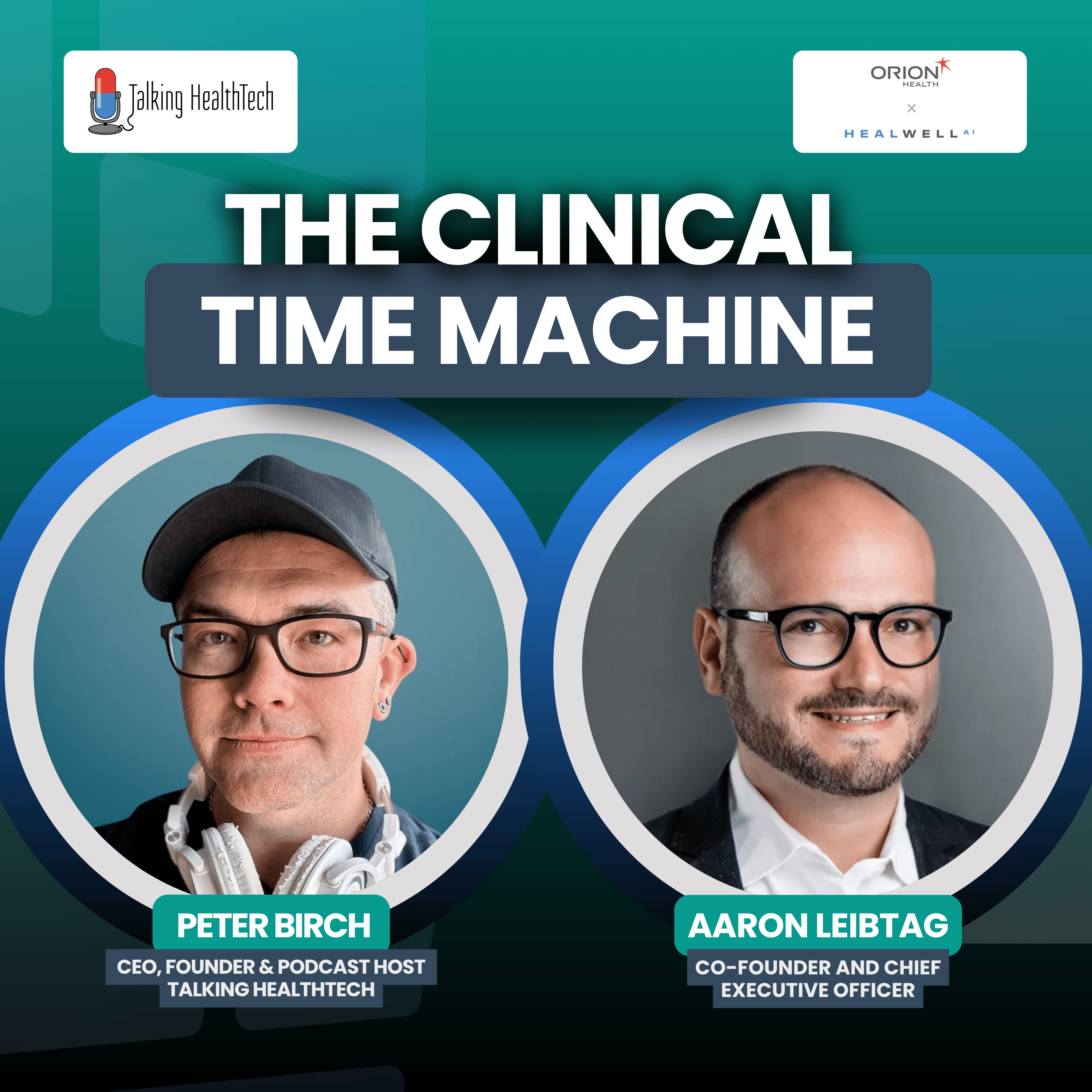 634 - Smart Summaries and Real-World Evidence: How HEALWELL AI is Supporting Clinicians 15.09.2026 35minIn this episode of Talking HealthTech, Peter Birch speaks with Aaron Leibtag, Co-founder and Chief Executive Officer of Pentavere, a HEALWELL AI company.The conversation covers Aaron Leibtag's transition from finance to healthtech, the founding story of Pentavere, how AI technology is being leveraged to improve healthcare data utilisation, the practical impact of these solutions in real health settings, and what partnerships with organisations like Orion Health mean for the future of health systems in Australia and beyond.Aaron explains why roughly 80% of existing health data sits unused, buried in free-text notes, referral letters and PDFs that analytics and decision-support tools rarely reach.He walks through how Pentavere's Darwin AI engine works, using natural language processing to read and interpret that material and build summaries that reflect the judgement of clinical experts, with full source document verification so clinicians can trust what they are seeing.The discussion also looks at the Darwin Power Smart Summary pilot delivered with Canada Health Infoway and integrated directly into the EMR, alongside close to eighty real-world evidence studies run across Canada, the United States, Europe and the Middle East.From there, the conversation turns to the ethics, privacy and governance questions that come with deploying AI in clinical settings.Peter and Aaron close on what Australia's existing health information exchanges make possible, why medical error and missed screenings remain such costly problems, and why solving the basics matters more than chasing the next breakthrough.Key Takeaways🩺 The majority of documented healthcare data remains unused, with AI technology now helping to extract and utilise this information for patient benefit🌏 Implementation of AI-driven real-world evidence studies is already underway in countries including Canada, the US, Europe, the Middle East, and Australia⏱️ AI tools that summarise patient data significantly reduce clinician administrative load and improve accuracy in patient care decisions🔒 Ethical, secure, and compliant deployment of AI in healthcare is a global priority, with regions like Europe leading on policy frameworks🤝 Partnerships with organisations like Orion Health are helping accelerate access, interoperability, and clinical utility of healthcare data in Australia and globallyTimestamps00:01 — Introduction & guest background03:01 — Why healthcare data is underutilised05:10 — Real-world AI implementations07:57 — Immediate and long-term impact of solutions15:06 — Clinician-level AI tools21:10 — Orion Health’s role in the Australian contextCheck out the episode and full show notes on the Talking HealthTech website.If you’re enjoying the show and want access to exclusive healthtech discussions, meetups, and member-only content, you can learn more about becoming a THT+ Solo Member here: talkinghealth.tech/solo_shownotes And if this episode was useful, leaving a review or sharing it with someone in the industry always helps.Mentioned in this episode:Join THT+ Solo to connect with other people working in or moving into digital health through members-only events, deeper content and the Talking HealthTech community hub: talkinghealthtech.com/thtplus.
 -
 633 - Smarter Rosters: How HosPortal Is Using AI to Ease Clinical Scheduling Complexity 10.09.2026 35minIn this episode of Talking HealthTech, Peter Birch speaks with Dr Chris Jones, Founder and Clinical Director at HosPortal, about the evolution of clinical rostering in Australian healthcare, the integration of AI in medical workforce management, and shifts in work-life balance for healthcare practitioners.The discussion covers how HosPortal is addressing the complex challenges of scheduling across diverse medical craft groups, the impact of digital transformation on hospital operations, and the growing importance of customisable solutions and ongoing user support.HosPortal has been rebuilt from a clean slate and has roughly doubled in capability, and the software now runs across every state in Australia, covering anaesthesia, emergency departments, radiology, junior medical doctors and radiographers.Chris explains why the current build focus is junior doctor term placement, a problem most hospitals are still solving with survey forms and spreadsheets, and how the team designs for complexity they have not been told about yet.The conversation also gets into where AI genuinely earns its place inside clinical software. Chris describes agents that turn a plain-language description of a rostering rule into a working rule, and agents that do the task rather than point users at a help file.He shares his view that diagnostic radiology will be fully replaced by AI within five years, along with the ten-times-better test he applies to it, and paints a picture of an emergency department avatar that is endlessly patient and never tired.Underneath all of it sits a point about people. Chris argues that doctors working fewer hours with better supervision is a net good for clinicians and patients alike, and that the real cost of fatigue is doctors who quietly stop caring.Key Takeaways🩺 The complexity of clinical rostering is growing, driven by specialist requirements, junior doctor preferences, and a broader focus on work-life balance.💻 A major rebuild of Hosportal's platform has enabled greater customisation, scalability, and more sophisticated automation across Australian hospitals.🤖 AI is playing an increasing role in both automating roster construction and making the system easier for end-users to interact with, including the use of natural language agents.🧠 There has been a cultural shift in healthcare, with greater attention on clinician mental health and safer working hours, positively impacting staff and patient safety.🌏 The future roadmap for Hosportal includes continued AI integration, product refinement, and expansion beyond Australia into new international markets.Timestamps00:00 - Hosportal introduction & background02:27 - Rostering problems & user experience04:13 - Shifting work-life balance for doctors07:17 - Customisation and customer-driven solutions11:30 - AI features & natural language tools13:44 - AI's role in the future of healthcare31:04 - Roadmap and international expansionCheck out the episode and full show notes on the Talking HealthTech website.If you’re enjoying the show and want access to exclusive healthtech discussions, meetups, and member-only content, you can learn more about becoming a THT+ Solo Member here: talkinghealth.tech/solo_shownotesAnd if this episode was useful, leaving a review or sharing it with someone in the industry always helps.Mentioned in this episode:Join THT+ Solo to connect with other people working in or moving into digital health through members-only events, deeper content and the Talking HealthTech community hub: talkinghealthtech.com/thtplus.
 -
 632 - Connected Care Beyond the Postcode: Breaking Down Australia's Digital Health Silos 01.09.2026 28minIn this episode of Talking HealthTech, Peter Birch speaks with Peter O'Halloran from the Australian Digital Health Agency, and Farhoud Salimi and Dr Monica Trujillo from Telstra Health, about the current state and future of interoperability in Australian healthcare.The discussion covers why seamless data sharing is crucial, how policy, technology, and consumer expectations are driving change, and the evolving roles of national infrastructure like My Health Record.The group unpacks how the shift from paper to digital created a new problem, with information locked inside systems built for a single hospital, practice or specialty.They talk through the real cost of that fragmentation, from repeated tests and retold medical histories to the harm that occurs when clinicians do not have what they need at the point of care.The episode closes on what success looks like by 2030, including a future where interoperability is no longer a talking point, data simply arrives inside the workflow, and connected care reaches rural and regional Australia as reliably as it does the capital cities.Key Takeaways💡 The priority now is not convincing stakeholders of the need for interoperability but implementing practical solutions for data sharing in healthcare💡 Modernising "classic" or legacy systems is a major challenge, but new platforms are being built with interoperability and patient-centricity at their core💡 Consumer expectations are rapidly evolving, with an increasing demand for immediate access to health information and digital-enabled care💡 My Health Record has shifted from being a basic repository to becoming central infrastructure, supporting real-time, secure, and routine data sharing💡 Incorrect or incomplete health data, particularly when combined with AI, can lead to safety risks, reinforcing the need for better standards and data qualityTimestamps00:00: Introduction & framing the interoperability challenge01:09: Evolution and urgency for healthcare data sharing03:07: Patient impact and consumer stories08:47: Practical use cases and technology improvements12:48: Urgency, burning platforms, and risks of inaction19:02: The role and future of My Health Record22:52: Interoperability at Telstra Health and industry collaborationCheck out the episode and full show notes on the Talking HealthTech website.If you’re enjoying the show and want access to exclusive healthtech discussions, meetups, and member-only content, you can learn more about becoming a THT+ Solo Member here: talkinghealth.tech/solo_shownotesAnd if this episode was useful, leaving a review or sharing it with someone in the industry always helps.Mentioned in this episode:Join THT+ Solo to connect with other people working in or moving into digital health through members-only events, deeper content and the Talking HealthTech community hub: talkinghealthtech.com/thtplus.
 -
 631 - AI, Workforce Enablement, and Women in Leadership: Highlights from HIC2026 27.08.2026 25minIn this episode of Talking HealthTech, Peter Birch speaks with Dr Rae Donovan, Chief Clinical Information Officer at e-Health Queensland, Professor Peter Steel, Associate Dean of Digital Health and Informatics at the University of Melbourne and Chief Transformation Officer at Royal Melbourne Hospital, and Anita Ghose, Founder and CEO of inventiveX, at HIC 2026, hosted by the Australasian Institute of Digital Health.Recorded on the sidelines of the conference, the conversation brings together perspectives from frontline clinical practice, academic leadership, and industry innovation, offering a well-rounded look at where Australia's digital health sector is heading.The discussion covers digital health innovation, advancing clinical AI in Australia, workforce enablement, women in digital leadership, and the ongoing transformation of healthcare through technology-driven collaboration.The conversation also touches on the gap between technical ambition and everyday clinical reality, including how outdated hospital systems and clunky electronic medical records continue to shape the day-to-day experience of clinicians.Together, the guests unpack what it takes to modernise ageing hospital systems, build local expertise in clinical AI, and create lasting pathways for women in digital health careers, drawing on real experience from the clinic floor, the university, and the boardroom.Key Takeaways💡 Workforce enablement in digital health involves not just technical training, but supporting ongoing learning, retention, and the evolution of clinical workflows with new technologies.💡 Clinical AI development in Australia needs hubs or ecosystems of excellence to concentrate capabilities and deliver region-wide benefits, rather than isolated innovation.💡 Women remain underrepresented in tech roles, and programs focused on digital health leadership can bridge gaps through mentoring, networking, and targeted initiatives.💡 Technology in healthcare must evolve beyond digitising paper processes to provide more intuitive, AI-enabled, and context-aware support for clinicians.💡 Networks, global connections, and sponsorship are critical for developing future leadership and sustaining momentum in digital health transformation.Timestamps00:00 - Peter Birch | Episode introduction and HIC overview00:33 - Dr. Rae Donovan | Workforce enablement & networking07:58 - Professor Peter Steel | Clinical AI innovation & hubs13:42 - Anita Ghose | Women in Digital Health Leadership Program19:54 - Anita Ghose | Mentoring and legacy networksCheck out the episode and full show notes on the Talking HealthTech website.If you’re enjoying the show and want access to exclusive healthtech discussions, meetups, and member-only content, you can learn more about becoming a THT+ Solo Member here: talkinghealth.tech/solo_shownotesAnd if this episode was useful, leaving a review or sharing it with someone in the industry always helps.Mentioned in this episode:Sign Up to the Free Talking Healthtech NewsletterSign up to the free Talking HealthTech newsletter for weekly digital health news, events, jobs, partner updates and Pete’s take on what matters across the sector: talkinghealthtech.com/newsletter
 -
 Welcome to Talking HealthTech: Connecting Doers and Builders in Healthcare Technology 19.08.2026 1minTalking HealthTech (THT) is Australia's leading media company for health tech conversations, connecting decision-makers, innovators and doers across the healthcare industry.Hosted by Peter Birch, our weekly podcast features conversations with the brightest minds in healthcare innovation from around the world. Alongside the show, we run a newsletter, active social channels and a comprehensive glossary of digital health terms, so you've got one place to stay across the industry.*THT+ Community*Our safe space for the doers and builders in health tech to connect, learn and grow. Members get access to our community platform, live online meetups, exclusive content, partner discounts and other member-only benefits. Join at talkinghealthtech.com/thtplus*THT Productions*Our production arm helps healthcare organisations tell stories that spark real change, through customer testimonials, product showcases, workflow explainers and documentaries.*Company Partnerships*Want to get your organisation in front of the health tech community? Our partnership tiers include a feature podcast episode, directory listing, community seats and more. See what's included: talkinghealthtech.com/partners*About Pete*Peter Birch has spent his career in healthcare operations, from running GP clinics and global medical assistance centres to being first hire at multiple health tech startups. He now sits on the boards of industry groups and health tech companies, bringing that experience into every conversation on the show.Timestamps:0:00 Welcome to Talking HealthTech - podcast, newsletter, social and glossary0:22 THT+ Community: our space for health tech doers and builders0:41 THT Productions: video storytelling for healthcare1:03 About Pete: from GP clinics to health tech startups1:32 Real conversations that improve patient outcomes1:47 Subscribe, follow and join the newsletter🔗 Website: talkinghealthtech.com🔗 Media kit: talkinghealthtech.com/mediakit🔗 Join THT+ Community: talkinghealthtech.com/thtplus🔗 Partner with us: talkinghealthtech.com/partners#HealthTech #DigitalHealth #HealthcareInnovation #HealthcarePodcast #HealthTechAustralia
 -
 630 - Beyond Dashboards: How Command Centres Enable Real-Time Hospital Operations 13.08.2026 1hIn this episode of Talking HealthTech, Peter Birch speaks with Manuel Pérez Vallina, former CIO in the Spanish health system, Femi Ladega, Group Chief Digital Officer at Dedalus, and Dr Vinod Seetharaman, Chief Medical Officer for Dedalus in Australia and New Zealand.The discussion covers the evolution of hospital command centres, the shift from using dashboards for retrospective data towards enabling proactive, real-time operational decisions, and how these changes impact clinical workflows and patient outcomes across different health systems.Recorded live, the conversation draws on experience building one of Spain's first hospital command centres alongside lessons from health systems in the UK, Australia and New Zealand.The panel unpacks why familiar pressures such as underused operating theatres, growing waiting lists and bed shortages appear so consistently across borders, and what separates a command centre from a wall of screens.Along the way, they examine the four principles that determine whether the model delivers real change, the cultural and governance work that sits behind the technology, the role artificial intelligence can play in filtering meaningful signals, and the practical first steps for organisations weighing up where to begin.Key Takeaways🚑 Hospital command centres enable real-time, actionable insights beyond traditional dashboards, improving operational efficiency and patient care.🛠️ Implementing command centre solutions requires aligning technology, organisational culture, and governance to drive sustained change.📊 Demonstrating value and securing investment means clearly defining the use case, limiting initial project scope, and engaging stakeholders early.⚡ Effective change management and clinician engagement are crucial for successful adoption and maximising impact.🌐 Challenges and solutions discussed are common globally, but must be tailored to local healthcare system maturity and needs.Timestamps00:00 - Episode introduction & topic overview03:42 - Manuel Pérez Vallina on Spain’s command centre journey05:55 - Femi Ladega: Global perspectives and data orchestration08:29 - Dr Vinod Seetharaman on capacity management challenges10:26 - Command centres vs. dashboards19:02 - Clinical benefits and flow management22:13 - Stakeholder engagement and return on investment32:07 - Real-world impacts and cascading benefits39:48 - Implementation challenges and change management48:59 - Integrating AI, primary care, and data governance53:45 - Final advice for hospital leadersCheck out the episode and full show notes on the Talking HealthTech website.If you’re enjoying the show and want access to exclusive healthtech discussions, meetups, and member-only content, you can learn more about becoming a THT+ Solo Member here: talkinghealth.tech/solo_shownotes And if this episode was useful, leaving a review or sharing it with someone in the industry always helps.Mentioned in this episode:Sign Up to the Free Talking Healthtech NewsletterSign up to the free Talking HealthTech newsletter for weekly digital health news, events, jobs, partner updates and Pete’s take on what matters across the sector: talkinghealthtech.com/newsletter
 -
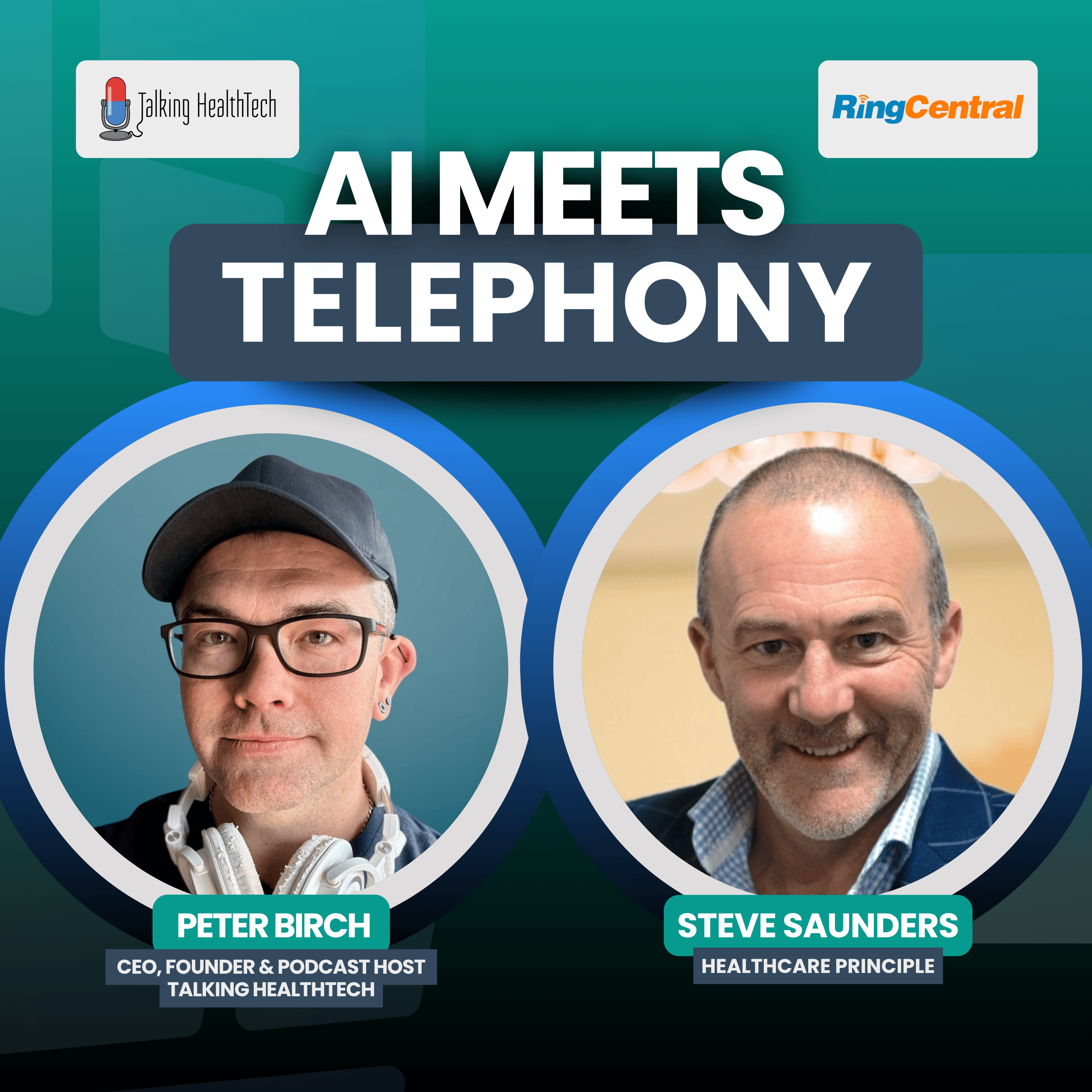 629 - RingCentral: Cloud Migration, AI and the Future of Voice Communications in Australia 06.08.2026 25minIn this episode of Talking HealthTech, Peter Birch speaks with Steve Saunders, Healthcare Principle at RingCentral, about what is really at stake for Australian healthcare organisations still running on legacy phone systems and why the move to cloud-based communications is becoming increasingly urgent.They cover the risks of relying on ageing PABX infrastructure, the barriers that slow down migration decisions and how a modular, evolutionary approach to modernisation can reduce risk and build confidence across an organisation.The conversation also gets into the role of AI and automation in transforming how healthcare manages calls, appointments and patient interactions, as well as the critical importance of data sovereignty, privacy and security when moving to cloud-based platforms.Steve shares why voice remains the most important communication channel in healthcare, why general-purpose tools are not built for clinical environments, and what healthcare leaders should look for when choosing a long-term technology partner rather than a one-off supplier.For more information check out RingCentral at www.talkinghealthtech.com/ringcentralHave a question about this episode? Reach out directly to Steve:Steve SaundersHealthcare Principle | RingCentral📞 +61-2-9157-6831✉️ [email protected] Takeaways📞 Voice communication remains the number one application in healthcare, with unique requirements compared to other sectors.☁️ Healthcare is at a crossroads, moving away from legacy on-premise PABX phone systems towards resilient, cloud-based communications platforms.🤖 AI tools are being used for pre-interaction triage, live transcription, translation, and post-call analytics to improve efficiency and patient experience.🛡 Data sovereignty and security are top priorities, with strict compliance with Australian regulations and onshore data processing for AI.🔄 Major barriers for adoption are fear of change and complacency, not just competition from other vendors.Timestamps00:00 - Introduction & guest background00:37 - Why voice is critical in healthcare03:41 - Unique challenges for healthcare phone systems07:31 - Transitioning from legacy to cloud11:25 - AI & efficiency in communications16:25 - Data sovereignty & security18:39 - Industry landscape & barriers to change22:09 - Advice for healthcare providersCheck out the episode and full show notes on the Talking HealthTech website.If you’re enjoying the show and want access to exclusive healthtech discussions, meetups, and member-only content, you can learn more about becoming a THT+ Solo Member here: talkinghealth.tech/solo_shownotesAnd if this episode was useful, leaving a review or sharing it with someone in the industry always helps.Mentioned in this episode:Sign Up to the Free Talking Healthtech NewsletterSign up to the free Talking HealthTech newsletter for weekly digital health news, events, jobs, partner updates and Pete’s take on what matters across the sector: talkinghealthtech.com/newsletter
 -
 628 - Smart Health Asia Insights: Technology, Collaboration, and Healthcare's Future in Asia 30.07.2026 31minIn this episode of Talking HealthTech, Peter Birch speaks with Madhu Sasidhar, CEO and President of Apollo Hospitals, Luciano Bristia, Asia Pacific Business Lead at InterSystems, and Kym Chua, Executive Director of Messe Berlin Asia Pacific.The discussion covers healthcare system challenges, digital transformation, AI adoption, workforce shortages, regional collaboration, and what it takes to drive innovation across Asia-Pacific health sectors.The conversation explores how AI is easing pressure on clinicians, from assisting radiologists with scans to helping nurses pull up patient information faster.It also touches on the urban and rural divide in access to care, Indonesia's push for a unified national health record, the importance of adapting solutions to local markets rather than adopting them outright, and how sustainability is shaping infrastructure decisions across the region.This episode was recorded during Smart Health Asia in Singapore, an event that brought together over 3,000 participants from 18 countries.It features interviews and observations captured during the event, highlighting perspectives from senior leaders, technology providers, and event organisers.Key Takeaways🩺 Access to healthcare and technology is a significant challenge in India and Southeast Asia, with urban-rural divides and workforce shortages affecting service delivery.🤖 AI and digital technologies are being leveraged for efficiency gains, assisting with diagnostics (radiology, stroke, colonoscopy) and reducing clinician workload.🌏 Regional health challenges and solutions differ greatly; mature markets like Australia and Japan contrast with fast-growing, young populations in Indonesia and Southeast Asia.💡 Collaboration across healthcare providers, policymakers, and technology vendors is seen as essential for scalable, effective innovation.🔥 Initiatives like Indonesia's "Satu Sehat" (One Health) aim to create nationwide health records, especially targeting preventive care as a strategy for future public health management.Timestamps00:00 - Event Introduction: Smart Health Asia00:48 - Madhu Sasidhar, CEO Apollo Hospitals08:23 - Luciano Bristia, InterSystems, Asia Pacific23:02 - Kym Chua, Event Organiser and Executive Director, Messe Berlin Asia PacificCheck out the episode and full show notes on the Talking HealthTech website.If you’re enjoying the show and want access to exclusive healthtech discussions, meetups, and member-only content, you can learn more about becoming a THT+ Solo Member here: talkinghealth.tech/solo_shownotesAnd if this episode was useful, leaving a review or sharing it with someone in the industry always helps.Mentioned in this episode:Sign Up to the Free Talking Healthtech NewsletterSign up to the free Talking HealthTech newsletter for weekly digital health news, events, jobs, partner updates and Pete’s take on what matters across the sector: talkinghealthtech.com/newsletter
 -
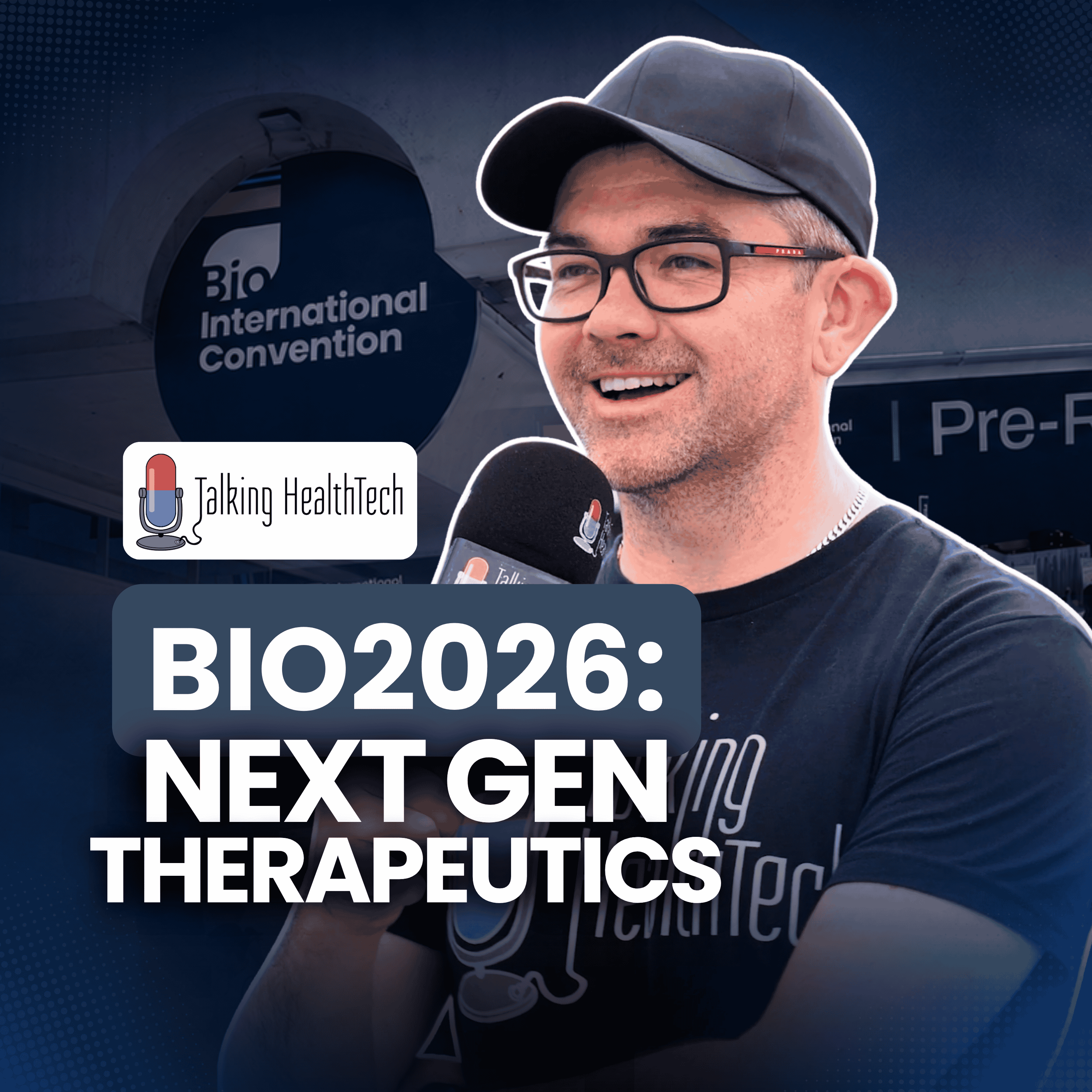 627 - The Future of Biopharma: AI, Automation, and Clinical Trial Breakthroughs at BIO2026 28.07.2026 34minIn this episode of Talking HealthTech, Peter Birch speaks with Jayden Rogers (CEO, Linear Clinical Research), Dr Stacie Calad-Thomson (Business Development Lead, Nvidia for Pharma Labs and Manufacturing), Arjun Bhat (Co-Founder, Clinrol), and Tran Le (General Manager, Hippocratic AI).The conversations cover the changing landscape of clinical trials and drug discovery, the growing role of AI in patient recruitment and drug development, and innovations in technology and operational efficiency in life sciences.The discussion covers why Australia has become an attractive destination for global clinical trials, from its regulatory environment and world-class clinicians through to the integrated networks that help international sponsors find the right partners.It also looks at the practical realities of running a trial site, where regulatory approvals, staffing, patient engagement, and sensitive data all need to be managed at once, and how purpose-built platforms are taking on the repetitive work so research teams can focus on patient care.This episode was recorded during the BIO International Convention in San Diego, featuring conversations with scientists, founders, investors, and healthcare decision-makers addressing challenges and opportunities across the biotech sector.Key Takeaways🧬 AI and automation are transforming clinical trial recruitment, streamlining patient matching, eligibility screening, and follow-up tasks🚀 Australia’s reputation for clinical trials continues to grow, supported by a strong regulatory environment and quality healthcare ecosystem💡 Open source tools and AI models are making computational drug discovery more accessible for non-specialists in science and medicine🧑⚕️ Technology advancements allow clinicians and trial sites to focus more on patient care by reducing manual and repetitive efforts🔗 Collaboration across pharma, biotechs, technology providers, and regulators is essential to tackle operational bottlenecks and accelerate drug developmentTimestamps00:00 - Introduction01:07 - Jayden Rogers, CEO, Linear Clinical Research08:25 - Dr Stacie Calad-Thomson, Business Development, NVIDIA17:55 - Arjun Bhat, Co-Founder, Clinrol26:52 - Tran Le, General Manager of Life Sciences, Hippocratic AICheck out the episode and full show notes on the Talking HealthTech website.If you’re enjoying the show and want access to exclusive healthtech discussions, meetups, and member-only content, you can learn more about becoming a THT+ Solo Member here: talkinghealth.tech/solo_shownotesAnd if this episode was useful, leaving a review or sharing it with someone in the industry always helps.Mentioned in this episode:Sign Up to the Free Talking Healthtech NewsletterSign up to the free Talking HealthTech newsletter for weekly digital health news, events, jobs, partner updates and Pete’s take on what matters across the sector: talkinghealthtech.com/newsletter
 -
 626 - Turning Trends Into Action: Oura Ring 4 and Its Place in Healthcare 23.07.2026 13minIn this episode of Talking HealthTech, Peter Birch speaks with Robyn Birch about their experiences using the Oura Ring 4, exploring how this wearable device fits into the broader clinical ecosystem.The conversation focuses on the practicalities and implications of using wearables for health monitoring, such as bringing data into clinical consultations, comparing its ongoing data with clinical-grade tools, and considering the everyday healthcare impact for consumers and clinicians.After six months of daily wear, Peter and Robyn share what the ring got right, where it fell short, and the moments the data prompted real action, including a GP visit that led to a formal sleep study.They also discuss the scepticism patients can face when bringing consumer device data to their doctor, the role of trends and baselines over exact numbers, and what wearables are revealing about areas like sleep, recovery and women's health.Key Takeaways🟢 Wearables like the Oura Ring are increasingly used to support meaningful conversations with healthcare professionals🟢 Data trends from wearables are more useful than one-off readings for both consumers and clinicians🟢 Ongoing wearable monitoring complements, but does not replace, clinical grade diagnostic tools like sleep studies🟢 Presenting continuous wearable health data can help drive further medical investigation when necessary🟢 Wearable data is becoming more accepted by clinicians, helping patients become proactive participants in their healthTimestamps00:00 - Introduction & Oura Ring overview02:27 - Wearables in clinical conversations04:05 - Data trends vs. one-off readings05:07 - Wearable data leading to clinical action09:35 - Clinical sleep study vs. wearable metricsCheck out the episode and full show notes on the Talking HealthTech website.If you’re enjoying the show and want access to exclusive healthtech discussions, meetups, and member-only content, you can learn more about becoming a THT+ Solo Member here: talkinghealth.tech/solo_shownotesAnd if this episode was useful, leaving a review or sharing it with someone in the industry always helps.Mentioned in this episode:Sign Up to the Free Talking Healthtech NewsletterSign up to the free Talking HealthTech newsletter for weekly digital health news, events, jobs, partner updates and Pete’s take on what matters across the sector: talkinghealthtech.com/newsletter
 -
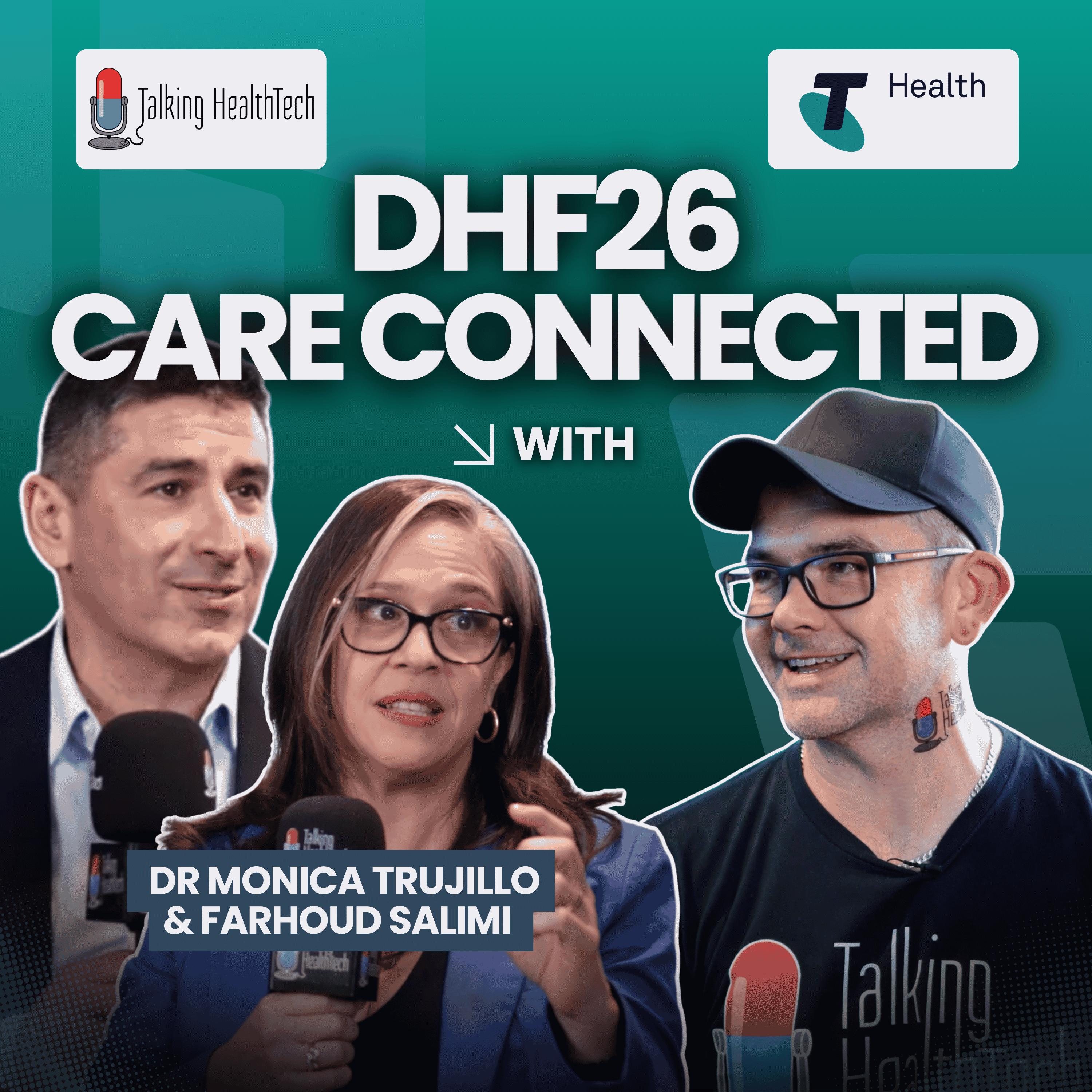 625 - Breaking Silos at DHF26: Telstra Health's Corus™ Modernises Patient & Clinician Experience 21.07.2026 20minIn this episode of Talking HealthTech, Peter Birch speaks with Dr Monica Trujillo, Chief Health and Risk Officer, and Farhoud Salimi, Chief Technology Officer, both from Telstra Health.The discussion covers the ongoing fragmentation of Australia's healthcare system, the challenge of integrating diverse legacy systems and the announcement of Telstra Health's new platform, Corus™, a unified care intelligence ecosystem built in partnership with Snowflake, Smile Digital Health and Salesforce.Peter, Monica and Farhoud explore how modern cloud architecture, interoperability standards, cybersecurity and AI are being brought together to support seamless healthcare delivery, from the data spine that unifies patient records through to curated AI agents designed to ease clinical workflows.They also unpack the shift in thinking from connected care to care connected, keeping the moment of care at the centre with the technology built around it.The episode was recorded live at the Digital Health Festival 2026 in Melbourne, part of a series of episodes captured at the event, where more than 8,000 health leaders, clinicians and innovators gathered to explore what's next for the sector, and brings together perspectives from both technology and clinical leadership on what meaningful digital change in health really takes.Key Takeaways🩺 Healthcare in Australia is made up of multiple independent, legacy systems, rather than a single integrated system🕸️ Integration challenges stem from varied data standards, terminology, and the need for high data reliability🌐 The new Corus™ platform combines modern interoperability standards (FHIR), a robust data spine, and partnerships with technology providers like Snowflake, Smile Digital Health, and Salesforce🔒 Cybersecurity and clinical governance are crucial in developing safe, secure, and trusted digital health solutions👩⚕️ Corus™ aims to empower both patients and clinicians by enabling more efficient workflows, seamless data access, and self-management, supporting a shift toward preventative and proactive healthcareTimestamps00:00 — Episode introduction and guest intros01:48 — Why healthcare remains fragmented03:47 — Technology challenges integrating systems04:15 — Modernisation and standards aligning05:12 — Corus™ platform announcement07:09 — What Corus™ enables and its architecture10:00 — The "data spine" explained11:06 — AI integration and customisation13:17 — Managing cybersecurity and clinical governance15:04 — What success looks like for Corus™Check out the episode and full show notes on the Talking HealthTech website.If you’re enjoying the show and want access to exclusive healthtech discussions, meetups, and member-only content, you can learn more about becoming a THT+ Solo Member here: talkinghealth.tech/solo_shownotesAnd if this episode was useful, leaving a review or sharing it with someone in the industry always helps.Mentioned in this episode:Sign Up to the Free Talking Healthtech NewsletterSign up to the free Talking HealthTech newsletter for weekly digital health news, events, jobs, partner updates and Pete’s take on what matters across the sector: talkinghealthtech.com/newsletter
 -
 624 - Telehealth for Regional Australia: Updoc's Mission to Bridge Healthcare Gaps at DHF26 16.07.2026 19minIn this episode of Talking HealthTech Peter Birch speaks with Dylan Coyne, co-founder at Updoc, about the origins and growth of the Updoc platform, the challenges and opportunities of providing accessible healthcare across Australia, and the balance between technology, trust, and scalability in digital health.The conversation traces back to a personal injury that exposed the inefficiencies of the traditional healthcare system, sparking the idea for a platform built around convenience and access.The episode explores how Updoc is addressing gaps in rural and regional healthcare access, fostering a supportive culture for both patients and clinicians, and participating in the development of national telehealth standards.Recorded live at the Updoc booth during DHF26, The Digital Health Festival, the conversation highlights the ongoing innovations and real-world community engagement driving the company's mission.Key Takeaways🩺 Updoc aims to be a digital "front door" to healthcare, offering on-demand consultations without the need for traditional appointments or waiting rooms.🌏 Rural and regional Australians represent nearly 40% of Updoc’s consultations, reflecting critical healthcare access barriers outside metropolitan areas.🔒 Trust and data security are central to Updoc's operations, safeguarding both patient and doctor information while fostering confidence in telehealth solutions.💡 Bootstrapping the company drove a focus on sustainability, leading to scalable offerings like unlimited telehealth subscriptions.📜 Updoc played an active role in developing national telehealth standards, advocating for shared quality, credentialing, and feedback systems across the industry.Timestamps00:00 - Updoc's origin story02:07 - Making healthcare accessible and convenient04:22 - Impact and scale—reaching over a million Australians05:24 - Building trust with patients and clinicians08:20 - Serving rural and regional communities09:09 - Community Access Programme and in-person outreach12:01 - Attracting and supporting clinicians through flexibility15:06 - National telehealth standards initiative16:36 - Updoc's future and role in the healthcare ecosystemCheck out the episode and full show notes on the Talking HealthTech website.If you’re enjoying the show and want access to exclusive healthtech discussions, meetups, and member-only content, you can learn more about becoming a THT+ Solo Member here: talkinghealth.tech/solo_shownotesAnd if this episode was useful, leaving a review or sharing it with someone in the industry always helps.Mentioned in this episode:Sign Up to the Free Talking Healthtech NewsletterSign up to the free Talking HealthTech newsletter for weekly digital health news, events, jobs, partner updates and Pete’s take on what matters across the sector: talkinghealthtech.com/newsletter
 -
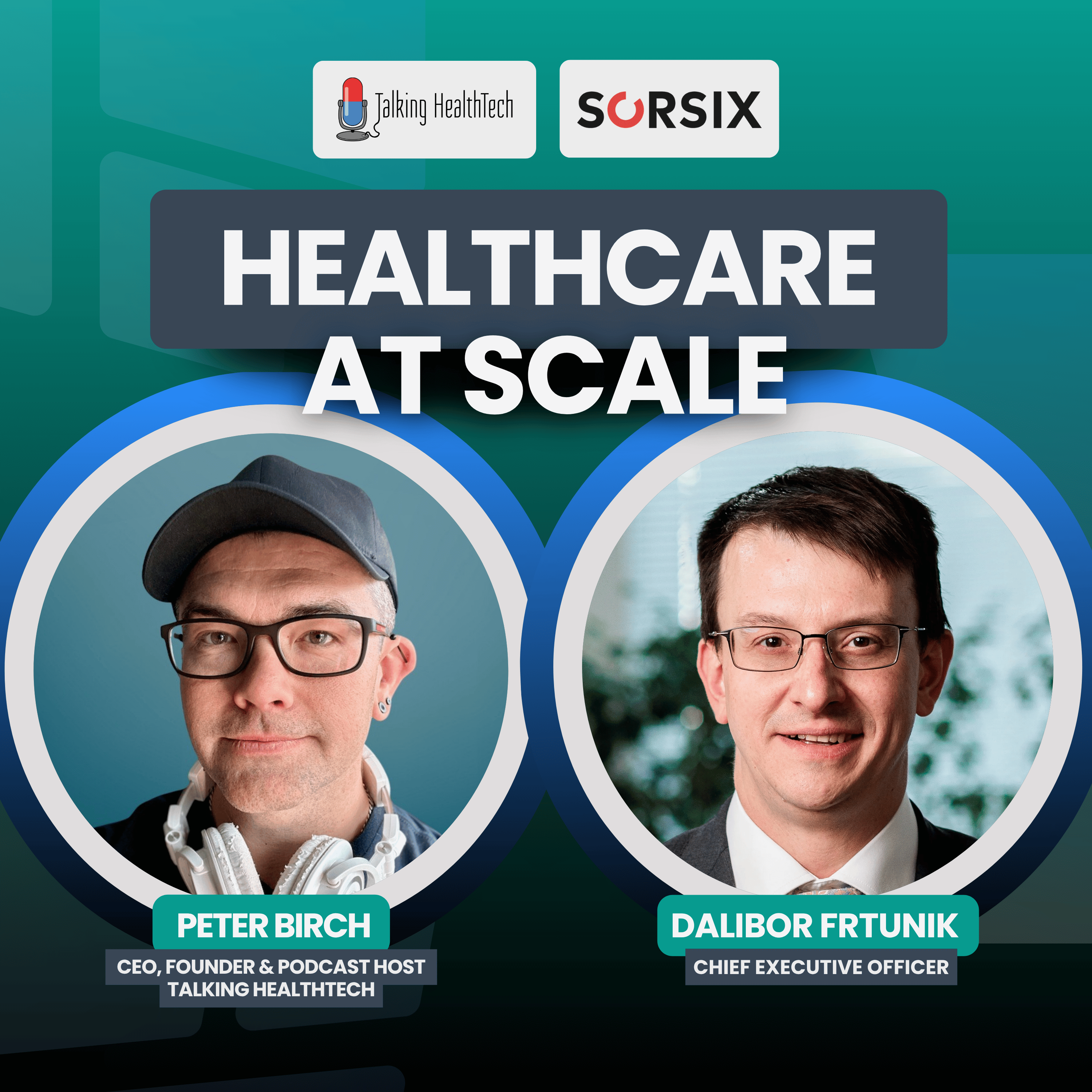 623 - Digitising Healthcare at Scale: Safe AI, Smarter Workflows and the Future of Care 14.07.2026 43minIn this episode of Talking HealthTech, Peter Birch speaks with Dalibor Frtunik, CEO of Sorsix, about how their platform Pinga® is building the backbone for the future of digital healthcare.The conversation covers Sorsix's origins in North Macedonia, where the company cut its teeth integrating an entire national health system from the ground up, through to the concept of a health operating system and what that means in practice for clinicians, administrators, and patients alike.Frtunik unpacks how AI-powered digital pathways are being deployed safely within clinical workflows, why the balance between customisation and standardisation matters more than ever, and how Sorsix approaches compliance and governance using frameworks like ISO 42001.The episode also explores the growing role of data in preventative care, the limitations of old-style integration, and what the next decade of digital health transformation will demand from platforms and health systems alike.Key Takeaways💡 Sorsix’s platform Pinga® acts as a health operating system, integrating different healthcare workflows from individual clinics to entire countries⚙️ Pinga® supports both clinical and administrative workflows, including triage, long-term care management, screening programs, and preventative pathways🤖 AI is already in practical use within Pinga®, supporting operational efficiency and improved clinical outcomes, but safety and compliance remain priorities🔒 ISO 42001 certification for AI is a critical part of building trust and governance in healthcare platforms🌏 Sorsix’s experience shows that future health systems will need interoperable, flexible, AI-enabled technology that adapts to local workflows and supports ongoing digital transformationTimestamps00:00 - Introduction to Sorsix and Pinga®05:22 - Concept of a health operating system07:04 - Solving healthcare interoperability and scheduling13:02 - Balancing customisation with compliance17:04 - Building clinical and administrative digital pathways31:36 - Certification, ISO 42001, and AI safety37:11 - Looking to the future of interoperable, patient-centred systemsCheck out the episode and full show notes on the Talking HealthTech website.If you’re enjoying the show and want access to exclusive healthtech discussions, meetups, and member-only content, you can learn more about becoming a THT+ Solo Member here: talkinghealth.tech/solo_shownotesAnd if this episode was useful, leaving a review or sharing it with someone in the industry always helps.Mentioned in this episode:Sign Up to the Free Talking Healthtech NewsletterSign up to the free Talking HealthTech newsletter for weekly digital health news, events, jobs, partner updates and Pete’s take on what matters across the sector: talkinghealthtech.com/newsletter
 -
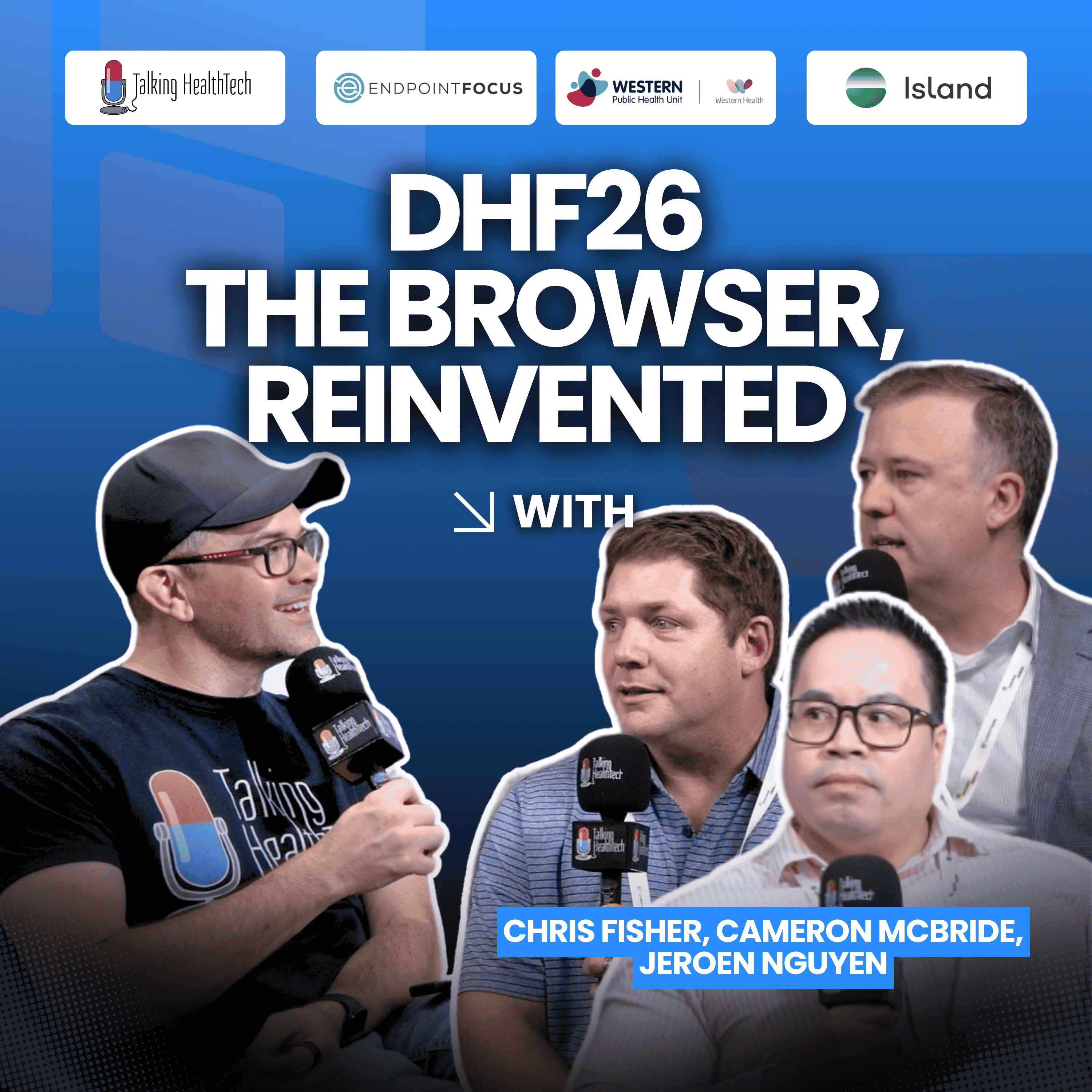 622 - From Legacy Systems to AI-Driven Healthcare: Tackling Cybersecurity and Innovation at DHF26 09.07.2026 20minIn this episode of Talking HealthTech, Peter Birch sits down with Cameron McBride, Divisional Director of Digital Technology Services at Western Health, Chris Fisher, Head of Solution Engineering for Asia Pacific and Japan at Island, and Jeroen Nguyen, Solutions Architect from Endpoint Focus to explore what it really takes to modernise digital workspaces in healthcare.The conversation moves through the everyday challenges of implementing secure and efficient technology in hospitals, the flow-on impact on clinician workflows, the cybersecurity considerations that come with managing sensitive patient data, and the complexities of compliance in a global context.The discussion also looks ahead to the future of AI integration at the point of care and what it will take for emerging technologies to earn the trust of clinicians and patients alike.Recorded live at DHF26, the Digital Health Festival held at the Melbourne Convention and Exhibition Centre, this episode features a multi-guest panel discussion captured in front of a live audience at one of Australia's premier health innovation gatherings.Drawing on real-world examples from Western Health and technology partners active in the Australian healthcare sector, the panel offers a grounded look at how digital transformation is unfolding on the ground, not just in theory.Key Takeaways🖥️ Legacy applications and insecure browsers create significant risks and challenges, addressing them simplifies IT service delivery and enhances security🔒 Moving security controls into the browser provides more effective protection and flexibility compared to traditional network-based layers⚡ Improving clinician access to critical systems, such as electronic medical records, directly impacts patient care by reducing wait times📊 Enhanced analytics and visibility tools enable IT teams to better monitor user behaviour and application performance🤖 Integrating AI-driven workflows and secure technology environments is paving the way for future innovations in healthcare deliveryTimestamps00:00 - Introduction and guest backgrounds03:04 - Challenges with legacy apps04:08 - Island's place in security landscape07:02 - Security at the browser level09:01 - Clinician workflow improvements11:36 - IT analytics and reporting benefits12:57 - Implementing technology changes in healthcare17:27 - Future plans and AI integrationCheck out the episode and full show notes on the Talking HealthTech website.If you’re enjoying the show and want access to exclusive healthtech discussions, meetups, and member-only content, you can learn more about becoming a THT+ Solo Member here: talkinghealth.tech/solo_shownotesAnd if this episode was useful, leaving a review or sharing it with someone in the industry always helps.Mentioned in this episode:Sign Up to the Free Talking Healthtech NewsletterSign up to the free Talking HealthTech newsletter for weekly digital health news, events, jobs, partner updates and Pete’s take on what matters across the sector: talkinghealthtech.com/newsletter
 -
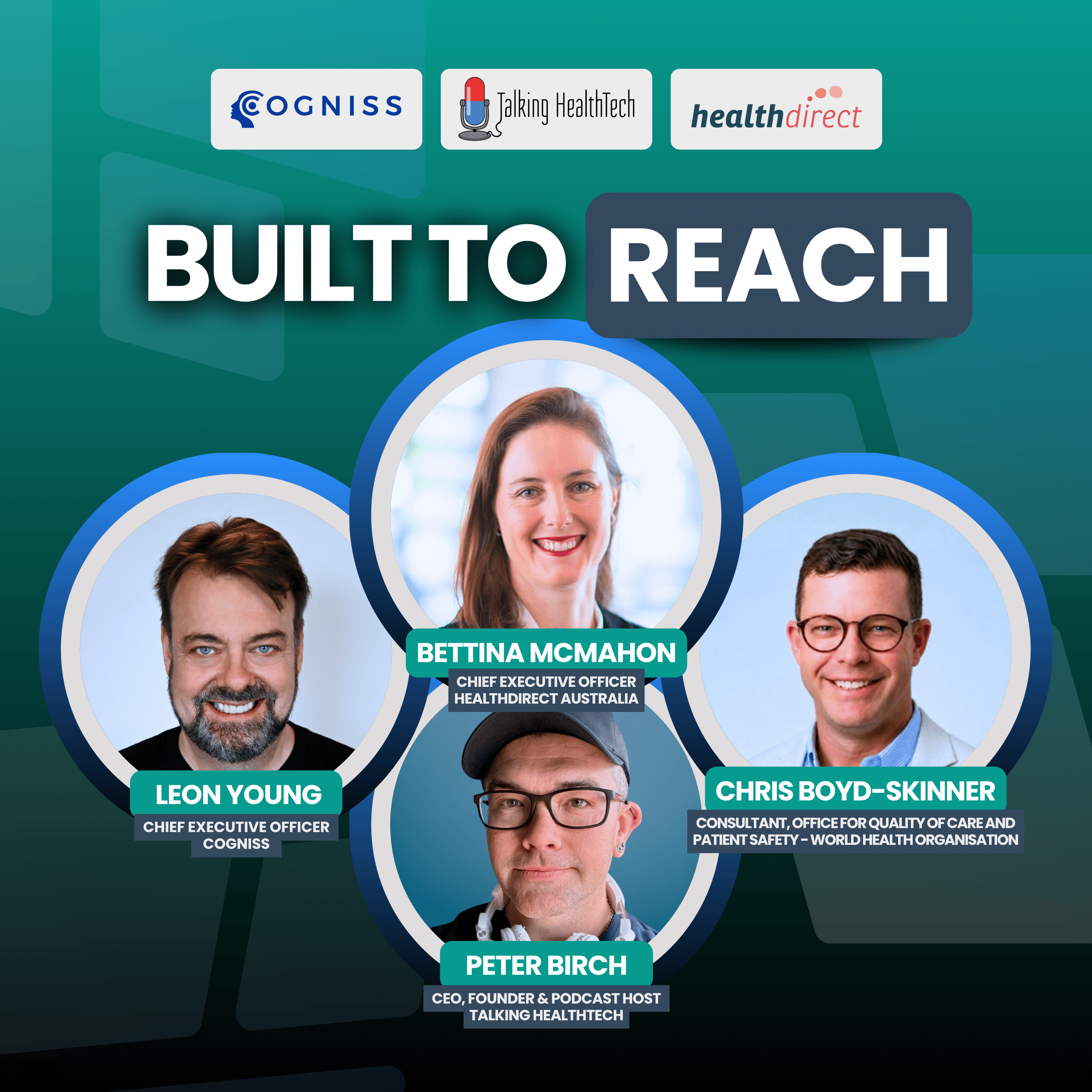 621 - From Innovation to Adoption: Solving the Digital Health Distribution Problem at Scale 07.07.2026 41minIn this episode of Talking HealthTech, Peter Birch speaks with Bettina McMahon, CEO of Healthdirect, clinical governance and digital health safety expert Chris Boyd Skinner, and Leon Young, founder of Cogniss and Ripple Scale, about the ongoing challenges and potential solutions in scaling the adoption of digital health tools beyond pilots and siloed deployments.The conversation explores why so many effective tools in women's health, mental health, children's health, and long-term care struggle to reach the people who need them most.The group discusses portfolio-based adoption models, the limitations of one-app-at-a-time procurement, and the growing case for a digital health publisher model that can validate, distribute, and maintain tools at scale.The episode also covers clinical trust and regulatory frameworks, the risks of shadow IT, the barriers facing direct-to-consumer digital health, and how innovations such as Ripple Scale are working to address the gaps in app distribution and uptake.Together, the guests make a compelling case for why collaboration, shared infrastructure, and smarter funding models are the next step forward for digital health.Key Takeaways🌐 Many digital health tools struggle to scale beyond pilots due to barriers in adoption by health providers.🤝 Clinicians and researchers are often required to become startup founders to drive adoption, even if their expertise is in care, not business.🏥 Health systems face challenges in assessing, procuring, and managing hundreds of separate digital health apps.🔒 Clinical safety, regulation, and building trust are essential for the widespread uptake of digital health technology.🚀 Portfolio-based models and digital publishers like Ripple Scale offer alternatives to fragmented app distribution, making it easier for providers to offer trusted digital solutions across key health areas.Timestamps00:00 - Introductions & background03:21 - Cogniss mission and innovation04:52 - The need for a digital health publisher05:28 - Barriers to adoption: system and innovator challenges12:37 - The perspective of Health Direct and large organisations17:57 - Consumer vs. provider-facing digital products19:00 - Clinical safety, trust, and governance26:30 - "Shadow IT" and its impact33:52 - Advice for digital health tool creators36:15 - Next steps for Ripple ScaleCheck out the episode and full show notes on the Talking HealthTech website.If you’re enjoying the show and want access to exclusive healthtech discussions, meetups, and member-only content, you can learn more about becoming a THT+ Solo Member here: talkinghealth.tech/solo_shownotesAnd if this episode was useful, leaving a review or sharing it with someone in the industry always helps.Mentioned in this episode:THT+ Company PartnershipLearn more about THT+ Company Partnership options for start-ups, scale-ups and enterprise digital health companies looking for visibility, content, community access and industry connection: talkinghealthtech.com/partners.Sign Up to the Free Talking Healthtech NewsletterSign up to the free Talking HealthTech newsletter for weekly digital health news, events, jobs, partner updates and Pete’s take on what matters across the sector: talkinghealthtech.com/newsletter
 -
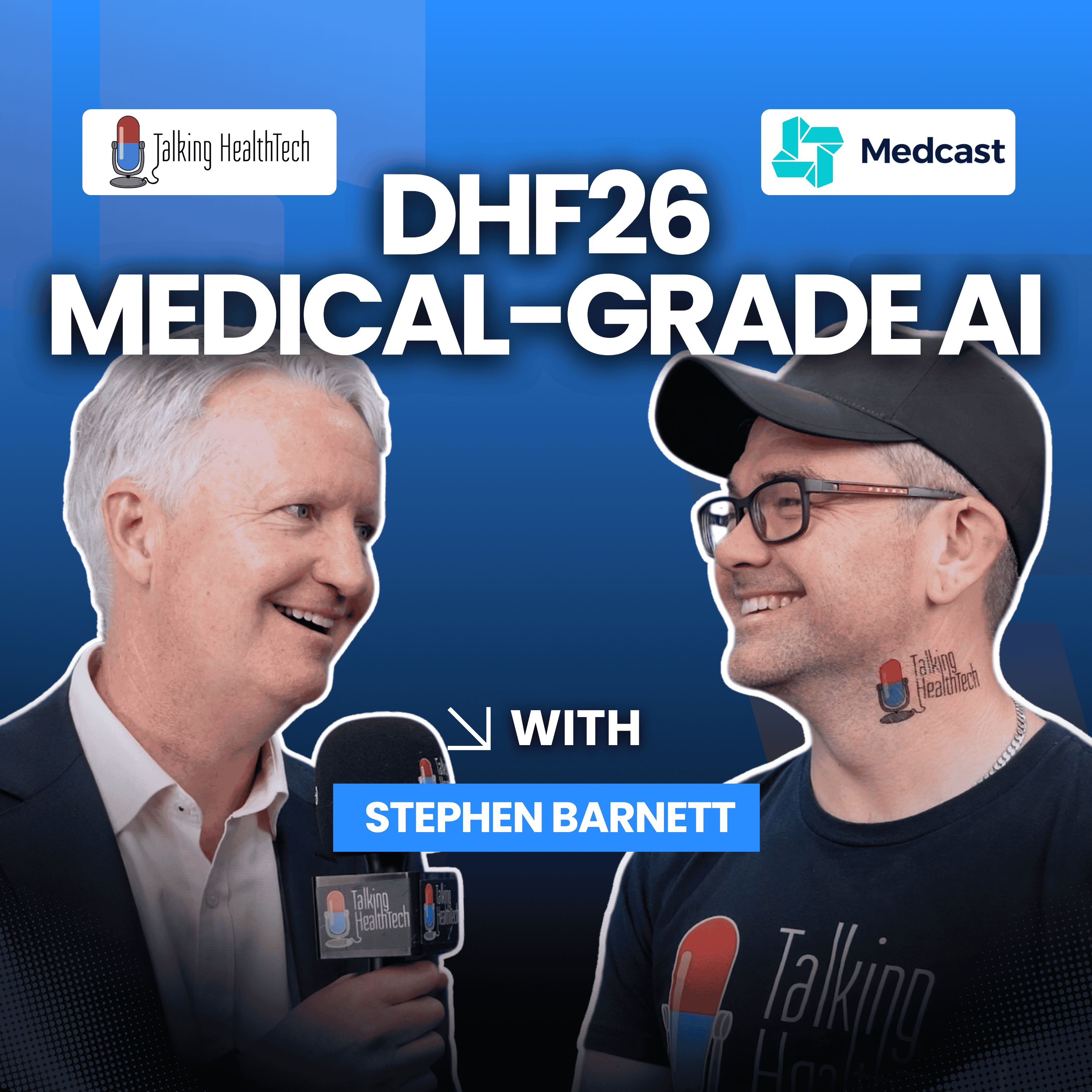 620 - From Know-What to Know-How: Medcast’s Journey with Medical-Grade AI at DHF26 02.07.2026 21minFind out how Medcast is building trustworthy medical-grade AI in this episode of Talking HealthTech, recorded live at the Digital Health Festival 2026 in Melbourne, Australia's premier gathering for health innovation, technology, and policy.Peter Birch sits down with Dr Stephen Barnett, CEO of Medcast, to explore what it genuinely takes to make AI safe, reliable, and fit for purpose in a clinical setting.With a background spanning general practice, research, and digital health innovation, Barnett brings a grounded and practical perspective to one of the most talked-about topics in healthcare right now.Together, they unpack the concept of knowledge translation, the persistent gap between cutting-edge AI and trustworthy clinical tools, and why large language models alone are not enough.The conversation covers retrieval-augmented generation, the risks of AI hallucinations, the importance of curated and validated data sources, and the orchestration layer that sits between a powerful model and a safe medical answer.They also discuss how clinical workflows are changing, the shift in how doctors use digital tools in front of patients, and the emerging conversation around patient-facing AI.Key Takeaways🧑⚕️ Knowledge translation in healthcare relies on getting the right information to the right person at the right time, impacting both clinician learning and patient outcomes.🤖 Large language models require an orchestration layer and data curation processes to be considered "medical grade" and trustworthy for clinical use.🔎 Retrieval-augmented generation and other governance measures help address hallucinations and bias in AI-powered healthcare solutions, supporting quality, safety, and auditability.💡 Medluma, Medcast's AI platform, addresses compliance, standardisation, and onboarding within healthcare organisations, while empowering clinicians with trusted knowledge access.📱 Patient-clinician trust depends on using validated, professional tools for information sourcing, and future AI integrations may also support patient self-service within set guardrails.Timestamps00:00 - Introduction and guest overview00:44 - Medcast origins and purpose02:54 - Obsession with AI and knowledge translation03:49 - Medical safety in language models06:13 - Techniques for trustworthy AI10:01 - Adapting to rapid AI changes13:32 - Knowledge translation across clinical and non-clinical roles14:49 - Patient trust and professional boundaries18:22 - Medcast and Medluma future roadmapCheck out the episode and full show notes on the Talking HealthTech website.If you’re enjoying the show and want access to exclusive healthtech discussions, meetups, and member-only content, you can learn more about becoming a THT+ Solo Member here: talkinghealth.tech/solo_shownotesAnd if this episode was useful, leaving a review or sharing it with someone in the industry always helps.Mentioned in this episode:Sign Up to the Free Talking Healthtech NewsletterSign up to the free Talking HealthTech newsletter for weekly digital health news, events, jobs, partner updates and Pete’s take on what matters across the sector: talkinghealthtech.com/newsletter
 -
 619 - Practical AI in Public Health: Eastern Health at the Microsoft Stand at DHF26 30.06.2026 14minIn this episode of Talking HealthTech, Peter Birch speaks with Suma Shivalingaiah, Chief Information Officer at Eastern Health, about the practical use, governance, and impact of AI and digital technologies in a large Victorian public health service.The conversation covers the AI journey at Eastern Health, from addressing a significant cyber incident that reshaped the organisation's digital strategy to building internal capability, upskilling staff, and deploying AI across both administrative and clinical workflows.Suma shares how Eastern Health approaches AI governance through a dedicated committee that assesses and manages risk across all tools and platforms, why cybersecurity remains the organisation's top priority, and how clinician buy-in is central to any successful implementation.The discussion also touches on real-world pilots including GP referral triage systems, help desk and policy management agents, and Emergency Department wait time predictions, as well as the role of university partnerships in accelerating AI adoption.This episode was recorded live at the Microsoft stand during the Digital Health Festival 2026, held at the Melbourne Convention and Exhibition Centre in May 2026, as part of a series of conversations captured across the event.Key Takeaways🛡️ Governance and cybersecurity are foundational for AI deployment in healthcare, and a dedicated committee is needed to ensure safe use of digital tools⚙️ Real-world AI success starts with addressing repetitive and administrative tasks for staff and clinicians, using agents like help desk and policy management tools👨⚕️ Clinician and staff buy-in is critical. Adoption depends on early engagement and solving actual pain points📊 AI in clinical workflow includes initiatives like triaging GP referrals and predicting ED wait times, always as a support tool, not a replacement for clinicians🎓 Building AI literacy, continuous training, and partnerships with universities are essential for capability uplift and safe technology integrationTimestamps00:00 - Introduction & Episode Setting00:28 - Overview of Eastern Health01:35 - Practical AI applications02:51 - AI agents & support tools03:57 - Importance of clinical buy-in05:33 - Governance & cybersecurity foundations06:30 - AI use case—triaging referrals08:31 - Justifying AI adoption in public health10:02 - Automating clinical notes & admin11:16 - Multi-pronged strategy & advice12:02 - Lessons for healthcare leadersCheck out the episode and full show notes on the Talking HealthTech website.If you’re enjoying the show and want access to exclusive healthtech discussions, meetups, and member-only content, you can learn more about becoming a THT+ Solo Member here: talkinghealth.tech/solo_shownotesAnd if this episode was useful, leaving a review or sharing it with someone in the industry always helps.Mentioned in this episode:Sign Up to the Free Talking Healthtech NewsletterSign up to the free Talking HealthTech newsletter for weekly digital health news, events, jobs, partner updates and Pete’s take on what matters across the sector: talkinghealthtech.com/newsletter
 -
 618 - Real World Challenges & Successes in Implementing Healthcare Technology with Rauland Australia & New Zealand 25.06.2026 44minIn this episode of Talking HealthTech, Peter Birch speaks with Jacqueline Leeds, CEO of Rauland Australia and New Zealand, Vickie Knight, General Manager for Clinical Services at Rauland Australia and New Zealand, and a panel including Robin Mann, Chief Digital Information Officer at Monash Health, Richard Taggart, CEO of eHealth NSW, Jayne Barclay, National Director of Healthcare Platform at St Vincent's, and Emily Mailes, Executive Vice President at Optimum Healthcare IT.Recorded live during the Healthcare Leaders Breakfast with Rauland Australia and New Zealand in Melbourne, the conversation brings together some of Australia's most experienced digital health leaders for an honest discussion about what it actually takes to deliver technology that works in a real clinical environment.The panel covers the realities of implementing healthcare technology from strategy through to execution, including the importance of co-designing with clinical teams, navigating legacy infrastructure, managing stakeholder engagement, and dealing with the resource constraints that shape what is achievable.The conversation also explores how organisations can build a compelling business case, ensure measurable benefits are realised, and scale innovation without losing sight of patient care.Key Takeaways🧩 Enterprise thinking is essential for managing complex healthcare tech environments, particularly integrating new solutions into legacy systems👩⚕️ Clinical workflow mapping, including workarounds, is crucial for successful technology deployment and co-design with clinicians💸 Investment in digital innovation must balance legacy system costs and future benefits, requiring creative funding solutions and engagement with financial leaders📞 Standardising processes, such as critical consumer escalation pathways, improves safety and user experience🔍 Focus on defining and measuring the actual problem solved by technology, ensuring real value and operational impact for healthcare staff and patientsTimestamps00:00 - Event introduction and context03:10 - Jacqueline Leeds on Rauland's platform approach09:59 - Vickie Knight on execution challenges in healthcare17:31 - Panelist intros and real-world project examples28:54 - Innovation, investment, and budget barriers41:43 - Final advice for healthcare leadersCheck out the episode and full show notes on the Talking HealthTech website.If you’re enjoying the show and want access to exclusive healthtech discussions, meetups, and member-only content, you can learn more about becoming a THT+ Solo Member here: talkinghealth.tech/solo_shownotesAnd if this episode was useful, leaving a review or sharing it with someone in the industry always helps.Mentioned in this episode:Sign Up to the Free Talking Healthtech NewsletterSign up to the free Talking HealthTech newsletter for weekly digital health news, events, jobs, partner updates and Pete’s take on what matters across the sector: talkinghealthtech.com/newsletter
 -
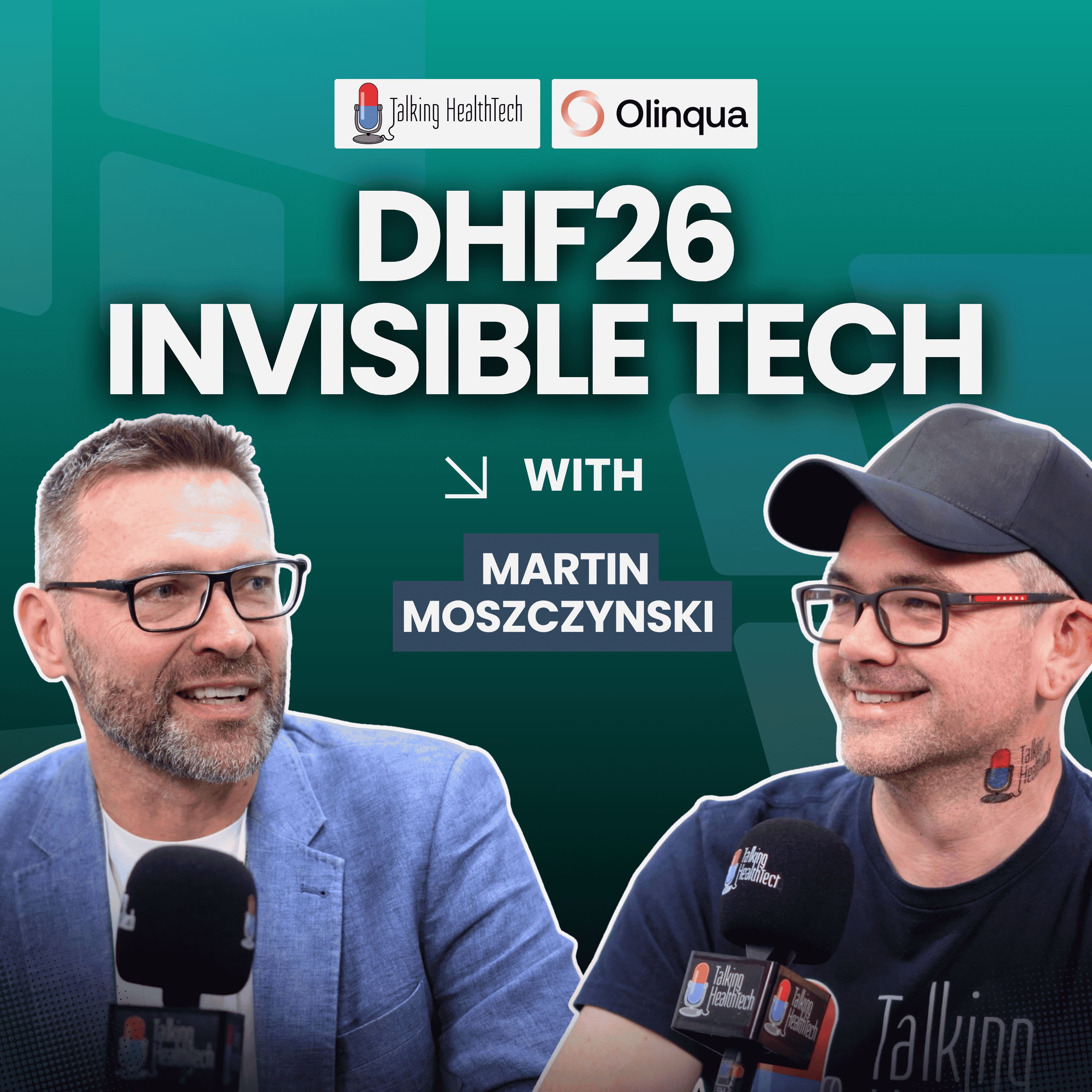 617 - Inside Olinqua's Integrated Platform and Smart Device Deployments at DHF26 23.06.2026 20minIn this episode of Talking HealthTech, Peter Birch sits down with Martin Moszczynski, CEO of Olinqua, to explore the evolution of hospital communications technology in Australia.They dig into the real-world challenges of moving away from pagers to smartphones, the infrastructure decisions that come with that shift, and what it takes to modernise communications across an entire hospital workforce.Martin shares insights from Olinqua's large-scale projects in Victoria, discussing the practicalities of tech adoption, the importance of system integration, and why the focus needs to be on frontline staff rather than patient-facing solutions.The conversation also touches on the tension between legacy systems and modern platforms, the role of AI in software development, and how real-time location technology is opening up new possibilities for workflow improvement and patient transfer logistics.This episode was recorded live during the Digital Health Festival 2026 in Melbourne, Australia and shares a deep-dive conversation captured at the event.Key Takeaways📱 Hospitals are transitioning from aging pagers to smartphones for greater capability, integration, and reliability🔄 Tech upgrades are often driven by infrastructure maturity and end-of-life legacy systems, not just a desire for new tech✨ Modern solutions centralise multiple workflows: emergency alerts, task management, and mobile duress onto a single platform👩⚕️ The main focus is improving staff experience, convenience, and freeing up time for direct patient care📍 Real-time location technology is a major area of investment, enabling efficient asset and patient tracking for workflow innovationTimestamps00:00 — Introduction and setting00:29 — Olinqua’s current projects01:17 — Pagers vs smartphones in hospitals03:13 — Reasons for upgrading communications tech05:55 — Recent deployment examples08:51 — Staff centricity vs patient centricity12:34 — Impact of AI and easy-to-create software15:55 — Olinqua’s priorities: location tech and innovationCheck out the episode and full show notes on the Talking HealthTech website.If you’re enjoying the show and want access to exclusive healthtech discussions, meetups, and member-only content, you can learn more about becoming a THT+ Solo Member here: talkinghealth.tech/solo_shownotesAnd if this episode was useful, leaving a review or sharing it with someone in the industry always helps.Mentioned in this episode:Sign Up to the Free Talking Healthtech NewsletterSign up to the free Talking HealthTech newsletter for weekly digital health news, events, jobs, partner updates and Pete’s take on what matters across the sector: talkinghealthtech.com/newsletter
Podkaste të ngjashme


I/E popullarizuar në
Ky podkast shfaqet edhe në listat e podkasteve të këtyre shteteve.
