
Audio Branding
Jodi Krangle
0
Audio Branding explores the hidden gem of marketing: consistent sound in presenting your company. The podcast discusses how audio or sonic branding influences us in various ways and places in our lives. Host Jodi Krangle shares her own observations and interviews knowledgeable professionals in advertising, marketing, music, technology, and science. The show aims to educate listeners on the importance of sound in branding.
Episodet
-
 Listening in Marketing: Why Sound Builds Trust with Matt Borck 30.09.2026 34min“That’s sort of how we, like, when we started the agency, then we started with just the two of us, and my role alongside Jared was everything. We did everything. And then as we expanded and grew, like, we realized, actually, like, not only my partner at the agency, but I am the chief listening officer. It starts with listening, and everything flows from there. And I think that one thing that makes our agency unique is I’ve worked with every other agency, like when we worked as creators, and we were getting hired. So you see the uniqueness of, and I’ll actually even say too, like, the power of listening, and I think that’s something that, again, going back to what I say is, I can say that, like, Jodi, I see you, or I can say, Jodi, like, I see you. And there is a massive difference. And when we can take our brands, our business, or the people that we work with and say, like, I really see you, then we start creating content, including brand music.” – Matt BorckThis episode’s guest is a partner, Chief Listening Officer, and co-founder of The One Group Agency. Driven by a deep curiosity about human behavior, he believes that companies must put their audiences first, speaking with them rather than shouting at them. Using empathy and deep listening to find the human truths buried beneath standard data, he helps organizations transition marketing teams from basic internal request departments into true strategic business partners.His name is Matt Borck, and if you’re tired of chasing empty metrics and want to build genuine, profitable relationships, Matt’s perspective shows that it all starts with listening.And if you like what you hear and you want to support this podcast, there are a bunch of ways to do that at audiobrandingpodcast.com, including subscribing to the YouTube channel, the newsletter, writing a review, or buying me a coffee. Because this takes a lot of coffee. Thanks so much.(00:00) – The Importance of ListeningOur conversation starts with Matt’s earliest memories of music, and how much the power of sound influenced him as a child. “As a kid,” he recalls, “I always felt music that’s just… even now, even as I say it, like, I get shivers. I. When I would hear something, I felt it, and I felt what my nervous system was doing.” He shares more about his journey from music to marketing, and how his role as the One Group Agency’s chief listening officer evolved. “Great listeners don’t say they’re great listeners,” he adds. “Usually people tell you you’re a great listener. But one of the things it taught me so much about is how to truly be present, how to make [and] save space, how to truly listen.”(13:18) – From Music to MarketingOur conversation turns to Matt’s approach to harnessing the emotional power of sound in branding to build a sense of trust with listeners. “That’s where I would get to know as best as I can and choose something that also doesn’t feel out of place with the content that we’ve created,” he explains, “but it makes you feel something. If I can instantly put you at ease, I believe that you’ll be prepared for the rest of what we’ve got.” We discuss his work on a new study that focuses on music, community, and culture, and how he reaches beyond his own perspective to connect with his audience. “If I’m sent something to review from the agency,” he explains, “and, all of a sudden, I review it, and it doesn’t do anything for me, that’s actually a good thing… It takes me a little bit more to get into because it’s not my natural style, but if I want to honor the target audience, I’ve got to get over myself.”(26:22) – AI and the Future of VoiceAs the first half of our discussion wraps up, Matt talks about his two daughters and the role of music in their lives, and he illustrates a point about AI’s uncanny perfection with a story about U2’s concerts after they went big. “They were trying to figure out a way to get that [early] connection back,” he says. “And so they staged things like little screw-ups in their set or like an amp breaking, where they had to replace an amp. But what it did was it made them human again.” We talk about AI’s role in sound and audio branding, and the subtle imperfections that help set human performances apart. “We can train [AI] to do things like that,” he explains, “but it’s not the same, where, even the breath that you took, like, there are different breathing patterns that we all do as human beings.”Episode SummaryMatt discusses how deep listening shapes marketing strategies.Matt explains his transition from musician to marketing expert.Discussion on the impact of AI in voiceover and sound branding.Tune in for next week’s episode as we continue discussing AI’s role in sonic branding, Matt’s latest musical and marketing projects, and his approach to building an authentic brand strategy.Connect with the Audio Branding Podcast:Book your project with Voice Overs and Vocals by visiting https://voiceoversandvocals.comConnect with me on Instagram - https://www.instagram.com/jodikrangle/Watch the Audio Branding Podcast on YouTube - https://www.youtube.com/c/JodiKrangleVOConnect with me on LinkedIn - https://www.linkedin.com/in/jodikrangle/Leave the Audio Branding Podcast a review at https://lovethepodcast.com/audiobranding (Thank you!)Share your passion effectively with these Tips for Sounding Your Best as a Podcast Guest!https://voiceoversandvocals.com/tips-for-sounding-your-best-as-a-podcast-guest/Get my Top Five Tips for Implementing an Intentional Audio Strategyhttps://voiceoversandvocals.com/audio-branding-strategy/Editing/Production by Humberto Franco - https://humbertofranco.com/This podcast uses the following third-party services for analysis: OP3 - https://op3.dev/privacy
 -
 Sonic Identity: How Brands Build Recognition Through Sound | Sami El-Quqa 23.09.2026 22min“I would say they really need to not position themselves as a recording studio or a music studio, but to position themselves as a sonic branding agency and to understand that the first, most important part of the process is understanding the brand that you’re working with. If you’re coming into the industry as a freelance composer and that’s your approach, I’d suggest trying to work with a sonic branding agency at first to understand the process, then maybe venturing off and figuring it out by yourself. But we’re not a music studio. That’s a position I think is important to understand.” – Sami El-QuqaThis episode is the second half of my conversation with the CEO of MusicGrid, Sami El-Quqa, as we discuss how he works to incorporate visual and sonic elements into a unified marketing approach, the role that he sees AI playing in the industry as it starts to compete with licensed music, and which companies he believes can benefit most from an audio-focused brand strategy.And if you like what you hear and you want to support this podcast, there are a bunch of ways to do that at audiobrandingpodcast.com, including subscribing to the YouTube channel, the newsletter, writing a review, or buying me a coffee. Because this takes a lot of coffee. Thanks so much.(00:00) – Positioning in Sonic BrandingAs our conversation continues, Sami tells us about his work with MENA-based airline Flyna, and how he created a unified sonic brand across every aspect of the customer experience. “It’s a lot more than just a sonic logo,” he says, “which is like that short piece of music, or a sonic DNA track, an extended brand anthem. We’re creating everything from the boarding music, and the boarding music changes depending on where the plane is flying.” We discuss his workshop approach to building a brand and the process of aligning an effective sonic strategy to the client’s brand image. “It’s important to try to remove yourself emotionally from how you’re reacting to the music,” Sami explains, “to sit back, to give it a few days. We always think it’s a good idea to let the music resonate for a little bit and then come back and really try to analyze if it fits the brand, if it fits the consumer or not.”(09:48) – AI’s Role in Sonic Branding We discuss his company’s work with the popular food app Jahez, and how the digital age has pushed sound to the forefront of branding. “They’re one of the biggest ones in Saudi Arabia,” he says, “and their most important touchpoint is when you order food on the actual app. More important than their visual branding on their social media or their television commercials, the most important consumer touchpoint is the app itself.” Our conversation turns to the increasing role of AI in the industry and how it’s making human content more valuable than ever. “Even if in X amount of years,” Sami suggests, “AI becomes the most common way to create music or to listen to music, I think there’s going to be even more value on a human presence… People want that human involvement as well.”(18:46) – The Power of Sound in BrandingOur discussion comes to a close as Sami offers his advice to musicians looking to start their career in sonic branding. “I would say they really need to not position themselves as a recording studio or a music studio,” he explains, “but to position themselves as a sonic branding agency and to really understand that the first, most important part of the process is actually understanding the brand that you’re working with.” We talk about how listeners can get in touch with him, and the foundational role sound plays in our lives. “When you come out and you’re a newborn,” he says, “I’m pretty sure you don’t really see very much. The first thing is, you hear. Even when you’re still in the womb, you don’t really see anything, but you can hear your mother’s laugh or other noises. So I think it’s just one of the most powerful [senses]. It’s incredibly powerful, sound, and it’s everywhere.”Episode SummarySami gives his insights on building a career in sonic branding.We discuss Sami’s thoughts on the impact of AI on the audio industry.Sami reflects on the emotional power of sound in branding.Connect with the Audio Branding Podcast:Book your project with Voice Overs and Vocals by visiting https://voiceoversandvocals.comConnect with me on Instagram - https://www.instagram.com/jodikrangle/Watch the Audio Branding Podcast on YouTube - https://www.youtube.com/c/JodiKrangleVOConnect with me on LinkedIn - https://www.linkedin.com/in/jodikrangle/Leave the Audio Branding Podcast a review at https://lovethepodcast.com/audiobranding (Thank you!)Share your passion effectively with these Tips for Sounding Your Best as a Podcast Guest!https://voiceoversandvocals.com/tips-for-sounding-your-best-as-a-podcast-guest/Get my Top Five Tips for Implementing an Intentional Audio Strategyhttps://voiceoversandvocals.com/audio-branding-strategy/Editing/Production by Humberto Franco - https://humbertofranco.com/This podcast uses the following third-party services for analysis: OP3 - https://op3.dev/privacy
 -
 Sonic Branding Strategy: Culture, Identity & Rollout | Sami El-Quqa 16.09.2026 25min“You know, the Dr. Pepper jingle, a year ago, there was that jingle. So I’m not going to make any claims that the jingle itself isn’t great. It’s a great jingle. And I do think if you analyze it, there are a lot of ways you can dissect it to actually properly represent Dr. Pepper. But I do think that the main reason it became so viral and people are still linking it to Dr. Pepper is the roll-out strategy, even though it wasn’t intentional. I believe she was an influencer or an Insta or a content creator on social media who recorded a song on her phone. And there was this whole thing. It went viral and they published it in the Super Bowl or whatever it is. But I really think it’s the roll-out that made it so big.” – Sami El-QuqaThis week’s guest is the founder and CEO of MusicGrid, a leading sonic branding agency serving brands across the GCC and wider MENA region. With over a decade of experience in the music industry, he blends creative expertise with strategic business insight to help organizations translate their brand identity into sound. A graduate of Berklee College of Music in Contemporary Music Composition and Production, he also holds a Master’s degree in International Business Management, specializing in music licensing and intellectual property in the digital age.He’s worked with over three hundred brands across government, financial, and commercial sectors, leading projects that position sound as a core driver of brand recognition and emotional connection, and he’s contributed to copyright legislation in Kuwait while regularly participating in regional industry events as a speaker and advisor, shaping the future of sonic branding in the Middle East.His name is Sami El-Quqa, and in this discussion, we’ll be discussing why sound is a brand’s most unavoidable tool. He’ll reveal how to cut through marketing noise, the psychology behind sounds we can’t forget, and the secrets to blending cultural heritage with modern tech. Whether you’re a CEO or a creator, you’ll learn how to stop being just ‘seen’ and finally start being heard.And if you like what you hear and you want to support this podcast, there are a bunch of ways to do that at audiobrandingpodcast.com, including subscribing to the YouTube channel, the newsletter, writing a review, or buying me a coffee. Because this takes a lot of coffee. Thanks so much.(00:00) – Sami’s Early Memories of SoundAs our conversation starts, Sami shares an early memory of sound that helped spark his musical career. “There’s a TV channel that, during Ramadan, would play this jingle,” he recalls. “It was called the NBC Ramadan jingle. And I’d say that’s my earliest memory… of music that not just moved me, but music that I could attach to a specific calendar day on the year.” He tells us about his studies at Berklee and how he made the jump to music licensing, and how his father’s advice helped convince him to focus on sonic branding in the Middle East. “He said, ‘You know what, this is a market that doesn’t really have that. If you stay in the UK or if you go back to the US, it’s a saturated market. You may not be really filling a gap there,’” Sami recalls his father telling him. “There’s a need for culturally relevant Middle Eastern music or Saudi or Kuwaiti music, but there was nowhere to really find that.”(11:28) – The Secret to Creating Sonic IdentitiesSami tells us more about culturally authentic sonic branding in the MENA region vs the West, and his perspective as someone who’s been on both sides. “Even Hollywood movies,” he says, “sometimes for us here in this region, when we watch a clip of a Hollywood movie and they’re in the Sahara Desert, the music is often off. We call it Orientalist or Aladdinesque.” We talk about his early career in sound and how hiring an orchestra helped give a sonic brand launch an extra boost. “For the launch,” he explains, “they wanted something grand and prestigious. So we worked with an orchestra in Europe to record and film a launch film and a performance of that sonic identity…. people not only became more aware of the brand Trolley, but they are able to remember it more because of the launch film.”(20:16) – Blending Heritage with ModernityThe first half of our conversation comes to a close as Sami tells us more about the branding process and how it can change depending on the industry. “When we work in finance,” he says, “a lot of brands are looking to be digital first. That’s a big initiative when it comes to finance, because their most important touchpoint is their phone app.” We discuss how each campaign’s approach can depend on its region, and how the younger generation is increasingly blurring those geographical lines. “There’s a large cultural influence everywhere from North America, from England,” he explains, “so often [being] modern means being attractive to the younger generation who doesn’t only speak Arabic, but their second language is English, and they’re also influenced by Western culture.”Episode SummarySami shares his early memories of impactful music and jingles.The process of developing sonic identities through client workshops.Sami discusses how to merge cultural heritage with modern soundscapes.Tune in for next week’s episode as we discuss how Sami fused traditional and high-tech sound for the Kuwaiti Stock Exchange’s sonic logos, his approach to implementing an effective branding strategy, and the dramatic changes he’s seen in the audio industry just within the past seven years.Connect with the Audio Branding Podcast:Book your project with Voice Overs and Vocals by visiting https://voiceoversandvocals.comConnect with me on Instagram - https://www.instagram.com/jodikrangle/Watch the Audio Branding Podcast on YouTube - https://www.youtube.com/c/JodiKrangleVOConnect with me on LinkedIn - https://www.linkedin.com/in/jodikrangle/Leave the Audio Branding Podcast a review at https://lovethepodcast.com/audiobranding (Thank you!)Share your passion effectively with these Tips for Sounding Your Best as a Podcast Guest!https://voiceoversandvocals.com/tips-for-sounding-your-best-as-a-podcast-guest/Get my Top Five Tips for Implementing an Intentional Audio Strategyhttps://voiceoversandvocals.com/audio-branding-strategy/Editing/Production by Humberto Franco - https://humbertofranco.com/This podcast uses the following third-party services for analysis: OP3 - https://op3.dev/privacy
 -
 Songwriting Mentorship with Greig Watts: Persistence and Rejection 09.09.2026 32min“My grandfather used to say, aim for the moon and you might catch a star on the way down. And at his funeral, I gave a sort of eulogy and told everyone this story and said, ‘I assume everyone’s heard this one from him because he was a storyteller.’ There were about a hundred people there, and they were like, ’ No, we’ve not heard that story. But afterwards, fifteen, twenty people did come up to me and say, ‘He sent me a letter, and he told me this, a different thing. And he told me that…’ And I guess one of my biggest inspirations, which is why I try and mentor, because I think he mentored me without saying, ‘Greg, I’m mentoring you.’ But I’ve realized that I need to mentor people, and actually, I think all of us need to mentor and to be mentored.” – Greig WattsThis episode is the second half of my conversation with author, songwriter, and music publisher Greig Watts as we discuss bridging the gap between creativity and the practical side of business, his tips for dealing with the inevitable rejections that come in the music industry, and how a teacher who literally washed kids’ mouths out with soap influenced his own approach to teaching students.And if you like what you hear and you want to support this podcast, there are a bunch of ways to do that at audiobrandingpodcast.com, including subscribing to the YouTube channel, the newsletter, writing a review, or buying me a coffee. Because this takes a lot of coffee. Thanks so much.(00:00) – Balancing Art and BusinessAs the second half of our conversation starts, Greig tells us about some of the early influences that turned him both towards and, to some extent, away from sound. “I remember having my school’s careers interview,” he recalls, “and they said, ‘What do you want to be?’ ‘A songwriter and a business person.’ And they were like, ‘No, you need a job.’ And I was like, ‘songwriter.’ And eventually I sort of said, ‘Well, you know, I am running my own business, and I am writing songs.’" He talks about the wisdom his grandfather shared with him and how he now mentors other musicians, including teaching them that rejection isn’t a personal failure. “It’s not that you’re not good enough,” he explains, “it’s that someone else’s song fitted [the project] better than yours. That means you could have had the best song, but their song fitted the criteria, so [your] song can still go somewhere else.”(12:51) – Keeping the Dream AliveGreig tells us about his first book, originally written during COVID-19 when he wanted to share what he’s learned with his children. “It’s called Keeping the Dream Alive, [because] I’m a dreamer. So that’s the main thing. But then it has the subtitle of A Songwriter’s Guide to Overcoming Rejection, Finding Success, and, most importantly, I think, Enjoying the Journey Along the Way.” We discuss the power of sound and one particularly poignant memory of his grandmother, who suffered from dementia in her later years. “They’d just done their Christmas nativity play,” he recalls. “So I said to them, ‘Why don’t you sing ‘Silent Night?’’ And so they sang ‘Silent Night,’ and up she sat, and she sang it with them. And then at the end, when we’d finished, she sang a verse that we never even knew.”(24:06) – The Difference Teachers MakeAs our conversation wraps up, Greig shares his own thoughts about the power of sound, and how deeply it can connect us with the past. “As a 35-year-old man,” he recalls hearing the 1970s Incredible Hulk theme for the first time in years, “I started crying, and I was like, ‘Why am I crying? I don’t know why I’m crying.’ And then I remembered I used to watch this when I was seven, and I always used to feel sad at that point. So the memory thirty years later triggered the same emotion.” He talks about the impact teachers have made on his life, both good and bad, and how he strives to use the lessons he’s learned from them while teaching the next generation of songwriters. “They will never hear me shout at them,” he says. “I might shout an instruction across to just make sure, but not an aggressive shout because that’s not my job. My job is to give them instructions, then they go out and do it.”Episode SummaryGreig shares how his grandfather inspired his mentoring philosophy.Our conversation about how neurodiverse people can excel in creativity.The importance of understanding the business side of songwriting.Connect with the Audio Branding Podcast:Book your project with Voice Overs and Vocals by visiting https://voiceoversandvocals.comConnect with me on Instagram - https://www.instagram.com/jodikrangle/Watch the Audio Branding Podcast on YouTube - https://www.youtube.com/c/JodiKrangleVOConnect with me on LinkedIn - https://www.linkedin.com/in/jodikrangle/Leave the Audio Branding Podcast a review at https://lovethepodcast.com/audiobranding (Thank you!)Share your passion effectively with these Tips for Sounding Your Best as a Podcast Guest!https://voiceoversandvocals.com/tips-for-sounding-your-best-as-a-podcast-guest/Get my Top Five Tips for Implementing an Intentional Audio Strategyhttps://voiceoversandvocals.com/audio-branding-strategy/Editing/Production by Humberto Franco - https://humbertofranco.com/This podcast uses the following third-party services for analysis: OP3 - https://op3.dev/privacy
 -
 Songwriting for Eurovision and Global Music Markets with Greig Watts 02.09.2026 36min“I’ve been, so one of my writer friends who I published, a guy called Ian Kerner, he was one of the producers behind “Never Gonna Give You Up” by Rick Astley and “Stay Another Day” by Seventeen and Kylie. He was a big producer, and I took him to Eurovision. He was the first person I went with, and he turned to me and said, ‘This is the biggest thing I’ve ever done.’ And I’m sitting there thinking, ‘But you were number one in America with Rick Astley.’ Yet he’s saying that he meant the show. The show was, ‘I’ve never been, it’s like the Olympics. It’s that big.’ And then you want to go back every year. Every time I take someone new, they’re like, ‘I’ll come back next year. I’m trying to get in next year.’” – Greig WattsThis episode’s guest is one half of the UK-based writing, production and publishing team DWB, and in recent years, he’s successfully hosted several songwriting camps, catering to Asia and Eurovision. The triumph of these camps and the songs they produced has established him as an expert in the fields of songwriting for the Eurovision Song Contest. Since 2016, he’s supervised eighteen Eurovision entries across eleven consecutive years, along with approximately 80 national finalists within that time frame. His expertise has also led to him becoming a sought-after conference speaker, panelist, and moderator; he was the Music Consultant for Eurovision for the BBC for 2019, and he’s just released his first book, Keeping the Dream Alive, which has already become an Amazon bestseller.In this conversation, we explore the moments when he nearly walked away from music, the power of reconnecting with the sounds that first moved him, and why he believes creativity is less about ego and more about connection. His name is Greig Watts, and we talk about using Eurovision as a strategic launchpad and how understanding the business of music can protect the soul of it. If you’ve wondered how sound becomes strategy, or how resilience turns into resonance, this episode is for you.And if you like what you hear and you want to support this podcast, there are a bunch of ways to do that at audiobrandingpodcast.com, including subscribing to the YouTube channel, the newsletter, writing a review, or buying me a coffee. Because this takes a lot of coffee. Thanks so much.(00:00) – Greig’s Transition to SongwritingOur conversation starts off with Greig’s early memories of sound, particularly how, as a toddler, Manfred Mann’s “Do Wah Diddy Diddy” became part of the soundtrack of his life. “Whenever I hear that song,” he explains, “my great-grandmother Goodman pops back into my head, and I can only have been three at the time, but it’s a real, definite memory, and I think I’ve got lots of those memories.” Greig tells us how his career in sound began, including how he turned down a record deal as the lead singer to follow his true passion. “What I really wanted was the songwriting,” he tells us. “It wasn’t to be a front person… I was kind of getting engaged to my first wife, and I was like, I don’t really want to go to Japan and be a front person in a band. I want to be a songwriter.”(14:05) – Eurovision and the Global MarketGreig tells us about his work with Eurovision and what it’s taught him about bringing new musical acts to the world. “We organized our own songwriting camp,” he recalls, “and asked people to come. Probably had thirty people out there, and that’s how we got our first entry for Norway. And since then, we’ve had an entry every year, and actually we’ve had 18 entries in 11 years.” We discuss his work with boy bands, J-pop, and K-pop artists, and how the international pop scene’s shifted in recent years. “Japanese [artists] don’t tend to come out of Japan so much,” he explains. “It’s a big market, they’re not so bothered about that. But Korean culture, the government is funding Korean culture coming out. That’s why we’re getting, you know, Squid Game. That’s why we get lots of Korean films.”(28:41) – Greig’s Reflections on CreativityWe discuss how Greig’s career almost took a turn away from sound, and what it took to bring him back into the industry. “Eventually, I kind of felt I needed to take a year off,” he tells us, “but I wasn’t going to say that. I kind of knew it, and eventually, about two years later, my wife said, ‘You need to finish now. You need to go and take a year off.’" He talks about his foray into banking, and the breakthrough that cemented his career as a songwriter. “We did say, give me a year and if I’m not making money by the end of the year, then I go back to the bank… On month twelve, I got offered a job to set up a publishing department of a record label, which meant as a songwriter, I suddenly had income.”Episode SummaryGrieg’s shift from band member to songwriter and music consultant.His insights into the Asian music market and its dynamics.Our discussion on how sound influences our feelings and memories.Tune in for next week’s episode as we discuss the valuable lessons his grandfather shared with him and others in his life, how neurodiversity can almost be an advantage when it comes to certain industries, and why being the best songwriter doesn’t necessarily lead to the most success.Connect with the Audio Branding Podcast:Book your project with Voice Overs and Vocals by visiting https://voiceoversandvocals.comConnect with me on Instagram - https://www.instagram.com/jodikrangle/Watch the Audio Branding Podcast on YouTube - https://www.youtube.com/c/JodiKrangleVOConnect with me on LinkedIn - https://www.linkedin.com/in/jodikrangle/Leave the Audio Branding Podcast a review at https://lovethepodcast.com/audiobranding (Thank you!)Share your passion effectively with these Tips for Sounding Your Best as a Podcast Guest!https://voiceoversandvocals.com/tips-for-sounding-your-best-as-a-podcast-guest/Get my Top Five Tips for Implementing an Intentional Audio Strategyhttps://voiceoversandvocals.com/audio-branding-strategy/Editing/Production by Humberto Franco - https://humbertofranco.com/This podcast uses the following third-party services for analysis: OP3 - https://op3.dev/privacy
 -
 Sound Design with Robin Gulcher: Why Great Audio Matters 26.08.2026 29min“And I did get to do a session with Count Basie and his orchestra. You know, it’s a lot easier to record people that play well than people who can’t play well. Because, I mean, it almost records itself. I mean, yeah, you got to set up the microphones, you got to use the right techniques and so forth, and don’t overload the microphones. But these great players are much easier to record than mediocre players with the same equipment.” – Robin GulcherThis episode is the second half of my conversation with sound designer Robin Gulcher as we discuss how room tone can make or break recording quality, Robin’s advice to film students on making the best use of sound, and his memorable recording session with a bagpipe-and-jazz band.As always, if you have questions for my guest, you’re welcome to reach out through the links in the show notes. If you have questions for me, visit audiobrandingpodcast.com, where you’ll find a lot of ways to get in touch. Plus, subscribing to the newsletter will let you know when the new podcasts are available, along with other interesting bits of audio-related news. And if you’re getting some value from listening, the best ways to show your support are to share this podcast with a friend and leave an honest review. Both those things really help, and I’d love to feature your review on future podcasts. You can leave one either in written or in voice format from the podcast’s main page. I would so appreciate that.(00:00) – The Importance of Dynamic RangeAs the second half of our discussion begins, Robin reveals when and how commercials became so much louder than the shows we’re watching. “That was sort of intentional,” he explains, “because back when radio and television were broadcast through the air, the way they could increase their advertising rates was getting to more people. And since the [signal] of a compressed commercial is denser, it could travel through air farther.” He tells us about his work with film directors, and the dangers of overlooking the importance of room tone in a recording session. “The director that I was working with said, ‘You know, in this digital age, we don’t need to stop and take the time to do the room tone because you can just do your digital stuff.’ I said, ‘Yeah, but the problem with that is, what do the actors do between sentences? They breathe. So that’s not room tone – that’s breathing.’”(12:39) – Robin’s Most Memorable SessionsRobin tells us about some of the artists he’s recorded over the years, such as Count Basie and the Orchestra, and what he learned from setting up the microphones for a bagpipe-and-jazz jam session. “I’ve recorded a lot of, you know, great instrumentalists,” he tells us. “And it’s just, when you’re recording great players, and the Count Basie Orchestra was full of great players, it’s just an easier job.” He shares the lessons he gives his students about the power of sound in marketing, and why jingles aren’t necessarily his go-to branding approach. “It really cramps creativity,” he explains. “Clients say, ‘Well, I spent all that money on that jingle, and I want to hear it. I want to hear my name sung.’ And so it sort of limits the agency’s creativity options by selling them things like jingles.”(24:26) – Cinematic Soundscapes and Sonic LogosAs our discussion comes to a close, Robin tells us about what his work in cinematography has taught him about the power of sound. “In films, whether it’s animation or drama or comedy, I think it’s more environment branding,” he explains, “putting them in a space. And you know, if this particular space is seen in other areas of the movie, it sounds the same because it’s the same space.” We discuss how brands can take the same approach to sonic logos, and talk about the art of creating impossible sounds. “They were in that big castle,” he recalls a climactic scene from Peter Jackson’s The Hobbit trilogy, “and the dragon was in there, and no one had ever been in that space before. And the sound design team had to create something that nobody had ever heard before for that environment.”Episode SummaryWe discuss Robin’s sound design approach at Columbus College.The importance of dynamic range in sound design and commercials.Exploring the untapped potential of sound in film and advertising.Connect with the Audio Branding Podcast:Book your project with Voice Overs and Vocals by visiting https://voiceoversandvocals.comConnect with me on Instagram - https://www.instagram.com/jodikrangle/Watch the Audio Branding Podcast on YouTube - https://www.youtube.com/c/JodiKrangleVOConnect with me on LinkedIn - https://www.linkedin.com/in/jodikrangle/Leave the Audio Branding Podcast a review at https://lovethepodcast.com/audiobranding (Thank you!)Share your passion effectively with these Tips for Sounding Your Best as a Podcast Guest!https://voiceoversandvocals.com/tips-for-sounding-your-best-as-a-podcast-guest/Get my Top Five Tips for Implementing an Intentional Audio Strategyhttps://voiceoversandvocals.com/audio-branding-strategy/Editing/Production by Humberto Franco - https://humbertofranco.com/This podcast uses the following third-party services for analysis: OP3 - https://op3.dev/privacy
 -
 Sound Design for Storytelling with Robin Gulcher 19.08.2026 28min“I think that making images come to life with sound helps the audience with the story and with the emotion of the story. It puts them in the right place. They know what it is they’re supposed to pay attention to. We talked earlier in our first meeting about this line-of-sight editing, that is, a video editing thing that they do to get the audience’s eyes to move to what’s important on screen. And we can do the same thing with audio. We can tell them, ‘OK, this is important over here.’ And whether or not they saw it, now they know it, if that makes sense.” – Robin GulcherThis week’s guest provides sound design, mixing, and recording services for Advertising Agencies, Film/Video production companies, Publishing Companies, Independent Filmmakers, and Corporate clients, and he’s been the production sound mixer for countless commercial and film shoots over the years. Through his work at audibleRicochet, he’s rescued imperfect recordings, crafted immersive soundscapes, and helped brands and filmmakers bring clarity and emotion to their projects. And as an adjunct instructor in the Cinematic Arts Department at the Columbus College of Art and Design, he continues to further his craft, as well as the future of the filmmakers and animators he teaches.His name is Robin Gulcher, and in this episode, he shares how sound can transform the ordinary into something memorable – and why what we hear often matters more than what we see.As always, if you have questions for my guest, you’re welcome to reach out through the links in the show notes. If you have questions for me, visit audiobrandingpodcast.com, where you’ll find a lot of ways to get in touch. Plus, subscribing to the newsletter will let you know when the new podcasts are available, along with other interesting bits of audio-related news. And if you’re getting some value from listening, the best ways to show your support are to share this podcast with a friend and leave an honest review. Both those things really help, and I’d love to feature your review on future podcasts. You can leave one either in written or in voice format from the podcast’s main page. I would so appreciate that.(00:00) – Navigating the AI LandscapeOur conversation starts as Robin shares his experiences with AI sound and voices, including the surprising impact it made after one recent session. “It was a long, educational VO thing,” he tells us, “The client asked for this particular voice,… they directed it, and the voice talent sent the invoice and an AI disclaimer after the fact, and so they fired us all.” He recalls his own use of AI in a very different situation, and how it helped avoid a recording crisis. “She picked up the phone, and she was in labor,” he says about a voiceover artist scheduled to record that day. “But she picked up the phone, you know, and so what I did was, we sampled her voice, and the sentence that had this person who was coming up on stage with [a] mispronunciation, we put that in phonetically and did it a couple of times.”(13:50) – How Robin’s Audio Journey BeganWe circle back to Robin’s early memories of sound, and what inspired him to begin his career in audio. “Music was always in my house,” he says, “whether it was, you know, on the RCA phonograph or whether it was a couple of live players that stopped by the house and jammed and stuff. And I just grew up around it.” He tells us more about how he formed his remote studio, audibleRicochet, and how its timing coincided with the COVID pandemic. “Things had changed so much,” he explains, “and I had actually had facilities here at the house. And so, you know, if there was a snow day, I’d stay home and work and stuff. And it just became more obvious to me that we didn’t need that facility.”(24:32) – The Emotional Impact of SoundAs the first half of our conversation wraps up, Robin shares his thoughts on how the power of sound shapes our cinematic experience in ways we don’t fully realize. “Sometimes with sound design, you can do things that are unexpected that also help the story,” he says, “but they have to believe it, and you have to do it in a way that they’ll believe it.” He gives us an example of a memorable use of sound in filmmaking from the 2014 film A Most Wanted Man: “The talking and stuff, that faded away, and the only thing you heard was his footsteps… As he got to the door to the elevator, the footsteps stopped, and then the crowd and the background went back to normal as if we went back to reality.”Episode SummaryOur conversation about the voiceover challenges and opportunities posed by AI.An exploration of the audio techniques that help guide audience focus.Robin and I discuss how sound enhances storytelling and audience engagement.Tune in for next week’s episode as we discuss the surprising history behind why commercials are so much louder than television, why Robin advises his students against writing jingles, and what sonic logos can learn from the techniques used to create consistent cinematic soundscapes.Connect with the Audio Branding Podcast:Book your project with Voice Overs and Vocals by visiting https://voiceoversandvocals.comConnect with me on Instagram - https://www.instagram.com/jodikrangle/Watch the Audio Branding Podcast on YouTube - https://www.youtube.com/c/JodiKrangleVOConnect with me on LinkedIn - https://www.linkedin.com/in/jodikrangle/Leave the Audio Branding Podcast a review at https://lovethepodcast.com/audiobranding (Thank you!)Share your passion effectively with these Tips for Sounding Your Best as a Podcast Guest!https://voiceoversandvocals.com/tips-for-sounding-your-best-as-a-podcast-guest/Get my Top Five Tips for Implementing an Intentional Audio Strategyhttps://voiceoversandvocals.com/audio-branding-strategy/Editing/Production by Humberto Franco - https://humbertofranco.com/This podcast uses the following third-party services for analysis: OP3 - https://op3.dev/privacy
 -
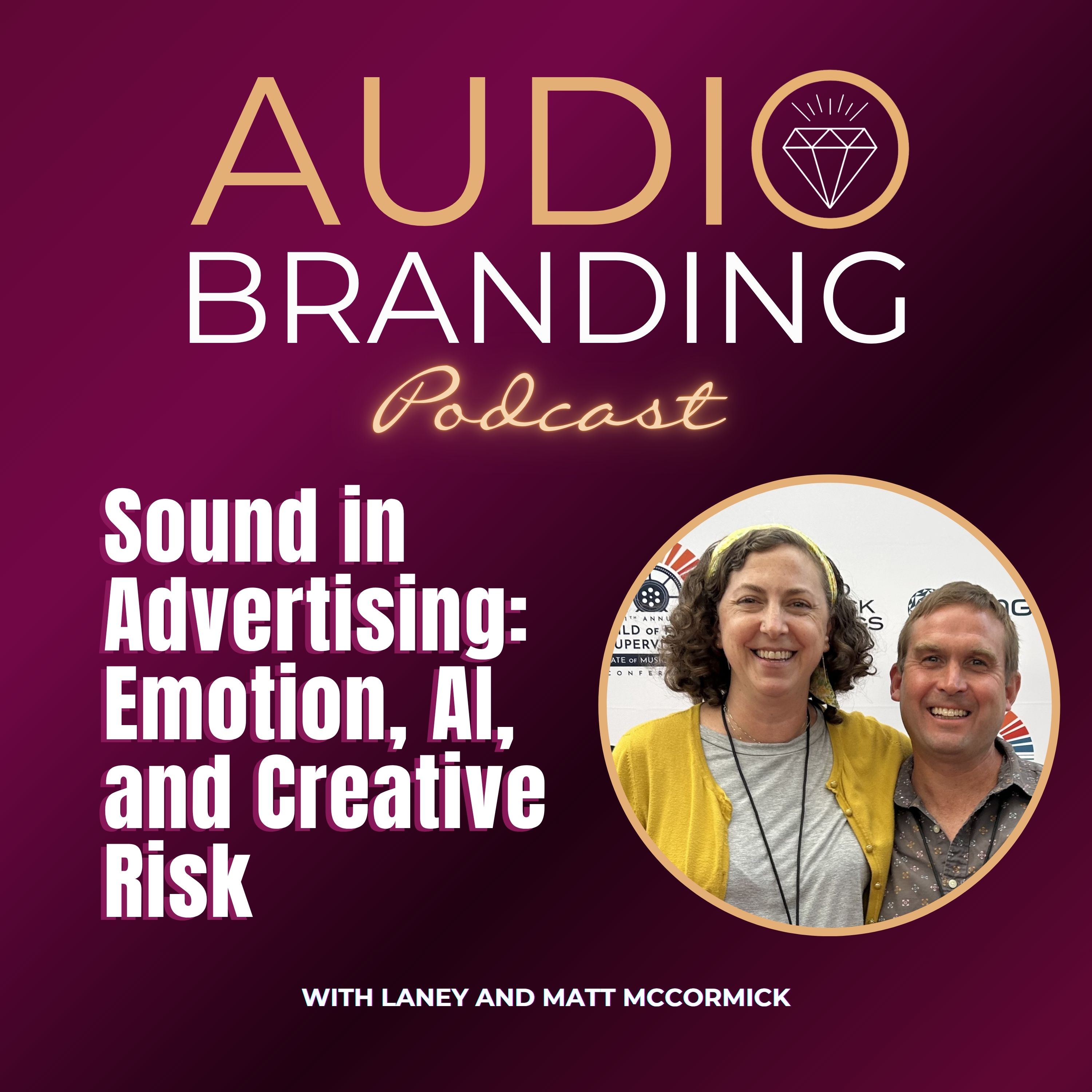 Sound in Advertising: Emotion, AI, and Creative Risk with Laney and Matt McCormick 12.08.2026 30min“I don’t think AI quite has us figured out yet because, as human beings, we’ll listen to sad songs to feel better. I don’t think it understands that. That’s true, it’s contrary… Yeah, I mean, I think that AI has its place. I’m not all against it, just as a matter of course, I just think that it shouldn’t replace our creativity. That’s what makes us human, and I don’t want to see a computer replace that. Yeah, I want it to clean my house and cook my meals so that I can create.” – Jodi Krangle & Laney McCormickThis episode is the second half of my conversation with music supervisors Laney and Matt McCormick as we talk about how AI music’s changing the way human musicians approach their work, striking the right balance between playing it safe and making a memorable sonic impression, and how COVID and the rise of social media have changed sound editing and our approach to sonic branding.As always, if you have questions for my guest, you’re welcome to reach out through the links in the show notes. If you have questions for me, visit audiobrandingpodcast.com, where you’ll find a lot of ways to get in touch. Plus, subscribing to the newsletter will let you know when the new podcasts are available, along with other interesting bits of audio-related news. And if you’re getting some value from listening, the best ways to show your support are to share this podcast with a friend and leave an honest review. Both those things really help, and I’d love to feature your review on future podcasts. You can leave one either in written or in voice format from the podcast’s main page. I would so appreciate that.(00:00) – AI and CreativityOur conversation continues as Laney and Matt talk about the impact of AI on their industry, such as how fast musicians who find themselves competing with AI feel they have to work. “The speed’s definitely an issue,” Matt says. “It’s not easy to crank out an authentic song, and it’s not even easy to crank out an inauthentic song. In a lot of ways, it’s even harder.” Laney notes some of the trends she’s seen in music marketing and how positive messaging is making a comeback. “I see more for that whole motivational lyrical content,” she explains, “They want rap and hip hop beat, female vocal, clean lyrics, and we see a lot of requests come in with female vocals. I think that’s really cool.”(12:45) – Trends in Music LicensingThe discussion turns to pop culture and how sound is becoming more and more important in making a strong impression. “Stranger Things has a huge budget for music,” Laney tells us, “and they’re using huge tunes, and those are, you know, those are the supervisors acting as influencers in many ways. ‘Running Up That Hill’ was a B-side, and here it is, huge again.” Matt adds his thoughts on the musical risks brands are willing to take in order to stand out. “Everybody always wants to do something different, but that’s a risk, right?” he explains. “I mean your large brands, whether it’s Coca-Cola, Amazon, Nike, Taco Bell… Are those brands willing to take, like, a really huge risk with music and with sound? And the answer for me is, I don’t know. But I don’t see it very often.”(20:00) – The Role of Sound in AdvertisingAs our conversation comes to a close, Laney and Matt tell listeners how they can get in touch, and they both share their thoughts on the power of sound and its importance in our lives. “Music specifically for me is a therapy of sorts,” Laney says. “It doesn’t matter what my problem is, what my mood is, or what activity I need to do, want to do, or have to do. There is a genre and a record that will make that easier for me.” Matt talks about sound’s ability to connect us to one another, and how it creates a common ground for people from every walk of life. “Sound moves you,” he tells us. “And it can be a common ground for everybody in a way. It’s hard to listen to an emotional piece of music and not be emotional and not feel that with the person that’s next to you or multiple people next to you.”Episode SummaryOur discussion on how AI affects human creativity in music.Laney and Matt reveal the current trends in music requests and licensing.Matt and Laney discuss why they prioritize authentic music in their work.Connect with the GuestConnect with the Audio Branding Podcast:Book your project with Voice Overs and Vocals by visiting https://voiceoversandvocals.comConnect with me on Instagram - https://www.instagram.com/jodikrangle/Watch the Audio Branding Podcast on YouTube - https://www.youtube.com/c/JodiKrangleVOConnect with me on LinkedIn - https://www.linkedin.com/in/jodikrangle/Leave the Audio Branding Podcast a review at https://lovethepodcast.com/audiobranding (Thank you!)Share your passion effectively with these Tips for Sounding Your Best as a Podcast Guest!https://voiceoversandvocals.com/tips-for-sounding-your-best-as-a-podcast-guest/Get my Top Five Tips for Implementing an Intentional Audio Strategyhttps://voiceoversandvocals.com/audio-branding-strategy/Editing/Production by Humberto Franco - https://humbertofranco.com/This podcast uses the following third-party services for analysis: OP3 - https://op3.dev/privacy
 -
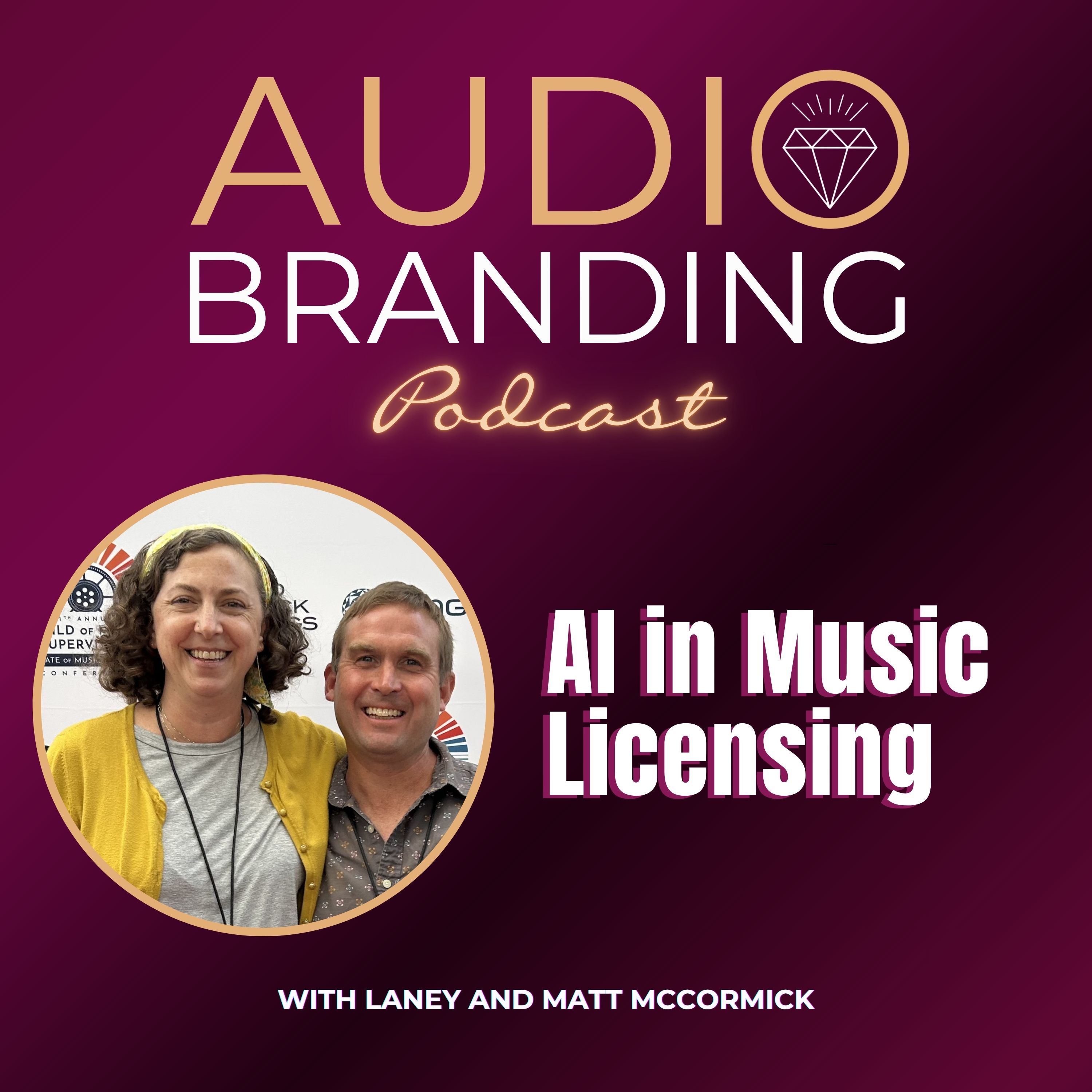 AI in Music Licensing with Laney and Matt McCormick 05.08.2026 34min“That’s one of the biggest things that scares me the most about composing with AI. It’s that, whatever AI model you’re on, how was it trained, and was that material copyrighted? And was there any kind of permission for that to happen? And you, as the end user, don’t know.” – Laney McCormickThis episode features a pair of guests who are passionate about helping creatives elevate their stories through music. As the founders of Scene Support Music, they specialize in pairing authentic music with visual media, ensuring that brands and stories stand out. As former music educators, they prioritize education in every collaboration, guiding filmmakers and musicians through the creative and legal intricacies of music licensing. Based in the Midwest, outside the traditional film and advertising hubs, they bring a fresh perspective to the intersection of music and storytelling. Between them, they hold multiple advanced degrees in conducting, education, percussion, and communications, but they believe their most valuable lessons come from lived experience, along with the occasional failure.Their names are Laney and Matt McCormick, and, beyond their work in music and licensing, Laney serves on the board of Women in Film Cincinnati and Cindependent Film Festival. Together, Laney and Matt continue to perform as musicians on stages across the country and internationally. If you’ve ever wondered what makes music truly move us, this is a conversation you’ll really enjoy!As always, if you have questions for my guest, you’re welcome to reach out through the links in the show notes. If you have questions for me, visit audiobrandingpodcast.com, where you’ll find a lot of ways to get in touch. Plus, subscribing to the newsletter will let you know when the new podcasts are available, along with other interesting bits of audio-related news. And if you’re getting some value from listening, the best ways to show your support are to share this podcast with a friend and leave an honest review. Both those things really help, and I’d love to feature your review on future podcasts. You can leave one either in written or in voice format from the podcast’s main page. I would so appreciate that.(00:00) – From Teaching to Music LicensingOur conversation starts as Laney and Matt recall their earliest memories of sound and how they got into the business of music licensing. “Hearing that band play for the first time,” Laney says, recounting a memory from elementary school, “and seeing her band director, who was… very proper and wearing a black suit, and I thought, ‘I want to make that sound in this environment with those kind of people.’ Like, I want to be a band director. And that’s what I did for a really long time.” Matt shares his experience as an indie musician and how it segued into commercial music. “I remember this is the exact one where light bulbs started to go off in my head,” he recalls. “A music supervisor had reached out and said, ‘I need thirty seconds of upbeat, positive music for an apparel commercial that’s for the holidays, but it doesn’t have to be holiday music.’ And he was like, ‘money’s kind of low for it, $7,000.’ And honestly, for me at the time, and even now, $7,000, that doesn’t sound too low.”(10:00) – The Challenge of AI in MusicLaney and Matt tell us more about their role as music supervisors and how it ties into the process of music licensing. “A sync agent represents a catalog of music for licensing,” Laney explains. “A music supervisor can contact sync agents to find music and make playlists for a director, and then a clearance specialist, which is what we’re doing, like one-offs for ad agencies who will come in and say, ‘I want this specific song.’ There’s no searching involved. ‘Will you just get me the rights for that?’ And a music supervisor will use the skills of both other things at the same time.” Our conversation turns to how AI is impacting their side of the music business and the differences between traditional musicians and AI artists. “Some artists will contact us and be super odd,” Matt adds. “And it’s like, ‘Hey, I’m an AI artist,’ and I don’t want to be like, ‘Hey, AI is a bad thing. We’re not going to do it.’ And I’ve only talked to one person, but when that artist contacted me, and he’s like, ‘I’m an AI artist,’ I was like, I definitely want to have a conversation because I want to know what is going on there.”(25:00) – The Importance of AuthenticityAs we wrap up the first half of our discussion, Laney explains the different processes involved between licensed tracks and licensed covers. “That can drastically affect your bottom line,” she tells us. “Like, my cover of a Beatles song is not as expensive as the original recording. But the publishing is going to be the same whether you use the original or whether you use a cover.” Matt talks about the explosion of the licensed cover market in recent years and how it’s helped streamline the process for finding the right song track for the right client. “There are so many covers that are already out there,” he explains, “that chances are, like, if we’re working on a film and we need a cover song, my first thought doesn’t go, ‘Hey, let’s get somebody to record that.’ My first thought goes, ‘I’m going to send an email to every catalog holder that we know to see what they already have of that.’"Episode SummaryLaney and Matt share personal stories about how sound influenced their lives.Exploring the implications and challenges posed by AI-generated music.Laney and Matt discuss why they prioritize authentic music in their work.Tune in for next week’s episode as we discuss how sometimes even the best composer might not be the right composer, how vintage songs and positivity are making a surprising comeback, and what shows like Stranger Things have taught us about both following and setting musical trends.Connect with the Audio Branding Podcast:Book your project with Voice Overs and Vocals by visiting https://voiceoversandvocals.comConnect with me on Instagram - https://www.instagram.com/jodikrangle/Watch the Audio Branding Podcast on YouTube - https://www.youtube.com/c/JodiKrangleVOConnect with me on LinkedIn - https://www.linkedin.com/in/jodikrangle/Leave the Audio Branding Podcast a review at https://lovethepodcast.com/audiobranding (Thank you!)Share your passion effectively with these Tips for Sounding Your Best as a Podcast Guest!https://voiceoversandvocals.com/tips-for-sounding-your-best-as-a-podcast-guest/Get my Top Five Tips for Implementing an Intentional Audio Strategyhttps://voiceoversandvocals.com/audio-branding-strategy/Editing/Production by Humberto Franco - https://humbertofranco.com/This podcast uses the following third-party services for analysis: OP3 - https://op3.dev/privacy
 -
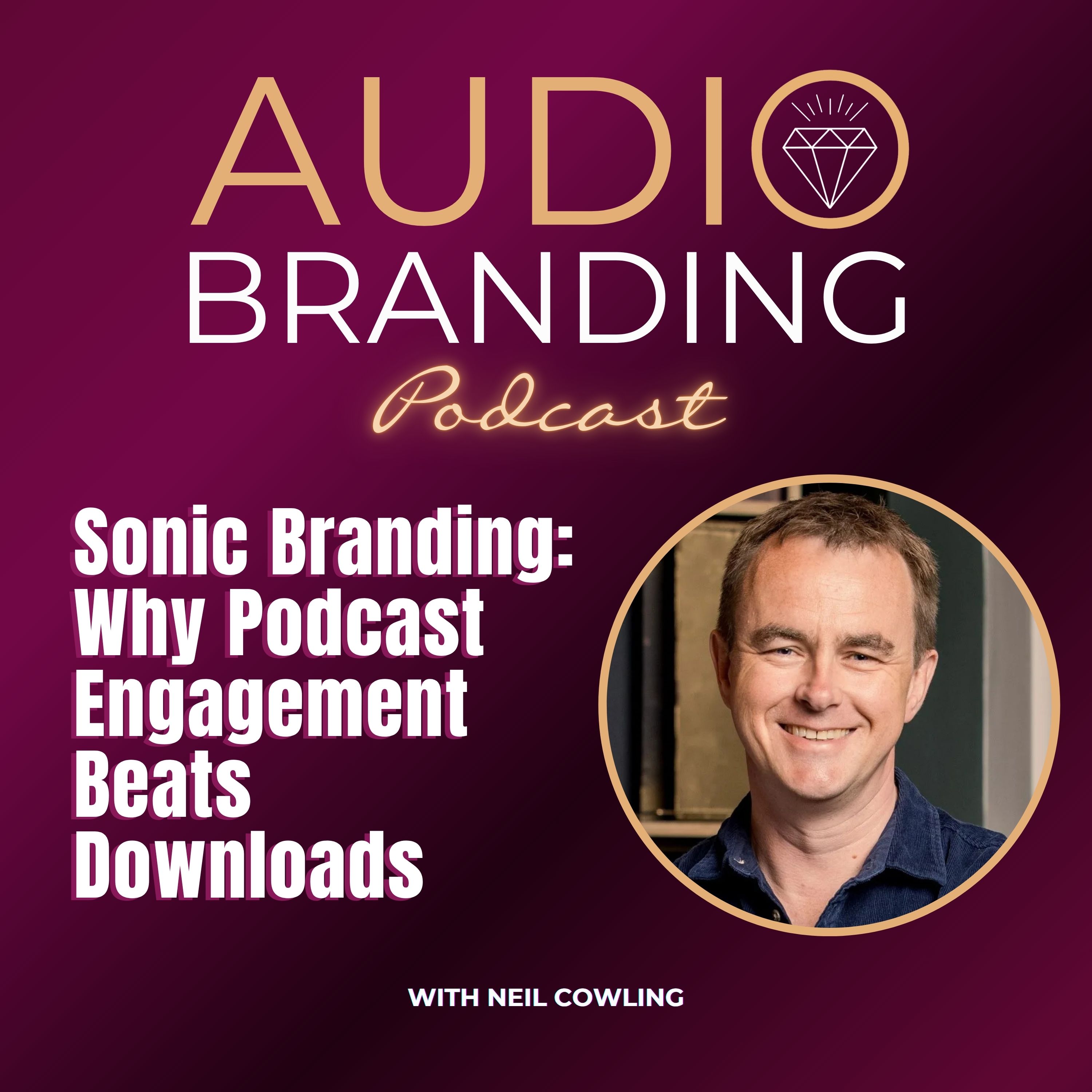 Sonic Branding: Why Podcast Engagement Beats Downloads | Neil Cowling 29.07.2026 30min“We did a sort of special launch episode with the King, um, who’s so knowledgeable, so passionate, you know. I don’t know whether he’d just read up about it, but it doesn’t feel like it. It feels like it really tapped into something that he wants to talk about and knows how to talk about. Um, so yeah, a dream guest, frankly, in so many ways. Um, and Kate’s a great interviewer, and there are another three episodes of that after it, but yeah, it was. When you talk about sonic branding, you know, there aren’t many people in the world whose voice everybody recognizes.” – Neil CowlingThis episode is the second half of my conversation with podcast and audio promotions expert Neil Cowling as we discuss the scams and pitfalls of podcast promotion, why podcasting’s evolved a more collaborative culture than traditional radio, and what the King of England has for breakfast.As always, if you have questions for my guest, you’re welcome to reach out through the links in the show notes. If you have questions for me, visit audiobrandingpodcast.com, where you’ll find a lot of ways to get in touch. Plus, subscribing to the newsletter will let you know when the new podcasts are available, along with other interesting bits of audio-related news. And if you’re getting some value from listening, the best ways to show your support are to share this podcast with a friend and leave an honest review. Both those things really help, and I’d love to feature your review on future podcasts. You can leave one either in written or in voice format from the podcast’s main page. I would so appreciate that.(12:28) – How Sound Influences Brand IdentityMy conversation with Neil continues as he tells us his process for building an authentic connection between a brand and podcast. “We do try and spend an extended amount of time saying, ‘What is your tone of voice? If you can imagine a celebrity that would be your dream spokesperson, who would that be? What words do you use and not use in your other communication?’” he explains. “And all of that feeds into a general vibe that hopefully when people are listening to a podcast, they’ll understand that it’s from you.” We discuss podcasting metrics, from clicks and listens to downloads, and the perils of paying for services that promise a quick boost. “Someone goes in and promises they’ll have a million downloads or that it will create an instant ROI for your product,” he cautions. “We avoid saying that because we are really talking about it as a long-term brand building exercise.”(00:00) – Podcasting With the KingWe discuss the transition from broadcast radio to podcasting in the 21st century, and why, in Neil’s experience, radio’s competitive culture hasn’t carried over to podcasting. “Radio is a real kind of dog-eat-dog medium,” he says, “partly because there are only so many radio listeners and you’re all fighting over the same time slot. Everybody wants to be the biggest breakfast show… whereas in podcasting, there’s more of a sense that somebody else’s success is not at everybody else’s detriment.” He tells us about some of his most memorable podcasting experiences, including his team’s surprise interview at Windsor Castle with not only Cate Blanchett but His Majesty, King Charles III. “Hannah had the honor of having asked the King what he had for breakfast,” Neil recalls, “you know, to test the microphone. The answer is nothing, if you’re interested. He hasn’t eaten breakfast for years.”(27:40) – Building Podcast EngagementAs our conversation comes to a close, Neil shares his thoughts on why radio ads are on the way out and what’s replacing them in the podcast market. “Radio ads are rubbish,” he tells us. “Most radio ads are done at the last minute by an ad agency who, again, thinks it’s easy. They’ve spent three months working on the TV, and they’ll knock together a radio script and push it out there.” We discuss whether pre-roll or mid-roll ads are most effective at reaching their audience, and the unique outreach that host reads offer podcast sponsors. “Give us your bullet points, give us the things that absolutely have to be in there,” he says. “But also allow a bit of levity and a bit of leeway for those presenters so that they can take what the audience already loves about them and transfer it to your brand.”Episode SummaryBalancing brand consistency with collaborative podcasting.Neil explains the key metrics for measuring podcasting success.Exploring the branding benefits of podcast collaborations.Connect with the Audio Branding Podcast:Book your project with Voice Overs and Vocals by visiting https://voiceoversandvocals.comConnect with me on Instagram - https://www.instagram.com/jodikrangle/Watch the Audio Branding Podcast on YouTube - https://www.youtube.com/c/JodiKrangleVOConnect with me on LinkedIn - https://www.linkedin.com/in/jodikrangle/Leave the Audio Branding Podcast a review at https://lovethepodcast.com/audiobranding (Thank you!)Share your passion effectively with these Tips for Sounding Your Best as a Podcast Guest!https://voiceoversandvocals.com/tips-for-sounding-your-best-as-a-podcast-guest/Get my Top Five Tips for Implementing an Intentional Audio Strategyhttps://voiceoversandvocals.com/audio-branding-strategy/Editing/Production by Humberto Franco - https://humbertofranco.com/This podcast uses the following third-party services for analysis: OP3 - https://op3.dev/privacy
 -
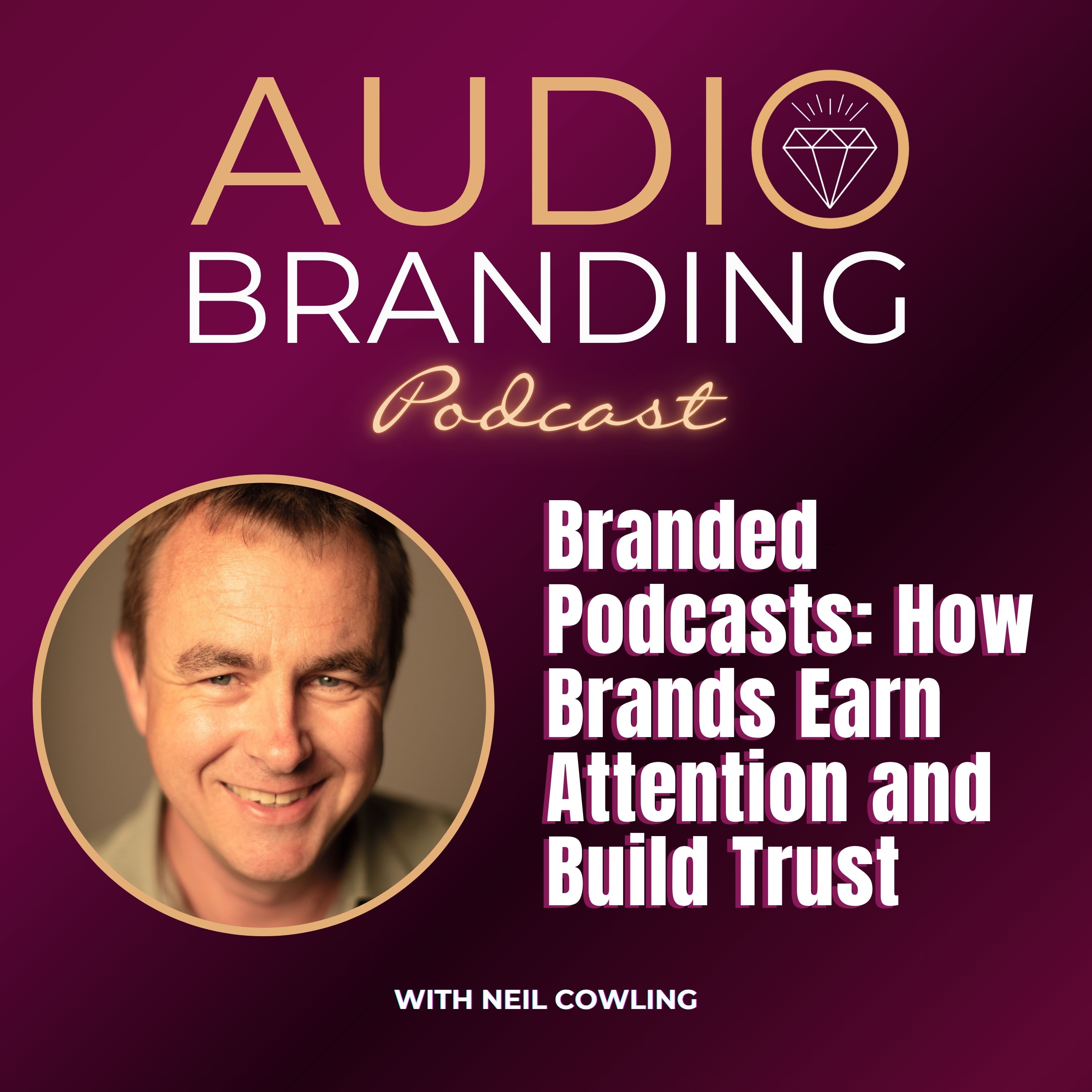 Branded Podcasts: How Brands Earn Attention and Build Trust | Neil Cowling 22.07.2026 37min“So the answer to why is that podcasts, whether they’re audio only or, nowadays, the vast majority are including video as well, provide a depth and a nuance and a detail of conversation that is almost impossible to get anywhere else. So, you know, we live in an age where people are scanning TikTok and brands are trying to catch your attention for three seconds. And they feel like that’s a triumph. If you’ve stopped scrolling for just three seconds and looked at their thing, it doesn’t really matter if you’ve clicked through. And so, in an age where attention is so valuable, podcasting creates a level of attention that no one else except cinema can compete with.” – Neil CowlingThis episode’s guest is the founder of Fresh Air, the leading branded podcast agency in the UK and the most awarded podcast company in Europe. Before getting into podcasting, he spent years creating documentaries and promotional campaigns for some of the BBC’s biggest shows, such as Doctor Who, the Olympics, and Luther. He’s one of the UK’s leading experts in how to use audio to build a brand’s unique tone of voice, creating work that drives client results and provides entertainment for listeners. His name is Neil Cowling, and we’ll be discussing how brands can earn real attention, balance creativity with business goals, and use sound to connect more deeply with audiences.As always, if you have questions for my guest, you’re welcome to reach out through the links in the show notes. If you have questions for me, visit audiobrandingpodcast.com, where you’ll find a lot of ways to get in touch. Plus, subscribing to the newsletter will let you know when the new podcasts are available, along with other interesting bits of audio-related news. And if you’re getting some value from listening, the best ways to show your support are to share this podcast with a friend and leave an honest review. Both those things really help, and I’d love to feature your review on future podcasts. You can leave one either in written or in voice format from the podcast’s main page. I would so appreciate that.(00:00) – The Value of PodcastingAs our conversation starts, Neil shares his thoughts on when, and whether, it’s okay for podcasters to take a break, and how a comedy cassette featuring Rowan Atkinson opened his eyes as a child to the power of sound. “What I love about audio is the fact that I can write something, it comes out of my head onto a page, and then I can make it and not really involve anybody else,” he explains. “I have an idea, and all I need in order to make that come alive is a brilliant script, a great voiceover artist and some sound design.” We discuss how podcasting has evolved over the past ten years, and why more companies are embracing it as a medium. “You can tell stories of extraordinary people all over the United Kingdom,” he tells us. “And a great way to do this, and, frankly, a cheap way to do this, is to do it on podcasts, because you don’t need a big set, you don’t need a location shoot.”(12:28) – Building a Brand’s Audio IdentityOur discussion turns to branded podcasting and how it allows content creators to focus on important niche topics that might not have a chance to build an audience otherwise. “Most of the people in the world will never listen to a podcast that’s aimed at insurance brokers,” Neil notes, “but those people love it and find it super valuable. And so is a lot of this kind of brand work, and that extends to all sorts of types of organizations, like, we do lots of charity work.” He tells us why downloads are no longer the key metric and what it takes for a podcast to succeed in today’s world. “For some reason,” he says, “there’s this residual feeling that, because so many people do make great podcasts from home, that it must be easy. It’s really not. Even if you’re doing it from home, it’s really not.”(27:40) – The Future of Branded PodcastsThe first half of our conversation comes to a close as we look at the untapped marketing potential of sonic branding, particularly in social media spaces. “Some of the biggest brands in the world, you’ve no idea what they sound like,” Neil says. “They’ve thought really hard about what they look like, and there are tons of people employed to create the brand guidelines and make sure that they are guarded with their lives. As soon as you say, ’ What’s your audio brand? ’, they haven’t got a clue.” He talks about his work in such projects as the London Olympics and Doctor Who, and what Doctor Who in particular can teach us about audio branding. “The Doctor obviously changes every couple of years,” he notes. “You can change the characters, you could change the look of the TARDIS if you wanted to. If you change the noise of the TARDIS or the theme tune to Doctor Who, though, there would be a riot amongst fans of the show... It’s probably one of the best examples of sonic branding.”Episode SummaryHow podcasting creates a deeper level of engagement than other media.Neil talks about the benefits of creating evergreen podcast content.Exploring how brands can better leverage audio in their marketing.Tune in for next week’s episode as we reveal the key metrics for gauging a podcast’s success, what sets the advertising culture of radio and podcasting apart, and what Neil learned from his recent podcast interview at Windsor Castle with Cate Blanchett and His Majesty, King Charles III.Connect with the Audio Branding Podcast:Book your project with Voice Overs and Vocals by visiting https://voiceoversandvocals.comConnect with me on Instagram - https://www.instagram.com/jodikrangle/Watch the Audio Branding Podcast on YouTube - https://www.youtube.com/c/JodiKrangleVOConnect with me on LinkedIn - https://www.linkedin.com/in/jodikrangle/Leave the Audio Branding Podcast a review at https://lovethepodcast.com/audiobranding (Thank you!)Share your passion effectively with these Tips for Sounding Your Best as a Podcast Guest!https://voiceoversandvocals.com/tips-for-sounding-your-best-as-a-podcast-guest/Get my Top Five Tips for Implementing an Intentional Audio Strategyhttps://voiceoversandvocals.com/audio-branding-strategy/Editing/Production by Humberto Franco - https://humbertofranco.com/This podcast uses the following third-party services for analysis: OP3 - https://op3.dev/privacy
 -
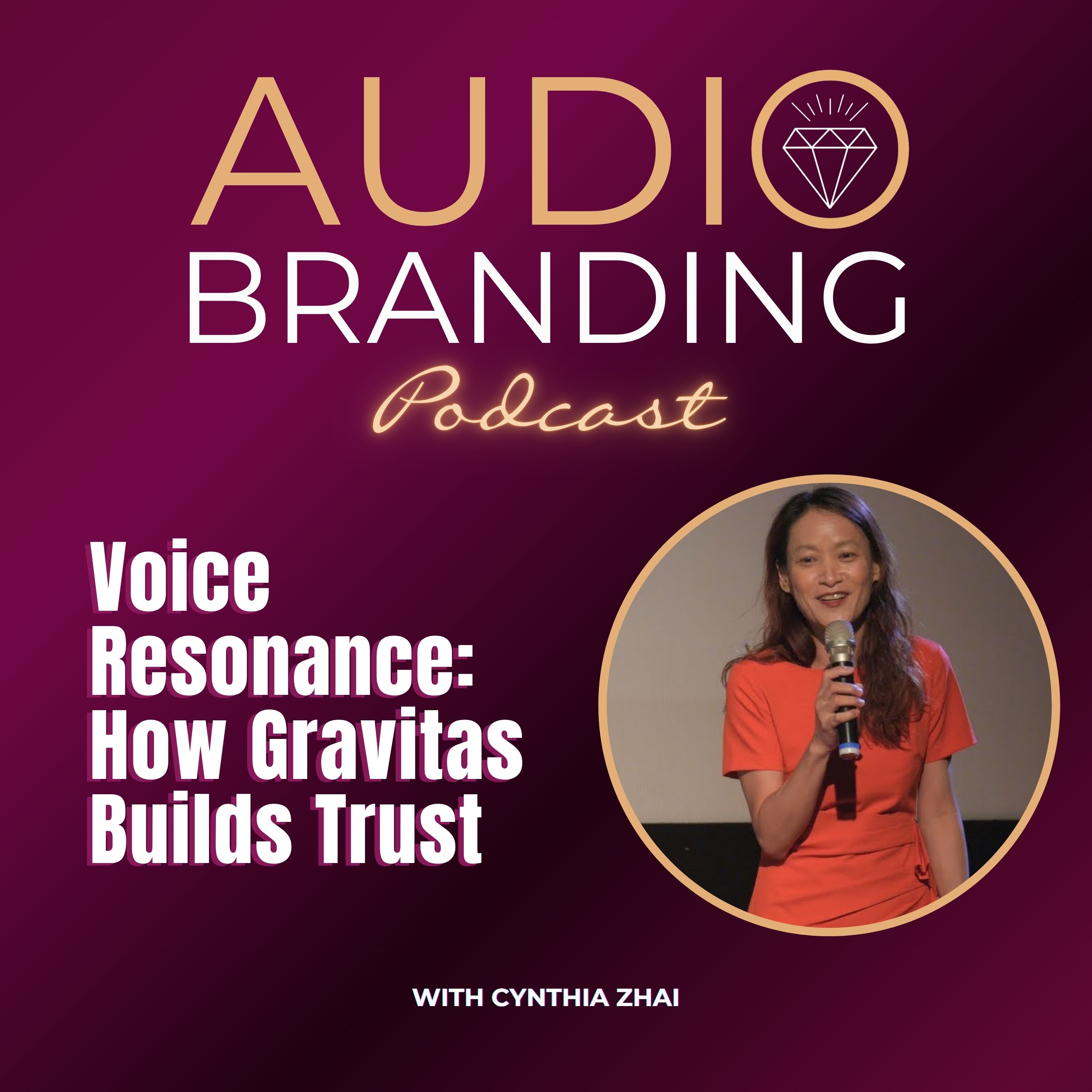 Voice Resonance: How Gravitas Builds Trust with Cynthia Zhai 15.07.2026 29min“Scientifically, it’s because that voice is vibration. So when it’s vibration, it needs a medium to be heard. Like, if we are in outer space, we hear nothing because there’s no medium to convey the sound. And then once we’re back on Earth, we have media. And when we are listening to ourselves, the sound is vibrating in the head. So, the medium, the media, they are liquid, they are solid, the bones, so that’s the medium that they are resonating in. But when we’re recording ourselves, the medium is air. And then of course, fortunately or unfortunately, when people hear us, the voice is also vibrating in the air. So that’s why I tell my clients, if you want to know how much suffering you’re putting people around you through, you must listen to yourself.” – Cynthia ZhaiThis episode is the second half of my conversation with voice coach, TEDx speaker, and best-selling author Cynthia Zhai as we discuss the value of silence in public speaking, why our recordings never seem to sound like ourselves, and her insights into the trend of AI -generated narration.As always, if you have questions for my guest, you’re welcome to reach out through the links in the show notes. If you have questions for me, visit audiobrandingpodcast.com, where you’ll find a lot of ways to get in touch. Plus, subscribing to the newsletter will let you know when the new podcasts are available, along with other interesting bits of audio-related news. And if you’re getting some value from listening, the best ways to show your support are to share this podcast with a friend and leave an honest review. Both those things really help, and I’d love to feature your review on future podcasts. You can leave one either in written or in voice format from the podcast’s main page. I would so appreciate that.(00:00) – Understanding GravitasThe second half of our conversation begins as Cynthia elaborates on the meaning of gravitas and how speakers can best convey a sense of it. “[Gravitas] just means that seriousness in the voice,” she says, “so when a leader speaks, if they are speaking with a voice that conveys this kind of seriousness, the heaviness that it gives people the impression that these leaders know what they’re doing.” We discuss the challenge of maintaining an engaging pace while speaking, and why speeches are as much about silence as sound. “One very simple example that I use in my classes,” she explains, “is when we announce the lucky draw winner. So we say, ‘The lucky draw winner is…’ After that, we pause, right? We pause so long that we are building up the suspense, building up people’s anticipation.”(12:56) – The Role of PresenceCynthia describes her four tips for speakers to keep in mind, such as the impact they have on listeners. “The first one is people have to know how their voice affects people physically,” she says. “Either they give people goosebumps or make people relax.” We discuss that age-old riddle of why our voices never sound like our real selves in a recording, and why she always asks for a recording of her clients as part of her teaching process. “When I hear myself in my head, ‘Oh, it’s so deep.’ But when it’s recorded, it’s not. Or they feel, ‘Oh, it’s so nice,’ and recorded, it’s not. They have to listen to themselves.”(25:30) – The Impact of AI on VoiceOur discussion turns to AI and its growing role in narration, and how Cynthia’s recent encounter with a voice clone of a teacher who’d passed away quickly revealed itself as AI. “The way that they’re talking, you can tell,” she says. “The more you listen, the more you can tell it is by AI because, for example, humans, when we are talking, we can say, ‘Ah, I see,’ that there’s a certain emotion that we carry where the AI, when you listen, it doesn’t.” She tells listeners how they can get in touch and offers her parting tips on becoming a better speaker. “Even if they don’t end up working with me,” she says, “I hope that this opens up some window where they realize, ‘The voice I was born with can be changed.’"Episode SummaryCynthia explains what gravitas means and how it can be developed.Techniques for effectively using silence and pauses in speech.The growing impact of AI voice clones and where they still fall short.Connect with the Audio Branding Podcast:Book your project with Voice Overs and Vocals by visiting https://voiceoversandvocals.comConnect with me on Instagram - https://www.instagram.com/jodikrangle/Watch the Audio Branding Podcast on YouTube - https://www.youtube.com/c/JodiKrangleVOConnect with me on LinkedIn - https://www.linkedin.com/in/jodikrangle/Leave the Audio Branding Podcast a review at https://lovethepodcast.com/audiobranding (Thank you!)Share your passion effectively with these Tips for Sounding Your Best as a Podcast Guest!https://voiceoversandvocals.com/tips-for-sounding-your-best-as-a-podcast-guest/Get my Top Five Tips for Implementing an Intentional Audio Strategyhttps://voiceoversandvocals.com/audio-branding-strategy/Editing/Production by Humberto Franco - https://humbertofranco.com/This podcast uses the following third-party services for analysis: OP3 - https://op3.dev/privacy
 -
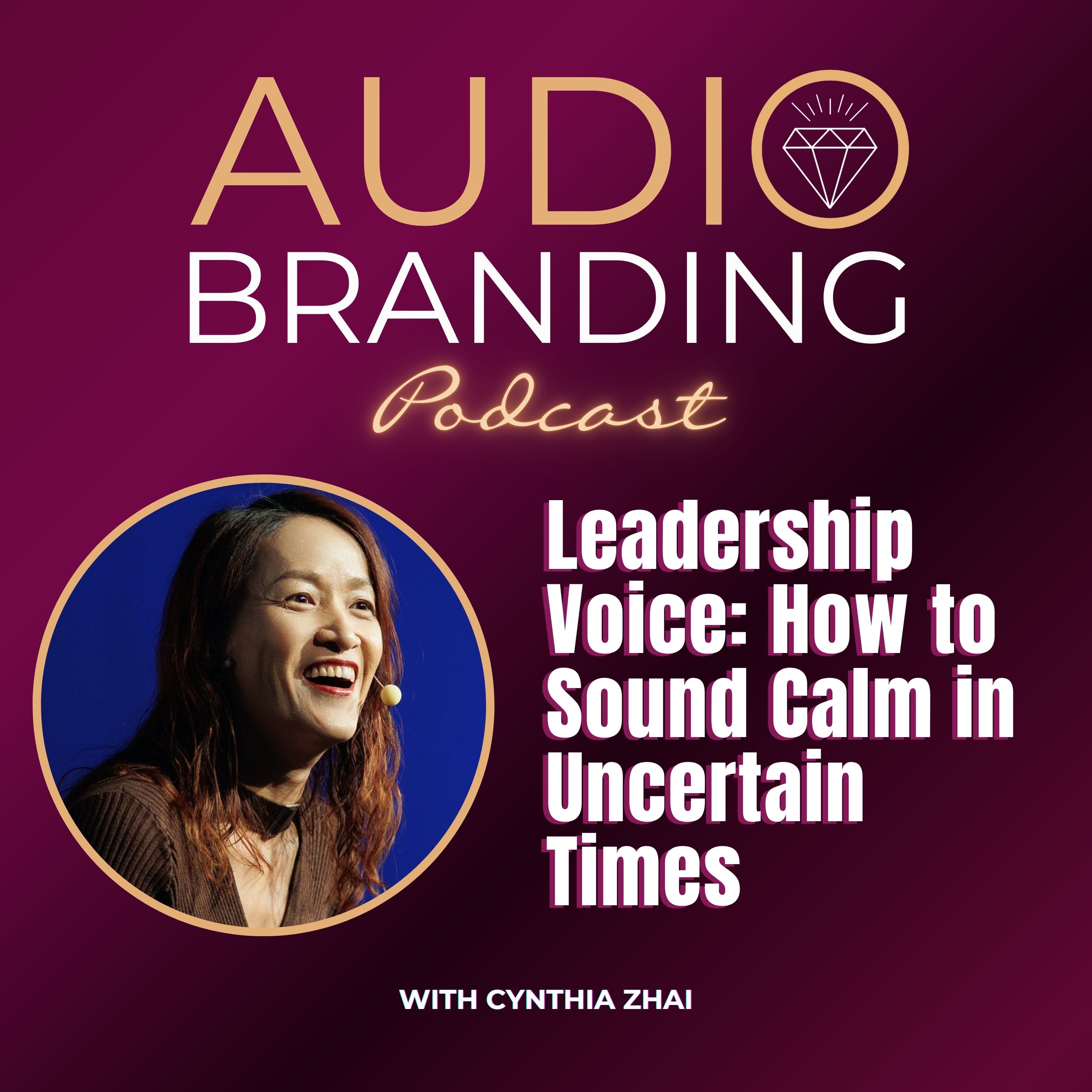 Leadership Voice: How to Sound Calm in Uncertain Times with Cynthia Zhai 08.07.2026 33min“I think one thing we mentioned just now, which is equanimity, that, of course, for them, they didn’t realize the word. It was also something, the word that I’ve learned over the pandemic, so I think that’s one thing where that equanimity, how you can stay grounded and centered, even if you are going through chaos, even if there is chaos in your head. So how you can stand grounded, and you can sound calm when you’re talking to people, and even also in the pandemic, a lot of times the leaders don’t know the answer either. So even if you don’t know the answer, even if you feel the future is uncertain, you can still come across as calm and certain with the people you’re leading.” – Cynthia ZhaiThis episode’s guest is a voice coach, Professional Speaker, and best-selling author. She’s also a two-time TEDx speaker, and she’s helped professionals from 56 countries across six continents learn how to speak with a powerful voice. Her name is Cynthia Zhai, and she’s been a professional speaker and coach for the past 23 years, with engagement spanning five continents in 25 countries. She’s also been on this podcast before, though it was pretty much at the very beginning of things in 2020. We had a lot to catch up on, and the topic of communicating effectively is more important than ever. If you want your voice to have more impact and influence, you won’t want to miss this discussion.As always, if you have questions for my guest, you’re welcome to reach out through the links in the show notes. If you have questions for me, visit audiobrandingpodcast.com, where you’ll find a lot of ways to get in touch. Plus, subscribing to the newsletter will let you know when the new podcasts are available, along with other interesting bits of audio-related news. And if you’re getting some value from listening, the best ways to show your support are to share this podcast with a friend and leave an honest review. Both those things really help, and I’d love to feature your review on future podcasts. You can leave one either in written or in voice format from the podcast’s main page. I would so appreciate that.(00:00) – Developing Your Leadership VoiceAs our conversation starts, Cynthia shares the memories that have influenced her career in sound, such as hearing Martin Luther King’s famous “I Have a Dream” speech. “I think that speech itself, the voice with emotion, the voice with a lot of passion, that’s what really moved me,” she explains. “Plus, later on I heard about how the speech he delivered was not the original speech. I think that’s even more impressive.” We talk about how things have changed since her last appearance on the show and what inspired her second book. “The first book came out ten years ago, 2015,” she tells us, “so now, ten years later, some new ideas have come to me. I’ve got some new inspiration, plus all the different clients I work with, so there are even more case studies. And so that’s what I did.”(12:28) – Equanimity in LeadershipCynthia tells us about equanimity and how it guides her philosophy as a voice coach and speaker. “Equanimity is a Buddhist term that means that you stay centered and grounded even in the midst of chaos around you,” she says. “Even if you feel that it’s uncertain, you feel a little bit panicked, but as a leader that, when you lead, you have to still come across as calm, composed, and certain.” She tells us why having a soft voice is no obstacle to being a powerful speaker, and her approach to helping clients overcome the doubts that keep them from speaking with confidence. “It’s because there’s something that in their mind is holding them back,” she explains. “For example, they don’t dare to take up space. They have grown up in an environment where it’s not encouraged… Or there are clients who are fearful of visibility or even authority. Once they have all these, it will affect the way they speak.”(27:40) – Overcoming Stage FrightThe first half of our discussion comes to a close as Cynthia recalls how she ended up taking her own advice about journaling to get in touch with your inner self. “I’m going to do what I have told my clients to do,” she says. “So I wrote it down, and once I wrote down all the thoughts running through my head, I felt so relieved, I said, ‘Oh, okay.’ Then I went back to sleep.” She offers her tips for overcoming stage fright and talks about the importance, particularly these days, of showing empathy and understanding in public speech. “Since the pandemic, a lot of researchers have shown, and also it’s attested by many clients as well, that people are more and more towards leaders who show compassion,” she tells us. “That’s why that compassion has become a very key element when they’re speaking.”Episode SummaryCynthia explores how compassion shapes audience perception.Discussion on the meaning and value of equanimity for leaders.Strategies for managing anxiety before public speaking.Tune in for next week’s episode as we discuss just what it means to have gravitas, Cynthia’s techniques for building a stronger connection with your audience, and how her uncanny encounter with the voice clone of a favorite teacher showed her both the power and limitations of AI in sound.Connect with the Audio Branding Podcast:Book your project with Voice Overs and Vocals by visiting https://voiceoversandvocals.comConnect with me on Instagram - https://www.instagram.com/jodikrangle/Watch the Audio Branding Podcast on YouTube - https://www.youtube.com/c/JodiKrangleVOConnect with me on LinkedIn - https://www.linkedin.com/in/jodikrangle/Leave the Audio Branding Podcast a review at https://lovethepodcast.com/audiobranding (Thank you!)Share your passion effectively with these Tips for Sounding Your Best as a Podcast Guest!https://voiceoversandvocals.com/tips-for-sounding-your-best-as-a-podcast-guest/Get my Top Five Tips for Implementing an Intentional Audio Strategyhttps://voiceoversandvocals.com/audio-branding-strategy/Editing/Production by Humberto Franco - https://humbertofranco.com/This podcast uses the following third-party services for analysis: OP3 - https://op3.dev/privacy
 -
 Music in Film: Why the Wrong Score Changes Everything | Jayson Johnson 01.07.2026 25min“I guess that’s encouraging, and it’s scary at the same time, because, you know, there are a lot of people in the industry that depend on the creativity that they’ve worked years and years and years to kind of master and to get to this point. And then all of a sudden, someone says, I don’t want to pay this person. Let’s just have AI do it. And, you know, it does a comparable job, if not better. So it’s something that I think as a creative, I try not to be fearful of, but I do think about it as a competitor and as an ally at the same time.” – Jayson JohnsonThis episode is the second half of my conversation with founder of Strike Five Films, Jayson Johnson, as Jayson shares his creative philosophy and advice to young filmmakers, the impact he sees AI having on the creative industries, and why the world, especially now, could use more comedy.As always, if you have questions for my guest, you’re welcome to reach out through the links in the show notes. If you have questions for me, visit audiobrandingpodcast.com, where you’ll find a lot of ways to get in touch. Plus, subscribing to the newsletter will let you know when the new podcasts are available, along with other interesting bits of audio-related news. And if you’re getting some value from listening, the best ways to show your support are to share this podcast with a friend and leave an honest review. Both those things really help, and I’d love to feature your review on future podcasts. You can leave one either in written or in voice format from the podcast’s main page. I would so appreciate that.(00:00) – The Power of Music in Film The second half of our discussion starts with Jayson’s firsthand experience with film scores and how a last-minute change to a climactic scene completely changed its tone. “We found an artist who made this really awesome song, and he was local, so he wasn’t signed quite yet, and I just approached him, I said, ‘Do you think that we could use your music?’" Jayson recalls. “And so we put that music in there, and that completely changed the dynamic of it.” He shares the advice that award-winning director Terry Zwigoff gave him, and how he only later came to appreciate its significance. “He said you just have to be yourself, and I was kind of disappointed with that answer because everyone’s looking for the hack,” he explains. “I realized that he was completely right, that… you have to be yourself and just do things that, you know, excite you. And in that way, it’s going to come across as authentic.”(12:30) – Advice for Aspiring FilmmakersJayson offers his thoughts about the AI boom and advances such as the now-discontinued Sora app from OpenAI, and his advice to young filmmakers. “I would suggest that they really think about what they want to accomplish with sound,” he says. “A lot of times people use sound as an afterthought, and I would ask them to think about what exactly they wanted to execute beforehand.” He tells listeners how they can get in touch and talks about some of his upcoming projects, including one movie genre that’s fallen out of the limelight in recent years. “I’m going to try my hand at comedy,” he explains, “because, you know, Hollywood says that comedy is dead, and I just don’t believe that. I think people need to laugh at things… You can root for the underdog and feel good leaving the theater and, just for two hours, you don’t have to think about the madness that’s going on in the world.”Episode SummaryDiscussion on how AI is shaping the future of film production.Jayson offers tips on how to integrate sound into storytelling effectively.Connect with the Audio Branding Podcast:Book your project with Voice Overs and Vocals by visiting https://voiceoversandvocals.comConnect with me on Instagram - https://www.instagram.com/jodikrangle/Watch the Audio Branding Podcast on YouTube - https://www.youtube.com/c/JodiKrangleVOConnect with me on LinkedIn - https://www.linkedin.com/in/jodikrangle/Leave the Audio Branding Podcast a review at https://lovethepodcast.com/audiobranding (Thank you!)Share your passion effectively with these Tips for Sounding Your Best as a Podcast Guest!https://voiceoversandvocals.com/tips-for-sounding-your-best-as-a-podcast-guest/Get my Top Five Tips for Implementing an Intentional Audio Strategyhttps://voiceoversandvocals.com/audio-branding-strategy/Editing/Production by Humberto Franco - https://humbertofranco.com/This podcast uses the following third-party services for analysis: OP3 - https://op3.dev/privacy
 -
 Film Sound Design: Why Bad Audio Makes Audiences Leave | Jayson Johnson 24.06.2026 24min“Sound is a really important part of how I make movies because I always tell people that if the sound is good and the picture is bad, then you’ll stick around to see what happens. However, if the sound is terrible and the picture is great, you’re out of there in like ten minutes. So sound is something that I always cherish. And I think that the right filmmaker who appreciates sound can really take advantage of what we think about and use, you know, the viewer’s imagination. A lot of film pictures start off in black and, you know, they just have the sound, so they really grab the audience’s attention right from the beginning. So sound is just such a powerful medium.” – Jayson JohnsonThis week’s guest is a filmmaker and the founder of Strike Five Films, an independent production company dedicated to authentic, character-driven storytelling. A graduate of Eastern Illinois University, he began his career under the mentorship of Francis Ford Coppola, working on the Wine, Daydreams & Memories tour before producing over 1,400 hours of broadcast television for Discovery ID. Since founding Strike Five Films in 2017, he’s written, directed, and produced nine short films that have screened at more than ninety festivals worldwide, earning six awards. His work has been featured in numerous media outlets and is defined by themes of perseverance, community, and creativity.He’s currently in pre-production on his debut feature, R.O.G.E.R & Me, an offbeat, heartfelt film rooted in Richmond, CA, while continuing to mentor emerging filmmakers and expand his mission of fusing storytelling, social impact, and independent artistry. His name is Jayson Johnson, and if you’ve ever wondered how intentional sound can elevate storytelling and make a lasting impact on audiences, you won’t want to miss Jayson’s behind-the-scenes insights and practical tips.As always, if you have questions for my guest, you’re welcome to reach out through the links in the show notes. If you have questions for me, visit audiobrandingpodcast.com, where you’ll find a lot of ways to get in touch. Plus, subscribing to the newsletter will let you know when the new podcasts are available, along with other interesting bits of audio-related news. And if you’re getting some value from listening, the best ways to show your support are to share this podcast with a friend and leave an honest review. Both those things really help, and I’d love to feature your review on future podcasts. You can leave one either in written or in voice format from the podcast’s main page. I would so appreciate that.(00:00) – How Sound Captivates AudiencesWe start things off with the vivid impression sound made on Jayson as a child, and how it led him to a career in filmmaking. “One of the memories I have as a child,” he recalls, “is, you know, you’re sound asleep, and then all of a sudden, the vacuum cleaner goes on… that was kind of like an alarm clock for us, you know, because we always had chores.” He tells us more about his influences growing up and how a lifelong love of movies became a calling. “When I went to college,” he explains, “I had no idea what I wanted to do, so I signed up with Speech Communication, and they had a discipline of Radio, TV, and Film. And I just tried out everything.”(11:27) – Sound Techniques in FilmmakingJayson tells us more about his early years in the industry and how a chance job opening led to an encounter with Sofia and Francis Ford Coppola. “I put out all these resumes, I don’t even know how many I put out,” he tells us. “Probably a hundred or so. No one called me except for this one place, and I said, ‘Oh, it’s a winery. I’ll go there.’ And it happened to be Francis Coppola Winery.” He recalls his work on Sofia Coppola’s Marie Antoinette, and the lessons about sound that Marin Scorsese’s classic Goodfellas taught him to apply to his own films. “We see the cars explode,” he explains, “and Scorsese wants the audience to feel the emotion of that scene by not saying anything and just adding that little pause in there and, you know, letting the audience feel the gravity of the moment.”Episode SummaryExploring how silence enhances emotional depth in storytelling.Jayson discusses the sound techniques he’s used in his films.Tune in for next week’s episode as we talk about how music can transform a film, both for better and for worse, his thoughts about the emergence of AI videos and virtual celebrities like Tilly Norwood, and why he considers sound to be the first step in his creative process as a filmmaker.Connect with the Audio Branding Podcast:Book your project with Voice Overs and Vocals by visiting https://voiceoversandvocals.comConnect with me on Instagram - https://www.instagram.com/jodikrangle/Watch the Audio Branding Podcast on YouTube - https://www.youtube.com/c/JodiKrangleVOConnect with me on LinkedIn - https://www.linkedin.com/in/jodikrangle/Leave the Audio Branding Podcast a review at https://lovethepodcast.com/audiobranding (Thank you!)Share your passion effectively with these Tips for Sounding Your Best as a Podcast Guest!https://voiceoversandvocals.com/tips-for-sounding-your-best-as-a-podcast-guest/Get my Top Five Tips for Implementing an Intentional Audio Strategyhttps://voiceoversandvocals.com/audio-branding-strategy/Editing/Production by Humberto Franco - https://humbertofranco.com/This podcast uses the following third-party services for analysis: OP3 - https://op3.dev/privacy
 -
 Sonic Branding: How Sound Shapes Customer Experience with Caitlyn Trevor 17.06.2026 37min“When I do see really powerful sonic branding, it’s impressive. It stands out, you know? There was one I looked at, it was a luxury airline, or it was a luxury-like experience, I want to say. They sold, like, really specific vacations to remote parts of the world that were really luxury experiences and really interesting, and they had a really cohesive sonic branding that wasn’t music. It was just an intentional sound design approach where they had a lot of the sounds of the place, and they really focused on a sense of place. So when it was in Japan, it would be the sound of that water bamboo thing, you know, really magnified. And then the sound of an old wooden gate closing, and then the sound of someone folding a paper crane, like really delicate, beautifully recorded sounds that they would shape into the commercial. And so that wasn’t music, but every single ad had the same kind of vibe of this really intentional, beautiful sound design that evoked a sense of place. And that was just so cool. And so, when I see something like that, I’m like, ‘That’s what you can do. Why are you doing random samples when you could have a really nice effect and memorable impression?’" – Caitlyn TrevorThis episode is the second half of my chat with sonic UX researcher Caitlyn Trevor as we discuss how culture can dramatically change UX impressions, the value of sound in strengthening brand, and her “Sound Effects” series on LinkedIn, exploring the link between sound and behavior.As always, if you have questions for my guest, you’re welcome to reach out through the links in the show notes. If you have questions for me, visit audiobrandingpodcast.com, where you’ll find a lot of ways to get in touch. Plus, subscribing to the newsletter will let you know when the new podcasts are available, along with other interesting bits of audio-related news. And if you’re getting some value from listening, the best ways to show your support are to share this podcast with a friend and leave an honest review. Both those things really help, and I’d love to feature your review on future podcasts. You can leave one either in written or in voice format from the podcast’s main page. I would so appreciate that.(00:00) – Making the Most of a Sonic ImpressionThe second half of our conversation begins with Caitlyn’s findings when it comes to improving on-hold UX phone design, including her discovery that less is more when it comes to automated voice updates and commercials. “You’re like, ‘Oh, thank God,’" she recalls from her research results, “But if it’s just, ‘We want to tell you about our special new…’ You’re like, ‘Oh.’ And so it was a stress thing for them every time they heard a voice, they thought, ‘Oh, someone’s answering.’ And then when it was a commercial, they were extra annoyed by the commercial.” We talk about some other sound design elements that defy common sense, such as research showing that fire alarms aren’t very well attuned to the human brain. “I found that the typical fire alarm is not the most effective,” she tells us. “You know, this kind of house alarm, like, it’s at around 3,000 Hz, really high-pitched. This is not great. A lower-pitched one around, I think it was 500 Hz, is actually more effective at waking people up.”(15:00) – How Sound Changes the Customer ExperienceCaitlyn tells us more about the unexpected results of research into our relationship with sound, including our smartphones. “When you turn off notifications completely,” she notes, “you actually check your phone more than if you leave them on because you have this like, fear of missing out… People who had their phones on mute picked up their phones 48 more times per day and spent 52 extra minutes on their phones.” We talk about what that research means for audio branding and making a positive customer impression, and we discuss the powerful, often-overlooked impact of sonic logos. “There’s an IPSO study as well,” Caitlyn recalls, “that wasn’t actually about sonic branding specifically, but the results were really flattering for sonic branding. It was something like if you have a sonic logo, it increases brand recall by, I think it was like 96%. It was really crazy.”(21:40) – The Future of Audio BrandingOur conversation comes to a close as Caitlyn shares her thoughts on the power of sound and what her research has shown about its impact on the human mind. “I think sometimes, you know, sound is such an afterthought,” she explains, “and people don’t remember that it actually has a really big impact on the experience. I think that’s becoming a bit clearer with people caring more about neurodivergence and sound sensitivity.” She tells listeners how they can get in touch, and adds her advice on how brands can make the strongest and most consistent sonic impression on their customer base. “The more time you spend with stimuli,” she notes, “whatever it is, a song, a picture, the longer you look at it, hear it, the more you like it. So when you’re doing ratings of emotion or, I don’t know, familiarity, likability, that’s going to affect it. But, you know, we know this, and somehow we don’t use it sometimes.”Episode SummaryCaitlin discusses the impact of sonic branding on client relationships.The impact of sound on brand perception, ratings, and customer loyalty.How Caitlin’s research is redefining audio branding and marketing.Connect with the Audio Branding Podcast:Book your project with Voice Overs and Vocals by visiting https://voiceoversandvocals.comConnect with me on Instagram - https://www.instagram.com/jodikrangle/Watch the Audio Branding Podcast on YouTube - https://www.youtube.com/c/JodiKrangleVOConnect with me on LinkedIn - https://www.linkedin.com/in/jodikrangle/Leave the Audio Branding Podcast a review at https://lovethepodcast.com/audiobranding (Thank you!)Share your passion effectively with these Tips for Sounding Your Best as a Podcast Guest!https://voiceoversandvocals.com/tips-for-sounding-your-best-as-a-podcast-guest/Get my Top Five Tips for Implementing an Intentional Audio Strategyhttps://voiceoversandvocals.com/audio-branding-strategy/Editing/Production by Humberto Franco - https://humbertofranco.com/This podcast uses the following third-party services for analysis: OP3 - https://op3.dev/privacy
 -
 The Neuroscience of Sound: How Audio Shapes Emotion with Caitlyn Trevor 10.06.2026 32min“Our brain really prioritizes vocal signals. They’re super important to the brain because human communication is a really big priority for us as a species. It’s a deep signal in our brain, right? And so, we were seeing a stronger reaction to the screams than to the music, and that sort of makes sense. There were more intricacies to that, but I can’t really remember the exact brain areas and all that. But it was cool to see that. Yeah, it is sort of mimicking, but our brain really separates them. You know, it may still get sort of a response, a same kind of fearful response, but it’s not going to be as powerful as the voice, um, which makes sense because music is not real, right? There’s a difference between a real stimulus and this sort of artistic one. Yeah, so it was interesting.” – Caitlyn TrevorThis episode’s guest is an award-winning researcher and musician with over a decade of experience studying how people perceive and respond to sound. She holds a PhD in Music Theory from Ohio State University and has published her work in top journals. She was awarded a Marie Skłodowska-Curie Fellowship to study music and neuroscience, and she’s professionally certified in user research. As a musician, she has a Master’s in Cello Performance, has composed an award-winning short film score, and has designed sound for theater and film. At SonicUXR, she leads with both credibility and creative empathy, equipping sound teams with the tools to create more intentional, impactful audio.Her name is Caitlyn Trevor, and her work is reshaping how sound is understood, valued, and designed across industries. If you’ve ever wondered how sound really works on us, this conversation will change the way you listen.As always, if you have questions for my guest, you’re welcome to reach out through the links in the show notes. If you have questions for me, visit audiobrandingpodcast.com, where you’ll find a lot of ways to get in touch. Plus, subscribing to the newsletter will let you know when the new podcasts are available, along with other interesting bits of audio-related news. And if you’re getting some value from listening, the best ways to show your support are to share this podcast with a friend and leave an honest review. Both those things really help, and I’d love to feature your review on future podcasts. You can leave one either in written or in voice format from the podcast’s main page. I would so appreciate that.(00:00) – Lighting a Musical FireOur conversation starts with Caitlyn’s early impressions of sound, particularly the moment that sparked her love of orchestral music. “I came across on the floor like a little cassette tape and a cassette player, and I popped it in and just hit play while we were chatting, and it was the Lord of the Rings soundtrack,” she recalls. “I was a little too young when it came out, the first one, and I was just captivated by it. I mean, I was like, ‘Wow, what is this?’” We discuss the chance encounter during her musical studies that turned her focus towards music cognition and the neuroscience behind sound. “There was a lecture I went to totally by chance,” she tells us. “It was a new music theory professor, and the lecture was about music cognition, and I had never heard of it before. And I was like, ‘This is just the coolest field I’ve ever heard of.’ And I totally was on board after that.”(15:00) – Pianto Sighs and Psycho ViolinsOur discussion turns to her research on the connection between music and the brain’s primal response to voices. “In sad music,” Caitlyn explains, “there’s something called the pianto topic, which is essentially just a half-step falling motion, like, which is supposed to mimic a sigh. But, you know, that’s quite abstract… Whereas the psycho violin, you know, sounds very much like a scream.” She tells us about the birth of her daughter and how her career shifted from academia to the private sector. “I think a lot of academics are scared that’s going to happen, that it’s going to feel like, I don’t know, maybe they wasted all that time,” she says. “I was prepared that I may not be able to continue doing music cognition, and I’m very happy that that hasn’t been the case. That was surprising.”(21:40) – Putting Audio Theory to PracticeCaitlyn tells us more about her work on UX research, and how it quickly and unexpectedly led to her focus on phone trees and hold-time experiences. “They hadn’t thought about the phone tree for that,” she recalls. “They just mentioned it, like, ‘Oh, and we’re also doing the phone tree and the on-hold music.’ And I was like, ‘Wait, that would be great for me to work on… somebody needs to do UX on that [because[ it’s the worst.’" She talks about the advantage of being able to put her findings to use, something that hadn’t been so easy at the university. “What I like about my new position,” Caitlyn explains, “as opposed to working in academia, is synthesizing it in a way that’s accessible… I never really did that in academia. It was always just about supporting your hypothesis, explaining the results. But now I get to say this research shows me that we should compose it this way.”Episode SummaryCaitlin shares her journey from Lord of the Rings to the science of sound.The evolutionary origins of music and its impact on the brain.Caitlin’s work in UX research and creating a better phone-hold experience.Tune in for next week’s episode as we discuss the results of Caitlyn’s studies into on-hold UX design and phone trees, why unpleasant sounds are sometimes the better choice in automobile UX, and what she’s learned about the long-term return on investment when it comes to sonic branding.Connect with the Audio Branding Podcast:Book your project with Voice Overs and Vocals by visiting https://voiceoversandvocals.comConnect with me on Instagram - https://www.instagram.com/jodikrangle/Watch the Audio Branding Podcast on YouTube - https://www.youtube.com/c/JodiKrangleVOConnect with me on LinkedIn - https://www.linkedin.com/in/jodikrangle/Leave the Audio Branding Podcast a review at https://lovethepodcast.com/audiobranding (Thank you!)Share your passion effectively with these Tips for Sounding Your Best as a Podcast Guest!https://voiceoversandvocals.com/tips-for-sounding-your-best-as-a-podcast-guest/Get my Top Five Tips for Implementing an Intentional Audio Strategyhttps://voiceoversandvocals.com/audio-branding-strategy/Editing/Production by Humberto Franco - https://humbertofranco.com/This podcast uses the following third-party services for analysis: OP3 - https://op3.dev/privacy
 -
 AI in Sound Design: Human Creativity vs Technology | Rune Eskildsen – Part 2 03.06.2026 31min“I grew up near the west coast here in Denmark, so yeah, the sea has always been there. And Aarhus is also a harbor city, so definitely there’s something relaxing about going down to the water and hearing the whistling. We implemented that in Necesse, actually. We have a water fountain that’s spatial, so that when you get near to it, you hear it rustling. You can sit by it and actually get the feeling that you’re talking about, of just, you know, [dreaming] away.” – Rune EskildsenThis episode is the second half of my conversation with composer Rune R. B. Eskildsen as we discuss the balance between AI convenience and human intuition, where the data we feed AI ends up and how it might be used, and his work on the upcoming, highly anticipated game Out of Words.As always, if you have questions for my guest, you’re welcome to reach out through the links in the show notes. If you have questions for me, visit audiobrandingpodcast.com, where you’ll find a lot of ways to get in touch. Plus, subscribing to the newsletter will let you know when the new podcasts are available, along with other interesting bits of audio-related news. And if you’re getting some value from listening, the best ways to show your support are to share this podcast with a friend and leave an honest review. Both those things really help, and I’d love to feature your review on future podcasts. You can leave one either in written or in voice format from the podcast’s main page. I would so appreciate that.(00:00) – Navigating AI and Copyright ChallengesAs the second half of our discussion starts, Rune shares his thoughts on the growth of AI and how even a simple jingle can benefit from a human touch. “It’s a story that you are trying to convey through the brand or whatever you’re making that sound for,” he explains. “Yes, you could recreate the same thing with an AI, but it wouldn’t be able to encapsulate the thoughts that we’ve spoken about.” We talk about the environmental impact of AI and the data centers that power it, and how different countries are looking to offset, and even take advantage of, that impact. “Data centers are going up,” he notes, “I just learned recently that in Amsterdam or somewhere in the Netherlands, they use data centers to heat up the city. So they build them on the ground and then they heat parts of the city.”(15:45) – The Role of Human Emotion in SoundOur conversation turns to some of the privacy concerns that have sprung up around AI, and how they affect his use of it for professional clients. “Even though it might not go anywhere, we don’t know if it’s going anywhere,” he says about prompts. “It takes a snapshot and puts it somewhere and hides it. And there might be some secret stuff, so yeah, that’s also a concern.” He discusses some cases where, on the other hand, AI has helped clients better express their needs. “I think talking about AI as a tool,” he tells us, “maybe people would do that, say, ‘This is kind of the vibe that I want to do. And I’ve made it with AI or made it myself or whatever, but now I want you to do it properly.’"(22:00) – Rune’s Advice for Product DesignersAs our conversation wraps up, Rune elaborates on the different, often subtle impact that AI and human compositions can have on listeners. “I guess that’s sort of the same,” he explains, “[as] plastic plants and real plants. And that’s definitely, you know, it lights up and there are some colors which you really can’t emulate that well, even though some of the plastic ones are good.” He tells listeners how they can get in touch and talks about some of his upcoming projects, including the indie adventure platformer Out of Words. “We have some updates coming and we’ll be on sale on Steam when we go into winter,” he adds. “So that is nice. And yeah, we have some bigger updates coming.”Episode SummaryRune shares insights on the current copyright landscape in Denmark.Discussion on the ethics and sustainability of AI in the audio industry.Rune gives tips on how to enhance sound quality in product design.Connect with the Audio Branding Podcast:Book your project with Voice Overs and Vocals by visiting https://voiceoversandvocals.comConnect with me on Instagram - https://www.instagram.com/jodikrangle/Watch the Audio Branding Podcast on YouTube - https://www.youtube.com/c/JodiKrangleVOConnect with me on LinkedIn - https://www.linkedin.com/in/jodikrangle/Leave the Audio Branding Podcast a review at https://lovethepodcast.com/audiobranding (Thank you!)Share your passion effectively with these Tips for Sounding Your Best as a Podcast Guest!https://voiceoversandvocals.com/tips-for-sounding-your-best-as-a-podcast-guest/Get my Top Five Tips for Implementing an Intentional Audio Strategyhttps://voiceoversandvocals.com/audio-branding-strategy/Editing/Production by Humberto Franco - https://humbertofranco.com/This podcast uses the following third-party services for analysis: OP3 - https://op3.dev/privacy
 -
 Sound Design in Video Games: From Sci-Fi to Immersion | Rune Eskildsen – Part 1 27.05.2026 30min“When I started on the project of Necesse, we had maybe thirty sound effects. I’ve made around 400, 350 sound effects, so it’s become much more immersive. You can hear animals when you wander around in the different environments. And just the feedback you get by playing the game, it’s quite nice compared to before, which were much more… maybe empty is the right word.” – Rune EskildsenThis week’s guest is a media composer, sound designer, and drummer based in Denmark. He writes music and builds sonic identities across formats, from commercials and podcast jingles to film scores, game music, and in-game sound design. He holds a Master of Science in Strategic Communication, which he applies to creative direction, collaboration, and clear, audience-first storytelling.More recently, he’s become the Composer and Sound Designer of the indie game Necesse, selling more than 2,000,000 copies. His name is Rune R. B. Eskildsen, and he bridges classical training and cutting-edge technology to tell stories through sound. This episode will give you a fresh, behind-the-scenes perspective on how sound can shape emotion, imagination, and even player behavior.As always, if you have questions for my guest, you’re welcome to reach out through the links in the show notes. If you have questions for me, visit audiobrandingpodcast.com, where you’ll find a lot of ways to get in touch. Plus, subscribing to the newsletter will let you know when the new podcasts are available, along with other interesting bits of audio-related news. And if you’re getting some value from listening, the best ways to show your support are to share this podcast with a friend and leave an honest review. Both those things really help, and I’d love to feature your review on future podcasts. You can leave one either in written or in voice format from the podcast’s main page. I would so appreciate that.(00:00) – Growing Up in a Musical HomeOur conversation starts with the movies and music that inspire Rune’s career in sound. “I clearly remember watching Star Wars,” he recalls, “and all of the soundscapes that are in, you know, just that huge universe, [with] TIE-fighters flying by and Darth Vader, that scary sound.” He shares his memories of growing up in a home that doubled as a music studio, and of studying classical music from a young age. “When I went to this special school in Denmark that is only for classical music,” he says, “and being there, being part of that, I played the French horn. At this time, I started to have ear training and music theory and all of that, which kind of led me on a path to try to make my own.”(15:00) – From Classical Music to Video GamesThe discussion turns to his work in the video game industry and how he got his start in composing video-game soundtracks. “I showed up at this incubator with game companies,” he tells us, “and I was, like, ‘This is me, I do music, I want to do music for games.’ And then some of the guys there, they said, ‘Hey, we want to work with you.’" Rune gives us a behind-the-scenes look at game development and recalls his sound work on MineRalph, a game where the soundtrack had to keep pace with the action. “So, because you gain speed if you’re, like, going down a hill or something like that, or down a hole,” he explains, “if you have high speed, the music will change into different adaptive layers.”(21:40) – Creating Immersive Gaming SoundscapesAs the first half of our talk comes to a close, Rune tells us more about his work with video games and shares another memorable project that took some outside-the-box thinking. “That was like a dystopian world sci-fi thing,” he recalls, “and that was actually mainly symphonic music. But again, it was sci-fi, so I was able to design a lot of, you know, sounds that people did not hear before.” He shares his thoughts on where indie games are heading next and how organic creativity is becoming an increasingly valuable asset in the industry. “I think in terms of trends,” he explains, “people are trying to make immersive worlds that are standing out more than just being, you know, if you use Unity... making it more creative, making your own world, making it hand-drawn instead.”Episode SummaryRune shares his early memories of sound, particularly from sci-fi films.Rune explains his journey from classical music to video game soundtracks.Discussion on current trends in game audio and the role of AI.Tune in for next week’s episode as we talk more about the influence of AI in video games and cinema, Rune’s advice to musicians for juggling the rapid-fire demands of modern freelancing, and how countries around the world are managing the environmental impact of the AI boom.Connect with the Audio Branding Podcast:Book your project with Voice Overs and Vocals by visiting https://voiceoversandvocals.comConnect with me on Instagram - https://www.instagram.com/jodikrangle/Watch the Audio Branding Podcast on YouTube - https://www.youtube.com/c/JodiKrangleVOConnect with me on LinkedIn - https://www.linkedin.com/in/jodikrangle/Leave the Audio Branding Podcast a review at https://lovethepodcast.com/audiobranding (Thank you!)Share your passion effectively with these Tips for Sounding Your Best as a Podcast Guest!https://voiceoversandvocals.com/tips-for-sounding-your-best-as-a-podcast-guest/Get my Top Five Tips for Implementing an Intentional Audio Strategyhttps://voiceoversandvocals.com/audio-branding-strategy/Editing/Production by Humberto Franco - https://humbertofranco.com/This podcast uses the following third-party services for analysis: OP3 - https://op3.dev/privacy
 -
 Sound Design Process: A Conversation with Kenneth Johnson 20.05.2026 29min“I think that sound drives the emotion of a scene, right? As much as dialogue, right? Sound and music, score in particular… I just think it helps to create emotion in a scene or augments the performances. Because you gotta have great performances, but great performance coupled with, you know, great sound design or a great score, it just makes you feel, it does something, it makes you tingle. It does something to you that just envelops you in that moment, right?” – Kenneth JohnsonThis episode is the second half of my conversation with sonic storyteller and founder of Artistry in Sound, Kenneth Johnson, as we talk about his experiences as one of the earliest Black sound designers in Hollywood, the changes that AI and streaming media have brought to sound design, and how horror movies in particular combine a variety of sound approaches to make a powerful impact.As always, if you have questions for my guest, you’re welcome to reach out through the links in the show notes. If you have questions for me, visit audiobrandingpodcast.com, where you’ll find a lot of ways to get in touch. Plus, subscribing to the newsletter will let you know when the new podcasts are available, along with other interesting bits of audio-related news. And if you’re getting some value from listening, the best ways to show your support are to share this podcast with a friend and leave an honest review. Both those things really help, and I’d love to feature your review on future podcasts. You can leave one either in written or in voice format from the podcast’s main page. I would so appreciate that.(00:00) – The Role of Sound in FilmOur discussion continues as Kenneth walks us through the process of sound design, from shooting script to the recording booth.“As I’m reading the script,” he tells us, “I’m sort of envisioning the project and thinking about, okay, well, what do I think it should sound like? And what can I do to embellish those scenes? And so once I’ve kind of digested that, then we do what’s called the spotting session with the creatives.” He tells us more about creating a cinematic soundscape and reveals just how little of what the audience hears comes from the action onscreen. “Everything, usually, other than the dialogue, we recreate,” he says. “Whether that’s a car race, a spaceship, or it’s by a river, everything that you hear, all the ambience, all the sound effects are redone. We’ve recreated that whole soundscape.”(15:45) – Production Recording vs. Post-ProductionKenneth tells us about his up-and-coming experiences in Hollywood and the importance of diversity in the sound industry. “What I do is I try to give people opportunities,” he explains. “My team, you know, are from their early twenties to forty, and the majority are African American, and the majority of them, well, all of them, basically, I trained and mentored. And they’re very talented.” We discuss the growing role of AI and streaming content in sound editing, and how much software apps have changed the process since his audio career began in the ‘90s. “Once we put [the audio track] into iZotope RX,” he tells us, “we could see it, and so I had to figure out what’s making this resonance. I had to take some things out, and it turns out it was a metal music stand that was vibrating and causing that frequency.”(25:30) – The Future of Sound DesignOur conversation comes to a close as we talk about the different roles and responsibilities involved in cinematic sound, from soundtracks to dialogue to each layer of Foley sound. “We want it to be able to breathe because if you just throw everything on the wall,” he says, “then it’s not going to be as nice as if you selectively pick what’s going up there. That’s important to figure out, who’s going to handle what, because a lot of times sound design and score can overlap.” Kenneth tells listeners how they can get in touch, and he offers his advice for newcomers in the sound industry, including the value of hands-on experience. “I can take you to a class and talk for a few hours about techniques… Are you going to retain that? Probably not,” he says. “If you’re able to get in there like I did and have access to being able to work and try out different things and get advice, you’re going to move faster.”Episode SummaryWe discuss how sound drives emotion and shapes a movie’s narrative.Kenneth outlines his creative process from script reading to ambient sound design.Insights and advice from Kenneth for the next generation of sound designers.Connect with the Audio Branding Podcast:Book your project with Voice Overs and Vocals by visiting https://voiceoversandvocals.comConnect with me on Instagram - https://www.instagram.com/jodikrangle/Watch the Audio Branding Podcast on YouTube - https://www.youtube.com/c/JodiKrangleVOConnect with me on LinkedIn - https://www.linkedin.com/in/jodikrangle/Leave the Audio Branding Podcast a review at https://lovethepodcast.com/audiobranding (Thank you!)Share your passion effectively with these Tips for Sounding Your Best as a Podcast Guest!https://voiceoversandvocals.com/tips-for-sounding-your-best-as-a-podcast-guest/Get my Top Five Tips for Implementing an Intentional Audio Strategyhttps://voiceoversandvocals.com/audio-branding-strategy/Editing/Production by Humberto Franco - https://humbertofranco.com/This podcast uses the following third-party services for analysis: OP3 - https://op3.dev/privacy
Podkaste të ngjashme


I/E popullarizuar në
Ky podkast shfaqet edhe në listat e podkasteve të këtyre shteteve.
