
Draft Zero: a screenwriting podcast
Chas Fisher and Stuart Willis
0
Two emerging screenwriters – Chas Fisher and Stuart Willis – try to work out what makes great screenplays work. Discovering what it takes by analysing what successful writers put on the page.
Episodet
-
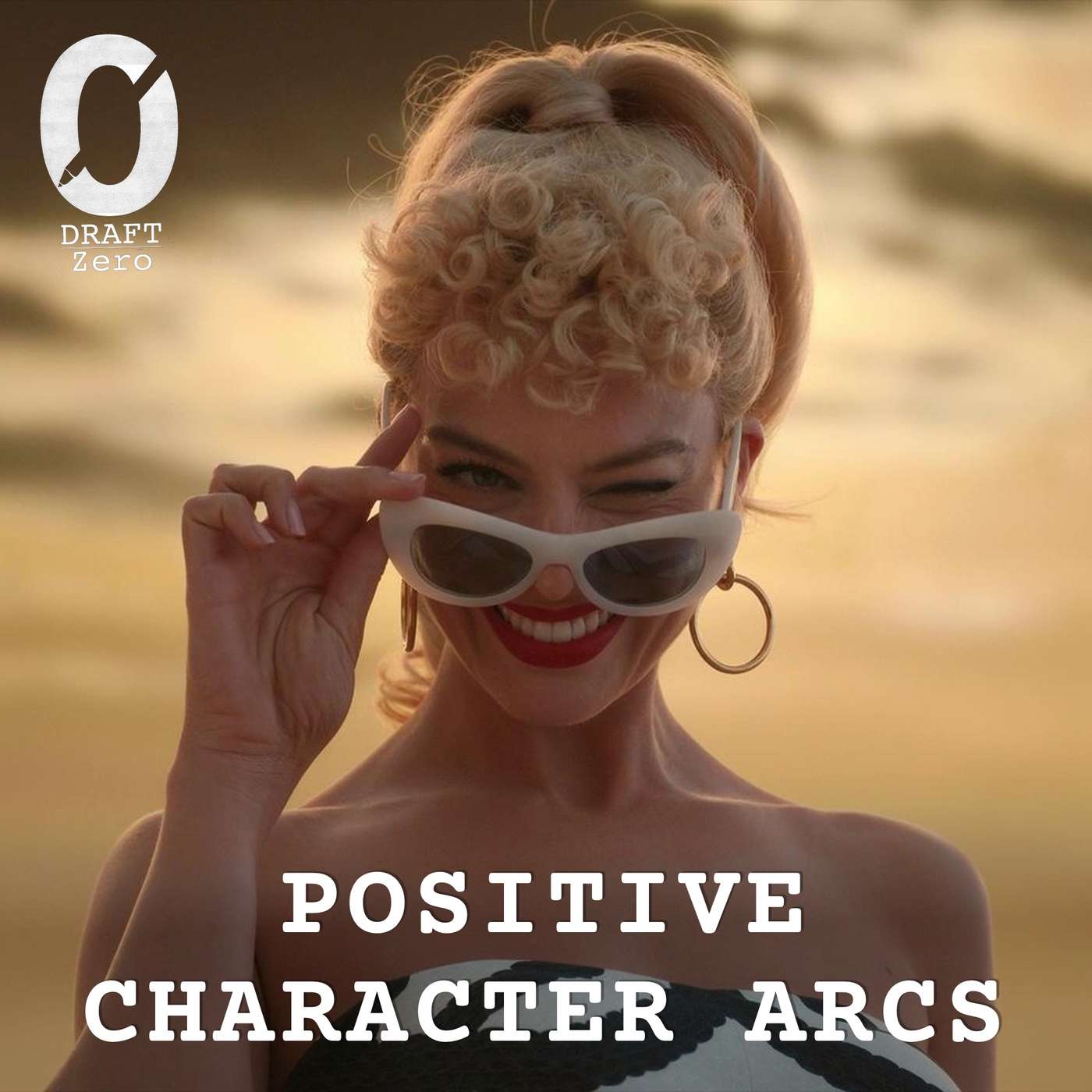 DZ-130: Positive Character Arcs 01.09.2026 2h 32minListen to understand how to dramatize a character's internal change. Welcome to our third entry in our character arc series; and the first where we talk about characters that actually change. And positively, too. We deep dive into BARBIE, WIDOWS and ALL OF US STRANGERS to work out what makes an arc feel positive -- even if the film itself is heartbreaking. All three films are "positive arcs" that feel wildly different. We speculate whether that's due to the nature of the relationship questions, the use of additive/subtractive rewards; and whether it's do with the connection of the characters needs and their goals. We further crystalize two tools we've been kicking around: The relationship question — take a character question ("will she learn to connect?") and pose it as a relationship problem ("will these two grow closer or further apart?"). Additive vs subtractive rewards — We continue buildling on this idea from our Steadfast episodes. Does the story give the character something or take something away? And is that a good or a bad thing? And Mel brings up a third: Repeating a beat from a different angle so we can trace a character's gradual evolution. We also debate whether Barbie's void scene is a producer's note personified — a director going into the endless nothing to spell the themes out one more time. All this and more on DZ-130! As always: SPOILERS ABOUND and all copyright material used under fair use for educational purposes. LIKE THIS EPISODE? Watch and comment on YouTube. Send us feedback. Send us a voice message via Speakpipe! Thanks to our Patrons, especially Khrob, Theis, Sandra, Jesse, Randy, Paulo, Thomas, Jennifer, Malay, Alexandre & Natalie and Lily. → Read the transcript for this episode. ——— "A relationship question is taking what we think is an internal question about a character and defining it in terms of the relationship. Will Moana grow closer to their village coming back or will they'll grow further apart?" — Stu Willis @ 00:06:09 ——— CHAPTERS 00:00:00 – Cold Open 00:00:21 – Positive Character Arcs 00:04:47 – › Relationship questions as the key to dramatizing arcs 00:09:00 – Followup Questions 00:12:12 – Zero Context Insights 00:13:01 – BARBIE 00:17:16 – › The void scene with Barbie's creator 00:23:13 – › Immortality versus death as the real choice 00:27:02 – › Debating the lie the character believes 00:44:26 – › Gain versus loss framing the ending 00:52:34 – › Contrast and affinity 00:59:47 – WIDOWS 01:05:47 – › Establishing character patterns before the heist begins 01:09:37 – › Do the widows have values before the story starts 01:18:42 – › Skills and goals tightly tied to character growth 01:21:04 – › Alice's escalating value shift through the sugar daddy scene 01:25:04 – › Linda's grief scene and steadfast versus positive arcs 01:27:12 – › Veronica's arc through Harry's betrayal and revenge 01:39:33 – › Comparing ensemble arcs to OCEAN'S ELEVEN and THE TOWN 01:46:46 – › Relationship questions as emotional engine of ensemble films 01:49:36 – ALL OF US STRANGERS 01:55:38 – › Rebuffing Harry sets up the positive arc 02:02:15 – › Isolation to connectedness as the emotional throughline 02:07:24 – › Contrasting coming out scenes with mom and dad 02:11:26 – › The low point as emotional violence not distance 02:18:48 – › Dream logic and touch as physical arc tracking 02:23:20 – Key Learnings & Wrap Up 02:26:20 – › Additive versus subtractive rewards in character arcs 02:29:58 – › Patreon shoutouts and next episode preview FILMS BARBIE (2023) — (w) Noah Baumbach, Greta Gerwig (d) Greta Gerwig WIDOWS (2018) — (w) Gillian Flynn, Steve Mcqueen (d) Steve Mcqueen ALL OF US STRANGERS (2023) — (w) Andrew Haigh, Taichi Yamada (d) Andrew Haigh SCRIPTS Study the script: BARBIE (2023) — Noah Baumbach, Greta Gerwig Study the script: ALL OF US STRANGERS (2023) — Andrew Haigh, Taichi Yamada SHOT ZERO DEEP DIVES What You Don't See: WIDOWS Frames within Frames: ALL OF US STRANGERS LINKS Read: Colour Theory: DESERT HEARTS Read: Greta Gerwig Explains What Barbie's Bench Scene Really Means EPISODES IN THE CHARACTER ARCS SERIES DZ-128: What even is a Character Arc? DZ-129: Steadfast Character Arcs - Agents of Change DZ-130: Positive Character Arcs RELATED EPISODES DZ-108: The Emotional Event with Judith Weston DZ-112: Breaking the 4th wall DZ-113: Tools For Filmmakers To Talk To The Audience ——— More Draft Zero is brought to you by our awesome Patreons. If you enjoy the show, please leave a review on Apple Podcasts, a rating on Spotify, or a review on Podchaser. We are @stuwillis, @mehlsbells and @chasffisher on Twitter. You can find @draft_zero and @_shotzero on Instagram and Twitter. Full show notes at: https://draft-zero.com/2026/dz-130/
 -
 Teaser: Positive Character Arcs 27.08.2026 1minTeaser for our next episode: DZ-130. Please watch BARBIE, WIDOWS, and ALL OF US STRANGERS so you can learn about positive character arcs.
 -
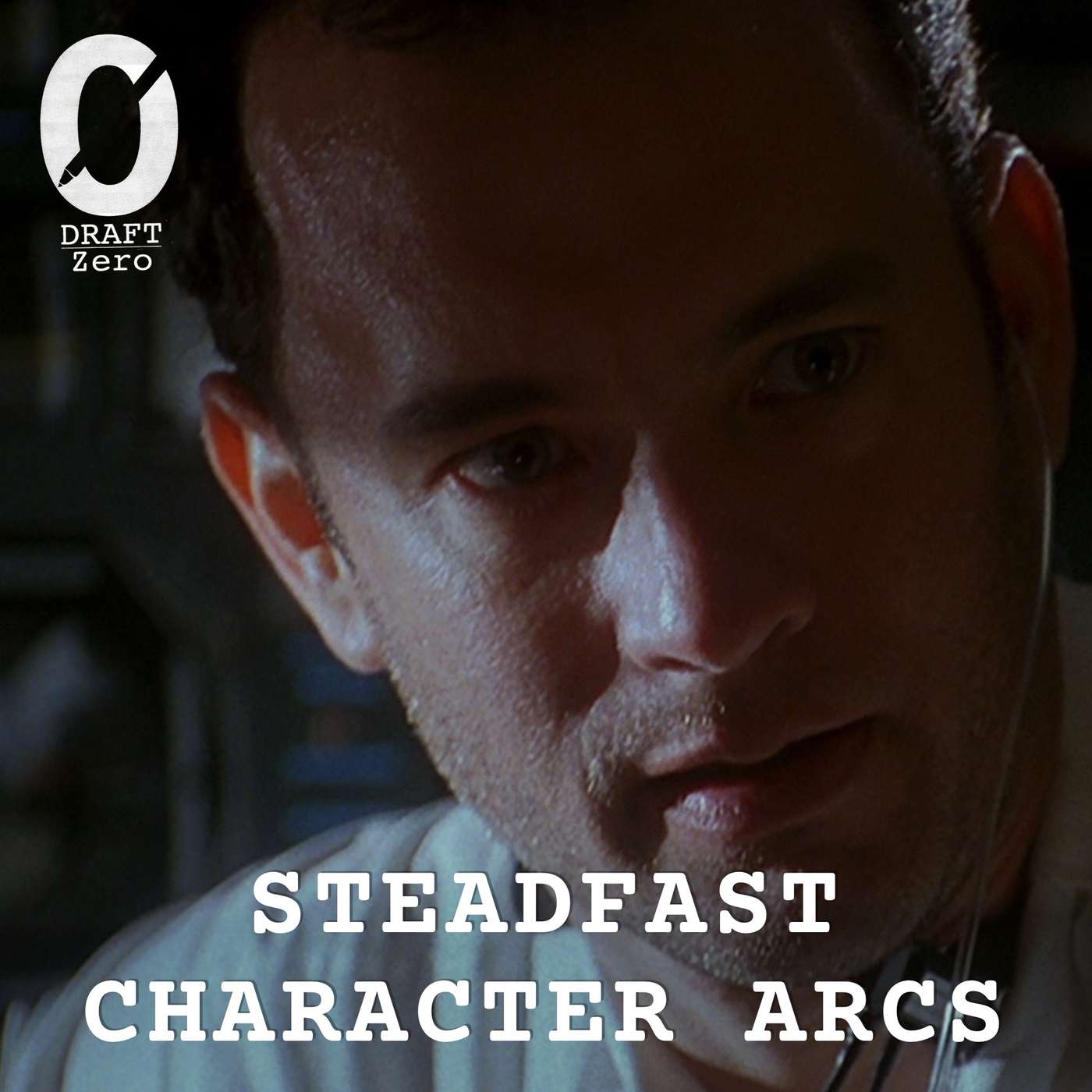 DZ-129: Steadfast Character Arcs - Agents of Change 01.08.2026 2h 36minListen to learn how to move an audience with a character who never changes. Do characters need to change for you to have a satisfying story? That's a question we've been asking since, like, episode five of this podcast. And we're finally talking about them - whatever you call 'em: steadfast, resilent, or flat arcs. To that end, we breakdown MOANA, APOLLO 13, and THE DRESSMAKER to work out what carries a story when a character arc doesn't. If your protagonist isn't going to change, the drama has to come from what they do to everyone else. We develop some tools that we reckon carry a steadfast story: doubt and wobble (a character with no doubt isn't steadfast, they're a psychopath) emotional events between characters additive rewards (something is gained) versus subtractive ones (something is taken away) - a distinction we've borrowed borrowed from operant conditioning; and how that difference changes the emotional tone of an ending. The subtractive reward is why a happy ending can still feel like loss... and it's the thing we reckon that'll matter most when we get to negative arcs. Chas, Mel and Stu also wibble-wobble over WILLOW, TAKEN, FERRIS BUELLER'S DAY OFF, THE MARTIAN, PROJECT HAIL MARY, THE GREY, ALL IS LOST, STAR WARS (as always), GREY GARDENS, PRISCILLA, and how many tampons NASA sent to space. As always: SPOILERS ABOUND and all copyright material used under fair use for educational purposes. LIKE THIS EPISODE? Discuss with our Patrons on Patreon. Join the discussion on Reddit. Watch and comment on YouTube. Send us feedback. Send us a voice message via Speakpipe! Thanks to our Patrons, especially Khrob, Theis, Sandra, Jesse, Randy, Paulo, Thomas, Jennifer, Malay, Alexandre & Natalie and Lily. → Read the transcript for this episode. ——— "If your characters are not going to arc, if they are going to remain steadfast, then creating multiple smaller emotional events is really important to keep the story dynamic." — Mel Killingsworth @ 02:32:01 ——— CHAPTERS 00:00:00 – Cold Open 00:00:18 – What Is a Steadfast Character Arc? 00:04:24 – › Character as habitual action defines change 00:06:11 – › Operant conditioning reframes reward and punishment beats 00:09:14 – › Steadfast characters still need emotional stakes and impact 00:10:33 – The Questionnaire for Analysing Character Arcs 00:12:18 – MOANA 00:16:12 – › The I Want song and being pulled versus pushed 00:18:19 – › Doubt as necessary proof of steadfast resilience 00:26:54 – › Distinguishing upskilling and reward from true character change 00:27:25 – › Maui's full arc contrasts with Moana's steadfastness 00:41:15 – › Genre expectations teach the audience to predict steadfastness 00:45:10 – › Tracking Maui's and Moana's dramatized moments of change 00:53:08 – APOLLO 13 00:58:52 – › Riveting problem solving without character values changing 01:01:07 – › Jim and jack relationship as substitute emotional arc 01:12:12 – › Comparing disaster films that punish or reward steadfastness 01:20:02 – › Working through the arc questionnaire for the film 01:33:53 – THE DRESSMAKER 01:38:14 – › Debating whether THE DRESSMAKER is steadfast or positive 01:44:54 – › Tracking Tilly's three objectives and mystery of the curse 01:50:37 – › Teddy's death as subtractive reward and negative punishment 01:57:00 – › GREY GARDENS parallels and the town as social environment 02:03:10 – › How Tilly's steadfastness transforms the town around her 02:16:37 – › Testing audience expectations for change versus subversion 02:24:48 – › Values of beauty, love, and vengeance in the story world 02:31:45 – Key Learnings & Wrap Up FILMS MOANA (2016) — (w) Jared Bush, Ron Clements, John Musker, Chris Williams, Don Hall, Pamela Ribon, Aaron Kandell, Jordan Kandell (d) John Musker, Ron Clements THE DRESSMAKER (2015) — (w) Jocelyn Moorhouse, Pj Hogan, Rosalie Ham (d) Jocelyn Moorhouse APOLLO 13 (1995) — (w) William Broyles Jr, Al Reinert, Jeffrey Kluger, Jim Lovell (d) Ron Howard EPISODES IN THE CHARACTER ARCS SERIES DZ-128: What even is a Character Arc? DZ-129: Steadfast Character Arcs - Agents of Change DZ-130: Positive Character Arcs RELATED EPISODES DZ-108: The Emotional Event with Judith Weston DZ-126: Secrets and Clues DZ-128: What even is a Character Arc? ——— More Draft Zero is brought to you by our awesome Patreons. If you enjoy the show, please leave a review on Apple Podcasts, a rating on Spotify, or a review on Podchaser. We are @stuwillis, @mehlsbells and @chasffisher on Twitter. You can find @draft_zero and @_shotzero on Instagram and Twitter. Full show notes at: https://draft-zero.com/2026/dz-129/
 -
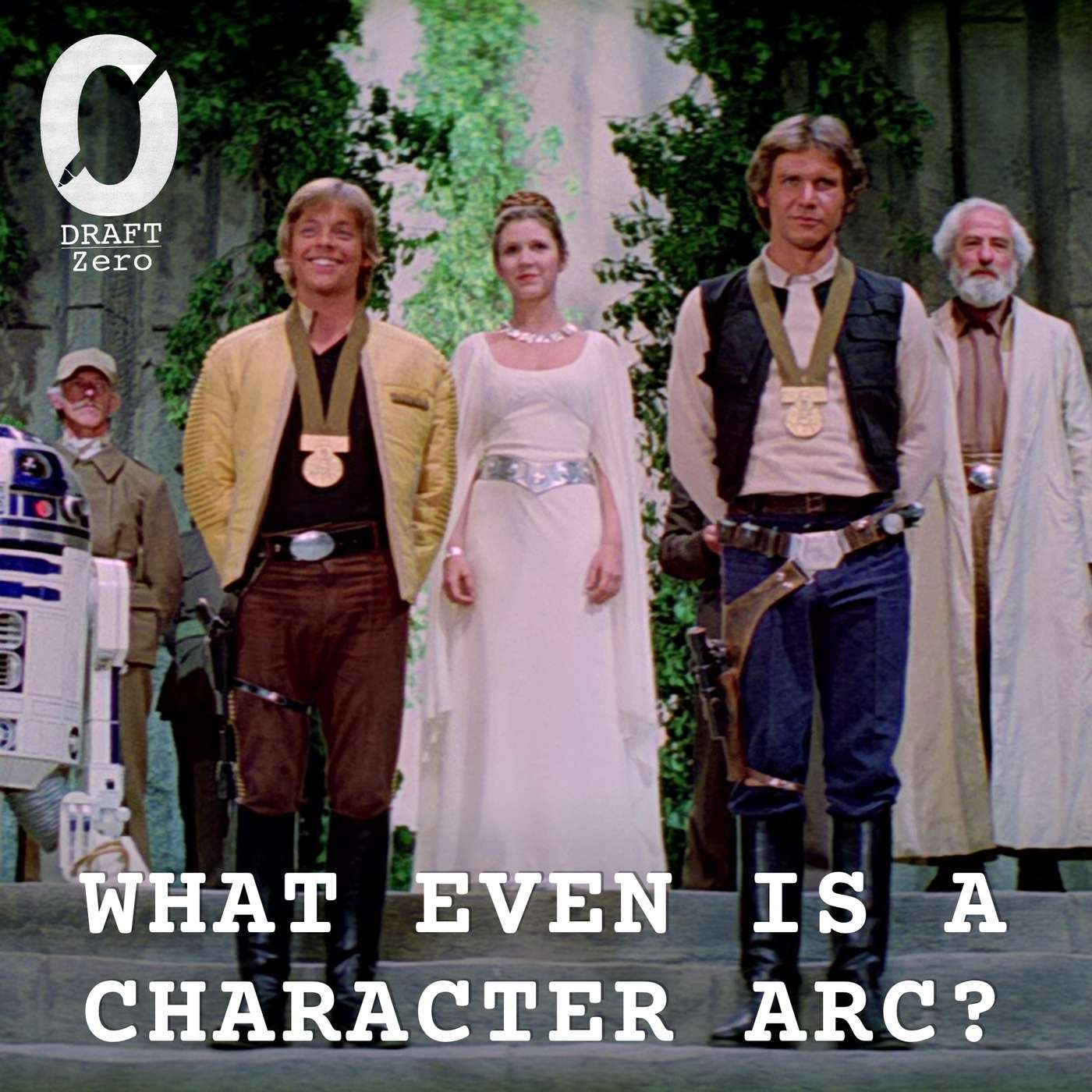 DZ-128: What even is a Character Arc? 28.06.2026 1h 30minListen to separate the three layers of an arc -- does the character change? How do they feel about it? And how is the audience positioned to feel about it? Stu, Chas and Mel finally begin their long-awaited journey into CHARACTER ARCS. In this "primer" episode, we try find some learnings and analytical lenses that we can then apply in future breakdowns. In this episode, we explore differences between a character learning something and a character fundamentally changing, how to dramatise that, and how the show teaches the audience to perceive that transformation (whether positively or negatively). Throughout the discussion, we skate over A NEW HOPE, BLUE MOON, BREAKING BAD, BETTER CALL SAUL, the French real-time thriller FULL TIME, A KNIGHT OF THE SEVEN KINGDOMS, THE GREEN KNIGHT, ALL OF US STRANGERS, PREDATOR BADLANDS, FIELD OF DREAMS, MEG 2, and Stu's receding hairline. Ultimately, this discussion synthesises into a series of questions to ask of a story and the main point-of-view character living through that story: Does the audience enter the story with an expectation that characters will change? How does the story teach the audience to expect characters to change or not? Do the characters change? Is it experiential change or internal value change? How is that dramatised? Is the character aware that they changed? How do they feel about that change? Does that matter? How does the story want the audience to feel about that change? If different to the character’s perception, how does the story pull that off? How does the story world punish or reward the change? What are the values explored by the arc? How does this relate to the theme? How is contrast vs affinity/unity portrayed through the characters’ journey? Order vs disorder vs inertia What is the emotional event created between the character and audience as a result of the journey? Does the character end up more intimate or distant from the audience? In upcoming episodes, we intend to apply these lenses to stories with STEADFAST/RESILIENT arcs, POSITIVE arcs, NEGATIVE arcs and - potentially - a “WTF is this?!” arc. Please check out our homework discussion on Patreon. And if you want to vote on the stories we're gonna breakdown, sign up! As always: SPOILERS ABOUND and all copyright material used under fair use for educational purposes. LIKE THIS EPISODE? Discuss with our Patrons on Patreon. Join the discussion on Reddit. Watch and comment on YouTube. Send us feedback. Thanks to our Patrons, especially Khrob, Theis, Sandra, Jesse, Randy, Paulo, Thomas, Jennifer, Malay, Alexandre & Natalie and Lily. → Read the transcript for this episode. ——— "Character arcs are really difficult to talk about because they're not just in isolation. Rarely is a film only about one character, right? So we're actually talking about how we harmonize other characters around them." — Stu Willis @ 00:12:16 ——— CHAPTERS 00:00:00 – Cold Open 00:00:17 – Character Arcs: A Primer on What We're Really Asking 00:03:13 – › Three layers of an arc: character, self-perception, audience 00:07:04 – › The four-quadrant map: change, no change, better, worse 00:10:15 – › Why calling it an arc is already a misnomer 00:13:35 – What We Each Want to Learn from This Series 00:19:56 – › Whether emotional authenticity is becoming more valuable than spectacle 00:23:37 – › Why stories let us safely inhabit experiences outside our own 00:30:04 – The Deep Question: Can Characters Actually Change? 00:35:49 – › Contrast and affinity as the design logic of transformation 00:41:40 – › The rock metaphor: external forces versus intrinsic change 00:46:43 – › Order, disorder, and inertia as the spectrum of arc types 00:50:29 – Three Layers of Judgment: Character, World, and Audience 00:56:45 – › How the filmmaker positions the audience relative to the character 01:00:01 – › Do audiences enter stories expecting change at all? 01:06:09 – › Mapping the inner journey against plot beats 01:09:28 – › Why low points exist to make the climax feel earned 01:12:09 – Key Learnings & Wrap Up 01:26:47 – Thanks to Our Patreons! FILMS STAR WARS (1977) — (w) George Lucas SHOWS A KNIGHT OF THE SEVEN KINGDOMS — (w) George Rr Martin, Ira Parker BETTER CALL SAUL — (w) Vince Gilligan, Peter Gould BREAKING BAD — (w) Vince Gilligan LINKS Website: Bruce Block's The Visual Story EPISODES IN THE CHARACTER ARCS SERIES DZ-128: What even is a Character Arc? RELATED EPISODES DZ-04: Catharsis and the Post-Coital Cigarette DZ-108: The Emotional Event with Judith Weston ——— More Draft Zero is brought to you by our awesome Patreons. If you enjoy the show, please leave a review on Apple Podcasts, a rating on Spotify, or a review on Podchaser. We are @stuwillis, @mehlsbells and @chasffisher on Twitter. You can find @draft_zero and @_shotzero on Instagram and Twitter. Full show notes at: https://draft-zero.com/2026/dz-128/
 -
 DZ-127: Secrets and Clues 2 - The Cost of Revelation 27.05.2026 1h 51minListen to learn the emotional impact of revealing secrets vs discovering them. In this episode Stu, Chas and Mel apply the Landmark–Hidden–Secret framework (from DZ-126) across two very different genres: the thriller SIDE EFFECTS (2013) and the tragicomic pilot of SHRINKING. SIDE EFFECTS is a film of two genres. The first half plays as a drama about depression and over-medication; the second half is a 90s thriller. We talk about how every time Dr Jonathan Banks uncovers a new piece of information, it puts him in danger — and that danger motivates him to uncover more. In SHRINKING, we see a different use of the framework. "What are psychologists but detectives of the mind?" Rather than the cost of finding secrets, it's about the cost of sharing them. Chas also comes out of this with a paradigm he's been building toward (but we're keeping what that is secret until you listen!) And inevitably we go on some tangents: whether SIDE EFFECTS should even have been an erotic thriller! As always: SPOILERS ABOUND and all copyright material used under fair use for educational purposes. LIKE THIS EPISODE? Discuss with our Patrons on Patreon. Join the discussion on Reddit. Watch and comment on YouTube. Send us feedback. Thanks to our Patrons, especially Khrob, Theis, Sandra, Jesse, Randy, Paulo, Thomas, Jennifer, Malay, Alexandre and Lily. → Read the transcript for this episode. ——— "Every time Dr Jonathan Banks uncovers a new piece of information, it puts him in danger -- and that danger motivates him to uncover more." — Chas Fisher @ 00:26:04 ——— CHAPTERS 00:00:00 – Cold Open 00:00:16 – Intro: Secrets and Clues 2 - the Cost of Revelation 00:01:03 – Previously on Secrets and Clues (Recap of Part 1) 00:04:24 – Flashforward Insights 00:09:29 – SIDE EFFECTS 00:20:18 – › The First Half: Push and Misdirection 00:28:41 – › Genre Shift: Banks Becomes the Detective 00:48:06 – SHRINKING 01:00:02 – › The Inverted Paradigm: When Everyone Knows 01:07:47 – › The Cost of Sharing 01:22:02 – › Power Through Honest Acknowledgement 01:35:37 – The Key Tool Chas Learned 01:39:28 – Key Learnings & Wrap Up 01:50:48 – Many Thanks to our Patrons! FILMS SIDE EFFECTS (2013) — (w) Scott Z Burns (d) Steven Soderbergh SHOWS SHRINKING — (w) Brett Goldstein, Jason Segel, Bill Lawrence SCRIPTS Study the script: SIDE EFFECTS (2013) — Scott Z Burns LINKS Website: DIY & dragons: Landmark, Hidden, Secret Website: The Alexandrian » Advanced Node-Based Design Website: Ascii Dreams: The Quest for Quests (Part One) Website: Ascii Dreams: The Quest for Quests (Part Two) EPISODES IN THE SECRETS AND CLUES SERIES DZ-126: Secrets and Clues DZ-127: Secrets and Clues 2 - The Cost of Revelation RELATED EPISODES DZ-90: Setups & Payoffs in EVERYTHING EVERYWHERE ALL AT ONCE ——— More Draft Zero is brought to you by our awesome Patreons. If you enjoy the show, please leave a review on Apple Podcasts, a rating on Spotify, or a review on Podchaser. We are @stuwillis, @mehlsbells and @chasffisher on Twitter. You can find @draft_zero and @_shotzero on Instagram and Twitter. Full show notes at: https://draft-zero.com/2026/dz-127/
 -
 DZ-126: Secrets and Clues 05.05.2026 1h 28minListen if you want to understand how hidden information drives character motivation and plot structure! “Getting information puts your character in danger. And danger rewards your character with information." — One of three ideas we steal from game design in this episode. In this two part series, we talk about how secrets, clues and hidden information motivate characters and may (or may not) help you plot from a character perspective. Part One (this episode) looks at WAKE UP DEAD MAN; while Part Two looks at SIDE EFFECTS, and the pilot episode of SHRINKING. The other two (related) ideas are: Landmark information (characters just have it), Secret (they know it's there, need to unlock it), and Hidden (invisible until they pay the cost) Narrative velocity — are characters pushed forward or are they pulled forward? To that end, in this episode Stu, Chas and Mel start with the murder mystery (ostensibly the easier deep-dive): Rian Johnson’s WAKE UP DEAD MAN. But this is a complex film made even more complex by being a dual-protagonist film. Uhuh. Benoit Blanc is pulled through the story by his need to solve the case; Father Judd pushed through, against his will, to prove his innocence. Breaking down how that plays out — and why it matters for the kind of escalation each character can sustain — is the heart of the episode. And inevitably we go on some tangents: pointers, plants, and underpinnings (from our Everything Everywhere All At Once episode) fair play in locked-room mysteries, Narrative POV (as always) and node-based plotting and what dungeon-crawl game design has to do with writing a web of clues. As always: SPOILERS ABOUND and all copyright material used under fair use for educational purposes. LIKE THIS EPISODE? Discuss with our Patrons on Patreon. Join the discussion on Reddit. Watch and comment on YouTube. Send us feedback. Thanks to our Patrons, especially Khrob, Theis, Sandra, Jesse, Randy, Paulo, Thomas, Jennifer, Malay, Alexandre and Lily. → Read the transcript for this episode. ——— "Information puts players in danger and danger rewards characters with information, right? That's kind of the loop with like thriller game design." — Stu Willis @ 00:05:40 ——— CHAPTERS 00:00:00 – Cold Open 00:00:18 – What do we mean by Secrets and Clues? 00:04:17 – › Landmark, hidden, and secret information defined 00:08:10 – › Narrative velocity as push and pull for characters 00:13:22 – WAKE UP DEAD MAN 00:17:56 – › Key learnings preview: push-pull and narrative velocity 00:32:33 – › Mapping character awareness of secrets through WAKE UP DEAD MAN 00:58:21 – › Distinguishing secrets, clues, and hidden information 01:13:17 – › Benoit Blanc's character arc and the choice of grace 01:22:50 – KEY LEARNINGS & WRAP UP 01:24:22 – › Character drives how secrets are hidden and revealed 01:25:34 – › Narrative velocity and escalating stakes reveal character FILMS WAKE UP DEAD MAN (2025) — (w) Rian Johnson SCRIPTS Study the script: WAKE UP DEAD MAN (2025) — Rian Johnson LINKS Read: DIY & dragons: Landmark, Hidden, Secret Read: The Alexandrian » Advanced Node-Based Design Read: Ascii Dreams: The Quest for Quests (Part 1) Read: Ascii Dreams: The Quest for Quests (Part 2) Read: Mel's KNIVES OUT: A Rose by Any Other Name Would Not Clue Us In EPISODES IN THE SECRETS AND CLUES SERIES DZ-126: Secrets and Clues DZ-127: Secrets and Clues 2 - The Cost of Revelation RELATED EPISODES DZ-90: Setups & Payoffs in EVERYTHING EVERYWHERE ALL AT ONCE ——— More Draft Zero is brought to you by our awesome Patreons. If you enjoy the show, please leave a review on Apple Podcasts, a rating on Spotify, or a review on Podchaser. We are @stuwillis, @mehlsbells and @chasffisher on Twitter. You can find @draft_zero and @_shotzero on Instagram and Twitter. Full show notes at: https://draft-zero.com/2026/dz-126/
 -
 DZ-125: Oscars One-shot - BLUE MOON 26.02.2026 1h 18minListen if you want to understand how narrative POV, screenplay format, and dialogue craft can elevate a contained biopic into an Oscar-nominated film BLUE MOON is a talky, period-drama that film about an obscure songer-writer in the 1940s. Yet, it attracted world-class talent AND Academy Award nominations, including for it's script. Join Chas & Mel as they explore how narrative POV, interweaving relationships, hooky dialogue, and even the screenplay format itself make the script for BLUE MOON so great. While Stu is still on show and we are between the 2026 Oscar nominations and the actual ceremony, our patreons selected BLUE MOON for this one-shot and boy are Mel and Chas glad they did. They dive into many lessons learned in previous episodes, like our character-driven episode… or analysis of French scenes in Adolescence… or the story-telling power that comes from the audience knowing the ending from biopics. As always: SPOILERS ABOUND and all copyright material used under fair use for educational purposes. LIKE THIS EPISODE? Discuss with our Patrons on Patreon. Watch and comment on YouTube. Send us feedback. Thanks to our Patrons, especially Khrob, Theis, Sandra, Jesse, Randy, Paulo, Thomas, Jennifer, Malay, Alexandre and Lily. → Read the transcript for this episode. ——— "When I say rules, I mean the prescriptive rules of when someone posts something on screenwriting and everyone goes *Oh, you broke all the rules*. I'm saying this is good. I'm saying most of those rules are suggestions or most of those rules are given to you when you are learning how to write for a reason." — Mel Killingsworth @ 00:38:42 ——— CHAPTERS 00:00:00 – Cold Open 00:00:32 – What Makes a Contained Biopic Compelling? 00:02:19 – Flashforward Insights: POV, French scenes, dialogue craft, and structure 00:04:32 – BLUE MOON: Plot Summary and Structural Overview 00:08:00 – › How script format signals emotional breaks in a real-time story 00:13:34 – Controlling narrative POV 00:17:13 – › Tragedy versus the life he would have chosen 00:24:09 – › Narrative POV as the film's core structural tool 00:27:49 – Using screenplay FORMAT to reflect the emotional story 00:31:56 – › French scenes and real-time spatial staging 00:35:40 – › How rule-breaking formatting signals emotional truth 00:39:27 – Interweaving relationships: Hart's Relationships as the A, B and C Stories 00:44:50 – › Hart and Rogers: the collision of artistic integrity and commercial success 00:49:14 – › Hart and Elizabeth: desire, repetition, and the just-not-that-way callback 00:53:08 – › The bar regulars as audience surrogates and mirror to Hart's self-awareness 00:56:46 – Repetition and pop culture references in dialogue 00:59:48 – › Repetition as lyrical structure in dialogue craft 01:03:49 – › Tonal variety and mixing registers in witty scripts 01:07:54 – Key Learnings 01:09:48 – › The hidden craft beneath real-time, single-location scripts 01:13:42 – › How cultural touchstones establish stakes without exposition 01:16:02 – Thanks patreons and Oscar-nominated listener! FILMS BLUE MOON (2026) — (w) Robert Kaplow (d) Richard Linklater LINKS Read: BLUE MOON - Scene Headings Breakdown RELATED EPISODES DZ-01: Do Screenplay Gurus win you Oscars? DZ-68: Using POV to structure KNIVES OUT DZ-118: ADOLESCENCE -- How Questions Create Dramatic Tension DZ-90: Setups & Payoffs in EVERYTHING EVERYWHERE ALL AT ONCE DZ-35: Driving Characters or Character Driven? DZ-63: Tools for Better Dialogue 2 - Hook and Eye ——— More Draft Zero is brought to you by our awesome Patreons. If you enjoy the show, please leave a review on Apple Podcasts, a rating on Spotify, or a review on Podchaser. We are @stuwillis, @mehlsbells and @chasffisher on Twitter. You can find @draft_zero and @_shotzero on Instagram and Twitter. Full show notes at: https://draft-zero.com/2026/dz-125/
 -
 DZ-124: Making the Despicable Compelling 30.01.2026 1h 10minListen if you need audiences to root for characters who do terrible things Mel and Chas continue to explore what Noir (the genre) can teach writers of all other genres. In particular: How to keep the audience on side of characters doing reprehensible things; How to control your audience understanding of those reprehensible actions; and Distinguishing between characters undergoing transformative arcs against discovering their true natures In finding the common craft tools of Noir over 100 years, this Part 2 looks at two modern noirs – DEVIL IN A BLUE DRESS (1995) and WOMAN OF THE HOUR (2024) – after Part 1 looked at the classic DOUBLE INDEMNITY and THE LONG GOODBYE. Despite Chas claiming to have edited this episode it was, in fact, Chris Walker who saved the day and got this done. Thanks Chris. As always: SPOILERS ABOUND and all copyright material used under fair use for educational purposes. LIKE THIS EPISODE? Watch and comment on YouTube. Send us feedback. Thanks to our Patrons, especially Khrob, Theis, Sandra, Jesse, Randy, Paulo, Thomas, Jennifer, Malay, Alexandre and Lily. → Read the transcript for this episode. ——— "I think these films have got really strong control over the questions and that's how they get us to follow, compelling us to follow characters who are doing terrible things." — Chas Fisher @ 01:06:08 ——— CHAPTERS 00:00:00 – Using noir as a lens 00:01:56 – DEVIL IN A BLUE DRESS 00:07:06 – › Period setting, race, and noir's embedded worldview 00:10:30 – › Voiceover as access to morally compromised decisions 00:22:02 – › How the film justifies rooting for Easy's transgressions 00:29:09 – › Character worldview versus film worldview in noir 00:31:33 – WOMAN OF THE HOUR 00:37:15 – › Why WOMAN OF THE HOUR qualifies as noir 00:43:25 – › The system as collective villain enabling the killer 00:53:12 – › Depiction without endorsement, empathy without sympathy 01:04:30 – Key Learnings 01:08:50 – Thank you Patreons! FILMS DEVIL IN A BLUE DRESS (1995) — (w) Carl Franklin, Walter Mosley (d) Carl Franklin WOMAN OF THE HOUR (2024) — (w) Ian Mcdonald (d) Anna Kendrick LINKS Shot Zero: Noir shots in WOMAN OF THE HOUR EPISODES IN THE NOIR SERIES DZ-123: Flawed Characters in Noir DZ-124: Making the Despicable Compelling RELATED EPISODES DZ-123: Flawed Characters in Noir DZ-03: Making Unlikeable Protagonists Compelling DZ-110: Voiceover ——— More Draft Zero is brought to you by our awesome Patreons. If you enjoy the show, please leave a review on Apple Podcasts, a rating on Spotify, or a review on Podchaser. We are @stuwillis, @mehlsbells and @chasffisher on Twitter. You can find @draft_zero and @_shotzero on Instagram and Twitter. Full show notes at: https://draft-zero.com/2026/dz-124/
 -
 DZ-123: Flawed Characters in Noir 31.12.2025 1h 22minListen if you want to write morally compromised characters without endorsing their choices. In this two part series, Mel and Chas use Noir (the genre) as a lens to interrogate flawed characters. How can characters doing reprehensible things still engage audiences? How can you ensure representation isn’t endorsement? And whether these characters undergo transformative arcs, or simply reveal their true natures? Part 1 (DZ-123) focuses on two (now classic) noirs: DOUBLE INDEMNITY and THE LONG GOODBYE. While Part 2 (DZ-124) looks at two more contemporary examples DEVIL IN A BLUE DRESS and WOMAN OF THE HOUR. Despite Chas claiming to have edited this episode it was, in fact, Chris Walker who saved the day and got this done by the end of 2025. Thanks Chris. As always: SPOILERS ABOUND and all copyright material used under fair use for educational purposes. LIKE THIS EPISODE? Discuss with our Patrons on Patreon. Watch and comment on YouTube. Send us feedback. Thanks to our Patrons, especially Lily, Paulo, Alexandre, Malay, Jennifer, Thomas, Randy, Jesse, Sandra, Theis and Khrob. → Read the transcript for this episode. ——— "This is the philosophical question, right? When you get drunk, do you change what you do or do you simply allow your inhibitions to fall and do what you would normally want to do?" — Mel Killingsworth @ 00:42:04 ——— CHAPTERS 00:00:00 – Cold Open 00:00:17 – Flawed Characters and Noir 00:03:06 – › Writing morally compromised characters without endorsing their worldview 00:08:41 – › Defining film noir as genre, style, and worldview 00:14:27 – › Noir's reach across decades of screenwriting 00:16:40 – DOUBLE INDEMNITY 00:21:41 – › Diegetic confession and its structural function 00:27:17 – › Telling the audience the crime upfront removes justification burden 00:32:24 – › How everyman framing sustains complicity in a morally bankrupt protagonist 00:41:43 – › Whether morally compromised characters genuinely change or self-reveal 00:49:17 – › Film worldview versus character desire: crime without endorsement 00:53:38 – THE LONG GOODBYE 01:00:17 – › Save the cat: establishing a morally complex protagonist 01:06:26 – › Transgression, personal code, and the inevitability of noir failure 01:14:13 – › Character change versus worldview shift at the ending 01:21:15 – Wrap Up and Key Learnings FILMS DOUBLE INDEMNITY (1944) — (w) Raymond Chandler, James M Cain, Billy Wilder (d) Billy Wilder THE LONG GOODBYE (1973) — (w) Leigh Brackett, Raymond Chandler (d) Robert Altman SCRIPTS Study the script: THE LONG GOODBYE (1973) — Leigh Brackett, Raymond Chandler SHOT ZERO DEEP DIVES Blocking a Sneak: DOUBLE INDEMNITY LINKS Read: Mel's A Brief History of Queer Coding in Film Part 1 EPISODES IN THE NOIR SERIES DZ-123: Flawed Characters in Noir DZ-124: Making the Despicable Compelling ——— More Draft Zero is brought to you by our awesome Patreons. If you enjoy the show, please leave a review on Apple Podcasts, a rating on Spotify, or a review on Podchaser. We are @stuwillis, @mehlsbells and @chasffisher on Twitter. You can find @draft_zero and @_shotzero on Instagram and Twitter. Full show notes at: https://draft-zero.com/2025/dz-123/
 -
 1dZ-01: Arkyvrs - A Mansion Most Vile - Ep1 26.10.2025 2h 8minWhat happens when a group of filmmakers play a ragtag group of filmmakers in a gritty sci-fi horror?"Ignite the fire within and explore unknown territory" - Werner Herzog.This episode is unusual, even by Draft Zero standards. It's an "Actual Play Podcast" where Chas, Stu, & Mel are joined by Kim Ho and Luke Clark to play MOTHERSHIP, the sci-fi horror game we talked about in episodes DZ-121 and DZ-122. Stu is the GM while everyone else is a ragtag crew of freelance filmmakers. We debrief the experience (so far) at the end of the episode)Mel plays Zara, the glamorous face of the operation. Chas plays Winston, the cynical and egoistical "photojournalist". Kim is Cal, the scrappy scrounger and sound recordists, while Luke is Tarsos the steadfast producer of the group. The crew are enlisted to record a sensationalist report on a missing corporate president before the mercenary retrieval team arrives.And yeah, this means we're soft-launching yet another project that's called 1dZ, which looks at how we can use tools from ttrpgs in screenwriting… and vice versa.To get future episodes go to: http://www.1d-zero.com/CHAPTERS00:00:11 - Intro for DZ Listeners00:01:51 - Meet the Snortin' Betsy00:06:22 - A Mansion Most Vile (Ep 1)01:52:32 - Debrief through TOMBSRELATED EPISODESDZ-121: Escalating Antagonism 1: SinnersDZ-122: Escalating Antagonism 2: Rebel Ridge + Meet the ParentsLINKSTuesday Knight GamesJoshua Kramer: A Mansion Most VileAlewood Games: ArkyvrNobody Wake the BugbearCampaign SuppliesMore Draft Zero is brought to you more often by our awesome Patreons. Especially Lily, Paulo, Alexandre, Malay, Jennifer, Thomas, Randy, Jesse, Sandra, Theis, and Khrob.Please considering rating or subscribing to us on Apple Podcasts or sharing us on the Social Medias! We like finding new listeners.We are @stuwillis, @mehlsbells and @chasffisher on Twitter. You can find @draft_zero and @_shotzero on Instagram and Twitter.SUBSCRIBE TO SHOT ZERO via SubstackSUBSCRIBE TO 1DZERO via SubstackACKNOWLEDGES via our website: https://draft-zero.com/2025/1dz-01/
 -
 DZ-122: Escalating Antagonism Across Genres 01.10.2025 1h 44minListen to learn how thinking of your hero as the horror (for your villains) makes your script dynamic. In this episode Chas, Stu and guest Kim Ho continue their exploration into the power(s) of antagonism and how focusing on them can develop story. While Part 1 looked at the horror film SINNERS, in Part 2 we venture into genres beyond horror with the action-thriller REBEL RIDGE, and the comedy classic MEET THE PARENTS. To both these films we apply the generative story framework TOMBS (Transgression – Omens – Manifestation – Banishment – Slumber) and are surprised at just how well it maps. TOMBS comes from the MOTHERSHIP sci-fi horror table-top role-playing game. Which we love. We explore how TOMBS, and thinking about antagonism in general, allows writers to deepen their understanding of their characters, their relationship of the heroes with the antagonists, and generate story fuel in a way that escalates the story. We discuss how thinking of your hero as the horror for your villains helps everything become more dynamic. Oh, and we talk about launching an actual play podcast. Which is happening. Stay tuned! As always: SPOILERS ABOUND and all copyright material used under fair use for educational purposes. LIKE THIS EPISODE? Discuss with our Patrons on Patreon. Watch and comment on YouTube. Send us feedback. Thanks to our Patrons, especially Lily, Paulo, Alexandre, Malay, Jennifer, Thomas, Randy, Jesse, Sandra, Theis and Khrob. → Read the transcript for this episode. ——— "There's a great line from Don Johnson later where he says, the deal was fair. The issue is that you felt that you were allowed to offer it. He tells him that he has transgressed against the rules of the laws or the rules of this system of this world." — Chas Fisher @ 00:12:09 ——— CHAPTERS 00:00:00 – Cold Open 00:00:12 – Escalating Antagonism Part 2 00:03:29 – REBEL RIDGE 00:09:30 – › Writing loglines from the antagonist's perspective 00:14:36 – › Tombs cycle maps onto hero and villain escalation 00:25:07 – › Solve, survive, save structure in action films 00:33:16 – › Self-restraint as survival within systemic corruption 00:45:30 – MEET THE PARENTS 00:51:55 – › Greg's lying as the true transgression engine 00:57:41 – › Structural turning points and escalating disaster beats 01:01:28 – › Jack versus Greg's insecurity as twin sources of antagonism 01:19:33 – › Applying TOMBS structure to map omens and manifestation 01:30:29 – Key Learnings & Wrap Up 01:34:38 – › Mapping antagonism sources to escalate story conflict 01:38:53 – › Expanding beyond Western storytelling structures 01:41:38 – Thanks to our Patreons FILMS REBEL RIDGE (2024) — (w) Jeremy Saulnier MEET THE PARENTS (2000) — (w) Jim Herzfeld, John Hamburg (d) Jay Roach LINKS IMDB: Kim Ho Explore: Mothership YouTube: The Philosophy of Final Destination Read: The Philosophy of Horror or Paradoxes of the Heart by Noël Carroll YouTube: GinnyDI - "This Game used 5 steps to scare the crap out of me" Listen: 1dZ-01: Arkyvrs - A Mansion Most Vile - Ep1 EPISODES IN THE ESCALATING ANTAGONISM SERIES DZ-121: Escalating Antagonism in SINNERS DZ-122: Escalating Antagonism Across Genres RELATED EPISODES DZ-49: Antagonists! 1 - vs Humans ——— More Draft Zero is brought to you by our awesome Patreons. If you enjoy the show, please leave a review on Apple Podcasts, a rating on Spotify, or a review on Podchaser. We are @stuwillis, @mehlsbells and @chasffisher on Twitter. You can find @draft_zero and @_shotzero on Instagram and Twitter. Full show notes at: https://draft-zero.com/2025/dz-122/
 -
 DZ-121: Escalating Antagonism in SINNERS 29.08.2025 1h 24minListen to strengthen your story by focusing on the antagonistic forces in your script. We often struggle to develop the middle stages of a story. Could this be because we focus on our protagonists’ journeys and plot structure more than on how the antagonistic powers are awakened, wronged, discovered, gathering strength and revealing themselves? In this episode, Chas and Stu are joined by professional screenwriter and playwright Kim Ho to explore how a generative story cycle (from tabletop role-playing game MOTHERSHIP) can be used to develop stories, not just write them better. This cycle is TOMBS: Transgression – Omens – Manifestation – Banishment – Slumber. Kim also contrasts this cycle with the Onset, Discovery, Confirmation, Confrontation cycle identified by horror philosopher Noel Carroll, as well as the philosophy of the FINAL DESTINATION franchise as analysed by The Morbid Zoo. By applying the TOMBS cycle to Ryan Coogler’s amazing 2025 original feature SINNERS, we discover how focusing on the rising power of the various sources of antagonism can generate narrative fuel (and make your second Act sing); force your protagonists to Survive, Solve or Save (pick one); and how this escalation in antagonism can be mapped quite separately from your protagonists’ character arcs. To prove that TOMBS does not just work for horror stories, we polled our patreons for which other genres to explore. Stay turned for the next episode (DZ-122) where we apply the TOMBS cycle to thriller REBEL RIDGE and comedy classic MEET THE PARENTS. As always: SPOILERS ABOUND and all copyright material used under fair use for educational purposes. LIKE THIS EPISODE? Discuss with our Patrons on Patreon. Watch and comment on YouTube. Send us feedback. Thanks to our Patrons, especially Lily, Paulo, Alexandre, Malay, Jennifer, Thomas, Randy, Jesse, Sandra, Theis and Khrob. → Read the transcript for this episode. ——— "when you use those structures that are out there, they tend to be around plot and they tend to think primarily from the protagonist's point of view. And using this system, we can actually look at the forces of antagonism in a story." — Chas Fisher @ 00:06:31 ——— CHAPTERS 00:00:00 – Cold open 00:00:18 – What is T.O.M.B.S? 00:06:31 – › How TOMBS shifts focus to antagonistic forces 00:15:22 – › Reading the five stages of the TOMBS cycle 00:24:12 – › Transgression as thematic and social boundary violation 00:31:04 – SINNERS 00:36:01 – › Delayed horror manifestation and the TOMBS framework 00:45:31 – › Mapping transgression and omens across dual antagonists 00:57:48 – › Confirmation, confrontation, and the stages of horror 01:08:09 – › Survive, solve, save as competing character objectives 01:17:51 – Key Learnings & Wrap Up 01:23:51 – Thank you patreons! FILMS SINNERS (2025) — (w) Ryan Coogler SCRIPTS Study the script: SINNERS (2025) — Ryan Coogler LINKS IMDB: Kim Ho Explore: Mothership YouTube: The Philosophy of Final Destination by the Morbid Zoo Read: The Philosophy of Horror by Noel Carroll EPISODES IN THE ESCALATING ANTAGONISM SERIES DZ-121: Escalating Antagonism in SINNERS DZ-122: Escalating Antagonism Across Genres RELATED EPISODES DZ-49: Antagonists! 1 - vs Humans ——— More Draft Zero is brought to you by our awesome Patreons. If you enjoy the show, please leave a review on Apple Podcasts, a rating on Spotify, or a review on Podchaser. We are @stuwillis, @mehlsbells and @chasffisher on Twitter. You can find @draft_zero and @_shotzero on Instagram and Twitter. Full show notes at: https://draft-zero.com/2025/dz-121/
 -
 DZ-120: Subtext is Overrated! 01.08.2025 1h 54minListen if you're struggling to write subtext without it feeling forced! Or, how focusing on good drama will result in good subtext. We often hear how subtext is important for good screenwriting. We're here to tell you it isn't. Good subtext is a result of good drama, and your focus should be on creating that good drama. But how? In this episode, Chas Fisher and Stu Willis are joined by screenwriter and teacher Tom Vaughn (Winchester) to delve into the world of subtext. We kick off the discussion by talking through Tom's article "Why Subtext is Overrated" and break down his core idea that subtext is a byproduct of character goals, tactics and fears. We explore this further through close examination of "the other way" scene from MICHAEL CLAYTON, "the strudel" scene from INGLOURIOUS BASTERDS (both known for their subtext) and the "new years" sequence from THE SUBSTANCE. Inevitably discussion also turns to the relationship of subtext to emotional truth, theme, symbolism, dramatic irony and filmmaker's subtext. As always: SPOILERS ABOUND and all copyright material used under fair use for educational purposes. LIKE THIS EPISODE? Discuss with our Patrons on Patreon. Watch and comment on YouTube. Send us feedback. Thanks to our Patrons, especially Lily, Paulo, Alexandre & Natalie, Malay, Jennifer, Thomas, Randy, Jesse, Sandra, Theis and Khrob. → Read the transcript for this episode. ——— "You can't market subtext, man." — Tom Vaughn @ 00:36:51 ——— CHAPTERS 00:00:20 – Intro: What is Subtext? 00:00:21 – Cold Open 00:18:59 – MICHAEL CLAYTON 00:23:18 – › How character tactics generate subtext organically 00:27:26 – › Scene structure breaks down three beats of deniability 00:35:25 – › Subtext requires narrative groundwork to land 00:42:59 – INGLOURIOUS BASTERDS 00:46:34 – › French scene structure and dramatic setup 00:53:38 – › Filmmaker subtext versus character-driven tension 01:08:35 – › Writing the score: action lines as emotional music 01:13:48 – THE SUBSTANCE 01:17:41 – › Originality vs. universality in thematic storytelling 01:23:42 – › Reading the script's literal big print as filmmaker subtext 01:35:46 – › Irony and denial as competing interpretations of the ending 01:42:23 – › Subtext through fear: the date scene as contrast 01:46:13 – Wrap up & Key Learnings 01:48:00 – › Two layers of subtext: character awareness vs. filmmaker control 01:49:18 – › Subtext as spectrum between explicit and implicit meaning FILMS MICHAEL CLAYTON (2007) — (w) Tony Gilroy INGLOURIOUS BASTERDS (2009) — (w) Quentin Tarantino THE SUBSTANCE (2024) — (w) Coralie Fargeat SCRIPTS Study the script: MICHAEL CLAYTON (2007) — Tony Gilroy Study the script: INGLOURIOUS BASTERDS (2009) — Quentin Tarantino Study the script: THE SUBSTANCE (2024) — Coralie Fargeat LINKS Read: The New Literalism Plaguing Today's Biggest Movies Read: Emotional Truth Over Subtext: Unlocking Compelling Scenes in Your Screenwriting Website: Story and Plot YouTube: Raising the Stakes - What is Subtext? RELATED EPISODES DZ-40: Tactics and Scenes DZ-108: The Emotional Event with Judith Weston DZ-119: Final Character Choices & Great Endings ——— More Draft Zero is brought to you by our awesome Patreons. If you enjoy the show, please leave a review on Apple Podcasts, a rating on Spotify, or a review on Podchaser. We are @stuwillis, @mehlsbells and @chasffisher on Twitter. You can find @draft_zero and @_shotzero on Instagram and Twitter. Full show notes at: https://draft-zero.com/2025/dz-120/
 -
 DZ-119: Final Character Choices & Great Endings 18.06.2025 1h 52minListen if you want to understand how to better dramatise a character's internal journey In this episode, Stu and Chas focus solely on the final choices made by protagonists and how that reflects their character journey and successfully, or not, dramatises the internal. We compare and contrast different uses of narrative POV in respect to these final choices. And in particular whether and when the audience is made aware of the options available to the character, the act of making the choice, and the consequences of the choice. We breakdown examples from DUNGEONS & DRAGONS: HONOR AMONG THIEVES, FINDING NEMO, MICHAEL CLAYTON, PROMISING YOUNG WOMAN and TALK TO ME. As always: SPOILERS ABOUND and all copyright material used under fair use for educational purposes. LIKE THIS EPISODE? Discuss with our Patrons on Patreon. Watch and comment on YouTube. Send us feedback. Thanks to our Patrons, especially Lily, Paulo, Alexandre, Malay, Jennifer, Thomas, Randy, Jesse, Sandra, Theis and and Khrob. → Read the transcript for this episode. ——— "A character has to make the most difficult decision of their life, and it becomes the crisis because each alternative poses a loss as well as a gain. And so, therefore, characters have to weigh what really matters most to them." — Stu Willis @ 00:23:48 ——— CHAPTERS 00:00:00 – Opening 00:00:18 – Why Final Choices? 00:03:49 – › Narrative point of view and the order of choice, decision, consequence 00:07:03 – › How withholding character decisions shapes audience perception 00:10:45 – DUNGEONS & DRAGONS 00:15:57 – › The hero's choice: want vs. need, self vs. family 00:19:09 – FINDING NEMO 00:23:30 – › Crisis decision, catharsis beats, and the anatomy of a powerful ending 00:28:45 – MICHAEL CLAYTON 00:33:26 – › The Snowpiercer moment: dramatising binary choice visually 00:40:37 – › Hero's choice made off-camera and revealed through Karen's perspective 00:48:36 – › Character arc, theme, and the cost of moral compromise 00:53:11 – PROMISING YOUNG WOMAN 00:58:28 – › Withheld plans and dramatic tension in the third act 01:05:52 – › Posthumous agency and the hero's choice after death 01:13:45 – › Logic problems and the power of cinema over narrative precision 01:16:38 – TALK TO ME 01:19:39 – › Story structure and setup of TALK TO ME 01:27:36 – › The withheld decisive act at the climax 01:35:11 – › Ambiguity versus clarity in the film's meaning 01:41:45 – Key Learnings 01:44:37 – › Setup work that empowers climactic decisions 01:50:13 – Thanks awesome patreons! FILMS DUNGEONS & DRAGONS: HONOR AMONG THIEVES (2023) — (w) John Francis Daley, Jonathan Goldstein, Michael Gilio (d) John Francis Daley, Jonathan Goldstein FINDING NEMO (2003) — (w) Andrew Stanton, Bob Peterson, David Reynolds (d) Andrew Stanton, Lee Unkrich MICHAEL CLAYTON (2007) — (w) Tony Gilroy PROMISING YOUNG WOMAN (2020) — (w) Emerald Fennell TALK TO ME (2022) — (w) Danny Philippou, Bill Hinzman (d) Danny Philippou, Michael Philippou SCRIPTS Study the script: FINDING NEMO (2003) — Andrew Stanton, Bob Peterson, David Reynolds Study the script: MICHAEL CLAYTON (2007) — Tony Gilroy Study the script: PROMISING YOUNG WOMAN (2020) — Emerald Fennell SHOT ZERO DEEP DIVES The Gags of the Scene - Dungeons and Dragons Perp & Victim 2: Opening Kills in Horror (2000s+) LINKS YouTube: Michael Arndt - What makes an insanely good ending? YouTube: Every Frame a Painting - Snowpiercer - Look Left or Right RELATED EPISODES DZ-04: Catharsis and the Post-Coital Cigarette DZ-33: Protagonist vs Hero - Dawn of Character Function DZ-34: Game of Choices - Decision Making and Character Implications DZ-58: Game of Thrones - Character Exposition DZ-84: Choices & Decisions 1 - Booksmart DZ-87: Keeping Genre Fresh ——— More Draft Zero is brought to you by our awesome Patreons. If you enjoy the show, please leave a review on Apple Podcasts, a rating on Spotify, or a review on Podchaser. We are @stuwillis, @mehlsbells and @chasffisher on Twitter. You can find @draft_zero and @_shotzero on Instagram and Twitter. Full show notes at: https://draft-zero.com/2025/dz-119/
 -
 DZ-118: ADOLESCENCE -- How Questions Create Dramatic Tension 01.05.2025 2hListen when you need tension without external stakes--subtext, stillness, and thematic weight do the work. In this episode, Stu and Chas delve into the cultural phenomenon of ADOLESCENCE. We try to find the craft tools that have made the show so compelling and such a catalyst for conversation. In particular, we breakdown how the show’s emphasis on questions creates tension: not just tension through plot, but tension through character, and ultimately tension through theme. We analsyse the show episode-by-episode, and discuss how the overall structure skilfully shifts from a plot-heavy police procedural towards a thematic-heavy melodrama and the impact that has on our experience. We discuss how the decision to shoot the show in a series of “oners” affects the writing and what tools we can take from that to apply to our own writing (even if we’re not writing it to be a one-shot): POV characters, handovers, French scenes, emotional events, and more. As always: SPOILERS ABOUND and all copyright material used under fair use for educational purposes. As always: SPOILERS ABOUND and all copyright material used under fair use for educational purposes. LIKE THIS EPISODE? Discuss with our Patrons on Patreon. Watch and comment on YouTube. Send us feedback. Thanks to our Patrons, especially Lily, Paulo, Alexandre, Malay, Jennifer, Thomas, Randy, Jesse, Sandra, Theis and Khrob. → Read the transcript for this episode. ——— "The absence of plot does not mean the absence of tension." — Chas Fisher @ 00:00:00 ——— CHAPTERS 00:00:00 – Cold Open 00:00:13 – Why ADOLESCENCE? Craft tools behind a cultural phenomenon 00:03:35 – › Melodrama, stillness, and the emotional contract with audiences 00:07:28 – › Unity of time as a narrative constraint and creative tool 00:09:38 – EPISODE ONE: Did Jamie do it, the audience question vs character objectives 00:13:10 – › Every procedure scene tracks impact, not investigation 00:19:29 – › POV strategy withholds Jamie to centre Eddie's emotional event 00:27:35 – › Who is the protagonist when plot belongs to the detectives 00:32:18 – EPISODE TWO: School as world, motivation as a character question 00:36:03 – › Luke's emotional event with his son unlocks the plot 00:39:24 – › Melodrama broadens the world through shallow but purposeful characters 00:44:35 – › A dialogue scene resolves character questions and opens thematic ones 00:46:47 – EPISODE THREE: Briony and the forensic interview as character excavation 00:51:12 – › Win conditions are hidden when the goal is understanding, not confession 00:55:07 – › Jamie's rage, restricted access, and what we project onto him 00:57:49 – EPISODE FOUR: Social realism melodrama and a light plot engine 01:00:19 – › The van incident as a vehicle for Eddie's sense of agency 01:04:13 – › Responsibility, inherited anger, and the thematic endgame 01:09:05 – › Incomplete questions invite the audience to finish the argument 01:19:05 – Melodrama: Ordinary People, Big Emotion, and Genre as Emotional Contract 01:23:32 – Scene-Level Tools: POV, French Scenes, Handovers, and Tension Through Questions 01:30:51 – › Introducing characters before they appear controls audience questions 01:36:59 – › Handovers and French scenes solve pacing inside a continuous take 01:44:22 – › The point of view character of a scene is whoever is most impacted 01:51:12 – › Using a character question to resolve a plot problem 01:52:56 – Key Learnings & Wrap Up 01:58:27 – Patreon Thanks SHOWS ADOLESCENCE 1x1 — Philip Barantini (d), Jack Thorne, Stephen Graham (w) ADOLESCENCE 1x2 — Philip Barantini (d), Jack Thorne, Stephen Graham (w) ADOLESCENCE 1x3 — Philip Barantini (d), Jack Thorne, Stephen Graham (w) ADOLESCENCE 1x4 — Philip Barantini (d), Jack Thorne, Stephen Graham (w) LINKS Watch: Crafting Adolescence's Tense One-Take Episodes with Stephen Graham via BAFTA Watch: The Making Of Adolescence: The One-Shot Explained Read: 'Adolescence' Episode 3 Script By Stephen Graham & Jack Thorne RELATED EPISODES DZ-67: Writing Passive Protagonists & Melodrama DZ-108: The Emotional Event with Judith Weston DZ-101: Oners - Creating Immediacy & Anchoring Action on the Page DZ-70: Joker & Melodrama ——— More Draft Zero is brought to you by our awesome Patreons. If you enjoy the show, please leave a review on Apple Podcasts, a rating on Spotify, or a review on Podchaser. We are @stuwillis, @mehlsbells and @chasffisher on Twitter. You can find @draft_zero and @_shotzero on Instagram and Twitter. Full show notes at: https://draft-zero.com/2025/dz-118/
 -
 DZ-117: Pulling Off Tonal Shifts 31.03.2025 2h 8minListen if you want to write tonal pivots that land on the page without a director's toolkit. Following on from our episodes on establishing tone through action lines and through character, this is what we have been building up to: how to pull off a tonal switch… that does NOT throw the audience out of the film. And, in particular, how to pull that off on the page when writers don’t have framing, lighting, music, editing, etc. at our disposal? With that goal in mind, Mel and Chas dissect specific moments on the pages of SHAUN OF THE DEAD, SORRY TO BOTHER YOU and SWISS ARMY MAN. While there are definite craft tools identified - rhythm of action lines, varying use of unfilmmables and metaphors, establishing language patterns - the two big takeaways are: (1) pulling off a tonal shift takes a lot of setup; and (2) when the time comes, contrast on the page is key. Thanks to Chris Walker for editing this episode. As always: SPOILERS ABOUND and all copyright material used under fair use for educational purposes. LIKE THIS EPISODE? Discuss with our Patrons on Patreon. Watch and comment on YouTube. Send us feedback. Thanks to our Patrons, especially Lily, Paulo, Alexandre, Malay, Jennifer, Thomas, Randy, Jesse, Sandra, Theis and and Khrob. → Read the transcript for this episode. ——— "Not only does it allow us to accept the mother's death, but it allows them to really go for emotion because they've already taught us that throughout the film, there will be these moments." — Chas Fisher @ 00:00:00 ——— CHAPTERS 00:00:00 – Cold Open 00:00:25 – What do we mean by tonal shift? 00:08:35 – Distinguishing between genre shift and tonal shift 00:13:08 – Shaun of the Dead 00:45:41 – Sorry to Bother You 01:28:07 – Swiss Army Man 02:02:10 – Key learnings and wrap up 02:06:35 – Patreon thanks FILMS SHAUN OF THE DEAD (2004) — (w) Simon Pegg, Edgar Wright (d) Edgar Wright SORRY TO BOTHER YOU (2018) — (w) Boots Riley SWISS ARMY MAN (2016) — (w) Daniel Kwan, Daniel Scheinert SCRIPTS Study the script: SHAUN OF THE DEAD (2004) — Simon Pegg, Edgar Wright Study the script: SORRY TO BOTHER YOU (2018) — Boots Riley Study the script: SWISS ARMY MAN (2016) — Daniel Kwan, Daniel Scheinert SHOT ZERO DEEP DIVES Framing [between] Them: SHAUN OF THE DEAD LINKS YouTube: Every Frame A Painting - Edgar Wright - How to Do Visual Comedy EPISODES IN THE TONE SERIES DZ-117: Pulling Off Tonal Shifts RELATED EPISODES DZ-105: Establishing Tone through Big Print DZ-107: Establishing Tone through Character ——— More Draft Zero is brought to you by our awesome Patreons. If you enjoy the show, please leave a review on Apple Podcasts, a rating on Spotify, or a review on Podchaser. We are @stuwillis, @mehlsbells and @chasffisher on Twitter. You can find @draft_zero and @_shotzero on Instagram and Twitter. Full show notes at: https://draft-zero.com/2025/dz-117/
 -
 DZ-116: Writing Physical Comedy 26.02.2025 1h 35minListen to learn how formatting--white space, caps, dashes--becomes your comedy toolkit without a director. Mel joins Chas to tackle physical comedy. We limited our homework selection to extended scenes (as opposed to moments and sight gags) in live action projects and – with the help of our Patreons – selected early sequences from BRINGING UP BABY, the pilot for HAPPY ENDINGS and that wonderful food poisoning scene in BRIDESMAIDS. We discover how these incredible writers take their time (on the page) to set up geography, framing and running gags. We also get tips on judicious use ALL CAPS, ellipses and M-dashes to recreate visual gags… and when to just let a paragraph go long and draw attention to itself. This episode brought to you by (drum roll) ArcStudio: go to https://www.arcstudiopro.com/draftzero for $30 off a pro subscription! As always: SPOILERS ABOUND and all copyright material used under fair use for educational purposes. LIKE THIS EPISODE? Watch and comment on YouTube. Send us feedback. Thanks to our Patrons, especially Khrob, Theis, Sandra, Jesse, Randy, Paulo, Thomas, Jennifer, Malay, Alexandre and Lily. → Read the transcript for this episode. ——— "The words on the page and the repetition are mimicking the edit, so we can visualize the humor and the repetition of it." — Chas Fisher @ 00:19:03 ——— CHAPTERS 00:00:00 – Cold Open 00:00:19 – Writing Physical Comedy: Scope, Constraints, and Homework Selection 00:03:55 – › Defining screwball, farce, and slapstick as distinct forms 00:06:52 – › How three case studies represent different slapstick approaches 00:10:27 – BRINGING UP BABY 00:15:04 – › Slug lines as editing rhythm and geography 00:18:15 – › Repetition in action lines mirrors physical comedy beats 00:22:31 – › Camera direction versus character eyeline to frame visual gags 00:28:20 – › Script-to-screen reordering of physical comedy sequences 00:31:44 – Thank you, Arc Studio Pro! 00:34:34 – HAPPY ENDINGS PILOT 00:38:53 – › How tone is established through action lines and formatting 00:44:09 – › Setting up running gags early to fuel later physical beats 00:54:59 – › Directing the camera on the page to control comedic framing 00:58:15 – BRIDESMAIDS 01:02:11 – › Framing the BRIDESMAIDS food poisoning scene setup 01:08:00 – › How action lines build and escalate physical comedy on the page 01:20:03 – › When setup earns dialogue-only visual comedy 01:27:31 – Key learnings 01:33:56 – Thank you amazing Patreons! FILMS BRIDESMAIDS (2011) — (w) Annie Mumolo, Kristen Wiig (d) Paul Feig BRINGING UP BABY (1938) — (w) Dudley Nichols, Hagar Wilde, Hagar Wilde (d) Howard Hawks GAME NIGHT (2018) — (w) Mark Perez (d) John Francis Daley, Jonathan Goldstein SHOWS HAPPY ENDINGS 1x1 "Pilot" — Anthony Russo, Joe Russo (d), David Caspe (w) SCRIPTS Study the script: BRIDESMAIDS (2011) — Annie Mumolo, Kristen Wiig Study the script: BRINGING UP BABY (1938) — Dudley Nichols, Hagar Wilde, Hagar Wilde Study the script: GAME NIGHT (2018) — Mark Perez SHOT ZERO DEEP DIVES Small and Large Physical Comedy: BRINGING UP BABY The Game of the Scene - GAME NIGHT ▶ How is this oner from GAME NIGHT so seamless? RELATED EPISODES DZ-16: Masters of Time and Whitespace ——— More Draft Zero is brought to you by our awesome Patreons. If you enjoy the show, please leave a review on Apple Podcasts, a rating on Spotify, or a review on Podchaser. We are @stuwillis, @mehlsbells and @chasffisher on Twitter. You can find @draft_zero and @_shotzero on Instagram and Twitter. Full show notes at: https://draft-zero.com/2025/dz-116/
 -
 DZ-115: A Christmas Special - Rewatching & Rituals 23.12.2024 1h 56minListen if you want to understand what makes holiday films enduring parts of our seasonal rituals! In this “backmatter” episode of Draft Zero, Stu, Chas, and Mel Killingsworth embark on a festive exploration of what makes holiday films so engaging and so re-watchable that they can become part of our rituals. To that end, we breakdown the charm of of Christmas films like KISS KISS BANG BANG, RIDERS OF JUSTICE, and IT’S A WONDERFUL LIFE. We discuss what defines a holiday movie, the power of nostalgia, the importance of ensembles to a sense of family, and how voiceover, snappy dialogue and intricate plots can make something rewatchable. For each of us, we see these films as gateways to introspection and shared experiences during the holidays. And we are briefly joined by filmmaker (and friend of the podcast) Damien Cassar who talks us through the meaning of nostalgia and it’s relationship with the "pain of homecoming", and how Christmas/Holiday films provide comfort and a sense of belonging amid ever-changing societal dynamics. Merry Christmas! This episode brought to you by (drum roll) ArcStudio: go to https://www.arcstudiopro.com/draftzero for $30 off a pro subscription! Thanks to Chris Walker for his excellent editing this episode. As always: SPOILERS ABOUND and all copyright material used under fair use for educational purposes. LIKE THIS EPISODE? Send us feedback. Thanks to our Patrons, especially Lily, Paulo, Alexandre, Malay, Jennifer, Thomas, Randy, Jesse, Sandra, Theis and Khrob. → Read the transcript for this episode. ——— "What makes it rewatchable is not the Christmas elements. Like that's sort of what makes it rewatchable are all of the structure. The fact that like a lot of good noir mysteries, you forget exactly how things get solved." — Mel Killingsworth @ 00:30:20 ——— CHAPTERS 00:00:00 – Cold Open 00:01:00 – What do we mean by Holiday Movies? 00:18:52 – Kiss Kiss Bang Bang 00:41:16 – Riders of Justice 01:03:45 – Sponsorship: Arc Studio Pro 01:06:30 – It's A Wonderful Life 01:48:37 – Key Learnings & Wrap Up 01:51:03 – On Nostalgia 01:54:28 – Many thanks to our Patreons FILMS KISS KISS BANG BANG (2005) — (w) Brett Halliday, Shane Black (d) Shane Black RIDERS OF JUSTICE (2020) — (w) Anders Thomas Jensen IT'S A WONDERFUL LIFE (1946) — (w) Frances Goodrich, Albert Hackett, Frank Capra (d) Frank Capra SCRIPTS Study the script: KISS KISS BANG BANG (2005) — Brett Halliday, Shane Black Study the script: IT'S A WONDERFUL LIFE (1946) — Frances Goodrich, Albert Hackett, Frank Capra ——— More Draft Zero is brought to you by our awesome Patreons. If you enjoy the show, please leave a review on Apple Podcasts, a rating on Spotify, or a review on Podchaser. We are @stuwillis, @mehlsbells and @chasffisher on Twitter. You can find @draft_zero and @_shotzero on Instagram and Twitter. Full show notes at: https://draft-zero.com/2024/dz-115/
 -
 DZ-114: Climaxes in CHALLENGERS 29.11.2024 1h 17minListen to understand how withholding resolution can make your story great! While Stu is on show, Mel and Chas sit down to analyse the meaning behind the ending of 2024's CHALLENGERS, especially when - upon reading the script - the most impactful moment of the ending on screen (for Chas in particular) is not written on the page. Following on from episodes on Filmmakers Talking Directly To The Audience as well as previous explorations into Choices and Decisions (and hopefully serving as a prelude to our episode on Hero's Choice - aka DZ-119), Mel and Chas explore the choices the characters make in that final moment, what happens when filmmakers obscure character motivation, and ultimately how that final moment in CHALLENGERS impacts theme. This conversation ends up being a deep exploration of what is the experience on the audience (and its impact on the perceived theme) when a story cuts out at the climax without further resolution. This episode brought to you by (drum roll) ArcStudio: go to https://www.arcstudiopro.com/draftzero for $30 off a pro subscription! As always: SPOILERS ABOUND and all copyright material used under fair use for educational purposes. LIKE THIS EPISODE? Watch and comment on YouTube. Send us feedback. Thanks to our Patrons, especially Lily, Paulo, Alexandre, Malay, Jennifer, Thomas, Randy, Jesse, Sandra, Theis and and Khrob. → Read the transcript for this episode. ——— "It's nice that the climax of the movie is actually at the end of the movie like to me the movie climaxes at the point where it cuts to black which is awesome yeah." — Chas Fisher @ 00:13:10 ——— CHAPTERS 00:00:00 – Cold Open 00:00:24 – BREAKING DOWN THE ENDING OF CHALLENGERS 00:03:50 – › Plot summary and structural architecture of the film 00:08:48 – › How backstory layering builds dramatic tension in the final match 00:14:51 – Can one action line change everything? 00:19:36 – › Script vs screen: what the final point actually shows 00:27:35 – › Whose ending is it: Tashi's story vs the reunion embrace 00:33:42 – › Reading the tropes: why polyamory felt inevitable 00:39:41 – This episode is brought to you by Arc Studio Pro 00:42:29 – Giving characters decisions 00:47:46 – › Giving characters agency through deliberate decision-making 00:52:10 – Meta subtext 00:53:53 – Choices + feeling = theme? 00:55:17 – › Do the characters make choices in the final moment 01:00:25 – › Character feeling and what the film ultimately says 01:06:03 – Ending on the climax 01:09:27 – Key Learnings 01:15:59 – Thank you patreons! FILMS CHALLENGERS (2024) — (w) Justin Kuritzkes (d) Luca Guadagnino SCRIPTS Study the script: CHALLENGERS (2024) — Justin Kuritzkes LINKS Website: How that crazy final tennis ball POV tumbling scene in 'Challengers' was made Website: Challengers ending explained | Writer Justin Kuritzkes on epic final scene Sponsor: Arc Studio for $30 off a pro subscription! RELATED EPISODES DZ-113: Tools For Filmmakers To Talk To The Audience DZ-84: Choices & Decisions 1 - Booksmart DZ-111: Unreliable Narrators and FIGHT CLUB DZ-119: Final Character Choices & Great Endings ——— More Draft Zero is brought to you by our awesome Patreons. If you enjoy the show, please leave a review on Apple Podcasts, a rating on Spotify, or a review on Podchaser. We are @stuwillis, @mehlsbells and @chasffisher on Twitter. You can find @draft_zero and @_shotzero on Instagram and Twitter. Full show notes at: https://draft-zero.com/2024/dz-114/
 -
 DZ-113: Tools For Filmmakers To Talk To The Audience 22.09.2024 2h 3minListen if you want to explore how you can make your creative hand visible through meta-storytelling and structural choices!?! In our final (ha!) episode looking at Talking Directly to the Audience, we turn away from character-and-text based craft tools to look at other ways that filmmakers - whether they be directors, writers, editors, or anyone else - can make the audience feel their 'hand' more. To that end, Mel, Stu and Chas dive into ADAPTATION, STORIES WE TELL and THE FORTY-YEAR-OLD VERSION. We discuss structure (in particular how to structure more meta stories), the influence of TikTok and YouTube in portraying character authenticity, how to set up scenes where your characters can actually debate what your story is really about., and get into the gritty of where "in the story world" the communication from the filmmakers is. Ultimately, in exploring these three powerful films through this lens, we discover that these tools give filmmakers more control in conveying their theme. Quelle surprise. This episode brought to you by (drum roll) ArcStudio: go to https://www.arcstudiopro.com/draftzero for $30 off a pro subscription! Thanks to Chris Walker for his excellent editing this episode. As always: SPOILERS ABOUND and all copyright material used under fair use for educational purposes. LIKE THIS EPISODE? Send us feedback. Thanks to our Patrons, especially Lily, Paulo, Alexandre, Malay, Jennifer, Thomas, Randy, Jesse, Sandra, Theis and and Khrob. → Read the transcript for this episode. ——— "I would guess that some of the most watched content in the world has people talking directly to the camera and that's stuff that people watch on YouTube." — Stu Willis @ 00:06:13 ——— CHAPTERS 00:00:00 – Cold Open 00:00:28 – The Meta of Meta 00:04:20 – › How filmmakers speak without breaking immersion 00:07:48 – › Mapping the craft levers for filmmaker-to-audience communication 00:11:01 – ADAPTATION 00:14:11 – › How filmmakers communicate through diegetic versus direct address 00:20:30 – › When fiction blurs with reality in meta-storytelling 00:29:23 – › Structural devices versus overt meta-communication across all three films 00:34:28 – › What the work wants from its audience 00:36:43 – Sponsor: Arc Studio Pro 00:39:40 – Adaption (Part 2) 00:42:23 – STORIES WE TELL 00:44:24 – › Exposing the apparatus of documentary filmmaking 00:49:44 – › Reconstructed Super 8 footage and the ethics of misdirection 00:57:07 – › Sarah Polley's absence as subject and presence as author 01:07:55 – › Mapping diegetic control across the film's storytelling layers 01:12:13 – THE FORTY YEAR OLD VERSION 01:19:29 – › Black-and-white cinematography and the Woody Allen inversion 01:23:13 – › Locating the filmmaker's voice on the meta-storytelling spectrum 01:33:20 – › Extracting portable craft techniques from autobiographical filmmaking 01:43:39 – › Authenticity, truth, and what each film is ultimately arguing 01:48:14 – Wrap Up & Key Learnings 01:50:48 – › Black-and-white, artifice, and meta-techniques as thematic anchors 01:56:27 – › Sound design, structural play, and further viewing recommendations 02:01:24 – Many thanks to our Patreons <3 FILMS ADAPTATION (2002) — (w) Charlie Kaufman, Susan Orlean (d) Spike Jonze STORIES WE TELL (2012) — (w) Sarah Polley THE FORTY-YEAR-OLD VERSION (2020) — (w) Radha Blank EPISODES IN THE TALKING DIRECTLY TO THE AUDIENCE SERIES DZ-109: Talking DIRECTLY to your audience DZ-110: Voiceover DZ-111: Unreliable Narrators and FIGHT CLUB DZ-112: Breaking the 4th wall DZ-113: Tools For Filmmakers To Talk To The Audience RELATED EPISODES DZ-53: Antagonists! 5 - vs Audience DZ-109: Talking DIRECTLY to your audience DZ-110: Voiceover DZ-111: Unreliable Narrators and FIGHT CLUB DZ-112: Breaking the 4th wall ——— More Draft Zero is brought to you by our awesome Patreons. If you enjoy the show, please leave a review on Apple Podcasts, a rating on Spotify, or a review on Podchaser. We are @stuwillis, @mehlsbells and @chasffisher on Twitter. You can find @draft_zero and @_shotzero on Instagram and Twitter. Full show notes at: https://draft-zero.com/2024/dz-113/
Podkaste të ngjashme


I/E popullarizuar në
Ky podkast shfaqet edhe në listat e podkasteve të këtyre shteteve.


