
Not On Record Podcast
Possibly Correct Media
0
Criminal Defence Lawyer Joseph Neuberger and YouTube personality, legal researcher and host of the UnTrue Crime podcast Diana Davison, sit down and discuss the aftermath of their case loads and what really goes on behind the scenes. A behind the scenes inside look into the real court room drama.
Episodet
-
 Not On Record | EP#227 | Judge Cross-Examines Accused, Conviction Overturned 21.09.2026 36minEP#227 | Judge Cross-Examines Accused, Conviction Overturned Sponsored by EasyDNS Move your domain or web hosting to EasyDNS and support Not On Record: https://easydns.com/NotOnRecord Use promo code: notonrecord Can a trial judge cross-examine an accused? A recent Ontario Court of Appeal decision raises that question in dramatic fashion. In Episode 227 of Not On Record, Joseph Neuberger, Michael Bury and Noriana discuss a 2026 Ontario Court of Appeal decision in which a sexual assault conviction was overturned because the trial judge’s conduct created a reasonable apprehension of bias. The judge questioned the accused extensively after the Crown had already completed its cross-examination, with seven pages of transcript devoted to the judge’s questioning. The Court of Appeal found that the questions went far beyond simple clarification and amounted to cross-examination. Even more significantly, the trial judge relied on evidence that emerged from her own questioning when assessing the accused’s credibility and reliability. The episode examines the limits of judicial intervention, reasonable apprehension of bias, the importance of an impartial trial, delayed allegations, credibility assessments, memory, and what defence counsel can do when they believe a judge has crossed the line. The case is a fascinating reminder that justice must not only be done, but must also appear to be done.
 -
 EP#226 | The Lindsey Clancy Trial: When Morality Collides With the Law 14.09.2026 47minSponsored by EasyDNS Move your domain or web hosting to EasyDNS and support Not On Record: https://easydns.com/NotOnRecord Use promo code: notonrecord The discussion looks at the unusual legal position now facing the defence, including a motion asking the judge to enter an acquittal following the hung jury. We examine how reasonable doubt works, why a jury cannot simply substitute its personal morality for the law, and the important differences between the Massachusetts approach and Canada’s law on not criminally responsible on account of mental disorder. Joseph also draws on his 19 years sitting on the Ontario Review Board and his experience handling mental health cases to explain psychosis, command hallucinations, postpartum depression, infanticide and what actually happens when someone is found not criminally responsible. The episode also addresses the evidence surrounding Clancy’s alleged suicide attempts, the role of her reported mental illness, her civil action against physicians, and why finding someone not criminally responsible is absolutely not a “get out of jail free card.” A difficult case raises difficult questions, but the legal system still requires jurors to apply the law, even when the facts are emotionally overwhelming. Subscribe to *Not On Record*, leave a comment, and let us know what you think. This discussion is for informational purposes and is not legal advice.
 -
 EP#225 | The Affidavit Trap: A Dangerous New Trend 07.09.2026 30min**Sponsored by EasyDNS** Move your domain or web hosting to EasyDNS and support Not On Record: https://easydns.com/NotOnRecord Use promo code: **notonrecord** In Episode 225 of Not On Record, criminal defence lawyer Joseph Neuberger and Michael Bury examine a little-discussed legal issue that could have major consequences in sexual assault trials. Can Crown counsel cross-examine an accused on what was omitted from a section 276 affidavit, effectively turning defence strategy into evidence? Joined by articling student Noriana, they explore solicitor-client privilege, the purpose of section 276 applications, key Supreme Court of Canada decisions including R. v. Darrach, R. v. Goldfinch, and R. v. J.J., and why this emerging courtroom tactic could have significant implications for fairness, trial strategy, and future appeals.
 -
 EP#224 | He Never Touched Her… So Why Was It Sexual Assault? 31.08.2026 19min**Sponsored by EasyDNS** Move your domain or web hosting to EasyDNS and support Not On Record: https://easydns.com/NotOnRecord Use promo code: **notonrecord** Can a person be convicted of sexual assault without any sexual intent? In Episode 224 of *Not On Record*, criminal defence lawyer Joseph Neuberger and Diana Davison examine the Alberta Court of Appeal’s decision in **R. v. Roan, 2026 ABCA 260**, exploring how Canadian law defines sexual assault through the protection of a person’s sexual integrity rather than sexual motive. They also discuss the Ontario Court of Appeal’s decision in **R. v. SSD, 2026 ONCA 579**, and its application of the Supreme Court of Canada’s decision in **R. v. Berg**, reinforcing the importance of the reasonable doubt standard, the proper application of **W.(D.)**, and why judges must provide clear, consistent reasons for conviction. This episode examines two significant appellate decisions that highlight fundamental principles of Canadian criminal law and the safeguards that protect the integrity of the justice system.
 -
 EP#223 | Bail Granted… But You Still Can’t Go Home? 24.08.2026 30minSponsored by EasyDNS Move your domain or web hosting to EasyDNS and support Not On Record: https://easydns.com/NotOnRecord Use promo code: notonrecord Ontario has introduced sweeping new bail regulations requiring cash deposits before many accused persons can be released, even after a justice has granted bail. Criminal defence lawyer Joseph Neuberger explains what has changed, why many lawyers believe the new rules create a two-tier justice system, and why the Criminal Lawyers’ Association and the Canadian Civil Liberties Association are challenging the legislation. Topics include: • Ontario’s new cash bail requirements • Sureties and how bail works • Charter rights and the presumption of innocence • Reverse onus provisions • Overcrowded jails • Public safety versus constitutional rights • Why critics argue these reforms punish poverty instead of crime Is this meaningful bail reform, or simply the illusion of public safety?
 -
 EP#222 | Fifty Shades of Consent: When BDSM Becomes Criminal 17.08.2026 24minSponsored by EasyDNS Move your domain or web hosting to EasyDNS and support Not On Record: https://easydns.com/NotOnRecord Use promo code: notonrecord How far can consent go? In this episode of Not On Record, Joseph Neuberger and Diana Davison return to an issue they have discussed several times: the complicated intersection of BDSM, sexual consent and Canadian criminal law. For people involved in BDSM and alternative sexual communities, consent can be highly structured. Partners may negotiate boundaries in advance, use safe words or colour systems, communicate exactly what acts they are comfortable with, and even put their agreements in writing. So what happens when someone later complains? Joseph discusses two current cases involving clients who had established specific communication systems for consent, yet were still charged with sexual assault. The central question is whether negotiated consent systems have any legal protection when the criminal law is applied after the fact.
 -
 EP#221 | Why Didn’t Police Investigate? The Case That Exposed a Broken System 10.08.2026 38minSponsored by EasyDNS Move your domain or web hosting to EasyDNS and support Not On Record: https://easydns.com/NotOnRecord Use promo code: notonrecord In Episode 222 of Not On Record, Joseph Neuberger and Diana Davison examine a question that clients ask repeatedly: “Why am I being charged when the police never investigated my side of the story?” The discussion focuses on the distinction between taking a complainant’s statement and conducting a full, objective investigation. Joseph and Diana walk through a real case in which the accused provided police with detailed information about the events, including potential witnesses, receipts, locations, CCTV footage, phone evidence, dash-cam footage and other information that could potentially confirm or contradict the allegations. Yet many of those investigative avenues were not pursued. The episode explores: • What grounds police need before laying a criminal charge • Whether taking a complainant’s statement can constitute an “investigation” • Why police may not conduct follow-up interviews • The importance of CCTV and other time-sensitive digital evidence • What happens when police seize a phone but don’t promptly extract the evidence • How the defence can attempt to preserve and obtain evidence police haven’t collected • When third-party records, including medical records, may become relevant • Why an accused person’s request for police to investigate potentially exculpatory evidence matters • The role of Crown counsel in reassessing whether there is a reasonable prospect of conviction • The consequences of failing to conduct an objective investigation • Why proper investigations ultimately protect both accused people and genuine victims
 -
 Not On Record REWIND | Finally A Win For Men 03.08.2026 36minSponsored by EasyDNS Move your domain or web hosting to EasyDNS and support Not On Record: https://easydns.com/NotOnRecord Use promo code: notonrecord A landmark acquittal may reshape how Canadian courts view domestic abuse. Joseph Neuberger and Michael Bury break down a historic sexual assault trial involving allegations made during a high conflict divorce, where expert evidence established that the accused was an abused husband suffering from trauma caused by coercive control. The discussion explores how this evidence was admitted, why it mattered, how it influenced cross-examination, and why the judge ultimately rejected the complainant’s credibility. They also explain the legal test for admitting expert evidence, the importance of challenging stereotypes surrounding male victims, and why rigorous research into false allegations is long overdue.
 -
 Not On Record REWIND | When Children Are Told What to Remember 27.07.2026 28minIn this Not On Record REWIND, Joseph Neuberger and Diana Davison revisit two extraordinary acquittals that highlight the importance of credibility, reliability, and the presumption of innocence in Canadian criminal courts. The discussion examines a high-conflict family law dispute involving allegations of parental alienation, implanted memories, and nine criminal charges that resulted in complete acquittals. They also analyze a separate sexual assault case where the trial judge went beyond reasonable doubt and expressly rejected the complainant’s testimony while accepting the accused’s evidence. The episode explores why criminal trials exist to determine guilt beyond a reasonable doubt, not to vindicate allegations, and discusses growing concerns over false accusations, specialized courts, and the need for rigorous academic research into wrongful allegations.
 -
 Not On Record REWIND | The Divorce Playbook: How Criminal Charges Start 20.07.2026 32minIn this Not On Record Rewind episode, Joseph Neuberger, Michael Bury and Diana Davison explore the growing intersection between family law and criminal law, and why defence lawyers must pay close attention to both. The discussion begins with a recent sexual assault trial arising from a high-conflict divorce and expands into a broader examination of how family court proceedings can influence criminal cases. Joseph and Diana analyze the Ontario decision in *Ahluwalia v. Ahluwalia*, which recognized a new tort of family violence and opened the door to significant damage awards within family law proceedings. The conversation examines how family court documents, affidavits, separation agreements, and discoveries can become powerful evidence in criminal trials. Drawing from real cases, the hosts explain how contradictions, financial disputes, allegations of coercive control, and competing narratives often emerge when family and criminal proceedings unfold simultaneously. They also discuss the importance of coordinating family and criminal defence strategies, the dangers of acting impulsively during separation, and why children are often the greatest victims when legal disputes become weaponized.
 -
 EP#220 | Bill C-14: The End of Presumed Innocence? 13.07.2026 29min**Sponsored by EasyDNS** Move your domain or web hosting to EasyDNS and support Not On Record: https://easydns.com/NotOnRecord Use promo code: **notonrecord** In Episode 220 of Not On Record, criminal defence lawyers Michael Bury and Nick discuss Canada’s new Bail and Sentencing Reform Act (Bill C-14), a sweeping piece of legislation introducing more than 80 changes to Canada’s bail and sentencing laws. The discussion examines the government’s stated goal of addressing public concerns over repeat offenders, violent crime, auto theft, home invasions, human trafficking, and organized criminal activity. Michael and Nick break down the most significant reforms, including expanded reverse onus provisions, restrictions on sureties, changes to the ladder principle, new sentencing aggravating factors, and the elimination of conditional sentence orders for certain offences. The episode also explores the potential unintended consequences of these reforms, including increased pre-trial detention, overcrowded jails, longer bail delays, additional pressure on courts, and the impact on accused persons who remain presumed innocent while awaiting trial. The hosts discuss concerns raised by defence lawyers, civil liberties advocates, and organizations that question whether tougher bail laws will meaningfully reduce crime or simply place greater strain on an already overburdened justice system. Topics include reverse onus bail hearings, human trafficking offences, auto theft, home invasions, conditional sentences, prison overcrowding, mental health concerns, rehabilitation, GPS monitoring programs, and the broader debate between public safety and civil liberties. Chapters * 00:00 Introduction to Bill C-14 * 03:15 Overview of Bail and Sentencing Reform Act * 07:30 Reverse Onus Expansion Explained * 12:40 Changes to Sureties and the Ladder Principle * 18:45 Human Trafficking, Auto Theft and Home Invasions * 24:20 Presumption of Innocence vs Public Safety * 31:10 Bail Court Delays and System Strain * 38:00 Conditions Inside Ontario Jails * 45:30 Impact on Defence Preparation and Fair Trials * 52:15 Conditional Sentences and House Arrest Changes * 58:40 Indigenous and Vulnerable Populations * 1:04:20 Mental Health, Addiction and Recidivism * 1:10:10 GPS Monitoring and Alternative Approaches * 1:15:30 Final Thoughts on Bill C-14
 -
 EP#219 | Judge's Logic Destroyed on Appeal 06.07.2026 21min**Sponsored by EasyDNS** Move your domain or web hosting to EasyDNS and support Not On Record: https://easydns.com/NotOnRecord Use promo code: **notonrecord** A domestic assault trial. Twelve charges. A mixed verdict. Then an appeal that changed everything. In this episode of *Not On Record*, criminal lawyers Michael Bury and Nick discuss a remarkable appeal victory involving a highly contested domestic assault prosecution. After a nine-day judge-alone trial, the accused was acquitted of most charges but convicted on three counts. The defence believed serious errors had been made in the trial judge’s credibility analysis and took the case to appeal. The discussion explores one of the most important issues in criminal law: how courts assess witness credibility and reliability. The case centred on major inconsistencies between sworn family court affidavits and criminal trial testimony. Rather than treating those inconsistencies as damaging to credibility, the trial judge attributed them to a supposed “filtering process” by police, lawyers, and court procedures. Nick explains how the appeal challenged that reasoning, arguing there was no evidence and no legal foundation for excusing contradictory sworn statements on that basis. The appeal court ultimately agreed, finding that appellate intervention was warranted and ordering a new trial.
 -
 EP#218 | 20 Year Error 29.06.2026 38min**Sponsored by EasyDNS** Move your domain or web hosting to EasyDNS and support Not On Record: https://easydns.com/NotOnRecord Use promo code: **notonrecord** The Supreme Court of Canada has finally stepped in to correct a legal misunderstanding that has influenced credibility assessments in criminal trials for nearly two decades. In **R. v. Berg, 2026 SCC 21**, the Court dismissed the accused’s appeal but used the opportunity to deliver important guidance on the proper application of reasonable doubt, credibility findings, and the landmark **W.(D.)** framework. Criminal defence lawyers **Joseph Neuberger** and **Diana Davison** examine how the Ontario Court of Appeal’s 2006 decision in **J.J.R.D.** was repeatedly misapplied by trial courts, creating the risk of turning criminal trials into impermissible credibility contests. They explain why the Supreme Court unanimously reaffirmed that convictions cannot rest solely on a judge believing a complainant over an accused, and why judges must analyze all the evidence before concluding guilt beyond a reasonable doubt. This episode explores the presumption of innocence, appellate review, sexual assault trials, credibility assessments, and what this major Supreme Court ruling means for future criminal cases across Canada.
 -
 EP#217 | THE DANGER OF GLOBAL CHARGES 22.06.2026 42min**Sponsored by EasyDNS** Move your domain or web hosting to EasyDNS and support Not On Record: https://easydns.com/NotOnRecord Use promo code: **notonrecord** In this episode of *Not on Record*, Joseph and Diana break down a mind-boggling case involving "global charges" of sexual assault spanning a 23-year relationship. When an accuser alleges hundreds of identical assaults but their real-life actions—from planning a family to praising their partner—completely contradict their stated state of mind, how should the court react? We dive deep into the dangerous intersection of family law disputes and criminal charges, exploring where the legal principle against "myth-based reasoning" ends and basic human common sense begins. Are courts becoming too terrified to call out patently absurd testimony? Plus, we take a brief, existentially terrifying detour into the end of the universe. **Sponsored by EasyDNS:** Secure your domain and web hosting with a provider that has a 30-year track record. Protect yourself from cancel culture and nefarious actors. Like, share, subscribe, for more insights from inside the justice system!
 -
 EP#216 | What If They Lied About Their Age? 15.06.2026 43minEP#216 | What If They Lied About Their Age? by Possibly Correct Media
 -
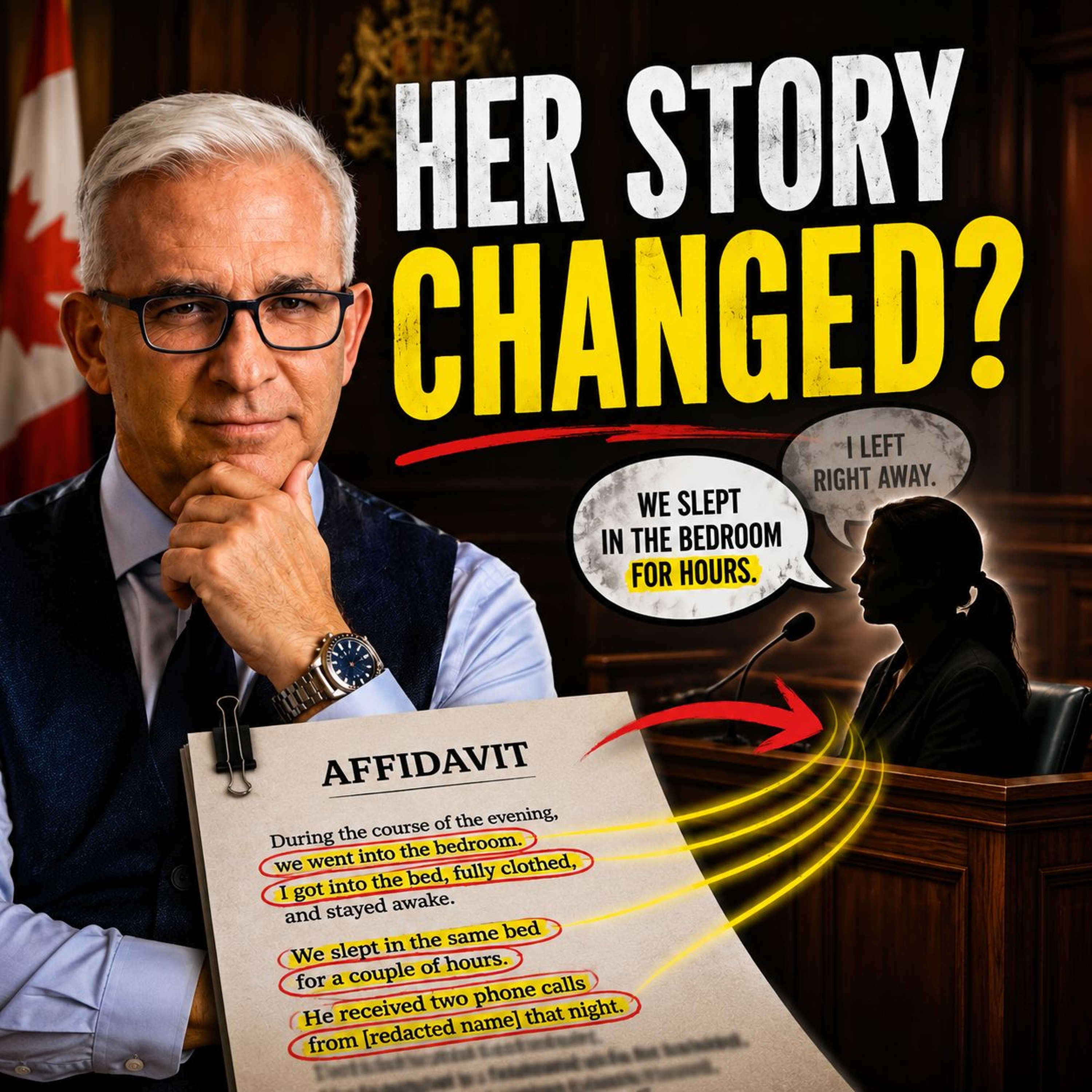 EP#215 | She Read the Affidavit. Then Her Story Changed 08.06.2026 30min**Sponsored by EasyDNS* Move your domain or web hosting to EasyDNS and support Not On Record: https://easydns.com/NotOnRecord Use promo code: **notonrecord** In Episode 215 of *Not On Record*, Joseph Neuberger and Diana Davison examine a troubling trial issue: what happens when a complainant appears to tailor their testimony after reading the defence affidavit in a pre-trial application? The discussion focuses on Section 276 and 278 applications, reverse disclosure concerns, R v JJ, credibility, reliability, and whether cross-examination is enough to protect trial fairness when key details appear for the first time in examination-in-chief. This episode explores the growing tension between complainant participation rights and an accused person’s right to make full answer and defence.
 -
 EP#214 | Reliability vs Credibility 01.06.2026 24min**Sponsored by EasyDNS** Move your domain or web hosting to EasyDNS and support Not On Record: https://easydns.com/NotOnRecord Use promo code: **notonrecord** In Episode 214 of *Not On Record*, criminal defence lawyer Joseph Neuberger and Diana Davison examine the important Ontario Court of Appeal decision R. v. C.P., 2026 ONCA 333 and discuss how mental illness can properly factor into assessing witness reliability and credibility in criminal trials. The case involved allegations of sexual assault against a biological father and raised complex questions about a complainant who had a documented history of hallucinations, delusions, medication non-compliance, and street drug use during the period of the alleged offences. The Court of Appeal was asked to determine whether the trial judge improperly relied on myths and stereotypes about mental illness when acquitting the accused. Joseph and Diana explain the critical legal distinction between credibility and reliability, why mental illness alone cannot be used to discount a witness’s evidence, and when case-specific evidence of hallucinations, delusions, panic attacks, psychiatric symptoms, or medication issues may legitimately become relevant at trial. They also discuss third-party psychiatric records applications, the evidentiary foundation required to raise mental health issues in court, and why judges must carefully avoid discriminatory reasoning while still assessing reliability based on evidence. This episode provides valuable guidance for criminal lawyers, law students, and anyone interested in how Canadian courts balance fairness, mental health considerations, and the search for truth in the justice system. ### **Chapters** **00:00** Introduction to R. v. C.P. (2026 ONCA 333) **02:19** Mental illness, credibility, and reliability explained **04:21** Hallucinations, delusions, medication, and street drug use **07:10** Crown appeal and myths about mental illness **10:13** Evidence supporting reliability concerns **14:29** Accessing psychiatric and therapy records in criminal cases **16:11** Why the Court of Appeal upheld the acquittal **21:34** Lessons for lawyers handling mental health evidence
 -
 EP#213 | CAN WORDS BE ABUSE? 25.05.2026 43minJoseph Neuberger and Diana Davison break down the Supreme Court of Canada’s landmark decision in Ahluwalia v. Ahluwalia, 2026 SCC 16, which recognizes a new tort of intimate partner violence. They examine how coercive control, family law, tort law, and criminal law now intersect, why the dissent warns the ruling may create confusion for courts and litigants, and how this decision could affect future claims involving domestic abuse, financial control, psychological harm, family court litigation, and proposed Criminal Code changes.
 -
 EP#212 | Can Dreams Convict? 18.05.2026 41minSponsored by EasyDNS Move your domain or web hosting to EasyDNS and support Not On Record: https://easydns.com/NotOnRecord Use promo code: notonrecord Episode 211 of Not On Record goes behind the scenes at a criminal defence firm to explore why preparation, human judgment, social media investigation, and old-school legal craftsmanship still matter in modern criminal defence. Joseph Neuberger, Diana Davison, and Amy discuss how digital evidence, complainant social media posts, withdrawn charges, online reputational damage, and careful statement analysis can dramatically affect sexual assault and domestic allegation cases. From removing outdated police and media posts after charges are withdrawn, to finding inconsistencies across complainant statements, to warning young lawyers about overreliance on AI for cross-examination, this episode is a sharp, funny, and practical look at courtroom strategy, wrongful accusations, defence preparation, and the human skill required to tell the right story in court.
 -
 EP#211 | She Found The Lie 11.05.2026 45minSponsored by EasyDNS Move your domain or web hosting to EasyDNS and support Not On Record: https://easydns.com/NotOnRecord Use promo code: notonrecord Episode 211 of Not On Record goes behind the scenes at a criminal defence firm to explore why preparation, human judgment, social media investigation, and old-school legal craftsmanship still matter in modern criminal defence. Joseph Neuberger, Diana Davison, and Amy discuss how digital evidence, complainant social media posts, withdrawn charges, online reputational damage, and careful statement analysis can dramatically affect sexual assault and domestic allegation cases. From removing outdated police and media posts after charges are withdrawn, to finding inconsistencies across complainant statements, to warning young lawyers about overreliance on AI for cross-examination, this episode is a sharp, funny, and practical look at courtroom strategy, wrongful accusations, defence preparation, and the human skill required to tell the right story in court.
Podkaste të ngjashme


I/E popullarizuar në
Ky podkast shfaqet edhe në listat e podkasteve të këtyre shteteve.
